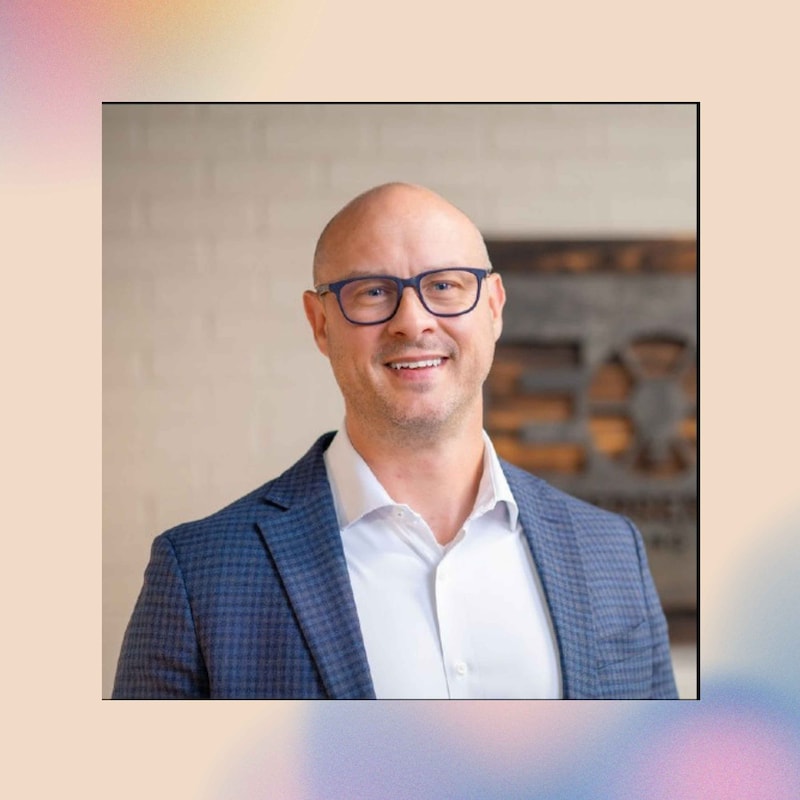
Shownotes
In this conversation, we speak with Will Watrous, an entrepreneur and EOS implementer, about how the Entrepreneurial Operating System improves organizational effectiveness. Watrous shares his extensive experience and emphasizes that leaders must recognize they operate in the "people business," and that fostering growth and accountability among their teams is essential. Central to our discussion is the concept of "change the people or change the people," a poignant reminder that effective leadership necessitates not only the development of individuals but also the strategic placement of the right talent within the organization. Throughout our conversation, Watrous shared strategies for building clarity, consistency, and execution in teams, helping to avoid common pitfalls like vision drift and operational chaos. As we unpack these principles, we invite you to reflect on your leadership practices and consider implementing EOS as a pathway to sustainable growth and harmony in your work.
In this insightful podcast episode, the hosts delve into the essential qualities of effective leadership, featuring Will Watrous, an entrepreneur with extensive experience in implementing the Entrepreneurial Operating System (EOS). Wastros articulates the fundamental principle that leaders must recognize their primary role within organizations: to nurture and develop their teams. He encapsulates this idea in the maxim 'change the people or change the people,' which emphasizes the necessity for leaders to either enhance their team's capabilities or reposition individuals to align with their strengths. This perspective is critical in fostering a culture of accountability and growth, ultimately leading to organizational success.
As the discussion unfolds, Watrous highlights the pervasive issue of vision drift that plagues many organizations. He notes that many leaders struggle to articulate a coherent vision, leading to confusion and misalignment within their teams. By integrating the EOS framework, leaders can create a structured approach that fosters clarity and accountability, allowing team members to align with a shared vision. Watrous advocates regular reviews of the organization's vision and goals to ensure they remain relevant and that all team members are fully engaged in pursuing those objectives.
The latter portion of the episode focuses on the importance of emotional intelligence in leadership. Watrous discusses practical strategies to enhance leaders' interpersonal skills, emphasizing the need to solicit feedback from team members to foster a culture of openness and trust. By creating an environment that encourages constructive feedback, organizations can cultivate high-performing teams that are not only aligned with their strategic goals but also engaged and fulfilled in their roles. This episode serves as a crucial resource for leaders seeking to enhance their effectiveness and foster a thriving organizational culture, providing actionable insights that can be applied in their own contexts.
Takeaways:
- The Entrepreneurial Operating System (EOS) empowers organizations by establishing clarity, accountability, and consistent execution.
- Leaders must recognize their primary role as facilitators of others' success and development.
- Effective leadership requires a deep understanding of emotional intelligence and the ability to connect with team members.
- Sustained organizational success is rooted in fostering a culture of open communication and constructive feedback.
Transcripts
Welcome back to Becoming Bridge Builders. The show where leaders, innovators and bridge builders come to share the lessons that shape stronger communities and better organizations.
I am your host, Reverend Dr. Keith Haney. Today's guest brings two decades of battle tested experience from the entrepreneurial area.
Will Wastros has owned companies, built companies, and more times than he's probably planned, fixed companies. And after years of seeing some painful patterns repeat himself, vision drifts, meeting multiplied profit hides.
He discovered the power of entrepreneurial operating system better known as eos.
Now he installs EOS for owners who are done with burnout, firefighting leadership and hectic heroic sprints and are finally ready engineer predictable growth. He works with leadership teams of 10 to 250 people and 2 to 50 million in revenue organizations hungry for accountability, clarity and traction.
Will, welcome to the podcast.
Will Watrous:Thank you sir. Great to be here with you today. Thank you for having me.
Dr. Keith Haney:I'm looking forward, it should be a fun conversation. I love talking about leadership and organizations. That's kind of my sweet spot. So we should have a great conversation.
Will Watrous:Looking forward to it.
Dr. Keith Haney:I'm going to ask you my favorite question. What's the best piece of advice you've ever received?
Will Watrous:You know, I've found that leaders sometimes forget that they're actually in the people business.
They're leading a company, let's say, or an organization that does XYZ has a wonderful mission and very often their eyes are on the front lines and that that's okay as to what value are they delivering to their audience, their community, their constituents, clients, customers. But sometimes they forget that as a leader, their job is to really execute that vision, that mission vicariously through other people.
They're not the ones usually doing the actual frontline work. And so it's good to remind them that they're really in the people business, not whatever the company says it does.
And so the answer to your question is this phrase, change the people or change the people. Change the people or change the people.
And what that means is your job as a leader is to develop, to influence, to help the people you're leading be successful in their roles. And to do that, they've got to develop, they've got to grow, they've got to increase their capacity.
And sometimes the second, you know, that's change the people or change the people. The second change the people means sometimes you've got people in the wrong seat.
They are simply not operating in an area of their unique ability, their giftings, their talents, their skills and experience. They're in the wrong seat. Sometimes, hopefully, they just need to move to another seat within the organization.
And sometimes they're just on the wrong bus.
And you need to help them find their people, find their tribe, find where they can plug in and add value and enjoy their life and their purpose working in another organization. So that's long answer to a short question. Change the people or change the people.
Dr. Keith Haney:I love that.
And I talked to a lot of people lately who really talk a lot about, in this new age of leadership, emotional intelligence or eq, and that sounds like what you're talking about. But how do you, as a leader, realize that your emotional intelligence, your ability to connect with people may not be where it could be?
Will Watrous:You know, I think it's rare for someone to be completely unaware, especially if they're already in some leadership capacity. Now, we all have blind spots, but I think most leaders have a good sense in general if. If there's an area where they fall short.
If I were to ask you, sir. All right, drop a list here of your three greatest weaknesses. When it comes to people, you probably know yourself pretty well.
You could probably articulate them. And I bet the people that you lead would say, yeah, yeah, that's probably pretty true.
And so, you know, I think that it comes through honest reflection, sitting down and just getting brutally honest with yourself. Where are you falling short? Where do you need to level up?
And beyond that, I would also say that this is actually an exercise that I do with leadership teams is get feedback from peers. And so we do what's called the one thing commitment exercise. It's a tool within eos.
And what that is, is we work all day together as a leadership team, becoming more open and honest, more healthy as a team.
And what we do is we go around this leadership table and we'll say, we'll go one by one, and we'll say, what's one thing you need so and so to start doing or stop doing for the good of this team? And that's a. That's. Now we set it up very carefully because that could get ugly fast. And it's not. It's. It's designed to be constructive. And it is.
It's so valuable. Feedback is a gift. Feedback is a gift. Seeing other people's perspectives on how you could improve is an opportunity and a tremendous gift.
And so the second part to my answer is, solicit feedback from your team. Be open and honest. What do I need to start or stop doing to help this team perform better? Be healthier?
Dr. Keith Haney:Yeah. See, the problem with that is that you have to be vulnerable then. And you have to be willing to accept whatever the feedback you get.
And that's hard sometimes, is being willing to actually. But if your role and your purpose is to grow as a leader and as an organization, you need that feedback, don't you?
Will Watrous:Yeah. So you hit at the root of it, which is so Patrick Lencioni wrote a book called the Five Dysfunctions of Teams.
And in that he outlines a brilliant book. I recommend it for every single leader. In that he outlines the five factors of healthy teams and vice versa, of unhealthy teams.
And the foundation of that is the vulnerability based trust. And you don't get there overnight. It's not something that necessarily comes easy, but it's critical to the team's success.
And there are exercises, there are things that you can do to increase trust so that your team is more healthy and open and honest with one another. And I would encourage leaders to pursue those things because everything else flows from that root.
Dr. Keith Haney:I love that. So. So you've lived this entrepreneurial journey for a while from every angle, from founder, acquirer, operator. When did you first notice that?
The repeating patterns of companies losing their way, losing, you know, vision, drifting, meeting, multiplying, profit disappearing.
Will Watrous:So I started a marketing company about 16 years ago and we specialized at the time serving contractors. So think home improvement contractors, roofing, siding, windows, doors, that type of thing.
And as a marketing company, they were hiring us to help them grow their business. We were engaging them at a higher level, not, not just as, you know, a lever to pull, but as a, as a system.
How do I create a business growth system for this company? And I would sit down with them at the beginning of our relationship and ask them questions about, okay, where are you trying to go?
What's your vision here?
And I noticed again and again that they could not clearly articulate the big picture goal of what they were trying to accomplish because we were coming alongside them as business growth partners. And for that to be an effective partnership, we needed to understand what's the vision? Where are we going? What markets do you want to grow into?
What services do you really want to provide long term? And again and again, they couldn't just simply and clearly articulate that. So I was like, huh?
These owners are just operating the business day to day and often don't have a clear picture of what success looks like in the long term. And then beyond that, when we would start working together, we would meet with them on a monthly basis to review performance.
Okay, here's the leads that were generated and we would ask, okay, here's the, let's say, 27 leads that came via this marketing channel. How many of these converted into paying customers? And more often than not, they couldn't articulate that. They didn't know the data.
They didn't have internal systems reporting systems they could lean on that would show them what's really going on on the ground.
And that started opening my eyes that, wow, these businesses, great people, great companies, doing good work, but they weren't functioning on a systems mindset. And I started seeing that over and over and over again. And to be honest, in my own business, I experienced that as well.
As you grow, things change, people change, and it's a challenge to keep the system up to date, simple and effective. So that's where I started noticing it first.
Dr. Keith Haney:I work a lot with churches, and I get called into churches a lot of time for the vision drift problem. And oftentimes they don't realize that they're dealing with vision drift.
But if I ask them, I'm like, well, tell me what you're trying to achieve in the next three to five years. They can't define it for me. How do you help organizations get a clear vision again, that really aligns with. Maybe I should ask this question for you.
What helps you make sure your vision is a clear vision and one that also aligns with your core values?
Will Watrous:You know, I'm an EOS implementer. That's what I do.
And I experienced this in my own company, which is why I'm so passionate about it, because I saw the transformation and the freedom that it brought to me in my life and the health that it brought to my company.
So I'm speaking experientially, but within the EOS process, some of the first things that we do is create a clear vision and plan for the organization. And that's at the leadership team level. It's not just the founder, it's not just one person in a room. It is the leadership team.
That's a critical point, because so often visionaries or founders will just get in a room by themselves and create this grandiose vision, but they're not really seeing a lot of other parts and implications of that vision. And so when you do it as a team, you get people collaborating and balancing and creating a more healthy, complete, holistic vision.
And so that's something that we do.
And there's eight simple questions that we use to get all of the leaders 100% on the same page, everyone fully aligned, everyone rowing in the same direction. So in their mind's eye, they're seeing the same picture of where we're going and how we actually plan to get there.
That's a critical exercise for any organization. We do that up front. But then every single quarter, every 90 days, we review that and it's a two page document.
We review every word on that page to make sure the leadership team is still fully bought in. Everyone's crystal clear and committed to bringing this vision to pass. That way it doesn't just sit in a drawer somewhere, it doesn't get forgotten.
It's a living, breathing document that's referenced regularly.
Dr. Keith Haney:So you've mentioned you're an ESO implementer. Can you. Leadership knows what that is.
But for those of us who don't know that world very well, could you describe that in kind of a simple one sentence for us?
Will Watrous:Sure. EOS stands for the Entrepreneurial Operating System. And it's just a complete system with simple tools that helps leadership teams.
They get aligned, they execute consistently, and they grow in a healthy way. And that's healthy is financial, healthy is also in terms of their team health, their people. And it's a brilliant, simple system.
There's lots of churches, I have nonprofit clients running on it. And it's as you mentioned earlier on the for profit side, it's typically companies that are between 2 and 50 million in revenue.
Typically they've got 10 to 250 employees.
And it is a brilliantly simple and effective system that now there are hundreds of thousands of companies around the world operating on these tools, on this particular tool set. So it's proven, and is my point, it's been proven time and time again. It's an effective, proven plan.
Dr. Keith Haney:I love that. So it emphasizes, EOS, emphasizes clarity, consistency and execution. Which of those three is usually the biggest leadership blind spot?
Will Watrous:Blind spot. I would say clarity. I would say clarity as a team.
So often if I have a leadership team at the table and there's six people here, they all have a picture of what success looks like. The problem is that the picture is slightly different in each person's mind.
And so to get them all clear and fully aligned with what that success looks like is very powerful. They all know that execution is struggling. When they're missing goals or the numbers are off, everyone sees that.
But what they don't recognize is that's actually a symptom of, of a lack of clarity. Everyone isn't clear on where we're going, how we're going to get there, what our priorities are, what's my role in this organization?
What does success look like for me? How do I contribute to the success of the organization? There's not clarity there.
And it shows up as missed goals, missed revenue, missed vision, ultimately.
Dr. Keith Haney:So you say the system is simple and it works. Why does it work?
Will Watrous:You know what's funny about it? There's nothing new under the sun, right? So these are, it's, it's a simple set of tools. And these are timeless principles.
These are things, ideas that have been around for a hundred years, will be around for a thousand more years. No silver bullets, no magic pills. It's really a bunch of common sense. But it's packaged up in a system and in a process.
And how you roll it out, an execution process that has been honed and refined thousands and thousands and thousands of times. And so that simplicity and then the discipline that it brings into an organization to operate on this simple set of tools is why it is so effective.
Dr. Keith Haney:So kind of walk us through that system for us, for those who don't know it, kind of give us a 3,000 foot view of what the system looks like.
Will Watrous:Sure. So I said a simple collection of tools. There's, and if you Google this or YouTube it, there is an immense amount of content out there on this.
So you could self educate all day long on Eos. It's wonderful. But it's based on this model and there's a diagram out there. It has six key components.
And that model is based on the realization that entrepreneurial leaders tend to struggle with 126 issues simultaneously.
But to the degree that you can strengthen the six key components of your organization, those 126 issues tend to fall into place because they are actually symptoms of the true root cause rooted in one of those six key areas of the organization. So we've talked about a couple of these already without knowing it, but. So the first one is vision.
Vision is getting everyone fully aligned and on the same page, where are we going? Where are we going? How do we plan to get there? The second component is people.
In other words, do we have the right people, the right people who fit our culture, who are fully aligned with who we are, and are they in the right seats?
Are they doing work that they are naturally gifted at, that they've got the skills, the desire, the experience to perform in that particular role or function that you need them in? So that's people. That's the second one. The third one is a, is funny.
It's the data or data component and that's just running the organization on facts.
And figures on objective information versus the egos, emotions and subjective feelings that so often drive the decision making process in an organization. So that's. The third one is data. The fourth one is interesting.
It's the issues component that is just making sure that your team is really good at identifying and solving issues as they arise.
Because you can't build a great organization if your people aren't really great at identifying stuff, calling it out and then solving it at the root, making it go away for good again and again and again, week after week. The fifth key component is the process component that's running your organization like a franchise system.
So everything that's really important in the organization gets done the right and best way every single time. So there is consistency in execution.
And then the last key area is what we call traction and that's just bringing the vision down to the ground and executing on it day in and day out.
And that has to do with a meeting pulse, setting quarterly priority so everyone's clear on what's most important in the next 90 days and making sure that we're actually knocking those things out every single quarter. So that's at a high level. Your 30,000 foot view and six key components, every organization has those six.
And all organizational problems are rooted somewhere in one of those six key areas.
Dr. Keith Haney:So I did my dissertation on leadership effective Change and used Khadr's model. So a lot of what you described in Organization of Change Khadr has in his model too.
There's different, he has eight, of course, so there are different sliding, but you can kind of see that the system needs to do certain things in order for it to work effectively. I'm curious, so somebody says, I'm going to do this. Leadership team is all on board with eos.
How long does it take for this to begin to see impact in an organization? Because we all like results, we want them quickly. If we start this, what can we expect? Is it three months, six months, a year?
Will Watrous:Yeah. So some things will change immediately and others take time.
So one thing that I love about the work that I do is my clients are typically with me for about two years on average. I teach them the tools, I help them get focused and gaining traction and once they get it, they graduate and I'm done.
Which means I'm not trying to embed myself in the organization. I'm not trying to create any sort of dependency.
I'm trying to teach them how to use this system and then get out of their way so they can go accomplish their mission. And so Two years. Some are faster, some are slower, but it just is. It depends on how committed the team is to following a process.
There are, as I said, some things after the first session together, their eyes will be opened and they'll realize some things and start making some little tweaks and changes.
But ultimately, over the course of about two years, it'll be rolled out throughout the organization and the entire group of people will be more clear, they'll be more consistent in their execution, and they'll be happier and more fulfilled as a team.
Dr. Keith Haney:Are there certain organizations that struggle with this more than others? Maybe because your organization is too complex? Or does complexity organization not matter when you're trying to do EOs?
Will Watrous:I would say one caveat, if you will, or something that makes it. There's a couple of situations. One is where there's not. They're not committed to having a leadership team structure.
They're trying to function, let's say, like a medical group where, where it's six doctors and shared resources. There's no clear head, you know, and, and I like to say anything with more than one head is a freak. Right.
So there's not a, there's not visionary and, and decision makers who are, who are ultimately making the calls after they've collaborated and heard from everybody and involved people and hurt, you know, let them weigh in.
It's this kind of just group of people making decisions together that's difficult because we believe that leadership team should have a clear structure, clear defined roles within that structure that helps the team operate in a healthy way. That's one example.
Another example would be when you have a board and the board is sitting off in the distance just checking in, but yet they are making decisions that operationally affect the organization. So the leadership team, the one in day to day, is not the one making critical calls.
And so when the board is overly involved and trying to make operational decisions on behalf of the leadership team, that's really difficult because they don't have the perspective, they don't see what's going on on the ground, or they don't trust the leadership team. And there's. That means there's other issues going on. But boards can also be difficult to navigate.
Dr. Keith Haney:So that brings me to my thought about accountability. You work at organizations that hunger for accountability, but accountability can be uncomfortable.
How do you teach teams to embrace it without creating blame culture or fear culture?
Will Watrous:Accountability is a common theme and lots of leaders come to me, and that's their first and foremost concern is there is a lack of accountability, meaning what's supposed to get done doesn't get done. Goals get missed, deadlines get missed. Opportunities are lost. And the interesting thing about accountability is that it is actually a byproduct.
It is an output of some other things. So I like to use this little formula. It's L plus M equals A, and the letters stand for leadership plus management equals accountability.
So the way this works is if there's just five simple leadership practices, and there's five simple management practices.
If you do those things well, if you're a great leader and you're a great manager, as a result, you will have a culture of accountability, a culture where accountable people thrive. And so leaders will ask me, how do I make my people be accountable? Well, you can't make them be accountable.
But what you can do is you can lead them well and you can manage them well, and you will have all the accountability you could ever hope for. But guess what that does. It puts you in the mirror.
So now the question is, am I doing what I should be doing as a great leader, and am I doing what I should be doing as a great manager?
Before I start pointing the finger at others, I need to take a good, hard look at yours truly and make sure that I'm leading them well and managing them well. And that's the interesting paradox there.
Dr. Keith Haney:Since you've worked with so many companies, is there one story or one company you work with? You don't have to tell us the name.
That stands out as kind of like, this is my proudest moment of working with this company, seeing the turnaround that they had.
Will Watrous:I am so blessed to do the work that I do, because there's not one story. There is story after story after story, including my own. If we have a couple minutes, I'll give you two stories, if that's all right. So I met.
This is a company here in town, $50 million company, Wonderful Group of people. I've been working with them for about 14 months.
And at our last meeting, the owner pulled me aside, and he said in the last year, and he's, by the way, he's had this company for over 30 years. I mean, they've been around. He said, my relationship with my wife is better than it's ever been. I am sleeping better than I've ever slept.
And this team is stronger than it's ever been.
And so for me to hear that from somebody, that it's affecting them personally, their marriage, and then the company is thriving, I mean, what more can you ask for? I'm just the messenger I'm not trying to paint roses on me or anything, pin roses on me or anything. It's just.
Anyway, it's really rewarding to hear that. And then I'll tell you my story, just briefly. I started that company many years ago, marketing company. And we grew.
And then one year we grew like crazy. We got a bunch of new clients and revenue went up 173%.
And it got really stressful to the degree that I started noticing some alarming symptoms in my body.
So I went and scheduled a doctor's appointment and went in, my wife went with me, and the doctor did his thing, poked and prodded, left, and then came back and he sat down and he said, well, you're not going to like what I'm about to tell you. And I thought, okay, he's got my. You got my attention now. And my wife's eyes got as big as saucers.
And he said, I think you're having a stroke right now, and I want you to get on an ambulance and go to the emergency room. And I'm in my early 40s and I'm thinking, oh my goodness, this is crazy.
And so I said, you know, I feel like, pretty okay, can I drive any, like any good entrepreneur, you know, I'll just drive myself. So I drove and I spent a couple days at the hospital.
They did all these tests and it wound up actually being a type of migraine that presented as a stroke. And it was not a stroke, but it looked like it was initially, but it was all due to stress.
And that incident set me out on a mission to create a healthier business, a healthier life. I read this book called Traction by Gino Wickman, which is where EOS is from, and it made a lot of sense.
I hired an EOS implementer, worked with him for a couple of years, and it was transformational. We morale improved at the company because we had been really stressed out.
But we went from working, it was like herding cats, trying to get stuff done and to instead functioning as this high performance team. And net profit went from 6% to 34%. So needless to say, I fell in love with this.
And four years ago, that system created a lot of freedom for me as the owner. Four years ago, I stepped away. I still own the company passively now. I meet with the CEO once a month, review financials, support him.
It's a growing, strong, healthy, profitable company. And now I. All I do is help other leadership teams implement EOs.
So it's, it's brought profound change to Me personally, and by God's grace, also to the clients that I've been working with.
Dr. Keith Haney:That's awesome. So here's some lightning round questions for you.
Will Watrous:Got it.
Dr. Keith Haney:What's one meeting every company should emulate? I mean eliminate.
Will Watrous:One meeting every company should eliminate. I would say any meeting that doesn't have a clear agenda and a defined outcome should be on the chopping block to take a good hard look.
And especially any recurring meetings like that's a big deal.
Setting up a recurring meeting better be highly intentional because I think half the meetings that we attend sometimes are leftovers and they could be eliminated.
Dr. Keith Haney:That's very true. What's one dashboard number Leaders overlook one dashboard number.
Will Watrous:I would say revenue per full time employee or FTE equivalent. I would say that's an important big picture number that gives you a sense of the efficiency or productivity of your organization.
And in the nonprofit world, it would be what donations or support giving because it tells you if you're, if you're running lean or you're running a little fat and you need to pay attention to where the money's going.
Dr. Keith Haney:Makes sense. One habit owner should stop immediately.
Will Watrous:Well, owners have different vices. I would say. We alluded to this earlier, but you know, stop trying to build an organization for tomorrow using yesterday's leadership skills.
Meaning you're the lid. Level up. You've got to grow. You're the one holding this whole thing back.
And that might sound harsh, I mean it in love and encouragement, but you really are the lid. And if you don't develop personally, if you're not growing personally in your leadership abilities, then you're the one holding the whole thing back.
Dr. Keith Haney:And finally, what's one thing you wish every entrepreneur understood sooner?
Will Watrous:One thing I wish every entrepreneur understood sooner. That a business or an organization is simply a dispassionate collection of systems. It is outside of you.
It is an organization that's simply a collection of systems.
What that does is gets you in the right mindset to start tinkering on systems, working on the organization, working on the business, instead of spending all of your time and all of your energy working in it without improving how it operates and how the work gets done.
Dr. Keith Haney:That's great. So I'm going to ask you my other favorite question. What do you want your legacy to be?
Will Watrous:My legacy, I believe, is helping leaders realize their greatest impact on their families, on their employees, on their clients or customers or constituents, and on their community. So if I can do that well, if I can connect them with the strategies and tools they need to succeed, then I've done my job. Awesome.
Dr. Keith Haney:So we have a new thing on the show that is a surprise question. Pick a number between 1 and 6 for a surprise question.
Will Watrous:5.
Dr. Keith Haney:What's the worst job you've ever had?
Will Watrous:The worst job I ever had was at Kinko's. I worked there for like a week. And I am a big picture, visionary, type driven person. And I was in there making copies and oh Lord no.
I just, it felt like death just walking into that.
And I went to the manager and I said, I'm so sorry that I wasted your time with you in interviewing me and hiring me, but I, I had no idea what this would be like or I didn't think about what this would be like, but this is not for me. And she was gracious and she said, okay, no problem, we'll see ya.
And that was, I think I was in college at the time, but that repetitive same thing over and over, making copies, not for me.
Dr. Keith Haney:I had a job like that too. I was, I was, I'm a people person and I had to like stuff envelopes and was like, I can't take it anymore, I'm going to lose my mind.
Unfortunately, I also got fired, so I should quit, maybe instead of having to get fired. So where can people find you, Will, and learn more about you?
Will Watrous:Oh, you know, LinkedIn is great. Or if you just googled my name and EOS, I'll come up, but LinkedIn is great too.
Dr. Keith Haney:Well, Will, thank you for sharing your wisdom and your scars. Your work proves that structure doesn't kill entrepreneurial spirit, it unleashes it.
EOS brings alignment, clarity and a whole lot of peace back into the lives of leadership who have been doomed and drowning in chaos for way too long for our listeners.
If today's conversation has hit home with you, if you're tired of fires, tired of chaos, tired of carrying the entire company on your shoulders, reach out to Will. Whether you run a 10 person shop or a 250 person operation, EOS may be the most liberating shift you ever make.
You'll find everything you need in the show. Notes, link, resources and ways to connect with him.
If this episode has helped you think differently about leadership, please subscribe, rate and share. Becoming bridge builders. Let's keep building bridges that create better communities, better businesses and better lives.
Until next time, go build a bridge to someone different from you and see how that changes the world. Thanks again, Will, for your time.
Will Watrous:Thank you.





