Shownotes
Lesley O'Brien, the esteemed author of the "Adventures of Captain Marco" series, engages in an enlightening dialogue about her literary journey and the thematic essence of her works.
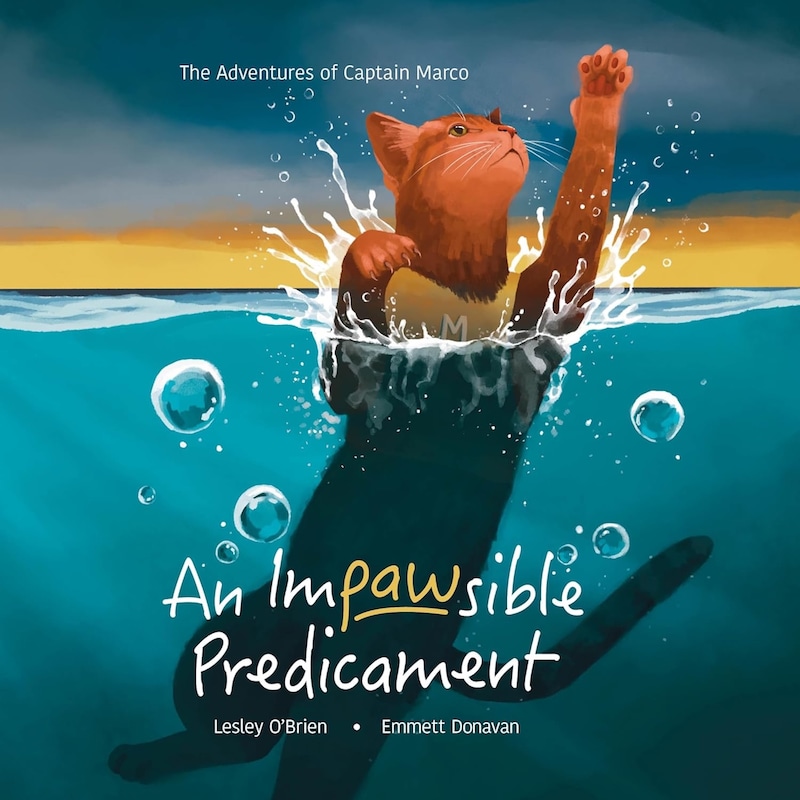
The central focus of this episode is "An Impawsible Predicament," the second installment in her series, which delves into the adventurous exploits of Captain Marco, a cat navigating the challenges of life aboard a sailboat.
Lesley elucidates the significance of storytelling in shaping human experiences, emphasizing the dual role of legacy and service in her writing. Furthermore, she reflects on her motivations for becoming a children's author, stemming from a profound connection to her own childhood experiences and the influence of her father’s imaginative storytelling.
As we explore her insights into the creative process, the importance of connection, and the nuances of crafting a narrative, listeners will gain a deeper understanding of the artistry involved in children's literature.
The podcast further examines the unique character of Captain Marco, who not only embodies the whimsicality of childhood but also reflects on broader themes of second chances and the importance of environmental stewardship. Through engaging anecdotes and heartfelt reflections, Leslie provides listeners with a comprehensive understanding of the intricacies involved in writing for children, emphasizing the need for genuine connection and the impact of storytelling on both young readers and their families.
Takeaways:
- The journey of becoming a children's book author is deeply personal and often stems from familial influences, as exemplified by Leslie's relationship with her father who inspired her love for storytelling.
- Lesley emphasizes the significance of legacy and service in her role as a children's author, focusing on creating connections through stories that resonate with both children and adults.
- An essential component of children's literature is the inclusion of humor and depth that appeals to adults while still being accessible to children, creating a shared reading experience.
- The editing process is vital to the development of a quality children's book, as it allows for refinement and enhancement of the story, ensuring that it resonates well with its intended audience.
Links:
- Amazon Book: https://a.co/d/0giCB3YT
Transcripts
Hello, I'm Leslie o', Brien and I'm the author of the Adventures of Captain Marco series.
Speaker A:There are currently two books in the series, Unfamiliar Territory and An Impossible Predicament.
Speaker B:Thanks, Leslie, for appearing on the Adventures in the Heart of Children's Book Authors podcast.
Speaker B:As Leslie has mentioned, she's written two children's books, and today we're going to focus on an impossible predicament, and I look forward to our conversation.
Speaker B:Leslie, before we get into the details of your book, can you tell us what it means to you being a children's book author?
Speaker A:Wow, that is such a deep and great question.
Speaker A:I think we could probably spend at least half, if not the full hour, just talking about that.
Speaker A:So I'm going to restrict myself and focus on two points.
Speaker A:For me, it would be legacy and service.
Speaker A:And starting with the first one, I hear legacy a lot when I talk to other authors.
Speaker A:Wanting to leave something for someone that you love behind, usually children or grandchildren.
Speaker A:For me, the legacy component of becoming a children's book author happened in reverse.
Speaker A:And I really feel like it's a legacy that I finally acknowledged that was given to me, my dad, when I was little.
Speaker A:We're talking like a small child, like single digit age would be the one that tucked me in most nights, and pretty much every night he would read a story to me.
Speaker A:But my dad is a little bit different in many ways, but in one of the ways is that he would make them up on the spot.
Speaker A:He would not read from a book.
Speaker A:And I have these just vivid memories of sitting in my bed, being taken to different worlds through his imagination.
Speaker A:And it was always ordinary objects like Charlie the magic coat hanger.
Speaker A:So a coat hanger from my wardrobe.
Speaker A:And as an adult, I grew up and became an adult.
Speaker A:And I've had many different exciting careers, but the one that is most recent and closest to my heart is that I'm a scientist.
Speaker A:I teach now.
Speaker A:I'm not in research anymore, but I've done extensive scientific writing for scientific publications.
Speaker A:And I've always loved writing, but I've always thought of myself really as a very scientific writer, someone who likes to communicate very succinctly, very clearly, very precisely about nonfiction topics.
Speaker A:And we can talk later about the motivation behind the books.
Speaker A:But when I realized that I had a calling to write fiction, I had never explored that side of myself before.
Speaker A:And it's my gift that when I think about the gift of stories, it comes from my love of that really close interaction with my dad when I was little and acknowledging that maybe there's part of him in me.
Speaker A:So it's really maybe even about fulfilling his legacy rather than mine.
Speaker A:And then the other part, I told you I could talk for hours about this.
Speaker A:The other part about what it means to me to be a children's book author is around the idea of service.
Speaker A:And again, stepping into my place in humanity as it is.
Speaker A:I think of stories as fundamental to the human experience.
Speaker A:They are as integral an activity that we participate in as things like eating together, listening and playing music together.
Speaker A:Storytelling is just so uniquely human.
Speaker A:And a couple of the things that it does, of course, is it sparks your imagination, right?
Speaker A:It gets your heart racing.
Speaker A:You have feels it lights possibilities that you wouldn't have thought of before.
Speaker A:And it also creates connections to the characters in the stories, but also connections to the people that you experience those stories with.
Speaker A:And when I've been on this journey of selling and marketing my book, since I've written my book, I tend to do a lot of it in person.
Speaker A:And what I tend to find is the majority of people, not everyone, but the majority of people, tend to buy the book for someone else.
Speaker A:It's for a grandchild, it's for a son or a daughter.
Speaker A:It's for a niece or a nephew.
Speaker A:And they see the book and they say, wow, I think X person is going to really love this.
Speaker A:And so they give it as a gift.
Speaker A:So I imagine myself as being part of that chain of storytelling and to a complete stranger and facilitating that experience of imagination and magic and connection between total strangers who will never meet me.
Speaker A:And I joined a really meaningful kind of act of service to kind of step into that part of a connection that I have no actual physical part in myself.
Speaker B:I love that because it's interesting.
Speaker B:As a grandfather, I've got five grandchildren, and you talk about legacy, and in my case, I call it living legacy because all five of my grandchildren have helped me write.
Speaker B:We've written 38 stories.
Speaker B:We've only published two children's books because of the cost of being an independent children's book author.
Speaker B:The nice thing about it, I've had them engaged in actually not only helping to write the stories and be the inspiration behind the stories.
Speaker B:Also, they've narrated about half of the stories.
Speaker B:So right now, I captured their young voices to read the stories and create the narration.
Speaker B:And someday we'll tie those two things together, the printed book and the narrated book, and they'll have that forever.
Speaker A:That's fantastic.
Speaker A:Who knows what stories they'll come up with?
Speaker B:You started to ripple and the other thing you mentioned.
Speaker B:And it's funny, when I first started as a children's book authority, we published our first book and which is called the Adventures of Caboose the Rocky Mountain Bear.
Speaker B:But what was interesting is somebody said, do you have a book plate?
Speaker B:And the reason I bring this up is you said, most times the children's books are given as gifts.
Speaker B:And I said, no, I don't have a book plate.
Speaker B:You know, I was think I was thinking of a physical plate.
Speaker B:It was actually what it is.
Speaker B:At the beginning of the book, you actually have an area where the person purchasing the book can write a message.
Speaker B:And so that's what they call a book plate.
Speaker B:So I added that to the front of each of our books so that when it's given as a gift, that someone can write, this book belongs to Sally.
Speaker A:That's an amazing idea.
Speaker A:I'd not thought of that.
Speaker B:And the only reason I mentioned that to you is that when you talk of what it means to you to be a children's book authority, when you said, like, a lot of times people are going.
Speaker B:Are buying these books as a gift, it's just one more added value that you can offer.
Speaker B:Especially, like you said, when you're going and doing it in person.
Speaker B:Tell us the inspiration behind the current book that we're talking about and talk a little bit about the title too.
Speaker B:Sure.
Speaker A:So, and I'll start with inspiration.
Speaker A:If you wanted to get into motivation, that's a different story.
Speaker A:But yes, we will start with inspiration.
Speaker B:Absolutely.
Speaker B:Absolutely fantastic.
Speaker A:So the kind of global, obviously impossible predicament is the second book in my series.
Speaker A:So the kind of inspiration for the whole series is Marco, my cat.
Speaker A:I have this little orange ball of fur who is wonderful in all the different orange stereotypes you can imagine.
Speaker A:But he's my.
Speaker A:My.
Speaker A:My furry best friend.
Speaker A:And my partner and I are very lucky.
Speaker A:We have a sailboat we love to sail.
Speaker A:Is where I'm coming from you to you from today.
Speaker A:And we take Marco with us.
Speaker A:So when I first adopted Marco, he's adopted from a local charity in Richmond, Virginia.
Speaker A:I was looking for a cat that really could come along on our adventures that I didn't have to leave behind.
Speaker A:So I was looking for some very specific characteristics, like curiosity, like when someone walks in the door and Marco trots right up to them and is like, who are you?
Speaker A:Why are you here?
Speaker A:Um, and so an approach rather than an avoidance character, and then just adaptable, very flexible.
Speaker A:Because cats can be.
Speaker A:Some cats can have a hard time with change, especially in their environment.
Speaker A:So Marco's incredibly adaptable.
Speaker A:Within a few days of being on the boat, it's like he never left.
Speaker A:We have a lot of fun adventures and a little bit of worry.
Speaker A:Sailing around the Chesapeake Bay in Virginia and Maryland on the east coast of the United States, all of the three of us together.
Speaker A:And.
Speaker A:Yeah, so that was the inspiration behind the book.
Speaker A:My partner and I would talk about what it must be like from his perspective as going on all these sailboat adventures.
Speaker A:So we would joke about it for a long time, and eventually it became, obviously, a book.
Speaker B:Cats can definitely bring something special to your life.
Speaker B:We had a cat.
Speaker B:Actually, it was my daughter's cat that we ended up inheriting.
Speaker B:The cat's name was Amber.
Speaker B:And eventually, when Amber passed away, my oldest granddaughter, when I got a new vehicle, it had the voice activated stereo system that you could put your cell phone through.
Speaker B:Anyway, she said, oh, can we name the system Amber after the cat?
Speaker A:I knew that was coming.
Speaker A:That's so sweet.
Speaker B:Yeah, yeah.
Speaker B:So now that our system isn't called Siri or whatever, it's called Amber.
Speaker A:That's awesome.
Speaker A:They hold a special place in our hearts, for sure.
Speaker A:Having furry friends around is so special, but.
Speaker A:Yeah, but the actual book itself, the second book, an impossible predicament.
Speaker A:I do have a lot of fun with the titles of my books.
Speaker A:There's always a cat pun in there somewhere.
Speaker A:Can never be enough cat puns in the world.
Speaker A:I think I'm funny.
Speaker A:Other people's mileage may vary.
Speaker A:The second book in the series, all of the books are based on the same character, the lead character, our protagonist, which, of course is Captain Marco.
Speaker A:So he's a former street cat who gets adopted by a couple that live on a sailboat.
Speaker A:And then, of course, he is wildly unprepared for this life, being a street cat.
Speaker A:So he makes all kinds of mistakes and all kinds of crazy things happen.
Speaker A:And as you can imagine, the adventure ensues.
Speaker A:So the second book, I was actually walking down a dock in our marina one day, and there was a crab stuck on the side of a piling of our slip in the marina.
Speaker A:And it was crawling around under the water level on the side of the piling.
Speaker A:And I was like, I had no idea that crabs crawled up pilings.
Speaker A:And I thought they were just on the seabed doing their thing.
Speaker B:Interesting.
Speaker A:So then I started.
Speaker A:So Chesapeake Bay blue crabs are so fascinating, and there's so many amazing books about them.
Speaker A:I always tend to find myself going down rabbit holes.
Speaker A:So I started reading more about blue crabs.
Speaker A:And, yeah, so it turns out they can swim as well.
Speaker A:And in fact, the Latin name for blue crab is a beautiful swimmer.
Speaker A:Don't ask me to say the Latin because I'll butcher it.
Speaker A:So anyway, so I started getting all these ideas about including a crab in the second story.
Speaker A:And that's of course what happens.
Speaker A:So Marco ends up overboard.
Speaker A:I won't ruin too many of the fun details of the story, how he gets overboard, but he ends up meeting a crab called Jimmy and they go off and have a little adventure.
Speaker B:I love it.
Speaker B:I love it.
Speaker B:Now that you've got two books in your series, I'm curious about your children's book business plan.
Speaker B:As a children's book author, what does your book business plan look like?
Speaker A:Yeah, complicated.
Speaker A:For better or worse, I tend to be a kind of person.
Speaker A:When I decide to do it, I kind of go all in a little bit.
Speaker A:Taipei too.
Speaker A:So obviously I'm.
Speaker A:Maybe not obviously, but I'm self published.
Speaker A:And the way that I self publish my books is I do everything soup to nuts.
Speaker A:So from the concept to the writing.
Speaker B:To the design, you bet all that independent publishing.
Speaker B:A lot of times you've got the independent and then you.
Speaker B:I find people talking about self publishing.
Speaker B:When I talk to them, they actually tell me I'm hybrid published.
Speaker B:A source of hybrid publisher to help them bring their book to market.
Speaker B:But in your case, you did everything as the publisher.
Speaker A:Yes, Set up my own publishing company.
Speaker B:Just for me on my iPad.
Speaker B:I used to buy everybody's physical book.
Speaker B:My wife said, where are we going to put all these books?
Speaker B:So look how beautiful that is.
Speaker B:The book cover and the book itself is beautiful in the e book format.
Speaker B:One dimension.
Speaker A:You know what?
Speaker A:That's all Emmett.
Speaker A:And we can talk about my illustrator.
Speaker A:He's really just an illustrator.
Speaker A:He's really a partner.
Speaker A:We get back into the business line.
Speaker A:I do my own inventory and stock control.
Speaker A:We have a very large basement.
Speaker A:Lucky for me.
Speaker A:And at the moment, of course, I have two books.
Speaker A:The third book is getting ready to go to the printers July and it'll be an October release.
Speaker A:So come October, the third book will come out.
Speaker A:I think after that I'm going to take a year's break.
Speaker A:I've been releasing one book a year for the last three years.
Speaker B:Say the title of the third book coming out.
Speaker A:I can.
Speaker A:It's ferocious.
Speaker B:Oh, nice.
Speaker B:Ferocious.
Speaker B:And it comes out in ferocious.
Speaker B:And it comes out in October.
Speaker A:Yeah, it's going to have a little pirate theme.
Speaker A:I'm so excited about the third book.
Speaker B:Awesome.
Speaker B:So tell Us because I noticed you, of course, you offer that your book in ebook and hardcover, but you don't offer it in soft cover.
Speaker B:Or at least when I went to Amazon, it wasn't available in soft cover.
Speaker B:So explain to us the strategy behind that.
Speaker A:Gosh, my strategy.
Speaker A:I think when I first started out, everything was so new and there's so much to it.
Speaker A:Some of my strategy was deliberate and some of it I just stumbled into.
Speaker A:Okay, so I think in terms of offerings for a hardback currently, but not soft copy, that there was zero strategy around that.
Speaker A:I knew I wanted a hardback because I wanted it to be durable.
Speaker A:I wanted a kid to be able to throw it across the room and it stand up because picture.
Speaker A:The amazing thing about picture books is you can really start children reading them as soon as they can turn the pages without shredding them.
Speaker A:And that's different for every child.
Speaker A:But it can be as young as three.
Speaker A:But three still doesn't necessarily make sure that they're being super gentle with the books.
Speaker A:I wanted it to be nice and durable and I think books should be used and pages turned down and taken out with you on errands.
Speaker A:You go into the dentist, you throw a bag book in your bag to keep the kid busy.
Speaker A:When you're at the dentist, book should be used and digested.
Speaker A:And it wasn't obviously reading level wise, it was higher than a board book.
Speaker A:But I wanted it to be a hardcover.
Speaker A:And I've just not explored the soft cover option.
Speaker B:Okay.
Speaker A:I moved into the ebook about a year after the first book was published.
Speaker A:I just did it in stages because I just couldn't do everything all at once.
Speaker A:And I think the majority of sales that I get are still the hardcover.
Speaker A:But I heard from so many people that when they had raised their children or that they would often use a device and have a lot of books loaded on a device.
Speaker A:So I was like, if people are making that switch for children's books from physical copies to ebooks, then I should, I should get on that train.
Speaker A:So I maybe I have to figure out how to do all that.
Speaker A:And so that's just now a part of my model.
Speaker A:When I release a new book, it releases in both formats.
Speaker B:Terrific.
Speaker B:And are you using ingramsparks to reach the other online retailers?
Speaker A:I'm not.
Speaker A:And this goes back to that comment I made around some things were very deliberate and well thought out.
Speaker A:And other things I just stumbled into how I stumbled into things.
Speaker A:So when I was putting my first book together, I really like the square format.
Speaker A:So One of the things I love about children's books, it's.
Speaker A:It's total anarchy in terms of how they are produced.
Speaker A:So, like, the size, the shape, the number of pages.
Speaker A:Yes, there's some standards, but for the most part, if you look at a children's bookshelf, it's wild.
Speaker A:Everything's a different size, a different everything.
Speaker A:It's amazing.
Speaker B:You can't see this is the top of the pile.
Speaker B:I used to purchase all the children's books, and my wife just said, whoa.
Speaker B:But to your point, many different size formats, for sure.
Speaker A:So many different size formats.
Speaker A:And I just, for whatever reason, I love square.
Speaker A:So my book is nine by nine inches.
Speaker B:And just so you know, ours is nine by nine also.
Speaker A:Oh, okay.
Speaker A:Maybe I can pick your brains then.
Speaker A:So I went.
Speaker A:I found out about ingramsparks.
Speaker A:That's crazy that you're same size as me.
Speaker A:I found out about Ingram Sparks about maybe six months after I released my first book.
Speaker A:And when I went on there to try and load my book on there, the dimensions that it was, the cost of printing, it exceeded the amount that I had as my.
Speaker A:What you call it, mrp, the retail price.
Speaker B:Okay.
Speaker A:And so I couldn't move forward with it.
Speaker A:So it just ended up being one of those things where I'm like, okay, that's not going to be an option for.
Speaker B:It's interesting that you should say that, because luckily for us, I.
Speaker B:One of my contacts not only worked on our children's books.
Speaker B:I have a business that is separate from the children's book business and my website.
Speaker B:I had a website developer, unbeknownst to me was also a book formatter, and he is well versed in ebook and a hardcover or the softcover.
Speaker B:This gentleman does all three.
Speaker B:And the other thing is he knew the nuances between the files for Amazon versus the files for Ingram Sparks.
Speaker B:Ingram Sparks tends to make it a little more difficult for the average children's book author, or any author for that matter.
Speaker B:And Amazon makes it somewhat easier.
Speaker B:But anyways, he was able to get the files done, and so we were able to release our book on ingramsparks also.
Speaker B:And the costing's around the same.
Speaker A:Oh, neat.
Speaker A:You know what it's been.
Speaker A:It certainly was right at the beginning of my publishing journey.
Speaker A:So maybe it's definitely worth another look now.
Speaker A:And especially if maybe even considering having it on ingramsparks in a soft copy or something like that.
Speaker A:Cause I can adjust the price and.
Speaker A:But yeah, maybe definitely another look.
Speaker A:But yeah, no, I haven't used it so Far.
Speaker B:Okay.
Speaker B:And that's no problem.
Speaker B:So what I also wanted to talk to you about, and I'd like to keep this separate.
Speaker B:So I'm going to take you down this road, but I'm going to try and keep you pretty succinct in what your answer is so I can save the rest of it for later.
Speaker B:I want to talk about your website, but don't want to talk about your website development.
Speaker B:What I want to talk about is, is what I noticed on your website is you had a merchandise tab on your website, which is great for supplementary income and revenue for your children's book business.
Speaker B:I want to talk about your merchandise.
Speaker B:And by the way, I love the socks.
Speaker B:And so talk.
Speaker B:Talk to us about why did you come up with the idea for your merchandise tab and why it's not only you offer your books, but you also offer an array of products.
Speaker B:So talk to us about that whole journey and how it's working out for you.
Speaker A:I really enjoy doing the merchandise.
Speaker A:It's just a lot of fun.
Speaker A:But I tend to find as the margins on books are so tight, it's so hard to make money.
Speaker A:And a lot of the events that I do have a cost associated with them, so a vendor fee or an event fee.
Speaker A:So what I do is I use the merchandise sales to try and offset, if I'm able to make a profit more of the book, the money of the sale of the book can actually go towards that profit.
Speaker A:And I've really tried to think about the kinds of groups of people that would be interested in the book and then tailor the merchandise to them.
Speaker A:So I don't necessarily have.
Speaker A:I think a traditional children's book merchandise item would be like a stuffy, like a little stuffed animal version of whatever.
Speaker B:Behind me, we've got a larger version which was our sample.
Speaker B:And one of her book retailers said to us, rick, you should have a stuffy.
Speaker B:So we have to boost the Rocky Mountain Bear.
Speaker A:That is such a beautiful stuffy.
Speaker B:Thank you.
Speaker B:And it really goes to your point, Leslie.
Speaker B:It's all about the margins are quite low on books.
Speaker B:And it's important that for aspiring children's book authors to understand that.
Speaker B:And also from a business standpoint, if you're going to go out and do live events, it's nice to have merchandise.
Speaker B:It's nice to have something that you can make a higher margin on to help you with your book business.
Speaker B:Tell people about your different items that you developed.
Speaker A:Yeah, so I tailor my merchandise to three different groups.
Speaker A:So people that are coastal lovers, people that love to sail or just be there near the water.
Speaker A:People that love cats and people that just really value reading.
Speaker A:For the coastal lovers, we have things like little sun shirts for kids.
Speaker A:So sun shirts are like long sleeve tech material that when you put them on and you're out on the beach or in the water all summer long, they've got UPF 50, so you don't need to apply sunscreen underneath them.
Speaker A:And they obviously have our little Captain Marco logo.
Speaker A:Yeah, great idea written on the back.
Speaker A:Sail feral, things like that.
Speaker A:For the water lovers.
Speaker A:For the cat lovers, we have the little paw socks.
Speaker A:They were super successful.
Speaker A:Everybody loves the paw socks.
Speaker A:And then an example of something that I have for the readers are if you like fidget clickers, they're like spinners, but they just make a little clicky noise when you press them.
Speaker A:They're really popular at the moment.
Speaker A:They tend to be quite popular with the neurodivergent folks, people that need to do something in order to concentrate.
Speaker A:I have a woman that lives near me who does 3D printing and she custom printed in the color of the impossible predicament book.
Speaker A:A little clicker that's got a cat curled up on top of a stack of books.
Speaker B:Oh, neat.
Speaker A:Yeah.
Speaker A:And they tend to go down really well with people that love reading because they want the little stack of books.
Speaker A:The clickers have been by far my most popular item.
Speaker A:But those are just some examples of some of the things we've come up with.
Speaker A:Here's the thing with the merchandise, because I'm trying to.
Speaker A:My primary product is the book.
Speaker A:I try to keep my merchandise under $10.
Speaker A:Obviously the shirts are the exception.
Speaker A:That's a higher priced item.
Speaker B:Yes, but.
Speaker A:Yes.
Speaker A:And I tend to find the more affordable I can make the merchandise, the easier it moves.
Speaker A:So you write in that there's always that tension between wanting to have as high a margin as possible.
Speaker A:But it's very hard to carry stock, as any kind of retailer will tell you, so.
Speaker B:Yeah, because they're ordering it from you and you're shipping it, Correct?
Speaker A:Yeah, I ship it or I take it to my events.
Speaker B:If you're shipping it, that can be quite expensive.
Speaker A:Yeah, exactly, exactly.
Speaker A:So light.
Speaker A:And.
Speaker A:And when I tend to put the price point between $5 and $10, people tend to buy multiple things as well.
Speaker A:So it helps me kind of move the product.
Speaker B:Terrific.
Speaker B:Thank you for telling us that.
Speaker B:We'll come back to your website in a moment.
Speaker B:I want to talk to you about your publishing approach and because like I had mentioned earlier, there's independent publishing.
Speaker B:There's cel slash hybrid, that's what I call it.
Speaker B:And then there's traditionally published.
Speaker B:And so I noticed that as you had mentioned earlier, you're an independent children's book publisher and I love the name of your, your publishing company.
Speaker B:So tell everybody what the name of your publishing company is.
Speaker A:I operate an LLC called Orange Kitty Creative and the Creative is spelled with a K. So ok, K are the initials.
Speaker B:AH okay.
Speaker B:And it's interesting because I don't know if you noticed but on our book it says the Adventures of Caboose.
Speaker B:Caboose is spelled with a K. And the reason being is Caboose is actually a female and she is named after my granddaughter Kira which starts with a K. So that's, that's how that all started.
Speaker B:So yeah.
Speaker B:So it's always interesting on how we come up with these names and a.
Speaker A:Little play on words and have fun.
Speaker B:And is your intention to do more than just your own books through your publishing company?
Speaker A:Not right now.
Speaker A:When I started at first publishing I was just deeply naive and I thought I'd give it a year and see how I went.
Speaker A:And what I didn't realize when I first started that in independently publishing my own book I was really starting my own business.
Speaker A:And in order to see whether or not this could be successful and I could actually get to a profit model, I think I really need five or six years.
Speaker A:I think before I could say that I'm ready to offer my experience, know how in some kind of model to someone else.
Speaker A:I have to make sure that I can make money with my my books first.
Speaker A:But it's definitely an option down the road.
Speaker A:But like I said, I've given myself five years to see if I can become in the black globally become a profit generating company.
Speaker B:And the reason I ask, and again, as we're sharing for aspiring children's book authors, one thing I found was that in the beginning we didn't really set up a company.
Speaker B:We just did our own independently published book and we called it Caboose the Rocky Mountain Bear Publishing Den.
Speaker B:So what was interesting is as I reached out to different retailers to sell our books, reached out to a major hotel chain in the Rocky Mountains, they said we can only take your book if you are actually an incorporation.
Speaker B:So we ended up incorporating as we're in Canada, it's incorporation and our Inc DOT incorporated.
Speaker B:So that's what we did.
Speaker B:And that was only because we wanted that opportunity to sell our books.
Speaker B:Not only did they take our books, they also took Our plushies.
Speaker B:It was worth us.
Speaker B:Now the cost to incorporate, you have to cover that cost.
Speaker B:But now we're incorporated and now we've had multiple orders from that hotel chain.
Speaker B:But so there's different reasons.
Speaker B:So I just mentioned that to our audience is really have a hard look whether you should incorporate in the beginning or just stay independent without incorporating.
Speaker B:Just talk to an accountant, maybe find out the pros and cons before you move into that realm.
Speaker A:For sure.
Speaker A:And for me, part of it, a strange reason for why I created the LLC was writing the book and then illustrating the book.
Speaker A:It took at least it was between 12 or 14 months.
Speaker A:So keeping momentum and incentive going that long when you don't already have a book was tough.
Speaker A:And so part of it, I would do little things that made me feel like I was making more progress.
Speaker A:And one of them was setting up the llc.
Speaker A:And when I set up the llc, I'm like, okay, now I have to finish this book.
Speaker B:No, I love that.
Speaker B:It's funny because it took us around the same amount of time for our first book, but it all came because our illustrator is in the uk.
Speaker B:And the nice thing about it is that he said, you know what?
Speaker B:Just we can do it like one illustration at a time or a couple.
Speaker B:Just pay me for that and then when I finish it, then we can move on to the next one.
Speaker B:So it gave us a chance to save a few more pennies and be able to pay for it.
Speaker B:That was our biggest motivation.
Speaker B:It took us that long because of the illustration.
Speaker B:So we all have our different reasons.
Speaker A:For sure.
Speaker A:For sure.
Speaker B:It keeps you going, though.
Speaker B:Like you said, it's.
Speaker A:There's lots of different reasons for doing things for sure.
Speaker A:And of course, I'm British originally, so your illustrator and I share share that.
Speaker B:It's interesting too, because I had Serious Thompson on who wrote a children's book, the galloping frog episode 55.
Speaker B:And she's originally from the UK, now lives here in Canada in Alberta, close to the Rocky Mountains.
Speaker B:I just ran into her by Happen and she told me about her grandfather was the same as your father would tell her stories and make up these stories.
Speaker B:And ultimately she ended up publishing this children's book.
Speaker B:Unfortunately, her grandfather had passed away, but her grandmother was still alive.
Speaker B:So it was neat to be able to.
Speaker B:She went back to England to share the book and it's quite interesting.
Speaker A:That's awesome.
Speaker B:Yeah, maybe it's a British thing.
Speaker A:Maybe.
Speaker B:When it came to your publishing your children's book, what was your biggest single challenge or frustration Everything at the beginning.
Speaker A:Was a challenge because it was also new and you need everything simultaneously.
Speaker A:And it was like a tidal wave of oh my goodness, what have I got myself into?
Speaker A:But I think the enduring frustration that I still have that I have not found a solution to yet is my online retail sales.
Speaker A:So digital direct sales, I have not found a way to make those consistently an important part of my sales and marketing strategy successfully.
Speaker A:And I thought that would be the easier part.
Speaker A:And it turns out that when I go to events, I think a large part of selling my books is really selling myself.
Speaker A:And that's really not a matter of selling, it's just a matter of connecting with people, talking to people about the stories, talking to them about my cat, talking to them about the things I'm passionate about.
Speaker A:Any you can describe a paperclip and if you're passionate about it, people are like, wow, very cool.
Speaker A:So in person there's obviously a little bit of difference or success difference, depending on some events work, some don't.
Speaker A:But for the most part I tend to do quite well.
Speaker A:Well in person with my book sales.
Speaker A:But for online sales, I just haven't figured out how to get that ball rolling.
Speaker A:And I'm definitely interested in this next year because my partner and I are actually spending a year on our boat sailing up and down the east coast.
Speaker A:So I won't be able to do.
Speaker A:Thank you.
Speaker A:I won't be able to do as many in person events as I typically have done.
Speaker A:So I think it's really going to be a brave new frontier that I'm interested in exploring.
Speaker A:How do I get those online sales?
Speaker B:It is interesting because a lot of the children's book authors that I talk to invent activities that they do definitely bring a lot more sales.
Speaker B:And even to the point where I've talked to some children's book authors where they may not be able to afford to put together a plushie, like the whole expense of doing that.
Speaker B:But what they do is they be able to source plushies that look very similar to their characters and then they take those plushies to events and they said the plushies tend to draw people over to the table and then that starts the conversation about the book.
Speaker B:It usually isn't the book first, it's the plushie first.
Speaker B:So that's quite interesting.
Speaker B:You've mentioned your publishing approach.
Speaker B:You've talked about eventually looking at doing a soft cover.
Speaker B:And is that something that you're going to pursue soon or.
Speaker A:Probably not.
Speaker A:I'm probably going to get book three out.
Speaker A:That's quite an endeavor.
Speaker A:And then work on the release for book three.
Speaker A:I think the next year I'm going to really have a focus on those online sales and trying to find creative ways to let people even know that the book exists and is out there.
Speaker B:Are you printing your hardcover locally?
Speaker A:I use a printing company that is based in the us But I buy my orders in bulk and they're shipped from China.
Speaker A:So they're printed in China through a U.S. company.
Speaker A:And then I keep all my stock because I'm on the boat now.
Speaker A:I keep all my stock now.
Speaker A:Not no longer in my home.
Speaker A:I have a storage unit.
Speaker A:And.
Speaker A:And what I should have mentioned as well, I was a little remiss when I say I do everything soup to nuts myself.
Speaker A:I actually have an amazing support network that helps me with everything.
Speaker A:So I have friends that have volunteered their time to help me with my fulfillment while I'm on the boat.
Speaker B:Okay.
Speaker A:My brother is my editor.
Speaker A:He's the best writer I know.
Speaker A:My best girlfriend, her career is marketing and graphic design.
Speaker A:So she helps me with the book and with marketing ideas.
Speaker A:And then Emmett, my illustrator, who's like I said, really is a partner in this book, he is also a graphic designer.
Speaker A:So he does a lot of the graphic design work with me as well.
Speaker A:So I really, my business model is just a team.
Speaker A:How did I end up surrounded by all these talented people?
Speaker A:I don't know, but I'm very grateful.
Speaker B:It's awesome.
Speaker B:I'm going to mention this because Charlotte Glaze episode 23, she's out of Oklahoma.
Speaker B:She had told me about her book and she is an independent children's book author also.
Speaker B:And she wanted a hard copy, so she sourced it through a company called madeinchina.com.
Speaker B:What they do is you actually take out the middle person.
Speaker B:So whatever you're paying to have your book sourced to China using madeinchina.com Remove that middle portion.
Speaker B:And that's what she did.
Speaker B:And actually because of her, that's who we got our plushies done through is because the nice thing about madeinchina.com, you go there and whatever you've got in mind, you just type it in.
Speaker B:And then they bring up five or six companies that you can get samples from.
Speaker B:And what she did is she ordered hard copy covered books through two different companies.
Speaker B:Of course she had to pay for the sample just like we did.
Speaker B:But at the end of the day, she got them and she said, rick, they were very great quality.
Speaker B:And she said, I had a hard time choosing but she chose and she orders directly from China through me.
Speaker B:It's coming.
Speaker A:I have to take a look.
Speaker A:I haven't heard of that site before.
Speaker A:I was told by another author I went met at an event about a company in China, a printer that they go direct to.
Speaker A:And so I did explore going direct with one company.
Speaker A:I would definitely be curious.
Speaker A:Reducing my cost is a huge part of being able to scale my business and increase my profit, obviously.
Speaker A:But the company that I got the sample from, when I got it, it just wasn't the same quality.
Speaker A:And I just wasn't willing to change the look of the book.
Speaker A:It was the binding and the glue as well.
Speaker A:Just wasn't the printer that the company that I use.
Speaker A:Print Ninja is the name of the printer in the US the printer that they use in China.
Speaker A:It's just immaculate.
Speaker A:It looks like a book you would pick off the shelf of Barnes and Noble.
Speaker A:It's just beautiful work.
Speaker A:So I would definitely be interested in absolutely going direct.
Speaker B:Let's jump into your illustrator.
Speaker B:Because you know what?
Speaker B:I love that you talked about this team because I talk about having a dream team.
Speaker B:If you're an independent children's book author, it's putting together this team.
Speaker B:But I also want any aspiring children's book authors who are thinking that they should I go independently published is that you don't need.
Speaker B:We're not talking about 100 people on your payroll.
Speaker B:We're talking a handful of important people that I call the dream teams.
Speaker B:One of them is your illustrator.
Speaker B:So talk to us about your illustrator.
Speaker B:And is the illustrator the same person you're using for all three of your books?
Speaker A:He is, yeah.
Speaker A:So I'm so lucky.
Speaker A:Emmett is.
Speaker A:When we first started working together on book one, obviously we're almost done book three now.
Speaker A:He was just out of his undergrad, so he was a young guy per se.
Speaker A:He's three years have passed since then, but he was actually a friend of a friend.
Speaker B:I'm going to pick up on that for a moment because what you said there is really important for aspiring children's book authors is when I first started out, I phoned one of the local colleges and I said, do you have a student that just graduated, top of the class, looking for some work?
Speaker B:And they had that person and amazing.
Speaker B:So I've been with that person for over 10 years now by just phoning the local college.
Speaker B:So when you tell your story, I just want people to understand if you're looking to keep your costs down and somebody that'll go on the ride with You.
Speaker A:No, that's a great idea.
Speaker A:I wouldn't.
Speaker A:Hadn't even.
Speaker A:Wouldn't even thought of that.
Speaker A:But, yeah, that was absolutely my and Emmett's kind of situation, though.
Speaker A:And, you know, at the time, Emmett had never illustrated a book any more than I'd ever written one.
Speaker A:Okay, so we got.
Speaker A:I know, right?
Speaker A:We were total newbies.
Speaker A:But I got on the phone and we talked, and, you know, when you just talk to someone, you can just tell.
Speaker A:Character is just so much more important than anything else.
Speaker A:And I just got a good feeling about him in terms of someone that I could work well with.
Speaker A:I'm a very visual person, so I have some very specific ideas around what I want each illustration to look like.
Speaker A:And Emmett is amazing on taking feedback, amazing on taking my direction and then making it even better than I could have imagined.
Speaker A:We just have this amazing back and forth.
Speaker A:And I think that came because of that first conversation.
Speaker A:I just knew he was someone that I was going to be able to work with.
Speaker A:But like I said, he'd never illustrated a book before.
Speaker A:So we did a test illustration where I sent him a picture of Marco and an idea about, and maybe you can make the illustration look like this.
Speaker A:And he sent me an example I wanted originally, because it's a boat theme yelling themed book.
Speaker A:I wanted watercolor, but I wanted it to have a modern edge.
Speaker A:I didn't want it to be a traditional watercolor.
Speaker A:And anyway, he had never painted in watercolor before.
Speaker A:So all of his example sample art that he sent me from previous things he'd done, none of it related to this project in any way, shape, or form.
Speaker A:But he was like, you know what?
Speaker A:It's okay.
Speaker A:I'll go buy a watercolor brush.
Speaker A:So he paints using procreate.
Speaker A:So it's all done digitally on his laptop.
Speaker A:He's.
Speaker A:I'll just go buy a watercolor brush and I'll make you up a watercolor example.
Speaker A:And I'm like, okay.
Speaker A:And I said to him, I said, do you think you can do this?
Speaker A:Do you think from everything I'm describing about what I want, do you think you can do this?
Speaker A:And he said, yeah, I think I can.
Speaker A:And I got the sample from him, and the illustration was great and terrible at the same time.
Speaker A:The size of the boat was way off.
Speaker A:It looked like a small cat next to the Titanic.
Speaker A:It was not great, but at the same time, like the actual art itself, it was just beautiful.
Speaker A:And he put these little details in there that I couldn't have even thought of.
Speaker A:And I don't know if you've ever had the experience where it happens all the time in my regular career where if you don't have the exact experience, having done this exact thing, people won't hire you for it, versus seeing someone with transferable skills or the talent and say, you know what?
Speaker A:We just gotta tweak a couple little things here.
Speaker A:I just knew he was gonna be amazing.
Speaker B:I'm glad you tell that story because, like, when we were trying to source an illustrator, we.
Speaker B:I ended up going online.
Speaker B:I found someone that just happened to be in the uk.
Speaker B:I couldn't find anyone in Canada or the States.
Speaker B:It just happened to be the uk and this person had never been to the Rocky Mountains.
Speaker B:And all of our books take place in the Rocky Mountains.
Speaker B:The visual, sending pictures and sending words.
Speaker B:It was incredible how he was able to transform it into what we were visualizing.
Speaker B:And it's exciting when that can happen.
Speaker B:So hats off to you.
Speaker A:Oh, we have such fun doing it together as well.
Speaker A:And I have a fine art background.
Speaker A:When I was in high school, I used to paint.
Speaker A:I used to oil paint.
Speaker A:So I know a little bit.
Speaker A:I can never do what he does, don't get me wrong.
Speaker A:But I know a little bit about perspective.
Speaker A:So I think we make a good pair.
Speaker A:Because I'll be like, it needs to pop out of the page more.
Speaker A:So the waves actually need to be higher than the horizon.
Speaker A:Or we go back and it's just.
Speaker B:And you.
Speaker B:That's what I'm finding with a lot of children's book authors is once they have this working relationship with an illustrator, it's hard to let go and it just ends up being a partnership.
Speaker B:I think that's how you described it,.
Speaker A:As something special, especially illustrated children's book.
Speaker A:The half of the story is in the visuals.
Speaker A:So he is much a creator of our world, as I am as a writer.
Speaker A:He is an equal in that.
Speaker A:Like, it just wouldn't be what it is without him.
Speaker B:Right on.
Speaker B:I want to jump into website development because I know you talked a bit about website development.
Speaker B:Did Ahmed help you?
Speaker A:So he didn't help with the development of the website.
Speaker A:He's a graphic designer, so he probably provided graphics.
Speaker A:Right?
Speaker B:Yeah.
Speaker B:Talk to us about, was it the chicken or the egg?
Speaker B:So did the book come first or the website first and then the book?
Speaker A:The book came first.
Speaker A:And then I scrambled to try and get a website up.
Speaker B:And Emmett, being your illustrator, was able to provide you with some of the graphics.
Speaker B:And that's why I tell people is that a lot of Times, don't forget that you have these, this asset called your illustrations.
Speaker B:And if you're developing a website, you can use those assets.
Speaker B:And so you're not recreating the wheel.
Speaker B:Tell us the name of your website and then talk to us a bit about the development.
Speaker A:The website is just adventurescaptainmarco.com but I was doing my release event for the first book, and I do all of my release events at the same place because it worked so the first time.
Speaker A:Neil.
Speaker A:So the Annapolis Boat show is a sailboat show that happens in October every year in Annapolis, Maryland.
Speaker A:It's world famous for boaters and my sailing connection for the book.
Speaker A:So I was there trying to figure out how you talk to people in a booth.
Speaker A:The first event I ever did was my release event.
Speaker B:Leslie.
Speaker B:It's such a beautiful nugget.
Speaker B:It's important for children's book authors because think outside the book cover, as Leslie's done, that you don't have to go to a traditional bookstore and launch your book.
Speaker B:You can go to different events.
Speaker B:I had a code bogart episode 35 on who's written a book series called Hilo Girls.
Speaker B:Yeah.
Speaker B:Very cool.
Speaker B:And she got sponsored to go to a big aviation show, and they even bought some of her books and asked her if she would sit and sign her books.
Speaker B:The opportunities that come your way.
Speaker B:So I just want people to know what Leslie's talking about is what a unique idea.
Speaker B:And it's thinking outside the book covers.
Speaker A:Yeah.
Speaker A:So I'm at this event and I'm surrounded by other vendors who really aren't authors.
Speaker A:And I don't have a way when I get home to sell the book outside of Amazon.
Speaker A:And I didn't want to have to rely on it.
Speaker A:In terms of the avenue when I got back from my event.
Speaker A:So I was just talking to all these other vendors, and they were just regular old retailers of whatever product like Turkish towels or whatever it is that boaters want to buy at boat shows.
Speaker A:And I got a bunch of ideas from them about how to set up a website.
Speaker A:So for me, I didn't want to pay a lot of money.
Speaker A:I don't have any of those skills to do that.
Speaker A:So I use Shopify.
Speaker A:And Shopify obviously has the whole online retail platform.
Speaker A:It's got all the shipping built in.
Speaker A:It's really a very plug and play.
Speaker A:And you can set up your website using templates.
Speaker A:So you really don't need any kind of technical skills in that regard.
Speaker A:And it's very adaptable.
Speaker A:I also put a blog on there I have a little page that about the author that I send to people for my event promos.
Speaker A:So if I'm looking and I want to get a speaking gig somewhere, I send them the link to that part of my website.
Speaker A:So it's really multifunctional.
Speaker A:It's not just an online store.
Speaker A:I'm sure there are lots of other ways you could have gone, but for.
Speaker B:Now you pay a monthly fee, correct?
Speaker A:I pay an annual fee.
Speaker A:It's a little bit cheaper that way.
Speaker A:And then after the annual fee, I don't pay anything a month.
Speaker B:I'm happy with that.
Speaker B:The fee to you is very reasonable to set you.
Speaker A:I think it's 300 and something dollars a year that I pay for the benefit of all of their plugins.
Speaker A:And I can do pre orders through them using apps and plugins.
Speaker A:Pretty much I can tailor it in every which way I need to and I have a minimum number of books I need to sell through that to make it worthwhile.
Speaker A:And I've met that every year.
Speaker B:And you're able to drive because it's on your website.
Speaker B:I'm curious about how, because that's what I want to talk to you next because I, I know you mentioned this is how do I build my online presence?
Speaker B:Having Shopify is great, but is it bringing any additional traffic to your website?
Speaker A:I do get the information, so it has all of the analytics that I can look at.
Speaker A:So when people come, how many times they come and how many visits result in sales and where they come from.
Speaker A:So the links that they use to get to me so I can see all that through Shopify.
Speaker A:In terms of whether Shopify in particular helps me or hurts me in terms of those online sales, I don't really know.
Speaker A:I need to start, like I said, digging more into it and looking at search engine optimization.
Speaker A:Like how does that even work?
Speaker A:I don't know yet.
Speaker A:How do I put.
Speaker A:When people Google things, how do I pop up in their Google searches?
Speaker B:You know what, like you said, when it comes to search engine optimization, I've been using that more and more for coming up with the titles of the podcast episodes.
Speaker B:Like your, for example, your episode that we're doing here today.
Speaker B:I will definitely do a search to find out what, what title will play best to get people attracted to your show.
Speaker A:Yeah.
Speaker B:And it's very important.
Speaker A:I've been planning on this next year again being on the boat to really try and lean into a blog and try and get my blog to get as many same kind of thing with the Search engine optimization and put on little stories, anecdotes or how tos, or hopefully that will then lead to traffic as well.
Speaker B:How are you using your social media?
Speaker A:The moment I do Instagram, Facebook and Goodreads I think are the only ones that I currently do.
Speaker B:Now I'm going to offer a suggestion.
Speaker B:You should also use LinkedIn.
Speaker A:I'm on LinkedIn, but I haven't really linked it to the book person.
Speaker B:And you know why most people think of LinkedIn as a business, a business platform, but actually if you go check groups, I use LinkedIn a lot, I use it a lot to promote your book is that there's all these groups and one of the largest groups I belong to is principals and teachers.
Speaker B:And so you're speaking directly to principals and teachers.
Speaker B:And a lot of children's book authors are now developing curriculum and we'll get into that in a few moments.
Speaker B:But they're developing curriculum to support their book.
Speaker B:And then when you reach out, if you use LinkedIn and you use these different principal and teachers groups and all of those type of groups, you'd be surprised.
Speaker A:That's a great idea.
Speaker A:Thank you.
Speaker B:You're more than welcome.
Speaker B:So definitely have a look at that.
Speaker B:And I think you'll find that's another opportunity for you to build out social media to drive people over your website.
Speaker B:I'm also curious about your motivation.
Speaker B:And I know you talked a bit about your father being a storyteller.
Speaker B:I love that.
Speaker B:Talk to us about was there a specific person or event?
Speaker B:I know you talked a little bit about Jimmy the Crab coming up as you slept.
Speaker B:Talk to us a bit about who originally motivated you or what event motivated you to say, you know what?
Speaker B:I think I'm going to be a children's book authority.
Speaker A:I'd love to tell that story.
Speaker A:It's, it's an interesting one cause it's not very positive, but it ended up quite positive in the end.
Speaker A:But.
Speaker A:And I don't have a lot of connection to kids.
Speaker A:I imagine a lot of people you talk to are teachers or librarians or grandparents or so I have never had my own children.
Speaker A:I'm part of a blended family.
Speaker A:So I have two bonus children.
Speaker A:But when I met them they were already teenagers.
Speaker A:So while I am a very proud aunt to many of my friends children, I don't actually have my own children per se.
Speaker A:And my career is not, not related to anything child related.
Speaker A:So I'm probably your black sheep here.
Speaker A:But what happened was I was making a career change, so I had moved out of academia.
Speaker A:I just finished my postdoctoral fellowship, and I went out into the world in industry and found a job for a pharmaceutically based company.
Speaker A:And I worked there for.
Speaker A:It was very short time, only about nine months.
Speaker A:And it was the worst job I had ever had.
Speaker A:The environment for me, my immediate team environment, was very difficult.
Speaker A:And I ended up with all kinds of, like, physical ailments from the stress.
Speaker A:I was just not in a good place.
Speaker A:It was really a very dark time for me.
Speaker A:And I was very sad because my job in academia, I just loved it.
Speaker A:I love science, doing it, talking about it, writing about it, and I still do to this day.
Speaker A:So to go from a job that I love to an environment that.
Speaker A:That was awful, and the job was mediocre at best, was really tough.
Speaker A:I was not in a good headspace.
Speaker A:And around that time, Chris and I had been sailing more.
Speaker A:And like I said, we had been joking about Marco's perspective and how he must be interpreting all of this sailing craziness that we take him on.
Speaker A:And I thought about it, and I just remembered that when I thought about that and thought about writing those stories, the idea of writing, I could literally feel the dopamine.
Speaker A:I could literally.
Speaker A:I got a little spark of joy.
Speaker A:And so during this difficult time, I just.
Speaker A:I started writing the book.
Speaker A:I just, one day on a lunch hour started writing.
Speaker A:And it just brought me such joy to write and think about something so joyful.
Speaker A:And I couldn't even tell you why writing a children's book when I've never even done that before in my entire life brought me such.
Speaker A:It was like a little light in the darkness.
Speaker A:It was a compass in a storm for me.
Speaker A:And my world has changed so much since then.
Speaker A:I am no longer in that job, and I have colleagues now that are wonderful and supportive, and my life looks very different.
Speaker A:But I just never stopped following that compass.
Speaker A:I just kept following the joy.
Speaker A:And when I think about the things that have motivated me in my life, I think it's really important to think about.
Speaker A:I'm not a big everything happens for a reason kind of person.
Speaker A:I don't approach philosophy that way.
Speaker A:I think things just happen.
Speaker A:That job just happened.
Speaker A:I couldn't have prevented it or guessed that's how it would have gone.
Speaker A:But even in dark times, the ability to take a nugget away from it.
Speaker A:Thank goodness I was in that awful job because look what I have now.
Speaker A:Motivation.
Speaker A:It's okay if motivation comes from struggle.
Speaker A:Struggle can be really beneficial.
Speaker B:Absolutely.
Speaker B:I couldn't agree with you more.
Speaker B:Let's jump into character development and Captain Marco, like you said earlier, Marco has some traits and those traits definitely motivated the character development and the two books.
Speaker B:So take us through that a bit and then talk about Jimmy and about the name of the boat and what role the boat plays as a character in the story.
Speaker A:Very interesting.
Speaker A:Yes, we can do all of that.
Speaker A:So we'll start with Marco then, eh?
Speaker A:Okay.
Speaker A:So the real Marco, my actual key Marco, like I mentioned, he is an orange cat.
Speaker A:So for anybody who doesn't know cats and isn't familiar with the stereotypes, orange cats in particular have a certain reputation, but for not being very smart.
Speaker A:They're often referred to as sharing one brain cell and sometimes they don't even necessarily get to receive it ever.
Speaker A:They tend to be a little bit crazy.
Speaker A:They tend to do extra stupid things.
Speaker A:They tend to act first, think later.
Speaker A:And my Marco certainly fits all of the orange cat stereotypes for sure.
Speaker A:So the character in the book, the Captain Marco character in the book definitely fits all of those criteria.
Speaker A:But he really, he's inspired by Marco.
Speaker A:But he's not just Marco.
Speaker A:I really enjoy writing him as a deeply flawed character.
Speaker A:He makes questionable choices and can be a little self serving now and again in his choices and his approaches.
Speaker A:He deeply loves his crew.
Speaker A:So the two humans that he lives with on his boat, he is a very relatable character because of his flaws.
Speaker A:And then the things, the adventures that he goes on during the story really, I think speak to that which is part of our universal human experience as well as animal world experience of we tend to find ourselves in pickles sometimes from poor choices.
Speaker A:And it's really people that we meet along the way, the connections that help steer us, steer our internal compass in a direction and potentially bring out the best in us.
Speaker A:And that kind of happens with the Marco character that he ends up in some situation and some character intervenes or gives him a choice.
Speaker B:I'm just thinking about Jimmy and the only reason I have such a affection for Jimmy is I have a good friend of mine, his name is Jim.
Speaker B:I'm one of the few people that call him Jimmy, so.
Speaker B:And he calls me Ricky and I call him Jimmy.
Speaker A:My gosh, this is adorable.
Speaker B:Yeah.
Speaker B:So I'm curious about what I can understand the crap, but I understand why Jimmy?
Speaker A:Why Jimmy?
Speaker A:Why Jimmy?
Speaker A:So Jimmy is a nod to the long history in the Chesapeake Bay of the Chesapeake Bay watermen.
Speaker A:So the people that have fished and harvested the Chesapeake Bay for its crabs and oysters, et cetera, for hundreds of years at this point.
Speaker A:So in the Chesapeake Bay blue crabs, the males that are the biggest males are called number one jimmies.
Speaker B:Oh, so it's.
Speaker A:Yeah, it's the colloquial name for a male Chesapeake Bay blue crab.
Speaker A:So, Jimmy.
Speaker A:Yeah.
Speaker A:And I hid in the book a. I referred to it as a metaphor in terms of Jimmy, but someone told me it was actually an allegory.
Speaker A:I need maybe one of the teachers that writes children's book to explain that difference to me.
Speaker A:But anyway, I hid a little hidden message in the book around Jimmy, and for anybody that can spot it, send me an email to my publishing email address and let me know.
Speaker A:And if you get it right, I will send out a free book to anybody that can spot the Jimmy related metaphor in the book.
Speaker A:You have to know a thing or two about blue crab husbandry and physiology to get it, but I hid a little hidden thing in there.
Speaker B:Terrific.
Speaker B:What's your publishing email address?
Speaker A:Orangekittycreativecreative with a K. Mail dot com.
Speaker B:Terrific.
Speaker B:All right.
Speaker B:You're the first one that's offered a free look.
Speaker B:If they can find the.
Speaker A:We'll call it a.
Speaker A:We'll call it a metaphor.
Speaker A:But if you can figure out there's something amok with Jimmy, if you can figure out what's amok with Jimmy and maybe why.
Speaker A:Yeah, shoot me a message.
Speaker B:Thank you for that.
Speaker B:And so now it brings me to.
Speaker B:I always think when people do children's books, like inanimate objects always have a life of their own.
Speaker B:And so that's why I asked.
Speaker B:So talk to us about, first of all, tell us the name of the boat and then tell us what role the boat plays in the story.
Speaker A:Sure.
Speaker A:The boat that Marco lives on with his crew is called the Azahar.
Speaker A:So a Z, a H, a R Azahar.
Speaker A:And it's named that because of a region in Spain.
Speaker A:So Costa del Azahar is a place in Spain and it's known for its orange blossom.
Speaker A:So I thought it was very fitting with the little orange kitty, the sweet orange blossoms, my sweet orange kitty, who gets into all kinds of crazy chaos, that it should be the name of his boat.
Speaker A:Yeah.
Speaker A:No, you make such a great point about these little hidden gems and stories around seemingly inanimate objects.
Speaker A:Both of the first two stories, at least, the storylines, are around him moving away from the boat, and then eventually, how does he find his way back to the boat?
Speaker A:So the boat, obviously representative of safety and comfort and.
Speaker A:And I think his character as another theme throughout the books in general, is second chances, him being a former street cat that gets adopted.
Speaker A:Second chances there.
Speaker B:Would you say that's also the theme of the book?
Speaker A:Absolutely.
Speaker A:The theme of the series is second chances.
Speaker A:Him making questionable decisions, but then somehow coming back around and it all coming together in the end.
Speaker A:All of my books have happy endings.
Speaker A:Lots of second chances in the book.
Speaker A:It's really been a theme in my life, second chances.
Speaker A:I've certainly made plenty of questionable decisions or things have just happened that haven't worked out the way I planned.
Speaker A:So to remember that just because you can't necessarily see around a corner, you don't know how something's going to work out.
Speaker A:If you just trust that you put your time and your energy where it matters, which is connections with other people, with your community, it's always going to be all right in the end.
Speaker B:And would you say it's also the center of teaching or lesson?
Speaker A:The lesson in the book, yeah.
Speaker A:The connections are where the true gold is.
Speaker B:I also noticed in your book towards the end, and just so the audience knows, you have a glossary and you have a page entitled the Chesapeake Bay Dead Zones.
Speaker B:So explain to us the thinking behind both those pages.
Speaker A:The glossary is just a list of various different sailing terms that are used in the book.
Speaker A:So if you go into any kind of sub discipline or specialty area, it always has its own language, no matter what you're talking about.
Speaker A:And sailing is no different than that.
Speaker A:And I really didn't dumb down any of the sailing terms for the kiddos.
Speaker A:So why on a boat is a rope called a line?
Speaker A:I actually am not sure, but it is.
Speaker A:So if I'm referring to a line in the book, they might be like, what's going on here?
Speaker A:So there's a glossary in the back that explains all those little subtleties of sailing language.
Speaker A:And I always, again, I think I'm funny.
Speaker A:I like to try and make it a little bit humorous.
Speaker A:So the glossary tends to be funny, quirky, silly.
Speaker A:In terms of the definitions for all those sailing terms, when I write my books, I write them to about a 7, 8 year old level so the little kiddos can look at the pictures and then older kids can still enjoy the writing.
Speaker A:But I actually include some language in there that's a little bit more challenging even for a seven or eight year old.
Speaker A:And part of that is the sailing terminology.
Speaker A:I'm secretly trying to encourage more young girls to get into sailing.
Speaker A:Sailing is a heavily male dominated field, even as a leisure activity.
Speaker A:So if you can make it fun, exciting, silly, but to not talk down to kids, to really bring kids up to this level is really important to me.
Speaker B:And the dead zones.
Speaker A:And the dead zones is part of the storyline.
Speaker A:So in the storyline, Jimmy and Captain Marco arrive at a beach and there is litter on the beach and there's foam at the edge of the water and there's some floating fish who probably are not alive and it's just not got a good vibe kind of situation going on.
Speaker A:And they have to figure out what to do.
Speaker A:So I don't explicitly say it in the book, but that is a nod to in the Chesapeake Bay.
Speaker A:There's a problem in certain places in the bay of something called dead zone.
Speaker A:So I wanted to include some information in the back about why that was in the storyline and what a dead zone is.
Speaker A:So I actually collaborated with Margie Friedrichs at the Virginia Institute for Marine Science around growing up with a description of what a dead zone is and why they happen and what we can do about it.
Speaker A:That's in kid friendly language.
Speaker A:So dead zones are just areas of the bay.
Speaker A:Yeah.
Speaker A:Thank you.
Speaker A:They're just areas of the bay that don't.
Speaker A:The water isn't highly oxygenated and anyway, I won't give it all away.
Speaker A:But yeah, that's what.
Speaker B:And I love how you talked about your writing.
Speaker B:I'm curious about your writing process.
Speaker B:I want to ask this from two different perspectives because now that I know you're going to spend a year traveling on the boat, give us some insights into your writing development, your writing process that went on for the first three books and talk to us about how you're going to.
Speaker B:Because it's going to change a little when you, when you live on the boat, talk to us about the future writer in the process.
Speaker A:Yeah, for sure.
Speaker A:So the process that I've followed so far has been pretty much similar.
Speaker A:For each of the three books, I'll get an idea.
Speaker A:It'll be something that's happened or something I see on the boat, some experience I've had.
Speaker A:And it gets me thinking.
Speaker A:I have thoughts all the time.
Speaker A:It's hard to stop them.
Speaker A:So I write little notes in my notebook about these thoughts and then I tend to go down a rabbit warren.
Speaker A:I tend to spend at least four to six months just immersing myself in whatever this idea is.
Speaker A:So with the Jimmy the Crab that I saw on the side of the pier at the marina, I read a bunch of different books about the Chesapeake Bay.
Speaker A:There's a amazing book called Beautiful Swimmers.
Speaker A:It's all about blue crabs.
Speaker A:It's very old now it's from the 50s or 60s, I think.
Speaker A:And then I read one of Michener's books.
Speaker A:I don't know if you've ever read any of his work, but he writes these amazing epics around families, multiple generations of families in different places.
Speaker A:So I read his book called Chesapeake.
Speaker A:I really immersed myself in the ecology of the area and the people that live in the area.
Speaker A:I think it's so important to feel a connection to a place as well as a people when I'm writing the story.
Speaker A:So anyway, so I just.
Speaker A:I immerse myself in all these things, and then the ideas just start to flow.
Speaker A:So from there I have the bones of a story and I just write it on one single page.
Speaker A:Like the rough bones, like maybe five points for the story.
Speaker A:That's it.
Speaker A:You'll laugh at me for this.
Speaker A:I have such a hard time with story endings.
Speaker A:I'm terrible at them.
Speaker A:I am not good at story endings.
Speaker A:So I usually leave my ending until right the end.
Speaker A:But anyway, I'll get into that in a minute.
Speaker A:So anyway, so I've written the rough bones of it, and then I actually start writing.
Speaker A:And to write the book from start to finish, I usually take no more than four or five weeks.
Speaker A:But then after I've written the book, I spend the next.
Speaker A:We usually take six or seven months for the illustrations.
Speaker A:I then spend the next seven months editing the book.
Speaker A:And it's actually the editing process that ends up being the most valuable.
Speaker A:I change so much, and I go through various different editing processes with my brother, who's my editor.
Speaker B:Okay.
Speaker A:The first editing process is really about the storyline and the holes in the story.
Speaker A:Or why did you mention this?
Speaker A:You never take it anywhere that's distracting.
Speaker A:Or did you really want to use this word because you sound like a psychotherapist instead of a children?
Speaker A:So we get into the bigger, broader picture.
Speaker A:And then we'll do another round of editing around the flow of the book.
Speaker A:Do we need to move things around?
Speaker A:Et cetera, et cetera.
Speaker A:And then the third round is more kind of the copy editing and playing with specific words, changing words, making sure all the grammar is right.
Speaker A:But even in between that, like I said, the editing takes seven months.
Speaker A:Because I'm constantly like, every other week I'll go back to the book and I'll sit with a page.
Speaker B:So it seems to me like you've got to really a good structure in place.
Speaker B:Some people might say that's a little too much editing, but you definitely have your own structure.
Speaker B:So how do you See that structure?
Speaker A:Yeah.
Speaker B:When you get on the boat, how do you see that changing?
Speaker B:Or do you.
Speaker A:I think when I'm on the boat, I'm finishing writing book three, so I'm.
Speaker A:I've only got a little tiny bit of editing left to do.
Speaker A:It's pretty much done at this point.
Speaker A:And then the rest of the time from now until October will be about planning the release and planning release events and things like that.
Speaker A:And I'm on the boat until this time next May.
Speaker A:So I think what I'm going to do is I'm going to actually take the year off and not write a book this next year.
Speaker B:Okay.
Speaker A:And I'm going to focus my writing more on maybe writing some editorials for magazines and see if I can sell the books that way, write some fun.
Speaker A:And I've done that once already with a sailing magazine, blend my interest.
Speaker A:So I'm a neuroscientist, children's book author and a sailor.
Speaker A:So I wrote an article for Sail magazine about the neuroscience of nautical cats.
Speaker A:So maybe digging into doing that kind of writing and more kind of push the sails of the three that I have.
Speaker A:And then when I'm on land again, start book four.
Speaker B:When you wrote your books, did you draw mostly on your own personal experience or did you do some additional research?
Speaker A:Yeah, both.
Speaker A:Definitely.
Speaker A:What it's like sailing with Marco.
Speaker A:But then I really like my storylines to.
Speaker A:To be somewhat plausible.
Speaker A:There are definitely some stretch areas, for sure.
Speaker A:It's fiction, after all.
Speaker A:But.
Speaker A:But yeah, I definitely that reading around when I immerse myself in a topic, I really do that because I really want it to.
Speaker A:I don't want to misrepresent anything as part of the story.
Speaker B:I want to talk to you now about success.
Speaker B:We talked previously about having a business book plan, but I want to delve deeper.
Speaker B:I want you to think about.
Speaker B:You can take yourself even back before you actually published your first book, and then take us now to you published your second book.
Speaker B:I'm curious about what you had envisioned as success.
Speaker B:What did you think success would look like as a children's book authority before you brought your first book to market?
Speaker B:And what's the reality now that you have.
Speaker B:What's success look like now that you have two children's books in the marketplace?
Speaker A:Yeah.
Speaker A:Oh, my gosh.
Speaker A:It's such a great question.
Speaker A:I definitely thought of success before publishing the first book as meeting a certain metric, a certain number of books sold within the first year.
Speaker A:And I had bought all these books and put them in my basement and I wanted to sell all those books within a year and that was success.
Speaker A:And I was a hundred percent convinced I could do it because again, Taipei and that did not happen.
Speaker A:And I think I still had a very good year for a newly self published person.
Speaker A:But it completely changed my view on success.
Speaker A:And it was honestly another author that I had the opportunity to sit and meet.
Speaker A:A friend of mine connected us and we sat and had coffee.
Speaker A:So just two strangers who both had written books or a book chatting.
Speaker A:And he shared with me his definition of success.
Speaker A:And I have used it ever since because it was the most Zen.
Speaker A:Yes, this is perfect.
Speaker A:I'm stealing this.
Speaker A:And he.
Speaker A:His definition of success was selling one book.
Speaker A:Every individual book sale is amazing.
Speaker A:Like this one book now goes to this one kid or this one family or whomever it is.
Speaker A:That is something to celebrate.
Speaker A:So now I celebrate those individual moments.
Speaker A:And it's even morphed from that.
Speaker A:Like taking it down to a single unit.
Speaker A:It's morphed even from that to the connections I make when I'm meeting with people and talking with people is when I do a lot of my in person events.
Speaker A:If people are just willing to come over and chat or they do that little nod where they're trying to look but they don't want to have to talk to you.
Speaker A:And I reel them in, not because I'm trying to sell them anything, but because I ask them questions I'm interested in what brought you over?
Speaker A:Oh, tell me, do you have a cat?
Speaker A:Or like just being able to have connections at events, it's now morphed into that success.
Speaker A:It's such an honor to get to chat with people about things that they love and they're passionate about, whether it's anything from their own kids to reading to cats.
Speaker A:I talk about cats a lot these days.
Speaker A:So yes, it's definitely morphed over time.
Speaker B:I've done my own research and the typical book sells between 200 and 500 copies over the lifetime of the book.
Speaker B:And I only mention that to our audience is understand your expectations.
Speaker B:Because I've had guests come on and talk about they thought they would sell tens of thousands of copies of their book.
Speaker B:It was so good.
Speaker B:And it is really good.
Speaker A:It is.
Speaker B:You should absolutely.
Speaker B:It's like you said, Leslie, it's really learning the sales and marketing and distribution side from the online perspective that a lot of us have to learn how to just learning the scale.
Speaker B:And it is a scale.
Speaker A:Yeah.
Speaker A:That's where the scalability comes in for me.
Speaker A:I only have so much time and only so much geographic area that I can reach for the in person events and they work great and I get so much out of them, but I can only scale up to a certain amount and then I'm stuck.
Speaker A:And it's something that I'm very aware of when I talk, especially to other authors, is I'll give out all kinds of information.
Speaker A:I'm very open book about my process and what kind of things I use and how much it's cost me.
Speaker A:But I tried to shy away from specifically mentioning numbers of books sold because I feel like it can just get very competitive very quickly, even when we don't mean it to.
Speaker A:And I think comparison is the thief of joy.
Speaker A:If somebody explicitly wants to ask and wants to know, I'll happily share it.
Speaker A:But I don't think having gone through that mental process myself of being so metrics focused now to being connection joy but still putting the same amount of commitment in.
Speaker A:I hate hearing numbers myself.
Speaker A:It's so tough to not compare what you're doing to what someone else is doing.
Speaker A:So I try and honor that other people may have the same experience as me.
Speaker A:And that's not necessarily always useful to be oh, I sold this many books or I've sold this many in the lifetime.
Speaker B:Thank you for sharing that.
Speaker B:So the role of writing, you've explained your writing process, but I'm curious about the role of writing now that you're.
Speaker B:You're going to kind of do a little pivot here in terms of your lifestyle.
Speaker B:So talk to us about the role of writing.
Speaker A:Yeah, so writing is something that I again, I'm a little bit of a black sheep.
Speaker A:I don't have that story of oh, I wrote from when I was little and I've always enjoyed writing.
Speaker A:It's really something that I realized how much I enjoyed writing when I went back to school.
Speaker A:So I was in my 30s at that point when I started my undergraduate degree and after that went on to a master's and a PhD and a postdoc and.
Speaker A:And I really found myself getting lost in writing.
Speaker A:I would just, I would get so in it that that whole you lose track of time, you don't want it to stop.
Speaker A:I think those are some of the definitions of play.
Speaker A:So that's what writing feels like for me.
Speaker A:And when I can't do it, I do feel like there's something missing.
Speaker A:And my current career shift, I've shifted from a research scientist who does a lot of publications and writing into teaching.
Speaker A:And now I talk to people about their Writing and I don't do as much of it myself.
Speaker A:So having this fictional creative outlet in writing is so much more important to me now.
Speaker A:And absolutely.
Speaker A:Because I won't be writing a book this year or this next calendar year.
Speaker A:Writing in other ways is going to be so important.
Speaker A:I really, I'm so excited to start doing some blog posts and like I said, pitching some ideas to magazines.
Speaker A:I really think that writing, the creativity behind it is the same across all genres.
Speaker A:There's so much creativity required in scientific writing.
Speaker A:It seems dry, but the way that you have to connect with your audience, the style that you use is wildly different, but the creativity is there.
Speaker A:And that's the part that's really important for me.
Speaker B:Terrific.
Speaker B:So it's interesting that you're making that pivot in terms of teaching people the writing aspect of it.
Speaker B:So advice for aspiring children's book authors.
Speaker B:What advice would you give them?
Speaker A:Yeah, I think maybe if I can, if I'm allowed two pieces, I'll try and keep each one.
Speaker B:Okay.
Speaker B:Yeah, absolutely.
Speaker A:So I think going into writing the book, I don't, I think no matter what you do, when you do something new from scratch from the first time, you're going to make mistakes or you're not going to do it perfectly and that perfectly reasonable and part of a learning curve and absolutely part of the process.
Speaker A:But I would say really to investigate your own motivation for why you're doing it because it will affect so many choices in terms of how you go about publishing your book.
Speaker A:For me, I wanted it to try and be money related as well as a passionate, joyful endeavor.
Speaker A:I wanted to try and make it self, not just self supporting, but to make money from it.
Speaker A:And I'm not there yet, but that was part of my business choices and it's actually part of it that brings me joy.
Speaker A:I enjoy playing with all these ideas and I enjoy doing my accounting at the end of each month doing the books is, oh yeah, I get to look at spreadsheets and plot numbers in.
Speaker A:And so knowing what I think, what your motivation is for writing the book is really important because then you can say when each choice comes your way in terms of oh, do I do it this way or this way?
Speaker A:You can say, is this choice in line with my primary motivation?
Speaker A:And it will help guide you as a compass through that process.
Speaker A:And I don't think there's one motivation, there's not one way to do anything.
Speaker A:It's really just so deeply personal.
Speaker A:So to always be self reflective around that.
Speaker A:And then the second Piece of advice I would give is you may have noticed that I spend a lot of time editing my books.
Speaker A:I really think that a lot of the magic of writing is in the editing process, that getting your first draft down just means you've got something to play with.
Speaker A:Now it's not a book until I think you've struggled with it and chewed over it and been frustrated with it and had to put it down and then come back to it.
Speaker A:There's something so special about leaving the magic of time and then coming back to it.
Speaker A:And you read it almost like a stranger would read it.
Speaker A:You're like, oh, my gosh, I missed out this entire segment.
Speaker A:I just thought that the reader would know that in their head and look at this, this big, enormous gap.
Speaker A:So I think in order to really get the most out of editing, you really have to give yourself time to leave it and then come back to it, and leave it and come back to it.
Speaker A:But it takes a lot of discipline to do that.
Speaker B:And is that what keeps you going as a children's book author or what keeps you going as a children's book author?
Speaker A:What keeps me going?
Speaker A:I think it's, yeah, just the joy.
Speaker A:I follow the dopamine.
Speaker A:I can literally feel it when I engage in all these, like, how can I share this story?
Speaker A:How can I write the story?
Speaker A:How can I market the story?
Speaker A:I think it's the challenge as well as the story itself.
Speaker A:I read my book and I laugh out loud to this day.
Speaker B:I love it.
Speaker A:If nobody else enjoys it, I enjoy it.
Speaker A:So I think joy is behind all of it.
Speaker A:So that intrinsic motivation, like not needing someone else to give me an award, although that would be just lovely, but really to just take joy in the process of it all, take joy in the connection that I make with you.
Speaker A:Gosh, I've just spent, however long we've just spent chatting, a total stranger, just connecting around all these things.
Speaker B:Absolutely.
Speaker A:How great is that?
Speaker B:It's fantastic encouragement for readers.
Speaker B:Why should children's book readers purchase your books?
Speaker A:Yes.
Speaker A:So if I'm doing my job, which I hope I am when I'm writing my books, I think that children's books should have something in there for the adult as well as for the children.
Speaker A:So there should be little nods to whether it's socially relevant things or jokes or language, or there should be something for the adult as well as for the kid, because, again, it comes back to that passion.
Speaker A:If someone's passionate about something, you're going to be super into it with them.
Speaker A:Right.
Speaker A:And the kid isn't gonna be reading the book with me.
Speaker B:And I like what you said.
Speaker B:Somewhere.
Speaker B:And you'll have to tell me where I saw this.
Speaker B:It was either in the book or on your website, but it said ages 5 to 95.
Speaker B:And I love that.
Speaker B:I had a chuckle right away.
Speaker A:Yeah.
Speaker A:Children's books are not just for children.
Speaker A:I think of some of the best children's movies I've ever seen.
Speaker A:They always have nods for the adult.
Speaker A:They always have things that fly over the kids head.
Speaker A:Like you.
Speaker A:Really?
Speaker A:It's about creating a connection between the two people reading the book together.
Speaker B:Yes.
Speaker A:And if the adult is having fun with it, the kid's gonna have fun with it.
Speaker B:I have five grandchildren and when I take them to an animated movie, I'm just a big kid.
Speaker B:I get to just.
Speaker B:Actually, I get to show my true age.
Speaker A:That's it.
Speaker A:We've all been children.
Speaker A:We're just not anymore.
Speaker A:But to never rem.
Speaker A:Never forget what that feels like, that magic of hearing a story for the first time, of getting lost in another world.
Speaker A:It's a very childlike experience, right?
Speaker B:Yeah, for sure.
Speaker B:Final thoughts.
Speaker A:You started strong in this conversation here because I think for me, just it's been such a blessing and such a gift to be.
Speaker A:To find my place in the storytelling verse that I didn't think I had.
Speaker A:I just didn't think I was a fiction writer.
Speaker A:And to understand just how important stories are to our humanity, our shared humanity, our shared connections.
Speaker A:Our brains are literally wired for them.
Speaker A:And to be a part of that for other people, it's just such a joy and a privilege.
Speaker A:And I appreciate that you asked me that to start with.
Speaker A:So I'm just kind of finished as we started, so thank you.
Speaker B:Thank you, Leslie.
Speaker B:Thank you so much for being a guest on Adventures in the Heart of Children's Book Authors Podcast.
Speaker B:Your generosity of time, your insights.
Speaker B:Wow.
Speaker B:There are a lot of insights for people.
Speaker B:Will definitely impact aspiring children's book authors and readers.
Speaker B:And we promise to provide our audience with Leslie's links to her website, her social media, and her books.
Speaker B:And if you've enjoyed this episode, please hit the subscribe subscribe button and so you can listen to other future episodes coming up.
Speaker B:And feel free to share this episode with anyone inspired by or who enjoys hearing about Leslie and her children's book An Implausible Predicament.
Speaker B:Thank you, Leslie.
Speaker A:Thanks so much, Rick.


