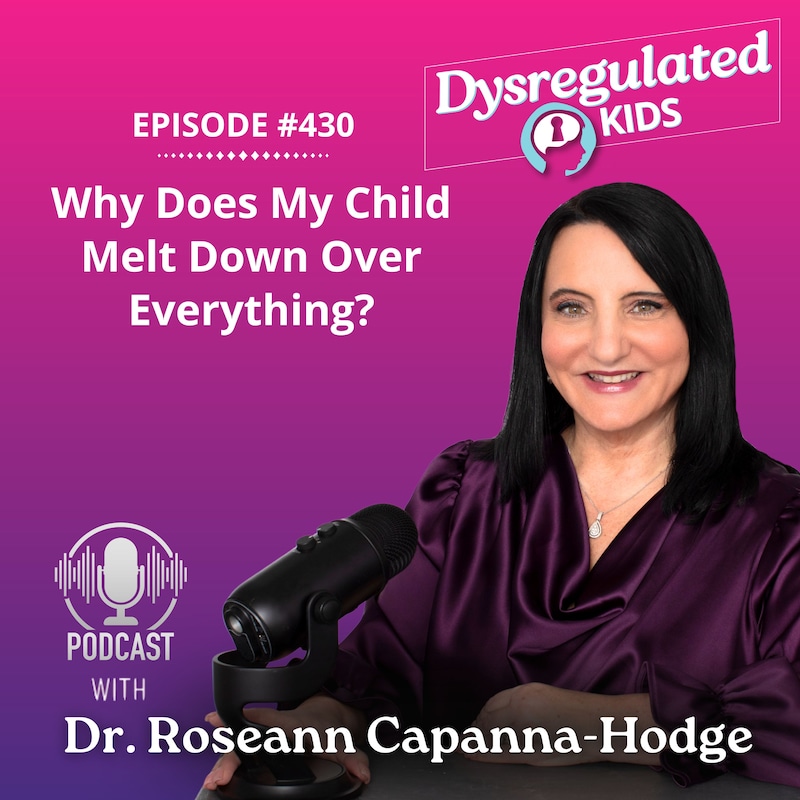
If you've been asking yourself, why does my child melt down over everything, you're not alone. Learn why emotional outbursts are often signs of nervous system overload—not bad behavior. Dr. Roseann Capanna-Hodge shares her Regulation First Parenting™ approach to help families create lasting calm and connection.
Every parent has experienced it—that moment when asking your child to put on a shirt, turn off Roblox, or brush their teeth suddenly leads to tears, yelling, or total shutdown. It feels confusing because the reaction seems so much bigger than the situation.
The good news? The meltdown isn't usually about the shirt, the game, or the transition. It's often the final drop in an already overflowing stress cup.
Once you understand what's happening in your child's nervous system, everything starts to make more sense—and your parenting becomes far more effective.
Why Does My Child Melt Down Over Everything?
When your child's reaction feels completely out of proportion, it's natural to assume they're being defiant. But it’s important to remember that behavior is communication.
A meltdown often signals that your child's nervous system has become overwhelmed long before the explosion happened. School stress, lack of sleep, sensory overload, anxiety, social demands, or difficult transitions can all quietly fill their "stress cup."
Key takeaways:
- Behavior is the symptom—not the root problem.
- Small triggers often become the "last straw."
- Neurotypical children dysregulate too, though neurodivergent kids may experience it more often.
Imagine your child happily playing a game all afternoon. The request to stop isn't what caused the meltdown—it simply overflowed an already full nervous system.
🗣️ “Your kid isn't giving you a hard time—they're having a hard time.” — Dr. Roseann
You don’t have to figure this out alone.
Become a Dysregulation Insider VIP and get your FREE Regulation Rescue Kit:
How to Stay Calm When Your Child Pushes Your Buttons and Stop Oppositional Behaviors.
Head to www.drroseann.com/newsletter and start your calm parenting journey today.
Why Doesn't My Child Listen During a Meltdown?
When your child is dysregulated, their thinking brain temporarily goes offline.
That's why reasoning, lecturing, negotiating, or punishment rarely works during the heat of the moment. Their nervous system is focused on survival—not learning.
Instead:
- Calm the brain first.
- Connect before correcting.
- Wait until they're regulated before teaching lessons or giving consequences.
You're not failing. You're working with biology, not bad behavior.
If you're ready for simple, science-backed strategies that actually work, check out Quick CALM, a step-by-step program designed to help parents regulate first and reduce daily meltdowns.
How Can I Help My Child Calm Down Faster?
One incredibly simple strategy that needs to be highlighted: The Love Pause.
Before reacting:
- Place your hand over your heart.
- Take one slow breath.
- Relax your shoulders.
- Soften your face.
It takes only three seconds—but those three seconds help regulate your nervous system first.
Remember:
- The calmer nervous system always leads.
- Your child borrows your calm through co-regulation.
- Progress—not perfection—is the goal.
Why Do Parenting Strategies Work for One Child but Not Another?
Every child has a different nervous system.
Temperament, sensitivity, anxiety, neurodivergence, sensory processing, and accumulated stress all affect how children respond. What works beautifully for one sibling may completely miss the mark for another.
That's why parents should stop chasing perfect behavior and instead focus on Regulation First Parenting™.
Let's calm the brain first. Everything else follows.
Takeaway & What’s Next
You're not alone, and it's gonna be OK. When you begin seeing meltdowns through a nervous system lens, parenting becomes less about controlling behavior and more about creating safety and connection.
Every small moment of regulation builds lifelong resilience—for both you and your child.
Join the Regulated Child Summit and pre-order The Dysregulated Kid for expert guidance and practical solutions for raising emotionally healthy kids.
FAQ s
Why does my child overreact to small things?
Small events often trigger an already overwhelmed nervous system. The reaction isn't about the event—it's about accumulated stress.
Are frequent meltdowns a sign of ADHD or anxiety?
Sometimes, but not always. Many children experience dysregulation without a specific diagnosis. The nervous system should always be considered first.
Should I discipline my child during a meltdown?
No. Wait until your child is calm. Regulation comes before correction.
Can children learn self-regulation?
Absolutely. Self-regulation isn't something children are born with—it's a skill developed through repeated experiences of safety, connection, and support.
When your child is struggling, time matters.
Don't wait and wonder—use the Solution Matcher to get clear next steps based on what's actually going on with your child's brain and behavior.
Take the quiz at www.drroseann.com/help