Shownotes
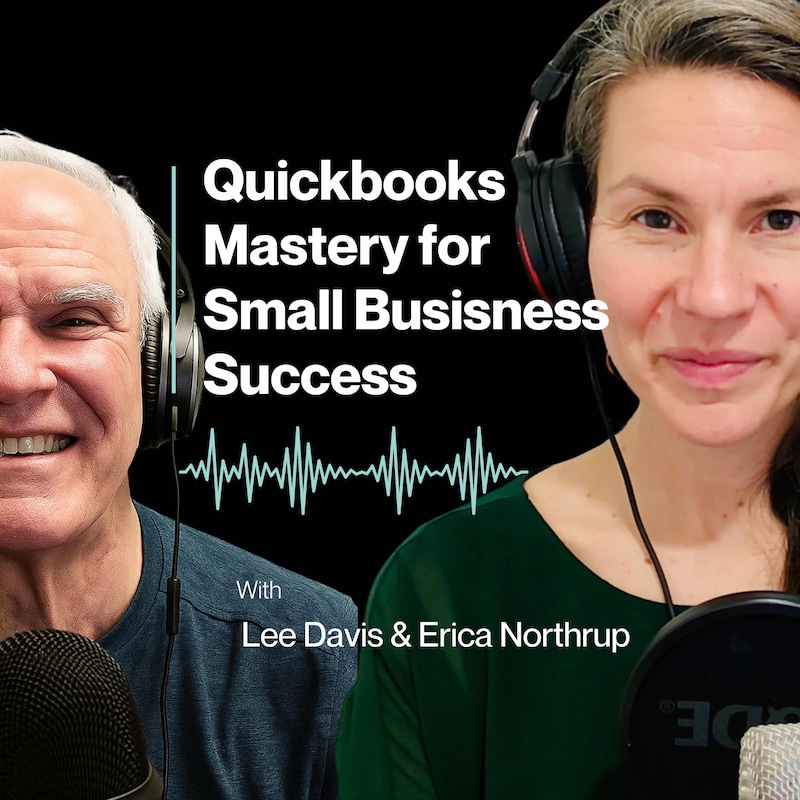
Episode 42: Is Your QuickBooks Ready for Tax Season? Start Now, Not in January
Tax season may feel months away, but waiting until January to examine your QuickBooks can leave you trying to untangle an entire year under deadline pressure.
In this episode of QuickBooks Mastery for Small Business Success, Erica Northrup and Lee Davis explain why tax readiness is a year-round process—and why September and October are valuable checkpoints for small-business owners. There is still time to correct bookkeeping problems, gather missing information, speak with your tax professional, and make informed year-end decisions before December 31.
You will learn what “tax-ready QuickBooks” actually means, why a correct bank balance does not guarantee accurate books, which red flags deserve investigation, and what your CPA expects you to provide. Erica and Lee also walk through a practical 15-minute review you can use to identify questions without making rushed changes to transactions you do not understand.
Key Takeaways
● Tax readiness happens throughout the year. Consistent monthly bookkeeping makes year-end dramatically easier.
● September and October give you time to correct problems and pursue meaningful tax planning before the year closes.
● The business owner is ultimately responsible for understanding the financial picture, even when a bookkeeper manages QuickBooks and a CPA prepares the tax return.
● A matching bank balance does not prove that QuickBooks is correct. Duplicate transactions, personal purchases, uncategorized items, and incorrectly recorded assets or loans can still distort the reports.
● Review reconciliations, bank feeds, the Profit & Loss, the balance sheet, accounts receivable, accounts payable, payroll liabilities, loans, undeposited funds, and contractor records.
● Loan payments must be separated between principal and interest. Large equipment and vehicle purchases may belong on the balance sheet rather than the Profit & Loss.
● Old bank-feed items, negative balances, unexplained accounts, and receivables you do not expect to collect are questions worth investigating.
● Gather W-4s for employees, W-9s for contractors, receipts, bills, and supporting documents before deadlines to create unnecessary stress.
● Your CPA’s job is tax preparation and tax planning—not becoming your forensic bookkeeper during the busiest part of the year.
● If your 15-minute review reveals problems, make a list and investigate. Do not start deleting or changing transactions you do not understand.
Questions to Reflect On
● Are all bank and credit-card accounts reconciled through the most recent statement?
● Are old or unexplained transactions still sitting in the bank feed?
● Does accounts receivable represent money customers actually owe—and that you reasonably expect to collect?
● Have all outstanding bills been entered into accounts payable?
● Do payroll-liability and loan balances agree with the underlying records?
● Were equipment and vehicle purchases recorded appropriately?
● Are there negative, uncategorized, or unexplained balances on the balance sheet?
● Do you have current W-9s for your independent contractors and complete employee information for year-end payroll forms?
● Can you explain the major changes on this year’s Profit & Loss compared with last year?
● Do you trust the numbers enough to have a productive tax-planning conversation?
Mentioned in This Episode
● Profit & Loss and comparative Profit & Loss reports.
● Balance sheet review.
● Bank and credit-card reconciliations.
● Bank-feed matching and duplicate transactions.
● Accounts receivable, accounts payable, and undeposited funds.
● Payroll liabilities, W-2s, W-4s, 1099s, and W-9s.
● Loan reconciliation and principal-versus-interest allocation.
● Fixed assets, equipment, and vehicles.
● Receipts, bills, and transaction documentation.
● The free QuickBooks Clarity Scorecard.
● The upcoming QuickBooks course and Episode 43 on practical tax planning.
Recommended Resources
● Free QuickBooks Clarity Scorecard
● Questions or support: [email protected]
Timestamps
00:00 - QuickBooks Mastery Podcast Intro
00:45 - Episode 42: Is Your QuickBooks Ready for Tax Season?
01:40 - When Tax-Season Preparation Should Begin
02:59 - Why the Business Owner Is Still Responsible
05:05 - What Tax-Ready QuickBooks Actually Means
07:00 - When the Bank Balance Is Right but QuickBooks Is Wrong
08:48 - The Biggest QuickBooks Red Flags Before Year-End
10:32 - Uncategorized Transactions and Old Bank-Feed Items
11:31 - Payroll Liabilities, Receivables, and Loan Balances
14:49 - Why Finding Problems Before January Matters
16:33 - Memory, Receipts, and Documenting Large Transactions
19:04 - Bookkeeping Cleanup Versus Tax Planning
20:13 - What Your CPA Expects at Tax Time
23:04 - A Practical 15-Minute QuickBooks Review
24:43 - Investigate Before You Change Transactions
26:47 - You Have Time: Start With the Clarity Scorecard
28:16 - Episode 43 and the QuickBooks Course Waitlist
30:54 - Final Reminder and Podcast Outro
Call to Action
Set aside 15 minutes and open your QuickBooks. Review the bank feed, balance sheet, Profit & Loss, reconciliations, accounts receivable, accounts payable, loans, payroll liabilities, and uncategorized transactions. Write down anything that does not make sense. Begin with questions and investigation rather than rushed changes.
If you are unsure whether your QuickBooks is ready for tax season, start with the free QuickBooks Clarity Scorecard. It will help you identify where you have clarity and where your books may need attention.
Email [email protected] with your QuickBooks questions, subscribe to QuickBooks Mastery for Small Business Success, and share this episode with another business owner who would rather prepare now than panic in January.
This episode provides general educational information. Consult your own qualified tax professional about tax planning, deadlines, deductions, retirement contributions, and decisions specific to your business.
Transcripts
Welcome to QuickBooks mastery for small business success.
2
:I'm Erica Northrup.
3
:Lee: And I'm Lee Davis.
4
:Erica: I handle the tech,
and he handles the numbers.
5
:And together, as a father-daughter team,
we bring decades of experience helping
6
:small to medium-sized businesses thrive.
7
:Lee: We know that, as a business owner,
your time is best spent mastering
8
:your craft and growing your business,
not getting lost in QuickBooks.
9
:Managing finances can be confusing,
and you don't have hours to waste
10
:sorting through spreadsheets
or fixing bookkeeping mistakes.
11
:That's where we come in, helping
you streamline QuickBooks so you
12
:can focus on building your business.
13
:Erica: Each week, we break it all
down into simple, actionable steps
14
:so you can focus on growing your
business, not fixing your books.
15
:Lee: Let's embark on this journey together
16
:Erica: Welcome back to QuickBooks
Mastery for Small Business Success.
17
:This is episode 42, Is Your
QuickBooks Ready for Tax Season?
18
:Start Now, Not in January.
19
:And I know you guys.
20
:Some of you probably heard tax
season and thought, "It is September.
21
:Please don't do this to me yet."
22
:But that's actually why we're
talking about it now, because I
23
:think a lot of business owners think
getting ready for taxes is something
24
:to do after the year is over.
25
:You close out December, January comes
around, and eventually, your accountant
26
:asks for everything, but by then, if
something's wrong in QuickBooks, you're
27
:trying to untangle an entire year at once.
28
:So today, we want to talk about
what business owners should actually
29
:be looking at now while there is
still plenty of time to fix things.
30
:And Papa, I want to start really basic.
31
:So when should a business owner actually
start thinking about whether their
32
:QuickBooks is ready for tax season?
33
:Lee: Tax readiness happens
really throughout the year.
34
:Erica: Yeah.
35
:Lee: You know, really almost weekly.
36
:Definitely good monthly bookkeeping
makes year-end dramatically easier.
37
:September, October is really a
great checkpoint because there's
38
:still time to correct problems.
39
:Waiting until January means
you're trying to remember
40
:transactions from many months ago.
41
:Mm-hmm.
42
:And your accountant shouldn't
be the person discovering basic
43
:bookkeeping problems at tax time.
44
:You know, it's interesting, during the
summer, many clients put off dealing with
45
:their QuickBooks issues or problems- Yeah
46
:thinking they will take care of it.
47
:Yep.
48
:And so the answer is now is the time.
49
:Erica: Right.
50
:Y- Absolutely
51
:… Lee: you should run your profit and
loss to get a snapshot of what happened
52
:during the first nine months if we're
talking about through September-
53
:Mm-hmm … and compare it to a year
ago, and review your net profit.
54
:You may need to schedule an appointment
with your accountant or tax advisor.
55
:And I've heard stories, of course,
that people tell me when they get
56
:really behind, "My bookkeeper left
six months ago, and I'm overwhelmed."
57
:Erica: Yeah.
58
:Yeah, I'm sure that is
a, that's a huge thing.
59
:I mean, I would be overwhelmed if
my bookkeeper six months ago and
60
:I've just been struggling along to
get it all taken care of myself.
61
:Lee: So I think when you look at the
business, the way the tax season works.
62
:Erica: So if I'm a business owner
and I've basically been thinking, "My
63
:bookkeeper handles QuickBooks and my
CPA handles my taxes," why should I
64
:personally care about this right now?
65
:Lee: Well, because ultimately,
you're responsible.
66
:Erica: Right,
67
:Lee: responsible.
68
:Responsible for making sure that your tax
return is filed accurately and on time.
69
:Mm.
70
:You know, CPAs are, or tax professionals
are generally extremely busy.
71
:Mm.
72
:And most bookkeepers will
handle the QuickBooks issues.
73
:And, you know, they should not in- have
their CPAs involved in making corrections
74
:or reviewing their QuickBooks and,
because the CPAs are gonna do a flyover.
75
:They're gonna do just an overview-
76
:Erica: Right
77
:… Lee: based on their accounting software.
78
:Erica: Mm.
79
:Lee: So it's really the owner's
responsibility for understanding
80
:the financial picture.
81
:Erica: Yeah.
82
:Lee: Even if somebody else does the
bookkeeping, and I think that's,
83
:you know, really an important issue.
84
:You know, pull out your last year
tax return and make a checklist
85
:of items you need to review.
86
:Erica: Right.
87
:Lee: You may need to plan
for funding of your SEP IRA.
88
:Uh, depending on your net
income, you might decide to
89
:purchase some needed equipment.
90
:Mm.
91
:This is the time of the year
to review your budget and see
92
:how you're tracking with your
income and expenses for the year.
93
:How does your cash flow look
like for the fourth quarter?
94
:You know, th- those are some
areas you may wanna just consider.
95
:Erica: Yeah, absolutely.
96
:You know, and that is something
you see a lot, right, Papa?
97
:An owner assuming everything is
fine because somebody is doing the
98
:bookkeeping, and then you open the
file, and you realize it really isn't.
99
:Lee: That's correct.
100
:And, you know, most of our clients
are extremely busy during the summer.
101
:Erica: Yeah,
102
:Lee: absolutely.
103
:So, do you know that the last thing
they're thinking about is tax season?
104
:And- Absolutely … you know, and
the work potentially just piles up.
105
:Mm-hmm.
106
:And they think it'll, you know, can
get the work to us, or they can get
107
:all the work in before- Mm … the
end of the year, and they're all set.
108
:Mm-hmm.
109
:But I remind them, the further they
get behind, the more difficult it
110
:is to get a good snapshot for them.
111
:Erica: Yeah, absolutely.
112
:Okay, so when you say someone's QuickBooks
is ready for year-end or tax season, what
113
:does that actually mean to you, Papa?
114
:What needs to be true?
115
:Lee: I think you need to get sort
of like a, a good snapshot- Yeah
116
:of their books, right?
117
:And it would include looking
at their bank accounts.
118
:Erica: Yep.
119
:Lee: To see if, you know, you'd know
that if you got them reconciled.
120
:Or credit cards were reconciled,
and you'd see if they had any
121
:uncategorized transactions.
122
:And you'd have a good understanding
if you looked at their chart of
123
:accounts if to see if transactions
were getting recorded correctly.
124
:Are loans recorded properly?
125
:How…
126
:What's the status of their
payroll accounts and their, are
127
:their liabilities making sense?
128
:Are accounts receivable
reflecting money actually owed?
129
:You know, what's the
status of accounts payable?
130
:Do they have all of their bills entered?
131
:Owner's contribution draws, equities,
are they being handled properly?
132
:And major assets recorded appropriately.
133
:If, do they buy some equipment this year
that you know needs to be capitalized?
134
:Are the balance sheet
accounts supported by reality?
135
:As, when you think about are
there any negative balances
136
:where there shouldn't be?
137
:Mm-hmm.
138
:Are there any unexplained balances?
139
:And are there uncategorized transactions?
140
:And run your list of, this
is pretty practical, but run
141
:your list of subcontractors.
142
:If you record your payments to
subcontractors, you may need
143
:to make sure they get a W-9.
144
:Erica: Yep.
145
:Lee: And you also want to take a look
at your profit and loss in QuickBooks,
146
:'cause that's where you're gonna
see your contractors for the year.
147
:And review undeposited funds.
148
:If this could be a place that
income could be overstated.
149
:Erica: Mm.
150
:Lee: So, you know, while I think this
is a possible areas to look, you need
151
:to really just look over your balance
sheet and your income statement and,
152
:or your profit and loss and be able to
really eyeball it and see if there's
153
:anything that stands out to you.
154
:Erica: Absolutely.
155
:Okay.
156
:So Papa, you had something there
that I think is really important.
157
:Is it possible for someone's bank
balance to be right and for their
158
:QuickBooks to still be wrong?
159
:Lee: Of course.
160
:Mm-hmm.
161
:You, when you run your balance sheet and
review any negative transactions that
162
:may be overstating your income and/or
your expenses- If you have made large
163
:purchases of equipment or vehicles, these
items should be recorded on your balance
164
:sheet, not on your profit and loss.
165
:Erica: Mm.
166
:Lee: Check on cash transactions
that the owner may have made or
167
:paid for personally that need to
be recorded as business expenses.
168
:I have a restaurant guy who has lots
of personal expenses that, you know,
169
:he picks the wrong credit card.
170
:Erica: Oh, yeah.
171
:Lee: Or the wrong debit card.
172
:Erica: Oh, dear.
173
:Lee: And, you know, and so
we need to catch those- Yeah
174
:so that we can record
them as business expenses.
175
:Mm.
176
:And, you know, one of the things when
you reconcile your bank statement is
177
:review your outstanding check report-
Mm … for duplicate checks and
178
:transactions that are recorded in the
register that are not in your bank feed.
179
:So there could very well be some duplicate
checks that need to get accounted for.
180
:Erica: Absolutely.
181
:Okay.
182
:So because I think that's
probably a misconception, right?
183
:The bank account matches,
so we're good, move on.
184
:Right.
185
:But if you've learned anything,
there's one thing you learned
186
:from our podcast, it's match,
don't just automatically import.
187
:Match your transactions, Papa.
188
:That's
189
:Lee: right.
190
:D- don't add them.
191
:Erica: Right.
192
:Don't
193
:Lee: add them.
194
:Match, do matching to the register.
195
:And again, we talked about that if you
look at your bank reconciliation report,
196
:you can get a lot of good information
of work that may be in your register,
197
:but didn't come through the bank.
198
:So that's an, just an
important place to look.
199
:The place I always look.
200
:Erica: Yeah, absolutely.
201
:Okay, so let's say I'm listening
to this and thinking, y- you,
202
:now you've made me nervous.
203
:How do I know if I have a problem, Papa?
204
:What are some of the biggest red flags you
would look for in QuickBooks right now?
205
:Lee: Well, one of the areas I think
we've talked about that are very
206
:common is if you have, for example,
loan accounts, not just your bank
207
:accounts, your loan payments, they
could have been classified as expenses
208
:instead of, you know, classifying them
as principal and interest payments.
209
:Mm.
210
:So that's one really good place
to look and see, because if those
211
:are categorized incorrectly, it
overstates your profit and loss-
212
:Erica: Mm
213
:… Lee: in terms of expense.
214
:Again, it's a good time of the
year to review your budget and
215
:project your income for the year.
216
:Follow up on your accounts
receivable so that you have a
217
:good projection of your income.
218
:If you have a large amount of outstanding
and accounts receivable and, and a stack
219
:of bills that haven't been entered,
then you need to get those up to date.
220
:Mm.
221
:Because it affects your
cash flow projection.
222
:And if you have items that are
questionable expenses the business
223
:paid that are personal in nature,
that list needs to be reviewed and
224
:adjusted off your business expenses.
225
:Again, you may need to look again to
make sure that any expenses get recorded
226
:in this calendar year to make sure you
limit what might be your tax exposure.
227
:You know, you want to be able to
make sure you get as much deductible
228
:as possible in this calendar year.
229
:So again, if you've got a stack of
bills, make sure you get them entered.
230
:Mm.
231
:And if you've got accounts
receivable- Yeah … make sure
232
:you're following up on it.
233
:Erica: Yep, absolutely.
234
:What about transactions
sitting in uncategorized, Papa?
235
:What about that?
236
:Lee: Yeah, that is oftentimes a good
place to look because people will
237
:sometimes just enter transactions-
Mm … without categorizing them, and
238
:that's where QuickBooks says, "Oops,
you know, you need to categorize that."
239
:So that'll go in the uncategorized bucket.
240
:Erica: Yep, absolutely.
241
:Lee: And, and yes, you need to because
it doesn't go to a deductible expense.
242
:So you want to get those c-
uncategorized transactions taken care of.
243
:Erica: Mm, okay.
244
:So what about really old
things in the bank feed?
245
:Is there anything there
that we should look at?
246
:Oh,
247
:Lee: oh, absolutely.
248
:If you've got stuff sitting in the bank
feed that you've just been avoiding-
249
:Erica: Mm
250
:… Lee: just consider that much like
an uncategorized transaction.
251
:Mm.
252
:That oftentimes those are sticky wickets.
253
:You know, something that payroll
didn't get matched, or you've just got
254
:a big transaction that came through
the bank, and 'cause anything that's
255
:sitting in the bank feed needs to
get addressed prior to year-end.
256
:Erica: Okay.
257
:What about payroll liabilities?
258
:Yeah.
259
:Talk to me a little bit about that.
260
:Lee: Yeah, those payroll
liabilities need to get looked at.
261
:Mm.
262
:All right?
263
:If you've got an outstanding payroll
liability sitting on your balance sheet,
264
:you know, it's a negative balance, and
you need to look at that because that
265
:could very well need to be handled
because there could be some expense
266
:there that needs to be reported- Mm
267
:or there could be a payment that needs
to be made on that payroll liability.
268
:Mm.
269
:Because, you know, this is a good time
of the year to clean up your profit and
270
:loss and your balance sheet because the
end user might be your bank- Mm-hmm … or
271
:might be your accountant, or could be your
tax advisor, that they're looking at it.
272
:Mm.
273
:And so you wanna, you want
to minimize their questions.
274
:Erica: Mm.
275
:Lee: And because it causes
you to go back and forth.
276
:So if you're able to clean
something up, it can avoid
277
:this unnecessary communication.
278
:Erica: Absolutely.
279
:So what if accounts receivable
says customers owe me money
280
:that I know they don't owe me?
281
:What should you look at there?
282
:Lee: Yeah, that would be an issue
because on the accrual basis,
283
:accounts receivable adds to income.
284
:Because when you run your reports on
the accrual basis, it's gonna take that
285
:accounts receivable and put that number.
286
:Mm.
287
:So again, you wanna minimize that issue.
288
:You wanna get that accounts
receivable cleaned off- Mm
289
:before you start running your reports.
290
:Now, to be fair, most CPAs are
gonna run the report when they
291
:do your taxes on the cash basis.
292
:But generally, you're gonna look at
your cash planning on the accrual basis.
293
:Mm.
294
:Okay?
295
:And that becomes an issue when
you sit down with your accountant.
296
:If you're cash planning on the
accrual basis and your income is
297
:too high, you wanna definitely get
that in line with what you would
298
:expect to collect for the year.
299
:Erica: Mm, okay.
300
:So good.
301
:So what about negative balances
that don't make sense, Papa?
302
:What should you do with those?
303
:Lee: Yeah, you should definitely
look at those and research them.
304
:Mm.
305
:Because that's a good structural
issue that could tell you that
306
:something is not being recorded
correctly- In your chart of accounts.
307
:Erica: Okay.
308
:What about loans?
309
:Talk about loans for a bit.
310
:Lee: Yeah, if you have loans, you
need to reconcile those loan balances-
311
:Erica: Mm-hmm
312
:… Lee: to make sure that they
equal what the bank says.
313
:Mm-hmm.
314
:That again, while they're not
checking accounts, they are incredibly
315
:important when it comes to breaking
down principal and interest.
316
:Erica: Mm.
317
:Lee: That you wanna get that
interest deduction, and you
318
:wanna get that principal recorded
correctly against the loan.
319
:So I mean, I have one client who has
maybe 12 to 15 loans, okay, that every
320
:month that need- Mm … to get reconciled.
321
:Yeah.
322
:And so it's a good way to keep up to
date on what the loan payment is and- Mm
323
:how it's broken down
principal and interest.
324
:Erica: Yeah.
325
:Absolutely.
326
:You know, and I want all of our listeners
to just remember, you know, the goal is
327
:not to be able to exactly know what to do
with every single item that we listed off.
328
:Uh, I think the goal is that you just need
to understand that there is something that
329
:deserves investigation, that if you see a
red flag, you just need to look into it.
330
:You don't need to go around clicking
and making changes right away,
331
:but you do need to investigate.
332
:So good.
333
:Okay, so what's actually different if
I find one of those problems now versus
334
:discovering it in January or February?
335
:What's the difference, Papa?
336
:Where, where does that help me
when I think about my taxes?
337
:Lee: Really, the difference is
if you wait till January, you may
338
:have missed your opportunity to
make any meaningful tax planning.
339
:You know, you'll also have a deadline for
and your:
340
:It may require that you work with your
payroll provider to make- Mm … sure
341
:that all your employees' information,
especially your new hires, are correct.
342
:Because, you know, most payroll
companies are gonna run W-2s
343
:the first week in January.
344
:Erica: Mm.
345
:Lee: And if they're not accurate,
then you could be in a problem
346
:with your payroll company, 'cause
they may have to rerun them again.
347
:Erica: Yeah.
348
:Lee: And you also need to
send out your:
349
:So you want- Mm … your W-9s.
350
:Um, complete.
351
:So it's really important, you know, W-4s,
your current employees, and W-9s- Mm-hmm
352
:… for your, uh, independent contractors.
353
:Yeah.
354
:It's a lot of alphabet soup, and
if you deal with it when you have
355
:your new hires or when you bring on
a contractor, then it's important
356
:to get those W-4 forms scanned.
357
:Mm.
358
:Mm.
359
:Get those W-9 forms scanned-
360
:Erica: Yeah
361
:Lee: so that you have all of
your information up to date.
362
:Yeah.
363
:And I can't stress the
importance of tax planning, that-
364
:Erica: Mm
365
:… Lee: so you, I mean, payroll is
one of your biggest expenses.
366
:Erica: Yeah, absolutely.
367
:To
368
:Lee: be up to date with your bank feed
and payroll and anything that might be in
369
:the bucket that's gotta be accounted for-
370
:Erica: Yeah
371
:Lee: is important for your small business.
372
:Erica: It makes such a difference.
373
:You know, and is part of the
problem simply memory, Papa?
374
:Am I just, as Shiloh points out, I'm
getting a lot of gray hair, so is it
375
:just because I'm getting older and my
memory is not as good as it once was?
376
:Is that simply the problem,
or is it something else there?
377
:Lee: Well, the problem is your
papa has completely gray hair,
378
:so- And he has for a lot of years.
379
:Yeah, true.
380
:So I think the gray hair doesn't
really have anything to do with memory.
381
:Yeah.
382
:It has everything to do with understanding
that, you know, you're overwhelmed.
383
:Erica: Mm.
384
:Yeah.
385
:Lee: Yep And so that you need to be able
to take care of things as things come up
386
:Erica: As they happen, yes.
387
:Lee: And-
388
:Erica: Absolutely
389
:… Lee: have, have a to-do list,
right, that you get done.
390
:Erica: Yeah, I know.
391
:If you have a transaction that was
for $4,700 from two weeks ago, I can
392
:probably tell you exactly what that
was for, but if I wait till February,
393
:I'm probably not gonna remember exactly
what that $4,700 transaction was for.
394
:That is just the honest truth.
395
:Mm-hmm.
396
:And that is so true about, you
know, I got a lot on my plate these
397
:days, and actually, one of the kids
reminded me about something apparently
398
:that I promised from two weeks ago,
and I can't quite remember what…
399
:If I actually promised a
thing from two weeks ago.
400
:I probably shouldn't say this
out loud because they could just
401
:start saying, "Well, Erica, you
promised us to do this thing."
402
:Mm-hmm.
403
:And I'll probably just say, "Okay,"
'cause I just can't remember.
404
:So right now I've decided when this
happened that I'm gonna start writing
405
:these things down in my calendar, so
if I said I was gonna do this thing,
406
:now it's, it's gonna get into my
calendar, and it's in my calendar.
407
:If they say I did the thing,
well, if it's not on my calendar,
408
:I didn't say the thing, so yeah.
409
:Lee: Mm-hmm.
410
:No, that's probably a good step.
411
:Mm-hmm.
412
:For small businesses, they need
to make sure they have copies of
413
:bills and to support expenses.
414
:Yeah.
415
:So if you made a purchase six
or nine months ago and you're
416
:wondering what it's for-
417
:Erica: Yeah
418
:… Lee: it's best to get that bill
or have that receipt and scan it.
419
:Erica: Mm-hmm.
420
:Lee: Or, you know, rather
have files, paper- Yeah
421
:all over your desk.
422
:Erica: Yeah.
423
:You
424
:Lee: know, get into a system where you can
click on that transaction and there's no
425
:question what that- Mm … $4,700 was for.
426
:Erica: Yeah.
427
:Absolutely.
428
:That's so good.
429
:And presumably, there are also things
that you may actually still have time.
430
:We're not at the end of the year yet, so
there is still time to actually take time
431
:to do something before December 31st,
whereas after the year closes, you're
432
:dealing with what already happened.
433
:Isn't that true, Papa?
434
:Lee: Yeah.
435
:I think a couple things
you wanna keep in mind.
436
:You want distinguish between cleaning
up, you know, bookkeeping cleanup-
437
:Erica: Mm-hmm
438
:… Lee: and, and so that you can
get the correct tax advice.
439
:Yeah.
440
:So if you're cleaning up your books
when you should be seeking tax advice-
441
:Erica: Mm
442
:… Lee: um, the tax professionals
and your accountants, it's
443
:important to get the information
to them to meet their deadlines.
444
:Um, some tax professionals, for some
of my clients, will schedule meetings
445
:in November and December to review-
Mm … the company's performance
446
:and help prepare their tax returns.
447
:So you don't want your accountant or tax
professional cleaning up your QuickBooks.
448
:And first of all, they're
probably not gonna do that.
449
:They're gonna just tell
you to get it done.
450
:Right.
451
:And meanwhile, you're
behind the power curve.
452
:Erica: Yeah.
453
:Lee: So their job is to
maximize your tax savings.
454
:Erica: Yeah, absolutely.
455
:Okay, I wanna shift our
focus just a little bit.
456
:I want to talk about the CPA side of this,
because I think business owners sometimes
457
:assume, "Well, my accountant will just
fix everything when they do my taxes."
458
:If you think your accountant or your
tax professional will audit your
459
:QuickBooks, you are very mistaken.
460
:It's your job to make sure all the work
has been done so that your professional
461
:can minimize your tax liability and
complete your tax return timely.
462
:So what should we actually be
handing our CPA at tax time, Papa?
463
:Lee: Yeah.
464
:They'll have a checklist.
465
:Erica: Yeah.
466
:Lee: Okay?
467
:And they will have a list of
documents that they're going
468
:to want you to provide them.
469
:Mm-hmm.
470
:And they're gonna want you to
hand them a clean QuickBooks file.
471
:Yeah.
472
:So many CPAs are listed as your
tax preparer in QuickBooks.
473
:Yeah,
474
:Erica: yeah.
475
:Lee: And so what they'll wanna
do is just be able to click
476
:on the QuickBooks software and
upload it into their tax system.
477
:Erica: Yeah.
478
:Lee: And they wanna
check out any red flags.
479
:Yeah.
480
:Comparing from last year, and they
wanna see your completed documents.
481
:And particularly if you've had any
changes in the year, you're gonna wanna
482
:outline for them clearly so that they
can give their input and see if you
483
:have all the necessary information.
484
:Erica: Absolutely.
485
:You know, what happens when instead
of getting clean financials, the
486
:CPA has to spend time figuring
out what happened all year, Papa?
487
:Like, I'm sure that has got
to be frustrating for a CPA.
488
:Will they even- Yeah … look at it?
489
:Will they even handle it?
490
:I don't even know.
491
:Um- Probably not, right?
492
:Lee: Some cases, no.
493
:Yeah.
494
:They just hand it back
and say, "You know what?
495
:With all the volume of work, I don't
have time to go through your QuickBooks."
496
:Erica: Right.
497
:" Lee: And talk with your bookkeeper or
find somebody who can help you, and then
498
:get your QuickBooks back to me so I can
continue on with your tax preparation."
499
:Uh, or- Right … they will
charge you significantly.
500
:Yeah.
501
:You know, if they're gonna
charge you at $250 an hour-
502
:Erica: Mm-hmm, yeah
503
:… Lee: then you very well may wanna
consider- uh, before you hand it
504
:over that you've got the work done.
505
:Erica: Yeah.
506
:Absolutely.
507
:There's so much there.
508
:'Cause, you know, it's kind
of like what you put into your
509
:body is what you get out, right?
510
:If you're putting in good fuel,
you're gonna get a great outcome,
511
:but if you're putting lousy fuel,
you're gonna get a lousy outcome.
512
:Same thing with your CPA.
513
:Right.
514
:If you give them great bones, if you
give them all the correct information,
515
:you're gonna get out of it something
that's higher quality than if you just
516
:give them garbage and- Mm-hmm … stuff
that doesn't make sense, and this
517
:is your taxes, so super important.
518
:Okay, so really, we don't want
to pay our tax professional to
519
:become our forensic bookkeeper.
520
:Your tax professional has not only
your work, but many other clients
521
:to, to make sure your work is done
timely, give them everything they need.
522
:I think this is what we're saying.
523
:Absolutely.
524
:Okay.
525
:Hmm.
526
:Let's make this really practical, Papa.
527
:Someone is listening in the car right now.
528
:They get back to their office, open
QuickBooks, and they're willing to
529
:spend 15 minutes looking around.
530
:Where do you want them to look, Papa?
531
:Lee: Well, I think they could
start with the bank feed.
532
:Okay, I think that's a good place
to start to make sure- Yeah … that
533
:they don't have any old transactions
sitting in their bank feed.
534
:Um, they could, in fact,
look at their balance sheet.
535
:Erica: Mm.
536
:Lee: Start with your balance sheet.
537
:Yeah.
538
:Erica: Yes.
539
:And
540
:Lee: then look at your profit and loss.
541
:Check on your bank reconciliations.
542
:Erica: Yeah.
543
:Lee: Look at your accounts receivable
and your accounts payable, and are
544
:there any uncategorized transactions?
545
:What would make you stop and say,
"Oh, I need somebody to look at this"?
546
:That somebody is you, right?
547
:Erica: Right.
548
:Lee: To talk with your
bookkeeper about it.
549
:Erica: Yeah,
550
:Lee: yeah.
551
:Or this is really just a very
practical approach to say, in some
552
:ways, you're creating a checklist.
553
:Erica: Yeah.
554
:Lee: To say, "Here are the things
that I need to make sure line up."
555
:with what I will be reporting as income
and what I'll be claiming as expenses.
556
:Yeah.
557
:And run a comparative profit
and loss from last year.
558
:Yeah.
559
:And that's a good place.
560
:And, you know, in some cases
I tell people, "Pull out
561
:your last year's tax return."
562
:Erica: Mm-hmm.
563
:Lee: And, you know, just go down it,
because you'll find a lot of things
564
:that maybe you need to research.
565
:Erica: Yeah.
566
:Yeah, absolutely.
567
:Okay, so let's say I do that
15-minute check and I find six
568
:things that don't look right.
569
:What's my next move, Papa?
570
:Because I can imagine somebody deciding,
"I'm going to clean up my QuickBooks,"
571
:spending four hours in there changing
a bunch of transactions and potentially
572
:making the situation worse, Papa.
573
:So what would you say to that person?
574
:What would they do?
575
:So, you know, 'cause we're not telling
people to start deleting transactions or
576
:changing things they don't understand.
577
:We're telling them to start identifying
the questions, aren't we, Papa?
578
:Yeah.
579
:Lee: No.
580
:The first piece is just make a
list and start investigating, okay?
581
:Don't think you've got to get it all done.
582
:You've got plenty of time now
to look at two to three items-
583
:Mm-hmm … in 15 minutes, half an hour.
584
:All right?
585
:Yeah.
586
:And particularly if you're looking
at last year's tax return and
587
:you've got some questions about
what's happening this year.
588
:Erica: Yeah.
589
:Lee: Um, and you may want to be looking,
too, at your estimated payments.
590
:Mm-hmm.
591
:You know, how are things looking,
uh, comparative to last year?
592
:Um, these are questions that your CPA can
help you with, or your tax professional,
593
:but you wanna be able to anticipate those
and have those answers, and understand
594
:your tax planning options this year.
595
:Erica: Yeah, absolutely.
596
:You know, I think this ties into
something we've been talking
597
:a lot about on this podcast.
598
:There's a big difference between
having someone do your bookkeeping
599
:and actually understanding what
your numbers are telling you.
600
:You don't necessarily need to be the
person entering every transaction,
601
:but if you're running the business,
you should be able to look at your
602
:QuickBooks and have some idea whether
what you're seeing makes sense.
603
:So Papa, what do you think a
business owner should understand
604
:about their books even if they
have a really good bookkeeper?
605
:Lee: They should be able to really
look at their profit and loss.
606
:Erica: Mm.
607
:Lee: Okay?
608
:And look at their balance sheet,
and look at some key numbers-
609
:Erica: Yeah
610
:… Lee: on it, and just to be able to zoom
in and see if those numbers make sense.
611
:Erica: Yeah.
612
:Yes, absolutely.
613
:Okay, so if you're listening to
this in September, currently the
614
:message isn't, "Panic, tax season is
coming," it's actually the opposite.
615
:The message is, "You have time."
616
:This is the time to start asking,
"Are my accounts reconciled?
617
:Are there transactions sitting somewhere
that nobody knows what to do with?
618
:Does my accounts receivable
reflect who actually owes me money?
619
:Do my loan balances make sense?
620
:Are there strange numbers
sitting on my balance sheet?"
621
:And most importantly, "Do I trust
the numbers I'm looking at?"
622
:Because if the answer is no, you don't
want to discover that when your accountant
623
:is asking for your year-end financials.
624
:You want to discover it now.
625
:And if you're listening to all of
this and thinking, "I actually don't
626
:know whether my QuickBooks is in good
shape," that's exactly why we created
627
:the QuickBooks Clarity Scorecard.
628
:It's a free assessment designed to help
you identify where you have clarity
629
:in your QuickBooks and where you may
have gaps that need your attention.
630
:We will link it in the show
notes, and you can also go to our
631
:website at leedavisandcompany.com
632
:and you can check it out there.
633
:And once you know where the problems are,
you can start dealing with them one at a
634
:time instead of waiting until tax season
and trying to fix an entire year at once.
635
:Lee: I did some practical tax planning.
636
:Erica: Yeah.
637
:Lee: Some areas that they need
to understand what is deductible.
638
:Erica: Yeah.
639
:Lee: And what should be looked at.
640
:Erica: Yeah.
641
:Lee: For tax purposes.
642
:Erica: Okay, you guys, so stay tuned.
643
:Episode 43, we're gonna get really
practical, and you just heard what
644
:our episode 43 is gonna be all about.
645
:And I just wanna add a quick plug here.
646
:We do have a QuickBooks course that is
coming, and we have seen you guys have
647
:been on our website searching for it.
648
:I am going to put more prominent
on our website a link, a signup
649
:link, that you can get on our
waiting list for the course.
650
:And when we do launch it, you will
be the first to know when it is
651
:available, 'cause we are revamping this.
652
:It is going to be amazing.
653
:It is going to be such a dynamic course
that will answer all of your questions,
654
:that are gonna help you through everything
that you have been struggling with when
655
:it comes to QuickBooks and your business.
656
:So stay tuned.
657
:It is coming.
658
:So if you're excited for that, if
you're looking for that, go to our
659
:website, Lee Davis and Company, and sign
up to get on our wait list for that.
660
:So Papa, is there anything else
you want business owners to think
661
:about before we wrap this one up?
662
:Lee: I'd like them to think about the fact
that clearly their tax time is upon us.
663
:Erica: Yeah.
664
:Lee: So don't wait.
665
:Begin to get the work done now.
666
:Mm-hmm.
667
:And it'll relieve stress.
668
:Erica: Yes,
669
:Lee: absolutely.
670
:And so, you know, if, I think
that's what I'd like them to just
671
:remember that, you know, we have
some tools that will help them.
672
:Erica: Yes.
673
:Lee: Just, you know, just take
this podcast and run with it.
674
:Erica: Yeah.
675
:You know, and you're not alone.
676
:If you need help, we are here.
677
:Reach out to us directly at
678
:and we'll get back to you.
679
:We will help you out in
whatever way we possibly can.
680
:We're just so grateful for this journey,
and you guys are just along for this
681
:ride, and we know that if you do the
work, your business is going to skyrocket.
682
:It is just going to, to grow to
whatever means you possibly could want
683
:it to grow to, and QuickBooks is such
a great tool to help you get there.
684
:It is a tool, and it's a powerful tool.
685
:When you use it right, it will
make a difference in your business.
686
:That is absolutely what we're here for.
687
:So love it, you guys.
688
:Thank you so much for listening.
689
:You guys, if you found value in
this, we would love for you to
690
:tag us on Instagram or Facebook.
691
:Screenshot this episode, tag us, and
we'll feature you next week in episode 43.
692
:So we'll see you next week.
693
:Bye for now.
694
:Thanks for tuning in to QuickBooks
Mastery for Small Business Success.
695
:Lee: If you enjoyed this episode,
hit Subscribe and stay connected
696
:with us at leedavisoncompany.com.
697
:Erica: We know QuickBooks can
be overwhelming, so we've put
698
:together a free resource to
help you get started right away.
699
:Grab your copy at leedavisoncompany.com,
700
:and when you do, you'll also get
access to our VIP email list, where
701
:we share exclusive QuickBooks tips,
business strategies, and support.
702
:Lee: And we'd love to hear from you.
703
:If you have a QuickBooks question
or a business challenge, send it our
704
:way at [email protected].
705
:We might feature it in a future episode.
706
:Erica: We're here to help you
simplify QuickBooks and grow your
707
:business, one step at a time.
708
:See you next time.




