Shownotes
The discourse culminates in a compelling argument for educational reform in the context of AI integration. If students are conditioned to utilize AI as a mere replacement for their own cognitive efforts, they risk producing technically proficient yet intellectually vacuous work. Conversely, if educators instill a framework where AI is employed as a tool for enhancement, students will cultivate essential skills such as critical curiosity, empathy, and self-awareness. The role of educators transitions from mere regulators of technology use to facilitators of the very human capacities that render AI usage meaningful. This paradigm shift is imperative in a world increasingly dominated by technological facilitation, as it emphasizes the irreplaceable nature of human thought and creativity in an age of automation.
Takeaways:
- Using AI merely as a replacement for thinking diminishes our cognitive capabilities, rendering us weaker.
- AI can efficiently perform tasks previously deemed skilled, yet it lacks the ability to genuinely think or understand.
- Engaging AI as a partner in thought encourages deeper inquiry, enhancing our critical thinking and problem-solving skills.
- To utilize AI effectively, one must cultivate curiosity, empathy, and presence, ensuring that human qualities guide its use.
Transcripts
You probably use AI wrong.
Speaker A:Do you type a question, accept the answer, and move on?
Speaker A:Or ask AI to write something, copy the output, and call it done?
Speaker A:This is using AI as a replacement for thinking.
Speaker A:And it's making us weaker, not stronger.
Speaker A:But there's another way.
Speaker A:A way that makes you sharper, more insightful, more capable.
Speaker A:A way that will add purposeful EM dashes to your writing.
Speaker A:A way that uses AI to enhance human capacity rather than substitute for it.
Speaker A:Let's talk what AI actually threatens and what it doesn't.
Speaker A:AI can now do most of what we used to call skilled work.
Speaker A:Drafting emails, summarizing research, generating code, producing grammatically flawless papers.
Speaker A:If that's all you bring to the table, you're going to have a problem.
Speaker A:Here's what AI cannot do.
Speaker A:It cannot wonder.
Speaker A:It cannot care.
Speaker A:It cannot be present.
Speaker A:It can produce outputs that look like thinking, but it cannot actually think.
Speaker A:It can simulate understanding, but it cannot genuinely understand.
Speaker A:The threat isn't that AI will replace human capacity.
Speaker A:The threat is that we'll forget to develop human capacity because AI makes it so, so easy to skip.
Speaker A:The real danger isn't AI generated content.
Speaker A:It's human generated content with no human behind it.
Speaker A:When we use AI as a replacement, accepting its outputs without engaging our own thinking, we produce work that's technically competent and completely empty, polished and hollow, correct and meaningless.
Speaker A:Enhancement looks different.
Speaker A:The fundamental shift from answer machine to thinking partner.
Speaker A:Stop thinking of AI as something that gives you answers.
Speaker A:Start thinking of it as something that improves your questions.
Speaker A:The difference is everything.
Speaker A:Consider two approaches.
Speaker A:In replacement mode, you say, AI.
Speaker A:Write me a blog about leadership.
Speaker A:The result is generic content that sounds like everyone else, and your thinking remains unchanged.
Speaker A:In enhancement mode, you say, here's my rough draft about leadership.
Speaker A:Challenge my assumptions.
Speaker A:What am I missing?
Speaker A:Where's my logic Week?
Speaker A:The result is your ideas sharpened, your blind spots revealed, your thinking upgraded.
Speaker A:The first approach outsources thinking, the second approach upgrades it.
Speaker A:The three capacities that guide AI partnership.
Speaker A:Using AI well requires exactly the capacities that make us human.
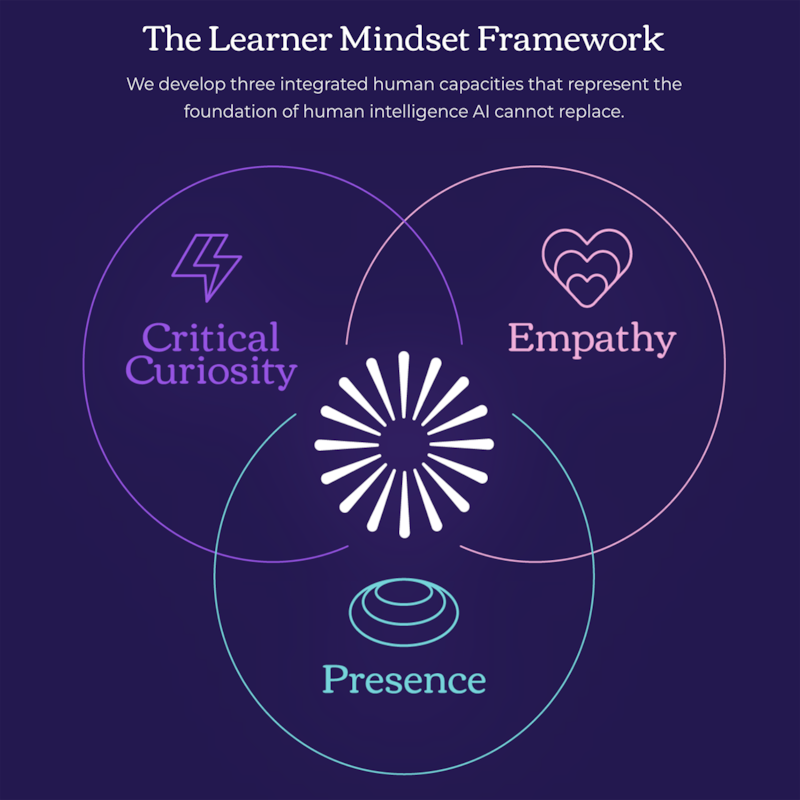
Speaker A:Critical curiosity, empathy, and presence.
Speaker A:Without them, AI uses you.
Speaker A:With them, you conduct AI toward meaningful purposes.
Speaker A:Critical curiosity.
Speaker A:The questions you bring.
Speaker A:AI can process information based on, but it cannot generate genuine curiosity.
Speaker A:It doesn't wonder.
Speaker A:It doesn't notice the unexpected detail that sparks investigation.
Speaker A:It doesn't feel the itch of a question worth pursuing.
Speaker A:That's your job.
Speaker A:How to apply critical curiosity with AI?
Speaker A:Challenge your own assumptions by asking I believe X.
Speaker A:What are the strongest arguments against this position?
Speaker A:What evidence would change my mind?
Speaker A:Don't Ask AI to confirm what you think.
Speaker A:Ask it to stress test your thinking.
Speaker A:The goal isn't to be right, it's to think better.
Speaker A:Demand evidence by asking what's the research behind this claim?
Speaker A:Are there competing studies?
Speaker A:What do critics say?
Speaker A:AI with confidently state things that may not be true.
Speaker A:Your job is to push back, verify, dig deeper.
Speaker A:The curiosity that asks how do we know this is irreplaceable?
Speaker A:Explore implications by asking if this is true, what else must be true?
Speaker A:What are the second order effects?
Speaker A:What might I be missing?
Speaker A:AI can help you think through consequences, but only if you ask.
Speaker A:The curiosity to wonder what does this mean drives the exploration.
Speaker A:Find the interesting question by asking what?
Speaker A:The most interesting question about this topic that most people aren't asking.
Speaker A:Then pursue that question.
Speaker A:Use AI to explore it, challenge it, deepen it.
Speaker A:The question came from you.
Speaker A:AI helps you investigate empathy, the human needs you understand.
Speaker A:AI doesn't understand human needs.
Speaker A:It recognizes patterns and text about human needs.
Speaker A:But it doesn't feel what it's like to struggle, hope, fear or aspire.
Speaker A:You do, and that understanding should guide how you use AI.
Speaker A:How to Apply Empathy with AI Ground AI outputs in real human experience by asking I'm writing this for first year teachers who feel overwhelmed.
Speaker A:Review my draft.
Speaker A:Does it actually speak to their experience or does it sound like generic advice?
Speaker A:You know what overwhelmed teachers actually feel because you've been there, talked to them, understood their reality.
Speaker A:AI doesn't.
Speaker A:Your empathy judges whether AI's output serve real human needs.
Speaker A:Use AI to understand different perspectives by asking, help me understand how parent concerned about screen time might view this argument.
Speaker A:What would resonate with them?
Speaker A:What would they push back on?
Speaker A:AI can help you think through other viewpoints, but you bring the genuine desire to understand the empathy is yours.
Speaker A:AI extends its reach and check for genuine helpfulness by asking, is this actually useful to someone facing this problem or does it just sound useful?
Speaker A:AI optimizes for plausible sounding text your empathy, your your genuine understanding of what people actually need is the filter that separates helpful from hollow presence, the attention you direct.
Speaker A:AI has no consciousness.
Speaker A:It doesn't know its processing.
Speaker A:It can't step back and notice its own patterns.
Speaker A:You can.
Speaker A:And that awareness is what keeps you in the conductor's seat.
Speaker A:How to apply presence with AI Notice when you're drifting into replacement mode by asking yourself, wait, am I actually thinking here or am I just accepting what AI generates?
Speaker A:Presence means catching yourself noticing when you've stopped engaging and started just copying.
Speaker A:That awareness keeps AI as your tool rather than your Replacement.
Speaker A:Staying intentional about purpose by asking, what am I actually trying to accomplish?
Speaker A:Is this AI interaction serving that purpose?
Speaker A:It's easy to fall down the rabbit holes.
Speaker A:Presence keeps you connected to why you're using AI in the first place.
Speaker A:Without it, AI's outputs drive your direction.
Speaker A:But with it, your purpose drives AI.
Speaker A:Recognize when to step away too by asking, I've been going back and forth with AI for an hour.
Speaker A:Do I need to think on my own for a while?
Speaker A:Sometimes the best use of AI is knowing when not to use it.
Speaker A:Presence gives you that awareness, the recognition that some thinking needs to happen in your own mind without the crutch of instant responses.
Speaker A:Here's some practice protocols for enhancement.
Speaker A:The Challenge Protocol when you have an idea, argument or position, write out your first thought before engaging with AI.
Speaker A:And then ask AI.
Speaker A:What are the strongest counterarguments to this position?
Speaker A:What assumptions am I making that might be wrong?
Speaker A:What evidence would disprove this?
Speaker A:And then revise your thinking based on what you learn.
Speaker A:You can ask AI again now.
Speaker A:Challenge my revised position.
Speaker A:Your goal is your position.
Speaker A:Battle tested and strengthened.
Speaker A:The Research Partner Protocol when you're exploring a topic, start with your genuine questions.
Speaker A:What do you actually want to know?
Speaker A:Ask AI to explain the landscape.
Speaker A:What are the main perspectives on blink?
Speaker A:Go deeper on what interests you?
Speaker A:Tell me more about this specific angle.
Speaker A:Demand sources.
Speaker A:What research supports this?
Speaker A:Who are the key thinkers?
Speaker A:And then verify independently.
Speaker A:Don't take AI's word for facts.
Speaker A:Synthesize your own words.
Speaker A:What do you think now?
Speaker A:The goal?
Speaker A:Your understanding deepened and informed The Insight Generation Protocol when you're looking for new ideas, share your raw thinking.
Speaker A:Here's what I'm noticing about blank Ask for connections.
Speaker A:What patterns do you see?
Speaker A:What does this connect to?
Speaker A:Push for non obvious insights.
Speaker A:What's something surprising or counterintuitive here?
Speaker A:Test your insights.
Speaker A:Is this actually true or does it sound clever?
Speaker A:Make it yours.
Speaker A:Which insights resonate?
Speaker A:Why?
Speaker A:What do they mean to you?
Speaker A:The goal?
Speaker A:New thinking sparked by a collaboration, but owned by you.
Speaker A:The Writing Partner Protocol when you're creating content, write a rough draft yourself first.
Speaker A:Get your thinking on the paper.
Speaker A:Ask AI for feedback.
Speaker A:What's working here?
Speaker A:What's unclear?
Speaker A:Ask for a challenge.
Speaker A:Where is my argument weakest?
Speaker A:Ask for what's missing.
Speaker A:What important points have I not addressed?
Speaker A:Revise yourself.
Speaker A:Don't ask AI to rewrite.
Speaker A:Repeat until it's sharp.
Speaker A:The goal?
Speaker A:Your voice.
Speaker A:Your ideas refined through rigorous feedback.
Speaker A:The Enhancement Mindset Using AI to enhance rather than replace requires a fundamental mindset shift from AI Will do this for me.
Speaker A:To AI will help me do this better.
Speaker A:The difference seems subtle, but changes everything.
Speaker A:You stay in the driver's seat.
Speaker A:Your capabilities grow rather than atrophy.
Speaker A:The output is genuinely yours.
Speaker A:You become more valuable, not less.
Speaker A:This is what it means to conduct AI rather than be conducted by it.
Speaker A:What enhancement looks like in practice Let me give you a concrete example.
Speaker A:The replacement approach to writing this blog post would be AI.
Speaker A:Write a blog post about using AI to enhance thinking.
Speaker A:Copy the output, click, publish, done.
Speaker A:The result would be a generic post that sounds like every other AI written piece, with my thinking and capabilities unchanged.
Speaker A:But the enhancement approach, what I actually did, looked different.
Speaker A:I started with my own idea about what matters.
Speaker A:The three capacities, the conductor metaphor, specific practices.
Speaker A:I've seen work.
Speaker A:I wrote rough concepts and arguments in my own words.
Speaker A:Then I used AI to challenge my assumptions and asking what am I missing?
Speaker A:Where's this week?
Speaker A:I asked for perspectives I hadn't considered.
Speaker A:I verified claims I wasn't sure about.
Speaker A:I wrote and rewrote using AI as a sounding board, not a ghostwriter.
Speaker A:And the result, by my ideas, clarified and strengthened my thinking sharper than when I started a post that genuinely is mine, but better than I could produce alone.
Speaker A:That's enhancement.
Speaker A:That's partnership.
Speaker A:That's conducting AI rather than being conducted by it.
Speaker A:The capacities compound.
Speaker A:Here's what's remarkable.
Speaker A:Using AI this way doesn't just produce better outputs.
Speaker A:It develops the very capacities that make you effective.
Speaker A:Critical curiosity grows because you're constantly asking questions, challenging assumptions, demanding evidence.
Speaker A:The more you do it, the more natural it becomes.
Speaker A:Empathy develops because you're always asking whether outputs serve real human needs.
Speaker A:Practicing perspective taking, checking for general helpfulness.
Speaker A:Presence strengthens because you're staying aware of your own thinking.
Speaker A:Noticing when you drift into passive acceptance, staying intentional about purpose.
Speaker A:The enhancement approach doesn't just use your human capacities, it builds them.
Speaker A:The replacement approach lets them atrophy.
Speaker A:The choice is yours.
Speaker A:Every AI interaction is a choice.
Speaker A:Will you use it to replace your thinking or enhance it?
Speaker A:Will you accept answers or improve your questions?
Speaker A:Will you copy outputs or sharpen your ideas?
Speaker A:Will you let AI direct you or direct AI towards meaningful purposes?
Speaker A:The technology is the same either way.
Speaker A:The difference is entirely in how you use it.
Speaker A:Choose enhancement.
Speaker A:Choose partnership.
Speaker A:Choose to conduct your capabilities in your future.
Speaker A:Depend on it.
Speaker A:What this means for education if students learn to use AI as a replacement, they'll produce polished work that develops nothing in them.
Speaker A:Technically correct, personally empty.
Speaker A:If students learn to use AI as enhancement, every interaction builds capacity Their critical curiosity sharpens through challenging assumptions, their empathy develops through testing whether outputs serve real needs, and their presence strengthens through staying aware of their own thinking.
Speaker A:The teacher's role isn't to police AI use.
Speaker A:It's to develop the human capacities that make AI use meaningful.
Speaker A:That's the work that can't be automated, and it's more important now than ever.
Speaker A:This blog post was written by Joseph Stark, a father, a founder, and the creator of the Learner Mindset Framework.