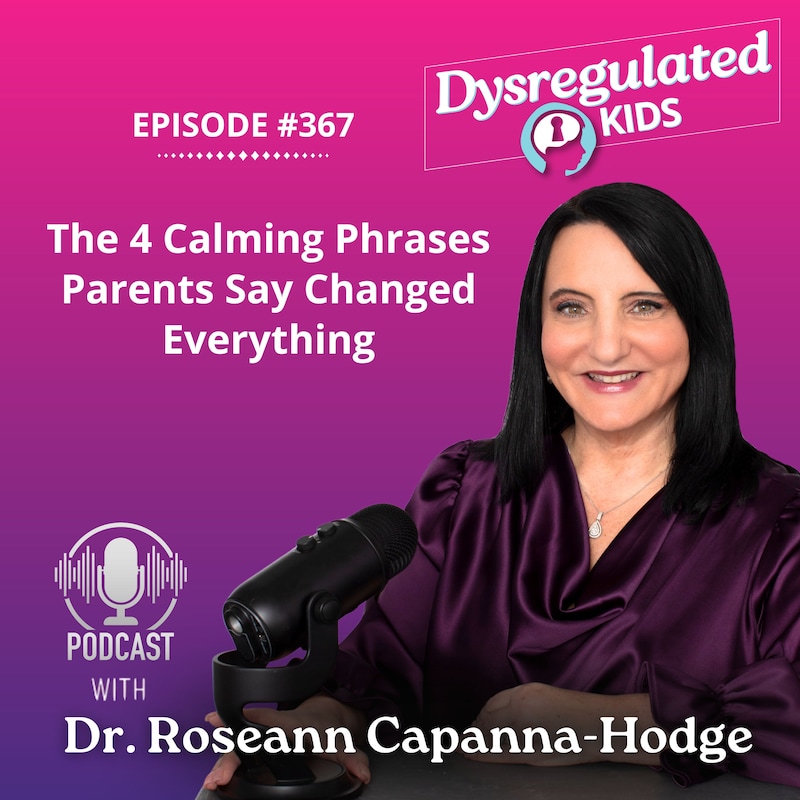
Calming phrases can change everything when your child is overwhelmed, melting down, or stuck in fight, flight, or freeze. In this episode, I break down the 4 calming phrases parents say that help a dysregulated child feel safe, connected, and ready to regulate.
When emotions go from zero to one hundred, many parents wonder: What do I say? How do I help? The answer isn't more lecturing, reasoning, or correcting. It's using calming phrases that act as safety cues for your child's nervous system.
In this episode, you'll learn:
• Why calming phrases work better than lectures during meltdowns
• How calming phrases support emotional safety and regulation
• Why connection must come before correction
• Practical ways to use these phrases in everyday parenting moments
When a child is dysregulated, logical thinking shuts down. That's why phrases like "calm down" or "use your words" rarely work in the moment. Calming phrases help reduce overwhelm, create safety, and support nervous system regulation.
These phrases help:
• Support regulation in both parent and child
• Reduce power struggles and emotional escalation
• Create safety and connection
• Open the door for learning and problem-solving
These cues tell your child's brain, "You're not in danger. You're not alone."
And that's when real connection—and real teaching—can finally happen.
The 4 calming phrases parents say changed everything:
1. "I'm with you."
This phrase helps a child feel safe, supported, and less alone. It is a powerful tool for emotional regulation.
2. "Let's slow down."
Kids borrow our rhythm. Slowing your voice, breathing, and movement helps guide them out of survival mode.
3. "We'll get through this."
This calming phrase restores perspective and reminds children that difficult moments are temporary.
4. "It's okay to feel upset."
Validation lowers emotional intensity and teaches children that feelings are safe and manageable.
Behavior is communication.
It's not bad behavior—it's a dysregulated brain.
These phrases don't reinforce negative behavior. They reinforce emotional safety, which is the foundation of lasting behavior change.
How do you use calming phrases effectively?
• Start before emotions reach the red zone
• Use a calm voice and fewer words
• Stay close and offer co-regulation
• Validate first and teach later
With consistency, children begin to internalize these phrases and use them to support their own self-regulation.
Need instant tools before words even land?
Try Quick CALM — a science-backed mini-course that helps settle your child's nervous system fast.
Get the FREE Regulation Rescue Kit and learn what to say and do in the heat of the moment.
Become a Dysregulation Insider VIP at www.drroseann.com/newsletter
Need a personalized plan for your child? Use the free Solution Matcher to discover brain-based support for ADHD, anxiety, OCD, and emotional dysregulation:
www.drroseann.com/help
Dr. Roseann Capanna-Hodge helps parents understand emotional dysregulation in children and teaches practical nervous system regulation and co-regulation strategies through her Regulation First Parenting™ approach.