Shownotes
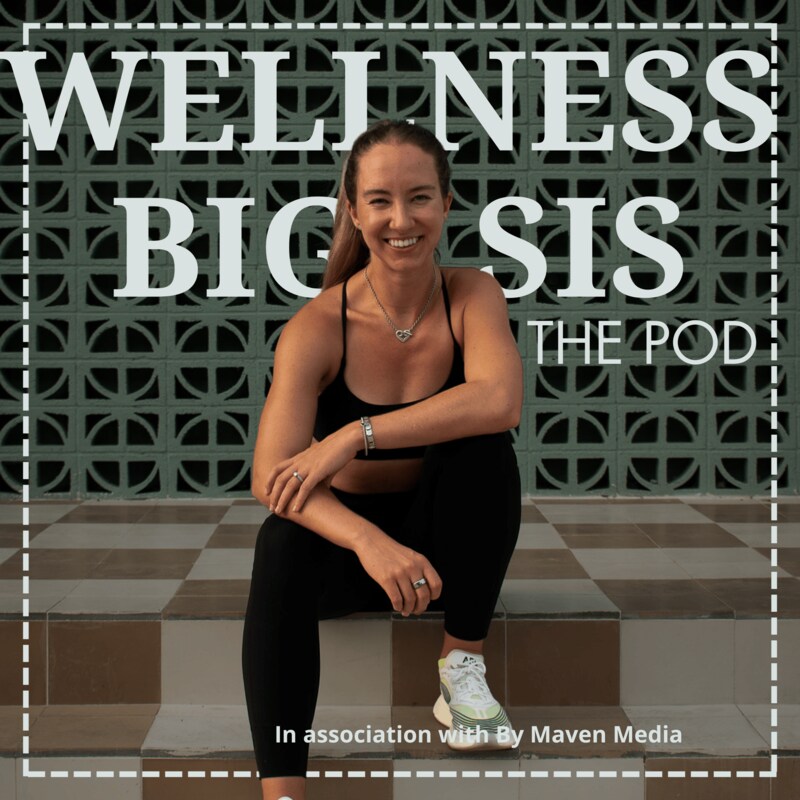
This podcast episode aims to help us understand the changes that occur in our bodies during perimenopause and menopause. We wellness girl chat about the importance of being preventive rather than reactive, emphasizing early education on the menstrual cycle, pregnancy, and menopause. The episode covers the common symptoms, hormonal shifts, and the metabolic impact of perimenopause and menopause. It also provides actionable advice on exercise, diet, sleep, and supplements, highlighting the role of hormone replacement therapy. The conversation underscores the need for foundational habits like protein intake and weightlifting to prepare for a healthier transition into menopause.
Links/Research Articles:
https://www.bespokemedaesthetics.com/
loving the pod? click the follow button, & we'd love if you could leave a review! thank you x 1000 :)
sign up for the free Smart Girl Newspaper!
insta:: @dr.kelsyvickdpt & @wellnessbigsispod
youtube:: @dr.kelsyvickdpt
tiktok:: @dr.kelsyvickdpt & @wellnessbigsispod
Transcripts
So I selfishly started this podcast for one main reason,
2
:and that main reason was to get girls
starting to think about what changes
3
:happen within their bodies before they.
4
:Come to that stage before
they have to actually react.
5
:So I want people to be a little bit
more preventative in how they think
6
:about their bodies and what's happening
within their bodies before they're
7
:actually going through a certain stage.
8
:So we've covered a lot on the menstrual
cycle, on pregnancy, on postpartum,
9
:but something that we haven't covered
a lot about is perimenopause and
10
:menopause, and I feel like it's this.
11
:Wild West thought in our heads
of we might get there eventually.
12
:We don't really understand
what happens when we go through
13
:that phase of our lives.
14
:So that's why I'm grateful that you
agreed to come on and help us just better
15
:understand and educate us on what happens
within our bodies during perimenopause and
16
:menopause and how you go about treating
women in perimenopause and menopause.
17
:So let's start with the basics.
18
:Okay?
19
:What actually happens within
our bodies when we are hitting
20
:that stage of menopause?
21
:Dr. Larissa O'Neill:
22
:Okay, so average age of
menopause is about 51.
23
:. Perimenopausal symptoms will start
seven to 10 years before that,
24
:so a lot of women in their late
thirties to early forties will start
25
:to feel just not like themselves.
26
:They may be more tired.
27
:They may not sleep as well.
28
:They may not be as effective in
the gym when they're working out.
29
:They may have some brain fog.
30
:Muscle soreness, joint soreness
itchy ears frozen shoulder.
31
:the list is actually very long.
32
:And that's 'cause everybody responds
to their hormonal shifts differently.
33
:And it is like a rollercoaster ride.
34
:Some women don't have a lot of symptoms.
35
:A lot of women have significant symptoms.
36
:anxiety, depression seem to get worse.
37
:A DHD gets worse.
38
:Again, women just don't feel
like themselves and it can start
39
:as early as your late thirties.
40
:Kelsy Vick: Is there certain criteria
that have to be met in order to know are
41
:we in perimenopause, are we in menopause?
42
:Or based on what someone
comes to tell you.
43
:You're like, Nope, you are.
44
:In that stage, is it more
of like your expertise that
45
:goes into the deciding that?
46
:Dr. Larissa O'Neill:
47
:Yeah, so perimenopause is
really symptoms and age.
48
:Okay.
49
:If a 20-year-old came to me
and said, I have these we'd be
50
:talking about something else.
51
:But if you're in your thirties but
forties and you come with symptoms
52
:it's basically that checking hormones
and perimenopause, testosterone is
53
:one that we can check because it
declines in a different way than.
54
:Estradiol and progesterone do.
55
:But if you're checking somebody's
estradiol, it's just a snapshot in time.
56
:And it could be completely
different two days from then.
57
:So in Peron menopause,
it's really symptoms.
58
:Menopause is lack of estrogen, lack
of progesterone, and technically,
59
:clinically no period for a year.
60
:But you're gonna get symptoms
long before that happens.
61
:Kelsy Vick: So what
happens within our bodies?
62
:You mentioned hormones decrease.
63
:Can you explain that a little bit of
the process that our bodies go through?
64
:Yeah.
65
:Physiologically with menopause?
66
:Dr. Larissa O'Neill:
67
:Yes.
68
:up until, let's say mid
thirties, your estradiol and your
69
:progesterone are pretty stable.
70
:You get specific variations
throughout your menstrual cycle.
71
:When you get into your later thirties,
early forties, the brain and the ovary
72
:are not as good at communicating.
73
:Basically, your ovary is trying to
figure out how to output the estradiol
74
:so your brain will produce signals.
75
:LH and FSH, they're just two signaling
hormones and they go to tell your
76
:ovary, Hey, produce estradiol.
77
:If your ovary is good at it and
your adrenals are good at it, then.
78
:Your brain's happy, the
rest of you's happy.
79
:But as we get older, we're not as
good at producing the estradiol.
80
:So everything gets a little wacky,
testosterone's a little different.
81
:Women's peak testosterone typically
is mid twenties, and then we
82
:get a steady decline from there.
83
:You get some variation, but it's a pretty
steady decline throughout the decades.
84
:So that pretty much by the
time women reach perimenopause.
85
:In their mid forties.
86
:Women's testosterone levels tend to be
fairly low, and again, estradiol can
87
:be anywhere from very low to very high.
88
:Kelsy Vick: So with some of those hormonal
shifts, is that what causes some of the
89
:symptoms that women experience or, yes.
90
:Okay.
91
:All of them, yes.
92
:Dr. Larissa O'Neill:
93
:So we have estradiol, testosterone
receptors everywhere in our body,
94
:brain, bone, muscle bladder, pretty
much everywhere we have those receptors.
95
:And so when things start to
get wacky, we get symptoms.
96
:Again, not every woman
is as sensitive to them.
97
:But most women are
gonna have some symptom.
98
:They may not equate it
to, I'm in perimenopause.
99
:They may just think I've got little kids
and I'm running around and I'm tired and
100
:I'm not sleeping as good 'cause I have
little kids, but it's usually hormonal.
101
:Kelsy Vick: And are the symptoms that
I get related to my genetics or what
102
:part of menopause, whether it's the
time that we hit it or the symptoms
103
:that we get, is any of that related
to genetics or is it really no one
104
:kind of knows, there's no pattern.
105
:Dr. Larissa O'Neill:
106
:I would say no one kind of knows.
107
:Yeah I do always ask, Hey,
when did you start your period?
108
:When did you start your cycle?
109
:When did your mom start it?
110
:When did she go through?
111
:You can gauge, but
every woman's different.
112
:every woman's got a
different ovarian reserve.
113
:Kelsy Vick: Are there environmental
factors that can put someone
114
:into menopause or has that
not really been studied?
115
:Dr. Larissa O'Neill:
116
:There aren't really studies on that.
117
:Okay.
118
:Yeah, it's, I would,
119
:I would say we know currently
that there are a lot of.
120
:What we call endocrine
disruptors in our society.
121
:And those certainly are gonna play a role.
122
:We see lower men, we see lower
testosterone levels now than
123
:we used to because of endocrine
disruptors and women are the same.
124
:I think we just have more variability
now because there are things in
125
:our environment and in our diet.
126
:That affect us more hormonally
than we used to have.
127
:Kelsy Vick: So moving to a little
less sciencey, a little less
128
:nerdy, moving more towards what the
everyday woman might experience.
129
:To notice within their bodies.
130
:What are some of the physical changes that
women often see when they hit menopause?
131
:When it comes to aesthetics, body
composition, skin changes, fueling,
132
:you mentioned exercise capacity.
133
:What are some of those common changes that
women are challenged with in menopause?
134
:Dr. Larissa O'Neill:
135
:It's a lot.
136
:Estrogen and testosterone both
help us keep collagen around.
137
:They help keep our muscles strong.
138
:They help keep our.
139
:Visceral fat and
subcutaneous fat levels low.
140
:So when testosterone starts to decrease
and estradiol starts to get wacky we
141
:start to lose collagen in our skin.
142
:So you may notice drier skin
wrinkles start appearing.
143
:We start to replace our muscle with
fat, which is very discouraging.
144
:We start to build visceral fat.
145
:A lot of women will start to
notice that they gain weight
146
:around the middle that they're not
as strong as they used to feel.
147
:But collagen plays a big
role for skin health.
148
:And we do see, because at the clinic
here we do aesthetics as well.
149
:We see a lot of women who have not
been on hormones, who have not as
150
:great a skin as they would like to
simply because collagen is gone.
151
:Vaginal dryness is a huge one.
152
:And that can start in perimenopause.
153
:And again, estradiol keeps the
vaginal tissue moist and healthy.
154
:And collagen there keeps everything happy.
155
:And when it goes away or starts
to get wacky that's a big
156
:symptom that women come in with.
157
:So physically, women usually
will report dry skin.
158
:Weight gain is a big one,
especially around the middle.
159
:Kelsy Vick: Given some of the physical
things that women experience, how do you
160
:approach it from a physician lens as a
way to guide your patients, whether it's
161
:through supplementation, medications,
behavior modifications, education,
162
:what sort of stuff have you seen work
really well clinically and then has also
163
:really research backed, when it comes
to handling some of these challenges?
164
:Dr. Larissa O'Neill:
165
:Yeah, so we do a lot here.
166
:We do blood work, we
test a lot of biomarkers.
167
:We do body composition testing because
when you think about perimenopause and
168
:menopause and the changes that happen
with the hormones, a lot of that is that
169
:we get a lot less metabolically healthy.
170
:So again, we get visceral fat.
171
:We get fat buildup in our muscle.
172
:We get less insulin sensitive,.
173
:A lot of women will come in and
say, I haven't changed a darn thing.
174
:I eat the same, I work out the
same, I've gained all this weight.
175
:What's going on?
176
:So we do body composition
testing on everybody.
177
:We measure their muscle mass, their
visceral fat their percent body
178
:fat, and I don't even care about
their weight number as much as
179
:I care about those three things.
180
:And it's very interesting
for some women who.
181
:When you look at them physically
look like they shoulda a low body fat
182
:percentage, but they don't because
they've replaced some of their muscle
183
:with fat and they have a higher
visceral fat load than they expected.
184
:And it's all because of
those hormonal changes.
185
:So we do body composition testing,
we do a lot of blood testing to
186
:look at different just like even
vitamin levels, like vitamin D.
187
:Let's take vitamin D we say.
188
:We call it a vitamin, but
really it's a pro hormone.
189
:It helps us with all of
our other sex hormones.
190
:So if a woman's vitamin D level is low,
one of the first things we're gonna do
191
:is say, you gotta get that vitamin D
level up and it needs to sit around 70.
192
:And most of the time we check
in and it's usually around 20.
193
:And people are like, but
I'm outside all the time.
194
:You are, but it's still not enough.
195
:We don't have enough in our diets
anymore for most people to really
196
:have A really good level, again,
which needs to be around 70 plays
197
:a role in bone growth for women.
198
:Osteoporosis is a huge thing that happens
for women as they go through menopause.
199
:and actually it happens before that
so I want to back up a little bit.
200
:So I've actually started talking
to women a lot earlier, and I
201
:wish that primary care physicians.
202
:Even pediatricians would talk
more to young women about
203
:exercise and protein intake.
204
:Peak bone density for
most women is around 20.
205
:It starts to decline after that.
206
:So I've had two women come into me
with premenopausal spinal fractures
207
:from weightlifting because they
said, I'm gonna go get healthy.
208
:And then so they start lifting
weights and they get a compression
209
:fracture or stress fracture.
210
:We start them on testosterone and
a little bit of estradiol and bone
211
:density improves over a couple years.
212
:But if we started to talk to
younger women about the importance
213
:of this, we'd see less of that
as they went through menopause.
214
:and maybe it's different with
kids now, like my daughter lifts
215
:weights, but she lifts weights.
216
:'cause we talk about lifting weights.
217
:I don't know how many 21 year olds
get that talk from somebody that
218
:this is really important for you.
219
:But muscle health and bone health,
very important muscle health because
220
:again, it keeps us metabolically
more healthy as we go through life.
221
:And perimenopause and menopause
are just times when women get
222
:very metabolically unhealthy.
223
:So we talk a lot about body composition.
224
:We talk a lot about protein intake.
225
:'cause again, protein intake
needs to be different for women.
226
:Our body doesn't deal with
it the same way men does.
227
:We have to have.
228
:A certain spacing of it.
229
:We really need three meals a day
with a good amount of protein,
230
:and women need at least a gram
of protein per ideal body weight,
231
:especially when we're in menopause.
232
:So I like women to break it up.
233
:And let's say your ideal
body weight is 120 pounds.
234
:You need 45 at breakfast.
235
:45 at dinner.
236
:And the rest at lunch.
237
:So higher protein intakes.
238
:At the two ends of the day, really
better for muscle synthesis for women.
239
:So better protein intake,
different exercise.
240
:Most women are really good about cardio.
241
:They'll go out, they'll take a walk,
they'll get on a treadmill, they'll go
242
:get on a stair step or whatever, but
that doesn't help you build muscle.
243
:And so talking to women about
weightlifting, everybody that
244
:comes in, we talk about it.
245
:And not just lifting, but lifting heavy.
246
:Really trying to keep your muscle mass
around and build it if you don't have it.
247
:Because muscle's, the organ of longevity.
248
:If it gets unhealthy, which it does
when women go through perimenopause and
249
:menopause, we just don't age as well.
250
:We don't do as well.
251
:Protein intake exercise or two of the big
things, we talk to everybody about making
252
:sure that your blood work looks good
from a vitamin and mineral standpoint.
253
:The biggest supplement we
probably put everybody on is
254
:Vitamin D, just 'cause it's low.
255
:And then we start talking about hormones.
256
:We do a ton of hormone replacement here.
257
:Estradiol, progesterone, testosterone.
258
:There are lots of different
ways to get it replaced.
259
:Testosterone I think, is huge for women.
260
:Again, we've got androgen receptors
everywhere, muscle bone, brain bladder.
261
:start a lot of premenopausal
women on testosterone.
262
:It does help alleviate a lot of
the symptoms through perimenopause.
263
:'cause you do get some conversion
to estrogen, estradiol.
264
:And then if they're very symptomatic from
lack of estrogen, we'll do some estradiol
265
:and perimenopause at lower doses.
266
:And then once they get into
menopause, we do full doses.
267
:But.
268
:It's really about trying to stay
strong, metabolically healthy, eat
269
:right, really watch body composition
and then address the hormones.
270
:Kelsy Vick: What about when
it comes to skin health?
271
:Is there anything that you guys like to do
or recommend when it comes to skin health
272
:Dr. Larissa O'Neill:
273
:hormones?
274
:Yeah.
275
:Okay.
276
:So estrogen deficient
skin is a real thing.
277
:If you're not on systemic hormones,
there are estradiol, estriol.
278
:Face creams that you can get compounded.
279
:We also talk a lot about the lasers
that help you build collagen.
280
:'Cause there are some
very good ones out there.
281
:And then good medical grade skincare.
282
:One of our favorite ones that we sell
here is Pavis because it has so many
283
:amazing adaptogens and antioxidants
in it that help your skin repair.
284
:And then some kind of.
285
:Retinol or acid type product that
again helps you build collagen.
286
:I love copper.
287
:GHK, copper.
288
:I think it's all over Instagram right
now, but you can use it topically.
289
:You can inject it.
290
:It's a peptide.
291
:it is.
292
:amazing for collagen build and skin.
293
:It takes time.
294
:Everything does.
295
:But it is one of our favorite
peptides to use for skin.
296
:But it's a good combination of
good medical grade skincare.
297
:A really good sunscreen.
298
:I cannot stress sunscreen enough.
299
:I know I'm a redhead, so I
talk to everybody about it.
300
:But any coloring in
your skin is sun damage.
301
:Sunscreen and a physical
block over a chemical block.
302
:So something that's a zinc.
303
:For sunscreen and then lasers
that again, help with sun
304
:damage and help build collagen.
305
:there a class of, I'll call them fillers.
306
:They're really biostimulators, sculptural
radius and Bella Field that really
307
:help you build your own collagen.
308
:So we do a combination of all those.
309
:to build out a plan.
310
:We're not just a one and
done kind of thing for us.
311
:If a woman's coming to see us and
they come to see us for a skin
312
:consult and they're not on hormones,
we talk to them about it because.
313
:Your skin's not gonna age as
well if you're not on some
314
:kind of systemic hormone.
315
:And there are very few women that
hormones are contraindicated for.
316
:Very few.
317
:Kelsy Vick: You said you can start them,
maybe not preventatively fully, but
318
:like when people first start showing
symptoms to help with some of the symptoms
319
:This is a very probably elementary
question, but do y'all taper off too?
320
:Is there like a ending phase
that you guys taper off?
321
:Or is, once a woman is in menopause
and starts to have some of these
322
:changes, they really are changes that
are gonna have to be managed for life
323
:Dr. Larissa O'Neill:
324
:It's permanent, right?
325
:It does.
326
:It doesn't, once you stop hormone
replacement, all of your benefits go away.
327
:And the benefits are many luckily the
FDA removed the black box warning from
328
:estradiol six weeks ago, which was huge
because those of us who have been in
329
:the space for as long as I have been,
know what the science is and know that
330
:we should have been using hormones all
along, we should have never stopped
331
:because of that one silly study.
332
:We know heart prevention, dementia
prevention, osteoporosis prevention.
333
:When you look at the leading causes of
death for women, heart hip fracture,
334
:dementia, and the hormone replacement,
menopause hormone replacement really
335
:does help prevent all of those things.
336
:So we're huge proponents of it.
337
:Kelsy Vick: And like you said,
hormones, there's receptors on all
338
:different systems within our bodies.
339
:Yeah, exactly.
340
:So there's probably not a system
that it doesn't benefit, especially
341
:if that was how our bodies normally
functioned in our twenties and thirties.
342
:We're still gonna have some of those
receptors, so how can we maximize
343
:their reach when we can no longer
produce what we used to be able to.
344
:Yes.
345
:Dr. Larissa O'Neill:
346
:Yep.
347
:So I have 80 plus year olds on.
348
:hormones still because they want
to continue to reap the benefits
349
:and they feel good on them.
350
:And if they have tried to stop them in
the past, they're like, I don't feel good.
351
:So we just keep 'em on.
352
:No reason to stop.
353
:Kelsy Vick: I love what you said too about
just different education and guidance
354
:that you give your patients, because
as a PT I'm a huge muscle building.
355
:Bone mineral density.
356
:How can we shift the viewpoint early on,
especially in girls that working out is
357
:for aesthetics, which yes, it can be.
358
:Yes.
359
:And that's confident building.
360
:Like I do the same thing, but how can we
get more of that long-term view of yes,
361
:I see patients all the time who have
muscle atrophy, who have bone marrow
362
:density issues, and then they're gonna
become fall risks later on and have
363
:that fracture and lose some of their
mobility and some of their function.
364
:And knowing that's even
more important in menopause.
365
:I don't know if this is a good
way to put it, but our bodies.
366
:Are not necessarily working with us as
much as they are in our twenties, when
367
:exactly we can maximize some of that
bone marrow density disease and some
368
:of that muscle, our muscle mass too.
369
:yes, that peaks in what?
370
:Thirties, early thirties, and then it's
the, it gets the graph for increasing
371
:the linear, the slope is a little less.
372
:So it's how can we work to build what
we can when we're younger, because
373
:that's when we can really build that
solid foundation and then continue
374
:to work towards that in our thirties,
our forties, our fifties, when our
375
:bodies again are maybe converting
that muscle to fat a little bit.
376
:But we have to work a little
harder for some of those benefits.
377
:Dr. Larissa O'Neill:
378
:Yeah, exactly.
379
:We need to be doing more
education in younger women.
380
:And it's funny 'cause when I started
doing it here with my late 20 year
381
:olds, they would kinda look at me
and I'd be like, I promise this is
382
:coming and if we can just do something
about it now to help you be better.
383
:From a muscle standpoint, from a metabolic
standpoint, menopause is gonna be easier.
384
:So
385
:Kelsy Vick: I call it the longevity fund.
386
:It's like putting in little habits
every single day, whether it's exercise,
387
:a mindfulness thing, hydration,
fueling the right way, enough protein
388
:i've noticed so many more of my
patients healing better after injury.
389
:Having a better mindset when it comes to
a mental health challenge or challenge
390
:that their families are going through.
391
:There's just these little
things that we can do early on
392
:to help us when we're older.
393
:And I think coming from the medical
field, we see that, and maybe it's
394
:more of a fear-based motivation for
us to be like, no I know what I can
395
:do preventatively to help me whenever
I get to even pregnancy, postpartum,
396
:our bodies go through changes then.
397
:But menopause as well, it's.
398
:What can I do now knowing what I know
happens in these later stages of life?
399
:How can I help my body and how can I
transfer that mindset to other girls too?
400
:To realize you can do all the cardio yes.
401
:If you love that, but build the muscle,
build the bone marrow density, do
402
:the jump training to have some of
those long term effects, so Exactly.
403
:Dr. Larissa O'Neill:
404
:Yeah.
405
:And training does need to change right?
406
:Throughout your life, your body responds
to things differently menopausal
407
:women really need to do sprint
training, like true sprint training.
408
:And that's because of the effect that HIIT
exercise has on cortisol for women, which
409
:affects our insulin level and everything.
410
:our stress response is different
because of our hormonal challenges.
411
:a true sprint exercise is gonna
be better for us than a hit
412
:exercise cold plunge for women.
413
:And there's not a lot of science
behind cold plunge in general, but for
414
:women, not good intermittent fasting.
415
:for women, again, not good.
416
:We lose lean muscle mass.
417
:So for us, again, we need that protein
in the morning for our muscles.
418
:So don't fast till six o'clock at night.
419
:Sauna's much better for Yes, for women.
420
:And the science on the health
benefits from saunas Is good.
421
:It's really there.
422
:So I do, I encourage my women if
they've got access to one to do it.
423
:'cause I just think it's
424
:Kelsy Vick: beneficial.
425
:Dr. Larissa O'Neill:
426
:for us.
427
:Yeah.
428
:Kelsy Vick: When we did the cold plunge
episode that'll come out next week.
429
:It was talking about how
cold plunging for women.
430
:if you're going to do cold plunging,
it's not the colder, the better.
431
:Like we think for men it's more of our
body's sense, the cold as a bad stress
432
:and kick on our bad stress response.
433
:Yep.
434
:And I actually mirrored it to
fasting because fasting, I've had
435
:a PhD researcher, dietician like
physiologist, exercise physiologist
436
:who studies some of the metabolic.
437
:Effects that women go
through and all of this.
438
:And she was saying for fasting,
our bodies sense the same thing,
439
:where it's like we go into this.
440
:Survival mode a little quicker when our
body senses lower energy availability.
441
:So both with cold and with fasting
and things like that, our bodies
442
:as women handle it differently than
men and sense that bad stress a
443
:little earlier on where men might.
444
:Think of it or their body sense it as
more of a good stress and adaptable
445
:stress that they can grow from.
446
:So I just thought it was
interesting, cold and fasting.
447
:It's like both of these things
are very popular right now,
448
:especially intermittent fasting.
449
:and fasted training, fasted exercise,
all of those sorts of things.
450
:So it's just interesting to link those
two and to have the women's health and
451
:female science Be showing some of these
differences between men and women.
452
:I think it's awesome.
453
:Dr. Larissa O'Neill:
454
:Yep.
455
:I think it's great.
456
:It's studies have been
needed for a very long time.
457
:My background's primary care and the thing
that I always remember, 'cause again,
458
:we always think about heart disease and
how women present differently than men.
459
:Had this one patient come in and
she just said, I get short of breath
460
:when I get to the top of the hill.
461
:And that's new.
462
:And I did an EKG on her in
my office and she was having
463
:a heart attack in my office.
464
:But men come in with crushing chest pain.
465
:Women don't.
466
:Right?
467
:But that's, again, the studies
haven't been out there.
468
:We're now starting to see
some of them, which is great.
469
:happy that we have people who are focusing
more on women women's health because.
470
:We are very different Yeah.
471
:Than men.
472
:Totally.
473
:Very different
474
:Kelsy Vick: from our metabolic capacities
to our thermo regulation when it
475
:comes to sauna and heat and Yeah.
476
:I love that.
477
:I love learning about that and actually
like seeing some of the differences.
478
:I also think with probably the women
that you're seeing right now who are
479
:in that perimenopause menopause stage.
480
:It's a little bit of a mindset shift
that you're having to coach them through
481
:too, because I think younger women are
starting to understand the importance
482
:of strength training over cardio
for some of these aesthetic changes.
483
:But I bet there's a heavy sort of like
mindset shift because a lot of my loved
484
:ones, like my aunts and my, older women
in my family that I look up to, their
485
:exercise has consistently been cardio.
486
:Yeah.
487
:And thinking of cardio for fat
loss, it's like cardio burns fat.
488
:That has been the.
489
:mantra that people have had for years
and years, and then having to understand
490
:the shift of, okay, hang on, our bodies
handle that a little differently.
491
:That might be great for men, but we
might need to focus on something a
492
:little differently as women or have
a little bit of a different ratio
493
:when it comes to that sort of thing.
494
:Dr. Larissa O'Neill:
495
:Yeah.
496
:Strength.
497
:The strength training is huge.
498
:you have to think of your muscle as.
499
:Your metabolic regulator
beyond your hormones.
500
:They're very important.
501
:But your muscle, basically
controls your insulin sensitivity.
502
:So if your muscles aren't healthy you're
metabolically not gonna age as well.
503
:You will gain weight,
you will lose strength.
504
:And weightlifting will
definitively help that.
505
:we really try to build
these plans for women.
506
:It's not just, Hey, come in and get
some hormones and you're gonna be good.
507
:We really do a ton of education.
508
:We talk about how to
address the visceral fat.
509
:We talk about how to address muscle mass.
510
:With all of those other things that aren't
just the hormones, but hormone replacing
511
:women's hormones is of huge importance.
512
:When we look at.
513
:How to really help women age better.
514
:So we talk about it all.
515
:It's a complete plan.
516
:We talk sometimes about peptides.
517
:There are different peptides that we
use that can help address visceral fat
518
:differently and muscle gain differently.
519
:But that's after we've
done everything else.
520
:And somebody's doing the workout
and they're eating like they should
521
:and they're taking their creatine.
522
:We know creatine is, all over Instagram
right now but The science on creatine
523
:for women is actually very good.
524
:Not just for muscle, but for brain health.
525
:The studies that have come out on
Alzheimer's and when the Women's Health
526
:Initiative study came out and it really
deterred hormone use for women the rates
527
:of Alzheimer's went up tremendously.
528
:But we know that's not just related
to hormones, it's related to creatine.
529
:It's related to.
530
:Omega-3 levels declining in
women's brains as they get older.
531
:Some of the things that are, really
important to talk to women about omegas,
532
:creatine, vitamin D hormones, all of that.
533
:Just because women are far more
likely to get Alzheimer's than men
534
:and without hormones even more likely,
all, that's to say that there's a lot
535
:to talk to women about as they age.
536
:And you need to be seeing somebody
who will take the time to really
537
:talk to you about all that.
538
:'cause sometimes educating yourself
on Instagram isn't the best idea.
539
:Kelsy Vick: And I love how you're
talking about the foundations.
540
:It's yeah, we can do the peptides,
we can do other treatments on top of
541
:it for your skin health and things.
542
:But what I'm also hearing is like
the foundations are the same that we
543
:should be focusing on throughout life.
544
:they might shift a little bit, but
if we can reset a little bit or
545
:teach someone who's maybe new at
it and struggling with some of the
546
:challenges that come with menopause.
547
:If we can teach 'em good exercise,
habits and routines, good fueling,
548
:good supplementation, all of those
sorts of things, maybe help 'em
549
:with their sleep a little bit,
550
:Dr. Larissa O'Neill:
551
:sleep is super important and it gets
very disrupted in perimenopause because
552
:progesterone is our sleep hormone
and when progesterone goes away.
553
:We do not sleep well at all.
554
:And not sleeping affects,
cortisol, insulin, all of that.
555
:So we do focus a lot on sleep health.
556
:I have a lot of patients
that have wearables.
557
:And I say that's great as long
as it's not distracting to you.
558
:I have one I wear sometimes, not
consistently, but get a little
559
:data and then I go on my merry way.
560
:But sleep is huge and progesterone.
561
:Is very important for that.
562
:And so we do replace progesterone
early for a lot of women because
563
:they just, they're not sleeping.
564
:The 41-year-old will come into me
and say, I don't sleep at night
565
:and I'm falling asleep in Carline.
566
:Okay?
567
:I know what that is,
and we can address that.
568
:Kelsy Vick: Sleep is one of those
where I feel like a lot of women,
569
:whether it's hot flashes or different
things that they experience at night
570
:too, sleep seems to be disruptive.
571
:And knowing how important
sleep is for just recovery,
572
:muscle building, brain health,
573
:All of it.
574
:And if we can.
575
:Help with that in some way.
576
:And like you're saying, if it's through
hormones, because of course hormones
577
:affect every part of our system.
578
:Then why not help that earlier on
that way people aren't struggling
579
:with some of these sleep disturbances
that is negatively impacting all of
580
:the other work that they're putting
into Their bodies in general too.
581
:Dr. Larissa O'Neill:
582
:Yeah.
583
:When interestingly when women's
testosterone starts to go down,
584
:they'll start to get night sweats.
585
:So when women wake up just
drenched at night, it's usually
586
:'cause their testosterone is low.
587
:And again, that's an easy fix.
588
:Kelsy Vick: I love y'all's
approach too, because.
589
:Like you said, attacking it from every
single angle and I was able to walk
590
:through y'all's clinic before, which
is amazing, and seeing all of the ways
591
:that you're touching every single system
within the body, because our hormones
592
:affect every single system within
the body, is absolutely wonderful.
593
:On the topic of creatine and
supplementation specifically, have you
594
:noticed a difference in dosage needed
for creatine when women hit menopause?
595
:I know one of my friends subjectively has.
596
:Experienced more bloating,
and bloating is oftentimes a.
597
:Something that people worry
about and are concerned with.
598
:And she has said, I know the research
says that water retention is not a thing,
599
:but in my body that is what I'm feeling.
600
:so is there a shift in how our bodies
manage creatine once we get to that age.
601
:Dr. Larissa O'Neill:
602
:So I think people bloat with creatine
or they don't, and just, again,
603
:everybody's body's a little different.
604
:You can get some water retention with it.
605
:You can get bloating.
606
:I think the biggest thing with creatine
is you've gotta drink water with it.
607
:So if you're somebody who just,
I had a friend tell me, she was
608
:like, I just throw the creatine on
my tongue and I'm like, oh, okay.
609
:One, it's usually so chalky.
610
:Really.
611
:Like you actually get that down.
612
:But secondly, you really need
water with it for absorption.
613
:And if you're good about drinking
a lot of water with it, you're
614
:gonna get less bloating and
less water retention in general.
615
:Five grams a day is the standard, right?
616
:That's what we need.
617
:The studies that came out on
Alzheimer's we're actually done with
618
:15 to 20 grams of creatine a day.
619
:You have to be really good about
water with that, and somebody
620
:needs to be monitoring some blood
work on you if you're gonna do
621
:that high of a dose of creatine.
622
:My recommendation is usually
just five grams a day.
623
:If I have somebody that I'm really
trying to get some muscle on,
624
:like they really have low muscle.
625
:I'll tell them to do an extra five
grams on the day that they lift, like
626
:after they lift, do an extra five grams.
627
:But just standard five grams a day.
628
:Kelsy Vick: have you seen, someone
who is putting in the behavior
629
:modifications with the exercise.
630
:With the eating right.
631
:Who has maybe declined
hormone replacement therapy
632
:Dr. Larissa O'Neill:
633
:we do have some women
who choose not to do.
634
:Hormone therapy, which is fine.
635
:It's everybody's personal choice.
636
:I usually will direct them to
certain resources to try to influence
637
:them to take it, but you can do
it without hormone replacements.
638
:It's just not as easy.
639
:it gets harder to build muscle, like
you talked about as we age anyway.
640
:So when your hormones go
away, it gets really hard.
641
:You have to lift exceptionally heavy.
642
:To maintain and build muscle.
643
:When you're in menopause, if you're
not gonna be on hormone replacement,
644
:it's also a lot harder to address
the visceral fat that happens.
645
:Again, you've gotta be diligent about
what you're doing in the gym and how
646
:you're eating, what you're eating.
647
:hormones, just make it easier
because the effect they have on our
648
:muscles and on our fat distribution
and on our insulin sensitivity.
649
:So just makes it a little easier.
650
:Kelsy Vick: So we've talked a lot about a
lot of different parts of the body today,
651
:about menopause, about perimenopause,
about just being a woman in general.
652
:Is there something that you wish girls
in their twenties and thirties knew?
653
:And we've touched on it a little
bit, but what would be maybe your
654
:top one to three things that you
wish younger girls understood about
655
:their bodies at this age to help
them in perimenopause and menopause,
656
:Dr. Larissa O'Neill:
657
:protein intake and weightlifting.
658
:Those are really the two things that.
659
:Every woman in their teens
needs to be educated on.
660
:if you can get your eating habits
good, if you can get the protein intake
661
:right, if you can build that muscle
and that bone density when you're
662
:young and maintain, not that it's
gonna make perimenopause and menopause
663
:a breeze, but it's gonna be easier.
664
:It's just in general gonna be an easier
transition 'cause you're gonna go
665
:into it more metabolically healthy.
666
:So you might not gain as much weight.
667
:the belly bulge that happens
will be less your risk of
668
:osteoporosis is gonna be less.
669
:It just protein and weightlifting
at the two most important things.
670
:A 20-year-old could be doing right now.
671
:Kelsy Vick: I love that.
672
:So consistent with what we
are, trying to, teach women
673
:and educate them on earlier on.
674
:So thank you so much for joining us.
675
:I learned a lot.
676
:I know this is something that.
677
:I selfishly wanted more people to
understand about menopause, myself
678
:included and perimenopause and just
what happens within our bodies, why it
679
:happens, what we might expect to change,
how we can work to not necessarily prevent
680
:'cause that's not the case, but be more
prepared for it once it does hit us.
681
:So thank you so much.
682
:Yes.
683
:I will leave the link to Dr.
684
:O'Neill's clinics below
her clinic in Georgetown.
685
:If you are in the Austin area and know
someone or are someone who might want to.
686
:Come see her for her holistic
approach to just being a woman and
687
:going through perimenopause and
menopause and all of the stages.
688
:So I hope you guys learned a lot from her.
689
:I know I did.
690
:And I will see you guys again on the
next episode of Wellness Fixes the Pod.

