Shownotes
About the Show:
“Everyone with access to a smartphone and technology today has access to the global library of entertainment twenty-four seven—and we all have to build self-control around it, or we’re going to develop bad habits.”
- Ian McCready
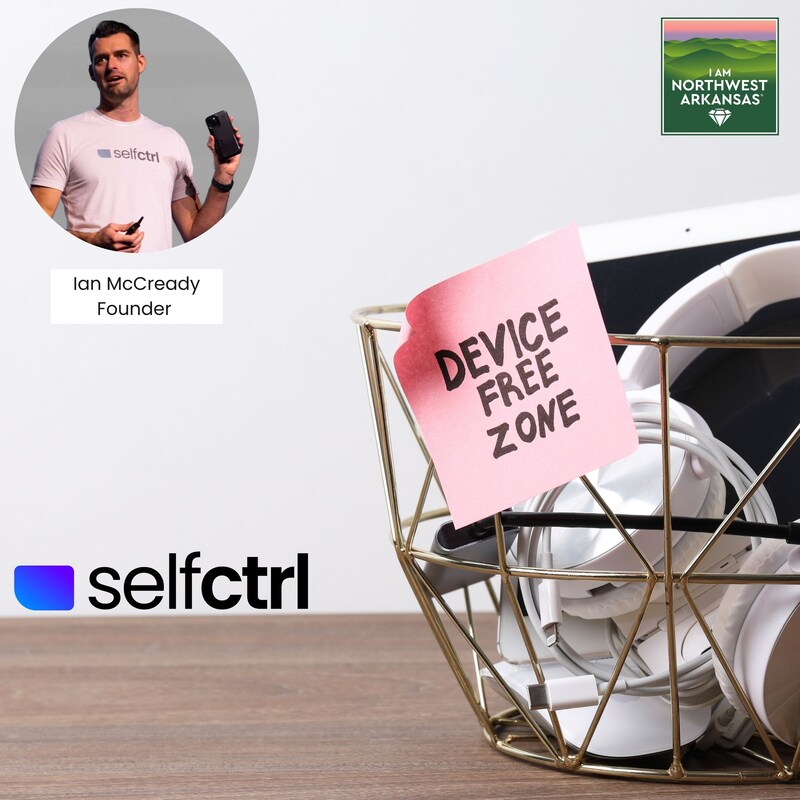
In this powerful episode of I Am Northwest Arkansas®, host Randy Wilburn sits down with Ian McCready, founder of SelfCtrl, to tackle a challenge nearly everyone faces today: technology addiction. From video games to cell phones, Ian shares his personal story of how digital devices took over his own life and what he did to change for the better. Now, he’s helping others across Northwest Arkansas and beyond find hope, healthy routines, and true connection outside of screens.
Randy and Ian break down why technology is so addictive, how it affects both kids and adults, and what practical steps families, schools, and individuals can take to reclaim their attention and mental well-being. Ian gives honest advice about meaningful digital detoxes, setting boundaries, and building healthier habits at any age. Whether you’re a parent struggling to limit screen time or an adult hoping to break free from scrolling, this episode is full of tips and encouragement for you.
Key Takeaways:
- Awareness is the First Step: Admitting technology has become a problem is key. You don’t have to call it an “addiction”—just a habit that isn’t helping you.
- Dopamine Demand: Games and apps are designed to keep you coming back. As tolerance builds, it takes more and more time on screens to feel the same excitement.
- Detox is Possible: Even short breaks from digital devices—like a 30- or 60-day digital detox—can help your brain reset and bring back lost joy and motivation.
- It’s Not Just for Kids: Adults of all ages, not just teens, are struggling with technology overuse and its impact on work, relationships, and happiness.
- Replace, Don’t Just Remove: Find healthy activities to fill the time you get back—walks, conversations, reading, or family games—to make new habits stick.
- Support Matters: Be open with friends and family about your goals for change, and ask for their support. Accountability makes a huge difference.
- Self-Control is Learnable: These changes are challenging but possible, and Northwest Arkansas can be a model for positive change around healthy screen use.
All this and more on this episode of the I Am Northwest Arkansas® podcast.
Important Links and Mentions on the Show*
- SelfCtrl—Website, resources, and upcoming courses: selfctrl.com
- Dr. Jonathan Haidt’s Book: “The Anxious Generation”
- SelfControl on Instagram & Facebook: @buildselfctrl
- Recommended Reading: “Atomic Habits” by James Clear
- FindItNWA.com NWA’s Hyperlocal Business Directory
- PodcastVideos.com – Rogers, AR – Podcast video production partners
Tune in to KUAF 91.3 FM to listen to the I Am Northwest Arkansas® podcast on Ozarks at Large every Tuesday at 12 Noon and 7 PM CST. And, check us out on their podcast as well.
This episode is sponsored by*
Signature Bank of Arkansas "Community Banking at its Best!"
*Note: some of the resources mentioned may be affiliate links. This means we get paid a commission (at no extra cost to you) if you use that link to make a purchase.
Connect more with I Am Northwest Arkansas®:
- Grab our Newsletter
- Email Us at hello@iamnorthwestarkansas.com
- Connect With Our Facebook Page
- Connect With Us on Threads
- Connect With Our Instagram
- Connect With Our LinkedIn Page
- Join The Facebook Group
- Connect with our Fearless Host, Randy Wilburn on LinkedIn
Thank you for listening to this I am Northwest Arkansas podcast episode. We showcase businesses, culture, entrepreneurship, and life in the Ozarks.
Consider donating to our production team to keep this podcast running smoothly. Donate to I Am Northwest Arkansas
Mentioned in this episode:
FindItNWA.com
🎧 This episode is brought to you by FindItNWA.com – the hyper-local business directory made for Northwest Arkansas. From local eats to trusted pros, it’s the go-to spot for discovering what’s great nearby. 📣 Are you a business owner? Get listed today and connect with thousands of locals looking for what you offer. 👉 Visit FindItNWA.com to explore or join now.
Transcripts
We are raising a generation of kids in a world that's radically
Speaker:different from the one we grew up in. A world where their
Speaker:social lives, hobbies, and even self worth
Speaker:are shaped by algorithms, screens, and likes.
Speaker:And while technology has brought us closer in many ways,
Speaker:it's also stealing something far more
Speaker:precious, our time, our attention,
Speaker:and in many cases, our mental health. Today's
Speaker:guest knows this struggle intimately. Ian
Speaker:McCrady, the founder of SelfControl, once found
Speaker:himself consumed by video games and screen use
Speaker:to the point that it impacted his work, marriage,
Speaker:and family. But rather than stay stuck,
Speaker:he made a change, and that change turned into a mission to
Speaker:help others. He has now delivered speeches to more than
Speaker:8,000 individuals in Northwest Arkansas, providing
Speaker:them with hope, tools, and a timely
Speaker:reminder, and he's just getting started. Let's dig
Speaker:into this important conversation. Hey, folks.
Speaker:Welcome back to another episode of I am Northwest Arkansas. I'm your host,
Speaker:Randy Wilburn. I'm excited to be with you today. I've got a special
Speaker:episode for you, so special that I decided to do
Speaker:this video first. And I wanna give a shout out right off the top
Speaker:to the great folks at podcastvideos.com right up
Speaker:here in Rogers, Arkansas. Eric Howerton,
Speaker:Parker Dodson, Peter Coker, the rest of the amazing
Speaker:team here at Podcast Videos will really take great care of you if you need
Speaker:to do a video podcast of any sort. And so I
Speaker:figured I would give it a twirl and see what it's like, and that's why
Speaker:we're here in the studios today recording this episode of the I
Speaker:am Northwest Arkansas podcast. But on top of that, the
Speaker:reason why I chose to want to do this podcast video
Speaker:first was because of the content that we're gonna talk about today. And as
Speaker:I teased up at the top of the opening of this
Speaker:episode, we're dealing with an issue that is so
Speaker:pervasive. Some of us don't even know we're even struggling with it. And a
Speaker:lot of you know what I'm talking about, but it's basically this device right here
Speaker:that controls our lives. I've got an iPhone 15 in my hand,
Speaker:and literally, I can do just about everything but set off a nuclear bomb
Speaker:with this thing. And I probably could do that depending if I had the right
Speaker:connections. Hopefully not. But, I I digress. But I'm
Speaker:I'm trying to make a point that we now have the technology in
Speaker:our pockets to do so much with it. So much good
Speaker:for the world, but at the same time, the flip side of
Speaker:access to that type of technology and information and the
Speaker:device itself is the simple fact that it can become
Speaker:a major distraction in our daily lives. And that's why
Speaker:I've asked, our next guest to join us today. And
Speaker:Ian is is an outstanding individual. Actually, one of his,
Speaker:folks that works for him reached out to me and said, hey. We would love
Speaker:to come on the podcast and talk about some of the things that our
Speaker:founder has learned about self control, especially around digital
Speaker:devices and digital detoxes. And so we're gonna get in to
Speaker:all of that today and have a really good discussion. If you're a parent
Speaker:of a teenager or a soon to be teenager and you're struggling
Speaker:with what do you do about giving your kid a phone or your kid
Speaker:is overusing the phone that they currently have, this is the
Speaker:episode for you to really dig into and listen to. And
Speaker:you may want to bookmark it and come back and listen again a few
Speaker:more times because I don't know about you, Ian, but I I have,
Speaker:I have constantly been studying this problem and how to deal with it with
Speaker:three teenage boys in my household. Mhmm. It is definitely pervasive,
Speaker:but I wanna welcome you to the I Am North West Arkansas podcast. Thank you
Speaker:for having me, Randy. Absolutely. Absolutely. And I'd be remiss if I
Speaker:didn't mention, a book that certainly
Speaker:is, at at well, it's on the New York Times bestseller list.
Speaker:He actually this the author actually came and spoke at Crystal
Speaker:Bridges along with our our current governor,
Speaker:Sarah Huckabee Sanders, and that is Jonathan Haight who wrote the
Speaker:book, The Anxious Generation, how the great rewiring of
Speaker:childhood is causing an epidemic of mental illness. So,
Speaker:folks, the stakes are are truly high. If you're not familiar with this book, I
Speaker:highly recommend that you read it. Go to your public library. Order it on
Speaker:Amazon. It's probably a book that you should have in your library
Speaker:that you can refer to. Because, again, as I said earlier, the
Speaker:stakes are high, and I think it's important for us to understand and learn
Speaker:how to deal with some of the problems that exist. But not even just for
Speaker:our kids, maybe even for ourselves. So I
Speaker:think that, I think that kinda makes sense. So, Ian,
Speaker:I I hope I teed that up enough for you to, today. But
Speaker:but, man, I would love for you just to kinda introduce yourself to our
Speaker:audience and tell them a little bit about your background. Because I know
Speaker:that just in the twenty minutes that we had in our preliminary
Speaker:conversation, you blew me away with some of the things that you've been through. Mhmm.
Speaker:And really what compelled you to want to do
Speaker:and work on a program like self control. Absolutely.
Speaker:Well, thank you for covering how
Speaker:much of an issue this really is. Yeah. Because,
Speaker:for me, I felt pretty isolated growing up. I felt like I was
Speaker:not someone, who
Speaker:should have a problem. And so when I actually like back when I was growing
Speaker:up, you couldn't be addicted to video games. Right. It wasn't even until
Speaker:2017 that the World Health Organization classified gaming
Speaker:disorder as something you could have. So I was just I was just a slacker
Speaker:back then. I liked to play too many video games, but I played video
Speaker:games growing up and they were never a problem. I was a good kid, I
Speaker:got good grades, I didn't get in trouble, and I think for my
Speaker:parents those were the markers of success, right? Yeah. If you get
Speaker:good grades, you don't get in trouble. Well, good job. Like, you you
Speaker:Exactly. You've done what we've asked. And so my
Speaker:habit around video games never really became a bad habit. It never
Speaker:really got in the way of school or any of the things, extracurriculars
Speaker:even, until I went off to college. Yeah. And I went off to college
Speaker:and I got to live on campus all four years. And one thing
Speaker:that I think it's important for people to know, not all games are created equal.
Speaker:Right. When it comes to how addictive they are or how
Speaker:problematic they can be, but I started playing a game that is known
Speaker:for being addictive. And it was just back when it was first being released, so
Speaker:it didn't have the reputation it has now, but I started playing a game called
Speaker:World of Warcraft. Oh. Okay. And it was freshman year,
Speaker:and my sophomore year, if you would have checked in on me,
Speaker:about halfway through sophomore year, I was playing about twelve to fourteen hours a day.
Speaker:A day? On the days that I could. So I loaded up all my classes
Speaker:Tuesdays and Thursdays so that I would have the other days completely
Speaker:free. Oh my god. Because I might have forgotten to go to class a few
Speaker:times. Yeah. Yeah. Yeah. So I knew that was a bad thing because my parents
Speaker:didn't today school's important. So
Speaker:I did what I had to do, and I loaded up my classes, and I
Speaker:started saying no to friends hanging out on a Friday night and started googling
Speaker:science of video game addiction. And I realized, hey. This this is a
Speaker:massive problem. But it wasn't until there was this
Speaker:in game item. It was like the ultimate in game item. Right? And it
Speaker:was so rare, so hard to get this item.
Speaker:And I kept coming back to the game time and time again because video
Speaker:games have essentially most modern video games have built in some
Speaker:sort of gambling mechanic. Yeah. And world of warcraft had one of those. They had
Speaker:a gambling mechanic where essentially you beat a boss or you
Speaker:do your your level right. You don't just get the item you're
Speaker:going for, you get like a 3% chance to get the item, and that kept
Speaker:me coming back time and time again. And the
Speaker:item finally dropped. It finally was available for me.
Speaker:And in world of warcraft, you play with a group of other
Speaker:players, and I didn't get it. They
Speaker:gave it to the next person, and I'm so glad that that
Speaker:happened. Because if I had gotten that,
Speaker:a few months later, they would go on to release the first expansion for the
Speaker:world of warcraft, and then they would release eight
Speaker:more expansions. And I still know people back from the two
Speaker:thousands that twenty years later are still playing the World of
Speaker:Warcraft and have just laid it out and essentially gotten the next
Speaker:items. And then when they release an expansion, everything you worked for
Speaker:is immediately erased. Within a couple hours of playing the next
Speaker:expansion, all those items you got are completely worthless.
Speaker:So I essentially, I believe through
Speaker:divine intervention, got out of World of Warcraft.
Speaker:And I wish that's where radio all, like, yeah, from that point forward, it
Speaker:was all better. But it wasn't because I continued to play
Speaker:other games, but other games didn't have quite that addictive power
Speaker:of World of Warcraft. So I just had kind of a bad habit Sure. Around
Speaker:games. Yeah. And in my twenties, there was more times
Speaker:than I care to admit that I pulled all nighters on a work
Speaker:night because I just couldn't turn off the game or the level. And
Speaker:I always told myself, I'm never doing that again. I can't why why do I
Speaker:keep doing this? And, you'd get in this shame cycle, and I
Speaker:wouldn't tell people about it. Never really always thought that I would be
Speaker:able to just kinda get out of it on my own. And I would
Speaker:set limits in place, and and I I couldn't. I couldn't get out of it
Speaker:on my own. Yeah. And in my marriage, it was causing me friction with my
Speaker:wife. I still remember her saying to me one day, hey. You'd rather just play
Speaker:video games tonight, AKA, you would
Speaker:rather spend time with your game than with me. Yeah.
Speaker:And the scary part was it was treat. Like, selfishly,
Speaker:I just wanted some me time. I wanted to focus on myself.
Speaker:And then my daughter was born in 2017, and
Speaker:I was playing a playing a game with her strep to my chest. She was
Speaker:taking a nap, and my wife thought it was funny. So she kinda came in
Speaker:and snapped a photo of that and, like, you know, pretty good use of
Speaker:time. Right? You know? Multitasking. Yeah. But
Speaker:it's something in the back of my mind was saying, hey. When does this stop?
Speaker:And a little while after that, I was watching her. She was doing some tummy
Speaker:time on the floor and I was playing a game, but I'm instinctually hiding it
Speaker:behind my leg because something in my brain is saying, I don't want
Speaker:her seeing her dead. Yeah. Even at this six months old
Speaker:age, ignoring her looking at a screen. Yeah. But that's
Speaker:exactly what I was doing. I was literally babysitting.
Speaker:I was sitting next to a baby doing what I wanted to do instead of
Speaker:parenting, instead of building that connection with my daughter. And not long after
Speaker:that, I went up to a retreat in the mountains, and the speaker was
Speaker:talking about priorities. And I talked to a lot of people about this. I talked
Speaker:about priorities. Pretty much everybody has the same list. Right? Like, so if you have
Speaker:faith, faith usually tells Sure. That it's, like family.
Speaker:Right? Number one. And then work, you know, friends,
Speaker:friends are usually above work. Mhmm. Then you have, your health
Speaker:and fitness. And then somewhere way down here, number five or six
Speaker:or seven is. But if you would have asked
Speaker:me, hey, Ian. You got some you got some free time on a Saturday. You
Speaker:got some free time on a weekend. I'm not reaching out to any of my
Speaker:friends or family to check-in on them. I'm not working out. I'm like,
Speaker:oh, I'm gonna just play some video games. Yeah. Like, when I
Speaker:get free time, that's what I prioritize. And I realized
Speaker:that's not that's not how I wanna be living my life.
Speaker:And in knowing myself before, of all the times
Speaker:that I tried to limit and fail Yeah. And I made
Speaker:these deals with myself. Hey. We're gonna have a bedtime. Right? Yeah.
Speaker:We're only gonna play on these days during the week. Like, a week or two
Speaker:later, I'm like, that was a terrible decision. You didn't realize you're gonna have this
Speaker:free time coming up. We're gonna go back on that decision. I was very good
Speaker:at negotiating myself out of the commitments that I made with myself.
Speaker:Yeah. So I said, you know what? I need to take a
Speaker:full break. And I took a six month minimum break from
Speaker:video games. I deleted everything off my phone. I
Speaker:deleted everything off my computer, and the important thing
Speaker:was I told my wife and I told my friends and
Speaker:coworkers I was open with it because
Speaker:it's a lot harder to go back on them Mhmm. When you know people are
Speaker:gonna be checking in on you, like, hey. How's it going with the video games?
Speaker:Yeah. Because when I told people, they kinda laughed at me. They're like, you need
Speaker:to quit video games, really? But I did. And
Speaker:so in that six months before I went back to
Speaker:them or anything, people started coming to me and said, hey, Ian. I heard you
Speaker:quit video games. Can you talk to my son? Can you talk to my nephew?
Speaker:Hey. What did we do about our kid, our daughter on YouTube or
Speaker:Instagram? And then it wasn't just that though, Randy.
Speaker:It was friends my age with kids. A friend,
Speaker:he is 35. He said, Ian, I'm trying to get my master's
Speaker:degree on top of working full time. I don't have any time for this, but
Speaker:I can't stop playing this stupid mobile game. I
Speaker:deleted it, like, 17 times, but I just reinstall every time
Speaker:I'm stressed or I wanna procrastinate. I literally don't know how to have self
Speaker:control around this. Can you help me? And then I was talking to a
Speaker:mentor of mine. He's in his sixties, and I thought I would you know, he's
Speaker:got figured out. Right? Yep. And I'm telling him what I'm up to, just excited
Speaker:to talk to him. He's like, Ian, hold on. Hold on. I'm on
Speaker:level 7,624 of a game called Toy
Speaker:Blaster. I was like, okay. Well,
Speaker:why are you telling me this, Tim? Yeah. He's like, I think I need to
Speaker:stop. Oh my god. I think you need to stop. So I realized
Speaker:just in that six month gap, this has
Speaker:affected everyone on the planet. Yeah. Everyone with access to
Speaker:a smartphone and technology that we have today in the Internet
Speaker:has access to the global library of entertainment
Speaker:twenty four seven, and we all have to
Speaker:build self control around it, or every single one of
Speaker:us, I believe, is going to develop a bad habit.
Speaker:So that's how self control got started. Wow. I mean, that's
Speaker:you're you're you're really it's I mean, I got goosebumps as I hear you
Speaker:talk about this because I think the the the challenge is and and I want
Speaker:people that are listening to this to understand. I don't care if it's
Speaker:pornography, drinking, drugs,
Speaker:all or video games. All of these tap into the same
Speaker:dopamine receptors in our brain Yes. They do. Which cause
Speaker:us to wanna keep coming back for more. It's that
Speaker:unquenchable thirst that something provides where you
Speaker:just, like, you can just never get enough water. You know? Like, when you're out
Speaker:working out and it's super hot, and you're like, I can't drink enough to to
Speaker:to satisfy my my thirst. It's the same thing. And
Speaker:and it doesn't matter what it is. And I think a lot of times people
Speaker:are just like, oh, well, you know, you know, cell phones and
Speaker:video games, that's kinda benign. It's it can't be hurtful, but
Speaker:it can be super destructive. Yeah. It really can. And
Speaker:I remember kind of like I remember when my kids got involved
Speaker:with, like, Xbox and and the gaming
Speaker:when Fortnite kinda became a thing. And that kinda took over. And
Speaker:Fortnite was its own type of World of Warcraft where you had to
Speaker:keep playing, and you had to buy skins, and you had to do this. And
Speaker:then they had all these, you know, guest player skins that that
Speaker:everybody just had to have because, oh, now Travis Scott is in here. So I
Speaker:want Travis Scott skin so I could do so and so. I mean, it's just
Speaker:it never ends. No. It doesn't. And I think it's it's important
Speaker:for people to recognize it for what it is and not think
Speaker:that, oh, well, that's that's cute. It's just, you know, it's a little thing.
Speaker:It's a temporary issue. Because like you said, it translated
Speaker:for you from high school to college
Speaker:into adulthood. Mhmm. And I'm always
Speaker:amazed that, you know, we see skits on TV of
Speaker:people, you know, making fun of of, you know, lame
Speaker:men playing video games at 30 and 35 years of
Speaker:age, but that's not far from the truth. No. It's not.
Speaker:That's that's actually common. Right. Exactly. The average age of a video
Speaker:gamer is in their thirties. Exactly. Exactly. Yeah. And I'm I am
Speaker:just I'm a little bit older than you, but I I remember, you know,
Speaker:for me, it was I and I think I told you this, like Atari and
Speaker:Pac Man. But, you know, we would play for a while, but then
Speaker:we would go outside Mhmm. And we would do things. You know? And there's always
Speaker:that joke where people would be like, yeah. I don't think most of our parents
Speaker:knew where we were on a Saturday. If they knew how far we would venture
Speaker:away from the house to go do things Yeah. Those days are long gone. Oh,
Speaker:yeah. Now your kids are just sitting up in the house all day long. You
Speaker:can't even get them to go outside and get get a little vitamin d. Absolutely.
Speaker:And and I think I think because I I sell that to say is
Speaker:that the stakes are much higher now. Just because we have the
Speaker:instant gratification of these devices, as I said earlier, they
Speaker:they are with us at all times. So there's never a
Speaker:break. And so even what you're describing to me about your mentor,
Speaker:you know, I mean, I think we're all susceptible to this. And it's it's
Speaker:more a matter of it's a human nature thing for us to have to say,
Speaker:okay. What do we do to undo what we've
Speaker:created? Mhmm. Right? I know, like, lately, I've been you know, my my wife
Speaker:and my sons my biggest challenge with my sons is simply
Speaker:they you know, I'm trying to get them to understand that there's so much more
Speaker:than the games out there. And I also you know, we've also
Speaker:made a commitment recently. Actually, literally, just in the last few days that
Speaker:we were gonna do a thirty day digital detox. Okay. You know? Just like
Speaker:I'm sure I'm sure you would I'm sure you would like that. Yeah. And and
Speaker:the detox is it's it's it's a legitimate detox because it's more
Speaker:than just it's like removing, social media stuff off
Speaker:your phone. You know, having some real clear
Speaker:standards for how you do things. And I think that, people
Speaker:think they laugh at that and say, oh, well, yeah. That that's I don't know
Speaker:if that's gonna work, but you have to start somewhere. Mhmm. And you have to
Speaker:first acknowledge that, yeah, this is a problem. And so outside of
Speaker:the fact that, yes, I can control the Wi Fi. I can turn the Wi
Speaker:Fi off in my home at night so that the kids aren't up, you know,
Speaker:because otherwise, they'll be up at 3AM playing Mhmm. If you don't turn the Wi
Speaker:Fi off. And then, you know, and then kids are even smart, like, just and
Speaker:I'm putting one of my son's business out on the street, but he figured out
Speaker:a workaround because there's all kinds of workarounds online. You just gotta go to YouTube.
Speaker:And it's like, this is how you this is how you, you you free
Speaker:jack your parents' Wi Fi. I saw that it it's it circumvents, you
Speaker:know, the their ability to shut it down. And so, you know, kids are smart.
Speaker:They learn it from each other. They learn it from each other. Right? So I
Speaker:think, you know, and I think so I think sometimes as as we're as I'm
Speaker:sharing all this, I know there's a parents that are nodding their head like, yeah.
Speaker:I I I kinda feel hopeless, Randy. I kinda feel
Speaker:hopeless, Ian. I don't I don't know what to do Yep. In order to address
Speaker:this issue. I don't have an answer for it. Yeah.
Speaker:I think the encouragement there when you look at
Speaker:and you mentioned earlier, and I wanna kinda dive
Speaker:into this a little more, the dopamine that's the same
Speaker:as the drugs. And I used to think, like, there's something
Speaker:about hard drugs Yeah. Or or drugs like cocaine or heroin.
Speaker:There's something in that that alters our brain and and and we get hooked on
Speaker:something. But as researchers have dove into those more and more,
Speaker:it's the same thing. It is dopamine. And dopamine
Speaker:is this it's not a good thing or bad thing. It's just how our brains
Speaker:learn how to build habits or learn how to want something in the
Speaker:future. And it can be a good habit or a bad habit. Yeah. And
Speaker:as we release dopamine, we do something for the first time when we realize
Speaker:it's enjoyable and fun. Dopamine releases and it's like a computer. Right?
Speaker:It it just says, yes, that was enjoyable. I want to do that again
Speaker:in the future because I like to do things that I enjoy. I like to
Speaker:do things that entertain me. And researchers at Harvard and
Speaker:Stanford, they learned that games and
Speaker:apps and technology can build that same loop
Speaker:that creates addiction. It's called the tolerance based
Speaker:cycle or addiction cycle. So, essentially, just
Speaker:like with drugs, you always need a little bit more, or with alcohol, you
Speaker:need a little bit more, or with coffee, you know, you need one more cup
Speaker:to get the same feeling of energy. Right? We can build
Speaker:addictions to things. And so with screens, it's so
Speaker:problematic because screens don't necessarily have
Speaker:the same negative consequences as a substance, right? They don't
Speaker:alter our state of being in the same way that something
Speaker:physical does. But at twelve
Speaker:hours a day, because you built up this tolerance to
Speaker:the number of funny videos or the number of video games that make you
Speaker:feel you you feel enjoyment, you feel that same
Speaker:feeling. You're going to build up a tolerance. Like, Hey, you used to feel awesome
Speaker:after you won one game of Fortnite. Now you're like, Yeah, I
Speaker:won. I won a game. I gotta win two now. I gotta get actually
Speaker:a better ranking. I gotta, I gotta level up my character even more. I gotta
Speaker:get get more. I gotta get more. I gotta get more. And then the same
Speaker:thing with social media. Right? So what? You got
Speaker:200 likes. That would you're kind of you're kind of a big deal.
Speaker:Well, now getting 200 likes is kinda commonplace. I need
Speaker:250 likes. Like, if I'm not going well, now I look at these other
Speaker:people. They get more likes than I do. They get more views. They get more
Speaker:whatever it is. We are going to always want
Speaker:more. And so that builds a tolerance
Speaker:to what used to to give us the same amount of dopamine. Now we need
Speaker:more. And the same thing happens with essentially any
Speaker:type of addiction where it's something we enjoy. And that
Speaker:is something we have to be aware of as humans.
Speaker:Right? Just across the board that this can happen
Speaker:with screens. And I think that's a I think that's something that
Speaker:has kinda snuck in under the radar with this because us as
Speaker:parents or just us as adults, we don't really classify
Speaker:our phones and social media because it's not always just one thing. Right?
Speaker:It's, hey, I'm addicted to checking email to make sure I'm on top of
Speaker:things, and I'm a little bit addicted to the news, and I'm a little bit
Speaker:addicted to YouTube where I get on there. Shit. And, you know, I have a
Speaker:problem playing this game too much. So it's like, it's not just this one thing
Speaker:like World of Warcraft for me. I just need to quit that. Like, it may
Speaker:be a combination of things that because you have accessibility to all of
Speaker:this all the time, you can get that dopamine hit whenever you
Speaker:need it. Yeah. And that dopamine hit, it
Speaker:people can't always do that with other substances or other things. Right. We can get
Speaker:that dopamine hit whenever we need to just by pulling out our
Speaker:phone, whether it's on a break at work, in the bathroom At
Speaker:a stoplight. At a stoplight. It's insane. You know? You see people on their phones
Speaker:or on or or on the highway. Yes. Let's Yes. So yeah.
Speaker:Which it it has become, as I like to say, an all consuming
Speaker:fire. Mhmm. That, again, just you just can't put it
Speaker:out. Yep. And saying all that because I I mean,
Speaker:again, I I I'm always trying to be a merchant of hope.
Speaker:Right? Yes. So so let's let's kinda,
Speaker:back backpedal just a bit. And and I wanna I wanna
Speaker:say, you know, in what you're learning now and how you're
Speaker:operating with self control and the talks that you're having, what are you
Speaker:saying to parents who feel like it's too late? Yes. That their kids
Speaker:are already glued to the screens. How am I ever gonna pull Johnny off that
Speaker:screen? Yeah. Sarah off that screen? So
Speaker:as I've gotten to do these talks, it's very fun. Right? Because you'll go talk
Speaker:to an audience, and then one of the doctors in the audience will bring
Speaker:you aside, and they're like, hey, I'm actually a certified addiction specialist. I
Speaker:help people with this all the time. Your talk was great. I would say this
Speaker:differently. So that's been fantastic. I've gotten to partner with some of the
Speaker:local doctors here. And after I kind of got to do my talks, they actually
Speaker:brought me in, and I got to do a partnership. And we got to teach
Speaker:essentially counselors, over 50 counselors in
Speaker:the region about what to do here. So what I'm
Speaker:gonna share with you is essentially not from me. It's from, doctor
Speaker:Chad Imhoff. And the encouragement I would have
Speaker:is what you're doing with your thirty day detox with your family
Speaker:is one of those first steps. So whenever you're dealing with something that
Speaker:you are addicted to, you need to take at
Speaker:least a thirty, if not even like a sixty day, like
Speaker:two month break. Yeah. And this depends on how bad it is. Right?
Speaker:That is required because you need to
Speaker:give your brain a chance to reset its dopamine levels.
Speaker:And And those dopamine levels that we were talking about previously,
Speaker:when this gets to an extreme example, the dopamine
Speaker:levels and what, doctor Imhoff shared with me that
Speaker:kinda blew my mind, the brain will reset and
Speaker:recalibrate when it knows it's getting these huge hits of
Speaker:dopamine repetitively. And if it's getting it every single day,
Speaker:it will stop releasing dopamine or will release dopamine
Speaker:30 to 50% less for the day to
Speaker:day activities of going to school, doing your homework,
Speaker:doing your chores, getting your normal work done, interacting with your
Speaker:family. And so I talked to kids, and you see this most
Speaker:pronounced, like, I'm middle school, 11 to 12 year old, and they don't
Speaker:want to get out of bed. Yeah. They don't want to go to school. They
Speaker:don't want to do anything but go back to their devices, and
Speaker:they literally don't. Their brain is
Speaker:saying, no. We're not going to release dopamine, which we know now
Speaker:is the one of the motivators for action. Right? Dopamine
Speaker:gets released ahead of you doing something you know you enjoy. So,
Speaker:like, when we anticipate a meal that we like Yeah. Dopamine releases and we
Speaker:get we're salivating just thinking about it, driving to the restaurant. Absolutely. And then
Speaker:we eat it and it's good. But dopamine actually is good to send the car
Speaker:to go there. So dopamine is literally being released
Speaker:less to do those other things. And to the parents who
Speaker:feel completely trapped, you're going to go through a detox
Speaker:period. And it's literally, like, one to two weeks are the
Speaker:the worst part of it. Mhmm. And then that thirty to sixty, ninety days is
Speaker:where the the dopamine levels can reset. And I just
Speaker:wanna encourage all the parents out there who do feel stuck
Speaker:and feel behind. I have talked to parents and we have gone
Speaker:through this and they say the same thing. My kid came back. Like,
Speaker:my fun loving kid came back, and it wasn't all perfect. Mhmm. There were still
Speaker:some serious issues there, but it is
Speaker:possible to reset the dopamine levels
Speaker:and remove something. And then at that point,
Speaker:after a month or two, you can start talking to,
Speaker:hey. How are we going to reintroduce this in a healthy way? Yeah. How
Speaker:are we gonna reintroduce it with much more stringent
Speaker:boundaries? But I think the most important thing for even
Speaker:an adult doing this or especially a parent with a child,
Speaker:like, there may be a point where it's like, no. We built such a
Speaker:a habit around this in our brain that we can't use it in
Speaker:a we can't use it safely. Like Yeah. I can't go back to world of
Speaker:Warcraft. Yeah. I would love to. Yeah. And I remember a friend of mine saying,
Speaker:like, can't you just play a little? I'm like, no. I can't play just a
Speaker:little. Like, when I get on there, I just that's what I want to do.
Speaker:And I just wanna stay in that world because it's fun and enjoyable, and it's
Speaker:very hard for me to pull out of it. Yeah. So there is
Speaker:hope we can walk away from, and our kids can
Speaker:build a sense of accomplishment and identity outside of that
Speaker:world. But it is gonna be difficult, and it is gonna take time. Yeah. Because
Speaker:video games and social media are built to give us positive
Speaker:affirmation Absolutely. And tell us that we're good at things. And, like,
Speaker:there's a reason we go to them. And so it's going to be
Speaker:hard, and we need as parents to find replacements for
Speaker:things that we can find enjoyment and get healthy releases of
Speaker:dopamine instead of that thing. Yeah. And it's never gonna
Speaker:compete with the screens. It's never gonna No. But it's also not going to be
Speaker:addictive, which is why it's a good thing and a healthy thing to go
Speaker:to. Yeah. You know, man, he bring up so much. And and as
Speaker:I'm sitting here thinking, you know, I mean, as a as a as
Speaker:as the organism that we we are, the beautiful aspect about
Speaker:our bodies and our minds is that we can restore
Speaker:them. Mhmm. Right? It's not, you know, it's not a foregone conclusion that, oh, he
Speaker:or she is too far gone. That's not the case. There there is
Speaker:something about that. I know I just recently went on a fast, a seven
Speaker:day water fast. And, you know, after a a few couple of days
Speaker:and I was because I you know, I've I've done few a few long fasts
Speaker:like that, but, you you know, I was just reading, and I was just being
Speaker:reminded of how there is a restorative nature to
Speaker:that kind of thing when you set yourself apart from something. And in
Speaker:this case, food, where your body has a chance to kinda reset
Speaker:itself and recalibrate the standard. And the same way
Speaker:in your mind. And so for instance, just for and I'll share on
Speaker:the show notes for those that are watching this video, the
Speaker:detox that my family and I are about to follow.
Speaker:Because we just we just started talking about it. So we're going to enter into
Speaker:it. We're gonna do a thirty day detox. And it's it's a detox from,
Speaker:like, Netflix. I mean, I know this is gonna hurt some people,
Speaker:but this means that you may not be able to to to finish up,
Speaker:the second season of the last of us right now, which I just got into,
Speaker:but that's a whole different story. So I digress. It'll be okay. Yeah. I'll be
Speaker:alright. But but, I mean, again, the the the the fruit of it is, you
Speaker:know, we're gonna try to get outside more and walk more as a family
Speaker:and just, you know, I've tried it because I'm a I'm a hardcore. Like, you
Speaker:know, I've just just to self admit, I'm I'm a podcast
Speaker:junkie. Right? Of course. And, You eat your own dog food. It's
Speaker:okay. Yeah. Exactly. I have to eat my own dog food. And so a lot
Speaker:of times now, I've just made it a practice of getting out sometimes because I
Speaker:go out every morning to work out. And now I don't always have
Speaker:ear pods in my head in my ears. Alright. I just go out and listen
Speaker:to the I wanna listen to the Cardinals or the Blue Jays or Yeah. Watch
Speaker:that little fox track traipse across me on the on the Neocaster Creek
Speaker:Trail or something like that. Call you take a raw walk. Right. A
Speaker:raw walk. Yes. Free. Just raw I mean, there's just nothing
Speaker:like it, though. It does feel good because you feel connected. Yeah.
Speaker:You feel connected to nature. Otherwise, you'd kind of, you kinda
Speaker:separate yourself. Mhmm. And and you you you really miss out on on
Speaker:what what things are. And I I always think of, like, Emerson and and
Speaker:others that, you know, talked about, just
Speaker:just the this be communing and being one with nature. And it's
Speaker:impossible for us to be one with nature with AirPods in our head,
Speaker:and and we just we just can't do it. So and, again, it's not
Speaker:an indictment or anybody else. I'm talking about myself. But if you see or
Speaker:hear yourself and what I'm sharing or what Ian's sharing, then there is
Speaker:hope. Right? That we we can actually do something about it. And I
Speaker:mean, you're basically creating a whole, model
Speaker:business model around that. And and and it's more it's not even
Speaker:just a business. It's it to me, it's kind of like it's it's a mission
Speaker:based idea Yeah. That we all can can can
Speaker:go a little bit further of in terms of gaining some self control
Speaker:Mhmm. And building what I would call good habits. Mhmm. I don't know about you.
Speaker:I've read Atomic Habits like four times. It's a great book. It is good. I
Speaker:highly recommend to anybody that hasn't read Atomic Habits yet, you need to do it.
Speaker:Mhmm. But one of the things I will say is it it's important. You mentioned
Speaker:that, you know, it takes thirty, maybe sixty days to develop that. Because
Speaker:a lot of times we've heard and we've heard people say, oh, well, it takes
Speaker:twenty one days to build a habit. It actually takes, like, three times that. Yeah.
Speaker:It's like in the sick the the actual number they've studied this. The actual number
Speaker:of days that it takes, it's like sixty six or more days it takes to
Speaker:actually build a foundational habit. Yeah. So you just
Speaker:setting yourself apart from the game for the weekend is never gonna cut it. No.
Speaker:And I think he talks about repetitions in that book. Yeah. Because it's not just
Speaker:days. Right? Yeah. Like, something you do once a week. Right. Like, it only comes
Speaker:up once a week. Right. You have a habit. I do this once a week.
Speaker:Well, you need, like, 60 repetitions of that. That's gonna
Speaker:take over a year. Yeah. So for you to really ingrain that or
Speaker:build that in. But, yeah, it's, it's important. Those repetitions are are
Speaker:important to build a new habit around how you use your device or your phone.
Speaker:Yeah. And you have I mean, you have to I mean, there are certain things
Speaker:that you have to do. If you struggle with pornography, you can't look at certain
Speaker:pictures. You can't look at certain images. If you struggle with alcoholism and
Speaker:you've you've you've gone dry, you can't just still go into the bar and
Speaker:test yourself to see make sure that it's molding. That's not It doesn't work that
Speaker:way. You know, my dad was, before he passed away, he was, eleven
Speaker:years sober. That was one of the most that was one of his most proudest
Speaker:accomplishments was was coming to that place where he
Speaker:didn't give give his body over to alcohol anymore.
Speaker:And he just used to tell me it's a daily struggle, but I fight
Speaker:it by not putting myself in compromising positions. Yep. And
Speaker:it's the same way with the phone. It's I mean, it's which I mean, there's
Speaker:there's all kinds of apps on your phone that you can get Yep. That will
Speaker:keep you from, you know, going to certain sites and doing certain
Speaker:things and downloading certain games. And even, like, my
Speaker:18 and 20 year olds still they still have to ask for permission to download
Speaker:stuff from the App Store. Mhmm. I know it sounds crazy, but, I mean,
Speaker:again, we you know, I I'm just like, I I don't want them to just
Speaker:run all willy nilly out there and and do what they wanna do. And I
Speaker:wanna I wanna add this one piece, and then we can move on. But, you
Speaker:know, what I try to explain as I have boys, and I don't know people
Speaker:that are listening, some peep some of you have boys and girls or just girls,
Speaker:and, you know, each kid is gonna be different. You have to parent each kid
Speaker:differently. You're you're gonna you you you're figuring that out now.
Speaker:But what I found, especially for young men, and Haight talks
Speaker:about it in the book. Mhmm. Young men are obviously a lot less
Speaker:mature than young women are at the same age. So an 18 year old boy
Speaker:to 18 year old girl, if I have to compare the two, the level of
Speaker:maturity is a lot higher in the young woman than it is in the young
Speaker:man. Mhmm. Most young young boys don't really that
Speaker:that whole for frontal cortex really doesn't form until about 25
Speaker:or 26. So I always tell my 20 year old, listen. You're gonna make some
Speaker:mistakes, and it's okay because you're not quite fully there yet. You
Speaker:know? Yes. You can vote. Yes. You can do these things, but you're
Speaker:still developing. As if. And that's the challenge that I think
Speaker:these devices, they they they short circuit that
Speaker:development. As if. And that's that's the that's kinda what Jonathan eight
Speaker:is talking about. And that's why you have some of these issues. And I I
Speaker:just wanna bring up just a couple of the statistics that are
Speaker:almost, like, mind boggling. So, again, if you haven't read this
Speaker:book, you you you I highly recommend it. But three
Speaker:of the biggest takeaways from his book, as a 50
Speaker:percent increase in teen depression since 2010. Is it? Depression
Speaker:became roughly two and a half times more prevalent for both girls
Speaker:and boys starting around 2012, and that's from the US
Speaker:National Survey on Drug Use and Health. And this aligns directly with Haight's
Speaker:argument that the rise of smartphones and social media
Speaker:in the early twenty tens triggered a mental health
Speaker:crisis, especially among Gen z. Yes. You
Speaker:know? And then it goes on a hundred eighty nine percent increase in emergency
Speaker:room visits for self harm among ten to fourteen
Speaker:year old girls. So see it. And then that's from 2010 to
Speaker:2020, that study was done. And, it it nearly
Speaker:tripled over the decade. And that's from the CDC and the National
Speaker:Center for Injury Prevention and Control. And this is really powerful
Speaker:because this a lot of times you think, oh, well, boys struggle with this more
Speaker:than girls do. Girls struggle with it the same way, but
Speaker:from different things. Yes. And and social media plays
Speaker:a major part in that. And then finally, this last one, which,
Speaker:again, kinda blew me away when I saw it, was simply that nearly
Speaker:50% of US Teens say they are online
Speaker:almost constantly. Yep. Almost constantly. Up
Speaker:from twenty five percent in 2015. That was just ten years ago. Yep.
Speaker:Okay. That's according to Pew Research. And obviously, this illustrates how
Speaker:immersive and the always on nature of screen time
Speaker:has intensified and why, you know, hate and so many others
Speaker:are are arguing for limiting phone and social
Speaker:media use in key developmental years. And I think that's
Speaker:the important piece. When he calls it the great rewiring,
Speaker:it's because during that so the
Speaker:ages of zero to five and the ages of, like, 13 to
Speaker:18, right, puberty, that's where our brains
Speaker:are setting so many of our habits and our learned behaviors
Speaker:kind of in stone. Yeah. And that is malleable stone, though. Yeah.
Speaker:Because you can anyone can retrain their brain. The process is called
Speaker:neuroplasticity. Yep. But plastic is hard. Right? And hard. You gotta Yeah.
Speaker:Work on it to to change it and manipulate it. So
Speaker:we are letting this generation wire their brains
Speaker:differently, and it is going to be very hard for them. And I'm talking to
Speaker:some of these kids who are in their twenties right now. And I,
Speaker:I used about 24 years old and he said, Ian, I've been
Speaker:falling asleep to YouTube every night
Speaker:since I can remember as a kid, like, can you help?
Speaker:Like, how do I stop? And he lays awake in bed
Speaker:and he will say, I I lay awake for an hour or two, and I
Speaker:just I'm anxious. I can't fall asleep. And I gotta just scroll, watch some
Speaker:YouTube, and then I can calm down Yeah. And I can fall asleep. So that's
Speaker:an example of how kids are rewiring their
Speaker:brains and their brains are looking for and what their brains need
Speaker:during adolescence and even during the early years zero to five, but
Speaker:especially during adolescence, which he hits on in his book. And so
Speaker:that's why it's such an important piece. But the
Speaker:interesting thing is in his book, he also shares that the
Speaker:rates of anxiousness and depression are up for
Speaker:people eighteen to twenty five. Absolutely. They're up for people 36
Speaker:to even up into 55. Yeah. And so the rates aren't
Speaker:up as much as with adolescents because we got through
Speaker:those formative years Yeah. Yeah. And we built some resiliency. We built some other
Speaker:things where we didn't go to devices in the same way that the
Speaker:next generation is. Yeah. But we also then
Speaker:had to essentially still learn as we've gotten introduced to
Speaker:these how to build self control around them,
Speaker:and it's affecting everyone. So
Speaker:the thing that I believe we all need to do is learn how to deal
Speaker:with this ourselves so that we could help our
Speaker:children, so that we can help the next generation, And that's learning to
Speaker:first step is awareness and admitting, hey, this is a
Speaker:problem, and that's what the book is so good at highlighting. It is a massive
Speaker:problem for the next generation. But I don't know any parent who reads that that
Speaker:says, I don't have any room to grow here. Right? Yeah. We all do.
Speaker:Listen. We all do. Yes. We all do. And I've listened to a lot of
Speaker:other people. I I'm a big fan of Cal Newport. He kinda
Speaker:talks about deep work and kinda rewire our brain from that perspective.
Speaker:But one of the biggest challenges is, you know, how do you win the day?
Speaker:Right? You know, it's like I'm always telling my kids, if if you get up
Speaker:early enough in the morning, you can win the day just by doing some of
Speaker:the basic things and kind of going from there. But if you've been up till
Speaker:2AM in the morning playing video games, there's no day to
Speaker:be won. Absolutely. Yeah. So what I mean is spent your day yesterday.
Speaker:Spent your day yesterday. So yeah. And and and, again, it's I
Speaker:don't I I think people are fully what they well, for the most part, I
Speaker:think people are aware. It's just it's the how.
Speaker:How do I? You know? And I think that's why self
Speaker:control is such an important organization because, you know,
Speaker:you are kinda saying, hey. Here are some of the breadcrumbs that people
Speaker:need to follow Yeah. In order to get out of whatever
Speaker:jam that they're in when it comes to their addiction. Mhmm.
Speaker:Specifically, these some of these these, electronic
Speaker:addictions, I think it is. So I would love for you maybe just to kinda
Speaker:share a little bit about how you guys have formulated and
Speaker:what beyond just going out and speaking at a lot of different places, which
Speaker:I would imagine that your your your schedule for speaking is going to
Speaker:only continue to increase. Yeah. But outside of that, the
Speaker:practical side of this is how we do it, what are what is self
Speaker:control doing to kinda help people navigate these wires?
Speaker:Yeah. So we share essentially a
Speaker:step framework that we've worked on with doctors and addiction therapists.
Speaker:And the first step is awareness and saying, you know
Speaker:what? I have a problem. I I and that's the first
Speaker:step of any 12 step program or any any addiction problem. And
Speaker:the the thing that I help people realize is you don't have to admit,
Speaker:like, I am addicted. Right? I have an addiction to my
Speaker:phone or whatever it is. An addiction is just a bad habit Mhmm.
Speaker:That has gotten completely out of control. Sure. Right?
Speaker:So we just have to say, you know what? I have a bad habit around
Speaker:my phone or my device, and I wanna change. And then we have
Speaker:to figure out and control access and
Speaker:give ourselves a chance to let the dopamine receptors that
Speaker:are pushing us so much towards that activity at least reset
Speaker:and kind of recalibrate. And that
Speaker:control axis can look like a bunch of different things depending on how deep
Speaker:we're in it. You mentioned pornography, and that that is one of
Speaker:the, I think, the most difficult addictions to get out of
Speaker:Yeah. Because of accessibility and because of how
Speaker:easily we can get around and we can get access to it. And
Speaker:that most people try to limit access and then
Speaker:find themselves the dopamine surge is so high in their brain to go seek
Speaker:it out that they'll seek another way, and they'll find another way to get access
Speaker:to it. So that controlling access, even if it's a video game or something like
Speaker:that, if it's a silly video game on your your phone, just like
Speaker:you have your kids, they need a password from parents to add
Speaker:an app and install, ask a friend. Ask your
Speaker:your spouse, your partner, your your someone you trust to be like, hey. I
Speaker:know this is ridiculous, but can you put this limitation? Like, can you put
Speaker:parental controls on my phone? And that's gonna take an incredible step of
Speaker:humility, an incredible step of, you know what? This is actually a problem for
Speaker:me. Yeah. But if we're gonna take mediocre action to get results, we're
Speaker:gonna get mediocre results. Absolutely. If we're willing to take more serious
Speaker:action, we're we're gonna actually see the results. So that controlling access
Speaker:is an important piece. Accountability and talking to other
Speaker:people. There's a reason why the most successful diet
Speaker:groups, the most successful, exercise groups
Speaker:are with other people. Yeah. Right? There's a reason why, like, at
Speaker:home gym equipment doesn't work as well as in the gym equipment.
Speaker:Right? Like, you're around other people. There's this built in accountability.
Speaker:Like, we run faster when there's someone else running with us. Otherwise, we'll
Speaker:just, you know, I'm I'm good. Yeah. I'm good. A little bit of peer pressure
Speaker:goes a long way as far as that's concerned. Absolutely. So that social piece is
Speaker:important. And that to me, especially with something like the
Speaker:phone, is a it's a position of vulnerability because
Speaker:you're you're admitting you have a problem that you need to improve something around
Speaker:something that feels like it shouldn't be a problem. Yeah. And
Speaker:just talking through that and being like, no. I I seriously I do need help
Speaker:on this. Like I told you before, when I told my friends I was, hey.
Speaker:I got a problem with video games. One of my friends laughed at me. They're
Speaker:like, okay. Yeah. Figure it out, man. Like Exactly. We
Speaker:got bigger problems than that. Yeah. Oh, yeah. But this is something that I don't
Speaker:wanna continue to have a problem with. And after the initial
Speaker:laughing, they all got behind me on it. Mhmm. And then some of those friends
Speaker:that were in the room where everybody's laughing were just laughing because everybody else was
Speaker:laughing. Some of those friends Nervous laughter because they were they saw themselves and asked
Speaker:for friends came to me, and they asked for help. Yeah. And they're some of
Speaker:the people that I I helped out of it because it
Speaker:was yeah. This is a problem for me too. So
Speaker:being, you know, open and honest and getting that social,
Speaker:essentially at this point. I love the book Anxious Generation because I feel like we're
Speaker:hitting a tipping point. Yeah. I feel like we're hitting a tipping point in society
Speaker:where we're like, everybody's knows this is a problem. So we talk
Speaker:through, that social piece, and we talked through the amount of
Speaker:time that you need to take a break so that we talked through that kind
Speaker:of amount from the topic habits, like, really, like, one
Speaker:to two months, if not longer, to reset. And then you do need
Speaker:replacement activities. Yeah. Right? Because when I quit video
Speaker:games, I came home stressed from work. I had a new baby in the
Speaker:house. My my wife and baby weren't there, and I had a very stressful day
Speaker:at work. And I went and I went from the
Speaker:pantry to the freezer back to the pantry, ice
Speaker:cream, candy, chips. And I for about ten minutes, I've been
Speaker:jayed for the first time in my
Speaker:life, and I kind of stopped. I had a bag of chips in
Speaker:my head. I'm like, what am I doing? Yeah. Because previously I would have
Speaker:gone and logged on to video games. Yeah. I just got some of and I
Speaker:didn't realize how much I was medicating my emotions and my
Speaker:stress with video games. And so I did get
Speaker:some value out of games, and we do get some value out of
Speaker:scrolling. We do get some value out of relaxing and watching a
Speaker:Netflix show that's enjoyable, but there is a cost.
Speaker:And can we build habits, and can we build ways to deal with
Speaker:and replace those things that we were going to video games or going to our
Speaker:screens for that don't have the risk of addiction?
Speaker:They don't have this. And that's where, like, I transferred it
Speaker:to, hey, before I get home from work, at that point, I work from home
Speaker:now, but at that point, I had to commute. I would stop at the park
Speaker:by my house, and I would walk around, and I would just literally
Speaker:release some endorphins to release some stress before I walked
Speaker:into a stressful situation with a new baby. Yeah. Yeah. Yep.
Speaker:Yep. And so I I had to figure out how to build some replacement activities.
Speaker:And one of the things that I've talked to therapists and doctors about this, you
Speaker:have to pick a replacement activity that you can do
Speaker:in the same time that you go to those devices.
Speaker:Right? And so that might look like a budget. Maybe you go to your your
Speaker:video game and a bunch of different things, so you might need three different replacement
Speaker:actions. I go to my phone while I'm at a stoplight. Like, you just need
Speaker:to put the phone away, and you need to, like, get a, I don't
Speaker:know, audiobook or something else to do in the car, like a fidget toy or
Speaker:something so that you're not distracted and a stoplight and you could
Speaker:focus on driving. Yeah. And the person behind you is not looking at you. But
Speaker:then in the evening, right, what's something you can do in the evening and you
Speaker:find a replacement activity, whether it's exercise or reading a physical
Speaker:book or something like that, or it's just
Speaker:engaging in conversation. Maybe bust out the puzzles or the board games or
Speaker:something like that, but you replace it with other
Speaker:activities that are healthy and that you enjoy. And they still need to
Speaker:release some dopamine for you that you enjoy Yeah. But they don't come with
Speaker:the, hey. Here's a side effect of addiction. Yeah. Yeah. Yeah.
Speaker:Warning warning label not included. So, yeah, hopefully, they will
Speaker:be soon, but those replacement activities are important.
Speaker:And then the last thing, we talked about knowing your story.
Speaker:Right? Knowing your story means for me
Speaker:uniquely, here's the things that I've had a problem with and I've
Speaker:had to walk away from. And that might be embarrassing and difficult
Speaker:because the things I have an issue with, maybe you don't have an issue with.
Speaker:There are a lot of things at this point that are kind of becoming universally
Speaker:a problem, but I've talked to people who are embarrassed about the specific video game
Speaker:that they play. Sure. Or the specific game that they're on level
Speaker:7,624 of. Right? Like it's that's not a position of,
Speaker:like, yeah. I don't play that game. I don't have a problem. But for me,
Speaker:it's this game, or for me, it's this. I've talked to people who are addicted
Speaker:to scrolling Zillow, and they're just looking at the houses around here
Speaker:in Northwest Arkansas, and they're like, I just bought a house,
Speaker:you know, two years ago, but I'm still on the I'm still on the email
Speaker:list, and I'm looking at houses. And that's not to say, hey. It's not
Speaker:it's that's in fun and enjoyable to do. But,
Speaker:saying, hey. Like, let's take a break from this and recognize that I
Speaker:wanna do other things during that time. And so helping people walk
Speaker:through those steps, and then I think all of us at this day
Speaker:and age in 2025 have to build the skill of
Speaker:recognizing when something's a bad habit Yep. And having the
Speaker:courage to do something about it. Yeah. And so
Speaker:our, self control is a nonprofit. We're a five zero one
Speaker:three c, and we essentially go into we're doing a a
Speaker:screen time tour in schools right now. So we would go into a couple score
Speaker:schools in Springdale. We're gonna be in one next week. And I'm
Speaker:trying to get this message to the parents through the schools, but also directly
Speaker:to the students because I talked to
Speaker:I mean, I talked to a first grade class, and I thought I was wasting
Speaker:my time. I told my wife, like, this is we don't need it yet. And
Speaker:a little first grade girl talking about YouTube rose her raised her hand, and she
Speaker:said, how do I stop? Yeah. If I wanna stop, and I don't know
Speaker:how. And I realized I gotta get
Speaker:the the message directly to the kids. I was literally talking during red ribbon
Speaker:week, like, get be safe kids. Stay off drugs kids, and we're
Speaker:talking about the drug epidemic. Yeah. And so we go and
Speaker:we talk to schools, but we've also been going and talking to businesses
Speaker:because essentially this generation, right, is going into the
Speaker:workforce. Yeah. And there are the statistics are They're
Speaker:ill equipped. Shockingly high for how many people, even
Speaker:while they're physically in an office, but especially if they're remote, they're
Speaker:multitasking and playing some video games, watching some Netflix shows while they're
Speaker:working. And the number of mental health days since
Speaker:2017 is up three hundred percent. So we try to help
Speaker:businesses with this as well to essentially educate their
Speaker:workforce on how they can build self control and get their job done. And
Speaker:then we've been working, so it's mainly with schools, we've been doing other parent
Speaker:events as well in the local community. I'm gonna go
Speaker:get to train, we've trained staff at multiple,
Speaker:different government centers as well on how they can help with especially once
Speaker:working with youth. So we're trying to,
Speaker:and I feel compelled to share my story and try to help as
Speaker:many people around this as possible. Yeah. Because in
Speaker:turning away from it myself, I recognize
Speaker:how big of an issue it is and how pervasive it is Yeah.
Speaker:Across every age group, every demographic. Yeah.
Speaker:Well, I mean, yeah. You you said a mouthful, and I mean,
Speaker:certainly, you have your work cut out for you.
Speaker:I mean, that's that's that's the understatement of the year. Mhmm. And so I
Speaker:think it's one of the reasons why this has grown with with very little
Speaker:marketing, lot of word-of-mouth. People have heard about what
Speaker:you're doing. And, I mean, I think the reality of and
Speaker:I think this is more rhetorical, but I think the reason why the message is
Speaker:spreading so fast is because I think in in the
Speaker:back recesses of most of our minds, we recognize that this is a
Speaker:problem Mhmm. That we have to figure out. How do we overcome?
Speaker:And, I think there there is, there's a lot of
Speaker:opportunities. I'd be curious to know, what
Speaker:your thoughts are in terms of you know, I know you were recently
Speaker:at the Capitol, for an event. And and how
Speaker:do you feel like policymakers are responding to this
Speaker:concern? Are are other do you feel like our our our
Speaker:elected officials understand the need for this? I know,
Speaker:governor Sanders does because she was one of the first ones to say, yeah. We
Speaker:need to take phones out of schools. And, you know, and I was I was
Speaker:so excited when, you know, my my two sons started Fayetteville High
Speaker:School this past year, and they were like, yeah. We're limiting phone use. And Mhmm.
Speaker:I saw the decline in the number of texts during the day and interactions and
Speaker:what have you. But, you know, I mean, it we still have a ways to
Speaker:go. But do you think that as a whole, lawmakers
Speaker:understand the problem and are willing to figure out some
Speaker:way to address it. I do. And I think it's,
Speaker:so governor Sanders, her husband, and she shared this.
Speaker:I was at that event with Jonathan Haidt and governor Sanders at Crystal Bridges
Speaker:a few months back. She showed that her husband
Speaker:read the anxious generation, gave it to her, and said you need to read this.
Speaker:And then she mailed a copy of it to all other 49
Speaker:governors across The United States. Yeah. So our
Speaker:state of Arkansas has just passed in in the current
Speaker:legislative session, the bell to bell, they'll sell
Speaker:school, bill. And so what that means is the
Speaker:restrictions for Fayetteville High School are gonna get, even higher.
Speaker:Essentially because one of the things that one of the schools that I went and
Speaker:talked to, they said, hey. We've put some pretty, some pretty
Speaker:strict restrictions in place already, but we don't restrict the kids at lunchtime.
Speaker:Yeah. And you go into a school cafeteria
Speaker:of a bunch of seventh and eighth graders, and
Speaker:it's quiet. Yeah. You just hear it's awkward. Yeah. You hear a
Speaker:bunch of, like, and it's almost like talking is is
Speaker:uncomfortable, right? Like you you hear some smatterings here. Yeah. Yeah. Yeah. In
Speaker:your area, if no one else is talking, everybody else is on their device. You're
Speaker:the weird one for wanting to tell a joke and tell somebody to tell all
Speaker:around you. So that bell to bell, even
Speaker:giving kids the ability and say, hey, we're gonna get that
Speaker:social time. That's such an important part of school. Right? It's building those
Speaker:social skills. It's not we don't just learn about math, sciences, and
Speaker:reading at school. We learn how to interact with our peers and other people.
Speaker:So I think it's a huge deal. And the reason I think it's the reason
Speaker:I'm confident that our lawmakers are doing and will continue to do
Speaker:something about this is because they are experiencing problems. Absolutely. Yeah.
Speaker:Right? And so a lot of issues Whether with their kids or grandkids. Yep. Their
Speaker:kids or grandkids or themselves. Or themselves. Right? Yeah. So this this
Speaker:issue, I think the next frontier for it is going to be to help protect
Speaker:the kids zero to five. Yeah. Because like I mentioned with that first grade girl,
Speaker:we're we're doing a lot and we're focusing a lot on the teenagers. Mhmm. But
Speaker:sixty eight percent of kids by the age of eight have their own tablet.
Speaker:And the tablet is effectively the cell phone of the
Speaker:young adult the younger the younger ages. Can I can I add
Speaker:one piece to that, which a lot of people don't know this whole story, but
Speaker:you know, Steve Jobs was asked when
Speaker:he came out with the iPad? He was like, do your kids do your kids
Speaker:enjoy playing with it? And the first thing out of his mouth was, I don't
Speaker:even let my kids play with it. No way. Yeah. So the creator of
Speaker:this technology knew the power of the technology. And, I
Speaker:mean, I think that should speak volumes. I tell people that story all the time.
Speaker:They're like, that can't be true. It very much is true. Yeah.
Speaker:And and I think that that we need to recognize that.
Speaker:And I've even read some articles from some game developers that don't
Speaker:let their kids play games. Mhmm. That should be a hit and a half for
Speaker:any with any one of us to understand. Oh, okay. I I get I
Speaker:get it. You know? And and so yeah, I mean, I just I
Speaker:didn't mean to cut you off, but I just people need to understand
Speaker:that stakes are high. Stakes are high. And I think the
Speaker:that regulation that that one's gonna be harder to regulate.
Speaker:Right? But I I'm confident we're gonna get there and figure
Speaker:something out because that's where kids are building habits in
Speaker:the first place. And just for anybody listening, I talked to a lot of parents.
Speaker:They're like, oh, no. I ruined my kid. I gave him a tablet. Like, no.
Speaker:You didn't. And, first off, you can take it
Speaker:away if it's causing problems. Yeah. Yeah. And please do.
Speaker:I talked to a mom, and she talked to she had
Speaker:a a seven year old daughter. She gave her a old iPhone. Right? You know,
Speaker:you upgrade. You upgrade. You do your 15. You got out of the phone sitting
Speaker:around. Yeah. And it didn't it wasn't connected. It couldn't make calls. It could just
Speaker:connect on their Wi Fi at home. Like, they they were putting they only had
Speaker:YouTube Kids on there. They they put all all the protections that they thought they
Speaker:should put in place. But by the time their daughter was 11,
Speaker:she was depressed, and she was starting to have suicidal
Speaker:ideations and thoughts. And they were crushed because
Speaker:they were there every step along the way. They took it away for weeks at
Speaker:a time. They did things, and it still built addictions to where that daughter
Speaker:was sneaking that phone into her room at night, and from one
Speaker:to 4AM was binging YouTube Kids, but she was still able to
Speaker:watch the videos that she wanted to play, video games on it. And the
Speaker:parents were crushed, and the mom finally had had enough, and she walked
Speaker:into our garage. And she grabbed a sledgehammer, and she walked inside, and
Speaker:she just smashed. No. Randy, she did not smash the iPhone.
Speaker:She handed the sledgehammer to her 11 year old daughter, and she said,
Speaker:don't you see what it's doing to you? Do you
Speaker:want this to keep continuing? Yeah. And the 11 year old daughter
Speaker:smashed the iPhone. Mhmm. And it took a few weeks,
Speaker:but the mom reported what I we shared earlier that she
Speaker:started to come back. Uh-huh. And there was still some behavioral issues getting wrong,
Speaker:but she started to laugh again at the dinner table. She started to
Speaker:engage. She started to come back. So I just want and I've heard so many
Speaker:stories, especially from our generation even. Right? Yeah. Of parents being
Speaker:like, the Nintendo. Like, the old 16 Nintendo.
Speaker:Kids, what's going on? Get outside. Yeah. Sorry, dad. Like, three
Speaker:days in a row. Dad comes in, smashes the Nintendo, throws it in
Speaker:the trash can. Right? So don't be afraid. I know they're expensive,
Speaker:and it feels like a nice piece of equipment and technology. I've
Speaker:ideated fantasies of just smashing my kids' Xbox. I
Speaker:really have. And I'm just like and, you know, they're at age now where they're
Speaker:kinda they wanna buy their own. Yeah. They do. They're not hiding, and they're like
Speaker:and I'm like, dude, I just I just sometimes I just feel like
Speaker:I I felt like I introduced it. And you're right. As a parent, sometimes we
Speaker:feel guilty because Mhmm. We sometimes unintentionally
Speaker:present certain things into the equation Yeah. That take on a life of their
Speaker:own. And in this case, it that could be a gaming system. PlayStation, that's
Speaker:box you, fill in the blank. So here's the hope and encouragement that I would
Speaker:share with any parent or even grandparent Uh-huh. Who's
Speaker:in that situation. You get the distinct
Speaker:and 100% necessary opportunity
Speaker:to help that child build self control and
Speaker:figure out how to use that
Speaker:wisely. Yeah. Because when they turn 18, 18,
Speaker:they're gonna go get access to the addictive phones, the addictive technology.
Speaker:The goal, in my opinion, and what I try to teach any parent or any
Speaker:person, if you're helping a young person through this,
Speaker:you can't ignore it. Yeah. You can't just say, hey. You know what? You're not
Speaker:getting anything till 18 ever, and good luck on your on your own.
Speaker:Right. Because I went off and look what
Speaker:happened to me. I even had pretty good restrictions in place with video games, and
Speaker:I still got addicted. What I needed to learn was the
Speaker:ability to recognize when something is unhealthy for me, when
Speaker:it's a bad habit. And I, as even a child,
Speaker:need to say I want to do something about it. Yeah. And at one of
Speaker:the schools that we wanna talk to, I ran into the the mom. I
Speaker:didn't know her ahead of time, but she came up to me and she said,
Speaker:did you talk at my kid's school? And I'm like, where was it? Oh, yeah.
Speaker:We talked a couple months. She said my son came to me with
Speaker:his iPad and said, can you please charge us in the kitchen, and I need
Speaker:you to put more parental restrictions on this. And she
Speaker:was like, that was you. I was like, I'm not sorry.
Speaker:Yeah. I'm actually excited because think
Speaker:about anything, right? When if a child or an
Speaker:adolescent or a teenager says, I want to do something about
Speaker:this. Yeah. This that's the first step. I talk to a lot of
Speaker:kids. I get pulled into situations where I talk with adolescents, and I one of
Speaker:them just straight up said to me, he's like, the only reason I'm talking to
Speaker:you is because my parents made me. Right. And I'm like, okay. We got we
Speaker:got a ways to go before before I can help you out. Yeah. Because
Speaker:if we don't wanna do something, it's not gonna happen. And the same
Speaker:is for our kids. So if you've given your child or your grandchild a
Speaker:device, look for those crucial conversations, those
Speaker:opportunities to talk with them. Say, hey. If you don't like
Speaker:that that's making you moody or irritable, let's do something about it.
Speaker:Let's try to recognize when that game or social media is
Speaker:leading us into an unhealthy pattern. And let me
Speaker:help you. And even me as a grandparent, or even me as a parent, I've
Speaker:had to do this and I've had to do it here or here, and you
Speaker:can model it for them how to build healthy
Speaker:habits and self control. Right. And technology. Yeah. I love
Speaker:that. I love that. Well, I got this is my last final question for you
Speaker:because you've really dropped some some great knowledge and some some wisdom
Speaker:around how we can start to combat this. Given that
Speaker:we are in Northwest Arkansas, if we became the national leader in healthy
Speaker:tech use, what do you think that would look like?
Speaker:Because you're starting it. I mean, you're Yeah. You know, you're you're encouraging, things
Speaker:that are happening in Little Rock, which is our state capital, to happen,
Speaker:and you're incur you're taking a lot of the research that you've used
Speaker:to to really kind of make a case for self control. Mhmm.
Speaker:But what what do you think that would look like for us here in in
Speaker:this area if we're able to really tap into
Speaker:the zeitgeist of the moment of just understanding how pervasive
Speaker:the phone is and all these other devices of how we can get control of
Speaker:it and become better for it. Yeah. I
Speaker:think when you look at national studies and
Speaker:even global studies on happiness, There's
Speaker:a long standing over eighty years,
Speaker:study at Harvard University and they studied a what
Speaker:is it that makes people happy and has it has them live
Speaker:longer And it's Yeah.
Speaker:It's social connection. Yep. Those social
Speaker:connections are so pivotal to our health.
Speaker:They're the reason we want to get in shape. Right. So that we can run
Speaker:around with our kids. They're the reason we wanna eat healthy. They're the reason we
Speaker:wanna put away our bad habits. I think about my own dad, and he
Speaker:put away. He stopped smoking cigars when my sister asked him to stop
Speaker:smoking cigars so that he would be around for the
Speaker:grandkids. Yeah. Absolutely. And so those social
Speaker:relationships, like, when he talked to anybody on their deathbed, what do
Speaker:they talk about? We talked about Steve Jobs or even Steve
Speaker:Jobs, who I would not necessarily expect to talk about. He talked about
Speaker:his success in, like, what he did in building one of the world's most
Speaker:successful companies. And we talked about relationships and the regrets and the
Speaker:successes and the things that he had around that. It's always
Speaker:people. Yeah. And if we can recognize that and put
Speaker:our devices down and look up at the souls and
Speaker:the other people just in the rooms that we inhabit around
Speaker:us, I think we'll see if you looked at national
Speaker:studies of the whole region, they say what is going on with Northwest
Speaker:Arkansas? Their happiness levels are up. Their social connections are
Speaker:up. Their what are what are they doing differently? Yeah. And it
Speaker:would be the grandparents not wanting to put the kids in front of the
Speaker:screens and not wanting to give the kids what they're asking to. It's the modern
Speaker:day candy. Right? Right. I want to be the loved grandparent. So, yeah, you get
Speaker:more iPad time. Yeah. Yeah. And I'm not trying to make any grandparents feel
Speaker:guilty about giving their kids some of those things that haven't, but, man,
Speaker:what are you gonna pass along to your kids? What is the wisdom that you
Speaker:are gonna teach your grandchildren? And it's the parents recognizing
Speaker:this and not going to devices themselves Yeah. To deal with
Speaker:their anxiety and their stress and figure out healthy habits so that
Speaker:they can pull it for the next generation. And then I think it's
Speaker:within the younger generation, within gen z and even the kids growing up
Speaker:today, who are the leaders who are gonna take a step and we're
Speaker:gonna say, hey, peers, This isn't working. Right. And you're gonna
Speaker:see self organized things going on just here in
Speaker:Northwest Arkansas. How can we take steps
Speaker:away from technology? Hey. Hey. We're gonna create a club that's a no
Speaker:tech club. We're gonna, hey. In our club, we're gonna there's no screens.
Speaker:You you leave your device at the door or whatever it is. Like,
Speaker:you're gonna see young people. That's what I think it would look like across
Speaker:all the generations to see Northwest Arkansas be a leader in
Speaker:technology and screen time. I love that. I love that. Well,
Speaker:there folks, I think we have our marching orders here. Ian has laid
Speaker:it out perfectly for us. Ian McCray, for those that are
Speaker:listening to you and what the wisdom that you've shared over this past
Speaker:hour, If anyone wants to get in contact with you, what's the best way for
Speaker:them to do that? Absolutely. So you can go to selfcontrol.com. That's
Speaker:selfcontrol like it's spelled on mytshirt,.com. We
Speaker:release, essentially, a weekly or every other week blog.
Speaker:So you could sign up for our newsletter to get engaged with us there. We
Speaker:are on Instagram and Facebook because that's where our audience could the
Speaker:people we're trying to help are. So you could follow us there at build
Speaker:self control. So it's build and then self c t r
Speaker:l. Build self control. So you can engage with us there. We
Speaker:share a lot of tips, on Instagram and Facebook on there as
Speaker:well. We are going to be launching some cohorts
Speaker:coming up here in the summer where people can go through essentially
Speaker:a a few week or eight week course where you can go through it with
Speaker:other people, other parents or other, people in your your age group. So that's
Speaker:something we're gonna be trying out because of that social connection.
Speaker:Yeah. People need that help to change their habits around this. So we're
Speaker:looking at essentially launching some of those and and walking people through a lot of
Speaker:the things that we've talked about here today Mhmm. But in a more structured format
Speaker:where you have time to work through them and implement some things. So that's something
Speaker:you could sign up to our newsletter at selfcontrol.com to find out
Speaker:more information on when those are coming in. And I think there would be tremendous
Speaker:benefit to stuff like that, even even a a self directed detox
Speaker:program, you know, of this. And it's like because there's a lot of studies that
Speaker:show how these can be put into play, but, you know, my son found
Speaker:it. And it was the crazy thing was my son came to me, came to
Speaker:my wife and I and said, hey. I wanna try this. And I was I
Speaker:was like, hallelujah. You know? Let's do this. So, I mean, here's here's an
Speaker:18 year old who loves his video game, and he was like, you know, I
Speaker:think I really wanna do this. We've been talking and talking and talking. And so
Speaker:I say all that to say to parents, don't give up. Your kids
Speaker:are listening. You just have to keep driving home to them the point
Speaker:that you really do care about them. You care about their future, and
Speaker:you wanna give them the the most advantages
Speaker:possible. And one of the ways that you can give your kids an
Speaker:advantage is by helping to to to
Speaker:decrease the reliance that they have on this device right
Speaker:here or on their Xbox or PlayStation or Wii or all
Speaker:the other devices that they have. Because there's a big world
Speaker:out there just waiting for these kids, and and and
Speaker:waiting for them to put their thumbprint on on on their lives.
Speaker:And so I really wanna encourage you to take advantage of that. So, Ian McGrady,
Speaker:thank you so much. Thank you, Randy. For join joining us today and talking
Speaker:about self control, and we'll continue to, spread the good
Speaker:news of what you're doing. And as we learn learn more in the future, we
Speaker:will be sharing that out. But certainly, folks that are listening to this episode,
Speaker:check out the show notes for the contact information. I'll make sure you have all
Speaker:of Ian's contact information. If you wanna get in touch with him, let him know
Speaker:that you heard about it first on the I am Northwest Arkansas podcast. And
Speaker:so that's about it. So thanks again for joining us today. Thank you for having
Speaker:me, Randy. Absolutely. Absolutely. Well, folks, that's a wrap. That's,
Speaker:an episode today. I wanna, again, shout out
Speaker:podcastvideos.com, for supporting us and
Speaker:allowing us to do this episode here at their location right up here in
Speaker:Rogers, right around the corner from the amp and, Topgolf and all those
Speaker:cool places. It's nestled up in the corner here. You can come up here and
Speaker:get your podcast videos made. They do an excellent job. They
Speaker:have a state of the art facility here, and Eric Howerton and
Speaker:and Parker Dodson and the rest of the team are doing amazing work, when
Speaker:it comes to creators creating information and disseminating it to
Speaker:the widest audience possible. They've made a way for me to get this video out
Speaker:to you guys, and so I really appreciate their their effort and work.
Speaker:Remember, the I am Northwest Arkansas podcast comes out every Monday,
Speaker:rain or shine. You can find us on every major podcasting platform. You can
Speaker:find us on YouTube. You can even listen to an excerpt of
Speaker:this podcast on Ozarks at Large, typically every Tuesday.
Speaker:But, generally, we're on there on KUAF, the local NPR
Speaker:affiliate here in Northwest Arkansas. So I really wanna encourage you
Speaker:to especially this episode, listen again,
Speaker:share it with a friend because sharing is caring. And and as Ian said earlier,
Speaker:it takes a village. So we all have to be part of the change that
Speaker:we so desperately seek, not just for ourselves, but for those that we
Speaker:love and for those that are around us and our community. So my
Speaker:challenge to you is go out and figure out what you need to give
Speaker:up, and let's figure out how to do that in a way that makes sense
Speaker:so that the the end result is sustainable
Speaker:over the long term. And I will report back. I will share. I'll be very
Speaker:transparent about how this digital detox goes and let you guys know
Speaker:how how that went. And I'll actually share a link to the video that my
Speaker:son saw on YouTube of all places about doing a digital
Speaker:detox. It's kinda meta if you think about it, but it is what it is.
Speaker:And so I'll I'll definitely share that with you. But that's all I have for
Speaker:you this week. Thank you for joining us, and especially thank you for joining us
Speaker:on video. If you like our videos and you want us to do more videos,
Speaker:please let me know. Just, you know, send us a message via
Speaker:email. Subscribe to our newsletter at
Speaker:imnorthwestArkansas.com. And remember, we cover the
Speaker:intersection of business, culture, entrepreneurship, and life right
Speaker:here in The Ozarks. I'm your host, Randy Wilburn, and we'll see you here
Speaker:next week. Peace.




