Shownotes
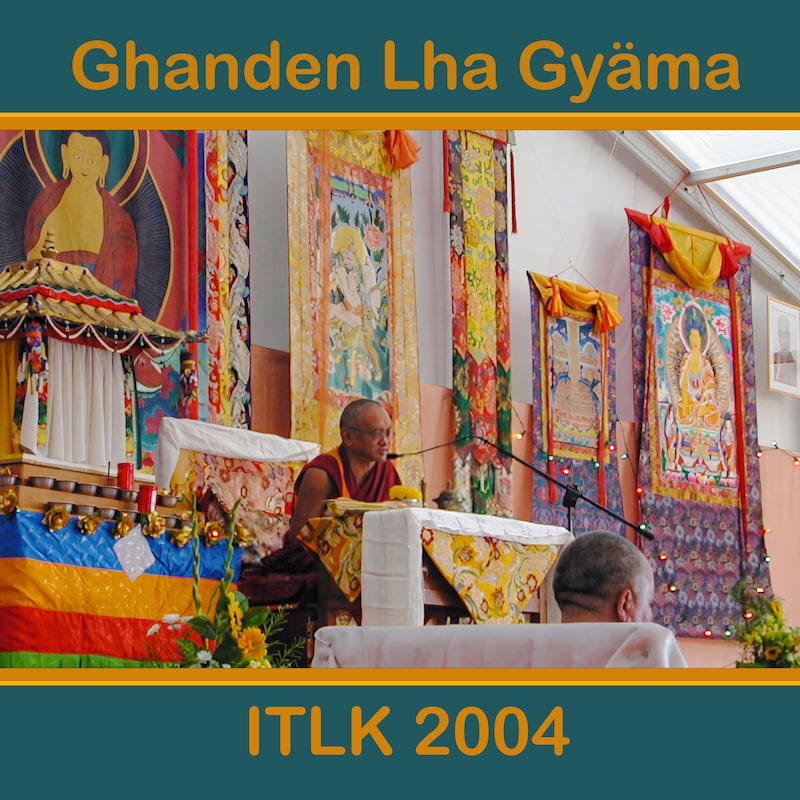
This teaching was given by Lama Zopa Rinpoche at Lama Tsonkhapa Institute in Italy as part of the Ganden Lha Gyama retreat between September 3-30, 2004.
00:00:00 Even if you practice tantra with great hardship for eons, you cannot achieve enlightenment if you make mistakes in devoting to the guru.
00:03:06 Rinpoche mentioned the story about Milarepa recognizing Padampa Sangye who had manifested as a flower to test him.
00:05:21 Padampa Sangye advised the people of Tingri that if they treat guru as more special than the Buddha, they will achieve realizations and enlightenment in one life.
00:09:03 Since the Je Drubkangpa's mind was so obscured that he couldn't generate devotion to one of his gurus, he never achieved realizations despite meditating on lamrim for many years.
00:32:32 The main objective of guru devotion is to see the guru as a Buddha. The more stable this devotion is, the more one is able to see the guru as a Buddha regardless of the guru's external appearance or behavior.
00:52:14 Since due to obscurations, disciples cannot see the guru's qualities, the guru has no choice but to appear in an ordinary form to guide disciples. This ordinary appearance is therefore the guru's utmost kindness.
01:12:13 The conclusion is that the real guru is the embodiment of all the Buddhas' qualities. Recognizing this is the realization to strive for in guru yoga practice.
Find out more about Lama Zopa Rinpoche, his teachings and projects at https://fpmt.org/
Transcripts
As mentioned in a Guhyasamaja text or The Essential Nectar, “Even if for eons you do recitation and practice tantra by bearing many hardships, giving up sleep and distractions, you cannot achieve realization, you cannot achieve enlightenment.” This means if you have made a mistake in devoting to the virtuous friend. Even if you have devotion to your other gurus, if you generate heresy, anger or non-devotional thoughts toward one guru, it is like that.
Also, in Guhyasamaja it says that even if you have committed the five uninterrupted negative karmas (killed an arhat, the parents of this life, caused blood to flow from a buddha, or caused disunity among the Sangha), you can still achieve enlightenment in this life. But if you make a mistake in devoting to the virtuous friend, you cannot achieve enlightenment in this life. There are huge differences between them. But even though the other ones are heavy negative karmas, they cannot be compared to the negative karma, after you have made a Dharma connection, of generating heresy or anger toward, criticizing or giving up the guru.
I mentioned two quotations from Padampa Sangye, the great yogi who lived at the same time as Milarepa. One time Milarepa and Padampa Sangye were meeting somewhere in Tibet. Padampa Sangye knew that Milarepa was coming, so to check whether Milarepa can recognize or not, Padampa Sangye manifested into a flower beside the road. Of course, Milarepa recognized him. I’ve forgotten the details of the story now.
Padampa Sangye lived in the Tingri area in Tibet, and he gave advice and teachings to the Tingri people, the Tingri-was. One piece of advice was, “Hold the guru as more special than buddha; realization will then happen in this life.” It means that enlightenment will happen in this life. Any practitioner who has that kind of recognition in daily life is a most fortunate person, because they can achieve enlightenment in that life. They can have bodhichitta realization and all the other realizations, because, of course, with that recognition they collect the most extensive merit, all the time. That person will be continually abiding in the advice of the guru. Every single piece of advice will be regarded as the most important, most precious thing in their life; more important and more precious than anything else in the world.
I also mentioned the Kagyu lama, Drogön Tsangpa Gyare, who said that as long as you see the guru and buddha as separate, realization will never happen. It is similar advice.
Along with those quotations, I also mentioned the story of Je Drubkangpa. When Je Drubkangpa began to meditate on lamrim, he had much faith in and devotion to all his gurus except one. In one of his gurus, the person who had taught him the alphabet, who had disrobed, he had no faith, no devotion. Since he saw that teacher as very selfish, very bad-tempered, very cruel, he never visualized him in the merit field during all the years he was meditating on lamrim. So, even though he tried very hard for many years, he never achieved any realization. Nothing happened.
When he then consulted his guru, his guru said, “You go back and check whether you have left out any gurus when you visualize the merit field.”
The Meaning Of Merit Field
Here, I want to correct one thing. Many people use the expression “guru tree.” That’s totally wrong. “Guru tree” is a wrong translation. It’s not tsog shing, where shing means wood, but tsog [zhing], merit field. It is similar to [zhing-ga], the field where you grow crops. Here, that’s the [zhing] related to food; the field where you plant seeds then get the crops. But with the [zhing] here, you circumambulate, prostrate, and make offerings, then collect merit, and what you get from them is the happiness of future lives, liberation from samsara, and full enlightenment. What you get from them, by collecting merit, are all the realizations from guru devotion up to enlightenment. By doing these things in relation to these holy objects, you collect merit, and from merit then you get all this result, up to enlightenment, when you are then able to enlighten numberless sentient beings.
So, tsog [zhing] means merit field. I think it was translated as “tree,” because what you see is all the deities, gurus, and lineage lamas are seated on a tree, so “guru tree.” But it’s not “guru tree,” it’s “merit field.” “Merit field” has great meaning; it has a very deep meaning. The expression “merit field” gives you the awareness that it is something most precious in your life. In relation to the merit field you can collect merit twenty-four hours a day, you can create the cause of enlightenment twenty- four hours a day, you can create the cause of liberation twenty-four hours a day, you can create the cause of happiness of all your coming future lives twenty-four hours a day, all the time. It is only if from your own side you don’t put effort into virtuous actions, into collecting merit with them. There is no limitation from the side of the merit field. You can always achieve the same result. Whatever you do in relation to them—offerings, prostrations, circumambulations, and so forth—immediately, every time, you create the cause of enlightenment, even if your motivation is not renunciation, not bodhichitta, not the right view, and even if your motivation is totally nonvirtuous, only attachment seeking the happiness of this life. Even if your motivation is totally nonvirtuous, your actions in relation to these holy objects become virtue by their power. So, there will be mixed karma; your motivation is nonvirtuous but your action is good karma.
So, by collecting merit with the “tsog zhing,” you make the greatest profit in your life; you achieve all the happiness. By doing these virtuous actions in relation to them, you collect merit.
So, we need to correct the label. I may have translated it the same way in the beginning, when I didn’t understand the correct meaning of the Tibetan term “tsog zhing.” The label “guru tree” has come from seeing drawings of gurus sitting on a tree, but it’s not the translation of “tsog zhing.” Tsog is merit, and there are two kinds of tsog: sonam gyi tsog, merit of virtue, and yeshe gyi tsog, merit of wisdom. Here again “tsog” can be translated as collection, but I think it’s not. Because when you then translate “tsog sak-pa,” it would become “collecting the collection.” But “tsog” means merit and “sak-pa” means to collect. From the sound it might be “collection of virtue” and “collection of wisdom,” but I think it’s exact translation is “merit of virtue” and “merit of wisdom.”
Anyway, Je Drubkangpa never had any realization during all those years. When he then consulted his guru, his guru advised him, “Go back and make sure you haven’t left anybody out in the merit field.” When he then went back and checked, he discovered that he had left out his first lama, the one who taught him the Tibetan alphabet as very beginning of Dharma. Because that lama had disrobed and was very cruel, selfish, and bad-tempered, he had never liked him, so he left him out. So, even though he had devotion to all his other gurus, he never had any realization.
During all those years, there was no change; nothing happened.
This is one point to always remember. If we don’t know or completely understand the guru devotion teachings and practice, it could very easily happen that we leave out a guru that we don’t like, but devote ourselves to our other gurus, the ones we don’t find much problem with. You devote yourself to those that you like and leave out the ones that you don’t like. This could easily happen. Or you devote yourself to the guru who suits your own attachment or self-cherishing thought, but don’t like or give up the one who opposes your attachment or self-cherishing thought. That can also happen. If your attachment and self-cherishing thought are very strong, even if that guru is the most famous and most qualified one in the world, you will still give them up. Because your attachment and self-cherishing thought in relation to that object is very strong, you don’t want to lose it. You will then generate anger and hatred and give up that guru, even one who is known in the world as a buddha.
Things like this happen. It depends on how strong your attachment and self- cherishing thought are. If you follow them, problems and confusion and difficulties with the guru then come. These are the reasons.
With The Thought Of Your Guru As Ordinary You Can’t Achieve Enlightenment
Now in the case of general guru yoga and here, secret guru yoga, it is easy to understand and have faith that Lama Tsongkhapa is Manjushri, essence of all the buddhas’ wisdom, or understanding; Chenrezig, essence of the compassion of all the buddhas; and Vajrapani, essence of all the buddhas’ power. And from the stories proving it, it is easy to believe that Tsongkhapa is also the embodiment of these three. Now, you don’t see your own root guru as like that. You see him as totally ordinary, as having nothing to do with them. With this thought of the guru as ordinary, you can’t achieve enlightenment, you can’t achieve realizations. You keep your mind ordinary, or impure all the time. Your mind is kept undeveloped, ordinary, defiled, but the thought of mistakes in the guru. You have buddha-nature but it’s always covered with this garbage, with these mistaken thoughts. It is like the nine examples mentioned in Gyu Lama—the golden statue covered with mud and so forth.
Lam Rim Chenmo explains that just having the thought that the guru is ordinary becomes the cause to degenerate your own experience, or realization. This means it is an obstacle to the development of your mind in the path. One has to understand these points, which Lama Tsongkhapa pin-pointed precisely.
And in his extensive teaching on guru devotion, Pabongka Dechen Nyingpo mentions, “In short, if you wish to achieve enlightenment in this brief lifetime of a degenerate time, then put all your effort into stopping the arising of the thought of mistakes toward the guru and train your mind in the devotion that sees it as buddha.” That is the essential advice.
After that there’s a quote from Lam Rim Chenmo, “Even if the guru has great qualities, if you look from the side of some small mistake, it becomes an obstacle for you to achieve realization. And even if the guru has great faults, if you look at the small quality that he has, it becomes the cause for you to achieve realization.” This is a very important instruction.
There’s another teaching that says that even if it has great qualities, if you look only from the side of some small mistake, it becomes totally black. It then obscures seeing all the great qualities. Similarly, even if it has great mistakes and small qualities, if you look at them, you will see only the qualities. So that example is applied to yourself. It is talking about how the mind can be transformed into guru devotion, into seeing the guru as buddha, seeing only pure with no mistakes. So, it’s a question of which way you train your mind. For example, applying it to yourself, if you look from the side of your good qualities, you don’t see your mistakes; you see yourself as completely good. But if you look only from the side of your mistakes, you don’t see your qualities; you see yourself as totally black. Here it is talking about the possibility that our mind can be transformed into the devotion that sees the guru as only pure, only buddha.
Somehow this topic, this point, happened again, but it’s worth repeating it again.
It’s good to hear it many times, to be reminded.
Our main objective in practicing guru devotion is our own profit. We train our mind in seeing the guru as buddha, because we want profit and we don’t want loss. And the profit we want is to be able to free each of the numberless sentient beings— each hell being, hungry ghost, animal, human being, asura, sura—from whom we receive all our numberless past, present, and future happiness, including realizations. All the collection of goodness, all the good things, all the desirable things, came from them, are received through their kindness, and all the sufferings, all the problems, came from the I. Therefore, others are the object to be cherished forever and the I is something to abandon forever, as His Holiness often says in the teachings. We have the full responsibility for freeing the numberless sentient beings in each realm—the numberless hell beings, hungry ghosts, human beings, asuras, and suras—from all their suffering and its causes and for bringing them to enlightenment. We have full responsibility for this. These are the reasons why we practice guru devotion.
There’s no other way to do this except by our first achieving enlightenment, the cessation of all the mistakes of the mind and completion of all the realizations. For success in doing that, we first need to achieve enlightenment. For that, we need to achieve all the realizations of the whole path to enlightenment, and for that, we need a guru to teach us. This is a new experience for us. We never went in the path to enlightenment in the past. This is the very first time. Because we never experienced this before, we need a guru to show it to us. It is similar to a teacher in school or university. The students who are obedient and do whatever the teacher asks them to do, who are not lazy but put effort into learning, who are disciplined, will successfully pass their examinations and get a degree. Those who don’t obey the teacher, who are lazy and don’t learn, won’t have success in the examinations and won’t get a degree or a job. Generally, that’s the process.
It is similar here. In order to succeed in this objective, you have to devote yourself to the guru, you have to obey the guru’s advice. By following the guru’s instructions, you can achieve realization. Otherwise, you can’t.
We have to train our mind to see the guru as buddha by looking at the guru as buddha. The more we are able to look at the guru with that devotion, and especially if have the realization of guru devotion, we will be able to see the guru totally as buddha, without the slightest doubt in our heart. We will have very stable faith. No matter how the guru appears to us—as having delusions and suffering and as making mistakes in his actions—if you have the realization of guru devotion, nothing will disturb you. You will always see the guru as a buddha. No matter what appears, it won’t bother you. It won’t affect your mind; it won’t affect all your devotion seeing the guru as buddha. Any mistake that appears to you will appear to be an act, and you will relate to any appearance of mistakes as a projection of your own impure mind, your own mistaken mind. The other way is to think that there is nothing definite in the actions of a buddha. Buddhas have all sorts of manifestations, all sorts of acts; buddhas appear in all kinds of forms and perform all kinds of acts for the benefit of sentient beings, so this must definitely have some meaning.
I think The Essential Nectar and some other teachings also mention this second way to think. The first is to think, “This is the appearance of my own mistaken mind.” The second is to think of what a buddha does to guide sentient beings; buddhas manifest in all kinds of forms, as butchers, prostitutes, animals, spirits—in any form. When there is benefit to a certain sentient being, a buddha will manifest in any form. So, you think that there must be a reason for that action; it must have been purposefully done to benefit sentient beings.
Anything Beyond This Present Moment Is Completely Dark For An Obscured Mind
The third is the very important, essential meditation that I normally mention. This subject might come up again later, but since it has come up at this point...
Our mind is so obscured that we don’t understand even our own aggregates. We don’t even understand our own mind, with all its mental factors. We have to depend on Buddha’s teachings to learn about our mind. Even to know about gross things such as disease we have to rely on doctors, x-rays, and machines to check. We have to rely on many people and machines, which make many mistakes. We don’t have cancer, but they say we have cancer. When we go to check with another doctor, he says, “No, you don’t have cancer.”
Besides being unable to see all that, we are unable to predict what’s going to happen here tomorrow. We can’t tell what’s going to happen in all the sessions tomorrow. We have no idea at all. Even now we can’t tell when this session will stop. We can’t tell how many minutes, how many hours it will be until it stops. I can’t tell either.
So, you can see how the mind is very obscured, so obscured; we can’t even see very gross things. We can’t see beyond this present moment. Anything beyond this present moment is completely dark in our mind. I’m just giving you a little idea as to how obscured the mind is. It’s unbelievable. Therefore, I don’t have the purity of mind to see a guru with more qualities than this, more pure than this. Let alone seeing the guru as buddha, I don’t have the karma to see a guru with more qualities than this, as more pure than this.
So, we should understand and remember during guru devotion meditation and all the time, that guru means buddha and buddha means guru. In our heart we should think that it’s the same person, just different names. When someone is acting in the theater, when they come out dressed as a king, they are called a king. When the same person comes out dressed as a general, they are given the name, the label, “general.” It’s the one person but in different costumes, so there are different labels. It’s all one person, just different names. It’s like one person who is called Piero and also called Thubten something-or-other. One person can have many different names.
Anyway, it’s very important to understand even from the name that it’s not talking about two separate beings, two different beings. Someone who has ceased all the mistakes of the mind and completed all the qualities is an enlightened being. It is called guru. It is called buddha. These are just different names given to one being.
There’s no separation between them; it’s just that each receives a different label. Guru yoga is realizing that they are one.
So, the third one I was going to say is that let alone seeing the guru as buddha, I don’t have the karma to see the guru as more pure, having more qualities. Therefore, if the guru-buddha showed more qualities, more purity than this, because I have no karma to see that aspect, I could not communicate with or receive guidance, teachings, and so forth from them. In order to guide me to liberation and to enlightenment, the guru needs to do many things: give refuge, pratimoksha or bodhisattva vows; sutra oral transmissions and commentaries; teach the alphabet to learn Dharma; give tantric initiations, commentaries, and instructions; praise or scold me; give material gifts. Therefore, in order to guide me directly, there is no choice: the guru has to manifest in ordinary aspect, which means having delusion and suffering and making mistakes in his actions. He has to manifest in the aspect that fits exactly according to my impure karma, my impure mind.
There is another quotation, which I often mention. “Until I am free from the evil karmic obscuration, even if all the buddhas came in front of me, I have no fortune to see them adorned with the thirty-two holy signs and eighty holy exemplifications. I have no other way to see them, except the present appearance.”
“The present appearance” means having delusion and suffering and making mistakes in the actions.
Therefore, only by showing an ordinary form, one having delusion and suffering and making mistakes in the actions, can the guru guide me to enlightenment. Only then can the guru directly guide me through all the activities I mentioned before.
Only then can the guru guide me directly, liberating me from samsara and bringing me to enlightenment. Therefore, this ordinary aspect is unbelievably precious to me. It is the most precious, most important thing in my life. And here you can see the inexpressible kindness of showing the ordinary aspect. In order to guide me, the guru has to show this ordinary aspect, having delusion and suffering and making mistakes. I could not repay even one second of that kindness of showing an ordinary aspect, even if I offered for eons the whole sky filled with not just gold, diamonds or billions of dollars, but with-granting jewels. That is nothing compared to each second of the guru’s kindness in showing an ordinary aspect, because with that aspect the guru can guide me directly, can do all those activities to guide me to liberation and to enlightenment. This is unbearable kindness, inexpressible kindness. This is talking about just showing this ordinary aspect, not all those other kinds of guidance.
This subject might also come later, but since we’re talking here about guru yoga, we have to understand the very essential point, not just the visualization. We have to understand the very point of the meditation.
So, it’s then very good to repeat, how precious it is, how precious it is, how precious it is, for one mala, twenty-one times, or some other number. After that then recite, how kind it is, how kind it is. The guru is guiding me, first of all, to the happiness of future lives, to a good rebirth, which means one where I can practice Dharma and continue to develop the path and then to liberation and to enlightenment. With all these methods, the guru is guiding me to enlightenment. So, the virtuous friend, how kind it is, how kind it is, how kind it is. Recite this as many times as possible to generate devotion. The Tibetan word [kyöpa] does not mean just respect, but something more than that. [When asked by Rinpoche, Jampa Gendun suggests reverence.] To revere? To revere means to hold high? Yes, I think it’s a good idea.
Anyway, we should do the actual meditation on this third one like that.
How To Think About The Appearance Of Mistakes In The Guru’s Actions
This subject will also come later at other times. But the first one is to think, “This is the projection or view of my own mistaken mind, of my impure mind and impure karma.” The appearance of mistakes in the guru’s actions and of the guru having delusions and suffering then doesn’t disturb your devotion. It cannot interfere; it doesn’t disturb your devotion at all.
The second method is to think, “This might have some purpose, or meaning. It must be done to benefit sentient beings.” With this second way of thinking, seeing mistakes gives devotion. A buddha manifests various forms and does various activities when he sees that this is exactly what fits the mind and benefits a particular sentient being, so it might have a special purpose. So, it gives devotion.
Here, with this way of meditating on the guru, the guru appearing to have mistakes becomes very powerful. Not only does it not interfere with the devotion, but it inspires devotion. With this second way of meditating, the guru appearing to you to have mistakes, not only does it not interfere with the devotion, but it makes it to arise very powerfully. It develops devotion and reverence, and appreciation of the guru’s inexpressible kindness. The devotion and respect, or reverence, become insuppressible, like the unbelievable, uncontrollable compassion that arises for suffering beings. Here do fixed meditation on this. After the analysis, do fixed meditation, keeping your mind in this state as long as possible.
In the Lama Tsongkhapa tradition, there are two special techniques for using the appearance of mistakes in the guru as a cause to develop devotion. They are the last two that I mentioned.
In conclusion, as I mentioned, it is easy to understand and have faith that Manjushri, Chenrezig, and Vajrapani are the essence of all the buddhas’ wisdom, compassion, and power. And, with all the stories to prove it, it is easy to understand and have faith that Tsongkhapa is the essence of all the buddhas’ omniscient mind, essence of all the buddhas’ compassion, and essence of all the buddhas’ power. Now here, with Lama Tsongkhapa, by looking at the lama and Tsongkhapa as one, the conclusion is that the root guru is Manjushri, Chenrezig, and Vajrapani. The root guru is Tsongkhapa and Tsongkhapa is Manjushri, Tsongkhapa is Chenrezig, Tsongkhapa is Vajrapani; the root guru is all the buddhas’ understanding, compassion, and power. And that is the realization you are looking for in doing this practice. With Tsongkhapa it’s easy to understand, because of all the stories.
Take the example of Drakpa Gyaltsen, Sakya Pandita’s guru. Drakpa Gyaltsen became very sick, and Sakya Pandita looked after him. He offered service day and night, giving up sleep and cleaning up the kaka and peepee. He bore many hardships and sacrificed himself to serve and correctly devote to his virtuous friend.
Drakpa Gyaltsen was very pleased with how his disciple Sakya Pandita had dedicated his life to serving him, so he then gave him the Manjushri guru yoga, in which you look at the guru and Manjushri as one then make offerings, requests, and so forth. When he did the practice, Sakya Pandita saw Drakpa Gyaltsen as Manjushri; he actually saw his guru as Manjushri. He then achieved many realizations and became very learned. He became very famous for his learning in China and Tibet; he was able to recite even the scripture of the Eight Thousand Stanzas in Sanskrit. He became highly attained and unbelievably learned, benefiting so much sentient beings and the teaching of Buddha. He is an example of someone who had the guru yoga realization. When that happened, as a result, in this life he was able to achieve skies of qualities and benefit sentient beings and the teaching of Buddha.
The final conclusion is, don’t leave the guru somewhere else, seeing him as ordinary, and try to see just Tsongkhapa as a buddha. It’s not just that. That doesn’t become guru yoga.
Do you have the lamrim left over? [Ven. Sarah: Yes, Rinpoche.] So what you do is, you do straight without the extra, without the, the beginning one you can do, but the rest can go straight. [Ven. Sarah: Okay. I still have to go a little bit slow because of the other languages. Page 77.]
[Group recites lamrim prayer from Lama Chöpa; recitation of Maitreya mantra] [Ven. Sarah: page 101. All the three-times merits accumulated by myself, all three-time buddhas and bodhisattvas and all sentient beings, I dedicate as causes enable us to uphold...
Due to all the three-time merits accumulated by myself, all buddhas and bodhisattvas and all sentient beings, may I myself, all the members of my family, all the students and benefactors and all the rest of this organization and all sentient beings never be parted in all our lives]
Päl dän tsa wäi la ma rin po chhe
Dag gi chi wor pä möi teng zhug la
Ka drin chhen pöi go nä je zung te
Ku sung thug kyi ngö drub tsäl du söl
Magnificent and precious root Guru,
Please abide on the lotus seat on my crown,
Guide me with your great kindness,
And grant me the realizations of your holy body, speech, and mind. (3x)
Due to all the three-time merits collected by oneself, by others, oneself, one’s own family members, all the students and benefactors in this organization, as well as all sentient beings, may we be guided by Lama Tsongkhapa being direct guru in all the future lifetimes and may we never be separated away from the path that which is highly admired by all the buddhas, to never be separated away even for a second from the path that which is highly admired by all the buddhas.
And then, may we never rise any heresy even for one second in the actions of the guru and whatever action is done to be able to see pure and with this devotion, may I receive the blessings of the guru in my heart.
One makes the request, after the guru entered the heart, after we did the prayer, then you make the request to the guru in your heart, Tsongkhapa, Lama Tsongkhapa.
So for, particularly as I mentioned before, for Ribur Rinpoche, a puja for Ribur Rinpoche, prayer for perfect health, show the stable life, as well as all those people who passed away, whose name is given, so recent times, today, we dedicate, for all sentient beings but particularly for those people who passed away, that reciting the King of Prayers for them. And also including those whose name given to me and the relative, families, who passed away some time ago, so recent times, the recent weeks and so all those, which were dedicated, and we recite the King of Prayers for everybody.
Yeah, recite, read. [Group recites the King of Prayers in English.] [Verses of Auspiciousness from Lama Chöpa]
Jang chhub sem chhog rin po chhe
Ma kye pa nam kye gyur chig
Kye pa nyam pa me pa yi
Gong nä gong du phel war shog
May the precious supreme bodhichitta
Not yet born arise.
May that arisen not decline,
But increase more and more. (3x)
What about the, that was done already dedication today? The end of the guru yoga. [Ven. Sarah: Yes, we already did that. Yes.]
Due to all the past, present, future merits collected by me, three-time merits collected by others, gang ri ra wai, then all the other gurus.
Päl dän la mäi ku tshe tän pa dang
Kha nyam yong la de kyi jung wa dang
Dag zhän ma lü tshog sag drib jang nä
Nyur du sang gyä thob par jin gyi lob
May the glorious gurus’ lives be long and stable.
May all beings equaling the extent of space have happiness.
May I and others without exception accumulate merit and purify negativities,
And may we be blessed to quickly attain buddhahood.
Due to all the three-time merits collected by me, collected by others, that which are truly existent, today’s the other way round, after hearing so much empty, so today’s the reality. Due to all the past, present, future merits collected by me, the three-time merits collected by others, which are truly existent, may the I who is truly existent, achieve Lama Tsongkhapa’s enlightenment, which is truly existent, I say “truly existent,” but the understanding of it is it’s empty, so that’s the whole point. Still coming to the same point. I say “truly existent” but the understanding of it, there’s no such thing, empty.
So, yeah. And lead all the sentient beings, who are truly existent, to that Lama Tsongkhapa’s enlightenment, which is truly existent, by myself alone, who’s also truly existent, according to the point of view of ignorance. Which is not there, which doesn’t exist even in name.
Then, due to the three-time merits collect by me, three-time merits collected by others, then the general teaching, particularly Lama Tsongkhapa’s teaching, be spread in all the directions, may it be flourished forever in this world. Then, by completely actualizing within oneself, one’s own family, all of us, as well as all the students, benefactors of the organization, as well as everyone in this world without delay even a second.
Due to all the three-time merits collected by me, by others, may all the funding be received for all the various projects, the social service, all the Centers, as well as building holy objects the various parts of the world and to support the Sanghas, then Maitreya statue, to be able to accomplish as quick as possible the projects to fulfill His Holiness’s wishes.
[LTK dedications, then multiplying mantras.]
Due to the blessings of the eminent buddhas, bodhisattvas, due to my special attitude and unbetrayable dependent arising, may all my pure prayers succeed immediately.
[LZR long-life prayer (3x)]
Good night, good morning, same.