Shownotes
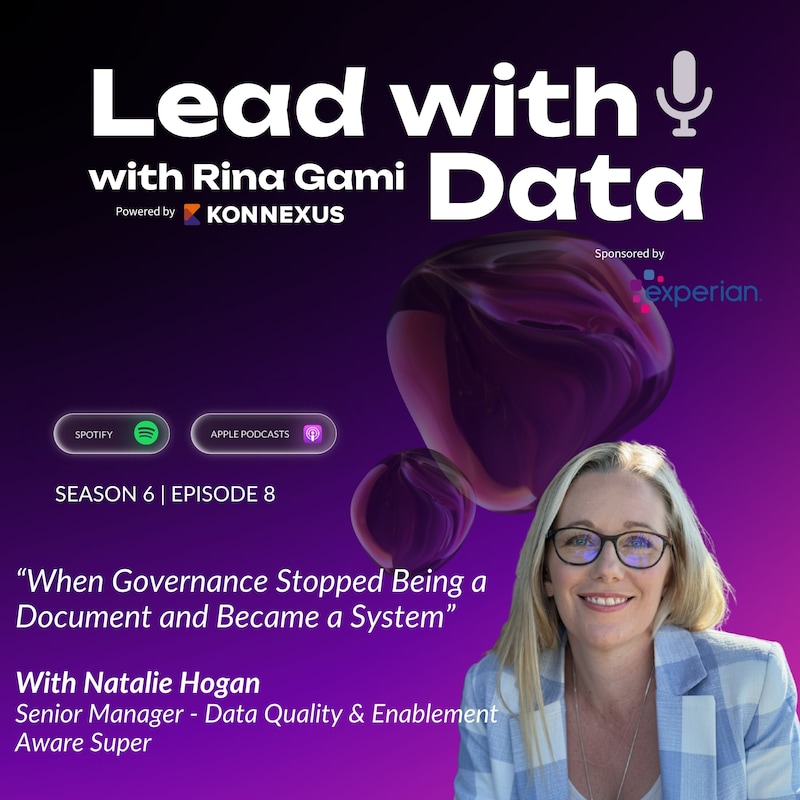
I sit down with Natalie Hogan who shares how her organisation moved governance off the page and into daily practice by using AI to rebuild it. Static policies became a living, chunked knowledge base that both people and AI agents could read, query and act on, closing the long-standing gap between governance written down and governance actually followed.
Key points:
- Traditional governance was static, siloed and hard to embed; AI governance needed its own rule book from scratch
- Policy as code: breaking frameworks into knowledge chunks that both humans and AI can read and update
- Enterprise wide model governance, an agent governance framework and an AI risk management framework were introduced to cover the gap
- Agents are now treated as part of a "silicon workforce," each with an owner, access level and place in a register
- Early approach built siloed agents for each governance function before the team realised they needed one connected knowledge base instead
- Advice for teams starting out: take a risk based approach, don't wait for every foundation to be perfect, and keep humans in the loop throughout
Takeaway: Governance only works once it's embedded in the flow of daily work rather than sitting in a document. This team's shift was to stop treating it as a series of automations and start treating it as one connected system that AI could help run. Tune to learn how!