Shownotes
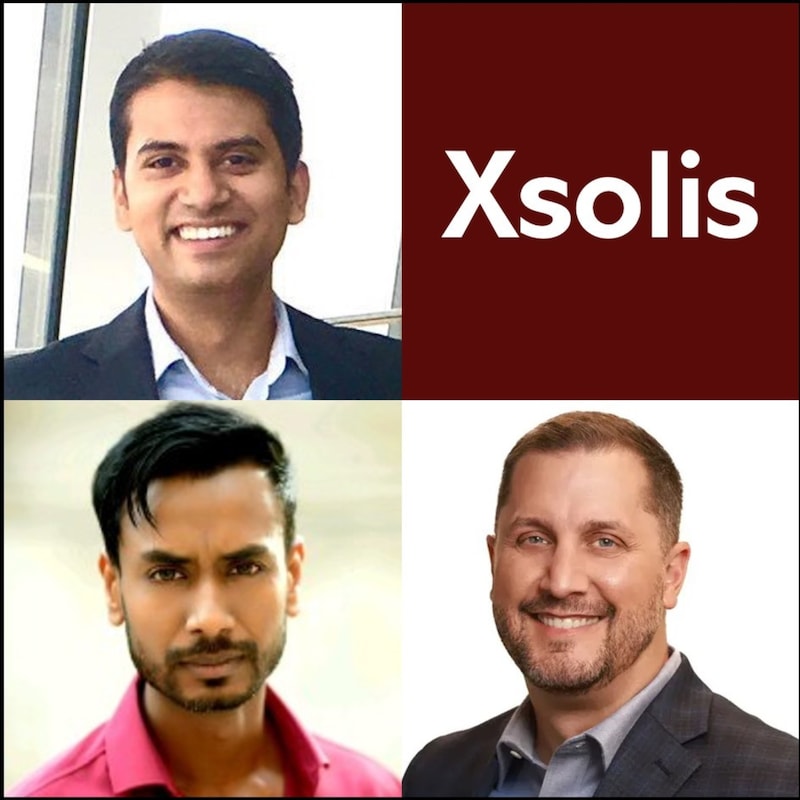
In this special episode of Tech Talk, hosts Amit and Rinat are joined by Zach, the CTO of Xsolis, a 10-year-old healthcare company leveraging AI to optimize the interaction between hospitals and health insurance companies. Based in Nashville, Tennessee, Xsolis has been using machine learning and predictive AI to analyse healthcare data, offering solutions that help reduce friction between healthcare providers and payers. Zach elaborates on the company's core product, Dragonfly, and how it processes almost 10 million HL7 messages daily to make real-time predictions on patient care levels and discharge needs. The episode explores data privacy, the importance of human oversight in AI applications, and discusses potential future advancements in AI technology in the healthcare sector. The conversation also touches on ethical considerations and the impact of AI on patient outcomes, emphasizing Xsolis' role in creating a cooperative relationship between payers and providers.
Transcripts
Welcome to Tech Talk, a podcast where Amit and I talk about all things tech. We don't just talk about tech, we also talk about the societal impact and all the latest advancement that are happening in this industry. Today is a special episode. We have Zach with us today, who is the CTO of Xsolis.
Rinat:Thank you Zach for taking the time to come on our show. We are really excited to learn about Xsolis, what it is and how it affects our lives and your potential user base. Let's jump right in. Zach, please tell us what is Xsolis.
Zach:Yeah. First of all, Amit and Rinat, thank you so much for the invitation today. It's great to join you and your listeners on this podcast. Just really excited about our conversation. Xsolis is a 10 plus year old healthcare company. We're based in Nashville, Tennessee in the United States.
Zach:And we exist really to help hospitals, primarily hospitals. Really manage their interactions and their relationships with health insurance companies. And why that's important, especially in the US healthcare market, is that there's a lot of friction that exists between healthcare providers and payers especially when it comes to how patient's care is paid for.
Zach:And that can, at the end of the day, that can really have some pretty profound and negative impacts on individuals' lives because they may expect something to be paid for, and then maybe somewhere along the way it isn't. And what Xsolis does is at our core, we are an AI company.
Zach:Now, we've not just come to AI in the last two years since the rise of chat GPT. We like to say that we've actually been an AI company long before AI was even really cool. We've been using machine learning and predictive AI technologies for over a decade to really analyze large volumes of healthcare data and make intelligent decisions and recommendations based on that data.
Zach:So we've actually generated over 2 billion AI powered predictions over that period of time to again, really eliminate that friction that tends to exist in the US healthcare market between hospitals- healthcare providers and insurance companies or healthcare payers.
Rinat:Thank you very much for that introduction. And it's neat knowing about how long ago you started your journey and how you were involved with AI before it was cool. And that's one of the things I've also mentioned in our previous episodes as well, that, obviously chat GPT and OpenAI made artificial intelligence kind of mainstream, so everyone got to know about it. But just having a back and forth of chat is just one aspect of AI and there are many ways AI and machine learning can be utilized and implemented. It seems like one of the successful ways that you are doing right now. When I went to uni that's when I first came to know about AI. The algorithms and the technology has been developing for quite some time and it's really good to know that, especially in med tech, it is giving tangible results for a user base who are getting helped in this sector. This is one of the most rewarding sector there is to make any breakthrough.
Zach:Yeah, you're a hundred percent right Rinat, and healthcare kind of industry and really across the globe is, I think is uniquely positioned to leverage artificial intelligence, just sheerly because of the sheer volume of data that exists.
Zach:So if you go to the doctor or if you go, if you have to be admitted to a hospital or something like that, there's a tremendous amount of real-time data that's generated about you, right? Whether it's your pulse ox rate or your respiratory rate, or your blood pressure, right?
Zach:Those vital signs that are constantly being read. It's the medications you're given, it's the procedures that are being performed maybe the diagnoses that are being entered on you. All of that discreet data can really, can be a powerful source of information that you can leverage AI to make a lot of sense of.
Zach:And so I think, there's other industries that are really data heavy as well. But I think healthcare is certainly uniquely positioned because of just the sheer volume of data that gets generated during those interactions.
Rinat:You mentioned data and also privacy and how it's discreet so it's an inevitable question that I think you get asked a lot anyway, but also just for audience. As you mentioned, AI requires a lot of data to learn so how do you collect the data and how is the user privacy maintained?
Zach:Look it, it's a core question that we get asked every day by our clients and our prospective clients. So let's handle the, how we get the data first. Okay. One of the ways that we provide value is we're, we are a SaaS company, so we provide software as a service to our clients.
Zach:All of our technology runs in Amazon Web services. So we're an AWS hosted SaaS organization, and we integrate directly with our healthcare providers through technology called HL seven. HL seven is actually a fairly old data standard. But the reason why it's so important to us is that HL seven messages oftentimes are produced near real time, which means we're able to consume them near real time. And so if you think about what may comprise that HL seven message, that blood pressure I mentioned when we were talking about vitals, right? That single measure of that blood pressure may generate an HL seven message, which then we are able to consume and make predictions off of. So today, we process about 10 million discrete HL seven messages every day. And so we are receiving, second by second near realtime updates on the clinical picture of what's going on with that patient. So we're operating at a pretty sizable scale there. So that's the most common way that we get data about about the patients. And like I said we're processing that data 24 hours a day, seven days a week, 365 days a year.
Zach:But security is of paramount importance. So we have in the United States, we have both a, we have a regulatory requirement, a legal requirement to protect that personal health information or that PHI. And we have invested a tremendous amount of resources and time and energy into a really comprehensive security program that both really ensures that all of that data is, heavily encrypted both at rest and in transit.
Zach:And that we have all of the, role-based access controls and all of that kind of security infrastructure in place to ensure that, that patient data is highly secure. But then , where we as an organization have been making a transition here recently is, that's just the building blocks, that encryption and, limited access and all of those kind of physical controls and other things like that, those are building blocks.
Zach:But historically, security has been managed really on a responsive or retroactive basis, right? Someone tries to hack into a system and an alarm goes off somewhere. That's the traditional way that information has been secured. But what we've been really investing heavily in is this idea of proactive security and sometimes leveraging tools that are utilizing artificial intelligence to predict attack vectors, to predict surface risk management protocols that we need to be able to implement to proactively address any even potential security holes before we ever even get an alert that something could be going on.
Amit:So I wanted to like interject here because it's very interesting you spoke about data and the PHI, You mentioned PHI that's personal health information? So in the UK we have the NHS services and I've been hearing about the EMR, which is like the electronic medical record. Every healthcare provider and here in the UK you have NHS who has an electronic medical record and of course you have different hospitals, but then there is a nationalized database. I'm guessing there in the US it might be a bit different because you mentioned there are healthcare providers and there are insurance companies who are paying for the healthcare services. So, are these data coming from different healthcare providers in different formats or is it single format? And then because they are in different healthcare provider, US is a big country, so, then that's a lot of information at a lot of like Blood pressures or ECG, et cetera. So, there's a lot of data points. So different healthcare systems, so many data points and plus you're getting information about the person's name, age, their health status, et cetera. So do you anonymize anything or is it just encrypted? Because encryption is different from anonymization, so you have to anonymize the data to make sure that the personal information or the model itself is not biased during the training, because then you can have like people from different ethnicity could be targeted because of the way you have trained the model. So how does the whole thing work?
Zach:That's a great question Amit. So in the US healthcare market, so unfortunately, unlike in the UK or say in Canada, that has a kind of a similar kind of a national health service. And in many other countries around the globe there is not a central repository of healthcare data. Each healthcare provider has their own data store. Okay. Which obviously, when you think about data integration and data normalization can create all sorts of challenges. Because when you've seen one data store, you've seen one data store, that's where this this HL seven format comes into play.
Zach:It provides a common framework for data. So there's a handful of message types. One of those HL seven is an XML standard. Okay. So if you can visualize what an XML message looks like, that you can visualize what an HL seven message looks like. One of those message types is called a you mentioned like patient demographics.
Zach:There's a message type called an ADT transaction, that would include all of that patient demographic information. So name, address, ethnicity date of birth different things like that. And so one of the things that we have to do when we implement a new client is we actually have to go through a data normalization and standardization process.
Zach:So we have built tools to be able to take in all those HL seven messages, account for the peculiarities and the variances that exist from healthcare provider to healthcare provider, and create a common data store. So that unto itself is a complex technical process.
Zach:It's actually an area we are investing internally in some artificial intelligence tooling to help, kind of agentic AI type technology to help automate some of that data mapping. So that's the answer to the kind of the front door of the data question.
Zach:When you talk about anonymization and biases and all of the potential negative consequences of artificial intelligence, right? Biases, model drift, when the model hallucinates. All of those negative consequences that can exist.
Zach:So a couple things to keep in mind. We for our models that we are creating there are there are portions of that demographic information that is really valuable to us. Date of birth is one of those, right? Because date of birth allows you to calculate the age. An older patient has a different clinical profile than a younger patient, for example. Okay. But we do we create and train what are called global models. The model itself looks at the entire dataset. And today we have clinical data on over 200 million patient encounters in the US from coast to coast, not quite every state, with a large enough population from different geographic areas with different socioeconomic profiles and all of those other components that we're able to control for biases pretty clearly just because of the massive data set that we have.
Zach:We do monitor for that, all of our predictive models go through quarterly retraining events. And as part of that retraining event, we analyze it for all of those potential negative outcomes that can happen from AI models to ensure that we're controlling, again, for bias, hallucinations, model drift, other things like that.
Rinat:In the beginning you told us a little bit about Xsolis and what I wanna know is a little bit more from a user perspective. This is a service mainly used by other organizations or is there like a end user as well who could utilize the benefits?
Zach:Yeah so our solutions today are not necessarily utilized directly by the patient. They're utilized by the healthcare provider that's serving the patient, for example. And there is an end user at the end of that chain. One of the things that we really believe in especially for in clinical settings, we're big believers in the concept of humans in the loop. So we are not creating care pathways or treatment plans or anything like that. What we are pointing out to our end users is we're making recommendations based on the data.
Zach:But then at the end of the day, it's up to that end user, that human in the loop to make the final determination about the level of care that the patient needs. Or for example, one of our predictive models that we have out there today that our clients are using, there's the majority of people that go into a hospital, they're discharged to their home at the end of the day. But there is a significant portion of the patients that go into the hospital that have to be discharged someplace else, maybe to a rehabilitation center or what's in the United States are called a skilled nursing center, right? They're able to leave the hospital, but they need a little more care before they're truly able to go home.
Zach:We have a predictive model that helps predict early in that patient stay in the hospital where they may need to be discharged when they leave the hospital and what type of support they need, do they need on the home health aid or something like that. We're just offering that as a recommendation.
Zach:It's still up to that very highly trained, highly knowledgeable clinician to make the final determination. But we are using data to, to make a really informed recommendation of where that patient needs to be discharged at the end of their study.
Amit:It's interesting because you mentioned that the healthcare provider is the person who's actually using Xsolis system and the patient is getting the benefit because the healthcare providers can then use intelligence, in this case the intelligence provided by AI and then of course, human is in the loop. So if I look at a scenario, there are multiple ways in which a patient comes to the healthcare provider. One is there is an accident and they immediately go to the healthcare provider. Or if they suffer from an ailment, they come to a healthcare provider or if there is a routine surgery or something like a pregnancy, they come to the hospital and they get it done. So in different scenarios, the insurance company or here in this case, the payer, when do they get involved? Because the healthcare provider is getting the intelligence that, okay, someone needs some service and that service is going to cost.
Amit:The cost is going to be born by the insurance provider. How is that calculated? Because there are different scenarios in which this happens. And if you consider all these scenarios at every stage, the insurance company can say, okay, if you give me this information, I can maybe give you this much payout now, or if you give me like an estimate of how much the billing is going to cost, I can say whether I'll approve it or not.
Amit:And then Xsolis, I'm guessing it gives a score or something, which the insurance company says, okay, based on your score, I think this will be the cost. This is how much I will pay. So I just want to understand how does it work? Because I can imagine so many scenarios - somebody's paying insurance privately, like through their own pocket and sometimes it's paid through the employer. So when that happens, then there is a different cost, et cetera. So how does that model work from healthcare provider perspective and from the payer perspective?
Zach:That's a, it's a really insightful question. You're correct. One of our proprietary predictive algorithms that we have is called the care level score, or we oftentimes shorten it to the CLS. So the care level score is a predictive analytic, that really helps quantify how sick that patient is, which also then helps quantify the level of care that they need to be able to receive.
Zach:Okay. And to your point that level of care that they need to be able to receive absolutely can impact how much that insurance company pays that provider for that care. Okay. So all of that is true, and that is a feature and a function of the US healthcare market.
Zach:And to your point that dynamic exists, whether it's private insurance, whether it's insurance that's secured through your employer or even if it's insurance that is secured through like the federal government, for example, or national government. That same dynamic exists everywhere.
Zach:So one of the things that we do is we actually work with both payers and providers. We try to be a neutral third party. We don't really try to bias anything. We don't wanna try to benefit payers over providers, or providers over payers. We're the neutral third party that's just using data to predict and let the data speak for what's going on with the patient.
Zach:And so one of the ways that we do that care level score, for example, we will expose that, we'll give that to both the provider, the healthcare provider, and the exact same data to the payer as well. So there's data symmetry across those two parties. Everyone is dealing with the same data sets or dealing with the same explanation as to the why.
Zach:We actually even facilitate the transmission of some of that discrete clinical data you're talking about to be able to align those two parties to ensure that the payer is paying for what they need to pay for and the providers providing what they need to provide. And so we do that through that proprietary predictive algorithm that we've created called the care level score.
Amit:So another follow up question, and this is something that just popped up. Do you provide real time scoring and then the payer decides that the payout has to be done real time or the payer decides at the end or at the beginning? Because there are different times where the payer has to pay the healthcare provider.
Amit:It could be after the end of the hospitalization when the patient is discharged. Normally that's when the payer provides. So you first go through the whole testing, then you have a surgery or whatever, then you buy some medicines, and then you're discharged and then you're given a plan and that's when the payer gives the money, or is it real time okay the patient has come in the bill is going to be huge, so we want immediate pay, otherwise we'll not be able to afford, provide the care that we need. So, it could be real time as well as delayed.
Amit:So, then the question is the analytics providing real time analytics to both parties or is it providing analytics at the end? Because yours is an intelligence platform, so the intelligence is provided at the end or is it provided during the whole journey?
Zach:Again it's another great question. Let me back into the answer just a little bit. So from an analytics perspective and from that predictive algorithm, that care level score that is provided near real time, which is again, why it's important that we're able to receive and process that data near real time because it allows us to continually update that score.
Zach:And in even so far as inside of our SaaS application, we even provide visualizations and trends based on that care level score. Because typically, quite often in a patient's stay, what you'll see is they'll be admitted to the hospital and their score will be one level. And then sometimes they get more sick, and so the care level score will go up there and then eventually they get better. So you see it start coming down, and that's when you may know that patient is getting ready to be able to go home. So it's this dynamic analytic typically the payment is rendered after the service.
Zach:But the reason why that mere real time care level score is so important is that the payer does what's called an authorization. So the patient is in the hospital and the payer is basically authorizing the level of care. And if that care level score goes up and that patient becomes more sick, the payer oftentimes will actually authorize a higher level of payment because there's more care involved with that patient.
Zach:And so what we really pay attention to is what we call the max CLS. So think about that highest care level score that is reached during that patient visit, that's really the marker that should determine the level of reimbursement from the payer to the provider.
Zach:Because you have to pay based on the maximum score and the most care that is needed in order to make sure that you're compensating fairly. So that's why that real time component is so key.
Rinat:So I wanna go back to earlier when you mentioned about the human in loop scenario. And I wanna share this anecdote about a study that I've heard. This is outside of MedTech, but it's more in the legal sector where it was found that judges found to have given harsher sentences for the same offense before and after lunch. So just before lunchtime, for the same offense, they have given harsher sentences and that was found to be that because they were hungry. They were rushing to go to lunch and they wanted to finish it quickly, et cetera.
Rinat:I don't know the legitimacy of this study, but it certainly is interesting and there, there are other examples as well, which are potentially more believable. For example, car accidents. Rarely do they happen because of mechanical failure nowadays with technology advancements, it's usually the human who is in the loop who wasn't paying attention.
Rinat:There are certain weaknesses of having human in the loop as well. But of course, I'm sure everyone would agree that in med tech especially when medical personnels are using technology, there definitely needs to be a human decision maker who makes the final decision.
Rinat:But it makes me wonder what the future holds, how do you see where Xsolis is going? As AI technology or, the whole integration of various technologies gets more and more accurate, just like vehicles become more and more safer. Probably 2, 5, 20 years time. It might be that the recommendation AI given after maybe with 20 years of data is more accurate than what a human might decide.
Rinat:By that time, humans would be more acclimated or comfortable with AI in the loop. And they might even prefer the AI recommendation than a human who knows how it goes. So how do you see Xsolis what the future holds for this technology.
Zach:That's a really interesting question. Look, that massive amount of data that exists within healthcare that's hugely valuable. But one of the challenges that clinicians across the world face is at times it almost feels like there's too much data being presented to the clinician.
Zach:Okay. And you combine that with the fact that electronic medical records, that EMR, that exists within that healthcare provider. It is a data repository. But oftentimes it's a data repository that isn't necessarily optimized for the task at hand. So if you're ever visiting your family doctor, your general practitioner or something like that, and you see them clicking around on a screen to find one bit of information.
Zach:It can be cumbersome for that clinician to find the one bit of information that they need to be able to talk with you about now, extrapolate that out to scale. And then also think about how oftentimes in the healthcare industry decisions need to be made on really finite time schedules, right?
Zach:When you're visiting with your family practice doctor, and you're having your annual checkup, the time sensitivity doesn't necessarily exist there. But if you are in a car accident and you have to be transported to a hospital, for example, there is very real time sensitivity to the treatment that you receive.
Zach:And so one of the huge opportunities for artificial intelligence is really to be able to take some of the noise, if you will, out of that clinician's experience, and really provide them with highly analyzed, targeted information and suggestions based on what's going on with that patient.
Zach:So again, in the Xsolis examples, right? I talked about being able to predict where a patient needs to be discharged. There may be hundreds or thousands or maybe even tens of thousands of data points that really need to be analyzed to go into that prediction. Can individual nurse review all of that data and get to that decision?
Zach:The answer is yes, but it takes a tremendous amount of time and energy and brain power to do that, which makes it a perfect opportunity for an AI predictive algorithm to come in to constantly be evaluating those hundreds or thousands or tens of thousands of data points and presenting one unified recommendation to that clinician.
Zach:And so those opportunities exist all over the place. And, for Xsolis it's about organizing and consuming and analyzing all of that data and presenting a recommendation about a level of care, which then corresponds to a reimbursement rate, or it corresponds to a, Hey, this is where we think you should be discharged when you leave.
Zach:Another really interesting analytic that we have is, as interesting as it sounds, is like the moment you are admitted to a hospital, the hospital is working to discharge you home because you are taking up a finite resource. There's only so many rooms and so many beds in the hospital.
Zach:And so in order to, for the system to work, they need to treat you, help you get better, and then move you on to another location so they can now treat the next person in that bed. What that's called is, it's called length of stay management. That really optimizes a scarce resource, which is the physical bed within a hospital to be able to treat the maximum number of patients well, we have a predictive analytic that says, when you come into the hospital, look, we think on average this type of patient with this type of situation is typically able to be discharged on day three.
Zach:Whatever that prediction is, right? And so that nurse or that doctor starts working on day one to meet that goal of you being ready to go home on day three. Now the reason why the human needs to be in the loop is what if you're not ready to go home on day three? The clinician helps make that decision.
Zach:No, they gotta stay for day four or day five or whatever that happens to be. But if we're able to align that clinician early in that patient journey about when that patient will likely be able to go home, it allows them to proactively work to get you out of the hospital and back home where you're gonna be much more comfortable. And it's actually a much safer environment, and it also frees up that bed to treat the next patient that needs help.
Amit:That's quite interesting. Zach, I think it's very fascinating to see where you can apply the intelligence and prediction and those kind of things are actually quite crucial because even with NHS services things I've noticed because when I go to the GP, the general practitioner here in the UK what oftentimes I see is that the GP is searching for information. And they're trying to get my blood test records from say, the last two or three years. And they're trying to figure out, okay, in that blood test, what was my vitamin D level and what is the vitamin D level today? So you're right, there are a lot of noises. And then I think the other factor you mentioned is the length of stay.
Amit:I think that is very important because I think before maybe your intelligent system was there in place, it would've had to be done without any prediction. No one knows how long a patient will stay based on their background, based on their situation. But because now you have a system like Xsolis, then at least people will have some kind of like an understanding of, okay, this patient will stay for about three days and then they'll be discharged.
Amit:So we have, we can actually prepare ahead. So if an ambulance comes, we can say, okay roughly in this and this time we will have patient capacity. So divert patients here, otherwise divert patients to other hospitals. So I see the value there, but I think the way Xsolis has started before that, the things would've been very, like slow and very cumbersome, and the decision making would've been very slow. So what was the scenario before Xsolis? And what gains did you see after having a system like XLS in place?
Zach:So we track a lot of information with our clients and we try to understand to your point, that before and after, right? So talk to me about, how you reviewed all of these patients before you implemented Xsolis and how you're reviewing all of these patients after you implemented. There's a healthcare system within the United States called Beacon Health. They've been a long time customer of ours. They've been a great partner for us. And we actually did study with them just to try to quantify that before and after impact.
Zach:So how much. How much better or how much more efficient did your processes become? And so they've been a client for almost six years, so again a long-term client. And the before and after for them is that with the same number of clinicians with the same number of people.
Zach:There's this process that you do within a hospital. It's called an initial review. It's when you've been admitted to the hospital and there's a clinician that looks at your case and they write up a summary of it. And that oftentimes is the first communication that goes to the insurance company that, hey, Rinat is in the hospital and you need to be aware of this.
Zach:So it has to happen for all of those patients. So before Xsolis, that was very manual. They were having to comb through the EMR. They were writing all of these all of these reviews manually. And so after implementing our solution, which is called Dragonfly, after they implemented Dragonfly they saw over 140% increase in the number of patients that they were able to review.
Zach:So same level of staff, by using this AI powered workflow tool, they were able to in, to really increase their efficiency by over 140%. And so we're not done right, that was with our core system. But that initial review process is a really interesting case. We viewed that as an opportunity to say, okay, so we're using a lot of these predictive analytics to drive a lot of those workflows and inform some of those decisions as that review process.
Zach:We mentioned chat GTP a while ago, right? With the rise of generative AI, we looked at that as an opportunity to provide some additional automation. So now that initial review process we're rolling this out to a lot of our clients right now. We have leveraged generative AI to be able to programmatically generate that initial review.
Zach:So with the click of a button, the clinical profile of that patient is analyzed and that initial review is presented to that clinician as a draft. The human is still in the loop, so they can edit it, they can update it, whatever they want or need to do to it. But to us, that's, again, that's the next step of applying artificial intelligence to these really crucial workflows that need to happen for all patients.
Zach:But to be able to make those clinicians just that much more efficient, to allow them to be able to focus on either more complex or higher criticality needs that they need to be able to execute.
Rinat:This is a very ethically sensitive space that you guys exist in and I'm sure that, you have to always be careful and mindful of the implications of how you operate and what you produce, have on society. I usually come across a lot of entrepreneurs who built a company or they, because they were personally facing a problem, they solved their own problem and then they scaled it up so other people can also benefit from that solution.
Rinat:That's one of the roots. And then there are other ways companies form itself from, usually from a need that was there. But in this scenario, and as you mentioned even 10 years ago, when not a lot of people heard about AI and what the technology can achieve, how did the company form or what was the need at that time?
Zach:For us, what we saw was we saw that we called it friction. Okay. That there was this friction that existed between payers and providers. Where we started with that care level score, with that CLS score was we started with the idea , that friction filled relationship between payers and providers, in terms of determining the level of care that was appropriate for the patient, it didn't have to be that way.
Zach:That friction didn't have to exist. Okay. There were opportunities, again, to leverage data, to be able to facilitate a much more bi-directional and much more cooperative relationship. Okay. Now that friction is somewhat unique to the US healthcare market. But it's a, it was a major problem.
Zach:Because what happened when, the payer and provider couldn't get on the same page in terms of what that appropriate level of care was, is the payer would issue a denial. They would refuse to pay the claim. Okay. Which, first of all, it can be harmful to the healthcare provider because, 'cause Amit you mentioned earlier that they've already extended these services and are expecting to be reimbursed for it, and now they can't recoup that cost because there's been a denial.
Zach:At the end of that chain is the fact that a patient may be financially liable for a payment that they thought was going to be covered by their insurance company, and now they have to pay out of pocket. So there, there was this real potential for individual patients to be harmed. And so our hypothesis was look, if we can get to the data, if we can let the data speak that we can eliminate a lot of that friction that exists in the marketplace.
Zach:And one of the most rewarding things as an organization that we've been able to do is about every 12 to 18 months, we host a user conference for all of our end users. And they're all invited and any number of them come, but the last two user conferences that we've had a payer and a provider jointly present to our end users, right?
Zach:Do a joint presentation about a different way for this relationship to exist. And that's a unique experience within the US healthcare market. And it's something we're really proud of just being able to say, look we wanted to solve this problem to make it easier for payers and providers to agree on this level of care. And then to watch those two parties be able to jointly present is, it's hugely rewarding to see that.
Amit:Zach this is very interesting. You mentioned about friction, and it is so true. Insurance companies don't want to pay unless they have the evidence. So if you can provide them the evidence, of course they can't deny it. So I think your system then provides that information, the data that they need, concrete evidence because even in the legal industry, if you don't have evidence, you can't be charged with anything. But coming to the insurance companies are paying money to the healthcare providers, healthcare providers are treating the patients. This is, again based on what the patients are going through. Is there any way where you… Because you have all the data, and I'm just thinking it out loud, can you then recommend healthcare providers or patients to look after themselves? Because you have the data so you know that, if you have diabetes, this is the cost of care that will happen. So if you take care of your, say, insulin levels or this or that, then maybe you don't have to cover the cost.
Amit:Is it something that Xsolis thinks because yes, you are facilitating the insurance provider and the payer, but in between there is a patient and you have the data and you know what companies are paying for, so you can actually recommend to healthcare providers or insurance companies to incentivize patients. The reason I'm asking this question is there are payers or insurance companies in the UK, where they incentivize the patients to purchase insurance from them.
Amit:And if they're physically active, they get some rewards. You, you've heard of Vitality, right? Because you mentioned it's a finite resource in hospitals. So they have only limited number of beds, and they want to treat the most urgent patients. They don't want to treat patients that don't require that urgent care because of the finite resource. So because of the data that you have, do you do any recommendations to both healthcare providers or payers or maybe even patients?
Rinat:Just to add something, one of the example Amit was saying that how to incentivize potential patients to become patients. For example, in UK recently not so recently, a few years ago, buy one, get one free pizza was abolished. You don't have that anymore. Now that, while we know that's a good thing overall for the society and there is less obesity and everything but I feel like that also takes away the autonomy of the patient in some respect.
Rinat:It's good to do the carrot part that, if you have a healthy life, you'll get these benefits, but how long until it switches to stick and then we won't provide or prioritize you. So this is very interesting from ethical standpoint. And yeah, would love to know your view on this.
Zach:Yeah, no, look it's a super interesting question. So I will say on the front end, so Xsolis is not, we don't do anything in that space today. Certainly from the data that we have it's something that we could extend into that space, but there's other organizations that kind of exist in that space. Rinat to your point, there are different both ethical and even legal considerations to be made there. Across European Union you have some of the GDPR, some of those privacy regulations, and the fact that, as an individual you have the right to really have a lot of control over how your data's used and how your data's shared. And you know, you can request deletion and other things like that. We don't have quite as stringent legal privacy protections in the United States as at a federal level, at a national level. But some states certainly have some privacy laws like that. California's privacy law, for example, is actually very closely based on GDPR in terms of individual privacy protections.
Zach:So where I think the really interesting opportunities are, to your point, is around positive reinforcement. But it has to be based, typically my opinion, on an end user opting in. Yes I'm willing for my data to be used this way to help me make better healthy decisions or something like that.
Zach:I will say where some care providers are using that data, again, it's not something Xsolis does today, but where some care providers are using that data. And this I do think is really interesting is around what's oftentimes you'll hear referred to as gaps in care. So let's say you have some disease, maybe it is diabetes or something like that.
Zach:And there is a, there's a treatment protocol, right? That's evidence-based. It's been thoroughly researched and all of those things that make that treatment protocol really valuable to the treatment of that condition. It's helpful at times to use data to compare. The data of what's going on with that patient to the recommended treatment protocol to be able to identify, okay, look, there's 12 steps in this treatment protocol and you just missed step four and step five, right?
Zach:And so it's to the patient's benefit of you didn't talk to them about this medication, or you didn't refer them for this education, or whatever that kind of treatment protocol is, being able to identify those gaps in care can really profoundly impact a patient's health journey in a really positive way.
Zach:But to your point it takes really smart medical ethicists and other types of individuals to really be able to draw clear boundaries between, okay, what is being recommended to the patient as a best practice with appropriate education and disclosures and all of those things. Versus what's just being programmatically required of somebody.
Zach:There's a lot of work that needs to be done to really define those boundaries, to make it highly ethical, that protects patients' privacy, that still enables individual choice and all of those things that are so important to us as individuals. And that really is a growing field. There's a lot of research being published from an ethical standpoint on the application of artificial intelligence for care decisions. And there's a lot of more work to be done in that space, but that's gonna be a key area of research and investment for the foreseeable future to make sure that we are appropriately protecting patient rights and that we're being really ethical with the use of that data.
Rinat:Wow. It is, honestly, it is amazing to know about Xsolis and how you guys are using technology to make at the end of the day, patients' lives better, which is the most important part. Yeah, no that's really amazing to know. And it's really nice to have these insights into MedTech.
Rinat:We've recently also spoken to another MedTech co-founder at Canary Speech. And they're also using AI and advanced technology for making patients' lives better. Yeah. And to know that the level of scrutiny there is to make sure that everything is as ethically on the users or patient's side as possible. So that's reassuring and also really good to know. For us, we feel good that our audiences would know about these technologies and how they're used and how they're controlled so they can have some comfort and confidence in taking on technology, in medical sector.
Rinat:Yeah. No, thank you very much, Zach, for coming on our show. It was really nice knowing about all the details and the insights about how Xsolis works and, the, all the technical parts of it and how the journey began and where it's potentially going. Audience, if you guys have any questions or anything that you would like to share with Zach, please do get in touch with us and we can potentially forward and get an answer from Zach directly.
Rinat:Definitely do engage so we can keep this conversation going and we hope to see you guys again in our next episode. And until then, thank you very much for tuning in. Thank you.
Amit:Thank you.
Zach:Thank you.




