Shownotes
Episode Summary
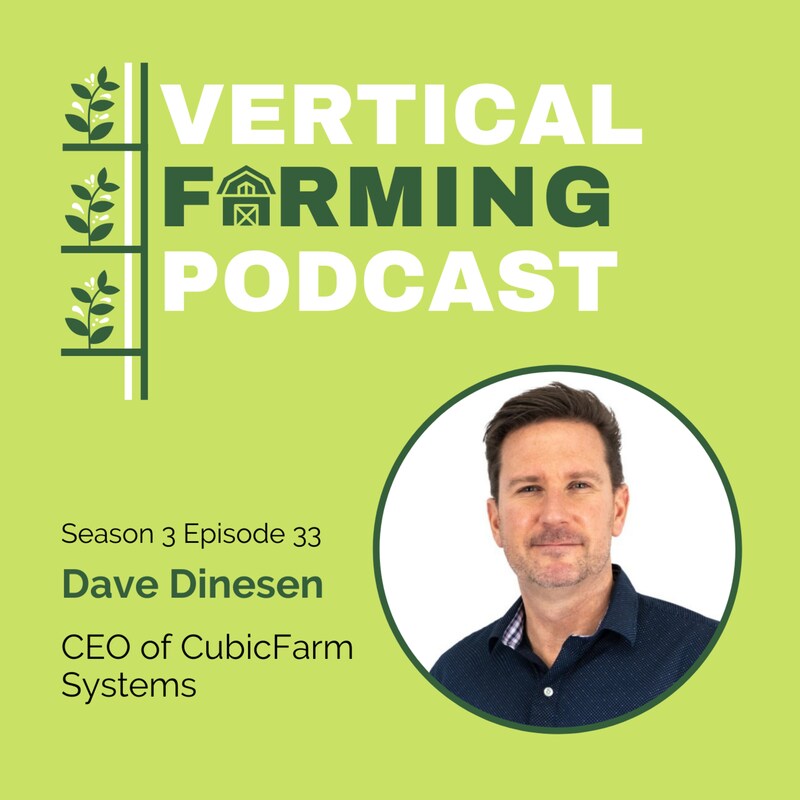
Join Harry Duran, host of Vertical Farming Podcast, as he welcomes to the show serial entrepreneur, Dave Dinesen. Dave is the CEO of CubicFarm Systems, a local chain agtech company that provides unique automated onsite commercial-scale food and livestock feed technologies. Dave is committed to applying technology to address global challenges like food security and climate change. In this episode, Harry and Dave discuss the impact the pandemic has had on the vertical farming industry, why Dave places such a high value on equity in the workplace and the critical tipping point we’ve arrived at for the future of our food supply.
Episode Sponsor
Key Takeaways
- 02:37 – Harry welcomes to the show Dave Dinesen, CEO of CubicFarm Systems Netled, who talks about the effects of the global pandemic and how the vertical farming industry has evolved throughout the years
- 06:33 – What inspired Dave to launch CubicFarms Systems and early stages of the company
- 09:53 – Dave talks about why he believes so many are leaving their fields to work in AgTech
- 13:31 – Dave discusses his strong belief in equity, treating his employees the best he possibly can and where this vision originated from
- 21:40 – Dave speaks to the evolution of CubicFarms Systems’ offerings, current offerings and the markets they serve
- 29:53 – Dave talks about CubicFarms Systems winning the Dairy Farmers for Nexus Innovation Award
- 31:22 – What excites Dave the most about the future of vertical farming
- 33:33 – Positive trends Dave hopes to continue post-pandemic world
- 35:46 – Challenges and opportunities that CubicFarms faces in the near future
- 36:48 – A tough question Dave has had to ask himself recently
- 37:54 – Dave provides best practices for leadership and who he looks to for inspiration
- 41:08 – What Dave does to unwind at the end of the workday and what’s something Dave has changed his mind about recently
- 43:22 – What has Dave excited about the future of CubicFarms Systems
- 45:25 – Harry thanks Dave for joining the show and let’s listeners know where they can learn more about CubicFarms Systems and connect with Dave
Tweetable Quotes
Links Mentioned
Sponsor Info:
🎙️🎙️🎙️
Podcast Production and Marketing by FullCast: https://bit.ly/3sxZ34y
See omnystudio.com/listener for privacy information.
Mentioned in this episode:
2025 Precision Ag Report by iGrowNews
2025 Precision Ag Report by iGrowNews
Transcripts
$680 million poured into precision ag last year.
Speaker:Autonomous weeding robots dominated, and John Deere made 2 acquisitions in 3
Speaker:months. A food company, not an equipment maker, bought a
Speaker:robotics startup to protect its own supply chain. The deals are
Speaker:accelerating, the money is moving, and the winners are already separating from the
Speaker:pack. If you're investing, building, or buying in this space,
Speaker:you need the full picture before your competitors get it. The 2025
Speaker:Precision Agriculture Intelligence Report From iGrow News is now
Speaker:available. Get your copy today at
Speaker:igrownews.com/precision. If you are starting a
Speaker:vertical farm and don't know where to begin or which technology would suit your needs,
Speaker:then reach out to the experts at Cultivated. As indoor farm brokers, they
Speaker:help connect you to the right technology and ensure your project is successful.
Speaker:Best of all, their service is free because they work on behalf of their
Speaker:partners. Visit cultivated.com to learn more. And
Speaker:that's spelled C-U-L-T-I-V-A-T-D.com,
Speaker:or click the link in the show notes. So we are looking for people
Speaker:that, that get really, really jazzed by what we are
Speaker:doing. So literally the mission and vision of the company, that share our
Speaker:values, that know that something has to change,
Speaker:and it's going to take a collection of, you know, entrepreneurial,
Speaker:visionary, courageous people to come into work every day
Speaker:and create this industry. And that is what we're doing.
Speaker:Welcome to the Vertical Farming Podcast, weekly conversations with
Speaker:fascinating CEOs, founders, and agtech visionaries.
Speaker:Join us every week as we dive deep into the world of vertical
Speaker:farming with your host, Harry Duran.
Speaker:Vertical Farming Podcast, Season 3. Welcome back. First-time
Speaker:listeners, you're in the right place if you're looking for a show where we talk
Speaker:to fascinating CEOs and founders of the leading vertical farming
Speaker:companies, or controlled environment agriculture companies,
Speaker:or greenhouse companies occasionally. And you'll learn more
Speaker:about why I bring all those up in As you stay tuned for
Speaker:the interview today. I'm Harry Duran, and I want to thank
Speaker:you for making time out of your day to listen to these episodes.
Speaker:And I don't take your listenership lightly, so if you've been listening,
Speaker:whether it's since episode 1, season 1, or you just found us,
Speaker:welcome. Last week, we had a great conversation with Nona Yehia and
Speaker:Caroline Croft Este, co-founders of Vertical Harvest.
Speaker:The ladies are doing some amazing work in Jackson Hole, and I was really inspired
Speaker:by their stories of how they came together and even their
Speaker:model for how they hire workers with disabilities. It's
Speaker:really, really inspiring. Please, if you haven't checked that one out, give
Speaker:that one a listen. I'm grateful for an additional sponsor this episode.
Speaker:It's Indoor AgCon. Whether you're starting up or scaling up, Indoor AgCon can
Speaker:help you grow your vertical farming business. Live and in person this year,
Speaker:the premier trade show and conference for vertical farming and controlled environment agriculture heads
Speaker:to Hilton Orlando, From October 4th to 5th, you can
Speaker:explore an expo floor filled with new product resources and business
Speaker:solutions, attend idea-packed educational sessions led by top
Speaker:CEOs and thought leaders, and connect with peers and potential business partners at
Speaker:great networking events. Learn more and take advantage of early bird
Speaker:registration at indoor.ag, and you can save an
Speaker:additional $100 off registration with our promo code
Speaker:VFPOD2021 at And I'll be sure to
Speaker:have all those links in the show notes so you can take a look there
Speaker:as well. This episode is also brought to you by the Vertical Farming Weekly newsletter.
Speaker:Kudos to our team member Daniel Dray for doing all the research
Speaker:to bring you those weekly updates. Sign up today at
Speaker:verticalfarmingweekly.com. If you enjoyed this episode or past episodes,
Speaker:leave a rating and a review at ratethispodcast.com/vfp.
Speaker:I'll definitely read it out on next episode. Okay, enough from me. Let's
Speaker:hear from our fantastic guests. So Dave Denison, CEO of
Speaker:CubicFarms, thank you for joining me on the Vertical Farming Podcast. My
Speaker:pleasure, Harry. So we are in April 2021,
Speaker:and I'm curious to ask, given the tumultuous year and a
Speaker:half we've all experienced globally, has there been a takeaway for
Speaker:you when you look back and what we've been doing? I know we've all been
Speaker:through varying degrees of ups and downs. I'm wondering if there's something
Speaker:that stands out for you over the past year, year and a half. Well, being
Speaker:in the agtech space, the pandemic has shown that
Speaker:our— the world we live in, which is, you know, centralized
Speaker:farms relying on diesel fuel and jet fuel to get food to where people
Speaker:live, it already wasn't sustainable and it was already being
Speaker:questioned and challenged and needed to change. But the pandemic
Speaker:showed that we can have borders closed.
Speaker:We can have a world where we don't have airplanes landing in every
Speaker:airport every 30 seconds. And so, you know,
Speaker:you add these things together and being able to localize
Speaker:commercial-scale, you know, quantities of food is a necessity. I
Speaker:mean, a third of the planet already has to, you know, import all their food.
Speaker:That's only going to get worse. So all of these things together, it made me,
Speaker:you know, appreciate the industry that, you know, it's certainly an emerging industry,
Speaker:but boy, is it necessary. So that's been, you know, right thing, right
Speaker:time in history. Yeah, that's been a common thread in the
Speaker:conversations that I've had, especially as we actually kicked off the podcast in the middle
Speaker:of the pandemic. So it made very apparent
Speaker:the need for local access to food, the need for different ways
Speaker:of getting food delivered to people, fresh food, and even people's definitions
Speaker:of what fresh food looks like and the
Speaker:possibilities of what can be grown in-house. So
Speaker:can you talk a little bit about how the industry
Speaker:has grown, evolved, changed since you got started with CubicFarms in
Speaker:2015? Sure. So the technology actually started in
Speaker:development as far back as 2010. Our founders are
Speaker:Dutch greenhouse propagation farmers, and they
Speaker:started, you know, messing around with this kind of technology, sort of leveraging
Speaker:that lifetime of innovative agtech. So going
Speaker:way back, and back then it was early, you know,
Speaker:LED light efficiencies and spectrums were early. The
Speaker:public perception of it early, different groups willing to
Speaker:be your customers early. And so, you know,
Speaker:the good news is that a lot of these things have really begun to mature.
Speaker:So, you know, the industry is sort of coming into its own. So, for
Speaker:example, seed companies are now making, you know, seed varieties that are
Speaker:optimized for indoor hydroponic growing under LED lights.
Speaker:And now, I think people are looking for this kind of produce. They're
Speaker:seeking it out. Yeah, so it's gone from being, you know,
Speaker:very early to now it's, you know, hurry up, you know, we need
Speaker:more of it. I've certainly seen demand change. I've also seen the number of players
Speaker:in the industry change. You know, it felt like, you know, way back we were
Speaker:sort of— there was only a handful of us. But now there's certainly
Speaker:lots of people getting into that localized growing, which is what we need.
Speaker:You know, we're focused on the technology space at CubicFarm. So we
Speaker:developed the automated indoor commercial-scale technology for
Speaker:both growing plants, vegetables, and live green animal feed. We have 2
Speaker:divisions. So we're focused on the technology, and then we
Speaker:provide that technology to farmers to grow commercial
Speaker:quantities locally. So we aren't doing the growing, but
Speaker:we are farmers to begin with, developing technology, supplying
Speaker:that technology to growers. And there's just far more demand for this
Speaker:kind of technology than there was even just 24 months
Speaker:ago. I'm always interested in origin stories and how, you know,
Speaker:the founders got connected to you. So can you talk a little bit about, you
Speaker:know, how you were introduced to them, how that meeting went, and then also
Speaker:curious about what it was about their story or about
Speaker:those conversations that convinced you that the move to Kubrick Farms is
Speaker:something that you wanted to do as the next step in your career? Sure. So
Speaker:I'm actually very good friends with one of the founders of the
Speaker:technology. His name is Leo Benny. We've been very, very close friends for
Speaker:almost 20 years. And I was— I had started another
Speaker:company called Backcheck. It was a human resources technology company.
Speaker:Started that in 1997, sold it in 2012.
Speaker:And so I saw the beginnings of CubicFarms when I would, you know, go and
Speaker:visit my friend and see a cool thing that he's doing. He had already built
Speaker:a very large, actually the largest propagation greenhouse operation North
Speaker:America, VivoFarms. So, very well-established
Speaker:agtech expert. And, he was beginning to build
Speaker:the next thing. And, I saw this machine
Speaker:that was able to produce enormous amounts of produce
Speaker:with very little energy and very little labor. And, it was
Speaker:very different than anything else out there. And, I always said to him, boy, if
Speaker:I ever had the time, I want to get involved in that. And I sold
Speaker:my company, had a short period of retirement at the ripe old age of
Speaker:45. And he phoned one day and said, you know, I think
Speaker:this is ready, you know, do you want to put a team together and
Speaker:start taking this to market? So that was 2015. And so
Speaker:5+ years have gone by very, very fast.
Speaker:It's always interesting because, you know, being an entrepreneur myself, I always wonder about the
Speaker:mindset as you think about building a team and thinking about
Speaker:Strategically, like, who do you want to hire? When do you want to hire them?
Speaker:How quickly do you bring a team on? Do you go to try to raise
Speaker:money as quick as possible? So what was going through your mind in 2015
Speaker:as you're thinking about those things? Sure. So 2015,
Speaker:because we were focused on the technology side, so
Speaker:automating indoor farming, who is your customer? Like,
Speaker:even just figuring that out took a little while. So early
Speaker:on, it was Yeah, I'm a hands-on entrepreneurial guy. And
Speaker:so we began to very slowly put the team together. So, you know,
Speaker:early biz dev type person, we need to get a website up, you know, like
Speaker:you're literally starting from zero and coming from a company that I just
Speaker:sold that, you know, had 2,300 employees, you
Speaker:know, it was literally going from, you know, okay, I need to
Speaker:fill the photocopier with paper myself, you know. Yeah. So it was
Speaker:literally beginning to build the team from ground up. So started by raising a
Speaker:little bit of seed money. So myself and a couple others funded the
Speaker:initial, along with BevoFarms, we funded the initial capital,
Speaker:did our first few hires. So, you know, your first few engineers and
Speaker:growers, and then you slowly begin to put that
Speaker:team together and you slowly begin to figure out who is your customer.
Speaker:And, you know, you need time to make mistakes and learn lessons.
Speaker:And, you know, it took us, we've been more than doubling every year. Wow.
Speaker:Each year at our Christmas party, there's always a bet. Okay, how many people in
Speaker:the company this time next year? So I think in 2019,
Speaker:we were at 40-something, and this year we were at 90. So we're
Speaker:literally, you know, growing very, very quickly, and
Speaker:fortunately able to, you know, attract, you know, some of the best talent on the
Speaker:planet in the space. So yeah. What do you think is happening right now in
Speaker:the space that people are looking at this as a
Speaker:potential career, and some people even changing careers completely, coming
Speaker:from a space that's not controlled environment agriculture, you know, not
Speaker:vertical farming, but they see something in either, you know,
Speaker:what you're building or the potential for this to do good for the
Speaker:planet. As you have those conversations with new hires and
Speaker:people that have been on the team, what's the sense that you're getting for, you
Speaker:know, what's driving people to take part in this journey with you?
Speaker:Yeah, so it's a great question and one that we're passionate about.
Speaker:So we are looking for people that get really, really
Speaker:jazzed by what we are doing. So literally the mission and vision
Speaker:of the company that share our values, that know
Speaker:that something has to change. And it's going to take a collection
Speaker:of entrepreneurial, visionary, courageous people
Speaker:to come into work every day and create this industry. And that is
Speaker:what we're doing. So just lately, we've been able to attract some top
Speaker:talent. Most recently, Eduardo De Martin, who is the
Speaker:general manager of Microsoft in Vancouver, one of the
Speaker:top, you know, agtech guys on the continent—
Speaker:sorry, technology guy on the continent— made the
Speaker:shift from Microsoft to CubicFarms.
Speaker:You know, a guy that could literally go anywhere, write his own ticket, you know,
Speaker:one of the most sought-after technology leaders, and he's
Speaker:joined us. And it was, he wants to do something
Speaker:meaningful for this next chapter of his life, something that he's proud to
Speaker:show his kids that truly will make an impact.
Speaker:And that's been a very common theme, I would say, for the last couple of
Speaker:years of the new talent that's come our way. And one of the
Speaker:things that we've just done to further that is we've
Speaker:just started— and so we are publicly traded and
Speaker:we've just started an employee stock participation program.
Speaker:Where employees can invest a percentage of their paycheck
Speaker:in stock and the company will match it. So, in a sense, you get
Speaker:to buy shares at half price to you as the employee, right?
Speaker:And I'm so excited about our company
Speaker:investing in our employees in this way because at the end of the day,
Speaker:they're the ones creating the value. And we need to attract and
Speaker:retain the very best talent. And they are going to be
Speaker:creating an industry And I think it's so important that
Speaker:companies not only are doing something good, but as
Speaker:they're being successful in that, that they are sharing in
Speaker:that wealth creation, if you will, with the
Speaker:people that are creating the wealth. Far too many companies today
Speaker:don't do that. And it's why we have such
Speaker:inequity in the developing world where you have a handful of
Speaker:people that are— I'm certainly capitalist, and, you know,
Speaker:I believe in, you know, business. And but at the same time, I also
Speaker:believe in those that create the wealth should be absolutely sharing in it. So
Speaker:we're super excited and really passionate. So we're trying to give that
Speaker:passion back. So, you know, you're coming and bringing your time, your passion,
Speaker:your talent, and you're helping us create value. We want to
Speaker:do whatever we can to give that back to the very people. Obviously, our
Speaker:shareholders need to have a good return. But I think our shareholders are
Speaker:excited that the people they're betting on every day, which is our
Speaker:wonderful staff, are also able to invest
Speaker:and share in that value creation. So we're— it needs to be
Speaker:reciprocal. And so I think everyone can feel that within
Speaker:CubicFarms. Yeah. Is that a model or an ethos
Speaker:that you brought with you from previous management experiences, or is that just a
Speaker:worldview that you've just Is that has changed for you over time?
Speaker:I'm wondering how that, where that comes from. Yeah. So in my last company, I
Speaker:wanted as many employees as possible to have share options. We
Speaker:weren't publicly traded, but we did have a stock option
Speaker:program. And so when we finally sold the company, it was one of the
Speaker:best days of my life is, you know, we had about 500 employees
Speaker:and there must've been at least 100 that
Speaker:did participate in our stock option program. And
Speaker:so, and often we were the first real job they had out of university. And
Speaker:so, they were with us for 5, 6, 7 years. And along that journey
Speaker:and bumps along the way, challenges, lessons, all these trials of
Speaker:that anybody who's ever run a company, there's lots of hard days.
Speaker:And but because we had so many employees
Speaker:that were shareholders in the business and they also invested
Speaker:when we raised capital. So, we had all these shareholder option holder
Speaker:employees. And it's not surprising to me that we became one of the
Speaker:largest in the world very fast. We were based in Canada. We were the
Speaker:largest in Canada by— we were 4 times larger than all our
Speaker:competitors combined. And I credit that to
Speaker:our people. They just gave that extra because it was their
Speaker:company. It wasn't just my company. It was their company.
Speaker:And so, when we sold the business, we were able to walk around and hand
Speaker:out very large checks to lots and lots of people,
Speaker:Life-changing amounts of money. And they earned it. They earned
Speaker:every nickel. So they're paying off cars, they're putting down payments on houses, paying
Speaker:off student loans. Like, this is life-changing amounts of cash.
Speaker:And that was just one of the best days ever.
Speaker:And I want to do that again and again and again. Yeah. Anyways, I'm
Speaker:super excited about the people that are coming to work here
Speaker:at Cubic Farms and that they can do really well. for themselves and their
Speaker:families. And I'm hoping that our shareholders, people
Speaker:that invest in our company, want that at the
Speaker:companies they invest in. So yes, you want to invest in a company that's, you
Speaker:know, helping to feed the planet, localize food production, save water, you know,
Speaker:reduce greenhouse gases, all these things. And at the same time,
Speaker:treat the people doing the work as well as you
Speaker:possibly can. Like, anyways, that's the company I want to work at.
Speaker:That's the world I want to live in. So I can only affect where I
Speaker:work and what I do. So that's what I'm doing. Where do you
Speaker:think that you picked that up? You know, because you've held several leadership
Speaker:positions in your previous companies. And I'm wondering if this is something that you
Speaker:can credit to previous managers, other
Speaker:mentors. I'm wondering how this sort of vision for you has been
Speaker:building over time. I think one of the best examples I ever
Speaker:saw in it was the Canadian airline called
Speaker:WestJet. And they went from zero to second largest in the
Speaker:company really fast. And one of the things that went whenever
Speaker:you would fly on— so, there was WestJet and then there was Air Canada, the
Speaker:big incumbent. And whenever you flew on a WestJet
Speaker:plane, they were friendlier. They were happier. There was just— they were always
Speaker:on time. There was a buzz about it. There was just extra oomph. And one
Speaker:of their things was their slogan was, we care more because we're owners.
Speaker:And all their staff got to participate
Speaker:in equity opportunities. And you could
Speaker:feel it. You could feel it in the business. You still can today.
Speaker:And that had a real impact on me. And also, I knew that
Speaker:I'm glad that I owned equity and the benefit that that had to
Speaker:me and my family. And I want that for
Speaker:people that I work with. I also want to be able to talk about
Speaker:that aspect of our company. We want to be a great publicly traded
Speaker:company. And so, we want excited
Speaker:shareholders. And I want to be able to talk about that with our staff. Well,
Speaker:it feels slightly self-serving if it's only myself and a
Speaker:handful of others that might be benefiting from an appreciating stock
Speaker:price. I want everyone to be—
Speaker:I want that to matter to everyone. And so, This is
Speaker:another way to really align interests between staff,
Speaker:shareholders, the company. You know, it just brings everybody
Speaker:together because while we all want to do— there's that saying,
Speaker:you want to do well while you're doing good. Yeah. I want everyone in our
Speaker:CubicFarms family to do well while they're doing good. We all want to do
Speaker:good, but you got to be able to pay the bills. You know, you want
Speaker:this to be worthwhile. And I want people, you know, great people. I don't want
Speaker:everyone to leave. So, you know, Yeah.
Speaker:I wonder if for some of the employees at CubicFarms, if this is
Speaker:something that's new for them and it's not something they've experienced in previous
Speaker:companies. And I'm wondering what their reactions are
Speaker:when they start to experience a company that handles itself like this. Well,
Speaker:yeah, most don't. Yeah, they've never experienced it before. And it
Speaker:takes a little while. I think we're all used to wondering, okay, what's the
Speaker:catch? Right? It's too good to be true.
Speaker:And so, well, there is no catch. We just— myself, I just want you to
Speaker:be excited, engaged, and never leave. So that's the catch.
Speaker:If there's a bad part, you know, hopefully you're going to drink the Kool-Aid and
Speaker:not leave. But yeah, so it takes a while to wrap your mind
Speaker:around. So I can— wow, that's really good. So,
Speaker:you know, so as we've been rolling this out, the enthusiasm, you know, it's just
Speaker:been fantastic and everyone's super excited. So it's just sort of getting
Speaker:used to that way of thinking. Because most people only think
Speaker:sort of, the only thing that matters is my paycheck,
Speaker:right? How much cash lands in my bank account? The thought of building
Speaker:wealth and equity over time by being a shareholder
Speaker:of the company I'm helping to create is new.
Speaker:And so, it's a bit of a different shift in thinking. It feels like a
Speaker:hearkening back here in the States to how companies were
Speaker:originally created like Ford and GM and taking care
Speaker:of pensions and just kind of like that mindset of always having in
Speaker:as a way of doing business, thinking of how long-term we can
Speaker:create stability for the people that work for us
Speaker:and security. And then, and I think for a while it feels like
Speaker:companies forgot about that and we're just looking at employees as
Speaker:cogs. And it feels like the more I have conversations like this,
Speaker:that companies are realizing the importance of You know, the
Speaker:rising tide lifting every single boat in the company as well.
Speaker:It has to shift the— and I think this is the healthiest
Speaker:way to share because it's, you know, if
Speaker:our company succeeds, then all our employees succeed. If our company fails,
Speaker:well, it's going to be, you know, partly everybody's fault. And so,
Speaker:and I think when you've got skin in the game, you're just going to make
Speaker:sure it doesn't fail. Like, we are going to make sure that
Speaker:that order goes out on time, that that customer is happy, that we're winning. And
Speaker:when we have a good idea in the middle of the night, we're going to
Speaker:make sure that we share it the next day. Like, that's the kind
Speaker:of— and companies that just try
Speaker:and do the opposite where they treat people as disposable commodities because
Speaker:there's always someone behind this person willing to work.
Speaker:It just has to stop. It has to stop. And I
Speaker:think this is a healthier way than, you know, just taxing
Speaker:people heavier and asking, you know, for example, government to
Speaker:then distribute money, which is certainly what's, you know, what we're trending with
Speaker:more now. I would much rather have more and more companies
Speaker:share as they succeed, you know,
Speaker:directly with those that are creating the wealth anyways.
Speaker:Because at the end of the day, you know, if, if a handful of people
Speaker:at the top, you know, make slightly less, it doesn't change their life at all.
Speaker:But when you share that equity with those that are creating the wealth, that is
Speaker:life-changing. So that's, I think, the
Speaker:healthiest way to redistribute wealth,
Speaker:myself anyways. Yeah, it makes a lot of sense. Shifting gears a little bit.
Speaker:So as you came on board and you were looking at the current landscape
Speaker:of what other companies in the space were offering, what markets they were
Speaker:serving, whether they were going to focus on B2B,
Speaker:B2C, or even serving farmers as you do with your
Speaker:offerings. How did you think about that in the beginning? And was that
Speaker:clear from day one who you wanted to serve? I wouldn't say it was clear
Speaker:from day one because we were certainly trying to figure out, okay, we've got this
Speaker:machine that grows, you know, great commercial-scale quantities of
Speaker:produce in an energy and labor-efficient way.
Speaker:Well, now what? Like, you know, how do you turn that into a global agtech
Speaker:business? So it was, you know, a few years of figuring
Speaker:that out. How do you take this technology to market? Who's your customer?
Speaker:How do you scale it? And all of those sorts of things.
Speaker:And we saw in the market that there was beginning to be
Speaker:companies that were a bit more B2C. So I'll
Speaker:sell you infrastructure to grow sort of smaller
Speaker:amounts locally and a wide variety,
Speaker:wide variety of harvest dates, wide variety of cultivars. So
Speaker:And I know there's a huge market for that, and that is a much-needed thing
Speaker:to do, and I think it's great. So, you know, there's a few companies that
Speaker:have emerged that are doing that sort of thing. Our machine works really well
Speaker:when you want to grow enormous quantities, often of
Speaker:the same thing, and you want to harvest enormous
Speaker:quantities a few times a week and service, you know,
Speaker:larger institutions, larger retails, food service, things like this. So
Speaker:We saw that our thing's best. So we typically won't sell one machine at a
Speaker:time. We will for propagation, if you just want to propagate
Speaker:lots of seedlings or it's some sort of other application.
Speaker:But we'll often sell 15, 20,
Speaker:25 machines at a time. And then that gives you the
Speaker:volume, variety, and harvest dates. So we saw that there was
Speaker:a spot in the market and needed for
Speaker:commercial-scale automated indoor farming.
Speaker:So I don't expect that in a city there's ever going to be, you know,
Speaker:50 different CubicFarming, you know, companies. You know,
Speaker:there's going to be, you know, 1 or 2, and they're going to be large.
Speaker:And that's really been our focus is
Speaker:larger-scale indoor automation. And then, you know, yeah.
Speaker:So for the benefit of the listener who may not be familiar with CubicFarms, can
Speaker:you Outline what your current offerings are and which markets you're serving?
Speaker:Sure. So the company has 2 specific divisions. So our
Speaker:CubicFarm division, the first one, grows plants. So
Speaker:we do hydroponic indoor automated farming. So our machines are
Speaker:built inside stainless steel growing chambers.
Speaker:We do use the same shape as a 40-foot high
Speaker:cube shipping container, But, this isn't container farming.
Speaker:We use that as a convenient growing shape
Speaker:so that we can manufacture centrally and then ship our machines pretty much
Speaker:ready to go. And then, we'll assemble them
Speaker:as a system. So, as I say, we'll put 15, 20 of them together.
Speaker:So, a couple machines for propagation and then a whole bunch for
Speaker:cultivation and then an irrigation system. So, it'd be a larger system.
Speaker:And, that 20-machine setup is going to produce millions of heads of
Speaker:produce a year. So, that's one side of the business.
Speaker:And, we can do obviously the leafy green space. We can
Speaker:propagate from seed to seedling most plants
Speaker:that can be grown hydroponically. So, our propagation machine,
Speaker:it'll propagate even for nurseries or greenhouses or
Speaker:at very high quantities. With great germination
Speaker:success rates. And then, we can do edibles,
Speaker:non-edibles, nutraceutical ingredients, flowers.
Speaker:We've done trees for reforestation companies. There's
Speaker:lots of different crops that the machines can grow.
Speaker:Of late, we've been focused on the leafy green space just because there's such an
Speaker:acute need. So many recalls with centralized farm
Speaker:shipping things. Yeah. And, it's just been disastrous. And more and
Speaker:more vegan vegetarian diets requiring more and more localized leafy
Speaker:greens, and more and more demand from the public just because they all taste so
Speaker:good. Like, once you've started eating this kind of grown produce,
Speaker:you struggle to go back, you know. So the
Speaker:demand's there. So we're certainly focused on that. So that's what the Cubic
Speaker:side of the business or the plant side of the business. Yeah. The other technology
Speaker:that we have is a company called Hydrogreen. And we actually are able to
Speaker:grow commercial-scale amounts of live green animal
Speaker:feed. So in other words, we can recreate grazing lands indoors.
Speaker:So it's not that the animals run around and graze indoors, it's that one of
Speaker:our HydroGreen machines is 80 feet long, 20 feet high,
Speaker:10 feet wide, and it's 8 layers high. It will
Speaker:produce the amount of live green feed, the equivalent to
Speaker:200 acres of grazing land. Wow. So using a
Speaker:fraction of the fresh water, And consistently.
Speaker:You can have all the grazing lands in the world, but if they're covered in
Speaker:frost and snow, they're not overly helpful. Or if you don't have the fresh water
Speaker:available to irrigate, not very helpful. So our
Speaker:HydroGreen technology literally lets livestock farmers
Speaker:feed dairy, beef, camel, sheep,
Speaker:goat, racehorses, whatever. You're able to feed them
Speaker:with live green feed every day consistently. Now, your animal's going to
Speaker:perform better. You can have more animals per acre.
Speaker:Their manure is far less nutrient-dense, so much better for the environment.
Speaker:The animal lives longer, they have more babies, you'll get more milk, better quality
Speaker:meat. You know, you'll finish animals faster, they'll perform better.
Speaker:So you're treating the animal well, you're looking after the environment well.
Speaker:Yeah, it's just so needed in this world. Have you noticed, or
Speaker:was anything surprising for you in terms of the different industries that we're
Speaker:starting to see applications for your technology? So you do mention botanicals,
Speaker:nutraceuticals, and that in previous conversations, it's something that struck a
Speaker:chord for me. It's just, it was sort of like an aha moment, like, wow,
Speaker:I didn't realize this could be used for this application.
Speaker:Yeah, probably the strangest one that I'm just thrilled about is
Speaker:that there's a group called Agrigene in California and they do biologicals.
Speaker:So biologicals is growing good bugs to eat bad bugs,
Speaker:maybe in a greenhouse, or you can do, you know, bugs for alternative
Speaker:proteins and things, right? It's in a real emerging market. They actually bought one of
Speaker:our systems to grow the larvae and
Speaker:bugs in. So, we advertise, don't need pesticides because there's
Speaker:no bugs in our machines, yet someone bought a system to
Speaker:put bugs in. So, because the machine is so flexible, we have
Speaker:several watering solutions, several different tray designs,
Speaker:the same machine. It's like we've built the iPhone and the
Speaker:farmers are coming up with the apps. Because there's so many different crops
Speaker:that you can grow in these systems, yet very
Speaker:flexible, food-grade, automated system.
Speaker:So we're the indoor tractor of farming, and
Speaker:farmers are going to figure out lots of things to use that tractor for,
Speaker:right? Yeah. One of my earlier conversations was with Virginia
Speaker:Emery, and she's the founder of Beta Hatch, and they actually grow
Speaker:insects indoors as well. So it's been fascinating to see all the applications.
Speaker:And all the— it's interesting to know that
Speaker:your technologies can be adapted to these different use
Speaker:cases, which is fascinating. Yeah, our machines are patented,
Speaker:and it's the undulating path that is a very powerful part of our
Speaker:patent. It lets us have only one row of light at the top,
Speaker:yet hundreds of trays of plants, or in this one
Speaker:case, bugs growing. And yet you can use every
Speaker:cubic foot of space. You don't need hallways for people because the The machine brings
Speaker:every tray to the front for harvesting and planting. So
Speaker:you're reducing your labor, reducing your energy. So then it's just, okay, well,
Speaker:what else can we grow? And so we've developed a few watering
Speaker:systems, a few tray designs, and it's just a very
Speaker:flexible, powerful piece of kit. You've
Speaker:also recently won an award from the
Speaker:dairy farmers, a Nexus Innovation Award, I believe it was? That's right. Yeah. Yeah.
Speaker:Can you talk a little bit about that? Yeah, we're very proud of that. 300
Speaker:different companies considered, and so winning that, you
Speaker:know, it's being— that's for our HydroGreen technology, so the live green animal
Speaker:feed. Livestock farmers know that that is— it's
Speaker:just such a crucial change in how
Speaker:they're feeding animals to be able to, you know,
Speaker:reduce the amount of land required, reduce the water, and
Speaker:yet feed the animal better than they've ever been fed before. It's a
Speaker:combination of all these things. And then the animal rewards you by performing
Speaker:better than they've ever performed. I mean, livestock
Speaker:farming is responsible for a significant amount of greenhouse
Speaker:gas emissions. So just that, forget about all those other benefits. If you
Speaker:just talked about the greenhouse gas issue, HydroGreen
Speaker:significantly reduces greenhouse gases by both
Speaker:Reducing the amount of gases from the fermenting
Speaker:ruminant, so the animal waste, because they're able to absorb the
Speaker:nutrients so much more readily and then they're not then passed through
Speaker:their waste. And then because you're able to feed in
Speaker:a much more sustainable way, the growing of the feed is much
Speaker:more environmentally friendly. So you add these things together and there's a
Speaker:significant environmental impact, but then there's also all these other benefits
Speaker:to the farm. the animal, the consumer. As you think about
Speaker:how fast the industry is growing, and even just from the time I've been
Speaker:hosting the show, it's been so interesting just to— if you just watch the news,
Speaker:there's lots of funding coming in, lots of money entering the space.
Speaker:What has you excited about where the industry is headed? And
Speaker:also, can you talk a little bit about any relationship you have with other
Speaker:colleagues in the space as well? Because the industry as a whole hasn't been able
Speaker:to get together for almost a year and a half now. Yeah. So one of
Speaker:our shareholders is Osprey Ag Sciences and they
Speaker:invest in other, you know, similar sort of farming agtech businesses.
Speaker:So they've been great at bringing together, you know, their
Speaker:portfolio companies, which we're now one, and just
Speaker:introducing CEO to CEO. So we share ideas, industry
Speaker:insights, things like that. So for example, we have a great relationship with
Speaker:Freight Farms. So Freight Farms— Yeah. does the localized container farm.
Speaker:And, we get along great because we aren't competing, we are
Speaker:serving very different markets, yet we can share
Speaker:stories and referrals and things like that. Agrigene is another
Speaker:example of that. There's another one called LOVE,
Speaker:Local Urban Vegetables, that are building some
Speaker:really cool substrates. And so, yeah, there are
Speaker:opportunities to still fellowship and share
Speaker:ideas and things like that. And in some ways, it's almost been
Speaker:easier because it's actually fairly easy and
Speaker:efficient to do 90 minutes on Zoom.
Speaker:You can bash through a lot of stuff and you don't have to get on
Speaker:an airplane and stay overnight. So if you want to
Speaker:stay in touch, you're in touch. And same with reaching
Speaker:out to different investors and And it's actually
Speaker:easier. So I'm hoping when the pandemic sort of
Speaker:ends that a lot of this doesn't change. We
Speaker:still need to meet people and share a meal. Yeah. But
Speaker:there's a lot that's good about this. I mean, as tragic as it's
Speaker:been, optimistic people will find the positives. And
Speaker:one of them is less needless business
Speaker:travel and more efficient ways of building relationships. That's
Speaker:interesting. Yeah. And I think people who were questioning
Speaker:whether this was possible and even things like remote work,
Speaker:they were forced into the experiment whether they were ready or not. And I think
Speaker:surprisingly found that things not only survived,
Speaker:but in some cases thrived when there weren't distractions
Speaker:that you would find in person or the need to commute and all that sort
Speaker:of stuff. So I think each company's handled and responded to it differently, but I
Speaker:think A lot of them were surprised at what is possible and speaking probably a
Speaker:little bit to what you were talking about as well. Yeah, I hope a lot
Speaker:of it sticks. I find meetings on Teams or Zoom,
Speaker:man, they're efficient. You can quickly share your screen and show what
Speaker:you're— the room doesn't get stuffy because you've got 30 people in it.
Speaker:Someone can please open a door. There's lots to like. And I think
Speaker:we all like not commuting as much. Yeah, there's lots to
Speaker:like. I think, though, that we do need to make sure that we learn how
Speaker:to turn it off. Yeah, that's important. It's 5 o'clock,
Speaker:okay, I'm done today. And, you know, yeah, that thing's going off. So
Speaker:otherwise you just won't stop. So there's a bit of that. Yeah, there's things like
Speaker:repetitive stress injuries or work injuries, and
Speaker:ergonomics are now topics that are coming to mind for people and employees as
Speaker:well, because I imagine people would have a tendency to probably
Speaker:perform longer just to demonstrate that they, they are being active and
Speaker:And I think each company— is there anything you're doing
Speaker:differently because of what's happened and the changing environment
Speaker:in terms of how your organization is running? Well, we've
Speaker:had to get really good at remote instruction. So,
Speaker:it's forced us to build a video and a training video for
Speaker:every nut and bolt. And you've got to have those
Speaker:tools. But the positive about that is now it's,
Speaker:we see global expansion being much easier and faster
Speaker:because it's forced us to build these tools that can then
Speaker:be quickly translated and reused. So for
Speaker:scaling, it's forced us to build some things where we
Speaker:otherwise might've put someone on a plane and they, you know, so
Speaker:that's been positive. I think our ability to reach and just get
Speaker:great talent and almost be agnostic as to where they are, that's nice. Yeah.
Speaker:So what do you think, for you, as you think about where the
Speaker:industry is now and if it's any different than when you started in 2015,
Speaker:what do you see as challenges or opportunities for CubicFarms
Speaker:going forward? I think the world is ready for it. I think in 2015 when
Speaker:we started, it was early, but I think fast forward, you know,
Speaker:5 and a half years, the world is ready and not only ready but
Speaker:anxious. And it's gone from a, boy, you know, someone should probably do this,
Speaker:to You know, this needs to be done. We need to localize
Speaker:food production. So localizing
Speaker:food production within countries' borders,
Speaker:reducing the distance between where it's grown and where it's eaten,
Speaker:has gone from a nice-to-have to a must-have for so many reasons.
Speaker:So I think, you know, timing is certainly positive. And that's not only
Speaker:from, you know, our perspective customers, but our customers' customers. Right. So,
Speaker:you know, the end, you know, the groups that want to pull this produce
Speaker:through or this live green feed through, yeah, it's just the timing's
Speaker:now. What's a tough question you've had to ask yourself recently?
Speaker:Well, probably turning down certain opportunities
Speaker:that present itself. As you can imagine, my phone rings every day with, you know,
Speaker:can we expand to this country or can we, you know, acquire this company?
Speaker:So there's a lot that I have to say no to on a very, very
Speaker:regular basis. A colleague of mine once said, if you're not kept up at night
Speaker:by what you're not doing, you're not focused enough. And I would say
Speaker:that that has been of late the—
Speaker:I've obviously run another large business and the
Speaker:discipline to stay focused and not get distracted and stay
Speaker:on task, on mission, on point, it
Speaker:can be challenging. It doesn't matter who you are. New and shiny is always exciting.
Speaker:And so I would say keeping that focus and
Speaker:executing has been, as the industry
Speaker:accelerates and more and more opportunities present themselves,
Speaker:you're saying no to more and more things
Speaker:that deep down you're like, oh, I wish I could, you know, let's just start
Speaker:another division and do that. And let's, you know. I'm curious because
Speaker:I'm a fan of productivity and I even took a course called Building a Second
Speaker:Brain to learn how to process and like, you know, all these articles that
Speaker:come in, there's no shortage of information and You know, whatever
Speaker:statistics you look at, we've got more, I think it was something
Speaker:like, I'm probably butchering it, but we've received more information in the past like 10
Speaker:years than in the past 100 combined or something like that, some crazy
Speaker:stats. So what do you do as a leader? 'Cause we, you know, there's
Speaker:a lot of CEOs listening to the podcast as well and other founders. So
Speaker:what's worked for you? Any tips on how you actually
Speaker:manage that workflow and how you do, what's that decision process for you look like
Speaker:as you think about, is this something we wanna work on, is it not? And
Speaker:so, Is there some sort of practice that you think through in your mind or
Speaker:that you work through to make those decisions? Sure. There's no
Speaker:other answer to that other than you got to have a great team. There's
Speaker:no way I could even begin to
Speaker:make, you know, should we do this or should we not do this decision on
Speaker:my own? No chance. So that's why I need
Speaker:spectacular engineers, growers, technology
Speaker:people, finance, business development,
Speaker:just, you know, every department that, you know, every division of our
Speaker:business needs a great, great leader in that.
Speaker:And they need to be 1,000 times better than I am at what they do.
Speaker:And so then having that team, and I trust them,
Speaker:and they're going to tell me, you know, you should look at this,
Speaker:or I'll ask them. So if something comes across my desk and I think it's
Speaker:kind of cool, I'll send it over to one of my colleagues
Speaker:and, you know, what's your thought on this? Or I'll send it to a couple
Speaker:of them and I'll ask for just that candid feedback. But you've got to have
Speaker:great people that are better at what they do than you are.
Speaker:And you've got to have that great trusting relationship and know
Speaker:that you're not going to have a blind spot. So, you know, there's that saying,
Speaker:nobody's perfect, but a team can be. And I just so
Speaker:subscribe to that. You've got to be self-aware. You got to know what you're good
Speaker:at. More important, you got to know what you suck at. And most of
Speaker:us are good at one or two things. And you've got to have great
Speaker:people that you trust doing all that stuff that you don't do well. Who do
Speaker:you look to for inspiration either now or in the past and
Speaker:has helped you to shape the way you think about these types of
Speaker:things? There's certainly no shortage of great business
Speaker:books and leaders that— so like The Good to Great and
Speaker:all of that. And so I'm a big subscriber to several of those things, but
Speaker:I have a handful of mentors in my life that will be candid
Speaker:and honest and who I respect.
Speaker:And so surrounding yourself with great, smart people has just been crucial.
Speaker:I've got a fantastic chairman of the board who just adds value to my life
Speaker:every single day. And so as a CEO, having a supportive
Speaker:board where you know they have your back, that'll give you honest,
Speaker:candid feedback, but at the end of the day, they support you.
Speaker:That is so empowering and refreshing. And so having
Speaker:that candor and that trust, just so crucial. Yeah, like
Speaker:your brain trust sounds like what you're describing there. It's really important to have
Speaker:that by your side at all times. Crucial. What do you do to
Speaker:disconnect? Because as you just stated, it's very
Speaker:easy to be on all the time. But, you know, for our
Speaker:own sanity and for your own mental health and well-being, I imagine
Speaker:you need to have some strict rules about
Speaker:how to disconnect and when and what's been helpful for you
Speaker:there. Yeah. So, 2 things for myself personally.
Speaker:So, one, I'm actually a professional musician as well. So,
Speaker:I'm in a band called Kick Drive and we
Speaker:record albums. We've got a few on Spotify and Apple Music. So,
Speaker:there's a shameless plug for Kick Drive. I'll make sure to include those in the
Speaker:show notes. So I'm lead guitar player, love playing
Speaker:music, got lots of musician friends. And so getting together and playing music
Speaker:is just a hoot. And then as a family, we're avid boaters. So
Speaker:we spend a fair bit of time on the water. And I've found that to
Speaker:be almost life-saving that no matter how stressful of a week,
Speaker:if you can untie the lines and float for a few hours, all of a
Speaker:sudden you're a million miles away. way. And so I encourage, you
Speaker:know, a lot of— you've got to have that outlet. So whether it's golf or
Speaker:motorcycle, or I do a bit of that as well, not the golf,
Speaker:motorcycle bit, but you know, you've just got to have an outlet.
Speaker:You have to, and ideally with your family. So something that you can all
Speaker:share and make memories together and where they know
Speaker:they've got your undivided attention
Speaker:and you've got theirs as well. So that's been crucial. So yeah.
Speaker:What's something you've changed your mind about recently? I think I used
Speaker:to be more jaded about the public markets because this is the
Speaker:first company where I've been CEO and we've been public. And so I'm
Speaker:actually very excited about the fact that we are
Speaker:publicly traded because we've been getting some just great,
Speaker:great shareholders that are so supportive and
Speaker:that are excited about the next decade in this industry. Yeah.
Speaker:So yeah, I don't know that that's an overly, you know, great answer to your
Speaker:question. You know, the beauty of it is that, uh, I've received a
Speaker:wide range of answers to it when I've asked it. So there's no wrong answer
Speaker:there. So thank you for sharing that. So just as we wrap up, like, as
Speaker:you think about where you've been, where you're at, and where you're
Speaker:headed, what has you excited about, you know, the, the next
Speaker:couple years? Uh, right industry, right time in history. And
Speaker:I've seen this movie before. In my last business, BackCheck,
Speaker:it was an HR technology company. We did— and we focused on background screening.
Speaker:Started in 1997 in Canada. Yeah.
Speaker:Nobody wanted to do background checks before they hired people in 1997.
Speaker:And then September 11th happened. And we were in the right business, right time in
Speaker:history, right country. And the business
Speaker:just exploded. And I would say that the pandemic
Speaker:has been that for this industry. Mm-hmm. And so
Speaker:I've felt this, I've seen this before when you have this
Speaker:catalyst, this sea change, this tipping point,
Speaker:because we all knew deep down
Speaker:that localized growing needed to start happening, that
Speaker:sustainable growing had to start happening, that yes, we need
Speaker:things at a good price, everything needs to be affordable, but also where is it
Speaker:from and how's it grown? We got to finish that sentence. So it has to
Speaker:be affordable and accessible, but it also has to be sustainable. So if you
Speaker:can finally bring all that together, and that's where the technology is now.
Speaker:And so it's gone from a nice-to-have to a
Speaker:must-have, and then the pandemic has made it, okay, it is crucial
Speaker:because borders can shut, ships can go sideways in the Suez
Speaker:Canal, and suddenly, you know, so everybody's realized
Speaker:that the global supply chain for food is
Speaker:far more fragile than we've all sort of hoped it was.
Speaker:So right business, right time in history. And I get to have a front row
Speaker:seat at being a small part of it. Yeah.
Speaker:And it's interesting that you have the perspective having gone through a similar experience
Speaker:before with your previous company. So knowing what the signs are, what to look for,
Speaker:and when you see them happening, knowing that sensation like, oh,
Speaker:going through this again, it's happening again. So it's nice perspective. So thank you for
Speaker:sharing that. So I really appreciate you just sharing your
Speaker:story. And that's really what this show is about, getting to know a little bit
Speaker:more about the founders and the CEOs of these companies that are doing some really
Speaker:exciting things in the controlled environment agriculture space, vertical
Speaker:farming space. And I appreciate you coming on and sharing your story, Dave. A
Speaker:pleasure, Hari. Thanks for having me. Yeah, I hope we speak again. Yes, definitely,
Speaker:when conferences are back online. Awesome.
Speaker:Thanks to Dave for coming on the show, spending his time, precious time with us,
Speaker:and sharing his story. As always, full show notes available at
Speaker:verticalfarmingpodcast.com. For those of you that are not aware, we do a
Speaker:summary, timestamps, links mentioned, and a couple of quotes from the
Speaker:episode. And we're also starting to put together transcriptions for each episode, as well
Speaker:as formatted PDFs if that's easier for you to consume. consume. So
Speaker:please check those out at the website. Thanks again to our title sponsor,
Speaker:Cultivated. If you're looking for a vertical farm and don't know where to start or
Speaker:which technology would suit your needs, reach out to them today. Best of all, their
Speaker:service is free because they work on behalf of their partners. Learn
Speaker:more at cultivated.com, and that's spelled C-U-L-T-I-V-A-T-E-D.com.
Speaker:Just leave out the last T. Additional episode sponsorship provided by Indoor AgCon.
Speaker:Take advantage of early bird registration discounts at indoor.ag,
Speaker:and you can save an additional $100 off registration with our promo code
Speaker:VFPOD2021, and we'll have that in the show notes.
Speaker:Podcast production and marketing provided by Fullcast. Sign up for a free podcast brainstorm
Speaker:at fullcast.co/vfp. As a
Speaker:reminder, if you're enjoying the show, leave us a rating and a review at ratethispodcast.com/vfp.
Speaker:We'll be sure to read those out on future episodes. episodes. Tune in
Speaker:next episode for my conversation with Charlie Guy, co-founder of Lettuce
Speaker:Grow. Until we meet again, here's to your health. Thanks
Speaker:for listening. To read the full show notes for this episode, which
Speaker:includes any links mentioned in the episode, as well as a full show
Speaker:transcription, visit verticalfarmingpodcast.com.
Speaker:There, you can sign up for our email list to be notified when new
Speaker:episodes are published.
Speaker:$680 million poured into precision ag last year.
Speaker:Autonomous weeding robots dominated, and John Deere made 2 acquisitions in 3
Speaker:months. A food company, not an equipment maker, bought a
Speaker:robotics startup to protect its own supply chain. The deals are
Speaker:accelerating, the money is moving, and the winners are already separating from the
Speaker:pack. If you're investing, building, or buying in this space,
Speaker:you need the full picture before your competitors get it. The 2025
Speaker:Precision Agriculture Intelligence Report from iGrow News is now
Speaker:available. Get your copy today at igrownews.com/precision.




