Shownotes
Audio • Season 2 • Episode 3 • Series 2 Episode 3 - The Puritan presses are closed down.
© 20 26 The Rise of the Protestants., Author, Shaughan Holt.
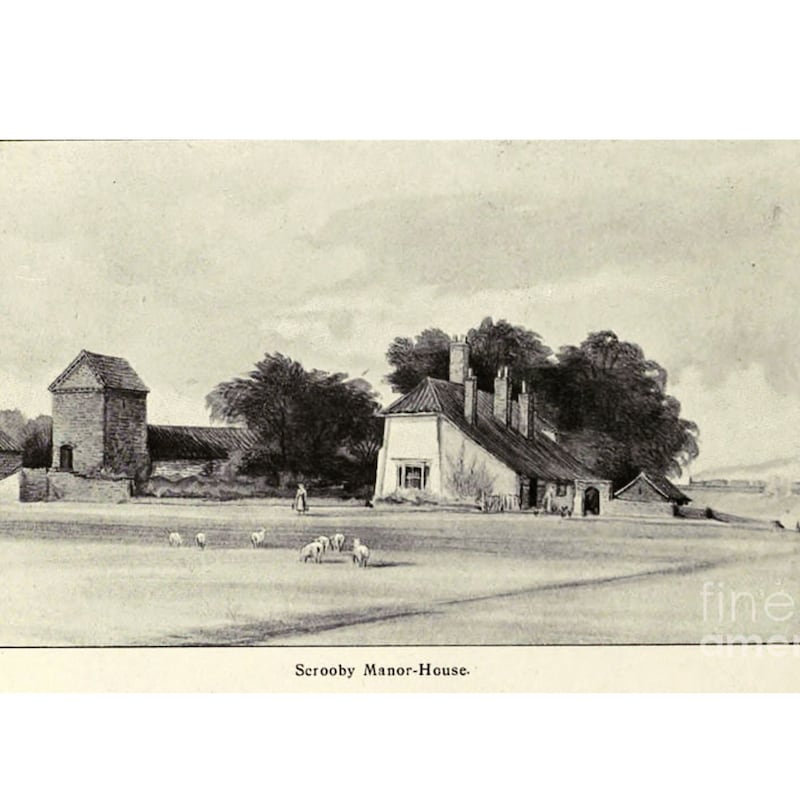
Artwork • Scrooby Manor House
Music • At the Round Earth's Imagined Corners, Performed by The Aeolian Chorale.
The poem "At the round earth's imagined corners", is one of English poet John Donne's(1572–1631) Holy Sonnets, where he explores the struggles and consolations of his Christian faith. The speaker in the poem tries to imagine Judgment Day and finds comfort in the idea of God's infinite mercy and forgiveness.
Williametta Spencer, born on August 15, 1927, is an American composer best known for her award-winning choral work.
© 20 26 The Rise of the Protestants., Author, Shaughan Holt.
"All rights reserved. No part of this podcast may be reproduced, translated, distributed, or transmitted in any form or by any means, including photocopying, recording, or other electronic or mechanical methods, without the prior written permission of the copyright holder, except in the case of brief quotations embodied in critical reviews and certain other non-commercial uses permitted by copyright law".
Requests regarding translation, licensing, or republication should be directed to: [email protected]
Your feedback matters, send me an email at [email protected], with any comments, suggestions, or criticisms.I read every message.
Transcripts
© 20 26 The Rise of the Protestants., Author, Shaughan Holt.
"All rights reserved. No part of this podcast may be reproduced, translated, distributed, or transmitted in any form or by any means, including photocopying, recording, or other electronic or mechanical methods, without the prior written permission of the copyright holder, except in the case of brief quotations embodied in critical reviews and certain other non-commercial uses permitted by copyright law".
Requests regarding translation, licensing, or republication should be directed to: [email protected]
Your feedback matters, send me an email at [email protected], with any comments, suggestions, or criticisms.I read every message
Series 2.
Episode 3.
The Puritan Presses are closed down.
The year is 15 89.
The Oxford English Dictionary of the Middle Ages, describes the word Cooper, as: A craftsman who makes and repairs wooden vessels, formed of staves and hoops, as casks, buckets and tubs.
During that period, the London street cry, "Hay Any Work for Cooper", presented Martin with a clever play on words, relating to Bishop Thomas Cooper's last name.
Martin used this as the title for his fourth Marprelate pamphlet, and developed this theme further by incorporating terms like hubs, barrelling up, tub-trimmer, hoops and leaking tubs among other references.
The illegal press continued to function throughout the Martin Marprelate controversy.
However, Robert Waldegrave, an associate of Penry, abandoned Marprelate activities in 15 89 and fled to Scotland to avoid punishment.
Penry was not as fortunate; after publishing Martin Junior and Martin Senior, the government seized his press, halting the production of his latest tract More Work for Cooper, which was intended to be a sequel to Hay Any Work for Cooper.
Subsequently, John Hodgkins and his assistants took over, printing the remaining works at Woolston Priory, Coventry, and Manchester.
On 14 August 15 89, agents of Henry Stanley, the 4th Earl of Derby, captured a printing press at a rented house in Newton, near Manchester.
John Hodgkins and his assistants, Valentine Simms and Arthur Thomlyn, had just begun printing "More Work for Cooper" when they were apprehended.
After being interrogated by the Earl, the three men were sent to London, where they were subjected to torture.
In the 16th century, French Huguenot immigrants settled in the Newton area, to escape persecution in their home country.
They brought with them skills in cotton, linen weaving and bleaching.
Newton Heath is located three miles east of modern-day Manchester city centre.
The name is derived from Old English, meaning "the new town on the heath".
The heath, once stretched from Miles Platting to Failsworth, was bordered by brooks and rivers on all sides.
Penry could not be located despite extensive searches by the authorities; he had escaped to Scotland.
The Privy Council declared Penry an enemy of the state, and issued a warrant for his arrest.
Members of the Privy Council, also began to harbour strong suspicions, linking the Puritan George Carleton to the Marprelate tracts.
The Marprelate tracts, were published between October 15 88 and September 15 89, with print runs of 700 to 1,000 copies, and priced between two and nine pence.
Upon his return to Scrooby in 15 88, Brewster took on the responsibility of caring for his sick father.
During this time, he also helped manage, the Scrooby mail coach operation.
As his father's health declined, Brewster assumed the duties of postmaster, a role that had traditionally been passed down through his family.
On 9 February, Richard Bancroft, a member of the ecclesiastical commission, delivered a fervent sermon at Paul's Cross that fiercely criticized the Puritans.
He ridiculed their declarations and actions, disparaging their reliance on individual convictions.
His emphatic endorsement, of the divine right of bishops, led the Queen's advisors to wonder, whether his sermon was a challenge to her royal authority.
In the spring of 15 89, the High Commission, responsible for religious matters, prohibited Puritans from attending worship meetings at any London parish.
Puritan members of Parliament, faced significant challenges in promoting their reform plans, as officials quickly discovered and shut down their printing presses; making it difficult for them to share their messages, and gain support.
Francis Johnson was a popular preacher at Cambridge University, and a follower of the independent Presbyterianism, advocated by Thomas Cartwright.
On 6 January 15 89, he set forth this view in a sermon at Great St Mary's Cambridge, claiming that church government by elders is justified "Jure Divino" or "by divine law".
Great St Mary's Church, often referred to as GSM by locals, to distinguish it from Little St Mary's, is located at the northern tip of King's Parade, in central Cambridge, England.
As a parish church within the Diocese of Ely, it also serves as the university church for the University of Cambridge.
The church has a minor role in the university's regulations, requiring university officials to live within 20 miles of the church, and undergraduates within three.
Great St Mary’s, houses the University Organ and Clock, and is the venue for the University Sermons.
The clock chimes the Cambridge Quarters--melodies later adopted by the clock tower at the Houses of Parliament, commonly known as "Big Ben."
The Westminster Quarters, used at the Palace of Westminster, is a melody, played by four-quarter bells, marking each quarter-hour.
On 23 January, Francis Johnson and Cuthbert Bainbrigg, a fellow at Christ's College, faced Thomas Neville, the vice-chancellor of Cambridge, over accusations of false preaching.
The two men were detained for refusing to answer the charges and to take an oath.
Later, Johnson provided written responses in his defence, but on 13 March and 18 April, he again declined to take the oath.
Sir Henry Knevett and Sir William Bowes offered to pay his bail, but the authorities rejected their offer.
On 22 May, Johnson and Bainbrigg wrote a letter to the chancellor, Lord Burghley, to address the accusations against them.
Despite their efforts, Vice-Chancellor Neville insisted on presenting their case to the High Commission Court.
The court authorized him, and the heads of the college to act as they deemed appropriate.
On 19 October, Johnson finally agreed to retract his statement publicly.
He did so by reading a prepared letter from the pulpit of St. Mary's Church.
Unfortunately, his performance was unconvincing, and he was expelled from the university on 30 October 15 89.
With limited options, Johnson attempted to appeal the decision.
However, his efforts proved fruitless, and he was arrested in December after a failed attempt to petition Cecil.
The ruling was subsequently upheld, and Johnson's expulsion remained in effect.
Edwin Sandys became a Bachelor of Civil Law at the Middle Temple in 15 89.
That same year, he was also elected as a Member of Parliament for Plympton Erle, a parliamentary borough in Devon.
In January 15 89, Henry Hastings, the 3rd Earl of Huntingdon and president of the Council of the North, along with residents of Newcastle-upon-Tyne, invited John Udall to preach in their parishes.
Udall gratefully accepted their offer of a year of paid lecturing.
At that time, northeast England, particularly the River Tees area, boasted an active Calvinistic ministry, partly led by John Magbray, a Scottish vicar in Billingham.
Udall sought to radicalize his congregations during his sermons, which only exacerbated an already tense situation.
As a result, church authorities obtained Udall's departure before his year-long contract could be concluded.
The year is 15 90.
In January 15 90, investigators raided John Penry's home in Northampton and confiscated some of his documents, but he had already fled to Scotland.
While hiding, he wrote and published several pamphlets, including translating the theological treatise "These Genevenses".
After failing to apprehend Penry, the bishops shifted their focus, to identifying the individual responsible for producing the recent Marprelate tracts.
The Privy Council, suspected John Udall of being involved in their illegal production.
On 29 December 15 89, he was summoned to London "in the sorest of weather".
On 13 January 15 90, Udall attended a council meeting at Lord Cobham's house in Blackfriars, where he faced questions regarding his participation in unauthorized gatherings during his time in Newcastle.
Udall admitted that he should have sought approval for his ministry in Newcastle.
However, he explained that the bishopric of Durham, and the archbishopric of York were vacant at the time.
He acknowledged that Penry had passed through Newcastle, three months prior, but said they had only exchanged greetings at his door.
When asked if he was the author of the "Demonstration" or the "Dialogue," he refused to respond.
Despite Udall's explanation to the council, they remained unconvinced and decided to imprison him in the Gatehouse jail at Westminster.
On 24 July 15 90, Udall was brought before the Croydon Assizes, accused of distributing a controversial pamphlet titled "A Demonstration of the Truth".
The case was presided over by Justice Robert Clarke and Sergeant John Puckering.
The accusations, were based on laws, designed initially to suppress printed criticisms of the government by Roman Catholics.
In his pamphlet "Demonstration," Udall claimed that the system of "livings" was an invention of the Antichrist while also denouncing the practice of usury.
A benefice or living, is a reward received in exchange for services rendered, and as a retainer for future services.
Patronage, refers to the authority to nominate someone for a particular clerical role, allowing a person to be presented to a Church of England benefice, commonly known as a "living".
The Bishop would then, appoint or institute the nominee, to the benefice.
Usury generally refers to lending money, at unreasonably high interest rates, and is sometimes used morally, to condemn those who take advantage of others' hardships.
The judges asked Udall to swear under oath that he was not the author of the incriminating pamphlets, but he declined.
He was tried and found guilty, but the court deferred his sentence, which, if passed, would have sent him to the White Lion prison in Southwark.
In the spring of 15 89, the High Commission, responsible for religious affairs, issued an injunction prohibiting Puritans from attending or participating in religious services throughout the London parishes.
The Commission, charged Thomas Cartwright with violating established conventions, and disobeying church laws by continuing to fulfil his ministerial duties at a hospital and occasionally preaching elsewhere notably in Banbury, despite the ban.
In July 15 90, Thomas Cartwright and his co-defendants were summoned by the High Commission court and stripped of their ecclesiastical positions.
As a result, Thomas Cartwright and eight other Puritan leaders were arrested and detained in Fleet Prison, where they remained for eighteen months.
Unfortunately for the Puritans, the mid-to-late 15 80s saw the deaths of several of their defenders in the English government.
Notable figures included Francis Russell, 2nd Earl of Bedford, who died in 15 85; Robert Dudley, 1st Earl of Leicester, who died in 15 88; and Francis Walsingham, who died in 15 90.
During this period, the Puritans struggled to advance their agenda and implement further reforms in Parliament, as government officials increasingly found and shut down their printing presses.
Richard Bancroft, a chaplain to John Whitgift, successfully suppressed the Puritan movement by taking charge of operations and forcibly compelling them to stop their religious gatherings.
After being expelled from Cambridge University, Francis Johnson relocated to Middelburg in Zeeland.
He accepted a payment of £200 and became a minister at Gasthuis Kerk, where he offered religious services to English traders in the area.
By the early summer of 15 90, William Brewster's father had passed away.
It was expected that young Brewster would take on the role of Postmaster, the position previously held by his father.
However, he did not formally approach Sir John Stanhope, the Master of the Posts, to express his interest in the position.
Unfortunately, Stanhope viewed Brewster's inaction as a slight, feeling that his failure to petition for the post had wronged him, undermining the respect necessary for such an important role.
Stanhope explained that upon the death of Brewster's father, Samuel Revercotes had written to him, requesting consideration for the postmaster job at Scrooby.
Stanhope had agreed to this request and offered the role to Revercotes.
Sir John Stanhope was a friend and supporter of William Cecil and a member of the Council of the North.
William Cecil, 1st Baron Burghley, secured Stanhope the profitable position of Master of the Posts after Thomas Randolph died in 15 90, marking a key moment in Stanhope's career.
Brewster, turned to his former boss, Sir William Davison, for help and advice.
Davison promptly wrote to Stanhope, recommending his former aide, William Brewster Jr., for the bailiff and postmaster positions previously held by Brewster's deceased father.
On 22 August 15 90, Sir John Stanhope replied to Sir William Davison, Queen Elizabeth's secretary, advising that he could not agree to his request.
After receiving the letter, Secretary Davison provided handwritten notes to defend young Brewster, stating that he had held the position for a year-and-a-half during his father's illness and should be permitted to continue.
Secretary Davison was persuasive, using his position and likely contacts.
Brewster apologised to Stanhope for his mistake and was finally able to accept the post.
James Brewster, the brother of William Brewster, was made the vicar of Sutton cum Lound in Nottinghamshire, despite having a reputation for being a non-conformist Anglican clergyman.
In 15 90, Edmund Helwys, the father of Thomas, became gravely ill.
A profoundly religious man, likely a Puritan, he drafted a will that included a religious preamble, filled with biblical references.
He expressed his belief in Christ's deliverance from the law's curse in this will.
Unfortunately, his wife Margaret, who was Thomas Helwys's mother, had passed away earlier.
Shortly after completing his will, Edmund Helwys died, leaving behind five young children.
Tragically, around the same time, Thomas's sister, Anne, also passed away.
Both father and daughter were laid to rest in the same grave at Bilborough Parish Church on 24 October 15 90.
Although Thomas Helwys was named the executor of his father's will, he was considered legally underage since he was under 16 years old at the time.
As a result, his uncles took on the responsibility of managing his affairs.
When Thomas turned 18, his uncles helped him enrol at Gray's Inn in London.
The extended Helwys family, known for their extensive country estates, became increasingly prominent in London.
His uncle, Geoffrey Helwys, was a successful merchant, an alderman, and the sheriff of London.
King James knighted his cousin, Gervase, who later became the Lieutenant of the Tower of London.
By 15 90, to resolve the standoff with Greenwood and Barrow, the bishops sent several conforming Puritan ministers to persuade and speak with the still-imprisoned men, but their efforts were unsuccessful.
In 15 90, John Greenwood wrote "An Answer to George Gifford's Pretended Defence of Read Prayers," which, like much of his work, argued that prayer should be spontaneous.
He even went so far as to suggest that church services should exclude the Lord's Prayer.
The year is 15 91.
Cartwright first appeared before the Star Chamber on 13 May 15 91, while awaiting charges in the Fleet prison.
Even though he was held in detention, his time in Fleet wasn't too difficult.
He had the backing of powerful friends, and eventually, all the charges against him were dropped by the Star Chamber.
However, on 21 May 15 92, he was placed under house arrest in Hackney, with guards present.
During his time in Zeeland, Johnson came across a smuggling operation, involving Arthur Bellot, a Brownist.
Bellot attempted to smuggle 2,000 copies of a book called, "A Plaine Refutation", written by Henry Barrow and John Greenwood, into England through the Flushing harbour.
Barrow had written the book while in prison, and had arranged for it to be printed in Middelburg.
The book, was a response to George Gifford's "A Short Treatise against the Donatist".
Acting on advice from Cecil, now known as Lord Burghley, Johnson confiscated and burned all the copies.
However, driven by curiosity, he kept one for himself, and, after reading it, he converted to Brownism.
Donatism, named after the Berber Christian bishop Donatus Magnus, was a heresy that led to a split in the Church of Carthage during the fourth and fifth centuries.
According to the teachings of Saint Augustine of Hippo, sacraments are from God, and a bishop or priest in a state of mortal sin can still administer valid sacraments.
However, the Donatists argued that Christian clergy must be without fault, for their ministry to be effective, and for their prayers and sacraments to be valid.
They believed that a repentant apostate priest, could no longer consecrate the Eucharist.
The Bible, generally defines apostasy as the rejection of Christ by a Christian.
By 15 91, Browne had been dismissed from Saint Olave's School in Southwark, after a brief tenure as Headmaster at Stamford School from 15 89 to 15 91.
Richard Howland, Bishop of Peterborough, consecrated Browne as a deacon and priest in September 15 91.
From 15 91 to 16 31, Browne served in the benefice of Little Casterton within the Northamptonshire parish of Tolethorpe and Thorpe Achurch.
William Bradford, had a challenging childhood, becoming an orphan at the age of one after his father passed away on 15 July 15 91.
His grandfather, also named William Bradford, owned a sizable farm, and his extended family was well-off and influential, providing enough labour to maintain the farm.
The Reverend Henry Fletcher baptized William on Thursday, 19 March 15 89/90, at St. Helen's Church in Austerfield, Yorkshire, England.
At the beginning of 15 91, the courts offered John Udall a pardon, if he agreed to recant his statements.
He refused this offer, and in February 15 91, he stood trial at the Southwark Assizes, where he was found guilty and sentenced to death.
Despite the verdict, Udall was returned to the Gatehouse Prison, where he remained in custody.
His supporters, including Sir Walter Raleigh and Robert Devereux, the 2nd Earl of Essex, tried to advocate on Udall's behalf.
In an attempt to find a resolution, the court proposed a pardon for him at the start of 15 91, again contingent on his recantation.
Unfortunately, Udall declined these terms once more.
As a result, he was convicted by the Southwark Assizes in February 15 91 and received a death sentence.
He was sent back to the Gatehouse Prison, to await his fate.
Recognising how serious the situation was, Alexander Nowell, the respected Dean of St. Paul's Cathedral in London, went to visit Udall after being asked by the Privy Council.
He was accompanied by his chaplain, Lancelot Andrews, and together, they were committed to securing Udall's release.
After their discussions, Udall requested permission to attend church, but after careful thought, the Privy Council denied his request.
While there were some hopeful signs, Udall still faced many challenges ahead.
His supporters encouraged him to ask for a copy of the official documents detailing the charges against him, as he had never seen these papers.
After receiving the formal charge sheet, Udall crafted a request for a pardon based on the accusations and handed it to his wife, who then took it to the council for consideration.
Once again, Sir Walter Raleigh stepped in to help, hoping to find a solution, just as he had done in other cases that raised ethical questions.
Ultimately, a compromise was reached: Udall would pledge his loyalty to the Queen and agree to leave the country.
During the summer of 15 91, Penry, still hiding in Scotland, decided to take a chance and travel to London.
He aimed to discover if the Coppinger Hacket conspiracy, would mark the beginning of England's ultimate Reformation, as he had hoped.
Unfortunately, it turned out to be a complete disaster; Penry had to flee London on the very day Hacket was executed.
Once again, Penry escaped capture and made his way back to Scotland.
William Hacket, was an English Puritan and religious fanatic, who claimed to be a messiah, and called for the removal of Queen Elizabeth.
On 26 July, Hacket was put on trial for treason at the Sessions House, now known as the Old Bailey, near Newgate in central London.
Although his actions, during and after the trial, suggested he was not of sound mind, he pleaded guilty to declaring that Elizabeth was not the Queen of England.
He was condemned to death, and executed near the Cross in Cheapside, on 28 July 15 91, by being hanged, drawn and quartered.
Another member of the conspiracy, Edmund Coppinger, starved to death inside Bridewell Palace.
Bridewell Palace in London, was originally built as a residence for King Henry VIII, and served as one of his homes during the first eight years of his reign.
After Henry's death, the palace was gifted to the City of London Corporation by his son, King Edward VI, to be used as an orphanage, and a place for the correction of wayward women.
The palace, was constructed on the banks of the Fleet River in the City of London, situated between Fleet Street and the River Thames, in an area, now known as Bridewell Court off New Bridge Street.
By 15 56, it had been transformed into the prison known as Bridewell.
In later years, Bridewell became the first poorhouse or prison to have a doctor on its staff.
