Shownotes
Download Our Free Guide to Self Directed IRAs!
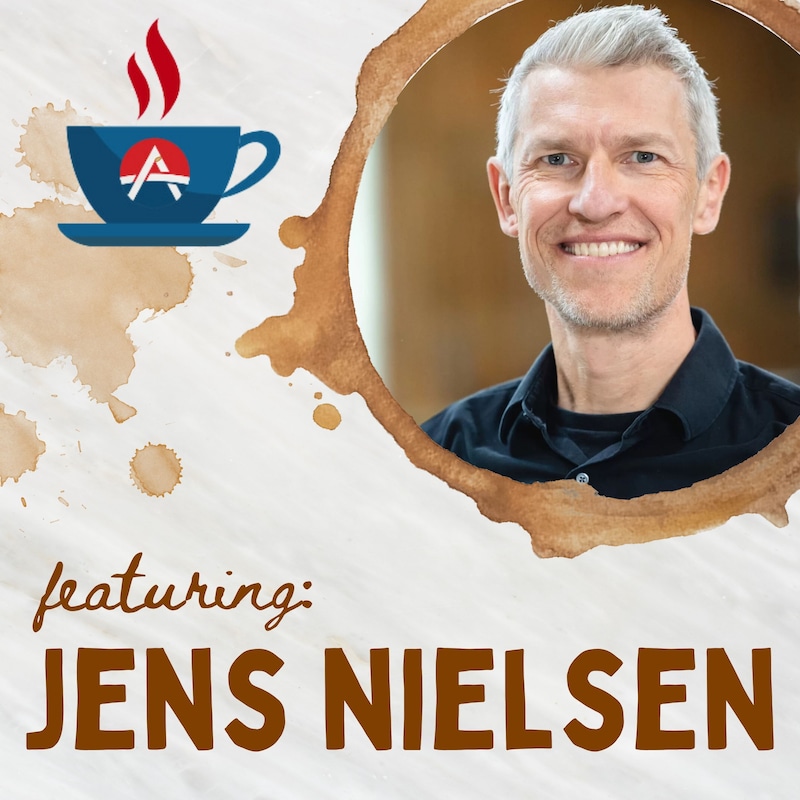
Welcome back to another episode of the IRA Cafe podcast! In this enlightening session, our host sits down with Jens Nielsen of Open Doors Capital, a seasoned real estate investor and certified high-performance coach.
Jens will take you on a journey through his transition from a career in computer science to real estate, sharing the experiences and lessons that have guided him over the last decade. He opens up about his start in multifamily investing, the strategic shift into light industrial properties, and how these ventures can be leveraged with self-directed IRAs.
The episode unpacks the nuances of light industrial assets, offers practical steps for investors curious about branching into this niche, and compares the returns and risks to more familiar residential real estate. Whether you’re a newcomer searching for your investment “niche” or a seasoned pro considering diversification, Jens offers actionable advice while the conversation stays rooted in the realities and rewards of this underexplored segment of the market.
Key takeaways:
- Find Your Niche: Jens stresses the importance of narrowing your real estate focus to specific asset classes and markets, rather than attempting to do it all, as this minimizes risk and maximizes success.
- Light Industrial Defined: Light industrial properties cater to small businesses (think plumbers, electricians, or small-scale warehousing), not heavy manufacturing. They typically consist of older, smaller spaces ideal for local trades and entrepreneurs.
- Commercial Lease Advantages: Light industrial investments often use triple net leases, where tenants cover taxes, insurance, and maintenance, resulting in more stable returns and less day-to-day management for owners.
- Learning Curve and Local Markets: Transitioning from residential to light industrial requires understanding hyperlocal market demand, property management differences, and the risks unique to commercial tenants. Engaging mentors or partners experienced in this space is highly recommended.
- Returns and IRA Application: While light industrial may offer higher cap rates and potential returns than apartments, risk remains a factor. These properties are also well-suited for investment through self-directed IRAs, with options to partner in syndications or joint ventures even without full cash on hand.
Tune in to discover how light industrial real estate works, why it might be your next smart move, and how you can leverage your self-directed IRA to build long-term wealth in this adaptable market segment!
Transcripts
Are you already used to commercial properties? Are you wanting to scale up from residential investment properties? What do you really know about light industrial? Well, you're in luck. In this episode we sit down with Jens Nilsson, who's a coach and investor himself, and we'll tell you everything you need to know about light industrial investing, a lot of which you can do with your self directed ira. We'll see you then. Welcome everyone to another installment of the IRA Cafe, powered by American ira. We are so glad that you decided to join us wherever and whenever you are listening to your favorite podcast. Today we are joined by Jens Nilsen of Open Doors Capital. Jens is a real estate investor and a certified high performance coach. So we're really looking forward to shedding some light on an asset class that to my knowledge, we really haven't covered here before.
Kyle Moody [:So you're going to want to make sure that you stick around for the entire show to find out how it might compare to what you're already doing, how it might completely differ to what you're doing. And if light industrial is something that you are looking to get into, he's going to cover a lot of the assets with it. So, Jens, welcome to the IRA Cafe. We're so gl to have you here today and this is one of the first times that Jens and I have been together. So if you wouldn't mind, tell the group a little bit about yourself and what has led you here to this moment.
Jens Nielsen [:Yeah, thanks Kyle. I appreciate the opportunity. So I came to the United States 30 years ago as a young man from Denmark. That's my, that's the reason I have a slight accent and also a foreign name, but been in the US for 30 years. You know, started out in the traditional way of getting my education, went to college, got my undergrad, my graduate degree in computer science. So did not start out in real estate. You know, took my career from startups to large corporations to a local government to an even a Native American tribe. And then in my mid-40s, like 10 years ago, I decided that I needed to make a change.
Jens Nielsen [:I wanted to go in a different direction and kind of scratch that entrepreneurial it. And the path I took was real estate investing because I thought here was a way to, you know, decouple my time from my income, start getting some passive income and also, you know, create some, generate some active income as an operator and as a, as a syndicator. So we started 10 years ago, very humble in Albuquerque, New Mexico with some fourplexes, some smaller properties and then, you know, over the first few years, slowly scaled into larger properties and that, you know, the syndication model and started that in 2019. Rode that wave in 2020, 2021, when interest rates were super low and everybody couldn't get enough of real estate. So we, I think at some point, if we add everything up, we had close to 2,700 units that we were. Had bought at some point since sold a lot. I think we have roughly 1500 left. And then as you are alluding to in 23, 24, we started shifting into light industrial because of the changes in the apartment market and how challenging it was to make those deals actually work.
Jens Nielsen [:So that's why we went in that direction. And also, you know, I was able to leave my W2 job in 2020 and do real estate investing and also coaching and consulting and so on. So that's very quickly about me and I'm happy to dive into any, any aspects of that quick 30 year overview.
Kyle Moody [:No, sure. No, it was great. And where'd you go to college by the way? Was that over here in the States?
Jens Nielsen [:Yeah, yeah, University of Maryland.
Kyle Moody [:Oh, he's a Terrapin, folks. So used to be in the acc, no more. But that's okay. That's okay. We got every other school it seems like is in the ACC now. So you were talking about the multifamily and it sounded like, you know, I heard the, the duplex, the quadplexes there for a little bit. And then it scaled into the apartments you were talking about. Well, you've got about 1500 units.
Kyle Moody [:So is that left? Is that still like in larger apartment complexes right now? Is that where your apartment portfolio is?
Jens Nielsen [:Yeah. So there's three types of ownership in our portfolio now. One is just me and my wife. You know, we own a handful of units just that we will hang on to forever and we don't have to share anything with the partners. Then we have some joint ventures where we have, you know, bought some small and mid size portfolios with a couple of partners, three, four, five partners, and then we have the syndication space and yeah, we still hold. I think the smallest Property is probably 11 units to the biggest is a portfolio of, you know, close to 200 units. So we definitely have done a wide range of everything there. We still hold the larger properties mainly in the upper Midwest, like Ohio, Pennsylvania, a little bit of New York, just because I have a partner up there that is, you know, boots on the ground and so on.
Kyle Moody [:Did you ever do single family residence at all in investing?
Jens Nielsen [:I never did. I know a lot of people ask me that question. And I never did. Just because where I was living at that time I started investing, I was living in southwest Colorado and a small kind of mountain town and housing was very expensive. The numbers didn't make sense. And if I started looking outside, I would have to drive, you know, two hours south or east or west or whatever to find something that makes sense. And I was like, wait a minute, this doesn't make, you know, I can't do this. I can't have a full time job, buy single family houses and try to run them and stuff like that.
Jens Nielsen [:The numbers just didn't make sense. So I early on decided that investing out of state made sense for me. And out of state at that point was Albuquerque, New Mexico, which you know, was three and a half hours away, which meant that I could not self manage. That was just not possible. So I decided, hey, I got to be an investor, right? I got to buy property, I got to put property management in place and then I need to let other people manage it so I can focus on growing the portfolio and so on.
Kyle Moody [:Well, and one of the things that we've seen here, both in your writings and the things that I have studied on, and then immediately what I pick up on this, and I think it's important for any investor listening right now, is that for all of you out there, Jens did something that I learned a long time ago by a mentor in a real estate investor association appreciation group. And he stood up. He was the new member educator and he stood up in the room and he said, you know what? The one thing that for all investors starting out that I think is the most important thing for you to know is that you need to find your niche. Okay. And what he meant by that was there's money to be made in a lot of areas, but you really need to hone this down to all those different areas, hone them down to one or two different things. Because if you try to do them all, even though there's money to be made, you could also lose everything as well, figuring out things that you don't like. So make sure you've got your studying in. I mean, that's one of the reasons I just asked Jens this question, if he.
Kyle Moody [:Because in everything I've seen, he didn't do any single family. And. And he just said no, he didn't because it didn't make sense. So what was going to make sense, and this is where he started his efforts was in that apartment field and in that portfolio. And in that he has now grown it into what I would call the second niche is where he has gotten into the light industrial. So I just think that that's a really a cool mix there and this is an area that's new for me. As always remember that everything he's talked about so far and pretty much what I'm hoping he's going to discuss today. You can do every single bit of this with your self directed IRA and for all of you who've been doing single family residence or you've taken time off from that or you've lended to folks who have been in the commercial world but you've always thought well, I wonder what it would be like if I took this step to maybe go here myself with my self directed account.
Kyle Moody [:Well now you're going to learn some great stuff about it. So Jens, tell us really quick what, what is. What's considered light industrial?
Jens Nielsen [:Yeah. So we define that as kind of that class. Our class, Class B, Class C. Like the little bit older properties that are mainly in, in the cities, right? Not the 400,000 square foot Amazon out on the, out in the desert here in New Mexico. That's you know, very expensive. No, something light. So I'm not talking about heavy manufacturing, right? We're not, we're not making like trucks or cars and stuff like that. It is smaller, you know, maybe 4,000, 5, 6,000 square feet per suite.
Jens Nielsen [:We have bigger stuff than that. But basically something that is catered to that small business who needs some space. Maybe they are a plumber, electrician, we have a grain or a granite person and so on. Right. So something that doesn't require that heavy equipment and heavy, you know, power and welding and all this stuff, right? Smaller. That's kind of. I don't know if that makes sense, but that's kind of how I would define it.
Kyle Moody [:So could that be confused with straight up commercial or is there an overlap? If is light industrial always commercial property, is it not always commercial? And if someone is familiar with, with saying hey look, all I do is commercial buying or, or commercial investing, is this something that is going to be a learning curve at all for them?
Jens Nielsen [:Yeah. No, it is commercial, right? It is commercial in the sense that you know, we don't have, we don't have tenants in there over that. That's that we call like an apartment. We don't have tenants that stay there overnight and, and so on. Right. We have a property that is sewn commercially there, it's sewn for commercial type businesses in there and so on. Right. And you know, there's so many things.
Jens Nielsen [:Right, because you could also consider self storage as being commercial. Right? Because it's. It's a commercial property. You could consider, you know, buying, you know, even apartments. Sorry, not apartments mean, you know, offices. That's also commercial in that sense. Right. So this is like commercial warehousing, you know, so maybe warehousing is another way of using it.
Jens Nielsen [:Like you have a big space that can be used for multiple purposes from anything from, you know, as I said, from small businesses to larger corporations that need more space and so on. We also have what we will call flex space, actually, I'll call this light, a small bay industrial where, you know, there is a small. There is a garage door in every unit. And people can, you know, put their trucks in there and their equipment in there, but they're not very big. Maybe 1500 square feet. You know, that's another alternative. You see them if you drive, you know, you know, if you start paying attention as you drive around your neighborhood or your city, you'll start seeing like, kind of, you know, maybe they're 20ft tall buildings. They have big garage doors in there and they're like, oh, well, here's a.
Jens Nielsen [:Here's an example of some light industrial or some warehousing space that, you know, if you're a buyer, you could consider looking at properties like that.
Kyle Moody [:You know, I think. No kidding. Right out from our neighborhood down the road. It's old and like you said, these may be older buildings, but everyone knows that this has always been there. And it's a. It's a. It's an old. I guess they.
Kyle Moody [:I don't know if they call it the factory, but it's definitely what they do there. It's pallets, right. So it's a. It's the little bit taller, the bay doors, you know, just kind of one level that kind of meanders a little bit on the side of the road. Probably a couple of forklifts in there. I'm thinking that. I'm also thinking on a larger scale, but to your point, not Amazon, but if there's a mom and pop who have a pick and pack type of thing, small conveyor belt, some boxing, maybe a forklift, those types of properties as well is kind of the range that I'm thinking.
Jens Nielsen [:Yeah, yeah. And the first property we bought was basically, it's very ugly. It's right next to the railroad in Albuquerque. You know, I think it's close to 30,000 square feet. But for example, the owner had a movie prop business, so he had, you know, all kinds of props in there for movies and so on. Then he had leased out maybe a few of the suites in there. And, you know, it was at a very reasonable price because it was very ugly. It was half vacant when the seller moved out.
Jens Nielsen [:It needed some work and stuff. But that's where the opportunity was that we said, well, there's high demand for these relatively affordable spaces. We just need to, you know, it doesn't need to be pretty. It doesn't need to be functional. So we're like, we can go in here, you know, clean up the cellar space, we can fix the insulation, maybe put some new power, put a bathroom in every unit, and then we will have a steady stream of tenants for this. And that's been the case since we finished the project.
Kyle Moody [:It's interesting that you bring that first part of that up. Years ago, in my real estate days, I was helping someone look for some distribution. Small warehouse space, nothing big, maybe a bay or two. And right near my first home, you literally had to turn. It was at the corner of the two roads that you turned on it. It drove down to my house. I was like, oh, you know what? I know just the place that I'm going to go look. Both.
Kyle Moody [:About two weeks before that, though, we kept noticing because it had been vacated, it was a satellite warehouse for a much larger company. They didn't use it anymore. Well, all of a sudden, there were some Winnebagos out there, some tractor trailers, nothing of any real consequence. But you're thinking, hey, somebody might be moving in. So I stopped by just to see, hey, are they leasing the place? Did they buy it? Are they going to be there long? This was going to fit the needs of my client. And I went in and I saw, you know, soundstage. And then you see it was a couple of security guys, but they let me walk right in. You see costuming, and.
Kyle Moody [:And I'm thinking, what's going on here? And sure enough, even though it's on the inside of this small warehouse, you turn the corner and this guy says, well, yeah, we're shooting a movie here. And he told me which one it was. And I said, get out of town. Really? Are you serious? And he said, yeah. And we walk in, and there's a complete forest inside this warehouse. You were just completely, you know, just like you were teleported right to the middle of these large woods. So that kind of sounded like what you were talking there at the beginning. Are these all properties that you own, that you have any of your own businesses? In.
Kyle Moody [:Do you lease all these out? Are these fix and flips that you do?
Jens Nielsen [:Yeah. So these are all deals that we've done with investors, right. Some syndications, some joint ventures. And I don't have a business that requires any space beyond my own office, so I don't need any of the space. Right. So we lease them out and this is where. So a couple of things, you know, that I really love about the commercial space is that once you get tenants in there, first of all, they tend to stay a long time, right. A business is not going to move every 12 months if they're doing well, unless they're expanding or they're going out of business.
Jens Nielsen [:But if they're operating at a similar size, they're going to stay there. So many of the leases I know three, five years long, they're automatic escalators. In the lease that we've ridden with them, it's quite often triple net, meaning that the, the, the tenant will pay for, you know, insurance and taxes and repairs and maintenance and utilities and so on. So as the owner, you insulate yourself from a lot of those expenses which then lead to more predictable returns for the investor. Right. Like we lease it out, we have a five year lease and this is a strong tenant. You can pretty much guarantee that the income is going to stay very steady because you know, there's, they take care of most of it right now. Of course tenants, you know, can go out of business and leave and stuff like that and you have to retenant it.
Jens Nielsen [:Right, but that's kind of the thing. And you know, these are long term holds, right? I mean, I'll tell you, the last one that we bought is actually we thought it was going to be a long term hold, but we created so much value in it in just a little over a year that we actually under contract to sell it right now. So that also does happen, you know, if it makes sense.
Kyle Moody [:Well, and I was even just going to ask you earlier, you know, when we were talking about leasing, if all this is really set up the same as commercial and you know, whether it was going to be triple net or not, you know, if it was treated the same way for those folks who, let's say they already are scaled up at commercial, that, you know, so they, they understand, you know, the different, you know, types of, of commercial might not be a big learning curve for them. But let's say that someone is going from the duplex, the quadplex, the, the, the five plex and then it, after that it becomes the, you know, the commercial. Tell us about the learning curve. What does someone need to consider? What do they need to know if they want to go from single family residents and everything they know on that real estate end to maybe even again the triplex, the quad, plexes. But now you're going to light industrial. Is it a learning curve that can scare folks away, just some points that you could give them?
Jens Nielsen [:Absolutely. This is great, right? Because when I was very experienced in apartments and so on before I went into this space and a friend of mine came to me and said, hey, I've been doing this for a while, here's a bigger deal, I would like you to partner with me and so on. So I had a quote unquote mentor in that and what I learned. So I think the key thing to think about, if you have an apartment complex or a fourplex, there's almost always going to be a tenant that is, you know, need a two bedroom, one bath apartment, right? There's always a tenant that's going to need that because we all live somewhere, need to live somewhere on the industrial or light industrial or you know, small bay, whatever you call can be very local because you know, if you are in the Rust Belt and there is all kinds of old buildings there that is, you know, vacant and selling for next to nothing, you may not have a lot of demand. But if you have a place where there's good demand, it has not been overbuilt and business is solid, you can make sense, right? So it's hyperlocal. So that's why we've only focused on Albuquerque, New Mexico. I know Albuquerque, where the heck is that? Right? But it's a decent sized city. There's over a million people, but it's landlocked in three directions so it cannot expand because of there's an air force base, there is wilderness and then there's a Native American tribe.
Jens Nielsen [:So the only way you can go is west and there's, you know, endless desert going west. But not everybody want to drive 30 or 40 miles to their small business, right? So that's why these in town infill lots that have some space on there are very attractive, right? Because if you're a plumber, well, you need to service your clients within that neighborhood. You don't want to be driving out to get supplies right out of town and so on. So that's why we really love that, those smaller spaces and so on because it's convenient for the tenant.
Kyle Moody [:Before I'll get to my next question. I'll go ahead and Say I know exactly where Albuquerque is. When I was in college, it is the only year that our basketball team won its tournament. Conference. And coming from the conference or the conference tournament, excuse me. And from the conference that we were in, only one school got to go. You had to win it to go. And we were the underdog in the conference and we won the tournament.
Kyle Moody [:And we found out that at that year, it was 1996, Purdue was the number one overall team in the country, coached by Gene Katie and I went to Western Carolina University and I was a cheerleader. So our team flew out to Albuquerque and getting to experience something like that at the Pit. We played at the University of New Mexico where the Lobos play right there on that floor. And we watched our team almost be the first Cinderella 16 seed to beat a number one. But those are memories that will last an absolute lifetime. Great city there. Loved it. It's first time ever seeing the desert like that and then taking the trip up to Santa Fe for the day and learning a lot of that rich history up there.
Kyle Moody [:So I will tell you that, yes, I definitely know where Albuquerque is. And also growing up an NC State fan, that's where my man Jim Valvano coached the Wolf Pack when he, when they beat Houston at the Pit as well. So perfect and apropos time to talk about that as we are coming up on the end of March Madness here. So let me ask you this. Let's talk about returns for folks who are used to their returns in. You know, you're not going to retire off of one house. You're not going to retire off of two houses. People talk about maybe when you're doing single family residents, when you get to 10.
Kyle Moody [:Okay. And maybe not that for certain situations, but the rule of thumb is to think when you get the 10. Hey, you know what? Now I've turned the corner on something. Talk about light industrial commercial compared to single family residents and what someone can appreciate on the return. Single family residents might be cheaper, less returns, industrial might have more stuff involved with it on the front end. But are the returns greater? Can you, can you help us out with that?
Jens Nielsen [:Yeah. So I think we all have to look at risk adjusted return, right? That's a big thing. I think we sometimes forget to think about, hey, again, if you buy a single family house, may the returns are not as good. But you know you always have a buyer, right? You almost always have a buyer and it'll probably appreciate based upon the local market. We all know that industrial and commercial is all about the cap rate and the noi. So what we found when we start really going into this, that the cap rate going in are typically higher, meaning that, you know, you get more return on your money initially. So why does the, why is the cap rates higher? Well, because there are some additional risk you're taking in the sense that, you know, if the business economy slows down, you could lose your tenant. Right.
Jens Nielsen [:If, if there is, you know, a shift to, you know, more Amazon drop shipping, maybe you, you have, you lose tenants and so on. And there's less competition because not everybody wants to take on the, the risk of the commercial space. Right. That's one thing to think about, the returns in general. I mean, it's a function of the tenant. You get in the debt, you have to pay your other expenses and so on. Right. So we tend to underwrite them for cash on CAS in the 8 to 10, 12% range and then, you know, IRRs with a five year hold in the, you know, 15 to 20% range.
Jens Nielsen [:So it's not, I think it's better now than apartments are, but it's not that better than apartments have been in the long run. If you look over many years and so on. I mean, this deal, I mean, we bought one and we took a tremendous amount of risk on this one because we bought one in December of 2024 that was vacated, it was vacating as we were buying it. And you know, the lender is like, we're going to lend you a bunch of money with no income. So that was a little bit risky, but we filled it up with a national tenant, rented a whole 30,000 square feet. And at that time we realized that we've created all the value we can right now because, you know, rent is going to go up a little bit or year over year, but there's not a, we can't kick them out in two years and double the rent. So we're like, we've created all the values we have. Let's see if there is a buyer out in the market for this stabilized product with a, a long term tenant in there.
Jens Nielsen [:And there is, there was. So we have it under contract to sell and that's going to be roughly a, you know, a 1.4 multiple. So, you know, if you put 100k in, you walk away with 140k a year and a half in. So that's, that's pretty good, I think as a 25, 30% IR or something like that.
Kyle Moody [:Great. And, and let's take the next few minutes that we have left here let's, let's really kind of dig in to the asset itself. This is something that you probably cover in your coaching. And so I'll let you kind of talk to folks about the coaching side of things and, and then, you know, kind of drill down into some of these things. So talk, if you will, really quick, Jens, about how does someone go about, again, if they're new at this, but they know this is going to be the niche, how do they go about finding the property? How do they go about evaluating the property? Any strategies that you think for those two things right there? You know, let's just give some people some flavor really quick on those two things and if they want to learn more, maybe they reach out to you.
Jens Nielsen [:Yeah, don't go and do this without studying it or getting a mentor or something like that because there are a bunch of risks there that we have to address. So how do you find it? Most of them are listed by brokers, commercial brokers that specialize in industrial, commercial and so on. So connect with them because they are the people that knows the market, but also really study the demand in that market. When we bought our first deal, it was something like a 2 1/2% vacancy rate of commercial space in Albuquerque. And that's literally zero. Right. So it's like, wow, there's high demand here. Underwriting.
Jens Nielsen [:Yeah, underwriting is a little bit different because in apartments, you know, you maybe have 100 apartment units and you got to kind of figure out what the, how much you can raise the rent over time and so on. Right. This is a little bit different. You definitely want to be more conservative on your vacancies because it can take longer time to fill up a unit if somebody vacates. Because, you know, you got to find the right business to meet that space. You know, the thing, it's the same thing. Lending is a little bit different. Right.
Jens Nielsen [:You're not going to go and get a non recourse Freddie or Fannie loan on it. Most of it is recourse bank debt. So having good relations with local bank is really important because those are the ones who are going to typically lend on it. Your rates will be a little bit higher, maybe your levers would be a little bit lower, which is not a bad thing. Right. And then, you know, start understanding what does triple net really mean? Right. What are you responsible for as an owner? What's the tenant responsible for? And then you can start plugging the numbers in. Right.
Jens Nielsen [:You know, I have some models that I've developed, my partner that makes A lot of sense for our analysis of it. But in the end it's, it's actually a little bit simpler because you don't have as many expenses to deal with as you would have in an apartment building. Right. Tenant will pay water utility. So water and electric and gas and Internet and all this stuff. Right. You just have to kind of worry about the land and the shell and so on.
Kyle Moody [:Well, and something good to know that Jens just talked about everyone is that though you can move forward and do this type of investing through your self directed retirement account. And remember, no matter the retirement vehicle that you have or the one that you choose to use, they can all be used for any and all of the same assets. Right? So you can invest with light industrial commercial property with a Roth the same way that you could do it with a solo 401k or traditional IRA or a simple and even an inherited if the funds are there. And that's the important thing is to say if the funds are there. You just heard Jens say this isn't something you're going to be able to more than likely not get a non recourse loan on because as he just mentioned there's it's going to be more of the traditional commercial type of lending packages. Right? So no recourse or so it's going to be regular recourse, no non recourse. And that's important because that shouldn't bounce you out of being able to invest that don't think that. Well, gosh, I don't have 100% of the cash.
Kyle Moody [:Hey look, there's other avenues you can partner, okay? There's syndication deals out there, anything that you can do to garner the money, whether it's from your own personal funds in your self directed ira, your self directed ira, someone else's self directed IRA, and any qualified or disqualified folks to your account. There's some nuances in there. We'll talk about that if this fits the bill for you. So don't always, don't ever hesitate to give us a call and we can walk you through those scenarios. So you can always do [email protected] we are always here to take your call. I would be somebody that you'd speak with on the front end if you don't have an account yet and I answer a lot of folks questions also assist you on your account setup. This is also our website where you'll be able to go in, check out any of our blogs, any of our latest information, anything you need to know in the education information side. Of the self directed Ira.
Kyle Moody [:Always find us there too on our YouTube channel where you will hear these podcasts and webinars and more. And then on Facebook you can always like us on there and hear anything and everything that is coming up. So little plug there that took me there, Jens. So I appreciate that for the liability and what people really need to expect. What one thing that at least in my profession, I may say, hey look, lots of people are using self directed IRAs. You know, they have found lots of success in that. At the same time, it might not be for everyone, right? Well, this is an asset class that might not be for everyone. So it does sound like you're saying, hey look, don't go out alone.
Kyle Moody [:Make sure that you are learning from someone at the beginning, have that mentor. How much time can someone expect to put in at a minimum? Like for example, you started in your investing world when you still had your W2, but in this type of space, it sounds like at least at the onset it could be time consuming. Somebody might need to get ahold of somebody during the workday, right? So can someone do this while they still have their 9 to 5 or is it something that as they're getting ready to phase out maybe and take their investment, their investing portfolio to the next level? When would you really coach someone that this is the right time to take this on?
Jens Nielsen [:Yeah, and those are great questions. First of all, just reaffirming what you're saying about IRAs, right? We have had, we've raised millions of dollars from IRA investors, right? They come in, they partner with us on syndications and so on, right. I have a solo 401k because I'm a SO and also an IRA. My wife has one. So it's, it's a wonderful vehicle, right? And it's great. I didn't know about it until maybe five, seven years ago when I started to get into all this. This is great. Back to how much time? It's funny, I actually, it's from a management standpoint, this space is a lot easier than apartments, right? You know, if you had a full time job and you had, you know, 10, 20 units to manage, you're going to be pulling your hair out because you know, guarantee you it's Sunday night at 10 o', clock, somebody's toilet is leaking, they're going to call you and said, I need my toilet fixed.
Jens Nielsen [:And you're like, oh crap, I got to go to work tomorrow. How am I going to get a plumber? And stuff like that, right? And I know it from personal experience because for a while we owned a small mobile home park that we were self managing and I was always like oh please God, don't call me at 10 o' clock on Sunday night because I don't want to have to deal with it. So that was always a pain point. What happens in this space is, well, people are there from nine to five. They will figure their stuff out, right? If a light bulb is broken they will replace it. If the toilet is clogged they will fix it. You know, if major issues. Yes.
Jens Nielsen [:But again they don't live there so it's not an emergency. Is like oh my God, it's Sunday and the heat is out. What are we going to do? No, they will take care of it. So really we are self managing these properties and it is easy. It is actually pretty easy. Now where the time comes in is, you know, finding the properties, connecting with the brokers, doing the underwriting. Maybe you got to put Capex in, you know, to repair the property. So we spend a lot of time in the initial first year, you know, on some of these.
Jens Nielsen [:But you know, I think as a, if you have a job where you can answer the phone doing, you know, you may well not going to be a doctor where you're in the surgery all day and stuff but if you have a job where you can actually maybe answer the phone and answer an email throughout the day, it is not that hard. Right. I think the biggest problem is, you know, get, get with somebody like me that can help you do the initial underwriting to make sure that this makes sense, make sure the market makes sense, make sure the property makes sense. Beyond that it is actually easier which I'm surprised about. I mean it's, it's relatively straightforward and even the accounting, because you don't have that many accounting entries and so on, it's, you know, so it's a great space and I wish I can get my hands on more properties but a lot of other investors are coming to the same realization as me so that the competition has increased a little bit. So whatever you buy, you know, don't buy an Albuquerque because I prefer to be the sole buyer in that market.
Kyle Moody [:Well, it may be your fault Jens. You probably coached them and so that's, you never know. That might actually be a good problem to have. Well Jens, listen, I am so glad that we had the chance to connect. As I always tell folks here in the cafe, I consider it a great day when yeah, I'm asking some questions but I'm also looking forward to the answers because there's not an episode that goes by that I don't learn something. Maybe a lot of something's out there. We hope that you're learning something as well every time you tune in. We hope that you're enjoying all of our guests and especially Jens Nilsson with Open Doors Capital.
Kyle Moody [:So Jens, thank you so much for taking the time out of your day to educate us a little bit. Hopefully with your information that was up there, what people got to see, you're going to get a call and if we can ever help you or your investors, I'm going to make sure that you have all of my information as well. So again, thank you for all of the rest of you that were out there that took some time or you've listened to this podcast once and you wanted to come back to it, hear it again. We greatly thank you. We're always here for you 247 on the website where you can go in and get all the information that you need and then Monday to Friday you always have our availability to talk to myself or anybody else on our operations team. So for everyone here at American ira, I'm Kyle Moody signing off for another episode inside the IRA Cafe. Power by American IRA and we'll see you next time.
Speaker C [:American IRA llc, a North Carolina llc, acts as a third party administrator for New Vision Trust Company, a state chartered South Dakota trust company as a neutral, self directed IRA administrator. American IRA does not recommend or endorse any investments, individuals or entities including financial representatives, promoters or companies. American IRA and the Irish IRA Cafe are not responsible for other statements, representations or agreements nor do we evaluate the quality or profitability of any investment. American IRA does not endorse Guests on the IRA Cafe podcast. Guest opinions are their own and do not necessarily reflect the views of American ira, its subsidiaries, associates or custodian. Participation in the podcast is voluntary and no compensation is provided. American IRA is not a fiduciary and cannot offer financial advice. Please consult your CPA or another professional before making financial decisions decisions.
