Transcripts
Park Howell: Brand Bewitchery
[:Jason S. Bradshaw: Every brand has two stories. The one that they think they're telling and the one the world actually hears. And here's the kicker, when those two don't match, you don't just lose sales, you lose trust, you lose talent, and you lose the chance to stand out.
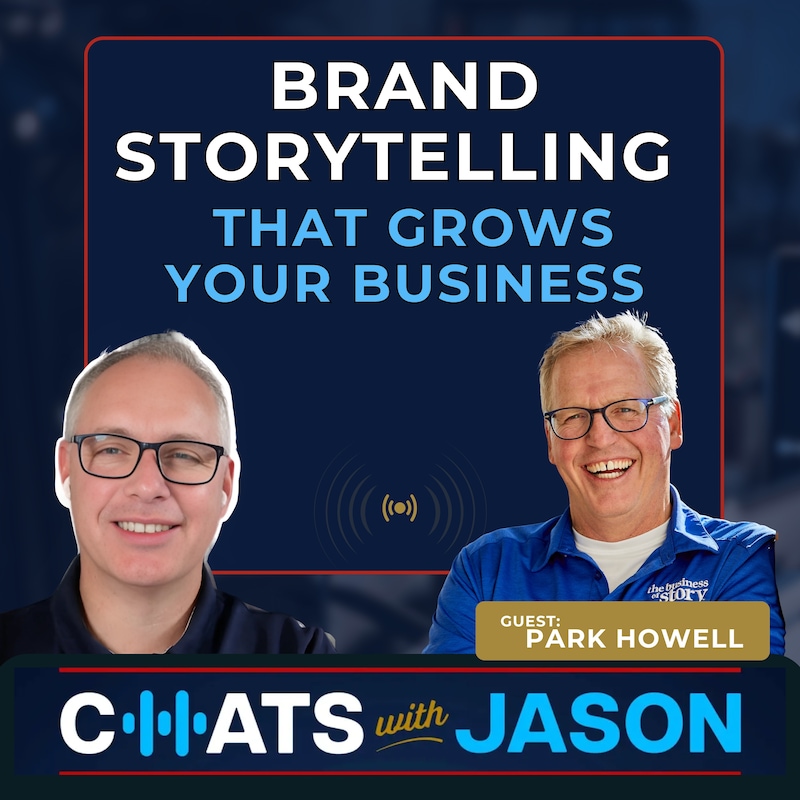
Jason S. Bradshaw: Welcome back to Chats with Jason. I'm your host, Jason S. Bradshaw and today we are joined by someone who's mastered the art and the science of closing that gap.
Park Howell Howell is an Emmy-winning business storytelling coach, a bestselling author of Brand Bewitchery and host of the top ranked Business of Story podcast.
turn customers into lifelong [:If you've ever wondered why some brands feel magnetic and others sound like noise, you're about to find out why? Because today, Park is taking us inside his Story Cycle System™ to show us how to clarify your message, amplify your influence, and build a story that sells.
Park, welcome to the show.
Park Howell: Now Jason, thanks so much for having me. It's a pleasure to be here.
Jason S. Bradshaw: Now Park, before we get into frameworks and strategies, can you give me one bold truth about storytelling that 95% of business leaders still don't understand?
Park Howell: One bold truth is that you have to have a beginning, a middle, and as basic and dumb as that sounds, most business leaders think a story is... and this happened, and then this happened. And then you wouldn't believe what happened here, and then this happened. And that's just not the case.
"And" to set up. A "But" to [:Jason S. Bradshaw: But don't we get told at, or taught, I should say, at elementary school about a start, a middle and an end. Like this is not something that's they're just hearing now.
You wanna buy some? So it's [:Jason S. Bradshaw: It's because people are not proud of the messy middle, or they think that people expect things to have always been perfect? What are they so scared of that messy middle?
dership. And yet, if you are [:Jason S. Bradshaw: So much sense to, see it and live it every day. And, I know I'm guilty of the and... and... and, from time to time.
Park Howell: We are. We all are.
Jason S. Bradshaw: So Park, you often say if you don't tell your story, people will make one up about you, and you probably aren't going to like the story that they make up. When did you first realize just how true that was in your own journey?
Park Howell: Oh gosh. I started setting story in earnest, and why it works, and how it works, and the frameworks that work, and that was over 20 years ago.
psychologists back in the mid:And they showed this little, it's almost like a Rorschach video. It was this black and white, very crude looking produced video back in 1946 of these triangles and the square and something's going on and it's just over a minute long. And when you watch that, there are no people in it. And yet you ascribe gender to these different roles of them. There's no dialogue in it yet in your mind creates a dialogue as to what's going on. And then there's an absolute beginning, middle, and an end action that takes place, and then it just stops. And when I show that video to people, and you can see it on YouTube. Just go to Heider-Simmel and you can see the actual film and use it on yourself.
at I realized is that people [:Now, lay that onto business, and if you are showing up with a PowerPoint that is just loaded with charts and graphs and numbers, and I'd ask you Jason, what's the first syllable to the word numbers? Numb. That limbic brain is not making meaning out of the communication you're giving it. So it wants to shut down and conserve as energy and resources. So it just simply makes up a story and then turns you off. And that's the greatest impact that you can have... negative impact on your own brand or leadership storytelling is if you are unclear. And that brain is gonna make up a story just to try to find some finality in the modality to create that meaning, and then shut [00:07:00] down.
Who was the guy who started Amazon? My brain's...
Jason S. Bradshaw: Oh
Park Howell: Bezos. Bezos.
Jason S. Bradshaw: Yes.
Park Howell: Thank you. Thank you.
Jason S. Bradshaw: He's one of the most successful business people in the world, and we both just blanked on him.
Park Howell: I got lost on Steve Jobs and then you'll know... Bezos. He said a brand is what people say about you and you're not in the room. I believe a brand is the story people tell about you when you're not in the room, and you better make sure they're telling the right story.
Jason S. Bradshaw: So much to unpack there. I'm wondering, just for our audience's benefit. If you could share with us a background, or did you just wake up one day and go, you know what, I'm gonna become the story guy.
Park Howell: No, actually when I was a little kid, I was one of seven kids, and my mom and dad said, Park stop telling stories. So I just grew up in a sort of a story telling family, like all of us are ,to an extent.
tising - 'cause I was always [:Now, fast forward all these years, 40 some years, and now I find myself teaching people the composition in theory, ideas behind powerful storytelling.
agency in Phoenix, Arizona in:In year 10, we were very much of a traditional agency meaning - tv, radio, print, outdoor, direct mail, that kind of thing. Then of course, the interwebs shows up. E-commerce, websites, then social media, and I was kinda lost in this new digital world. I'm like, how do you make this work in [00:09:00] advertising? And there was so much noise coming at us that I was really looking for a solution to that.
And it was in:That's when I learned the hero's journey. And when I looked at that, I said this is just a customer journey. Or this is a founder's journey. Or this is every one of ours journeys. Why don't they teach this basic fundamental monomyth structure to all of us in the brand marketing, leadership, communications world ? They didn't. They don't.
f and that's where I created [:Jason S. Bradshaw: Yeah, it surprises me that people still aren't familiar what hero's journey story is, or that framework is, because it is so impactful. When you learn it and start applying it.
You mentioned some numbers there that I don't want the audience to tune out to.
When I was preparing to, to interview you for this episode, I was thinking, what are the skeptics saying?
ertisers to get money out of [:You mentioned a couple of numbers or at least one number that really stood out to me that would probably put those skeptics to sleep.
But when someone says to you, this storytelling stuff is just fluffy, how do you prove that story actually drives the bottom line? Is it just that it helps brands grow by 600%? Or is there more that you share with them?
Park Howell: Yeah, so let me give you a few different ROIs and that's the best way.
are telling them a fictional [:So now, let's [00:13:00] just jump out way forward.
years. This is circa:Give You another real quick one. Two, two real quick ones.
aunched, and this was back in:Set up. You want a new car, you want the freedom, you want the prestige of having it but you have lousy credit. Therefore, you can now go through our financial planning program. That's very short brief. We'll get you in the car you can afford, and we are gonna put you back on the road to financial freedom. Prêt Auto Partez - your vehicle to financial freedom.
Jason S. Bradshaw: What a phenomenal example of the power of storytelling and how that can influence a brand in ways that I don't think people would expect.
Park, I'll get you to finish this sentence for me. Storytelling isn't fluff. Storytelling is.
l: Magic. That's gonna sound [:Jason S. Bradshaw: We are going to get to the Story Cycle System™. If you've been watching or listening, I guarantee you it's worth sticking around.
[:Park Howell: Let me give you and your viewers one framework that they can take away right now, and if you're open for it, Jason, I'll even use it on you to build a 15 second brand story for your podcast. Are you open for that?
m gonna need some, and paper [:Park Howell: Maybe? Maybe not, but let's, I'll walk you through it. So here's the framework. It's called the And, But, Therefore. I learned it from an evolutionary doctor from Harvard, PhD. His name is Dr. Randy Olson. I learned it in 2013, and it was a little bit like the hero's journey. When I saw it, I was totally enthralled by it. Wow, this is incredible. And it's these three words that I call that are actually the DNA of storytelling.
Now, here's how you use it.
Act one or sentence one is what we call your "And" statement of agreement. You want to make a statement to set the stage that is a shared vision of what your audience wants, so that they know that you understand them and you appreciate what they want and why that's important to them.
ing of the problem that they [:" Therefore", picture the feeling you are gonna get the euphoria of actually achieving what you want when you do this. And it's the, when you do this, that is your call to action, your product or your service always at the second part of that conjunction.
It is unbelievably powerful. I've been teaching it to brand leaders, scientists, academia, you name it, to show people how this works.
Here's the quick outline of how you build it, and then let's build one for your show right here.
nna say, want this, and it's [:Then you say, But. And now follow that, but with an emotion, a negative emotion. But you're frustrated, you're fearful, you're anxious, you are whatever - because- using the conjunction word of because of this major problem. So you're gonna help solve for them.
Finally, Therefore... get them to picture what that solution looks and or feels like when you do this. What action do you need to take to get that done? Okay?
So that's the quick overview of how you write an And, But Therefore. And again, the And But Therefore is at the center. It's a central character in our Story Cycle System™ and our story cycle genie product.
this live for all your group [:Jason S. Bradshaw: Senior business leaders.
Park Howell: All right. What do they want? They may not even know this yet, but what do they want relative to what you're gonna offer them?
Jason S. Bradshaw: So what they want is growth in their business. That's the easy way for them to put it. What I think they deep down really want is to unlock systems, tactics that help them achieve success faster, to achieve the transformation faster.
Park Howell: But if you could unlock what systems like operational systems?
Jason S. Bradshaw: Yeah, it could be operational systems, improvement systems, change management systems.
Park Howell: Okay, if they cannot unlock that, and then what was the thing, then what's gonna happen? They want this growth. If they can unlock this, then they're gonna be able to achieve what?
Jason S. Bradshaw: So [:Park Howell: Okay, so we've got a few different things competing here, and that's okay. This is the beauty of the ABT. It helps you really hone your story. So I've heard they wanna grow their business. I heard they wanna unlock these operational and change management systems, and if they do that right, then they will... what? Be able to get referrals, or grow their business, or do more with less? Or what's the real problem you're solving for them?
Jason S. Bradshaw: The real problem is that they're not generating enough repeat and referral business.
Park Howell: Okay.
Jason S. Bradshaw: That's holding their business back. They're always grinding to get the next sale as opposed to leveraging their greatest asset, which is their customers, to generate repeat and referral sales.
Park Howell: Okay. And what kind of negative emotion does this lead them to? Is it frustration?
Jason S. Bradshaw: [:Park Howell: Great.
Jason S. Bradshaw: And because they just feel like they've been trying, but they're still on that hamster wheel. They're not seeing the growth, and hence they get the overwhelm is well, what's next?
Park Howell: Yeah. All right. I'm just making some notes here.
Now let's go to the Therefore - the close. The statement of consequence. Therefore, how are they going to feel when they unlock these operational and change management systems to free them up?
Jason S. Bradshaw: Yeah, so when they achieve it though, they will feel that they're back in control of their business, and that they have a business that can achieve the success they desire without burnout.
Park Howell: Okay.
Jason S. Bradshaw: Look at me just piling on and on...
Park Howell: No, this is great. No, this is the way it works and this is the way our brains work and this is why the a ABT is so beautiful in focusing this.
And then what did they learn from your show?
se we explore such a diverse [:Park Howell: Okay, so something to the effect. I've just taken all of this really quick. Just jotted it down and then this is gonna be, needed to be refined very much, but it's gonna be something like this:
r business, and if you could [:There's Your setup, problem resolution, placing your audience at the center of the story. Demonstrating to them that you understand who they are and showing them that you appreciate what they want and exhibiting empathy for why they don't have what they want, and [00:27:00] there you are articulating to what I call the three forces of trust building. You are showing your audience you understand them. You're showing that you appreciate what they want and you're empathizing with why they don't have it. So your audience is going... wow, Jason's just like me. Wow, Jason gets me. Wow Jason has taken the time to really understand what is holding me back.
I'm gonna listen to Jason because he is now a trusted host of eclectic business minds around the world that can help me build that retail empire I'm looking for.
Jason S. Bradshaw: What a masterclass in how using a framework can unlock a story. I don't think anyone listening would've thought And-But-Therefore would lead to what we just did. That was absolutely masterful.
y've been around since in the:Jason S. Bradshaw: Makes so much sense. And just talks about the power of frameworks in general.
You've shared information from it. You created the Story Cycle System™. Can you explain what makes this different just from telling a good story? Just so that our audience absolutely gets why this is different.
he five primal elements of a [:Jason S. Bradshaw: Now, of course there's more than just the Story Cycle [00:31:00] System™ that you created. You've now created the StoryCycle Genie™, do you wanna share a little bit about this exciting project you're working on?
Park Howell: Yeah, I absolutely. So the Story Cycle System™ when you apply it to a brand, it can take you months. You gotta do a lot of discovery. You gotta do a lot of research. A lot of brainstorming. A lot of soul searching. Self introspection, and you gotta go... and it's exhausting. It's time consuming, and it's expensive, as is every branding pro project.
u have. You feed it into the [:And the entire StoryCycle Genie™ is built on our three proven narrative frameworks. The big one is the Story Cycle System™ , and then we use the and-but-therefore, and the five primal elements of a short story throughout. So it creates your foundational brand narrative. It then will enable you to create brilliant marketing strategies based off of your foundational brand narrative, and of course, produce any possible content you could imagine that is always on brand because it is based on the brand story that you helped the genie arrive at, simply by it first looking at your [00:33:00] website and then you coming in and simply iterating on it. And so the whole idea is now you can use our proven Story Cycle System™ , and you can create that brand narrative in minutes, not months. You can do instant marketing strategy and produce instant content. You might work at it for three or four hours, and the savings across the board we ran the numbers is what you would normally pay for that big brand development could be anywhere from 5 to 30 to $50,000. You probably will have about $50 invested in, because you know the cost of running the genie. So you could do this stuff in minutes, not months, at a fraction. And I'm talking like 1% of what it would've normally cost you with an expensive agency and that sort of thing.
tput. I was delighted to say [:We're coming to the end of the show, but there's a couple of questions that I just can't let you go without asking.[00:35:00]
Park Howell: Fair enough. Let me get a drink of water so I can prepare for this.
Jason S. Bradshaw: Well, this one it usually catches our guest, offhand a little bit, but I think you're gonna ace it, that's for sure, let's just say that.
If you had to explain the difference between marketing and storytelling to a 10-year-old using only the items from their lunchbox, how would you do it?
whatever. And then I'm like, [:So marketing is what is presented to you. To infiltrate your space. Storytelling is the story you tell about that particular brand to yourself and why you wanna keep coming back to it.
Jason S. Bradshaw: What a [:Park, most leaders want to be the hero. Why is that the fastest way to kill your brand story?
Park Howell: Because nobody likes bravado. Nobody likes chess pounders. Everybody wants to be at the center of every story. The famous book by Dale Carnegie, How to Win Friends and Influence People, and just say their name over and over again. Jason, because Jason, everyone wants to be at the center of the story. Is that right Jason? It just is. It's just the way we work.
So when a brand shows up and says, look, we're wonderful, we're marvelous. You've heard about us everywhere. We obviously have the best product in the market. Just buy some. That's condescending. That's speaking down to people and people go screw you. I'm gonna go and buy the second runner up here who actually has taken the time to understand who I am, what I'm about, and what I care for. And they're speaking to those needs.
And that's why [:The second [00:39:00] part of that is your story is not about what you make, but what you make happen in the lives of the people you serve. From your colleagues to your customers, to the communities you serve. Nobody cares about what you make. They only care about what you make happen in their lives.
Jason S. Bradshaw: No one cares about what you make. They only care about what you make happen in their lives.
Park, one last question and then I promise to let you go.
Park Howell: Hey, I've got all day here, Jason.
Jason S. Bradshaw: If someone listening today wants to story on what's the very first, simplest thing they should do to start owning their narrative?
ing because of what problem? [:Jason S. Bradshaw: Park, absolute brilliant advice to end the show on. Thanks for being with us today.
Park Howell: Jason, thank you so much. I appreciate it.
Jason S. Bradshaw: So here's the truth. Businesses don't run on products, processes, or platforms. They run on the stories we tell and the ones people tell about us.
Park showed us today that when you clarify your story, you amplify your impact and even simplify your life.
If this episode inspired you, share it with someone who's building their brand or leading a team, and don't forget to hit that subscribe so you never miss the conversations that can transform the way you do business.
experience. And as we heard [:When you transform your experience, you transform your business, and the world around you.


