Shownotes
In this episode of The Living Conversation, Adam Dietz and Anthony Wright sit down with members of the Sonoma State University Philosophy Club to explore how philosophy lives through real experience.
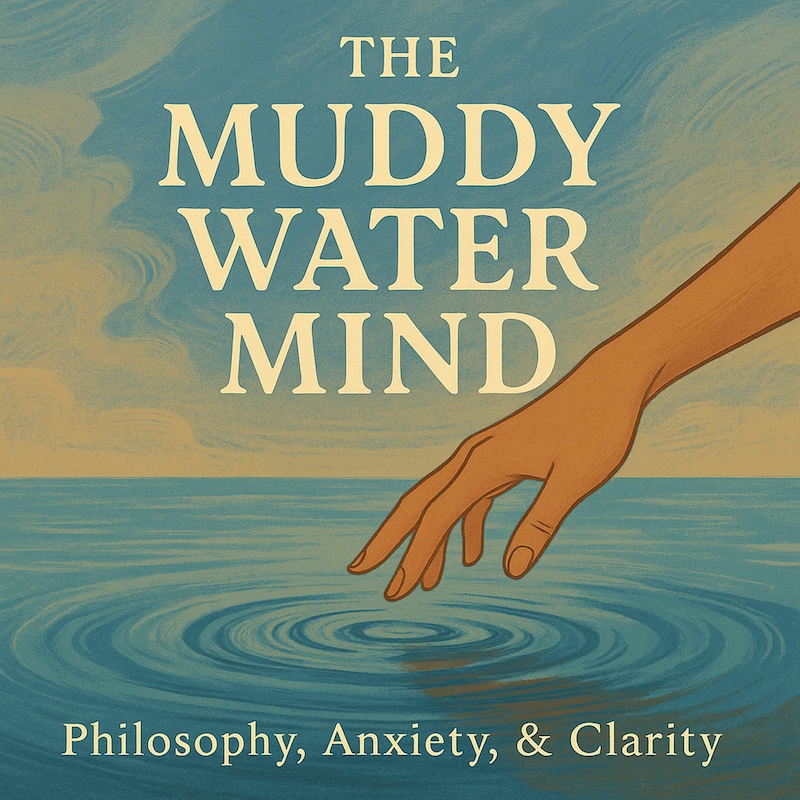
From Lao Tzu’s image of muddy water settling into clarity, to personal stories of anxiety, creativity, and healing, the discussion ranges from Daoism to Buddhism to Socratic thought; all grounded in lived experience. Together with Colette, Haley, and Andrew, they examine how logic and emotion, feeling and reason, art and philosophy, all belong to the same search for wisdom.
Themes: anxiety and awareness, Daoist clarity, creativity and emotion, the Middle Way, the Eightfold Path, philosophy as a living practice.
🎓 Featuring the Sonoma State University Philosophy Club.
🌿 Hosted by Adam Dietz and Anthony Wright.
Transcripts
Foreign Anthony Wright.
Speaker A:And I'm your co host today on the Living Conversation with Adam Dietz.
Speaker B:Welcome back, everyone.
Speaker A:Our guest is.
Speaker A:Our guests are the Sonoma State University Philosophy Club with President Collette and members Haley and Andrew.
Speaker A:And before the break, we were talking about allowing the mind of the body to kind of settle.
Speaker A:And it brought to mind, Adam, that you've got a story about how muddy water can be dealt with.
Speaker A:So, like, if the mind was like a bucket of muddy water.
Speaker A:Talk more about that if you would.
Speaker A:So.
Speaker C:So Eastern philosophy really is meant to help people experience the highest level, like we mentioned before, Right.
Speaker C:And it's okay.
Speaker C:If you choose to practice and learn it, great.
Speaker C:If not, then that's okay.
Speaker C:They don't try to evangelize you.
Speaker C:They just say, here's what we know the highest level is.
Speaker C:You're welcome to go experience it for yourself.
Speaker C:The point is, there's one story in Lao Tzu, Te Ching Taoist philosophy that Lao Tzu says we should practice in order to merge our mind with dao.
Speaker C:The way we should practice.
Speaker C:Like a hand searching in muddy water.
Speaker C:If your hand is searching in muddy water and you're trying to search, search, search, search, search, grasp, grasp, grasp.
Speaker C:You just stir up more turbidity.
Speaker C:The only way to have clarity come is to keep your hands still.
Speaker C:You keep your hands still, the sediment in this muddy water will settle to the bottom.
Speaker C:Then clarity can come out.
Speaker C:So we should practice our mind like this.
Speaker C:If we can allow our mind to decrease desire, decrease thought, decrease attachment, it's like allowing the sediment of our mind to settle.
Speaker C:When the sediment of our mind settles, the then we can have clarity.
Speaker C:When we have clarity, actually what comes forth from us, our deepest self is experience Dao of ourself.
Speaker C:It can come out.
Speaker C:We can see it, experience it.
Speaker C:And this reminds me of what we're talking about before.
Speaker C:To experience this.
Speaker C:Yes.
Speaker C:Maybe meditation, right?
Speaker A:Yeah.
Speaker C:But we can all just picture ourselves maybe having fewer thoughts, maybe calming down a little in whatever method helps now.
Speaker C:My own entire life, I never had anxiety.
Speaker C:Not at all.
Speaker C:I. I sympathize that people had anxiety, but my mother passed away.
Speaker C:After my mother passed away four or five years ago, I started to have anxiety.
Speaker C:And I was so new.
Speaker C:I never knew.
Speaker C:And I took.
Speaker C:I've always been able to do Tai Chi meditation or running or something, take care of myself and have no problem.
Speaker C:So I felt very confident.
Speaker C:Oh, I can do it, no problem.
Speaker C:But I had anxiety.
Speaker C:And you all know anxiety is just.
Speaker C:It's.
Speaker C:It's not.
Speaker C:It doesn't make any sense.
Speaker C:It just comes and you can't get out of it.
Speaker C:Finally, it came.
Speaker C:Things came to a head, and I, I had no tools for coping.
Speaker C:I had to pull over on the side of the road, and I thought, okay, well, I don't know what to do.
Speaker C:I could be stranded in the middle of nowhere because I have anxiety about driving.
Speaker A:Oh, my.
Speaker C:So finally I just said, well, maybe I'm tired.
Speaker C:I'll take a nap.
Speaker C:But a lot of times when I take a nap, I actually start meditating a little bit.
Speaker C:Just try and get in touch with, like, we're talking about before.
Speaker C:Get in touch with your awareness.
Speaker C:Get in touch with your mind.
Speaker C:Just watch your feelings go.
Speaker C:Move your awareness around.
Speaker C:There's a meditation method called body scanning.
Speaker C:But the, the point is, as soon as I close my eyes, I started meditating.
Speaker C:My anxiety was cured.
Speaker C:Cured forever.
Speaker A:Wow.
Speaker C:I hope forever, Please.
Speaker A:I hope.
Speaker C:Because now, now what I do is if I start to feel it a little bit, I can just close my eyes for one second, like a long blink, and return.
Speaker C:Almost like Anthony was saying, return to that thread of your heart.
Speaker C:And then, and then you realize, okay, that was all just a mirage, and my true self is in here.
Speaker C:So I thought I would share that story because it seemed to really be a personal story that has a lot maybe, maybe you can understand and empathize with, and it seems to tie in a lot of things that we've been talking about today.
Speaker A:Yeah.
Speaker A:So I also wanted to mention that when people have emotions a lot of times, and I don't know how common it is for people to think about, well, what's that emotion doing for me?
Speaker A:How is it taking care of me?
Speaker A:So I would offer to you that the anxiety being about the future is trying to take you, take care of you and keep you safe.
Speaker A:Does that make sense?
Speaker A:Yeah.
Speaker A:And it, but it, it, it can tend to run away.
Speaker A:Well, what about this?
Speaker A:What about that?
Speaker A:What about that?
Speaker A:And to try on all these different scenarios.
Speaker A:I, I, I know that it's easy to get caught up in a loop like that.
Speaker A:And one of the things that I wanted to mention, and then I say, see, you've got something to offer.
Speaker A:Haley.
Speaker A:My daughter is down syndrome.
Speaker A:And I know I've told this story in, in class, Colette, the.
Speaker A:But the wisest thing she ever said to me was when she made an error, she'd go, oh, silly me.
Speaker A:Right?
Speaker A:And so when I find myself getting caught up in, in the anxiety, I'll go, oh, wait, silly me.
Speaker A:I got Anxious.
Speaker A:So, Haley, what did.
Speaker A:What did you have?
Speaker D:Well, one to that story.
Speaker D:I really like that because I think, personally, I tend to be a lot harder on myself, which is silly, because I wouldn't be hard on a friend or colleague in the same way.
Speaker D:So I think that silly me philosophy is very good going forward.
Speaker D:Right.
Speaker A:So loving.
Speaker A:I mean, yeah, I just.
Speaker A:I'm so grateful for her offering.
Speaker D:Forgiving.
Speaker D:Very.
Speaker D:Just like, hey.
Speaker D:And I also want to go back because I think it's really interesting because I think a lot of creatives have anxiety, and I think that's because, at least, like, for myself, it's like.
Speaker D:And I can.
Speaker D:I consider myself a poet, writer, artist, whatever, what have you.
Speaker D:It's like we're constantly thinking the what ifs and the scenarios.
Speaker D:And I think, like, biologically, that's supposed to make us be ready for, like, the next thing, right?
Speaker D:And it's supposed to get us ready, but in today's world, that's not so necessary.
Speaker D:And instead, it's just ruminating over problems that, like, probably aren't gonna happen.
Speaker D:And so if you funnel it to creative side, that's when you get your stories.
Speaker D:That's when you get, like, your big, fantastical, like, stories.
Speaker D:I know Colette likes fantasy a lot, and, like, that's where you can really feed into that.
Speaker D:But if you kind of go down the rabbit hole, that's where you can also get, like, spiraling and kind of losing control.
Speaker D:And so I think it's really interesting how those two think the creativity, but also, like, the anxiety are connected in that way.
Speaker D:And I'm actually not off topic, but I'm currently taking a class at Sonoma State Death and Dying class in the Hutchins program.
Speaker D:And it's really interesting because, like, personally, I get a lot of death anxiety, and a lot of that comes from the what ifs and the unknown, which I think a lot of anxiety is the unknown.
Speaker D:But, like, out of most things, that's not something that we can really ever know.
Speaker D:And so it's been interesting taking this class and coming to terms with just, like, hearing other people's ideas and kind of just coming to a sense of trying to come to a sense of calm, of not.
Speaker D:Not knowing.
Speaker D:Right.
Speaker D:And I think that not knowing whether it's about after our life or just.
Speaker D:Just the rest of our life can be where the creativity is.
Speaker D:Because, you know, if you're not set on a predetermined path or not set on a predetermined afterlife, what have you, et cetera, et cetera you can.
Speaker D:It allows for a lot of growth, it allows for a lot of opportunity where if you just thought, hey, this is where I'm going to end up, you might be on a prescribed path with not a lot of room to, to change.
Speaker B:So.
Speaker A:Andrew, you're quiet there.
Speaker B:I have, well, yeah, because I haven't taken, you know, your philosophy classes here.
Speaker B:I'm a physics major, so I, I transferred last year.
Speaker B:I haven't gotten a chance.
Speaker B:So some ways I can't relate.
Speaker B:But death, I can, I can riff.
Speaker A:Off of the death stuff and there's always Schrodinger's cap.
Speaker B:You know, I, I have spent a lot of time thinking about death stuff and stuff.
Speaker B:I don't have the anxiety per se, but it's partly because I do spend a lot of time thinking about that and I think about like what I actually want to do with my life.
Speaker B:And I have like a list of things.
Speaker B:I have many things I wish to accomplish.
Speaker B:I have many things that I wish to do and stuff and such.
Speaker B:But to me, I think I, it's hard to say I ever really had a fear of death.
Speaker B:So maybe you can call it an anxiety of death, but I've, I've eliminated that through thinking about who I am.
Speaker B:Like what, what is my entire moral framework and why do I have the moral framework that I do?
Speaker B:Not just my feelings on morality, but like, okay, specifically, can I log my morality?
Speaker B:I've done a lot of that stuff and not just morality, but just personality, especially personality, maybe even more so.
Speaker B:And because I have spent a lot of time self internalizing that, I, I feel like I have a comfortability.
Speaker B:Like if, if death was suddenly inevitable, right, say, say the Kamchata Peninsula and Russia gets another gigantic earthquake and it sends a tsunami our way and it comes inland, whatever, I, I feel like I would be at peace.
Speaker B:I, I feel like I, I would feel a lot of, oh my gosh, I'm going to miss out on so many things and I, I would probably have quite a wave of anxiety because honestly, last five years of my life and last four months, oh my God, the last four months have been in.
Speaker B:But despite all that, I would, the, the idea that I can connect with who I truly am that I feel like.
Speaker B:And you know, I still have the rest of my life, however long, long that is, to keep doing that self discovery and I'm going to keep looking into that.
Speaker B:But I, I feel genuinely like I have a true strong sense of who I am to, to the best of my ability to self Interrogate that.
Speaker B:And I find a lot of comfort in that.
Speaker B:And, and so the idea that death may come for me soon, if it does, it doesn't scare me.
Speaker B:I. I feel like I, I feel a deep sense of purpose just by understanding myself.
Speaker A:Oh, cool.
Speaker A:So.
Speaker B:So.
Speaker B:Yeah, so.
Speaker B:So in that sense, I feel like I'm.
Speaker B:I'm mostly good.
Speaker B:Like death is.
Speaker B:Yeah, there's.
Speaker B:There's problems.
Speaker B:I don't want to die, but I, I feel okay.
Speaker B:I feel like I'm okay with death.
Speaker A:And, and bringing it to a Buddhist thing that there's a Buddhist sutra called Fundamental.
Speaker A:Actualizing the Fundamental Point.
Speaker A:And it starts out to, to study the Buddha Way is study the self.
Speaker A:And I really appreciate.
Speaker A:And that.
Speaker A:Adam, do you recall what.
Speaker A:What the Buddha said about studying the self?
Speaker C:Well, what's coming to mind more than that is that my dissertation was titled the Self Cultivation and Personality the Superior Person in Original Confucianism.
Speaker C:So that, that hits home as far as the Buddha didn't.
Speaker A:He's talking about that.
Speaker A:You know, you've got to study what's happening in, in as a human being to be able to then make a choice.
Speaker A:Right.
Speaker B:Yeah.
Speaker C:I always, I always try to ground my Buddhist musings on Siddhartha himself when he first was alive.
Speaker C:Yep.
Speaker C:And I remember that he discovered the Middle Way, which I think is always helpful to return to, and the Four Noble Truths and the Eightfold Path.
Speaker C:So if you look at the Eightfold Path, there's, There's, you know, right action, right perception, right livelihood.
Speaker C:It's all about orienting things in the right way.
Speaker C:So when we're suffering, we're disoriented.
Speaker C:That's the First Noble Truth.
Speaker C:The reason why we suffer is because we're disoriented.
Speaker C:So in this sense, that's where our sense of self comes in.
Speaker C:Because if we're identifying the cause of this.
Speaker A:Right.
Speaker C:The cause of this suffering, this disorientation is that we is desire.
Speaker C:That's the Second Noble Truth.
Speaker C:So when we orient and identify and chase desire, it is insatiable.
Speaker C:Desire can always.
Speaker C:You always want more.
Speaker C:You always want more.
Speaker C:So if you identify with your wanting, then you can, you, you, you want it, you don't have it, you're sad, you get it, you like it for a little while, then you're disappointed.
Speaker C:So if you're identifying with your desire, you're always going to be disoriented.
Speaker C:But the, the cure, the Third Noble Truth.
Speaker C:There's a cure.
Speaker C:The Fourth Noble Truth.
Speaker C:The cure is to have a right Orientation, right practice, right livelihood, right speech, this kind of thing.
Speaker C:The eight.
Speaker C:You can call them the eight rights in a lot of ways.
Speaker A:Right.
Speaker C:When you have this right orientation, then it's like a wheel.
Speaker C:The desire is the outside of the wheel.
Speaker C:You're spinning, spinning, spinning, spinning, spinning out of control, never ending.
Speaker C:When you center yourself, you have a right orientation.
Speaker C:Then you are at the hub, the spoke of the wheel.
Speaker C:Then you can have peace.
Speaker C:Then you do not have suffering.
Speaker C:You feel centered.
Speaker C:You can watch the desires pass through.
Speaker C:Then you know you are not the desire.
Speaker C:You know, your awareness like we're talking about all day.
Speaker C:Your awareness is now centered.
Speaker B:Centered.
Speaker C:You can move your awareness around.
Speaker C:But the point is you could even go, let your awareness go into the desire.
Speaker C:But now you have a place to return so you can see your desire from a higher level.
Speaker C:You're not, you're not getting disoriented by it because the, it's like a wheel that's off balance.
Speaker C:When you're, when you're living on the outside of that desire, you return to balance by practicing the, the Eightfold path.
Speaker A:Yeah, we have to return to balance right now by taking a short break.
Speaker A:I'm Anthony Wright and I'm your co host on the Living Conversation with Adam Dietz.
Speaker A:And our guests from the Sonoma State University Philosophy Club, President Colette and members Haley and Andrew.
Speaker A:And how can people contact you?
Speaker A:Collect.
Speaker E:Hi.
Speaker E:So just the Instagram for the club is SSU Philosophy Club.
Speaker E:Reach out anytime.
Speaker E:We'd love to hear from you.
Speaker A:Okay.
Speaker A:And Adam.
Speaker C:Yeah.
Speaker C:All my work is mostly funneled through substack at the way [email protected] and you could.
Speaker C:So all my links are there.
Speaker C:We're on YouTube, Instagram, a bunch of other places.
Speaker C:They're all there and you can find them there.
Speaker C:But also you could email [email protected] Dietz, Adam.
Speaker C:And we'd love to have.
Speaker C:I was mentioning before we might have a little mailbag segment one time.
Speaker C:We're getting some comments on YouTube and different places so we can share them on air.
Speaker C:One time.
Speaker A:Time.
Speaker A:Great.
Speaker A:And I'm Anthony Wright and my website is theon.com that's t h o n a u dot com.
Speaker A:So there's a comment section there.
Speaker A:So we'll be right back.
Speaker A:So stay tuned.
Speaker A:I'm Anthony Wright and I am your host.
Speaker A:Co host.
Speaker A:I'm sorry.
Speaker A:Today with my co host Adam Dietz, we are on the Living Conversation and our guests today are the Sonoma State University Philosophy Club and with president Colette and members Haley and Andrew.
Speaker A:And before the break, we were talking about the Eightfold path of the Buddha.
Speaker A:But during our break, Andrew, you were talking a bit about using logic to engage with different domains of belief.
Speaker A:And as Spock would say, that's fascinating.
Speaker B:Yeah.
Speaker B:To expand on that for the viewers a bit, I think, because we are subjective beings.
Speaker B:And so I. I would say that I. I don't believe there's any reason to believe that there is objective purpose to the universe.
Speaker B:I believe we have to find our own subjective purposes, and nobody can determine that for us.
Speaker B:And part of what I see as my subjective purpose is that emotions make me feel good, emotions make me feel bad.
Speaker B:I want to seek without limiting the freedoms, et cetera, of other people around me to have the best emotional experiences I can.
Speaker B:So I would like to utilize the logical part of my brain to make sure I make the right logical decisions, such that I have the end goals of good emotional states, of promoting good emotional positivity in the world.
Speaker B:And so in that sense.
Speaker B:Hold on, I'm late.
Speaker B:You want to restate a little bit?
Speaker B:Because, like, I. I feel like.
Speaker B:I'm sorry, I'm losing a little bit.
Speaker A:Oh, no, that's quite all right.
Speaker A:And I was just thinking about.
Speaker A:Adam.
Speaker A:What are.
Speaker A:What are you remembering about.
Speaker A:From a Western philosophy about the relationship of logic and emotion, how we can examine our life.
Speaker A:Right.
Speaker C:Yes, right.
Speaker C:Most of my Western philosophy kind of inspiration comes from the Socratics.
Speaker C:And I think that sometimes we can look at our emotion, can be like we're in the allegory of the cave.
Speaker A:Oh, right.
Speaker B:And we're.
Speaker A:So.
Speaker C:We're seeing our emotion and we're.
Speaker A:We're.
Speaker C:We're being so pulled and torn and captivated by it sometimes.
Speaker C:For many of us, it's all we know.
Speaker C:Like the shadows on the wall of the cave.
Speaker C:It's all we know.
Speaker C:We're constantly feeling an emotion for other.
Speaker C:For others of us.
Speaker C:It's our train of thought.
Speaker C:It's all we know.
Speaker C:It's the shadows on the wall.
Speaker C:We only see our train of thought, so.
Speaker C:And others.
Speaker C:But the point is that can be completely enslaving.
Speaker C:We can be enslaved by it.
Speaker C:If we, in our class, we often talk about critical thinking, can allow you just to think logically about your em and allow you to.
Speaker C:To get out of the cave and see your emotion from a higher perspective.
Speaker C:See reality that's beyond emotion.
Speaker C:Yes, Andrew.
Speaker B:So you actually put me on track with the cave.
Speaker A:Okay.
Speaker B:So, yeah, so I'm thinking about, like, science.
Speaker B:Science Is like, essentially the best tentative explanations we have so far.
Speaker B:And so, like, I don't believe there's a solution to absolute knowledge.
Speaker B:How do you know that?
Speaker B:You know, to infinity, et cetera.
Speaker B:And.
Speaker B:And so as far as, like, emotions go, you know, I don't know, for instance, that, like, I will be able to fully ever solve.
Speaker B:I don't know if.
Speaker B:I don't know if it's possible to truly leave the cave to, like, truly, like, explore, to know that, you know, that you've explored the entire emotion space of what is good for you.
Speaker B:But I think we can do a lot to make sure that, like, we have the biggest possible cave possible.
Speaker B:Does that make sense?
Speaker A:As long as we.
Speaker C:As long as we can be free to move around a little bit and not be stuck in chains watching shadows only.
Speaker A:You know, Haley, I also wanted to say how much I appreciated about what you said about this idea of not knowing.
Speaker D:Yeah.
Speaker A:Feeling comfortable and feeling okay with not knowing, because in a way, that's actually a really.
Speaker A:A gateway to everything outside of thought.
Speaker D:Yeah.
Speaker A:When you can hang out not knowing.
Speaker D:Yeah.
Speaker D:And I think if you're for.
Speaker D:As I'm trying to remind myself is like, if you're open to the not knowing, you're also open to new ideas.
Speaker D:So whether.
Speaker D:And also relating that back to critical thinking, etc.
Speaker D:Etc.
Speaker D:All that, like, if you're constantly fixed on where you should be in life or what you think is gonna happen, or maybe even, like, what emotions you feel like you should be feeling or should be.
Speaker B:You should.
Speaker D:Yeah, these should.
Speaker D:Yeah.
Speaker D:Then you're just going to be comparing, you know, your success in life or however you want to quantify your life, kind of like Andrews, like the meaning of life by these markers of where you think you should be going.
Speaker D:But if you kind of just let life happen to you and try to roll with it, it's really hard, obviously.
Speaker D:But whether it's just making a note of, okay, that's happening, and that's making me feel some kind of way, like, when we go back to the emotions, I like the idea of the emotions as kind of giving us a little heads up of what logical path.
Speaker D:Because I don't see them as separate things, emotions and logic.
Speaker D:I think it, like, the emotion is trying to be like, hey, this might be the right logical path.
Speaker D:Or if you can acknowledge that your.
Speaker D:Your thinking is being clouded by emotions.
Speaker D:So you can note, hey, I'm really angry right now, so maybe whatever action I'm about to take is going to be more fueled by Anger.
Speaker D:And you can kind of, maybe you think of emotion as like, a filter, and you're taking away that filter.
Speaker D:It's like, okay, now, if I wasn't angry and if I can see this situation outside of myself, how would I react?
Speaker D:So I don't think it's necessarily bad to take the.
Speaker D:The emotion into consideration when you're living.
Speaker D:Because I think, like we pointed out, like, emotion is life, right?
Speaker D:How we perceive things is how we perceive life and is a big part of that perception.
Speaker D:But also, if you lean too much into it, the feelings and the internal stuff, you know, you're gonna lose track of.
Speaker D:Of reality.
Speaker D:And then that gets into, like, is reality, you know, what's actually happening, what you're thinking's happening, or some combination.
Speaker D:But if you can kind of just be aware of both sides, hopefully you can kind of come to, like, a consensus using both parts, you know?
Speaker A:The Harvard neurophysiologist Joe Bolte Taylor talked about us as creatures who evolved, and she says we are feeling creatures who think.
Speaker A:And I wonder what it.
Speaker A:What our world would be like if Descartes would have said, I, I feel, therefore I think.
Speaker A:So, Colette, you've been very quiet.
Speaker A:Do you have any thoughts here before we're done?
Speaker A:In about just a few minutes, Yeah.
Speaker E:I just want to vouch for what Haley was talking about.
Speaker E:I think that emotions and logic should be pretty unified, and it isn't always.
Speaker E:And sometimes there is a ruling force in somebody, and they.
Speaker E:They don't allow one or the other to.
Speaker E:To be a part of it.
Speaker E:And I think that's when it gets to be kind of dangerous for the person themselves.
Speaker E:If they don't let their emotions affect their logic, or if they don't let their logic affect their emotions, then, like, they're not going to ever feel satisfied because one end of the spectrum won't be.
Speaker E:Won't be fulfilled.
Speaker A:And, Adam, any.
Speaker A:Any final thoughts before we're done?
Speaker A:In a couple of minutes here?
Speaker C:First, the middle way between logic and feeling, that comes to mind.
Speaker C:But also, I just want to say my biggest takeaway is I would tell this to the students often, that this is.
Speaker C:This is philosophy.
Speaker C:This is real philosophy.
Speaker C:We're talking about things that matter for us personally.
Speaker A:Right?
Speaker C:And philosophy is everywhere, actually.
Speaker C:We all have reason and logic.
Speaker C:We all want to hang out with reasonable people.
Speaker C:When someone's being unreasonable, it's actually very strange.
Speaker C:We mostly see reasonable people.
Speaker C:We're part of this living conversation right now together.
Speaker B:Right?
Speaker C:But the living conversation is everywhere.
Speaker C:Everyone wants to be Reasonable all the time.
Speaker C:If someone's being weird or cringy, your BS meter goes through the roof.
Speaker C:And it's actually very strange.
Speaker C:What's, what's normal and what's humane is that we are reasonable and we try to get along and we try to be loyal to ourselves and empathize with others.
Speaker C:That's.
Speaker C:That's common, that's ordinary, and that's everywhere.
Speaker C:So I'm just really thrilled that you guys were here and we had this conversation just to be another example of how philosophy is everywhere and we all.
Speaker C:Good philosophy is meant to be in our lives.
Speaker C:Good philosophy is meant to deal with things that are deeply personal, like emotion and logic.
Speaker C:How do I live?
Speaker C:How do I live?
Speaker E:Well, yeah, I think philosophy is the most important thing that anybody could ever engage with in any kind of education.
Speaker E:And so maybe you've heard the philosophy program got cut from Sonoma State, and we are actively working to bring it back.
Speaker E:So.
Speaker E:So we need all the support.
Speaker E:Everybody, everybody reach out.
Speaker E:Tell the every.
Speaker E:Every person in charge that, you know, email everyone, tell them we want philosophy back at Sonoma State.
Speaker C:Love it.
Speaker B:Love it.
Speaker A:And it was actually the founding department of the academy.
Speaker C:Yeah, yeah.
Speaker C:The acad.
Speaker C:You know, university model goes all the way back to plato.
Speaker A:And the PhD is a philosopher in XYZ.
Speaker C:Right.
Speaker A:Whatever it is.
Speaker E:So you arguably cannot have a school without philosophy.
Speaker A:Oh, and that's their philosophy now.
Speaker A:What a curious thing.
Speaker A:I'm so grateful you guys were able to come and I hope.
Speaker A:I hope you guys will come back in greater numbers and even with the director of the writing department.
Speaker A:But we'll make a time and a place for that to happen.
Speaker A:So we're about out of time here.
Speaker A:I'm Anthony Wright and I'm your co host today on the Living Conversation with.
Speaker A:And I'm Adam Dietz, and we are here with our guests Colette and Haley and Andrew from the Sonoma State University Philosophy Club.
Speaker A:And how can people contact you guys?
Speaker A:Colette?
Speaker E:Yeah, so we have an Instagram just.
Speaker E:SSU Philosophy Club.
Speaker E:Please reach out with any questions and we would love all the help we can get to save philosophy at Sonoma State University.
Speaker A:Absolutely.
Speaker A:And Adam?
Speaker C:Well, I just want to pitch to all the listeners and viewers out there that please reach out to us because you see that the conversation is vibrant and we want to continue to expand it just because it's so great to hear different perspectives, just as another great example of it today.
Speaker C:So you please reach out at deeds, Adam Gmail, D I E T adammail or you can also find all my links on the way betweenubstack.com to reach out and whatever your favorite platform is, you can find the living conversation on YouTube, Spotify.
Speaker C:So just feel free to reach out any way that feels comfortable to you.
Speaker C:Thank you.
Speaker A:Great.
Speaker A:And I'm Anthony Wright.
Speaker A:And my email, my website is theonaut T-H-E-O-N a u t dot com.
Speaker A:I'm not an astronaut, I'm a theonaut.
Speaker A:So that's all for today.
Speaker A:Thanks so much for listening, you guys, and watching, and then we'll see you next time.
