Shownotes
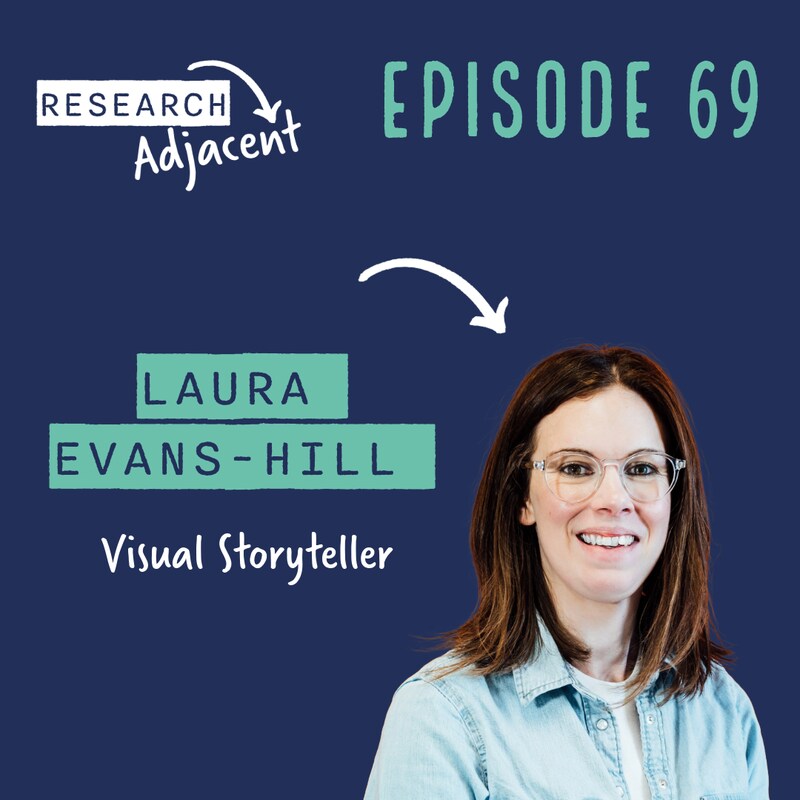
Laura Evans-Hill, Visual Storyteller (Episode 69)
Sarah's guest for this episode is Laura Evans-Hill. Laura is a visual storyteller and director of research communications agency Nifty-Fox Creative.
Sarah and Laura talk about
- Why combining visuals and storytelling can be such a powerful communication tool
- How she works with researchers to turn illustrations into impact
- Her journey from accidental freelancer to agency director
- What AI might mean for the future of research communication
Find out more
- Read the show notes and transcript on the podcast website
- Connect to Laura on LinkedIn
- Find out more about Nifty Fox Creative on their website, LinkedIn or BlueSky
- Check out the More Than Medals online exhibition
About Research Adjacent
- Fill out the research-adjacent careers quiz
- Sign up to the Research Adjacent newsletter
- Follow Research Adjacent on LinkedIn Instagram and BlueSky
- Email a comment, question or suggestion
- Leave Sarah a voice message
Mentioned in this episode:
Come along to our Manchester networking event
Join host Sarah McLusky and fellow research-adjacent professionals on Thursday 12 March 2026 at 5.30pm. Find out more and register here https://researchadjacent.circle.so/c/open-events/manchester-research-adjacent-community-networking
Member of the Month: Duncan Yellowlees, DY Training
Let’s put rubbish presentations in the bin – where they belong. Get in touch with Duncan for specialist research presentation skills training www.duncanyellowlees.com
Transcripts
Laura Evans-Hill: We use visuals to help people make ideas
Speaker:clearer, more memorable, more understandable and more
Speaker:emotional. You take a sentence of text and you take the same
Speaker:information presented as a visual, you are going to process
Speaker:those words in six seconds. You're going to process the same
Speaker:information as visual in 13 milliseconds. I had ex
Speaker:colleagues get in touch and say you know those stupid little
Speaker:doodles you used to do when you were teaching. Can we pay you to
Speaker:do them?
Sarah McLusky:Hello there. I'm Sarah McLusky, and this is
Sarah McLusky:Research Adjacent. Each episode, I talk to amazing research
Sarah McLusky:adjacent professionals about what they do, why it makes a
Sarah McLusky:difference. Keep listening to find out why we think the
Sarah McLusky:research adjacent space is where the real magic happens.
Sarah McLusky:Hello there. I'm your host, Sarah McLusky, and this is
Sarah McLusky:episode 69 of the Research Adjacent podcast today. My guest
Sarah McLusky:is Laura Evans-Hill, a visual storyteller and chief pencil
Sarah McLusky:wielder at research communications agency, Nifty Fox
Sarah McLusky:Creative. As you might guess, Laura combines visuals, in
Sarah McLusky:particular, hand drawn illustrations with stories to
Sarah McLusky:help researchers get their work out of journals and into the
Sarah McLusky:hands and the hearts of people who can use it. People have been
Sarah McLusky:recommending Laura as a guest since the podcast started, so
Sarah McLusky:I'm delighted that we've finally been able to sit down for a
Sarah McLusky:chat. Laura studied social research and worked for many
Sarah McLusky:years in widening participation, but an extended period of
Sarah McLusky:illness prompted a career u-turn. Laura started
Sarah McLusky:tentatively as a solo freelancer when former colleagues asked if
Sarah McLusky:they could pay her for the doodles that they had seen her
Sarah McLusky:doing. Fast forward eight years and Nifty Fox now has a team of
Sarah McLusky:nine who work with public sector organizations and universities
Sarah McLusky:across the world. In our conversation, we talk about why
Sarah McLusky:visual communication can be so powerful, why it's so important
Sarah McLusky:for researchers to get their work beyond academia, the
Sarah McLusky:evolution of our business, some of the projects that she's
Sarah McLusky:worked on, and what AI might mean for the future of research
Sarah McLusky:communication. Listen on to hear Laura's story.
Sarah McLusky:Welcome along to the podcast, Laura. It's fantastic to have
Sarah McLusky:you with us. I wonder if you could tell us a bit about what
Sarah McLusky:it is that you do.
Sarah McLusky:Laura Evans-Hill: Hi, folks. My name is Laura Evans-Hill. I'm an
Sarah McLusky:ex social researcher now director and founder of Nifty
Sarah McLusky:Fox Creative. We're an award winning visual storytelling
Sarah McLusky:agency, and we work specifically with researchers to help them
Sarah McLusky:tell their stories visually so that audiences listen. We've
Sarah McLusky:been helping people do that since 2017 and we've worked with
Sarah McLusky:over 50 universities internationally, 78 public
Sarah McLusky:sector organizations, and getting on for nearly 4000
Sarah McLusky:researchers now
Sarah McLusky:That is, that's a lot of people, 4000 that's
Sarah McLusky:amazing. So tell us what you mean a bit by visual
Sarah McLusky:storytelling.
Sarah McLusky:Laura Evans-Hill: Absolutely. So visual storytelling is almost
Sarah McLusky:exactly what it says on the tin. There's a visual side of it and
Sarah McLusky:there's a storytelling side of it. So for the visual side of
Sarah McLusky:it, we use visuals to help people make ideas clearer, more
Sarah McLusky:memorable, more understandable and more emotional, to actually
Sarah McLusky:drive them to act differently or make a change, and obviously,
Sarah McLusky:for researchers, that's what gets them up in the morning. But
Sarah McLusky:the storytelling side of it is, how do we combine that power of
Sarah McLusky:pictures with the power of narrative, again, to help people
Sarah McLusky:understand what's going on by juxtaposing it with a story that
Sarah McLusky:they may know or a story structure they've heard before,
Sarah McLusky:but also get them to care. If we care about something, we're more
Sarah McLusky:likely to make that policy change, also make that practice
Sarah McLusky:change, or to change the way we're doing research
Sarah McLusky:fundamentally. So that's what it is, and practically that might
Sarah McLusky:look like something like a infographic, an animation, a
Sarah McLusky:live scribed image. It could be the activities we're using in a
Sarah McLusky:co design session with participants to get them to
Sarah McLusky:tease out their own stories. And we've done crazy things at nifty
Sarah McLusky:like interactive online exhibitions through to huge art
Sarah McLusky:installations and murals that are articulating what health
Sarah McLusky:research is. So it's anything visual and telling a story, we
Sarah McLusky:like to give it a go.
Sarah McLusky:Yeah, fantastic. I mean, I think that idea of
Sarah McLusky:doing it in order to make people care, certainly the world that I
Sarah McLusky:come from, the public engagement side of things and research
Sarah McLusky:communications, it's so important, isn't it, because so
Sarah McLusky:often when you go out into the world with, you know, like a
Sarah McLusky:public engagement story or something like that. You're
Sarah McLusky:like, yes, let me tell you about this fascinating, you know,
Sarah McLusky:quantum physics, or whatever it might be. And the first
Sarah McLusky:question, you know, for most people, it's like, well, so
Sarah McLusky:what? So, yeah, yeah. So making people care helps to answer that
Sarah McLusky:so what question doesn't it?
Sarah McLusky:Laura Evans-Hill: For sure, it's also about making them care on a
Sarah McLusky:human level. I think we forget that. We find when working with
Sarah McLusky:our clients, you're so wrapped up in your stuff and your area
Sarah McLusky:of expertise, you forget that there is a person that needs to
Sarah McLusky:receive that communication, whose needs experiences problems
Sarah McLusky:are, in that moment of communication, more important
Sarah McLusky:than yours, you need to have that understanding of, well, why
Sarah McLusky:do they need, you know, why should they care, not from my
Sarah McLusky:perspective, but actually from theirs? I think that's quite an
Sarah McLusky:interesting shift in mindset for a lot of people we work with,
Sarah McLusky:and also, you know, for me as a business owner and and doing all
Sarah McLusky:those marketing at the same time. It's like, well, why
Sarah McLusky:should they give a monkeys about this in their very busy life?
Sarah McLusky:Why would they stop scrolling to give us the time of day? So I
Sarah McLusky:agree, it's a really interesting point.
Sarah McLusky:And it is, it's interesting you say that it is
Sarah McLusky:quite a mindset shift for a lot of researchers to kind of step
Sarah McLusky:out of just doing this research, because it's interesting to me
Sarah McLusky:to thinking about doing this research with the purpose of
Sarah McLusky:changing something in the world, and the steps that you have to
Sarah McLusky:go through to actually make that happen. So why do you think
Sarah McLusky:visual storytelling can help with that shift and getting that
Sarah McLusky:story told.
Sarah McLusky:Laura Evans-Hill: I think this the science behind why it works
Sarah McLusky:in terms of our neuroscience, but there is also our nature. Is
Sarah McLusky:from a human condition of why we're attracted that visual
Sarah McLusky:stories together. So from a scientific point of view, why it
Sarah McLusky:works is because the visual processing part of our brain is
Sarah McLusky:the biggest part of our brain power. So when you're trying to
Sarah McLusky:get somebody at the very base level to understand something,
Sarah McLusky:and often researchers follow that first hurdle. If I don't
Sarah McLusky:get it, I'm never going to care about it. Yeah, and we've, we've
Sarah McLusky:heard, we've heard the kind of the processing stats of, you
Sarah McLusky:know, visuals can be processed 60,000 times quicker than sex.
Sarah McLusky:Now that's a very spurious fact that is very, very contested
Sarah McLusky:across the interwebs now, but the one I like to use is, if you
Sarah McLusky:take a sentence of text and you take the same information
Sarah McLusky:presented as a visual, you are going to process those words in
Sarah McLusky:six seconds. You're going to process the same information as
Sarah McLusky:visual in 13 milliseconds. Massive difference. Yeah,
Sarah McLusky:massive difference. So from a very base level, it works to
Sarah McLusky:make that shift because you're actually thinking about, how is
Sarah McLusky:the person's brain working that is sat in front of me, and I'll
Sarah McLusky:help you to understand it more quickly. The second part of that
Sarah McLusky:shift is thinking about, well, how, how can I use the visuals
Sarah McLusky:and the stories and that science to make it more memorable. You
Sarah McLusky:know, we all hear interesting things all the time, but if we
Sarah McLusky:don't remember it, we're never going to act upon it. So if you
Sarah McLusky:use visuals alongside well chosen words, you're 65% likely
Sarah McLusky:to make your audience remember it three days later. And also,
Sarah McLusky:when you're creating a visual story, it's by nature emotive.
Sarah McLusky:You have to think about your audience in order to craft a
Sarah McLusky:story that feels believable, that feels real, that feels not
Sarah McLusky:written by AI. I'm sure we'll talk about AI. And actually, in
Sarah McLusky:thinking about what's going to resonate with that person in
Sarah McLusky:front of me? You're not only engaging the emotional
Sarah McLusky:processing side of your brain, but also harnessing the visual
Sarah McLusky:and emotional processing at the same time, because they're based
Sarah McLusky:in the same side of the brain. Don't quiz me on whether it's
Sarah McLusky:right or left. I could never remember, but I know that
Sarah McLusky:together, so it helps you make that shift, because you're not
Sarah McLusky:only having to communicate your research even more clearly and
Sarah McLusky:succinctly than you would normally, but you're also having
Sarah McLusky:to do so in ways that are so outside of the research training
Sarah McLusky:that you have, that is very internally focused and less
Sarah McLusky:externally so that you actually resonate with your audience. I
Sarah McLusky:feel like I've had a roundabout answer that question but I think
Sarah McLusky:I
Sarah McLusky:No we've got there in the end. And yeah, no.
Sarah McLusky:Really interesting stuff. I didn't know all that stuff about
Sarah McLusky:how we I mean, I think instinctively people know that
Sarah McLusky:you process visual information differently, and then you can
Sarah McLusky:can connect to it, as you say, much more emotionally than you
Sarah McLusky:do with language. But I didn't realize there was all that
Sarah McLusky:science behind it. So that's really interesting. I'm but as
Sarah McLusky:you say, it's this taking that way of processing information
Sarah McLusky:and applying it to sharing research is something that is
Sarah McLusky:relatively new, but definitely growing, isn't it? I mean, I've
Sarah McLusky:just seen an explosion in recent years in terms of, you know,
Sarah McLusky:infographics and these kind of, you know, illustrations of
Sarah McLusky:meetings and things like that. So, yeah, so how's that changed
Sarah McLusky:for you over since you you got involved with it? What did you
Sarah McLusky:say? 2017, yeah,
Sarah McLusky:Laura Evans-Hill: Yeah, it's definitely evolved. And I'll be
Sarah McLusky:honest, I didn't set out to make Nifty into the research comms
Sarah McLusky:agency it is now. I left higher education arena back in 2015,
Sarah McLusky:16, so I got super burnt out, and needed to take some time out
Sarah McLusky:to work out how how I was going to fix myself again and make
Sarah McLusky:something a life that felt like it aligned my academic research
Sarah McLusky:passions with the creativity that was slightly beaten out of
Sarah McLusky:me in the institution. So the reason that I got into it was
Sarah McLusky:because I had ex colleagues get in touch and say, you know those
Sarah McLusky:stupid little doodles you used to do when you were teaching.
Sarah McLusky:Can we pay you to do them? We think there's value in them. So
Sarah McLusky:I never set out to do this. It happened organically, because
Sarah McLusky:sketch noting and communicating visually was how I always did my
Sarah McLusky:presentations. Because PowerPoint for me, was never a
Sarah McLusky:tool that I felt like I could get behind or communicate well
Sarah McLusky:with, it didn't enable me to connect with my audience. So it
Sarah McLusky:started by accident in that way. But also, I've seen a shift from
Sarah McLusky:people almost doing this experimentally in 2017 to go,
Sarah McLusky:we've got we've got some additional funding that we
Sarah McLusky:haven't accounted for, let's give this a go, to now it being
Sarah McLusky:a fundamental part of funding applications, and actually
Sarah McLusky:something that funders are looking for, not just because
Sarah McLusky:it's pretty and, you know, it will tick that PPI box, that
Sarah McLusky:public engagement box, but actually it's a fundamental part
Sarah McLusky:of the method that will drive routes to impact that will
Sarah McLusky:enable us to work with people in policy, in practice, decision
Sarah McLusky:makers across the world. And the other thing that we're quite
Sarah McLusky:excited about at Nifty is not only getting involved at the end
Sarah McLusky:of the research process, which is definitely where we were
Sarah McLusky:maybe in the first few years of our existence, but actually now
Sarah McLusky:being baked in from the very, very beginning. So we become co
Sarah McLusky:design partners within a research project. So I guess the
Sarah McLusky:shift in some has been from pretty output to meaningful
Sarah McLusky:method that actually drives routes to impact.
Sarah McLusky:It's fantastic to hear that that is that you've
Sarah McLusky:seen that shift as well, because I've certainly seen it in some
Sarah McLusky:of the work that I do around engagement and communications
Sarah McLusky:and public involvement and, you know, partnerships and things
Sarah McLusky:like that, this sense of, you know, 10 years ago, it was
Sarah McLusky:something that was tagged on at the end, and then this
Sarah McLusky:acknowledgement that it needs to be not just, and then it sort of
Sarah McLusky:crept back in the process, you know, not just during it, but
Sarah McLusky:now, even right up there with the research design, you know,
Sarah McLusky:before you put in the funding application, actually thinking
Sarah McLusky:what is the process going to be, and how can we embed these more
Sarah McLusky:effective methods in there to help us to have that impact that
Sarah McLusky:we want to have in the world?
Sarah McLusky:Laura Evans-Hill: Yeah and I think it makes research culture
Sarah McLusky:and the research we create more inclusive, more equitable, more
Sarah McLusky:aligned to real world problems. And that for me as a social
Sarah McLusky:researcher, I usually, usually use the word ex, but you never
Sarah McLusky:stop being a social researcher. Is so empowering, exciting,
Sarah McLusky:morally, the right thing to do, but also economically the right
Sarah McLusky:thing to do. Because as funding applications get more
Sarah McLusky:competitive, especially in our current environment, I don't
Sarah McLusky:know when people will listen to this podcast, but Trump's just
Sarah McLusky:ruined the world economy. It it's more important than ever to
Sarah McLusky:not only be doing the right thing, but also be doing to be
Sarah McLusky:doing the economic, economically expedient thing to ensure that
Sarah McLusky:we've got research that's actually embedded in in real
Sarah McLusky:world application that will make a tangible difference, the
Sarah McLusky:policy society, the economy, healthcare and the things that
Sarah McLusky:will enable our planet to be sustained. Yeah, and that that's
Sarah McLusky:such an exciting shift, and to use visual storytelling as a
Sarah McLusky:vehicle to be part of that is what gets me up in the morning.
Sarah McLusky:Yeah, oh fantastic that you've, you've
Sarah McLusky:found that channel, and that way to to use all of the experience
Sarah McLusky:and things that you've got. So tell us a bit about you've
Sarah McLusky:you've said there, you've mentioned a bit about you were a
Sarah McLusky:social researcher. So tell us a bit about what you used to do.
Sarah McLusky:And you know you've said how you got into doing what you do now,
Sarah McLusky:but, but that's shift, and how you found that
Sarah McLusky:Laura Evans-Hill: Absolutely so I trained as a social researcher
Sarah McLusky:and then worked for university for 10 years in widening
Sarah McLusky:participation. That was something that was really
Sarah McLusky:interesting to me, being one of the first in my family to go to
Sarah McLusky:university and not having the same kind of support that the
Sarah McLusky:other people around me at my university did, really kind of
Sarah McLusky:stuck in my head as something I wanted to change. So I trained
Sarah McLusky:at Warwick, and then I worked for Coventry, Warwick, Sheffield
Sarah McLusky:and Leeds within outreach and WP teams. I loved it. It was where
Sarah McLusky:I learned the power of communicating differently so
Sarah McLusky:that different audiences can engage in the ivory tower. There
Sarah McLusky:is nothing more humbling than standing in front of a group of
Sarah McLusky:inner city 14 year olds in Coventry who wish you weren't
Sarah McLusky:there. Have no interest in what you have to say, and you're
Sarah McLusky:going this PowerPoint that I've been given is not going to cut
Sarah McLusky:it. So I'm really thankful for those experiences, because they
Sarah McLusky:showed me the power of research when you communicate it well to
Sarah McLusky:change individual lives. There's nothing more rewarding than
Sarah McLusky:seeing, you know, meeting a 14 year old, and then seeing them
Sarah McLusky:six years later at the university, doing something that
Sarah McLusky:they never thought possible. But equally, as I alluded to, I
Sarah McLusky:became a manager very, very young. There was a lot for me
Sarah McLusky:going on personally at the time, and I got really, really unwell.
Sarah McLusky:I got glandular fever and chronic fatigue syndrome, and
Sarah McLusky:within six months, went from being a very active
Sarah McLusky:cross-fitting like 20 year old to not being able to get out of
Sarah McLusky:bed for 12 months. And when I when I say that, I don't mean
Sarah McLusky:that by exaggeration, I did not leave the house for 12 months,
Sarah McLusky:and it was both the best and the worst thing that could ever
Sarah McLusky:happen, because it made me look at clearly my body has given me
Sarah McLusky:a signal that whatever I'm doing, both in my professional
Sarah McLusky:and personal life isn't working, and so I took that time to go,
Sarah McLusky:Well, what do I really want to do? And actually, it was finding
Sarah McLusky:that new purpose that helped me get better. I consider myself a
Sarah McLusky:recover, a recovered person now, and not everybody does, but
Sarah McLusky:that's because you have to look at every facet of your life and
Sarah McLusky:go, What do I actually want? Not what does society want? So, I
Sarah McLusky:started Nifty, you know, I started Nifty, working one day a
Sarah McLusky:week, simply because ex colleagues got in touch and
Sarah McLusky:said, as I said, Can you do this thing? You know, where are you
Sarah McLusky:in your recovery journey? Can you do this? And so, from, yeah,
Sarah McLusky:one day a week to then, now, too many days a week, but starting
Sarah McLusky:from, you know, from you know, from one and I started doing,
Sarah McLusky:you know, live illustration for researchers and university
Sarah McLusky:contacts, and then a little bit of branding here and there for
Sarah McLusky:research projects as it could manage around my energy. And
Sarah McLusky:then, as I got better, the business started to get bigger
Sarah McLusky:COVID hit. And we, live illustration was a massive part
Sarah McLusky:of what we were doing at that point. I say we it was me and my
Sarah McLusky:admin, avenger, Lizzie at the time. And actually, COVID was a
Sarah McLusky:blessing in disguise, because it shifted how we could support
Sarah McLusky:people and the entire research landscape and event landscape
Sarah McLusky:and public sector landscape, realizing in the switch to
Sarah McLusky:online, how on earth are we going to engage people and keep
Sarah McLusky:them within our community, keep them trained, keep them engaged.
Sarah McLusky:So that's when we started to do other parts. So more studio
Sarah McLusky:work, so infographics, animations, e-learning is
Sarah McLusky:something we started in COVID, and I do an awful lot of now. So
Sarah McLusky:that really, that global pandemic actually helped us
Sarah McLusky:reframe our offering to better support researchers, and then
Sarah McLusky:we've grown from there, as I've alluded to, we're now much more
Sarah McLusky:into that co-design space, training is a big part of of
Sarah McLusky:what we do now. We're a team of about to be nine of us going all
Sarah McLusky:over the world doing it so that that shift is, you know, I'd
Sarah McLusky:like to say something really pithy and inspiring, and it was
Sarah McLusky:this grand epiphany. It was I put myself in a space where I
Sarah McLusky:was open to the opportunities that were given, and listen to
Sarah McLusky:the needs of the of my audience, and listen to the needs of what
Sarah McLusky:researchers needed. But because I had those contacts in in unis
Sarah McLusky:already and that sector knowledge, I could see where the
Sarah McLusky:gap was, and then exploited it. But that's the journey from from
Sarah McLusky:zero to now.
Sarah McLusky:That really is, I mean, that's, it's a remarkable
Sarah McLusky:journey, but also that's incredible growth in just five
Sarah McLusky:years to go from just, you know, one, one and a half of you,
Sarah McLusky:whatever it was, to a team of nine. Um, so how's that
Sarah McLusky:expansion process been? I imagine you've had to step in,
Sarah McLusky:step into quite a different role.
Sarah McLusky:Laura Evans-Hill: Yeah, it's the most rewarding, terrifying, soul
Sarah McLusky:wrenching adventure I've been on. I would say the, well, first
Sarah McLusky:of all, it shows you're doing something right, and that the
Sarah McLusky:market needs that. It also challenges you as a person,
Sarah McLusky:because you start something by being a doer, and actually liken
Sarah McLusky:this to the process of going through a research team. So
Sarah McLusky:starting as a research assistant and then eventually ending up as
Sarah McLusky:a PI. You're you get very good at the doing, and then you your
Sarah McLusky:role completely changes, and you have to let go of the doing when
Sarah McLusky:that's the thing you started the business to do. So it's it's
Sarah McLusky:been a personal journey, but it's been so rewarding to watch
Sarah McLusky:the team grow and the team buy in to what we're achieving. You
Sarah McLusky:know, our mission is to do visual storytelling for social
Sarah McLusky:good, that we can make knowledge more accessible, equitable,
Sarah McLusky:inclusive for everyone, and that to have a, you know, a gang of
Sarah McLusky:eight of the people that believe in that as much as you do, and
Sarah McLusky:the market is also on your side and wants that too, has been
Sarah McLusky:incredible. But, it's yeah, the honest answer is that the growth
Sarah McLusky:has been relentless, exciting, and as I said, you have to grow,
Sarah McLusky:not only as a team, but also as individuals, to scale that
Sarah McLusky:growth and also to react to and be proactive in seeing what
Sarah McLusky:happens in the market. Obviously, you know, we have
Sarah McLusky:research funding cuts. Universities are going through a
Sarah McLusky:tough spot financially, so it's how you offer that value as
Sarah McLusky:something that has to be included in that financial
Sarah McLusky:forecasting, rather than a nice to have. And that's how we've
Sarah McLusky:shaped Nifty, very much aligned to our values, to make it stand
Sarah McLusky:out from all of the other design agencies that don't have the
Sarah McLusky:same niche that we do, yeah. So make us a competitive option
Sarah McLusky:over anybody else that can do design, because we don't just
Sarah McLusky:make things look pretty. We do it through co-production with a
Sarah McLusky:deep understanding of the sector. And actually, you can
Sarah McLusky:exploit our network, you know, 4000 researchers doing probably
Sarah McLusky:similar things to you. So that's been a joy
Sarah McLusky:Yes, oh, but as you say, a lot I can imagine,
Sarah McLusky:Laura Evans-Hill: Yeah, quite a lot, yeah.
Sarah McLusky:But um, but as you say that that is a real
Sarah McLusky:niche, definitely to be doing the design work, but also to
Sarah McLusky:really understand the sector, because that is when I've been
Sarah McLusky:in roles and worked with, when I've been in roles and
Sarah McLusky:universities and places like that, and tried to work with
Sarah McLusky:designers and so often, just found that they just don't get
Sarah McLusky:it. They don't, you know, they think that you can just make
Sarah McLusky:something look nice, but it's like, Oh, does it have to be
Sarah McLusky:exactly like this? Can't it just like because this would be
Sarah McLusky:nicer? And you're like, No, yeah, it has to be this. It has
Sarah McLusky:to be spelt this way. You know, look this way. You know,
Sarah McLusky:whatever it is, that there isn't that scope for flexibility and
Sarah McLusky:and that it's more measured, slightly more measured approach
Sarah McLusky:sometimes to, you know, language and things like that, which
Sarah McLusky:other design agencies don't always get.
Sarah McLusky:Laura Evans-Hill: And something that we do well at Nifty is all
Sarah McLusky:of that upfront work with the client to deeply understand
Sarah McLusky:their research project and what they're trying to achieve. So
Sarah McLusky:our first our first priority as a company is to represent that
Sarah McLusky:research well, and then everything else is in service of
Sarah McLusky:that vision. So we actually support our clients to be
Sarah McLusky:writing the content. We don't just take content and make
Sarah McLusky:something pretty we are rafting that together because you're as
Sarah McLusky:an academic, you're not trained how to do that. How we couldn't
Sarah McLusky:expect you to write an animation script that tells a story that's
Sarah McLusky:engaging and that appeals to your audience for a specific
Sarah McLusky:purpose. When you've never been trained how to do that, that's
Sarah McLusky:madness. So the biggest part of our project is always up front,
Sarah McLusky:working together with our clients to actually craft the
Sarah McLusky:strategy for what we're creating so that it, as I said, just
Sarah McLusky:doesn't just look beautiful, it actually achieves the purpose
Sarah McLusky:and serves the research project and its impact aims, and all of
Sarah McLusky:the measuring that we need to do in the background to make sure
Sarah McLusky:that happens.
Sarah McLusky:Yeah, now, well, it's clearly giving people the
Sarah McLusky:results that they're after, because, as you say, with the
Sarah McLusky:growth that you've had and your reputation goes before you. You
Sarah McLusky:know, so many people had mentioned you to me before our
Sarah McLusky:paths had crossed. So yeah, and so thinking then maybe about
Sarah McLusky:some of the specifics of the sort of things you've done,
Sarah McLusky:maybe you could give us a couple of really kind of specific
Sarah McLusky:examples of things that you've done that you're really proud
Sarah McLusky:of, whether that's some of the interesting, unusual things you
Sarah McLusky:said, you've done, or just things that had a really big
Sarah McLusky:impact. Tell us your choice. Tell us about what.
Sarah McLusky:Laura Evans-Hill: Well, our brain loves three so I'll give
Sarah McLusky:you three examples. I'm going to go for the crazy, disn't know
Sarah McLusky:quite how we were going to do this, but ended up being
Sarah McLusky:incredible project first. So shout out to Steph Cohen at
Sarah McLusky:University of Nottingham. So Steph and the team were working
Sarah McLusky:with female athletes, retired female athletes, and reframing
Sarah McLusky:how we look at environments in sport. So the challenge there is
Sarah McLusky:that sports injury is often seen due to physiological factors,
Sarah McLusky:and that men will have different injuries simply because they
Sarah McLusky:have a different physiology to women and vice versa. Steph's
Sarah McLusky:research actually looks at the gendered environments, so the
Sarah McLusky:norms, environments, relationships, power structures
Sarah McLusky:within sports and how that actually shapes injury risk. So
Sarah McLusky:looking specifically at there was one on ACL injury, and what
Sarah McLusky:it was just so fascinating to see that there is more than
Sarah McLusky:physiology at play as to how female athletes are supported
Sarah McLusky:through their career. Yeah. So Steph had a wealth of
Sarah McLusky:qualitative data, so things like poems, recordings, art from the
Sarah McLusky:female athletes, and wanted to create something that showed the
Sarah McLusky:emotional impact of these environments, whilst also
Sarah McLusky:creating a toolkit for people running those environments. So
Sarah McLusky:people like the Sports Institute, I'm going to get that
Sarah McLusky:wrong begins with UK. I'll find that afterwards big sports
Sarah McLusky:people. So people are responsible for Olympic teams
Sarah McLusky:and athletes. So how can we make, you know, make the emotive
Sarah McLusky:stuff work with the practical this is what we need to do. So
Sarah McLusky:Steph came to us with the idea, I want to make an online
Sarah McLusky:interactive exhibition that can also be used in person and
Sarah McLusky:experienced collectively. And it needs to be beautifully
Sarah McLusky:illustrated, super accessible, include audio visual. Oh, and by
Sarah McLusky:the way, it needs to have all of this exhibition, more
Sarah McLusky:traditional exhibition stuff around it, so we can take it on
Sarah McLusky:tour. Yeah. And I said to Steph, count us in no idea how we're
Sarah McLusky:going to do this, and it's turned into more than medals. So
Sarah McLusky:we worked with them on the naming More Than Medals. We
Sarah McLusky:worked with them on the brand around it, how the exhibition
Sarah McLusky:was created, how it was structured online, how that
Sarah McLusky:would work in person. We collaborated with their tech
Sarah McLusky:team at Nottingham to create a badge of how people interacted
Sarah McLusky:with the exhibition. So that created like a live piece of art
Sarah McLusky:at the same time, and that has now been funded again to create
Sarah McLusky:the toolkit, element of it to actually support sports leaders
Sarah McLusky:to create more equitable gendered environments, and is
Sarah McLusky:now also being showcased at the British Academy summer event as
Sarah McLusky:an incredible example of public engagement and impact work, and
Sarah McLusky:has actually been taken up by masses of sports around the
Sarah McLusky:country training our next Olympic athletes as a new way
Sarah McLusky:for us to get the edge, because it's not just about physiology.
Sarah McLusky:So that's one
Sarah McLusky:that's fantastic does that exists somewhere on
Sarah McLusky:the internet
Sarah McLusky:Laura Evans-Hill: morethanmedals.co.uk. Yeah, I'll link to Steph as
Sarah McLusky:well, and also Joe Parsons at University of Manitoba. It's a
Sarah McLusky:huge global collaboration. And there's something that's come
Sarah McLusky:out of that called the Edge Lab, which is the environments,
Sarah McLusky:gendered environments, in sport lab, that are now doing things
Sarah McLusky:worldwide. So that was, that was, yeah, both really
Sarah McLusky:impactful, but also really rewarding, because we really got
Sarah McLusky:to know the team and are working on other stuff as a result. So
Sarah McLusky:that's one. Number two would be a more general aspect of what we
Sarah McLusky:do, which is co-design. So we work a lot with people who have
Sarah McLusky:had cancer or experiencing dementia, as well as their
Sarah McLusky:families. We're currently working on something with
Sarah McLusky:University of Leeds on people with long term neurological
Sarah McLusky:conditions, so us as a whole team, whenever we get to spend
Sarah McLusky:time with real life people experiencing real life stuff, it
Sarah McLusky:makes a difference to your job satisfaction, but also knowing
Sarah McLusky:that that thing you created isn't just going to say, look
Sarah McLusky:pretty that seems to be my quote of the day. It's actually going
Sarah McLusky:to meaningfully make a difference in somebody's life.
Sarah McLusky:So an example there, we worked with Bradford University and the
Sarah McLusky:Bradford Health Institute to co create a Managing My Medicines
Sarah McLusky:toolkit for people with dementia, so that they could
Sarah McLusky:manage their medicines better at home. And what was really
Sarah McLusky:heartwarming about those co design sessions were that these
Sarah McLusky:people have never really been asked what they thought before
Sarah McLusky:or spoken to as equals, as people with lived experience
Sarah McLusky:that really matters. So that's currently at clinical trial, and
Sarah McLusky:I need to check in with the crew over at Bradford, to see where
Sarah McLusky:we are with that now, but actually to see and be part of
Sarah McLusky:the translation of the experience of patients and
Sarah McLusky:people with dementia or people with autism or or people who
Sarah McLusky:have lived experience of domestic abuse, actually
Sarah McLusky:translating that experience into something that's tangible and
Sarah McLusky:out there and helping people is just the piece the resistance of
Sarah McLusky:what we do at Nifty. And the third one is something we're
Sarah McLusky:doing with the NIHR at the moment, which is actually a
Sarah McLusky:completely different side of the research process. And it's how
Sarah McLusky:do we build capacity within local authorities to access all
Sarah McLusky:of this health research and find the evidence they need to back
Sarah McLusky:up their decisions more than they do now. So that's called
Sarah McLusky:KNOW-PH, and we'll link to that too. That's with University of
Sarah McLusky:Sheffield, Nottingham, and I'm sure lots of other universities
Sarah McLusky:are completely forgotten in the moment, but we're part of that
Sarah McLusky:as a long term design partner to help them find different ways to
Sarah McLusky:help local authorities not only just read loads of research
Sarah McLusky:evidence, but actually feel it, experience it, understand the
Sarah McLusky:public health issues that are, access that their communities
Sarah McLusky:are experiencing, and find ways to make that evidence
Sarah McLusky:digestible, accessible and usable, to actually make a
Sarah McLusky:difference to our public health system. So that's. Something
Sarah McLusky:we're currently working on that's very exciting.
Sarah McLusky:I think then those things, it's just so
Sarah McLusky:important, isn't it, because that's one of this. It's a very
Sarah McLusky:similar area that I've always worked in, but the this, all
Sarah McLusky:this information that's out there, all the papers that are
Sarah McLusky:out there. I remember once some an academic I worked with,
Sarah McLusky:saying, we don't even read each other's papers, you know, just
Sarah McLusky:like, No, there's all this stuff's out there and nobody's
Sarah McLusky:reading it. And the value that is in there that I know isn't
Sarah McLusky:there, isn't being drawn out and actually being given to people
Sarah McLusky:who could use it, finding these ways of doing that and shifting
Sarah McLusky:that focus from just churning out papers for the sake of
Sarah McLusky:churning out papers, because that's what gets the tick boxes,
Sarah McLusky:you know, on, on whatever metric system, to actually papers
Sarah McLusky:research that's usable to me, that's just so important. So,
Sarah McLusky:yeah, fantastic
Sarah McLusky:Laura Evans-Hill: It's that old adage, isn't it like you have to
Sarah McLusky:publish or perish. And we're like, no, you have to be visible
Sarah McLusky:so you don't vanish. That's a shift, and papers have an
Sarah McLusky:absolute place in the academic landscape. Like that is where
Sarah McLusky:you do your thinking, where you can demonstrate your academic
Sarah McLusky:rigor. And for the people that need it, you need that level of
Sarah McLusky:detail sometimes to make change, especially in things like
Sarah McLusky:healthcare or science and engineering, but the vast
Sarah McLusky:majority of people you know, 90% of your audience, only need 10%
Sarah McLusky:of that information to make change. Yeah, and that you know,
Sarah McLusky:when your whole reason for being as an academic is to publish and
Sarah McLusky:to demonstrate your worth that way, it can be a real mindset
Sarah McLusky:shift to go actually, maybe my publications aren't quite as
Sarah McLusky:important for real world impact as I as I thought, I'm
Sarah McLusky:absolutely not disputing their impact academically, but if
Sarah McLusky:they're not even reading each other, then, why bother
Sarah McLusky:Yeah definitely. Well, I mean, that is certainly
Sarah McLusky:one of the challenges of this world that you work in making
Sarah McLusky:things available, and you've talked about some of your
Sarah McLusky:personal challenges and things, I think you touched on AI
Sarah McLusky:earlier. Should we have a think about what, what AI is doing to
Sarah McLusky:the situation, to, you know, the kind of work that you do? How
Sarah McLusky:are you finding it?
Sarah McLusky:Laura Evans-Hill: Yeah, sure. I think I'm probably, I probably
Sarah McLusky:have a different view to a lot of other creatives. I'm a
Sarah McLusky:researcher, first creative second. So AI as a tool to help
Sarah McLusky:people execute quickly. I don't have a problem with especially
Sarah McLusky:when things like finding summaries of research articles,
Sarah McLusky:some fantastic research made, you know, made by researchers
Sarah McLusky:for research and software out there. So Size Space is an
Sarah McLusky:example. Napkin AI helps turn your research into beautiful
Sarah McLusky:like theoretical models. So I think it's we need to get on
Sarah McLusky:board with it, because it's happening creatively. I think IP
Sarah McLusky:is a real interesting domain to get into. What big data will do
Sarah McLusky:with all of our data is very interesting, and some of you
Sarah McLusky:know my team and I were talking about this yesterday, actually,
Sarah McLusky:and some of them feel quite threatened by it, but I would
Sarah McLusky:always argue that the AI thing that's created is only ever as
Sarah McLusky:good as a human inputting the prompt, and you can't replace
Sarah McLusky:human thought and human creativity, and finding all of
Sarah McLusky:those connections between things that might seem very disparate.
Sarah McLusky:For example, creating a D and D game of how to engage policy
Sarah McLusky:makers, something I was also talking about yesterday. AI will
Sarah McLusky:only ever churn out the same crap it's seen elsewhere on the
Sarah McLusky:internet, right? And that's just becomes an echo chamber of
Sarah McLusky:sameness. So I think it's a great tool, but it will never
Sarah McLusky:replace human thinking for creatives. I understand the
Sarah McLusky:fear, especially around IP and around you know, what is true
Sarah McLusky:It is a minefield, and I have to admit
Sarah McLusky:art, and you know, how is that potentially replacing jobs? But
Sarah McLusky:it's about how you position yourself as using AI to improve
Sarah McLusky:your process, but not being so threatened by it, or having or
Sarah McLusky:not having the confidence in your own creative thought
Sarah McLusky:process to be, yeah, off put by it. I think so. Yeah, there's a
Sarah McLusky:it's a whole minefield.
Sarah McLusky:one that I am not engaging with a huge amount.
Sarah McLusky:Laura Evans-Hill: I respect that
Sarah McLusky:But yeah, but yeah, I think that, as you see,
Sarah McLusky:it's certainly some of the things that people have said
Sarah McLusky:that really struck with stuck with me is what you say about it
Sarah McLusky:can't replace that human creativity and that kind of one
Sarah McLusky:of my previous guests said, and human weirdness, the like, you
Sarah McLusky:know, it's just our brains can do just weird stuff that an AI
Sarah McLusky:just never think of. And there's also the fact as well that a lot
Sarah McLusky:of the stuff I've seen that AI generated isn't very good. Like,
Sarah McLusky:it's pretty. I mean, I'm sure it'll get better, but it's, it's
Sarah McLusky:pretty. I'm at the moment, it's pretty clear. It's pretty
Sarah McLusky:obvious when it's AI generated. So I feel like that's not going
Sarah McLusky:to replace anything. And then also, I think the other thing is
Sarah McLusky:that it's it's going to encourage a return towards
Sarah McLusky:valuing real craft and real skill and and real human
Sarah McLusky:connection. And I think, actually, that's something
Sarah McLusky:that's been really missing in recent years. I'm my kind of
Sarah McLusky:dream is that it would bring us together more as human beings,
Sarah McLusky:rather than because that just, there'll just be so much stuff
Sarah McLusky:out there that the only thing you can really trust is that
Sarah McLusky:human human connection.
Sarah McLusky:Laura Evans-Hill: Yeah, and there's a book, actually, it's
Sarah McLusky:called the Revenge of Analogue, which came out probably, yeah,
Sarah McLusky:nearly 10 years ago. That says exactly that, and we can see it
Sarah McLusky:in the other trends in our life. You know, return to people
Sarah McLusky:buying vinyl records, to using iPods and buying music, to
Sarah McLusky:rejecting Kindle, because now you can't take your books off
Sarah McLusky:Kindle. You don't what, what is ownership? I think we will
Sarah McLusky:always be drawn to things that feel real, and yes, AI sometimes
Sarah McLusky:is incredibly real, and you can't tell. But there's also
Sarah McLusky:something about a feeling that you get from seeing a scratchy
Sarah McLusky:doodle being done in front of you, that that's why I do what I
Sarah McLusky:do, and I really love what you said about you will always crave
Sarah McLusky:human connection. The reason I draw, the reason I draw with
Sarah McLusky:people, and to present people with drawing, is because it
Sarah McLusky:strips away all of that pretense of a slide deck or something
Sarah McLusky:super flash and slick to actually the raw human
Sarah McLusky:connection that we can make with our audience. And you feel more
Sarah McLusky:authentic that way. And I think authenticity is something that
Sarah McLusky:AI, I'd love it if I get quoted on this, but I don't think AI
Sarah McLusky:can replace authenticity, which you can naturally feel if
Sarah McLusky:somebody's being authentic or not. Yeah, and that that yeah,
Sarah McLusky:I'm maybe famous last words. I'm not worried. I'm excited by the
Sarah McLusky:possibilities of how it improves productivity and things from a
Sarah McLusky:business angle, but I'm not threatened by what it could do
Sarah McLusky:to human thought or to real human creator. There's human
Sarah McLusky:weirdness. I like the way, yeah,
Sarah McLusky:Well, have to give credit to previous guest,
Sarah McLusky:Sam Steele for that one. So yes, human weirdness. Well, to think
Sarah McLusky:about wrapping up our conversation, I always like to
Sarah McLusky:ask my guests, if they had a magic wand, what's something
Sarah McLusky:they would change about the world that they work in? So
Sarah McLusky:money and time were no object.
Sarah McLusky:Laura Evans-Hill: Wow, that is such a big question. And other
Sarah McLusky:than remove Donald Trump, I'm trying to think I would, here's
Sarah McLusky:what I would shape in our arena. I would add storytelling and
Sarah McLusky:visual communication training to every doctoral training
Sarah McLusky:partnership researcher training curriculum across the world. And
Sarah McLusky:I know people buy it in, but I would make it a fundamental
Sarah McLusky:built in from the very beginning, delivered by that
Sarah McLusky:institution as an integral part of the researcher training, to
Sarah McLusky:create an academic that not only is rigorous, but also
Sarah McLusky:communicates well and is actually embedded in the
Sarah McLusky:communities that they're trying to change. That would be my
Sarah McLusky:magic wand.
Sarah McLusky:I think that would be fantastic. So a
Sarah McLusky:wonderful wish to leave it on there. So if people want to find
Sarah McLusky:out more about you, about Nifty Fox, where would you have them
Sarah McLusky:go and look.
Sarah McLusky:Laura Evans-Hill: Fabulous. So for everything Nifty we are
Sarah McLusky:@niftyfoxcreative on LinkedIn, BlueSky. We are on X but don't
Sarah McLusky:actively post on there because everybody's had a mass exodus.
Sarah McLusky:And we will also have a YouTube channel up and running in the
Sarah McLusky:next few months too. So @niftyfoxcreative, on
Sarah McLusky:everything. Niftyfoxcreative.com for all of our resources and
Sarah McLusky:information there. For me, personally, I'm going hard on
Sarah McLusky:LinkedIn at the moment because I feel like that's the most
Sarah McLusky:meaningful and connected place to be. So that's just Laura
Sarah McLusky:Evans-Hill there. You can also find me on X @EvansNifty. I
Sarah McLusky:don't post regularly on there, but that's also interesting, too.
Sarah McLusky:Fantastic. Thank you very much. We'll get all
Sarah McLusky:those links as well and put them in the show notes. So thank you
Sarah McLusky:so much for coming and telling
Sarah McLusky:Laura Evans-Hill: Thank you so much. Take care.
Sarah McLusky:Thanks for listening to Research Adjacent.
Sarah McLusky:If you're listening on a podcast app, please check your
Sarah McLusky:subscribed and then use the links in the episode description
Sarah McLusky:to find full show notes and follow the podcast on LinkedIn
Sarah McLusky:or Instagram. You can also find all the links and other episodes
Sarah McLusky:at www.researchadjacent.com. Research Adjacent is presented
Sarah McLusky:and produced by Sarah McLusky, and the theme music is by Lemon
Sarah McLusky:Music Studios on Pixabay. And you, yes you, get a big gold
Sarah McLusky:star for listening right to the end, see you next time.
