Shownotes
Have you ever stopped to consider that the image you project as a capable, in-control leader might actually be the very thing keeping your people from truly connecting with you? There's a particular kind of isolation that comes with always having it together. And if you're honest with yourself, I wonder how much energy it costs you to maintain that facade and what it might be costing the people around you too.
What if the shift that changes everything in your leadership isn't about acquiring more knowledge or developing another competency, but about letting go of the performance? This episode is an exploration of what becomes possible when leaders trade the polished, textbook version of themselves for something more real. We dig into the relationship between authenticity and energy, vulnerability and performance, and why learning together with your team might be the most underrated leadership practice available to you right now. What's possible here when you stop trying to be the one with all the answers?
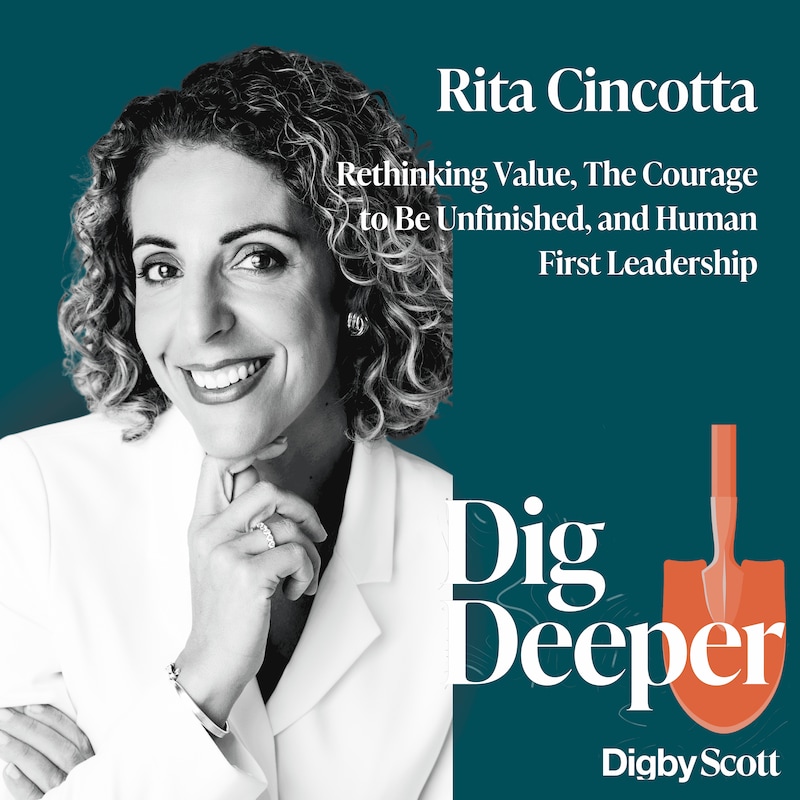
Rita Cincotta is a leadership expert, coach, and consultant with 25 years of experience supporting leaders across Australia. She's the founder of The Deliberate Leader, author of two books on leadership, and is currently pursuing a PhD to rigorously test whether deliberate leadership is genuinely distinct from other leadership approaches. Rita brings rare intellectual depth and disarming human warmth to this conversation and she models everything she talks about, right from the first moment. In this episode, you'll explore:
- How the image of having it all together can quietly push your people further away
- Why reconnecting with your purpose as a leader is the source of the energy your team needs from you
- How a single piece of feedback, being called a "textbook reader" and became a turning point in how Rita led
- Why psychological safety isn't just a culture initiative, but a daily practice that starts with you
- How leading with an L plate changes the dynamic between you and your team in profound ways
- Why balancing empathy with performance becomes easier, not harder, when you lead human first
- How vulnerability at a senior level creates a ripple effect that lifts the energy of an entire team
- Why contributing to the learning of others not having the answers is where lasting leadership impact lives
Timestamps:
(00:00) - The Burden of Perception
(10:10) - The Shift to Authenticity
(20:47) - Embracing Vulnerability in Leadership
(26:47) - Human First: Balancing Performance and Empathy
(30:06) - The Messiness of Life and Leadership
(36:39) - Learning Together: The Power of Contribution
Other References
- You are how you lead | Rita Cincotta
- Swinburne University of Technology
- Manaaki Tāngata | Victim Support NZ
- Home and Away TV Show
- Mike House Podcast Episode
- James McCulloch Podcast Episode
- Deal In Energy Blog
- Upgrade your Identity Blog
- Forget Time Management, Master These Disciplines Instead Blog
- Leading Lasting Impact
You can find Rita at:
Website: https://thedeliberateleader.com.au/
LinkedIn: https://www.linkedin.com/in/rita-cincotta-80a1263/
Check out my services and offerings https://www.digbyscott.com/
Subscribe to my newsletter https://www.digbyscott.com/subscribe
Follow me on LinkedIn https://www.linkedin.com/in/digbyscott/
Transcripts
told her, I went, what's going on? I said, I expected to hear from you sooner. I needed you. And she said something that really hurt me at the time. She said, Rita, you've always got your shit together. And I really thought that I'd be a hindrance as opposed to a help. She said, I didn't think that you did need me. And when she said that, the reason it felt like a slap across the face is because I was like, that's actually what I put out. Like I put out this, there's nothing messy to see here. We are all under control, right?
Digby Scott (:What if the way you're showing up as a leader is actually keeping other people at arm's length? My guest today Rita Cincotta has spent 25 years supporting leaders and she's noticed something. The ones that are truly effective aren't the ones with all the answers. They're the ones who've learned to drop the facade and bring their real selves to work. Rita's the founder of The Deliberate Leader. Love that title.
and she's the author of two books on leadership. She's just embarked on a PhD to test whether this idea of deliberate leadership is genuinely different from everything else we've been taught. And in this conversation, we get into what it means to lead from a place of learning rather than knowing and why that might be the most powerful thing you can do. And you'll notice that we dig deep straight away. There's this beautiful vulnerability in our conversation that I reckon reflects how Rita really walks her talk. I love this conversation.
I'm Digby Scott and this is Dig Deeper, a podcast where I have conversations with depth that will change the way you lead.
Digby Scott (:Hey Rita, welcome to the show. I'm curious about starting with who you are and what's your sense of mission or purpose? What are you trying to make happen in the world?
Rita Cincotta (:Thanks, Digby. Thanks for having me.
Rita Cincotta (:funny little story. Yesterday I had a parent teacher thing. It's the start of school year here in Australia. And my son had written a name tag for me that we had to pick up on our way into the class. The kids weren't there and it had Noah's mum, Rita. Earlier on in the week, I'd written a post about the different roles that we play. And one of Noah's friends had come over earlier in the week and he came up to me and he said, uh, Rita's mum. And he asked me for a glass of water or something. And it was so adorable because this kid knows my name, right?
But he was like, um, Noah's mom. And it got me thinking about the different roles that we play. So other than being Noah's mom, I'm also Sienna and Matthew's mom, but it got me thinking about the roles that we play and the different value that we add in different parts of our lives. So I am a mother, but I am also a leader. I'm a business owner. I'm now going to be a student again for the first time in about 20. This is going to sound not very modest, but I'd like to think I'm a bit of a role model too, for others that, you know, want to lead and want to do.
deliberate things in life because they've got big appetites and big ambitions. And I think we've all got that capacity to be storytellers and role models and all of that complex, like we all are, of course. And I really do think intently about these roles that we play and honouring all of these roles. Cause we're not one dimensional, we're not even two dimensional. Like it's very easy to get into this thing of I go to work and then I come home and whatever home looks like for you in terms of those commitments, responsibilities, but we're so much more than that.
And when we're really thinking about that, think holistically, then we can honour all these different parts of ourselves.
Digby Scott (:That's a deep answer. So what are you trying to make happen in the world? And I guess why does it matter? Because my impression of you is you're on a mission to make some stuff happen, to help others make stuff happen. What's that about for you?
Rita Cincotta (:For the better part of my career, which is now 25 years, I've worked supporting leaders. So whether that's been in a human resource capacity, in a people leadership capacity, in a coaching others capacity, and what I have seen time and time again during that quarter of a century, my God. know now it's just over 20 plus. What I've found is that the leaders that rock up because they're really clear on what they want to do.
Digby Scott (:just numbers.
Rita Cincotta (:have a much more enjoyable time doing it. So it's not a grind, right? They're not getting up or turning up to the same workplace or turning up to their same business every day going, ugh, they're lit up when they get there. So the mission is to help leaders reconnect with why they lead. It's also to help others connect with why they want to lead. We can be really intentional about why we're choosing that as a path. I see magic happen.
when leaders do that and when they are really intentional about how they lead. They turn up with a different level of energy. They turn up with more that fuels their innovation, their creativity, how they motivate their staff. Like when someone's lit up from inside, it radiates energy. When you're in someone's presence and they're like that, you cannot help but be inspired. And for that energy to then kind of sparkle on you a little bit, that's what I want leaders to kind of feel when they're.
turning up in either their businesses or in their organisations and they are there to lead.
Digby Scott (:I love to say lead is a deal as in energy and that's got to come from you first. You know, you can't get it and just put it in there for a bit and then pretend it's going to stay. It's got to be like a nuclear fuel rod, right? It's got to keep burning and that's a lovely way of putting it. I'm curious about where that comes from for you because I'm guessing, you know, when you were six months old, that was probably latent there somewhere in you. Yeah, you've lived a life, you know, you've had 25 year career.
Can you think of a pivotal moment or person or time where that really became apparent? this is what it's about and this is what I'm about.
Rita Cincotta (:won't go back to six months old, but I'm first born. I'm the daughter of Italian migrants here in Melbourne, Australia. There's a sense of responsibility that's thrust on you upon a child when you are the daughter of migrants. Any kid that needs to step up for whatever reason, because you've got a sick parent, sick sibling, anyone that is thrust into a position of responsibility when you're young, whilst I'm sure it has some residual trauma that you deal with later on, there's also.
that responsibility. And I think if you naturally take to that responsibility, it's like being a natural swimmer, right? If you take to that, then you're good and you just rise to it. It's like that space has been created for you and you go in and fill it. I don't think it's necessarily for everybody, but I think that's where it comes from. It was the responsibility of having to translate stuff for my parents from a very young age. Like literally, can you call the local council because we do not understand what this
rate notices, and I would have been seven years old. Wow. Okay. But English is not my first language. So when I started school and I started school at about four and a half, five here in Melbourne, I went to primary school speaking only Italian and on top of that, Sicilian dialect, which is my first language. So English was a language that I picked up through being a young kid and being a sponge and absorbing it. certainly was not at home. And then through the course of me learning and then my younger brother, who's two years younger than me,
Digby Scott (:Yeah.
Rita Cincotta (:He learning with me and then mom and dad learned from us. And there was a whole lot of neighbors in Home and Away that helped us air Australian shows that were very popular in the eighties and the nineties. And we all watched them. We all tuned in the evening and I'm sure that helped us pick up some of the English language. It was a learning environment that we created together. So it didn't matter as or as a child. We were actually all learning together. There's something really beautiful about that.
Digby Scott (:You were the leader in that case. You know, you're seven years old, but you were the leader in terms of the one learning English first and teaching others how to do that. And I love that you went from I'm the leader to I'm part of a learning environment. What if we could all think that, you know, when we're at work rather than I know more and I just need to tell people stuff, which is the first part of that, right? You you're learning English and helping others learn it to we're all learning together.
What would happen, I want to the rhetorical question, right? It's like, man, that's a really interesting thing. How has that experience been a through line for you?
Rita Cincotta (:That experience of being a kid who had that sense of responsibility, but also that sense of adventure too. Like I remember my parents building a house when I was 16 years old and I, I had to negotiate stuff with builders. Mum still tells us that story. She told it over the summer holidays. We were having a family chat with somebody and I was like, yeah, I did do that. It was a whole lot of blind courage really. Like, didn't know what, and there was a lot of ego in there too, right? I was like, I'm 16 years old, not knowing what the hell I was doing, but I think that there was courage.
I think there was also trust, but there was a huge amount of trust from my parents. They never kind of went on and on. She's a kid. We can't get her to do that. It was a, in fact, the older you get here, we're to give you this and we're going to give you this. And now can you go off and do this? Right. So there was a whole lot of trust in there and also dependence. My mom is here without siblings or parents. My dad, my dad's now passed, but his older sister. My auntie Nancy.
Had her own family. And so there's no parents, there's no extended family to rely upon. Dad was a business owner. Mom worked in retail and shops. So they didn't really have that network where they could rely upon for that advice. The through line for me in that is it gave me a sense of it's really important to interpret things for people and break down the complex and make it simple. And that is what I feel I continue to do today. I love a great leadership theory and a framework.
But if I go and present that to a client and they're looking at me like, yeah, that's nice, but stop showing off. What does this mean for us? How are we going to use it? And so for me, that's how it practically works. Me today, it's like, well, how do I take this really cool concept over here that I know is going to make a difference in your business? But I need to help you understand it so you can practically apply it and you're not looking at it going, yeah, that's nice theory.
Digby Scott (:The way you present that idea that take the complex, make it simple. I love that. And I wonder if we can go here. You reckon there was a time in your career where you went down a blind alley. Maybe it wasn't the case. I'm just exploring this. You know how sometimes we learn these ideas like I add value by taking complex and make it simple as a way of adding value. Is there a time when you you kind of didn't do that? And that was the lesson, I wonder where you are, whether in the C-suite role, wherever it was for you, where it's like,
there was a different story you're telling yourself about value.
Rita Cincotta (:I'd had my first child, Sienna, she's now about to turn 18 and I had gone on parental leave and I'd come back. At the time I was supporting the COO in a financial services business. So I was their lead people partner. In that role, you are part of the executive team, you're turning up to the meetings, you're doing all the things, right? So you're not a direct employee, but you're part of that team. This person that I worked for her name was Wendy, fantastic leader. And she, you know, went off on parental leave, came back.
First meeting, I sit down and we're having a chat. Yeah, it was great. I was like, oh, Wendy's fantastic. Like she's always been good, but even better, I felt a deeper connection anyway, by the second or third catch up. said to me, something different about you. And I went, oh yeah, I'm a bit more tired these days, Wendy, was sleep deprived, exhausted, et cetera. She said, no, she goes, the difference is I'm not getting textbook reader anymore. She goes, I'm getting real reader. And she said, keep doing that. And I walked away from that meeting going,
Yeah, you know, I was pleasant. know, I didn't know what to make of it initially. I didn't know whether to be offended. thought it sounded like a compliment. So I'm like, I'm going to take this, but I really need to think about what this means because in my mind I was like, what the hell was I doing beforehand?
Digby Scott (:I'm curious, what were you doing?
Rita Cincotta (:She labelled it as textbook reader, which I've never forgotten. I was relying too much on process, systems, structure, legislation, because it was human resources, industrial relations stuff in that particular role, negotiations with the unions. And I think it was also that I was not prepared to bounce in situ. So I would say to her, oh, we've got to go away and think about that, or I've got to go away and do some research and come back to you.
What I didn't realise at the time, which I appreciate now is that leaders sometimes just need that place to bounce. That is conversational. It's in the moment. It's not advisory. I had my jacket and my straight hair at the time. And I was like professional as right. My heels walk around the city, like bad for my ankles, all that. All she wanted was someone to bounce. And that was the key difference.
Digby Scott (:The way I interpret that is you're relying on a lot of external stuff to make you valuable, you said, rules of legislation, et cetera. And there was rigidity rather than bouncing, right? There was kind of like, I've got to stay this way and I can't really step away from what the external script is. Whereas bouncing to me feels much more like responding in the moment and being prepared to go where you need to go in service of the person you're supporting.
So she gave you this feedback, but she'd also seen you do it. So it wasn't like that was the breakthrough telling you should do it. You're already doing it. What was going on for you there for you to shift to kind of loosen up a little bit?
Rita Cincotta (:It was happening. I was not aware that it was happening and I was probably just trying to keep it together to be quite frank. That was a really difficult year because it was a year that I also got divorced. Right. So not only did I have a newborn baby, but at eight months old, her dad and I split and I didn't realise this at the time, but I relied on it as my anchor. I was literally holding these pieces together and I reckon I could not consciously continue to reach.
my frameworks that I had used because my brain did not have the capacity for it. That authenticity that Wendy described was not, well, it's me. I'm going through a really shit time personally, but it had a flavour of rawness to it. And that's, reckon what she started to get. So once I got that feedback, I was like, I could take a deep breath and go, this is really actually liberating. didn't feel as, as is what it used to. Personally, I had to make, there were shifts that were going on.
Digby Scott (:That's powerful.
Rita Cincotta (:And as a result, I think that helped me just loosen up a bit. actually that was a big evolutionary change because it almost forced me to step into the next evolution. It had started to happen. I got already taken a foot in. I wasn't even aware that I'd already taken a foot in, but I was already in. It had to be because of my situation. Then that allowed me to go, Oh, I'm here now. might as well enjoy it.
Digby Scott (:There's an invitation here for you listener through Rita's story, which is to let go of external supports, structures, rules, whatever, and have a little bit more of a look at what's already there inside. You didn't have the capacity to look or use external. It's like, I can't do that. I've just got to go with what I've got. And there was a depth there that your boss gave you a gift to see. It's like, nah, just keep being you and bounce with me.
And I love that it was a sense of it was kind of like a relief. There was this, this, can just be me and get rid of all that extra stuff I don't need and I can still be effective and still have value. That's really powerful. When you look around at other leaders, what do you see? Because I'm imagining a lot of people will be walking the same storyline as in trying to be a certain way, because that's what the textbook says you should be. What do you see?
Rita Cincotta (:I see a spectrum, those that are quite chilled because they have done the work consciously or unconsciously more. It starts as unconscious and moves into that conscious as we talked about, but they're a bit more chilled because they're good with who they are. The leaders that I see struggling and the ones that are struggling then on a physical level with things like insomnia, anxiety, digestive issues, relationship issues, poor relations with their kids, others around them.
You know, we talked about energy radiating before, and this is going to sound really woo woo. I promise I'm not. I'm quite practical actually, but they are so fricking tightly wound up that you just feel like grabbing them, giving them a hug and going, right, just take a breath.
Digby Scott (:Yeah, it's gonna be okay.
Rita Cincotta (:And when I feel that I intentionally will slow down my pace in talking, like I'm quite high energy, but I find that when I'm working with people, particularly when I'm on teams. So I make sure my energy is good. And, know, there are different practices around that, but it's more about almost tuning into their energy and going, right, so where are you at? And let's work with where you're at. So then we can try and bring you to where you need to be. And it's not where I want them to be. It's got to be where they want to go.
Digby Scott (:This leads me to want to explore something we talked about before we jumped online here, which was this idea of value and how you perceive how you add value as a leader and how that can change over time. And one thing about it is I wrote those three words, energy, relationships, performance and kind of little triangle. I reckon the way in which we think about those things and what they end up doing, particularly performance bit.
because you can say performance means showing people the way and telling people what to do and all that sort of stuff and delivering results. But I reckon that probably changes over time. What's your take on this idea of how we think about value and how it evolves?
Rita Cincotta (:Earlier on, touched on, I think you said, imagine if we could all take on this, almost a notion of we're all learning together in teams. And I was telling you that in my family, were kind of all learning. If we could all take on that sense of responsibility for the fact that it's okay to learn where it comes from, what I was about to say. So having two teenage kids, my eldest is my stepson, and then I've got my daughter and they have both in the last few years been learning how to drive.
Matthew's already driving, Sienna's almost there with their licence. But the kids here in Australia, know, in the case of many countries, when they're driving, they've got the L plate, right? Big bright yellow thing, can't miss it. And on the road, I know what you do when you see an L platter, but I'm like, oh, I'm going to give them some. Yep. And I was sharing story with the leadership team recently and one of the participants, she said, I've got to show you something. And she pulled up a slide deck that she just used with her team in a presentation on a few weeks before.
Digby Scott (:wide berth.
Rita Cincotta (:it had a tricycle with an L plate on it. And the analogy she was giving her team, because she was new to leadership, relatively new, she was saying to her team, I'm learning. And I just want you to know that I'm learning as a leader because I often will say to teams, it's not great that we don't have the good fortune of sticking an L plate on our back and just letting everybody know that we're learners in leadership. So when she showed me a picture of the tricycle, I'm like, that's cool. That concept, she'd already shared it with her team. And it was a way I think for her.
say to her team, go easy on me. She wasn't an overly vulnerable person, but in that act with her team where she showed them the picture of the tricycle with the L plate, I'm like, that's bloody vulnerable. You're putting it out there that I don't have all the answers. We're learning together. Please bear with me. I'm not going to get it right all the time. I'm going to need to lean on you because I want to bounce. You know, so we talked before about the bounce where the leader bounces with the advisor, but leaders need to also be able to bounce with their teams and
irrespective of the hierarchical differences, right? And pay differences and all of that. If we can turn up and say, be really vulnerable back to your value question, Digby, what it does is that it gives leaders time and space to know that they are evolving and that they are growing. So what it does is it reduces this expectation that we put on ourselves to get it right 100 % all the time. I always put a caveat around that, which is, you know, recklessness.
It's okay to make mistakes and psychological safety tells us that it's important that we do that for team development, our own development. We've got to be in cultures where we feel safe to have a go at things, but not when it's reckless. So there's always got to be that intentionality and the responsibility of am I doing the right thing? And I haven't done my research, all of that, right? So it's not an invitation for reckless behaviour. I think that when we're setting it up so we can learn, it's a different level of.
You're not asking for excuses or permission to stuff, but you're saying, Hey, I'm not going to get it right all the time. And on top of that, I think it's an open invitation that says to others, can you pitch in? Can we kind of do this together? Can we mucking together?
Digby Scott (:I've been curious about that. What does it do for the other or the others?
Rita Cincotta (:When I see leaders do it, you get an automatic lift in the team, unless you've got a team of narcissists or psychopaths, right? They do help. They do want to jump in and pitch in. It's often because their ideas can be reflected. Maybe they've been sitting and baking on something for ages and they're like, yep, here's my opportunity to present my idea. Here's my opportunity to have part of my idea reflected. Here's my opportunity to have a say because I understand this.
part of our system or process more intimately.
Digby Scott (:I really like that. And we come back to the deal and energy idea. I reckon when you show vulnerability, the energy shifts. Coming back to your rigid versus bounce story, as I'm calling it, there was an energetic shift for you as you realised that you didn't have to be the textbook reader. There's something that where you can bring a different sort of energy when you're being real, as you've mentioned. And by saying, look, I'm learning, I reckon that gives other people permission
to be more real too. There's not a kind of a rigidity between you anymore. It's kind of a fluidity. I reckon the most effective teams have that. In fact, I was out for a beer the other night with a previous podcast guest, James McCulloch. He's the CEO of Victim Support New Zealand. We were out a couple of nights ago. And I said, how's your leadership team going? And he was saying, you know, when we get together, we don't really talk about strategy.
probably comes towards the end of the meeting, but we spend 75 % of the time talking about wellbeing and how we're doing. And we're connecting at that human to human level. And they've always done that in this whole tenure. They've really put a focus on the relationship part of that energy relationship performance. And that drives the other two. They're relating, talking about each other in a vulnerable way that shifts the energy and it drives performance. They're incredibly high performing organisation now.
And there's something in this, isn't there? It's just like remove the textbook stuff and get to the real. And you can achieve incredible things. What stops us doing that, do you think? Kind of just dropping all of that sort of rigidity.
Rita Cincotta (:I used to work with a coach many, many years ago. So this is probably 12, 15 years ago who encouraged me strongly the other way, which was, know, you've got to bring stability and him using the word, you've got to be stoic and everything I've read on stoicism post working with that person was like that you had the wrong idea. But that was his view. Like you have to give people a sense of strong foundation, stability. was almost like, do not bring any of that stuff to work.
Digby Scott (:It's a bit paternalistic.
Rita Cincotta (:I think what gives people permission is obviously others doing it. What stops them, I think was your question, was when you get poor advice from others. When you're really senior, when you're at the executive team or you're the CEO, you're looking at your board and you're looking at other stakeholders, maybe other investors, other stakeholders within your world, whatever that means for you, depending on what sector you're in. The more senior you are, you don't have strong relationships with those people. I mean, you might with your chair.
Your board, you're only once every month, maybe in a meeting, like in an audit and risk or in the board meeting, you're not going to be pouring your heart out to them. In my experience, I don't think this is true for all teams, but I think there is a generational thing to Digby that says, no, you do not bring yourself to work. I reckon in the last 10 years or so that's shifted. We talk so much about authenticity and leadership and vulnerability, and you can't talk about authenticity and vulnerability and then tell someone to leave their real selves and their issues at home.
think to a lot of leaders, they struggle with the fine line between, particularly when they're managing performance and well, if I know too much about you and I know what's going on and I buy into that too much, it's almost like if I'm demonstrating too much empathy, then how on earth can I manage your performance? But the story you just shared there with your client is they're a really high performing team. I think in that too, there's a whole lot of trust in the technical capability. Like we are, so we're senior, we're seasoned, we know what we're doing.
So the technical capability is there. We get the job that we need to do, but if we're not talking about what's going on for us, going back to my little story about the roles and who we show up as and who we are. If I can't bring myself fully, so you understand if I'm struggling in one of my roles in my life, that is going to inadvertently have an impact on my performance. You probably need to know that if you are not even my senior leader, but even a colleague of mine. So you know, and you.
It's not that we're making allowances for it, but I go, yeah, I know why Regan is having an off week or I know why Regan is having an off month or an off day. I'm going to give her a little bit of grace and space. And I'm also going to be there so I can help, you know, help to the extent I can. That's not everyone go in and be the psychologist, the resident psychologist, but it's just kind of working. It's being with that person as they're going through that stuff and knowing that they have a place where they belong, where they can connect and that, you know,
Rita Cincotta (:I've got to turn up in this space and I've got to perform, but it doesn't mean that I can shut off everything else that's happening. And I reckon if leaders, number one, if they can better integrate, cause this is where I see a lot of leaders get stuck. They go, I've got to manage their performance and we've got these results to hit and we've got these KPIs and I need to manage their performance. And so they go into, well, they're just a resource that needs to work and they forget that they're a human and you can't ever forget that. principle I always adopt is human first.
Right. So yes, we are working together on whatever, but you are a human first and foremost. So I'm going to pay attention to your humanity, what you need, even if it's just creative space for you. don't need to come in and solve your problem. You're an adult. You've got that from an accountability perspective, but we can't separate those two things as leaders.
Digby Scott (:The word manage really gets my back up a lot of the time and I can look at your nodding head there. There's something about when we say I need to manage their performance that can really limit what's possible, I reckon. And what's built into that statement is, or A, do you? Do you need to? Is that your job? Or is your job actually to unleash what's possible for this person and for the team or for the system that you're leading, whatever level you're thinking at?
If you see your job in terms of the way you add value, coming back to that word as managing someone's performance, like you said, it reduces the person to a unit or a widget of production as opposed to a human that's bringing everything. And the thing is organisations are made up of humans. So that language, if I'm hearing that language, I'd want to challenge that. Yeah, I need to manage for us because I think it comes back to.
what limits us, what gets in the way. Well, maybe the stories will tell us about what I'm actually here to
Rita Cincotta (:Well, it's a phased statement, right? So I need to manage performance. That always makes me think about you feel that you need to manage that because that's actually your performance. If your team are not achieving the KPIs that they need to go to go, well, what am I doing around that? Now we can again go really tight, really hold them tight and go, need to manage it or a bit more exploratory. what's happening here? What could be creating the barriers and blockages around us individually and collectively achieving what we need to.
Digby Scott (:I want to come back to the L plate idea. Where have you got L plates on?
Rita Cincotta (:This whole notion of vulnerability and authenticity, that lesson that I learned with Wendy is now nearly 18 years on, cause my daughter's about turn 18. I reckon I've still got my L plates on in certain areas. So my default is it's all shiny and positive, but there's nothing bad to say here. Right. So the duck that paddles underneath. yeah, I know it. I had a friend share a comment with me that really slapped me in. She didn't literally slap me in the face, but it felt like a slap to the face. So.
Digby Scott (:Love that you know that.
Rita Cincotta (:My dad passed nearly four years ago and she had really taken her time to reach out to me. And I was really offended by that. I was like, I need you. But I didn't tell her that I needed her. just, let her know that my dad died as I did with a bunch of people at the time, dad being sick for a while. And she really took her time to reach out to me. And when we finally spoke, I told her, I went, what's going on? I said, I expected to hear from you sooner. I needed you. And she, she said something that really hurt me at the time. She said, Rita, you've always got.
your shit together. And I really thought that I'd be a hindrance as opposed to a help. She said, I didn't think that you did need me. And when she said that, the reason it felt like a slap across the face is because I was like, shit, that's actually what I put out. Like I put out this, there's nothing messy to say here. We are all under control. Right? The other way that I've got my L plate on and it's, it's a similar theme is, you know, I really now watch it with my role modelling to my kids and I.
with a client, obviously you want the people that work with you. You don't want them to think that you're a bloody mess, right? You don't. But I think the, the other side of that is that we can give off and we can admit this. I've got it under control. Yeah. Then go, man, that's, I can't learn from you because that is a level that's unattainable. Right. And that's where I've got the old plates on still, you know, every day it's like, it's okay to.
muck it up. It's okay. No, the perfectionism is, it's probably a little bit of perfectionism. I don't feel it's that, but it's more about it's okay just to give off the, yeah, things are not perfect. They don't need to be perfect, you know, and we had a busy house, we're a blended family, three kids, like we've got the whole step-parent thing happening. We've got a child of our own. Life's messy, right? Those continuing life lessons did be continued to show me that I can't have it perfect. It's never going to be, there's nothing to see here cause it's all polished.
that's probably the life lesson and the ongoing kind of messiness of it means that there's always plenty to learn. It's never done. It's not like a done, yep, this is done and we wrapped it up in a bow and it's finished and we move on to the next thing. That's probably where it is for me.
Digby Scott (:or what helps you drop that facade of perfection or bulletproofness.
Rita Cincotta (:Oh, it's my family for sure. We rib each other a lot, like in a way, but you know, with, adults now you just do like they call you on your shit. And are you serious? Like who the hell do you think you are? I think there's that. I think it's also not only my immediate family, but like my brother, my mom, like we're all, we can drop each other down a peg, which I think is helpful. You know, as my mom would say, well, you're too big for your boots. And it's not in a psychologically damning way. It's in a, just putting up a bit of a mirror and going, boy.
Like just get a grip on yourself, dude. And just what's really going on here. It's that feedback. I think now in the world where my world last eight years has been me having my own business, that's been harder because you don't have the team, the big team to rely on. that's right. I think you got to be really careful on who you pick to be in your squad. You know, I a little team, but absolutely. You know, my team.
Digby Scott (:You are the brand,
Rita Cincotta (:It's the robustness of our conversations. It's the fact that, you know, they are there to advise me rather than me telling them what to do. It's even my clients asking the vulnerable questions. You know, like every time we do a piece of delivery, we get feedback. It's like you get your report card, you know, every time you finish a piece of delivery, and it might not be a feedback sheet, but it might be a debrief with the client. It might be in the moment when you're doing a piece of work, or even if you're working with an individual one-on-one and you see their face kind of change, you're getting those signs all the time. And I think.
with those signs that we get because they're there, I really try hard to be curious around that as opposed to defensive. And so I my human first principle and I go, what's happening for you right now? And I need to understand that before it's even, I've done something to offend or I've challenged them maybe in a way that they've not appreciated or been ready for. It's actually not about that. It's about what's happening for you here first.
Digby Scott (:ever learner, you're studying a PhD amongst being a mom running a practice. Holy moly, what are you doing?
Rita Cincotta (:people ask me that question. Firstly, it's part time. So I did start a PhD about, I want to say 12 years ago and then our blended family expanded and we got pregnant with Noah. And I'd just been promoted into the HR director role at Swinburne University, one of the universities here in Melbourne. And I remember going, something's going to fall here. And I obviously health and I had the responsibility of another child. I put it on hold and I went, no, not right time, but I've had this itch for now more than a decade to go back. work a lot in the university sector.
So what am I doing? The plan is to embark on completing this, you know, whatever it is, five years. It doesn't matter how long it takes, but I want to do it. And the reason I want to do it is because I really respect the academic rigour of taking a concept and pulling it apart and testing it until it's like, you can't test it anymore. And so for me, that rigour, really do respect. And I, I want to bounce with some really massive, like big brain critical thinkers globally that can teach me. And so I can learn more on, you know,
What are the real key attributes of deliberate leadership? This is a term that for me, you know, has come about in the last three years. And now I want to test it academically. Like I want to go out and test it. I want to run some research on it. think it's too self-indulgent to say it's a passion project because it is work related. It's career related, but it's very much a passion project. And if my family were listening to this, I'd go, massive passion project.
Digby Scott (:How do you think you might grow as a human, as a leader through this process of tackling a PhD? What are you hoping for for you?
Rita Cincotta (:When you're working on your own, as you would well know, this is our job, right? We're thought leaders. come up with stuff, we test it, test it with the market. But often you're coming up with something for a client or maybe, you know, hopefully if you and I've been schooled, you know, by the same people, if you're coming up with it, hopefully there's repeated value in it. So you're not coming up with it for a client and then coming up with something different next time. But for me, it's this really testing it critically and you're not testing it for a buyer. You're testing it for big thinkers.
So what I was told many, many years ago, working in universities for ages is that through additional research and study, you're contributing to the body of knowledge that already exists. that fuels me because then I'm not there to solve it. I'm not there to create something big and a revolutionary great if I do, but I'm just there to contribute to a body of literature that already exists. And if that then can help others, you kind of see it as this thing that grows and grows and grows and grows because we're all contributing to it. Some of it will be, you know, disproven, proven, rubbish.
you know, valid, but that's all.
Digby Scott (:It's all part of the process. It's full circle back to where we started, which is what's driving you. And there's this sense of contribution that keeps coming through, which is awesome. And I love it and go well with it. It's you know, it's not it's no small thing. As we start to wrap up, really anything that we haven't discussed that you'd love to talk about to explore.
Rita Cincotta (:think we've established enough of these conversations, good to learn, good to learn with your team and good to be evolving with your team. The value then that is about the contribution we make at each level is something really important to think about too. You're learning, but that doesn't mean that you're staying in the same position or time. So it's not like walking around a circle. In my mind, it's like a spiral diagram and you're walking around this circle and you're stepping up and you're walking around the next circle and you're stepping up and walking around the next circle.
Every person's journey is going to be different. They're not all going to want to step up. But I think the important thing here is to realise that as we learn and we grow and there's evolution, you are going to be required to step up, whether that's behaviours, whether that's in, you know, tweaking something, maybe it's, it's how authentic you are, how you're approaching feedback, how you're approaching empathy, compassion, whatever it is, but there is a step up that is required at each level and.
That's where we get stuck often because we go, all the value I'm adding is here. And because we don't yet have a mental model of what the value looks like at the next level. I think that's sometimes what can keep us either small or playing at the same level.
Digby Scott (:I agree. As we've gone through, you've once or twice just took a breath as I asked you a question. I'm wondering what you've learned for yourself, been reminded of through this conversation.
Rita Cincotta (:What is new and I've never ever thought about it this way is learning together, you know, in that family. I really love that Digby and that's going to stay with me from this because I've never thought about it that way. And you picked up on that word contribution, which is also something that I'm kind of sitting with because when we're learning together, we are contributing and it's like, I'm going to take a little piece of this and a little piece of this and a little bit. And I'm also going to give this and this and this. really do love that. And I think that is.
I've not thought about this, but I reckon that it does align to personal values. And there is that togetherness. So whilst, you know, I think the older I get, the more introverted I become, but there's also something pretty powerful about togetherness. And it doesn't need to be with 50 people. It's like just pick some good quality people and have that we're doing this together. We're learning together. We're mucking in together. I'm there for you. You're there for me.
Digby Scott (:That's beautiful. How can people connect with you if they want to learn more, talk more with you?
Rita Cincotta (:We're at thedeliberateleader.com.au. So, you know, they'll find all our bits and pieces there and my email address is there. So they are more than welcome to reach out. We're on all the socials, which I can give you the links to, but I absolutely welcome conversations.
Digby Scott (:to thank you so much. See you soon.
Digby Scott (:hear the connection between us in that conversation and reflecting on it now, we've talked once before that conversation for about half an hour. It just a couple of days before we recorded. And what I love is how she modelled what she was talking about in terms of human to human connection. So Rita has this beautiful energy, passion, you know, she's driven clearly.
Yet there's a humanity there and I love her vulnerability around what she's learning. And it just makes me think, I reckon leading is learning. Leading is evolving. Leading is about being human. And we can remember those things and not try to be perfect. Then we've got a much greater chance of connecting in and harnessing the collective energy of the people that we're leading. It's as simple as that, I reckon. Beautiful stuff. What's it got you thinking?
What's it got you wondering? What's got you curious about? I put some links in the show notes to a few other episodes and resources. For example, Mike House's episode on this idea of what it means to navigate uncertainty and stop chasing external things like Rita was doing around the here's my textbook way of leading. Mike and I dig right into that idea of seeking not certainty from external sources, but from internal sources. Also, I mentioned James McCulloch.
CEO of Victim Support New Zealand. That's a great conversation about what it takes to lead lasting impact. And I'll put in a few links to some blogs I've around dealing in energy, upgrading your identity and this idea of don't worry about time management, worry about energy management. Check out the show notes for all of those. Thank you again to Gabby White, my practice manager for making all this possible, this recording time and also to Kane Power, my editor.
it sound amazing. This is Dig Deeper, I'm Digby Scott, until next time go well.



