Shownotes
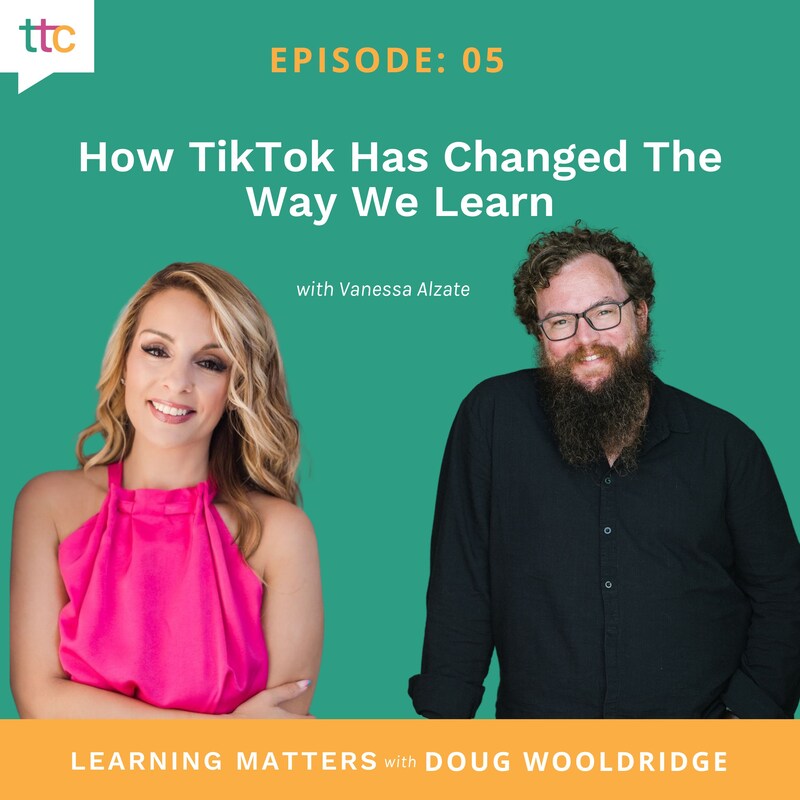
Join us this week on the show as we sit down with Venessa Alzate, founder and CEO of Anchored Training to discuss how TikTok and micro-learning have changed the way we learn. Find out how you can take your training from long-form to easily digestable, engaging, and exciting chunks to match the way most folks take in information in the new digital age.
–––––––––––––––––
At ttcInnovations, we help businesses create lasting change with immersive learning experiences. Through instructional strategy, design, and content development we empower employee confidence, performance, and results.
💡 Looking for custom learning experiences without licensing fees? Contact us for a free consultation! https://bit.ly/4aOhPKq
🤝 Need extra hands fast? Try staff augmentation! Click here to get matched with experts in 48 hours - no job posting needed. https://bit.ly/4aOhPKq
🚀 Simplify outsourcing with our subscription plans - predictable pricing and limitless innovation. Book a meeting for your free first week! https://bit.ly/4aOhPKq
🎯 Boost results with serious games for optimal retention and results. Contact our Dashe team to get started! https://bit.ly/4aOhPKq
Transcripts
Welcome back to learning matters. I'm your host Doug Woldridge. And today we have a great guest. We've got Vanessa Alsatay, the CEO and founder of Anchor Training, as well as the owner and president of Kirkpatrick Partners joining the show to discuss how TikTok and short form content has transformed the way that people learn. Let's get to the interview. So thanks so much for joining us today, Vanessa. I want to start with what brought you into the world of learning and development.
And also what led you to founding Anchor Training? Yeah, absolutely. So thank you so much for having me. I've been a fan of the podcast and the organization for a while, so it's an honor. Well, I got into instructional design and learning. I went to college to be a lawyer. I was going to... wow. I studied communication and political science. It's going to be in Elwoods.
And my father was aware he was going to follow in his footsteps. And I decided I just, you know, around my junior year, I just really did not want to go through the whole law thing. And it just didn't feel like my path. And so, well, what do you do with a communications degree? Feels like anything and everything. So in college, yeah, in college, I also...
was part of a sorority as well as the council that governed all of the sororities on campus, the Pan -Atlantic Council. And as such, I was responsible for creating educational programming. And then I did some other roles and I would create training for my other team members and things. And I was like, this feels pretty cool. I really liked doing it. My Greek advisor, I gave her an outline for a training one day, like a retreat, I think it was like a two day.
during the economic crash of: Learning Matters Podcast (:Corporate training or training was one of my keywords. And on Craigslist, of all places, I did not find the Craigslist killer, but I found a job. And at that time, it was the only job that said, we will train you. Well, thank God. Yeah, right. So I started working at a software CRM company and was able to then get my feet wet in.
Instructure -led training, creating e -learning, which at the time I hated, and all of these different aspects. And then, yeah, after I left there, just kind of that bug hit me and I couldn't let it go. I went into onboarding. I did a brief stint in office management in HR, where I was the only female at that organization. And just, I loved what I was doing for that organization and still think so highly of that work.
but I knew I missed training. And I was always freelancing ever since I left my first job, I was always freelancing on that side. And things just kind of started to snowball from there until, you know, when you're young, single, no kids, you can work full time and freelance and you have a lot of time. And then I got married, had my first daughter, and about three months later found out I was pregnant with my second daughter. So I looked at my husband and I was like, I can't do two kids. boy.
Yeah, I can do two kids under one and a full -time job. And at that point it became a full -time freelance job. So that's how anchor training came to be. So I always said, instead of two kids, I now have three. At that time, right? I had my two kids and then I had this business that I figured out what to do with. And in all honesty, I just LLC'd something other than my name, just out of a recommendation that my father gave me.
then I got a large project in: Learning Matters Podcast (:That's crazy. I think a lot of folks would resonate with that story where you just have to make a major life change because that's how life works. So, you know, best of intentions is only gets you so far. And then when life gives you these changes, you just got to go, okay, now how are we going to roll with these punches? So that's very cool. One of the biggest reasons we wanted to bring you onto the podcast was to
discuss your thoughts on how TikTok, social media, and YouTube has changed the way that we need to develop training for folks. So how has it really changed the landscape of learning and development? Yeah. You know, for me, TikTok has really shown us we can handle and we can absorb content in a really short amount of time if it's really valuable.
and that we don't need all of the extra fluff. Now, it doesn't mean that everything out there needs to be a 30 to 60 second clip, but it really has, it has you look at your content differently and say, is this still too much, right? And really pare down and pare down and pare down. And for me, what I love so much about the platform is that it also democratized learning, right? So anyone can go on and create their own, you know, their own quick tip and things like that.
Now, doesn't mean it's all good information out there, but we also have the internet. So that was always a thing anyway. And frankly, some of our subject matter experts within our organizations weren't giving out great advice. It's always something that I hear from people. So there's always that piece of it. But what I love so much about the platform is it's challenging us. And it's showing us that things can actually meet people where they're at. We can talk.
Instead of at them, we can talk to them, right? Just like having a conversation with someone. And that resonates more than having that super buttoned up professional sort of speak. And what people really want in learning is someone to walk alongside them and be there when they need them, right? We don't want someone there to show them the way. I want to learn by trial and error and go and find the information if I need it in that moment.
Learning Matters Podcast (:but I don't need you to clear the path. I wanna try to clear the path for myself. And that's where I think we can really learn and leverage a lot. And also, I mean, I could go in like a million different directions when it comes to TikTok, but I think it also helps to humanize your organization. You know, we think of, I love to use TikTok for like onboarding and pre -onboarding. Imagine.
being able to share with a new employee, hey, on your first day, let's give you a quick tour. Like, you're gonna park your car here. You're gonna walk through here. Sally over here is behind the desk. She's gonna welcome you, check you in, make sure you're not a serial killer. And then she's gonna bring you to the back and she's gonna show you where you're gonna have your onboarding orientation. Here's the coffee, here's the bathroom.
just helps to ease a little bit of that anxiety. And it helps to get messages across quicker. We are overloaded by email, we're overloaded by a lot of texts. Imagine what we could share with our employees utilizing video. One of the things I love now is people do a lot of these podcast clips, right? Like you all use them too. Imagine just putting your CEO.
putting a microphone and you know what? You don't even have to plug it in, right? Some of those video clips on TikTok, that microphone that it looks like they're talking into isn't even plugged in. It's just for the look of the video. But imagine putting your CEO and having them share the vision for the organization and just doing it in an interview style and having that then be.
given out to your employees, there's just a lot of opportunity for us to make our organizations a little bit more human utilizing TikTok. And what's your approach when you're talking to clients about how they can kind of transform their training needs into more digestible ways and in some ways more exciting content, especially clients who may have been focusing more on the traditional styles of e -learning in the past in those real long form.
Learning Matters Podcast (:hour long, maybe two hour long type of presentations. You know what's funny with that? I think we hear often that, so I will hear often, our organization will never get behind this, they don't like this, da da da da. Yet the phenomenon I'm having when I'm meeting with.
VPs, CEOs, CHROs, CLOs, they're saying, we need to TikTok our content. So there's this really weird divide where individual contributors are saying, we need to do this, but we can't. They won't let us. The C -level and the senior VPs are saying, we need to do this. Where is that not happening? And I think that there are ways to do it. So saying TikTok is a shock factor, but the fact of the matter is,
I don't care what happens with it, if it goes away forever, someone buys it, whatever. The impact of TikTok has already happened. YouTube shorts, Instagram reels, Facebook reels, these things are already happening. Even our ads are becoming more TikTok style in their editing and the voice and the tone and how they start off a module. So I tell people like, you know,
It's not that the whole training is going to be TikTok style, but let's talk about how can we, even if I'm doing an instructor -led training, I think of how would I TikTok this, right? So instead of opening up a course with welcome to cybersecurity 101, maybe if you open the course with the Y or hook them in some way, which is what you use in TikTok, and it's, have you ever been afraid?
to open up an email and click on the link thinking that you're going to be the one that brings down the entire company's firewall. That is a more interesting. I would maybe pay attention to that cybersecurity training instead of welcome to cybersecurity 101, and then I'm just going to wait until the next button enables so I can just keep clicking. Not that I've taken any of those. So it's a way that we can reframe some of our language.
Learning Matters Podcast (:Some of our editing style, and if I start talking to clients in that manner, they start to get it. When I talk to clients about, hey, let's take what you already have and make it TikTok style. Let's repurpose it. Let's borrow what marketing does and take this longer form content and let's cut it up into little pieces and get those major key points out, especially for things that are not.
compliance -related or mandatory, right? It's the number one thing that we hear. I've made this great training, no one takes it. Well, you emailed them one time and you think that they're gonna remember that? They're busy, you're not telling them why they need to participate in it, you're not exciting them about it, you're not even showing them how much better it is than anything else you've ever created, right? You're just asking them to take you at your word. And your word,
might not mean a lot because the other content the department has put out maybe hasn't been that great. So this is your opportunity by taking little clips of it and saying, hey, here's a little snippet of what to expect. Here's a key point. And start to entice them in. And we know for marketing, right, it takes what, seven to eight touches before we actually commit something to memory and like consider maybe buying it. The same thing should be applied when it comes to learning, especially these non -mandatory courses.
We need to constantly be reminding people that it's available, why it's important to them, how it can support them and give them little teasers, right? Movies. They don't just put a movie into the movie theater and think people are gonna flock to it. There's trailers, there's commercials, there's advertisements. So if we start to take that and apply it to learning, maybe we'll start to see some different changes when it comes to this type of content that we're creating. That's fascinating.
I just think it's such an exciting approach to redeveloping the mindset of what training is like. And, you know, the training industry has been ever changing. You know, ever since people started using the word e -learning, folks have been trying to figure out ways to make it more exciting, more relatable, something that they can, the learner can actually take away what you're trying to give them. And I think that this is just a better way to showcase.
Learning Matters Podcast (:what they need to know and when they need to know it. So I've got a couple of questions from our community that I'd like to come toss your way. So we'll start with this one. What are the major differences that we're seeing between the Gen Z workforce and then the workforce that we've known? And how are we kind of combating these differences? Yeah. So the funny thing is they're not different at their core, right? So their core and what they value,
They're the same things that we do, right? We want growth. We wanna work at a company that we believe in, right? We just wanna know the why. The difference is that we have had, and previous generations have had to just kind of shut up and deal with it if you haven't, you know, like, if you don't figure it out. This generation doesn't do that, right? They don't just, they just, they leave, or they try to make change. I've - Yeah.
I tell people all the time, I've seen, I literally with my own eyes have seen Gen Z change a, I don't know, 100 year old policy and change it in a week, just by sending a bunch of emails, honestly. If they don't like something, they're gonna tell you. And even today, so I was, I got sent to TikTok about Gen Z and they're like, you know, the difference between Gen Z and millennials is that we've always had the ability,
to find the why, right? Because we were born in the information age, where it's all there. And so if organizations are not giving us the why, we're just checking out, right? I need to know why this is important. I need to know why I'm going to participate in this, right? So it's not that they are fundamentally so different. It's that.
We've raised them, not that I've raised a Gen Z, I'm not that old. My kids are Gen Alpha, to be clear, which is another generation I'm currently studying. But.
Learning Matters Podcast (:We just raised them to be more critical thinkers and to stand up for themselves. So we get really upset when Jen, like, why can't Jenzy just get with it? They're doing what we taught them to do for years. Stand up for yourself. Don't, you know, like, find out the why. Live a life of passion. Live a life of, you know, meaning and make sure you believe in it. They're doing what we've told them to do. So.
I think that it's not that they're so different. Their BS meter is just a lot lower tolerance than the rest of ours, honestly. That is very true. And I think it's so much easier to buy into what you're doing with a company if you do have the why there for it. Because...
Then you're not just sitting there questioning what your manager is asking you to do. You're taking it in, you understand it, and then you just execute. So what if your company firewall blocks TikTok? So can you still incorporate this TikTok style or maybe mimic it in a way? How does that work? Yeah. Do you want to know a secret?
I don't edit in TikTok. I hate the TikTok editor personally. It is never, like she and I have never 100 % vibed. I've tried and I'm like, it just feels a little bit harder. I don't know, something about it I just didn't love. I actually edit most of my stuff in Instagram reels because I'm a millennial and I hold Instagram hard. But.
this is not about using TikTok, it's about using that style as inspiration. So you can use any video editor that you have out there and now a lot of them are catching up to this style and they're actually starting to include as some of their like features of fonts and transitions and like annotations and things like that, stickers. They're starting to incorporate that TikTok style into their package.
Learning Matters Podcast (:So I'll use Instagram. I will use CapCut or InShot as well. I played around with both of those. I like CapCut more than InShot. I will also, I created software, TikTok -style software training using Camtasia. And it can be done in Articulate as well. It's about just getting the landscape, like the slide.
sizing right? And it could be a TikTok style. And actually in the, I remember seeing this in the Articulate community, you know, they have those challenges. They had a TikTok style challenge to create a TikTok style video using Articulate. So it's really more about taking that inspiration and just applying it to the video editor that you're using. So that way you don't have to deal with the firewall. Gotcha. And how adaptable is this approach to different types of industries and different types of training needs?
Yeah, absolutely. So what I, I think it's honestly adaptable. I've seen it used for anything and everything, right? I've seen it used for software. I've seen it used for soft skills. I've seen it used for more process oriented things. I've seen it used for plumbing hacks and electric hacks, right? It's about getting the content, giving the people just what they need. And then,
If you want to start utilizing it, a great place to start is just by taking maybe one key point and say, in like a longer form piece of content that you have and say, how can I take this key point and make like a little TikTok style video out of it to tease someone into taking that longer form content, right? I've utilized our webinars, our free webinars that we do at Anchor Training, and we'll take the key points or key moments and just create clips from them.
a lot of organizations have internal podcasts, right? You can use TikTok style videos for your internal podcasts as well to get people to listen to that longer, to full podcast. So I think that there's different ways that you can utilize it. I love the green screen effect. You know, when we're talking about policy and things like that and trying to humanize policy, I think would be pretty cool. And then like I said, there's the ability to do software, right? We don't need to see.
Learning Matters Podcast (:a mouse moving across the screen. What we just need to know is highlight where I have to click, tell me what the formula is, if we're talking about Excel, and just give me the quick and dirty, what do I have to do? And if you want someone to follow to get inspiration, Miss Excel is number one for making something so boring and something that's still so challenging for many of us. Your girl, number one.
And making it understandable. And like, I will be on her TikTok for a really long time. Like mind blown. Didn't think that that Excel could do this. That's awesome. And,
I'm going to rephrase this question. The original question is, can you customize it to suit various client needs? But I would rather just hear how you're customizing it to suit client needs and stuff. How do you make sure that you're following their brand guidelines and those type of things? Yeah. So we really look at what is your brand? And we really, there's a difference of the, which we do a little bit of this in traditional learning.
But we really, like I really leverage marketing, right? And really understand what is your brand voice? What are the dos and don'ts? What do you say? What don't you say? What's the imagery like? So that I can take that and apply it to what it is that I'm doing. And then also it makes marketing happy. And like, I like to have a nice relationship with marketing because they can be really helpful. So.
That's how I'll customize it, but then I'll also customize it based on what we're seeing and what we know. So for some customers, it's a lead -in into other forms of content. For other customers, more like our retail clients, customers that have hourly staff and things like that, we're using it as a lot of their training material and just utilizing those quick videos. And then we're interspersing it like we might embed it into a rise module or something like that.
Learning Matters Podcast (:So that way there's a mix of video and then whatever activity it might be. We love using Rise for that because then we can track it for compliance purposes, but also because Rise is so responsive and we know they have to use their phone. It gives us that flexibility and ability to do that and meet their needs. So we want to make sure that they're getting a really good user experience. And using a tool like Storyline doesn't really give that.
Very fair. And how do you measure the effectiveness of TikTok style training content compared to more traditional methods? Yeah, absolutely. So great question. So along with Anchor training, I also own Kirkpatrick Partners. So measurement and evaluation is all of our jam. We love measuring over at Kirkpatrick.
So what we'll see in order to like measure what we're looking at is like the clicks, the click through rate. These are all analytics that your marketing team can help you understand and pull. Now it depends on where you're on, where you are hosting the TikTok style videos. Like you're not gonna get a click through rate from a storyline score and file. But if you're hosting it on like a YouTube channel or like a private one, you can get that.
those kinds of analytics, you can see where people drop off. That's why the back end, I have a YouTube channel too, the back end of YouTube is fascinating. And I will spend a day really diving analytics because it'll show me drop off rate, it'll show me retention, it'll show me what keywords people are searching for. It gives you a lot of really good data. It's helped make my content even better. So those are sort of some of the things that we're looking to measure if we have that ability.
The other things that we're looking at is how many more people are showing up to events because we're launching a TikTok style campaign to get them there. So what are our normal registration numbers versus what are the registration numbers for this event? And then we'll look at things like the amount of resource click, like if there's a knowledge base, how many times are they utilizing the resource? That's how I am able to measure the effectiveness of these videos.
Learning Matters Podcast (:And also some of it is truly like word of mouth. And what I love, love, love, love is some, I did a TikTok session at Dev Learn two years ago now. And I wanna say it was that Monday, I got a LinkedIn message from someone that was there, not my session. And he said, you know, he older gentleman, he, you know,
said that there was a software rollout or upgrade, and he made his announcement TikTok style. And he said that it was six things that you had to remember about this upgrade. He said he got feedback in so many emails from people being like, thank you so much for doing it this way. I would have skipped your email or not paid attention, but because it was a video, it stopped the scroll for me and I paid attention. So if people are stopping the scroll for you, like,
That's a really good measurement that like, okay, we're doing something good that they're actually paying attention to what it is that we're talking about here. Very cool. And just to kind of wrap up some of what we're talking about here, what do you see is the future for L &D in terms of integrating social media and short form content? So are there any emerging trends that we haven't talked about that we should kind of keep an eye on? Yeah, I think,
Right now, people are really obsessed with AI. So I think it's overshadowed everything else, which is a shame, because everything else is kind of what you might actually need and not AI. That's still kind of too new. Doesn't mean you shouldn't play with it. I love to play with it. In chat, GPT are pretty friendly. But I think there's just a matter of, for me, it's like, we've got to stop.
AI is not gonna solve our problems, right? Really good sound content will always win over AI. Now, if we stop and look around, what are people paying attention to and how are they living their lives and how can we integrate learning into the business and into their flow of work? That is what we need to be doing. Adding more content that they have to stop and participate in, we're never gonna win that, right?
Learning Matters Podcast (:that's not going to be a sustainable future. Finding performance support and helping people pull the content when they need it is really truly what people need. And then I would also say an emerging trend, not TikTok related, but I truly believe in the power of community is curating really good in -person experiences where people are really able to connect. People are craving connection now.
So online communities are growing rapidly because people want to connect with others in a world in which we disconnected for so long. So I think that there is, we just hosted for Kirkpatrick our own summit last week. People didn't want to leave on the last day. They stayed around. They were helping us clean up. We were all dancing to Whitney Houston at the very end, just making connection.
That is what people want, right? And these are people that didn't know each other. Most of them were government and military. You want to talk about the most buttoned up people, you know, what we perceive as the most buttoned up people? They're sitting there dancing and, you know, jamming and just having connection with others. And they're like, this is what we needed. We needed this ability to meet network, idea share, and just build that community. So I think that is the direction that we need to be shifting more into.
But we stop because we fear all of the work behind building a community, right? And we're too bogged down in all of the, we've got to update this onboarding program, we've got to update this process, or we've got to update this. Maybe the solution is to stop it, build a community, and then take some of that stuff and put it into this community. And that's where your social media can start to get built in, right?
st,: Learning Matters Podcast (:okay. I'm sorry. What is it like running two companies at once? How do you find the time to do that? Great question. I don't sleep a lot. So there's that. No, you know, there's a lot of synergy, like as different as the two companies are, there's also a lot of synergies. Like they're very complimentary, right? Like...
we're never going to get rid of instructional design. We're always going to have the need for learning and training and content. But we also have to evaluate and understand, is it actually working and if not, what the true problem is? So that's really nice. And we've been leveraging each other's resources on both sides, which has made it very helpful. And honestly, it's been leadership on my team and really ensuring I have the staff to do as opposed to me just doing. Because if I am doing everything, that's just two jobs.
And that's not that's not sustainable for the future. So it's really developing that team. And that's really like they deserve all the credit. Like everything that happened last week with Patrick, like that was all my team. I jumped up the idea, started them down the path. But really, the execution was all them. And they really deserve that credit. Well, kudos to them. And before I get you out of here today, I have one more question.
Do you have any advice for folks that are looking to get into this developing training and this kind of style of more digestible and short form? I think folks generally go into things like this and go, my gosh, I don't even know where to start. What type of equipment do I need? So any potential advice for our listeners would be wonderful. Absolutely. So I think there's almost two things I would say here.
First, in terms of where do I start, your cell phone is literally sometimes the best camera that you have. So you don't have to go out and get a fancy camera. Your cell phone is good enough. Cell phone, if we ever come to, if we're ever at a trade show where you're at, you'll see our TikTok booth is literally a ring light and one of my very old cell phones and me dance on me behind you. Cool. Or behind it. But that's it.
Learning Matters Podcast (:In terms of trying, like if you're new or you want to start to understand like how can I shift how I approach learning in a more marketing mindset, throw out your instructional design books, right? And start picking up some marketing books. Like you're going to start to see a lot of synergies there, right? You're like, as long as you have applied, you know, and you know your good sound instructional design principles, good. Now lift your head up.
out of the learning field and go see how the business does things. We want to be business partners, but we only stick in our learning world. We've got to look up and actually read the books they're reading, listen to the podcasts that they're listening to, watch the YouTube videos that they're listening to. By doing all of those things, you can start to reframe and see what's important to them. And I just like to pay attention, right? Like, what are people consuming? Like, Gary Vee right now is talking about live streaming and like why that's going to be so big. So now I'm like, well, let me like...
see what this whole live streaming thing is all about. Like, why would someone want to watch a live stream and how could I apply like why people want to watch a live stream to learning and there are there things that can mimic there. It's asking those questions that can help you think outside of the box a little bit. Well, this has been incredibly insightful. You know, I think a lot of folks get bogged down in just doing what they've normally done for years and years in instructional design.
And it really is time for folks to wake up and see the other options out there. And I think you talking about looking at it from a marketing side of things instead of just a regular instructional design thing is so important because it really, they are very similar, but the one thing that marketing really strives to always do is get that impact immediately. And I think that's important for learners because.
Like we've talked about, this is the way folks learn today. If I want to learn something, I'm going to go to YouTube or I'm going to go to TikTok. I'm going to go search for things in a video format because that's an easy way for me to digest it and go, okay, now I know how to fix this part of my car. Now I know how to fix this light switch that for some reason burnt out. So yeah, I think this was an incredible conversation. I want to thank you so much for coming onto the podcast today. So.
Learning Matters Podcast (:Really appreciate it, Vanessa, and excited to keep following your journey and see where it takes you, because my gosh, you've been, it seems like it's been a whirlwind over the last several years, but you are really killing it in the industry. And so thanks again for joining us and sharing your insight. Thank you for having me.
Thanks for joining us this week. As always, like and subscribe wherever you get your podcasts. And don't forget to sign up for our newsletter, the buzz to keep up with all the exciting changes in the world of learning and development. See you next time.


