Shownotes
Episode Summary
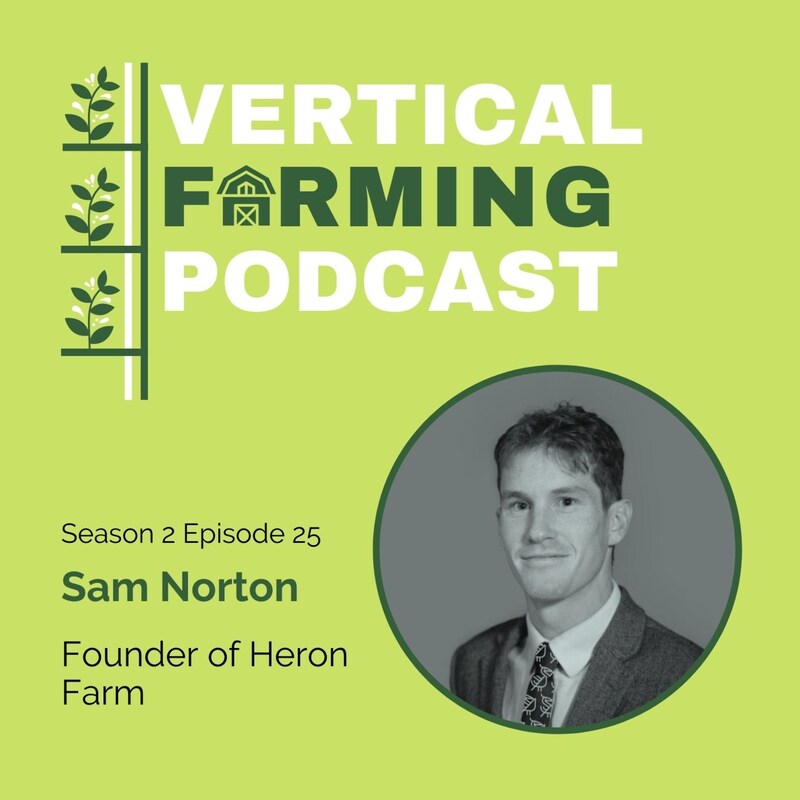
Join Harry Duran, host of Vertical Farming Podcast, as he welcomes to the show Founder of Heron Farms, Sam Norton. It is the mission of Heron Farms to create a sustainable agricultural system and restore the marsh using earth’s most abundant resource: seawater. In this episode, Harry and Sam talk all about sea beans, Sam’s fact-finding mission to Bangladesh to learn more about how seawater crops are grown, and the work Heron Farms is doing with other brands to help rebuild salt marshes across the globe.
Episode Sponsor
Key Takeaways
- 03:22 – Harry welcomes to the show Sam Norton, founder of Heron Farms, who speaks to his passion for environmental studies and what inspired him to get involved in AgTech
- 10:07 – Sam discusses why he chose to focus on seawater agriculture, the startup competition he entered and won and the mission of Heron Farms
- 15:17 – Mentors who have motivated and inspired Sam
- 20:30 – Sam speaks to the various challenges that he faced when moving to indoor farming
- 23:47 – The most eye-opening part of Sam’s trip to Bangladesh
- 26:35 – Sam shares some of the tech stack he’s utilizing with Heron Farms and the skillset necessary to succeed in AgTech
- 30:18 – Sam discusses some of the benefits and nutritional value of sea beans
- 34:35 – Marketing challenges with sea beans
- 38:28 – What Sam would do differently in building his team if given the chance
- 41:52 – Sam talks about the work he’s doing with Dalai Sofia
- 45:13 – How Sam has grown as a first-time CEO, what excites Sam most about the future and a tough question Sam has had to ask himself recently
- 49:19 – Harry thanks Sam for joining the show and let’s listeners know where they can connect with him
Tweetable Quotes
Links Mentioned
🎙️🎙️🎙️
Podcast Production and Marketing by FullCast: https://bit.ly/3sxZ34y
See omnystudio.com/listener for privacy information.
Mentioned in this episode:
2025 Precision Ag Report by iGrowNews
2025 Precision Ag Report by iGrowNews
Transcripts
$680 million poured into precision ag last year.
Speaker:Autonomous weeding robots dominated, and John Deere made 2 acquisitions in 3
Speaker:months. A food company, not an equipment maker, bought a
Speaker:robotics startup to protect its own supply chain. The deals are
Speaker:accelerating, the money is moving, and the winners are already separating from the
Speaker:pack. If you're investing, building, or buying in this space,
Speaker:you need the full picture before your competitors get it. The 2025
Speaker:Precision Agriculture Intelligence Report From iGrow News is now
Speaker:available. Get your copy today at
Speaker:igrownews.com/precision. Pest
Speaker:management is an area that can just absolutely crush you. You know, if
Speaker:you've scaled up a farm and you're just rocking and rolling, and then Pythium
Speaker:comes through and you don't really know, or one of these root-borne pathogens,
Speaker:they can wipe out a whole farm and you don't even know it. You don't
Speaker:even see it happening. So that hasn't happened to us at this farm yet. but
Speaker:it's happened to me in the laboratory, it's happened to me at the last farm.
Speaker:So it's worth your investment to have
Speaker:someone on the team with a little bit of IPM, with a little bit of
Speaker:pest management.
Speaker:Welcome to the Vertical Farming Podcast, weekly conversations with
Speaker:fascinating CEOs, founders, and agtech visionaries.
Speaker:Join us every week as we dive deep into the world of vertical
Speaker:farming with your host, Harry Duran.
Speaker:Vertical Farming Podcast Season 2, welcome back. If this is your first time listening,
Speaker:you're in the right place. This is the show where we interview fascinating CEOs and
Speaker:founders of the leading vertical farming companies from around the world. I'm
Speaker:your host, Harry Duran. In case you missed last week's show, I had a
Speaker:great conversation with the co-founders of Babylon Microforms,
Speaker:Alexander Olesen and Graham Smith. This week I speak to
Speaker:Sam Norton, founder of Heron Farms. Heron Farms has a mission
Speaker:to create a sustainable agricultural system and restore the marsh
Speaker:using Earth's most abundant resource, seawater. We talk all about sea
Speaker:beans, Sam's fact-finding mission to Bangladesh to learn more about how
Speaker:seawater crops are grown, and the work Heron Farms is doing with other brands to
Speaker:help rebuild salt marshes across the globe. We learn about Sam's
Speaker:passion for environmental studies and what inspired him to get involved in agtech, why
Speaker:he chose to focus on seawater agriculture, the startup competition he entered and
Speaker:won, We learn about mentors that have motivated and inspired Sam, and he shares
Speaker:with us the various challenges that he faced when moving to indoor farming. We learn
Speaker:about what was the most interesting part of his trip to Bangladesh, and he shares
Speaker:the tech stack he's utilizing with Heron Farms. A special thanks to our episode
Speaker:sponsor, Ceres Greenhouse Solutions. If you're looking for a greenhouse
Speaker:solution that will suit your specific climate and growing goals, then talk to an expert
Speaker:from Ceres Greenhouse Solutions. Ceres combines passive
Speaker:solar concepts, innovative climate control technologies, and customized
Speaker:grow systems to ensure that their growers are yielding the highest highest quality product
Speaker:year-round for the lowest operational cost. Visit
Speaker:ceresgreenhousesolutions.com, that's spelled
Speaker:C-E-R-E-S greenhouse solutions dot com, to learn more.
Speaker:Naturally, I'm curious to learn about the benefits and nutritional value of sea beans as
Speaker:well as marketing challenges with that crop. All in all, a very
Speaker:fascinating conversation and I learned a lot. If you
Speaker:enjoyed this episode or past episodes, I'd love it if you leave a rating and
Speaker:a review at ratethispodcast.com/vfp.
Speaker:I'd love to read yours out next. This episode is also brought to you by
Speaker:the Vertical Farming Weekly newsletter. Each week, our team member Daniel Dreys
Speaker:scours the ends of the earth, climbs mountains, and fords rivers to bring you the
Speaker:latest and greatest in the world of vertical farming. Sign up today at
Speaker:verticalfarmingweekly.com. Okay, let's jump into this conversation
Speaker:with Sam. So Sam Norton, founder of Heron
Speaker:Farms, thank you for joining me on the Vertical Farming Podcast.
Speaker:Thanks for having me. So I like to
Speaker:start off on a high note. What's something good that happened to you this
Speaker:week? We broke another sales record and my niece turned
Speaker:1. So those are both awesome. Can you share the record?
Speaker:It's probably pretty low for most of your audience. Yeah, that's okay. But it's good
Speaker:for us. We're on our— that's our 11th sales cycle, our 11th week of sales
Speaker:out of this new facility. Yeah, we're on the right path. And for
Speaker:the benefit of the listener, where's home for you now? Charleston, South Carolina.
Speaker:I grew up outside of it, and that's where this first farm was
Speaker:located. What was life like growing up for you?
Speaker:It seemed okay. It gets pretty warm down here, but
Speaker:it's a pretty beautiful part of the world. I grew up
Speaker:on one of the barrier islands, so a lot of surfing and
Speaker:mostly sports, mostly basketball and football. That was kind of all I
Speaker:knew until I tried— I took a stab at academia.
Speaker:What were you thinking, if you can remember going that far back,
Speaker:but like when you were in high school getting ready to decide where you wanted
Speaker:to go for college and what you wanted to study, what was on your mind
Speaker:back then? Oh gosh. Well, I did the— I did exactly— my mom
Speaker:told me what I should do, which was to leave the state and to go
Speaker:off and do what she did. And my brother went to University of Hawaii, so
Speaker:he went about as far from Charleston as you could go. Yeah, I decided that
Speaker:wasn't— that I was smarter than her and I would just go to College of
Speaker:Charleston. And, uh, no, CofC has been great. I'm a grad
Speaker:student there now about to finish. And, uh, but I was thinking
Speaker:out of leaving high school like, oh, I'm having so much fun, I'll just stay
Speaker:in this town. And I ended up failing out of school and
Speaker:becoming kind of a carpenter vagabond for a while until I got back into
Speaker:school and turned things around. That's funny, my partner went to University of
Speaker:Hawaii as well, so I heard a lot of good things
Speaker:and that's actually one of the options for a future place to go
Speaker:temporarily. You never know with what's happening nowadays. My business is remote. So,
Speaker:it seems like all options are on the table. Oh, sure. I just bought
Speaker:17 acres in what's technically middle of nowhere, South Carolina. It's not even
Speaker:incorporated. It's called Green Pond, but it's because this
Speaker:work-from-home lifestyle that we might move towards that we're
Speaker:kind of forced into recently but might move towards. It'd be nice to do it
Speaker:from a beautiful part of the world, and it's certainly nice down there. So Hawaii
Speaker:would be a good choice, although my brother told me that it was pretty expensive
Speaker:for a gallon of milk and some of the necessities. For people that
Speaker:are either unaware of Charleston,
Speaker:how would you describe it and what's the draw to it? Because it is a
Speaker:beautiful part of the country, and I think for people who know the
Speaker:big cities and know the popular touristy places, I don't know how many
Speaker:times Charleston comes up in conversations of great places to
Speaker:live, but how would you describe it to folks? Well, gosh,
Speaker:it has just a troubled history. It was the largest slave
Speaker:port in the 19th and 18th century in
Speaker:America. Because of that, the city of
Speaker:Charleston had great, great wealth, but it was built on,
Speaker:of course, nonsense. Today,
Speaker:it's still a very undiverse place, but it is
Speaker:beautiful in the sense that it's scaled properly.
Speaker:We were one of the first cities to have a historic district and to
Speaker:have a board of architectural review that would not allow
Speaker:the development of the historic district. And so that has
Speaker:remained intact, and it's one of the main reasons people come down here to do
Speaker:weddings and things like that. But more importantly, it's couched between
Speaker:the Francis Marion National Forest just to our north and
Speaker:then the Ace Basin just to our south. And so both of these protected areas
Speaker:give this place just an incredible greenness to it. And of course, it's sitting
Speaker:out in between these 2 rivers and marshland all around. And that's
Speaker:been under a bit of pressure since the mid-2000s-ish.
Speaker:We've seen quite a bit of development, and people like my old man that build
Speaker:houses, it's just great news for them. But For the marsh, it's not good
Speaker:news. When did this interest in environmental studies
Speaker:click for you? When was it something that you started to realize you were being
Speaker:drawn to? Well, I was studying political science as an undergrad, and so
Speaker:when the last administration came into office, it kind of felt like an
Speaker:oxymoron. And I was sort of drifting at the time towards natural
Speaker:sciences because I had been reading folks like Wendell Berry and
Speaker:E.O. Wilson and people that my professors had turned me on to.
Speaker:And so I just got more and more into— I bought a
Speaker:microscope at one point during undergrad and it turned out just
Speaker:like looking at your compost under the microscope and things like that had its
Speaker:own entertainment value to it because I didn't have social media or
Speaker:TV or anything. So it had a lot of— I could just— that was fun.
Speaker:So anyways, kind of drifted that direction and ended up studying
Speaker:these salt-tolerant plants and getting into grad school for that
Speaker:field and just kind of running with it. Did you know anyone who was
Speaker:in the industry? Were you starting to make connections or follow people that were doing
Speaker:something similar at the time? Well, sort of in a
Speaker:strange way. I just met this woman at Boeing and she was
Speaker:on the biofuel strategy team. And she was like,
Speaker:I was studying Middle East politics and she's like, you need to check out what
Speaker:we're doing in the Middle East. You know, we're growing this plant called
Speaker:Salicornia with nothing but salt water. And I
Speaker:just thought that was so fascinating that I wanted to learn more. And anyways, ended
Speaker:up writing my capstone on what they were doing out there and seawater
Speaker:agriculture in general. And the takeaway is that the plant that they were
Speaker:growing for biofuels that they were saying would kind of lead
Speaker:the way or be the corn of seawater agriculture was the same plant that we
Speaker:had eaten growing up around Charleston. It was the annual
Speaker:species, was native. And so I had been eating it growing up and
Speaker:realized like, We should grow this for food and not
Speaker:fuel. And that's kind of what started it. I do want to set some context
Speaker:for the listener because I just love the sort of
Speaker:like the real-worldness of podcasting sometimes. So can you just let the listener know where
Speaker:you are? Because if they do hear background noise, I actually want to leave it
Speaker:in there because I think this is what's awesome about talking
Speaker:to a variety of people in this industry. And then sometimes you're
Speaker:actually calling from the place or dialing in from the place where work is. So
Speaker:maybe set some context for where you're at now. Yeah. Sorry. Harry, and for the
Speaker:listeners, the grow room is right behind me. There's, and
Speaker:there's about a half dozen people still on site right now who are
Speaker:feeding and kind of cleaning up after our biggest week
Speaker:so far. And so you might hear a door or two open and I apologize.
Speaker:That's okay. So yeah, so, so that when you had that
Speaker:realization that this plant that you were very familiar
Speaker:with, having grown up with it yourself, could be grown in those
Speaker:environments, was it that immediate? Was that like that light switch went off and you're
Speaker:like, this might be something to look into? It was pretty immediate, and it's because
Speaker:we have in Charleston and in Savannah and in these port
Speaker:cities in the Southeast, inside the port, we have these things called
Speaker:confined disposal facilities, and these are basically large areas of
Speaker:marsh that the Army Corps has turned into confined areas to put
Speaker:dredge material when they deepen the harbor. Telling us that, telling you all that because
Speaker:we deepen the harbor in Charleston every 10 years to keep up with Savannah and
Speaker:these places. And it, when you dump a bunch of saltwater and mud into
Speaker:a confined area, the water evaporates and it leaves behind very
Speaker:salty, desiccated mud. And so
Speaker:we have a very famous one under our big bridge in Charleston called Drum Island.
Speaker:And I was going over the bridge after meeting these folks at Boeing and realized,
Speaker:oh my God, the plant that they're talking about starting the seawater
Speaker:agricultural industry is growing right there naturally.
Speaker:And so that kind of sparked this whole, let's rebuild the confined disposal
Speaker:facilities and grow useful products with seawater. And it turned out you
Speaker:had to decouple those. And then if you wanted to rebuild confined disposal facilities, you
Speaker:could do it, but you couldn't do it and have any
Speaker:useful, very many useful products. You could do it and let Habitat scale on
Speaker:its own, but it needed to bring the food system elsewhere. And
Speaker:can you talk a little bit about the competition you entered also as well? And
Speaker:how that played a part in learning more about this? Oh, gosh. Well, that was
Speaker:just a lot of luck timing, because the South Carolina
Speaker:Department of Agriculture, we are not the most forward-thinking
Speaker:bunch up until the commissioner went to
Speaker:Netherlands and saw some, some advances in the industry
Speaker:and really wanted to come back and say, listen, guys, we—
Speaker:corn and soybean and cotton is, is just fine. But peaches
Speaker:are just fine too. But let's, let's let's get more interesting. And so he
Speaker:tasked a woman named Kyle Player with starting the Acre
Speaker:Startup Competition. So I entered that with this idea. I was kind of the
Speaker:youngest person there. For some reason, thought it was willing to take a
Speaker:chance on it. So it really gave me the runway necessary to just fail
Speaker:over and over again with these plants indoors and outdoors and get the path
Speaker:cleared out for me, at least for a little ways. What I thought was interesting
Speaker:was the fact that you make it a point to have your mission
Speaker:prominently displayed on your website. So can you
Speaker:let the listener know what that is? Because I think it's very audacious and I
Speaker:think it's very inspiring as well. Yeah, it's to tap into the
Speaker:largest resource on the planet, which is seawater. And
Speaker:if we can do that while we rebuild the planet, then that's really
Speaker:a win-win. But it comes from living in a
Speaker:place like a lot of towns on the coast that are looking at
Speaker:seawater and looking at the next 50 years or few centuries and saying,
Speaker:oh gosh, better move to Asheville or somewhere
Speaker:closer to you. And so what we're saying as a company is
Speaker:let's not just treat the seawater that's incoming as a problem,
Speaker:let's treat it as a resource. And so that's where we got our mission from,
Speaker:is trying to communicate that in as few words as possible. What's interesting is
Speaker:the fact that you're still in school and then you've been— you founded Heron in
Speaker:2018. Is that right? Yeah. And so
Speaker:when did you realize that this was something that in order to be successful,
Speaker:in order to take it to the next level, you'd have to create a
Speaker:company and you'd have to figure out a way to scale this up? And that's
Speaker:not something that most people, unless they have the entrepreneurial spirit,
Speaker:think of. I've got the spirit, but I don't, you know, I don't have much
Speaker:else. What happened was The Acre sent me an email in July
Speaker:of 2018 and said, hey, you won the competition. we're going to wire you this
Speaker:money to your Heron Farms bank account. Didn't exist. Heron
Speaker:Farms was just an idea. It didn't— it was not a real thing
Speaker:besides something I had made a PowerPoint and done a little bit of research on.
Speaker:So anyways, the business was formed prematurely in order to process the grant,
Speaker:which we ended up— yeah, they allowed me to use it for academic purposes at
Speaker:the time. So the business started in 2018,
Speaker:but that was really the beginning of mostly research until
Speaker:last, basically this time last year when an established hydroponics company,
Speaker:we had just won another startup competition in the area and a
Speaker:more established hydroponics company said, okay man, you can
Speaker:use one of our shipping container farms and just go crazy with it and
Speaker:see what happens. And we ended up selling out of our product despite the
Speaker:pandemic, and so that's when we got enough funding to kind of go off and
Speaker:do our own thing. So the being ready for scale, and
Speaker:with the second part of your question, you know, we're, we're like the— we're fixing
Speaker:the car as we drive it down the road type of thing. We have the
Speaker:good kinds of problems, you know, we have more demand than we can grow
Speaker:for, so we're, we're fixing it as we go and trying to get ready to
Speaker:scale. But at the time it was that they gave the grant, it was just,
Speaker:hey, go figure this out. And thanks to a lot of help in the area
Speaker:and folks in the industry, we're starting to get there. So where do you
Speaker:look to for inspiration? Because you've got a pretty decent team that you're
Speaker:starting to build up. Who do you look to for guidance when you try to
Speaker:figure out, like, who's the next hire? Like, where do I ask for help? Like,
Speaker:how do I grow this? How do I scale this? What is it that I
Speaker:don't know that I should be asking? I imagine at that point, like, you
Speaker:have a lot of unanswered questions. Sure. I've got—
Speaker:so in the most recent startup competition, I had a mentor. This
Speaker:gentleman has started 2 publicly traded companies. He's in his 70s.
Speaker:old-school American capitalist, doesn't curse, doesn't— he's
Speaker:a great mentor. Anyways, he, after we won, became
Speaker:an investor. And so he wears the investor hat and the mentor hat. We
Speaker:also have another investor I met through him that is a
Speaker:new-school Stanford finance guy that is also a great
Speaker:mentor. But they both don't come from ag. And so
Speaker:that sort of inspiration comes— I've, up until
Speaker:recently, had a member on the team named Brian Evans who had worked at Plenty,
Speaker:and we would just brainstorm all the time. And he was a big inspiration. But,
Speaker:you know, conversations like this and conversations with the local
Speaker:team, but mostly just sort of random interactions with folks.
Speaker:One person on my team got me to get LinkedIn a few months ago, and
Speaker:that's just led to some just fascinating conversations. I hadn't had social media up
Speaker:until then, so it's really been— that's been interesting. So
Speaker:for inspiration, I would say the internet's full of it, and so
Speaker:are people outside the industry who whose businesses are going
Speaker:through similar things right now and they can always help even though they have no
Speaker:clue about how fights physiologically work.
Speaker:Would you want to mention any of those mentors or any of the folks that
Speaker:helped you there? Sure. Stuart Bascom, who I was talking about, he was the
Speaker:mentor in the startup competition. And Scott Fisher, who is
Speaker:the other mentor and investor I was talking about. Also, one of our
Speaker:early investors was the judge of this startup competition. His name is
Speaker:Patrick Bryant. He's a software-focused investor and
Speaker:entrepreneur. who are in the South. But because of
Speaker:LinkedIn and podcasts like these, the mentor list is definitely
Speaker:growing. And that's a lot of fun because people like what we're doing enough
Speaker:to speak honestly when we're just— I'm just messing it up. And
Speaker:so they— a lot of good honest feedback has been coming in. Is anyone
Speaker:doing anything similar with saltwater, like similar to
Speaker:what Haron is doing? There are, you know, a few dozen folks doing
Speaker:it outdoors in Europe and Asia. There's about to be
Speaker:someone doing it indoors in Europe. I don't recall
Speaker:the name. We have some random
Speaker:restaurant customers that we ship to, and so it looks like
Speaker:we're getting a few boxes ready to go out the door. Very cool.
Speaker:Yeah, I was just asking if there's any folks doing something similar in this space.
Speaker:Well, I want to back it up, Harry, because there's many people that have
Speaker:been doing it outdoors. And what I realized in grad school, and
Speaker:I'm This is part of the reason for bringing food production
Speaker:indoors with seawater ag is that we saw
Speaker:4 or 5 major big funder
Speaker:projects outdoors grow Salicornia and fail after a couple years. So I was
Speaker:trying to figure out why do they keep failing, and it looks like, it seems
Speaker:like it's been the same 3 reasons, and those are land constraints.
Speaker:If you want to pump seawater in, you must be near the coast. If you're
Speaker:near the coast, you're very high likelihood that people live there. And they do
Speaker:not want to have a guy from
Speaker:America come in and say, hey, look at all this marginal land, we're going to
Speaker:grow Salicornia. It doesn't go over well. This happened in Sonora, it
Speaker:happened in Eritrea, it happened in UAE to some extent.
Speaker:It's kind of the not-in-my-backyard type of thing. So that's one land constraint.
Speaker:So then if you find a place that is near the coast and desert— deserted
Speaker:enough to work, You run into the second constraint, which is that
Speaker:if the annual precipitation is less than the annual evaporation,
Speaker:if it just doesn't rain much, you build up sodium chloride in the soil,
Speaker:and even these plants, which are the most salt-tolerant terrestrial, can't handle it
Speaker:after a little while. And the third one is
Speaker:just seasonality. These plants flower as the
Speaker:photoperiod changes in the end of the summer, and there goes your
Speaker:that ability. And so we tried to fix those 3 issues by
Speaker:bringing it indoors and going vertically. But so
Speaker:the outdoor farms are going to work if their
Speaker:main product is outside the food space. They can make food products
Speaker:seasonally, but what we're seeing now is more of a push
Speaker:towards raw materials. So there's a— so for
Speaker:using the seed oil for pharmaceuticals or for biofuels or
Speaker:for tech, we're seeing the lignin being
Speaker:processed for biofuels and we're seeing folks trying to
Speaker:make use of the basically dead plant matter. Or an
Speaker:interesting company in Asia who is only interested in the
Speaker:plant salts because when sodium chloride is processed through a halophyte,
Speaker:it decreases— it changes the sodium chloride ratio and makes it healthier for
Speaker:humans than— healthier than table salt. And so they've won
Speaker:some interesting startup competitions in Asia Based on that platform.
Speaker:That's really interesting. And I think the idea that you decided to go
Speaker:indoors, did that present its own set of challenges as well? I mean,
Speaker:your listeners know all of them, I'm sure, and more,
Speaker:because when you look at a company's Instagram, it
Speaker:looks very beautiful inside their indoor farm. But, but of course,
Speaker:behind the scenes, there's just all sorts of issues when you
Speaker:try to put nature in a headlock inside of this room and then make it
Speaker:all work. But no, it's the same issues as most people. I mean,
Speaker:pumps need to turn on at the appropriate time, lights need to do their job,
Speaker:and the electric bill needs to stay in a good space, and the room needs
Speaker:to stay cool, and your planting cycles need to be really
Speaker:dialed in so that there's no gap weeks because you just promised a customer that
Speaker:you deliver 52 weeks a year and then you— 47 doesn't
Speaker:count. And so it's presented all of its— plenty
Speaker:of challenges, but— We did find one example
Speaker:in the outdoor space where 2 of the 3 challenges were solved,
Speaker:and that was in rice paddies that had become salinized due to sea level rise.
Speaker:And so I went to Bangladesh last year on the whim that with a guy
Speaker:from Europe that, yeah, that would work, and it kind of
Speaker:does because the land use constraint isn't there. It—
Speaker:because it's already— the land is already dedicated to agriculture for rice production,
Speaker:but during the non-monsoon season, there's no rains and
Speaker:the incoming The irrigation water is too saline for rice. And so
Speaker:we had this thought, well, why don't they just switch crops and grow halophytes
Speaker:like Salicornia and a few others? And that turned out to work.
Speaker:It also solved number 2 because it would rain in the
Speaker:monsoon seasons and knock out the sodium chloride and you would not ruin the
Speaker:soil. And so we're going back in March to Bangladesh to try that on
Speaker:a larger scale with different partners. And so that's pretty interesting and we'll see how
Speaker:that does. Well, that would seem to open up a whole new possibility of
Speaker:partnerships if you get that right and probably get a lot of
Speaker:attention to you and the work that you're doing, which in my
Speaker:mind, I start to think about juggling different priorities as well and
Speaker:all the challenges that come with that. But was that your first time out to
Speaker:Bangladesh? First time. Yeah. The partner, he owns a company called
Speaker:Seawater Solutions in Europe and they do strictly outdoor
Speaker:climate resilience marsh replanting. for food and other.
Speaker:He basically called me about a week before and said, hey, do you want to
Speaker:go to Bangladesh? And I had never met him, but ended up, you know,
Speaker:we just had knew each other, our companies followed each other on Instagram,
Speaker:that was about it. But anyways, I went with him and it was a great
Speaker:time. And we traveled around with the Ministry of Agriculture and tried 4
Speaker:pilot sites, which represented the 4 kind of versions of
Speaker:rice paddy, which had been inundated by saltwater and were no longer we're
Speaker:laying fallow, and 3 of them worked. And so we're going back this year with
Speaker:a Dutch partner called ICO and the World Food Programme, and of course
Speaker:the ministry again. And you're right, it'd be really interesting if it scales.
Speaker:It will have likely one of the same problems, which is what is
Speaker:the end market if we do grow all these halophytes? Let's say every
Speaker:10 million acres of rice paddy that will be laying
Speaker:fallow next non-monsoon season, what, what are we going to do
Speaker:with all those halophytes? And that's, that's really what needs to be
Speaker:established before this scales. What was the most
Speaker:eye-opening or interesting thing about your time in Bangladesh?
Speaker:It was pretty awesome. I would say, yeah, in Charleston,
Speaker:a lot of land— we do not have very many people in South
Speaker:Carolina compared to how much on— in Bangladesh,
Speaker:every inch of the place, places I went through at
Speaker:least, had been turned into food production. It was incredible. I
Speaker:mean, every inch of someone— you had a rice paddy, on the edge of the
Speaker:rice paddy they were producing tamarind or some tree. In the
Speaker:backyard they were growing shrimp, and in the front yard there were livestock. And it
Speaker:was just seeing— but so there was— Wow. The
Speaker:really interesting part where they had learned to grow enough food for so many people.
Speaker:I mean, half the population of the US fits into Bangladesh. And
Speaker:that thing is— the country's the size of South Carolina. The other
Speaker:part of that is, oh gosh, this is supposed to be mangroves. Where are the
Speaker:mangroves? So there's some of that as well. But there is, of course, the Sundarbans
Speaker:in southern Bangladesh, which are untouched. People kind of
Speaker:get in and out and it's very— you can get a lot of money if
Speaker:you can find a tiger to bring back to the market. So
Speaker:it's quite beautiful. But so all I'm saying is It was fascinating,
Speaker:the food production in that amount of space for that amount of people, but also
Speaker:the destruction of the natural environment was also a bit eye-opening.
Speaker:Was there anything that changed your perception from a
Speaker:production standpoint in terms of, you know, obviously they've
Speaker:demonstrated what is possible, you know, and anything that you were
Speaker:able to bring back in terms of how you think about what you're trying to
Speaker:do here stateside? I came back with a sense And you can
Speaker:fly over the Midwest where you are and get the same sense. And there's parts
Speaker:of South Carolina will give you this sense. But I came back with a sense
Speaker:that monocultures really just are a
Speaker:noggin scratcher. They just, they are great on paper.
Speaker:And when you actually implement them, they are just
Speaker:not good at scale across a landscape. It is to
Speaker:see an entire landscape of only rice and to know what was there
Speaker:before. So I'm not, you know, so that's what I came back with, was
Speaker:that sense. The other one is, if I can say the second
Speaker:part, it would be that— Yeah. You can grow your own
Speaker:food. That whole country is learning, you know, besides the folks in Dhaka,
Speaker:in the big city. I mean, most of the folks are growing their own food,
Speaker:and what's left over is given to or sold at the local market. So you
Speaker:really can have a robust town where everyone grows their own
Speaker:food and supports They're growing different things. And so
Speaker:monocultures are scary at scale, but
Speaker:diverse agriculture at a smaller scale is very
Speaker:interesting and seems to be working over there, although it has caused a great
Speaker:loss in the natural environment. That's a nice perspective.
Speaker:Thank you for sharing that. So back with Heron, can you talk a little bit
Speaker:about the technology stack to the extent that you can, that you're using and what's
Speaker:working for you right now? We have not gone the route of
Speaker:robotics, so we are trying to learn our takt times through
Speaker:manual labor. And as those takt times reveal themselves and things
Speaker:become unscalable, or we see things that can scale better with
Speaker:automation, that's where that comes in. But the grow room technology
Speaker:is fairly standard, I would say. I mean, there's not many in
Speaker:the industry now who are not monitoring and manipulating the environment
Speaker:with auto-dosing and with logical controls in
Speaker:the environment. So CO2 and humidity and
Speaker:etc. are manually controlled during the commissioning phase, and then
Speaker:they— you automate one at a time. That's our route.
Speaker:In terms of— well, we're using
Speaker:software that allows us to also have our inventory and sales built
Speaker:into that. So there's traceability throughout the system.
Speaker:So we log into a dashboard and see the environmental parameters of the farm and
Speaker:anything that may have happened, but then put in a sales
Speaker:order, move inventory through the software into
Speaker:cold storage, and basically be able to, like most
Speaker:farms that want to have Harmonized GAP Plus or one of these certifications, be
Speaker:able to trace back in case there was ever an issue. And so in terms
Speaker:of technology that we're working on, so the folks listening to
Speaker:this are dosing their nutrients with
Speaker:conductivity probes, but a conductivity probe doesn't allow
Speaker:you to distinguish between sodium chloride salts and nutrient
Speaker:salts. It all looks like— I mean, if
Speaker:you drop a conductivity probe into saltwater, you basically break the thing.
Speaker:And so what we're working on, just a little teaser, is
Speaker:being able to distinguish those and to be able to dose properly when you add
Speaker:seawater to the equation. You bring up an interesting point because
Speaker:some of this is brand— a lot of this may be brand new in terms
Speaker:of technologies used, but also what that
Speaker:brings to mind for me is the skillset required for people to
Speaker:operate in these environments. And I don't know to what extent
Speaker:there are people who are being taught or learning the combination of
Speaker:skills you need to operate in these new
Speaker:types of vertical farms and even some of the things that you're doing that are
Speaker:cutting edge and specifically related to the challenges you have with
Speaker:saltwater. So I'm wondering how you think about those as you start to grow your
Speaker:team. Well, myself and the rest of— I try to
Speaker:do some academic research, but a lot of us are just
Speaker:YouTube University. I mean, that's— you look at— you had Nate Storey on
Speaker:recently. I mean, if you've got an hour a day to watch Nate
Speaker:or Bruce Bugbee or Dr. Kubota at University of Arizona, I
Speaker:mean, you're doing just fine. Brian
Speaker:Evans used to joke that Plenty was Hydroponics University and you could
Speaker:spend 2 years at Plenty and then graduate and you would you would have learned
Speaker:everything you need to know. But so in terms of the skill set, what
Speaker:Brian and I used to joke about, he came up with this term, someone else
Speaker:may have come up with it, called plumbtrician. And so if you wanted to be
Speaker:a useful person on a hydroponic farm, you needed to be part plumber, part
Speaker:electrician, and then part, you know, plant scientist, blah
Speaker:blah blah. Oh yeah. So no, I think the industry isn't old
Speaker:enough yet to really have— we have the converts, you know, we have the
Speaker:old-school people that came from greenhouses and are now in CEA, but A
Speaker:lot of what we're seeing is at least
Speaker:people my age, you know, they kind of learn from YouTube and then you learn
Speaker:from just trying and they work. They grow one plant in the basement, kill it
Speaker:5 times, and by the 6th they've eaten it and they
Speaker:are starting to learn. Can you talk a little bit about the
Speaker:benefits and some of the nutritional value and just maybe just a
Speaker:101 on sea beans? 'Cause there may be a lot of people that don't understand
Speaker:'em, don't know them. And obviously you growing up with 'em are very Well-versed in
Speaker:them, so I think that'd be helpful. Sure. The first thing is
Speaker:they have salt water in them. They're 98% water and the water they grow in
Speaker:is salty, so they're like biting in. It's kind of like a
Speaker:plant, it's kind of like an oyster but in the
Speaker:plant world. So it's like jumping in the ocean
Speaker:a little bit, not quite that salty, but it's delicious. It's the only
Speaker:produce that's already seasoned with salt and us and the other mammals really like
Speaker:salt. Not too much or we'll be totally offended, but, you know, you can shoot
Speaker:a deer down here just by putting out a block of salt. And where you
Speaker:live, elk will get run over because they will come lick the road
Speaker:salt off. Yeah. And there's no species on the planet that doesn't need
Speaker:sodium chloride. And so we have this sort of primal attraction to it
Speaker:in a sense, and I think that just comes from us liking salt and needing
Speaker:it. But nutritionally, it's interesting because
Speaker:In order for a halophyte to live in the marsh, they
Speaker:have to, you know, you remember in Bio 101 you learned about water
Speaker:and how water is kind of weak, it just kind of follows
Speaker:ions around, and so halophytes have to change the
Speaker:osmotic gradient, and what that means is they have to hold on
Speaker:to more salts and minerals inside their cells
Speaker:in order to bring the water in from the soil, which in this
Speaker:case is very salty and full of minerals. And so to change, they have to
Speaker:create a gradient where there's— where water wants to enter the cells. And
Speaker:that's why you cannot plant corn in a salty field, because the
Speaker:water won't enter the cells of the corn. And so for
Speaker:that reason, halophytes store more minerals per gram
Speaker:than typical plants. However, they can store a lot of
Speaker:sodium in the vacuole, and so it can become unhealthy. And so what our game
Speaker:here is to make them salty enough to taste
Speaker:delicious and salty enough to use as much seawater as possible, but
Speaker:also not too salty to make them unhealthy and make them
Speaker:unpalatable. And so we're trying to match that up, but it's like most plants,
Speaker:vitamin A, calcium, iron, it has a profile similar to, it's in the
Speaker:same family as spinach and beets. So if you had to pick a profile that
Speaker:was most similar, you'd pick spinach. What are some other common
Speaker:halophytes that people may not not be aware of that fall in that family?
Speaker:This is the goosefoot family, it's called Chenopods.
Speaker:There are, I know, if people, you know,
Speaker:if someone grew up on the coast, they might be familiar with Batiste maritima,
Speaker:it's called saltwort. Most of the halophytes are a little bit obscure, I
Speaker:mean, sea purslane, maybe, it's in a different family, but
Speaker:there's about 1,500 halophytes we know of,
Speaker:and only a couple dozen really are being
Speaker:looked at seriously for ag, and only about a dozen of those are
Speaker:pretty serious for food. Salicornia has the longest history of
Speaker:edibility, and that's why— and it's also the most salt tolerant, and it's annual— and
Speaker:so that's why it gets the most attention, because it's been eaten on multiple
Speaker:continents for a very long time and typically just foraged. And that's how
Speaker:all of our chef customers, you know, occasionally there's one that doesn't know what it
Speaker:is, but typically a chef has used it at some point
Speaker:during its wild harvest season and they're already familiar with the plant, even
Speaker:though it has all sorts of strange monikers in the US. Sea beans is what
Speaker:Whole Foods calls it, which is why we went with that name. But there's a
Speaker:bunch of names for it. Where does seaweed fall in the range of
Speaker:plants that flourish in seawater? Well, they're a
Speaker:macroalgae. They're not— they don't have a vascular system. They don't have a
Speaker:root system. Okay. And so what we're growing are terrestrial
Speaker:angiosperms. And so you would— we get
Speaker:asked this all the time, like, why don't you guys— why are you guys trying
Speaker:to go after this niche market? I mean, just grow a bunch of algae. And
Speaker:it's just, we're set up to grow basically like lettuce, or,
Speaker:you know, we're growing a rooted vascular plant. Mm-hmm. And so,
Speaker:but algaes, for good reason, are getting a ton of funding and attention
Speaker:because, oh my God, you can grow protein and healthy things in seawater,
Speaker:we should be all over that. But no, it just doesn't fit what we're doing
Speaker:here. Having switched your hats now to marketing, now
Speaker:that you have the product out and you're growing this crop now,
Speaker:how do you start to think about who the buyer is
Speaker:and how do you start to have those conversations? And is there any education involved
Speaker:in getting the word out? When we built this new farm, I
Speaker:lumped— if you had a teeter-totter, I weighed the team down on the sales side.
Speaker:thinking that what we would really need to do was inform the customer and go
Speaker:out and sell. And we got— I got the teeter-totter thing wrong. We actually needed
Speaker:to grow more. But what we've connected with customers on is that
Speaker:if they've never heard of it— so we basically— this—
Speaker:we're copying the model that the avocado did. I mean, that's if you boil
Speaker:it down. I'm trying to make it sound sophisticated, but all we're really doing is
Speaker:saying, why have you ever eaten a banana? Why have you ever eaten avocado? You
Speaker:know, all those plants went through similar cycles. And what happened
Speaker:in the avocado's case was— I'm going to botch this, but to
Speaker:paraphrase, the California Growers Association was like, hey,
Speaker:look, we can grow this tree fruit. At the time, you know, ahuacate is the
Speaker:Aztec word. It means tree testicle. So you would think it has the worst
Speaker:marketing of all time. But what they realized was, you know, people
Speaker:didn't know how to eat this thing. They didn't know when it was ripe. They
Speaker:didn't know what would be a fair price. And all those are true with sea
Speaker:beans, but what they did realize with that was that
Speaker:interesting chefs in San Francisco and LA would love to use the product.
Speaker:They would pair it with luxury items, and they would teach people when it was
Speaker:ripe, how to eat it, what to pay. So there was
Speaker:immigration to the US from Central America, and folks from Central America had eaten
Speaker:avocados, so there was that influence. But the avocado
Speaker:built on the backs of chefs, and chefs taught people how to
Speaker:eat them. And chef taught them that they were luxury food in the
Speaker:beginning. And that if you do price, if you adjust for inflation,
Speaker:it would cost you $27 for one avocado back in the 1950s. Wow.
Speaker:And last year, it was the first fruit to have its own Super Bowl commercial.
Speaker:It's a $10 billion market. I mean, it's just a fascinating story. The thing that
Speaker:used to be called crazy names, and they actually tried calling it the
Speaker:alligator pear for a while, and that turned out not to work either. So then
Speaker:they went back to avocado. But anyways, We're not doing anything different.
Speaker:We're saying, chefs, we don't want to make a
Speaker:big margin on you. We just want you to do interesting things with this product
Speaker:and teach people how to eat it and when it— and what to pair it
Speaker:with. And we let the chefs run with it. And so if you look at
Speaker:a certain market, introduce to chefs, and then you kind of build out from there.
Speaker:I've been fascinated with all things chef-related. I think at some
Speaker:point in a previous life, I wanted to be a chef. I remember baking
Speaker:and cooking when I was younger. But, uh, so I love Chef's Table, the Netflix
Speaker:show, and, and they always have these episodes where they focus on local,
Speaker:you know, chefs doing local things, interesting things, and
Speaker:reintroducing the restaurant owners and the local chefs
Speaker:to native, you know, plants and native, you know, things
Speaker:that are found in their own backyard, and reacquainting not only, you know,
Speaker:themselves, like the chefs, but also their clientele. And it sounds like that's something that
Speaker:you're doing, like, hey, if you want to like support local and
Speaker:let, you know, folks in South Carolina know, like, hey, this is, this is
Speaker:something from your own backyard, and which with a rich history. I think
Speaker:that's really what I find fascinating. There's an American guy named David
Speaker:Fairchild, and he's kind of the reason any of us have ever tried a kiwi
Speaker:or a watermelon. He was tasked by the USDA to
Speaker:go out and find interesting things. I mean, he was walking through the jungles of
Speaker:Chile and saw the first water— first Westerner to see a watermelon.
Speaker:Wow. So, but I have a friend at MUSC named George Hanna,
Speaker:and he thinks that, like you just said, we're in this era where we're going
Speaker:from David Fairchild's model, which is let's eat everything we can from other countries,
Speaker:back to let's see what grows around us and let's eat
Speaker:that. And over the next century, maybe we'll be eating a lot more native plants.
Speaker:I wanted to circle back about your conversation about, or your comment
Speaker:about building the team. So if you had to do it all over again, how
Speaker:would you, you know, rethink the scale and
Speaker:the skill set that you would bring on for your needs?
Speaker:That's a good question. You know, it depends on if money is, is accounted,
Speaker:you know, is that in like an infinite money situation or?
Speaker:Yeah, let's say you do get the funding you need and you want to build
Speaker:out a dream team. Now knowing what you know, you know, what you learned the
Speaker:hard way, how would you rethink how you you would want to grow the team?
Speaker:You know, I'd do what probably Nate Storey and those guys did
Speaker:better, which is one of the guys that helped build the farm, his name's Josh
Speaker:Ochsner. He, uh, is one of the hardest working people I've
Speaker:ever seen. And he came in one day and was like, what the hell are
Speaker:you doing? Excuse me. He was like, you know, why do you
Speaker:have 3 people on marketing and sales? And at the time I thought,
Speaker:duh, you need to. But now I realize if we had rebuilt the team from
Speaker:the beginning, it would be Plant scientist, engineer, computer
Speaker:scientist, plumptician, plumptician, plumptician.
Speaker:Yeah, that's going to be helpful for folks that are just getting started. So thanks
Speaker:for sharing that. And pest management. Oh, can you
Speaker:explain more or talk more about that? Yeah, I mean, we have an
Speaker:ozone machine, so we are— I can't say
Speaker:anything. If you don't have an ozone machine, go get one. That's what I
Speaker:would say to any listener who doesn't have one. They really help out a lot.
Speaker:But anyways, pest management is an area that can just
Speaker:absolutely crush you. You know, if you've scaled up a farm and you're just
Speaker:rocking and rolling and then Pythium comes through and you don't really know, or
Speaker:one of these root-borne pathogens, they can wipe out a whole farm
Speaker:and you don't even know it. You don't even see it happening. So that hasn't
Speaker:happened to us at this farm yet, but it's happened to me in the laboratory.
Speaker:It's happened to me at the last farm. So it's worth your
Speaker:investment to have someone on the team with a little bit of IPM, with a
Speaker:little bit of pest management. It's interesting because one of the things, or one of
Speaker:the selling points, if you will, or people describe as the
Speaker:advantages of indoor indirect agriculture farming is
Speaker:no need for pesticides because there's no pests coming in
Speaker:from that aspect. But I think what you're talking about is just,
Speaker:is that just a function of what you're growing and how you're growing it? Or
Speaker:do you think that's applicable across all crops
Speaker:indoor? Yeah. Oh gosh, no, it's industry-wide. I mean, every
Speaker:head grower at the companies you've interviewed
Speaker:will know, will probably shudder if you say the words Pythium or
Speaker:Phytophthora or fungus gnat. I mean, it
Speaker:is a function of the water.
Speaker:It's a function of, you know, these systems, they're not like a
Speaker:fine wine. Like, they don't— indoor ag doesn't get Your grow room
Speaker:doesn't get better across time. You know, you might get better results by fixing the
Speaker:parameters, but I'm saying the actual inner workings of it,
Speaker:entropy takes over immediately from the day you can finish building it.
Speaker:And it starts to, you know, maintenance is key. If you haven't checked every
Speaker:box every week or every day in cleanliness, something's gonna pop
Speaker:up. And so they're right, you don't need pesticides in the
Speaker:same way. You may, you might not have aphids, but you have maybe something
Speaker:in the root zone that's microscopic. That's helpful. Thanks for sharing
Speaker:that. I noticed some work that you're doing to sort of get the word
Speaker:out and the visibility for the brand. Can you talk a little bit about the
Speaker:work you're doing with Dalai Sofia, if I pronounce that correctly,
Speaker:and what that initiative is about? Well, they, they have a delicious
Speaker:product, and they took a chance on us, you know,
Speaker:before we had— like, right as we launched this new facility, and, and the
Speaker:owner's an acquaintance and And what they're getting the
Speaker:word out for and what we've been working on a little bit is to
Speaker:help the marsh restoration efforts. And so if you, even on the
Speaker:back of a napkin without a calculator, you can determine that
Speaker:our indoor facility emits more carbon dioxide than it
Speaker:sequesters. And that's just— I know plenty use it, and
Speaker:a lot of these folks use options from the grid, which are solar
Speaker:or wind-based, but that's not an option in the South. So
Speaker:we emit more carbon dioxide than we sequester. So anyways, we replant
Speaker:marsh every spring to offset those emissions and
Speaker:let nature go out and scale. And so what we're thinking is, well, gosh,
Speaker:if we can get halfway decent at replanting marsh
Speaker:and if it's helping our bottom line because people are more willing to
Speaker:become regular customers knowing that they're benefiting the marsh, what if it
Speaker:benefits somebody else's bottom line? And so we pitched this idea
Speaker:with with Ollie Sophia, like, hey, put our logo on your can and we'll replant
Speaker:a square foot every time you sell one of these cans. And within 3 weeks,
Speaker:it was his best-selling SKU. And so that set us up
Speaker:now for a few other collaborations, one with a sunglass
Speaker:company, one with a sea salt company. And so basically
Speaker:what they're doing is putting the logo on there and we'll replant marsh
Speaker:for them and have a very small margin on it. And so it's a
Speaker:win-win for the planet and both companies if and helps their
Speaker:sales. I'm writing a— this is called a—
Speaker:I'm writing a paper on it right now. It's called a willingness
Speaker:to pay or conjoint analysis. You basically, you give a bunch of
Speaker:people a survey and you— in my case, I'm writing about sunglasses.
Speaker:So these people will be surveying about sunglasses and they will say—
Speaker:we will measure their willingness to pay with if they want their sunglasses
Speaker:polarized, floating, biodegradable, And if you replant the
Speaker:environment for each sunglass you purchase. All those other
Speaker:variables are dummy variables and they won't change, but we will be able to
Speaker:record or measure their willingness to pay a premium on sunglasses
Speaker:that rebuild the environment. And so we see that Coors Light, for
Speaker:example, just came out with a beer that restores 500 gallons for every beer or
Speaker:every case. Patagonia came out with a beer recently that
Speaker:replants a tree for every 6-pack. Ecosia replants a
Speaker:tree every time you search through their search engine. So I
Speaker:think we're going to see that absolutely blow up in this
Speaker:century, and rightfully so. If we can team capitalism up
Speaker:with restoration, then this planet's going to
Speaker:overflow with biodiversity. That's fascinating.
Speaker:And Deli Sophia, we'll make sure to include a link to them as well. They're
Speaker:a kombucha company, right? Yeah. So a couple
Speaker:questions as we wrap up. This has been fascinating, by the way, because it's, you
Speaker:know, when I think, you know, when you think vertical farming, you first start down
Speaker:this road, you know, you start with your leafy greens. And I've had, you know,
Speaker:people growing mushrooms and insects for
Speaker:feed and a whole range of different topics. How have you
Speaker:grown as a first-time CEO since starting and from
Speaker:what you've learned now? Oh boy. When we
Speaker:built this farm and when the first idea was on paper,
Speaker:it was all about— here's the original logo.
Speaker:This is a textbook I had. Can you hold that up? I'm going to take
Speaker:a screenshot if you don't mind. This is a textbook I really love about
Speaker:from the 1950s on petroleum geography. But
Speaker:anyways, when I first had the idea and we were first building out this
Speaker:farm, it was like sales, plant science, and manufacturing. Let's put all
Speaker:these 3 together and I'll be a great— I'll try and learn everything I can.
Speaker:It turned out what really I need to work on the most is HR
Speaker:and just being able to communicate with the team effectively
Speaker:and be there for them and also not put too much pressure on
Speaker:myself. You know, I want this to work. It's my baby.
Speaker:And so I'm learning as I go.
Speaker:I'm trying to figure it out. Luckily, what we talked about in
Speaker:the beginning about good mentors help a lot and good employees because they'll just
Speaker:be like, Sam, what in the world? You know, so they'll,
Speaker:they'll hold me accountable. And so, yeah, I'd say HR has been the
Speaker:biggest challenge, but it's— this has been
Speaker:so cool. I mean, this morning our biggest customer called and the whole room
Speaker:kind of went silent because they're like, they're a very large percentage of
Speaker:our business and they called and And we were watching—
Speaker:Andre's our lead sales guy, so we're, you know, we're waiting to see what his
Speaker:expression is. And he comes and he just like lights
Speaker:up and comes into the next room. He's like, they're selling out every week. And
Speaker:so, you know, that makes it all worth it, even though we've had a crazy
Speaker:week otherwise. So it's, it's been cool. I'm trying to learn
Speaker:and making most— a lot of rookie mistakes as I go.
Speaker:But— What do you look most looking forward to as things start
Speaker:to open up, hopefully, you know, towards the latter half of this year?
Speaker:Well, in my personal life, I can't wait for pickup basketball to start back up
Speaker:again. I just, I can't play one-on-one with my quarantine
Speaker:buddy anymore. I love him, but can't do it. So
Speaker:I'm looking forward to that. And just like shaking a stranger's hand,
Speaker:you know, like to meet somebody. That's always, I miss that. It's very strange
Speaker:to meet someone face to face. And by the way, half
Speaker:the South doesn't care or realize there's a pandemic going on. So if you were
Speaker:to go down King Street, which is our main party street, uh, you will
Speaker:be like, you wouldn't realize there's a pandemic, but I'm excited for the
Speaker:restaurants to be booming again. That's so much of the Charleston economy. And there are
Speaker:so many of my friends who are out of work because their restaurants
Speaker:aren't at capacity or even open. And it is a damn
Speaker:shame, really. And it's for good reason. But I really
Speaker:cannot wait to see this bustling again. Yeah, that's been the
Speaker:impacts on multiple fronts, obviously. And
Speaker:then just a single one out, the restaurant industry, obviously
Speaker:decimated by what's been happening recently. So I think everyone in that
Speaker:industry is looking forward to the time when, you know, we can get some semblance
Speaker:of normalcy in terms of like just hanging out and
Speaker:having a bite with friends and And just some of the things, it's funny, it's
Speaker:like some of the things you used to take for granted, you know, just being
Speaker:able to like hug a stranger and just, you know,
Speaker:like share a meal with someone in public or go to the bar and have
Speaker:a drink, you know, just like all those little things I think I was probably
Speaker:missing. What's a tough question you've had to ask yourself recently?
Speaker:Probably, am I being a good leader? Am I, you know, that's probably, I
Speaker:am trying to be the best leader I can.
Speaker:Be, but I don't think I'm always— right now
Speaker:I'm asking myself, and I've been asking myself that a lot recently. And so
Speaker:I think there's a little bit of fluctuation to it, you
Speaker:know. I, but hopefully I'm able each week to kind of
Speaker:look back and figure out. But no, I think that's what I've been asking
Speaker:myself recently is, am I being a good enough manager with the,
Speaker:with the experience that I've got so far? And I'm trying to work on it.
Speaker:Well, Sam, this has been a very interesting conversation,
Speaker:wide-ranging as well. So I know we had some technical
Speaker:difficulties in the beginning, but I'm glad we were able to make it happen. And
Speaker:I'm just glad I got to learn more about what you're working on. And
Speaker:congratulations on everything you've done so far with Aron, progress you're making, and
Speaker:the awareness you're bringing to just a niche aspect of a
Speaker:niche industry that a lot of people may not know about. And I
Speaker:appreciate you sharing your story today. Yeah, of course, Harry. Thank you. It means a
Speaker:lot to be— your podcast has a lot of people that I've been
Speaker:watching on YouTube for 5 years, so that it means a lot to just be
Speaker:talking to you. And, uh, that was a lot of fun. Thank you. Where's the
Speaker:best place for folks to learn more about Heron and to connect with you? The
Speaker:website's fine, or our Instagram is fine. Just— I have access
Speaker:to the Instagram, although I'm not very savvy. They can just message it and Kate
Speaker:or I will see it and Yeah, that's the best. Those are the
Speaker:best channels. And I have LinkedIn now. I have that now. Okay,
Speaker:we'll make sure we have— yeah, that's it. It was fascinating about
Speaker:LinkedIn specifically for the vertical farming industries.
Speaker:I've connected with so many people. I had a couple of conversations of new people
Speaker:coming in connecting with me today. And I always ask people like, oh, why are
Speaker:we connecting? How'd you find me? And they mentioned the podcast and they've— a couple
Speaker:of people who are looking for jobs in the industry have been using the
Speaker:episodes as a way to learn more about the business. So it's been really
Speaker:exciting to see the community that's on LinkedIn around
Speaker:this topic. It's been really fun to have those conversations. Yeah, LinkedIn
Speaker:has showed me how big but also tight-knit the
Speaker:community is. I had no idea so many of these CEA companies existed. And it's
Speaker:just fascinating to learn about what each of them are working on. Yeah, so we'll
Speaker:be sure to, yeah, stay connected. Excited to share your story with our audience.
Speaker:Thanks, Eric. So thanks again to Sam for that fascinating
Speaker:conversation about the world of indoor agriculture,
Speaker:specifically sea beans, something I didn't know much
Speaker:about. There was so many paths I was excited to go
Speaker:down. The fact that he had traveled to Bangladesh and
Speaker:seen how saltwater crops are raised there,
Speaker:bringing those findings back here to the States, challenges
Speaker:working with seawater, fresh perspective on the importance
Speaker:of managing pests related to indoor
Speaker:agriculture and vertical farming, which was enlightening for me. So
Speaker:love his interest in sharing all the growing pains that have
Speaker:been happening with Heron Farms, the, the work they're doing
Speaker:with some of these brands to help rebuild salt marshes. So many
Speaker:good things. I'd love to hear what one of your highlights was from this conversation,
Speaker:so please let us know. We're active on all the socials. Full show
Speaker:notes available at verticalfarmingpodcast.com. Special
Speaker:thanks to our episode sponsor, Ceres Greenhouse Solutions. Ceres creates
Speaker:sustainable growing environments by combining smart design, innovative
Speaker:technology, and dynamic partnerships. Learn more at
Speaker:ceresgs.com. That's C-E-R-E-S-G-S
Speaker:dot com. Podcast production and marketing provided by Fullcast. Sign
Speaker:up for a free podcast brainstorm at fullcast.co/chat15.
Speaker:Tune in next week for my conversation with with Sefer
Speaker:Moussavi, co-founder of Sweetgreen. And as always, if
Speaker:you're enjoying the show, please leave us a rating and a review at ratethispodcast.com/vfp.
Speaker:We'll be sure to read these out on future episodes. Until we meet again next
Speaker:week, here's to your health. Thanks for listening. To
Speaker:read the full show notes for this episode, which includes any links
Speaker:mentioned in the episode, as well as a full show transcription, visit
Speaker:verticalfarmingpodcast.com. There, you can
Speaker:sign up for our email list to be notified when new episodes are
Speaker:published.
Speaker:$680 million poured into precision ag last year.
Speaker:Autonomous weeding robots dominated, and John Deere made 2 acquisitions in 3
Speaker:months. A food company, not an equipment maker, bought a
Speaker:robotics startup to protect its own supply chain. The deals are
Speaker:accelerating, the money is moving, and the winners are already separating from the
Speaker:pack. If you're investing, building, or buying in this space,
Speaker:you need the full picture before your competitors get it. The 2025
Speaker:Precision Agriculture Intelligence Report from iGrow News is now
Speaker:available. Get your copy today at
Speaker:igrownews.com/precision.




