Transcripts
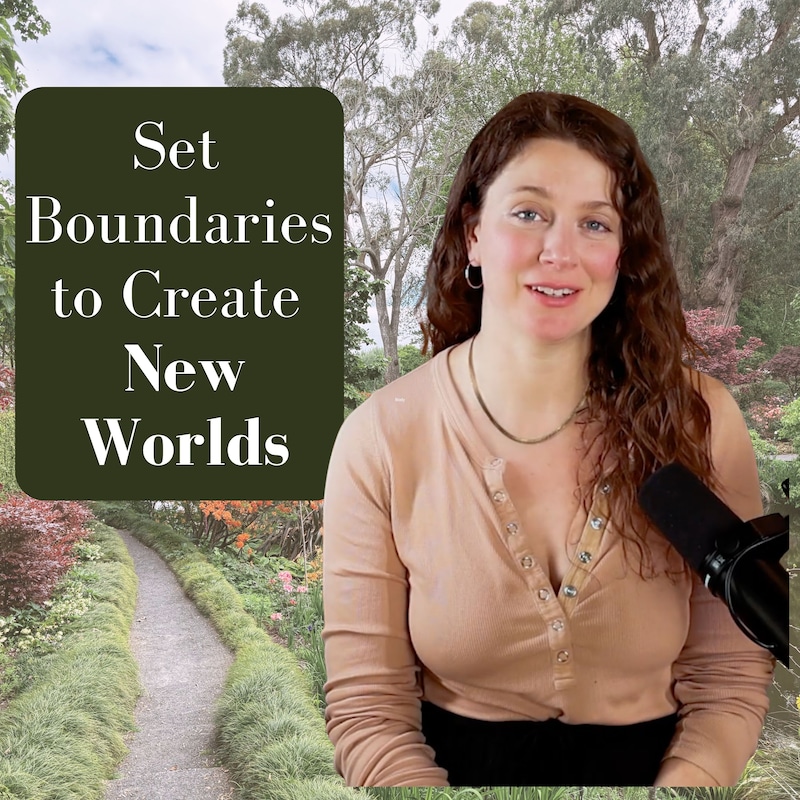
Boundaries are not acts of separation.
Speaker:They're acts of devotion to the
life that you came here to create,
Speaker:the life that you came here to
tend. Through setting that boundary,
Speaker:you are creating a new world.
Speaker:Hello and welcome back to
Remember Why you're here,
Speaker:a podcast for seekers and sensitives
where you can relax, receive,
Speaker:reconnect to yourself and remember
the most important thing of all,
Speaker:why you're here. I'm Asia Souler, author,
Speaker:earth intuitive teacher.
And in this episode today,
Speaker:we're going to explore something that I
really think has the ability to change
Speaker:the world if we all just actually
allow ourselves to have them.
Speaker:And that is boundaries.
So in this episode today,
Speaker:we're specifically exploring how
you setting boundaries in your life
Speaker:is a force that can create new worlds.
Speaker:And I think that this is something
we all deeply need at this
Speaker:time on our planet, both
personally and collectively.
Speaker:So I'm really excited to dive
in. Before we go any deeper,
Speaker:I wanted to give you a heads up that my
flagship program, Earth Angel School,
Speaker:a 12 week spiritual school for Sensitives
is currently open for enrollment and
Speaker:only opens once a year. And the Early
Bird Prize is ending next Monday,
Speaker:March 30th. So if you've been waiting
all year for this opportunity,
Speaker:if you know this is something
that is right for you,
Speaker:definitely head on over to
asiasular.com/earthangelschool
and check it out.
Speaker:This groundbreaking spiritual school was
designed to help you as a sensitive and
Speaker:empath reconnect to your soul's purpose
through understanding who you actually
Speaker:are, how you actually
work, and why you are here.
Speaker:It's a really unique blend
of spiritual studies,
Speaker:nervous system science,
somatic healing, earth magic,
Speaker:and this specific kind of awareness
that can only come in through
Speaker:deep, intuitive work.
Speaker:All of these gateways open up when
you step through the door into this
Speaker:course.
Speaker:It's a beautiful amalgamation that was
designed to help you build real life
Speaker:skills that allow you to come
fully and completely into your
Speaker:gifts in this lifetime to
change the way you feel
Speaker:about being alive. So if
you're interested in that,
Speaker:I would love to journey with you there.
Speaker:It's my most intimate offering by far.
Speaker:We'd get to hang out every single week,
Speaker:and there's the opportunity at the end
of the program if you'd like to join me
Speaker:for a very intimate, personal,
Speaker:in- person retreat here in
the Blue Ridge Mountains.
Speaker:So I'm really excited about being able
to do that in- person work with such an
Speaker:incredible group of sensitives.
All right. With that,
Speaker:let's hop into our
podcast episode for today.
Speaker:First, I want to define what
boundaries are because often I think,
Speaker:especially for us sensitives and empaths,
Speaker:we hear the word boundaries and we
hear hardness, we hear rigidity,
Speaker:we hear rupture, but that's
not what boundaries are.
Speaker:Boundaries are a clear recognition
of where your responsibility
Speaker:ends and someone else's begins.
Speaker:It is your boundaries.
Speaker:Are you recognizing the natural
edges of your own energy,
Speaker:which also means recognizing what is
your responsibility and what is not,
Speaker:and how to take care of your life force.
Speaker:This is what boundaries
are at their heart.
Speaker:They are beautiful layers,
beautiful boundaries,
Speaker:beautiful interstitial zones we create
so that we can continue to cultivate our
Speaker:own life force so that the force
that we have within us is able to
Speaker:accumulate and blossom in this world.
Speaker:So boundaries are not something
you impose upon another person.
Speaker:It's something you're clear
about within yourself.
Speaker:And this is a big update that I think
us sensitives and empaths really,
Speaker:really need because setting
boundaries is just very hard for us.
Speaker:I'm going to talk about
why in just a minute,
Speaker:but a lot of that has to do with this
story that this is something that we are
Speaker:imposing upon other people.
Speaker:This is something that we are doing
to other people when really it's just
Speaker:something that we're getting
clear on inside of ourselves.
Speaker:Within a relational context,
Speaker:boundaries are our clarity and our
understanding around what we need in
Speaker:order to feel safe and comfortable inside
of relating, inside of relationships,
Speaker:what we need in order for
our own life force to be
Speaker:safeguarded, our own life force to
continue to flow and be nourished.
Speaker:So I like to say this and repeat
this like ad infinitum for my fellow
Speaker:sensitives, but boundaries are
not about keeping people out,
Speaker:it's about keeping you in.
Speaker:And this is so important for
all my empaths out there,
Speaker:all my sensitives,
Speaker:because what we tend to do when
we struggle with boundaries is we
Speaker:overgive, we overflow,
Speaker:we frack our own energy and nervous
system and just give it out to the point
Speaker:where we have nothing left or
we're even in the negative.
Speaker:So boundaries are not about keeping other
people out. It's about keeping you in.
Speaker:You're setting boundaries,
Speaker:not because you want distance or
you're trying to abandon people.
Speaker:You're setting boundaries because
that's what helps you stay within your
Speaker:energy.
Speaker:Your life force is what helps your
life force to actually flow into this
Speaker:world. Ultimately,
Speaker:this is about a stewardship of that
energy that each of us are born with,
Speaker:that each of us is here to be a channel
for. And when you set boundaries,
Speaker:what you're doing is you're
actually allowing that channel,
Speaker:the integrity of that channel to stay
intact so that the energy you are meant to
Speaker:bring into this world to help this
world shift can actually flow and
Speaker:be available for what it is here
to touch and move and amplify.
Speaker:And I think it's really important for
us to remember that life is possible
Speaker:because of boundaries.
Speaker:Boundaries are what make
life on earth what it is.
Speaker:It's why we come here to experience this
planet is to have a self and interact
Speaker:with other selves. And that dissolves,
Speaker:that becomes impossible when
there are no boundaries.
Speaker:And so I think this is something too,
Speaker:for those of us who are sensitive and
who are just innately connected into
Speaker:spiritual reality that we have to
remind ourselves of constantly,
Speaker:like we are here on this planet to
have a self and this self is here to
Speaker:interact with other selves and we can
be caring, we can be compassionate,
Speaker:we can be generous,
Speaker:we can be all of those things and
still have boundaries that maintain
Speaker:the sanctity of ourself, our
energy, and our life force.
Speaker:So you see boundaries everywhere
you look in the natural world.
Speaker:Cell membranes have boundaries.
Speaker:These boundaries can either
be too rigid nor too flexible.
Speaker:They have to be this beautiful in between
in order for that cell to continue to
Speaker:function and be who it is.
Speaker:A forest has boundaries and often it's
the boundary line actually between where
Speaker:two landscapes meet, where
the forest meets the meadow,
Speaker:where the richest diversity
lives inside of an ecosystem.
Speaker:These are called these interstitial zones.
Speaker:And these interstitial zones
like a tidal marsh, for example,
Speaker:are places where we tend
to find more abundance,
Speaker:more diversity and more
potential for life.
Speaker:And that's because there's a boundary
between these two places that make these
Speaker:two places separate and
distinct. In my book,
Speaker:Mirrors and the Earth, I talk about
boundaries as cultivating a garden.
Speaker:You can't have a garden without
boundaries. If there's no boundaries,
Speaker:there's no garden.
Speaker:Your life is a garden and you
get to decide what you want to
Speaker:plant in it.
Speaker:That's the deal.That's part of the
parcel of coming here is we get
Speaker:this garden that is our body, our
creativity, our life force, our attention,
Speaker:and we get to decide, what
do I want to do with this?
Speaker:What do I want to plant
here? And ultimately,
Speaker:the garden that you are on this planet
is increasing and adding to the overall
Speaker:diversity and potential of this earth.
Speaker:And so it's very important
that you set those boundaries,
Speaker:you make those decisions,
because if we don't,
Speaker:then we lose the ability to cultivate
what we are here to cultivate with our own
Speaker:energy and life force.
Speaker:We lose the ability to become gardeners
who bring flowers of potential to this
Speaker:planet.
Speaker:So let's talk about some kinds
of boundaries before we drop into
Speaker:how you know if you need them and guidance
on how to create these boundaries in
Speaker:your life. So there are energy boundaries.
Speaker:These are boundaries about who and what
gets access to your nervous system.
Speaker:Energy boundaries are harder to
pinpoint than some other boundaries.
Speaker:And yet for sensitives and empaths,
Speaker:energetic boundaries are often
the place where we're most wobbly.
Speaker:We might be able to state that we're
not available to lend someone money or
Speaker:not available on a
certain night to hang out.
Speaker:But when it comes to the energetic
boundaries of being in someone's presence,
Speaker:we often get a little thrown off here
of like, where am I putting my energy?
Speaker:Where am I caretaking with
my own nervous system?
Speaker:Who is getting access to my
nervous system right now?
Speaker:So this also goes in line
with emotional boundaries.
Speaker:Emotional boundaries are what feelings
belong to you and what feelings belong to
Speaker:others. And I often find when our
energetic boundaries are wobbly,
Speaker:these emotional boundaries disappear
completely. And the thing is,
Speaker:as sensitives, as empaths,
Speaker:we are built to feel
other people's feelings.
Speaker:We literally have more mirror neurons
firing in our brain than the average
Speaker:person.
Speaker:And so it's hardwired into us to
have a high degree of empathy.
Speaker:And because of this,
Speaker:those emotional boundaries are probably
something that we need to work on,
Speaker:especially as adults, to recognize
what is mine and what is not.
Speaker:What I often find with
emotional boundaries is that
they need physical space,
Speaker:that taking physical space from
people is really important.
Speaker:And I'm not just talking about
removing yourself from their presence,
Speaker:but I'm also talking about turning
off notifications on your phone,
Speaker:not taking that phone call,
not returning that email,
Speaker:taking just a little bit of space,
Speaker:a pause so that you can start to
examine what is mine and what is not.
Speaker:Where are the emotional boundaries here?
Speaker:Because there's also
often a interface where if
Speaker:you are taking on other people's feelings,
Speaker:it's probably because they're
in some state of dysregulation.
Speaker:And some part of you believes that it
is your job to take that on and fix
Speaker:it, to create regulation
by self-abandoning,
Speaker:by overgiving,
Speaker:by overriding your own capacity in
order to regulate them in whatever
Speaker:way you possibly can, and therefore
create more regulation in the environment.
Speaker:It's a noble endeavor,
bless us for doing this,
Speaker:and that's not our job. And ultimately,
Speaker:taking some space can help you see that.
Speaker:This will also help you see
your attention boundaries.
Speaker:So what is in your mind? What
are you giving your attention to?
Speaker:And this is huge right
now. This is, I think,
Speaker:one of the most important lessons that's
coming up right now for sensitives,
Speaker:for empaths, is what are you
allowing into your consciousness?
Speaker:What are you allowing into your mind?
Speaker:And often we have this sense
inside of us that if we
Speaker:are not attuned to everything
that's going on in the world,
Speaker:every disaster in the world,
then we're somehow tuning out.
Speaker:We're somehow selfish.
Speaker:We're somehow not going to be able to
show up and be of service. But actually,
Speaker:the opposite is true.
Speaker:What's normally happening is that
we're actually getting inundated
Speaker:by sensory information that
is then shutting down our
Speaker:ability to be a force
of change in this world.
Speaker:It prevents us,
Speaker:it causes a backlog of emotion
and charge inside of us
Speaker:that makes it so that we just end up
collapsing instead of tuning into the
Speaker:creative life force that we have and
directing it towards where we are meant to
Speaker:be putting our attention.
Speaker:So this is not a clarion call
to never read the news again,
Speaker:but it is a clarity on call to get clear
about your own attention boundaries,
Speaker:where your attention wants to go,
what you're allowing into your mind,
Speaker:and the boundaries that you need to
set around that. And then of course,
Speaker:we have time boundaries.
Speaker:Time boundaries are literally
what gets your hours?
Speaker:What gets your life force? What
are you spending your time on?
Speaker:I notice that two things tend
to happen with time boundaries.
Speaker:When we are
Speaker:"procrastinating," normally that's
because we're in a state of overwhelm.
Speaker:There's actually,
Speaker:we're needing regulation and
because we feel like we don't have
Speaker:full permission to just go lay down or
take a walk or do the things we really
Speaker:need to do to regulate,
Speaker:we end up "procrastinating" with something
that's actually not that fulfilling,
Speaker:like scrolling on our phone.
Speaker:The other side of time
boundaries is that we end up
Speaker:overgiving our time to things
that are not nourishing us,
Speaker:but that feel like they are essential.
Speaker:So maybe that's talking to your friend
for the 10th time about the same
Speaker:exact thing that's going on in their
life and you don't see them making any
Speaker:changes or really even trying
to make a shift in their life.
Speaker:Or maybe this is getting blurred a little
bit for you with attention boundaries.
Speaker:Maybe you are watching that show on
Netflix that all your friends are watching
Speaker:and they are like, "You
have to see this with us,
Speaker:but you're noticing it's actually not
giving you anything in your life." Time
Speaker:boundaries are essential
for sensitives and empaths.
Speaker:We can really be like time
wizards. When we are in flow state,
Speaker:we can create so much,
Speaker:but often we're having trouble
setting those time boundaries
Speaker:because either we are actually needing
regulation in that moment or we are
Speaker:afraid of disappointing people.
Speaker:We are afraid of what's going
to happen if we don't show up.
Speaker:And that's good to name and we're going
to talk more about how to set these
Speaker:boundaries in a moment. And then of
course there's physical boundaries,
Speaker:there's material boundaries,
there's intellectual boundaries.
Speaker:Physical boundaries are limits of what
you will or will not do with your body.
Speaker:There's material boundaries,
Speaker:limits and boundaries around the way
in which you share quote unquote your
Speaker:possessions, your money,
Speaker:the things that are the physical
objects that are in your field,
Speaker:and then intellectual boundaries,
boundaries around your work,
Speaker:how you share your work,
Speaker:what's appropriate in terms of
other people sharing your work,
Speaker:your ability to express your opinions.
What I find is that the physical,
Speaker:material, intellectual
boundaries, when these are wobbly,
Speaker:it's usually because sensitives
are having issues with the
Speaker:emotional and the energetic boundaries.
Speaker:So I think that these are really
some of the more primary ones.
Speaker:And then these other ones sort
of follow suit in that wobble.
Speaker:So let's talk about why
sensitives have such a hard time
Speaker:with boundaries. And I'm
looping myself in this.
Speaker:Learning boundaries has been
a lifelong process for me.
Speaker:It will continue my whole life.
Speaker:And there's a specific reason for this.
Speaker:So as sensitives and as empaths,
Speaker:normally our overgiving, the
patterns that we have of overgiving,
Speaker:that was some sort of currency in our
life, especially in our earlier life.
Speaker:At some point,
Speaker:we were praised for our
overaccommodating skills.
Speaker:That was how we experienced
belonging, how we experienced safety,
Speaker:how we experienced attachment,
Speaker:that something was required of us,
that we had to overaccommodate,
Speaker:put ourselves second or put
ourselves last and prioritize
Speaker:other people's needs,
wants, and desires first.
Speaker:And so for many of us,
Speaker:this is part of how our
nervous system developed,
Speaker:that this is the most valuable thing
we can give really is to give away
Speaker:ourselves and to
overaccommodate in this manner.
Speaker:And so what I noticed with
other sensitives is that setting
Speaker:boundaries can literally feel
like setting yourself on fire.
Speaker:And I really just want to be so
gentle with you and with all of
Speaker:us that of course it does because
every time we set a boundary,
Speaker:there's most likely a much
younger part of us that is going,
Speaker:"This might destroy everything.
I might be abandoned.
Speaker:I might be destitute. I might have no one.
Speaker:I might never experience belonging."
Those stories are running
Speaker:subconsciously around this
need to set boundaries.
Speaker:There might something really terrible
might happen that me setting a boundary
Speaker:might mean that somebody gets really,
really hurt physically or emotionally.
Speaker:And a lot of these are due
to earlier life experiences,
Speaker:ways in which us setting boundaries
earlier in our life was not
Speaker:okay,
Speaker:but seeing the pattern and understanding
the pattern can help us become present
Speaker:with what's true right now.
Speaker:There's also this reality where
we don't want to feel somebody
Speaker:else's pain, hurt and disappointment.
That's really uncomfy.
Speaker:And the reality about being an empath
in particular is that you will feel it,
Speaker:you will feel it, and it's
going to be challenging.
Speaker:It will be really hard to feel someone's
system collapse or someone's system go
Speaker:into panic or freak out mode,
Speaker:and that is part of the process.
Speaker:And it's important to
remember that we are not
Speaker:protecting them by not setting boundaries.
Speaker:It's actually the opposite.
Speaker:We are not giving them an opportunity
to truly be in relationship with us
Speaker:because real relationship is
about two people relating.
Speaker:And if you are giving everything,
if you are self-abandoning,
Speaker:if you are overaccommodating,
Speaker:you're not showing up real and
authentic inside of this relationship.
Speaker:And so it is an act of kindness to give
people the potential and the possibility
Speaker:to be in relationship with you. And
that's an important reframe. Of course,
Speaker:another aspect of the difficulty
in setting boundaries is
that as empaths and as
Speaker:sensitives, we are
naturally emotional beings.
Speaker:Highly sensitive people have
really deep emotional systems.
Speaker:Those emotional messengers are very
loud and very present in our systems.
Speaker:And so we don't want to feel the
feelings that happen after we set the
Speaker:boundary, feelings of guilt,
Speaker:worry about being perceived as
selfish, the fear of abandonment.
Speaker:All of those things will probably
come up when we set a boundary,
Speaker:especially when it's new to us.
Speaker:And because we've learned
in the past that care equals
Speaker:self-abandonment,
Speaker:we will have this innate
fear that if we don't
Speaker:self-abandon,
Speaker:if we are clear about our boundaries or
what we need and it's at conflict and
Speaker:at odds with what somebody
else thinks they need,
Speaker:then we will automatically default to
probably one of the deepest programs that
Speaker:we have, which is the worry or
the fear that we're not good,
Speaker:the worry and the fear that we are
selfish and we're not good people,
Speaker:that our goodness is dependent on our
ability to over give and overaccommodate.
Speaker:And that is just really,
really challenging to sit with.
Speaker:So it makes sense that
we don't want to do this.
Speaker:We were taught from a young age that
our job was to manage other people's
Speaker:emotions. It's just the world that
we live in. And for many of us,
Speaker:it's also the family systems,
the relationships that
we experienced early on.
Speaker:But the update is that it is actually
not your job to manage other people's
Speaker:feelings.
Speaker:And people who really want to be in true
relationship with you don't want to be
Speaker:managed.
Speaker:And this process of setting where
boundaries will change and shift who is in
Speaker:your life, who you're interacting with,
Speaker:the kind of time you're spending with
people, and it will set you free.
Speaker:People talk a lot in
nervous system science,
Speaker:in the world of nervous system
awareness around the different responses
Speaker:to activation, to feeling unsafe.
So we have fight, we have flight,
Speaker:we have freeze, we have fighting someone,
Speaker:that sort of boundary holding, we have
the running away, we have the free state,
Speaker:but for sensitives and empaths,
Speaker:the thing we most often
will default to is the fond
Speaker:response.
Speaker:So the fon response is
everything I just talked about.
Speaker:It's when we sense
threat, we sense danger,
Speaker:we go into overaccommodating, we
go into meeting someone's needs,
Speaker:we go into basically becoming
lovable so that someone won't
Speaker:dispose of us, that we won't be in
even deeper danger. And it's a really,
Speaker:really smart survival response,
like really brilliant.
Speaker:And I just want to bow down to
the parts of you that develop this
Speaker:response because it works,
dude. And at the same time,
Speaker:as adults,
Speaker:the slow roll updates that
we get to make are that we
Speaker:don't have to abandon ourselves
in order to be truly loved and
Speaker:accepted,
Speaker:and that we get to set
boundaries to keep us
Speaker:in. And the people who are meant to
continue on with us in our life journey,
Speaker:they will be the ones who applaud
you when you set those boundaries.
Speaker:So I'm curious,
Speaker:what is one boundary you
need to set in your life?
Speaker:Maybe something has come
up for you as I'm talking,
Speaker:as I talked about the different kinds
of boundaries or why boundaries are
Speaker:particularly hard for
sensitives and impaths.
Speaker:I guarantee you there's probably something
bumping around at the edges of your
Speaker:consciousness right now. And
I'm curious, what is that?
Speaker:What is one thing that you think of and
you notice that your energy immediately
Speaker:shifts?
Speaker:This is often a good sign that
there's a boundary that needs to
Speaker:be set here.
Speaker:Some other good signs of boundaries
needing to be set are feeling overwhelmed.
Speaker:Overwhelm is, I'm going
to be didactic here.
Speaker:I think it is a sign for a need
for more boundaries 100% of the
Speaker:time. And that, again, could
be boundaries with people,
Speaker:could be boundaries with your time,
could be boundaries with your attention,
Speaker:sensitives. We have such an incredible
ability to pour our attention like water
Speaker:upon the earth and create so much,
Speaker:but we need to know where
our attention is going.
Speaker:We need to know and be aware of the ways
in which we are giving that attention
Speaker:away and the ways in which that attention
could actually be poured into what
Speaker:we're meant to create here. Now,
Speaker:bringing your attention back to this place
that you might need to set boundaries
Speaker:within your life, I'm curious,
Speaker:do you notice a sense of tightening
in your throat or maybe in your
Speaker:belly or your jaw? Do you feel
like that belly drop sensation?
Speaker:You know that sensation where you're like,
Speaker:"Oh gosh." Or sudden fatigue.
Speaker:I often notice my energy
will just kind of tank.
Speaker:These are all good signs that
there is a boundary needed here.
Speaker:Some other signs here
Speaker:in general in your life to be able
to track when you need a boundary,
Speaker:because this is also something
that I think is really important.
Speaker:There are going to be things in our
life that we're super aware that we need
Speaker:boundaries with.
Speaker:And there's also going to be things in
our life that we are not so aware that we
Speaker:need better boundaries with.
Speaker:So learning how to track the
signs of your body telling you,
Speaker:"I need more of a boundary here," will
really help you start to become fluent in
Speaker:your own inner language and set
the boundaries you need to thrive.
Speaker:So we talked already about
that energy drop sensation.
Speaker:There's also this subtle dread.
Speaker:If you have a feeling or
a sense of subtle dread,
Speaker:that's probably a sign
you need boundaries.
Speaker:Any kinds of tightness or constriction,
that's literally your body being like,
Speaker:"Ugh, let's create a
boundary here." Resentment.
Speaker:Resentment's a big one.
Speaker:If you find yourself resenting people
who are asking things of you or
Speaker:resenting your phone
or resenting your job,
Speaker:these are all signs that more boundaries
are needed there because resentment is
Speaker:actually a moment where you,
Speaker:it's indicative of when you overgive
Speaker:and then are wanting to pull that energy
back or wanting that energy back and
Speaker:you're resenting the fact that you
actually overrode your own boundaries
Speaker:and really it's asking you to call your
attention to the boundaries that need to
Speaker:exist in your life. So notice
where you feel resentment.
Speaker:Any anxiety or dread also signs
that we need boundaries in our
Speaker:life, loss of presence. If you're
like zoning out, if you're tuning out,
Speaker:if you have a hard time being
present with someone or something,
Speaker:there's probably an energetic
boundary that needs to be there,
Speaker:the urge to please. So the moment we
step into that people pleasing mode of,
Speaker:let me make it better for you,
Speaker:dead giveaway that we need boundaries
in that moment and overexplaining.
Speaker:If you find yourself overexplaining
something you did or overexplaining
Speaker:a boundary you want to set,
Speaker:overexplaining why you did
what you felt called to do,
Speaker:that's also a sign that there
is a need for boundaries here.
Speaker:And like I mentioned before, we
often, when we think about boundaries,
Speaker:we kind of get stuck sometimes
in this trap of, "Oh,
Speaker:my boundaries are being violated." But
most of the time it's that our boundaries
Speaker:just aren't clear and that in this way,
Speaker:we actually might be crossing
our own boundaries to overgive,
Speaker:to self-abandon, to overaccommodate.
Speaker:And so what we're looking
for here is clarity.
Speaker:So boundaries are not about
hardness, they are about clarity.
Speaker:There's a sense to boundaries when they
are authentic and truly what we need,
Speaker:that they will feel rooted,
Speaker:simple once we implement them
and they are in our life,
Speaker:untangled and breathable. Ah,
Speaker:the sense that you can breathe again
in that corner of your life. Now,
Speaker:I'm not going to lie. Setting a
boundary will be hard at first,
Speaker:especially if you're setting a boundary
in a new and different way for you.
Speaker:I often liken it to walking through
the fire in order to drink from the
Speaker:stream on the other side. And
there really is no way but through.
Speaker:That is how it goes and it's not
punitive. It's not a punishment.
Speaker:It's actually teaching your nervous
system that it's okay to set boundaries
Speaker:because when you do it and
the big feelings come up,
Speaker:you will stay with yourself.
Speaker:So this is huge and that's the whole goal.
Speaker:Not only is it to speak aloud your
boundary, to set that boundary,
Speaker:but then to companion yourself afterwards.
Speaker:So on a very logistical level,
when you are setting a boundary,
Speaker:whether it's with yourself or with
someone else, be clear in your language,
Speaker:be clear about what that boundary
is and make it about yourself,
Speaker:especially in talking with someone
else instead of being like,
Speaker:"I'm setting this boundary
because you do this.
Speaker:" I'm setting this boundary because
I need this because that's the truth.
Speaker:That's why we are actually
setting that boundary.
Speaker:And then once we have that clear
statement of what this boundary is,
Speaker:follow up with an action
if it's not respected.
Speaker:So what action are you willing
to take if that limit is crossed?
Speaker:That piece is actually really essential
to upholding our boundaries because we
Speaker:can say something, and this
happens a lot for our sensitives.
Speaker:We can say something and then we can
end up overriding our own boundaries.
Speaker:We can end up saying yes, even
though we actually wanted to say no.
Speaker:And we said we were going to say no
when we first had that conversation with
Speaker:them about that event, and then
we backtracked and we said yes,
Speaker:but setting boundaries about getting clear
with yourself around not only what is
Speaker:that boundary,
Speaker:but also what is the consequence if
that boundary is overwridden or what
Speaker:action are you willing to take if that
boundary is crossed and then take that
Speaker:action.
Speaker:Not only is that how you teach other
people that your boundaries are for real,
Speaker:it's also you teaching yourself and
your nervous system that you can
Speaker:be trusted. This is really just so,
Speaker:so big for us sensitives who
from probably A very young
Speaker:age, we're told that we were too
much, too emotional, too fragile,
Speaker:all those things that we
struggle with self-trust.
Speaker:I'm feeling this big thing. Is that real?
Speaker:I'm sensing this thing
happening over there,
Speaker:but then that person's saying
that's not happening. Is this real?
Speaker:Self-trust is so important. We also often,
Speaker:in the past,
Speaker:because we have gotten into patterns
of people pleasing and overgiving,
Speaker:that there's probably a wound there
of thinking, "Can I trust myself?
Speaker:Can I trust myself to set
this boundary and maintain it?
Speaker:" So every time you set that boundary
and you maintain it and you take the
Speaker:action that you promise
yourself you would take,
Speaker:if that boundary gets
violated or gets wobbly,
Speaker:you are proving to your nervous
system that you can be trusted.
Speaker:And this is huge.
Speaker:Our nervous system is getting updates
the entire time we're moving through a
Speaker:process of setting a boundary.
Speaker:So nothing is wrong if hard stuff
comes up because really that's
Speaker:a huge part of what's coming up and out
and being purged from your system in
Speaker:order to have the capacity to continue
to make life giving boundaries for
Speaker:yourself. So it's normal, for example,
Speaker:to want to go back on what you said
or to second guess what you said.
Speaker:It's normal to have all your old survival
Speaker:wiring come back on board,
Speaker:like the sense like I'm going to lose
belonging to go into a freeze or collapse
Speaker:response, emotional flooding, fatigue,
Speaker:and the adrenaline drop afterwards.
Because often when you set a boundary,
Speaker:what might help you ride into setting
that boundary is this adrenaline.
Speaker:You decide to do it, I'm going
to do it, I'm going to say it.
Speaker:Especially when it comes to other people.
Speaker:And then we do it and then we have
to be with what will probably be
Speaker:some sort of dysregulation on part of
the person who we set the boundary with,
Speaker:maybe not. And then that's a huge
blessing, but that does often come up.
Speaker:We have to be with that. And then
afterwards, there's the adrenaline crash.
Speaker:And the whole point of all
of this is just to stay with
Speaker:yourself,
Speaker:to know that this is how your nervous
system is purging and updating itself.
Speaker:And your only task is to
continue to be with yourself.
Speaker:So know that aftercare is a really
important part for empaths and
Speaker:sensitives in setting boundaries.
Speaker:So some things that help me with
aftercare is to verbally name what's
Speaker:happening. So I might stand
in the mirror and say,
Speaker:"It makes so much sense that you're
having a really hard time right now.
Speaker:You just set a really big boundary and
now your heart is racing and now you feel
Speaker:exhausted and now you feel like a plane
that can't land in your life." And that
Speaker:really makes sense because
of everything you just did.
Speaker:And it's so big and I'm so proud of you.
Speaker:So whatever it is that
works for you to name it,
Speaker:that process that I often use sort of
crosses over into this territory of
Speaker:engaging in positive self-talk
and working with your parts.
Speaker:So parts work are internal family systems.
Speaker:This is a system where you are speaking
to the part of you that is terrified.
Speaker:Another part of you is like, "Yes,
Speaker:I've been needing to do this forever and
I'm celebrating." Another part of you
Speaker:is like, "I might die." And so you're
speaking to the part of you that's like,
Speaker:"I might die." And you're holding that
part of you and you're acknowledging
Speaker:them, you're acknowledging
that they're scared,
Speaker:and you're also acknowledging that
you're not going to leave them,
Speaker:that you're there with them forever.
Speaker:You're staying with them
throughout this entire experience.
Speaker:It's also really helpful in the
aftercare of setting a boundary to reduce
Speaker:decision making. So don't do any other
big things for a few days after that.
Speaker:Really let go of any other decision
making you can during that time and just
Speaker:know that you're recouping.
You're recouping from a really,
Speaker:really big energetic movement
that you made in your life.
Speaker:And then anything that is self-soothing
to you in this period of time,
Speaker:maybe it's a show you love to
watch. Maybe it's going for walks,
Speaker:maybe it's petting your dog, maybe
it's playing with a fidget toy.
Speaker:Any of these things that help you soothe,
Speaker:make sure that you have those tools
and you build them into the time after
Speaker:you set that boundary.
Because here's the deal,
Speaker:you wouldn't have the desire for
that boundary, for that space,
Speaker:for that clarity if your inner self
didn't know that this was the key
Speaker:to you accessing the
fullness of your life force,
Speaker:that this is the key to you living
your mission on this planet and
Speaker:being a part of the great healing
that is happening here at this time.
Speaker:So when you set these boundaries, you're
not just setting them for yourselves,
Speaker:you are setting them for the
whole world because you can.
Speaker:You can create an entirely new
world for yourself in your life
Speaker:and for the wider world
when you set boundaries.
Speaker:Like I said before, boundaries are
what make relationships possible.
Speaker:We cannot relate from one autonomous
being to another unless there is some sort
Speaker:of boundary between us. Otherwise,
it's just an enmeshed hole.
Speaker:And this is why we come to this planet
because we're super curious about that
Speaker:interplay of polarity and dichotomy and
Speaker:selfhood. It's the play here.
Speaker:And so we need boundaries in
order to have a relationship.
Speaker:Boundaries preserve relationships.
They do not destroy relationships.
Speaker:Healthy relationships flourish
in the presence of boundaries.
Speaker:And at the end of the day, everything
on earth here is relational.
Speaker:Healing is relational.
Possibility is relational.
Speaker:The co-creation is relational.
Speaker:Revolution is relational.
Speaker:And so if we want to feed
those things on this planet,
Speaker:if we want to see this planet come into a
Speaker:revolution of co-creation
and community and
Speaker:collaboration again,
Speaker:we need to be willing to do that
work to set those boundaries
Speaker:for ourselves. This is where it
starts. The world, as we know it,
Speaker:is a giant example of what
happens without proper
Speaker:boundaries. We see things
like abuse, war, exploitation,
Speaker:pollution, trauma.
Speaker:So if you want to know what it looks
like to live in a world where people are
Speaker:not actively engaged with their
boundaries and therefore unable to really
Speaker:perceive other people's boundaries and
honor those boundaries, just look around.
Speaker:So we are fractals of this world.
And when you set boundaries,
Speaker:you allow your life changing energy
to flow where it needs to flow.
Speaker:You change the story on this planet.
Speaker:You allow for the possibility of
deeper relationships on this planet,
Speaker:deeper relationality,
deeper co-creation. And yes,
Speaker:you create a new world.
Speaker:I just want you to take a moment here
to imagine how different the world would
Speaker:be if we all had healthy
boundaries. Really imagine that.
Speaker:Imagine the way you would feel in your
life if you had the boundaries that you
Speaker:needed to be able to access
your higher guidance,
Speaker:to feel your life force flowing through
you, to have access to your creativity,
Speaker:your life force, your centeredness,
Speaker:to be a conduit for
unconditional love as you let
Speaker:that unconditional love
flow through you first.
Speaker:Really feel that inside of yourself.
Speaker:And then imagine if
everyone felt that way.
Speaker:Everything changes, right?
Speaker:Everything changes and everything
changes starting with you.
Speaker:Every time you as a sensitive or an empath
set a boundary that you need in your
Speaker:life, you are choosing the
world you want to live inside.
Speaker:Boundaries are not acts of separation.
Speaker:They're acts of devotion to life itself.
Speaker:They're acts of devotion to the life that
you came here to create the life that
Speaker:you came here to tend.
And make no mistake,
Speaker:you and your life force are
deeply needed in this world.
Speaker:You are here to bring something
essential to this planet.
Speaker:And that essential thing,
Speaker:it flows naturally from
you when you are willing to
Speaker:safeguard and become a
caretaker for your own energy,
Speaker:to create the sanctuary that your energy
needs in order to thrive and flourish.
Speaker:This is how movements happen
that change the world.
Speaker:This is how passion and love shape
shift the environment around us and
Speaker:how we move towards greater
wholeness as a collective.
Speaker:So whatever it is that you're ready
to set a boundary within your life,
Speaker:know this, remember this. And remember
that through setting that boundary,
Speaker:you are creating a new world.
Speaker:So if you want a space where you can
Speaker:understand your boundaries
in a whole new light,
Speaker:get so clear on what those boundaries are,
Speaker:reorganize your life so that you
have the tools and perspectives
Speaker:to create relationships that
feel life giving to you.
Speaker:If you want to shift your focus away from
always creating harmony for others to
Speaker:creating a haven in your life,
Speaker:then definitely come join
me for Earth Angel School.
Speaker:This is what we do in this school.
We give you your life back.
Speaker:We help you fall in love with life again
because you understand who you are,
Speaker:how you work, what you need,
and what's possible for you.
Speaker:As one of our students, Rachel, wrote
after taking the course last year,
Speaker:"I am not broken. I'm an earth angel.
The reframes are worth everything.
Speaker:I spent most of my life feeling like
my sensitivity was something I must
Speaker:overcome or there was something
inherently wrong with me.
Speaker:" Being able to shift this perspective,
Speaker:pull back and shine light on another
way of seeing was incredibly impactful.
Speaker:And this is why I use the term earth
angel because we need to reclaim and
Speaker:reframe what it means to be a sensitive.
Speaker:If we think about this
archetype of angels,
Speaker:angels are full of their
own power in life force.
Speaker:They know that they have this potential
to bring healing and positivity to the
Speaker:world and they don't do it
through abandoning themselves
or overaccommodating.
Speaker:Angels do it because they understand
their power. They emanate that power.
Speaker:And on the very first day of class,
Speaker:I'm going to take you even deeper behind
why I'm using this term earth angel,
Speaker:the secret that will kick off this
entire mystery school together and
Speaker:really help you see yourself
in a completely new light.
Speaker:As another participant in the class
said, "This course is life changing,
Speaker:deeply inspiring and so very nourishing.
Speaker:It has helped me to advocate
for my needs, heal from burnout,
Speaker:and led me into my wider life's
calling." So over the course of 12 weeks
Speaker:together in Earth Angel School,
Speaker:we are going deep into this material
of self-healing and self-revelation.
Speaker:We have weekly classes,
Speaker:so you'll be getting it together
with me every week for a class.
Speaker:We also have breakout discussion
groups that happen every other week,
Speaker:which I also lead,
Speaker:and there's an optional retreat at the
end of the program if you'd like to
Speaker:gather with me in person.
Speaker:And that doesn't even cover our library
of incredible bonus material with
Speaker:classes such as engaging in your
life force and the erotic as a highly
Speaker:sensitive person, parenting as an
earth angel, working with creativity,
Speaker:and so, so, so, so much more. So
early bird pricing ends next week,
Speaker:Monday the 30th. So if
you know this is for you,
Speaker:if a part of you is just resonating
with this like a singing bowl,
Speaker:then I would love to
journey with you there.
Speaker:And no matter where you are in your
journey and what you need right now,
Speaker:know that you are allowed
to have what you need.
Speaker:You are allowed to have
the things, the energy,
Speaker:the boundaries that you need to flourish.
Speaker:And as you take these brave steps to set
these boundaries for yourself and your
Speaker:life, may they help you remember
that most important thing of all,
Speaker:why you're here.
