Shownotes
He's edited nearly every Ken Burns film ever made. But he couldn't edit himself.
What does it take to build a filmmaking career inside Ken Burns's world — and what happens when the hardest part isn't the craft, but learning who you are?
Erik and Christopher Ewers are brothers who co-direct for PBS under the Ken Burns banner. Erik has been Burns's senior editor for 33+ years. Chris is a DP who's shot for Apple, Coca-Cola, and Tiffany & Co. Their latest project: Henry David Thoreau, a three-part PBS documentary series executive produced by Ken Burns and Don Henley, narrated by George Clooney, with Jeff Goldblum voicing Thoreau, Ted Danson as Ralph Waldo Emerson, and Meryl Streep. Henry David Thoreau premieres on PBS March 30. This is Part 1 of a two-part conversation.
In Part 1, you'll learn:
— How Erik ended up working for Ken Burns through a real estate deal involving window treatments and carpets
— How a 22-minute visitors center film became the doorway to a three-hour PBS series
— What it's really like to co-direct a documentary with your brother (even Ken Burns couldn't do it with his)
— How Chris balances high-end commercial work with documentary filmmaking to sustain a creative career
— The challenge of filming Walden Pond with only two usable photographs of Thoreau
— Why knowing yourself is the most important skill a filmmaker can develop — and Erik's deeply personal story about discovering that through his own film
Part 2 drops April 9 — covering PBS funding realities, AI and the industry, and how they landed Jeff Goldblum, George Clooney, and Meryl Streep.
This episode is supported by Virgil Films Entertainment.
About the Guests:
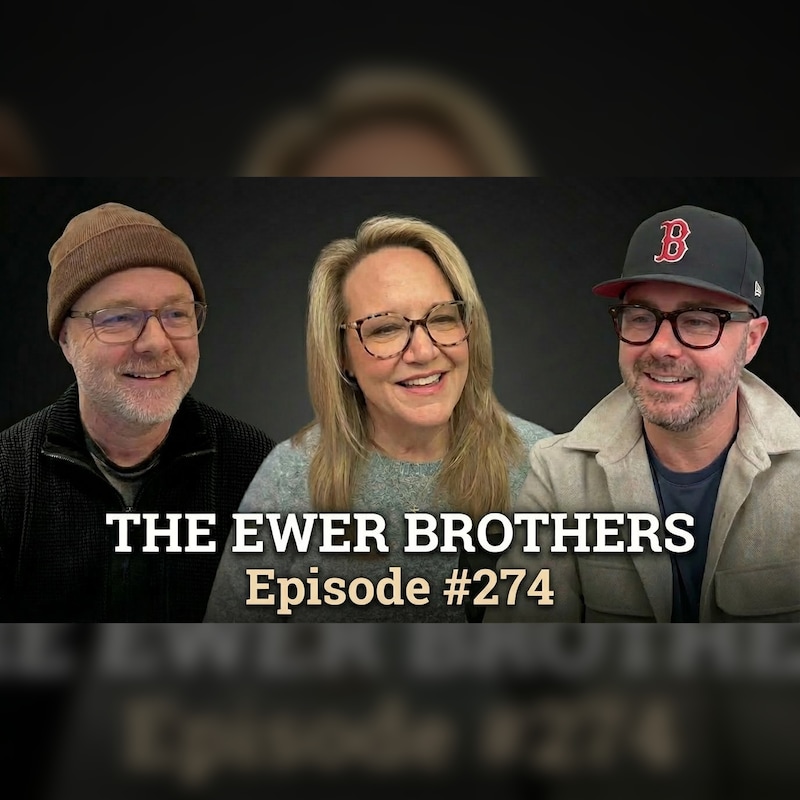
Erik Ewers — Director, Editor. Ken Burns's senior editor for 33+ years. Multiple Emmy winner. ACE Eddie Award winner (The Roosevelts, 2015). Based in New Hampshire.
Christopher Loren Ewers — Director, DP. 20+ years behind the camera. Commercial clients include Apple, Coca-Cola, Tiffany & Co., Stella Artois, Volvo. Based in the NYC metro area.
About Henry David Thoreau (PBS):
A three-part, three-hour documentary — the first full-length documentary biography of Thoreau. Executive produced by Ken Burns and Don Henley. Narrated by George Clooney. Voices by Jeff Goldblum (Thoreau), Ted Danson (Ralph Waldo Emerson), Meryl Streep, and Tate Donovan. Henry David Thoreau premieres on PBS March 30. Available on PBS and wherever you stream PBS content.
Christopher Ewers Commerical Work
Henry David Throeau Series Trailer
Listen & Follow:
Apple Podcasts: https://tinyurl.com/DocFirstApple
Spotify: tinyurl.com/DocFirstSpotify
YouTube: tinyurl.com/DocFirstYouTube
Amazon Music: tinyurl.com/DocFirstAmazon
Connect:
Transcripts
Hey everybody and welcome to Documentary First, an inside look at documentary filmmaking.
2
:I'm your host and a documentary filmmaker myself, Christian Taylor.
3
:And every other week I sit down with storytellers from all over the world and every stage
in their careers from all walks of life.
4
:who share their stories with us so that they can help us all become better filmmakers.
5
:Now, one quick thing before we get started, if you haven't subscribed to our podcast yet,
just please take 10 seconds and hit that follow or subscribe button right now, whether
6
:you're on Apple Podcasts, Spotify, YouTube, whatever, it's really the single best way that
you can support this show.
7
:So, all right, now today I'm sitting down with a couple of really experienced filmmakers
who also happen to be brothers.
8
:They've just completed a fantastic documentary series that I'm super excited to talk
about.
9
:They are the Ewers brothers, Eric and Christopher.
10
:Welcome guys.
11
:So nice to have you here.
12
:Great to be here.
13
:What I love here is that we have sort of a friendly little rivalry.
14
:We've got a Cubs, well, I'm really the Cubs fan, but we got a Cubs hat and a Boston Red
Sox hat.
15
:I'm really sitting with two Boston Red Sox fans, right?
16
:Yeah, this is a special hat because Chris and I, when we were filming in Chicago, went to
a Cubs game and I fell in love with the stadium.
17
:It was just wonderful.
18
:It is.
19
:Chris, you told me as a fact earlier that I didn't know.
20
:What was that fact?
21
:Yeah, Fenway was built in 1912.
22
:Wrigley was built a few years later and they were designed by the same architect.
23
:not only are there, you know, grandstand similarities, but certainly when you go
underneath to concessions, et cetera, you know, they look incredibly similar.
24
:Yes, and if you have never been to either ballpark, I highly recommend it.
25
:They are just an unbelievable places to visit.
26
:Of course, they're both fantastic franchises and, you know, I, of course, I'm very partial
to the Cubs.
27
:So anyway, all right, moving back, moving along, that's not what we're to talk about.
28
:We are here to talk about your new series, which airs on PBS March 30th and 31st on Henry
David Thoreau.
29
:And we're gonna get into that in a few minutes, but first I wanna start with your bios.
30
:because you guys are super interesting and I want people to really understand who you are.
31
:We're lay the groundwork first.
32
:So Eric has been a Ken Burns senior editor for 33 plus years, working on nearly every one
of his films since the Civil War, which is a very long time.
33
:His path to Ken Burns started with a really lucky coincidence.
34
:As a UMass Amherst undergrad, he saw the Civil War in a dorm lounge and was moved to tears
by none other than a pan of a photo of corn.
35
:He called his father who was a Civil War buff and he learned that his aunt and uncle lived
next door to Ken Burns.
36
:Now when does that ever happen?
37
:Pretty crazy.
38
:He's a multi Emmy Award winner and an ACE Eddie winner for the best edited documentary in
:
39
:What was that?
40
:Can you remember now?
41
:I believe it was the Roosevelts.
42
:The Roosevelt, yes, one of my favorite documentary series, also by Ken Burns.
43
:And he's become an expert across the full filmmaking spectrum, editing, sound design,
music production, writing, directing, and he's based in the New Hampshire area near Ken
44
:Burns Florentine Films Production Company.
45
:Now, before we go into Chris's bio, I do want a little bit more detail on this story
about...
46
:your aunt and uncle living next to Ken Burns and just the real details about how that
actually happened.
47
:It really, if there are moments in life when you look back and you realize that you were
meant to do something, this is one of them.
48
:This beyond a shadow of doubt.
49
:The simple story is it is true.
50
:I was doing an internship with the UMass State Police and I was filming things with them,
kind of like the show Cops.
51
:uh As a fifth year student back then,
52
:There was a lot of hard times in Massachusetts.
53
:the education, educational system was a little challenged.
54
:I was there for five years, but I had no idea what I wanted to do.
55
:And all of a sudden, here I am watching during some downtime filming with the state
police.
56
:I was watching this beautiful pan of an old photo of corn and there was some,
57
:traditional music playing and some battle sounds and a quote read by some actor in some
beautiful way about about experiencing the battle and I I mean I stopped dead my tracks I
58
:was just enthralled and I remember it like it was yesterday because I literally said my
god I want to do that you know my love of history that came through my father
59
:I just was like, I really want to do that.
60
:So of course, as soon as I could, I called my father and told him and very casually he
said, well, Ken Burns lives next door to your aunt and uncle in Walpole, New Hampshire.
61
:You should look into it.
62
:And fast forward a year later and my aunt and uncle were deciding to sell their house.
63
:Ken's head editor, Paul Barnes was wanting to move up from New York City.
64
:He bought their house under the following condition in the purchase and sales.
65
:It said Paul Barnes wants the window treatments and the carpets.
66
:And then it said my aunt and uncle will give those if he will accept me as a potential
employee.
67
:So I started an internship.
68
:I graduated on a Sunday from UMass.
69
:And I started Monday morning at 9 AM.
70
:And now 37 years later, here I am.
71
:Unbelievable.
72
:mean, that is absolutely a testament of fate for sure, or God, but clearly who you know.
73
:I mean, in this industry, it all comes down to who you know, networking.
74
:could say it was some kind of, I had these skills.
75
:My father said, your education started the day you started working for Florence and Films.
76
:Of course, you know, and I told you my education started when I watched Ken Burns
masterclass because I had no idea how to make a documentary before I made one and he is
77
:the one that taught me.
78
:So that's pretty amazing.
79
:Now, Chris, I do wonder, did your brother have any influence on you at all?
80
:Yeah, sure.
81
:I'm 10 years younger.
82
:always, you know, I mean, we come from a very long line of creatives.
83
:There's not a lot of physicists, know, or chemists in our family.
84
:In fact, I would, I'd be surprised if there was a single one.
85
:But I always knew I was always fascinated by photography.
86
:I'm always new.
87
:If I had my druthers, I would grow up to do something behind a camera.
88
:you know, fast forward many years, Eric's working with Ken.
89
:I was in LA working out there.
90
:Moved back to the East Coast and, you know, we decided to, you know, join forces, combine
our talents.
91
:I'm gonna fill out your bio a little bit.
92
:You did say you're 10 years younger and you studied cinematography at Boston University
and photojournalism, because you said you've loved cameras at New England School of
93
:Photography.
94
:You have 20 plus years behind the camera, spanning documentary films.
95
:You started with Burn since the Vietnam War.
96
:You've done commercials for Fortune 500 brands like Apple, Coca-Cola, Tiffany & Company,
Stella Artois, Volvo and Jim Beam.
97
:And you've done network TV.
98
:So you've recently first shot your
99
:first narrative feature called The Disruptors, which came out in 2024.
100
:You're based in the New York City metro area.
101
:So if anybody needs work, you know where to find him.
102
:And he has a very high-end commercial reel.
103
:So you guys need to check it out.
104
:We may even attach it here to this podcast so you can see it on YouTube.
105
:So this guy is a guy who operates in both worlds.
106
:And we're going to talk about this later in the film.
107
:In my opinion, he sets the high bar and a great example for how to
108
:be able to do what you were truly, truly passionate about.
109
:You make it possible by making sure that you can live in order to do what you're
passionate about.
110
:You can cover your bills.
111
:Anyway, together you guys made a production company called the Ewers Brothers Productions.
112
:And you really sit in a unique position.
113
:You're a preferred collaborative company within the Burns Florentine Films ecosystem.
114
:and you co-direct under that banner.
115
:You've done some other films, The Mayo Clinic, Faith, Hope and Science, interestingly
our family, which came out in:
116
:And also Hiding in Plain Sight, Youth Mental Illness, which came out in 2022.
117
:Also a science film.
118
:You grew up in Holliston, Mass.
119
:Now what I find interesting about these three films, and we could talk about this just a
little bit now, but.
120
:There seems to be, including with this one you just completed, a real concern and
compassion for sort of the greater good, you know, for humanity.
121
:And I see this real love of people and a deeper concern for us as people and a society.
122
:Would you say that?
123
:Is that accurate?
124
:Or do you have another way of, you know, articulating your mission behind your films?
125
:I think Chris and I both, I know we both want to answer this.
126
:I think we both never imagined what kind of filmmaking we'd make when this first started
happening can help cultivate our company with side projects, outside ventures, things like
127
:that, very enthusiastically endorsed us.
128
:As long as I didn't quit my day job as an editor.
129
:And I think what
130
:started to happen is Chris and I both had the emergence of our own particular bent or
style that we wanted on these on our films and we gravitated given the subjects towards
131
:contemporizing the history that was involved in the stories and making it more relevant,
more directly relevant today.
132
:And I can speak for myself.
133
:I never envisioned it going that way, but it
134
:It allowed it to become a mission for us where we both have had and endured mental health
challenges in our families, in ourselves, in our past, and how we could ever realize
135
:beforehand how much of a profound difference working on that film would make for our own
lives and our mission.
136
:Yeah, I mean, if we could, if we had our drawlers, we'd be making films about musicians
and music and other artists, you know, for the rest of our career.
137
:think that that, you know, both of us are very passionate about creation.
138
:That said, we're also highly attuned to the human experience, right?
139
:The human experience is the key to relatability, right?
140
:Regardless of what the topic be it politically, socially.
141
:uh even in an advertising sense, right?
142
:So social issues, sure, they can be hot topics, you know, very contemporary.
143
:But when you take that conversation and you create a foundation underneath it of history,
the facts, irrefutable facts, know, real change can occur.
144
:We can start to have a real conversation.
145
:have uh this platform, film, filmmaking, television.
146
:I feel like we have a responsibility, we feel like we have a responsibility to use it to
hopefully engage in worthwhile public discourse.
147
:I think that's absolutely.
148
:beautiful.
149
:did a podcast earlier and I've shared this with you, where I talked about the science of
sticky memories and where we do have a responsibility as filmmakers to realize we have the
150
:power chemically to change people's brains as we combine music, uh, you know, sound
effects, visuals, it changes the chemistry of our brain and begins to reform how we think
151
:about things.
152
:When you put that with ideas and we do have the power to do that.
153
:So that gives us a great
154
:responsibility for how we build that.
155
:And so I think that's a beautiful idea.
156
:And you demonstrate that, I think masterfully in this new film about Henry David Thoreau.
157
:And I want to read a little bit about sort of the summary of that, if you don't mind.
158
:And then we can kind of dive in.
159
:I want to know how this film came about.
160
:It's a three-part, three-hour documentary.
161
:It's your first full-length, the first full-length documentary biography ever made about
him.
162
:And it is airing on PBS.
163
:once again, March 30th through 31st.
164
:The first two hours will be on the 30th and the second one or the third one will be on the
31st.
165
:Now it's executive produced by Ken Burns and interestingly Don Henley.
166
:I want to know how that happened.
167
:He is the founder of Walden Woods Project, which of course makes sense, but I don't even
know how that happened.
168
:It's narrated by George Clooney, Jeff
169
:Goldblum voices Thoreau and Ted Danson voices Ralph Waldo Emerson.
170
:Meryl Streep voices multiple women in Thoreau's orbit and Tate Donovan, he voices William
Ellery Channing.
171
:Now the film goes well beyond the hermit at Walden Pond narrative and it positions Thoreau
as a fierce abolitionist, a critic of consumerism and industrialization, a champion of
172
:civil disobedience, a prophetic voice about environmental degradation, themes that feel
almost
173
:eerily contemporary.
174
:said that to you earlier.
175
:And it features an incredible host of scholars.
176
:This is produced in partnership with Four and Teen Films and WETA in Washington, D.C.
177
:It's got an original score and incredible funding by the Better Angels Society, Jeff
Skoll, the Mansuda Foundation, and a host of others.
178
:So you heard me say there I'd love to know how this all got started.
179
:And I think I read you did a short version for a museum.
180
:on Henry David Thoreau perhaps.
181
:So talk to me about that, why Don Henley is connected, and then just how this project all
came about and why you were so passionate about it.
182
:I think the best way to start is the moment of creation.
183
:When I was working, I can't even at this point remember what project it was on, my day job
editing with Ken.
184
:And the phone rang in the office and it was Ken.
185
:And typical Ken, said, hey pal, got a quick question for you.
186
:Would you and your brother be interested in doing a short film on Henry David Thoreau,
Thoreau.
187
:and Walden Pond, his experiences at Walden Pond for their new visitor center that they're
building.
188
:And you'd be working with Don Henley from the Eagles.
189
:And I kind of missed a beat in my heart.
190
:And I was like, yes, we'd love to.
191
:And he said, good, because I already volunteered you for it.
192
:And Ken, his enthusiasm for filmmaking and for us was just amazing.
193
:And so
194
:There began this journey that started actually, that was in 2015.
195
:And it took us a couple years to make that film.
196
:And it really was as simple as just putting a bug in both Ken's ear and Don's ear and
saying, you know, this is only a small fraction of his story.
197
:If anything, we're just focusing on the one and only thing that people know about Thoreau.
198
:And there's so much more.
199
:And it was only 20 minutes, right?
200
:That one was really a short.
201
:22 minute film and it really turned out very well.
202
:You Chris, you remember when we first started walking around Walden Pond exploring, it was
kind of scary.
203
:In what way?
204
:Well, I mean know, Thoreau himself describes it, in writing as, you know, nothing special,
right?
205
:He, I think, I misquote him, of course, but he says something along the lines of like, you
know, it's just a it's an everyday pond in a very normal or typical Massachusetts woods.
206
:I mean, it's not like the way that he writes about it.
207
:One would expect, you know, the Great Salt Lake or, you know, some magnificent vista where
it's impossible to not.
208
:be introspective and to feel small and to take notice, it's the exact opposite.
209
:Yeah, that is hilarious because I was gonna say from what I watched, like I just kept
thinking, I can't wait to go there.
210
:It's the most beautiful thing, you know, because it's shot so beautifully.
211
:And you know, he talks about the magnificence of it.
212
:It's just mesmerizing.
213
:So it's just a pond?
214
:Yeah, I mean, there's this drab.
215
:uh know, but, but it was a you know, that was I think that was the that was the
interesting bit.
216
:You know, we were taught Thoreau, we were taught Walden, at very least in high school very
poorly, I might add.
217
:You know, and I and I think, you know, to in order to read Walden or to read Thoreau, you
know, I think that it helps to have some, you know, some road under your feet, right, some
218
:life experience.
219
:So
220
:good.
221
:Sorry.
222
:we go there.
223
:We're walking around and we.
224
:You we realize that we're going to have to heavily lean in to how like to his process,
right?
225
:To Thoreau's the way that he writes about it way that he the way that he writes about the
things that he did.
226
:So like we kind of figured right out of the gate that we were going to have to, know, to
look at this place and these these details through Thoreau's lens, you know, rather than
227
:ours.
228
:And in doing so really opened us up to.
229
:you know, the beauty that we've been missing.
230
:And to clarify real quickly, I think it's important.
231
:When Chris was talking about Thoreau saying it's just an ordinary place, what he was
referring to is how the masses, how society would see it.
232
:They would just walk by and say, it's a pond with some woods with a lot of downed trees.
233
:it was the fact that Thoreau made a choice to live simply and deliberately and to look at
things in a different way.
234
:with a different emphasis.
235
:And the challenge was for us, who, you know, I don't know if Chris passed in his Thoreau
paper in high school, I got it like a C minus, my teacher said it lacked insight.
236
:You know,
237
:you passed now.
238
:I'll give you a passing grade now.
239
:You got more than that.
240
:You got an A plus.
241
:very unlikely individuals, that day I remember we were walking around going, how are we
gonna make this come alive?
242
:And when we say we, I'm a casual observer and occasional commenter on Chris's
cinematography when we're out shooting.
243
:uh I provide suggestions, but he is the one who looks through that lens and says, I'm
going to see.
244
:the Jacob's ladders of the sun rays coming through the holes in a leaf on a tree.
245
:And that's what Thoreau would have seen.
246
:That's what the people walk by and rarely see or stop to see.
247
:And one quick mention, they have school trips there all the time from local schools.
248
:We went there as kids.
249
:I was suspended.
250
:I missed that trip.
251
:I went on that trip and it was just a field trip to get out of school, I remember to be
dead honest.
252
:But what we were told was now young kids come through the visitor center, they sit down in
the little theater, they watch our 22 minute film.
253
:And the park rangers have told us how the kids scramble to line up to get across the
street because they're so excited to go and explore.
254
:based on what they saw in the film.
255
:And I hope that opens a world to them that they maybe are not seeing.
256
:Well, mean,
257
:get over there and then they're like that John Denver was full of shit man.
258
:you
259
:I thought the Rockies would be a little rockier.
260
:I gotta tell you, you did do a masterful job.
261
:And I said this to you offline.
262
:What I absolutely could tell from the first 10 minutes is you took your own individual
gifts of cinematography and of sound design and editing and you...
263
:married them in such a powerful way because those are some of the strongest elements that
brought this to life.
264
:And I particularly noted the sun rays and the way that you caught those, not just through
the leaves, but through the forest.
265
:There's so many different ways you caught those rays of light in every different way,
through windows and on floors and in canopies and
266
:It was just, it was marvelous.
267
:And it reminded me, you I did a lot of shooting in Normandy and one of the most, you need
to go there.
268
:Chris, I have to take you there because the light in Normandy just is so captivating.
269
:It's the most magnificent thing I've ever seen.
270
:And the things you can do with it are remarkable.
271
:And that is the way I felt like, I felt like I saw that kind of magnificence with the way
that you treated the light in this film.
272
:And you did that with the water as well.
273
:Like it just looked so beautiful.
274
:And your film, it has this, and Ken Burns films do this a lot.
275
:It just invites you in in this lovely, soothing, it's like come in and in here my story
and let me, I don't know.
276
:It's just this open lap that you sit into and you go on this journey with you and the
sound effects as well as the sound design and the score.
277
:um just compliment that beautifully.
278
:So I applaud you both.
279
:You both get A pluses, whether you were suspended, I don't know what for, maybe now you
paid much better attention clearly when you went back.
280
:Now you both said you love music, right?
281
:Well, was that like, were you stunned to learn that Don Henley was the one asking you to
do that?
282
:And were you meeting somebody that you kind of had a great affection for?
283
:I see the guitars in the background over there.
284
:Yeah, Dawn, I mean, it goes without saying, if you're around our age and have a pulse, you
know the Eagles and you've experienced the blessings that that band has bestowed upon us
285
:for our entire lives.
286
:I I don't think a day goes by where I am not seeking to hear the Eagles, but I do.
287
:whether it's in the car or in a restaurant, it's just, it's pervasive.
288
:And I also find every time I hear it, I listen because they're so beautiful.
289
:So there is an inspiration that comes out of a creative like Don Henley that came into
this project without a doubt.
290
:It's very surreal to be honest with you, but the funny thing is, and I think the wonderful
thing is that Don,
291
:certainly would prefer not to talk about the Eagles in our presence.
292
:He wants to talk about Thoreau.
293
:He wants to talk about English.
294
:He's just, he's been a rock star for so long and he, I think he wants to be known not just
as one of the front men and the drummer of the Eagles.
295
:I think he wants to be known for something else and I think that is part, especially
looking back, I think that's a large part of
296
:his life from the late 70s, early 80s, where he started this mission to preserve Walden
Pond and to preserve the nature there and to preserve Thoreau's legacy as a writer and a
297
:person.
298
:He has been doing that ever since then to this day.
299
:And it's a passion of his.
300
:And it was a privilege, honestly, in every way, shape and form.
301
:his involvement in the project was so valuable and it still is.
302
:So he started the visitor center, he's from that area?
303
:No?
304
:went he studied.
305
:He was an English major in college, uh fell in love with the row.
306
:I think the story goes that, he was he lived in Texas at the time and saw a news story
about the woods around Walden and how they were in danger of being developed.
307
:So he and Kathy Anderson are great friends and incredible.
308
:partner in this endeavor, they started, they co-founded the Walden Woods Project, which at
that time was simply a nonprofit designed to purchase or to buy up, protect and preserve
309
:the lands, the historical lands in and around Walden Pond.
310
:They were successful then.
311
:And of course, their Walden Woods Project's mission has grown ever since.
312
:They've m been
313
:absolutely crucial in the success of this project, even the creation of this project.
314
:Hmm.
315
:Well, it's remarkable to me.
316
:mean, I wonder, did he write a lot of the lyrics, you know, in the Eagles music and was
that based in like his English and passion?
317
:Do you know any of this?
318
:And, know, cause you know, Thoreau is so such a deep thinker and there's a lot of that in
the Eagles music.
319
:So I do, I am curious about that.
320
:Anyway.
321
:think, no, I think on the short film, we had a chat because we interviewed him for the
Walden Visitor Center film.
322
:And we I remember asking him the question later in the interview, has how is Thoreau
influenced his his career as a musician?
323
:And I seem to recall that he said that that Thoreau was an influence and that what Thoreau
taught him was a sense of place.
324
:and that he so admired how Thoreau would ground you in a place in his writing that in some
way, or form, and I don't want to speak for Don, but in some way, shape or form, that was
325
:part of what he tried to bring to his songwriting.
326
:You speak about grounding in a place and Chris, one of the things that again, just stuck
with me is your images that you um shot of his place that he built right by Walden Pond
327
:where he lived for two years.
328
:There was also Ralph Waldo Emerson's home.
329
:And I am curious, were those sets that were created?
330
:Do those live there by the pond?
331
:you know, was that set design or tell me a little bit about that because they were just
shot so well and so beautifully.
332
:It just came to life.
333
:Thank you.
334
:Yeah, so we had unfettered and really unbelievable access to so many of the uh historical
sites in and around Concord.
335
:The Emerson family was incredibly gracious.
336
:Not only did we shoot interviews there, several interviews in the house, which was very
special.
337
:We also, to your point, to your question, we also used the actual
338
:the physical space in the house, the parlor, the lounge, Emerson's uh study to do, you
know, it's, wouldn't say recreations, right?
339
:Because that's not what it is, but they're, you know, they're sort of uh abstract, know,
interstitial cutaway bits that we filmed with a lot of like, you know, of actual
340
:artifacts, you know, Emerson's actual
341
:you know, possessions.
342
:In other cases, for instance, Thorough's cabin, you know, obviously the original structure
has long since been, you know, come and gone.
343
:But the visitor center has a replica cabin of, so to speak, built on the premises there.
344
:Granted, it's next to the parking lot.
345
:Logistically, it was a challenge to film.
346
:uh
347
:Well, it looked like it was in the woods.
348
:Yeah, well, you know, mean, there are a couple of angles where we can cheat it, right?
349
:uh You know, and of course, you know, it's built with modern materials.
350
:So we tried to minimize, you know, the establishing as much as possible.
351
:But we had incredible.
352
:Yeah, we I mean, we had incredible historical, you know, art directors for all intents and
purposes for our department who came in research, we're familiar with the road in the time
353
:period, researched and collected
354
:you know, furniture and accessories and, you know, this, that, and the other thing, as
likely Thoreau would have had.
355
:And then we were able to set dress the replica cabin at Walden Pond and film, you know, in
a couple of different seasons in there.
356
:But again, the access that we were given was unprecedented and truly the reason why we
were able to, you know, to create, to try to create this world for
357
:viewer to be in.
358
:Wait, you know what?
359
:Another thing that I really loved what you did.
360
:I mean, you can, I'm assuming you did this, but you really did a wonderful job of shooting
his diary.
361
:Did you do that?
362
:Did you shoot his actual diary?
363
:uh So his journal those journal pages were Were photographed I personally didn't do them
uh one of our one of our producers Susan Shoemaker uh and one of our post-production
364
:Supervisors Dan white they were responsible for actually going to the archives where these
you know These materials are kept there's I think three or four of them one of the major
365
:ones is the Concord free public library But they went in and actually photographed the
pages you know with uh
366
:with the archivists yes so what we're looking at our actual pages of his journal uh...
367
:though we had to manipulate them in in post
368
:the editor had a hand in this because if they were photographs then the editor was busy
making those look wonderful.
369
:And another thing I loved the effect of
370
:you had the visuals that you had shot, whether it was over the lake or in the room, and
you would blur in and you would see his hand starting to write in the upper corner.
371
:I loved that effect and I love how you guys tried to figure out interesting ways to keep
the viewer engaged with not a lot.
372
:I mean, you had talking heads mostly the way throughout.
373
:You didn't have a ton of archival images really to play with.
374
:And you had his journal.
375
:I mean, there really wasn't a lot.
376
:And there was a lot of cinematography I felt like to keep us interested, which was good
because we needed that, I think.
377
:Yeah, wasn't that a challenge to figure out how you were visually going to carry three
hours of this?
378
:Yeah, I mean, that's the best part, though.
379
:The constraints of the project, know, mean, photography was in its infancy, you know, when
Thoreau was middle-aged.
380
:There's two portraits of him, know, two usable photographic portraits of him.
381
:Very little, uh if any, of the spaces in and around Concord.
382
:So it required us to use our imagination to plug the
383
:plug the holes.
384
:you know, Eric was his masterful at not only, you know, cutting this together, but also
helping to direct like what is needed for each scene.
385
:So I mean, we didn't, you we weren't just shooting willy nilly, we were very calculated
about our shoot days and what it was that we were going to capture and where it was going
386
:to be used.
387
:Yeah, Eric, talk to me about that.
388
:Did you, and how did the script kind of come together?
389
:Did you write this together?
390
:Did you put it all in your mind and say, okay, this is what I want for the editor, what I
need for the edit is this, and you came up with a shot list.
391
:How did it go?
392
:It's such an amazing process.
393
:And I've had the privilege of witnessing some of the best doing this for film after film,
dozens and dozens and dozens of film working for Ken, like writer Jeff Ward and Dayton
394
:Duncan and Ken himself sitting alongside.
395
:And I never realized how much I was absorbing.
396
:And we have a writer, David Blistein, and he is one of Ken's best friends from the early
days of Hampshire College.
397
:uh David, yes, back in the hippie days.
398
:Yes, that far back, pre-Lowell Bridge.
399
:And David is a love.
400
:He is one of uh the Ewers brothers, as far as we're concerned.
401
:I spent many, many, many days, over the course of five, six years on all of it from Walden
to the full film at his place in Brattleboro, Vermont, brainstorming and talking and
402
:helping him, giving him the direction on writing.
403
:then, know, traditionally we would have screenings with Chris and Chris and I both kind of
compliment each other beautifully because he's so visually inclined.
404
:and I'm more the pieces parts.
405
:am visual, but I'm also the pieces parts, the picture, the sound and the music and the
story.
406
:So we couldn't have a better balance.
407
:um I was one of two editors on it.
408
:Ryan Gifford was the other editor on this film.
409
:And, you know, really, I always see it as a jigsaw puzzle where you don't know exactly
what the picture looks like on it.
410
:It's just a
411
:shape and you're trying to take different shapes which are the different components that
come from whether it's Chris's cinematography, whether it's archival imagery from the
412
:University of Wisconsin or some local historical society on Cape Cod.
413
:You get these unrelated images and you have to see how they'll fit together one after the
other and sometimes they fit beautifully, sometimes
414
:They don't, but they fit okay.
415
:And the process is just for a year or more, sitting with all of these materials and
saying, hey, you know, this one fits a little bit better here.
416
:Oh, all of a sudden two images from two archives that are thousands of miles apart
suddenly helped tell the story better.
417
:And the premise is always to keep your viewer in a place.
418
:That's how you bring them through a journey.
419
:of someone's life, you say, okay, here we are in his boyhood, which we chose to do a lot
of paintings ah from that time period.
420
:That was so great.
421
:There was one particular one where, I don't know, maybe the narrator or a talking head was
talking about them sitting on a branch, maybe.
422
:The boys, the brothers were sitting on a branch.
423
:You did that a lot.
424
:You would zoom in.
425
:And that is a Ken Burns technique.
426
:I've seen that a lot where he will, you know, use these paintings and just little pieces
of those paintings to describe.
427
:It's genius when you have nothing, when you have nothing else.
428
:And it's so funny because I've read a lot of the critics of Ken over time and they say,
oh, he's always doing the long pan and the tilt and staying within the images to which I
429
:usually speaking to myself or barking at the thing I'm reading.
430
:said, well, what options do you think there really are?
431
:If you're trying to tell a story that's back in time pre-photography and
432
:You know, it's like if if the image works and serves the point and keeps the viewer
engaged and intrigued in the story, then it works.
433
:And,
434
:somebody who doesn't understand visual storytelling clearly.
435
:you know, everyone can make their own film and everyone would make it differently.
436
:And that's one of the things Chris and I really have learned over the years as directors
is that we have to stick to the vision that we collectively agree on.
437
:And it might not be other people's visions of how to make the film.
438
:uh
439
:talked about you both being directors.
440
:So now I want to know true, true truth.
441
:How did two brothers co-direct?
442
:me the down and dirty.
443
:How do we define that one?
444
:um It's really messy way back.
445
:eh
446
:mean, like, look, you're, know, if you get married, you understand that, like, okay, this
is this is a partnership.
447
:It's forever.
448
:You're not always going to agree.
449
:Sometimes you're going to fight.
450
:Right.
451
:But the idea is, is that over time you figure out
452
:who you are and who the other person is, even if you're related to them, right?
453
:But you figure out like, okay, if I do this, I'm gonna get this response, you know?
454
:And vice versa.
455
:So, you know, it was not easy in the beginning by any stretch of imagination.
456
:And some people just can't do it.
457
:mean, Ken and his brother.
458
:originally started out making films together and realized that it just wasn't going to
work for them.
459
:Yeah, but, you know, I mean, I think it helps immensely that, you know, that we both also
have secondary responsibilities, you know, for the film.
460
:And I think that over time, we've, you know, sort of we've just found the middle ground
and creatively and emotionally.
461
:You
462
:I think we also like, we've learned and it's still a work in progress.
463
:We've learned each other's lanes.
464
:There are certain aspects of filmmaking that I am supremely uncomfortable with.
465
:And those are, you know, unfortunately for this podcast secrets between us, but there are
certain things that I just know I'm very uncomfortable with and
466
:It's, I believe, no accident that he is.
467
:And I think there are certain things that he is very uncomfortable with.
468
:And to learn how to rely on each other to bring the A game to things, um it works almost
seamlessly now, I think.
469
:I think when there's certain thing comes up, I'm like, Chris has got this.
470
:I don't have to worry about it.
471
:And he does the same thing.
472
:And that also includes
473
:like cinematography.
474
:can't tell you.
475
:Like when I say I go as a director with my director hat on to B-roll shoots or an
interview, I know that I'm there to suggest only.
476
:It's his vision, the way he wants to capture it.
477
:It's his expertise.
478
:It's what he spent his life doing.
479
:And I remember the early days when we were working on our film on the Mayo Clinic.
480
:I walk into a room, I said, Chris, film this and this and this.
481
:And he'd look at them and he'd say, no, I don't.
482
:And I'm like, what do mean?
483
:No, I know.
484
:I know I need those.
485
:And he's like, it's not going to look good.
486
:And if it's not going to look good, it's not going to hold up.
487
:And if it doesn't hold up, viewers won't be engaged by it.
488
:And I think there was some bristling at, you know, same with the editing when he'd come to
me and say, I think this should be this, this should be that.
489
:And in this order.
490
:And I'd be like, not really.
491
:you know, because here's the reasons.
492
:And we worked through it very quickly, I think.
493
:And now, sometimes we don't talk for a week or more with all this stuff constantly going
on because he knows I got that and I know he's got that.
494
:So that's the part I think that is the secret sauce between the two of us.
495
:The emotional stuff we've gone, we've worked through.
496
:We love each other and we care about each other.
497
:and our families and our work, our expertise, all choking aside because God, we could
start slinging shit back and forth.
498
:um
499
:in a house with five men.
500
:I know how that goes.
501
:There's a, love is the closest emotion to hate that I have ever seen.
502
:so, but what's amazing, what I'm hearing you say is that it really is important in
filmmaking, it's true in life, to really know yourself, to know yourself, to know who you
503
:are and what you are good at.
504
:And then to know what your partner is good at and respect them.
505
:and give them that freedom to own what they are good at and the freedom to operate in
their lane, like you said.
506
:So I think it's beautiful.
507
:it's an important point.
508
:mean, anybody who's been in the industry and is successful in the industry, obviously they
know this, but to others that don't or new to the industry, mean, you know, this is a team
509
:effort, know, like filmmaking is it takes a village in order for it to be good, right?
510
:Nobody
511
:You know, when someone, when a producer gets up on a stage and accepts an award for, you
know, for that, whatever project they were a part of, uh, it always pisses me off when,
512
:you know, they thank the studio and the, you know, all of the, the glad handing and, know,
and, necessary like obligations, uh, the obligatory thank yous and don't so often don't
513
:recognize the fact that, you know,
514
:those people wrote the check.
515
:It was the hundreds, you know, dependent upon the size of the project.
516
:It's the tens that, you know, or the hundreds of people, you know, who are very good at a
very specific thing that all come together to work as a team to collaborate creatively,
517
:which is incredibly difficult for some people, but absolutely crucial to the filmmaking
process.
518
:know, not none of us get to where we are.
519
:or where we're going by ourselves.
520
:just does not happen.
521
:you know, to understand your lane and to be, master it and let somebody else master their
lane is absolutely fundamental to, you know, to the whole process.
522
:And I got to say real quickly, you talk about knowing yourself is such an important.
523
:I think for people who watch your podcast to try to gain knowledge and wisdom from people
who have been in the business, that struck a very strong note, you saying that, and I
524
:appreciate it because I want to tell you,
525
:I have confidence in what I do in my career.
526
:I've had it for a long time.
527
:but I did not know myself.
528
:Hmm.
529
:say, all joking aside, in all seriousness, my brother, given his life circumstances, has
always known himself.
530
:He's always known who he is, and he brought that leadership to our collective team.
531
:And he gave me, and I stress the word gave me the opportunity to know myself and to find
out myself.
532
:And I mean,
533
:don't want to get over philosophical or sappy, but you know, I think that's one of the
most important parts of life is to really know who you are and what you expect of
534
:yourself.
535
:And I was kind of a lost and wayward person on that front.
536
:And talking about the value of documentaries, our own Hiding in Plain Sight was the film
that taught me how to search and find myself.
537
:That's beautiful.
538
:millions and Chris gave me the opportunity.
539
:That was our toughest hill to climb as brothers.
540
:But it happened and I'm forever grateful for that.
541
:So very important point that you make.
542
:uh
543
:how Therovian of you.
544
:You know, I appreciate you bringing that out.
545
:Honestly, I've started doing a series and I'll follow this podcast up with it next week
called a deep dive.
546
:And I guarantee you it will be on this because this is so crucially important.
547
:I started my film company.
548
:um And one of the things I've always said is I wanted to do production differently.
549
:I've been in this industry over 45 years and I've seen how it's just ruined people, ruined
relationships and marriages and people's health.
550
:And I feel like it is possible to be in this industry and to create beautiful art together
and become better people if we do it in a way that is sustainable.
551
:um And it's exactly what you're talking about.
552
:It is supporting one another and bringing out the best in one another.
553
:And we have to create that environment for one another and that supportive place where we
can encourage one another and spur one another on to love and good works and where iron
554
:can sharpen iron is what you're talking about.
555
:And I think that can't be understated.
556
:So people who are listening, this is a beautiful example in these brothers' relationships
of something that...
557
:I feel like I was a teacher for 10 years and I think all of these things, whether it's
athletics or whether it's filmmaking or a theater class, those things are just tools that
558
:we can use to become better humans.
559
:And so that's what I hear you saying.
560
:Yeah, the outside barrage, the outside world, outside of your film company, outside of
your personal life, your internal thoughts, that's ceaseless.
561
:That's never going to stop.
562
:It's always going to be there, whether it comes from your own team, whether it comes from
people completely outside of that.
563
:It's knowing who you are inside that allows you to be the leader that can say, you know,
this is what I want.
564
:And the thing that's so great about
565
:brothers in a company or sisters is that you have the opportunity to, like he mentioned, a
marriage.
566
:You have the opportunity to develop that collective wisdom together.
567
:You borrow each other's strengths and you have to be willing and humble enough to see that
there are other people who are stronger than you in certain areas.
568
:But that leadership role of being a director, I, you know,
569
:Other than being an editor first and learning what makes up a film, which really made me a
better director, right there, right next to that is also understanding who you are, how to
570
:lead, and that was a process for me.
571
:Yeah, I love the humility and being honest about that.
572
:And I think one thing I have noticed about Ken Burns's company and the people that are in
his orbit is he has chosen people that he trusts and respect and that have, seems to me,
573
:the same value and kind of worth.
574
:work ethic and that can create this environment in the production company.
575
:And I think his work reflects that.
576
:And he's continued to like multiply himself and multiply that kind of Therovian mindset,
you know, beyond himself.






