Shownotes
Episode Summary
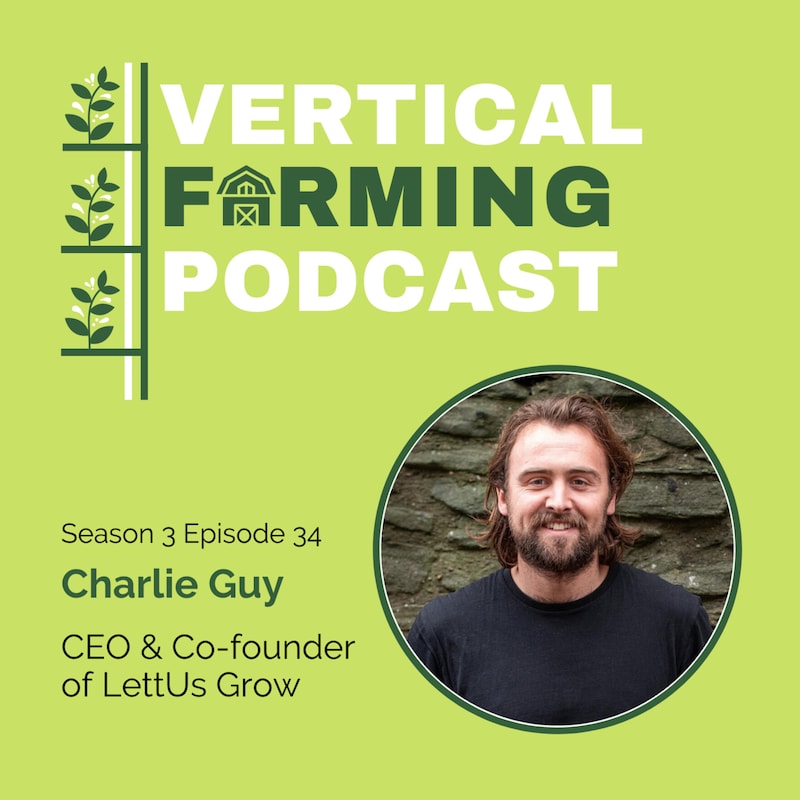
Join Harry Duran, host of Vertical Farming Podcast, as he welcomes to the show, Chief Executive Officer and co-founder of LettUs Grow, Charlie Guy. LettUs Grow brings affordable food growing to the modern city through their patent-pending aeroponics technology. With a background in renewable energy consultancy and engineering design, Charlie is a proponent of tech for good and is passionate about all manners of sustainability. In this episode, Harry and Charlie discuss the work Charlie is doing at LettUs Grow to connect greenhouses with vertical farms. They talk about some of the benefits of aeroponics and technological advances that have been made in recent years. Finally, Charlie speaks to the connection between our food systems and our energy grids and shares what he’s most excited about for the future of LettUs Grow and the overall AgTech industry.
Episode Sponsor
Key Takeaways
- 02:37 – Harry welcomes to the show Charlie Guy, CEO and co-founder of LettUs Grow, who talks about the personal and professional impact of Covid-19 and what inspired him to get involved in vertical farming
- 09:49 – How Charlie shares the origin story of LettUs Grow and their current offerings
- 13:03 – Charlie expounds on their Drop & Grow platform and opportunities for growth
- 19:50 – Charlie talks about the work he’s doing to connect greenhouses with vertical farms
- 23:24 – Charlie explains the various benefits of aeroponics and speaks to the advances in aeroponics technology
- 27:50 – Changing trends Charlie has noticed in the vertical farming industry
- 31:47 – Charlie discusses the connection between food and energy grids
- 36:01 – What excites Charlie the most about opportunities for innovation in vertical farming and at LettUs Grow
- 44:35 – Challenges Charlie has faced and lessons he’s learned as a leader at LettUs Grow
- 45:55 – Charlie opens up about what community means to him and a tough question he’s recently had to ask himself
- 50:31 – Harry thanks Charlie for joining the show and let’s listeners know where they can learn more about LettUs Grow and connect with Charlie
Tweetable Quotes
Links Mentioned
Link to Charlie’s Blog Post on Energy Grids
Sponsor Info:
🎙️🎙️🎙️
Podcast Production and Marketing by FullCast: https://bit.ly/3sxZ34y
See omnystudio.com/listener for privacy information.
Mentioned in this episode:
2025 Precision Ag Report by iGrowNews
2025 Precision Ag Report by iGrowNews
Transcripts
$680 million poured into precision ag last year.
Speaker:Autonomous weeding robots dominated, and John Deere made 2 acquisitions in 3
Speaker:months. A food company, not an equipment maker, bought a
Speaker:robotics startup to protect its own supply chain. The deals are
Speaker:accelerating, the money is moving, and the winners are already separating from the
Speaker:pack. If you're investing, building, or buying in this space,
Speaker:you need the full picture before your competitors get it. The 2025
Speaker:Precision Agriculture Intelligence Report From iGrow News is now
Speaker:available. Get your copy today at
Speaker:igrownews.com/precision. If you are starting a
Speaker:vertical farm and don't know where to begin or which technology would suit your needs,
Speaker:then reach out to the experts at Cultivated. As indoor farm brokers, they
Speaker:help connect you to the right technology and ensure your project is successful.
Speaker:Best of all, their service is free because they work on behalf of their
Speaker:partners. Visit cultivated.com to learn more. And
Speaker:that's spelled C-U-L-T-I-V-A-T-D.com,
Speaker:or click the link in the show notes. We don't yet know, I don't think,
Speaker:how that's going to develop long term. I think in
Speaker:the same way that traditional agriculture has a range of growers from
Speaker:the very, very large-scale industrialized down to
Speaker:small sort of market gardeners at the other end of the scale, the
Speaker:ability for container farming platforms to fill
Speaker:some of those more flexible areas within that
Speaker:supply chain is really, really interesting.
Speaker:Welcome
Speaker:to the Vertical Farming Podcast, weekly
Speaker:conversations with fascinating CEOs, Founders, and
Speaker:agtech visionaries. Join us every week as we dive deep
Speaker:into the world of vertical farming with your host, Harry
Speaker:Duran. Vertical Farming Podcast Season 3,
Speaker:welcome back. If this is your first time listening, then you're in
Speaker:for a treat. This is the show where I interview fascinating CEOs and founders of
Speaker:the leading vertical farming companies from around the world. I'm your host, Harry
Speaker:Duran. I was off last week. I was doing a bit of traveling across the
Speaker:country and testing out some new camping gear with
Speaker:my partner. We made it through Nebraska, Colorado,
Speaker:South Dakota, and really had a nice relaxing time.
Speaker:And it was important for me to take some time to
Speaker:recharge and renew, and that's what I'm excited to have done.
Speaker:And back in the saddle for this week's episode. Last week I spoke to David
Speaker:Dennison, CEO of CubicFarms. If you haven't listened to it, definitely
Speaker:check that one out. And this week I speak to Charlie Guy. He's the
Speaker:CEO and co-founder of Lettuce Grow! Lettuce Grow brings affordable
Speaker:food growing to the modern city through their patent-pending aeroponics technology.
Speaker:With a background in renewable energy and engineering design, Charlie is a
Speaker:proponent of tech for good and is passionate about all manners of
Speaker:sustainability. In this episode, we discuss the work Charlie is doing at Lettuce Grow
Speaker:to connect greenhouses with vertical farms, the benefits of aeroponics,
Speaker:and technological advances that have been made in recent years. Finally, Charlie speaks
Speaker:to the connection between our food systems and our energy grids and shares what he's
Speaker:most excited about for the future of Lettuce Grow and the overall agtech
Speaker:industry. Special thanks to our episode sponsor, Indoor AgCon. Whether you're
Speaker:starting up or scaling up, Indoor AgCon can help grow your vertical farming
Speaker:business. Live and in person this year, the premier trade show and
Speaker:conference for vertical farming and controlled environment agriculture heads to the
Speaker:Hilton Orlando, October 4th through 5th. You'll be able to explore an expo
Speaker:floor filled with new product resources and business solutions, attend
Speaker:idea-packed educational sessions led by top CEOs and thought leaders,
Speaker:and connect with peers and potential business partners at their networking
Speaker:events. You can learn more and take advantage of early bird registration
Speaker:discounts at indoor.ag and also save an additional
Speaker:$100 off registration with our promo code
Speaker:VFPOD2021. Don't forget to sign
Speaker:up for the Vertical Farming Weekly newsletter. Each week, our team member Daniel
Speaker:brings you the latest and greatest in the world of vertical farming. Sign up today
Speaker:at verticalfarmingweekly.com. If you enjoyed this episode or past
Speaker:episodes, please leave a rating and a review at ratethispodcast.com/vfp.
Speaker:I'll be sure to read yours out next. Couldn't resist the pun. Let's get
Speaker:started and learn more about Charlie and the Lettuce Factory.
Speaker:Charlie Guy, CEO and co-founder of Lettuce Grow. Thank
Speaker:you for joining me on the Vertical Farming Podcast. Lovely. Thanks, Harry. Really
Speaker:a real pleasure to be here this evening. So where's home for you now?
Speaker:Yeah, so I'm based in Bristol here in the UK, in the southwest.
Speaker:Really, yeah, I guess exciting place to be for companies
Speaker:and Maybe not on the map for global
Speaker:vertical farming yet, but there's really exciting stuff going on here in terms of
Speaker:local food production and food initiatives. I grew up
Speaker:DJing, like actual vinyl and turntables, and so I follow the
Speaker:electronic music scene pretty well. And there was a wave of DJs coming out of
Speaker:Bristol years ago that I remember. Yeah, definitely.
Speaker:There's a really big music scene, cultural scene here, a lot of
Speaker:influential— yeah. A lot of influential artists who still,
Speaker:like, yeah, some of them live just down the road. So yeah, good place to
Speaker:be. What's been the biggest thing that you miss since everything
Speaker:that's gone down with COVID and us slowly getting out of this
Speaker:lockdown? I think, yeah, you've already nailed it. It's
Speaker:the sort of the music and going
Speaker:out and the sort of cultural aspects that make it such a vibrant place
Speaker:to live here. But then also being able to travel, of course, being able to
Speaker:see other places and Yeah, it's not been easy, but I guess
Speaker:now we're starting to come out of things. And yeah, the pubs are open again
Speaker:here. So yeah. That's always a good sign. It is always a good sign.
Speaker:What was the impact? I know there's been a range of things that have happened
Speaker:here in the States, obviously across the world, and countless
Speaker:business impacted, lives lost. And if you had to think about what's been some of
Speaker:the biggest takeaways for you, either personally or for the
Speaker:company, as a result of having gone through the past 12 months?
Speaker:Yeah, I guess personally
Speaker:there's been a good focusing on what's important in
Speaker:many ways in life. And yeah, you really notice when you can't see
Speaker:certain people that you just take for granted that you
Speaker:can pop down the road and see, or just over in London or
Speaker:wherever they might be. Especially if you're a hugger.
Speaker:Yeah. So yeah, that's one of the big
Speaker:things, I guess, personally, realizing the importance of that, understanding the difference
Speaker:between working from home and working in the office. Like,
Speaker:yeah, it's a huge part of my life, what we do. And
Speaker:yeah, when you're not, when you can't be in the office, that has a big
Speaker:impact on your other wellbeing as well. And yeah, so that's been,
Speaker:again, exciting recently for people to be
Speaker:back in the office, new faces, new, yeah, like a
Speaker:lot of excitement. for us. So I guess, yeah, that's some
Speaker:of the personal impacts. And transitioning, as they often do
Speaker:in my sort of position, into the work impacts, I think for us as a
Speaker:business, yeah, that first instant adjustment to
Speaker:working from home and that going very smoothly. But then
Speaker:as time goes on, you realize the benefits of being
Speaker:in-person, collaboration, all those things. I think On a
Speaker:macro scale, it's great now that, well,
Speaker:a lot of the issues in our food supply chains and in our food
Speaker:systems were brought to the fore with some of the shocks that,
Speaker:yeah, in the early months of the pandemic, that it really
Speaker:brought conversations out of supermarket boardrooms and
Speaker:into people's dining rooms and into people's, yeah, around people's
Speaker:kitchen tables. So that's been something that's been really interesting to come out of this
Speaker:is Seeing those conversations become more
Speaker:part of the mainstream. Yeah, I think they're probably the main ones.
Speaker:I guess the other big one actually for me is seeing the potential of people
Speaker:to work together and solve huge problems. And
Speaker:yeah, the response of, I guess, the whole
Speaker:world of working together towards solving a
Speaker:very difficult problem. and that level of
Speaker:collaboration, which I guess when we look at the big climate change
Speaker:issues coming down the track is going to be needed and more.
Speaker:Yeah, it seems like the topic is top of mind for this new
Speaker:administration in the US. So I think we're back on board, the
Speaker:rest of the world, in terms of making that something that's important.
Speaker:Interestingly enough, the conversation with past guests has been
Speaker:around that topic of right place for this
Speaker:technology at the right time. And I mean, I couldn't have planned to
Speaker:have launched this podcast that— I mean, I literally was thinking about it
Speaker:before COVID but as I was just getting ready to launch, it
Speaker:hit. And my 3rd interview was with someone— was actually with David Farquhar from
Speaker:IGS in Scotland during COVID And so I wasn't even
Speaker:sure if he was going to be on, but it just was interesting how now
Speaker:I've been having more of these conversations. We're in season 3 now. This
Speaker:awareness that this access to food, access to local fresh food,
Speaker:food, the concept of food deserts. And I think these are things that people took
Speaker:for granted that, you know, can have their grocery store
Speaker:or their mart down the street, but it's maybe out of sight, out
Speaker:of mind. But we don't realize there are communities of people that
Speaker:don't have access to fresh food that only get, you know, Here in the States,
Speaker:it's the junk food chains. That's their closest source
Speaker:of any sort of anything resembling nutrition. So I think people are waking up to
Speaker:it. And I think it seems like everyone in this industry is poised and
Speaker:they're at the right time. And all the work that you've been doing up until
Speaker:now is, I would imagine, is starting to pay off. Yeah, definitely.
Speaker:It's some of these conversations that I guess were happening before
Speaker:have really been brought into the limelight. And yeah, these issues
Speaker:that were underlying are now being,
Speaker:yeah, being raised and people are talking about them. And yeah, as a technology,
Speaker:it puts us, I guess, a way of changing the food
Speaker:system or augmenting it. It puts us in a really exciting
Speaker:place with, yeah, a lot of opportunity ahead of us.
Speaker:So when did this come on your radar prior to Lettuce Grow? I know you've
Speaker:got an engineering background. And so when did these technologies
Speaker:sort of did you start to become aware of them? Yeah, I was made aware
Speaker:of them through some local initiatives here, actually.
Speaker:And for me, it was— I was getting involved in the sort of
Speaker:food waste issue and looking at how much waste was
Speaker:coming out of different, I guess, places locally, be that
Speaker:supermarkets or restaurants or understanding
Speaker:food waste in the home. And yeah, it was through
Speaker:looking at the sort of inefficiencies in the food system that I started to
Speaker:really get— become aware of, I guess, this
Speaker:technology. I think like most people, often we find a way— it's through aquaponics.
Speaker:It's often the first— it's often the first thing that people hear of. And
Speaker:yeah, I think just, I guess, the beauty of that system in terms of
Speaker:the symbiotic nature of the plants and the fish
Speaker:opens a lot of people's eyes to the fact that, yeah, you can grow
Speaker:plants in a different way, in a way that doesn't require soil.
Speaker:So that was sort of, yeah, the first sort of times I
Speaker:got involved in it. And that was whilst I was studying.
Speaker:And so how do you think about the idea for
Speaker:taking what you're seeing, what's happening? I imagine from an engineering
Speaker:perspective, some of that has probably caught your eye and was interesting to you, but
Speaker:then how do you make the leap and talk about those early conversations with your
Speaker:co-founder, How you decide to get together and realize that this
Speaker:might be a business? Yeah, so it was founded by
Speaker:myself, Jack, and Ben. So Ben is
Speaker:also engineering background, Jack's a plant biologist. So
Speaker:yeah, it was those conversations between us. Jack was looking
Speaker:into ways of, yeah, looking at how we can bring,
Speaker:using hydroponics and bringing food to people's
Speaker:plates or to people locally in a different sort of way.
Speaker:Add in the sort of design thinking and systems thinking from myself and Ben. And
Speaker:yeah, we actually launched through a sort of local
Speaker:crowdfunder and campaign. Yeah. And sparked from there,
Speaker:really. And did you know the market that you
Speaker:wanted to go after in those early days? And who were you looking at other
Speaker:companies-wide in terms of inspiration for what people were doing?
Speaker:So very, very early days, we were looking at a whole range of markets,
Speaker:if we're honest. We were looking at the whole system and, and where
Speaker:we would have the greatest possible impact. And
Speaker:yeah, we were looking at things all the way through from sort of small-scale hydroponic
Speaker:growing at home through to, yeah, growing in
Speaker:large-scale greenhouses and other technologies that could fit in
Speaker:to help improve that system. So yeah, I guess
Speaker:in short, probably no, we didn't. We didn't at that time.
Speaker:My background is in sustainable systems
Speaker:thinking and renewable energy and those sort of industries. And
Speaker:just taking a look at the potential innovation in food was really exciting
Speaker:for me because there was a whole raft of
Speaker:areas and potential innovation that we could bring to the industry.
Speaker:Which, yeah, at that time hadn't really been done
Speaker:yet. And that for us, I think, is still a pretty wide
Speaker:open plane of opportunities, I guess, in terms of the possibilities
Speaker:of these sort of technologies. So for the benefit of the listener,
Speaker:can you explain what Lettuce Grow's current offerings are and
Speaker:the markets you're currently serving? Yeah, of course. So yeah,
Speaker:Lettuce Grow, we're a technology company. So we provide
Speaker:technologies into indoor farms, be they vertical or
Speaker:greenhouses. And as part of that, the
Speaker:sort of main technologies that we're developing are farm
Speaker:management solutions and a unique aeroponic technology
Speaker:that really maximizes farm output whilst minimizing the
Speaker:environmental impacts to make growing as sustainable
Speaker:as possible. So we've developed a unique aeroponic system
Speaker:that Has no nozzles, which is a common issue with
Speaker:high-pressure aeroponics. And yeah,
Speaker:that's obviously been a core focus of what we do, but we've packaged all of
Speaker:these technologies up into container farms. So we've got
Speaker:the only available aeroponic container farms through our Drop and Grow
Speaker:platform on the market at the moment. And how long
Speaker:have you had Drop and Grow, the line there? When did that start?
Speaker:Yes, we launched Drop and Grow last year. It actually
Speaker:was— it wasn't born out of the pandemic, but it was
Speaker:an opportunity to accelerate that through to market, to really
Speaker:simplify the journey of people getting involved in
Speaker:vertical farming, to make it as easy as possible to become a grower.
Speaker:How much education was involved in terms of the markets you were
Speaker:going into? When people see this technology, Are they
Speaker:familiar? You know, because I know Freight Farms does this in the States, and so
Speaker:it may be something that they've seen on the periphery. And then when they start
Speaker:digging in and looking at your offering at Drop
Speaker:and Grow, how much education do you have to provide them and how much hands-on
Speaker:support? Because I would imagine, especially if it's someone who's a first-time vertical
Speaker:farmer, right? Yeah, it really depends on obviously who they
Speaker:are. We work with a range of people all
Speaker:the way from people that are experienced in vertical farming, running their own
Speaker:farms, have been for multiple years, and we're providing technology and
Speaker:support to them, all the way through to first-time farmers, like
Speaker:you say, or traditional farms as well, who are going from the
Speaker:soil and traditional practices and, yeah, learning a new way of doing
Speaker:things. And I guess, yeah, we've worked with
Speaker:people, I guess, farmers, dairy farmers before, and And
Speaker:it's a big change in terms of
Speaker:the type of work. And often it's met with
Speaker:positivity because you're not having to worry about the weather, you're not having to worry
Speaker:about the time that you're getting up as much
Speaker:because obviously you can control that time of day.
Speaker:But a big part of what we do is through our
Speaker:Astara platform, which is the software and the brains that control
Speaker:Drop and Grow and control and automate our other
Speaker:offerings. And that's about making the journey as easy as
Speaker:possible for first-time growers, preloading
Speaker:all the automation and the settings that they need, and guiding
Speaker:them through the daily processes if they're using Drop and
Speaker:Grow and the task management and those type of things. So
Speaker:we're really Trying to make the technology and our products as accessible
Speaker:as possible. And the software is homegrown?
Speaker:Yeah, it's all developed in-house. We— it
Speaker:works for our systems, but we're also able to control
Speaker:third-party systems as well. So it's not unique to us
Speaker:in terms of how we can use it and integrate with other systems, but built
Speaker:in-house. And do you see a difference in the learning curves from people that have
Speaker:had experience in traditional agriculture Or is
Speaker:there a steeper learning curve because they have to break old habits? I'm wondering what
Speaker:you've noticed. Yeah, I think it does depend on the
Speaker:individual in many ways, but ultimately,
Speaker:yeah, the sort of processes and
Speaker:from what we provide, I guess a lot of the processes
Speaker:are not exceptionally complex once you've got all of the
Speaker:kit and all of the learnings that we're supporting people with. So
Speaker:We're there to guide them through the first sort of growing
Speaker:cycles. And we do that on site with people. We, yeah, we send
Speaker:experts from our team, our growers to go and help people get up to speed.
Speaker:So we're really there sort of helping them in those first cycles. And
Speaker:then once they got that, we, yeah, we're there on the end of the phone
Speaker:as needed to help them through it. But we let them carve their
Speaker:own path at that point. And where do you see the opportunities
Speaker:for growth with that sector? Yeah, I think it's—
Speaker:the opportunities are really based on how flexible
Speaker:containers are for as a platform for growing. And
Speaker:we don't yet know, I don't think, how that's going to
Speaker:develop long term. I think in the same way that
Speaker:traditional agriculture has a range of growers from the very, very
Speaker:large-scale industrialized down to small sort of
Speaker:market gardeners at the other end of the scale. The
Speaker:ability for container farming platforms to fill
Speaker:some of those more flexible areas within that supply
Speaker:chain is really, really interesting. So there's a, yeah, there's a whole
Speaker:raft of ways that can go. I think the other point is
Speaker:obviously really interesting is how robust a structure
Speaker:they can be. So yeah, they, as we've seen already, there's
Speaker:companies that have taken them down to the deepest, coldest
Speaker:regions of the planet, and others that are operating
Speaker:them in, yeah, some of the harshest climates at the other end of
Speaker:the scale in terms of temperature. So there's, yeah, I think
Speaker:what it comes down to is the flexibility of that as a platform. But you
Speaker:also have to acknowledge that it's limited in terms of the,
Speaker:I guess, the operational scale. And that's why we're also focusing
Speaker:on much larger automated systems using the same
Speaker:aeroponic technology, providing the same yield uplifts that
Speaker:we've been able to show compared to hydroponics, but at a much larger
Speaker:scale as well. So we are acknowledging that, yeah,
Speaker:container farming is part of the mix. Are you tracking and
Speaker:measuring that difference that you just mentioned? And are you talking
Speaker:publicly about like that difference in that you see over hydroponics?
Speaker:Yeah, so it's, as you'll be aware from, I guess, the other,
Speaker:everyone you've spoken to through this podcast, like data
Speaker:sharing and benchmarking and that side of the business is,
Speaker:of the industry is in its, let's say it's in its infancy.
Speaker:And we're working with other players,
Speaker:other partners to really try and break
Speaker:that down. I think ultimately, as a technology provider,
Speaker:we're keen to share and talk about the benefits of our systems,
Speaker:um, so that other growers can share in that. But
Speaker:understandably, the sort of technology
Speaker:cross-grower companies that, I guess,
Speaker:yeah, there's quite a few of them that are in the world, they can be
Speaker:much more protective over that sort of data. So
Speaker:we're at a point that, yeah, we talk pretty openly about those
Speaker:things. And obviously, the more
Speaker:that we do, the more we work with our academic partners
Speaker:to validate those sort of— the performance that we're seeing, the
Speaker:more we'll be talking about it. And we take a very open approach to working
Speaker:with academia. We take an open approach to trying to push
Speaker:the boundaries of the industry and move things forward for everyone.
Speaker:You're also working on systems or an approach to
Speaker:connect greenhouses with vertical farms. Can you talk a little bit about that as
Speaker:well? Yeah, of course. So we obviously—
Speaker:vertical farming is the main focus of, I guess,
Speaker:your work here, but we do see a really
Speaker:important connection, acknowledgement of the value of
Speaker:high-tech greenhouses alongside vertical farms. And This
Speaker:then becomes, again, a geographical question,
Speaker:I guess, a local market conditions question for which is the most
Speaker:appropriate technology for the most— for the crop you're growing in the market
Speaker:you're growing it in, the geography and the climate you're growing in as well.
Speaker:And yeah, again, it's an open playing
Speaker:field for how these 2 technologies are going to grow together.
Speaker:And they For us, it's about finding
Speaker:where the greatest value is for vertical farms, where the greatest value is for
Speaker:greenhouse farms, but fundamentally providing core
Speaker:technologies for both that can increase yields of your crops,
Speaker:increase output of your facility, and increase the efficiency of how you're
Speaker:doing things, whether that's on the software side or the using aeroponic technology.
Speaker:And are you seeing possibilities where there could be a
Speaker:a hybrid approach that might make sense if people are using the
Speaker:best of both technologies given where they're, they're geographically
Speaker:located? Yeah, absolutely. I mean, the hybrid approaches—
Speaker:there's already multi-tier greenhouses, uh, in
Speaker:terms of, yeah, whether it's growing things like strawberries, or
Speaker:there's greenhouses where you've got a lit lower tier and
Speaker:you benefit from the natural light with the upper tier. The hybridization is,
Speaker:yeah, is key to it. And that's really why the same aeroponic
Speaker:platform that we developed, you can use in both a greenhouse and a
Speaker:vertical farm. So it's not unique to one of them. And
Speaker:I think that, yeah, in the same way that
Speaker:lots, you're seeing this transition to more, let's say, traditional
Speaker:greenhouse growers, their, a lot of their interest in vertical farms
Speaker:is around how you can really improve, speed up, improve the output, the
Speaker:quality, the nutrition of the early stage of
Speaker:growth, and then bring crops out into the natural light and
Speaker:benefit from the free sunlight that we're blessed with. So yeah,
Speaker:it's about understanding the benefits of each system and where
Speaker:each is most appropriate. And does this lend itself well to
Speaker:the design and build work that you're now doing and that you alluded to earlier,
Speaker:where you're really looking at opportunities for custom
Speaker:installations at a much larger scale? Yeah, absolutely.
Speaker:So we— it's the same sort of
Speaker:area of work that we're working on. Um, we
Speaker:are building a network of technology partners and people
Speaker:that are already active in, let's say, the large-scale
Speaker:hydroponic space, and showing them the benefits of
Speaker:integrating aeroponics into those large-scale systems. So
Speaker:Yeah, there's— and that's saying that, again, we take an open approach to how
Speaker:we do these things. We know where our strengths lie.
Speaker:We know that people have already developed large-scale automation
Speaker:systems. We don't need to reinvent the wheel there.
Speaker:So we're looking to bring the benefits of our aeroponic technology into, into that
Speaker:space. For the benefit of the listener, always
Speaker:looking for opportunities to educate folks because there's people that listen that are learning and
Speaker:new to vertical farming. So when you describe or tell
Speaker:people about the benefits that are— people that are used to just hearing
Speaker:hydroponics may be new to the concept of
Speaker:aeroponics. And so how do you describe that from a benefits perspective?
Speaker:Yeah, of course. Um, it's one of those that when you're working day in, day
Speaker:out— yeah, so aeroponics, for those that are
Speaker:new to it, instead of in the various hydroponic methods where
Speaker:often your roots are in a growing media or
Speaker:submerged in a nutrient solution. In aeroponics, the nutrient
Speaker:solution is turned into a gas, an
Speaker:aerosol phase, a mist, and that's applied to the roots as a very
Speaker:fine spray. The big benefit of that
Speaker:from the plant's perspective is that it's experiencing something which is much
Speaker:more like soil than hydroponics because you
Speaker:can you've got a much greater access for the
Speaker:roots to oxygen, to carbon dioxide, to be able to
Speaker:respire much more efficiently in that environment than
Speaker:they might in, say, a flood and drain system,
Speaker:a sort of deep or shallow water culture system where the roots are
Speaker:not generally in the environment they're used to. They're submerged in the
Speaker:water. They adapt to that, as plants do. But with aeroponics, you've
Speaker:effectively got this additional lever that you can pull in
Speaker:terms of how much of a solution you apply to the roots
Speaker:and how you control that. So it means that you can,
Speaker:yeah, encourage the plant to, to grow faster and
Speaker:grow with less, um, diseases because you can keep
Speaker:the, the growing media much drier if you have a growing media.
Speaker:And yeah, there's a lot of other sort of advances that you
Speaker:can make in terms of of health or stressing the plant in different ways
Speaker:that you can't necessarily do with a hydroponic system.
Speaker:Are you seeing an interest in folks that are in
Speaker:hydroponics inquiring more about the aeroponic technology?
Speaker:Yeah, for sure. I think part of that is driven by,
Speaker:I guess, some of the, the problems that farmers
Speaker:are seeing, whether that's they might have Yeah,
Speaker:certain— sometimes you get an algal issue or something
Speaker:like that, and you have a very wet growing media, and
Speaker:you're wondering, how can we reduce this? And aeroponics is one way
Speaker:that you can reduce that because you're just applying the moisture to the roots.
Speaker:Or you've got growers that are, yeah, looking to push the
Speaker:yields up, and that's where, yeah, looking at aeroponics as a
Speaker:way to do that is a really, a really good step to, to see if
Speaker:you can get more out of your current facility. And that's,
Speaker:I guess, coming back to the sort of greenhouse side of things.
Speaker:That's, that's the work that we've been doing in vertical farms and now
Speaker:taking that aeroponic method to greenhouses. And
Speaker:yeah, looking at the impacts throughout the season of those, those
Speaker:improvements that we've seen in vertical farming. Yeah, I think
Speaker:it— I had just assumed that there was benefits, but I think the way you've
Speaker:described it, how It mimics better the
Speaker:conditions of what the plant experiences in soil, I think is a
Speaker:great way to put it. And something that may be obvious to people, but the
Speaker:fact that you mentioned that they're in a medium when they're in hydroponics that they're
Speaker:not used to because historically most of these plants have
Speaker:been grown in soil. So I think that was an important distinction. Are there
Speaker:a lot of advancements being made in aeroponics
Speaker:itself in terms of the technology or ways to actually deliver it?
Speaker:It's still, I guess, compared to the use,
Speaker:the widespread use of hydroponics, there's less being done in
Speaker:aeroponics. And I think that fundamentally comes down to the
Speaker:difficulties of setting up high-pressure aeroponic systems, which is
Speaker:the norm. So yeah, it's not the most
Speaker:accessible technology. It's not the easiest technology to scale
Speaker:up if you're building a high-pressure system. Whereas
Speaker:our aeroponics at Lettuce Grow is pretty much as simple
Speaker:from a, I guess, building the farm
Speaker:perspective as a hydroponic setup because of the
Speaker:unique way that we do things aeroponically. So we've made that much
Speaker:more accessible. And again, that's something that we're hoping will help push the
Speaker:boundaries of what's possible and encourage more people to be
Speaker:using aeroponics. And yeah. pushing it as a technology.
Speaker:And what changes since you started have you seen in terms of
Speaker:the types of crops that you can actually grow indoors?
Speaker:Yeah, so I guess as many people started with sort of leafy
Speaker:greens, microgreens, those type of crops.
Speaker:Over the years, we've, yeah, grown things like
Speaker:strawberries, tomatoes. We're doing a fair bit of work at the
Speaker:moment Things like carrots, which when we talk
Speaker:about crops that are used to being in soil and then
Speaker:suddenly they're growing in thin air, it's a bit of a— yeah, they will behave
Speaker:differently. Are they special seed varieties to grow
Speaker:shorter? Are they baby carrots? Yeah, we experimented with the baby carrots.
Speaker:We haven't grown any sort of, any of those meter-long
Speaker:carrots that you see people growing yet. But,
Speaker:um, it's about, yeah, showing the possibilities of
Speaker:what's, yeah, what's possible in technology. And yeah, potatoes and seed
Speaker:potatoes are one of the best-known crops in terms of their
Speaker:usage in aeroponics on a sort of global scale. How large are they?
Speaker:So I guess the tubers for seed potatoes are, yeah, much
Speaker:smaller, I guess, in about a couple of centimeters across.
Speaker:Okay, an inch at their most. depends on the variety. But
Speaker:yeah, it's a really interesting use case of aeroponics where you can
Speaker:provide— obviously within potatoes, soil-borne
Speaker:diseases are a real issue, and if you've got disease in your seed,
Speaker:then obviously that can proliferate through a whole crop.
Speaker:So aeroponics provides a way of providing clean,
Speaker:disease-free seeds, and it's the same—
Speaker:well, the beauty of growing an aeroponically is you can, you can pick them like
Speaker:a fruit, which is just a bit, yeah, a bit mind-blowing. You
Speaker:don't have to kill the plant up top. But the other,
Speaker:the same principle within that of providing clean,
Speaker:disease-free rootstock or seeds, uh, in
Speaker:the potato case, is what we're taking and
Speaker:applying to other crops as well. So we're working at the moment with
Speaker:things like fruit trees. We've worked in other trees for forestry
Speaker:in the past that, yeah, using aeroponics
Speaker:as a way of helping to clone and propagate
Speaker:crops that may then be planted out into, into soil.
Speaker:So you're germinating and starting the seedlings indoors?
Speaker:Yeah, whether that's from seed or mainly propagating from, from cuttings.
Speaker:The potato challenge is interesting because of the weight of them as well.
Speaker:And naturally, they're normally grown in the ground, and so I would imagine
Speaker:there's a different engineering challenge just as they
Speaker:grow indoors as well. Yeah, it's a different, a
Speaker:different, I guess, volume of space and a different,
Speaker:yeah, architecture for the plants. But that's part of
Speaker:the, part of the thing with aeroponics is, in the same way that you've got
Speaker:different hydroponic systems, different types of hydroponics, for different
Speaker:types of crops that are best suited, that it's the
Speaker:same with aquaponics, that you can vary that. And are you seeing
Speaker:other opportunities for, to test out new varieties or new crops?
Speaker:Yeah, absolutely. All the time we've got either inquiries coming in
Speaker:or part of our internal research streams to be, yeah, looking at new crops.
Speaker:I think it's one of the, I don't want to call it a problem, but
Speaker:the, the, I guess, double-edged sword,
Speaker:let's call it that. of the vertical farming and the
Speaker:nascency of the industry is that there's so much opportunity.
Speaker:There's so— there's infinite possibilities of crops and
Speaker:varieties that can be grown. There's a need to
Speaker:obviously work through those incrementally. And yeah, that's obviously a
Speaker:focus challenge for companies like ourselves in terms of making sure that,
Speaker:yeah, we're focusing on the right crops at the right time and then moving on
Speaker:to new exciting ones. You had a recent blog post or
Speaker:post on the site about the energy grids, and it's something
Speaker:you wrote about. And I was wondering if you could talk a little bit about
Speaker:what was the impetus for that topic and what you were covering there.
Speaker:Yeah, so I guess my background is renewable energy, and
Speaker:then I imagine that probably came— comes through in
Speaker:the blog that I wrote on this. And for me,
Speaker:there's a big disconnect between our
Speaker:food systems and our energy systems,
Speaker:be that electrical energy or
Speaker:energy that goes into transporting produce around the
Speaker:world and the actual food item. There's quite a big disconnect between
Speaker:the efforts and the overall energy that goes
Speaker:into producing that and the end product. And I think
Speaker:that's something that if we're addressing
Speaker:the big problems that we need to in climate and environmental issues,
Speaker:then we need to start looking at food and energy in a more
Speaker:joined-up way. And that's really the basis for this piece
Speaker:that I wrote recently and explores this in a
Speaker:bit more detail. And what were some of the takeaways from that post?
Speaker:Yeah, so I guess looking at how we can join up thinking a
Speaker:bit more. And we work with a renewable energy
Speaker:company called Optimus Energy. here in the UK. And
Speaker:when you think about the vertical farming picture and the renewable energy piece,
Speaker:for me, there's no point building a vertical farm unless you're using renewable energy. I'll
Speaker:state that clearly. It's not a good use of
Speaker:anyone's time if
Speaker:you're— or in terms of the, I guess,
Speaker:the fundamental sustainability of it. If you're not using renewable energy, then we're burning coal
Speaker:to power lights to grow plants. That's not what we're doing. Which makes
Speaker:no sense. Yeah, exactly. And that's a piece that, yeah,
Speaker:needs to be talked about more in the industry. I know
Speaker:Henry Agriculture, who, yeah, I'm sure you've
Speaker:spoken to. Yeah, he's been on. Yeah. He, yeah, he talks about
Speaker:this a fair bit, and we need to look at the holistic
Speaker:sustainability behind vertical farming, and we need to talk about these things openly. So
Speaker:yeah, and I feel like it's a— I don't know if it's a dirty little
Speaker:secret or a dirty big secret, or, you
Speaker:know, that, and then the conversation around on the plastics
Speaker:as well. So I think those are 2 topics that keep coming up. And, and
Speaker:I think to your point, the more people that are talking about them out in
Speaker:the open, I think is, is healthy for the industry. It definitely is. And it
Speaker:comes back to the, the point we talked about earlier with data and transparency
Speaker:and, yeah, a way of comparing and benchmarking different
Speaker:technologies which will develop. And as the
Speaker:industry matures, like, we've got to acknowledge that this industry's grown very,
Speaker:very quickly and a very short space of time. And there's a huge amount
Speaker:going on, a huge amount of innovation, a huge amount of exciting things going on
Speaker:all around the world. And yeah, that sort of
Speaker:consolidation of ideas and frameworks and benchmarks will
Speaker:come. And there's work going on, there's collaborations going on
Speaker:to encourage that and to foster that. But I guess,
Speaker:yeah, we're going down an avenue from where we
Speaker:started with We're thinking about food and energy, but
Speaker:sort of taking it back to that, the,
Speaker:I guess, benefits of this joined-up thinking, whether it's within the industry or
Speaker:with the energy industry, huge, substantial, like really
Speaker:massive. Like as we get more renewables onto the grid,
Speaker:more wind, which as you mentioned earlier, the
Speaker:US is, is now leaning into hopefully quite a lot. Like
Speaker:the more wind on the grid, the cheaper our electricity,
Speaker:especially at nighttime when it's much windier. And you can
Speaker:turn your vertical farms on at night using cheap renewables.
Speaker:And that completely flips both the
Speaker:sustainability piece, obviously, if you're burning
Speaker:fossil fuels to power you, and it flips your economics as well into
Speaker:such a more positive place. It makes—
Speaker:Makes sense. It's the movement of renewables and vertical farm
Speaker:together, which is what makes it a sustainable technology.
Speaker:Where do you see the opportunities for innovation in this
Speaker:space, or what has you the most hopeful? I think
Speaker:there's a huge room for innovation still in
Speaker:the business models that will allow
Speaker:widespread adoption of vertical farms. I think
Speaker:it's holding the industry back in some ways. There's some exciting things
Speaker:going on in terms of reducing the sort of the
Speaker:barriers to entry, be they capital, often capital,
Speaker:that, yeah, there's a lot of innovation there, a lot of financial innovation,
Speaker:I guess, policy innovation that is currently lagging behind the
Speaker:technical innovations. The technologies are now here.
Speaker:We've got them here very quickly, but the
Speaker:adoption is currently not moving as fast as
Speaker:it could do because there's other barriers to entry. And
Speaker:that can be things as much as planning laws and
Speaker:acknowledgement of, yeah, the technology and how that fits into
Speaker:local planning laws, things like that. And things like
Speaker:certification and the sort of
Speaker:organics debate as well, which is less of a debate in the US, but much
Speaker:more one here. where, yeah,
Speaker:produce certification, produce branding that can tell the
Speaker:sustainability story of the industry can really unlock,
Speaker:yeah, a lot more, I guess, widespread knowledge. And
Speaker:that in turn, from the consumer angle, can help drive the growth of the
Speaker:industry. So yeah, I'm not saying there's not technological innovation to
Speaker:do. There's the— yeah, a lot in terms of
Speaker:automation and Useful machine
Speaker:vision instead of machine vision for the sake of it, and
Speaker:useful sensing that is appropriate
Speaker:to the facilities that you're in and appropriate to the
Speaker:insights that they're able to derive. But I think most of the
Speaker:innovation that really excites me is what— well, most of the potential for innovation
Speaker:is within the broader aspects of the industry in terms of
Speaker:the things that are limiting the growth, because technology is not limiting the growth at
Speaker:the moment. That's a good point. Yeah. Do you see
Speaker:information sharing with colleagues, with others in industry, just in the
Speaker:time that you've been running Lettuce Grow? And are there
Speaker:opportunities for improvement there? Yeah, I think there are.
Speaker:There's a level of reluctance to share
Speaker:information still. There's I'm not saying
Speaker:that's completely understandable, it's not. That's true. There's
Speaker:a good amount of competition in the industry, which drives
Speaker:certain things to be kept secret and not to be shared. But
Speaker:we need to find the frameworks and the pre-competitive
Speaker:spaces where things that benefit the whole industry can be talked about
Speaker:and shared. Because the opportunity is so large in
Speaker:terms of our food systems and the size of the
Speaker:various fresh produce markets globally, I think there's room for those
Speaker:pre-competitive spaces. So yeah, it's something that
Speaker:I'm— I guess I'm involved in the UK, in
Speaker:UK UAT, which is the UK urban agtech
Speaker:group, which is— I wouldn't say predominantly, but has a lot of vertical farming
Speaker:companies within that. So I'm on the I'm one of the founding
Speaker:members on the advisory board there, and we're trying to generate these
Speaker:spaces where people can collaborate in a less competitive space.
Speaker:So there's, yeah, there's room for that locally, and there's room for that on a
Speaker:global scale as well. Is there anything happening in the space that
Speaker:would be akin to what we saw in the tech space with
Speaker:like open source or Linux varieties of things of
Speaker:that nature? Yeah, I think where that— there are
Speaker:some open source movements in terms of software, in
Speaker:terms of the hardware. I guess
Speaker:it's a bit less easy than with something
Speaker:like Linux and a software platform due to the—
Speaker:got to acknowledge the infrastructural elements of vertical farming, indoor
Speaker:farming. So I think, yeah, one of the
Speaker:interesting ones a bit further down the track will be around
Speaker:seeds and varieties and how the
Speaker:traditional models in seed varieties might be disrupted by
Speaker:the advent of more vertical farms or more indoor farms.
Speaker:And I think that's going to be interesting to watch how that plays
Speaker:out. And there are various companies, of course, developing, um,
Speaker:yeah, developing specific seeds and specific varieties for
Speaker:vertical farms. So it'll be interesting how those become
Speaker:commercialized and how open that is. What
Speaker:are the things that you're thinking about at Lettuce Grow, given
Speaker:where you've come to in this point of the company's journey
Speaker:and the future and where you see possibilities for growth and the things that have
Speaker:you excited on a company level? So we're, I mean, we're really excited about
Speaker:the, the opportunities in large-scale horticulture and, and
Speaker:yeah, the large-scale aeroponic systems. As well as
Speaker:the opportunities within, let's call it, digital horticulture, the
Speaker:opportunities for providing smart systems,
Speaker:smart insights through our Astarra platform, whether that's in
Speaker:vertical farms, in greenhouses, in advanced polytunnels even, and
Speaker:the ability to share information between these different
Speaker:levels of controlled environment. Because that's really
Speaker:like we've seen some of the recent
Speaker:large investments into greenhouses. And I think you can't deny that that's linked to
Speaker:the growth of the vertical farming industry. Sure. And the trickle—
Speaker:both the learnings from those that have been growing
Speaker:greenhouses for a very long time and the trickle-down
Speaker:technologies that can come from vertical farming into that space are
Speaker:really, really exciting. And the trends that we're seeing for
Speaker:more control, whether that's plastic greenhouses upgrading to
Speaker:glass, like, that's someone transitioning
Speaker:from growing uncovered traditional
Speaker:soil and covering certain areas of their crop.
Speaker:This general trend to, I guess, limit the impact of
Speaker:inclement weather on farming is going to keep growing. That's,
Speaker:that's not going away. And at the top end of that
Speaker:is your is your fully automated, highly controlled
Speaker:vertical farm. But there's a whole host of
Speaker:opportunities all the way down that spectrum of controlled
Speaker:environment where digital solutions, be they
Speaker:smart sensor platforms that provide unique insights,
Speaker:or their learnings that have come from a vertical farm that you can then apply
Speaker:in terms of your process to a lower-tech environment,
Speaker:That for me is super exciting, how all of these interplay. And that's
Speaker:really why we aren't pigeonholed as a vertical farming company.
Speaker:We're looking to add value across the horticultural supply chain with technology.
Speaker:It probably would've made sense for me to name the show the Controlled Environment
Speaker:Agriculture Podcast, but it doesn't sound as sexy as
Speaker:vertical farming. It doesn't. And I think that term has
Speaker:grown in popularity since we launched. podcast. It's
Speaker:become more widespread, whereas, yeah,
Speaker:I guess it's one of those, as I said, the technology is moving so quickly,
Speaker:but even the language isn't moving as quickly as
Speaker:maybe the technology. So, yeah, it's definitely
Speaker:not as sexy a phrase. It doesn't roll off the tongue as
Speaker:well, does it? I was speaking to Jon Purcell of Unfold,
Speaker:and he mentioned that he was he told his, you know, his daughter's like,
Speaker:you know, he knows that he's in vertical farming now. And then she said something
Speaker:along the lines of like, oh, you're cool, or you're doing something cool now,
Speaker:just because of the term, you know, of the industry that he's in now. So
Speaker:yeah, I mean, it's— I guess the word zeitgeist does
Speaker:come to mind, but that's because the industry that we're working in
Speaker:is touching on so many current themes, like back to where we started
Speaker:the conversation with COVID and food supply chains and the disruption we've seen
Speaker:there, through to water shortages and
Speaker:biodiversity impacts of farming. We're really
Speaker:operating in a space that impacts a lot of themes that are in the public
Speaker:consciousness at the moment. So putting on your now
Speaker:management hat, if you think about where
Speaker:the challenges are that you have as a leader, and is there anything
Speaker:that's different in terms of how you think about running a company like
Speaker:this based on conceptions you had when you first got started and what you've
Speaker:learned now since then? I think from where we first
Speaker:started to where I am now, a lot has changed.
Speaker:I've learned a lot quickly, and there's still a lot
Speaker:to learn. I think the last year has obviously thrown up
Speaker:its own unexpected unique challenges, and
Speaker:that importance of place of community,
Speaker:be that our research centers, our labs, our workshops, our
Speaker:offices, is something that, yeah, when you're holed up
Speaker:in your bedroom or your home office, then,
Speaker:yeah, you're further away from that. And as a leader, I think that really needs
Speaker:to be front and center, the impact of that. So,
Speaker:yeah, it's something that we've worked through as a business, the challenges of
Speaker:distance, But there's a huge amount of excitement
Speaker:within our team that are— obviously, we've had people in
Speaker:who've needed to throughout the pandemic, but there's a huge amount of excitement and recognition
Speaker:across our teams of the benefits of being in the
Speaker:same place, tackling these problems head-on together, and collaborating and innovating
Speaker:together. Yeah, this theme of community has
Speaker:been top of mind for a lot of folks recently, I think. because of the
Speaker:absence of it over the past year. So what does that word mean to you?
Speaker:That's a really good question. Community,
Speaker:I think it's that sense of— I'm trying to answer it without saying the word
Speaker:communal, but that sense of collective belonging and
Speaker:collective connection, I guess. That
Speaker:connection with people and what that brings and
Speaker:enriches your life with that's way beyond just the life that you
Speaker:lead when you're digitally connected. You can have obviously good digital
Speaker:communities, and we're speaking across the world right now,
Speaker:but there's something missing from a human perspective
Speaker:that you don't get when you're talking through a screen compared to when
Speaker:you're in an active community and
Speaker:you've got diversity of thought, diversity of
Speaker:backgrounds. Yeah, diversity of, I guess,
Speaker:approaches and all of those things, which together
Speaker:forms, I guess, that feeling of community.
Speaker:Yeah, that's important. What's a tough question you've had to ask yourself
Speaker:recently? I think the tough questions that we are
Speaker:asking and thinking about are those that we touched on
Speaker:earlier with regards to holistic sustainability and
Speaker:environment and and those things. But I'm, I'm
Speaker:confident that we've got the right answers for those. And as a business,
Speaker:we're operating entirely on renewable energy.
Speaker:We refer all of our customers through to renewable energy
Speaker:suppliers. And yeah, I think that people
Speaker:are asking the questions about energy usage. And that is,
Speaker:it is a question that, as I said earlier, needs to be talked about openly.
Speaker:So, it's one of them. I think there's, yeah, on a more personal
Speaker:note, I guess, yeah, questions around how we
Speaker:safely return to the office and encourage that community and
Speaker:make that, yeah, the positive melting pot
Speaker:of everything that was in place before COVID
Speaker:and bring people back safely. And then, yeah, like, obviously it's for us,
Speaker:for me as a business As owner and co-founder of the company,
Speaker:it's something that I care deeply about, making sure that we can
Speaker:operate in a safe way, but in a way that encourages all of this
Speaker:collaboration and innovation and those ideas. Are you looking
Speaker:forward to getting back to conferences? I am, yeah. I think
Speaker:there's— I've attended various online ones. It's not the
Speaker:same. No one's nailed that, I thought.
Speaker:At one point I was on one and someone had, but then there
Speaker:was the sort of chat roulette. Yes.
Speaker:Yeah, that's true. Which, yeah, it's not quite the
Speaker:same. But yeah, I'm looking forward to that. I'm looking forward to
Speaker:reconnecting with people that I haven't seen in a long time and
Speaker:working on those sort of collaborations and those
Speaker:conversations that if you're honest, do sometimes only spark
Speaker:at these events, and you can generate them in a
Speaker:digital world, but it, yeah, there's sometimes
Speaker:at an event, having a few beers
Speaker:afterwards and catching up with someone you haven't for a long time, and yeah, that
Speaker:can lead to really exciting things. So yeah, looking forward
Speaker:to that. I've definitely been, there's a few events in the US that
Speaker:I was hoping to come to either last year or this year, which
Speaker:unfortunately not possible. But yeah, looking forward to those and
Speaker:some of those in Holland as well. Yeah, I think as we start to make
Speaker:our way out of this, everyone's looking forward to that human connection
Speaker:that we didn't realize we needed until we went a year plus
Speaker:without it. Sort of circles back to that idea of bringing community
Speaker:on a smaller scale, but then also the industry itself. I think there's some value
Speaker:in getting those meeting of the minds happening at least once or twice a year.
Speaker:So I think that's going to be a good thing for everyone. Yeah, definitely
Speaker:looking forward to it a lot. And yeah, looking forward to,
Speaker:I guess, people within our team getting out to those events that,
Speaker:yeah, that might not have done before. And we're, as a business, we're now
Speaker:much more open. We're able to open, luckily, here in the UK to,
Speaker:to more visitors. And then it's been really, really great bringing people
Speaker:back onto the site over the last few months. And it's that same feeling that
Speaker:we'll get at these sort of events. So yeah, it's exciting
Speaker:to be able to bring people in and show them what we've been working on
Speaker:over the last few years. Well, Charlie, I'm glad we got the chance to connect.
Speaker:We initially connected a while ago, and then we had a couple of email exchanges
Speaker:back and forth, and we were able to restart that conversation and now have you
Speaker:on the show. So, you know, looking forward to continued success.
Speaker:with Lettuce Grow, and I appreciate you sharing the story of
Speaker:the company and of yourself with the audience. No, thank you. Yeah, I'm
Speaker:glad we managed to arrange it, Harry,
Speaker:after a bit of a break. But yeah, it's been a pleasure, and yeah, I
Speaker:really encourage anyone listening, if they're interested in finding out more,
Speaker:to contact us or come through you,
Speaker:whatever's easiest. Best place for folks to connect with you? Yeah, best
Speaker:place would be our website,
Speaker:www.letusgrow.com. And yeah, that is by
Speaker:far the best place. Or I guess personally, yeah, on
Speaker:LinkedIn, likewise. Okay, we'll make sure we have all those links in
Speaker:the show notes as well. Thanks again for your time, Charlie. Brilliant. Thanks, Harry. Have
Speaker:a good rest of the day. Thanks again to Charlie for coming on the show
Speaker:and sharing his story. Full show notes available at
Speaker:verticalfarmingpodcast.com. Thanks to our season 3 title sponsor,
Speaker:Cultivated. If you're looking for a vertical farm and don't know where to start, or
Speaker:which technology would suit your needs, reach out to them today. Best of all,
Speaker:their service is free because they work on behalf of their partners. Learn
Speaker:more at cultivated.com, and that's spelled C-U-L-T-I-V-A-T-D.com.
Speaker:Just leave out that last E. Also, don't forget to learn more and take advantage
Speaker:of early bird registration for Indoor AgCon.
Speaker:You can save an additional $100 off with our promo code VFPOD2021.
Speaker:And that's at indoor.ag. And all the details will be in the show notes
Speaker:as well. Podcast production marketing provided by Fullcast. Sign up for a free
Speaker:podcast brainstorm at fullcast.co/vfp15.
Speaker:And as a reminder, if you're enjoying this show, please leave us a rating and
Speaker:a review at ratethispodcast.com/vfp,
Speaker:and we'll be sure to read those out on future episodes. Tune in next
Speaker:episode for my long-awaited and anticipated interview with Hiroki
Speaker:Koga. CEO of Oishi Berry, definitely making a splash in the
Speaker:world of vertical farming with their premium omakase strawberries.
Speaker:Looking forward to that one. Until we meet again, here's to your health.
Speaker:Thanks for listening. To read the full show notes for this episode, which
Speaker:includes any links mentioned in the episode, as well as a full show
Speaker:transcription, visit verticalfarmingpodcast.com.
Speaker:There you can sign up for our email list to be notified when new
Speaker:episodes Episodes are published.
Speaker:$680 million poured into precision ag last year.
Speaker:Autonomous weeding robots dominated, and John Deere made 2 acquisitions in 3
Speaker:months. A food company, not an equipment maker, bought a
Speaker:robotics startup to protect its own supply chain. The deals are
Speaker:accelerating, the money is moving, and the winners are already separating from the
Speaker:pack. If you're investing, building, or buying in this space,
Speaker:you need the full picture before your competitors get it. The 2025
Speaker:Precision Agriculture Intelligence Report from iGrow News is
Speaker:now available. Get your copy today at igrownews.com/precision.




