Shownotes
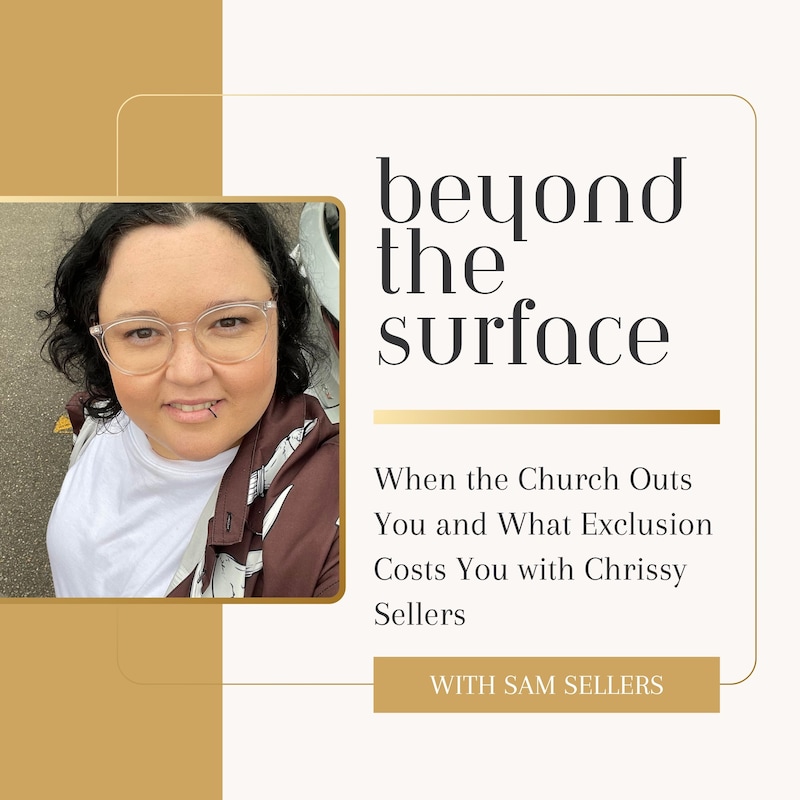
In this episode, Sam sits down with someone very close to home; her wife, Chrissy for an honest and personal conversation about Chrissy's journey through organised religion, from a confusing early experience of Catholicism to the demands and contradictions of Pentecostalism, and everything that unravelled along the way. Chrissy speaks candidly about navigating purity culture, the alienation that came with not fitting the mould, and the moment she was outed within her church community, an event that cost her a whole network of relationships she had relied on. It's a conversation about the very real personal toll of religious exclusion, and what therapy and self-exploration have looked like on the other side of it.
Connect
- You can find out more about Sam on her website - www.anchoredcounsellingservices.com.au
- To connect with Sam on Instagram - @anchoredcounsellingservices
- Want to contact with Sam about the podcast or therapy? Use this contact form.
- Also check out The Religious Trauma Collective
Transcripts
I would like to begin by acknowledging the traditional custodians of the land on which I live and work, the Gundagara land and people. I pay my respects to their elders, past, present and emerging, and extend that respect to all Aboriginal and Torres Strait Islander people.
I also want to acknowledge the traditional custodians of the lands on which you, our listeners, are joining us from today.
I recognize the deep connection that first nations people have to this land, their enduring culture and their commitment to the preservation and care for their country. This land was never ceded and it always was and always will be Aboriginal land. Welcome to beyond the Surface.
This is a space for conversations that sit at the edges of faith, identity, power and recovery, especially for those of us who have been shaped so stretched or harmed by fundamental religion or high control systems. Some episodes are personal, some are reflective, some are educational or curious or quietly disruptive.
All of them are grounded in lived experience and a deep respect for the complexity of leaving, questioning and rebuilding meaning.
We will be talking about religious trauma, various forms of abuse, cult dynamics, queerness and recovery, not in neatness answers, but in honest conversations. In listening to these conversations, some parts might be heavy or activating for you.
Please take care of yourself while listening and feel free to pause or step away if you need to. I'm Sam and I'm really glad that you're here with us. Hey everyone.
Sam:Welcome to this episode of beyond the Surface.
Today is a bit of a special episode and I feel like it's been a long time coming of an episode because it has taken me two and a half fucking years to try and get my wife to come on this podcast and today has finally happened. And so our last week of Pride Month episodes gets to be the person that I live my life with. So welcome Chrissy.
Chrissy:Hello everyone.
Sam:Everybody who has been on the podcast knows Chrissy because she does all of the editing, so she gets the fun job of that.
She will have to re listen to this episode and edit it herself, which is going to be so fun for her, I imagine, because I hate listening to my own voice. So that's going to be fun for you.
Chrissy:Yeah, I'm not a fan of listening to my own voice either, so that, yeah, not fun.
Sam:So I feel like it's a little bit redundant for me to ask you where in the world you are because everybody kind of knows where in the world I am. So everybody knows. We are doing this episode on Gundongarra land, Southern New South Wales.
And so I'm just going to dive into the first question That I would usually ask which you get. You've gotten a bit of advance notice because you edit every single episode. Where does your story start?
Chrissy:I have a mixed story, mixed flavors of religions. And so bit of Catholic, a bit of aog, which was interesting experience when I was a kid. And then majority was Pentecostal.
Sam:It's interesting that you highlight that you said that Catholicism is a part of that because you were really young with that experience though, right?
Chrissy:Yeah.
Sam:Like, do you even remember much of that?
Chrissy:I remember being very, very young. Probably like two or three, and like trying to read the hymn book.
And it was my nan, she would go up the front and have the communion and I was really annoyed because I wasn't allowed to have it.
Sam:Yes.
Chrissy:And so. And I was so confused as to why I. I couldn't have it at like three years old.
Sam:Yeah. I mean, I think like we understand that confusion now, but I think it just doesn't make sense.
It doesn't make sense to a three year old why they can't do something. I.
And the reason I highlighted that you were quite young during that is because I remember going to a Catholic funeral with you and, and you sat there and you, you lent over to me and said, why the fuck are we standing and sitting so much? Which, like there's so much in Catholicism that is like ritualistic. But you don't notice that when you're three.
Chrissy:No. And I didn't remember any of that when I was 3 either.
And for the fact that I couldn't read when I was three yet I was still trying to fit into something.
Sam:Yeah.
Chrissy:Was such a big thing even back then. Yeah. And I was like, why are we kneeling and then standing up? And then we just got up from kneeling.
But yet we're getting, we're getting back down again. And I'm like, this is just so confusing to me.
Sam:Yeah. And I mean at that age, like, it's just movement. There's no, there's no meaning attached to any of that at that point. It just is.
We're doing the things.
Chrissy:Yeah.
Sam:Yeah. So what happened after that point? Because like you didn't stay in the Catholic Church, like that's your only experience in the Catholic Church.
Where from there?
Chrissy:Yeah. There was like a mixture because from memory there was also a bit of like uniting at that point.
We were in a small town, so the Catholic Church didn't run all the time.
Sam:And so it's like they took it in turns.
Chrissy:Yeah. So at all the Uniting Church also ran like at different points.
So I don't remember anything about the Uniting Church, but I do remember having morning tea after the service.
Sam:You remember the food? Yeah. That's so uncharacteristic for you.
Chrissy:That's the only point of reference that I have for that.
Sam:Yeah. There was a point where you were in a church, though, and there were humans barking like dogs.
Chrissy:Right, though? Oh, yeah, that was the aog.
Sam:Yeah.
Chrissy:That used to freak me out. There was this. I remember this guy and he was there like all the time and he.
During the worship service, like, part of the service would always, like, run across the front of the service. And then like this one day, he was like on all fours on the ground and he was like, barking like a dog. And I was like, what the actual is going on?
And I was.
Sam:Except you're a kid, so you're not actually saying what the actual.
Chrissy:I was probably like. Like five years old.
Sam:Yeah.
Chrissy:Maybe a little bit older because what. My younger brother was there as well.
And we then went to, like, the Sunday school, which was underneath the service, and we got bored and we snuck out and made mud balls and caused a ruckus and yeah, we. My mum was not into going to church at all, so there was quite a big division between mum and dad. So after that day we didn't have to go if.
Which was really good. So we would do anything to not go.
Sam:So most. Most of your childhood you weren't in church?
Chrissy:Not from memory, yeah. No. Yeah.
Sam:And so when did that change?
Chrissy:When I turned 18. I messed a lot of things up.
I was in this stage of, like, dating a lot of people and I just cheated on my boyfriend with another guy and I ran away and I transferred a job to the Sunshine coast and I was like, really doing not great in my mental health. And I also was questioning my sexuality, but I'd always been drummed into me, even without Christianity, that you.
There was no such thing as being gay or being attracted to the opposite sex.
Sam:You mean the same sex?
Chrissy:I mean the same sex.
Sam:Imagine if it was that way. Imagine if it was just like, you are not allowed to be attracted to the opposite sex.
Chrissy:That is forbidden being attracted to the same sex. So, yeah, I think I just spent a lot of my high school years just kind of pushing that away and really unsatisfied, dating a lot of different boys.
And I'm always like, oh, your church saved me.
Sam:Yeah, we all said that.
Chrissy:And so I started going to a quite big Pentecostal church, Sunshine Face, hefty.
Sam:Megachurch pastor, who we are not going to name.
Chrissy:And I got into worship,.
Sam:Pretty much.
Chrissy:Doing everything I possibly could. Youth leading.
Sam:But you talk about your experience at that church, despite the fact that there is an absolute douche canoe leading that church. You talk about that quite positively.
Chrissy:Yeah, I actually had some really good experiences, had some really good friends, despite my mental health. It was actually quite positive.
Sam:And so were you there for the community or were you there for the faith?
Chrissy:Community?
Sam:For sure. So where was Jesus in all of this? Because. Pentecostal. Personal relationship with Jesus and all of that?
Chrissy:Yeah, that's a good question.
Sam:Thanks. It's almost like I do this.
Chrissy:I feel like I was searching for something.
Sam:Yeah.
Chrissy:I did Bible college. Obviously I did all of the things, but I don't know exactly if I had a personal relationship with Jesus.
Sam:Who was God. Who was God to you during that time?
Chrissy:Some dude.
Sam:Some dude.
Chrissy:Yeah. Essentially.
Sam:Sky Daddy.
Chrissy:I don't actually. I still don't know if I ever, like.
Sam:I remember you when.
After you edited Jay Pezavento's episode, I remember you saying to me that you found it really interesting that they said that they thought they had a relationship with God because they were told that they had a relationship with God.
Chrissy:And, yeah, it does feel like that. And you almost come to a point where you're like, these people are telling you, like, your.
Your pastors, your youth pastors, your worship leaders are telling you this person exists. So I guess they exist.
Sam:Yeah. Yeah. I mean, it's the whole. They tell you what to think, not how to think.
Chrissy:And then people like Cy Rogers come in and tell you that you can't be gay and that sexuality is abomination.
Sam:Yeah. And. And you're safe from it.
Chrissy:Yeah. You believe that. So then you push it down even further.
Sam:I heard him speak one year.
Chrissy:Yeah, awful. I. I was the stage manager for you when he came to that church.
Sam:Yeah. God, he did so much damage.
I mean, did you have, like, conscious awareness, though, at that point that, like, you were hearing people standing on a st saying, like, homosexuality is not okay, that it's sinful? All of that sort of, like, really awful rhetoric. Were you, like, sitting in that congregation going, like, fuck, that's me?
Chrissy:No.
Sam:So what were you thinking when you were hearing those things?
Chrissy:I was just going along with everything. I was just almost like, they just telling me that those things are true. So that's what I believe.
Sam:So you had no awareness that. Had you looked in the mirror at this point? Like, had you, like, no awareness at all at that point?
Chrissy:I look back on photos and I'm like, oh, my gosh. I was so queer.
Sam:Yeah.
Chrissy:But no, I was very in the closet.
Sam:Yeah. It's always.
Chrissy:Yeah, I was very in the depths of the closet.
Sam:Yeah.
Chrissy:And then one of the pastors that I respected and was like, my mentor decided that they were going to go and open a church or be in a church in the Gold coast.
Sam:Planting. Plant a church.
Chrissy:Oh, yeah. Plant a church. And. And I said, well, I'm gonna go as well.
Sam:The Gold Coast.
Chrissy:Yep.
Sam:Sunshine goes to the Gold Coast.
Chrissy:Yeah. So I moved to the Gold Coast.
Sam:You talk about the Sunshine Coast Church quite fondly. And so, like, you just up and left, though. So, like, leaving a church community, even if you're leaving for something good, is not a small feat.
Chrissy:I think I got to a point where I felt safe with this person, and I didn't know where I specifically belonged in that church. And so I felt like if this person left, my. My safety was also leaving. And so I was like, well, I need to go and see where I'm gonna end up.
Sam:Did you enjoy the Pentecost? I mean, like, before we get to the Gold coast church, did you even enjoy that style of church?
Because, like, for people who don't have never met Chrissy, she is a raging introvert. And picturing you in, like, a happy clappy, speaking in tongues, like, prophesying over people. Big, like, epic, like, worship.
I can imagine you hating the fuck out of that.
Chrissy:Plus, I was a worship leader.
Sam:Yeah.
Chrissy:I kind of just pushed myself to be that person, but I was absolutely shattered every time. But, no, I hated it. I absolutely hated it.
Sam:But the community keeps you there. Yeah. Why was the community so important to you? I have inside information. I can't not use it because I.
Chrissy:Had nobody at that point in my life. There was no support for me. I was on my. My own, struggling to figure out where I fit in the world.
Sam:And a long way away from where you grew up.
Chrissy:Yeah.
Sam:Yeah.
Chrissy:From country to coastal. And that was a big deal for me. Yeah. And I met some people that were great, but I don't talk to them anymore. When you're in there, it's, like, cool.
They're like best friends. As soon as you leave, you don't exist to them anymore.
Sam:Yeah. Yeah.
And, you know, whilst we're saying that you were, like, geographically away from your, like, where you grew up in your family, you're also, like, emotionally and relationally away from those people also.
Chrissy:Yeah.
Sam:So off to the Gold coast we go.
Chrissy:Mm.
Sam:From one coast to the other.
Chrissy:Yeah. And then did the tiniest stint in an independent church. I don't think I know that this is the church. This is the church that my past.
That pastor chick, like, pastored.
Sam:Right. The planted church.
Chrissy:Yeah.
Sam:Right.
Chrissy:And it was fine.
Sam:Okay. But you landed somewhere different. Yeah.
Chrissy:In another Pentecostal church.
Sam:Well, you love them.
Chrissy:Big Pentecostal church, middle of the Gold Coast. And I spent six years of my life there. Maybe six years. Yeah.
Sam:What was that? Six years.
Chrissy:Like, I was very different from anyone else there.
Sam:Do you know that you're queer at this point yet?
Chrissy:I'm starting to figure it out.
Sam:Right. Okay.
Chrissy:I don't look like anyone else. Yeah. I don't wear dresses like anyone else or like, full makeup like anyone else.
Sam:Yeah. Pentecostal women have a particular look. Yeah.
Chrissy:I have to fight for position unlike anyone else.
Sam:Yeah.
Chrissy:And I would have to, like, if they said they needed someone to fill a position, I would teach myself that position so that I could fill it.
Sam:Why did you want to fill all of the roles?
Chrissy:To show that I was useful to them. So I. Obviously I was a singer, but there was a lot of singers, so that didn't matter. Like, that was like, you were one of many. Yeah. And the.
The thing that they were missing more than anything in the. In the band was a bass player.
Sam:So they are very hard to find. Even we didn't have. We only had one bass. No. Two bass players. Why are they so hard to find?
Chrissy:So I taught myself to play bass, and then I played all the time on the band. I taught myself how to do sound so that I could always do that.
I taught myself how to do video editing, so they always had someone that could do that.
Sam:And now I reap the benefits of that.
Chrissy:Yeah.
Sam:Was it ever, like, explicitly stated or was it just, like kind of in the water that you had to, like, earn your place there?
Chrissy:It wasn't explicitly said.
Sam:Yeah.
Chrissy:But it was more like. Because I did barber college at that church as well. And it was more like, oh, you will serve, like where we need you to serve. And so.
And they kind of knew that I almost would do whatever they needed me to do.
Sam:And how often was that exploited?
Chrissy:All the time.
Sam:Yeah.
Chrissy:There was weeks where I would be sleeping in the church building so that I was nearby if something. Or like, I was in the building so that they could use that.
Sam:Are we still not personally loving Jesus at this point? Are we on board with the personal relationship with.
Chrissy:No.
Sam:No.
Chrissy:Still just a dude.
Sam:Still just a dude. Okay.
Chrissy:I think.
Sam:What would you feel during Worship, then.
Chrissy:I would just take your time because,.
Sam:Like, Pentecostalism is very good at, like, a big, emotional, grand, like, worship. Like, it's the only time, realistically, that, like, emotions, like. Like, emotions are allowed.
And so, like, you're in a church watching people, you know, raise their hands, probably crying, probably randomly speaking in tongues during worship. What are you feeling during that?
Chrissy:The worst thing is that I think I was too logical for.
Sam:Too logical for what?
Chrissy:For worship. So I was like, tongues doesn't seem like something that was real for me. And crying seemed like, oh, they're hurting. They need to get out emotions.
Sam:But you're a musical person as well. Like, you find meaning in music.
Chrissy:Yeah.
Sam:And yet you weren't able to find meaning in the worship music.
Chrissy:Yeah, there's meaning in worship.
Sam:Okay, so what meaning did you find?
Chrissy:I think when it comes to words, I think they strategically put words together to create an atmosphere. And so they were a lot to do with the. The chords and the words together to build that atmosphere together.
Sam:Did you ever connect to the lyrics of the songs? Like what? Like, I'm gonna.
I'm gonna do what I know you hate, which is that I just whip out random, like, Christian language here and there, which is like, you're on stage playing bass, maybe singing, like, what are you actually thinking of feeling when someone starts singing, like, spirit lead me where trust is without borders.
Chrissy:Trust. Of course.
Sam:I was gonna use Oceans. What other song are we gonna use?
Chrissy:Oceans.
Sam:The song.
Chrissy:No, that's my song.
Sam:Exactly. So what did. Like, if you weren't connecting to the Holy Spirit, what were you thinking and feeling? A podcast with your wife.
Chrissy:She says, I think when you. When you're listening to a song, yes, you connect to the words and you connect to.
To the music, but I don't think there needs to be some random guy in the sky that's telling you have to feel a certain way about it. You are reacting to possibly a feeling of something that's happened in the past.
So when it says my trust is without borders or something, you're more likely referring to a point in your life where you've had zero trust about anything.
Sam:So you relate to the earthly human meaning, not the spiritual, godly meaning.
Chrissy:Well, I think more so that maybe that there's some other spiritual realm that we're not considering.
Sam:Well, I'm hearing about this, like, firsthand. That's fun for me.
Chrissy:You know that.
Sam:Yeah.
Chrissy:But in the moment, I don't think. I was thinking, Jesus, even though you're.
Sam:Standing there singing about Jesus.
Chrissy:Yeah. Well, I think I'm singing to someone because I was told to.
Sam:Yeah.
I mean, I think the reality is, is that there's probably stacks of people who stand in church and they're singing songs and they're connecting to what it does for them, but not necessarily who you are supposed to be singing it to.
Chrissy:Like the fact that I remember so many times in worship when you go up to get prayed for. How many times did they pray for you and then push you over instead of.
Sam:I'm so glad I didn't exist in a Pentecostal space letting you.
Chrissy:I don't understand how they think that, like, the Spirit takes over when I've never, like, naturally fallen over on my own. Yeah.
Sam:Not in church anyway.
Chrissy:No. As in, like.
Sam:Yeah, spiritually, like, overcome and just fallen over.
Chrissy:No.
Sam:Yeah.
Chrissy:They've always just like when they lay their hands on you, it's like they're slowly pushing you backwards. Like they're willing you to fall over. And then neck minute you're like, I have nowhere to go.
Sam:Yeah.
Chrissy:Like.
Sam:Yeah. So you were existing in this space.
You were doing all of the things, and yet you didn't really believe any of it in the way that you were supposed to, and you were kind of questioning it all as just. That's really weird and really strange. All of the time.
Chrissy:Retrospectively. Yes.
Sam:Okay. And in the moment, I think I.
Chrissy:Thought I believed it.
Sam:Yeah.
Chrissy:If you asked me back then, I would have, like, said 100% that I believed it.
Sam:Yeah. Because you're existing in Pentecostalism, which is also big on evangelism.
Chrissy:I hated evangelism. That was the worst part.
Sam:Yeah. You don't want to look up to people.
Chrissy:No. I couldn't imagine anything worse.
Sam:Yeah. Except you would have done it. Yeah.
Chrissy:Because I had to.
Sam:Yeah. Yeah. When did the language of your sexuality come into this? Like, how long were you said you were there for? Six years.
How long were you existing in this space and at this church when you started to question that more seriously?
Chrissy:I think probably. I'd say probably four years in. Yeah. I think I. It was like. I don't even know specifically why.
I just remember, like, all of these people around me starting to get boyfriends and my best friends, inverted commas, like, looking at boys and. Or men and, like, were crushing on them or, like talking about it. And then we had a camp at the end of the 3/4 through.
Through the fifth year, I think, and they were doing all like, the purity culture shit, like, talking about saving yourself a marriage and all of that sort of stuff. And I just remember thinking, I don't want to be anywhere near these men at this point in time.
And at that point I was like thinking there was something really wrong with me, like thinking back to high school and dating multiple guys at once because one guy was fine, but didn't really, you know, I wasn't satisfied with, you know. Yeah.
And then I think it was like midway through and the sixth year and I say, asked to talk to my youth pastor that I thought I had a really good connection with.
And we, like, we had heaps of meetings and like talked all the time about a lot of different things and to her and just kind of said that I was concerned that I didn't have the same feelings that other people had towards guys and that I was questioning my sexuality in terms of, like, it seemed like I had crushes on women and stuff like that. And she seemed to take it really well.
Sam:Like, she was like, what is taking it really well?
Chrissy:Like, she was like, that's okay. Like, just like, keep that to yourself kind of thing. Like, I was like, that's a weird thing to say, but okay.
Sam:So as in, she took it well, which was that she wasn't overtly cruel.
Chrissy:Yeah. In the moment. I didn't like, think anything of it and just kind of was like, like, don't act on it or anything like that.
And I was like, I wasn't planning on it. It was just a conversation. Like. And then I didn't think anything of it. And then I remember being.
I was supposed to play on the band the next week and I got replaced and I was like, hang on.
Sam:And had that ever happened before for no reason?
Chrissy:No.
Sam:Yeah.
Chrissy:And. But she also was away, so it didn't make sense. And I was like, what is going on?
And then that was youth band and I wasn't on church band, so that was like, whatever. And then I got taken completely off church band and I was like, hang on.
And then probably three or four weeks later, I got called into a meeting with the senior pastor.
Sam:And had you had much to do with him at this point?
Chrissy:No.
Sam:Okay. So that was strange.
Chrissy:It was not even this, actually. It was the senior pastor's son.
Sam:Because.
Chrissy:He was taking a son in law because he was taking over the church. And I was like, this is kind.
Sam:Of strange, but it was strange for you to be called in and to have a meeting with this person.
Chrissy:Yeah. And I walked in and I'm like. And he was in there. And then the older woman that I Was living with was in there.
And I was like, why is she in here, a grown woman? Like, why? I, like, so totally in. I feel like I'm in trouble. What have I done?
Sam:Yeah. It's like getting pulled into the principal's office.
Chrissy:Yeah. And I'm like, what's going on? And he started with, I've heard something. And I was like, okay, this doesn't sound good. What's going on?
And he said, I've heard that you think you're gay. And I was like, right. She just fucking outed me in front, like, to the pastor.
And he's brought the person I live with have protection, essentially, because he thinks she's gonna, like, have his back or whatever. And he essentially was like, we can't have you in our church anymore.
We've taken you off the worship roster, and we've taken you off the youth roster, and you are no longer permitted to be a youth leader or serve in any capacity anymore.
Sam:And so was he saying that you couldn't do ministry or that you couldn't be a part of the congregation and the community itself?
Chrissy:Essentially, it was recommended that he. I wasn't welcome at all. And that they were gonna have a meeting with all of the youth to tell them that I would no longer be welcome.
Sam:So they were going to actually tell the youth that you were not, like, as in that why you weren't, or just that you were no longer there and just sort of, like, sweep it under the rug?
Chrissy:Yeah. But then I got a message saying that I'd been outed to the whole youth from someone that's not in you, in youth ministry, in leadership.
Sam:So as someone who has sat in leadership meetings around their sexuality, what was that like?
Chrissy:I. I was. I was devastated. Like, the. Was like, what the actual. For one, I didn't actually say that I was. I was queer.
I said that I was questioning my sexuality. And I just felt like these two people that I thought I trusted stabbed me in the back.
And to make it even worse, I started to try to go to another church, and he called that church and outed me to that church as well. And I made the decision to leave the Gold coast altogether.
Sam:Yeah.
Chrissy:Because I felt like if I kept trying, he would figure out a way to ruin my life completely.
Sam:Did you ever understand why he was trying to do that?
Chrissy:No. I never went back and, like, talked to him or had a conversation or anything with him because I was just so mad.
Sam:What about the friends that you had while you were there? What happened at this point? With them.
Chrissy:All of them started to unfollow me and block me on every form of social media, phone calls. None of them messaged me or anything like that. I never heard from any of them. So I've to this day, still not heard from any of them.
Sam:Did any of them stick around for a little bit while, like when you moved to Brisbane?
Chrissy:No. The only person that I'm still friends with was a friend that was outside of the church.
Sam:What did your family think when you were a part of the church?
Chrissy:They weren't really involved in my life by then. They weren't religious at all, so they had not really had any say at all. So they didn't really care.
Sam:Now, I know that you still did Christian things with your not so Christian faith when you moved to Brisbane.
Chrissy:Yeah.
Sam:Which was.
Chrissy:I was still involved in a Christian counseling course thing.
Sam:So what made you still want to stay connected to some form of Christianity that you didn't necessarily feel all that connected to anyway?
Chrissy:I think there was still aspects of safety in there. And I think my whole life I was trying to find safety. And when you find any kind of aspect of safety, you cling to that. And so when I.
Even though I'd been hurt by the people, I was still wanting to keep clinging to something that was the course. Obviously. Even though I didn't think I believed in Jesus looking back or whatever, there was still safety in the music at that point, still for me.
And safety in aspects of it.
Sam:Familiarity.
Chrissy:Yeah. And so I still wanted to keep pushing for something.
Sam:What was that first year after you got kicked out of the church? Like?
Chrissy:I felt really lost. Like I had no idea what to do or where to go. And I had zero friends and I ended up just finding a house with a random lady that I found online.
And I had zero idea what to do. I just worked and slept and studied, studied. And that's it. I was pretty much in survival.
Sam:And what was your relationship with your sexuality like at this point, now that you weren't tethered to a space that told you you couldn't?
Chrissy:I hated myself at this point because I blamed that for losing everything. Yeah. I lost all the people that I thought cared about me.
Sam:At what point did that shift in terms of being like, giving yourself permission to look at that without it being a bad thing?
Chrissy:Probably when I met you, something kick.
Sam:Ass happened a couple of years later.
Chrissy:I think when I met you, I started to let myself accept myself. Yeah. I didn't have to hide anymore.
Sam:You were. You was very obvious, like I remember seeing you at the residential unit that we were doing.
And, I mean, that sort of same Pentecostal vibe was there, like, even in the course. I think even though it wasn't a Pentecostal course, it was like a.
There was a huge variety of different people and different sort of, like, Christian faith denominations in there. And yet all of the women still had a very similar aesthetic.
And I remember you did not have that similar aesthetic, like, like everybody else, even the younger.
There was not a lot of, like, younger people our age, but even those people were still in, like, light colors and, like, flowy tops, even if they were wearing pants or florals or pastels or, like, lots of color. And I remember looking over and here's you in, like, vans and black jeans that are, like, slightly ripped and a red tartan, like, flannel.
Like, you weren't giving, like, super duper straight vibes.
Chrissy:I still wore what I wanted to wear.
Sam:Yeah.
Chrissy:I didn't give a shit. But I wasn't. I wasn't out.
Sam:Yeah.
Chrissy:Fully.
Sam:Like, you were out enough. Right. Like, not necessarily in an affirmation stage, but people kind of knew because there were other women before me. So you were, like, out enough.
Chrissy:Yeah, I was out enough, but not enough enough.
Sam:And then you met me.
Chrissy:Yep. And I was out.
Sam:Out to me, into your story.
Chrissy:Yeah.
Sam:What do you remember about that weekend?
Chrissy:Not a lot.
Sam:Right. I made an impact, guys. So you met me. What was that? Like? Be kind.
Chrissy:Overwhelming.
Sam:I am an overwhelming human.
Chrissy:No, you're very attractive, and I was really drawn to you, and. But we were in a environment where I wasn't supposed to be attracted to a woman.
Sam:Yeah. I mean, neither of us were. We're in a hyper Christian, like, space. I was still, like, heavily deep in church, but it just. It just worked.
Chrissy:Yeah.
Sam:It was risky. It was. I mean, I think we both knew that it was more risky for me at that point than you in different ways.
Chrissy:Yeah. But, yeah. And I remember especially on, like, multiple chats and getting to know each other and when we went for a walk.
Sam:Yeah.
Chrissy:And trying to decide were the world gonna give it a chance or not.
Sam:Yeah.
Chrissy:And I felt like it was a lot on you. Yeah.
Sam:Yeah. It was like. And I think it was just that, you know, I knew where I was headed. I knew what.
And I've talked about this, and I won't go into details as I've talked about it before, but that I knew what that decision was gonna cost.
Chrissy:So.
Sam:Yeah, we were in very different places. I think we were in very different places for a good three and a half years of our relationship. Potentially even longer. Yeah.
But like to like skip a six month chunk because talking about doing long distance for six months is probably not very interesting for people to listen to. But then I did the very typical like, u haul, U haul move and I moved to Brisbane after six months.
And we were thrust into a living dynamic and relationship that I don't think either of us were prepared for, coming from backgrounds of only information around hetero Christian relationships. I mean, we were only in Brisbane for six months before we moved again. What were those six months like for you?
Chrissy:They were full on, to say the least.
Sam:Yeah.
Chrissy:There definitely were points where I thought we were gonna break up.
Sam:Countless.
Chrissy:Especially. I can think of one specific time when we were watching.
Sam:Gosh.
Chrissy:When we were watching a movie. When we were watching God's Not Dead,.
Sam:I was still a very black and white. Obnoxious Christian. Guys, like, it was so fresh for me. I think at this point, like, I.
It hadn't even been like six months at this point and we were watching.
Chrissy:The movie and you wanted. No, it was a hypothetical question, but in my mind it was, you need to share on social media. Yeah.
Sam:Because what's the hypothetical question at the end of that movie? What is it like? Will you like, would you text everyone in your phone, God's not dead. He's surely alive?
Chrissy:And I was like, hell no.
Sam:Yeah. Yeah. And all I, all I remember sitting with at that point was, oh my God, I'm unequally yoked. Which is like super gross language.
But that was the only language that I had at the time. And so like, we were, yeah, we were at very different stages of where we were at during that.
Chrissy:Yep.
Sam:And you know, our. We had different relationships with like faith and Christianity and church and all of that sort of thing.
Chrissy:Yeah.
Sam:And so like you're now in a relationship with someone who was at this point. Like, I still defined myself at that point as a Christian and a devout one at that. What was that like for you?
Chrissy:I, looking back, could have done a lot better of what I was, what I did and how I. Because I definitely was not. So we definitely were in different places. And I put myself through a lot of weird church services.
Sam:So did I. We church hopped for.
Chrissy:Oh gosh. And yeah, I think I was again in survival. And I don't know how we survived those six months especially.
Sam:I want to say something really Christian to that. Ew.
Chrissy:Don't. Please don't.
Sam:You can cut it out. But all I really Wanted say is that we only survived by the grace of God.
Chrissy:Ew, Gro, please.
Sam:Because that's absolutely what I would have said back then.
Chrissy:Please don't.
Sam:Yeah. I mean, we church hopped for so long, but I don't think either of us really knew at the time that we were in different places.
No, I, like, I don't think that that was like, we were aware of that.
Chrissy:No. And it's hard to realize when you're in it at the time.
Like, you kind of just trying to make it work for each other and then you look back and you're like, shit. Yeah, that's not good. Yeah.
Sam:And I think it shifted over time. Like, I think the more churches that we went to, the more we realized that that was going to be really, really hard for us to find somewhere.
I also, like, I can look back and I can go. I don't think you wanted to find somewhere.
Chrissy:Would you agree?
Sam:Yes.
Whereas, like, I was very much in a space where, like, I wanted to find somewhere because I thought that it was the only way that I could be a Christian still was to be planted in a church. But I also wanted to prove everybody wrong, which I've re. Like, really failed at at this point, but.
And I think you were on board with that part of it. I think in terms of, like, proving people wrong, that we could have the relationship that they said that we couldn't have. Yeah.
Chrissy:I just didn't want to be real awkward walking into churches feeling uncomfortable and pretending to make phone calls and then walk out.
Sam:Yeah. Okay. We were in a flag church, guys.
Chrissy:Pretending we weren't in a relationship. And then. And then they asked if we are sisters.
Sam:Yeah. We both had dark hair, dark glasses, and we used to get the oh, are you guys sisters? Comment a lot.
And when we would say, no, we're not sisters, we're actually together. You could literally see the room change because you can see it move from person to person. That information moves very quickly in some churches and.
Yeah, but I think. I don't think either of us had any awareness that we were in such different places. We were just.
I think we were both in survival mode, but just from different. Different angles and at different points.
Chrissy:So.
Sam:Yeah, okay, so we're in a relationship, obviously. Like, we're trying to church hop. We're doing all of the things.
And at what point, like, you know, how long were we in a relationship for before you got to the point where you felt like there was some affirmation around your sexuality?
Chrissy:That's a good question. I think pretty early on, I think once we started dating, I think that's. I was able to start actually settling a little bit.
And after a while, then I also did therapy and I could actually explore what my sexuality looked like.
Because for a long time, in, on and off through my childhood, even though I'd, like, pushed it away and said I wasn't queer or anything like that, I thought that I was a lesbian. And for me, that never felt right. And so once I started to actually pay attention and actually look at the different terms of what was out there.
Sam:Like different orientations.
Chrissy:Yeah, different orientations and terms and all of that sort of stuff, then I could actually figure out what my sexuality looked like and what term actually felt right for me.
Sam:Yeah.
Chrissy:So now I kind of sit in the queer pansexual, kind of.
Sam:The loosey, goosey kind of space. Yeah, that's okay. And I mean, I think, like, sexuality is fluid and it changes and it's allowed to change.
And I think the idea that sexuality is binary is kind of defeats the point. And, I mean, there is a lot, like, within, I think, our story that we could probably go into that.
I think we won't today because there's, like, a lot of different aspects that, you know, I've hinted at in other episodes and all of that sort of thing. But, like, you know, you are now, like, a decade or so out of that church that you got kicked out of, or more over a decade.
And so, like, how do you feel about spirituality and religion and all of that sort of thing now?
Chrissy:There are still things that I haven't quite got to grips with in terms of I haven't been able to pick up my base. It's still up in the cupboard. And it's still a thing that is a bit triggering. But that's something I'm working on with my therapist.
In terms of spirituality, I like to think that there's something out there. I do. Like crystals and tarot cards and that sort of thing. I don't think that there's this giant dude looking over us, gonna smite us at any moment.
But, yeah, in terms of everything else, I think it's something we figure out as we go. And I kind of like that.
Sam:The mystery.
Chrissy:Yeah.
Sam:I was about to say, I finished all of these episodes as you know, I finish all of these episodes with encouragement for people, which is like, what would you say to someone who has maybe just been kicked out of their church.
Chrissy:Therapy?
I think the only way that I was able to figure out myself and who My true identity is having someone that I could talk to and being able to talk out for real without judgment. And it's okay to start with thinking you're one sexual, like one sexual identity and then change it or adapt it.
Sam:Or you can change the language around.
Chrissy:Yeah, you don't have to. And you don't have to come out to people if you don't want to. It's your prerogative.
Sam:Thanks for finally joining me.
Chrissy:It's okay.
Sam:Thanks for listening to beyond the Surface. If this episode resonated, challenged you, or named something you've struggled to put words to, I'm really glad you found your way here.
You'll find ways to connect, learn more, and explore further in the show. Notes as always, you are good. You have always been good and your story matters always.
