Shownotes
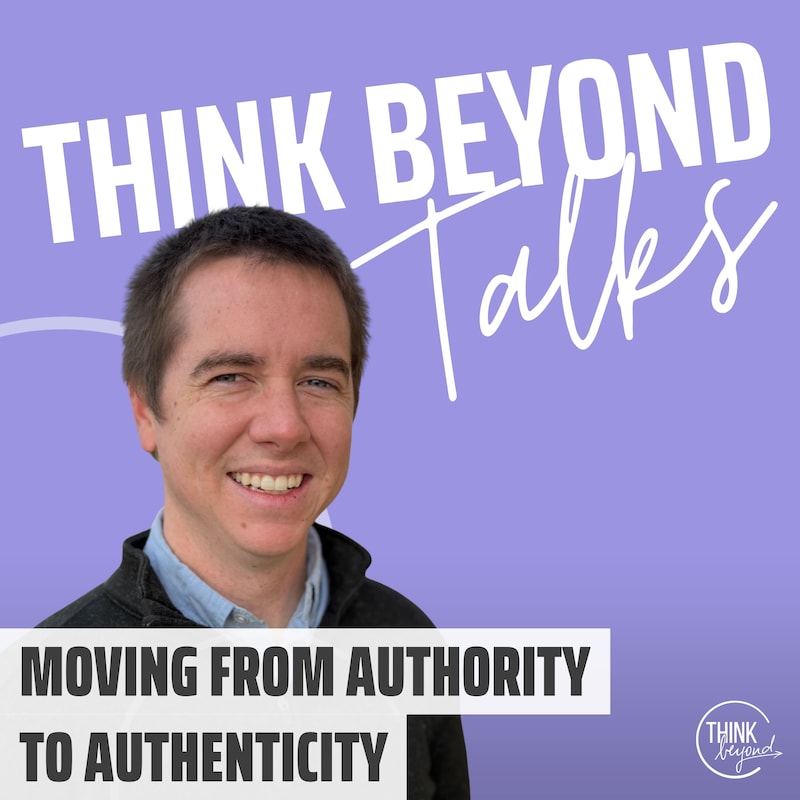
From Authority to Authenticity: Shem Hetfield on Why the Best You Makes the Best Leader
In this episode of Think Beyond Talks, Anne Anbania speaks with Shem Hetfield, Think Beyond Impact Partner based in the US, about rethinking leadership beyond titles, hierarchy, and authority.
Drawing on more than 12 years of experience in human resources, talent development, and coaching, Shem shares a deeply human perspective on leadership. His work is shaped by servant leadership, adaptive leadership, and lived experience — from leading through crisis during the pandemic to practicing leadership daily as a father of six.
At the heart of the conversation is a simple but powerful idea:
the best you makes the best leader.
When leaders are grounded, self-aware, and psychologically healthy, they influence others with clarity and trust. When they are under sustained pressure, distress often shows up in how they lead.
Together, Anne and Shem explore what it means to lead with authenticity in complex, uncertain environments — and why leadership today is less about having the right answers and more about how we show up for others.
In this episode, you’ll explore
- Why leadership and authority are not the same — and why influence matters more than position
- How servant leadership shifts the focus from power to presence, trust, and commitment
- Why many “bad boss” behaviors are actually distress behaviors
- The importance of self-leadership and psychological health in effective leadership
- How adaptive leadership helps organizations navigate complexity and uncertainty
- The difference between technical challenges and adaptive challenges
- Where AI can support leaders — and where human connection cannot be replaced
- How small shifts in language can strengthen responsibility, autonomy, and trust
A takeaway for leaders
Shem leaves listeners with a simple but practical invitation:
pay attention to your language.
Replacing phrases like “I need you to…” with “I would like…”, and “they made me feel…” with “I felt…” can create powerful shifts in responsibility, dignity, and psychological safety.
Leadership isn’t just what we do.
It’s how we speak — to others and to ourselves.
🎧 Listen to the episode
Explore how authenticity, servant leadership, and adaptive leadership can help you lead with compassion, courage, and clarity.
If you enjoyed this episode, share it with someone who inspires you — and until next time, keep thinking beyond.
Transcripts
Leadership, development, growth. Scroll through LinkedIn and you'll see these words all the time. But do you connect them to yourself? At Think Beyond, we define a leader as someone who influences others, which means leadership might be closer to your own life than you think. In Think Beyond Talks, I speak with inspiring coaches and trainers from our global network about what it truly takes to lead well, support others and grow sustainably.
I'm Anne Barnea, join us and let's think beyond together.
Anne(:I'm excited to speak today with Shem Hetfield, one of our Think Beyond Impact partners based in the US. With more than 12 years in human resources and talent development, Shem helps leaders build self-awareness, resilience and emotional intelligence. He holds a master's in organizational leadership and is an accredited coach. His work is shaped by the principles of servant leadership, something we also explore in another episode with Claudia Liel. It means
putting people over power, accountability over authority and trust over titles. Together we'll explore a perspective shift that leadership is less about charisma or titles and more about how we show up for others. It's about recognizing that in moments of uncertainty, whether in our families, our teams, our communities, each of us can exercise leadership.
Shem's own life has given him many chances to step up in this way. During the pandemic, for example, he served in a health and education organization supporting children with special needs, navigating not just technical fixes, but the anxieties, fears and human side of crisis. And as a father of six, he lives the daily practice of being there for others. These experiences continue to shape his perspective on what truly matters in leadership.
And today he joins me to share how both servant as well as adaptive leadership come together and how we can all lead with compassion, courage and clarity. So, Shem, for you it's morning. So good morning.
Yes, good morning.
Anne(:Something you often say is, the best leader is the best you. Why does this phrase guide you?
Yeah, well, thanks for all that introduction. The best you makes the best leader. I think for me, this goes back to very early on when I think back to like kind of my journey with leadership. Early on in my career, I guess early on in my life, I was not a big fan of the idea of leadership.
I came from a background where I was involved with the religious community, you know, church. I'm in the heart of the United States and Kansas and so grew up in church and very intentional setting where you had people around you all the time, you know, talking about they see this in you and we want to encourage you. And I had a lot of people tell me, you know, when I was young, when I was a kid, when I a teenager, we see that you're a leader, you're going to be a leader. And that always bothered me a little bit. And I didn't really...
think much into it, didn't really dig very deep into it. But over time, realized, I remember someone saying that to me once, like, you, we think you're going to be a great leader one day and it just really bothered me. And so I did some soul searching, right? Like, what is going on here? Why does this bother me so much? And really it was the more I dug into it, realization that I had most of my early life associated, like many of us do, I think actually, but I had associated
the idea of leadership with authority. And I really saw that too as as hand in hand and kind of the same, the same thing. If you're a leader, you're someone who's in authority over other people. You're a boss, you're a director, you're a CEO, you're someone again, who has authority over another person. And that just wasn't super attractive to me. You know, as I've progressed throughout my
Shem(:career. I'm certainly not anti hierarchy by any means. think you need a good hierarchy in an organization to have structure and systems. But somewhere in in my mid 20s to, you know, early 30s is where it really hit me pretty hard that leadership is is more than just authority. Right. And in fact, the two ideas are completely separate. And so so I say all that.
to come back to this concept of the best you makes the best leader. I think the best people at influencing others well, at having a positive influence, are those who are taking care of themselves. I mean, that just has been my experience. So, you know, we all can talk about our bad boss maybe that we worked for, and it's pretty popular actually if you go on LinkedIn, it's...
pretty popular to talk about your boss, right? Or to talk about people who have authority in kind of a negative way and to kind of dog on them. But when we start to dig into that and ask people, you know, you think you have a bad boss or you've worked for a bad boss before, like, tell me more about that. What did that look like? The behaviors that people describe when they're talking about a bad boss, majority of all those behaviors correspond to distress behaviors, behaviors that people engage in when they're under
significant distress and typically not super aware of the behaviors that they are engaging in. so kind of a long answer there, Anne, but for me, that's why leadership is about taking care of yourself, being the best you. When I am healthy, when I'm in a good place, when I'm getting my psychological needs met, when I'm full, I am a much better team member. I'm a much better husband. I'm a much better father and I'm a much better
leader to the people around me. When I'm at a deficit, when I'm, you know, in terms of Maslow's hierarchy, when I'm not getting certain psychological needs and emotional needs met, that's where I am at much greater risk of engaging in some of those behaviors that people are not super fond of, things like micromanaging or withdrawal or being engaged in micromanagement. So yeah, I think it's important to take care of yourself. I think it's important to get your psychological needs
Shem(:met and for me that's where the phrase the best you makes the best leader comes from.
And you said you got these people encouraging you to see yourself as a leader and you struggled with it. And then you looked into it. Was there a certain turning point or a certain concept that helped you see leadership beyond hierarchy and authority?
Yeah, definitely. So it's hard to pinpoint, you know, we're constantly changing and there's information coming at us all the time. And especially in this day and age, we've just got, you know, new information coming at us all the time. But I got my master's degree in my mid twenties and that was in organizational leadership. So certainly throughout that degree program, I was exposed to a lot of different ideas around leadership that were highly influential. For about 13 years, I was working in a
a nonprofit organization where we served children with special needs. And working in that environment, there were so many examples of people I can think of who didn't have authority. They weren't in, you know, a boss managerial supervisory position. They were actually frontline staff. But the way they were able to influence not only the children we were working with, but influence their team members, that certainly began to shift the way that I thought of
about leadership. So watching them and then if I had to point to like a single, you know, kind of moment, it was at that same organization, we had a new leader come in, a new CEO come in, and strong values based individual and he would come to the orientation, the new hire training and talk about our mission, our vision and our values. And he would always share this line where he would say that leadership is not about being someone's boss, leadership is about influencing people.
Shem(:And so that for me kind of set me on that trajectory of doing a little bit of a deeper dive. And so it seems really simple now, like, leadership's about influence. It's not about authority, but it's those little, those simple definitions and those people, those examples we see of people living that out. If I were to give a single example of, you know, for me, when I think about kind of this transition to
leadership not being about authority, but being about influence and about being a servant to other people. There was a frontline staff. I remember we were in a situation where the children I worked with in this organization, I say children, but adolescence is probably a better term. I mean, we're talking 17, 18, 19 year old. Most of them were impacted with autism spectrum disorder or on the autism spectrum. And we saw a lot of
pretty severe behaviors, aggressive self-injurious behaviors in that setting. And so we were trained to utilize, you know, physical intervention as an absolute last resort to keep people safe. And I remember the situation where there was a frontline staff and there was a student child there who was escalating and screaming and yelling and cussing. it was right borderline. Are we going to have to, you know, move in and use a more physical intervention?
And I remember watching this staff, I was kind of around the corner waiting to see what's going to happen. And I remember watching this staff engage with this, this individual and just so calm say, I want you to know that no matter what you do, we all care about you. We're on your side and we're here for you. No matter what you do, we are all here for you. And like,
It is one of those moments where even sharing it now, it just doesn't have the power. But in that moment, it felt like a movie moment, like something you see in a movie where like I was trying not to cry actually as I was around the corner. It's just this very emotional moment of like where you're in this scenario where everything feels like it's moving one way and then one person can change the entire trajectory just because of how they show up with calm and with
Shem(:that servant mindset of I'm here for you, I'm here. No matter what happens, I am committed to you. No matter what decision you make, I'm in it for you. Like that moment for me is really what I think of when I hear the phrase servant leadership or when I think about what it means to lead without authority. Because in that moment, that individual had no authority, but that didn't stop.
them from engaging with compassion, with kindness, and with a I'm in it for you mindset.
And I wonder when you coach leaders, how can you support them in maybe also shifting the mindset away from, need to guide you, I need to know everything, but I need to be there for you. And are there also people that you coach that don't really relate to this idea? mean, it's a certain concept. It's been around, I think, since the seventies, servant leadership. But I assume.
For some people, it's really new to shift their mind around serving others in leadership positions.
Yeah, yeah, absolutely. You know, it's one of those things where I try to not hold on to certain principles or certain models or tools too tightly because I think there's a time and a place. so, you know, at a fundamental level, like when I think about leadership, I believe pretty strongly that situational leadership is probably the best overarching model, which there's different versions of that. the idea simply being that
Shem(:as a leader, want to, I need to adapt to what's happening in front of me, right? And to the, the person is to the need in that moment. And I need to be ready to shift. so certainly there are, I would say 80 % of the time having a servant leadership mindset is going to get you further in a more productive way than, you know, a more authoritarian mindset, but there are situations where you do need to step in and you do need to, to take control. For example, if that
individual had escalated further and began to engage in severe aggressive behavior, someone's got to take the lead and step into a directive leadership mindset, calling people to action and, you know, split second, you've got to be ready to move. And so I think if someone's going to be resistant to the idea of servant leadership, they're probably thinking of context and situations in which things felt super urgent and it didn't feel like they maybe had the time to do that.
And then certainly I would say there are individuals out there who are just maybe more action oriented, ready to move, ready to get things done. And, you know, the idea of servant leadership might seem weak. It might seem like it's not going to produce the outcome they need. And so those are all valid concerns that people have. But I think if you sit down with those individuals and explore that further, I think you can find common ground pretty quickly.
Because again, for me, what I've discovered in my conversations is that if someone trusts you and you're able to engage in a way where they feel safe and you're having a conversation where you can be real with each other and you can invite that person out of distress behaviors, I think we can see the value in multiple things, multiple areas, right? So if I'm in distress, I might
feel like no, you can't be a director, you should only engage in servant leadership, right? I might step into my strong opinions and beliefs and values. But when I'm in a good place, when I'm healthy, I can absolutely see the value in, in other leadership styles. And so, yeah, I think if someone's going to be resistant, my first step would be let's explore how you're doing. And are you in distress? What are you experiencing right now?
Shem(:And why are you feeling that way? And I think we could probably get to a productive, have a productive conversation.
Yeah, so it leads us actually back to exploring what is the best you in order to serve others and to understand in the specific situation what is needed. So how do you help leaders actually discover what their best self looks like in practice?
So there's great, so many great tools out there. have kind of a, the way I approach my training sessions, my one-on-one coaching sessions is I'm really thinking in three different layers of three different levels. The first one is your mindset or your mental stance. The second one is your behaviors that you're engaging in or what I call like your skills, your skillset. And then the third is
what tools are you using? And so you have your mindset, your skill set and your tool set. And that's kind of how I approach putting sessions together and coaching conversations. And so I think it's really important to do that because there are incredible tools out there, models, frameworks that can help us better understand ourselves and how we're showing up in the world. Process communication or PCM is of course one of my favorite models that I've used.
but there's, you know, there's disc and there's Enneagram, there's Myers-Briggs and there's all these different, you know, personality tools out there. But what's interesting is if you have a tool and you're, that tool is going to help you, right? It's going to help kind of shape, you know, your behaviors and how you're showing up. But one interesting thing about humans is that I think we can smell insincerity from a mile away, right? We can...
Shem(:pick up on when people are not sincere. And so if I'm engaging with a tool, but my underlying mindset is not consistent with that tool, I think people feel that and they pick up on that. And we've probably all had an experience where we felt like, someone was saying something or engaging in a way that we're like that, that doesn't feel right. That doesn't feel authentic. That doesn't feel real. And so for me, that's where, again, I start up mindset and
I am a certified provider in what's called compassionate accountability. And that's a framework that was designed by NextElements and Dr. Nate Righier. And I love, love that framework because compassionate accountability is really grounded in some of the same key ideas that like process communication is and transactional analysis. And so for that mindset piece, it has us look at how we're thinking about ourselves in terms of value capability and responsibility.
Am I valuable? Are others valuable? Do I see myself and others as valuable? Do I see myself and others as capable? Do I see myself and others as responsible? And so that really is kind of the mindset tool that I use to help explore with people. It's all, you know, curiosity, right? You asked, you know, how do you help people kind of shift and...
For me, I don't think it ever starts with telling them to shift. I don't think it ever starts with telling them you need to be different or you should do something different. I think it always starts with curiosity and exploring where are you at? Why are you seeing it this way? Because I am a pretty firm believer that a lot of the times for people, we generally know what we should be doing. And we in general have like this
an idea of how things could be better and how we could be showing up healthier. And we just don't always know the way the best way to get there have the tools to do it. And so yeah, somewhere in that that was long winded, but somewhere in that I think is my answer. It starts with curiosity, but really I work through mindset, behavior sets, and then what tools are we going to use to help help solidify and get us there.
Anne(:We address now the individual level. Let's move towards more the organizational level. Naturally, organizations are confronted with very complex challenges, maybe something where the way isn't clear and a leader needs to come up with new approaches, new solutions. How do you work with organizations that need to tackle complexity?
Yeah, organizations are super complex and the unique challenge is that different organizations have. So when we think about an individual and we think about a human being, like we're complex, right? And so then you think about an organization which is made up of dozens, hundreds, sometimes thousands of individuals and that just amplifies the complexity. And so one of the models that I have become a big fan of over the years is what's called adaptive leadership.
And adaptive leadership is what comes to mind when I think about how would I tackle a larger organization and start to kind of think through how to help move forward. so adaptive leadership, you know, I'm not the expert on like the exact definition or anything like that, but a couple of things with that that I have really appreciated in my time is it helps us distinguish between two types of challenges. There are your technical.
challenges, a technical challenge is super annoying, right? And it's not always easy, but there are rules that it think of it more as like a mechanical, there's rules in place. There's when this happens, you do this and then the issue is fixed. It might take time, it might take energy, but like the wifi goes out, right? There's a solution for that. That one's pretty...
Pretty simple to fix. You have subject matter experts who are there ready to go when you have a technical challenge. But with adaptive leadership, it encourages us to think not only in terms of those technical challenges where there are solutions, but to think in terms of adaptive challenges. And an adaptive challenge is hard because sometimes it's hard to even identify, to name. Adaptive challenges are easy to deny.
Shem(:harder to clearly identify what's going on. If my Wi-Fi goes out, pretty clear what's going on there, right? It's easy to say, my Wi-Fi went out. But an adaptive challenge typically involves shifting behaviors, shifting mindsets, the values that we hold, what motivates us as people. Those are all things that are gonna require shifting in an adaptive
framework which you know, obviously there's a lot more work to be done there with an adaptive challenge but adaptive leadership in a nutshell encourages us to If you're in a leadership if you see yourself as a leader it encourages you think you're of yourself as Adaptive leaders don't necessarily make plans. They don't necessarily Solve problems. They don't necessarily organize people what they do is they help prepare organizations and people
for change and then they help them cope with that change. And so that principle has been super encouraging for me throughout different times in my career where I go into work or go in, you know, to a place and think of myself as a leader. Like what if I'm here primarily today simply to help others cope with and embrace change and embrace the difficult things going on.
and shift the mindset of how we're thinking about those things. Instead of trying to fix all of it, what if I'm here to help shift mindsets around it and help us think positively and hopefully to have hope about what we're moving towards. So that's again what comes to mind when I think about a complex organization.
Yeah, and I hear so much overlap between adaptive leadership and the servant leadership. I mean, when we are mobilizing or encouraging others to actually tackle a complex issue, which is adaptive leadership, we are also there to serve others, to help them figure out own ways of thinking about it. And as we know, it can get very, very messy because complex challenges are often
Anne(:evolving around changing attitudes, loyalties, behaviors, know, things that we are used to. So very uncomfortable changes, sometimes more comfortable for some than for others. It's also about helping navigating loss. And I wonder how do you help people in organizations or as leaders to stay engaged when change feels very messy and uncertain?
Yeah, it's a good, good question. That's a tough, tough, tough challenge. And to help people stay engaged, this again goes back to one of my fundamental principles that we started out, which is the best you makes the best leader. And as leaders, we have, if you are in a position in an organization where you have authority, where you're a, know, whether it's a frontline supervisor or a
mid level manager, you're a director, you're in the C suite, there's so much pressure, so much pressure that we have so much weight, the responsibility of, of, you know, a team, a department or the entire organization that that we hold. so staying healthy individually is still just going to be at the top of my list for how I would start with something like that. I would want to know
How are you doing? Right? Let's zoom out from the organization for just a second. Can we zoom out and get perspective, zoom out of your job, zoom out of your title and all of that, and just have a conversation around how are you doing? Where are you at? How are you feeling? Where's your confidence? Are you feeling capable of this? What's your belief around the capability of your team right now?
What's your belief around and understanding around who's responsible for what right now? Those are some of the core things I would want to start there. And because I think here's what I can't do. I can't go into an organization and tell you how to do your job better because you know, right? Like anyone I'm working with when I'm doing coaching sessions or these leadership sessions, I was working with a
Shem(:group of frontline supervisors not too long ago. And I told them this, like we're doing these wonderful training sessions around a variety of different leadership topics. And I told them, like, you know, your job is better than I do. Like I can't come in here and tell you how to do that part better in terms of like the tasks that need to be accomplished. What I'm here to help with is I want you to be healthy. I want you to feel full. I want you to feel. And valuable.
to feel capable again, to feel responsible and then to see that in other people. Because if that mindset shift has happened, that mental stance, we're showing up that way. Like that, that changes everything. It doesn't mean that all of a sudden the challenge is gone. It means that we're approaching it in a completely different way. And that right there is the essence of adaptive leadership. It's us modeling. How are we going to
talk about this challenge, how are we processing this? How are we handling it? And if we're staying hopeful, we're staying optimistic and we have a move forward, one step at a time mindset, people see that in us. And so again, for me, it really does come back down to the health of the individual. If I can work with someone and help them dive into those areas we kind of just discussed and feel
feel better by the end of that conversation or feel more confident in those areas, I promise you they're going to go back out on the floor and be a much better leader if they're increasing confidence in those areas.
Yeah, Shem, we already talked about how people in leadership positions are under a lot of pressure, have to navigate a lot. And obviously it's not getting easier with all the changes that are happening so quickly also when it comes to technology, technology and AI, especially reshaping how we work. And I know that in your blog, you actually explore the intersection of leadership and AI. What fascinates you about this?
Anne(:this topic.
Yeah, man, there's so much here. So we live in such a unique time right now with the emerging technology, AI and blockchain technology and everything happening. mean, it's being said that we are in the fourth industrial revolution right now just because of the massive changes going on.
And we all feel it. all, we all, we're all aware of it, whether you're actively listening to podcasts and reading about it or not. Like we all feel the shift in AI and things that are happening right now. So I am, I guess, fascinated with the, what is the distinction between like genuine human connection and AI and the capabilities of AI and what AI is capable of and.
And it changes every day. feel like, you know, a year from now, we look back on this conversation and it's going to be dynamically different just because of how rapidly things are shifting. But what I was writing about there and I tried to capture in a couple of LinkedIn posts, just I consider myself, I'm not an expert. Like I don't think of myself by any means as like trying or pretending to be an expert in any of these areas. But I am a human who is wrestling with these things right now and trying to think through as a father, like
Gosh, when my kids enter the workforce, you know, 10 years, 15 years from now, like what, what jobs are they going to have? What's that going to look like? And so I'm constantly, as many of us are wrestling with these concepts. And so what I've spent some time really thinking about and writing about was the, like the limitations in terms of AI. What, what should we be using AI for and where, where human connection really cannot be replicated with, with artificial intelligence? And so.
Shem(:You know, there are things that AI is great for. I heard someone talk about it recently in terms of like consulting and, the multiple articles out there saying consulting is dead, consulting is going by the wayside, consulting is going to be replaced by AI. And there's all kinds of articles out there and, you know, different messages similar to that. But what I heard someone say, their commentary on that was knowledge-based consulting.
probably is going to go by the wayside because if anyone wanted to know like the precise definition of adaptive leadership or they wanted to know the exact distinction between a technical and an adaptive challenge, things we've been talking about today, they could hop on to chat GPT right now and have that within seconds, right? And it's going to be more polished, better defined than what certainly than what I've provided today. But what you can't do with AI, at least today is you can't
hear how it's wrestling, right? As a fellow human, how is it wrestling through this? How is it making sense of this in different contexts? And how is it working to stay healthy and connect with others throughout this? And so that's really what I was trying to, where I'm interested, I guess, in this is, I think one of the blogs I wrote was Beyond Automation.
And just the idea of there are some things that shouldn't be automated and human connection is one of those things that you can't automate, right? I can't program in trust with you. Trust is something you build over time. Trust is about, I safe with you? Can I rely on you? Trust is about we spend time together and I show up consistently and you show up consistently in a way that we both understand.
And so we build that over time through genuine connection. And again, that's not something you can, you can automate. So yeah, somewhere in there is I think what, you know, I'm interested in continuing to see of course where things go as AI technology increases. And you've got these robots out there now, relationship bots and people starting relationships. And I heard in a podcast recently that people are emotionally marrying AI. Now there's this thing called emotional marriage. I'm like,
Shem(:I haven't looked into it yet. I don't really know what that is, but yeah, it's just crazy. And again, the times that we live in right now and the things going on in terms of technology, but I think it's critical to explore what it means to be human and to know what it means to be human and to, I think connecting with other people is going to be something that the need, the desire for that is going to probably increase pretty dramatically over the next decade.
Yeah, and I was just thinking of also animals, animals as well as humans, they kind of can regulate our nervous systems, obviously something that Chachipiti can't do. When I think about our job, obviously, the more we can automate that doesn't really require the human touch or connection, the more it frees up time to have these sincere relationships, build them and so on. How do you see AI can...
free us, our resources to actually go more into connection.
I think about, I guess how, you know, I'm trying to find the balance like a lot of us between not overusing it and where is its proper use. And so there are a lot of, I guess, technical tasks that can very much be offloaded to something like chat CPT or Gemini or, know, perplexity, one of these models that allow us then to spend more time with someone. So I think about...
Well, one example that comes to mind when I was still a director of talent development at this organization I was working at using AI to help craft a policy, putting a policy together. And, you know, that was something where I could have sat down and written that whole thing out myself, or I could have said, which is what I did, hey, here's the key aspects I need in this policy. Here's the things I need really clearly defined. Here's the parameters. Here's what's, you know, the kind of progressive.
Shem(:actions that should follow and I was able to just give it, just talk to it. I turn on the little mic, you know, all the time and I just talk to it like we're talking now. within seconds, you know, it spits out this template, this draft, which needs editing, of course, right? It's going to need some fine tuning to make it work for what you're going for. But I mean, that's something I could have spent, you know, a few hours putting that template together and instead it was done in about 10 minutes. so, so then what does that mean? Yay. Now I've got more time to scroll.
social media, right? Or how am I going to use that time? And so it goes back to where am I at? And what is my focus? And, you know, am I healthy? Because again, if I'm in a good place, and I'm healthy, I'm probably not going to want to waste time too much time scrolling social media, I'm going to want to build connection, right? And so, so again, that's a pretty simple example. Nothing earth shattering by any means. But I think there are plenty of examples where we can offload
the more technical things to free up our time. And then the question is to do what? Like, what are we going to do with that time? How are we going to use that? And what are we looking, looking to do with that time? Can I ask what your thoughts are on that? Are there, there are examples where you've, you've used it, where you've seen again, where it's improved your relationship or being able to offload something to it.
Also, when I spoke to friends who use it now, some sort in therapeutic sense, trying to replace their therapy sessions, they said it felt good at the beginning, but what is lacking is being challenged. And it's also why you go into coaching, right? Why you go into seeing someone that can actually shed light on your blind spots, maybe shed light on the excuses you make for yourselves, like...
all the very lovingly pushes that you sometimes need as a human being to grow and to develop. Well, Chet Shibitie doesn't do that yet. think and also I can't understand at this point, when is the right moment to push? When is the right moment to be there?
Shem(:Yeah, it's a great, great example. And remember, we talked about that a little bit last week where, you you could get a technical, you know, again, proficient answer from Chachi PT on a lot of things, but you're not going to get the emotional connection, obviously. And I guess I'm just super curious about, again, where all this is going, the better we understand our brains and neuroscience and what's going on in our brains. And to the extent that, man, can we really at some point replicate?
All of that, right? And you have robotics now where we're not just talking to, you know, our phone or a laptop, but, you know, we've got AI that we're putting into robotics and man, yeah, it's... I'm very curious about where it's all heading, you know, but as of today, again, I would fully agree with you that if I'm going through... If I need an answer on the technical difference between adaptive
Right. a definition. I'm going to use chachi PT for that. Super helpful. But if I'm going through something and I need support, I need to hear again, how someone else is struggling with this wrestling through this or what they've done historically, how they've made sense of this. Like, of course it makes sense. You're going to go to a trusted colleague for that. Someone you, a friend or someone you, you can trust and you know, cares about you. So those are the things that again, I think.
I don't know, it almost feels like I need to create a chart with, you know, here's the distinctly human things, right, that I should not ever offload to AI. And here's the things that are okay to offload to AI just maybe we all need to work on our own boundaries there because it's easy. It's super easy to just start offloading all kinds of things. So yeah, I don't know. I don't I'm not sure I have an answer there but.
Yeah. And as you said, it's easy and it also has downsides of offloading everything. I mean, there's this recent study that just came out that our brain activity kind of shrinks if we just use Chetubti for everything. And it's another topic that we often as coaches encounter in sessions, right? Setting boundaries. So I think that also going to be relevant.
Anne(:only at work with your time, work time or your boss or your colleagues or your personal relationships, but maybe also setting boundaries with AI. But as you said, as of now, because maybe next week, all of this already changed. We don't know.
Yeah, absolutely. It feels like it. I mean, you got these big tech giants in competition with each other, all trying to stay a step ahead of the others. it's yeah, unique time. And I suppose throughout history, everyone's lived in some kind of unique time, right? For some reason or another, you know, obviously in terms of technology advancements and information access we live in, arguably the most unique time, you know, we've had, you know, in a while. But yeah, I don't know.
Something that we're all wrestling with though.
I also think that this distinction that we talked about earlier about adaptive and technical challenges, maybe this is a good distinction putting the technical questions into tchetchu bt, but everything adaptive, everything that comes with the messy parts of being human and being in relationships, we need other humans for to figure that out. So, look today into kind of a shift looking differently.
at leadership, not leadership as authority, as position, as rank, but actually as how you show up for others and how you mobilize them to deal with complex issues. And in every episode at the end, I ask our guests, can you maybe suggest something to our listeners, something to try out in the next three days that can enrich their work, enrich how they show up for others.
Shem(:Yeah, absolutely. Gosh, so many great, great, you know, things came to mind here. So this maybe feels a little bit, it is related to our conversation today, but more on the mindset piece, you know, that we talked about. And so my encouragement, something to try here would be to kind of take, take account of your vocabulary, the words and phrases that you're saying frequently. And so there's two different phrases I would encourage.
individuals to think about potentially eliminating from your vocabulary or at least minimizing or thinking more intentionally about how and when you're using these phrases. And so the first one is I need, I need you to get that report turned in. I need you to get this done by Friday. I need you to pick up groceries from the store. Most of the time, people understand what we mean by that, but I need
implies a deficit if you don't get it done, right? And so, going back to this fundamental idea of valuable, capable, responsible, I'm okay, you're okay at a fundamental level, I need says, if this doesn't happen, again, there's some kind of deficiency that may exist here. So, it's at least here in the United States, it's pretty natural for us to say, hey, I need you to get this turned in. Hey, I need you to do this. I need you...
But you think about again Maslow's hierarchy of needs. I need food and water to survive. I don't need you to turn in a report for me to be psychologically healthy, right? And so just a simple little activity you could do is switch I need to I want or could you or would you or will you, right? There's a lot of different phrases we can fill in there, but working on eliminating I need is the first one. And then the second one is maybe a little bit more straightforward, which is
they made me or he made me she made me and so that's another one I would encourage people to think about eliminating that from your your vocabulary. The idea there is is pretty straightforward. They made me he made me she made me implies that I'm not in control of me right it means someone else is in control of me it's in control. They made me angry. Switching that to I felt angry when right or he made me do this no one
Shem(:makes you do things, right? We do things when we feel a particular way and then we engage in that behavior. But shifting those simple little vocabulary, shifting those to I want you to instead of I need, and then shifting to I felt as opposed to they've made me feel reminds us that I'm in control of me, right? And I make those decisions. And while yes, there are triggers in the world that are going to challenge us, are
emotions we're going to feel at the end of the day, I'm in control of my behaviors, right? And I get to choose how I'm going to show up and how I'm going to engage. And so I don't think the, you know, the world's gonna blow up if someone says I need or they made me, I don't think it's like this major, you know, cataclysmic event. But it's a real simple thing that I've been working on for a couple of years. And it's actually really hard at first to shift that shift that language. And just a couple nights ago, it was happening again with my
my son when it was bedtime and I was really tempted to say I need you to get into your bed and I caught myself and said I would really like for you to get into your bed right now because XYZ and it's just again it's a simple thing that says I'm not dependent on you I'm responsible for for me.
I love it. Self-responsibility for how we deal with our emotions and needs and kind of stepping away from automated reactions. Thank you so much, Shem, for this conversation. You've reminded us that leadership isn't about titles or authority, but how we show up. Shem, I really appreciate the clarity and encouragement that you've shared today with our listeners. Thank you so much for your time.
Yes, absolutely, it's been fun. Great chatting with you.
Anne(:Thanks for listening to Think Beyond Talks. If you enjoyed today's episode, share it with someone who inspires you. And if you'd like to explore how you and your organization can grow your leadership and impact, visit thinkbeyondgroup.eu. Until next time, keep thinking beyond.
