Shownotes
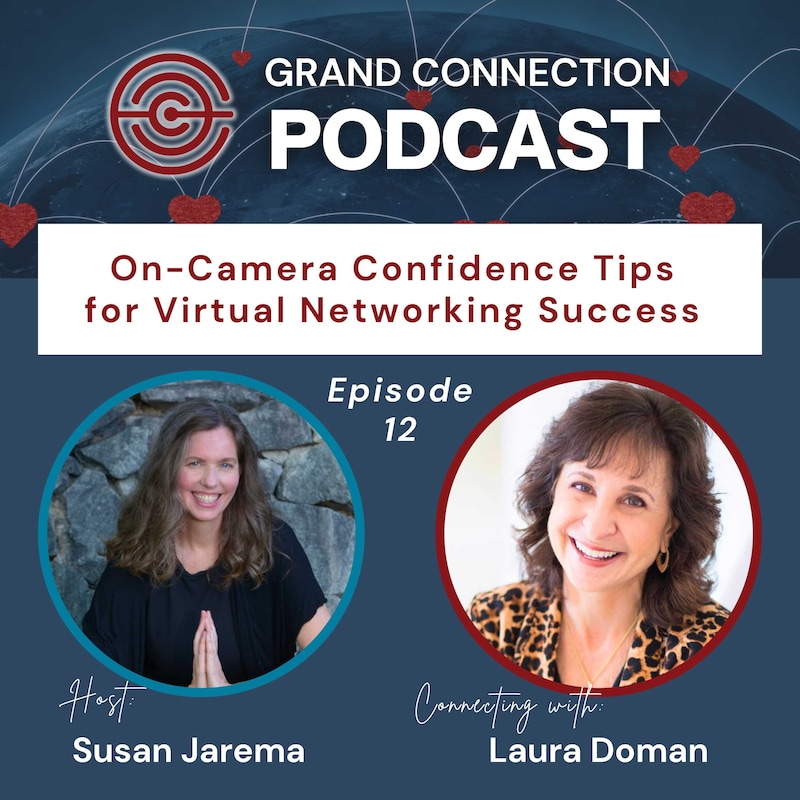
What changes when leaders stop trying to perform on camera and instead focus on connection? Susan Jarema speaks with Laura Doman, on-camera confidence and executive presence coach, about the subtle shifts that build trust in virtual rooms. From camera placement and lighting to voice, mindset, and managing nerves, the conversation moves beyond technical tips into grounded leadership. Laura reframes the camera as a one-to-one conversation and reminds business owners that presence, not perfection, is what creates meaningful connection. The discussion reflects the heart of Connect, Create, Collaborate, where preparation supports confidence and authentic visibility strengthens long-term relationships.
Highlights:
- Viewing the camera as a conversation rather than a performance changes confidence immediately.
- Small technical adjustments can significantly influence how credibility is perceived.
- Clear audio often builds more trust than visual polish alone.
- Physical warmups help release tension that limits vocal strength and expression.
- Inner self-criticism can undermine presence more than any lighting issue.
- Imperfections handled calmly often increase relatability and professionalism.
- Simplifying presentations to a few core ideas improves retention and impact.
- Preparation creates steadiness, allowing leaders to show up with clarity and ease.
Featured Guest: Laura Doman
Laura Doman helps smart, accomplished people become unforgettable on camera.
She’s a working film, TV, and voice actor who coaches founders and executives to show up with clarity, confidence, and real human presence on video and in virtual rooms.
Her actor-driven approach cuts through polish, scripts, and AI noise to create connection that actually lands.
Not louder. Not slicker. Just unmistakably present, and that’s what opens doors.
Website: https://www.LauraDoman.com
Meet the Host: Susan Jarema
Susan Jarema is a marketing strategist, internetologist, and co-founder of The Grand Connection. She helps entrepreneurs grow through collaboration, smart strategy, and high-impact digital presence. Susan is also president of New Earth Marketing, where she builds brands, websites, and ecosystems designed for real growth.
Connect with Susan and the Grand Connection Community:
Website: https://grandconnection.ca/
Facebook Group: https://www.facebook.com/groups/grand.connection
Facebook: https://www.facebook.com/GrandConnectionCommunity
Instagram: https://www.instagram.com/grandconnection.ca/
LinkedIn: linkedin.com/company/66749100
Youtube: https://www.youtube.com/channel/UCxq03yde7nb57HKV1hhztYA
Access your Grand Growth Bundle and Free Guest Pass: https://grandconnection.ca/gifts
We are proud to have Grand Connection Podcast on the High Vibe Podcast Network. Grab your free gift from Susan in our Our High Vibe Gift Vault.
Love this show? Check out the other shows on the High Vibe Podcast Network.
Share the Love
✨ If this episode lit something up in you… tag us on Instagram @HighVibeLeaders and let us know your biggest takeaway!
🦋 Don’t forget to rate & review — it helps us reach more conscious rebels like you.
🔊 Listen & Subscribe
🎧 Spotify
Transcripts
Welcome back to The Grand Connection Podcast. I'm Susan Jarema, Chief connection officer at the Grand Connection in our last episode, we talked about how to prepare for virtual networking so it actually works. We covered intention clarity your intro, some setup and tech basics and how preparation makes connection feel easier and more human, and of course, keeps you grounded. I like that part today. We're building on that conversation, because preparation is only part of the picture. How you show up on camera matters just as much. And these are skills we are all working on, including myself, your presence, your confidence, where you look, how you engage on screen, whether you are networking in breakout rooms, speaking at event, leading a workshop, or simply introducing yourself on Zoom, your on camera presence plays a big role in how people experience you. That's why I'm really excited today about our conversation, and I'm joined by Laura Doman. Laura is a grand connection member, and she's an on camera confidence and executive presence coach for leaders. Today, we're going to dive deeper into how you set yourself up to connect with a presence online, not just for virtual networking, but also for speaking and leadership in virtual rooms, and these skills are going to be used everywhere beyond Laura helps smart, accomplished people become unforgettable on camera. She's a working Film TV and voice actor who coaches founders and executives to show up with clarity, confidence and real human presence on video and in virtual rooms. Her actor driven approach cuts through polished scripts and AI noise to create connection that actually lands, not louder, not slicker, just unmistakably present. And that's what opens doors. Laura, you always have the greatest taglines, and they're always changing. I'm just You're so creative about this.
Laura Doman:Welcome. Thank you, Susan, well, I got to keep you on your toes, right?
Susan Jarema:Yeah, and you gave me a tough word unmistakably. So that's a tricky one.
Laura Doman:There are some fun words like I love to say Indubitably. Oh, I don't, I don't even know how to spell that. One. Another conversation. Another conversation.
Susan Jarema:Well, well, can you, can you share a little bit about about your work and what led you to focus on camera confidence and executive presence?
Laura Doman:Oh, delighted to it's one of my favorite things to talk about. What my work is all about, is helping people show up online as authentically human and themselves in a world of AI and you're getting all this noise just filling up your mailboxes, your you got spam, you got everything. Enough is enough. And on top of that, you're still trying to stand out from other humans. Well, in today's world, so much is being done online, done virtually, and how you show up, especially if you make any videos like for your website, well, that essentially is your business card. It is the first taste people have of who you are, what you're doing and how you might be able to help them. And it's also the foundation of building those first elements of trust, so that they know, okay, you know what you're talking about, they will evaluate, do you understand me and my pain, and then, can you give me something that's going to help and how and that can go so far. So you're not just some faceless name and you're just some kind of a brand, and they can't identify the human behind the company, no matter how big or small, they could see that there's a person there who does care and can help,
Susan Jarema:You know, and the website videos, because, you know, I do websites that's so important, and we did an episode earlier, so you can go back to it on trust, and the importance of trust in building your relationships, and how trust grows over time, and also how not to lose trust, and all The things to do with trust. So there's a whole great big episode on this. And your presence in how you show up on the camera, is a very important part of trust. You know, I see it over and over again. You know, people coming on, and even if, even if they're, you know, the cameras not working properly or something, and it's not even something that that they know that they're doing. You're losing trust and confidence in people. And it's, it's a big, big, important part, what mistakes do you see people making first time when they start coming into networking on Zoom?
Laura Doman:Okay, well, first of all, you have to have an eyeline, because you're going to be looking at the screen, and it's kind of like your talking head. Look, you got pretty much your head and shoulders, and it kind of ends right around your chest. Here. There are ways that you should be looking on and into the camera. So for example, you should have it level with your own eyes. There's nothing worse than looking down on somebody's head. And one of the very biggest mistakes I have, especially if they're in a breakout room, and there are lots of people, they're looking over down here, down there, but you know what? The camera magnifies everything. And nobody wants to look at the top of your head. They want to look in your eyes. They want to connect with you. Likewise, they don't want to be looking up your nose. So yeah, you don't want to position the camera too small. A lot of people do do that. They put it on their laptop and they're looking down, and that gives almost the subconscious impression of, well, I know better than you, and I'm lecturing you. So you want to fill up your screen and you want to look head on like it's a conversation, and that really leads into an even bigger point. A lot of people get on camera and they think they think they have to present. No, no, no, no, no, you are not performing. For many in an auditorium, the camera is actually a one to one conversation, because, face it, unless we're in a big movie theater, and most zoom calls are not taking place in a movie theater, how many people are sitting with you and you're talking to somebody or watching a video, usually just yourself. And it could be on a desktop screen, it could be on a little cell phone screen, it could be anything in between, and you have to have a natural conversational human dialog with somebody, yeah,
Susan Jarema:Now, now, okay, we're up here on zoom right now. You're down here. My camera's up here. Hell yeah. You know, you probably have some tips, because I also have, you know, like, talking notes here. Like, it's a challenge to be looking in that camera and the person isn't really right there sometimes. Now I know that there's probably some tricks on how you set yourself up so that you can actually connect better there. What are? What are some of those like? How are you set up right now? Because you're looking right at me.
Laura Doman:I am looking right at you. I'm going to give you several levels first, and we're going to lead into what I'm doing. Okay, so they're not suspend so people don't change that channel number one, let's just say you, it's just you in a laptop, and it's hard not to be looking here and there. Well, that's the only option that you have, especially if you're on let's say you're traveling with a phone. What you can do is, while you're listening, you can look down at that person. Don't drop your head. You can let your eyes look down and you know, you can listen, but then keep an image of that person in your mind, and then speak to the camera. Because we all want to talk to somebody, we want to look in the eyes. That's so natural. But if you just do something a small adjustment, like that, which I think that's what you're doing right now. Susan, it makes a world of difference, because one thing about being human is we're not going to be perfect. We're not going to be robots. We don't want to be perfection is boring. Boring keeps you broke books. It's the presence that gets you paid so you want to do natural things, and that that means you're looking for some notes. And it's like, yeah, I had something right here. That's a great segue. It shows you a real person out there. And if you're looking at somebody off to the side of the camera, it's like, Hmm, they're thinking, okay, and then I'm going to come back to you and answer. You can do the same thing with your notes. That's option number one. Option number two. Let's say you have two screens, you have your laptop in front of you, and maybe you have that camera, or there's another camera on top of it, and then you got a bigger screen. Well, what you can do is always make sure that the camera is right by wherever you choose on that screen behind it to put somebody. That means you can move those windows on that secondary screen so it's positioned right behind that camera, not too high, definitely not too low.
Laura Doman:And you don't have to see their whole face if you just see this window, these eyes. That's all you really need. Now, of course, we want to see the whole expression. We want to see everybody else out there, and that setup is going to block all their people and maybe some of the buttons, but that is one way to be able to look at a person and have that conversation. Then we get to the fancy dancy stuff. That's what I'm doing. I spend quite a bit of time, and I wanted to find a solution that would allow me to do everything at once. And what I found was this little tiny camera that is on a wire that's very easy to install, and it's called the Center cam, e n, t, e r, and then C, A M, and I can write provide a link, because in all disclosure, now I love it so much. I got two, one for my office, one for downstairs in my voiceover studio when I'm being directed by clients, and I've been recommending it so much, I thought, well, I'll become an affiliate, you know. So I could share that link if you like. But I like the center cam because it is small. It's easily adjustable, and then I can move every window around it, and it takes up no room at all whatsoever on that second screen.
Susan Jarema:So it's, so it's, it's like a little stand. So it's going in between your laptop
Laura Doman:And your second screen. No, it's not a stand. I don't want to take it off because I'm using it right now. Yeah, but just think of it, you know, if you're going to dangle. Something remember I used to as a kid, or maybe my boy next door used to dangle a spider, or fake spider on a string. Think of like a tiny little box, like a dice one die, and it's on a very thick type of thin little rod. It bends back, it can secure very nicely to the top of your screen, and it will just sit there. And then, of course, you can move it around if you need to.
Susan Jarema:Oh, I googled it while you're talking. It is so, okay, so I have my cameras on a stand, and it's up in like, it's, it's, it's a little bit higher than my laptop, and it's before, but it actually blocks some of the stuff behind me, right? It does not looking. And this is way smaller, so and, and, you know what? It's not that expensive.
Laura Doman:No, it's not. And they run sales. And even that camera that you have, I am still looking up your nose a little bit,
Susan Jarema:A little bit, yeah, well, it's also, it's not quite high enough. The stand isn't quite high enough. I should probably, you know, that would be better, but then I'm too small. And, and, and, you know, I have a crooked room, and we're totally like judging you
Laura Doman:But I do like your wall paint, by the way, if you're concerned and you're using a laptop, which I've done plenty of times, elevate it just by putting some books underneath it. That it will make a world of difference. But do make sure that you are filling up the framed you see how I have, just like, a little bit of space above my head. That's probably what you're aiming for. And you don't want to have a lot of dead space. There's nothing worse than somebody
Susan Jarema:Yeah, no, so now I filled up the frame and but my camera is too low now, right? I got to be
Laura Doman:Yeah, and adjust that. And I do that all. And a standing desk
Susan Jarema:Because you can really get that like, if you can move the desk up and down. You can get it to be an exact spot, too.
Laura Doman:As long as you're not a fidgeter, you can't go moving around because you got a small frame, which is a whole nother topic,
Susan Jarema:Yeah, because if you're why, if you're standing, you might move out of the camera properly too, because you're
Laura Doman:Exactly and everything is exaggerated. So if you move a little bit, it looks like a great amount. And you can make people dizzy or disoriented or just doesn't make you look confident if you're moving around too much.
Susan Jarema:Okay, so this is our camera setup, everybody. I hope you got it there. Okay, what was the name of the camera? Okay, center cam. Center cam. So look up that, or, you know, figure out how you can adjust your current camera so that you're the per the people you're looking into, their eyes are behind the camera. That looks the best. And then the first option, which is, you know, you could, you could, you know, remember, put a little dot near where your little camera is on your laptop, so you remember, at least, to look into that camera, so people see you there. And I'm not looking at my screen where you are over here, you know, because that happens a lot. I see that all the time, and it's a challenge, you know, and and you're trying to, sometimes you're somewhere, and you're trying to see your notes, and you've got just the laptop. I always say to a lot of my clients, you know, have more than one screen. It makes it way, way easier.
Laura Doman:Oh, tremendously. And if you're just having a hard time knowing where that little.is on your laptop and talking to a little green light, which is very true even when you're recording a video, put a picture of a good friend right next to it and talk to that person. No, that's a good idea. It'll change totally the way you're coming across. Your tone will soften. You become more relatable and conversational. You come across more confident because it's not so scary.
Susan Jarema:Or I was even thinking like a little happy face sticker, like, you know, those ones you could get at the dollar store or something, just so that you have it there make you smile, right? Remind you, yeah, good idea. Okay, so we talked about the camera setup. What about our microphone?
Laura Doman:Okay, microphones. It's very important to have good sound. Sound is actually much more important than the visuals, particularly you have both. But as you would know, for anybody who's listening to this, you're enjoying it, hopefully getting something out of it without seeing us move around, smile and talk. And also, just think about it this way, if you've ever had an elderly family member, the worst thing that they will say can never happen is when they lose their hearing, you can't participate. Now, if you can't see too well, it's a lot easier, but our very basic communication skills have always had to do with storytelling, talking, sharing, hearing that, and even at night, when we can't see very well, it's it's the sound. So make sure that you are heard very well you start off, and this is where the voice actor in me is going to give some tips. Make sure you're in a fairly quiet environment, and it's not always easy if you got a noisy neighbor firing up a leaf blower, snow blower, or hammering away. But make sure that it's at least audible and you're in a quiet space, hopefully without kids running around, and if there are a lot of distractions, turn your audio off. Your microphone off, not your speaker, but your microphone off, so at least you're not distracting everybody else. You can use an external mic. They're all different types, and they don't cost a lot. Of money. Some are USB, some of them are the Bluetooth. You can even have the little lavalier mic. And I've used all kinds. What I'm doing today, because I was just testing things with Susan before we began. I'm just using my desktop. Michael, right now, it's about, I don't know, 16 inches away from me, but you're able to hear me, but you should know whether you're a soft spoken person or if you're overly loud, and you want to always test things before you get started. So if you're not sure how you come across, let's say on Zoom, you can always test it by going to zoom.us/test. And
Laura Doman:that is a test too, right?
Susan Jarema:When you're logged into zoom too on test your audio that you can hear what it sounds like as well. So you can record yourself and see how you're you're sounding. There another thing that I notice happens like, sometimes somebody like you know you're traveling, you got a laptop, your laptop speaker or laptop microphone isn't very good or broken. You can, you can sync in your phone, and your phone usually has a pretty good microphone, right? And you can pair it, and you can actually pair it to your picture. So you're not like people, a lot of times will come into our events, and they come in as two people and go, Well, I can come into my phone. Well, I can't put I got to put both of you into a into into a breakout room, and you're getting mixed up, you know? You can actually, when you're doing it, there's instructions with Zoom, but how to log in with a phone and be in the same so it comes in and you're paired to your picture, so the audio matches that same picture, and there's only one of you in the Zoom meeting. So that's just something to remember, that if something's not working, I know when I travel, sometimes I don't have my Yeti mic with me, and then I'm using my laptop, and it doesn't work as well as the I noticed with the laptop, especially if you were talking about people moving around, you need to be pretty specifically centered for those microphones on a laptop.
Laura Doman:Yes, because of the direction, there are different types of microphones. Without getting technical, you might even see externally what they call a shotgun, which is like a long, cylindrical mic, and that requires you to be able to speak pretty much into it, or just slightly off 45 degrees at an angle, but close by, if you have a cardioid, which is a little bit rounder and fuller, you know, this is an example of my road one. You can see how it's a little thicker. I have a pop filter just so I don't go in front of everybody, yeah, that is a lot more forgiving, and you can move around. So if you're dealing though with your your laptop, yeah, you can't go moving around, or you're going to look like you're off in Echo land. Yeah.
Susan Jarema:And what about lighting? Now, that's the next thing that some people that come in they're very dark or they're too bright,
Laura Doman:Yes, yeah. We were just talking about that before we began, because you do want to make sure that you are well lit. You don't want to be drowned out, but you don't want to be speaking in the dark right now, it's kind of a bizarre situation, because I'm lit up, but it's dark around me, and that's just because of dealing with a wall of windows and a slat and late afternoon, and we're recording this the lights coming in and showing those little tiny rectangles you have to play with it. This is the best ideal situation, and this is what I use as an on camera actor every time I'm creating a video or I have a live audition or callback, which is a big thing these days. Don't necessarily put the light source right in front of you. You can, but especially if you have glasses, and you're using a ring light, it can reflect right in your eyes or your glasses, and it'd be con disconcerting if you can have a light source, one on each side of where you are 40 to five degrees. So I've got one ring light here. I've got another one there, and then the light kind of crosses and you're right where the x meets. You can even get fancy. Have a backlight behind you. What a lot of people do that makes a mistake is they put on overhead lights. And if you have a light that's shining down right on top of you, and again, it depends on what else is going on with natural light, it can be too much. It could turn you yellow. You're You're doing fine.
Susan Jarema:Susan, I'm looking around, looking at all my lights and everything in my room, and it's hard the sun, I'll be on a call in, or even an event, and the sun is changing outside, right? Should I have windows in front of me? Right? And then suddenly, that's what you're dealing with, yeah, you know, yeah, in, in a networking experience. So don't panic, like Laura. Laura works, you know, in, in professional recordings and that. And when you are recording a talk that you want to do, make sure that it's all set up. Well, if you're networking, we get it. Things happen. Don't, don't worry about it. You can laugh about that. Oh, the sun's suddenly in my eyes, you know. Let me just change it, or whatever, fix that, or pull the blind down like you're like, with friends, right? Yeah. Relax, yeah. Relax a little bit. Don't let that stop you from coming out and networking. But these are tips that really help make a difference in those impressions that you're making, because when you are professional, people are going to gain that confidence in being able to work with
Laura Doman:But I do want to say one of the biggest mistakes people make is that they will sit in front of a window. I. And the problem is that the camera is going to be almost blinded by all that light coming out. The same thing as if you're going to be doing something outside, don't have the sun directly in the camera's view. You really want to have it in front of you or off to the side, yeah.
Susan Jarema:But I've seen, I've seen where the windows are on the side, and this, the half of their face is lit up too. It's a challenge. And we back in the day early, days before we kind of, Carolyn and I got, you know, figured out where the best spots in our home is to do that recordings. You know, we walked around and we said, How's this lighting process working?
Laura Doman:Oh, yeah. And if you're on a professional set, or if you ever had professional headshots, they have got all kinds of these big round circles where they will dim it and they will put shades over things. We're not getting anywhere near there. I'm just kind of giving you the basics, but test it out, and as long as that, people could see you. You're good.
Susan Jarema:Okay, great, great tips, everybody. So just think about that. Getting started. You got your lights, you got your lights, your microphone, your camera working well. Now let's go on to us as the people. How do you feel grounded and present when you are a little bit nervous?
Laura Doman:I call this whole process Lights, Camera clients. That's what you want to do. You want to be ready. All right, the most important thing is to come across as somebody who is comfortable in their own skin, confident in what you are saying and what you believe in, and charismatic enough to make an impression. So how do you do all that? Well, if you're very nervous, and by the way, I got a whole program that talks all about this and everything else we've discussed, but the essence of the how do you get comfortable in your own body? I'm going to talk about two things, the physical and the psychological. With the physical, the first thing I would ask anybody to do is to make sure you drink plenty of H 2o water, starting an hour or two beforehand, because we live on water. We Are Water mostly, and it's going to hydrate us. It's going to get our joints, our muscles, our vocal instrument, feeling so much better. Stay away from eating peanut butter, all the obvious stuff that is just going to garble you up. But if you can also exercise, and it doesn't have to be anything more than some shoulder shrugs before you begin, you'll get in your body. So you can start with whole body twisting around. Do some bends, however far you can go, move your head back and forth, side to side, get it all set up, and then focus in on your real instrument, which is your head and vocal area. Do those shoulder shrugs really up high, like you're, you know, a Quasimodo, and
Susan Jarema:Oh, my shoulders are tight. I can tell. Everybody says what? They always end up here. We're nervous. We're not they're not there, yeah, no, they definitely go up. And when you're kind of typing, you kind of just start, yeah, yeah.
Laura Doman:You probably end up with, like, carpal tunnel, you know? So the fingers, you kind of bend over and it hurts, no, get that body moving. Then I like to warm up the face, and this is where it gets kind of funky. So anybody who's watching this in the video, you're gonna get a treat. But let me just, let me go over a few things. First of all, get the whole face, the whole mask moving. Okay, Susan, think back about whenever you've been to a children's museum, you know how there are levers where they can play with the human face, and eyebrows go up and down, up and down. Well, that's what we want to do, just to kind of get this whole bass, this whole space moving again, so like a big surprise, and then very furrowed brows up and down. And that's going to release a lot of tension we keep right around the eyes. But you can go even further. You could do a big happy clown face, and then a very angry Scrooge face, like, hey, as big as you can get, and then frown up and down. And you feel that now you're all relaxed right in here, and I know it feels weird, it might look weird, but wait, there's more. We're gonna get really weird here. We're going to channel our inner child, and we're going to do a few things here. We're going to do mouth trills, the old raspberry that get those lips going. It takes a little practice, and that just gets you relaxed. You can also do things with the tongue. This is a G rated show people, but just side to side, up and down, and then you can even pant like a dog. And when you relax that tongue and you go back, all of a sudden, you feel like you can speak a lot better. Another trick that speakers might use is to say a few things before you begin with a cork in your mouth, and when you take that cork out, you're able to speak. Make so much better.
Susan Jarema:Oh my gosh, there's always lots of corks around. Yeah, little bit more about the jury my
Laura Doman:But the other thing you could do is just get silly so you could speak in a funny little accent, like, you know, darling. It's just marvelous. And then when you speak in your normal voice, you can just speak a little bit more comfortably.
Susan Jarema:So you're really exaggerating everything, so that when you when you are speaking, that it all just comes out easily, right?
Laura Doman:Because you're no longer worried about it. So those are the physical things. Now psychological. This is something, and I hate to say it. But especially a lot of women have to deal with we have a mean girl taking up space rent free in our head, and she is telling us, you are really not qualified to do this. Oh, you're too old. Your face is all broken out. I mean, you're not looking great, et cetera, et cetera. And what happens, whether you call it a mean girl or the devil on your shoulder, they're distracting you from what you're trying to do, and you're what you're supposed to do is focus on the person on the other end of the camera and share your message. So kick that person off your shoulder, boot her out of the head, and just realize you don't have to be perfect. You show up as authentically human, and people will relate to you. And keep this in mind, I mentioned it before. You don't want to be robotic. They may seem perfect, but it's so even keel. We lose interest. We're not interested in perfect. We are interested in real and especially we love to see a train wreck. Well, that doesn't mean you necessarily want to go down in flames, but things like internet going out can happen. You losing your place can happen. You got a little coughing spit. That happens. You could turn off your audio. You deal with it. People are more interested in seeing how you handle the situation, and that shows the real pro some of the best presentations I've ever given. Let's say I've been in person, and in that case, oh my gosh, lights went out, technology went out, something didn't work, and you just leave it behind, and you speak from your expertise. I've worked with people who are very much in their heads, very cerebral. And I get it, because I tend to be that way myself, and they feel like unless there are notes and everything is said word perfect, and everybody gets every detail they're talking about, it's not going to be effective. The problem is, it's
Laura Doman:far more effective when you have very little up on a screen next to you. You keep it simple, the three to five points, I think most of us heard about it, and you're the center of attention, meaning you're talking to people and you're explaining it in everyday language. They're not going to remember 25 things that you told them they have to remember. They're going to remember the main points
Susan Jarema:You talked about this at one of the member Ingles you were doing a presentation, and just to have three points. And so many of us, we love teaching. We have so many great things we want to share, and we share too much, and then people don't know. They don't remember anything.
Laura Doman:They're overwhelmed. Yeah, keep it simple. And if they want to know more, that's what Q A is for. Have a conversation afterwards. You know, like, I like to throw out a lot of things here, and probably it's too much for some people. It's not enough for others. But if you're saying like, Well, you didn't answer what I wanted, or I don't understand something, guess what? I'm a member. Reach out, let's talk, and I'm happy to answer.
Susan Jarema:Well, that's what's wonderful about the grand connection community and this podcast. Just remember that whenever you hear somebody on this podcast, they're a member of our community and our connection of myself or some of the other members in the community, you can always meet them. You can get your guests pass. Come to some events, ask say, Where's Laura? Can I have an introduction to Laura? I will introduce you to Laura. You will get to meet her, and you know, hear all of her all of her fun stories, and see those funny faces she was just making to me when she was doing her warm up fun. Fact, you know, your tongue is your strongest muscle, so, you know, we got it. We got to work that one out too, right? Do some exercises for it.
Laura Doman:It's a conversation. And you know what? Whenever you reach out to somebody like on Grand connection, they may not be your perfect client, but guess what, they know a ton a lot of other people. I am always putting together people in my network. I'm always referring them. And like, just in the past couple days, I've referred, I don't know how many people I've been networking with, saying, if you really want to meet some great folks, come to Grand connection, because they're all these different groups, speaking, opportunities, learning, networking, I mean, and you got Susan,
Susan Jarema:Who is learning from all of our members, just like I am today. I, you know, during this whole talk, I've slightly adjusted my camera. I'm more censured. I got the light better. I All these secret things as Laura reminds me again that, oh yeah, I got to do that. Because you sometimes just jump on. You know, my fault is, is that I'm rushing from one meeting to another, and so, oh, yeah, don't take that time. And definitely, you know, if you are doing something that's important, it's being recorded. You're talking in front of a group of people. Take that time to do the prep before test your microphone, test your lighting, you know, see where, how everything's lining up, the more prepared you are, just as we talked about earlier, the preparation gives you that confidence, and it grounds you right. That's going to make you speaking a lot better, too, because you're you, you've done the work, and you're feeling okay. I'm ready for this. You do your exercises. I always like to take a breath before, before I start, too. I was listening to one speaker once, and he said, you know, the first, the first word in your sentence should be a breath,
Laura Doman:Yeah, and taking a breath in, you know, and getting ready so that you're ready to go
Susan Jarema:And, like, like we talked about this in our neuroscience episodes, is those breaths actually tap you into the salient network you then you calms your your parasympathetic nervous system, and you are more grounded, and you're going to be able to speak from from a confident place where you're calm, but it's also allowing you, especially if you're speaking, you're tapping into yourself, into your intuition, and it becomes more authentic and natural too.
Laura Doman:Yeah, there are a number of different types of breaths, and I'm sure you covered that in the other program, but there are a lot of different breasts that I teach that you can do, that can even help you fall asleep at night. So it's tremendous. Wow.
Susan Jarema:Well, that's another one in itself. To talk about how to sleep better. We should do an episode on sleep better, because I get really excited about everything, and then I, you know, your mind starts spinning. How do you how do you stop all Yeah, right. That's right,
Laura Doman:Because you want to show up refresh the next day.
Susan Jarema:Now, we were talking a little bit before about about how we look on the camera. I just want to add in for some of you people that don't know, because every once in a while somebody doesn't know, there is a setting in zoom where you can touch up your appearance. And it is very helpful. Oh, see, this is me. I should have turned my phone off. So I'll leave that as a as a reminder that that's what you should do and have your ringers off. But the touch up your appearance is very helpful for getting rid of some of the brightness and the starkness in your in your face. You could do use it.
Laura Doman:I do not. No, really, wow. Your lighting is not good. You look amazing without it. Thank you. And I use, I don't use virtual backgrounds. Yeah, some people do, and especially if you're in a small clutter department, you have no other choice. There are other solutions. But the problem is, when you use something and you don't have a green screen behind you, you tend to disappear, and it's very distracting. I like real backgrounds because then, Hey, knock on wood, I'm showing this is where you would see me. Work with me. I'm a real person. I'm not hiding anything, and it just gives that extra level of trust. But if you don't deal with it, that's fine, just don't have anything cluttered. Don't throw all kinds of logos and photos in the background. You're supposed to be front and center and keep it simple and there.
Susan Jarema:And some types of backgrounds are look you look better, too. I think a darker background is that or solid colored background, right?
Laura Doman:Well, a solid color is great. And if you want to make it warmer, bring in a plant or bring someone or two items of interest. But even if it's just you in a solid background, I would usually choose something like, in the ways of blues. You can get these pop up screens on Amazon. Literally, if you've ever had a kid again, you know that made a tent and you had them like in big circles, and you open it up and go big circle, put it behind you. And usually there are two colors, one in each side. But usually what I like it would be a nice blue, nothing too bright, nothing too light. Maybe has a little bit of a gradient to it, so it's a little interesting. The other side might be a green, or it could be a black or brown. But you're better off if you don't have something that's black white. It's a little bit better, but just something a little softer, or even like the two tone of your room. I would not want to show too much of a ceiling in anybody's backdrop, but I do like the contrast of your wall color with that ceiling. And I can say Susan is smart. She's got a smoke detector up there, so she's prepared for anything.
Susan Jarema:Wrinklers do, I think
Laura Doman:They don't go off, but no, no, no, no, but I mean, just something simple. So if you have a living room and you have, like, a couch or whatever, yeah, see how you look, and if there's anything that distracts you from seeing you clearly, like there's a lamp right next to your face, put the lamp away for a while. Yeah, clutter? No, I you know, and this is a little cluttered.
Susan Jarema:I'm thinking now that I talked to you, because I've got those ornaments and stuff on there, and I there, and I really didn't think about that when we started. I because most of this, like I I decided, sort of last minute, this is going to go on the YouTube channel too. And so normally, my podcasts are just audio, and I'm not too worried. And now I'm realizing could comb my hair better. But anyway, first of all, see those faces. Laura made and to see how she's set up and how centered she is and how she looks into the camera. These are very professional ways that we can all take advantage of. Like, it's not hard. This is Blue rocket scientist science. No you can get everyone. Can do Amazon or anywhere you like your favorite retailer. But by the way, your background is just fine. It's nothing distracting. And another thing is, if anybody is ever considering making videos or doing podcasts, always, if you can include the video element, put it on YouTube. It is the second largest search engine after Google. It's owned by Google, and AI is able to go through it and see what you got, and it'll help you be found. Yeah, no, it's Michelle said to me. She said, We should be getting these up on YouTube too. So I just have decided, yeah, start recording them, you know, with the video option as well. So we've got a lot of practical tips here. I'm feeling like we know how to set ourselves up now. We got the setup. We're gonna look good on, on Zoom. And these tips, I mean, a lot of them, we can use everywhere, like if you're on stage, to like the grounding principles, getting ready, being centered. How do you last sort of thing I topic I kind of want to cover is, is speaking in a way that resonates with people. I talk to that, and I know that I my mind will start going and I'm working on this to be able to slow down any tips for people to be able to do this on you know, at will?
Laura Doman:Well, first of all, I'm a fast talker too, so you don't sound like you're too fast at all. I'm driven crazy by people who take too long. But it's all what I call dynamic delivery, and there are different elements of that you want to match everything to your audience and share message. If you're going to be talking about something light hearted and very personable and fun, it's perfectly fine to have the energy to speak a little faster, to have the musicality in your voice to go up and down if you're speaking, let's say, and it's a more technical presentation, and people are trying to follow along, slow down, but the best thing you can do is to combine them. So what makes it interesting that AI doesn't do as well is you're putting the emotion behind it and the feeling. And when you're happy and you're sharing something light hearted, you speak happier, faster, and you're pacing and your tone, it's all there. But when you say, All right, now I really want you to get this the few things use in mind, keep in mind, one, slow down. You'll find that your register naturally drops a little. It's easier to hear somebody with a lower register. Just ask anybody who ever had a teenage girl, just like chipmunk talk, slow down, your voice will drop. And then also use the power of the pause, because that means people listen, they will lean in and gives you a chance to collect your thoughts.
Susan Jarema:I was going to say, Bring up the power of the pause, because we talk about that a lot at the Grand speakers group. I'm sure you have as well when you present there too. So that's a very important one. And I everybody's always going, Yeah, okay, I got to do that more. Yep.
Laura Doman:Now don't make it too performative, meaning like I get a pause, but have fun with it. And that's a real secret, too. When you're delivering, you know your material, you know your audience, enjoy it. They will feel that you like and know what you're talking about. They're going to respond to your energy, and that's especially true if you're in person. But you can also come across right through the camera, which I hope that you're feeling right now because I'm looking at you. It's coming from my heart. Ai, doesn't do emotion. I don't know if they ever will, but it's one thing to simulate it. It's another to be. It just like there's such a difference. If we're going to be going to, let's say, our favorite band in concert, in person, then hearing a
Susan Jarema:Yeah, there's just the energy there too, right? And those concerts, it's something, there's some. It's something communal about that. There is.
Laura Doman:That's why we all were going stir crazy during covid. Yeah, we had Zoom is the best gift that covid could bring us. But we needed human contact, because we're social creatures, and that's what I talk about, you know, when I'm teaching all this.
Susan Jarema:Oh, well. And so how do people get a hold of you, like, like, and can you explain a little bit about how you work with your clients? Oh, thank you.
Laura Doman:Yes, absolutely. The, probably the easiest way, is to go to my website, which is Laura doman.com, l, a, u, r, A, D, O, M, a n.com, and when it comes to the coaching, I work in a number of different ways. First of all, it's one to one and very customized, because we're all very different human beings, and we all come from someplace different, and we have a different goal. I have dealt with people who want to become better podcast hosts. Seriously. I have talked with people are trying to get out of their own head and be personable. I was hired to run a workshop for a bunch of consultants so they know how to exactly talk about what they're doing, but in a very concise, interesting way for. Their, you know, potential clients there, I find out what it is that you've already done. And I usually am going to ask for a little video or a clip of something of you on camera so I can see where you are, because one size does not fit all. It never does. And then I have four pillars, and it bases basically depends on what you need if you need to know the basic setup, like we talked about earlier, I can help you fine tune what you got at home or office or on the road or anywhere else. I can also then help you get comfortable in your own skin, get out of your head and know how to come across competent and engaging and charismatic. And yes, we are all charismatic in our own ways. Even if you're a quiet, thoughtful type, it doesn't matter. Everything is very, very mesmerizing when you're in your own skin and comfortable. I also have a third pillar, which is learning how the camera works. It's a different medium. This is especially important for my clients, who are great in person on stage speakers, but the camera is a different element, which is why theater actors have a bit of a transition to go into film or TV. Because you're not going to have wild energy, folks. It's going to be small, and the eyes are what's important. And then finally, I use
Laura Doman:a lot of actor techniques brought over to the business world, because I used to be a corporate sales Exec. I'm now working in front of the camera, behind the mic all the time, and I'm going to give you those techniques that are going to really make you shine. And sometimes that could even go into little details, like how to use a teleprompter properly. Most people don't know how to do it. Please do not read from the script unless you know what you're doing wrong. Your voice changes. It looks obvious, and nobody wants to watch somebody reading something to them. Okay, unless you're little kid, it's your mom reading a bedtime story. But I talk about Dynamic Delivery. I talk about how to lean in and create the intimacy. So it all depends where everybody is, and then at the end, we can see how you're doing. Evaluate if you need a little somebody on your shoulder going,
Susan Jarema:Oh, thank you so much. Oh, my gosh, you're a wealth of knowledge. So you see that you can meet some really cool people in the grand connection community and and Laura, who do you collaborate with? Like, who would be great collaborators for you've talked about how people can work with you now. What if somebody wants to partner with you in something what
Laura Doman:I'm a huge networker. I love to collaborate, especially if we have the same type of audience that we're going for. And for me, that could be anybody who needs help getting better on camera. So that could be a corporate audience. It could be for, let's say, speakers and coaches, which a lot of us I know are dealing with and whatever it might be, individual entrepreneurs who are trying to make great videos, if you have an audience and our skill sets are somewhat aligned, that'd be great. Now, for example, I've got something coming up where I'm going to be working with somebody who talks about maintaining your vocal delivery like an opera singer, which is what he used to be. But I've also partnered with another grand connection member who specializes in sponsorships, and we saw that there was a real niche, and we're going to be doing this again together soon, because her people learn how to go ahead and get sponsors. Arlene Warwick, Arlene, if you're watching, you know that's for you and but they don't know necessarily how to do the selling and the presentation and the speaking. I've done that with somebody else who creates heirloom videos, you know, preserve the memories of your elderly folks. There's so many different ways we can partner, and even if we may not have the same kind of audience, I like to talk to people because I might know somebody that could be your perfect client or your perfect audience, and vice versa.
Susan Jarema:Well, and that's just what it's about here at the Grand connection. We connect, we create and we collaborate, and we're looking for ways to be able to work together and partner, or you may know somebody else that is either a referral partner, that could be a referral partner for them to collaborate with, or a potential client to refer them to. So there's so many ways that you can grow your business, grow your clients, find new clients, and find more ways to reach other audiences through the power of collaboration. So as we wrap as we wrap up today, I just want to thank you again. This conversation really brings everything full circle. From our last episode on PrEP, we're going more into the depth, the depth of how you show up on camera, and it can completely change how you connect, lead and communicate in virtual rooms and everywhere. And I love how practical and approachable your guidance is. Laura, like it's something we can all achieve. And you remind us that confidence on camera is something with that's built through awareness and practice, not perfection. We need to just get out there and start doing it. So any last I'll just sort of end with this, this tip, so you know that how you can reach Laura, and it'll also be in the show notes. Is there any last tip? So somebody who's a, you know. Brand new. What would be the top three things? You get them set up for success.
Laura Doman:Okay, first of all, don't be afraid to do it. Jump in. I literally have done that for a commercial, jumping into a lake, fully dressed. That's a whole nother story. But just do it. And once you do it, don't be afraid to put it out there. You will get better. And don't be afraid or think that I'm not good enough, because then you won't get started. Put it up on YouTube. Put it up anywhere, create a blog and put videos up there. Swap with other people. If you're not even sure if you want to be comfortable, maybe we want to do a LinkedIn, live together, maybe to Facebook, live or something. Get out there and get started. Number that's number one
Susan Jarema:Just get started. Just get do it. Okay, that's right. That's it.
Laura Doman:Number two, have fun. Find the little kid inside of you that is going to play and that goes along with just getting started. It doesn't have to be perfect. Enjoy it, explore it. It is going to evolve. But you know your expertise, hopefully you enjoy it, share that thrill with somebody else. And number three, I would say, is be open. That means to new people, new ideas. Everything's evolving, everything is changing. And sometimes, when you collaborate with other people, you get insights into how they do things that would really appeal to your audience or make the way you do things that much better. And if you're not certain, do little swaps like, for example, I've got a blog that goes for six years. I got YouTube swap with somebody be a guest on theirs. Try it. Learn from them. Take what works, discard the rest, but just know it's a process. And as they say to every actor, you know it's it's a marathon, not a sprint.
Susan Jarema:That's for joy, that's your practice. This whole journey of business is a practice. We're always learning and growing a lot of weight, and it's community that helps us grow together. We're not everybody's going through the same journey. We're all nervous. And I know Michelle was talking in the last step a couple episodes ago on podcasting, Michelle Abraham, who many of you know, a collaborator in this podcast, but she's saying, if that you know, those first few podcasts, you're not embarrassed of them. You started too late, like you know, you just need to get going and do it. Just don't, you know what?
Laura Doman:Just don't listen to them again. Doesn't matter. Oh, let me give one other hint for anybody who does make videos or wants to get started, even on social media, caption them. You're going to be surprised by how much more visibility you'll have. People will watch you when they can't turn the volume up, and it helps the hearing impaired, but it does teach those algorithms that, hey, this is somebody worth listening to.
Susan Jarema:Very good point that that, and that's just something that's very easy when you're editing them to turn that on. So yes, good, good, very good point. So I want to thank you again for being such a generous contribution to this conversation and to our community, Laura and thank you listeners for being here in this if this episode resonated, remember that virtual connection is a skill, and like any other skill, it gets easier the more you practice. If you'd like to practice in a welcoming, supportive space, we invite you to come to the grand connection event as a guest. You can grab your guest pass and also find out more at our grand growth bundle that's at Grand connection.ca. Forward, slash gifts until next time, practice your presence and connect, create and collaborate. You.




