Shownotes
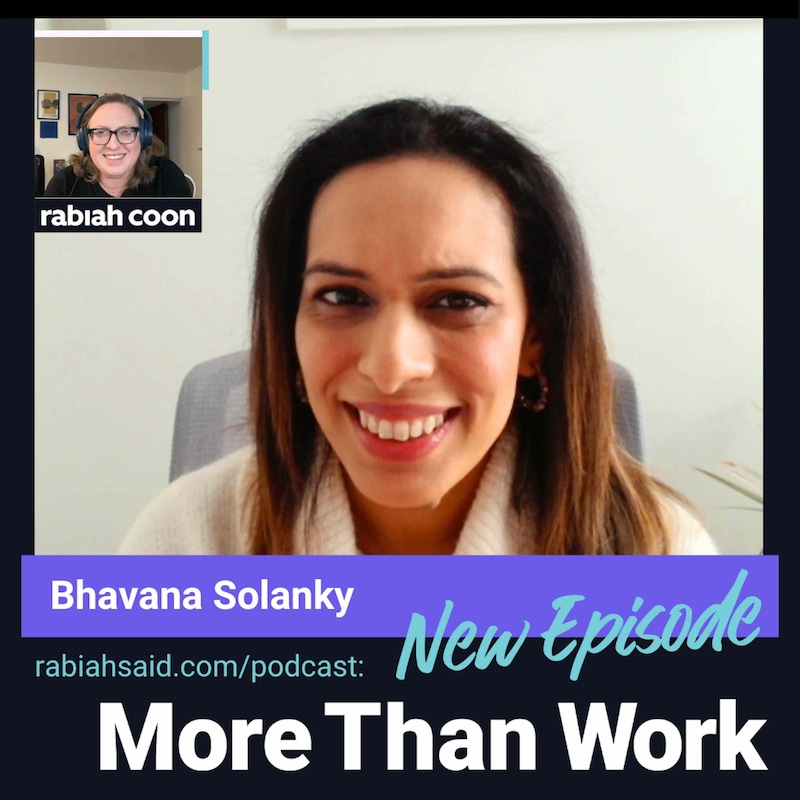
In this episode of More Than Work, Rabiah sits down with Bhavana Solanky, a Senior Research Fellow and MRI Physicist at UCL's Queen Square MS Centre. Bhavana shares how a love of astrophysics — sparked by watching Armageddon as a teenager — led her to a career using physics to directly help people living with disease. She opens up about the role of MS patient involvement in shaping research, her family's deep-rooted culture of community service, and the values that guide both her science and her parenting. They also discuss AI's growing role in MRI, the challenges of raising digitally-native kids, Bhavana's unexpected new hobby of playing cricket, and her passionate commitment to inspiring the next generation of women in science.
00:00 Introduction to More Than Work
00:34 Meet Bhavana Solanky: MRI Physicist & Senior Research Fellow at UCL
01:45 What Is an MRI Physicist? The Camera Analogy Explained
03:22 15 Years at the Queen Square MS Centre: How She Got There
04:05 From Astrophysics to Medical Imaging: An Unexpected Journey
05:27 Joining UCL and Discovering the Power of MRI in MS
06:39 Rabiah Opens Up About Living with MS
08:03 Why Patient Involvement Matters in Research
10:29 AI in MRI: Reducing Noise, Boosting Accuracy & NHS Waiting Lists
17:07 Family Values: A Community-Minded Upbringing
20:27 Balancing Being a Scientist and a Mom
31:45 Learning Cricket (and Letting Her Kids Coach Her)
34:58 Women in Science: Breaking Stereotypes & Inspiring the Next Generation
39:56 Advice: Get Outside Your Comfort Zone
40:43 The Fun Five Questions
45:08 How to Connect with Bhavana
Note from Host:
I’m part of the MS Society UK’s Research Network which is a really cool opportunity to learn about upcoming research by working directly with researchers on their grant proposals, participating in focus groups and doing other things. When I met Bhavana on one of those calls, I was so curious about her because she was so “real” for a lack of a better word. And her research was so interesting, as much as I could understand it. I was so glad when she said she would join me on the pod. And what a journey she’s had really from looking at the stars to probably having seen the inside of my brain! Woah. I hope you enjoy listening and thanks for being here.
+++++
Find Bhavana
LinkedIn: https://www.linkedin.com/in/bhavana-solanky/
Email: b dot solanky at ucl dot ac dot uk
+++++
More than Work Social Media: @morethanworkpod (Facebook, Instagram) and @rabiahcomedy (TikTok)
Please review and follow anywhere you get podcasts. Thank you for listening. Have feedback? Email morethanworkpod(at)gmail.com!
Transcripts
This is More Than Work, the podcast reminding you that your self worth is
Speaker:made up of more than your job title.
Speaker:Each week I'll talk to a guest about how they discovered that for themselves.
Speaker:You'll hear about what they did, what they're doing, and who they are.
Speaker:I'm your host, Rabiah.
Speaker:I work in IT, perform standup comedy, write, volunteer, and of course, podcast.
Speaker:Thank you for listening.
Speaker:Here we go.
Speaker:Welcome back to More Than Work everyone.
Speaker:So today my guest is Bavana.
Speaker:She is a Senior Research Fellow, MRI Physicist at UCL.
Speaker:And she's a mom, so we're gonna talk about all of that.
Speaker:I actually met her through some work with the MS. Society UK and their Research
Speaker:Network, and thought she was really awesome so, wanted to talk to her here.
Speaker:I've not had an MRI physicist, nor did I even know it was a physicist, actually,
Speaker:for a long time on the show before.
Speaker:So, uh, Bhavana, um, first of all, welcome to More Than Work.
Speaker:Thank you.
Speaker:Thank you for having me on.
Speaker:Yeah, I am excited to have you here.
Speaker:So, uh, first of all, where am I talking to you from?
Speaker:I am, um, over in London to southwest London, um, at home today.
Speaker:Yeah,
Speaker:Nice.
Speaker:So you can yeah, be at home sometimes.
Speaker:Sometimes you're in a lab, right?
Speaker:Yeah, definitely.
Speaker:Yeah.
Speaker:Yeah.
Speaker:So I'm not gonna try to explain your research.
Speaker:Um, I don't think I'm a person to do that.
Speaker:I can explain why you're doing the research, maybe, but not, not the
Speaker:research, but yeah, so can you, first of all, like, I don't know if anyone
Speaker:else would be surprised to hear like there's an MRI physicist, but can you
Speaker:explain what that is first of all?
Speaker:Okay, so my job's a bit like say, uh, when you have the old style of camera, you
Speaker:have an SLR camera and you have to change things like your lens, whether you put a
Speaker:flash on how you do your zoom, how much exposure you do, to get different types of
Speaker:images and different types of scenarios.
Speaker:So I'm similar with that with MRI.
Speaker:So we use this big MRI machine.
Speaker:For those of you that aren't familiar, you take images of anywhere in your body,
Speaker:a bit like an x-ray, but it's more soft tissue, so, fat, muscle, brain, spinal
Speaker:cords, all of those sorts of things.
Speaker:And we take pictures inside the body.
Speaker:But, uh, um, an MRI for this job is to, uh, take um, different pictures,
Speaker:so to get different contrasts.
Speaker:So you can see, for example, you can see the fluid in your brain or you
Speaker:can see the tissue in your brain.
Speaker:And, um, so you can highlight different things and get
Speaker:different information that way.
Speaker:So that's really cool then basically because different illnesses or
Speaker:conditions can impact different parts of the brain, right?
Speaker:Like I think I would think of the brain as just the brain, but then
Speaker:you're saying, actually no, but there's like the different components in it.
Speaker:Oh yeah, there's a lot of complexity in there.
Speaker:So if there's, you know, if there's some damage to the brain, you know,
Speaker:it's great to know where this damage is because different parts of the brain
Speaker:are responsible for different things.
Speaker:Um, uh, but also the way they would show up, the way they interact with
Speaker:that huge magnet you go and lie inside of when you have an MRI, the way
Speaker:they interact with that is what we're exploiting as an as MRI physicists.
Speaker:We're trying to really make them show up, um, in our images.
Speaker:That's really cool.
Speaker:And so you've been, um, at the Queen Square MS Center for a long time, for over
Speaker:15 years, so, How did you first, because I guess I, I guess what I'm thinking is, and
Speaker:I think of that about this with any like doctor or, um, clinical like professional
Speaker:that you could have, you could have probably just gone and made a lot of
Speaker:money doing private medicine, maybe in the US or something like, uh, for example.
Speaker:Or you can go and do research and have your career dedicated to that.
Speaker:And so how did you make that decision?
Speaker:And then how'd you end up with MS? Not
Speaker:with ms, but
Speaker:in, in, in ms. I'm not.
Speaker:I'm not yeah
Speaker:diagnosing you.
Speaker:It's kind of by accident and it's kind of to do with my values, I guess.
Speaker:I actually started out doing astrophysics.
Speaker:Um,
Speaker:Wow.
Speaker:I watched Armageddon.
Speaker:I dunno if there's a, there's a line in there where, uh, where
Speaker:the astrophysicist is asked to like, basically save the world.
Speaker:Being a naive 15, 16 year old, you know, 17-year-old.
Speaker:I thought, oh, I wanna be an astrophysicist.
Speaker:Yeah, I wanna save the world.
Speaker:Uh, it was an amazing degree.
Speaker:I got to go to Manchester, use these huge radio telescopes to look
Speaker:at things really, really far away.
Speaker:By the end of my degree, I was like, I really wanted,
Speaker:looking at stars was amazing,
Speaker:Can I just say, and learning about how the universe formed.
Speaker:But I wanted to do something that more directly helped people.
Speaker:And I think I was always brought up that way, you know, in, in this environment
Speaker:where everybody is always helping people.
Speaker:There's a big community.
Speaker:And I wanted to do something that helped people more directly and
Speaker:there's actually quite a bit of overlap between MRI physics, uh, because
Speaker:you use radio waves essentially to look inside your body and looking
Speaker:at galaxies really, really far away.
Speaker:You're looking at radio waves and using these huge telescopes rather
Speaker:than a little coil, a little satellite basically, that you put on your body.
Speaker:And you're dealing with the data sometimes in quite similar ways.
Speaker:So I thought, okay, I could take what I've learned and use it to help people.
Speaker:Um, so that started me off in my research.
Speaker:I did research in diabetes, liver disease, and stroke models.
Speaker:Um, and then a job came up at UCL, at the Queen Square MS Centre.
Speaker:I knew they were leading in MS research.
Speaker:A leading group of, um, MRI physicists there as well.
Speaker:So I thought it'd be an exciting place to be part of.
Speaker:But what really sparked my curiosity was, um, they had this big MRI
Speaker:scanner, very expensive piece of machinery, which was actually funded
Speaker:at the time by the MS. Society.
Speaker:I thought, why is charity investing so heavily in this machine?
Speaker:And you know, and I've been there 15 years now and it's MRI is just absolutely
Speaker:integral to MS diagnosis, it's monitoring, understanding the disease better.
Speaker:And like you say, I've been there 15 years, still so much more to do.
Speaker:So much more to learn.
Speaker:So many different ways to push.
Speaker:And I know you and I have had conversations as part
Speaker:of your role in the research
Speaker:Yeah.
Speaker:and um.
Speaker:And I dunno if you can tell from that how much I enjoy learning more about
Speaker:the disease and trying to understand it and using my physics background
Speaker:to be able to help do that as well.
Speaker:Well, absolutely.
Speaker:I mean, your passion for it resonated and, and we've talked, I've talked candidly
Speaker:and I've talked on the podcast and, um, about, I, I do have Multiple Sclerosis.
Speaker:I don't really, I did hide that for a long time or I didn't want people
Speaker:to know, 'cause it was like I don't know, It's, it's tough, I mean, in
Speaker:a way that people can look at you differently or think of you differently.
Speaker:But when I met you, you were so interested in us.
Speaker:And just to explain really quick, I guess for people listening is, um, the
Speaker:MS society and any of them, so I have a friend who works for the one in, uh,
Speaker:in California, a branch, but the MS Society UK has the Research Network and
Speaker:so people living with MS, will be able to contribute to like patient public
Speaker:information or public patient information.
Speaker:It's PPI.
Speaker:But basically talk to people like, um, Bhavana who are doing research
Speaker:and basically help inform like how helpful the work is that they're
Speaker:doing, and what is the patient perspective and what are the things
Speaker:we're dealing with and stuff like that.
Speaker:And it's an amazing opportunity to learn about what research is
Speaker:happening, but also feel like we're kind of taking some control over this
Speaker:thing we don't have control over.
Speaker:And so I think you, Bhavana like listening to us and me experiencing calls with you,
Speaker:I was really inspired like, oh, someone's giving their career to this thing I have
Speaker:and a lot of other people have and really caring about us because you could just be
Speaker:researching scans and like there's not a person in them, but I feel like you are
Speaker:seeing a person and that's pretty awesome.
Speaker:So yeah.
Speaker:it's, it's, it's so fundamental, I guess, to what we do.
Speaker:And like I said, that first thing that drove me into MRI was taking
Speaker:the things that I enjoyed and knew and, and using it to, to help people.
Speaker:And when you are sat in a lab, especially in MRI machine, um, you
Speaker:can lose sight of that sometimes.
Speaker:And so being able to engage with the community more directly and really
Speaker:understand what's important to them.
Speaker:Um, when it comes to something like an MRI as well, you know,
Speaker:you've got, getting to the MRI.
Speaker:You've got all the noise that involved.
Speaker:So if you've ever had an MRI, you know, you have these loud thudding
Speaker:noises, you, there's a lot of getting in and out the scanner, which, you
Speaker:know, people with different abilities need to be able to do how long the
Speaker:actual scan is and staying still.
Speaker:These are the sort of, you know, human factors we need to consider.
Speaker:We can't just look at it with physics alone because what you can do in
Speaker:something that's very still, that's willing to lie there for three hours
Speaker:is very different to what, you know, what the actual real situation is.
Speaker:And also, you know, we work with, for example, we want to work with
Speaker:the NHS to make them faster, cut down waiting lists, things like that.
Speaker:So there's so many, so many different parts of it as an MRI physicist
Speaker:that you could help impact and help make a real difference to.
Speaker:And at the heart of it, it is helping understand disease and help monitoring
Speaker:it, um, helped diagnose it and things and, and helping the people in the Research
Speaker:Network and the communities that matter.
Speaker:Yeah.
Speaker:And, uh, well, and it's interesting you said too, to make it faster.
Speaker:I mean, sometimes I, I've been in there a long time, you know, and
Speaker:like, like people with MS, like, it's usually our brains are being looked at.
Speaker:That means you're sliding in headfirst, you know, and so you're
Speaker:just kind of confined in this.
Speaker:I did call it a crypt one time, and the person said tunnel, and I was like
Speaker:I call it a tube, but okay.
Speaker:A tube.
Speaker:So that's the better word for it, tube.
Speaker:Yeah.
Speaker:Just not referring to it that way, but you know, it was, I was young.
Speaker:I was young, I was 40.
Speaker:I'm just kidding.
Speaker:But, um, no, but it's really, it's really cool.
Speaker:And just also I think the fact that then you're also determining what
Speaker:the best type of scan is, right.
Speaker:So maybe.
Speaker:Yeah.
Speaker:There, like maybe some aren't necessary eventually and stuff.
Speaker:I'm just curious, are you using AI at all in what you're doing?
Speaker:I mean, has that impacted you.
Speaker:So that's a, that's a huge, um, thing that's sort of, come on really fast.
Speaker:And MRI is a great place to, to use AI actually.
Speaker:So a lot of the major vendors who make MRI machines are already
Speaker:incorporated AI into the machine.
Speaker:Now, you know, the, they're, they're attempted to not do anything scary,
Speaker:that don't wanna make a brain out of a stomach, for example.
Speaker:That would be bad news.
Speaker:you have two brains in the scan, like how it has multiple fingers.
Speaker:Exactly.
Speaker:So, you know, what we want to reduce is the noise in our image.
Speaker:So they use a lot of the AI to reduce the noise rather than
Speaker:makeup signal that's not there.
Speaker:So that we're as accurate as we can be still when it comes
Speaker:to diagnosis and precision.
Speaker:Um, whilst boosting things like how sharp the image is, the resolution of the image.
Speaker:Um, so we're using AI in, in that way already and is already like been taken
Speaker:hold of and incorporated in the scanners.
Speaker:So a lot of the modern scanners now already have these technologies embedded
Speaker:in them to make it faster or sharper.
Speaker:Um, but also, you know, there is a growing field of, you know, we've got
Speaker:all these scans, we've got all these data, and maybe we could make it faster.
Speaker:And maybe we could help AI make it faster.
Speaker:Or maybe we, it could be help with, um, the bottleneck that occurs
Speaker:when you have too many images.
Speaker:If you go faster, you know, great, you're reducing waiting lists.
Speaker:But on the other hand, there's only so many radiologists.
Speaker:They're already very busy and can we help those radiologists, triage what
Speaker:really needs, you know, an expert set of eyes and what actually is very basic
Speaker:and, um, they'd be able to rely on it.
Speaker:And for that you need information.
Speaker:For example, as a person with MS, you wouldn't want to think this
Speaker:has only been tested in 10 people.
Speaker:You'd want hundreds of people and you'd want to know that
Speaker:it's very, very accurate.
Speaker:And you know, it's up to us to help design those studies and, and boost
Speaker:that accuracy and really interrogate the results before, uh, an organization
Speaker:or institution like the NHS can, um, can really, um, take hold of that.
Speaker:Um, so there's a lot of scope for AI in that as well, but, you know,
Speaker:I wouldn't, I wouldn't go along with these things that, oh just upload your
Speaker:image anywhere and, um, somebody can tell you what, what is wrong with you.
Speaker:You, you really need the expertise behind it
Speaker:Yeah, no.
Speaker:as well.
Speaker:I, I mean, it's like the whole WebMD thing we were doing,
Speaker:you know, like 15 years ago.
Speaker:Like, oh, I'm gonna look up, and everyone ends up with these hor horrific illnesses
Speaker:because they have a head cold, You know?
Speaker:And I mean, it's natural to do that.
Speaker:I still do that.
Speaker:I still look up things and, but yeah, you don't wanna, you don't wanna just be like,
Speaker:oh, I was diagnosed by ChatGPT, who I'm also in love with and whatever, you know.
Speaker:There are people doing this now...
Speaker:Who is also your therapist,
Speaker:who's also your therapist.
Speaker:Yeah.
Speaker:That's like, I don't know, man.
Speaker:I don't, I don't think so.
Speaker:I want my therapist to challenge me not agree with me on everything.
Speaker:Like, you're right, Robbie.
Speaker:Well, that's all I needed to know, you know?
Speaker:Um, it's ridiculous.
Speaker:So, um, just going back to the astrophysicist, like you studying
Speaker:astrophysics and everything.
Speaker:I know, I know there was one famous one which was um, Brian May from Queen.
Speaker:I learned that on a tour in Tenerife.
Speaker:And then you were saying there's also another famous astrophysicist...
Speaker:Yeah, Brian
Speaker:Cox, um, he was in dv.
Speaker:Yeah.
Speaker:We didn't realize he was famous at the time when he was teaching us, I
Speaker:think it was advanced particle physics actually, it wasn't even astrophysics.
Speaker:And, um, we thought, oh, we, we were a bit stuck on an exam
Speaker:that we'll try and email him.
Speaker:We realized he'd been on Top of the Pops, so after that, if we
Speaker:failed an exam, it was definitely, things can only get better.
Speaker:yeah.
Speaker:Yeah.
Speaker:That's so wild, right?
Speaker:Just to have like these I know.
Speaker:And I, I, um, I took a class.
Speaker:When I was at university, I was at UC San Diego, and in my college that
Speaker:I was in, you had to take like other disciplines besides your major, but
Speaker:they were all intro classes that anyone could handle essentially.
Speaker:And so I took this one about space and Sally Ride the
Speaker:astronaut was my instructor.
Speaker:Oh wow.
Speaker:and I got yelled at by her because my friend wouldn't shut up.
Speaker:she made an impression.
Speaker:I am, someone did, I mean, this woman went to space.
Speaker:I was like, fascinated.
Speaker:And my friend just kept talking and like, I was like, can you stop?
Speaker:And then finally she tells me to be quiet and I turned so red and
Speaker:whatever, and I just will never forget like, I so disappointed Sally Ride.
Speaker:You know?
Speaker:It was awful.
Speaker:It was horrible.
Speaker:But um, you, do you, are you still interested in space and I mean,
Speaker:or is it more just like, oh, the stars are pretty kind of thing now?
Speaker:I mean.
Speaker:I, I feel like it's, you know what?
Speaker:I, I, it sort of died down a little bit.
Speaker:If I could turn my screen around right now, you'd see I've
Speaker:just got stars in front of me
Speaker:Oh, cool.
Speaker:and it says Dream big little one.
Speaker:'cause this used to be the nursery.
Speaker:Um, and so I've, I think I've gone back more into it as I, you know, you, I, I
Speaker:realize like you're back in that world when you start having kids with their
Speaker:curiosity and knowing about the world.
Speaker:And it takes me back to all those questions I had when I did
Speaker:astrophysics and I, I wanted to know how stars were formed and how far
Speaker:away something is, and just random
Speaker:Yeah.
Speaker:Yeah, of course.
Speaker:you know, no, no particular, oh, I want to.
Speaker:Do something specific.
Speaker:I think it was just curiosity about the world and, and when you have
Speaker:little kids in your life, that kind of comes back to you again.
Speaker:Yeah, I'm, well, yeah, I mean, I, I have friends with kids and there's definitely
Speaker:like this nice thing about just having some fact that's interesting to them, you
Speaker:know, and like you have this information.
Speaker:But also like experiencing them asking the questions like you're saying.
Speaker:I mean, it's really cool because I know some people don't really
Speaker:like kids, but I think kids are really the best of, of who we are.
Speaker:Like, because they're, they don't know yet.
Speaker:They don't have like these strong opinions about things formed or whatever.
Speaker:They're, they're learning, you know, and they're, and it's, it's pretty cool.
Speaker:Like they're seeing things for the first time all the time.
Speaker:We rarely get to do that anymore, you know.
Speaker:They can be fascinated by the smallest things, right?
Speaker:yeah.
Speaker:it's super cool.
Speaker:Um, so just with, with your work though, in the lab, so you, one thing
Speaker:you mentioned was that, um, was that part of it is related to your values.
Speaker:So was your upbringing such that, like did your parents, were they involved in
Speaker:the community or were they, uh, scholars or, or what, what was it you think that
Speaker:built you up to have those values of?
Speaker:I always saw them helping and not in an official capacity.
Speaker:Um, my dad was an engineer by the time I, you know, I'm old enough to have memories.
Speaker:He, he'd been made redundant.
Speaker:He worked in a factory.
Speaker:My mom was a housewife at the time she had worked.
Speaker:Um, you know, when, um, they both moved over from India.
Speaker:They'd both been working here.
Speaker:So they worked really, really hard and they, and they built
Speaker:up a good community around us.
Speaker:But I remember people coming, 'cause my dad had a good, um,
Speaker:um, a good standard of English.
Speaker:Um, he was very confident in it.
Speaker:So he'd be great at helping people in the community just with
Speaker:their paperwork, for example.
Speaker:And now, like I, I do, I do a bit of paperwork for my mom.
Speaker:Um, she's quite elderly and she does direct payments and things like that.
Speaker:And Rabiah, I have a PhD and I find some of these forms pretty tough.
Speaker:You're like, you don't wanna get caught out, you don't wanna write wrong thing.
Speaker:And, and, and I have know born here, grown up here.
Speaker:I have a good standard of English.
Speaker:Even I find them difficult.
Speaker:And, and I remember my dad, like people coming to my dad being like,
Speaker:can you help us with this form?
Speaker:Can you help us with that form?
Speaker:My mom, I'm one of five.
Speaker:I'm the youngest of five.
Speaker:Oh wow.
Speaker:She was the neighborhood babysitter.
Speaker:We had all the kids at our house.
Speaker:She, she basically enabled so many women to work.
Speaker:And, and keep their families going.
Speaker:And you know, they just trusted her that okay, there's enough
Speaker:people in this house that these kids will, will be looked after.
Speaker:And it was amazing.
Speaker:Like my mom had her, I think it must have been her 70th birthday party,
Speaker:and, you know, we did the invite list.
Speaker:Most people at the time were under the age of 40.
Speaker:They were all the kids she'd looked after who came back and were like,
Speaker:oh yeah, your mom, you know, we used to have the best time at your house.
Speaker:And, you know, with five kids as well as a lot of, a lot of entertainment
Speaker:for all the children as well, so.
Speaker:I just saw that they, that they built this around them and they
Speaker:were sur we were surrounded by people who helped each other.
Speaker:Um, so it wasn't like, you know, yes they helped with charities and
Speaker:things like that, but it wasn't this massive, massive thing.
Speaker:It was just ingrained in every day.
Speaker:You know, if somebody was having a hard time, you go over with
Speaker:a meal, that sort of thing.
Speaker:Just like everyday community things and it, and I think that really set in
Speaker:this, and I think if you look at all of what me and my siblings ended up doing
Speaker:in one way or another, we all ended up have doing jobs where you help people.
Speaker:Awesome.
Speaker:I mean that's, that's great.
Speaker:And that's just, that's cool just to have experience seeing that, you know,
Speaker:as part of like normalcy for you, right?
Speaker:Yeah, yeah, yeah.
Speaker:That's really cool.
Speaker:Well, so it's, it's super clear that you're passionate about
Speaker:your work and like why you, you moved into what you did, which.
Speaker:Is really what this podcast is about.
Speaker:But then outside of work, I mean, you did mention being a mom.
Speaker:I think a lot of people don't really think about that as being also a job.
Speaker:I mean, it's not a job in the sense that you got hired, you hired yourself,
Speaker:kind of, but, um, you know, you, you have that and then you do a lot of
Speaker:activities around raising your kids.
Speaker:And so do you wanna talk about how that is part of your balance outside of work and?
Speaker:Yeah.
Speaker:Yeah, it's, it's a really important part, I think.
Speaker:It helps me, um, it can be really isolating being a mom actually.
Speaker:And I had this huge identity of being a scientist and
Speaker:career person and all of that.
Speaker:Um, and when I had my first child, it really was a shock to the system
Speaker:and having and building a network of other, um, moms, like-minded moms.
Speaker:It is, it is just really, really helpful and it, that having that support system.
Speaker:Doing the job where there's no one to really guide you because, um, yes, we
Speaker:all have our parents and we all have the way we brought, we've been brought
Speaker:up, but you know, each generation has a different set of challenges
Speaker:yeah.
Speaker:to, to navigate.
Speaker:You know, my mom will be like, oh, you have this job and then you
Speaker:have to do this, and now you're responsible for that education as well.
Speaker:Uh, whereas my mom was pretty hands off about our education, so, um so,
Speaker:yeah, there's a, there's a lot there.
Speaker:And I'm part of the, um, I help with the PSA as well, which is
Speaker:a Parent School Association.
Speaker:So that helps organize events for the school and things like the Christmas
Speaker:fair, summer fair, being class rep, um, selling uniform and things.
Speaker:And I just feel it gives me a really nice, um, really nice group
Speaker:of parents that I meet who are quite like-minded, similar values.
Speaker:You work together with them on something and I work part-time as
Speaker:well, so I'll take some of my one day off and help with the PSA if I can.
Speaker:And you know, sometimes it's as weird as like, I'm not creative, but building
Speaker:baskets for the raffle prize or something.
Speaker:And other times it's a bit more aligned with what I'm actually doing, like going
Speaker:into school and talking about being a scientist or being a, you know, a
Speaker:female scientist and things like that.
Speaker:Or talking about like, I, I grew up Hindu, talking about Hinduism, things like that.
Speaker:So I, I love being able to exchange with the schools and I do a lot of
Speaker:outreach as well as part of my job.
Speaker:I really liked, you know getting the opportunity and taking the
Speaker:opportunity to sort of help inspire the next generation and really watch
Speaker:your curiosity just thrive and grow.
Speaker:It's a, it's a really magical thing.
Speaker:Yeah.
Speaker:No, that's really cool.
Speaker:And I, I was, I've quite a few friends with kids and, and so I think just
Speaker:either having just observed, you know, just maybe I'm sitting there and
Speaker:watching what's going on or talking to them, there is so much work involved.
Speaker:And I have a good friend who, um, works on a similar thing to the PSA, it's
Speaker:called something else in the States, but, um, she wants to be involved and
Speaker:see, you know, her kids growing up.
Speaker:And, and it's, it's a challenge though because it's taking a lot of time and
Speaker:we were talking too about how, like what did our parents do to raise us
Speaker:and like how do you, what, like what do you do to raise your kids in a way
Speaker:that, you know, sets them up well and, and they are raised to be good people,
Speaker:you know, good human beings and stuff?
Speaker:And I was talking to my friend, I was telling her, well, I think one
Speaker:challenge there is now that our parents didn't have, and I'm, I assume we're
Speaker:kind of in a similar age group, is just that like our parents were one
Speaker:of our only sources of information until we were a certain age, right?
Speaker:And then it was like
Speaker:books and
Speaker:that was, you know, another
Speaker:kids and older siblings maybe when you learn the naughty stuff.
Speaker:But that's it.
Speaker:I mean, you had older siblings, you know, you learn things.
Speaker:You probably knew things faster than they did just because
Speaker:they were talking about them.
Speaker:But now kids have so many inputs, there's so much information coming at them.
Speaker:They have their iPads.
Speaker:Some people are like, I don't get my kid an iPad.
Speaker:Fine, but other people do, and I think they need to learn those skills.
Speaker:Um, there's YouTube.
Speaker:YouTube kids is crazy.
Speaker:I think it's actually worse than whatever's on YouTube personally.
Speaker:Like it's so weird.
Speaker:Um, it's like wild, right?
Speaker:It's, yeah.
Speaker:Anyway, um, that's just my opinion as someone who's seen
Speaker:it over the shoulders of a
Speaker:kid.
Speaker:Um, but I think there's just so much different information coming at them
Speaker:and, and I think that like, that's gotta be a big challenge for parents
Speaker:to figure out how to help address questions or help, like kind of
Speaker:redirect if there's information they're getting that maybe isn't even kind
Speaker:or healthy for them to have, right?
Speaker:Yeah, definitely.
Speaker:It's like the playground multiplied by, you know, a hundred thousand.
Speaker:Um, so it is, it is really scary.
Speaker:But, and at the same time, you kind of have to accept that they
Speaker:are, they are digital natives.
Speaker:This is the world.
Speaker:And you have to, you have to parent for the future, I guess.
Speaker:Um, you have to parent knowing that this is the world they're going to grow up in.
Speaker:And I guess our struggle is giving them the tools to navigate that when we, we are
Speaker:not really, really sure what they are yet.
Speaker:Um, you know, so far my kids are in primary school, so I've been able to
Speaker:protect them somewhat and um luckily, you know, my, my nieces are are very
Speaker:careful with what they put on the net and what they look at as well
Speaker:so influence wise, um, we've been quite lucky so far, touch wood Um, but
Speaker:you know, I have said you are gonna be shown things that make you feel
Speaker:uncomfortable and they, and you might know that you're not meant to look at
Speaker:it, but you know, it's like a car crash.
Speaker:You will keep on looking,
Speaker:Yeah.
Speaker:feel bad.
Speaker:Come and tell me.
Speaker:Yeah.
Speaker:You won't be in trouble just trying to keep that communication open
Speaker:without being like, absolutely, go on there, look at whatever you
Speaker:want, and then kind of tell me about
Speaker:Yeah.
Speaker:Uh, that's not what I'm trying to say.
Speaker:It is more, you know, these things will happen and being able to have that
Speaker:conversation afterwards and have more than one conversation, I think as well
Speaker:about it is, it is quite important.
Speaker:But I mean, I'm still learning.
Speaker:Yeah, well, like not having, giving them shame or something, or whatever.
Speaker:It depends on what we're talking about, but just, there's all
Speaker:kinds of stuff you could see.
Speaker:There's all kinds of stuff, right?
Speaker:Yeah, I feel like my sister, she has three kids and the oldest one's 21 now, so
Speaker:they're, she's gone through a lot of it.
Speaker:Um, and the youngest one's 16, but I think she's done a good job of, they
Speaker:are open with her, you know, and so um, I think then that allows them,
Speaker:even if they do make a mistake or even if they do something that's they're
Speaker:allowed to do, but maybe, you know, not in the right way or something, I don't
Speaker:know, um, I think they'll talk to her.
Speaker:And I think that is a super important thing is like having the communication.
Speaker:Um, do you think that
Speaker:the work you're doing influences like some of your thinking around parenting or
Speaker:that, or like your work like seeing your kids growing up has an effect on your
Speaker:work at all, like in some way, maybe that?
Speaker:I, I, I think they both, I mean, you know, obviously central to my world is my kids,
Speaker:but they're both very important to me.
Speaker:My job is very important to me as well.
Speaker:I think they do view me as a mom and a scientist, like I think they do.
Speaker:I'm not just mom to them.
Speaker:They do realize I have this
Speaker:Yeah.
Speaker:thing that I do and, and they're very welcome in my world.
Speaker:Like, you know, once we went to watch a film and it, it was an outdoor cinema.
Speaker:It was summer holidays.
Speaker:Absolute fail.
Speaker:Didn't check the weather.
Speaker:Rained down on us.
Speaker:Happened to be near work.
Speaker:I was like, let's go look at some fruit.
Speaker:Um, I showed 'em some MRI of some fruit.
Speaker:They were guessing what it was.
Speaker:Is that broccoli, like broccoli's great.
Speaker:It looks like a firework when you go through it.
Speaker:oh, nice.
Speaker:and um, you know, and, and so they were looking at, oh, why does
Speaker:a coconut look the way it does?
Speaker:You know, why does a pomegranate look the way it does?
Speaker:And, and things like that.
Speaker:And they've been there when I, you know.
Speaker:I've, I've sat there looking at brain images and they're in the
Speaker:background and, and now they, you know, they, they, they, they can
Speaker:tell me if my image is good or not.
Speaker:You know, they, they want, and it's not that I've sat there and been like,
Speaker:oh, you must be into imaging because, uh, you know, I don't really mind what
Speaker:they're into as long as it's not slime.
Speaker:Um, slime is messy and it gets everywhere.
Speaker:Were they making slime at one point?
Speaker:I know my niece and nephews were like, making slime
Speaker:I thought that would be a good lockdown idea
Speaker:it, no,
Speaker:it's crazy.
Speaker:Yeah.
Speaker:And, um, yeah, so they are, they're, they're very much, they're very much
Speaker:like, have a kind of, you know, overview of, of what I'm doing and where I'm
Speaker:going and if I'm going to be working late and sort of what I'm working on.
Speaker:Um, but I, I wouldn't say it's like, it's not like we sit there at the
Speaker:dining table talking about MRI.
Speaker:It's just if it comes up, but also the other way around, like, I did a study
Speaker:on, um, ultra high process food, uh, with Chris van Tulleken and he did like
Speaker:a, he did a four, was it a four week, I think, um, ultra high processed food diet.
Speaker:Okay.
Speaker:Um, and I, and I looked at some of the data from that, and I remember
Speaker:being absolutely shocked at what we saw within an n equals one.
Speaker:You know, just one sample.
Speaker:The, the, the amount, the amount of changes we saw in the brain.
Speaker:And the data I looked at, I actually questioned it and went back and made
Speaker:sure it was acquired the way it should have been because the change was so big.
Speaker:Um, and, and that definitely, you know, brought it home that, you
Speaker:know, ultra high processed food is something that I can try and minimize.
Speaker:You can't, you can't eliminate it.
Speaker:Well, maybe you can, but I don't have the energy and time to do that.
Speaker:But, um, we, you know, we made quite a few changes at home to try and
Speaker:reduce the ultra high processed food, and that was a direct result of, of
Speaker:what I was learning through work.
Speaker:Um, things like the more and more conferences I go to and autoimmune
Speaker:diseases I am exposed to listen to about vitamin D, things like that.
Speaker:It's always been a big thing to me.
Speaker:Go outside, get a walk every day, have your vitamins.
Speaker:Um, which, you know, I, I'd say I was probably brought up the
Speaker:same, but it, it brought a, it brought another dimension to it.
Speaker:The, the importance of it, um, was there as well.
Speaker:So there def, there definitely is an interplay to how I parent and, you
Speaker:know, what I, what I put my values in.
Speaker:But also, um, I work with a lot of, you know, very clever people, I guess.
Speaker:Um, and, I feel the best ideas come when people come from one field
Speaker:into another one and they look at something completely different.
Speaker:So I really try to ensure that my children get lots of opportunities
Speaker:to just be exposed to lots of different things and they can be free.
Speaker:Just going to the museum.
Speaker:And there's a lot of things I was not exposed to as a child.
Speaker:Like music, for example.
Speaker:Uh, I wasn't very sporty either.
Speaker:So sports.
Speaker:So, you know, bringing one thing in with another.
Speaker:And watching that interplay happen, um, just encouraging curiosity
Speaker:and letting them think outside the box I think is really important.
Speaker:Yeah, that's great.
Speaker:And I think like, I mean really it's curiosity has driven part of your career
Speaker:Oh, yeah.
Speaker:right?
Speaker:And so
Speaker:like you see the value in that.
Speaker:And so then you have an interest in cricket too, right?
Speaker:Which I've found out is
Speaker:new.
Speaker:This is quite new.
Speaker:So my interest in cricket also stems from the family life.
Speaker:So, um, I, um, you know, one of the most, um, some people may find this enjoyable.
Speaker:I, I am not the parent that watches their kids, do lots of sports and things.
Speaker:Yay.
Speaker:And I do feel for my mom having had five kids and watches do
Speaker:sports day and fail miserably.
Speaker:Um, but, um, you know, I, I'm, I'm there taking the kids to cricket every Sunday.
Speaker:Um, and my partner, he's, um, he's coaching the cricket team.
Speaker:He was a, he was really into cricket.
Speaker:He's the one who was like, my kids need to do cricket.
Speaker:All right.
Speaker:That's what you wanna do.
Speaker:Um, it's, it's a good weather sport.
Speaker:I like that.
Speaker:It's in a big greenfield, um, full of like, it's, it's a
Speaker:beautiful, beautiful place.
Speaker:We go to Hampton Wick, uh, Royal Cricket Club.
Speaker:And so son's doing one, kid's doing one, partner's doing the, uh, coach.
Speaker:I'm just sat there and I'm thinking there's two, two and a half
Speaker:hours this, this is getting...
Speaker:yeah.
Speaker:It's nice to have a bit of time yourself also getting a little bit boring.
Speaker:In the far corner, one of the coaches has stepped up and he is coaching
Speaker:the women, just women's cricket.
Speaker:So I, I went over, I joined them.
Speaker:I, I'm, I'm not a sporty person,
Speaker:Oh wow.
Speaker:But, so much fun.
Speaker:And I, and I, I challenged myself.
Speaker:And I thought, if I can do this, which is so outside of my comfort zone, so outside
Speaker:who I am as a person, to be honest.
Speaker:Team sport?
Speaker:Um, you know, I was, you know, I'm, I'm, I'm a, I'm a, um, I
Speaker:wasn't great at PE at school.
Speaker:I was always like, picked last
Speaker:to to do anything.
Speaker:So it wasn't something I identified with or something that I have confidence in.
Speaker:And I thought just, you know, if they can get out there and do that,
Speaker:then surely they can see their mom get out there and do something she's
Speaker:rubbish at, to the point where, no, we're practicing at home now.
Speaker:They're like, mom, you need to open your eyes to catch the ball.
Speaker:And they're, they're trying to coach me on something and it's so nice.
Speaker:It's so nice to see them be the expert now and try and tell me what to do and
Speaker:I can hear my own voice back sometimes.
Speaker:Yeah.
Speaker:Must be kinder.
Speaker:Um.
Speaker:Yeah.
Speaker:Yeah.
Speaker:And, and and, and it's great to see them try and teach me and, and get into that.
Speaker:And, and it's, it's a lovely community as well, actually.
Speaker:The cricketer community is, is a really nice place to be, really nice to hang out.
Speaker:And it's, it's just something new I've sort of taken on, um, last summer
Speaker:and I'm, I'm hoping to stick at it.
Speaker:I don't think I'll ever be any good, but, um, it's good fun.
Speaker:I'll stick with it and keep going outside my comfort zone.
Speaker:Yeah it's something else to do.
Speaker:And then one thing, that you talked about a little bit was just that you speak in,
Speaker:in schools about being a woman in science, but how passionate are you about that?
Speaker:Because I've, I've spent my career in IT, most of it.
Speaker:And as, as a woman, that's sometimes difficult and you're
Speaker:sometimes the only person.
Speaker:And now even in comedy, I'm sometimes the only woman in the room.
Speaker:And so there are a
Speaker:lot of spaces where women are underrepresented, and so science
Speaker:is definitely one as well.
Speaker:Yeah, I think, I mean, I was, I was a handful of girls in my course
Speaker:when I did physics and astrophysics.
Speaker:It was very male dominated.
Speaker:Um, and I, I always got the looks, you know.
Speaker:You're at a bar, what do you do?
Speaker:I'm, I'm a physicist, I'm an astrophysicist.
Speaker:I mean, there, there's no better way to get people away
Speaker:from you.
Speaker:How not to make friends.
Speaker:But, um, and I, I wanted to change that, you know, how people are viewed for
Speaker:being a scientist or being a woman in, in science or being a woman doing physics.
Speaker:Um, and I, I really wanted to challenge, um, stereotypes as well.
Speaker:So, UCL is a great place for that.
Speaker:They really encourage us to do outreach and get involved.
Speaker:So I've had really great opportunities to do things like go into the
Speaker:schools, talk about the work I do to primary school age children.
Speaker:I've worked with, um, children from disadvantaged backgrounds
Speaker:and as part into science.
Speaker:And that's a scheme where, um, you know, people who may not have mentors or,
Speaker:or the role models in their life, I had my big sisters, to be honest, like
Speaker:my eldest sister is, you know, eight and a half, nine years older than me.
Speaker:And, and she did science and went off to do a PhD and all my
Speaker:other, my other sisters did too.
Speaker:So they, I had, I had those role models and I probably took that for granted.
Speaker:So when I did, went and did physics and I was the only girl,
Speaker:I did not feel intimidated.
Speaker:I, and I felt like I could take up space, but I'd seen other people do that.
Speaker:I'd seen that that's a, a valid thing to do.
Speaker:Whereas, you know, maybe some people aren't exposed to those
Speaker:role models that early on.
Speaker:So it's a space where, you know, 16, 17 year olds come into our lab
Speaker:and we, we talk to 'em about what we do, the different elements of it.
Speaker:Like one huge thing that, you know, people might not realize is.
Speaker:You know, as a, as a, you know, when I was 21 and I graduated, I realized, oh,
Speaker:I could do a PhD and I get to travel.
Speaker:I get to go to conferences and, and see the world.
Speaker:And it was, it was really exciting to me to be able to do that and, and
Speaker:something I never really thought I'd do.
Speaker:Um, I'd have a, the opportunity to do, um, and to get the opportunity
Speaker:to do that and put a face to, you know, female scientists growing up.
Speaker:I, yes, I had my sisters, but in the wider, you know, on tv I didn't see it.
Speaker:When I went to my course, there wasn't many girls.
Speaker:Um, when I did my PhD, I started with four other, um, white males.
Speaker:Um, and, um, had a great time to be honest.
Speaker:Um, there were still lots of, um, you know, that we had a center
Speaker:where, you know, us girls, we used to get together and watch Desperate
Speaker:Housewives on a, on a Wednesday.
Speaker:I, I mean, it was, it was so good.
Speaker:We, it was the most unexpected things for, for, for these women in physics to
Speaker:be doing, and we were like little family.
Speaker:We were so close knit.
Speaker:And, uh, you know, all, all the guys around us were lovely.
Speaker:You know, there was a, there were, there was nothing wrong with 'em,
Speaker:but it was lovely to create our own space amongst that as well.
Speaker:So I do things like Soapbox Science, which is just, it is quite nerve wracking.
Speaker:No slides or anything.
Speaker:You stand on a soapbox or in my case at the South Bank and, and
Speaker:talk about your job and what
Speaker:Oh wow.
Speaker:and how MRI works without anything else.
Speaker:Um, and it's, it's, it.
Speaker:It's so rewarding.
Speaker:I had a 16-year-old who then wanted to come to the lab.
Speaker:And, um, came and spent a day with us to see what we did.
Speaker:And her mom wrote to us afterwards, beautiful note saying she has
Speaker:not stopped talking about MRI.
Speaker:She, you have absolutely inspired her.
Speaker:Thank you so much for.
Speaker:And, and all of us in the lab we're so happy to do it, so happy to see, you
Speaker:know, young people interested in it and, um, and a young woman as well to, to be
Speaker:like, yeah, that's something I can do.
Speaker:Uh, that, that's a, that's a really, um, important thing for me, um,
Speaker:to be able to do and say and, um, and for, you know, even my friend,
Speaker:my daughter's friends, to realize, okay, yeah, this is something women.
Speaker:Can do.
Speaker:Um, they're not weird species.
Speaker:It's a valid career.
Speaker:Yeah.
Speaker:Oh, that's great.
Speaker:Yeah.
Speaker:'cause I mean, there is a thing about representation and just seeing
Speaker:someone like you doing something that that helps you see that you
Speaker:could do it and you know, there's gotta be someone who does that first.
Speaker:But then the fact that you are going around and being generous with your
Speaker:time and sharing that to help build a future, you know, of people, especially
Speaker:of young women in this case, like seeing themselves in science is, is super.
Speaker:Um, 'cause that'll help also with more equity and research.
Speaker:Right.
Speaker:And
Speaker:Oh, absolutely.
Speaker:Absolutely.
Speaker:Yeah.
Speaker:studied.
Speaker:Um, that's awesome.
Speaker:Well, cool.
Speaker:Uh, well, one thing I like to ask every guest is just like, do you have any
Speaker:advice or mantra that you'd like to share?
Speaker:Just that you kind of comes to you to, to share with people?
Speaker:I don't think I'm the person you should go to for advice, but um, I would
Speaker:say get outside your comfort zone.
Speaker:Do things that are unexpected and if you've got young people around
Speaker:you, just encourage that curiosity.
Speaker:Um, because it, it, it's so important, uh, at growing the next generation.
Speaker:If, and if anybody's interested in the science we spoke about today
Speaker:and they wanted to volunteer and, and help science in their own little
Speaker:way, there's always a space for you.
Speaker:Um, we'd love to hear from you as well.
Speaker:Awesome.
Speaker:No, that's, that's great.
Speaker:Yeah.
Speaker:And I agree about getting outside your comfort zone.
Speaker:So next we have the fun five.
Speaker:And it's five questions I ask every guest.
Speaker:They're fun for me.
Speaker:If they're fun for you, I, I dunno, you know, it's up and down on that one.
Speaker:Um, so the first one is, what's the oldest T-shirt you have and still wear?
Speaker:So actually I just gave it away.
Speaker:It was full of holes and it, it was time.
Speaker:It was time, but it was a a t-shirt that I'd actually bought for my
Speaker:other half, um, when I was expecting.
Speaker:And it said Daddy to be on it, and it had these two baby feet on
Speaker:it, and it was, it was emblazoned with the words daddy's feet.
Speaker:Very, very not something he would ever wear.
Speaker:So anyway, I ended up adopting it.
Speaker:It comes up to my knees.
Speaker:So I ended up being my pajamas and I'd do my workouts and I'd answer the door much
Speaker:to the bemusement of delivery drivers.
Speaker:And unfortunately it was time to, to give it up.
Speaker:It was full of holes.
Speaker:But yeah, that was my oldest
Speaker:Nice.
Speaker:I like that.
Speaker:I like that.
Speaker:I like anytime too, you give someone something that they ended up giving to
Speaker:you, you're like, oh, it was a good gift.
Speaker:Um, so if every day was really Groundhog's Day, like in the Bill Murray movie, right,
Speaker:where he wakes up to the same song every day, what song would you wake up to?
Speaker:Alicia Keys, Girl on Fire.
Speaker:That's right.
Speaker:Definitely very empowering.
Speaker:Love her voice as well.
Speaker:For sure it is.
Speaker:Yeah.
Speaker:My mom and I were in the car recently, um, when I was back visiting in the States
Speaker:and Alicia Keys came on and my mom's like, oh, I haven't heard her in so long, and it
Speaker:was so refreshing to hear her, her voice.
Speaker:She's really amazing.
Speaker:Alright.
Speaker:All right.
Speaker:Coffee or tea or neither?
Speaker:Tea doesn't gimme the jitters.
Speaker:I mean, it feels like a warm hug.
Speaker:Definitely a tea person.
Speaker:Okay.
Speaker:Can you think of like a time when you laughed, already cried, or just something
Speaker:that makes you just like crack up?
Speaker:Uh, this is gonna sound so typical parent, but my kids absolutely crack me up.
Speaker:Absolutely crack me up.
Speaker:For, like, for example, recently we, we went to John Lewis to look at washing
Speaker:machines and, and tumble dryers.
Speaker:And there's this washing machine where you load all the detergent in
Speaker:and, and the, the fabric conditioner and it measures your ear out for you.
Speaker:And I thought.
Speaker:I don't understand why you need this.
Speaker:Like, this is not why I don't do my laundry.
Speaker:I don't understand what friction, this is really minimizing.
Speaker:But anyway, it's, it's the one we went for for other reasons.
Speaker:Right?
Speaker:And then, um, I went to pick up my son when it got, when it arrived.
Speaker:I went to pick him up from school and he was crying 'cause
Speaker:I bought the wrong snack.
Speaker:He stopped suddenly.
Speaker:He goes, mommy, have you done the laundry today?
Speaker:I was like, no, I haven't.
Speaker:And he came home absolutely happy as a bunny and did the laundry and this.
Speaker:Is why you have a washing machine that measures the fabric conditioner out for
Speaker:you because he can now do it on his own.
Speaker:And he's so happy.
Speaker:He's so happy.
Speaker:Just fascinated by these, by the weirdest things, you know?
Speaker:I was like, oh no, we need to shell out for a washing machine.
Speaker:And to him, it's the biggest thing ever to have the, and he sat
Speaker:there watching, watching the spin, just joy, complete joy for him.
Speaker:Things like that just make me laugh.
Speaker:it's a kid being able to do laundry, which is kind of good 'cause a lot
Speaker:of kids never do laundry actually.
Speaker:Yeah, exactly.
Speaker:Now he comes outside.
Speaker:Well, if you eat that, you can do the laundry.
Speaker:You can load the washing machine and you can then watch it for 10 minutes.
Speaker:Go around.
Speaker:That's amazing.
Speaker:I like it.
Speaker:And maybe he, maybe he'll figure out why socks disappear.
Speaker:Where they disappear.
Speaker:Where do they go?
Speaker:Why and where?
Speaker:Yeah.
Speaker:So maybe that could be something he can, he can run some experiments.
Speaker:Um, okay.
Speaker:Last one.
Speaker:Who inspires you right now?
Speaker:Um, so many people, so many people, honest, anybody who like lives a life to
Speaker:their own beat, really it does things a little bit differently to achieve their
Speaker:aims on their, like with their rules.
Speaker:I'm not trying to conform to the way things should be done
Speaker:and being constricted by that.
Speaker:Um, anybody who, you know, I love hearing about people's life stories
Speaker:and how they got to where they did in a weird and wonderful way.
Speaker:Um, there's all sort of stories and people I find inspiring.
Speaker:Cool.
Speaker:Well, awesome.
Speaker:And I do too, that's one reason I do this.
Speaker:Yeah.
Speaker:Is there anything you want people to do to like look you up?
Speaker:Like if someone just hears, maybe they hear their kids' interested in science or
Speaker:they wanna know more about you, or they want you on their podcast, where should
Speaker:they go to find you and, and your work?
Speaker:Oh, absolutely.
Speaker:Just connect with me on LinkedIn.
Speaker:Send me a message there.
Speaker:Um, or, um, email me at UCL.
Speaker:b dot solanky at ucl
Speaker:dot ac dot uk.
Speaker:Um, and yeah, get in touch, or we'd be happy to hear from you.
Speaker:Cool.
Speaker:Alright, well Bhavana, thanks so much for being on More than Work.
Speaker:It was really great to get to know you more and know
Speaker:more about what you're doing.
Speaker:So thank you.
Speaker:Thank you for having me.
Speaker:It's been great.
Speaker:Cool.
Speaker:Thanks for listening.
Speaker:You can learn more about the guest and what was talked about in the show notes.
Speaker:Joe Maffia created the music you're listening to.
Speaker:You can find him on Spotify at Joe M-A-F-F-I-A.
Speaker:Rob Metke does all the design for which I'm so grateful.
Speaker:You can find him online by searching Rob, M-E-T-K-E.
Speaker:Please leave a review if you like the show and get in touch if you
Speaker:have feedback or guest ideas.
Speaker:The pod is on all the social channels at at More Than Work Pod
Speaker:(@MoreThanWorkPod) or at Rabiah Comedy (@RabiahComedy) on TikTok.
Speaker:While being kind to others, don't forget to be kind to yourself.






