Shownotes
- Start Money Conversations Early and Often: Breaking the taboo and having simple, honest money talks—whether with a partner, friend, or coach—can demystify finances and set you up for success, no matter your starting point.
- Master the Seven Money Talking Points: Skyler’s framework covers crucial questions: your emergency strategy, how you make, spend, and save money, your approach to debt, what you want your retirement to look like, and your big, aspirational financial goals.
- Automation and Tracking Are Allies: Whether you love spreadsheets or apps, regularly tracking income and expenses—and leveraging automation—can take the pain out of budgeting and ensure your money goals stay on track.
- Debt Decisions Are Personal: The question of paying off debt isn’t just about numbers; psychology and life stage play huge roles. Make debt payoff decisions based on your comfort, goals, and current opportunity costs, not just the math.
- Design the Life You Want—Not Just a Retirement: Planning isn’t limited to the finish line of retirement. Identify and segregate funds for your “big money goals,” and build systems (and buddies!) to stay accountable and intentional every step of the way.
Transcripts
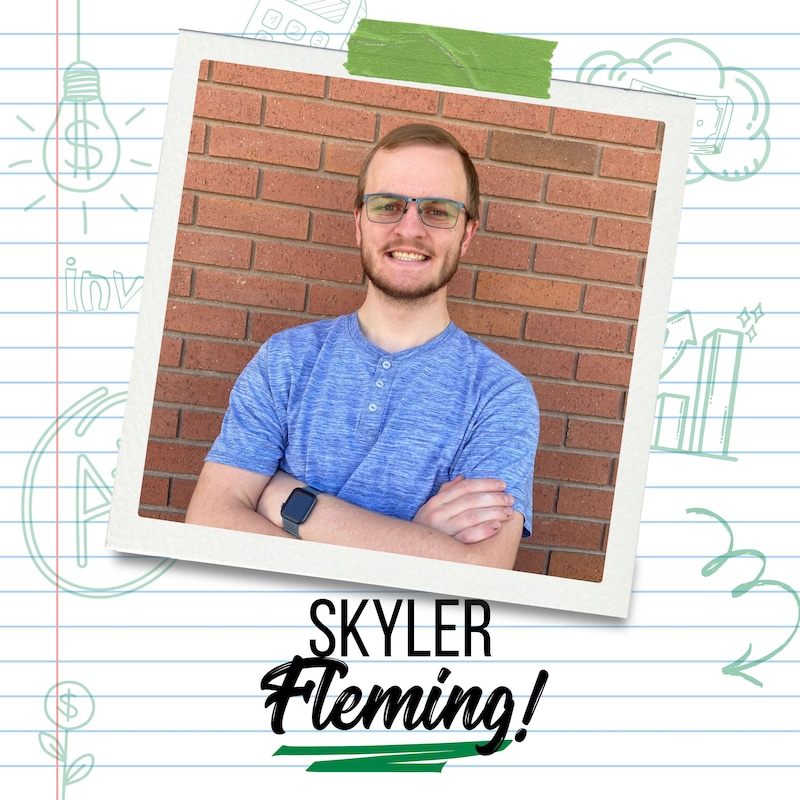
Welcome to Don't Retire Graduate, the podcast that asks you what you want to be when you grow up so you can graduate into retirement with a passion and a purpose. I'm your host and valedictorian, Eric Brotman, and this is unbelievably our sixth season of the show. We'll be bringing you interviews with amazing guests every other Thursday and on alternating weeks we're hosting a segment called Diary of a Financial Advisor, which we know you'll all enjoy. So please subscribe and check out our all new content every Thursday. Today I'm pleased to be joined by Skyler Fleming. When Skyler started working at a credit union call center, he didn't realize how much he would grow to love learning, talking and teaching about money. Now he finds himself working to become a CFP practitioner and helping people through his podcast, Money Talk with Skyler Fleming. Along with financial coaching with over 150 episodes and counting, he he's learned so much about the importance of talking about money and he's excited to continue to learn and teach about money.
Eric Brotman [:We're going to learn a few things from Skyler today. Skyler, welcome to the show.
Skyler Fleming [:Yeah, I'm excited to be here. Thanks for having me, Eric.
Eric Brotman [:So the first time we met, I was a guest on Money Talk, which was a wonderful opportunity. Tell us how you came up with the concept for the podcast and how it's changed the way you think about money and frankly, the way you teach.
Skyler Fleming [:Yeah, so many times, like you mentioned, I worked at a credit union and I found myself having simple conversations with people and they would understand what we were trying to explain. When they called in, they were super frustrated. I worked up to a supervisor, so I was getting those really angry, like mad phone calls. And so many times it was a simple, hey, here's how your credit card interest works. If you pay this balance by this date, there's none of it. And they're like, oh, I didn't even know that. And to me, you, now that I've been through this for a couple years, it's like, how do you not know that? But it's because we're not talking about it. So that's what led me to just want to create a place where we're having simple and easygoing conversations to help people understand some of those basics about finance.
Eric Brotman [:So you're doing financial coaching and is that for individuals? Is it for groups? Are you doing a lot of public speaking or is this one on one coaching with folks?
Skyler Fleming [:Yeah, a lot of it's one on one. Coaching sitting down during a 30 minute to 60 minute session, talking through some of their challenges, what they're going through, some of their goals, especially because I've found that there are some of those base level things that they may not need like a full scale professional financial plan. They may not be in that situation entirely, but they could use the help of someone who knows how to guide them along the path. And I think that's where one on one coaching has been super valuable for the people I've been helping.
Eric Brotman [:All right, now you, you in your coaching and in your work, you have something you refer to as the seven money talking points. And I'm going to put you on the spot. I'm not going to ask you to rattle off all seven at once, but I'd like to go through them and see if there's, if there's some synergies in the work we're doing between the financial planning and the financial coaching and also see if there's some aha's here for, for some of our listeners who are at different stages of their money journey as well. So, um, so let's start with the first one and we'll, we'll go through these one after the other and you can spread some wisdom.
Skyler Fleming [:Yeah, my first money talking point is what will I do in an emergency? And this is super foundational for everybody because that's the one thing that can throw off any semblance of a plan that you have is what will I do in an emergency? Because if you don't know, then that small little flat tire that you got is going to derail everything you've been trying to save for, for the past few months or a couple years. But I love to say that if you have an emergency fund in place, it turns emergencies into slight inconveniences. So I don't know, Eric, maybe you can answer that question of the first money talk point. What do you do in an emergency?
Eric Brotman [:Oh, I love that. You flip the script on me now. Now you've got me on the spot on my own show. I love that. Skyler. Actually, I usually don't like rules of thumb. I think rules of thumb are like, they're like garments. If they're one size fits all, they fit no one.
Eric Brotman [:Think hospital gown. It's not flattering on any of us. But that said, there are some best practices. And when it comes to emergency fund funds, there are really two variables that matter. One is the monthly spend for your household. What do you need to make the monthly bills work? And the Second is, is there one or two incomes in your household? Because the amount of an emergency fund gets significantly larger if you're in a single income household. And the reason for that is that some of the emergencies, you know, you mentioned the flat tire and it could be a washer and dryer, it could be something at the house. It could also be a period of unemployment.
Eric Brotman [:And so I think if you're going to stick to a rule of thumb, if you have two working spouses, each of whom makes similar money, you should have at least three months of your net monthly spending sitting in cash someplace that's easy to get to. It doesn't matter what the interest is. It doesn't matter what you're earning on it. It just matters that you can get to it. And I think if you're in a single income household, that should be six months and sometimes even more because if you have a job loss during that time and you're the only source of income for the household, that could be more than just an inconvenience, that could be a tragedy if you're not careful. So that's the way I would treat that. But I'm in agreement with you. We're one for one.
Eric Brotman [:Skyler.
Skyler Fleming [:Yeah, that's awesome. And I like what you said there, that it really depends on your circumstances. And I think that's what you're going for with those rule of thumbs is you can't just like blanket apply the advice because if you have two incomes and having six to nine months, that may be way too much. And then you could get concerned about what interest rates, that money making, the opportunity cost and stuff like that. So I love that answer because it helps people tailor it a little bit. I'll go ahead and dive into kind of the next two if that's all right.
Eric Brotman [:Yeah, yeah, go for it. Now I feel like I'm being quizzed. I love this. All right, I'm ready.
Skyler Fleming [:Awesome. The next two money talking points are kind of lumped together. Well, there's three that are lumped together. I'll say all three. It's how am I making money, how am I spending money and how am I saving money? And this is trying to get people to think through their cash flow. Where is their money going? Where is it coming from? Because without tracking, we're kind of honestly helpless when it comes to our finances. Because if you're not tracking it, you don't know where it's coming from and you don't know where it's going. I like to tell people Even before they begin budgeting to say, just track your expenses.
Skyler Fleming [:You're going to naturally find some places that you can cut back and adapt naturally, which will feel way less restrictive. One of the early stories, I started tracking expenses when I was in high school. So I've been, I've been a huge money nerd for quite a while. And I remember telling all my friends, hey, guys, I don't think you realize how much we're eating out and how much we're spending eating out, which I think happens to be usually the number one thing for most Americans is eating out and food. But I told all my friends this and they said, wow, I bet our number's similar because we were always going out to eat together. So we were able to easily, together naturally figure out a place where we could save some money. Now, we did enjoy eating out together. It was our time to hang out and be social.
Skyler Fleming [:So it wasn't an area we cut back completely. We realized, hey, this is how we like to spend money. So we were okay with it. But if you're in a situation where you're constantly going out with your friends or you're worried about telling your friends that you want to cut back and begin budgeting and you think they're going to make fun of you or something, use it as a way to position yourself to say, hey, let's as a group, save a bunch of money. So I think that's why it's so important to start thinking through how am I making spending and saving money so you can see where it's actually going. And it's going to make that budgeting process feel a whole lot less restrictive.
Eric Brotman [:So I love that. First, first of all, I think it used to be food. Now it's streaming services because people have eight of them not realizing that they add up. That to me, that's mind numbing when you start looking at all of them that some people have to. I do have to get like a buzzer on the show because you use the B word and this is a family friendly show and we never say the B word on this show. And you said, he said budget. I hate budgeting. I despise budgeting.
Eric Brotman [:And yet even a chapter in my own book talks about budgeting because it matters. But it's an awful process. And partly it's awful because no one can stick to it because life happens. So. So I love the idea of how do you make money, how do you spend it and how do you save it? I think probably I would encourage the thought of Reordering that to how do I make it, how do I save it and how do I spend it? And the reason I'll throw out that dichotomy and we can talk about it is if you figure out how you're making money and whether that's a single employment, whether it's self employment, whether it's side hustles, whether it's gig work, whatever it is, you figure out how you're making money and what's coming in the door. If you figure out how you spend it before you figure out how you save it, you're saving what's left over after you've spent. If you figure out first how to save it, then you're doing what I think is frequently called paying yourself first, which is figure out what you need to put aside 10%, 15, 20, whatever it is in your situation, if you can save that, invest it, do something positive with it for the long term, then you can figure out how you're spending what's left, sort of that 80% or 75% of what you make. So that is the one spot where I think we could debate the order in which these go, because I agree with you, they go hand in hand.
Eric Brotman [:But the spending, once you've hit your saving target, if you know you need to put away 18 cents on the dollar to get where you want to go from a financial independence standpoint, what you spend the other 82% on, I legit don't care. And I'll tell people that if you like to dine out, you can go to Ruth's Chris once a week or Applebee's twice a week. Whatever it is, whatever your thing is, I don't care as long as you are able to save and invest that portion that you need for your own independence and you and you don't stray from that path. How you spend the rest of it, I don't know how much it matters. What say you?
Skyler Fleming [:Yeah, that's a fantastic way to look at that, is swap those around. And it's kind of the anti budget approach that people will hear about thrown around on the Internet is make sure if you set up all of the savings portion up front, automatically use automation, because that's a huge helper that I love to tell people about. I was recently on my podcast actually in the episode that you and I did, I was doing the separate segment where I was talking a little bit about automation and I think people underestimate the power of a direct deposit to do that savings piece that you were talking about. First, you can technically send a direct deposit to an IRA or something like that. So you can set, like if you don't have a 401k that's automatically coming out, you can set up an IRA to become your direct deposit retirement account. And by doing that saving first, like you mentioned, you're making it easy to choose to spend the rest of the money. So I love that. That's a fantastic idea.
Skyler Fleming [:Maybe I should swap those around. But I like saving first because then you don't have to worry about it as much.
Eric Brotman [:Yeah. And so how do you do the tracking? You know, I've been a fan of Quicken. I've been using Quicken since it came out in the late 90s, I think. And you know, for a lot of business owners use QuickBooks and that's become the gold standard, I think, for budgeting for businesses. I use Quicken for my personal financials and have suggested it to other folks. Do you like that tool or do you. Are you a yellow pad guy? Are you a spreadsheet guy? What is your way to do it?
Skyler Fleming [:Well, when I worked at the credit union, we had so many people calling with problems with Quicken. So I think it soured me to that tool. But I stay away from Quicken and those sort of tools. Honestly, I'm a huge spreadsheet kind of person because I like it to be customized to how I like to do it. So that's not. That's usually where I tell people track it, but maybe not in the same way as I do because I know that can be really tedious and hard for some people. So there's a lot of great tools out there. One that's on my website, it's my budget coach.
Skyler Fleming [:It's a tool I do coaching through. You can sync your transactions right into it. And I think that's what I want people to look for is can you sync everything into it automatically? And it can. I do. I like manually tracking because it allows me to see, visualize and feel the spending a little bit. Because that's kind of the toss up between using plastic and using cache is that feeling. But me manually logging them gets that feeling a little bit as well. So I like to encourage people to consider manually logging them.
Skyler Fleming [:But if you have automatic tracking set up, whether it's all sorts of different tools like Monarch Money and whatever, there's a lot of them out there. Make sure you're setting a specific time to review the transactions, make sure they're categorized properly and everything else that goes along with that. Because if it's automatically set up to sync and just flip, forgotten about, like what's the point? Then you're just spending money on another subscription to track your money. So you have to make sure you're actually going through them and setting specific times to talk about it.
Eric Brotman [:Well, I certainly like that. I like the automation idea. I think that's important. The categorization does matter. You know, I do think that doing it manually has its merits and I'm dating myself now. Skyler. I used to not want to do online bill pay and now I do because it's the way we live and it is what it is. But I always wanted to write a check because I felt it, because it forced me to say, is this a check worth writing? Is this something I want badly enough to write a check? And I think young people today are not.
Eric Brotman [:They're not having that experience. It's a swipe and forget if you're not careful. And so I do think there's something to be said for the manual piece or at least the manual reconciliation piece. These systems also help you when it comes time to do your taxes too, because it'll capture things like charitable donations or mortgage interest or other types of things if you do them right. Capital gains. So I'm a big fan of the tracking. I'm just not a big fan of the budgeting. So we're in decent shape here though.
Eric Brotman [:All right, well, let's move on. What's number five?
Skyler Fleming [:Number five is do I want to pay off all of my debt? And this is kind of a throw up to get people to think about what would it be like if I didn't pay it off. Like my wife and I right now on her student loans, we have a plan in place to pay them off by the end of 2026. And we're about to come into some extra money with our tax return. And thankfully we have several goals and plans in place that we're able to say what do we want to throw this money towards? But this money talking point allows us to say, do we want to pay off the student loans early or pay them down early or do we want to write out the plan because we know what we're doing, Opportunity costs between other places to put the money. So I love people to ask this question because sometimes people can get stuck in the way of I need to pay off all of my debt no matter what, and sometimes you may not need to. So I love people to go back and forth on kind of the thought process of what is it like to have debt and should we keep it or not?
Eric Brotman [:This is one of my favorites so far, Skyler, because this is something that we've wrestled with as professional advisors. You wrestle with this with clients on a regular basis because on the one hand you say, well, if you've got a long term mortgage at 2 and 7/8% and you can go earn 3, 4, 5, 6 somewhere else, whatever it is, over time you, the arbitrage opportunity is you're making more money by having the debt stay in place. What's interesting now though for me is I'm in my 50s and having done this for over 30 years, I'm now feeling a very different way about debt and that is that I am now personally and I unabashedly so I'm paying mortgages down real fast to be done with them real soon because of the psychology of it. Because the psychology of it is so powerful that even though financially could I eke out additional income? Yes, absolutely. But there's something to be said for. And Your plan for 2026 I think is great. Mine's 2028. By December of 2028, I shouldn't owe anyone a penny for anything.
Eric Brotman [:That is a first time in my adult life. And to me, yes, I'm paying down something that is a low rate, favorable everything. I'm not doing it instead of funding, for example, the savings rate though. So you remember we talked about do you need that 18% or whatever. I'm doing it in excess of my savings rate. So I'm not cannibalizing my own retirement planning or my own path. So I think, I think there's a. Again, the answer is always, it depends, right? Everything we.
Eric Brotman [:Every question somebody asks, it's always telling me about your circumstance, how predictable is your income, how you know, are there windfalls coming, are there other things that are on the horizon? So I'm just transparently telling you that for many, many years I was like the only reason I have a 30 year mortgage is because I couldn't find a, a 40 year mortgage. Because I always wanted to have that low rate long term. It made sense to have her cash flow. And I think in my 20s and 30s cash flow was king. It was real important because things were tighter as you get older and as you earn. Hopefully in most cases you earn a little more money, you're in a position to have a little bit more abundance. And then you can say, well do I, do I want to just continue this plan and pay my mortgage till 2046 or whatever. In the heck it is, or should I be done and really do it? And I will tell you this, the psychology of being debt free, particularly when there's going to be an income change, whether it's retirement in a traditional sense or whether it's going part time or whether it's taking a new gig that might pay you less for whatever reason, being debt free is, is something that I think people really underestimate the power of feeling that way.
Eric Brotman [:So I love where your head is on this. I think you're exactly right that, that sometimes it makes sense. I will tell you, I don't know what your student interest rate is, but if you do have a tax refund coming and you don't need the money for some other major pressing project, writing that last check is going to feel like a high five moment in your household. So sometimes it's. Sometimes it's not just about the money, it's about the high five really.
Skyler Fleming [:Well, and that's what you said, that it depends answer. You said, what are your circumstances? And it's also like, what's your psychology? Because for me, like my wife and I were both still, we're in our late 20s and for us it's, let's stretch out those rates. Let's. We have some that were very low from her undergraduate years and that one's super easy to say, yeah, we're keeping that one. It's at like 3% or something like that. It's not super high right now and we just want to stretch that one out. It's going to be the last one we pay off where thankfully, once you get your psychology in order, you can begin to play that math game like we were talking about. Or like you mentioned, if you have a mortgage that's so low and you can get the money somewhere else that makes more.
Skyler Fleming [:It's kind of an obvious answer if you're in a situation where that's okay. But that it depends answer is completely different for everybody. I've been trying to tell my father in law for years they have one of those super low rates. Their mortgage payment is less than my wife and I have ever paid in rent since we've been married. So I'm like, what are you doing putting more money towards that. It's so easy. You have so much money left over after that payment. But he's always been just completely against debt, so he's always wanted to throw extra money towards it.
Skyler Fleming [:So it really depends both mentally and circumstantially what you're dealing with.
Eric Brotman [:And and what's funny is I, I always believed the way you're believing. And now that I'm probably your father in law's age, I am now understanding where he's coming from in a different way. And it really is there, it is a mindset. And I don't think there's a right answer or a wrong answer, as long as it's truly excess and it's not cannibalizing the other priorities and things that you have. Don't be one of those people who work so hard to pay the house off that you never take a vacation because life is still a short, short thing, like you should still be living. You know what I mean? So I think it just does depend on the circumstance. But I love that, that this debate, sometimes not debate, but discussion, does a lot of its psychology and a lot of its age. A lot of its age.
Eric Brotman [:I, I, I was squarely in your camp 25 years ago, and now I'm like, well, you know, there's some, some nuance there. And I'm sure 10, 15 years from now I'll feel even more one way or the other. I think that's a natural thing. Let's move on to number six. I love these.
Skyler Fleming [:Yeah, number six is what do I want my retirement to look like? And for my wife and I, this is a discussion for us about when do we want to retire? Because thankfully we're young enough and getting started early enough that financial independence is a possibility. We're looking heavily at what's called coastfi, where you get to that point where it'll grow to what you need at a certain retirement age. And I love this question because it requires people to look beyond their working years. Because I said on our episode in my solo section was work is required, but also stopping working is very likely going to be required, whether it's due to physical ability, mental ability, because you just flat out don't want to work anymore, you're going to have to have some point where you're moving on from work. And what do you want that to look like? It's also a fun conversation to have, especially if you're married.
Eric Brotman [:Yes, yes. Ideating on what you want that to look like, you're certainly on the right show because we talk about this every week about what retirement is going to look like, you know, and even before, what is retirement look like? It's, do I even want to retire at all? Based on the definition, you know, the definition we've been using is that retirement is not the absence of work. It's the absence of needing to work. And I think if you're financially independent, you're retired. Even if you're working because now you're doing something you love to do because you want to do it, that is completely different than punching a clock because you got to make. You got to make bills. You know, that is a different experience. And for people who are financially independent and continue to work, it's because it's part of their lifestyle, it's part of what they love to do.
Eric Brotman [:It's part of who they are, it's part of their identity. So what did you and your wife come up with? Why don't I put you back on the spot? And what. I mean, you guys are very young people. You're talking about getting to financial independence early, but then sort of continuing to, to feed and prime that pump a little bit. What. What does it look like for you?
Skyler Fleming [:Yeah, our goal right now, we're aiming, I think, five to six years to be at coastify, which, like I said, is when you're, when your portfolio, your investment allocations get to a point that through compound interest, they're going to grow to that financial independence number by a certain age. And what this allows you to do is it allows you to take that 15, 20, 25% savings rate and get it back either in the form of working an easier job, working less, or you just have more money to spend and have fun now. So the toss up is my wife likes her job. She just started as a pa, so she wouldn't want to just flat out quit. But she also doesn't want to race to financial independence, and I don't either, because we enjoy going on these trips. Thankfully, we're in a position where we have good incomes that we're able to use here and now, but we want to strike that balance. But we also want to hit financial independence and retire early. So it's really that balance.
Skyler Fleming [:And coastfi has landed on that point for us where we're able to say, let's race towards this goal because it's a heck of a lot easier to get to 200 or $300,000 than it is to that one and a half, $2 million number. But then once we get to that 300,000, we can let it grow until we're ready to be financial independence. And the nice thing is, is anything extra you put in that just brings that date a little bit closer. So it's kind of striking. This point where you can sit back and relax is kind of what we're going for.
Eric Brotman [:Okay. All right. Well, we could debate the math, but not the merit. The merit is, is if that's what both of you want to do, I'm certain you're going to get there. And once again, I think the question is or the answer is it depends. Right? There's. There's going to be folks who. Who say that's a brilliant strategy.
Eric Brotman [:We want to do that, and there's other folks who say that I like that strategy, but we're going to do it a different way. And I don't. What's nice is there's not one answer. You know, this isn't a yes, no discussion. It's a. It's a. There's a lot of shades in the spectrum of ways to do that. So.
Eric Brotman [:So we're on number seven. Yes, we're on the final one. The final one. I don't have a drum roll of any type, but.
Skyler Fleming [:But what is that? I was gonna say a drum roll, but I think your producer would hate us hitting our desks, so.
Eric Brotman [:Well, I'm prepared to do it if you think it's the right thing to do. Now, he might have a drum roll in the background, but. But. So. So what is number seven? Aha. There's the drum roll. That's what we were waiting for.
Skyler Fleming [:Number seven is what are my big money goals? So these are the. The goals that you're going to do between retirement and this is just kind of that dream conversation that's awesome. Houses or even if you're single and dealing with money, just saying, what do I want to do with my money? That's big and fun. Is it some sort of large charitable contribution you want to do at some point in your life? Is it maybe contributing to your community in a big way? Helping build a park, things like that? Is it going on a giant vacation? Is it paying for your grandkids, college? Stuff like that, where it's like, this will take a sizable amount of money. And it could be the kind of thing that would detour you on that retirement plan if you're not planning for both of them. Because if you have time, there's definitely ways to. And opportunities to make your money work in these different situations. So identifying these, especially 10, 20 years out, is going to give you a lot of time to kind of make things work and find the opportunities to make your money and do what you want it to do.
Eric Brotman [:So in a case like that, because I like the idea of planning for major financial events, especially if they're positive events, things that are really exciting and fun or meaningful to you? Are you practicing asset segregation? Are you holding these funds in different places so that they're literally segregated for different purposes, where one is the financial independence money and one is the project money for whatever the big goal is?
Skyler Fleming [:Yeah, I do these on a spreadsheet basis in our own personal finances with my wife and I, I keep track of it on a spreadsheet because I don't look at our bank accounts all too often. I look at the spreadsheet a whole lot more, and I know that this clump of money contributes to these accounts like our IRAs do. These few things that we have wrote down, our savings account does, these other categories we have wrote down. So I don't do it on an account level, but it's certainly something I recommend. Things like buckets and different sorts of accounts that you can divide up money into I think are super helpful for people to say that money is named for this specific goal. It makes it a whole lot easier to tap it when that emergency comes along because you don't want to touch it. Like if you have a bucket that's named going to Europe or child's grandkids college fund, you're not going to want to tap those funds because you know it's going to impact a different goal or it's at least going to put some friction in place and make you think about it first. And I think that can be a big deal because maybe you do need to touch the money, but at least have the conversation around, why am I going after this? And what does it actually mean to that goal?
Eric Brotman [:So it sounds like to sort of wrap this in a bow, you've got seven, seven talking points that you and your wife talk about. And certainly there are situations where any, any couple, any significant others where you, you want to have those talking points. For somebody not married or somebody not in a. In a relationship like that, who do you talk to? Yeah, I mean, self talk is one thing, but this feels like something that you collaborate on. Do you. Is that where coaching comes in?
Skyler Fleming [:Yeah, it's certainly where coaching comes in. I like to call my community the money buddies. I consider it like a gym buddy. So find yourself a money buddy and work together on these sort of goals. So you can sit down, let's say, hey, let's have our money talk meeting once every third Thursday or whatever it might be, and you and your money buddy get together and say, hey, I'm struggling through this financial goal. Or I'm trying to figure out number four. Of how I save money. What do you do for it? So I think finding an accountability partner, I call them money buddies, and finding someone who you can have these regular conversations with is going to help people a ton.
Eric Brotman [:I like that a lot. In fact, I have an accountability partner who I once a month meet with about a lot of things, professional things and personal things. And she's an important part of my planning process. And so I do think an accountability partner makes sense. I don't know that I'd refer to her as my money buddy, but. But that's fine. That's a. More of a.
Eric Brotman [:More of a nomenclature kind of thing. So we are almost out of time. I. I have to ask you, and, and you started to answer this when you talked about what, what, what coastfi is for you, but what do you want to be when you grow up?
Skyler Fleming [:Yeah, I was, I was going to go down that route of financially independent because I think there's so many things that my wife and I enjoy doing. I like playing video games. We like traveling. We like going on road trips. We like hanging out with our dog. There's so many things that I think I could say I want to be. And I think the opportunity to do whatever we want comes in that financial independence space. So it's something we're pursuing very intently.
Skyler Fleming [:My wife and I love to say that we're intentional people. It's what we try to be. So when we grow up, we definitely want to be financially independent. So we have so many opportunities is how I'm going to answer that question.
Eric Brotman [:Well, that is a great answer, and I have no doubt that you're going to get there. How can folks learn more about you, get in touch with you and read about some of your resources, check out your podcast and maybe your coaching if they'd like.
Skyler Fleming [:Yeah, it's all Money Talk with Skyler Fleming. You can search Money Talk. You can search Money Talk with Skyler Fleming. My website is moneytalkwithscuylerfleeming.com there's quick ways to get in touch with me. I have an email newsletter. My resources, all those sort of links are at the top. I love to offer people a free money talk. Like if you just want 15 minutes to talk with somebody, sign up for a time and let's have a quick conversation.
Skyler Fleming [:I'm willing to be other people's money buddies. And of course, the podcast have great guests like you on Eric. We talk about money every single week on Thursdays, so be sure to check that out.
Eric Brotman [:So now people have to check out both your show and my show on Thursdays, huh?
Skyler Fleming [:Yes.
Eric Brotman [:That's a full day waiting to happen in the podverse. I love that Thursdays are usually where.
Skyler Fleming [:People don't come in. It's usually Monday, Wednesday, Friday. That's why I like Thursday shows.
Eric Brotman [:Well, you know, this. This was great. I love your. I love your ideas. I love your energy. I have no doubt that you're on your way to financial independence and you're helping other people get there and keep spreading the good word and doing the good work. That's great stuff. Thanks, Kyler, for being here.
Skyler Fleming [:Yeah, thanks for having me.
Eric Brotman [:I'd like to thank everyone for listening and watching today. If you enjoy our show, please be sure to share it with family and friends so they can join you on your journey to financial freedom. And please leave a review or a rating on your favorite podcast platform. Those are priceless to us. We'll be back next week with another entry in our Diary of a Financial Advisor and in two weeks with another engaging guest. For now, this is your host, Eric Brotman, reminding you, don't retire. Graduate.
Skyler Fleming [:Securities offered through Kestra Investment Services, llc.
Eric Brotman [:Kestra is member finra, sipc. Investment Advisory Services offered through Kestra Advisory Services, llc. Kestra as an affiliate of Kestra is. Kestra is or Kestra as are not affiliated with Brotman Financial or any other entity discussed.

