Shownotes
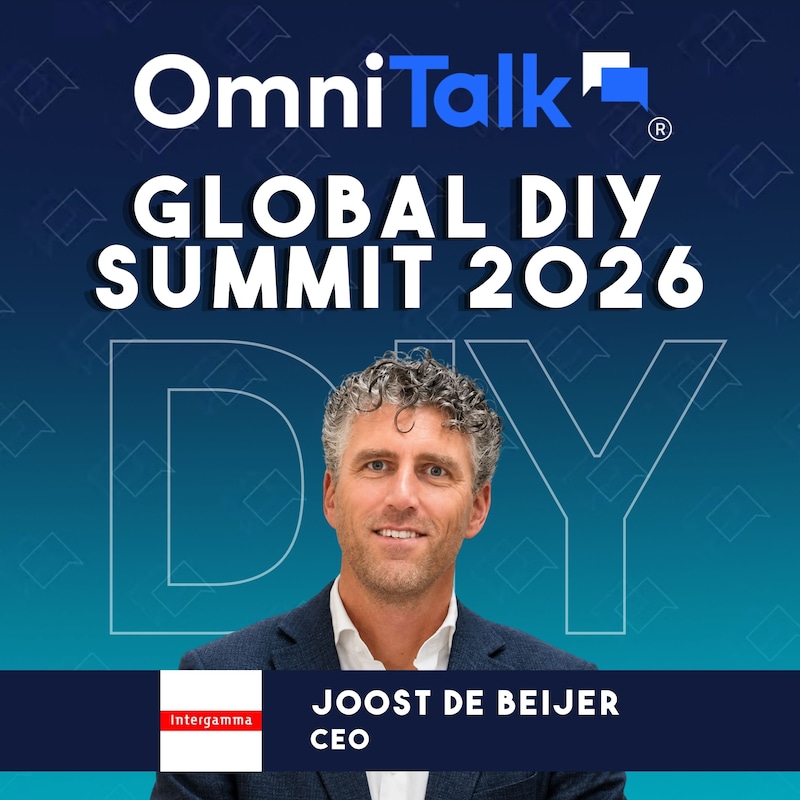
In this Omni Talk Retail interview, recorded live from the Global DIY Summit 2026 in Amsterdam, Chris Walton talks with Joost de Beijer, CEO of Intergamma, about what makes DIY retail in the Netherlands unique and how the company is evolving its omnichannel strategy to meet changing customer expectations.
Joost explains why Dutch consumers prioritize convenience, how smaller homes and gardens shape the market, and why nearly every DIY project now begins online. He also shares how Intergamma leverages its store network to support fulfillment, click-and-collect, and personalized customer experiences.
The conversation explores the role of stores in modern DIY retail, the importance of connecting digital inspiration with in-store expertise, and how sustainability is becoming both a business opportunity and a long-term strategic priority.
Key Topics Covered:
• What makes Dutch DIY retail different from the U.S.
• Why Intergamma believes DIY retailers sell solutions, not products
• How convenience shapes the Dutch home improvement market
• Why nearly every DIY project starts online
• Leveraging stores as fulfillment hubs for bulky products
• The future of omnichannel DIY retail
• Connecting online inspiration with in-store expertise
• Sustainability as a retail growth opportunity
• Expanding sustainable assortments and reducing waste
• How Intergamma differentiates its Gamma and Karwei banners
Thank you to Vusion for supporting Omni Talk Retail's live coverage from the Global DIY Summit 2026 in Amsterdam.
This podcast uses the following third-party services for analysis:
Podcorn - https://podcorn.com/privacy
Transcripts
Hello, everyone.
Speaker A:This is omnitalk Retail.
Speaker A:I'm Chris Walton coming to you live from the DIY Summit in sunny Amsterdam.
Speaker A:And I'm here courtesy of Vuzion and also the folks at the DIY Summit.
Speaker A:Now, joining me to start off my coverage is Joost de Bear.
Speaker A:He is the CEO of Inter Gamma.
Speaker A:Joost, thank you for joining me.
Speaker B:Great to be here.
Speaker B:Thank you.
Speaker A:Yeah.
Speaker A:Tell us about yourself, your background, and also about what Intergama is for those back home that maybe aren't as familiar with it.
Speaker B:Yeah, sure, sure.
Speaker B:So, for my background, I've been working with Intergama, which is a DIY organization, for more than four years.
Speaker B:And then before that, I also worked in other retailers, and I worked in total around 16 years in DIY retail now.
Speaker A:16 Years in DIY retail.
Speaker B:Absolutely.
Speaker A:Wow.
Speaker A:Okay.
Speaker A:And so what brought you to Intergama to begin with?
Speaker A:Like, what alert you to join?
Speaker B:Well, it's actually the.
Speaker B:It's the DIY sector, because I really love the DUI sector.
Speaker B:I've worked in other retail sectors as well, like the department stores, but I just love the DUI sector because of the size of the stores, the people who work on the stores who are really like, doers.
Speaker A:Yep.
Speaker B:So I'm really passionate about that.
Speaker A:Are you a DIY yourself?
Speaker B:Well, in all fairness, not really, no.
Speaker B:No.
Speaker B:Well, the thing is, I like to work in the garden, and that's basically it.
Speaker A:So different aspects of DIY depending on how you do it.
Speaker B:Yeah, exactly.
Speaker A:The DIY business is pretty big when you think about it.
Speaker A:The whole improvement, lawn and garden space, it's really big.
Speaker A:How do you find it different from the department store business?
Speaker A:Because I think if I was to do.
Speaker A:I've got some apparel and department store background, home furnishings background, I would think I would like the home improvement business or the DIY business more, too.
Speaker A:What is it that attracts you to it now?
Speaker B:Well, indeed, there's a big difference between especially apparel and diy, for sure.
Speaker B:Basically, because the stock turn also, and that's even if you look at food, and the stock term is extremely high, and the innovation is most of the times a bit higher at those sectors than compared to the DIY sector.
Speaker B:But what I like most about the DIY sector is, as I said, there's really the people.
Speaker A:Right?
Speaker B:Yeah.
Speaker B:I mean, the people in the stores, as I said, they're really doers.
Speaker B:They love selling the product.
Speaker B:And the good thing about DOI What I really like, actually, is that you're not selling a product, you're selling a solution.
Speaker A:That's really interesting.
Speaker A:I never thought about that.
Speaker A:Yeah.
Speaker A:And you're selling the solution that's best for the customer in that moment.
Speaker B:Exactly.
Speaker A:Which could be a different solution depending on who that person is and what their project is.
Speaker B:Right, Exactly.
Speaker A:That's a really good point.
Speaker A:Okay, so I want to click into the Netherlands here.
Speaker B:Yeah.
Speaker A:So, Jos, what is it about the Netherlands that makes the DIY business different here than say, in the US or even the rest of Europe?
Speaker B:Yeah, a couple of things.
Speaker B:I would say so if you look at the Dutch consumer, there's a couple of things are different compared to the U.S. okay.
Speaker B:One of the things which is extremely important, that the houses in the Netherlands are relatively smaller than compared to the US and therefore our gardens are also relatively small.
Speaker A:Okay.
Speaker B:Because in the Netherlands, I know square meters, but in the Netherlands, a garden is around 200 square meters and in the US is 800 square meters.
Speaker B:So it's four times as big in the US than it is in the Netherlands.
Speaker B:And garden is a large category within diy.
Speaker B:So therefore, let's say the average spent on DIY in the Netherlands is less than it is in the us so that's.
Speaker B:That's one.
Speaker A:That's one.
Speaker B:Secondly is that in the Netherlands, we don't like to travel a lot, especially going to stores.
Speaker A:Okay.
Speaker B:And the thing there is that 20 minutes drive is already considered too far.
Speaker B:So we have a very dense store network in the Netherlands, and we have relatively smaller stores compared to the US Because I think in the US you have all these big.
Speaker B:The big boxes.
Speaker B:And I can imagine that people in the US would like to travel like 30 minutes or so to go.
Speaker B:Go to such a store, which is more like a destination type of store, and we are more like a convenience type of store.
Speaker A:Right.
Speaker A:And how much of that is a factor of transportation too?
Speaker A:Because I'm always amazed at the number of bicycles that are running around here too.
Speaker A:Is that because, like, you know, home improvement is, you know, fairly, you know, hard to carry and move around, and yet, you know, you don't have the transportation to do it or what drives that difference?
Speaker B:Well, I would say that, I mean, indeed we have a lot of bikes.
Speaker B:We even have 24 million bikes and only 80 million people.
Speaker B:So we are a country that loves to ride a bike.
Speaker A:One in four.
Speaker A:Yeah.
Speaker B:And exactly.
Speaker B:If we go for, like the convenience type of shopping, like the small DIY jobs, then indeed, people can go by bike.
Speaker A:Okay.
Speaker B:But most of the times, in all honesty, the Dutch people also just go by car towards this like DIY store.
Speaker A:Got it.
Speaker A:So they still just don't want to drive 20 minutes.
Speaker B:Basically.
Speaker B:That's it.
Speaker A:Okay.
Speaker A:Wow.
Speaker A:Interesting.
Speaker A:So how do you lead through all those dynamics and what do you think are your main points of differentiation in the business that you run?
Speaker B:Yeah, so that's.
Speaker B:We actually run two formats in one country.
Speaker A:Okay.
Speaker B:Which is quite complex, of course.
Speaker B:And in Atlantis, you have six DOI formats.
Speaker A:Wow.
Speaker B:We are mid box.
Speaker B:And let's say of the six formats, two are like the big box player, a big like Home Depot and Lows.
Speaker A:Okay.
Speaker B:And the other one which I operate, which two is more the mid box, and there's another two to mid box players.
Speaker B:So to differentiate ourselves, we also need to differentiate the two formats, and we don't want to do that at the expense of the other.
Speaker B:So there's one format called Gama.
Speaker A:Okay.
Speaker B:Which is the number one also in the Netherlands.
Speaker B:And there we differentiate ourselves more on the constructive diy and in the carve store, which is the number four in the market, we differentiate ourselves more on the deco side.
Speaker B:And then really taking it really one step further.
Speaker B:Also going to people's home to measure, for example, window decoration.
Speaker B:And we can also install the window decoration.
Speaker B:So that's more next to the fact that it's a DIY store.
Speaker B:It's also a deco surface concept.
Speaker A:Got it.
Speaker A:So basically here it sounds like you're organized more by the job that has to be done in terms of how the stores are constructed and how they.
Speaker A:And what they're served to function now.
Speaker B:Exactly.
Speaker B:But that's how we want to differentiate ourselves, because we are still a, let's say, DIY store where we want to sell DIY products.
Speaker B:But if you want to stand out,.
Speaker A:It goes hand in hand.
Speaker B:Exactly.
Speaker A:Okay.
Speaker A:Got it.
Speaker A:Okay.
Speaker A:One of the other reasons I reached out to you along that line of thinking, because I've never heard that answer, that type of answer before, is you also have a pretty big commitment to the idea of omnichannel, which is the name of this program.
Speaker A:Omnitalk.
Speaker A:It's a word that I'm very, very.
Speaker A:I feel very strongly about that.
Speaker A:I think it's still very relevant.
Speaker A:Where are you on your omnichannel journey and what work do you still think you need to do to continue to advance it?
Speaker B:Yeah.
Speaker B:So if you look at our omnichannel approach, I think a couple of things which might be interesting.
Speaker B:So the Dutch are very digital savvy, and therefore almost every, let's say, DIY project starts online.
Speaker B:So you need to be there online with the right information, the right inspiration to attract the customer towards your store.
Speaker B:Or if the customer, he or she says, well, I don't want to go to the store.
Speaker B:I want a real only online approach that we can also deliver to your home.
Speaker B:And what we have done is that we have not yet same day delivery, but that's something we are thinking about.
Speaker A:We're moving towards that too.
Speaker B:Exactly.
Speaker B:That's more like the next step.
Speaker B:But we have a couple of options.
Speaker B:So you can have it delivered at your home, you can click and collect it in the store.
Speaker B:And that's something you can actually do on the same day, of course.
Speaker B:And what we're also doing with more like the bulky products, because we also sell bulky products.
Speaker B:Right now we're using our store network to deliver towards the customer.
Speaker B:So instead of from a central warehouse delivering bulky products, we have a.
Speaker B:Basically we have 160 like Hammer stores in the Netherlands.
Speaker B:And from those stores we also offer like the plasterboards, the.
Speaker B:I mean, all these bulky products that we can transport towards the customer.
Speaker A:Got it.
Speaker A:And so that's where you are today.
Speaker A:Where do you still want to go?
Speaker A:Where do you want to take that Omni Channel experience even further as you look forward?
Speaker B:Well, I think it's more that for me, it's more.
Speaker B:We should definitely use the power of the store.
Speaker A:Yep, that's what I thought you were going to say.
Speaker B:That for me is so extremely important.
Speaker B:And that's how we also, if you look at our website, as I said, it's really about information and inspiration and then attract them towards your store.
Speaker B:Because some of the.
Speaker B:I mean, there are still customers who really want to see a person and ask, this is my problem and this is my solution.
Speaker B:Do you agree that this is the.
Speaker A:Correct solution, but you think there's still an opportunity to connect that conversation that happens at home digitally?
Speaker A:You say most of the conversations start at home digitally for something that you need to do or something you want to accomplish and bringing that into the store in a way that is even more personalized to help the associate or the staff member in the store help that customer that's coming in and enabling them to help them in a way where they're able to find.
Speaker A:Give that customer the help that they need better.
Speaker B:Exactly.
Speaker A:Is that right?
Speaker B:And also because of the confidence level then for the consumer.
Speaker A:Right, right.
Speaker A:Yeah.
Speaker A:And with AI and everything.
Speaker A:And there's a whole host of ways we could talk about that maybe for another day.
Speaker A:All right.
Speaker A:The last thing I want to ask you about is sustainability.
Speaker A:I know this is an idea that is core to both you and the company and really you personally.
Speaker A:What are the goals that you're committed to around sustainability and how do you plan on going about delivering them as both the leader of Indergama and then also as a respected leader in the industry as a whole?
Speaker B:Yeah, yeah.
Speaker B:So sustainability is indeed extremely important for us.
Speaker B:I want to make a DNA of our company also, which is not easy because the sentiment around sustainability is shifting over time.
Speaker B:A couple of years ago, especially in Europe, everyone was really thinking about making their homes more sustainable.
Speaker B:And over time this has decreased a bit.
Speaker B:And now with, let's say, all the things happening in the Middle east, we see it again rising.
Speaker B:And we also see it as a commercial opportunity for Interhammer.
Speaker B:So what we are doing within Interhama is, are actually a couple of things.
Speaker B:I mean, first of all, we really want to help the customer to reduce energy and water consumption.
Speaker B:And we do that with products.
Speaker B:But we also, we do it just with information basically.
Speaker B:And that saves them money.
Speaker B:But it also actually helps the environment, of course, with the CO2 reduction.
Speaker B:Secondly, we are looking, if you look at our assortment, we want to increase the more sustainable products into our stores so that actually the consumer who is already there with I want a sustainable product which is at this time not many consumers, but it will increase over time and we want to be ready for that.
Speaker B:So therefore we are increasing the share of, let's say sustainable products into our assortment.
Speaker B:And thirdly is waste management.
Speaker B:Because if you do a DUI job, this sometimes quite some waste and waste needs to be handled in a sustainable manner.
Speaker B:So every how to movie and every information we give to the consumer, we now include a video on how to work with waste and how to best sort of use the waste that you have.
Speaker B:And if you have like a perfect video how to movie, then it's actually without any waste because then everyone exactly knows how to do a DIY job.
Speaker B:But I mean, we'll see if in the end we, we will get there.
Speaker A:That's the one thing we didn't even talk about.
Speaker A:Like the DIY business is fabulous for content.
Speaker A:Like you guys have so much content about all the projects around the house or the garden.
Speaker A:I want to get back to the second point though before I let you go.
Speaker A:The idea of bringing more sustainable products into the assortment, is that something you're measuring each and every year?
Speaker A:Do you have goals around it?
Speaker A:How do you decide what is progress on that front versus what is?
Speaker A:Because I've seen efforts like this fall flat too, where people will push it in that direction and then they'll tilt too far and then they'll have to pull back and it doesn't work.
Speaker A:So how are you avoiding that trap, so to speak?
Speaker B:So how it works with us is that we have a special, I mean, if you look at our commercial team, then the amount of, let's say, sustainable product was not increasing rapidly enough.
Speaker B:So we have added an additional team in the commercial team around sustainability.
Speaker B:And that team has given all the commercial teams targets how to grow your number of sustainable products within your assortment.
Speaker B:And that's.
Speaker B:That will over time increase.
Speaker B:So it's not like an unachievable target.
Speaker B:But we are now at, let's say 20% of sales with only 10% of products.
Speaker B:And we're trying to increase that step by step.
Speaker B:But in the end, I mean, in the end goal, I mean probably in 10 years time it should be completely sustainable.
Speaker B:But for me this is really step by step.
Speaker B:Don't go too fast.
Speaker A:Right.
Speaker B:Both internally you don't have like the people for that, they don't support you.
Speaker B:And also from a customer base point of view, it's also very slow.
Speaker A:Right.
Speaker A:Right.
Speaker A:At the end of the day, you have to follow the consumer.
Speaker A:And if the macroeconomic trends are pushing the consumer in that way, you should be adapting to them anyway.
Speaker A:Even if you are maybe trying to push it out in front of that trend too.
Speaker A:And it's a point of differentiation going back to what we said before.
Speaker A:Well, Yost, thank you so much.
Speaker A:This has been a real pleasure getting to kick off the coverage here from DIY summit.
Speaker A:For those interested, you can follow this on YouTube or also see it on LinkedIn.
Speaker A:And thanks to our sponsors Vuzion and to the DIY summit for making our coverage today possible.
Speaker A:As always, be careful out there.