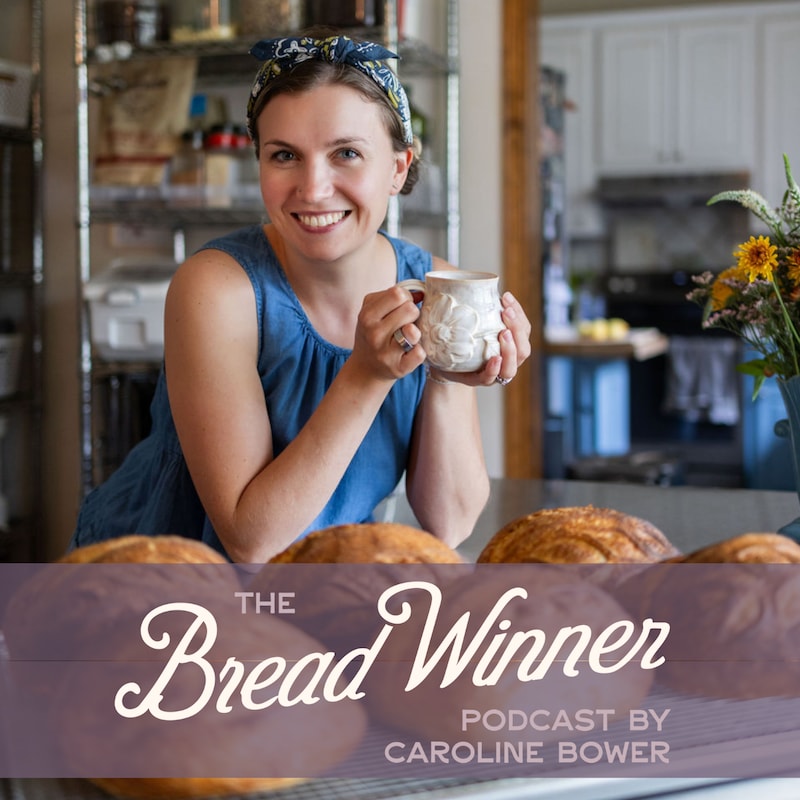
Shownotes
Welcome to the Breadwinner Podcast! Host Caroline Bower shares invaluable insights and detailed steps for sourdough micro bakery owners who want to successfully sell their products at farmers markets. From finding the perfect market, contacting organizers, and planning your setup, to determining how much product to bring and how to manage sales, Caroline covers it all. Dive into this episode to develop a clear and actionable plan for your next market day, and learn tips on engaging with customers, diversifying your offerings, and handling unexpected challenges. This episode is packed with practical advice and inspiration for new and seasoned market vendors alike.
00:47 Getting Started with Farmer's Markets
01:25 Finding the Right Market
05:27 Contacting Market Organizers
08:26 Preparing Your Product Inventory
13:35 Setting Up for Market Day
17:47 Engaging with Customers
18:58 Backup Plans and Final Tips
Links to things we talked about:
Caroline Bower Instagram: https://www.instagram.com/carolinebower_sourdough
Download the FREE Guide and Checklist, Your First Steps to a Successful In-Home Bakery at https://www.carolinebower.com/checklist to begin building YOUR thriving microbakery!
Transcripts
Episode 7
[:Welcome to the Breadwinner Podcast. This is the show for sourdough micro bakery owners who are building a sustainable, successful, profitable business from their home. If you are already in business or if you're dreaming of starting one, this is the place for you. I'm your host, Caroline Bower. I own a successful in home sourdough bakery, and I am here to share everything I've learned that works and that doesn't, plus everything that I'm researching along the way so we can build thriving businesses together.
Let's get started. Today we are talking about the topic that I see come up all the time. We're going to talk about how to get started selling at farmer's markets.
If you want to get [:In this episode, we're going to cover everything you need to know from finding the right market market to contacting the organizer. Deciding how much product to bring and getting yourself set up. By the end of the episode, you should have a clear actionable plan to get you started.
First things first, you need to find the right market for you. This step is crucial because not all markets are created equal. Some might be a really good fit for a sourdough micro bakery, And others might not attract the right crowd.
at you might not be aware of [:You can utilize Google in this search. Search things like local vendor markets, local farmers markets near me. Or even use websites like localharvest. org. This is a website for local farmers markets, local growers. I have found that their database is often quite outdated, but it's worth a try if you're looking for options. Now, many markets do have an active Facebook or Instagram page, so utilize that as you're looking also.
overall atmosphere, and the [:Are they sitting there scrolling on their phone? Are there other bakers there? Are they baking sourdough? Are people walking around with bags full of fresh produce and artisanal goods? Does it seem like they're really excited about stocking up on their food for the week, or are they more just there to bRowse?, All of these and more will, these observations, will give you a feel for whether the market might be a good fit for you. Don't let it stop you if there is another sourdough baker there. This is an important consideration, especially if it's a very small market. But you can still be successful even if there are other vendors selling similar products.
ays sell out. We've actually [:But we have slightly different products and we have a different customer base. So I have my loyal customers and she has hers and we really don't infringe on each other. That's not to say that if one of us wasn't at the market one week that we might see a boost in sales. But we do find that , there are enough customers to go around.
Enough people need bread to support two bakers in our area.
We're gonna have an episode on competition down the road. But I really encourage you to not let that be a barrier or to really scare you or stop you if you see other bakers there.
Another thing to do is to check out the market's reputation. Maybe do some inquiries with other vendors. Ask them about their experience selling there. If sales are pretty steady. well organized If the market coordinators are easy to get in touch with.
This sort of first [:You'll also want to consider the logistics of the market. How close is it to your home?
What is the time frame for when you can set up and tear down? Is there ample parking? Are you going to have to walk really far from your car to where your booth is located? These factors can impact your experience as a vendor, and they may or may not be make or break factors for you. So once you've identified some of the markets that you want to inquire into, the next step is to reach out to the organizers.
So most markets have social media or a website with contact information. If you can't find it online, it's a good idea to check in with some of those vendors. Maybe when you're visiting in person, grab a business card of a couple of the really friendly ones and ask them if you can contact them with questions down the road if you need to.
the contact information for [:So your next step is usually to complete an online application. A lot of times this is something like a Google form or a website with questions to answer, where you'll tell them about the products you offer and be real specific , so that if they have another vendor with similar products, they know if there's going to be too much overlap or they might ask you to focus in a certain area of your products, not bring certain things.
ffering. You'll want to read [:Usually they'll tell you things like where to park your car when you're done setting up, when you can set up, where your booth is located, whether you have to stay until closing if you sell out, or if you can pack up and leave when you sell out, whether you have to follow any aesthetic guidelines like a white tent.
If it's a well organized, established market, they should have all this information easily accessible. But if you have questions, make sure to ask the organizer.
You'll also, in most cases, pay a vendor fee. The amounts vary. In general, my rule of thumb is that I won't join a market if the fee is over 50, but that's a personal decision.
ike for a seasonal thing, or [:Foot traffic varies based on weather, based on seasonality, so You'll never get a solid number, but if they have a general target number, that can be helpful. If it's a brand new market or just a one off, it's pretty likely that it'll be slower than a well established market.
ce you're still learning the [:As far as knowing how much to bring, if you have a number of Estimated foot traffic. The common rule of thumb is to bring about 10 percent of the expected traffic. For example, if the market organizers say they expect on average about 300 people, 10 percent of that would be 30 loaves. Again, there's a learning curve here, and I would say bring fewer [00:10:00] your first time to gauge how much you might need to bring in future markets.
Next is tracking your sales. As you participate in markets, it's important to keep detailed records of what you bring and what you sell. So this data will help you. Adjust your inventory over time so you can pay attention to what's selling really well and what's selling slower, which items go really fast that maybe you can bring more of next time, which ones are staying around for the majority of the market time and maybe you bring fewer of those.
If you're left with a lot of unsold bread, then you'll want to scale back for the future market.
ake payments. So I use it to [:That way I have a record of everything that I sold. There's a link down in the show notes to Square if you haven't already started an account. If you use the link down below, it'll waive the credit card processing fees on your first thousand dollars in sales.
Square also makes it pretty easy to accept credit card payments, which is important Because fewer and fewer people are paying with cash. So if you don't have a way to accept credit card payments, you'll be limited. Square itself is a free app. It just charges credit card processing fees per transaction.
pple wallet on your phone to [:The next tip is to diversify your offerings. So you'll want to bring a variety of products. I would suggest a mix of your best selling loaves, or the ones that are your favorite to make. Especially if you're new, you won't know necessarily what's your best selling. But the ones that bring you the most joy to bake or the most versatile, like a basic sourdough, maybe a sandwich bread.
And then one or two experimental flavors, things that you haven't brought before, or you haven't offered for sale yet. And then some smaller items, like maybe some rolls or crackers or cookies or scones. Again, make sure that you're paying attention to your capacity, though. It's more important to have quality product. And lower quantity of it than to bring tons of options and sacrifice the quality because you're trying to rush to get everything baked in time.
consider is seasonality and [:As you get some time under your belt, you're going to notice how seasonality affects the markets. So depending on where you're located geographically, you may see that summers slow down a lot in the heat and then pick back up in the fall. You may notice that winter is really slow when it's cold or may even shut down entirely depending on where you're located.
Holiday markets might have a lot more foot traffic than one in say the summertime. And so you may want to plan ahead to have a lot more inventory for a holiday market than you would for your typical market.
Alright, now let's talk about some practical tips to keep your market day running smoothly. Number one, before you even get to the market, obviously you're going to have to bake everything, which is the biggest job, certainly. Multiple days usually go into baking for a market. Planning for this is your key to success.
ically my market is Saturday [:That means that my dough days are usually Wednesday and Thursday. And I do a little bit of prep on Tuesday. Sometimes I'll mix up cookie dough or scones, which can be frozen and wait to be baked on Friday. If you need help with planning or you're a pen and paper person like me and need to break it all , down visually.
There's a link in the show notes to download the planner pages that I've created. They're really cute, but also help you time block your day out effectively so that everything gets done. All right, back to the tactical tips to keep you running smoothly.
nticipating and planning out [:So a table, a tablecloth, a chair, and a tent are the foundational necessities. I also recommend some sort of signage. Even if it's your first market, a little bit of signage goes a long way in elevating your professional appearance. I had a banner made from Walgreens. It's two feet by six feet and it spans the back of my canopy.
I hang it up with bungee cords and Walgreens always has discount codes. So I found one for 50 percent off and got the banner printed for about 20.
ion, maybe lift things up on [:Next, you'll want to make sure that you have cash to make change, especially some small bills.
It's always a bummer to miss out on a sale if you can't break a larger bill like a 20. So I always make sure after each market day when I tally up my cash, I keep about 40 to 50 of small bills in my cash box for the upcoming market so that I already have the bills ready to go to make change.
Also like we talked about, you'll want to make sure that you have a way to accept credit card payments. I highly recommend Square, but you can do your research and see if there's another platform that feels like it fits your needs best.
cause fewer and fewer people [:Another thing you can do for your market experience is to offer samples. Make sure you check in with your state's cottage laws and see if there are restrictions around samples or specific ways that they need to be packaged. But especially if you're brand new to a market or breaking into a brand new customer base that has not tried your product yet, it's a good idea to offer samples.
I generally bring samples if I'm coming to a brand new market where I haven't sold before. But I don't usually bring samples to my main market where I already have a pretty large established customer base.
by. Don't assail them with a [:Or if you want to ask them if they've tried sourdough bread um, allow the conversation to happen organically, but this is a great way to build relationships and establish loyal customers who feel like they really know you. One of the really fun things about farmers markets is developing that face to face relationship with regular customers.
So I have a bunch of customers who I know their name, I know their faces, I even know what they'll order they will ask me, request menu items and then they are word of mouth marketers for me. So it happens often that I'll have a regular customer in my booth and then someone new comes in and the regular customer starts selling my products for me.
So building that face to face relationship and building that trust is really a fun and rewarding part of selling at a market.
Tip five, as we wrap up [:I always have bungee cords, scissors, a marker, baby wipes, a bag for trash in my bag. And snacks. Definitely bring snacks. It's so tough , especially if you're solo at a market and there's no one there to watch your booth and you're busy and can't get away. Make sure you have something to snack on and some water to drink.
I am always solo and sometimes I have such steady traffic that I can't get out of my booth to go find something to eat. And so I always try to make sure I have something in my bag behind the table. Another thing you want to plan for is if the weather is bad or if the foot traffic is just super slow one day and you don't sell as much as you thought you would.
for what you'll do if you're [:And it's usually gone within a couple of hours. If it's not, I'll go and and donate it to a local organization. But that's generally very effective. And so because I had that backup plan, I don't sweat it if I don't sell all my product at my market.
I really hope you found these tips helpful and that starting to sell at a market feels a little bit less daunting and overwhelming for you. It is such a rewarding and fun experience and I am excited for you as you get started too.
They will all start to feel [:The next one will be easier. Don't forget to check out the show notes for links to things that I talked about in the episode, including the square discount code and a list of my favorite market essentials.
If you enjoyed this episode, make sure to subscribe to this show so you don't miss future episodes. They drop every Monday and Thursday. And it would make my day if you would screenshot the episode, share it on Instagram, and tag me. I'm carolinebower underscore sourdough, so I can see where you're listening from.
I'm so glad you listened with me today. Thank you for taking some time out of your day. I'll be back soon with another episode, and until then, happy baking!

