Shownotes
About the Show:
"Get your LinkedIn polished, treat it like a professional network and read. Read the things that interest you, but read the things that will challenge you."
– Jose Socorro
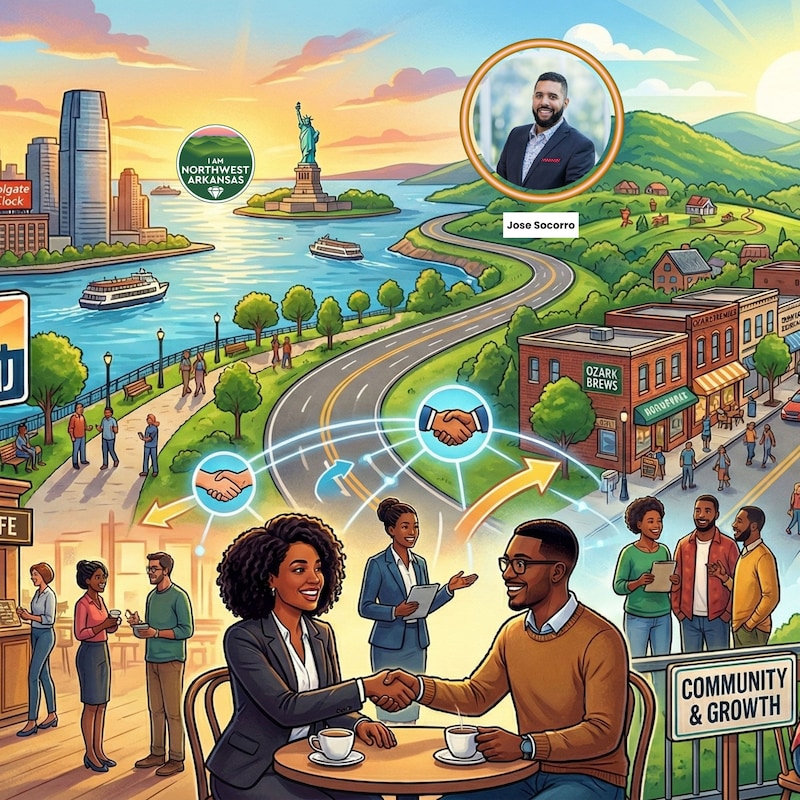
In this episode of I Am Northwest Arkansas®, host Randy Wilburn sits down with Jose Socorro, regional director for Jan Pro of Arkansas and self-proclaimed "Jersey boy," to explore his journey from Jersey City to the Ozarks and what it takes to build a life in a new place.
Jose's path wasn't straight—it wound through Missouri and Oklahoma before landing him in Northwest Arkansas. Along the way, he built small businesses with family, weathered Hurricane Sandy, coached high school football, and worked for major companies like JB Hunt and Central States. Being bilingual opened doors, but it was his willingness to hustle, stay connected, and keep learning that kept him moving forward.
Now thriving in Northwest Arkansas, Jose shares what makes this region different—the welcoming business community, the power of chambers of commerce, and how foundational skills like Excel can launch a career. Throughout our conversation, gratitude and community emerge as the thread connecting it all.
This episode is for anyone considering a move to Northwest Arkansas, looking to build business connections, or simply curious about what life looks like when you trade the Northeast for the Ozarks.
Key Takeaways:
- Embrace the Power of Connections: Northwest Arkansas has a “one degree of separation” feel—networking and community matter.
- Learn Essential Skills: Mastering basics like Excel and building a strong LinkedIn profile are musts for young professionals.
- Gratitude and Perspective: Overcoming challenges and staying thankful helps you grow and prepares you for what’s next.
- Community Matters: Chambers of commerce, local business groups, and giving back make Northwest Arkansas special for workers and families.
- Quality of Life: The cost of living, opportunities, and welcoming environment make Northwest Arkansas a great place to raise a family or launch a career.
- Read the Room: Understanding people and staying humble go a long way in business and life.
All this and more on this episode of the I Am Northwest Arkansas® podcast.
Important Links and Mentions on the Show*
This episode is sponsored by*
*Note: some of the resources mentioned may be affiliate links. This means we get paid a commission (at no extra cost to you) if you use that link to make a purchase.
Connect more with I am Northwest Arkansas:
- Grab our Newsletter
- Email Us at hello@iamnorthwestarkansas.com
- Connect With Our Facebook Page
- Connect With Us on Threads
- Connect With Our Instagram
- Connect With Our LinkedIn Page
- Join The Facebook Group
- Connect with our Fearless Host, Randy Wilburn on LinkedIn
Thank you for listening to this I am Northwest Arkansas podcast episode. We showcase businesses, culture, entrepreneurship, and life in the Ozarks.
Consider donating to our production team to keep this podcast running smoothly. Donate to I Am Northwest Arkansas
Transcripts
It's time for another episode of I Am Northwest
Speaker:Arkansas, the podcast covering the intersection of
Speaker:business, culture, entrepreneurship, and life in
Speaker:general here in the Ozarks. Whether you are considering a
Speaker:move to. This area or trying to learn more about the place you call
Speaker:home, or. We'Ve got something special for you. Here's
Speaker:our host, Randy Wilburn. Hey,
Speaker:folks, and welcome back to another episode of I Am Northwest Arkansas. I'm
Speaker:your host, Randy Wilburn, and I'm excited to be with you. As always, I have
Speaker:a cool episode for you today. And the reason why I think it's cool is
Speaker:because the individual that is here with me, Jose
Speaker:Socorro, is a Jersey boy like I am. He's
Speaker:from. Not from Teaneck, but he's from close enough that
Speaker:will claim him. But he is from Jersey nonetheless. And I thought it was
Speaker:kind of ironic that I would run into him all the way here
Speaker:in Northwest Arkansas. And Jose and I connected online
Speaker:via LinkedIn and we have some mutual friends. And. And it's
Speaker:so funny that when you. What you realize about Northwest Arkansas is
Speaker:that while it might appear to be large, it really isn't. I mean, everything
Speaker:is. There's like one degree of separation for anyone that you can come in
Speaker:contact with here in Northwest Arkansas. And so I thought, man,
Speaker:it would be great to have this guy on my podcast just to
Speaker:kind of share his story, talk a little bit about his journey
Speaker:to Northwest Arkansas, how he got here, and really how he's
Speaker:making things happen on a regular basis. He is the regional director
Speaker:for Jan Pro of Arkansas. And so he's constantly out
Speaker:on his hustle, making connections with people left and right. He's the
Speaker:consummate salesman. And yeah, we just really vibed. And so
Speaker:I thought, why don't I bring him on the podcast? And so I hope you
Speaker:guys enjoy this episode. We are going to sit down and have
Speaker:a really in depth conversation with Jose Socorro.
Speaker:Jose, how are you doing today? I'm good, Randy. Thank you for having me.
Speaker:Absolutely, absolutely. Well, man, it's a pleasure that we finally
Speaker:get a chance to. To connect and sit down. We. We caught some
Speaker:coffee not long ago and then I told you
Speaker:we would try to figure out some time for us to get together and have
Speaker:this podcast episode. And, you know, one of the things that I enjoy
Speaker:doing with this podcast is just having
Speaker:regular folks tell their story. You know, what sets them apart from
Speaker:anybody else, right? I mean, what. What sets any of us apart from anyone else?
Speaker:That's always the question. And so I think podcasting Gives you
Speaker:a place and a platform and a canvas, if you will, to be
Speaker:able to share that story. And I think I always say this,
Speaker:and it's a well worn phrase. There is nothing new under
Speaker:the sun. So anything that you are thinking about doing, somebody probably already
Speaker:has done it. Meaning that there is always going to be a blueprint
Speaker:for success, for how you do things a certain way. And
Speaker:certainly in the arena that you're in and
Speaker:sales and marketing and kind of getting out there and going door to
Speaker:door literally to generate and drum up business is
Speaker:one of the oldest activities in the book and
Speaker:you have successfully done well with that. But I would love for you just
Speaker:to kind of share a little bit about your superhero origin story with
Speaker:our audience. Let them know a little bit about who Jose is and why
Speaker:they should even care about this episode. Absolutely. Well, I want
Speaker:to say give a shout out to the 201. Also known as
Speaker:North Jersey. That's right. That's right. So my parents
Speaker:are from the Caribbean, guys from the Dominican Republic, mom from
Speaker:Puerto Rico and they met in Puerto Rico and they
Speaker:got married and in 1989 they had me
Speaker:and a native from Jersey City, New Jersey, which
Speaker:is where you would go to go visit
Speaker:the Statue of Liberty or Ellis island on the Jersey side. Sure, the Hudson
Speaker:river is beautiful. It's a great, I wouldn't say divide,
Speaker:but a great little space between New Jersey, New York City
Speaker:and historically there's always love, hate. But we're not going to get
Speaker:into that because New York is. Okay. My book. But yeah,
Speaker:originally from Jersey City and Hobokens. New Jersey City, home of Frank
Speaker:Sinatra, Amazing eating, apparently. I didn't know this, but
Speaker:there's over 50 realty offices. A couple of years ago when I checked in
Speaker:Hoboken and it's a small little spot. It is a small spot, but it's also
Speaker:a great spot for dining, for socializing.
Speaker:Also, I've been told a lot of New York folks that
Speaker:work there live in Hoboken because the cost of living in New Jersey is
Speaker:fairly reasonable. Hard to believe that's a statement I can say about New Jersey.
Speaker:No, but it is true because the taxes are high. Oh, man, everything.
Speaker:Every exit has a toll. If people thought Dallas was bad, they
Speaker:have idea. They don't know. They have no idea. So
Speaker:grew up in Jersey, lived in Puerto Rico for a little bit, then moved back
Speaker:to Jersey around the mid-90s and started
Speaker:kindergarten. I was bilingual at the time, so I didn't have a lot of English.
Speaker:I had to kind of learn English with the bilingual students. And then eventually I
Speaker:learned English. And one of the things that I appreciate about having
Speaker:spoken or speaking two languages is that it was really common
Speaker:once you learn English, for Hispanics to kind of forget speaking
Speaker:Spanish. But thankfully, my parents made sure that did not happen. And
Speaker:so I am so glad I speak two languages to this day, which, in my
Speaker:current role, it helps out tremendously. It's one of my secret
Speaker:weapons. Yeah, the dual language, Especially when communicating
Speaker:with the stakeholders for who I support and work for. So I
Speaker:was in Jersey, moved over all over Hudson county, and
Speaker:then I went to school in southwest Missouri. In 08, left
Speaker:Jersey. My parents dropped me off and said, son, you're on your own.
Speaker:But the thing about it is, how did you choose southwest
Speaker:Missouri? Well, I think at the time, it was school. So I was
Speaker:wanting to be a pastor at the time, and I had went to a competition
Speaker:in Indiana, and I did well, auditioning and
Speaker:submitting my information to the schools that were there. And the one
Speaker:school that actually reached out and offered me something that I wasn't even looking at,
Speaker:that school, There was a school in Pennsylvania that I was kind of looking at
Speaker:at the time because my pastor had gone there, and I was like, well, it's
Speaker:not far from where I live, but interesting turn of events. My senior year,
Speaker:my mom and I took a trip from New Jersey through every
Speaker:Greyhound bus stop from here to southwest Missouri. And then I got to
Speaker:tour the school, and I was like, man, I really want to go here. And
Speaker:I ended up getting there on a music scholarship. At the time, I wanted to
Speaker:be a music teacher. I ended up switching to biblical
Speaker:studies. And then after that, I ended up doing a degree in business.
Speaker:I learned so many good things about business. I had a really good business professor
Speaker:that opened my eyes and kind of helped me through some of my misconceptions of
Speaker:business. And so from there, from 08 to 12, I
Speaker:lived in southwest Missouri. Springfield, Missouri, to be exact. Great city.
Speaker:And then in 2012, my dad went into
Speaker:business for the first time with a family member in South
Speaker:Jersey, right outside of Atlantic City. And so I was
Speaker:like, okay, that's where I'm gonna go. At the time, I. If I had
Speaker:known what I'd known, I probably would not have gone. But it was more
Speaker:of more than me. It was a calling, and there was. It was an assignment.
Speaker:I needed to be there to help my dad. But I got some really great
Speaker:experiences from it. Learning how to file LLCs,
Speaker:learning how to follow the rigorous process to get a business
Speaker:approved, especially in a state like New Jersey where there's a lot of regulations and
Speaker:rules, bureaucracy is in New Jersey. And the thing is I had an
Speaker:associate's degree so it wasn't like I had a four year degree. I ended up.
Speaker:So when I was in school because I switched my degrees
Speaker:and I wanted to keep it at a feasible cost even though
Speaker:I'm paying it back is not as feasible. But I ended up going
Speaker:to a two year degree program even though it took me four years because I
Speaker:ended up going part time my last two years of school but working, which
Speaker:really helped. And again, it was just at the time the best option. I didn't
Speaker:want to be a college dropout. So I said this is probably the
Speaker:next best option. And so I went in there, helped my dad with the business.
Speaker:I mean he had some big ideas and expenses. And I can remember
Speaker:telling him, I know I'm your son and in the Hispanic culture the kids
Speaker:don't speak up to the parents, but I'm going to tell you that we are
Speaker:not going to drop money on these certain equipment and
Speaker:tools. And thankfully we found a way around it and found
Speaker:alternatives. And it was interesting because Hurricane Sandy hit
Speaker:around that time. Yeah. And so that was a devastating effect on Jersey.
Speaker:Yeah. And I guess my one advice, if you're having a business
Speaker:and you don't think you don't need that insurance, let me encourage you to
Speaker:reconsider because that was an interesting lesson learned the hard way.
Speaker:My dad and uncle recovered from the experience, but it was, it was
Speaker:a painful recovery. It was painful. I mean that hurricane punch hard. You know, at
Speaker:the time I was working two part time jobs because dad really couldn't
Speaker:afford to keep me on. So I was like, let me go work, but I'm
Speaker:going to help you because I came here to help the business and help you
Speaker:what I can. The benefits of speaking English and Spanish definitely
Speaker:kicked in big time with my dad. And even that season was really
Speaker:helpful. I mean we grew closer, we had a good relationship, but we grew
Speaker:even more during that time. And then I was coaching high school football.
Speaker:I always love sharing that story. If I can always insert I coach high school
Speaker:football because I was aspiring to be a college football coach. Even though I didn't
Speaker:play in college or anything, it was one of those things I want to do
Speaker:it. So I did it for about two years there. A small little Catholic high
Speaker:school. We won states our first year. That was great. And then the second
Speaker:year we went Again, we did not win, but it was overall a good experience.
Speaker:And then I was also managing schools. I got my associates. And then I
Speaker:was working on my online degree program through Oral
Speaker:Roberts University, which, I'm telling you, football is a game of
Speaker:inches. And I'll mention that even though ORE doesn't have a football program, my
Speaker:GPA was barely good enough to get in the door. But all I needed to
Speaker:do was get in the door, because I knew once I was in the door,
Speaker:I was gonna do well. My GPA actually went up because the online model worked
Speaker:well for me, because I was able to work full time. Then I was able
Speaker:to do work because I'm a late guy. I don't go to bed till late.
Speaker:I mean, after midnight, I can put in a few more hours of
Speaker:work. And that's kind of carried through where I am now. But
Speaker:that just kind of my story. I was in Jersey, and then in 2015, I
Speaker:moved to Oklahoma to finish up at ORU. In person.
Speaker:In person. Even though I was still an online student, but I lived in town.
Speaker:So now I was able to kind of experience Tulsa, Oklahoma, which is one of
Speaker:my other favorite places. Okay. Tulsa, Oklahoma, Springfield, Missouri,
Speaker:and obviously Jersey. But northwest Arkansas as number one.
Speaker:Because I remember when I was in school in southwest Missouri, at Evangel University,
Speaker:we would do business competitions in Roger's Embassy Suites.
Speaker:And I can remember, because this is what I always remember standing at Embassy
Speaker:Suites and being able to see the Coca Cola sign. But it's
Speaker:now crossing construction. Yeah. And then I'm looking over across the street,
Speaker:there's a big Home Depot. There's an. An Olive Garden and a Red Lobster. And
Speaker:I'm like, this place is amazing. Stuff like this in Jersey, you're having to
Speaker:drive ways. Yeah. And it's in really nice cities
Speaker:and counties where it's like, oh, man,
Speaker:I'm not ready for that yet. But being able to
Speaker:see all that, that's what I remember the most about northwest Arkansas. My first
Speaker:time, like, I want to be back here one day. Yeah. I remember you told
Speaker:me that. I was like, wow, that's kind of cool. I mean, you had a.
Speaker:You had a little taste of northwest Arkansas and got a feel for what it
Speaker:was like. Oh. And every time I came down here during my college days, I
Speaker:loved it. I always enjoyed it. And actually, it's interesting because northwest
Speaker:Arkansas, this is not something I share with too many people. But when are you
Speaker:sharing it with the world? I'm going to share it now. That's okay. Because
Speaker:when it came to driving, I'm a very. I'm shy. And most people would say,
Speaker:he's not a shy guy. But I had only driven in Springfield.
Speaker:Even though I had my license, I only drove in Springfield. I had to drive
Speaker:the northwest Arkansas. Jack Shoemaker, very prominent
Speaker:Walmart executive, worked really close with Sam Walton, had passed away.
Speaker:And I was trying to get anybody to come with me on this trip
Speaker:just so that I'd have to drive by myself, because I've never done this drive.
Speaker:I didn't have a gps. Right. And I was like, I'm driving two hours into
Speaker:a different state I know very little about. And the only times I've been to
Speaker:Arkansas, I had a group of people with me. Yeah. So it's kind of one
Speaker:of those big learning moments where like, all right, here I go.
Speaker:I made it to the memorial service.
Speaker:I remember because I had to change at a neighborhood Walmart, too. That was kind
Speaker:of interesting. And then I remember I was there for a brief time.
Speaker:I'd seen some very successful folks that were there pay
Speaker:their respects to Mr. Shoemaker. Wait a minute. How did you get invited to
Speaker:that funeral? Well, I was involved with an organization called Students in Free
Speaker:Enterprise, which is now called Enactus. And that organization was a
Speaker:game changer for me in college. I mean, the people I met, the professors,
Speaker:the recruiters, the businesses, I mean, that really played a big part
Speaker:into realizing business is good. Yeah. Because I used to think business is
Speaker:the root of many evils. And it still can be, but it's like it could
Speaker:be used for good when you. When you have the right attitude and mindset. Yeah.
Speaker:I think not to cut you off, but I think when I think about business,
Speaker:I think of it the same way I think about money. Right. It's like, you
Speaker:know, it's a. The love of money is the root of all evil,
Speaker:not money itself. Right. Money is just this object
Speaker:and business in the same vein. Right. But when you operate
Speaker:a business and it's only for your glory and not somebody
Speaker:else's, not to benefit somebody else, then you run into a problem. And
Speaker:I. And I really go back to thinking about Sam Walton and why he even
Speaker:started Walmart to begin with. And when you think of,
Speaker:like when he went, was with Ben Franklin's 5 and 10, and
Speaker:then eventually started Walmart, and he wanted to benefit
Speaker:the average consumer that didn't have a lot of choices.
Speaker:And because of that focus, which, you know, theoretically, Walmart still
Speaker:operates with from today, you know, that makes a big difference. And that's
Speaker:when you're doing something and it's not just about you. Yes. Did Sam
Speaker:Walton benefit from starting Walmart? 100% he did. But
Speaker:there's a lot of other people that have benefited from that as well. And I
Speaker:want to tell you, I love his book. Oh, it's great. I bought. Someone gave
Speaker:it to me that I went to school with and worked at Walmart at one
Speaker:time. And, and that book was so inspirational that I tell everyone,
Speaker:every college student in America should be reading that book. Whether you agree with him
Speaker:or not, it is amazing. The only thing, and Mizzou fans aren't
Speaker:going to like it. You know, I'm not the biggest Mizzou fan, but I got
Speaker:to give him respects because they have Sam Walton and they have a lot of
Speaker:recognizable alum and a good portion of them really
Speaker:are big time contributors to the growth of Northwest
Speaker:Arkansas, particularly with Walmart and vendors. Sure. But, you know, that's the
Speaker:little joke jab, because I have Mizzou friends all over. So I
Speaker:tease them a little bit and I'm like, yeah, you guys are doing good. I
Speaker:think, you know, it's funny you mentioned, I think that. And I don't know if
Speaker:Walmart does this, but I think like, that should be like required reading. Yeah. You
Speaker:start with the company, you should get like a swag bag with like a little
Speaker:bit of Walmart like stuff, you know, some paraphernalia, hat, T
Speaker:shirt, sweater, hoodie, whatever. And then you should get that
Speaker:Walton autobiography, which is amazing. And I'm gonna put a link
Speaker:in the show notes for a podcast that I listen to quite a
Speaker:bit. And I think those of you that listen to this podcast will enjoy that
Speaker:podcast. It's called Founders. And in that podcast, this guy
Speaker:reads. His goal is to read a thousand biographies.
Speaker:And one of them was Sam Walton. Actually, he's done like two, maybe three
Speaker:episodes on Sam Walton. All of them are amazing. But just talking about Sam
Speaker:Walton's life and how Sam Walton, you know, started Walmart and,
Speaker:and how, you know, what it was like for those, that first group of people
Speaker:that came in with him to work with him and that, you know, the original
Speaker:people that got stock and then talks about how he got the
Speaker:idea for Sam's Club, because again, there's nothing new under the sun. But
Speaker:he hung out with a guy named Saul Price out in California who ran the
Speaker:Price Club, and that's how he got the idea of Sam's Club. And
Speaker:he leveraged that to start Sam's Club. And then, you know,
Speaker:Sam's club started off slow, and then it was just a hockey
Speaker:stick up into the. Right, Right. You know, as it grew. And so. But
Speaker:again, you know, just looking at his story and the arc of,
Speaker:you know, he had trouble. I mean, don't get me wrong, it's. That's how life
Speaker:is. But he overcame even the challenges that he ran into
Speaker:to ultimately build this behemoth that we know today
Speaker:that, I mean, next to alongside of Amazon, I would
Speaker:say they're the two most consequential outlets
Speaker:in America for commerce. Oh, absolutely. And Jack
Speaker:Shoemaker is actually one of the originals. I was told he was the guy
Speaker:that brought the barcode. Okay, okay. And that
Speaker:was pretty impressive because Mr. Shoemaker was really big with students in free
Speaker:enterprise. There's a video, I think I remember. But he's also
Speaker:in the museum, too. I think so. Because there's a whole thing in the
Speaker:museum about the barcode and the significance of it and why it was so important.
Speaker:So. And I remember there's a video. It was a. Like a
Speaker:celebration of Mr. Shoemaker, and there's a conversation that he shares
Speaker:of having with Mr. Walton. He was approached about supporting
Speaker:Scythe, and then Mr. Walton, to that individual said, I think Mr.
Speaker:Shoemaker would be good. I mean, obviously, that Jack, but. And then from there,
Speaker:it just grew because I met Jack Shoemaker once, and I got to shake his
Speaker:hand. It was kind of like being a celebrity or being a president. Right. And
Speaker:I remember because it was in Minneapolis in 2011 or 2010, and
Speaker:I was trying to find a way to just shake his hand. There was a
Speaker:time, and I still do this now, where I. There's someone who's very well known.
Speaker:I'm going to go, at least say hello. Nice to meet you. And I remember
Speaker:our paths crossed. I shook his hand. I said, how are you, Mr.
Speaker:Shoemaker? He asked for my name, and then he shared a Chinese
Speaker:proverb with me. And this Chinese proverb went along the lines of,
Speaker:you're going to have an impact, a positive impact for many years
Speaker:or to a group of people. I was like, I never even met the guy,
Speaker:just first time. And I was like, man, I can appreciate that I forgot the
Speaker:proverb, so I have to remember kind of the origins of it. But, I
Speaker:mean, the student, he loved the students. Yeah. Mr. Shoemaker was about the students.
Speaker:I mean, he had awards. I mean, the students. I mean, there's videos and
Speaker:testimonials. I mean, there's so many Walmart and vendors that were part of Cypher
Speaker:around the time I did, that were in those big schools that can share their
Speaker:experiences as Mr. Shoemaker. I wish there was a way we can kind of
Speaker:celebrate and bring him more up because, I mean, he played a big part in
Speaker:providing opportunities for students with his resources and network.
Speaker:So, yeah, it seems like everybody that was a
Speaker:FOS friend of Sam, that was in the early days
Speaker:of Walmart did. Has done something, you know, in
Speaker:the community. Right. So, like, what Mr. Shoemaker has done and what others have
Speaker:done and. And you. You think of all of those top. And we hear their
Speaker:names mentioned all the time when we go around. There's
Speaker:buildings and other things named after some of these people. But it's
Speaker:always interesting when you see just the impact that one
Speaker:individual can have on so many people. Absolutely. And then
Speaker:because of that, I think people saw, you know, how
Speaker:Sam Walton operated, and they wanted to operate similar
Speaker:to that. Now, everybody couldn't do exactly what he did, but
Speaker:they said in their own way, you know, they said, I'm going to carve
Speaker:out something for me that I can then give out to the world. And I
Speaker:think that's important for people to recognize. A lot of times we feel like,
Speaker:oh, I could never do what Sam Walton did or what Oprah or fill in
Speaker:the blank any other amazing individual did. But, no, nobody's asking you to
Speaker:do that. I think what the universe is asking for folks to do is to
Speaker:do the best they can with what they have. And that might be on a
Speaker:much more limited scope, but it still doesn't mean that you
Speaker:can't impact or change the life of even one individual. And the
Speaker:thing about it is that. And I know I'm going off on a tangent here,
Speaker:changing the life of one individual can have repercussive
Speaker:effects for centuries, like, literally. And so that's why
Speaker:I say, you know, you open the door for somebody. You make a way for
Speaker:somebody to do something that they weren't. Wouldn't normally be able to do because you're
Speaker:in a position to make that happen. You just don't know how
Speaker:quickly you can change someone's trajectory just by, you know, not just
Speaker:being nice to them, not just being nice to them, but creating an opportunity for
Speaker:them that maybe they wouldn't have been able to create on their own. No. Absolutely
Speaker:thankful for him and really appreciate the opportunities that I had
Speaker:in college because, you know, Jersey folks, this is interesting because
Speaker:I'm going to tie into how I got to where I am now. Talking with
Speaker:you I had a professor in college in Missouri, and she was
Speaker:like, you know, Jose, you're a little different. And
Speaker:not in personality. Yes, but. And this is where I realized
Speaker:we're in a different. It's a different playing field. But I think I have to
Speaker:be aware of this moving forward. New Jersey or Northeast
Speaker:folks have this tendency that if it says 50
Speaker:as a speed limit and you're driving, we'll go 60 to
Speaker:70. Yeah. And in the Midwest, if it's 50, they're probably
Speaker:going 30 to 40. Right. And that was a really good
Speaker:visual reminder. I'm like, okay, she's saying something. I kind of get
Speaker:what she's getting at. But it really challenged me to be like, okay, I need
Speaker:to scale back. I'm a Hispanic. We love. We're
Speaker:affectionate individuals. We love hugs. Handshake. Well, more hugs and
Speaker:handshakes. But not everyone's reciprocates those hugs well. So
Speaker:I've had to learn to handshake. Sometimes I don't even do the handshake.
Speaker:It's like, hi, how you doing? Yeah. From a distance. So, look, I don't
Speaker:know if it's social. Social cues. That's the word I'm looking for. I had to
Speaker:learn that very quickly in the beginning of 2008. But I do
Speaker:like the pace that the Midwest embraces and
Speaker:has, which is you can go fast, but you can relax. Yeah. I have
Speaker:family that every weekend they've got to do something. And I've had to learn,
Speaker:and I've learned and began to appreciate. I don't always have to be going.
Speaker:Now I do DJ weddings on the side. So there are seasons where I
Speaker:am out every Saturday. But, you know, for the
Speaker:most part, it's. I can call it a job. It pays. Yeah. Yeah. I mean,
Speaker:even if it didn't, it's still something good. But learning to slow it down
Speaker:has been a good thing. So when I was in Jersey, I moved
Speaker:back to. I moved to Oklahoma in 2015 for school, and then I
Speaker:threw. A friend, met my wife. We met at the church across the university.
Speaker:What's interesting, the founding pastors of that church are from Arkansas
Speaker:authorities, and they're great people. When we met, we connected.
Speaker:And then in 2017, she
Speaker:said yes, and I married an Arkansas girl, which meant that instead of going to
Speaker:Dallas, which we were talking about, we ended up moving to northwest Arkansas,
Speaker:which was kind of a full circle. I don't know if it's deja vu or
Speaker:rendezvous, but, you know, I always wanted to live in Northwest Arkansas. And so
Speaker:in 2018, we made that happen. Yeah. And so we lived in the Rogers
Speaker:area, an area that I kind of was pretty familiar with before.
Speaker:And so, like, here I am. And then I was at JB Hunt for a
Speaker:couple years. Was at JB Hunt during COVID That was fun.
Speaker:Boy, talk about dynamics of freight and demand,
Speaker:changing logistics. Oh, man, we were right there.
Speaker:But it was a good learning experience. JB Hunt's a good place. They have good
Speaker:people. It's not perfect, but no place is.
Speaker:One thing about J.B. hunt that I appreciate, unlike is when you. When you hear
Speaker:from executives in the past, they'll tell you, yeah, I've interviewed at Walmart
Speaker:and Tyson, and of all those. J.B. hunt always had opened the door. And I
Speaker:think that's. That's great. Now I know there's J.B. hunt folks that go to
Speaker:Walmart, but you know, J.B. hunter, I mean, you were talking about Operational
Speaker:Excellence 24 7. Yeah. I can remember where I
Speaker:really got sunk my teeth and I really started to grow as a broker.
Speaker:Was like that two months before COVID and we were. We had
Speaker:a customer that traveled all over the country. And I remember having
Speaker:to cover 20 loads. And I, at one time, I was even up at
Speaker:like, like after 2am covering a couple trucks because pickup was
Speaker:happening within an hour. Yeah. And that whole. That from
Speaker:that Sunday to Monday, because I was like 24 hours
Speaker:at home, dinner, no kids at the time. And so it
Speaker:was one of those where we stayed home, we did our thing, but I was
Speaker:just working. The team was very happy because every load was
Speaker:covered. We had an issue with one, but we got it resolved. But just the
Speaker:fact that. That I was like, unproven, untested. And that
Speaker:weekend proved, oh, this guy has potential. Yeah, this guy can kind
Speaker:of do. It's like in the movie Grinch, the. The cartoon one where Max is
Speaker:get. Is trying to push the sleigh. He gets buried in snow. Next thing
Speaker:you know, the sleigh starts moving and he kind of rises up
Speaker:and then just starts going. That's kind of like what that moment was. Because, you
Speaker:know, I was middle of the pack. And like when I had another opportunity present
Speaker:itself. So I moved on from JB Hunt. When I left that J behind, I
Speaker:went from middle of the road to top three. And there were numbers that backed
Speaker:that up. But I really learned a lot, enjoyed it. J.B. hunt Provided so
Speaker:many good opportunities. I was involved with the Toastmasters Club. We did some really cool
Speaker:things there. Then work Matters. Another
Speaker:colleague and I In the engineering department, we kind of held
Speaker:workplace studies and then REITs across America. That was
Speaker:really cool to be involved with that because when I moved over to
Speaker:Central States, which I was there for about two years as well, I actually brought
Speaker:the REITs Across America program. And now it went from just a
Speaker:donation from like 13 locations to now they're sending drivers to
Speaker:deliver and pick up breathes. And now it's grown. So it's just been really
Speaker:cool to see, you know, because at the time, we didn't really have much for
Speaker:military initiatives because Central State's a company that gives. I mean,
Speaker:they are in the community. They do all kinds of great things from the leadership
Speaker:down. And so the military component was like. Because a portion
Speaker:of our drive, the drivers at Central States are veterans. Sure. And so I was
Speaker:like, what a great way. Because I get into the habit anywhere I
Speaker:am. If I see someone with some sort of military apparel,
Speaker:I'm going to go shake hand. Thank you. And it is amazing how
Speaker:receptive they are to that. Yeah. I'm like, this should be normal.
Speaker:I mean, you guys did something that I had to select the service card number,
Speaker:ready to go. And I'm so glad. We never did the draft, but that number
Speaker:was ready. So if the draft happened and my number got called,
Speaker:I was going. But I don't think I was ready mentally, emotionally. But
Speaker:it's just amazing, a project like that to see how
Speaker:it's carried on and grown. And then I had
Speaker:moved to Fort Smith a couple years ago. That's where I'm at now.
Speaker:And worked with a food manufacturer for a
Speaker:brief time and we moved on from that in
Speaker:24. I started with Jam Pro. What's interesting about Jam Pro, not
Speaker:interesting, but a fun fact. It's. The title does not mean anything.
Speaker:Nobody had to tell me that. And I say that because my job is to
Speaker:support the small business owners that have bought in to do
Speaker:business with JAMF Pro. And so they're partners, not
Speaker:employees. So my job is to make sure I am getting in front of as
Speaker:many businesses as possible to say, hey, we have a solution. We have a
Speaker:great option for you. If it's a great fit, let's move forward.
Speaker:If not, let me circle back with you another time. Yeah. And it's just been
Speaker:amazing because it's perspective. You hear about it, there's great
Speaker:books on it, but it gets missed depending on, you know, who you are and
Speaker:what you're doing. I work for certain groups of
Speaker:people. They may support Me, I don't know that they work for me. And
Speaker:I say that because the franchisees, hey, if they do well, I do well. You
Speaker:know, I have a job. Because they're doing well, they're able to maintain
Speaker:support their customers. They're providing great cleaning services.
Speaker:And then there's a support staff that I work with that
Speaker:part of their roles is to check in with the franchisees and the
Speaker:customers. Then we have an amazing office manager. She does a great
Speaker:job making sure I submit everything necessary for billing and all. So I
Speaker:work for them. They don't necessarily work for me. It's a team effort. So
Speaker:I have a lot of bosses. I don't think I'm a boss, but I just
Speaker:know I got to make sure I have activity and work to make sure, hey,
Speaker:the lights are kept on, they're doing well, and the customers are getting taken care
Speaker:of. Yeah. And so that's what I do at JPro. I mean, I
Speaker:support. I'm in Northwest Arkansas a good amount of time through Fort Smith. I'm involved
Speaker:with the chambers. We're members of the Springdale and
Speaker:Rogers Lowell Chamber. I'm ambassador for both. And then I'm
Speaker:also a member of the Fort Smith Chamber. All three are really good chambers.
Speaker:They do a great job of meeting the needs of the business community and of
Speaker:the community, and they find a way to really present
Speaker:opportunities to the ambassadors and the members. I'm also
Speaker:involved with the commercial real estate group called the Contractors Closers and
Speaker:Connections. I've been serving on that group as a leader
Speaker:since it started in 2024. And we've done some really
Speaker:amazing things. We do four events a year. We support a local
Speaker:nonprofit at every event, and we're going into year three.
Speaker:A lot of growth, a lot of great things happening. We're adding two new
Speaker:amazing leaders in the business community in Northwest.
Speaker:And now I don't have to do as much as I had to. There's a
Speaker:lot of hats I wore, but I enjoyed it. I really did. It reminds me
Speaker:of my JB Hunt toastmaster days, wearing
Speaker:multiple hats and just sharing the word. And so there's been some really cool
Speaker:things with those groups. I mean, public relations, I've always
Speaker:enjoyed doing, so I get to do some of those things as a giving back.
Speaker:And it's just been amazing, the response and the
Speaker:publications and all through the work we do. Yeah, you know,
Speaker:I mean, you strike me as somebody that kind of gets your hustle on. You
Speaker:get out there and you get in front of folks, and it's just like wash,
Speaker:rinse, and repeat. You know, you just keep doing it. And some days it doesn't
Speaker:always work out the way you want it to, and then other days, it's amazing.
Speaker:What advice would you give to younger people listening to this that are
Speaker:just coming through high school? Or maybe they. They were like, you
Speaker:were back in the day when you were at Evangel, and they're either finishing their
Speaker:associate's degree or just finishing up a college degree. And
Speaker:now they're looking at the prospects of getting out there and. And working and
Speaker:on. And unfortunately, what is a very challenging work environment
Speaker:just with AI and with a lot of changes. Right. That are
Speaker:happening that. I mean, I've got you by a few years, but, man, when I
Speaker:graduated from college, I did not nearly have the obstacles in front of me
Speaker:that. And they're not necessarily obstacles, but it's like things are different
Speaker:now. Right. And so for young people to hear
Speaker:an encouraging word in terms of. What would you say to them,
Speaker:knowing what you know now in terms of these are the things that you
Speaker:need to be doing in order to be. Successful, there's going to be a few
Speaker:things. I think the first thing is be proficient in
Speaker:Excel. Okay. That's the biggest takeaway. When I was in Fort
Speaker:Smith with that one manufacturing group, that was a
Speaker:bite your teeth get your teeth kicked in hard experience of
Speaker:Excel. You don't have to know all the fancy formulas. You just got to know
Speaker:the basics. Yeah, it's got to be more than just putting in information and
Speaker:creating really nice tables. It's really knowing how to use
Speaker:those functions of multiplication, division, subtraction. It sounds
Speaker:redundant and plain, but let me tell you, I mean, it really makes
Speaker:a difference when you know your numbers. I think I had one boss of mine
Speaker:who said, you need to know the details better than your boss. So
Speaker:here, let me help you out. Excel's hard, it's painful, it's not fun, but
Speaker:once you get over the hump, it's going to benefit. I think the biggest thing
Speaker:is make sure your LinkedIn's up and going. Don't treat it like Facebook.
Speaker:Randy, you and I see people all the time treat LinkedIn like Facebook,
Speaker:and you just, you know, rub your head or you shake your head and it's
Speaker:like, this is not it. I have competitors that treat their LinkedIn like a
Speaker:Facebook. And let me tell you, nothing's more unattractive than
Speaker:criticizing or bashing other people. Yeah, that's just a no. No. You could do that
Speaker:in other platforms. Sure. On LinkedIn, we maybe want to be careful,
Speaker:especially if you're in the sales operations space, because
Speaker:customers are watching. I mean, I have stories, but we're not going to get into
Speaker:that. But the first point is get Excel down, get over it, you're going to
Speaker:be fine. Get your LinkedIn polished, treat it like professional
Speaker:network and read. Read the things that interest you, but read
Speaker:the things that will challenge you. The Harvard Business Review has
Speaker:always been one of those publications that you could just learn so much if you
Speaker:don't know what to do. Just read the Harvard Business Review and get a feel
Speaker:for what they're doing because they are so amazing. They're very
Speaker:operational, very academic, but it's process driven and
Speaker:it's a simple read. It can get complicated, but it's a simple read
Speaker:from the standpoint of here's what I want to convince you on and then here
Speaker:are the steps to get there. That's very doable, it's not hard, nothing
Speaker:hard about that. And then I think the thing I'm learning now with in the
Speaker:world, the sales that I'm in is, well,
Speaker:reading would be one. But really understand what's going on in the region. Yeah, understand
Speaker:what's moving, who are the movers and the shakers and get
Speaker:acquainted and understand that your competitors are going to have
Speaker:advantages over you. But that doesn't change anything. It's like a
Speaker:football philosophy. There's a time and they still do it, where coaches in the
Speaker:college and the high school level, they want to be fancy, they're going to go
Speaker:to Madden, the video game and they're going to throw out every play.
Speaker:And one thing I've learned in my time coaching many years ago is
Speaker:the fancy stuff isn't going to get you. It's not what. That's how
Speaker:you win. You win by the fundamentals and the basics. Nick Saban,
Speaker:obviously that's a well known name. That guy is so old school
Speaker:because he's focused on what are you doing in your position.
Speaker:I'm not worried about what the play is doing. I want to know what are
Speaker:you doing exactly. Every time this play happens, it's
Speaker:focusing on your part in the big scheme of things. Right. And that
Speaker:is a very unattractive thing today and had never been
Speaker:attractive. But it's the thing that is proven, especially with
Speaker:all the changes in our world of sports and technology, the old school,
Speaker:the basics, the fundamentals, what our grandparents did is still the
Speaker:proven model to really do well, whether in sales or not. The phrase
Speaker:that comes to Mind when you say that is like majoring in the minors. Yes.
Speaker:You know what I'm saying? Like, it's the little things. Every day. I tell my
Speaker:boys this all the time. It's like, you know, just being on time. Early
Speaker:is on time and on time is late. Just, you know,
Speaker:giving yourself an extra window just to get yourself prepared. You
Speaker:know, think about what you're going to do the day before you actually do it.
Speaker:Little things like that go a long way and really separate,
Speaker:as I like to say, the wheat from the chaff. It really separates people.
Speaker:And I think in an environment where employment, getting
Speaker:a job is even harder now than it was before, you know, those little
Speaker:things can separate you and be the difference maker between
Speaker:you getting a call back for a potential job opportunity or
Speaker:somebody saying, hey, I was really struck by the way you carried yourself in this
Speaker:meeting. Or I really like how you shook. How firm. You shook my
Speaker:hand. And you looked me in the eye and, you know, you had a
Speaker:thoughtful response. And even when you didn't know what to say,
Speaker:you said as much. Right? Yeah. Because it's like, you don't have to fake the
Speaker:funk. I mean, a lot of times you just got to put yourself out there
Speaker:because we've all been there. We've all been at a loss for
Speaker:words. We've all been in places where maybe we. We don't.
Speaker:Can't. You don't know how to put our best foot forward. So we do the
Speaker:best that we can with what we have. Right. And I think, you know, the.
Speaker:To go back to the points, The Excel, the LinkedIn.
Speaker:The reading. Yeah, it's a popular sports term. Keeping your hand on a
Speaker:swivel and what. And I didn't know what that meant for a while.
Speaker:I just heard it, when you watch a football game, keep it. Or, you know,
Speaker:when you're in coaching sessions. But I think it's being aware of your surroundings, learning
Speaker:to read the room, learning to read people. And the more you read people and
Speaker:the more you learn and understand social cues, the better it is for you.
Speaker:Sometimes, hey, I need to stop talking. Or, hey, I need
Speaker:to not approach this person this way. I just need to
Speaker:keep it cool and simple. Yeah, I mean, learn to read the room
Speaker:helps, but it's also attitude and demeanor. I mean, obviously at
Speaker:18, 19, 20, 22 age range, I know it
Speaker:all. I don't need help. I'm like, well, that's not true. But I think
Speaker:the sooner you can keep an open mind, the better it is. And there's no
Speaker:shortcuts. The shortcuts, really. And people can read through the fluff, you know,
Speaker:that head on the swivel and reading the room. People can read through
Speaker:the fake and this in genuine, you know,
Speaker:approach that people have. And it's like, this ain't gonna work. No. Yeah.
Speaker:So the sooner you can master that, the better you'll be prepared mentally and
Speaker:emotionally. And hey, you may not get the outcome you wanted, but if
Speaker:you're more prepared and you're not shocked because like I put my eggs in this
Speaker:one basket, that if I do this, this is going to work and your eggs
Speaker:just break because they hit the ground, you realize this is now how I need
Speaker:to go about it. Yeah, well, you're emotionally out of it, so you're
Speaker:now surviving, not like thriving or afloat.
Speaker:Yeah, this is just an interesting thought there. No, it is, man.
Speaker:And we could go on all day about that. I think it's, you know, I
Speaker:don't know that I think I'd mentioned this book to you that I've been reading
Speaker:Scott Galloway's book Notes on Being a Man. And especially
Speaker:for young men, I think this is an area where they struggle. Humility,
Speaker:being able to say, hey, I made a mistake, little things like that.
Speaker:We're all there. But you know, I keep telling my son, I have a 20
Speaker:year old, a 19 year old and a 15 year old. A lot of the
Speaker:regular listeners know that, but you know, I tell all of them, but
Speaker:especially my 20 and 19 year old, I'm like, listen, you guys are still
Speaker:figuring things out. You got another like the 20 year old. I'm like, you got
Speaker:five years, the 19 year old, you got six years. You know, you're still
Speaker:forming, formulating, your brain is still forming and developing. And
Speaker:so you've got to be patient with the process and don't try to
Speaker:circumvent it, don't try to short circuit it,
Speaker:Let it happen and develop yourself because, you know, you
Speaker:want to be the best version of yourself. And that's going to require you going
Speaker:through some iterative processes where you're going to make mistakes and
Speaker:you're going to fall flat on your face. And you know, whether it's.
Speaker:It could be for a number of reasons. But I just continue. Lately
Speaker:I've realized how much I've. I want to encourage young men, especially
Speaker:because women don't struggle as much in this area. I mean, yeah, they, they
Speaker:struggle with some issues. I'm not saying that they're, they're immune to it, but Young
Speaker:men right now are really struggling with loneliness and a lot of other factors
Speaker:that are defeating their mindset. And I'm trying to
Speaker:tell these young guys, listen, it's a long game and I really
Speaker:want you to be encouraged by the process and
Speaker:embrace it and embrace the suck. Because there's going to be moments when it
Speaker:really is tough. And let me tell you, faith played a big part
Speaker:because in 2012, I just graduated with a two year degree.
Speaker:It really, it wasn't a pleasant experience when my colleagues
Speaker:are graduating with four year degrees and skipping jobs. Right. And
Speaker:here I am graduating with a two year degree, going into a situation that
Speaker:I have ideas. But then when I get to New Jersey and learn
Speaker:how, wow, the whole thing was, I'm like, man, it's too
Speaker:late to walk away. But I mean, I was like, all right, my
Speaker:God, we're going to do. Everybody has different methods, you know, Faith, self help. But
Speaker:faith was a big driver because like, all right, this is the time where I
Speaker:need to embrace the suck, embrace the uncomfortable, embrace the.
Speaker:And realize that there's good. And it really has been the last few years where
Speaker:I've realized, hey, what I call suck really is a.
Speaker:Is a way to help me to get prepared for what's ahead. Yeah. And that's
Speaker:easier said than done. And I'm in my mid-30s and so
Speaker:still young man. Yeah. But that brings
Speaker:me to a point. Gratitude has been a big part. Gratitude really opens a lot
Speaker:of doors. Perspective and mindset, emotion wise. But because
Speaker:I could, you know, New Jersey gets a bad rap. It really does.
Speaker:But I tell you what, I am really thankful for being raised there,
Speaker:for doing life there. And my parents are amazing people. You know,
Speaker:they went to college, they didn't finish, but they went to school and they, they
Speaker:embraced a lot of suck to put my sisters and I through high school to
Speaker:get us to college. All my sisters and I were college graduates. We're working,
Speaker:we're doing well. I mean, they did more than they could. And you know,
Speaker:my parents on occasion, like, hey, I'm sorry, I didn't do much. Are you kidding
Speaker:me? You foot the bill, you did all these things
Speaker:for me and things that, I mean, so that you guys
Speaker:did more. But you know, being in Jersey, there's a lot of pluses to it.
Speaker:I mean, you know, cost of living is one thing, but just the environment,
Speaker:just having to. You have to be street smart. Yeah. I
Speaker:mean, where you and I are from, you definitely have to know your surroundings and
Speaker:whereabouts. You can't Be naive and foolish. Yeah. I mean, Jersey City was
Speaker:certainly a little bit more than Teaneck. Teaneck was a. A
Speaker:bedroom community in Jersey City is a lot different. And I mean,
Speaker:but, you know, it is. It is what it is. You know, it's a badge
Speaker:of honor to say, I am from Jersey, because, you know, it's. There's a lot
Speaker:of traditions. I mean, you know, to the Garden State. The Garden State, it's a
Speaker:prime. It's a prominent Catholic state. Yeah. So, you know, Catholic high school football is
Speaker:really big out there. And. And, you know, like, there's a lot of coaches that
Speaker:were, to me, an inspiration just because of how they carry
Speaker:themselves and how they were able to take young men and win and do things
Speaker:that at that time weren't a big thing. You know, you had teams from North
Speaker:Jersey going to play some of the biggest teams in the country and beat them.
Speaker:Right. And you had a lot of recruits. I mean, I went to high school
Speaker:with a guy that got 43 offers and ended up playing at Penn State
Speaker:during Joe Paternal's last year's. Wow. I mean, and that's no light
Speaker:tie. I mean, jerseys. I mean, you know, St. Anthony's with Coach Hurley. Sure. I
Speaker:mean, that's basketball at its finest right there. A cop that gave his time
Speaker:to a school that barely can make ends meet. But it was. It was more
Speaker:than. Than just the glory. It's about developing young men and trying
Speaker:to see the things that he learned and saw as a cop and say, hey,
Speaker:I don't want you guys going through this. Right. And so it, you know, it's
Speaker:a chip on your shoulder. It's a badge of honor. And there's a lot of
Speaker:good things that come out from being from Jersey. Absolutely. But being in Northwest
Speaker:Arkansas has been amazing. I mean, my. My boys are Arkansas boys. They're. They're
Speaker:born here, you know, my wife's from here. Her family's here.
Speaker:I love it. I don't see myself moving anywhere. I mean, I always do get
Speaker:asked the question, hey, would you move back up to Northwest? Not anytime soon.
Speaker:You mean to Northeast? Back up to Northwest.
Speaker:Being that I'm in Fort Smith. Oh, right, right, right. I got you. But there's
Speaker:many places in the state that are amazing that I would consider moving for the
Speaker:right opportunity if I wanted to move. Sure. But Northwest
Speaker:Arkansas is great. Great to raise family, good dining.
Speaker:It may not have the big city feel, but I'm going to tell you, being
Speaker:from the big city, it's overrated. It is But I like it, I. Like
Speaker:it when I go back and you know, I was just back in New York
Speaker:City for New Year's this past year and it's been
Speaker:almost a year ago, but you know, there's nothing like going back home like that.
Speaker:Just having that experience and you're reminded of it. But then it's like,
Speaker:it's nice that sometimes, you know, you can just go somewhere and see the
Speaker:stars up, up above you and it's just different. You know what I'm saying?
Speaker:And it really is. And the traffic. And the traffic. Yeah. And I tell people
Speaker:all the time, like, because people, I laugh when people complain about traffic between
Speaker:Fayetteville and Bentonville. I'm like, you have no idea.
Speaker:The Garm State Parkway. Oh my goodness, you, dad, you have. Or
Speaker:I mean, the George Washington I'm on one time going through the Holland Tunnel.
Speaker:I mean, you name it. I mean, it's, the tunnels are, are
Speaker:bad. I, I, my parents, my dad used to take me to Met games. Yeah.
Speaker:And those tunnels, I mean, you're waiting an hour. Yeah. One time,
Speaker:many years ago on a Sunday, I was going to Connecticut to see Family Night
Speaker:and then I had some work things to do the next day. And it was
Speaker:a two hour traffic. Yeah. To get from Jersey
Speaker:through the bridge into New York. And it's not a peach walk
Speaker:either because once you get over the bridge into like the boroughs, Manhattan
Speaker:and all that, that's like standing traffic. Sure. It's bumper to
Speaker:bumper. And then I had another funny story. When my wife
Speaker:came to see family, we went to Connecticut. It was like almost two and a
Speaker:half hours to get out of New York over the bridge into
Speaker:Jersey. Yeah. And so, but I mean those experiences. And
Speaker:you probably went the distance that would be equivalent to leaving Fort Smith and maybe
Speaker:getting to the Bobby Hopper Tunnel if something like that, if not that far.
Speaker:Oh yeah. I mean, we're not driving, you're not driving far
Speaker:distances. But it can take forever. It can take forever. Yeah.
Speaker:But I mean, it's a gratitude because my parents
Speaker:didn't have what I had. Sure. And things were very different from them
Speaker:for them when they were my age. And then I go back, I'm like, they
Speaker:did a lot and they really did above and beyond. Not
Speaker:even barely speaking English. I mean, now they speak good English now, but back then,
Speaker:and I was no cakewalk as a kid. I mean, I was probably
Speaker:the kid out of my siblings, but you know, thankfully,
Speaker:between my parents doing everything they can to get me the
Speaker:right home support and the good Lord, man. We, We. We've come a long way.
Speaker:We've come a long way. I'm in a better spot for my wife and kids
Speaker:than I probably was when I was little. Well, that's good. I mean, well, you
Speaker:know, like I said, I tell people all the time and I, I say this,
Speaker:I've said this a number of times on the podcast, is that, you know, whatever
Speaker:your parents ceiling is, is your floor. So,
Speaker:you know, your parents may have done some amazing things, but clearly,
Speaker:you know, if they've done it right and set you up for success,
Speaker:then you know, their high is where you're starting off from and
Speaker:then you're building on top of that. So I think that's, that's like the only
Speaker:way you can look at it or you should look at it. Right. That's good
Speaker:perspective. I didn't think about that. Yeah, that's good. So, yeah, their, their ceiling is
Speaker:your floor, so you got nowhere to go but up. And the same can will
Speaker:be said for your kids. So listen, before we wrap up,
Speaker:what else would you want to share with somebody listening to this that's maybe thinking
Speaker:about relocating to northwest Arkansas? About this area, what makes it so
Speaker:special, whether from a business perspective, from just a
Speaker:living perspective, what makes this area so special
Speaker:and has you staying here, calling it home? I think the
Speaker:biggest thing is the quality of life aspect.
Speaker:The housing, the options, amenities. It's not a big city feel,
Speaker:but it doesn't need to be. And if you have a young family and you
Speaker:want to buy a house within cost. Yeah, this is the area between
Speaker:the schools, between the things you can do and the
Speaker:drive to big cities. I mean, you have Tulsa, you have Dallas, it's five hours.
Speaker:I mean, Tulsa is about two. And you have Little Rock. I mean,
Speaker:there's just a lot going on in Kansas City. Kansas City is amazing. It
Speaker:is. But I think the thing here is if you come from a part of
Speaker:the country where you're paying a lot, you come out to the
Speaker:Midwest, those expenses are going to be minimal. Your dollar will go further. Sure.
Speaker:Because I've had family come out to northwest Arkansas. They love it, but they don't
Speaker:want to leave Jersey because that's all they know. Yeah. But when they come out
Speaker:here, they realize, man, the house is amazing. The cost, you know, the
Speaker:salaries, opportunities are amazing. It's a different pace. And
Speaker:with the way our country is going, you obviously, if you have kids, you
Speaker:obviously want to be in an environment where there's good resources, good schools,
Speaker:and Good homes. But if you're a bachelor, hey, when you have Fortune 1
Speaker:in your backyard. Yeah. And everything Fortune 1 brings, I think you
Speaker:can just. You'll be fine. I promise. There's good activity, good
Speaker:things. Maybe you're a city slicker and you live for that nightlife.
Speaker:Hey, that's fine. But I promise, drive five hours to Dallas or go to
Speaker:Kansas City. I mean, but they're all, you know, they're smaller cities. Even
Speaker:Dallas, to me, I mean, coming from New York, Dallas is like, oh, it's a
Speaker:great city, but it's not like New York City. It's like. Yeah. I mean, I
Speaker:can get my arms around downtown Dallas or I can get my arm. Well, Houston's
Speaker:a little bit bigger, but I can get my arms around it. But, you know,
Speaker:it's. You can't compare it to places that are like. There is no
Speaker:comparison. Right. And the change of pace is a big one because
Speaker:there's a lot of self health and mental health. And mental health is
Speaker:kind of. It has been on the rise for years. Sure. And honestly, northwest
Speaker:Arkansas provides a good. A different outlook on
Speaker:that balanced approach of Absolutely. The stresses. And I think that's
Speaker:something that people look, I mean, alcohol consumption, on a random
Speaker:note, is down. Yeah. And just peace and quiet and relaxation
Speaker:is kind of really starting to become more of a priority where we were growing
Speaker:up. Yeah. That was no such thing. You just took it with stride
Speaker:and you from A to B and that's it. That was. It didn't even bring
Speaker:it up. Yeah. Because you'd hear from your relatives and all and you
Speaker:didn't want to hear from your relatives. Sure. So I think out here is different.
Speaker:Give it a chance. Especially if you're under 30 and you get a great opportunity.
Speaker:Hey, you serve your time and you move on. But with all the changes in
Speaker:business where all the big companies are going to an office and they
Speaker:want you here. Yeah. It's not that bad because once you have a family, you
Speaker:realize, boy, I've really made a good move. Good move coming out here.
Speaker:Absolutely. Absolutely. Well, on that note, he is Jose
Speaker:Socorro, man. Jose, thank you so much for joining me on this
Speaker:podcast. If people want to connect with you because they just.
Speaker:Just like your vibe and what's the best way for some. Somebody to do that?
Speaker:LinkedIn would be a good way. Okay, we'll put your LinkedIn post. We'll put your
Speaker:LinkedIn profile on our show notes so anybody can
Speaker:connect with you and maybe if they even want to do business with you. So,
Speaker:hey, I always welcome an opportunity. That's not why you came on here, but
Speaker:I'm just, I'm putting it out here. Yeah, absolutely. Thank you. Absolutely, man. Well,
Speaker:Jose Socorro, thank you so much for joining us, man. We wish you and your
Speaker:family nothing but the best continually. And thank you for joining us
Speaker:on this episode of the I Am Northwest Arkansas podcast. Thank
Speaker:you. Absolutely. Well, folks, there you have it. Another episode of I
Speaker:Am Northwest Arkansas. We're excited to bring you this conversation with
Speaker:Jose. If you enjoyed this, please let us know. You can always write
Speaker:a review of the podcast on any of the major podcasting platforms.
Speaker:We'd also love for you to follow us and smash that like button when
Speaker:it comes to following the podcast on on your major podcasting
Speaker:platform as well. So we would certainly appreciate that. Remember, our podcast
Speaker:comes out rain or shine. Every Monday we have a new episode,
Speaker:so we look forward to seeing you right back here at this appointed time next
Speaker:week. Until then, I hope to catch up with you at some point in time
Speaker:in the future somewhere roaming around Northwest Arkansas. If you
Speaker:ever want to catch up with us or catch up with me, just hit me
Speaker:up at hello@iamnorthwest arkansas. Com. I'm
Speaker:happy to grab a coffee with you or just catch up just the same way
Speaker:that I did with Jose. So really appreciate appreciate you listening
Speaker:to this podcast. And remember, sign up for our newsletter too. Our newsletter comes
Speaker:out pretty much weekly now and we try to provide some
Speaker:additional information outside of the podcast and that newsletter each
Speaker:week. So that's all I have for you this week. We will see you next
Speaker:week for another new episode of the I Am
Speaker:Northwest Arkansas podcast. Peace.
Speaker:We hope you enjoyed this episode of. I Am Northwest
Speaker:Arkansas. Check us out each and every week. Available
Speaker:anywhere that great podcasts can be found. For show
Speaker:notes or more information on becoming a guest, visit
Speaker:IM northwest arkansas.com.
Speaker:We'Ll see you next week on IM Northwest
Speaker:Arkansas.




