Unlock the secret to becoming more likable by mastering vulnerability's timing in our latest episode! You'll learn how to share modest pieces of your truth that align perfectly with the conversation at hand, as backed by a 2015 study showing increased likability from well-timed self-disclosures. Discover when and how to pause after sharing to let your words sink in, fostering deeper connections without overwhelming others or losing authenticity.
00:01:02 Share, Don’t Spill
00:02:24 Tip 73: Share What’s Relevant
00:03:32 Tip 74: Stop Before You Explain
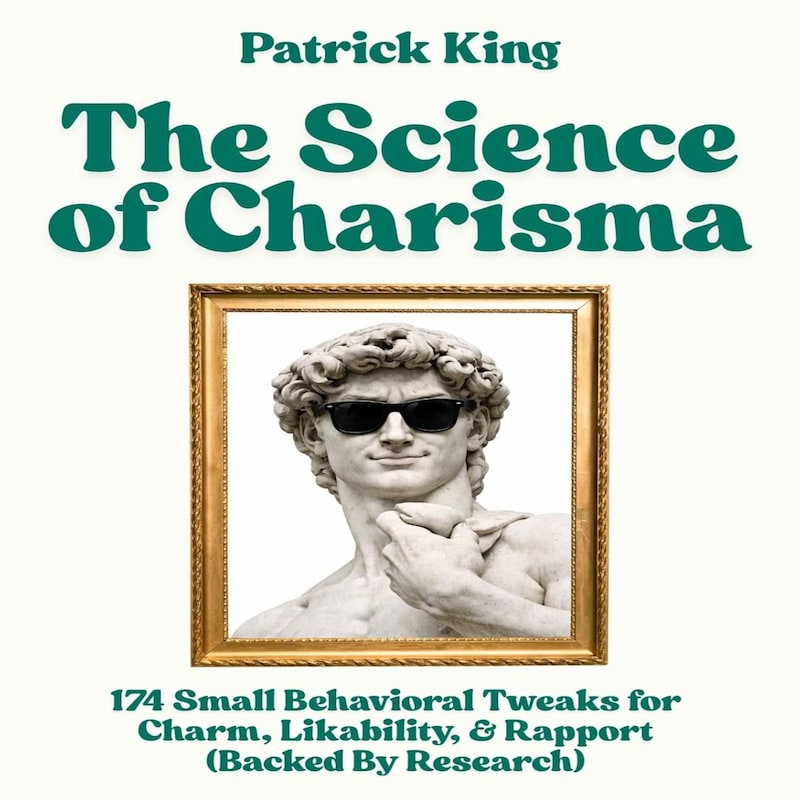
The Science of Charisma: 174 Small Behavioral Tweaks For Charm, Likability, and Rapport (Backed By Research) (How to be More Likable and Charismatic Book 45)
By Patrick King
https://www.amazon.com/dp/B0GPKZFMGC
174 science-backed micro-behaviors to feel more confident, connect faster, and become effortlessly likable—without changing your personality.
Forget vague advice like “be confident” or “just be yourself.” The Science of Charisma turns decades of psychological and behavioral research into practical, low-effort adjustments that quietly transform how people experience you.
In The Science of Charisma, internationally bestselling author Patrick King distills research on attention, perception, warmth, and social dynamics into 174 small behavioral tweaks you can apply immediately. Learn how to avoid awkward moments, create natural rapport, and make conversations feel easy—without performing, oversharing, or trying to impress.
This book reveals why charisma isn’t about talking more or standing out—it’s about timing, attention, and how you handle tiny moments most people overlook.
Discover the subtle science behind likability and connection, including:
Why the “spotlight effect” makes you feel more awkward than you actually are
How shifting attention outward instantly reduces social anxiety
The small conversational behaviors that build trust without effort
Why correcting people damages rapport—even when you’re right
How micro-pauses, tone, and pacing change how confident you appear
Surprisingly small shifts → outsized social results:
Show up imperfectly without losing credibility
Keep conversations flowing without carrying them
Repair social friction before it becomes awkward
Give compliments that actually land
Recover quickly from social missteps instead of overthinking
If social confidence has ever felt mysterious or inconsistent, this book gives you the missing manual. Every tip is grounded in real research, and every tactic is practical enough to use in your very next interaction.
Stop guessing what charisma is supposed to be—and start using the science of how connection actually works.
Transcripts
Speaker:
Most of us have been told that vulnerability is a strength.
Speaker:
And it is.
Speaker:
But here's the thing nobody tells you.
Speaker:
There's a version of vulnerability that actually pushes people away.
Speaker:
And most of us have done it.
Speaker:
It's that moment where you said something real, something honest, and then watch the other person's face do that thing, that slight recoil, that polite smile that means they're already looking for the exit.
Speaker:
Patrick King calls this the calibration problem.
Speaker:
Vulnerability works when it's proportional, when it fits the depth of the conversation you're already in, not before.
Speaker:
Today, we're looking at how to get that right, how much to share, when to share it, and what to do in the five seconds after you say something honest.
Speaker:
Welcome to Social Skills Coaching.
Chapter 32:
Share, Don’t Spill
Chapter 32:
Vulnerability works, but only when it fits the moment.
Chapter 32:
Dumping your entire inner world into a casual conversation doesn’t build trust, it builds discomfort.
Chapter 32:
What actually strengthens connection is relevance.
Chapter 32:
A 2015 study by psychologists Collins and Miller found that modest, well-timed self-disclosures increase likability and closeness.
Chapter 32:
The key word there is modest.
Chapter 32:
People respond best when what you share feels connected to what’s happening right now, not like a surprise emotional monologue.
Chapter 32:
Selective vulnerability is about choosing which truth to share, not sharing everything.
Chapter 32:
You offer a small, specific piece that matches the tone and depth of the interaction.
Chapter 32:
That move quietly says, “I’m real with you, and I know where the edge is.”
Chapter 32:
It invites mutual openness without forcing it.
Chapter 32:
When done well, it creates familiarity fast because the other person senses you’re present, human, and emotionally calibrated, not performing or oversharing.
Tip 73:
Share What’s Relevant
Tip 73:
Trust doesn’t grow from intensity alone.
Tip 73:
It grows from alignment.
Tip 73:
If the conversation is about uncertainty, share a moment where you felt unsure.
Tip 73:
If it’s about learning, share something you’re still figuring out.
Tip 73:
The power comes from relevance, not emotional weight.
Tip 73:
A line like, “I remember feeling pretty lost my first time doing that,” often lands better than a dramatic confession that doesn’t match the moment.
Tip 73:
Before sharing something personal, ask yourself, “Does this connect directly to what we’re talking about?” If the answer is yes, keep it short and honest.
Tip 73:
One or two sentences is plenty.
Tip 73:
You’re offering context, not asking for caretaking.
Tip 73:
That balance is what makes people feel safe instead of overwhelmed.
Tip 73:
Use a quiet tone and deliberate timing.
Tip 73:
The move works because it’s clear, not because it’s long.
Tip 74:
Stop Before You Explain
Tip 74:
Right after a vulnerable line, people often panic and start cleaning it up.
Tip 74:
“Sorry, that sounded dramatic.” “I do not usually say stuff like that.” That self-editing kills the moment you just opened.
Tip 74:
Try not doing that.
Tip 74:
Share the thing, then leave it alone.
Tip 74:
Let it stand for two beats.
Tip 74:
If the room is quiet, let it be quiet.
Tip 74:
You do not have to rescue your own honesty.
Tip 74:
This is harder than it sounds, mostly because over-explaining feels safer in the short term.
Tip 74:
But when you stop cushioning every real sentence, your vulnerability reads as grounded instead of needy.
Tip 74:
People trust that faster.
Tip 74:
One practical rep: the next time you share something personal, do not add a disclaimer after it.
Tip 74:
Just stop and see what happens.
Tip 74:
So here's what I want you to take away from today.
Tip 74:
Vulnerability isn't a performance.
Tip 74:
It's an invitation.
Tip 74:
When you share something real, something small, something true, you're not asking the other person to fix it.
Tip 74:
You're not even asking them to match it right away.
Tip 74:
You're just letting them see a corner of who you are, and then you go quiet.
Tip 74:
That silence isn't awkward.
Tip 74:
It's doing the work.
Tip 74:
But the research Patrick walks us through backs this up.
Tip 74:
A 2015 study found that well-timed self-disclosure increases likability, but only when it fits where the conversation already is.
Tip 74:
Share too much too soon, and people pull back.
Tip 74:
Share just enough.
Tip 74:
Something shifts.
Tip 74:
Don't rush to explain yourself after you've said something honest.
Tip 74:
Vulnerability works when it's proportional to the conversation.
Tip 74:
Match the depth of what you share to where the other personality is, not where you want to get to.
Tip 74:
Silence after disclosure builds trust.
Tip 74:
Resisting the urge to explain or apologize immediately signals confidence and authenticity.
Tip 74:
Small, specific, and relevant beats big and raw.
Tip 74:
One honest detail at the right moment lands harder than a flood of feeling.
Tip 74:
If something in today's episode landed for you, share it with someone who could use it, and we'll see you in the next one.