Shownotes
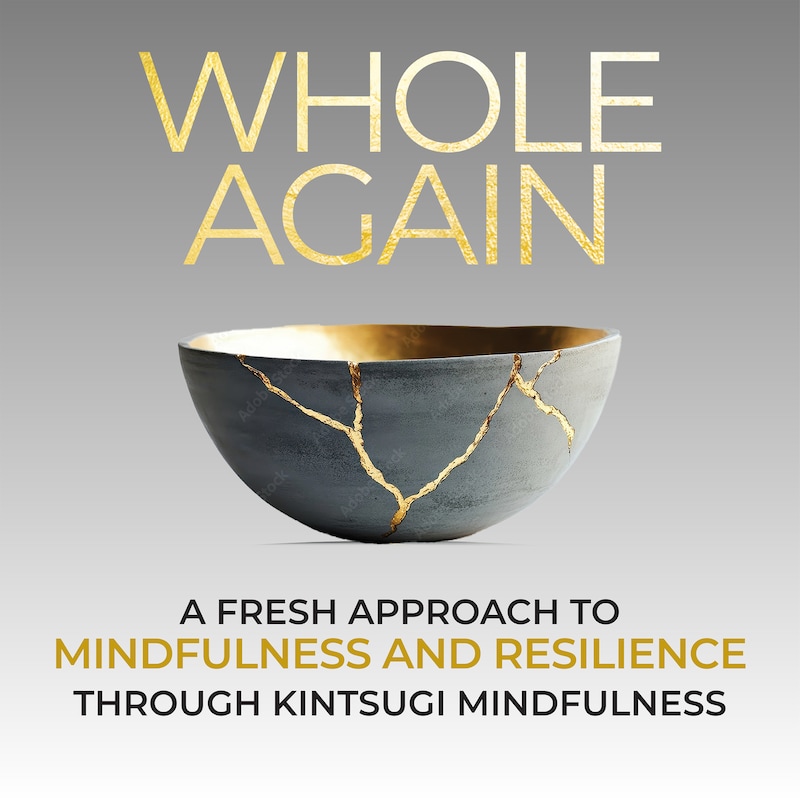
The Whole Again Podcast: Mindfulness and Resilience through Kinstugi Wisdom airs every Monday, Wednesday and Friday with Pause Breathe Reflect Microdose Meditations, Growth Mindset and Mindfulness Tips, to help us transform our scars into healing and resilience.
And between May and October, I'm sharing a new series I'm calling: A Perfectly Imperfect Union. It's about connecting with every day folks as they reflect on America at 250. Conversations will air every Tuesday, Thursday and Saturday.
-------
What if gratitude isn’t helping you feel better—but actually making things worse?
Gratitude is everywhere—touted as a cure-all for stress, anxiety, and a growth mindset. But what if the way you’re practicing it is backfiring? This episode explores the hidden pitfalls of “fake gratitude,” emotional bypassing, and comparison, and shows you how to use gratitude in a way that actually supports healing and resilience.
- Discover how to practice “grounded gratitude” that strengthens resilience instead of suppressing real emotions
- Learn why gratitude works best alongside difficult emotions—not as a replacement for them
- Avoid common traps like comparison and toxic positivity that can quietly undermine your well-being
Hit play to learn how to use gratitude the right way so it genuinely supports your growth, healing, and everyday resilience.
You can now download my Pause Breathe Reflect App with Microdose EQ for FREE in Apple’s App Store or Google Play. Discover how spend less time on your phone and more time on things that bring you joy. Also, find the support you need to navigate today’s uncertainty with more calm and grace.
Receive a FREE copy of my book: “My Last Bad Day Shift.”
Join me on Substack https://substack.com/@milkshakeswithmichael for more ways to stay resilient and navigate today’s uncertainty with more grace.
We can also connect on LinkedIn.
Subscribe to be sure you don’t miss any of the micro-meditations, wellness tips, and guidance that I publish every Monday, Wednesday, and Friday at 7:11 am.
With Whole Again: Mindfulness and Resilience through Kintsugi Wisdom, listeners explore mindfulness and resilience through personal stories of trauma, scars, and injury while learning to overcome, imposter syndrome, self-doubt, and perfectionism with self-compassion, self-love, and self-worth. Through insightful discussions on building resilience, fitness, and stress management, as well as mindfulness practices and digital wellness, the show offers practical tools such as breathwork, micro-dose meditation, grounding techniques, visualization, and daily affirmations for anxiety relief and stress reduction. Inspired by the art of kintsugi, the podcast embodies healing as a transformative process, encouraging a shift in perspective from worry and overwhelm to gratitude and personal growth. By exploring the mind-body connection, micro-dosing strategies for emotional well-being, and
Transcripts
Hey there, it's Michael. Welcome to Whole again, the show that's here for you in support of you creating a meaningful life and the person you're becoming in every Friday this year, in celebration of my 25th anniversary of my last bad day, that sparked whole again. I'm sharing one growth mindset tip. That I've learned along the way.
Now some of these tips will hit the mark and you might weave them into your own formula for a meaningful life, and others will, well, they'll be just a bit outside to quote from Major League one of my favorite baseball movies and today is all about vitamin G. That's right. Gratitude. Gratitude is the start of my acronym called Grace, something I created to help me get through my recovery and rehab, and I still use it today.
There's something about offering each other and ourselves, grace, that just speaks to me and I hope it speaks to you. But today we're gonna focus in on letter G, gratitude. Now. Now I'm sure you know about the power of gratitude. You might even have your own gratitude practice. Back before my big accident, I didn't know what gratitude was.
practice. Keep in mind it was:It's still part of it, although like mindfulness, I try to weave gratitude into my day, so it's just not a one-time thing I do. At a certain time every day for me, especially during my recovery, gratitude helped me see what I still had and what I was still able to do rather than my initial focus was on everything I didn't have anymore and all the things I couldn't do.
Like water gratitude is better when it hits that Goldilocks moment. Not too much. Not too little, just right. Please allow me to share just a bit more because there's some interesting research now on gratitude to help us find that sweet spot. In essence, gratitude works when it tells the truth, not when it replaces the truth, or tries to cover it up or not, when it tries to act as some motivational poster you put on your bedroom wall.
That tries out shine what's really happening in your life? Because when that form of gratitude appears, it's easy to get into something called emotional bypassing. It sounds like. I'm fine, I'm good. I should be grateful. It could be worse, but as we're doing that, our nervous system is like, oh, pardon me, not so much.
It doesn't believe it, so it doesn't really stick. The researcher, Barbara f Fredrickson, has come up with the broaden and build theory. The idea is relatively straightforward, positive emotions like gratitude are supposed to expand our perspective during stress, and they work by sitting with maybe the unpleasant emotion that we're feeling.
For example, we can grieve a hundred percent for a loss, a loss of a friend, a loss of a pet in your household. It whatever we happen to feel. It could be anger, it could be any number of different emotions, and we can add gratitude to it. We don't use gratitude to replace it or to lay on top of the grief.
We humans are pretty cool. We can hold a couple different emotions all at the same time, so we can grieve and hurt and at the same time, we can be grateful for the support that is around us. I went through this a lot during my recovery. I was hurting big time. I had moments when I got really frustrated and angry that I had to go through what I was going through.
Gratitude sat beside that pain and helped me broaden or widen my perspective. Gratitude when it works well is not either or, it's both and. So healthy gratitude is really about acknowledging this is super hard. Whatever you happen to be going through, and here's one of my strengths that I can tap into this grounded gratitude.
That's the type of gratitude that builds resilience. Fake gratitude. Well, we're just lying to ourselves and ultimately that's gonna build resentment. That is like putting another rock in your backpack, which is one of the other tips I've already shared in the series. And it's good to take those rocks out of our backpack because if we don't, that backpack gets pretty dang heavy.
Now, another trap we fall into with gratitude is the comparison trap, which leads to comparisonitis. So this sounds like in the world of gratitude, well. At least I have a job. At least it's not worse, or at least I'm better off than so and so that my friend is not gratitude. What it is, is comparison, cosplaying gratitude.
It's wearing a costume, and that doesn't work either. We just end up feeling bad about feeling bad. The fix here is to get specific. We don't have to get bigger, get bigger, we don't have to get smaller, but just specific about what part of our lives we're really grateful for and, and why. So when I lead our Monday Live, pause, breathe, reflect meditation, I will often guide people.
Coming up with something that they're grateful for as they begin the week and we pull the thread on, what about that thing that just bubbled up to the surface makes you feel grateful? The last call out around gratitude so you can have a really healthy gratitude practice I wanna share with you is something called the reach and recovery model.
You might have heard people say, Hey, did this happen to you, or did it happen for you? Now that question as we go through things can come a bit too soon. When I was going through my recovery, that question came to me a bit too soon. What the reach and recovery model shares with us is that, hey, give yourself some time to get through whatever you're getting through.
Get through that muddy moment process that don't try to blow past it. Once you have adequately processed it, then you can add gratitude. And this helps with healing and our ability to be resilient. And now you have a very powerful form of gratitude. So gratitude, as it's talked about out there on social media and other places.
Great practice tip number 15 here, and you can do it in a lot of different ways. You can have that morning routine, you can have that evening routine, but my caution is make sure it's a healthy form of gratitude. That type of gratitude will help you create a meaningful life and help you step into the person you're becoming.
And as always, thank you for being here. Thanks for listening. If this growth tip resonated with you, I hope you'll share it with someone you know, and I hope you'll come back on Monday. On Mondays, I share a microdose meditation with you to help you start your day off on the right foot. And we also do a live meditation every Monday.
And one every Friday and there's an open invitation for you to join. And coming soon, between May and September, I'll be sharing a new series with you called A Perfectly Imperfect Union. It's a collection of conversations with everyday people like you in America and their reflections as America turns 250 years old this year.
So look out for that. Few weeks and until then or the next time we gather together, let's celebrate ours as golden symbols of our strength and resilience. And. Have fun storm in the castle,
and if you wish to learn more about creating beautiful ripples and how to prevent a bad moment from turning into a bad day, please visit my website, Michael O'Brien schiff.com. And sign up for my newsletter called The Ripple Effect, and join us each Monday, Wednesday, and Friday here at Whole Again, and discover how you can heal, grow, and become more resilient and celebrate our scars as golden symbols of strength and resilience.
Until then, remember, you can always come back to your breath. You've got this. And. We've got you.