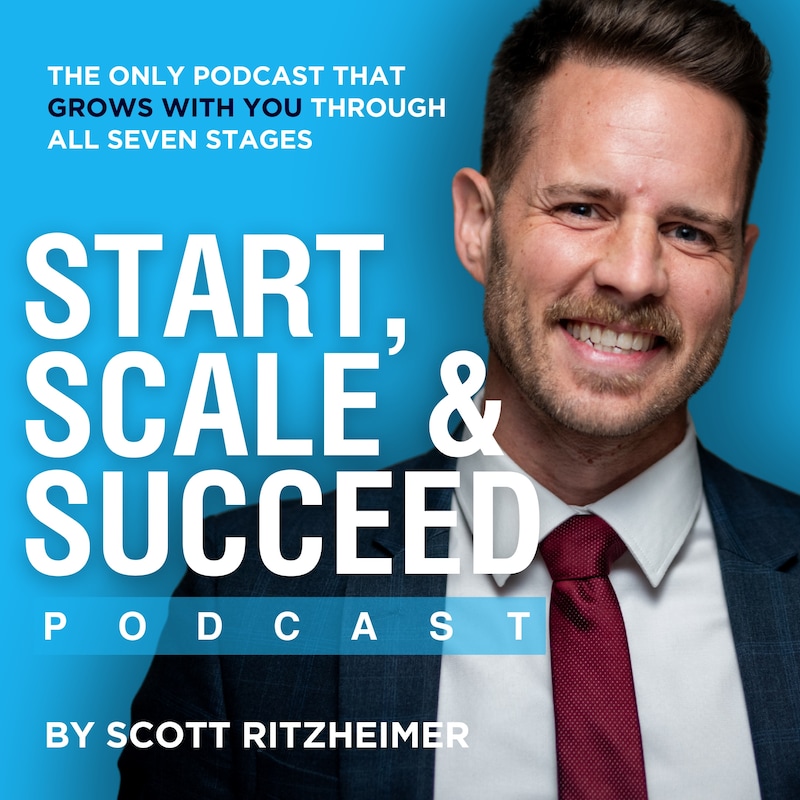
Shownotes
In this clarifying episode, Scott Ritzheimer, Founder of Scale Architects, shares why goals exist to drive better decisions and actions toward your vision. If you struggle with misaligned goals or ineffective planning across any stage, you won't want to miss it.
You will discover:
- Why goals primarily guide decisions and actions, not just achievement
- How to set goals aligned with your mission, vision, and values
- What reviewing goals teaches you to master the skill over time
This episode is ideal for for Founders, Owners, and CEOs in stages 1,2,3,4,5,6,7 of The Founder's Evolution. Not sure which stage you're in? Find out for free in less than 10 minutes at https://www.scalearchitects.com/founders/quiz
Scott helped start nearly 20,000 new businesses and nonprofits and with his business partner started led their multimillion-dollar business through an exceptional and extended growth phase (over 10 years of double-digit growth) all before he turned 35.He founded Scale Architects to help founders and CEOs identify and implement the one essential strategy they need right now to get them on the fast track to Predictable Success.
Want to learn more about Scott Ritzheimer's work at Scale Architects? Check out his website at https://www.scalearchitects.com/
Mentioned in this episode:
Take the Founder's Evolution Quiz Today
If you’re a Founder, business owner, or CEO who feels overworked by the business you lead and underwhelmed by the results, you’re doing it wrong. Succeeding as a founder all comes down to doing the right one or two things right now. Take the quiz today at foundersquiz.com, and in just ten questions, you can figure out what stage you are in, so you can focus on what is going to work and say goodbye to everything else.
Transcripts
Hello, hello and welcome. Welcome once again
Scott Ritzheimer:to the Start scale and succeed podcast. Yes, it is the only
Scott Ritzheimer:podcast that grows with you through all seven stages of your
Scott Ritzheimer:journey as a founder and I'm your host, Scott Ritzheimer, and
Scott Ritzheimer:today we've got another solo episode for you, and I want to
Scott Ritzheimer:spend it talking about goals. You see, over the last five or
Scott Ritzheimer:so months, I've spent an enormous amount of team time
Scott Ritzheimer:sitting in the session room with teams setting and reviewing and
Scott Ritzheimer:planning their annual and quarterly goals. And during that
Scott Ritzheimer:time, I've got to thinking quite a bit, and I've started asking
Scott Ritzheimer:all of my teams this one specific question, and I want to
Scott Ritzheimer:pose it for you today. And the question is quite simple, what
Scott Ritzheimer:is the purpose of a goal? Now think about it for a moment, and
Scott Ritzheimer:and again, I've asked virtually every one of my clients, and
Scott Ritzheimer:their their response is probably something similar to yours. I've
Scott Ritzheimer:had some of them say they wanted to achieve something, or they
Scott Ritzheimer:wanted to know where they were going, or they wanted to know
Scott Ritzheimer:what to focus on. Someone had nailed right on the head and
Scott Ritzheimer:said they wanted to make more money. Others said that they
Scott Ritzheimer:wanted a way of knowing how to hold each other accountable. And
Scott Ritzheimer:these are all great reasons. There's 1000 other reasons why
Scott Ritzheimer:we would want to have goals. But while they're all true, I think
Scott Ritzheimer:that those are mostly side effects. I think that those are
Scott Ritzheimer:benefits of goals. I don't think they're the real reason why you
Scott Ritzheimer:set a goal. In fact, I think that the real reason, and the
Scott Ritzheimer:only reason for a goal, the only purpose to have a goal is to get
Scott Ritzheimer:you and your team to make the right decisions and take the
Scott Ritzheimer:right actions to move toward your shared vision as an
Scott Ritzheimer:organization. So this is specifically in the
Scott Ritzheimer:organizational context. You might be able to come up with a
Scott Ritzheimer:couple other derivations of the rule, if you will, in other
Scott Ritzheimer:environments. But fundamentally, the purpose of a goal is to get
Scott Ritzheimer:you and your team to make the right decisions and take the
Scott Ritzheimer:right actions and move toward your mission, vision and values
Scott Ritzheimer:as an organization. That's it. And if that sounds obvious, it's
Scott Ritzheimer:because it is. But think about what happens when we get it
Scott Ritzheimer:wrong, if we set a goal because we want to achieve a certain
Scott Ritzheimer:result, or if we set a goal that we think is possible, and then
Scott Ritzheimer:find out that it isn't possible, if we don't really have a clear
Scott Ritzheimer:definition for goals, then how do we know whether or not we've
Scott Ritzheimer:set a good goal? And even more importantly, this doesn't happen
Scott Ritzheimer:this part of the year, but about three, four months from now, you
Scott Ritzheimer:know it will. What do you do when a goal seems wrong? And
Scott Ritzheimer:that's a really important question, and we've got to have
Scott Ritzheimer:a way of knowing whether or not the goal is right, and it's
Scott Ritzheimer:impossible to know that across all circumstances, whether the
Scott Ritzheimer:goal should be this many million or this many million so that
Scott Ritzheimer:that's out of the picture. We can't really do that, but we can
Scott Ritzheimer:come up with a metric to really decide whether or not the goal
Scott Ritzheimer:is correct for our team, and that is whether or not it's
Scott Ritzheimer:moving us in the right direction, if that goal
Scott Ritzheimer:continues to help us and serve us by getting us to make the
Scott Ritzheimer:best decisions and make take the best actions, then it's a good
Scott Ritzheimer:goal. Doesn't matter if you can achieve it or not. In fact,
Scott Ritzheimer:that's almost entirely cultural. You'll see some groups love to
Scott Ritzheimer:set goals that they don't stand a chance of achieving, but they
Scott Ritzheimer:are moved to make better decisions and take better
Scott Ritzheimer:actions, just by the sheer anticipation of the goal, by by
Scott Ritzheimer:the excitement that it creates and the way that it stretches
Scott Ritzheimer:them and gets them to think differently. It helps them make
Scott Ritzheimer:better decisions and take better actions. Now, there are some
Scott Ritzheimer:teams I work with that would just crumble under that kind of
Scott Ritzheimer:pressure. They don't do their best work being way behind on
Scott Ritzheimer:the eight ball. In fact, they do their best work by being ahead.
Scott Ritzheimer:And so for each of these groups, those who do their best work
Scott Ritzheimer:when they're under the gun, versus those who do their best
Scott Ritzheimer:work in their head, the right goal is going to be completely
Scott Ritzheimer:different, even if they're looking for the same result. And
Scott Ritzheimer:the reason for that is because the purpose of a goal isn't to
Scott Ritzheimer:be the right goal or not the right goal. The purpose of a
Scott Ritzheimer:goal is to help you make the right decisions and take the
Scott Ritzheimer:right actions. Really, really important distinction. And so
Scott Ritzheimer:especially for those of you who've been in this position
Scott Ritzheimer:before, you recognize that you get about midway through the
Scott Ritzheimer:year and you realize we were taking something when we set
Scott Ritzheimer:that goal. And so the question you have to ask yourself is
Scott Ritzheimer:first and foremost, if you feel like a goal is not going to be
Scott Ritzheimer:achievable, is it the right goal? Is it actually the right
Scott Ritzheimer:one that we need to move us in the direction that we need to go
Scott Ritzheimer:to achieve our mission, vision and values, and will it continue
Scott Ritzheimer:to inspire us to take the right actions and make the right
Scott Ritzheimer:decisions? If so, it's the right goal, leave it. Alone and don't
Scott Ritzheimer:change it. However, if you just missed the mark and you set a
Scott Ritzheimer:goal that's so unachievable but that it's not even relevant
Scott Ritzheimer:anymore, then by all means, you must change it. Why? Because the
Scott Ritzheimer:purpose of the goal is to not bludgeon you over the side of
Scott Ritzheimer:the head when you don't achieve it. The purpose of a goal is to
Scott Ritzheimer:help you make the right decisions and take the right
Scott Ritzheimer:actions toward your shared vision as an organization. And
Scott Ritzheimer:so I think it's really helpful to look at a goal through that
Scott Ritzheimer:lens. Is when you're setting it, whenever you're pursuing it,
Scott Ritzheimer:when you're setting other goals based on it, what you need to
Scott Ritzheimer:know is, is this thing helping us to make the right decisions
Scott Ritzheimer:and helping us take the right action? It really is the litmus
Scott Ritzheimer:test. Now that's also really important, because just setting
Scott Ritzheimer:a goal by yourself does absolutely nothing. I'll have
Scott Ritzheimer:teams, especially early on, they'll set goals because
Scott Ritzheimer:they're supposed to, right? That's what you do. You set
Scott Ritzheimer:goals some operating system somewhere, some person, maybe
Scott Ritzheimer:it's me, told them, You need to have goals. And so they set
Scott Ritzheimer:goals, and then they just kind of go back about their life,
Scott Ritzheimer:doing whatever they did. And every once in a while, they come
Scott Ritzheimer:back and check on those goals. And, you know, it's a little bit
Scott Ritzheimer:like a goal slot machine. You know, it's like, we don't know
Scott Ritzheimer:if we got it or not. Let's just pull the slot and see what
Scott Ritzheimer:happens. That's not very helpful, because that's not a
Scott Ritzheimer:goal serving its purpose. If you set your goals and then you
Scott Ritzheimer:don't look at them again until you review whether or not they
Scott Ritzheimer:were complete. Not they were completed, then what power have
Scott Ritzheimer:you given it to help you make the right decisions or take the
Scott Ritzheimer:right actions? Virtually none. Now, interestingly enough,
Scott Ritzheimer:there's still a benefit from setting those goals and writing
Scott Ritzheimer:them down, even if you don't remember them. That's another
Scott Ritzheimer:conversation for another time. We want to set goals that help
Scott Ritzheimer:us make the right decisions and take the right actions. And so
Scott Ritzheimer:when we're doing that, I have found it's really helpful to
Scott Ritzheimer:recognize that there are not necessarily different types of
Scott Ritzheimer:goals, but that goals set over different timeframes serve
Scott Ritzheimer:different purposes within this context of making the right
Scott Ritzheimer:decisions and take the right actions. And so I want to talk
Scott Ritzheimer:to you, regardless of what your goals are called, when you set a
Scott Ritzheimer:goal over each of these time frames, that'll make sense here
Scott Ritzheimer:in a second, how do those best support you in making the right
Scott Ritzheimer:decisions and taking the right actions? So I want to work
Scott Ritzheimer:through those one at a time here. The first one is 10 year
Scott Ritzheimer:goal, right? You'll hear this called the big, hairy audacious
Scott Ritzheimer:goal. Sometimes it'll be called a mission or a vision, depending
Scott Ritzheimer:on your definition of those, but this is like a long term out in
Scott Ritzheimer:the future goal. And how can something that's that far away?
Scott Ritzheimer:10 years is an eternity. I mean, think back to 10 years ago. What
Scott Ritzheimer:were you doing now? And how well could you have predicted what
Scott Ritzheimer:you're doing here today? Probably, yeah, probably not
Scott Ritzheimer:great. And so we can't use a 10 year goal as if we're predicting
Scott Ritzheimer:the future. That's not very helpful. But what 10 year goals
Scott Ritzheimer:do very, very effectively is they set the velocity for the
Scott Ritzheimer:organization. Now I'm using that word really specifically,
Scott Ritzheimer:because if you're a nerd like me, and you know a little bit
Scott Ritzheimer:about science and physics, you know that velocity is speed with
Scott Ritzheimer:a vector, or it's motion in a direction, and it's such a great
Scott Ritzheimer:definition for what a 10 year goal does. Because what it does
Scott Ritzheimer:is it says, Hey, where are we going? Right? What big goal are
Scott Ritzheimer:we? Where on the horizon are we headed? And then it sets the
Scott Ritzheimer:speed. So it's not just where we're going, but how fast we
Scott Ritzheimer:need to get there, and that's a really critical piece. So a good
Scott Ritzheimer:10 year goal. Maybe it's a five year goal, maybe it's a 50 year
Scott Ritzheimer:goal, but most folks it's somewhere in the five to 15 year
Scott Ritzheimer:range. And for even most within that, it's about 10 years out or
Scott Ritzheimer:the end of the decade. Some folks like to do the purpose
Scott Ritzheimer:behind that type of goal is to set the velocity of the
Scott Ritzheimer:direction and to tell your team where you're going and how fast
Scott Ritzheimer:you need to get there, and in doing so, it should help you
Scott Ritzheimer:create massive progress toward achieving your mission. Vision.
Scott Ritzheimer:Values as an organization, 10 year goals are really, really
Scott Ritzheimer:great for that, both the speed and direction. Once you know
Scott Ritzheimer:your 10 year goal, you can start to map that to Okay. How much
Scott Ritzheimer:progress do we made? Do we need to make? When do you need to
Scott Ritzheimer:grow a lot over the next years and then stabilize over the
Scott Ritzheimer:years after that? Do you need to stabilize over the next few
Scott Ritzheimer:years and grow a lot after that? We like to think that the path
Scott Ritzheimer:toward our 10 year goal is either a straight line or an
Scott Ritzheimer:exponential curve that just gets better over time, and that's
Scott Ritzheimer:never the case. It's almost always an S type curve or even a
Scott Ritzheimer:set of S's between now and 10 years from now. But mapping out
Scott Ritzheimer:where we're going and using that to start to figure out what our
Scott Ritzheimer:speed and direction need to be is super, super helpful. All
Scott Ritzheimer:right, let's move on three year goals. So there's this
Scott Ritzheimer:interesting thing for executive teams. Now this is really for
Scott Ritzheimer:the folks here that are in stages, 456, and seven, to some
Scott Ritzheimer:extent, really four and five. But one of the things that you
Scott Ritzheimer:start to recognize at that point is your growth goals become so
Scott Ritzheimer:big that you no longer have the luxury of waiting to focus on
Scott Ritzheimer:them until the year when you need to grow. And so for a lot
Scott Ritzheimer:of my stage four and stage five clients this year, we spent most
Scott Ritzheimer:of the strategic planning process not thinking about what
Scott Ritzheimer:this year's goals need to be, but what their three year goals
Scott Ritzheimer:need to be, and what has to happen between now and then. For
Scott Ritzheimer:example, if you're in an industry that requires a ton of
Scott Ritzheimer:technical expertise, you may be able to hire for that expertise,
Scott Ritzheimer:but you may also need to home grow that expertise. And if
Scott Ritzheimer:that's the case, that's not a couple months thing. For some
Scott Ritzheimer:industries that might take a couple years. If you're building
Scott Ritzheimer:out your sales team and adding another rep in a new territory,
Scott Ritzheimer:they're not going to sell as much on day one as your existing
Scott Ritzheimer:reps are doing on year 10. There's a ramp up period there.
Scott Ritzheimer:And for many of my clients in many industries, especially if
Scott Ritzheimer:you have a long sales cycle, that's a multi year process. And
Scott Ritzheimer:so if you feel like you're regularly starting the year
Scott Ritzheimer:behind, or you're trying to create growth? And it's just not
Scott Ritzheimer:happening. It's probably because you're waiting too long, and
Scott Ritzheimer:that's where the three year goal comes in, because what it does
Scott Ritzheimer:is it tells you what you need to do this year to set you up for
Scott Ritzheimer:the growth and success you want next year. And for any of you
Scott Ritzheimer:who are familiar with my work, one of the things you'll know is
Scott Ritzheimer:that in Stage Five, your job as the CEO is not focused on this
Scott Ritzheimer:year, but to focus on what's coming in future years, and what
Scott Ritzheimer:you need to do this year for those future years. This three
Scott Ritzheimer:year goal will help you bring your whole team into that
Scott Ritzheimer:discussion. It's really powerful, all right? Moving
Scott Ritzheimer:along one year goals, right? This most kind of common
Scott Ritzheimer:planning cycle. Everyone's got annual strategic planning that
Scott Ritzheimer:they do in some way, shape or form, and we can still be
Scott Ritzheimer:clearer, though, on what an annual goal is supposed to do.
Scott Ritzheimer:And interestingly enough, this is what I think that it's
Scott Ritzheimer:supposed to do. It's supposed to push back against the urgent and
Scott Ritzheimer:keep the most important things first right. We've all heard
Scott Ritzheimer:about tyranny of the urgent, and I think that our one year goals,
Scott Ritzheimer:if they're set right, are the best barrier to falling prey to
Scott Ritzheimer:the tyranny of the urgent. They allow us to keep the most
Scott Ritzheimer:important things important for an entire year. There's a saying
Scott Ritzheimer:that all of my clients now quote back to me, and I don't even
Scott Ritzheimer:remember who I got it from. It's not my saying, but they said we
Scott Ritzheimer:have a tendency to underestimate what we can do in the long term
Scott Ritzheimer:and overestimate what we can do in the short term. And annual
Scott Ritzheimer:planning is is the long term, you can make a ton of progress
Scott Ritzheimer:over the course of a year, but only if you keep the most
Scott Ritzheimer:important things as the most important things, and that's the
Scott Ritzheimer:role of one year goals. And so again, if you set those at the
Scott Ritzheimer:beginning of the year, and then you review them at the end of
Scott Ritzheimer:the year, it's not going to tell you how to keep the most
Scott Ritzheimer:important things important. However, if you set those goals,
Scott Ritzheimer:and then you keep them in front of you, and you consistently use
Scott Ritzheimer:them as you make decisions throughout the course of the
Scott Ritzheimer:year, you'll find those one year goals become really, really
Scott Ritzheimer:helpful in clarifying how you need to make decisions and
Scott Ritzheimer:what's on. And that brings us to the next and this is probably my
Scott Ritzheimer:favorite duration for goals, I think it's the most effective
Scott Ritzheimer:way to set goals. You can do it at an organization level. You
Scott Ritzheimer:can do it at a personal level. You can do it in your family.
Scott Ritzheimer:But these are quarterly goals, 90 day goals, 13 week goals,
Scott Ritzheimer:three month goals, however you want to describe them, there's
Scott Ritzheimer:some interesting science around this. We're not going to get
Scott Ritzheimer:into it. But basically, it, but basically, 90 days is about as
Scott Ritzheimer:far ahead in time as you can think and still think about
Scott Ritzheimer:yourself. And that's a weird way of saying it's about as far as
Scott Ritzheimer:you can go and setting a goal that you still think you have to
Scott Ritzheimer:achieve. There's some weird psychological stuff that happens
Scott Ritzheimer:after that, where we actually think it's future self school,
Scott Ritzheimer:not our goal, and we will do some stupid things because of
Scott Ritzheimer:that, but quarterly goals, that's hard to do. Quarterly
Scott Ritzheimer:goals all but certainly demand that you start taking action
Scott Ritzheimer:immediately. That's not true for one year goals, a lot of one
Scott Ritzheimer:year goals, you can wait a week or a month or even a quarter and
Scott Ritzheimer:still accomplish those goals. Well, you can't do that in
Scott Ritzheimer:quarterly goals or objectives, you've got to start making
Scott Ritzheimer:progress on them as soon as possible, and that's what
Scott Ritzheimer:they're there for. They are there to help you make as much
Scott Ritzheimer:process progress as possible toward your annual goals and do
Scott Ritzheimer:it as soon as possible. Quarterly goals are very, very
Scott Ritzheimer:effective. They are the way that you achieve your one year goals.
Scott Ritzheimer:Hands down best way to do it, if you're like some companies who
Scott Ritzheimer:just set annually, annual goals, and you're like most of those
Scott Ritzheimer:companies who get frustrated by your ability to achieve them, it
Scott Ritzheimer:may be because you're not breaking them down into
Scott Ritzheimer:quarterly emphasis and taking action on them at that level, a
Scott Ritzheimer:very, very common sense and very common problem, and could be
Scott Ritzheimer:just this answer to you. So if you feel like you're not making
Scott Ritzheimer:as much progress as you should, as soon as you should, you may
Scott Ritzheimer:want to either start working on quarterly goals or refine the
Scott Ritzheimer:way that you set them. There's probably an issue in there, all
Scott Ritzheimer:right, two more levels, sorry, three more levels, and we'll
Scott Ritzheimer:wrap up monthly. I'm not gonna call these goals anymore,
Scott Ritzheimer:although you'll still hear like called a sales goal for the
Scott Ritzheimer:month or something along those lines, these are probably better
Scott Ritzheimer:referred to as targets. They tend to be more KPI based than
Scott Ritzheimer:project based for most folks. And what these are helpful for
Scott Ritzheimer:these monthly goals is to help you know whether or not you're
Scott Ritzheimer:executing effectively. That's what monthly targets do, really,
Scott Ritzheimer:really well. And for this reason, you'll see a lot of
Scott Ritzheimer:monthly stuff tends to be around the KPIs that you track as an
Scott Ritzheimer:organization, things like revenue or profit or
Scott Ritzheimer:productivity or efficiency, gross margin. These are all
Scott Ritzheimer:targets that we typically review and track on a monthly basis.
Scott Ritzheimer:Why? Because monthly targets are there to help us know whether or
Scott Ritzheimer:not we're executing effectively. This is also true for those of
Scott Ritzheimer:you who set monthly milestones for your quarterly goals, right?
Scott Ritzheimer:What are those milestones there for to help you know whether or
Scott Ritzheimer:not you're executing effectively for your quarterly goal? So
Scott Ritzheimer:that's what monthly is for weekly is to make sure that you
Scott Ritzheimer:are taking the leading actions that will result in the success
Scott Ritzheimer:of your overall plan, right? So once we get down to the weekly
Scott Ritzheimer:it's all about taking actions. And for those of you who are
Scott Ritzheimer:trying to grow really quickly, you need to be taking the right
Scott Ritzheimer:actions before they're needed, before they're due. You need to
Scott Ritzheimer:be taking the right leading actions. And so that's why
Scott Ritzheimer:you'll get into the discussion about leading indicators. And
Scott Ritzheimer:leading indicators are almost always proactive, activity based
Scott Ritzheimer:metrics. We're looking at the leading actions that we need to
Scott Ritzheimer:take, not so much at this stage about the decisions that we make
Scott Ritzheimer:we need to make, but about the actions we need to take. And so
Scott Ritzheimer:weekly stuff is very, very good at saying, Are we doing the
Scott Ritzheimer:things that we need to do that will end up resulting in the
Scott Ritzheimer:success that we want? And then finally, daily, the most
Scott Ritzheimer:important thing you need to do today, that's really what it
Scott Ritzheimer:boils down to, and that'll give you a sense of clarity, give you
Scott Ritzheimer:a sense of calm, it'll give you a sense of certainty, because
Scott Ritzheimer:even if the world's changing around you, you can still have a
Scott Ritzheimer:pretty good sense of what you need to do today. And so if
Scott Ritzheimer:you're in an environment where there's a ton of change, like we
Scott Ritzheimer:all are, if you're in an environment where there's a ton
Scott Ritzheimer:of uncertainty, maybe your market is shifting, then
Scott Ritzheimer:sometimes all you can do is just focus on the most important, the
Scott Ritzheimer:most urgent, the most important thing you need to do today. And
Scott Ritzheimer:you stack a couple of those days together, and you'll be back in
Scott Ritzheimer:weekly territory. You'll be able to focus on your monthly
Scott Ritzheimer:targets, and you'll be able to build up from there. And so I
Scott Ritzheimer:just want to encourage you, as you guys are setting your annual
Scott Ritzheimer:goals, pursuing your annual goals, reviewing your annual
Scott Ritzheimer:goals, setting your quarterly targets, whatever it may be, I
Scott Ritzheimer:want you to run it through that lens is each one of these things
Scott Ritzheimer:helping us to make the best decisions and take the best
Scott Ritzheimer:actions to move toward our mission, vision and value, and
Scott Ritzheimer:if it is probably serving you really well, if it's not,
Scott Ritzheimer:hopefully you got a couple of pointers over the course of this
Scott Ritzheimer:episode that will help you and your team to set that and move
Scott Ritzheimer:forward from there. And the last thing that I want to share as I
Scott Ritzheimer:wrap up this episode is that when it comes to goals and
Scott Ritzheimer:getting the right goals, getting great goals, getting the goals
Scott Ritzheimer:that help you take the most, greatest, wonderfulest, being
Scott Ritzheimer:silly, but help you make the best decisions and take the best
Scott Ritzheimer:actions those setting those goals takes some time. It's a
Scott Ritzheimer:skill that you need to learn to develop. And I'd actually say
Scott Ritzheimer:each of those different timescales that I described is
Scott Ritzheimer:its own skill. It's kind of like the difference in riding a
Scott Ritzheimer:bicycle and riding a motorcycle, or if you want to go all the way
Scott Ritzheimer:down riding a bike with fixed gears to a bike that has
Scott Ritzheimer:shifters, it's a different skill. You have to learn to ride
Scott Ritzheimer:it a different way. You'll be going at a different speed than
Scott Ritzheimer:you were beforehand. And so the reason why that matters is
Scott Ritzheimer:because it's worth your time to learn this deal and get it
Scott Ritzheimer:right. You're gonna get it wrong at first. You're gonna set
Scott Ritzheimer:terrible goals to start with, no problem at all, and you might
Scott Ritzheimer:not achieve any of those goals. No problem. At all you might
Scott Ritzheimer:achieve all of those goals. That's not if it was the wrong
Scott Ritzheimer:goal in the first place, then who cares if you got it or not.
Scott Ritzheimer:What really matters is whether or not you're learning the skill
Scott Ritzheimer:of setting and achieving those goals. And so each time you set
Scott Ritzheimer:goals, it's worthwhile to make sure that you take sometimes
Scott Ritzheimer:almost as much time that you spent setting them as reviewing
Scott Ritzheimer:them. After we do this a lot with my consulting clients, we
Scott Ritzheimer:spend a lot of time reviewing what we learned from these
Scott Ritzheimer:goals, what went well, what didn't go well, what we learned,
Scott Ritzheimer:what we can do better next time. Because what we're doing is
Scott Ritzheimer:we're actively working to develop the skill of setting
Scott Ritzheimer:great goals. And what are great goals? They are goals. They are
Scott Ritzheimer:targets. They are distant objectives that help you and
Scott Ritzheimer:your team make better decisions and take better actions. I hope
Scott Ritzheimer:this was helpful for you. It's been a conversation I've had
Scott Ritzheimer:with lots of my clients recently, and so if they're
Scott Ritzheimer:having those challenges, you might need to I thought it'd be
Scott Ritzheimer:a great discussion for us here on the podcast again. If these
Scott Ritzheimer:episodes are helpful for you, let us know. Love to hear from
Scott Ritzheimer:you. I hope you enjoyed this episode, and I cannot wait to
Scott Ritzheimer:see you next time. Take care.