Shownotes
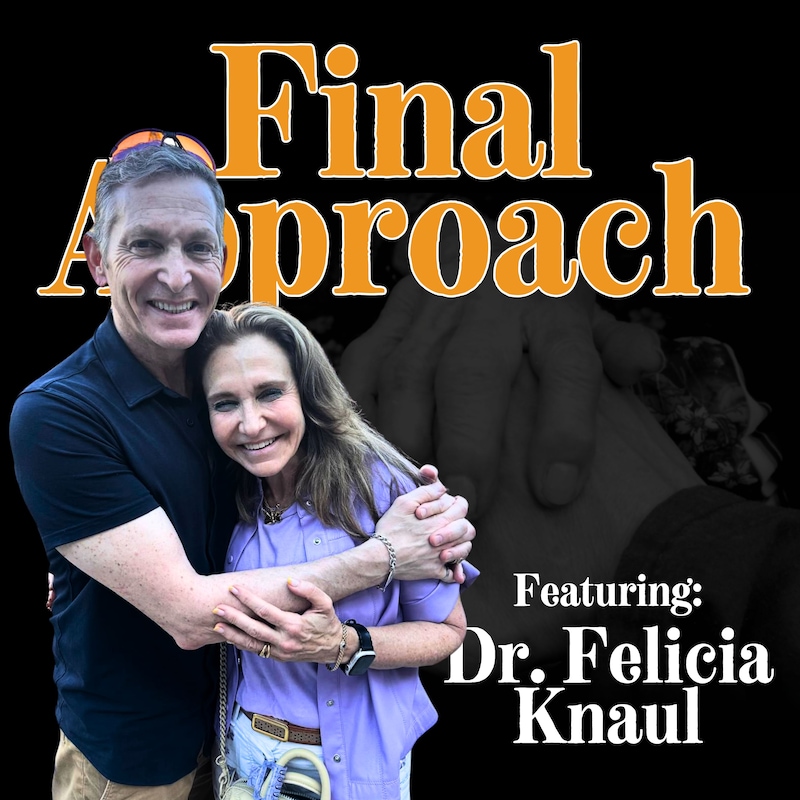
Welcome to the very first episode of Final Approach: Human Stories From High-Stress Professions, a podcast dedicated to the untold stories behind caregiving, family, and high-paced careers. I’m Jonathan Knaul, your host, and for this debut episode, I’m joined by my incredible sister, Dr. Felicia Knaul, a world-renowned public health leader. Together, we open up about our journey as caregivers for our parents, blending the extraordinary and the ordinary with stories of love, vulnerability, and resilience.
Felicia’s impressive career—from her influential work with street children in Colombia to her advocacy for cancer and palliative care—is the backdrop to our conversation. But the heart of the episode is my motivation to write a book about caregiving, triggered by our shared experience caring for our mother as she declined from dementia, and our father’s earlier battle with cancer.
We explore how my background as a military pilot and test pilot shaped my approach to caregiving, especially during the isolating days of COVID-19. Felicia brings to light her own perspective, sharing how pandemic restrictions separated her from our mother and how remote tools became lifelines for connection and therapy. We talk candidly about the burnout, emotional vulnerability, mistakes, and ultimately the love that kept us going.
By weaving together the wartime survival stories of our parents, the stress of caregiving through the pandemic, and the practical wisdom of checklists and compassion, we share not just a guide for others—but a testament to family. This episode is for anyone suddenly thrust into caregiving, searching for support, or needing reassurance that the “final approach” can be met with strength and heart.
Key Takeaways
- Caregiving often arrives unannounced: We rarely plan for it, but when it happens, the experience is both challenging and life-changing.
- Checklists and structure help: My military and test pilot training instilled a discipline and process that translated into practical guidance for caregiving—especially during critical moments.
- Emotional vulnerability is not weakness: Opening up about the hard days, mistakes, and burnout empowers others and builds connection.
- COVID-19 changed everything: The pandemic complicated every aspect of caregiving—from isolation to securing help—and revealed the need for creativity and resilience.
- Personalized care is vital: To truly care for someone, you must know them—what comforts them, what bothers them, and what makes their life meaningful.
- Remote support matters: Virtual therapy, music, and art sessions became essential for maintaining connection and well-being during the pandemic.
- Love drives the process: Beyond procedures and organization, it’s the love for our mother (and for each other as siblings) that fueled us through difficult times.
- Resources and guides are essential: The book I wrote, and this podcast, aim to fill gaps for caregivers—especially when dealing with administrative and emotional hurdles after loss.
If this episode resonated with you—if you’re a caregiver, a family member facing tough times, or someone navigating high-paced professional and personal demands—I invite you to stay tuned and join our community. Subscribe to the Final Approach podcast, check out my book and audiobook at finalapproachbook.com, and sign up for our newsletter for tips, guidance, and shared stories. Reach out and let us know your caregiving experiences. Remember: you’re not alone.
Thank you so much for joining us on this journey. Best in care,
Jonathan
Transcripts
This is a proud moment for me. I'm sitting with my amazing sister. We're sitting in her house at, actually, it's the chancellor's home at UCLA where my sister just moved with her amazing husband, Dr. Julio Frank. So this is my sister, Dr. Felicia Knaul, an amazing public health champion. She did her PhD at Harvard, of all places. Her PhD thesis worked with street children in Bogota, Colombia, at a time when things were pretty bad with the drug cartels in Bogota and street children were disappearing in tremendous numbers.
Jonathan Knaul [:And Felicia did an amazing thesis that looked at the statistics of how they got there and where they went to and what became of them, and was able to show quite concretely that there was an organization behind how these, these children were sadly losing their lives and disappearing. But she did an amazing thing, exemplifying and bearing out who those people were and won her PhD for that and has done amazing things otherwise in the world and has really focused her life's work on getting cancer prevention and promotion. Having suffered through an awful spout of breast cancer herself, I'm so glad that my sister survived. You can touch my hand. You're a survivor. With her husband, who was previously the Secretary of Health for Mexico, Felicia was very public about what she went through as she went through breast cancer. And that really did a lot for people in Mexico at a time when prevention and promotion were quite a bit further behind in North America or other parts of North America. And then since then, Felicia's worked very strongly to promote pain and palliative care to people who otherwise would not have access to that in rural and impoverished areas in a number of places around the world.
Jonathan Knaul [:And she's a leader in that and known internationally for, and is published in the Lancet and leads commissions in the Lancet. And I. My sister is quite wonderful and amazing. So here she is now here of all things, at ucla with her husband leading the show at ucla, so to speak, along with a number of other great people at ucla. And it's just fortuitous that you're here living an hour from me because I moved here two years ago to Palmdale, California, just an hour north of la, where I work as a test pilot. So. So this is awkward because you're going to interview me for the opening of my podcast, which is the podcast about caring for loved ones, talking with interesting people and high paced careers. And I'm doing all the talking so well.
Dr. Felicia Knaul [:Hey, bro, I didn't know you knew that I had done all those things. That's really nice to hear.
Jonathan Knaul [:Of course, I know you're my sister, my big amazing sister. And you're well published and you, you advertise quite well. But also I just know because I care.
Dr. Felicia Knaul [:But this is about your book. Not about my book.
Jonathan Knaul [:Right. And you're supposed to be interviewing me.
Dr. Felicia Knaul [:But it's very close to our family and a book about issues and things to do with our family. So I'm not going to introduce you because I'm supposed to be interviewing you so that you can, through the interview, introduce yourself.
Jonathan Knaul [:Okay.
Dr. Felicia Knaul [:Okay. I think that's the idea.
Jonathan Knaul [:Okay.
Dr. Felicia Knaul [:But I echo my brother's amazing. I call him top gun. Mr. Top gun.
Jonathan Knaul [:Ah, really?
Dr. Felicia Knaul [:Oh, yeah.
Jonathan Knaul [:Wow. Okay.
Dr. Felicia Knaul [:Canadian Top Gun.
Jonathan Knaul [:Okay. Well, I mean viewers would, Viewers would maybe associate with that better. People in my industry would not see it that way because Top Gun's a bit of a different. It's a different niche.
Dr. Felicia Knaul [:Different. No, no, no. But you know what I'm saying. You know what I'm saying. He's one of these great sexy super pilots of helicopters in this case. But this is not what we're going to talk about.
Jonathan Knaul [:Right? Mostly helicopters.
Dr. Felicia Knaul [:Mostly helicopters. You see also see Top Gun also does fixed wing aircraft.
Jonathan Knaul [:I do when I have time.
Dr. Felicia Knaul [:See. And I didn't know the difference between a fixed wing and a. Not fixed wing aircraft until recently. Just that they both go up in the air really high and that Jonathan flies both of them. But we're going to talk about the book.
Jonathan Knaul [:Sure.
Dr. Felicia Knaul [:So why don't you share with our audience why you decided to write this book?
Jonathan Knaul [:Yeah. A packed question. How do I answer that? It was a labor of love. I think I started writing that book maybe about 10 years ago. I started making notes. I mean, we had this amazing. We had, we had amazing parents and, and we had an amazing mother who always came out with wonderful one liners here and there that just would knock your socks off in a humorous, funny way. But she started to develop her challenges and we had to take care of her.
Jonathan Knaul [:And so I started making notes and I wanted to write a book. I certainly wanted to write a book about my career as being a combat pilot and a test pilot and about some of the crazy things I've done and frankly still do. And I wanted to write about our extraordinary parents. I always thought there was something in there. And then of course, our mother developed full on dementia and we were taking care of her. And then there was that period in Covid where I was alone taking care of her and it's so hard to caregiver and I really Wanted people to know about it. So I saw the opportunity to combine talking about our parents extraordinary lives with our mom who went through World War II in London, and our father who survived both Auschwitz and Dachau. And I saw the way to tell that story, talk about them, and talk about caregiving.
Jonathan Knaul [:But what I really wanted to do and what I still want to do with this podcast is, gosh, we don't plan to be caregivers. I mean, it just gets thrust upon us, and it's so hard. But I really saw that opportunity to tell the stories of our extraordinary parents and help people with caregiving, because it's just. It's so hard. You don't know where to turn to. I mean, the way we did it was that you and I, we navigated by. As the challenges showed up, we talked to our network, we talked to our friends, and tried to figure out what to do next and made a tremendous amount of mistakes along the way. Although I like to say that I think we both did the best job and cared very deeply about our mom.
Jonathan Knaul [:Of course, our father, too, when he was sick with cancer. We were just teenagers, so that's what it is. Maybe going on a bit too long here, but I really wanted to tell our parents stories and use being a test pilot as a platform to make it interesting and give people a guide about caregiving.
Dr. Felicia Knaul [:So tell us more about how the book is organized.
Jonathan Knaul [:You're a natural at this. You didn't prepare at all. You're a natural. So the book, I just went ahead. I just went ahead and started writing, and it sort of organized itself. And the way it's organized, because I didn't write an outline. Chapter one is. It's got nine chapters, and it's organized in such a fashion that I tell the story in time.
Jonathan Knaul [:Sort of contemporary. Hey, what's our mother going through in her 90s? And then I go back and tell her story starting in the 20s, when she was born in London, and through the war. And then I go back to caregiving for mom. And then I go back to Ziki's story, our. Our father growing up in Poland. And then I go to what he went through in the Holocaust. And I go, you know, to caring for Ziggy through cancer when we were teenagers. So, you know, again, Ziggy is our father for the audience.
Jonathan Knaul [:Marie is our mother. And then I go back to caring, you know, about Marie in contemporary times. And I have a chapter on decision making. I really just focus one chapter based on my career as a test pilot. And all the other venturous things I've done that were part and parcel of that and about making decisions. And so it's nine chapters, and the chapters go back and forth that way. And as we get to the end, the last chapter is really about Mom's last days, and it's about grieving. And then I also talk about all those things you have to do when somebody dies.
Jonathan Knaul [:There's a tremendous amount of things you have to do posthumously. There's no guide for that, and nobody knows really what to do. And it's very daunting or can be. So it's all there. I try and write the book in the sense of the nine chapters that make the story interesting and takes you from one chapter to the other and keeps you intrigued, keeps you dialed in, so to speak. And then there's annexes at the end where I get into more of the detailed administrative lists of things that. That you. All the tips and guidance and thoughts and things that you would have to do, little things from how to keep a door open when you're pushing a wheelchair through to all the different posthumous administrative stuff you have to do when somebody passes away.
Jonathan Knaul [:And that stuff's really important. And I list all those things, things you need to start thinking about when people are alive, things to make their life easier and your life easier, especially when they pass.
Dr. Felicia Knaul [:So is your training in the military and as a pilot, did that help you to put together these lists? How did you apply your training to your caregiving?
Jonathan Knaul [:You know, you're not. A couple of people said it. To me, it sounds almost military discipline, because, yeah, I think in the military we have a checklist for everything. And certainly when you start early on in your military career, and as you know, I spent 33 years in the Canadian armed forces. I had a very long and a great, great career. But early on, when you start off, even when you go to basic training, there is a checklist for putting your uniform on. There's a checklist for polishing your boots. There's checklists for everything.
Jonathan Knaul [:And we get really good at quantifying all the things that we do in the military. We have what we call aide de memoirs, which are guidebooks for, know, planning large operations, sort of. Sort of, so to speak. Actually, we have a much larger manual for, and process for doing that. But that helped me. My engineering work helped me, and I could see it in a more quantifiable way to put. Put things together. And it's not just checklists that are in there.
Jonathan Knaul [:It's. It's guidance. And I've done it in a guidance sort of way. Certainly being a test pilot helps me too, because we very much use checklists for everything, which is something that you're also associated with because you've seen in the medical side, surgeons in that group start to pick up checklists. So that's why it made it that way for me. And again, I go back to that. I saw a way to make it not boring. There's some wonderful caregiving books out there, outstanding ones.
Jonathan Knaul [:But it's hard to find one that's interesting. And when you're going through caregiving, it's certainly good if you can have something where you relate to the person and you can bring those checklists across and that guidance in a way that is interesting. And they can relate to you, the speaker or the author. And so what I like to say about the book is that the book is about me. It's about you, too. It's about our family, but it's not for me. It's not for us. That book is for you, the listener.
Jonathan Knaul [:It's for the people reading the book or the listener. It's an audiobook too. I recorded it and that's who it's for. And I really found that way to bring it across, I think, in a very personal way to be. And what I think is challenging for you and I sitting here and talking. And even when we were talking earlier today and I was having a tremendous amount of hesitancy getting towards doing this first interview, and I think it was hard for you too, because it's so personal. And that's what I did with this book, is I made it very vulnerable. And that's the big thing about why I use the test pilot platform as well.
Jonathan Knaul [:Because in my career, and you can use the Top Gun analogy, egos run pretty high in my job. And people don't like to show emotion. It's not cool. It makes you vulnerable. It might show that. I think the concern is that it might show a weakness. So I see it otherwise. And I think showing emotions in the right way are really good thing.
Jonathan Knaul [:And so I purposely. I'm an unusual test pilot. I'm showing the vulnerable side, and I think that's strength. And I want to do that so that people could relate to. To me and the story to us, because the story, again, includes you in a very big way.
Dr. Felicia Knaul [:So a lot of the most difficult times of caregiving happened during COVID times when I often couldn't be there because I was living in the United States. And I couldn't get into Canada. The restrictions were very severe. And you ended up having to take. Really. I wanted to use brunt, but it's not the word brunt. To take on some of the most encompassing periods of the caregiving, often alone because of COVID when it was very difficult to even identify individuals who would come into a home and help in any kind of a regular way. Covid now seems like a thing of the past, but it's the very recent past.
Dr. Felicia Knaul [:Why don't you share a little bit about that?
Jonathan Knaul [:Yeah, you know, I'll first of all say it's so interesting. And that's where, I mean, here we are, 2025. First of all, before I get into like, the detail of how I handle that, which I think is really important. That's what. Why again, I thought that the story about our parents was so interesting. Our mom was born in 1923. The Spanish flu was just a handful of years prior to her birth. So it was still very contemporary.
Jonathan Knaul [:I mean, when she was born, the world was still climbing out of the Spanish flu, which killed an estimated 50 to 100 million people. Nobody really knows. And in a time when the, you know, that was a more significant amount of the world population, much more than it is now. Here we are, three years, 2ish years. Two to three years post Covid. Hard to say. Exactly. I mean, and we're still living with COVID but not as a pandemic, certainly.
Jonathan Knaul [:So. And again, our mom only died in 2022. I mean, she almost made it to 100. So there are two. That's what makes. Makes it so extraordinary. So Covid. And there's a funny thing I remember a couple of times, mom, you know, in Covid, people were getting isolated so much and many people were getting very.
Jonathan Knaul [:Just people everywhere, businesses, people, anybody, very upset about all the restrictions that were being imposed. I remember our mother one day just looking at me into the caregivers and saying, what's the big deal? Have you ever been through a war? And I thought that was so appropriate. So. But dealing with things during COVID well, that's interesting.
Dr. Felicia Knaul [:That was basically also Her Majesty Queen Elizabeth's message as well.
Jonathan Knaul [:Well, yeah, it was. That's right. And I don't think mom, I don't know if she remembered it on purpose. It just surfaced. And as I talk about in the book, I'm deviating a bit here from COVID I'll come right back to it right after this. But our mother, in the book, I call her Queen Betty because she Was. She was such a cross to me between Queen Elizabeth, so incredibly elegant, articulate, moral, and Betty White, who also was, you know, a tremendous actor and a very articulate, bright, brilliant person with a very long story career. And gosh, was she funny, which, you know, had.
Jonathan Knaul [:She just came out with things that you would never think of that were so funny. That was our mom. But Covid, to get to that question, it was. It was certainly really hard. I mean, I first I left, and this is. I left the military in 2019 after 33 years and came down here to California to work as a test pilot. And Covid struck just really. I actually got here in January 2020 and Covid turned up within weeks of me getting here.
Jonathan Knaul [:And we all were working at home or sequestered to home, so to speak, or had very challenging work environments. And that's when mom started to. The dementia really started to come on. I had put a lot along with your help, you know, things in place to make sure she was cared for back in Toronto. But I quit my job in June of 2020 and went back to Toronto and moved in with her and things were pretty tough. Covid was full on within a few weeks of me getting there. I mean, we had a number of caregivers, they're working 24 and 7. At one point we had five to cover the period.
Jonathan Knaul [:And one by one they walked out. I was left with two who could do part of the week, Florin and Kate, who are angels, but they couldn't do the full week. So it was basically about four days where I had them and three days where I was completely alone with Mom. And also the caregivers who left, they gave no notice, they just walked out. In one case, one. Two of them just didn't show for work, sent me a text. One just said, as her shift was finishing, I'm done. And that was really daunting.
Dr. Felicia Knaul [:I mean, and a little help from her hairdresser too.
Jonathan Knaul [:Yeah. Yes, from Frida. Thank you. Frida who? Frida's wonderful. Frida really tried and Frida was very patient. The challenge with all of these folks is that. And even when they said they did not Frida, she never said I had dementia care training. She certainly didn't.
Jonathan Knaul [:She was very patient nonetheless, but it was very hard for her and she could only do a couple of hours on a Sunday, that was it. The other caregivers who would say, I have dementia care training, maybe they had some minimal training, but you've got to have a lot of training to deal with a Person with dementia, it's really hard, and it's absolutely unusual. Their minds work in a very unusual way. So, yeah, being alone was really tough. I mean, at that point, our mom, quite frankly, was in diapers. And I think that was the hardest part was the first time I had to change her diaper and clean her up. I mean, that had happened to me when. When.
Jonathan Knaul [:When our father. When Ziggy was sick in the hospital with cancer. We did have nurses nearby, but I had to clean him up a couple of times. I was 15. But that was hard for me at 15, but, you know, a little bit easier because it was man to man. But Dylan taking care of my mom in that way, our mom was very. That was a bit of a baptism by fire. But, you know, I got through it.
Jonathan Knaul [:I will say that that was the extraordinary part of our mother was somehow she would her. The funny side. The Betty White would still come out with the dementia. I one time was cleaning her, cleaning her up. And she's standing up in front of the mirror in the bathroom, and I'm halfway bent over taking care of her, the diapers around her ankles. We just finished watching something on TV about astronauts and about them doing spacewalks and about how they have to wear undergarments and diapers and of a form, because they're out there for hours at a time. And that's how they, you know, bodily functions are taken care of. So she got all that, despite being a dementia, and somehow ran the thread to make a joke.
Jonathan Knaul [:And as I'm. I was having a hard time getting. I was not this. It was difficult. And she just looked in the mirror and smiled. She said, so you think I could be an astronaut, too? Because she's. Of course, because she's wearing diapers. I started laughing, crying.
Jonathan Knaul [:It was so funny. Or another time, you know, this is what took the edge off, because another time I was cleaning her up and I made a mistake with something and I said, oh, shit. She goes without missing a beat. She just. Very quietly, they said, yeah, it happens. So in her English accent. But, you know, back to the COVID thing, it was tough. The caregivers left.
Jonathan Knaul [:I'm on my own, had to take care of everything and sleep was not there because I had to sleep in the bed, in a bed next to mom because she did not understand she was a fall risk. And so she would just get up when she felt like in the middle of the night was usually. On average was three or four times because she had to pee. She would just get up and wander to the bathroom and she would instantly fall over. So I had to be there. So I didn't, you know, sleep, wasn't there. I had to watch her all the time like a hawk. So how do you make meals when you have to watch somebody because you're worried they're going to get up and fall over or, you know, there are accidents, bodily accidents happen.
Jonathan Knaul [:So things you have to clean up, things, you know, you step in. How do you get groceries? And thankfully they were delivering groceries by then. And instacart. Instacart and other ways of getting groceries, cleaning the home. But the really difficult part about dealing with dementia when you're alone with somebody in their apartment is how do you keep them entertained? How do you keep them occupied? How do you do the right things for a dementia patient? Because that's the really tough part. You can't just sit and watch TV with them. You can't just take a drive with them. These are things I did do with mom.
Jonathan Knaul [:And thankfully she was always very much at ease with me. She didn't have outbursts of. She didn't have outbursts. But, you know, that was the really tough part. And so I was thankful for the things that you did on top of it, where you would meet with her on the iPad every day, where you organized music therapy for her. I'm a huge proponent of music therapy for dementia patients. You organized that for her through Dr. Amy Clements Cortez, amazing doctor of psychotherapy and music therapy, and along with Grace Rogers, who actually administered the music therapy remotely.
Jonathan Knaul [:Grace was amazing, is amazing. And the art classes that you did via remote too, those really helped out. But of course, we could only do those for a half an hour to 45ish minutes at a time. And there were limits on that.
Dr. Felicia Knaul [:And they were almost all virtual, too.
Jonathan Knaul [:They were all virtual? Yeah, they were all virtual. So, yeah, you know, all those things are really tough. I had arguments with mom too. That's the tough thing is it's very hard to see the dementia for what it is and what it's not. And how do you communicate with a person with dementia? You know, I found myself in arguments and had to back out of them. Or you get really, really tired, like incredibly tired, and then you start reacting in ways that, that you wouldn't normally. That was a really tough part for me, especially along with the COVID isolation, was because I've served in two theaters of war over long periods, many months at a time, had, as I mentioned, a 33 long year career. So between What I saw and people who I worked with and for, I saw a lot of operational stress and post traumatic stress disorder.
Jonathan Knaul [:Thankfully, I don't have PTSD and didn't experience that. I'm very lucky. And there's a spectrum. Operational stress, personal post traumatic stress disorder. I also saw it in ski patrol where we dealt with a lot of very broken bodies, so to speak, on a ski hill and quite dramatic events. And I saw a lot of my fellow patrollers touched in ways that were tough to deal with. And I didn't experience that. Not that I'm immune to it, but for whatever reason, and there could be a whole host of those reasons, I mentally and quite well in that way.
Jonathan Knaul [:But caring for mom, I got caregiver burnout, which is similar. And on a, on a similar, probably on the same spectrum, you know, it's a form of operational stress and it's a, it's a, it's an injury, it's a mental injury, mental health injury. And it's hard to deal with. And it was scary. And that was the big challenge. I mean, here I am alone, you know, getting burned out. He only physical person that Marie could depend on was me. And I was starting to.
Jonathan Knaul [:To be compromised. And that was, you know, that's where you and I were talking. We had to start making the decision about getting your internal home. My biggest fear was that, you know, I would get really have. Have a serious. Well, even if I had just an injury and I couldn't take care of her anymore, what would happen to her? You know, where would she end up? You never want the government to take over. And that's the challenge. And the other part about the challenge with COVID too is once we got her into the caregiving home, which was, you know, an amazing caregiving home, and I think that, you know, they did tremendous work.
Jonathan Knaul [:You know, that was during COVID and they had outbreaks in that home. And there was a total of six weeks, a bit broken up. There was a 30 day period. And I think actually there's more. I think There was a 30 day period and two 2 week periods where mom was isolated to her room because they had a lockdown. And we were able to pay for and organize a private caregiver to be with her in that room. But I mean, her room was tiny and she was not allowed to leave the room period for at one point, 30 days. And that was.
Jonathan Knaul [:It broke my heart. It was awful. Thankfully, I was allowed to come in once every day and I was also allowed to be with her all gowned up, but it was. It was really hard. And to see what it did to dementia patients, the worst thing you can do is isolate them, which is also why it's very difficult to take care of a dementia person in. In their home. You know, they need. They need the right care, they need the right form of.
Jonathan Knaul [:Of daily stimulus done in the right way by professionals. Anyways, long answer to your short question.
Dr. Felicia Knaul [:I mean, clearly the specter of COVID and all of this changed things in ways we couldn't have imagined and made it just incredibly difficult. And still we were really so much luckier than so many who lost a loved one and weren't able to be there to say goodbye or at the end. And thankfully, thankfully we escaped that, all of us. So we were really very, very lucky as a family in that way. But the timing was incredibly difficult in coinciding with COVID and you being there alone and me being outside of the country. And I still remember that just before you came back, she had a tremendous. Remember, she had a tremendous down. You were in the process of driving back and I had gotten there for the summer.
Dr. Felicia Knaul [:It was Covid, but still Covid. It was the summer of 2020, but before, just before you had arrived, and we didn't think she was going to live for very long. We didn't think she was going to make it until you got there. I really didn't think she was. And she made an incredible comeback that summer from not being able to walk. She basically insisted and taught herself to walk again and to eat again. But whatever happened, which we never fully understood, that one night she was. She went from being physically functional to completely dysfunctional and bedridden for several.
Dr. Felicia Knaul [:For weeks, and pulled through it, which was very much how she was. She was determined she was going to stay alive and be with us for longer, and she did that. But we're probably coming to the end of the podcast and the things you describe. And I know, I saw how comfortable she was with you and how difficult it was for her to be separated from you and how much you needed your time on your own. But, you know, the part that I think you should close with is all of this maybe function a certain way because of your training, because of who you are, but the bottom line is it worked because you loved her so much and she loved you so much. And so maybe you want to close by speaking a little bit more about the aspects that are more about the loving that go into caregiving, because however trained you are, if there isn't that piece of it, which is, be it your own family member or someone else, if there isn't that heart in it, that piece of love, it doesn't work the same way. It's not the same as flying a plane.
Jonathan Knaul [:Not the same as flying, for sure. No. You know, I think that the, the flying the plane part that's important is. And also all the work I did in the military, I really had a lot of practice with, with decision making and decision making in different time compressions and, and so, you know, I understand that, you know, I've actually studied it and certainly had a lot of practice in different ways that other people haven't. So that did help out a lot. But I think what you're getting at is to really care for somebody, you gotta know them. You have to know the person. I think that the caregiving facility that we finally got mom into, they really did an amazing job of getting to know her so that they could care for her properly.
Jonathan Knaul [:I think that Kate and Florin in particular did a very good job of that in, in our home or in Marie's home for the period of time that they were there. And yes, but even then, no matter how good the caregiving facility is or how good the caregivers are, you still even more really got to know the person. So, you know, I understood Mom's extra special needs. I understood how she brushed her teeth and what her resistance with having dementia would be. She always brushed her teeth, but now with dementia, her habits with brushing her teeth had changed and she would forget or she wouldn't really know how to brush her teeth anymore. But I understood how her teeth needed to be brushed, for example. So what I'm trying to get there with this is that I really knew her and, you know, I hadn't seen or I hadn't dealt with her toothbrushing for maybe six weeks or two months, a period at one point while she was in the caregiving home. And then I had to take pick her up one day and take her to the dentist to get her teeth cleaned.
Jonathan Knaul [:That was a big challenge. And he was really angry afterwards. He came and saw me. He's like, you can't be doing this anymore. She has to pressure. Her teeth have to be brushed properly or else I'm going to be pulling teeth out within the next couple of months. Her teeth were starting to really get the effects. As much as the caregiving facility really cared and tried really hard, they didn't really understand and they were missing the part of how to make sure her dental care was done daily oral care was done properly, and they were missing it.
Jonathan Knaul [:Not because they were sloppy, not because they were forgetful, not because they were incompetent, but because they. There was an intricacy that they just didn't know. So you really got to know the person and. And also just dealing with them emotionally, you really got to know the person. And I think that was, you know, the big thing. And of course I care. You know, I care for a mother very much. I love her as much as you do.
Dr. Felicia Knaul [:Well, listen, I. I was thinking that the way. There's only one way to close this first part of your podcast, which is to say that our mother would have loved to read your book.
Jonathan Knaul [:Yeah, thanks. That's. Well, just thanks.
Dr. Felicia Knaul [:And maybe she has from wherever she is, but she would have been very proud, and she would have been here at the podcast and with you at every presentation of the book, and she would have been your biggest fan and celebrating every moment and every page of it. That's who she was, and that's how much she loved you. And on the times when you doubt, because it took so much work and all of this takes so much work. I know what it takes to write a book. I think. Just remember that she would have been proud of every single page.
Jonathan Knaul [:That's huge. Thanks, sis. Let me end with one more thing, and I'll try and be quick, really, because I know it's very late. We're both tired. Had a long day today. You know, through caring for mom in particular, we had our challenges in communication, to say the least. And it was tough, but one. And I think that happens with siblings.
Jonathan Knaul [:But one thing that really means everything to me, and I certainly want people to hear this, is that I love my big sister so much. And that never changed. And we always came back to what was best for mom, despite our arguments. And you and I came back to each other, and here we are being close and now doing, of all things, this podcast. So that means everything to me. And thank you so much. Thank you for interviewing me on my podcast and for this intro and for all the folks out there. My heart goes, both of us, our hearts go out to you in care.
Jonathan Knaul [:Tune in again. I don't know who I'm going to have on next, but it should be interesting. We're here to. We're here to help, so check out for my newsletter on www.finalapproachbook.com. i don't have a salutation made up yet, but I'll just say I wish you all my our best in care.
Dr. Felicia Knaul [:I think best in care is wonderful.
Jonathan Knaul [:There you go. Best in care.
