Shownotes
About the Show:
"Public transit actually provides freedom."
– Joel Gardner
This episode is part of a special series supported by the Walton Family Foundation. Through their Home Region program, the Foundation is investing in the people and ideas shaping Northwest Arkansas—across housing, entrepreneurship, transportation, and leadership.
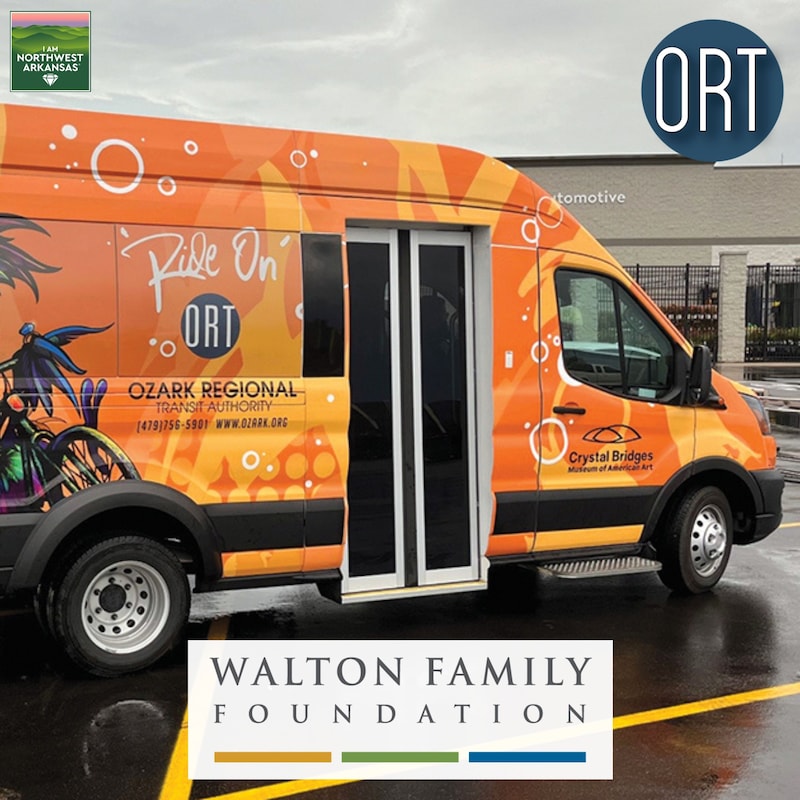
In this episode of I Am Northwest Arkansas®, host Randy Wilburn sits down with Joel Gardner, Executive Director of Ozark Regional Transit (ORT), for an inside look at the state and future of public transportation in Northwest Arkansas. Joel brings years of experience from transit systems across the country and shares how Northwest Arkansas can grow smarter as the region’s population booms.
From the story behind ORT’s community-centered headquarters in Springdale to the expansion of the ORT On Demand service, this episode offers practical advice, local insight, and clear reasons why investing in public transit matters for everyone—from college students and seniors to busy parents and professionals. Discover how public transportation equals freedom, relieves parking and traffic headaches, and can play a key role in the region’s future quality of life.
Whether you’re new to the area, an NWA native, or simply transit-curious, this conversation will get you thinking differently about how we can all get around safely, independently, and sustainably.
Key Takeaways:
- Transit is Freedom: Public transportation helps everyone—from teens to grandparents—get where they need to go safely and affordably.
- ORT On Demand = Local Uber: Order a ride within select city zones through the app, making car-free living easier across Springdale, Fayetteville, Rogers, and Bentonville.
- A Growing Region Needs Smarter Transit: As NWA grows, roads are getting crowded. Investing in transit now helps prevent traffic headaches, keeps costs down, and gives more people choices.
- Collaboration is Key: Bentonville and Rogers are leading the way by pooling resources and thinking regionally, not just city-by-city.
- Every Rider Makes a Difference: Taking transit just a few times a week can help reduce traffic, parking problems, and even DUIs at busy events or nights out.
- The Future Takes Planning: Large-scale improvements take years to fund and build. Supporting transit today ensures options for everyone tomorrow.
All this and more on this episode of the I Am Northwest Arkansas® podcast.
Important Links and Mentions on the Show*
- Ozark Regional Transit (ORT): www.ozark.org
- Using On Demand Transit
- Download the ORT On Demand app (powered by Via) on iOS and Android
- Citymapper App: Get real-time trip planning across fixed routes, on-demand zones, bikes, scooters, rideshares, and future parking info.
- Learn about public transit funding: Federal Transit Administration (FTA) and Arkansas Department of Transportation (5311 rural funding and rental car tax support).
- FindItNWA.com NWA’s Hyperlocal Business Directory
This episode is sponsored by*
The Walton Family Foundation
The Walton Family Foundation is, at its core, a family-led foundation. Three generations of the descendants of founders Sam and Helen Walton, and their spouses, work together to lead the foundation and create access to opportunity for people and communities. The foundation works in three areas: improving education, protecting rivers and oceans and the communities they support, and investing in the home region of Northwest Arkansas and the Arkansas–Mississippi Delta.
Hear all of the episodes from this series right HERE
Learn more at waltonfamilyfoundation.org
*Note: some of the resources mentioned may be affiliate links. This means we get paid a commission (at no extra cost to you) if you use that link to make a purchase.
Connect more with I am Northwest Arkansas:
- Grab our Newsletter
- Email Us at [email protected]
- Connect With Our Facebook Page
- Connect With Us on Threads
- Connect With Our Instagram
- Connect With Our LinkedIn Page
- Join The Facebook Group
- Connect with our Fearless Host, Randy Wilburn on LinkedIn
Thank you for listening to this I am Northwest Arkansas podcast episode. We showcase businesses, culture, entrepreneurship, and life in the Ozarks.
Consider donating to our production team to keep this podcast running smoothly. Donate to I Am Northwest Arkansas
Mentioned in this episode:
FindItNWA.com
🎧 This episode is brought to you by FindItNWA.com – the hyper-local business directory made for Northwest Arkansas. From local eats to trusted pros, it’s the go-to spot for discovering what’s great nearby. 📣 Are you a business owner? Get listed today and connect with thousands of locals looking for what you offer. 👉 Visit FindItNWA.com to explore or join now.
Transcripts
Hey, folks. Welcome back to another episode of I Am Northwest
Speaker:Arkansas. I'm your host, Randy Wilburn. And today on the I Am
Speaker:Northwest Arkansas Podcast, we're diving deep into the future of
Speaker:transportation in our rapidly growing region with Joel
Speaker:Gardner, a veteran transit system expert who's helping shape
Speaker:the way we move through Northwest Arkansas. With extensive experience
Speaker:managing public transit transportation systems, including
Speaker:successful implementations in Reno, Nevada, among other places,
Speaker:Joel brings a unique perspective on how we can transform
Speaker:our region's mobility landscape. As Northwest Arkansas continues
Speaker:its explosive growth, Joel's insights on connecting our
Speaker:communities through efficient public transit couldn't be
Speaker:more timely or relevant. Get ready for an engaging
Speaker:discussion about the future of transportation in our
Speaker:corner of Arkansas. Cue the music.
Speaker:It's time for another episode of I Am Northwest
Speaker:Arkansas, the podcast covering the intersection of
Speaker:business, culture, entrepreneurship, and life in general
Speaker:here in the Ozarks. Whether you are considering a move to this
Speaker:area or trying to learn more about the place you call home,
Speaker:we've got something special for you. Here's our host,
Speaker:Randy Wilbur. Hey, folks, and welcome back
Speaker:to I Am Northwest Arkansas. I'm sitting here with Joel Gardner
Speaker:from Ozark Regional Transit. Joel, how are you doing today? It's
Speaker:a wonderful day in northwest Arkansas. It's really fun to be here and to
Speaker:do my job. Yeah, it really is. Now your title here at ORT is
Speaker:what? Executive Director. Okay. All right. So, Edie, so it all kind of. Falls on
Speaker:your shoulders pretty much. In my
Speaker:old world, I would be the hmfic.
Speaker:Okay. Which means I do everything.
Speaker:Really? Yeah. I got you. I got you now. And I love that. I mean,
Speaker:we just came here into this new building which is right here on East Robinson,
Speaker:on the east side of Springdale, going down
Speaker:429, just a little past the Don Tyson School of
Speaker:Innovation and some other locations that are right here off of East
Speaker:Robinson. But beautiful, beautiful facility. You can see the
Speaker:ORT vans out front, and you guys are
Speaker:obviously doing something right here. This building is actually four
Speaker:years old, which is really, really cool to see it. See
Speaker:somebody look at it as a brand new building still, because we use
Speaker:this building damn near 20 hours a day, six days
Speaker:a week, and it should have a whole heck of a lot more wear and
Speaker:tear on it. But we do a great job of keeping it up,
Speaker:which tells me time and time again that we are excellent
Speaker:stewards of the taxpayer's money. We're not letting things go to waste. We
Speaker:take value and everything that the taxpayer has allowed us to go ahead and
Speaker:operate, whether it's the vehicles or the facility itself. We
Speaker:put so much value into what we've been given and we hope
Speaker:people recognize us as excellent stewards. Yeah, no, I mean, I think you guys
Speaker:are doing a great job. And I think even the room that we're in, it
Speaker:looks like it probably serves multiple things,
Speaker:including maybe driver training, among other things. We do
Speaker:board meetings here, we do driver training here. We have small meetings
Speaker:like this. And we actually use it as a community
Speaker:engagement space where we will invite people that don't have their own meeting
Speaker:space to come here and use our meeting space. You're another
Speaker:place that does that. You know, it is self serving. The
Speaker:reason it is self serving because there's a lot of times that the organizations that
Speaker:will look for a space, we don't charge them for it and we
Speaker:do ask them that they bring, you know, enough cookies to pass around if that's
Speaker:what they're offering. But there's a lot of folks that just don't know
Speaker:that we exist. Yeah. And when they find out what Ozark Regional
Speaker:Transit is, we generally get a couple of minutes to talk to some of the
Speaker:folks one on one. They then become interested in what
Speaker:we are really doing. Yeah, absolutely. Well, I mean, you know,
Speaker:it is important and you guys aren't the first organization and.
Speaker:Or company that I've heard of, whether for profit or nonprofit,
Speaker:that has opened up their facility for outside
Speaker:traffic, if you will. Right. And so I think people need to know that they
Speaker:can take advantage of. I know Theater Square does that. Stuart Collier at
Speaker:Collier Real Estate, they do that as well. There's a number of
Speaker:Ozark natural foods does it. They open up their tap room for different
Speaker:organizations to come in and meet. And so I think it's. It's kind of
Speaker:cool to know that there's so many resources in our neighborhood. So.
Speaker:But the resource that I really want to focus on today is
Speaker:transportation and transit systems. And I think for people
Speaker:listening to this, those of you that know me, you know that I came
Speaker:from Boston, which has. We call it the t. And
Speaker:for 17 years I experienced that living with
Speaker:accessibility to pretty much go wherever I wanted to go,
Speaker:whether it was on the commuter rail, whether it was on the
Speaker:physical T, which is the subway, which I think is the oldest subway in
Speaker:North America. Really? Yeah. And so I think it
Speaker:is. It suffice to say you take for granted when you have
Speaker:access to that type of resource where like you don't need a car.
Speaker:Like if my kids lived. If we still lived in Boston while
Speaker:My kids are always clamoring for a car here in northwest Arkansas.
Speaker:They wouldn't need a car in Boston. I would be like, hey, I'll buy you
Speaker:a T pass. Correct. And I'll let you take the key around. And you could
Speaker:get most places like that. And what you learned there was that
Speaker:transit actually provides freedom. Yeah, we've talked. I'm
Speaker:part of the Southwest Transit Association. It's eight states that
Speaker:have come together and we legislate, we meet, we talk about different things
Speaker:going on in different states. And one of the phrases that was coined quite
Speaker:a few years ago was freedom through transit. Oh, yeah.
Speaker:I always tell people, yeah, you got your jazz. Yeah, I do my jazz hands
Speaker:too. But I always, and I forget to remind people, don't tap the table because
Speaker:it'll pick up on the mic. But no, it's totally fine. So, no. And, you
Speaker:know, I'm glad you mentioned that because we talked about early on, and
Speaker:I love that concept of transit equals freedom. Yes.
Speaker:And you were kind of liking it to your daughter being able to get
Speaker:around when she wanted to go to dance class or something
Speaker:along those lines. And while we're still not quite there yet
Speaker:here, the idea is that if more people buy
Speaker:into this resource of our transit system
Speaker:and why we need to expand it and why we need to invest in it,
Speaker:it's because it does create freedom for a wider
Speaker:body of the group of people that live here in northwest Arkansas. Correct.
Speaker:I mean, I can cite examples the no longer being
Speaker:your child's chauffeur. I mean, man, that was
Speaker:freedom. When I was in a community where my daughter was old enough and
Speaker:she was going to all of her after school programs and I could send her
Speaker:on a transit bus with a transit pass I got.
Speaker:Maybe it was only 30 minutes on one day, but some days it could have
Speaker:been two hours of my life back. Yeah. When we
Speaker:look at a lot of people wanting to have their parents age in place,
Speaker:having connectivity through transit to whether it is
Speaker:their senior center or their medical appointment, that type
Speaker:of thing, they've either got to find a way to uber them back and
Speaker:forth, which gets expensive. Yeah. Or they've got to find,
Speaker:hopefully a friend that can take care of it. Or they got to take the
Speaker:time away from work to go ahead and run their parents alone. Why not do
Speaker:that through public transit when it's done well and it's readily
Speaker:available? Public transit does provide you freedom. And then, of
Speaker:course, I take a look at the college student. We've got two great
Speaker:colleges Here between NWAC and University of Arkansas,
Speaker:we've got people that want to go to one or both of those.
Speaker:And to get to those locations, unless you're in walking distance,
Speaker:you're going to have to be a college student with a car insurance payment,
Speaker:fuel payments, that type of stuff. Why not have a transit system
Speaker:that is beefed up enough to provide those college students freedom
Speaker:through transit to get to where the heck they want to go within the communities
Speaker:that they live? Yeah, you know, and it's so funny, and I'm actually living that
Speaker:right now with my oldest son going to nwac. And one of the first things
Speaker:I looked into was, well, what buses are available to get you there?
Speaker:Right. And we're not quite there yet in terms of connectivity.
Speaker:But you see, that's one example of why
Speaker:investing in public transit does pay off in the long run. Oh,
Speaker:yes, it does. And when we talk about what is the return
Speaker:on that investment, the return on that investment has been
Speaker:relayed to me time and time again by college students that have
Speaker:graduated from either the University of Arkansas or that have gotten
Speaker:their two year degree from NWAC that have said, I would not have been
Speaker:able to get my degree in A, B, C or
Speaker:D if it hadn't been for public transit. Now, what's the return
Speaker:on that investment? Well, that individual is now
Speaker:doing a job in one of our four major cities or
Speaker:five minor cities, depending on where they're at. They're actually
Speaker:employed, they're paying their taxes, they're renting their own apartment.
Speaker:Now they may be driving their own car, they're buying fuel. The
Speaker:fact that they got that degree that allows them to go ahead and get a
Speaker:better paying job is a return on the investment.
Speaker:It really, really is. And it's lifelong.
Speaker:Yeah. So you've been here for 12 years. Tell us
Speaker:a little bit about Ozark Regional Transit for the uninitiated.
Speaker:Right. Because I know there's a lot of people listening to this podcast. You've seen
Speaker:the buses riding around. You didn't know that there was an on demand
Speaker:bus service that's available called ORT On Demand, which
Speaker:what my kids love. It's like ordering an Uber without
Speaker:the sticker shock to your wallet. And that's the only way I can
Speaker:describe it. And it literally does work like an Uber
Speaker:in the cities that it serves. But give the uninitiated
Speaker:just an overall look into what Ozark
Speaker:Regional Transit actually entails here in Northwest
Speaker:Arkansas. Okay. Historically, we've been around for 30 years.
Speaker:There's a Lot of people that don't know that. We've been around for 30 years.
Speaker:When I stepped into my position here at Ozark
Speaker:Regional Transit, going to call it 12. So I was about 2013,
Speaker:2014 is when I stepped into Northwest Arkansas. Public
Speaker:transit was billed as a social service
Speaker:for people in need only.
Speaker:I've been in public transit systems and have worked
Speaker:them where it is a choice to use public transit.
Speaker:A lot of folks have a car in their driveway. They choose not to put
Speaker:that car to use every day, all the time. They have
Speaker:multiple cars, but they choose not to put them into employment every
Speaker:day, all the time. We were heavily reliant on the have
Speaker:to's when I first started working here. The have to
Speaker:riders, they have no other choice. The transit service
Speaker:is marginal at best. And so I
Speaker:started a full court press on two things. Number one, proving that we
Speaker:could be fiscally responsible with the small amount
Speaker:of money we receive as a local match. And number two, to
Speaker:change the stigma of public transit from a social service
Speaker:to the freedom through transit mentality where we want people
Speaker:to choose to ride public transit. And we've got
Speaker:some great success. And it's truly evident
Speaker:right now when we take a look at what we're doing up in Benton
Speaker:county between the cities of Rogers and Bentonville, where we're
Speaker:constantly seeing increases in ridership because we've got
Speaker:a concentrated area of working professionals and people
Speaker:that need transit all using it at the same time. And
Speaker:we've got year to year. Right now, From
Speaker:June of 24 to June of 25, I think we're at a
Speaker:57% increase in ridership because we finally have
Speaker:gotten it done right. Our goal is to do
Speaker:the same type of impact in Springdale and Fayetteville as we've done in
Speaker:Bentonville and Rogers. And then of course, the next step would be to go ahead
Speaker:and do true community connections, whether
Speaker:it be up and down 71 business and even more service
Speaker:along Interstate 49. We really
Speaker:need to put that investment into play for
Speaker:northwest Arkansas. We're proving it can be done.
Speaker:We've changed the stigma and we've proven that we
Speaker:are great stewards of taxpayers funds. And my hope
Speaker:is that as we move over in the next couple of years, we do get
Speaker:an independent funding stream for Ozark
Speaker:Regional Transit. Because right now it is every year asking,
Speaker:please sir, may I have some more kind of mentality from city to city and
Speaker:county to county. And it's not always successful of getting more or getting
Speaker:what we need. Does the state Give money to ort.
Speaker:So the state has a couple of programs that we do get some money through.
Speaker:I'm going to throw out some acronyms out there and some
Speaker:top secret dot codes and FTA codes. But through the state
Speaker:we get two things, two lines of funding. Number one is
Speaker:5311 funding, and that's rural
Speaker:funding for public transit. And the other one is we get
Speaker:a portion of the tax through the rental car program
Speaker:and that portion of the tax through the rental car program and the
Speaker:5311 funding for Ozark Regional
Speaker:Transit mount up to about $300,000 a year.
Speaker:Our biggest portion of funding, not in
Speaker:northwest Arkansas, comes from the Federal Transit
Speaker:Administration. The FTA gives us
Speaker:5,307 money, and that's right now,
Speaker:plus or minus 10%, 2 million bucks a year. Then the
Speaker:rest of it comes from the local investment and from private
Speaker:grants. So south to north, there's
Speaker:where you get me lying about 800 and a half,
Speaker:$850,000 from Fayetteville, around
Speaker:600,000 from Springdale, 600,000
Speaker:from Rogers and 500,000
Speaker:from Bentonville. Okay. And then we have a private grant that we get about
Speaker:1.3 million from. Okay, all right, so there is some money
Speaker:here, but more could always be used. Oh, yes, yes. So
Speaker:the 5307 funding that the FTA
Speaker:aligns for different transit systems or
Speaker:allocates, that original intention was
Speaker:to assist with capital expenditures, buying
Speaker:buses, buying buildings, that type of thing. It was never
Speaker:intended to be used for operational support.
Speaker:Paying salaries, benefits, lights, that kind of thing. The
Speaker:100 bus coalition a few years ago put together a
Speaker:initiative to ask for that, a portion of that federal tax
Speaker:if you have less than 100 buses to be used for operational support,
Speaker:which it can be done now. And so we do use a portion of that
Speaker:for operational support. If the 100 bus coalition had not gotten into
Speaker:effect about 10 years ago, we would only be able to operate off
Speaker:of what we got locally and through our grants. We have a
Speaker:ton of money sitting back there to buy stuff with, but we're
Speaker:allowed to use that FTA 5307 for operational
Speaker:support. And it's still not enough. Because
Speaker:what you see in northwest Arkansas is one hour
Speaker:headways sometimes. Well, except for up in Bentonville
Speaker:between, I'm going to say NWAC and Bentonville Community center, we
Speaker:have great frequency up there. But we're finding out
Speaker:that the more frequency we have, it's going to of course
Speaker:cost more money for the cities to really do,
Speaker:in my opinion, a great job of supporting
Speaker:transit in northwest Arkansas. We have to take the
Speaker:about six and a half million dollar a year budget that we get for all
Speaker:of northwest Arkansas and apply that to any one of
Speaker:the cities. So we've got four major cities. 6 and
Speaker:6 is 12, 12 and 12 is 24. Basically, we're looking at
Speaker:$24 million a year. That would really do
Speaker:northwest Arkansas very, very well for transit
Speaker:across the board. Across the board, yeah. Yeah. We do enough
Speaker:right now to do it well in one city. Okay.
Speaker:Instead of having it scattered from hell to breakfast and back right now throughout
Speaker:northwest Arkansas. Speaking of one city, it seems like, because I know ORT
Speaker:is ORT in every ORT on demand. Are they in every
Speaker:city? Yes, sir, they are. Okay. Yes, sir. So if I have the
Speaker:ORT on Demand app in Springdale, I can order a
Speaker:ride from one place to another within a geographic region? Yes.
Speaker:Yeah. Okay. Consider it a polygon. Each city has its
Speaker:own polygons. If you're in one polygon, you can
Speaker:operate freely within that polygon, whether it's Springdale, Fayetteville,
Speaker:Rogers, Bentonville, the only ones right now that really connect. We have
Speaker:two connection points, nwac and I'm going
Speaker:to call it. Oh my gosh, did we do it at. There's a donut shop
Speaker:in Walnut and Walton in
Speaker:right where Bentonville, Rogers connect. Anyways, those two polygons will
Speaker:connect, but you still have to, if you're in Rogers, order a
Speaker:trip from wherever you're at in Rogers to nwac, then get on
Speaker:an order trip from NWAC to your destination in
Speaker:Bentonville. Okay. It's just difficult to have those
Speaker:buses cross the zones because if we allow those
Speaker:on demand transit vehicles to get buried into
Speaker:all of the selections in one zone, then we're leaving
Speaker:the other one naked. That makes sense. So we're going to
Speaker:attempt to do the same thing in Fayetteville and Springdale. And we're looking at a
Speaker:couple of places that we can actually join those. I think one of them would
Speaker:be down at the Botanical Gardens and the other one
Speaker:would be on the other side of Lake Fayetteville, somewhere around Northwest
Speaker:Arkansas Mall, that we're looking to stretch those zones so that they connect
Speaker:to each other. Would that make it easier so that somebody in Fayetteville that
Speaker:maybe goes to the Springdale campus of INWAC would be able to maybe
Speaker:go either to the mall or to the Botanical Gardens and then make a connection
Speaker:with another bus that will take them over to that Inwac campus, where the
Speaker:naturals are. If we get stretched over there that. Far, I know
Speaker:that's a lot. I hate the term fiscally
Speaker:restrained or constrained, but that's what we are right now. We
Speaker:can only grow as much as we are financed for
Speaker:you talk about going over to the NWAC and the ballpark area.
Speaker:I get inquiries on a regular basis of new places
Speaker:to grow transit into in order to provide more
Speaker:frequency for public transit. And look at all the apartments that are coming
Speaker:up along that road. Oh, my God. Across from where
Speaker:Children's Hospital is. Yes. And the naturals. And then
Speaker:basically that block above the light where the naturals
Speaker:are is all brand new development. Yes.
Speaker:And behind it, before you get there, like over by, there's
Speaker:a couple of areas there right off of the highway there, off of Don Tyson
Speaker:at that bottom end. I mean, there's just one apartment
Speaker:complex after another. Yep. And the problem
Speaker:that we have, we as northwest Arkansans,
Speaker:is the traffic stall. Wow.
Speaker:It would be really cool to see a 40 foot bus up and down some
Speaker:of these roads with 30 to 40 people in it, as opposed
Speaker:to the 30 to 40 cars that it takes to get these people up and
Speaker:down these roads. We need to be able to make our connections from where
Speaker:people are to where they want to be. Housing,
Speaker:entertainment, work, that type of thing. We can't
Speaker:pave our way out of this thing. You know, I don't know what the plans
Speaker:are for 412. I would say west of Interstate
Speaker:49 in Springdale. But I know the reality today is
Speaker:it sucks going east or west. It
Speaker:is just a freaking nightmare. And especially if you're trying to cross traffic
Speaker:so that you can get from one area to another and you need to make
Speaker:a left out of your parking lot, it's better to make a right, go down
Speaker:to the nearest area where you can safely make a U turn through a parking
Speaker:lot and then start heading the other direction. I'm noticing that a lot more
Speaker:now when I'm going west on 412 coming from Fayetteville.
Speaker:And it's driving me through roads that I would never go through before.
Speaker:You know, like Waze or Google Maps will take you on these
Speaker:shortcuts to cut through to avoid the traffic
Speaker:that exists on 412. Kind of between the Chick Fil
Speaker:A, the new Chick Fil A there by the Sam's and through Taneytown. Yes.
Speaker:Yeah, yeah. That's just a freaking nightmare. Yeah. Anybody that's
Speaker:driven it knows, I think. Everybody that's Listening to this, that's familiar with that area.
Speaker:They know it all too well. So. Yep. And we have. The
Speaker:unfortunate thing is we have a lot of areas like that throughout northwest
Speaker:Arkansas that public transit is not going to solve
Speaker:the problem. But if we can take 7%
Speaker:of the vehicles off the road, 7%
Speaker:really looks a lot thinner on the road
Speaker:than what they look right now. I mean, that's the goal, that
Speaker:I can get 7% of the vehicle traffic off of the road, whether it's on
Speaker:the highway, whether it's on the side streets or the third
Speaker:layer of streets. So. So, yeah, I mean, that's the goal, basically.
Speaker:Yeah. So can we talk just a little bit about.
Speaker:And we've kind of alluded to some of them. But, like, right now, as you
Speaker:look on your plate of things that you have to do, what are the most
Speaker:significant challenges facing public transportation
Speaker:development in northwest Arkansas? And when you and I spoke
Speaker:originally on the phone about doing this interview, one of the things that I brought
Speaker:up to you was, man, it would be so great if we had like a
Speaker:monorail or some type of subway or transit system
Speaker:that would just link up the top of northwest Arkansas with the
Speaker:bottom of northwest Arkansas and kind of build out from there. Right. And,
Speaker:you know, while it seems logical, there are some
Speaker:challenges to, you know, seeing something like that come to pass.
Speaker:So wish lists and reality lists, they all go
Speaker:together. The reality is Ozark Regional Transit pays
Speaker:substandard for operators. And I say pays substandard.
Speaker:We pay our CDL operators starting wage
Speaker:of 1750 an hour. I'm not attempting to
Speaker:dissuade anybody from coming and working for us because we really do
Speaker:provide some good benefits. We've got a great working ethic
Speaker:and a great working environment. And I know that doesn't
Speaker:cover for a short paycheck, but when you can go haul
Speaker:rocks for 22, 50, and rocks don't scream at you, they don't
Speaker:yell at you, pallets don't holler at you when you do
Speaker:a hard break or try to avoid a dog running across the road, but
Speaker:humans do. And so we pay
Speaker:lower than anybody else. I want to say in the CDL world
Speaker:here in northwest Arkansas, we've got to bring our
Speaker:base pay up so that we can bring our mid pay up so
Speaker:that we can recruit additional operators. And that's
Speaker:one of the first things on the list, vehicle maintenance. Also,
Speaker:we've got to get our maintenance techs where they can actually
Speaker:afford not to have to work on the weekends to make overtime
Speaker:or at another job so that they can go ahead and stay
Speaker:focused on us as a one job, 40
Speaker:to 50 hours a week. I mean, it does come down to base pay.
Speaker:The other thing is we've got to get our funding in for
Speaker:vehicles. We got to make sure that we can. Right now our vehicles are
Speaker:average about 10 years old. When you're looking at a half a million miles on
Speaker:a vehicle and it's 10 years old and it was originally designed to
Speaker:be only a 250,000 mile vehicle, again,
Speaker:good stewards of taxpayers funds, we're doing pretty damn well because
Speaker:we're keeping these things going for a lot less than what it would take to
Speaker:buy brand new ones. But we still need to get newer vehicles out there
Speaker:and additional vehicles out there. And then we need to really start
Speaker:branching out our system so that our soft
Speaker:wheel system, which is rubber tires, can
Speaker:eventually support a hard wheel system which is a
Speaker:trolley, a train or a light rail. Right. A light rail
Speaker:is a fixed guideway. You've got point A to point B
Speaker:on a stick. And unless you have transportation
Speaker:at both ends of that stick, that stick is useless to you because
Speaker:you've got to move one car on the south end, you got to move another
Speaker:car on the north end, or you got an Uber on the south end, you
Speaker:got to Uber on the north end. Why don't we give people the
Speaker:option to use a good public transit system on the south
Speaker:end and the north end and then they can use the
Speaker:fixed guideway system to get from north to south.
Speaker:The inherent cost of a fixed
Speaker:guideway system. Years ago it was 80 million a
Speaker:mile. I've heard it's 200 million a mile now, but that's a
Speaker:turnkey operation. That is from the time you buy the dirt to turn
Speaker:the dirt to rail the dirt to put the real cars on there and
Speaker:get it down the road. But still, 200 million a mile,
Speaker:that's a pretty good estimate at this point in time. Yeah. And there's a lot
Speaker:of miles between Fayetteville and Bella Vista. Yes, sir.
Speaker:Yes, sir. So, and then we talk about Bella Vista,
Speaker:the ability for us to serve Bella Vista. That right
Speaker:there should be an all on demand area. I've got friends
Speaker:that live up in Bella Vista. And then one of them can say, I live
Speaker:in the 1300 block of a street. Well, I hop on a street
Speaker:and all of a sudden there's a canyon in front of me because a street
Speaker:continues on the other side of the canyon. And so we've got to be able
Speaker:to we can't do fixed route up there. We've got to do on demand transit
Speaker:up in that area and we've got to have people that are much more
Speaker:intelligent than Google and Waze because Google and Waze will try to get
Speaker:you through that game. Through the game. Yeah. Been there, done that. Yeah.
Speaker:Damn near have the scars to prove it. Right, right, right, right.
Speaker:So ORT On Demand has been running for how long now?
Speaker:We started on demand late
Speaker:2020. We started the On Demand
Speaker:as a, I guess as a. The best way to put it as
Speaker:a stopgap for all the problems that are occurring during
Speaker:COVID We were running large fixed route buses out there that
Speaker:point in time. The FTA said that in a 30 seat bus
Speaker:we could only have seven people in it. Well, why are we running a
Speaker:six mile per gallon diesel out there when we can do something
Speaker:different? With the help from the city of Rogers at the time,
Speaker:we were able to go ahead and implement the use of an on
Speaker:demand software. We outgrew the software real quick.
Speaker:Within a year, year and a half, we outgrew that software. We picked up
Speaker:another set of software and it has just gone crazy
Speaker:ever since. We do a lot of good work with on demand
Speaker:and on demand should be used for those areas that you can't walk to
Speaker:to get to a fixed route. In my mind, having a
Speaker:half mile walk to a bus stop is not an issue. Having a quarter
Speaker:mile walk to a bus stop is all right, three quarters of a
Speaker:mile. You might really want to plan some time. But we need to
Speaker:be using the fixed route as much as possible and then using
Speaker:the on demand to get you where the fixed route won't get you.
Speaker:And that's why we build the zones the way we do. Our on demand
Speaker:service continues to grow and we
Speaker:depending on the city. Fayetteville, we serve 75%
Speaker:of the requests that come in. Bentonville, I think we only serve
Speaker:30% of the requests that come in because it's so populous.
Speaker:But we attempt to get people to use either the
Speaker:www.ozark.org got that plug in there.
Speaker:Citymapper app is another one that I really,
Speaker:really like us to use. We want them to look at
Speaker:those electronic solutions for the problem that they have in
Speaker:transportation of being able to choose the right way to
Speaker:get where they're going to go. The citymapper app is used
Speaker:throughout the United States. I think they have like 20, 25
Speaker:different cities on there. There might be more, but when you open the
Speaker:citymapper app, it Will tell you where your
Speaker:you say, I want to go from point A to point B. It'll tell you
Speaker:what fixed routes are near you. It'll tell you if the on demand
Speaker:transit you're within the zone. It will tell you what bicycle shares
Speaker:and scooter shares are available to you if your city participates in
Speaker:those. And it'll tell you what the Uber and Lyft prices are. And you
Speaker:can do all of that from the One app. So if
Speaker:you don't like any of the public transit solutions and you want to go ahead
Speaker:and utilize Uber and Lyft, you click on your Uber and Lyft,
Speaker:it ports you over to your standard Uber and Lyft app, and then
Speaker:you go ahead and run your trip from there. Yeah. And what's the website again?
Speaker:Citi. That one is the City Mapper. C I T Y M
Speaker:A P P E R app. Okay. Okay. And that's
Speaker:Dot app. No, it's actually an application on citymapper.
Speaker:Okay. Is the whole name of it. And it's on both
Speaker:Android and Apple. Yes, sir. Okay, perfect. All right,
Speaker:we'll put that in the show. Notes for people to check that out and take
Speaker:advantage of it. So I was not aware of that. That's a nice little tip.
Speaker:We started out with the Via app and
Speaker:that's just the on demand transit. But then we were
Speaker:able to work with the folks over at citymapper where they can take all the
Speaker:data that's coming in from Uber,
Speaker:Lyft, bike share, Scooter share via On
Speaker:Demand, our fixed route. They can take all that data, cram it into
Speaker:the One app for us and say this is all of the
Speaker:options you have available to you. And soon to be. And
Speaker:this is going to be the real cool thing. Soon to be available will be
Speaker:parking locations. Oh, that's key. So
Speaker:I'm setting up my home. I want to find out what's available in downtown
Speaker:Fayetteville for my parking, which. Is always a challenge. Which is always a
Speaker:challenge. And we'll tell you when we do it right. And we're still
Speaker:working on that part because right now it'll tell you all of the places where
Speaker:you can park, but it won't tell you what's available when we do it right.
Speaker:It'll tell you that slot B47 is
Speaker:available. You better get there now. Yeah, it's kind of like when you drive into
Speaker:some of those underground parking spots and they have lights or even at the airport
Speaker:now where you can see a light. So if you see Red lights. You know,
Speaker:those spots aren't open, but if you see green lights, you're going to that road
Speaker:and go down there, park. So. Yes. Yeah. It makes it easier. Yes.
Speaker:So, yeah. So the city Mapper app was a huge
Speaker:thing for us to drag ourselves into technology. Yeah.
Speaker:Okay, so what is. I guess, you know, you've
Speaker:talked a little bit about kind of the initiatives that you've seen implemented in
Speaker:Rogers and Bentonville, specifically, what is making that
Speaker:so successful? I would say it is going to be the
Speaker:coordination between the two cities. Okay, so they talk to each other. Oh, yes.
Speaker:Oh, yes. When I first got here, my board early on
Speaker:reminded me that my responsibility was to make sure
Speaker:that I spent all the money wisely. But I also
Speaker:only spent Fayetteville money in Fayetteville, Springdale money in
Speaker:Springdale, Rogers money in Rogers and Bentonville money in Bentonville.
Speaker:That's really difficult to do when you have transit that's running across city
Speaker:lines. We got to the point to where we've got the
Speaker:One of the routes that starts in town A goes to town B, and it's
Speaker:last quarter a mile of every trip, and it does 20 trips a day
Speaker:is in town B. That quarter mile 20 times a
Speaker:day was attributed to town B. We had to, and
Speaker:I call it siloing the money. We had to silo the money so
Speaker:well that I could tell you hands down, we did
Speaker:not spend one city's dime in another city's
Speaker:jurisdiction. Now with the cities of Rogers in Bentonville right
Speaker:now, they're like, okay, here's the money. Pool it. Let's make it
Speaker:work. And the only delineator there now
Speaker:really is the ODT between the two towns.
Speaker:Because if we did one entire polygon for
Speaker:Rogers in Bentonville, the valid concern and
Speaker:reality would be that 8 o' clock in the morning,
Speaker:all of the ODT vehicles end up working in downtown Rogers,
Speaker:and there are no requests being filled in downtown Bentonville or vice
Speaker:versa. So we've got to isolate those
Speaker:ODT vehicles and give them their own playground,
Speaker:let them connect each other, but don't let them cross over into
Speaker:another jurisdiction because there is a reality fear that
Speaker:one area will suck all of the resources for the better part of
Speaker:a period of time, and nobody in the other area would get any resources.
Speaker:So you think that's probably one of the hesitancies of why some of the cities
Speaker:don't want to kind of collaborate that way and pool
Speaker:resources. Now, it'd be my personal opinion that northwest
Speaker:Arkansas is a family and in every family,
Speaker:everybody vies and fights for the parents who's going
Speaker:to be the favorite child. And I think that's what's been going on for years
Speaker:up and I say up until now, where the different cities
Speaker:were always so concerned about only themselves and
Speaker:not really understanding that Northwest Arkansas is one
Speaker:big community with a bunch of different neighborhood names like
Speaker:Lowell, Centerton, Springdale, Fayetteville, and
Speaker:now they're actually working together. In the short time that
Speaker:I've been here, I've seen the cities really strive towards being
Speaker:one community with different personalities in each of the
Speaker:air quotes Neighborhoods. Yeah. So they're doing a lot
Speaker:better job of. Since the. The
Speaker:lines of city borders are blurred
Speaker:now, you can't really tell when you're going from one city to the next
Speaker:anymore. And that siloing of what's
Speaker:going on in my city stays in my city. That is going away.
Speaker:And I see it pretty rapidly disappearing. And
Speaker:the leadership in all four major cities and all the miners,
Speaker:they're really getting together and saying, hey, we need to do this
Speaker:as a northwest Arkansas as opposed
Speaker:to me and my city. Yeah, well, I mean, I think that's the power of
Speaker:the collective. Right. When you think about the Northwest Arkansas Council and how they operate,
Speaker:where they look at the whole and not just one area, same
Speaker:thing for the Walton family Foundation for the home region that they focus on here
Speaker:and what we're trying to do, I'd be curious to know, what are your
Speaker:thoughts? I mean, as you look at the rapid population
Speaker:growth here in northwest Arkansas, what does that say to
Speaker:you? Because I know, like I said when you came here just a little bit
Speaker:before I did, I got here in 2014, I, in the last 10
Speaker:years have seen the growth. It's just astounding. What does that
Speaker:say to you as a transit planner about where we need
Speaker:to be in the next 10 to 15 years? That if there are some
Speaker:things we don't get ahead of now, today. Which is why this episode is
Speaker:important among many other conversations that you have with stakeholders around
Speaker:this region. But if we don't get a hold of this today, we're going to
Speaker:have a problem in 2040. Oh, oh. No doubt in my mind.
Speaker:We're screwed if we don't get. I'm going to use my big
Speaker:boy words and not my we're going to have to shit or get
Speaker:off the pot when it comes to public transit. Either invest in it all
Speaker:the way or just stop doing the investment. The
Speaker:little bitty investments that we're doing right now we've got an
Speaker:opportunity to truly grow public
Speaker:transit before it just gets out of complete
Speaker:control. We still have the ability to do
Speaker:things along the 71 business corridor where we could build
Speaker:elevated transit platforms where we could actually do some small
Speaker:parking rides to get people north and south, that type of thing. Give it another
Speaker:five years, all that property is going to be gone or going to be so
Speaker:overpriced that we're not going to be able to afford it. There's no way in
Speaker:hell I'm going to turn around and say, hey, eminent domain this stuff so that
Speaker:we can put public transit there. We would become the most hated person in the
Speaker:room. We really would. And if we don't do something
Speaker:relatively quickly, then we shouldn't be
Speaker:doing anything other than helping as a social
Speaker:service. The seniors and people with disabilities and those who
Speaker:have absolutely no other way to get around. And then we can
Speaker:force the people that are coming in as working professionals, young families,
Speaker:college students, to go out and buy a vehicle, which,
Speaker:I mean, it doesn't always work out well for a lot of people when you
Speaker:force them to buy a vehicle, because it's. Now they're going
Speaker:to have to make that choice between the rising cost of housing and
Speaker:having to support their own transportation. Now they're
Speaker:spending 60, 70% of their income on
Speaker:housing and transportation. It's a lot of money and it
Speaker:just starts going downhill. You end up with that same mentality that you
Speaker:have in the Bay Area where a studio apartment is
Speaker:$1,800 a month. You can't freaking afford that. I mean,
Speaker:that's why you have three roommates in a studio apartment. We will rapidly
Speaker:become that if we don't do something now. And I'm talking
Speaker:about proper land use, and I'm talking about proper investment
Speaker:into public transportation. I mean, we've got a great
Speaker:start on transportation in
Speaker:other modes by having a phenomenal
Speaker:bicycle trail. And now we got to make sure that that bicycle trail is
Speaker:also commuter friendly, meaning it's not just for entertainment
Speaker:and exercise, but it gets to the business locations
Speaker:and the. Whether it's the industrial parks, that
Speaker:type of thing. So that if people want a bicycle to work in an
Speaker:industrial park, they can, without getting on some type of major
Speaker:road where they feel that they're going to be overrun by a vehicle.
Speaker:Right. So we've got to. It's a multi pronged approach,
Speaker:making sure that our sidewalks are fully functional and available,
Speaker:that our bicycle trails have more of a
Speaker:purpose than entertainment and exercise, that our
Speaker:transit is invested into and that our
Speaker:the roads that we're going to use are
Speaker:built to their best capacity. I'm not saying the biggest
Speaker:capacity, but their best capacity for what's in the community around
Speaker:them. There's no sense in my mind of turning
Speaker:71 business into three lanes
Speaker:northbound and southbound each. A, we don't have the room. B,
Speaker:we're going to tick off a lot of people by taking their sidewalk and shoving
Speaker:it straight up onto their doorstep. We need to be doing the
Speaker:smart things with our very close
Speaker:in future of being overwhelmed
Speaker:by people moving into northwest Arkansas. I mean, when I first got here,
Speaker:I was telling all my friends, come to northwest Arkansas, it's a beautiful
Speaker:place to be. Now I tell my friends, hey, just come by and visit because
Speaker:I don't want your other car on the road. For sure, for sure. No,
Speaker:it still is a beautiful place to be. But the
Speaker:cost of housing is going through the roof. The cost of
Speaker:doing business is going through the roof. I mean, it's nobody's
Speaker:fault. It's just the way the economy is going at this point in time.
Speaker:But we need to be able to do something right with public
Speaker:transit before we just don't do anything at all.
Speaker:I mean, it seems like there's a lot that
Speaker:has to be done, but it's like you just kind of start with something small
Speaker:and kind of build from there. I'd be curious to know with your
Speaker:travel around the country, what examples have you seen
Speaker:that give you hope for what we could do here in northwest
Speaker:Arkansas? Cause like I always tell people, there's nothing new under the sun. No. So
Speaker:people are iterating and doing things in other parts of the country that
Speaker:are things that you look at and you're like, I like that, that looks good.
Speaker:But what have you seen around the country that you're like, man, if I could
Speaker:bring that back to northwest Arkansas, that would really help us out with
Speaker:this population explosion that we're experiencing now. And we
Speaker:expect to continue to experience wealth through the 2000 and 40s and 2000 and
Speaker:50s. So got to do some work in El Paso, Texas and watch
Speaker:them open a bunch of substations for transit connectivity.
Speaker:Ben Franklin Transit up in the state of Washington is another one
Speaker:where they're just doing it right. They're investing into
Speaker:high frequency. 2 county, 3 city I think
Speaker:is Ben Franklin, but they've got connectivity to everything
Speaker:with a lot of high frequency in their
Speaker:corridors, their, their industrial and downtown
Speaker:corridors. Reno, Nevada is still one of my all time favorites.
Speaker:Two counties Four cities and
Speaker:the frequency there for certain corridors. I mean, they
Speaker:don't touch everything. You're not supposed to touch everything
Speaker:with transit. You're supposed to touch where people are going to be.
Speaker:So we've got a couple of substations in the Reno area.
Speaker:I really like what they did up in the Quad Cities.
Speaker:Moline, Illinois, Bettendorf, Iowa. Just the
Speaker:fact that they've got four cities up there and two states
Speaker:crossing a river. They've done everything from school bus
Speaker:routes to having one
Speaker:garage for everything so that all maintenance was
Speaker:handled by one group. There's nothing, like you say, there's nothing under
Speaker:the sun that hasn't already been written. Now it's a matter of us
Speaker:taking the bits and pieces from these different organizations and applying them
Speaker:to northwest Arkansas. I think the greatest
Speaker:challenge that we have now, outside of salary and
Speaker:personnel, is the timeline. If we actually
Speaker:said today, what are we on the 14th of July,
Speaker:14th of July. Ta da, Joel. Here's a quarter cent sales
Speaker:tax. You're going to get X amount of million dollars a year.
Speaker:The general public needs to understand that
Speaker:24 months from now would be the first time they would publicly
Speaker:see that money going into action. I would collect that
Speaker:tax for the next two years, but I would have
Speaker:to place an order for vehicles. I would have to design,
Speaker:make sure, install, build shelters,
Speaker:elevated platforms. That all takes time.
Speaker:We can't put vehicles out there on the road without shelters and
Speaker:stops. We can't get vehicles for 20
Speaker:to 24 months. Right now there's not a McLarty Daniel out there that has
Speaker:buses on it. These guys won't build the bus until you cut the
Speaker:PO And a lot of them won't build the bus anymore until you put down
Speaker:a percentage and you go in the back of the line in the bus
Speaker:building process. There's no skipping ahead at all. And
Speaker:there's only a couple of major bus manufacturers in the US
Speaker:Anymore. Everybody else has been bought out or gone under kind of
Speaker:thing. So we've got a two year
Speaker:gap ahead of us from the time the general public says
Speaker:yes. Here's Ozark Regional Transit's independent funding
Speaker:stream. Get to work. By the way, we're already working
Speaker:on it. It's just a matter. We can't implement anything until we get the
Speaker:funding coming to us. But it's going to be two years before
Speaker:they see the fruits of that labor. Yeah. One of the things that you
Speaker:did mention to me before, and it was just kind of how you address
Speaker:the cultural resistance in this area, there's a lot of
Speaker:Ford F150s riding around. A lot of people that like their big vehicles,
Speaker:their cars, their big trucks. Nothing wrong with that, you know, and it's so
Speaker:funny. It's as I think now, yeah, there are F150s in
Speaker:Boston and New England and other places, but you don't see them as
Speaker:much because there are other options out there. But I'm curious to know
Speaker:how will you address the cultural challenges
Speaker:that you face to get people to buy into.
Speaker:Yeah, X percent, you know, tax is okay. And
Speaker:this is that. Because these things are going to give us X, Y and Z.
Speaker:So you're going to get the smart ass of me coming out. First
Speaker:of all, yes, there's a lot of big trucks out there and I would say
Speaker:probably 95% of them have never seen dirt before. So it's a status
Speaker:symbol. That's just me being a smart aleck. I've got my great
Speaker:2500 Dodge Ram. And if you look at it today,
Speaker:it looks like I rolled it in mud because I use it. I really do
Speaker:use my truck. But you've got a lot of people that are out there that
Speaker:are buying these vehicles because, I mean, they have that
Speaker:opportunity to let them buy that vehicle. But let's
Speaker:get them to look at public transit as another way
Speaker:of doing something. So the worst thing to have happen and I'll pick
Speaker:on the Ford F150. The worst thing to have happen on your Ford
Speaker:F150 is for it to be in an impound lot. Why would it be in
Speaker:an impound lot? Well, because I went to a concert with my friends and as
Speaker:I'm driving out after having three or four beers, I hit that
Speaker:station where the guys with the blue lights are stopping people and making sure
Speaker:everybody's safe. And I'm positive on a breathalyzer, right? Well, guess
Speaker:what? My vehicle's getting impounded. I'm going to go spend the night with some friends
Speaker:that I never knew I had before and it's going to cost me a
Speaker:shit ton of money to get this DUI out of
Speaker:my life. Why do we not have public
Speaker:transit enough in an area to where entertainment
Speaker:venues are served by public transit? And we've got a
Speaker:distance between a park and ride and that entertainment venue. So
Speaker:that, number one, we are getting people through those DUI
Speaker:checkpoints and number two, we're putting enough time under their from the time they
Speaker:walk out of the venue to the time they get there in their own POV
Speaker:to get home. And hopefully we get them close enough to their home that
Speaker:they don't really have to do anything but walk. Another
Speaker:thing is, man, it does. I like my Ford F150. But
Speaker:then for me to take my wife to the airport at six o' clock in
Speaker:the morning, I mean, right now it's a chore. It really is a chore.
Speaker:And unless I'm living in Highfield, it is a chore to get to the
Speaker:airport. So I've got, you've got to get up at 4. I've got, yes, I've
Speaker:got a time suck and I got a fuel suck. Well, let's put
Speaker:something in each one of the communities where we have a park and
Speaker:ride, where, yes, I'm going to drop her off at the park and ride, but
Speaker:she's going to take transit to the airport itself and there's. An automatic bus that's
Speaker:going there every day. It's heading there and back, heading there and back. I mean,
Speaker:there's another sales pitch for it. I talk about the entertainment,
Speaker:I talk about getting out and about. I'm talking about finding a
Speaker:way for people to choose to use public transit. And
Speaker:I mean, man, I wish I had better public transit.
Speaker:On Friday, this past Friday between Springdale and
Speaker:Fayetteville. My daughter in law's car has a
Speaker:recall on it. She's got a Toyota standard recall.
Speaker:Her husband's out of town and my wife's out
Speaker:of town and she calls me and says, hey, I
Speaker:think I need a ride over to Toyota so that we
Speaker:can get my car fixed. And then
Speaker:they're going to have it for a few hours and I'm not going to stay
Speaker:there for a few hours with the baby. So can you do that running and
Speaker:back and forth. If we had had public transit that served
Speaker:both communities really well, she could take her car
Speaker:over to Toyota Fayetteville, hop on the bus, maybe with a
Speaker:transfer, get back home in a short period of time. And when they called her
Speaker:and said, hey, your car's done, she could hop on the bus, make that
Speaker:transfer, get over to Toyota Fayetteville to pick her car up. That
Speaker:scenario happens all the time where people are using public
Speaker:transit to help them serve a need that
Speaker:they have in their day. I mean, come on, you're working in
Speaker:downtown Fayetteville where parking is a premium
Speaker:and you got a buddy that comes in from out of town or
Speaker:you've got an old friend that you want to meet for lunch and you want
Speaker:to go to tacos for life and you're in the downtown area.
Speaker:I can guarantee you as soon as your car leaves that
Speaker:downtown parking spot, there's like five car hawks, right? Floating
Speaker:around, ready to go. Oh, yeah, your spot is gone.
Speaker:Use public transit in areas like that to get yourself.
Speaker:You may not use it at 10 o' clock on a Saturday night, but you
Speaker:may use it at 11 o' clock on a Tuesday. So selling
Speaker:public transit doesn't have to be in this
Speaker:grandiose. Give up your car because I don't want you to give up
Speaker:your car. Because I'm not giving up my car. Right. It's nothing grandiose like that.
Speaker:It is. Hey, by the way, there's another option for you as
Speaker:opposed to Running your Ford F150 from downtown Fayetteville
Speaker:to Evelyn Hills Shopping center for tacos for life,
Speaker:you're wasting fuel. Why waste that fuel when you can actually
Speaker:take the time on transit when it's serving well? Right.
Speaker:So I don't know if that's a sales pitch or not, but. Well,
Speaker:I mean, I think sometimes we have to leave some breadcrumbs for people to kind
Speaker:of figure out. Okay, to connect the dots. Right? Because people don't always connect the
Speaker:dots. It's not easy, especially in an area like this where we have been
Speaker:way more car reliant than in a place
Speaker:like Boston or San Francisco or la, where you have
Speaker:a lot of public transit. So I just think it's one of those things where
Speaker:once you realize it and you see the value and benefit, you
Speaker:never want to go back. Oh, yeah. You never want to go back. It's like,
Speaker:so I grew up in Teaneck, New Jersey, and so I can catch New Jersey
Speaker:transit and catch the 167 bus that will take me right through the
Speaker:Holland Tunnel right into midtown Manhattan in literally
Speaker:30 minutes. No traffic, no nothing, you
Speaker:know, and it's like, ah. And when we did that with my kids just
Speaker:this past Christmas, you know, they were like, man, it's so easy to do this.
Speaker:I would come here all the time and I'm like, yeah, people do this every
Speaker:day. They ride this bus every day. But it's like, you know, there's
Speaker:gonna come a point in time when, you know, we're gonna have some buses up
Speaker:here that are gonna drop people off at the home office up in
Speaker:Bentonville, that there's just gonna be a regular frequency where you won't need to get
Speaker:in your car, but you'll be able to, you'll have reliable transit that will get
Speaker:you up to Bentonville every day. In the morning and you're not fighting a whole
Speaker:lot of traffic. You can read a book, you can listen to a podcast.
Speaker:You can catch an extra, you know, 30 minutes or 45 minutes of sleep without
Speaker:causing an accident. I mean, there's just multiple opportunities available
Speaker:to you if we were to exercise these options that are out
Speaker:there. Yeah, and you bring up those options of things to do. Because
Speaker:I've been challenged multiple times. While you can't go faster than the
Speaker:traffic that's out there. You're absolutely right. I'm not talking about going faster than the
Speaker:traffic. What I'm talking about is basically
Speaker:giving you something to do other than be a frustrated when you get
Speaker:to work or get home. Right. I mean, people just get. It's a quality of
Speaker:life. They get pissed when they're on the road and they're stuck in traffic for
Speaker:45 minutes for 15 miles. I mean, there's no doubt about it. But
Speaker:if somebody else is doing the driving and you are actually, like you say,
Speaker:podcasting, reading a book, you may be doing
Speaker:emails, you may be doing homework, you may be watching a freaking movie.
Speaker:It doesn't matter what you're doing and texting your friends. You're not
Speaker:sitting there texting your friends while you're driving and
Speaker:creating another road hazard by being out there behind the
Speaker:wheel while you're texting. Yeah. I mean, I had one lady
Speaker:challenge me one year. She said, your public transit system will
Speaker:never affect me. And I looked at her. She was a
Speaker:Fayetteville resident, I think. And I said, and she. Fayetteville resident
Speaker:working in Rogers or Bentonville. And I said, ma', am, my public
Speaker:transit system saves your life 40,000 times
Speaker:a year. And she looked at me like I had a third
Speaker:head on my shoulders. And she didn't understand. I said, well, we're
Speaker:moving 40,000 college students from
Speaker:the Springdale, Fayetteville area to the NYC
Speaker:campus. And that's 40,000 times a year that you would have
Speaker:had to die if they were texting and driving. So I just
Speaker:saved your life. You should thank me. She didn't like that. I mean, I was
Speaker:a smart ass with it, but she didn't like me. She didn't like that response.
Speaker:She didn't like me after that. And I don't know that I've ever spoken to
Speaker:her again. But the reality is there, we will take
Speaker:people off the road that are texters and drivers. And I
Speaker:challenge you that when you're on the road in traffic,
Speaker:and I don't care if you're at a stoplight in downtown Springdale,
Speaker:or you're on 4 o' clock traffic, actually, 5:15
Speaker:traffic heading southbound on Interstate 49. You look around,
Speaker:you may be the only person around you that does not have your head, their
Speaker:head buried in your phone. I mean, it's like, straight up. Like, I've seen
Speaker:people drive, like, you know, half a mile with their head
Speaker:down as if they're typing a novel or something. And I'm just like,
Speaker:wow. My wife and daughter don't like riding with me
Speaker:in the truck because I will look back and forth, left and
Speaker:right, everything else. I get to a stop sign and I see somebody
Speaker:texting and driving, and I scream, you're gonna die. Whether the window's up or
Speaker:not, I don't care. I scream, you're gonna die. My wife is embarrassed of that,
Speaker:and I'm like, well, they are going to die someday. Right? But they're just
Speaker:kind of, you know, egging that thing along by texting and
Speaker:driving. And besides, they're putting my life into jeopardy also.
Speaker:Yeah. And I don't like my life being held by. In somebody else's texting
Speaker:hand. No, no. Not when they're sending some innocuous message.
Speaker:So you got me on one of my soapboxes. Yeah. That's
Speaker:texting and driving. Texting and driving is the devil. That's all I'm going to say
Speaker:about that. No, no, I got you. I got you. Well, man, I love this.
Speaker:This is. I mean, we've gone for an hour talking about already this subject.
Speaker:I mean, there's so much that needs to be said. Oh, yeah, this
Speaker:is. We're going to put a comma in this conversation because I do want to
Speaker:figure out a way to continue it, but I want to get this into the
Speaker:ears of those that need to listen to it, which are the general public here
Speaker:in northwest Arkansas. And so I want to thank you again for
Speaker:just taking time out of your schedule to sit down and have this conversation with
Speaker:me. And this isn't a period. This is literally just a comma. We are going
Speaker:to continue this. But in the meantime, how do people get in
Speaker:either contact with you or contact with Ortiz? We'll
Speaker:make sure in the show notes that we get links to City Mapper and some
Speaker:of these other things that you mentioned. And I'm telling everybody that's listening
Speaker:to this, get the ORT On Demand app. It will
Speaker:be a game changer, especially if you have teenage kids, and maybe they're not
Speaker:quite ready, because, you know, and here's the other thing. There's a lot of kids,
Speaker:like, I'm struggling to get my 18 year old to get his license. My
Speaker:15 year old, he's ready to go. The 20 year old has his license, but
Speaker:the 18 year old is like, ah, you know, so we're threatening him. We're like,
Speaker:dude, you gotta get your license. And so. But I mean, if you don't have
Speaker:a license, how are you gonna get around? Well, but then again, do these
Speaker:kids really need a license now? No. Well, I mean, because that's a legitimate
Speaker:question. I mean, you've got Lyft, you've got Uber, you've got a lot of options
Speaker:that we didn't have when we were growing up. Yes. And so we had to
Speaker:give them public transit as another option. My daughter,
Speaker:my daughter does take from my house to her work. She does
Speaker:take Uber and. Or Lyft, whichever is cheaper at the time because public
Speaker:transit doesn't serve that area yet. Yeah. But she does take
Speaker:that back and forth and it costs her an hour
Speaker:salary to get to work and back. Yeah. Which kind of
Speaker:sucks. But some of the things that people can actually really dig into
Speaker:is our website is
Speaker:www.ozark.org. also look on
Speaker:City Mapper in your app store. Download that,
Speaker:get that app. Also ORT on Demand
Speaker:that is powered by via. That's actually a really
Speaker:good app. I was very impressed. It's super easy to use.
Speaker:It will tell you if a ride is available. I have used it multiple times
Speaker:to get from where I live on the east side of Fayetteville over by Gully
Speaker:park into town, and I've used it without fail. And most of
Speaker:the time I'm the only person on there. But then there's a couple of
Speaker:times where other people have been picked up, but it's never been inconvenienced. And I've
Speaker:gotten downtown, like where Ozark Natural Foods is, or downtown on
Speaker:DIXON in like 10, 15 minutes, which is
Speaker:great. It's perfect. And so I would encourage
Speaker:everybody to use it. Yes, yes. And it can be used in
Speaker:Springdale, Fayetteville, Rogers and Bentonville. Yeah, that's where we've got it so
Speaker:far. You know, I never noticed on those ORT On Demand buses,
Speaker:if you have a bike, can you carry a bike on those? Yes. The
Speaker:Fords have a double bike rack on the front. Okay. The Dodge
Speaker:Ram Promasters have a double bike rack on the back. Okay. All right. So that
Speaker:there you have an option. You have an option. So because there's more People using
Speaker:electric bikes. There's a lot of options. I've even thought about getting an electric bike
Speaker:so I don't have to unless I have to get up to Bentonville or one
Speaker:of the other cities. If I'm just doing a lot of transactions in Fayetteville
Speaker:with on the trail, I can get on my electric bike and pretty much go
Speaker:most of the places that I want to go. So. And my challenge would be
Speaker:for somebody who's in the bicycle centric world, if
Speaker:you're going to ride the trail, it means you always have to ride the trail
Speaker:back, or you got to have a buddy that's going to go ahead and give
Speaker:up the trail riding so that they can meet you down there at the end
Speaker:of the trail with a vehicle that can haul your bikes back. We've designed our
Speaker:buses on the fixed route so that the seats can fold
Speaker:up. And if the two bike racks in the front are full, then
Speaker:you start loading the bikes inside the bus itself. You have to
Speaker:maintain control of your own bike. So you could take a group of eight people,
Speaker:hop on one of the buses. If you were going from Bentonville to Rogers and
Speaker:wanted to ride somewhere in Rogers, you could load your group up at
Speaker:the Bentonville Community center, go all the way down to downtown Rogers at the
Speaker:Butterfly park, bicycle all the way around Lake Atlanta. If you'd
Speaker:never done that before, get back on the bus and now take it back
Speaker:over to Bentonville Community center where your vehicles are. You don't have
Speaker:to have somebody chase you and your group in a secondary vehicle.
Speaker:You can use public transit for what it's intended to do, and that is
Speaker:to move you and your group around. And in northwest Arkansas,
Speaker:we understand how bicycle centric we are, so we've designed our
Speaker:buses to go ahead and handle bicycles on the inside. The
Speaker:only caveat to that is if somebody in a mobility device
Speaker:shows up and you're taking up that space, too much space for them to get
Speaker:on the bus. You've got to get off with your bicycle. Right. Which is understandable.
Speaker:I mean, I think we haven't evolved in society that much where we're not going
Speaker:to be like, hey, you know what? I'm going to give my ride to somebody
Speaker:in a wheelchair any day. So, I mean, it's not an issue. So yeah, I
Speaker:mean, I love that. I think that's great. And I'm glad we ended on that
Speaker:note because we are such a bicycle centric area and so many
Speaker:people actually come here and to recreate and take holiday
Speaker:in Northwest Arkansas, for all of the bike trails, mountain bike and
Speaker:otherwise. So that it's good for people to know. Yes, sir. Yeah. So I appreciate
Speaker:that. Well, listen, Joel Gardner, this has been a pleasure, and
Speaker:as I said, this is a comma, not a period, so we're going to continue
Speaker:this conversation. But for now, I want to challenge everybody
Speaker:listening to this to get ORT on demand on your phone.
Speaker:Yes. And if you can, use it in your area. Because I know
Speaker:there's, like, some places, like even in Fayetteville, like on the west side of Fayetteville,
Speaker:where you can't get ORT on demand yet. But if you're in that
Speaker:paragon that you describe, Polygon. What did you call Polygon
Speaker:that you described, this is. It's a chance for you to try
Speaker:it out. Yes. And you will not. If you live on the east side of
Speaker:Fayetteville, there is no excuse for you not to be using ORT on demand,
Speaker:especially if you don't have the car available or if somebody had to take it
Speaker:to work or, you know, it's in the shop. This is an option for you,
Speaker:and it will just save you some time, and I welcome it.
Speaker:Beautiful. Thank you so much for that. And thank you for joining us on this
Speaker:episode of the podcast. It's a pleasure. I appreciate it. Thanks, sir. Well, folks, there
Speaker:you have it. Another episode of the I Am Northwest Arkansas Podcast. I want to
Speaker:give a shout out to the Walton Family foundation, who is a sponsor of
Speaker:this particular episode, and I just want to thank them in general for the work
Speaker:that they do, not just in northwest Arkansas, but beyond there. But the
Speaker:Walton Family foundation and their home region group, they have a lot of
Speaker:focuses for northwest Arkansas, and one of those focuses is
Speaker:transportation. And we're so glad we were able to have this conversation with
Speaker:Joel and the great folks here at Ozark Regional Transit. So we hope
Speaker:this is helpful for you if you're thinking about making a move here to northwest
Speaker:Arkansas. We're getting our stuff together, just like Joel said. So this
Speaker:is a place for you to come and to grow with us. So we're not
Speaker:going to be the same place in 2030 that we are today in 2025,
Speaker:nor are we going to be the same place in 2040 than we are today.
Speaker:So I really want to encourage you to be a part of the change that
Speaker:you so desperately seek, and there's a lot of good things happening. And if you
Speaker:see Joel out in the wild, just encourage him. Just say, hey, keep going,
Speaker:man. You know, make it happen. Buy him a coffee or something like that
Speaker:because this is not an easy job. But you know, we need
Speaker:champions in our community like Joel that are making a difference
Speaker:on a daily basis, especially when it comes to transit and
Speaker:transportation related matters. Because, hey, we have to get from point A to
Speaker:point B on a regular basis. So Joel's here trying to solve those
Speaker:problems for all of us. And I would encourage you to support him
Speaker:and Ortiz at every turn that you can. So that's it.
Speaker:That's all we have for this week's episode of I Am Northwest Arkansas. It was
Speaker:a little bit longer than normal, but I think you're going to enjoy this. You
Speaker:may have to break it up into two sections to listen to it, but you
Speaker:know, that's one 30 minute treadmill ride today and another 30
Speaker:minute treadmill run tomorrow, so. But that's all I have for you this week
Speaker:on I Am Northwest Arkansas. We'll see you back here next week
Speaker:with another brand new episode of the I Am
Speaker:Northwest Arkansas podcast. Peace.
Speaker:We hope you enjoyed this episode of I Am Northwest
Speaker:Arkansas. Check us out each and every week, available
Speaker:anywhere that great podcasts can be found. For show
Speaker:notes or more information on becoming a guest, visit
Speaker:IM northwest arkansas.com we'll
Speaker:see you next week on IM Northwest
Speaker:Arkansas.




