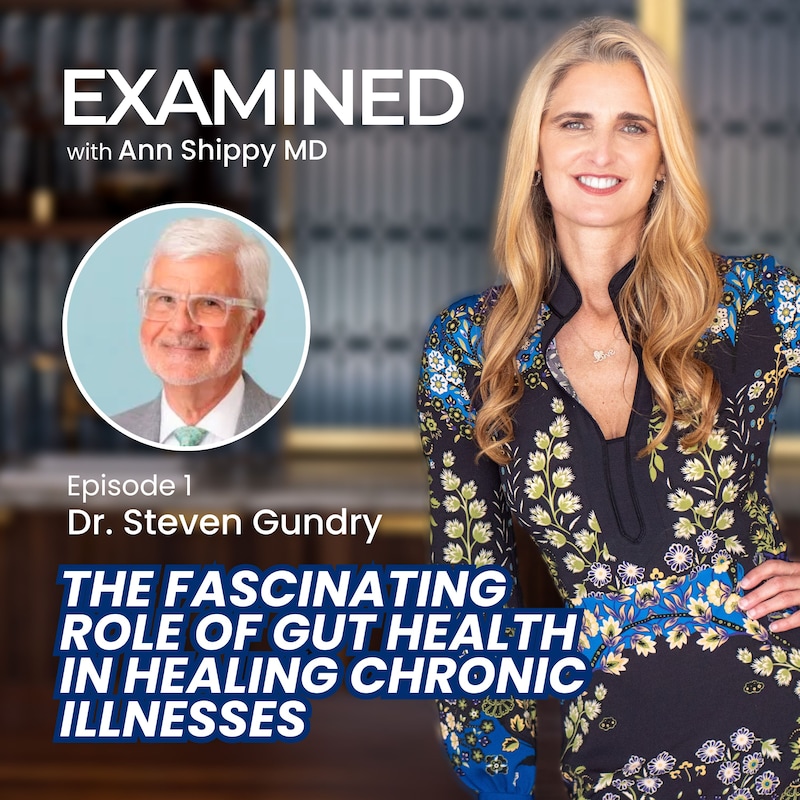
Shownotes
📺 Watch & Subscribe on YouTube
What if the secret to healing from chronic illnesses lies within your gut? Join us for an insightful conversation with Dr. Steven Gundry, a medical veteran with decades of experience, as we unravel the critical role of our gut microbiome in treating conditions like leaky gut and autoimmune diseases. Dr. Gundry walks us through how our gut microbiome has evolved, impacting our health and sparking the rise of modern diseases. His insights on how diet can shape our health and how the right bacteria can assist in breaking down harmful substances like gluten and oxalates are truly enlightening.
We engage Dr. Gundry in a fascinating discussion about leaky gut, gluten, and their profound impacts on health. We unravel the role of actin, an essential protein in our immune system and investigate how testing methods can give us a health report card. Dr. Gundry shares his findings about the prevalence of antibodies to various forms of gluten in his patients, and how restoring gut health can revitalize the vital communication channel between the immune system and the gut.
We wrap up with Dr. Gundry sharing his inputs on the Human Microbiome Project and its connection to autism spectrum disorder. Emphasizing the importance of a healthy diet during fetal development and discussing the potential dangers of Roundup, a herbicide linked to leaky gut and other health issues, Dr. Gundry urges us all to make conscious consumer choices to influence the food supply. The conversation closes on a hopeful note, with Dr. Gundry speaking about his upcoming book, Gut, and how his food supplement company, GundryMD, is aiding in understanding the underlying causes of leaky gut and other health issues. Join us in this enlightening journey and discover how you can take control of your health, one gut bacteria at a time.
What We Explored This Episode
(0:00) - Gut's Role in Healing Chronic Illnesses
(21:29) - Impact of Leaky Gut and Gluten
(27:16) - Gut Healing and Detoxification Techniques
(47:41) - Healing the Gut and Avoiding Toxins
(1:07:06) - COVID, Leaky Gut, and True Healing
Memorable Quotes
"We used to have a fantastic defense system against the various environmental troublemakers that we encounter, and that includes plants that we eat and that includes fungi and molds, and we had a really robust system that could not only handle what was thrown at us but, maybe just as importantly, would educate the immune system."
"We can heal your leaky gut, I can give you supplements that will do it, but if you keep swallowing razor blades every day, then you're just going to slice it right back open."
"The other thing we've seen with some of our really mischievous autoimmune patients who have four or five active autoimmune diseases. A lot of those folks react to all forms of dairy and a lot of those folks react to all forms of milk, of eggs sorry, both yolks and whites. Now, the good news is, once we seal everything up, we can reintroduce a great number of these foods. Sometimes not all of them, but most of the time we can reintroduce these things, which is exciting. That's the carrot on the stick. I hold off, I hold out for people. There's hope."
Resources Mentioned
Mold Hub - https://annshippymd.com/mold-hub-page-free-guide/
Are Oxalates Impacting Your Health?
Vibrant - https://www.vibrant-wellness.com/
Pendulum Life - https://www.pendulumlife.com/
BioComplete 3 - https://gundrymd.com/supplements/biocomplete-3/
Gut Check - Dr. Gundry's upcoming book
Human Microbiome Project - https://www.hmpdacc.org/
Connect with Dr. Gundry
Website - GundryMD - https://gundrymd.com/
Facebook - https://www.facebook.com/GundryMD/
YouTube - https://www.youtube.com/channel/UC4ODXZL2r3XepieV0uoRjNA
Instagram - https://www.instagram.com/gundrymd/
Pinterest - https://pl.pinterest.com/gundrymd/
TikTok - https://www.tiktok.com/@gundrymd
Connect with Ann Shippy MD
Website: https://annshippymd.com/
Instagram: https://www.instagram.com/annshippymd/
Pinterest: https://www.pinterest.com/annshippymd
Facebook: https://www.facebook.com/AnnShippyMD/
LinkedIn: https://www.linkedin.com/in/annshippymd
YouTube: https://www.youtube.com/annshippymd
Twitter: https://twitter.com/AnnShippyMD
Newsletter: https://annshippymd.com/contact/
🎙️
Podcast production and marketing by FullCast
Transcripts
00:00 - Dr. Ann Shippy (Host)
And today we get to talk with Dr Steven Gundry. He's a distinguished cardiothoracic surgeon and he's now focusing on dietary changes to cure modern diseases. He's a prolific best-selling author and he's also been very scientifically oriented with documenting his work in over 300 peer-reviewed journal articles to really look to see how our diet can eliminate heart disease, diabetes, autoimmunity and so many others. Thank you so much for joining us today.
00:30 - Dr. Steven Gundry (Host)
Well, thanks for having me. It's great to be here.
00:33 - Dr. Ann Shippy (Host)
Yeah, I am so excited because we get to talk about how the gut is just so foundational in healing from mold and other chronic illnesses, and you really have been such a pioneer in this area, so I really appreciate you taking the time to share your wisdom.
00:51 - Dr. Steven Gundry (Host)
Well, I don't know how much wisdom I have, but I'll share my time.
00:56 - Dr. Ann Shippy (Host)
Awesome. So in your practice it's so interesting because we in allopathic medicine we get so siloed with OK, cardiothoracic, you're just going to look at the heart, but you've now really expanded to look at the whole body and so noticing that some of your patients are really needing to address mold. So what kinds of things are you seeing with your patients that alert you that there might be a problem?
01:26 - Dr. Steven Gundry (Host)
Well, I think so. About 80% of my practice now is people with autoimmune diseases who have been to, oh I don't know, four, five, seven different physicians, naturopaths, alternative medicine, you name it. They've been there and a lot of them are on immunosuppressant medications for their symptoms and most of them don't want to be on immunosuppressant medications. Most of them, when they wind up in my office, aren't getting any better, no matter what they've been told to do and, I guess, approach it in a different way. The pocrates, the father of medicine, said 2,500 years ago all disease begins in the gut, and I've been.
02:28 - Dr. Ann Shippy (Host)
I think he's right too.
02:31 - Dr. Steven Gundry (Host)
I've spent the last 25 years of my current practice trying to figure out how we knew this, and my upcoming book, gut Check, is really kind of an ode to how he actually knew this and the science behind this. So that's kind of where we start, and one of the things that I've talked about in all of my books kind of starting with the plant paradox is we used to have a fantastic defense system against the various environmental troublemakers that we encounter, and that includes plants that we eat and that includes fungi and molds, and we had a really robust system that could not only handle what was thrown at us but, maybe just as importantly, would educate the immune system. That number one, we've got your back, that you guys kind of relax and don't worry about things we're going to inhale, things we're going to ingest, because we've got a system to handle these things. And number two, the immune system is educated literally pre-birth about what things that it should probably be interested in, things that it really can disregard. And I like to use the example for my patients because it makes sense for them.
04:35
When I was growing up very long ago, nobody had peanut allergies Everybody. We all took peanut butter and jelly sandwiches to school. Peanuts were passed out at bright time.
04:54
Peanuts were passed out on the airplanes, even in semi-modern times, and nobody had a peanut allergy. Now that's surprising because, as I've written about, 95% of human beings carry an antibody to the peanut lectin. So it's like, well, wait a minute, we all carry this antibody, but 50, 60 years ago, nobody reacted to this. Now, of course, some poor kid opens a package of peanuts in school and three kids are whipping out their EpiPens, having an anaphylactic shock. And what happened? Well, to use what I've just talked about, way back when our gut microbiome was diverse, when the wall of our gut was intact, when we didn't have intestinal permeability, our immune system, basically, had been taught look, that's a peanut lectin. It's not very interesting. Yes, it's a foreign substance, but it's really not a troublemaker. And I use the example the cops can go have a donut and a cigarette and relive it and I have to worry.
06:22
However, we don't have this defense system. Our microbiome is a wasteland. 100% of patients that I see have intestinal permeability, leaky gut, 100% Haven't met one in a dozen. And the immune system, rather than having a smoke and a donut, is in a Kevlar vest with two Oozies and fingers on the trigger, and whatever foreign substance that even looks a little bit odd now comes through the wall of the gut or the wall of the airway. Bam, it's like it's open season and you're firing off 100 rounds of ammunition per minute. And so the same thing that would have not caused a big problem 50, 60 years ago. Now it's inciting a World War III, and when people hear that story a lot of times, things start clicking. So out there.
07:35 - Dr. Ann Shippy (Host)
And it gets to be a feedforward loop. So there's so much good data, especially animal data, on the microtoxins from mold being one of the triggers of leaky gut or the increased intestinal permeability. What are some of the other things that you think really have created this epidemic of leaky gut?
07:59 - Dr. Steven Gundry (Host)
Well, I think number one, this great microbiome I mean we have normally, there are bacteria that like eating gluten. They really enjoy it.
08:16 - Dr. Ann Shippy (Host)
Doesn't everybody?
08:21 - Dr. Steven Gundry (Host)
I get a kick out of. Oxalates are the new trend, but most people would normally have oxalate eating bacteria that make them totally harmless. I was just on an Instagram discussion recently and people were screaming about how you're missing the point. Oxalates are the great health menace. And I said, gee, and how dare you recommend sweet potatoes which have oxalates? And I go well, wait a minute. I guess somebody should tell the Okinawans, one of the longest living people in the world, who 85% of their diet is a sweet potato.
09:08 - Dr. Ann Shippy (Host)
I didn't know that.
09:13 - Dr. Steven Gundry (Host)
And it's like well, they're living a really long time and they're not dropping over with arthritis and they haven't killed off their kidneys.
09:23
Why do you suppose that is? Well, because, luckily, when they were great long live people, they lived on a remote island and they had a great gut bacteria that wouldn't normally detoxify oxalates, and one of the things I write about in the new book, one of the brand new findings, is that these super centenarians, these people who are 110 years old and older, one of the unique findings now is that these people have micro microbiome that detoxifies xenobiotics, and not only are molds and fungi producing xenobiotics, but also all of our crazy plasticized xenobiotics. They have a system that handles these guys, and we all should have had a system that handles these guys. You know, after all, bacteria and fungi in general don't like each other very much. Most of our antibiotics, of course, are fungi and mold derived, and so it makes it makes great sense that these two are major competitors, and one of the interesting things we know about bacteria is that they can rapidly evolve to handle a new mold toxin or phoenix toxin, as we're only finding out from using too many antibiotics.
11:09 - Dr. Ann Shippy (Host)
So what you're referring to is the antibiotic resistance and fungal resistance. We're seeing such an increase in fungal resistance too. Absolutely.
11:18 - Dr. Steven Gundry (Host)
So so one of the things that I see is that so all my patients have leaky gut. We can heal leaky gut and there's lots of ways to do that, but my problem is, I tell my patients is look, we can heal your leaky gut, I can give you supplements that will do it, but if you keep swallowing razor blades every day, then you're just going to slice it right back open. And so when I started going after as a research interest, were these plant compounds called lectins, and they're just one of the plant defense systems. Oxylates are another one, and let's, you know, let's get these out of your diet and then go from there. And so we.
12:12
So we, we used to have a great microbiome. We clearly don't. We used to have a great defense system of acid in our stomach, but now, thanks to acid reducing drugs, which are used by, you know, millions and millions of people, we no longer have number one and acid barrier. That is actually really good against breaking down proteins, and for most of the time, these toxins are proteins and that's gone. And the other thing that continues to shock people is one of the best producers of leaky gut is nonsteroidal anti-inflammatories.
13:03 - Dr. Ann Shippy (Host)
Can you just for those listening explain what those are, because it I suspect a lot of people are taking them.
13:09 - Dr. Steven Gundry (Host)
Ibuprofen naproxen. You know a leaf, I don't think anything about it.
13:17 - Dr. Ann Shippy (Host)
It's like oh, I got a little headache, I'm going to take it.
13:21 - Dr. Steven Gundry (Host)
s were introduced back in the:14:32
But when they were first approved, this was known, and so they were only by prescription and you could only take them for two weeks because they were so dangerous. I remember those days, and now of course they're. You know the why does use? You know over-the-counter drug there is and they're used constantly. I mean, we have children's Advil and people don't realize, and I've written extensively about this. This is like swallowing a hand grenade.
15:10 - Dr. Ann Shippy (Host)
This is such a great question. As a cardiothoracic surgeon, is there every a time that you think that people should use NSAIDs, including aspirin, or should they just find another alternative?
15:26 - Dr. Steven Gundry (Host)
I don't have. You know, it's a kind of a side. There is a benefit for very low dose aspirin.
15:37 - Dr. Ann Shippy (Host)
Like when you say low dose, less than 81 milligrams.
15:40 - Dr. Steven Gundry (Host)
So did 81 milligram acid. The reason why that is enteric-coded means it won't dissolve in stomach acid, and aspirin has to have acid to be absorbed salicylic acid. So an enteric-coded 81 milligram aspirin dissolves down in your small intestine and so, because it's not much of an acid environment at all, very little is absorbed. But here's the good news A little tiny bit of salicylic acid converts omega-3 fats into their active anti-inflammatory compound, which is called resolvents, and without resolvents you actually will get very little anti-inflammatory benefit from fish oil, from long chain omega-3 fats. So it's a little fun thing.
16:39 - Dr. Ann Shippy (Host)
That's really fun.
16:42 - Dr. Steven Gundry (Host)
Yeah, patients, look, you know, one or two times a week, take a baby aspirin. It's not to prevent a heart attack, it's not to relieve pain, but I just want you to have a little bit of salicylic acid to activate resolvents, and so it's a cute little trick and it's kind of off the subject.
17:02 - Dr. Ann Shippy (Host)
No, but I think it's a good trick to begin and it gives people some perspective when you know we're putting some context around things that's not like. Never take it. There may be times to take it, but don't take it very long and take it at the right dose and find other substitutes if you can.
17:21 - Dr. Steven Gundry (Host)
So I mean these in general. These compounds are cox2 enzyme inhibitors. There's a really good cox2 enzyme inhibitor, baswalia, which is an Indian plant, and it's in one of my formulas and I like it a lot. The good news about it is that it doesn't cause damage to the gut wall. It works in a totally different way, so you can get the benefits of a cox2 inhibitor without swallowing a hand-bredding.
17:58 - Dr. Ann Shippy (Host)
That's beautiful. So when you're doing your testing to check out your patients' guess what tests do you like to do?
18:09 - Dr. Steven Gundry (Host)
Well, so I use, I use vibrant, vibrant wellness and what, what I do. I mean we can talk about how leaky gut was proven, I guess, by Alessio Fazzano, who's now at Harvard, and I've been on a few panels on him.
18:28
He's a really funny guy and you know, but I think when I started this, if you would ask me 20 years ago what I thought about leaky gut, I would have told you it was pseudo science because there really weren't any mechanisms number one, and there certainly wasn't good measurements. And even following you know the history of Dr Fazzano, when you know, he was trying to figure out how gluten caused celiac disease and he looked in a model of cholera and cholera, of course, a bacteria that causes, you know, watery diarrhea, enough that kills you, and he was trying to figure out well, why did it do this? So he he found a compound called zonulin and zonulin, of course, hits another receptor which breaks the tight junctions and that causes intestinal permeability. And he was able to show that gluten, which is a lectin, binds to the same receptor as the cholera hit and makes zonulin. And so when this, when he discovered this, every one of us in this area said, oh, this is great, all we got to do now is measure zonulin and we'll know who has leaky gut, and great.
20:08
So we all measure zonulin and, lo and behold, maybe 10% of people, maybe 20% of people who we were convinced, you know, had leaky gut, had a positive zonulin in their, in their serum and you go well. So much for that theory. And then people like vibrant America said you know, hang on, hang on a second. He's proven this mechanism. Maybe we're measuring the wrong thing. And zonulin would be attached to receptors. It wouldn't be in the bloodstream, but if you had leaky gut, the, you would have a space and zonulin would now be recognized by the immune system on the side of the gut and they would make an antibody to zonulin because it's a foreign company. Maybe we should measure antibodies to zonulin. And when they did that, it was like the floodgates open and you go, son of a gun, and there it is.
21:20 - Dr. Ann Shippy (Host)
It's so accurate, it's so helpful, and then I'm so aligned to you Because then, when you get the gut healed, that those numbers come down Right.
21:27 - Dr. Steven Gundry (Host)
Come right on down. And the thing with anti-actin. So actin is one of the molecules that forms the type junction and if you break it, that's then going to be seen by the immune system and you would make an antibody to actin. And what's fascinating is so you can give people a report card. You can say here it is, you know you're all of your. You know everybody says you're crazy and you're a malingerer. And look, you know you got wide, open, leaky gut. And then you know you give them a program and they can watch and what's at least in my practice, what's interesting is most people's anti-actin kind of heads down first, followed by anti-zonulin and you can just watch this progression and the other fascinating thing, kind of getting back to what we started with.
22:30
So 100% of people in my practice have antibodies IgG antibodies to the various forms of gluten and there's lots of forms of the late in gluten 80, well, 90% of people have antibodies to wheat germ and gluten. 100% of people have antibodies to non-gluten wheat proteins, 100%, 100% to gluten. Even my patients who have been gluten free for 10 years have antibodies to gluten and you know they're, they're shocked and they go bad, bad, bad, bad. I don't eat gluten. I'm gluten free and I go. You don't understand your. Your immune system is armed and dangerous and they may have seen this 10 years ago, but because you've got wide open, leaky gut, they're still ready in case it comes across.
23:28
What's really exciting is that when these people heal their leaky gut, all of these antibodies to gluten, to wheat germ and gluten non-wheat proteins go away. They're gone, and that gets back to what we started with originally You've got, you've done two things. Now you've got a much more diverse gut for them. Now they're communicating to the immune system, said, hey, we're back. The third stringers are gone. You know we're healthy, we're ready, we've got. We've got, we've got your back. Go have a donut and a cigarette. And the other thing that's happened is now the wall of the gut is healed, so you don't have constant invaders. That the immune system is, you know, armed and dangerous. And when people see this, it's you know it's it's like you know. It's so reassuring that everything that they knew, they, they had a gut feeling that something was wrong, and to actually see it and then resolve it. I mean, that's why I keep seeing. I see patients six days a week, even us.
24:52 - Dr. Ann Shippy (Host)
Amazing that you're doing all of this the research, the patients, the writing books, the speaking. You're definitely on a mission. You know, Hippocrates, I think, wanted me to do this, I guess Well you have a special brain to put all this together and I love that you started out with surgery and have ended up with food and supplements. It's really beautiful. So what else with patients with? Is there anything else other than the vibrant labs that you'd like to do to kind of get a baseline to measure progress? Is there any other areas?
25:27 - Dr. Steven Gundry (Host)
Boxing testing? I don't. Quite frankly, I don't do it very often because most people who we do it on have a fairly standard set of mycotoxins and it's, you know, aflavotoxins, lots of other mycotoxins. They're all coffee drinkers. Do we sometimes see folks with black mold? Yes, we do, and oftentimes we have a sick building that we find the reason. But go back to what I started with. Originally, I went to medical school at Georgia and Augusta, georgia. I lived in the South quite a bit of my life. If these molds who were as deadly as they appear to be now, then everybody in Augusta, georgia should be dead. Everyone in New Orleans should be dead. Everybody in half of people in Austin, texas, should be dead.
26:35
At least yeah, the construction here has really gone downhill People before all of our stupid things happened, had a system that defended against these toxins, and so we've now. These things have always been there, we've always. Our bacteria have always competed with mold, mold and fungi have always competed with bacteria. They competed with us, and we've just lost the that ability and we can bring it back. So, getting it back to this, interestingly enough, I'll still have people who will test for mycotoxins after they're cured. They're still have mycotoxins, but they no longer react to them, and I think to me that's empowering, because a lot of times, people throw up their hands and they go oh my gosh, you know I'm, I can't get rid of all this, I can't move, I can't. You know, I'm not going to stop drinking coffee. Dave asked for you.
27:53 - Dr. Ann Shippy (Host)
We do have some low-mo coffee that I would really recommend switching to.
28:00 - Dr. Steven Gundry (Host)
So but I think the benefit, at least the direction I go is you know I'm not going to, I cannot get these things out of you for the most part, but I certainly can get a defense system against them in you, and that's I'm a surgeon, I'm practical you know this is great.
28:25 - Dr. Ann Shippy (Host)
So when you're starting to work with somebody on their gut, you've got some testing to see what the degree of the intestinal permeability is, and then what's the approach for really helping them to get their gut healed so that then their body can handle getting rid of the toxins better.
28:44 - Dr. Steven Gundry (Host)
It's multifactorial. Just there are. There are certain plant compounds that and we test for lectins, and there are certain plant compounds that are mischievous. They do not. Plants don't want to be eaten. They were here first.
29:08 - Dr. Ann Shippy (Host)
They are.
29:10 - Dr. Steven Gundry (Host)
They're chemists of incredible ability. I mean, they can turn sunlight into matter and we haven't figured that out yet. So they use, you know, chemical warfare, biological warfare against their predators. And the idea was that plants, if they make you feel bad, with leaky gut for instance, then a smart animal says you know, every time I'm eating these things I don't feel very good, I'm going to go eat something else, and the system for brilliantly, for millions of years. So I, one of the things I do is look, you know, let's get recently introduced foods into the human diet. What are those recently introduced foods? Well, it's grains and pseudomrines, it's beans and you know other legumes and, surprising to a lot of people, vegetables and fruits from the Americas. And you know the nightshade family, the squashes unfortunately even believe it, or not, goji berries, or nightshades Sorry about that, everybody.
30:24 - Dr. Ann Shippy (Host)
And so people get so confused, right, because the what's the supposedly the best thing one day is like oh wait, that's what we were wrong.
30:34 - Dr. Steven Gundry (Host)
And GSEs. We see a number of people where GSEs are inflammatory. Well, they're an American, they're South American food. So you know, most of us are from Europe, africa or Asia and none of us were ever exposed to a North or South or Central American plant until 500 years ago, when Columbus brought them. And I'm fascinated how cultures have figured out how to detoxify these plants. I mean, for instance, the Italians refused to eat tomatoes for 200 years after Columbus brought them back their native sun.
31:17 - Dr. Ann Shippy (Host)
I didn't know that that's interesting.
31:19 - Dr. Steven Gundry (Host)
And to this day, in Italian culture, to make tomato sauce, you always peel and de-seed the tomatoes In fact the Roma tomato, which is as the most pulp to seed ratio and they were hybridized by the Italians so that all you did was, you know, pull the peel off after putting it in hot water or scorching it, cut it in half, scoop out the pulp and then throw it in the pot to make tomato sauce, and it's, I mean, it's just fascinating. The Italians all well, the Southwest American Indians always peeled and de-seeded their peppers. What's really funny on Italian pizza, everybody gets the pepper flakes and the seeds and the top. That was what was thrown away from the peppers. That's good.
32:16
And the smart said hey, you know, let's not waste these, but that's how those came about. People go well, what'd they do? They harvested the seeds and the skin. No, that was what was thrown away and that's what I. You know, I love going around the world finding out how these cultures detoxified these foods. Most people don't realize that beans have their own set of bacteria and the principle of soaking the bean was actually to ferment the bean and to ferment the lectins off of the skin, and everybody who's ever soaked beans knows that this bubbly stuff rises to the top. Well, that's the fermentation process. And so you start, you know, you look at these cultures and go man are these guys smart.
33:10 - Dr. Ann Shippy (Host)
They need something. They're probably more in tune with their bodies and just develop the type, the techniques from there. So initially you would say, take all of these foods out, but then maybe sometime in the future, if you prepare them differently, you might be able to add them back in.
33:28 - Dr. Steven Gundry (Host)
Yeah, the other thing we've seen with some of our really mischievous autoimmune patients who have four or five active autoimmune diseases. A lot of those folks react to all forms of dairy and a lot of those folks react to all forms of milk, of eggs sorry, both yolks and whites. Now, the good news is, once we seal everything up, we can reintroduce a great number of these foods. Sometimes not all of them, but most of the time we can reintroduce these things, which is exciting. That's the carrot on the stick. I hold off, I hold out for people.
34:15 - Dr. Ann Shippy (Host)
There's hope. Yeah, so you start with cleaning up the diet so that the gut isn't getting re-injured all the time when it's already inflamed. And then what's next?
34:30 - Dr. Steven Gundry (Host)
Well, so you've got to, one way or another, reintroduce bacteria that are capable of making postbiotic short chain fatty acids, and there's various ways to do this. I happen to be a big fan of a company called Pendulum Life Not only acrimoncia, but other butyrate producing bugs. I think that's not. I think that's a great start. I make a compound called Biocomplete 3 that Pendulum happens to love, because I was able to nano-encapsulate butyrate and so that it's actually delivered to your lower gut. You could swallow all the butyrate in the world. It's not got to do a thing, and Pendulum agrees with me, but you have to deliver it where it needs to be. Now, the other thing that I write about in the new book Gut Check, which is exciting news but bad news, in that you could swallow all the soluble fiber in the world that these fermenting bacteria really like and really need. But bad news, you're not going to make much butyrate, and the reason for that is the butyrate producing bugs actually have precursors of other short chain fatty acids and other components. It's almost like an assembly, and this was and I give full credit to the Sonnenbergs from Stanford, the husband and wife team.
36:27
They did a great human study where they took two groups of humans with gut dysbiosis. They gave one group a large amount of prebiotics, primarily inulin, and the other group. They gave the inulin but they gave them fermented foods and in that case it was primarily from yogurts, but there was other, there was kimchi and there was kombucha. And they looked at number one, their gut microbiome diversity, and number two, their inflammatory markers, and surprise, surprise, the inulin group, the prebiotic fiber group alone, and no change in their gut diversity and no change in their anti, in their inflammatory language. And you go well, so much for prebiotics.
37:26
The other group that got the postbiotics yes, they got some probiotics, but not very important. The postbiotics, they're the ones, and the prebiotic fiber, they're the ones that got got diversity and they're the ones that the inflammatory markers decreased. So and I think that's it's another piece of the puzzle. Now I'm one of the first to tell people look, most of the probiotic foods you're eating will never make it past your stomach acid and will never colonize or got sorry about that. But what even pendulum would admit is that dead bacteria tell tales, when I have a whole chapter on dead bacteria tell tales.
38:23 - Dr. Ann Shippy (Host)
I can't wait to read it.
38:24 - Dr. Steven Gundry (Host)
So dead bacteria carry information and so don't worry that all those that you have 10 billion living cultures in your probiotic, I don't care. It's the information that's in those things from those dead bacteria that's actually going to start this process, and that's actually quite exciting.
38:51 - Dr. Ann Shippy (Host)
Very exciting.
38:54 - Dr. Steven Gundry (Host)
That's why, believe it or not, vinegar, which is acetic acid, is a wonderful precursor, short chain fatty acid for butyrate.
39:06 - Dr. Ann Shippy (Host)
So if you get your vinegar spokes, it's an easy way to get started Like make it with a salad dressing kind of thing and put it on food, or do you just take it straight or in a capsule?
39:21 - Dr. Steven Gundry (Host)
So some San Pellegrino sparkling water and put a tablespoon of balsamic vinegar in it and you'll have my fake Coke and you'll do yourself a favor by an easy way to introduce vinegar.
39:37 - Dr. Ann Shippy (Host)
Beautiful and do you have a favorite kind?
39:40 - Dr. Steven Gundry (Host)
Yeah, actually, and I have no relationship with them. There's a company out of Napa Valley called Napa Valley Naturals and they make to get the reserve of balsamic vinegar. It's very cheap, it's very syrupy and it makes the best fake Coke there is.
40:06 - Dr. Ann Shippy (Host)
Okay, I'm going to order it today. It sounds great. You have me sold for sure. I left these tips for you know, to move this process along. There's so many things that we can do to help the intestine lining heal and I love this. You know creativity that you bring to finding solutions.
40:28 - Dr. Steven Gundry (Host)
Well, so there's again. You really want to get butyrate one way or another down to the wall of the gut. Most people maybe by now know, maybe not, that colonocytes, the cells that line our large intestine, are 90% dependent on butyrate as their fuel source 90%, that's their only fuel source and most of us, sadly, have no butyrate-producing bacteria and if we did, we don't give them any precursors in terms of prebiocliber to make butyrate. In fact, I was watching the news this morning and the news is, everybody's seen is younger and younger and younger people are getting cancer and it's, you know, it's an epidemic of younger and younger people getting colon cancer and it's an epidemic of younger and younger women getting breast cancer and ovarian cancer. And they had a wonderful doctor on young woman who said well, you know, our problem is we need to change the guidelines. So we're doing testing earlier and earlier.
41:51
Or, you know, we're very excited that now at least everybody knows that when you're 45, you should have colonoscopy and we're working to make sure that women get CA125, you know, earlier and earlier. And I'm going, no, no, I, everybody is getting these earlier and earlier. You know, herpocrity is good. I told you, I'm happy to tell you, you're happy to tell you, but no, it's like oh, we got to get all these agencies to test earlier and earlier, but cancer is not good for you, no matter when you find it. And so, for instance, no wonder we have this huge uptake in early colon cancer, because now we have, you know, an entire generation who's totally devoid of butyrate, and butyrate producing bacteria and foods in their diet.
42:50 - Dr. Ann Shippy (Host)
Well, and it totally makes sense, but then why we're so much more predisposed to these environmental toxins. You know, when our guts aren't helping, working with us to detoxify, of course we're going to be more susceptible to things like cancer and autoimmunity and all these toxin related diseases.
43:08 - Dr. Steven Gundry (Host)
Right, and again you have to harken back to. Well, why are these super old people super old? And you know what's the tricks. And, believe me, I have a full chapter on how the blue zones aren't blue, and it has nothing to do with a plant based diet, by the way. So, but we won't.
43:40 - Dr. Ann Shippy (Host)
I can't wait for your book to come out. It's coming out of January, is that?
43:43 - Dr. Steven Gundry (Host)
Got check, got check.
43:46 - Dr. Ann Shippy (Host)
It's going to be great. Well, and it's, I know so often. You know we're working with patients who are so, so ill to help them find their way back to health. But wouldn't it be great if we have people listening that and I hope this book gets read by the people that are like oh yeah, we want to start now to avoid the cancer and autoimmune diseases and diabetes and all the things.
44:14 - Dr. Steven Gundry (Host)
Yeah, absolutely. And you know what, what motivates me and I've written about this, I think, since the first book, the pocreties? Again, how he knew it, I have no idea, but you know, all disease begins like that. A pocreties thought that a physician should. Well, I'll start so how. Pocreties believed that all creatures had what translates from Greece as green life force energy very California and that this green life force energy wanted this creature to have perfect health and that there were external factors getting back to what we're talking about today that was preventing that green life force energy to express itself. And pocreties believe that a physician should be a detective who would find these external factors and then teach the patient to remove them, and then the green life force energy would heal the patient.
45:32 - Dr. Ann Shippy (Host)
Love that analogy because that's exactly the message that I want to come through at the summit. Is exactly that, that's beautiful, thank you.
45:42 - Dr. Steven Gundry (Host)
And so you know, when I first discovered that years ago of a pocreties teaching in this green life force energy, I said, geez, that's what I do. I'm merely a detective. I'm just appointed by a pocreties. I can teach my patients to remove these external factors, and in this summit we're removing these mold and fund right toxins. They'll handle themselves. And it's really exciting to watch Now, hilariously. It's not a green life force energy at all. It's a brown life force energy and that's the hundred trillion bacteria that live in us and on us. But he was right. And that's the energy. And why would they be the energy? Because we are their home and we have evolved in a symbiotic relationship with them. And it's no wonder that the super centenarians have this incredibly robust, diverse microbiome that's ready for any of these environmental things that's thrown at them, because that's their home and there's nothing that's been interfering with them. They don't have these stupid external factors that we've introduced for our health.
47:26 - Dr. Ann Shippy (Host)
So yeah, yeah, I love it that you're finding the solutions, though, for really helping people to figure out how to get there, get healthy again, and I think you touched on earlier. I think even the children being born now a lot of times are already having difficulty establishing a healthy gut microbiome, and that's why we're seeing increased risk of autism and ADD and child head cancer's, diabetes and all that kind of thing.
47:59 - Dr. Steven Gundry (Host)
There's, for instance, who would have imagined prior to the Human Microbiome Project that the placenta would be teeming with bacteria, that the amniotic fluid would have its own component of bacteria, that the fetus would have its own component of bacteria. It's like no, you're kidding. This is sterile. This is privileged space and it's not. And now I mean the connection between the microbiome even in the placenta and autism spectrum disorder is, I mean, it's not even conjecture anymore, folks, sorry, we now know the link and so, yeah, we need to empower it also gives help because there's a link and we can heal so tremendously, if I was an obstetrician now, I would spend my entire work with my pregnant patient working on her diet.
49:10
I don't care about anything else here I participate with the pediatrician and guess what? We're a team and mom. Here's what we know. It's not your fault, you didn't know this. And here's how to make a great baby. And I wrote about that in the Plant Paradox Family Cookbook, because we now know that this starts at the fetal development.
49:42 - Dr. Ann Shippy (Host)
So important. So is there anything else that you want to share about healing the gut, and particularly as it is related to people that are dealing with mold?
49:53 - Dr. Steven Gundry (Host)
Yeah, I mean certainly it's worth looking in your environment, particularly if you do mycotoxin testing and you do come up with a mold you know black mold then it's worth looking. You may not find it. That doesn't mean that your home is where you were exposed to it. You could be in a sick building and one of the things we've learned, sadly, is that a leaky building is probably a wonderful thing and a leaky home is probably a wonderful thing where we had air movement. So many of our buildings and homes are far more toxic than stepping outside. There are, I think, useful home air purifiers. I happen to like air doctor. I have no connection with them. I have one in my office as a matter of fact. So there are ways to mitigate, but it's worth having a mold expert come in if those things are found. On mold testing. There are low mold coffee. Interestingly enough, a very, very famous coffee chain may have the highest of leotoxins of any coffee, and I won't mention names, but they're very big.
51:39 - Dr. Ann Shippy (Host)
Yes, I know exactly what you're talking about.
51:44 - Dr. Steven Gundry (Host)
And so you know just fine, I personally, Dave Asprey and I are good friends and good for him. For danger coffee, I personally import my beans from Italy, which has some actually very tough mold standards.
52:08 - Dr. Ann Shippy (Host)
Yeah, isn't it interesting how other countries have much tighter standards than we do? They'll probably be tightened up even more.
52:19 - Dr. Steven Gundry (Host)
I would be remiss to tell people that one of the biggest causes of leaky gut in the United States and Canada and Mexico is roundup.
52:28 - Dr. Ann Shippy (Host)
Thank you for bringing that up so important.
52:34 - Dr. Steven Gundry (Host)
One of the interesting things we now round up most people don't know was patented as a antibiotic by Monsanto an antibiotic.
52:46
And roundup selectively kills off basically friendly bacteria in our gut, leaving the bad ones unharmed. It selectively kills off all of our tryptophan pathway bacteria, tryptophan serotonin, 5-hdp and isn't it interesting the amount of anxiety and depression in the last 50 years that people didn't have before. But what's really interesting? So I'll have a lot of my patients who we in. Glyphosate is everywhere, it's in all of our oats. Folks, please do not eat, drink oat milk and please do not eat oatmeal.
53:25 - Dr. Ann Shippy (Host)
And corn.
53:27 - Dr. Steven Gundry (Host)
It's in corn Sorugam. It's in all of our products. It's in canola, except organic canola. That's why I used to ban it. But it's much less present in Europe and what happens to a lot of my patients is they eliminate all these foods, all these grains. They go over to Europe. They're cured, automune disease goes away, their leaky gut goes away. They go over to Europe. How can they resist? They're eating croissants and baguettes and having Mine too.
54:04 - Dr. Ann Shippy (Host)
It's changing a little bit, though I'm not having as many people be able to get away with it in Europe.
54:10 - Dr. Steven Gundry (Host)
They're going over to Europe and they don't react and they come back and say, oh you cured me, dr Gundry. And they come back and they start having our food and in two weeks they're on the phone going what the heck, I thought it was cured. No, you're back eating glyphosate food and I'm sorry you can't have these things. It's in our food supply. I mean I'm sorry.
54:43 - Dr. Ann Shippy (Host)
Yeah, I mean with all the cancer cases against Monsanto Bayer, you would think that we would just be able to influence the farmers to change what they're doing, but I think it's so indoctrinated it's going to take some time to make the changes in our food supply.
55:04 - Dr. Steven Gundry (Host)
You realize now, we have superweeds, of course, that are resistant to Roundup. So thewhat the poor farmers are doing is they're doubling up, tripling up on the Roundup to try and control these superweeds. And so it's justit just keeps snowballing. And just remember, from a medical profession standpoint, sickness is good for business. And you know, big pharma, big medicine, big agriculture, they're all interwoven. I wish it wasn't true, but sickness is good for business.
55:57 - Dr. Ann Shippy (Host)
Unfortunately, yeah, but I think as consumers, we can vote with our dollars and eat organic as much as possible, eat local organic even more than that, and support the restaurants and places that are serving local organic, and hopefully we can vote with our dollars and get some changes happening.
56:22 - Dr. Steven Gundry (Host)
You know, I talked a few years ago. I was talking with Peter Mondavi Robert Mondavi's son of Mondavi Winery and he was telling me that it took them 10 years to weed themselves off of chemicals in the vineyard, including glyphosate and fertilizer.
56:47 - Dr. Ann Shippy (Host)
It relates to them, though, for doing it. That's amazing.
56:51 - Dr. Steven Gundry (Host)
Yeah, hopefully, and we're seeing a lot of California winemakers in my area doing organic, doing biodynamic, which is even one step beyond, certainly over in Europe. A lot of organic wineries, a lot of biodynamic wineries. They're way ahead of us. Please support California wineries, but I drink mostly wines from France and Italy.
57:25 - Dr. Ann Shippy (Host)
Low mycotoxin and low toxicity, so there are good producers and we're getting there.
57:32 - Dr. Steven Gundry (Host)
So whenever I find you know an organic or biodynamic winery in California or Washington state or Oregon, I try to join their clubs. I can't drink all that wine, but yeah, we got to support these people because it's expensive to do this.
57:51 - Dr. Ann Shippy (Host)
Yeah, it really is, but again, it's voting with our dollars so that people can make the changes that they need to Right. So anything else you want to share on healing the gut and the hope for getting well.
58:08 - Dr. Steven Gundry (Host)
Well there's, you know, there's all sorts of wonderful gut healing compounds and we could spend an hour on that. What?
58:18 - Dr. Ann Shippy (Host)
are your top two or three.
58:21 - Dr. Steven Gundry (Host)
Well, they're all in my formula total restore from Gundry MD. But glutamine is actually quite useful. De-glycerinized licorice is really quite useful, marshmallow root is really quite useful, and I could go on and on.
58:38 - Dr. Ann Shippy (Host)
It's important to mention because they are so powerful for helping that mucosal integrity to restore.
58:45 - Dr. Steven Gundry (Host)
So for mucosal integrity. But I think it comes down, at least to me, if I can, if I can have people stop swallowing razor blades, the gut will heal, and so that's what I want to start with, that.
59:02 - Dr. Ann Shippy (Host)
So start with that and then you can add in the right form of butyrate and probiotics and the mucosal lining healers, if you have the budget and wherewithal to make those additions.
59:20 - Dr. Steven Gundry (Host)
Interestingly enough, a lot of times, getting rid of ultraprocessed foods, getting rid of a lot of these grain based products which are loaded with life, that actually saves people money. They're shocked. I take care of Medicare and Medi-Cal and Medicaid patients and some of these people are really sick because they live in food desert. But they end up saving money If for no other reason diabetes is gone, their hypertension is gone, their arthritis is gone, and so they actually end up saving money. So it's not a well to do person's game.
::Yeah, and it's you know, if you don't have your health, and what's the point so trying?
::to prioritize.
::Getting the food that is necessary to heal is just so foundational.
::Yeah, yeah, I saw a new patient who's 65, very successful individual, you know, has a exotic car collection and blah, blah, blah. And when we did all this work on him he's got like seven disease processes that are really scary and he sees some of the finest physicians in LA and a major university and he's with his wife. He says, what the heck, you know, they didn't tell me anything about this. And what the heck, you know, how am I going to enjoy all my toys? You know I got to start. You know he's a master fortune and he's built great things, but this is the only house we're ever going to live in and it just it's coming home to roost. So now can we?
::round. Yeah, but I have a priority there so I've been debating about whether to ask you this question. You published a study using the pulse test. It really grabbed my attention to look at pre and post COVID vaccination. Would you care to comment on that?
::Sure, actually I just saw that that test, the pulse test, basically looks at markers of inflammation on blood vessels and also a marker of myocardial cell damage and what we notice. And we do this test every three to six months on all of our patients as a cardiac screening of what's going on in blood vessels. And shortly after the vaccines came out, the mRNA vaccines we noticed a major jump up on these markers just across the board 95% of our patients, and we didn't, and we saw it with COVID as well. I should say same pattern. And so we would notice that this would last for about three to six months and then it would subside. But when they got a booster shot or the second shot, it shot up again and it would go like this.
::So I submitted a paper to the American Heart Association about this and it was accepted for presentation and it was. And then I got a letter from the program committee chairman saying we'd like you to withdraw your paper and I said why? And he said, well, it's, we think that it would be in everybody's best interest. I said you guys accepted the paper, it was peer reviewed by your committee and, I might add, I've been president of the American Heart Association in Southern California chapter in the past twice, and I was on the reviewing committee for the American Heart Association annual meeting for years. I said I'm not. I got no dog in this fight. You know, I'm telling people that this happens. And he said well, it's.
::I said isn't it the American Heart Association's mission to take care of people's hearts? He said no, no, no, you don't understand. That's the FDA and the CDC's job and we'll let them handle that. And he said I'll tell you what. We'll rewrite your abstract and you sign off of it and we'll be okay. Well, the rewrite was, I mean, might as well not even say anything. And I said, no, I'm not going to sign this. And they said well, why don't you try to rewrite it? And so about four iterations later, it was watered down to where they. They keep it Now, it turns out. What's interesting is there are now three papers from around the world confirming my findings.
::Some are even worse than that, we had over 500 people in the study, so that's pretty statistically significant with the number of markers that are in the pulse test. So I think that's great that there's additional studies confirming what you found.
::Yeah, I mean we've. We've subsequently, I've got a paper that's got it that's been accepted over an Istanbul for a meeting. We've suddenly seen sudden deaths in people with known heart disease, with stents, two to three weeks after the booster shot sitting in their chair. Yes, COVID can be really bad for you, there's no question about it. But people you're supposed to have informed consent and people should know that there is a real incident in every so in my practice, of every human being who got the mRNA vaccines having a measurable jump up in inflammatory markers.
::Which then increases the risk for heart attacks, stroke, cancer, diabetes, osteoporosis, all the inflammatory diseases.
::Number of people who developed atrial fibrillation out of the blue in my practice. Out of the blue following the shot.
::And these are all people that are on your protocol. They're all working on their health. So that's me that says a lot, because the people that don't know to be working on their gut and to be eating healthy. It would be interesting to compare those members, because I bet they be even higher without all the efforts that your patients are making.
::Right. Well, that gets back to one of the things about COVID. Viruses in general are really good for causing leaky gut, and 25 to 30% of the presenting symptoms in COVID were GI symptoms nausea, diarrhea, abdominal pain and so it doesn't. So we know that COVID can do that. I personally think long COVID is leaky gut. The other thing that's interesting is all those risks for bad outcomes in COVID are the exact things you see in leaky gut, whether it's diabetes or heart disease or hypertension. So it just follows that.
::Yeah Well, I am so grateful that you're applying your brilliance to this area and then you know really working on getting the news out so people can even do prevention. I think probably most people listening know how to find you, but I'd love for you to just talk about where to find your information and then just a reminder on a new book coming out and where they can get it.
::So then go to GundryMDcom, which is my food supplement company, then go to DrGundrycom. I've got two YouTube channels. I've got the DrGundry Podcast and the new book will be Gut. Check out January 9th. And check it out, because it's basically showing my take on everything that Hippocrates got right and putting science to it.
::Beautiful job. Thank you so much for being so generous with your time and your energy and really creating an awareness about true healing.
::Well, we got to get the word out, all of us, and we're all trying in our own ways to do it. So good for you for doing this summit.
::Thanks so much.




