Shownotes
Is more free time really the key to happiness—or is it actually hurting your well-being?
In this rebroadcast of a fan-favorite episode, Michael sits down with Dr. Cassie Holmes, a UCLA researcher and author of Happier Hour, to challenge the myth that more time automatically leads to more happiness. Whether you feel overwhelmed by busyness or lost in retirement, this conversation offers science-backed insights to help you rethink how you spend your hours—and your life.
- Learn why too much free time can feel just as draining as too little, and how to find your personal "sweet spot"
- Discover how a simple time-tracking exercise can reveal the real sources of joy and drain in your day
- Gain practical tools to align your daily activities with what truly fulfills you—at work and at home
Take a deep breath and discover how to reclaim your time and transform your happiness—one intentional moment at a time.
Receive my free text messages by texting Whole Again to 866-612-4604
Did you know that stickers are wonderful visual cues to help you create healthy habits? You can get one of my free Pause Breathe Reflect stickers by clicking sticker.
To discover more and sign up for My RIPPLE EFFECT newsletter by clicking Ripple Effect.
We can also connect on LinkedIn. or at [email protected]
Subscribe to be sure you don’t miss any of the micro-meditations, wellness tips, and guidance that I publish every Monday, Wednesday, and Friday at 7:11 am.
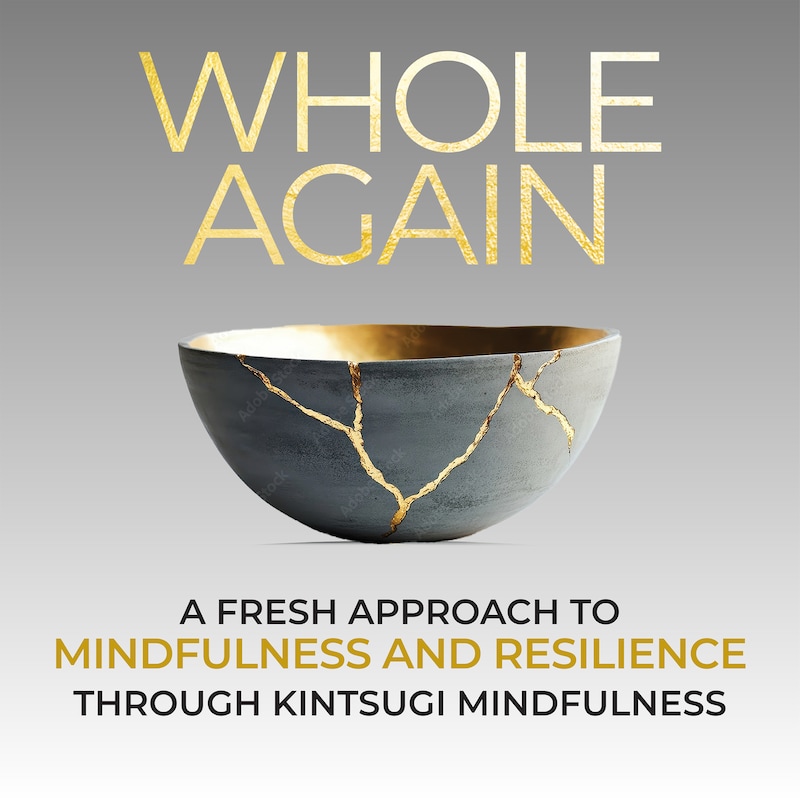
With Whole Again: A Fresh Approach to Healing, Growth & Resilience after Physical Trauma through Kintsugi Mindfulness, listeners explore resilience through personal stories of trauma, scars, and injury while learning to overcome PTSD, imposter syndrome, self-doubt, and perfectionism with self-compassion, self-love, and self-worth. Through insightful discussions on building resilience, resilience building, resilience and fitness, fitness and resilience, stress management, mindfulness practices, and digital wellness, the show offers practical tools like breathwork, micro-dose meditation, grounding techniques, visualization, and daily affirmations for anxiety relief and stress relief. Inspired by the art of kintsugi, the podcast embraces healing as a process of transformation, encouraging a shift in perspective from worry and being overwhelmed to gratitude and personal growth. By exploring the mind-body connection, micro-dosing strategies for emotional well-being, and holistic approaches to self-care, this podcast empowers listeners to cultivate emotional resilience and live with greater balance and intention.
Transcripts
In this episode, you'll discover the secret to happiness. Hey there, it's Michael. During the early days of my recovery, when I was still in the hospital, my wife would bring me lemonade with lunch. Besides being super delicious, it was a reminder that we can take lemons and make lemonade. And we are gonna do just that over the next seven weeks on our Friday episodes.
During this period, I'm going to be helping one of my family members recover to help them feel whole again. That's the lemon part of it. The lemonade is, it gives me an opportunity to reintroduce to you. Some of the amazing guests I had on the podcast when it was known as the Kintsugi Podcast, and in this episode, I'm so happy to share one of them with you.
But before we get to the episode, I first want to say thank you for being here, and thank you for being a survivor. And as I've mentioned over the last couple weeks, if you wish to receive those great text messages that are just the right message at the right time. And they're all free. Will text me whole again to 8 6 6 6 1 2 4 6 0 4.
s conversation. At the end of:She has a whole concept around time, and that's one of the things you'll discover, that having an endless amount of time won't necessarily make you happy. You'll also learn a mindset shift to help you change your relationship with time, as well as some other things that you can do to help you gain awareness and how you're spending your time.
I loved our conversation because what. She didn't know at the time we were working on our new feature with our Pause, breathe, reflect app called Microdose eq, which locks and unlocks apps of your choosing. Also, websites that are distracting that suck up your time. And by implementing it on your iPhone, you can save your time.
You can reclaim your time, the time she references in this interview. And that will lead to more happiness because you get to spend time on things that bring you more joy. Well enough of me talking, you're here to listen to the wisdom of Dr. Casey Holmes. So if you're ready, let's take a healthy breath in and a slow releasing breath out and get to know Dr.
Casey Holmes and her thesis. And how to be happy.
So your book is called Happier Hour. So the question I have for you, do you know the song by the House Martins Happy Hour?
I don't
Oh, you have to you now. So after we get done, you gotta go to Spotify or wherever you stream your music and look up the House Martins and the song Happy Hour. That could be your official song for the book.
Although it doesn't really match perfectly, it's more of the happy hour in the original sense. As we think it. But when I saw your book title, I was like, oh, that song. And I love that song 'cause I'm a huge house Martins fan.
Uh, thank you for the recommendation. I look forward to listening.
And with all the interviews you've been on, I now know that you've never been asked that question.
It's true. So
this is it. So we're starting off. We're starting off. Gangbuster. Strong. Strong. Coming strong to the mic. Here we are. Alright. So. Here on Katsuga, one of our traditions is to ask people, how'd you meet your partner? There's a lot of love in your book for your husband, Rob. So I need to ask, how did you and Rob meet?
Yeah, which it makes, brings a smile to my face because there is so much goodness in my life with Rob. And thinking back to those initial moments when we met, we were set up on a blind date by a mutual of. Friend of ours, and this was coming out of a very unhappy relationship where I was planning to get married and two weeks away from the humongo wedding when my fiance at the time decided that he wasn't quite ready to get married.
So it was quite devastating. And I talk about this in the book as how well I. I'm an expert in heaviness. A lot of it comes down to choices we make and despite some events that come our way. But so on the heels of that, once I got through my anger and depression, one of my friends was like, I have this guy I think he should meet.
And I'm like, no, I am not into dating right now. And she's like, no. And we met up for coffee. We were both at grad. School at Stanford, and so there's a Rodan Sculpture garden on campus. So I reluctantly met up for coffee and it was so great because he's such a wonderful conversationalist. And I talk about in the book the importance of connection, like true social connection and how that can come from.
Conversation that digs a level deeper than just the sort of superficial, what's your name, what do you do? What are your hobbies to really like, who are you? What are your emotional experiences in life? What are your passions? What are your fears? What are your hopes? And Rob being taking everything he does very like to the nth degree, he was taking this course at Stanford's Business School called.
The nickname of it was touchy feely, but it's basically like interpersonal dynamics. So while he is very analytical in taking this course, he's like. All about interpersonal. He's dynamic all into, so he shows up at this coffee date and he is like asking, what are your hopes? What are your fears in life?
And I'm like, oh,
this, but he's asking you some big questions on the first date. Holy cow.
Totally. And it was, it was such. A breath of fresh air by going deep. It was like this lightness that comes from genuine connection that came from conversation and that's still our source of connection and our marriage is those like wonderful deep conversations about our hopes and fears.
Um, absolutely. Along with the logistics, right?
Absolutely. That's what we do as married people like hopes and dreams and fears, and. What's for dinner and who's, and who's doing the pickup. And so at times we feel two ships passing in the middle of the night. But when we have connection time, that's a really, it can be a really happy time.
I know it is for me, like I cherish our dog walks, my wife and I. 'cause it's just our time to be a couple. Yeah, because it's so easy with kids as not to feel like a couple sometimes, because we're trying to manage a household that feels like we're running a company as opposed to really living a life. I love that we got set up and hopefully the person who set you up got invited to the wedding.
Yeah. Actually we had this like little group like elopement, so we didn't really have a wedding. Oh wow. Gosh, we, I mean, we have thanked her anytime.
Yeah. She's definitely on the holiday greeting card list.
Yes. This
year. Yeah, absolutely. So let's go back a little bit. How did you get into happiness? So, I've meeting you now and seeing the content and reading your book.
My, my hunch is that. If I met you in high school, you'd be Cassie's the happy girl, and yeah, with a good disposition and cheerful and optimistic and hopeful. But how did you get into pursuing a career in happiness?
Yeah. And in high school you are correct. I was probably would be described as the happy one and I still am like I think I am described yes so that I do have a natural disposition but, and actually research in looking at what are the inputs and to havingness when natural disposition.
Is a big factor and perhaps one of the biggest, but there are other things that come into play, right? There are those events that happen in life, like I just shared getting like basically at the altar, the love of my life. So I thought at the time this side, no, that was quite devastating. There are also other sort of.
Events in my life that perhaps not, perhaps that objectively were not happy. And so seeing how one reacts to and responds to those events, I was motivated to figure out, okay, what are things that we can do if someone that isn't lucky enough to have a natural disposition towards happiness or when, not if, when those negative events happen.
What are things that we can do to make us feel good in our days and satisfied about our lives? And I was motivated actually as a, I'm a social psychology undergrad major, and then in my PhD I was interested in sort of person dynamics, right? What are the factors that make us, make particular decisions, make us feel motivated?
And I, my PhD was at a business school. I was at Sanford's Business School in a marketing PhD, and so I was looking at what are the factors of when you present options to someone that makes 'em feel satisfied with their choices. As a marketing PhD, I was, initially, I was looking at choices of magazine or choice of coffee, and then I was like, hold on.
What I really care about is people's choices. About their, that affect them overall in life. Not just their satisfaction with their coffee brand, but really their satisfaction with their life in general. And recognizing also at a business school where there's a lot of focus on money has like a resource that really seems to matter for happiness and satisfaction with the choices we make is time.
And so it was during my PhD that I was like, what I wanna do is figure out. What are decisions that we can make so that we feel satisfied in and about our lives? Recognizing the value and the role that time plays so that everyone can feel as positive in and about their lives as me, as well as. Despite particular events, all of us have the tools available so that when we're making those decisions of how do we spend our time, what should we do to feel better, they're actually empirically informed.
So I guess my drive towards happiness is I want more people to feel like me on my best day
that I, Hey, I am down for that. That is music to my ears and. As you mentioned, so I call that day of my accident, my last bad day, and it's really an acknowledgement that we have a whole bunch of moments in our day, and since my accident, I've had plenty of bad moments, but I don't have to give them any more fuel than they deserve.
We take a, it's a mountain out of a mo hill type of thing, so things happen. Big things happen. Like my accident and your. Wedding that never occurred. And so those are devastating. We feel a lot of emotions and there's a whole bunch of other lesser bad moments, if you will. And there are things that we can tap into so it doesn't turn out to be bigger than it needs to.
And before my accident, I was pretty much a typical person believing that my happiness was gonna be found in all the stuff. Probably much like the MBAs that you teach today that I'm gonna get this big job. I'll get into venture capital, like maybe for those out at UCLA, but I'll have a big title, a nice office, a good car, and all that jazz, and I'll be happy.
The Chasing of Happiness, as Thomas Jefferson once wrote, the Pursuit of Happiness, which he really didn't mean that as we know, but we were not gonna go. I finally realized it was all about time, and so when I found your book and really. Your position is we have to look at time as a driver of happiness.
And what I found to be interesting was that there was actually a sweet spot. So if you ask a lot of people, if you said, what's gonna help you with happiness, they need more time. So we're time poor. But there's also a, the other side of it is like having too much time doesn't necessarily make us happy either.
And I would love for you to share a more about this sweet spot when it comes to time. And relationship to happiness.
Yeah, and I'm glad you asked because talking about another sort of motivator in the work that I do is figuring out like, okay, happiness. So we wanna feel good in and about our days, but I found that for myself, time was one of the biggest barriers, right?
So that sense of time, poverty of having just too much to do and not enough time to do it. And this is an. Uh, experienced by many people in our country, in the world, not by everyone, but those of us who do feel it. And I felt it very acutely, particularly earlier in my career, and I actually still feel that I like have to work hard to combat it.
It's. When you're working full-time, you have a partner who works full-time. You have kids that you're managing their lives and schedules. You are also trying to be healthy. So where do you fit in exercise? And you're also trying to not just yet buy in your career, but really succeed at it. So it's, and these super mundane chores that we are perpetually faced with and in.
Uh, it was a moment earlier in my career when I was an assistant professor. I was like, I don't know if this is even possible, right? Something's gotta give. Is it my career? Is it that I'm just gonna be a negligent mom? That's not involved at all, is it? Maybe my relationship with. Partner, is it like not have friends?
'cause I don't have time to meet up with anyone ever. And I thought that something had to give with this idea that if only I had a lot more time, then surely I would be happier. And a lot of people do feel that way. They're like, oh, these ideas, if only I had more hours in the day. But we studied that. We looked at what's the relationship between the amount of.
Discretionary time people have and their happiness. And we looked at data from the American time use survey, so it's tens of thousands of working and non-working Americans. And we could capture how and or see through their reporting of how they spent their day. Relate how much time they spend on discretionary activities, those things that people wanna do with their satisfaction with life.
And what we found was this inverted U-shape, which you alluded to where yes, people with too little time were less happy because you saw these increased feelings of stress. But we also saw those with too much time in this dataset. Those with more than approximately five hours of discretionary time in the day.
We're also less happy. And that was driven by something else. That was driven by a sense of not feeling productive, not having a sense of purpose. And with that, it undermines people's satisfaction and happiness. And so that sweet spot, it's actually pretty wide. It's, we found that between approximately two and five hours of discretionary time in the day.
There was no relationship actually between how much time people had and their happiness. And actually I will say there's like a lot of noise in the data more generally, and so both with respect to the sweet spot, you need some time in the day to spend on what matters to you or what you feel like you want to be doing, but you also need some time that is.
Required of whatever that pursuit that it is, not having all the hours of your day just relaxing on the beach because there is such thing as the too much time effect was really driven by, not discretionary time per se, but discretionary time spent. Relaxing and not in these ways that are fulfilling and feel worthwhile, but also because there is so much noise in the data.
I think that's even more important, is that it's actually for happiness. It's not how much time you have available. It's really a question. Of how you spend that time. And that is really a question of not only the particular activities that you're spending your time on, carving out and protecting time for those things that really matter to you, and minimizing the time on what feels like a waste or a drain, but also when you're spending that time, and this is so related to your work.
Of paying attention of like even if you're doing an activity that you love, if you're on your phone, your mind is somewhere else, you're like in your head planning for all the things that you're stressed about next week, then you might as well not be spending time on that activity because you're not even there.
You're missing out on it. So all of this is to say that. While, you know, for happiness, I initially thought that time was a big challenge. If not having enough, actually it can truly be the solution because if you become more intentional on the activities, but also intentional and paying attention, when you're spending time on those really wonderful activities, then you get the satisfaction and the energy and the boost and all the good stuff.
Yeah, I think that's an important thing that you just shared and I picked up on it in your TEDx talk, and as you mentioned, as a meditation teacher, what I do each Monday morning is I lead a group live practice on Zoom around intention setting and basically how do we wanna show up today? How do we wanna show up for the week?
Basically the type of ripple that we wanna put into the world, but. Are we aligning our activities around our first principles or the values that we cherish doing stuff that's meaningful and to the point of awareness. So we're gonna have moments in our day where we venture off course. Sure. Because of course the unexpected happens.
Like we plan out the beautiful day, we plan out the beautiful week, and then we get a curve ball and. That's when we wanna pay attention to, okay, what are we spending our time on now? And maybe come back to that and attention. So I love that you just shared that on the side of like too much time. And I'm not sure if the data's too noisy to tease this out.
Did you, was there any type of association to age, for example, as people go through their career, they have a purpose, if you will. A reason to get up. The Japanese would call that the iki guy, a reason to get up in the morning and they might complain about how busy they are and they don't have time doing the job, but then they go into retirement and they haven't really found that reason to get up or a sense of purpose.
So did you see any type of correlation with age and happiness around that aspect of having too much time?
Yeah, it's a great question because folks who have retired are particularly subject to that or prone to that. Too much time effect. But what's really important to recognize is that this sort of inverted U shape is not influenced by age, that it's irrespective of how old you are.
There is such thing as having too little time and too much time. So there are people who are not retired who actually fall in the too much time bucket for it can be other reasons than they have left their retired from their entire career. But what's also interesting is among those who. Have retired in that age group that not everybody feels that they have too much time.
Those who spend time on these activities, that they are not paid work. But perhaps it's volunteer work. Perhaps it is developing that enriching hobby. It is exercise and we see that when people are spending and social connection actually to the point of this is a really big one among retirees. When they are spending some time in their week on these activities that make them feel productive, that give them a sense of purpose, that make them realize that they're still having contributing to those around them, but also are growing by those hobbies where they're learning something new and they feel the responsibility of that and the extensive reward from that.
So. Yes. It's something, the too much time effect is a cautionary tale among those who are eager to retire with this sense of, oh my gosh. Then I'll have all the day to relax and play golf and sit on the beach and go to Al
Boca Vista and we'll have pina coladas and
all
that, you know. But then after a while, that gets a little dull.
It gets a dull, and that's where you got the too much time effect. But if you say. Move and go and start volunteering somewhere or join a bridge team and learn how to play bridge. Then all of a sudden there are these ways of spending that aren't just relaxing and doing nothing, but give you a sense of productivity and purpose.
And so it's being intentional again, going back to when you then are retired. Being intentional about. All right, what are those activities that you're gonna bring into your life to make sure that you continue to have things that give you a sense of productivity and purpose
And community. Yeah, community.
Oh, yes. 'cause also importantly, we did not see, so we looked at, in our data, those who had the discretionary time and when we saw, we looked at whether their dis, those discretionary activities involve social connection. You actually didn't see this drop off. That is, it didn't see the too much time effect.
That is if you're spending time, your discretionary time connecting with others, then it, there's a sort of continued effect, positive effect of those investments in relationships.
So that correlates pretty well with Harvard study, the longitudinal study around happiness. 'cause they point to social connection as a big driver to happiness.
Yes. And then even Dan Buettner's work around blue zones and living to a hundred, if that's the desire with a good long lifespan, but also a health span. He also pointed to the need for community and in a very fast paced world that we live in, where we feel connected but not connected, really more disconnected.
We're not really spending time developing our relationships like we could. And so I think one of the takeaways from your book is if we're not there yet, maybe that's something to take action on as we go through whatever phase of life we're in. And it comes in phases. If we're young parents, it might be a little bit more difficult to have that time for friend connections, but to be at least aware of the need to have this, these connections as we go through other phases of our life.
Yeah, and even as you were saying, it's like you're now, I dunno if it was always in this form, but your dog walks with your wife. It's like even in those times where you feel like there isn't any room for cultivating relationships, even with your partner, let alone friends who are outside of the house, recognizing the importance of doing so.
Because even though you feel like you don't have the time, when you do spend the time, it can reenergize and give you that sort of sense that things will be okay. And actually we're gonna be okay
here. We're gonna, we're gonna be able to figure this out. And they're, they're like hearted humans around us.
And it's not Yeah. The world's not going to hell in a hand basket. Yeah. 'cause on our walks, we'll run into our neighbors, we'll run into our friends and it's a brief encounter. If they're also walking their dogs, we. Half the battle is trying to keep our dogs away from each other, but we do a little chitchat and have a connection.
Maybe it's not in depth, but it's still there and it feels like we're building community. So I love that you brought that up around intention. My, my hunch is that people really don't know what they're spending their time on. We talk about I don't have enough time, and you ask, how much time are you spending on X, Y, or z?
And I don't think people really know. As a executive coach, I ask a question similar to this, to my, to my clients. You have a worksheet. So I printed off the worksheet, so in my color coded way. Okay. Little show and tell.
Yeah.
So can you tell more, share more about. This time sheet that you have on your website, I'll put the link in the show notes 'cause it's a podcast and a podcast SF show notes.
So we'll put it there so people can download it. But if you could add some commentary to how someone should use this and how it can be helpful and understanding how rich they are when it comes to time.
Yeah, and I'm so glad you brought that up because I was actually gonna mention it in when we were just talking about the role of social connection.
Not only do people not know. How they're spending their time. People aren't very good at knowing which ways of spending their time are actually satisfying and are actually fulfilling. So we have this sense of, oh, these are the things that I enjoy doing. But is it true? Sometimes we're actually pretty bad if we were like, oh, like that We have the sense that we really enjoy.
Watching tv but then you like look like having watched TV for a couple hours, like coming out of it. How do you actually feel? And so what the time tracker is, it's so simple. It's actually tedious to do, but the idea is simple and it is, once you get going is like you can execute on it, but it is so worthwhile.
So what it is over the course of a week for each, about half hour, writing down what activity you did. And as importantly rating coming out of that activity on the 10 point scale, how do you feel, how satisfied, fulfilled, um, overall positivity? How did you feel from that activity? And again, it's not in general, what activities do you enjoy doing?
It's having just done something, how do you feel? And then you have, over the course of the week, you had your color coding, which I think was. Also capturing not only the activity, but probably the emotion. The
most color represents something I was doing and I didn't. I knew I was gonna share it, so I didn't really want to give my whole life away on the internet as far as everything I was doing.
But yeah, there is a system there that I can read and probably only I can read, but yeah. Yeah. But
as long as you can read it, because that's the purpose of it is at the end of the week, you can look at your own data. And look. Okay. Across the weeks, what are those activities that brought you, that got your highest ratings?
What are those activities that we're getting? The eights, nines, tens, and writing them down. And what are those activities that actually got your lowest ratings? Writing them down, and then also looking among your most positive activities. What are some commonalities across them? And so that allows you to pull out sort of sources of joy for many, it's like pulling out not only social connection as, oh gosh, it's like the example that I have shared because it is so true and I keep reminding myself when I like find myself coming out of a social situation.
I'm like, why didn't that feel as fun as it should have? I'm like, oh, because I learned from my time tracking. That I really value one-on-one time. One-on-one conversation. Actually going back to my coffee date with Rob.
Rob. Yeah. That was like your jam. I was like, oh my God, this is awesome.
Totally. Yeah.
Thank gosh you didn't meet at a cocktail party. That would've been Yeah, like small
talk. Yeah. That would've been, that would've been awkward. Yeah. And
so I know for me it is that one-on-one time, and whether it's in a social context, a family context, or even in a worked context, that's really satisfying for me.
Whereas in bigger groups, I actually, for me personally, and this isn't what data is showing in general, so don't have people think, oh, one-on-one time is better for everyone. I learned from my own time tracking. That's better for me. But folks doing the time tracking will learn for themselves. What are those ways of spending that are really fulfilling?
And then that can be helpful because then as you're designing a upcoming time of protecting time in our busy lives. For those activities that really matter. Also, there's some surprises, like I've had now hundreds of students do this assignment over the years and hearing the consistency in some of their reflections of this sense of, oh, watching TV is my fun activity.
But then they see in their ratings, that first half hour and maybe even hour is really fun. But hour three, four into the binge. They actually start feeling pretty crummy. Or social media, it's, oh, social media is my fun, like relax time. But actually then they see how they felt coming out and they're like, ah, wow.
Yeah, this doesn't make me feel so
horrible. I feel like crap. Yeah, yeah.
Holy cow. How much time were they actually spending? So in addition to seeing the satisfaction you feel from your activities, you realize just how much time you're spending on various activities. And in some cases it's like a rude awakening of, oh my gosh, I spend so much time on X, it's not necessary.
It doesn't bring me joy. Why am I doing it? Especially when I feel so busy. So that's helpful. And it also, you can see what are those activities that are true drains and identifying what are some features of that so that then you can use other strategies to. E either maybe say no to those activities if you have some volition of red.
Or if you do have to do it, is there a way that you can structure it, whether bundling with something more enjoyable, putting something enjoyable right after it so that it doesn't like continue to ruin the rest of your day or week so you can use some other strategies to offset that negative impact of those obligatory not so fun activities.
Yeah, I wanna get into the biggest one work, but I will share like through my own tracker, so I'll be public. We watch The Bachelor at our house. I know. And so it's fine. But here, but to your point, Cassie, like when I watch it with my girls, super fun like it's our father daughter bonding. Totally cool. I'm now, I'm no longer on X, but one of my fun things to do was to follow the show when X was known as Twitter.
'cause I was like, oh, people in the world are really funny. So that was, but I no longer on X. But watching it with them is so much fun watching it by myself, not so much fun. So for me it's about that connection with them. And so I think that's the real value with the tracker. A couple things that you mentioned.
Yeah,
you do get to pay attention what to what you're spending time on because we, I think we underestimate how much time we're spending on things that don't really fulfill us.
Mm-hmm. That
we say, oh, we just need some downtime. It's our mind candy, but it doesn't really bring much happiness and fulfills us.
We could be doing other things that do that for us. And then we have a better idea of, okay, what brings us happiness with our time and this gets us to work. So one thing, in order to have a lifestyle, unless you are born on third base, you have to go do the job.
Yeah.
How do we make work happier?
Yeah.
What, and knowing that everyone's job is a little bit different and everyone's at a different stage, but do you have any general guidance on how to make.
Work a bit happier because it seems like work is one of the big drainers of our happiness.
Yeah. If you look averaging across time tracking research of whether those activities that tend to be associated with the most negative emotion or the least positive emotion, it is commuting. Work and housework.
So work and it is, as you said, we have to work unless we're perhaps lucky enough that actually as we talked about, the too much time effect, maybe it would be unlucky if you didn't have to work. Anyway, all to say many of us have to work. But given that for so many, not only is it the least happy, but when you add up the amount of hours in our lives that we spend working, it is not something that we just wanna wait through.
How we spend the hours of our days sum up to the years of our lives. And so it's just too much of our life to waste and wait through and it makes life over all away. So I am very strongly like figuring out to your question, what are ways that we can make work not terrible and the time we spend there, and to make it potentially a source of happiness and fulfillment.
Now. And also I will say that the time tracking is also helpful for this because you'll pick up. As you're being more precise in what activities, it's not just work. It's like you're putting them in a meeting or I'm responding to emails or I'm working on a deck. And so you can actually identify within your workday what are those activities that are actually are quite satisfying, and then also what are those activities that are sources of drain.
But to answer the question, what are ways to make work more fun? Social connection. Here we go again. It's we again. It's the the hour. And because we, it's not just in our lives outside of work that we can find connection and friendship even. And there's a sort of funny sounding question in Gallup Pool that ask, do you have a best friend at work?
And even though it sounds silly, like in something my third grader would ask. It's very predictive. So even though only two out of 10 Americans working Americans say they have a best friend at work, those who do are significantly more engaged in their work. They are more productive and they are most satisfied with their work and job satisfaction carries over into life satisfaction.
And so with that, even of thinking about how can you cultivate friendship? In your workplace or in your workday if you work remotely, what are ways that you can set up not just the schmoozing, but really sense of friendship?
So, Rob factor.
Pardon?
What I hear from you, Cassie, is that companies need a little bit more Rob and their culture to go.
They
do need more, Rob.
They, we need more cowbell in our lives and we need more Rob to go. But in all seriousness, or maybe leaders can do this, is to go a little bit deeper in a safe way.
Yeah.
So we have stronger connections as opposed to the trans transactional nature of work today, I call it the Janet Jackson effect.
What have you done for me lately? And but to have that more deeper connection and a chance for conversation. Build those bonds.
Yeah. And to be clear, you don't have to be best friends with everyone that you work with. Sure,
yeah.
But it is making sure that there's at least a couple of people whom you genuinely care about and you feel supported by so that it isn't just transactional, like you said.
So figuring out for yourself, how do you cultivate friendship? In your workday, and sometimes that takes a little bit of going outside of your comfort zone, but it's so worth it. And it also to this sense of, oh my, I have so much to do. It's not worth the time. It's absolutely worth the time because when you spend time in these ways that feel fulfilling, it actually makes you feel like you have more time.
And we have data that shows that when. You give time to others and it makes you feel like you're effective with your time, then it actually makes you feel more time affluent. So connection, friendship, I would should say. The other is knowing the reason, the why, the purpose of the work that you do. And so I talk about in happier hour in the book these exercises, 'cause it's based off of this.
Course that I've developed and I've been teaching to my MBAs, and so I give them these assignments to figure out like the time tracking and other things like writing a gratitude letter, doing a digital detox, all these things in addition to the five why's exercise and the five why's exercise is asking, what's the work that you do?
And then. Oftentimes the answer is like the job title. And then I ask, why do you do that? And then the answer tends to be either money or the job description. And then really the question is, why is that important to you? And clearly like money is a driver, but why is this the particular way you're spending your time in order to make money?
And then once you ask yourself sort of five layers to your own answers of like. Why does that matter to you? Not why does it matter in general, but why does it matter to you? It really uncovers what are the sort of, what's your intrinsic motivation? What is your, are your, in this case sort of purpose and goals, which associated with values.
But what's helpful about that is that then you can see what work activities contribute to. That why? And once, even if the work activity isn't particularly fun, when you realize that, oh, this is, so that like as the example, me as a business school professor, why do I do that? My job description is to do research, teach.
I have service. Why is that important? So in answering several layers of why creating and disseminating knowledge is the next one, and then why is that important to make people smart? Ultimately, I revealed from this exercise that my purpose is to create and disseminate knowledge about what makes people happy.
Ultimately, I wanna make more people happy. Now, knowing that is really helpful because. A, it can help me be clear on what projects or what activities to spend time on or to decline on, right? If it's in line with creating or disseminating knowledge about what makes people happy, then yes, I will do it. So, joining you today on this podcast is about disseminating knowledge about what makes people happy.
Yes, that's worthwhile. And this is fun. But when I am like looking at my email, which does not bring me joy, if I'm like, okay, actually responding to a student like, oh, that's not really email. That's about disseminating knowledge about what makes people happy. If I'm responding to a research collaborator, it's not really email.
It's really about creating knowledge about what makes people happy, and so knowing what drives you and what your why is. It makes not only helps you filter what to spend time on, but it makes some of those onerous work tasks feel better because there's a point to it. And so identifying for yourself, what's your purpose?
Identifying, and actually this is going back to in the work context, really, managers and leaders should do a better job of articulating what the purpose is for. The work that they're doing and maybe even articulating to the person you're asking to do something of. The reason you're doing this is it contributes to this like higher order thing and then it's okay.
Even though it might not be fun, it is worth it and therefore it feels more fun. So between social connection and identifying your purpose, those are ways to make work more fun.
Awesome. So that's a question I ask a lot of the leaders I coach. To work with their team members around their own personal why in some ways their relationship with money.
'cause the money thing comes up, right? Because status. Yeah. They wanna be paid fairly. No doubt.
Yeah.
There needs to be equity in the system, which we don't have yet, but we're working towards it. But it's that relationship with money. What does the money mean to you? Which can get to the why, like why are you doing this?
Yeah. And I think it was Victor Frankl who I think originally said it like. The bigger the why, the easier the how. So the big why helps us get through those like difficult, muddy moments in absolutely in life. So when we're doing the stuff that's me and work, we can go back to our why and remember that to get through that.
So you've been teaching this course to MBA students and executive MBA students. And with our society there's been a lot of attention around happiness and a lot of books. Uh, podcasts, apps around happiness. Ha. Have you seen your students approaching happiness differently over the years? Because they're coming into an excellent MBA program at UCLA?
I'm sure many of 'em, or highly competitive, they're, they're Stanford, as you've mentioned, that you went to. Just up the street, there's uc, USC. So there's this competition for those high paying jobs. So I imagine they're coming in with this sort of old definition of happiness, that it's in their status, will make them happy.
I would love for you to share what have you seen from maybe a younger generation, from my perspective, around their relationship with happiness? Basically, Cassie, I'm asking you to give me some hope. That the younger generation sees this differently there. There's some optimism in here that we're gonna start changing how we view things.
Yeah. I don't know if it'll give you hope, but it has certainly changed and I feel hopeful in interacting with my students. I think there is a lot of potential or reason for optimism, but it's interesting and it's a great question because even happiness. Not just my students, but in a business school has changed dramatically.
When I joined UCLA seven years ago, seven years ago, now it's almost eight, but after a couple years, I like went and I was like, I wanna. Develop and start teaching a course on happiness. 'cause I'd been researching happiness my whole career, but I had been teaching traditional marketing courses and I'm like, enough is enough.
My time matters to me. I wanna do what fulfills me. I wanna teach happiness too. And I went and I presented this to the curriculum committee and they were like, no, like we're a business school. What? Please, it's finance
and accounting, gassy, not happiness. They can be happy once they retire.
Ooh, what place is there for happiness at a business school?
And then I'm like, wouldn't take no for an answer. So I came back to them with all the data that points to when employees feel happier, they are more engaged, better, more productive, better performers, and that translates into the bottom line anyway. It's recruitment, retention, the happiness of your employees.
Does matter from a financial perspective, but also here we are educating our students to not just get the job, but to really succeed throughout their careers. And not only. Does job satisfaction influence happiness? But happiness translates into job like how people show up within their careers. It makes 'em more, less likely to burn out.
It makes it more sustainable. It makes them likely to have a longer term impact. So I convinced them and they're like, okay, on a trial period, we will let you teach this course. And it was so well received. By students because they're like, we need this. Particularly actually the executive MBAs who are later in their careers and they're really struggling and juggling.
Family. It's not just about career. It is like how does that career fit into the rest of your life so that you can actually do the, your career in a really meaningful and impactful way. And so they're like, we need this, the students. And it really spoke to desire. Also the younger, my regular MBAs who are in their late twenties, they are a generation that is more I idealistic.
They do. Value purpose. They need to be told why actually what they're doing matters. Why are we
doing this? Yeah. Yes. Yeah.
And so their almost demands for feeling full and happy in their lives. Were like, this was a course that was speaking to that too. But also what I like about speaking to that. Set of students is telling them that it's not from out here, that your satisfaction will come.
It's not like manager, you're responsible for my happiness at work. It is up to you to make decisions and to take care of yourself and to show up and be clear about your purpose so that you can deliver. So and what's So while I've been teaching it for five years, what two years in the pandemic hit. Yeah, and that was a time where all of a sudden you couldn't take happiness for granted.
Mental health was the, everyone had to care about it. In the business sector, leaders like everyone had to. Face this not only their personal wellbeing, but also figuring out how do we support the teams around us. And so I, it became not only understanding happiness and demand by the students, but as in demand as an expertise by the professional world.
And we don't take happiness for granted. That's also, I will say that the term happiness. Sometimes has this connotation of being light and silly, but when I'm using it, I'm really talking about emotional wellbeing, feeling satisfied in and about your life, and that is so important that it's, we can't ignore it anymore because we all went through something so terrible that it's like we need to know what are the tools to get through it and to overcome it, and then to ultimately thrive.
Yeah, and we really haven't adjudicated what we went through fully yet. I think we've just, we got through it and we're like, okay. On to normal, on to catch up time. I don't know if the data proves this out, Cassie, and I don't want you to cross any ethical boundaries, but you could tell UCLA that when people are happier, they give bigger donations back to the university.
So
I don't know if the data proves it proves, proves that out,
but that's my hunch. That's how I'm going. I'm going with that. That might be a an opinion, not a fact. Well round out here. So you came out with your book and obviously you've met with a lot of people. Through your book and offering this whole concept around time rather than money.
But I'm curious, what have you learned since the book has come out? Like talking to so many people, reaching out to you? Imagine on social media with the interviews that you've done, you put your heart and soul into writing the book, all the research and all the stories. Excellent read. But I'm certain you've learned some additional things around happiness.
Now that the book's out and you've traveled around, I've met a lot of people.
Yeah. It's interesting because the underlying truth or message or points that I was making hold strongly. I think the thing that I've learned is how different parts of it. Resonate with different people. So it's almost like hearing people from their examples of, oh, this point about this showed up for me in this way and was so impactful or, and then someone else will be like, this part of it like really affected me in this way.
And from the that. And so it's actually seeing the color and the diversity in which. These really sort of fundamental messages of social connection, of being intentional about where we invest ourselves, of being, paying attention during those things that really matter. These are things that, and actually even taking this broader view of time, and so this is some work that I've done more recently and I talked about in the last chapter of the book, but we've continued to explore it in the data of when we think about time.
While managing the hours of our day, it's really there's, if you zoom out and think about our lives, it's not about our hours, it's really about our life overall, those years. And what we have found is that when people take a broader perspective of their time, thinking about their years in life overall, and what that does is it makes people think about what matters, what are their values?
What is their purpose? In one of the exercises I have my students and I talk about in the last chapter is having people even write their eulogy. Like that is something that on the face of it may not be so happy, but it is. It's leading people to think about at the end of your life, what impact do you wanna, how do you want people to remember you?
And articulating that is very clarifying. And so taking that. Broad view of time in your life overall, what do you want when you think about your years, your next five years, what do you want to have accomplished? Or what do you want impact? Do you wanna have? And that then should inform how we spend our hours today and how engaged we are during some of those hours.
And so it's that. Has crystallized for me as it's not just time. It's really the big time that should inform our hours.
I so appreciate that. I just wrote a blog post about stoicism and this stoics have a concept called memento mori. Basically, it's remembering that we will pass away, we will die. So it really brings attention to how do you wanna live?
And so what inspired. The post was going back to celebrate my dad's 88th birthday, and now I realize he doesn't have many birthdays left. Now, he might not like me writing about that or saying that because we have a weird relationship with an inevitable here in the West, but we all cross the same finish line.
So if we can get comfortable with that and then we can bring some attention to like, how do we wanna live? What do we wanna spend our time on? And. I think one of the things I took away from your book that, that I'll underscore for those listening is that happiness is an individual formula. I know like in this world, I imagine you've spoken to other people who will say, Hey, Dr.
Holmes, tell what? What's the secret? Give guess. Give us the hack. Give us that. One thing that we need to do, and for me coming away from reading your book, was we're all going through different phases of life. This formula is individual. And it will change. And so as you pay attention and set your intentions to change that formula, change the recipe if you will, then you can continue to have happiness from the inside out throughout your life.
But there is no magic, magic pill to take, and there's no hack and there's no shortcut. It's an individual inside out type of affair, and a lot of it depends on how you wanna spend your time. I'm so psyched that. We got to connect and I'll finally ask, is there anything I didn't ask you but should have asked you about happiness?
No, I think it was, we covered, we, there was a lot we could talk about, but we covered the important stuff and it was, it was very a source of joy and fulfillment, our time together, so Thank you.
Ah, you're welcome. And be sure to check out the house Martins after we get done. I wrote it
down.
You and Rob can dance to it.
So great, but so many thanks. It was a happier hour
indeed.
Thanks for joining.
Thanks.
I hope you enjoyed this rebroadcast of this interview back when the show was known as the Kazuki podcast. I love Dr. Holmes. She has so much wisdom in it. You learned that having more time doesn't necessarily make you happy, is what you do with it. And she shared knowledge around. Why using a tracker can be helpful and a little mindset shift so we can make the most use of our time.
As I said upfront, if you haven't yet downloaded the Pause, breathe, reflect app with Microdose EQ from Apple's App Store. You're missing a way to regain time. Time that you can use that will be better spent on things that bring you more joy, like taking care of your health and being present for family and friends, or simply getting outside and enjoying the nature that's you.
So do yourself a favor and join, pause, breathe, reflect today to reclaim your time and to bring more happiness into your life. As always, thanks for being here. Thank you for being part of our community. And of course, thank you for being a survivor. And if you'd like to receive those wonderful free text messages that I send out that.
Are the best message at the best moment. You can text me at 8 6 6 6 1 2 4 6 0 4. And I'll set you up
and if you wish to further enhance your digital health, I'll invite you to take my smartphone wellness check and you can access it through the link in the show notes. Or you can visit my website, which is Michael O'Brien shift.com, and it's absolutely free. And it will help you scroll less and live more.
And of course, I hope you'll join us here on whole again every Monday, Wednesday, and Friday, and discover how to heal, grow, and become more resilient and celebrate our scars as golden symbols of strength and resilience. Until then, remember, you can always come back to your breath. You've got this. And we've got you.