Shownotes
Download Our Free Guide to Self Directed IRAs!
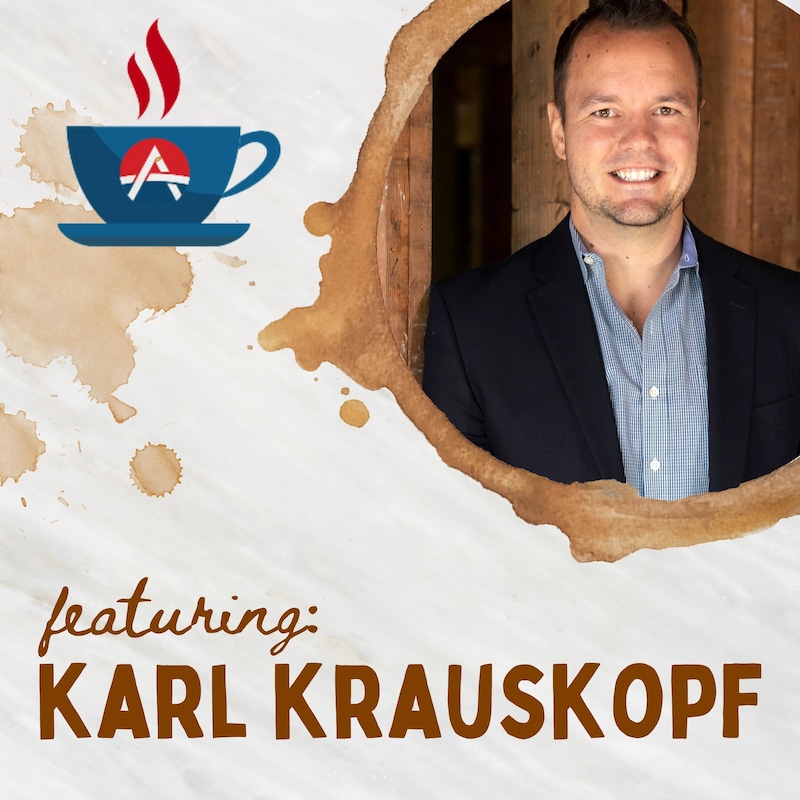
Welcome back to another episode of the IRA Cafe podcast! Host Jasmine Trocchia sits down with Karl Krauskopf, founder of Gold Multifamily, for a candid discussion about real estate investing, portfolio diversification, and the power of business fundamentals in the multifamily space. Karl shares his journey from a background in international business and corporate health care strategy to building a successful real estate investment company in the Pacific Northwest. Listeners will gain insight into the reasons behind his transition from residential redevelopment to value-add and turnkey multifamily properties, including the stability and scalability that come with long-term business planning. Jasmine and Karl also explore practical advice for financial education—both for children and adults, the importance of self-education and entrepreneurial thinking, and the founding values that drive Gold Multifamily’s unique company culture. The duo discusses opportunities for self-directed IRA holders to invest passively in real estate, regardless of their geographic location, and what the current and future market trends might hold for multifamily investors. Karl walks through what prospective investors should ask before getting involved, the role of due diligence, and why he believes the Seattle area offers unique advantages thanks to its strong tech-driven employment base. This episode is full of actionable wisdom for anyone interested in real estate, self-directed retirement accounts, or building a business with integrity and longevity. Key takeaways:
- Building Gold Multifamily: From Residential to Value-Add Multifamily: Karl shared his journey from working in health tech and running a residential remodel/development company to founding Gold Multifamily over six years ago. His company focuses on purchasing and operating multifamily properties, especially value-add projects where they improve Class B and C buildings, and recently ventured into Class A properties for further diversification.
- Business Mindset and Education are Key: Both Karl's academic background (degrees in international business and an MBA) and his emphasis on continuous self-education played a big role in his success. He highlighted that self-education and entrepreneurial thinking at an earlier age could have accelerated his journey and he actively seeks to instill financial literacy and entrepreneurial concepts in his own daughter.
- Investing Through IRAs: Flexibility and Structure: The conversation explored how Gold Multifamily’s projects can be an option for IRA investors, specifically self-directed IRA holders. Karl explained that investors select individual syndication deals (not funds), allowing them to choose their desired level of risk and diversification. Once invested, IRA participants are hands-off, ensuring compliance and true passive investment.
- Market Trends: Northwest Focus and Nationwide Relevance: Karl discussed how the Pacific Northwest, particularly Seattle, is poised for opportunity due to slowdowns in new apartment construction and the tech-driven job market. While current market conditions are challenging for sellers, they present opportunities for buyers, with value growth expected in coming years. He emphasizes that, while some trends are local, similar cycles are emerging nationally as supply and demand rebalance.
- Company Values: Relationships Matter: Karl highlighted the core values of Gold Multifamily, with “GOLD MF” serving as an acronym for the company’s principles (Growth, Obsession, Love-driven, impacting a Million Families, and Flourishing). He stressed that genuine care for employees, tenants, investors, and partners is crucial for long-term success, and that business connections should be rooted in respect and empathy—not just transactions.
Tune in to learn how to align your investments with your values, educate the next generation about wealth, and navigate the evolving landscape of real estate with confidence and community. [embed]https://youtu.be/GSyzeMmQ6qQ?si=BT9V2-SXywpz-iyu[/embed]
Transcripts
Welcome back to another episode of the IRA Cafe podcast. My name is Jasmine, and I'll be your host for today's episode. I am super excited to bring you Karl Kroskopf from the Gold Multifamily Network, I guess. Is that how you would introduce yourself? Well, I'll let you do the honors. Why don't you tell our audience who you are and what you do?
Karl Krauskopf [:That that's perfect. I appreciate it, Jasmine. So I I'm also excited to be here. My, you you did a great job pronouncing my last name, and that is typically one of the worst, things to start off with is Krauskopf, but you did great. So Karl Krauskopf, I'm the founder of Gold Multifamily. We are a group of investors up in the Pacific Northwest where we buy, operate multifamily properties primarily the value add, right, where we're buying a class b, class c type properties, doing the interior renovations. We just did close on another class a, our first class a property earlier this year, and so it took a little turn, a little diversification within the real estate portfolio itself.
Jasmine Trocchia [:So that's a really fast overview over, what the your company is. What do you do at the company?
Karl Krauskopf [:Yeah. Good question. So, obviously, as the founder, it is the wearing all of the hats, making sure all of the systems are green light. We've got a team of four employees now, and it's making sure that our employees have the proper tools, resources in order to execute their job. And then meanwhile, keeping, keeping the pipeline, keeping the assets under management, performing according to, what our business plan is. Obviously, also, in addition to that, right, working directly with the investors, working directly with the general general and subcontractors on our value add projects. So right now, it's a it's a lot of bit of everything. And, yeah, that's that's it for the time being.
Jasmine Trocchia [:I I love that it's a lot a bit of everything. That that is all encompassing. How long have you been with the the gold multifamily?
Karl Krauskopf [:So I've founded this about four a little over four years ago. Excuse me. Let me even back up. It's been about six years, and so I've been full time for four years, in running my business. Prior to that, I was a corporate strategist. I worked for a business health care business, services for health care company, worked in health tech, and, that was about a ten year career. And the last two years of that overlapping with building out a residential remodel and development company. Four years, fast rewind to four four years ago when I made that exit, It was all residential redevelopment, remodels, and, quickly shifted over to the value add multifamily when the scale was was both necessary as well as interest rate shifting, inflation shifting back in, 2021, '20 '20 '2, and, wanted to get more so on the long horizon, business plans as as opposed to the short term, market exposed, products like fix and flips and and ground up developments.
Jasmine Trocchia [:What is the advantage to making that shift?
Karl Krauskopf [:Yeah. Good question. So, obviously, the the the shift in just the time horizon gives you a little bit more flexibility in executing a business plan. It gives you a little bit more flexibility in terms of, you know, what what it is that you have to do on a in a short term basis. And then obviously, shifting from a residential remodeling and development to multifamily, your valuation is is based on something different. Right? With traditional remodels, single family remodels, redevelopments, you're looking more so at what are your comparable you're looking strictly at what are your comparable sales, what can you tie in emotionally for the home buyers. And so you're you're a little bit more whimsical in terms of what your actual end value is gonna be. And so, you know, now, fast forward into the multifamily space where things are valued more so based on your net operating income.
Karl Krauskopf [:Right? How well does the business perform? And so the way I look at the multifamily space is you we're running micro businesses. We're running the individual businesses and multiple of them. Right? Each one has their own p and l, the profit loss statement, and and, we have to do different we have to pull different levers to make different properties perform better. And so, again, I I like that aspect. I come from business. I come from running a business, and so now it's, now it's applying, those, skills, that experience in the, in the rental space.
Jasmine Trocchia [:That was actually going to be my follow-up question. Have you always been very business minded, and did you start off that way? What did you major in in college?
Karl Krauskopf [:Good question. International business. So I I I majored international business in my for an undergrad, and I got a MBA, quickly after college, after undergrad. Spent moved right into health care services, business, business services, health tech, for the the ten years, which led me into the residential, residential space.
Jasmine Trocchia [:So did you have any mentors or any people that kinda helped you make that shift? Like, I'm trying to make the the connection. Down the line.
Karl Krauskopf [:The connect the yeah. So the the the initial connection, right, even even rewinding a little bit more before, you know, we I even started in the residential remodeling is, you know, we were essentially starting a family. My wife and I were starting a family. We wanted to, identify new income sources. You know, she was a school a school counselor, had a ceiling an income ceiling. I was a w two noncommission based employee. And, you know, I knew the amount of time, that I put into the job today. I wouldn't see any fruits of those labors for another twelve to eighteen months, if any at all.
Karl Krauskopf [:I was also, you know, at the at the whim of a or at will I was an at will employee, and so I knew at any point, you know, layoffs, poor performing company could, you know, could effectively, do a reduction in force so I could lose my job. So at that point, you know, we we wanted a little bit more stability, a little bit more predictability. We started buying some rentals. This was now seven years ago. Seven years ago, I started buying some rentals. Really slowly, it was self education. Spent about six to nine months self educating myself in the space, how to buy, how to underwrite, how to run a small rental, and then bought, bought several of those, amassed a small little portfolio, realized we were running out of money, started buying fix and flip because that's the thing you do when you run out of money. Not at all.
Karl Krauskopf [:Not a great idea. Also, we had our our our first born at that exact same time that I we closed a a fix and flip.
Jasmine Trocchia [:Wow.
Karl Krauskopf [:Terrible timing.
Jasmine Trocchia [:Terrible timing. Terrible timing. Yeah.
Karl Krauskopf [:It's it's it's where I learned to love to wake up at 4AM, you know, just having to do everything. But, anyway, you know, I I think the I think the evolution has been kind of long and predictable, right, where you go you start off in the small small multi or the small singles, and you start building your way. You start learning the business, one step at a time. And that's where we're at now where we're, you know, buying 30 plus unit complexes. You know, we've got the experience, across the full gamut of, buying, operating, selling, and trading. And now it's just putting all of those, fundamentals into practice.
Jasmine Trocchia [:Gotcha. So you have at least one kid. What kind of advice financially or business minded would you give your kid or do you give your kid? Like, what what do you try to instill in them business wise or financial wise?
Karl Krauskopf [:Yeah. That's a really good question. So, man, how money works, I think, is is probably one of the most important things that I like to teach her. It's, you know, you don't necessarily need to go make money. There's a lot of money out there. You just need to figure out a way to earn, necessarily that that money. Earning money might look like different things. We I bought her a book when she was probably two.
Karl Krauskopf [:I forget the title of it, but it's something around, how to become a millionaire for, you know, for essentially for kids. And it teaches us a lot about just simple math, simple, lending practices. And so, you know, now we talk about lending money essentially. Hey. Can I borrow a dollar? I'll give you $2 in a week. And so she she, you know, she puts that into practice with with her friends, with her friends at church. And, you know, it's it's not like she's earning a lot of money with it, but she's understanding that, hey. I don't necessarily need to go do a bunch of chores to earn money.
Karl Krauskopf [:I can actually use money to go generate more money. It's just figuring out ways to collect that, that arbitrage. Obviously, arbitrage is not yet in her repertoire of vocabulary, but soon it will be.
Jasmine Trocchia [:It might be. You never know. Yeah.
Karl Krauskopf [:She gets the concept. She gets the concept. Yeah. And then so, you know, a, how money works is is certainly what I wanna instill. And then b, you know, obviously, the the whole development process, the construction, you know, she knows she knows that dad, you know, manages property. She knows that dad builds properties, and, you know, she loves that. She still wants to be a veterinarian, and I wholeheartedly support a veterinarian. I you know, our our lesson that we or my lesson that I try and teach her there too is, like, hey.
Karl Krauskopf [:You don't have to you don't have to necessarily become the veterinarian, especially if you don't like blood and guts and broken bones. And, you know, the the sad parts about being a vet, you can be a business owner of veterinarian offices, and you can hire the vets to do all the yucky work that you don't wanna do, and you can go do all the fun stuff that's, you know, loving on the animals and, you know, essentially collect you know, essentially being the risk taker, but also the moneymaker. And then you get to do the things about the job that you love to do, which is, you know, spending time with the animals. So she she gets that concept as well.
Jasmine Trocchia [:Wow. That I never thought about it that way. Like, you know, if you wanna be an astronaut, why don't you own the company that makes the rockets? Then you don't have to be the astronaut, but you get all the fun stuff. Yeah. Same sort of concept.
Karl Krauskopf [:You can certainly you can certainly take that first or second or third maiden voyage on that that that rocket that you build. And, yeah, you don't have to do all the necessary well, I guess you probably have to still do all the training for to be an astronaut. So, yeah, I get the concept.
Jasmine Trocchia [:Right. Oh my goodness. That's cool. That's a really interesting way to look at things. I never thought of that advice. I have three kids too, so that's that's really good. I love that. Yep.
Jasmine Trocchia [:Yep. So speaking in the same sort of vein, I like to ask the same kind of questions to all of the podcast guests. So what is one piece of advice that you would give your past self? So maybe something you wish you learned when you were your daughter's age or something you can go back and tell, say, your 18 year old self, your 16 year old self with your first job, hey. Look. Blank. What would that be?
Karl Krauskopf [:It's a good question. I I I think, you know, there there's there's certainly a ton of things I think reading and and self edge self educating earlier on in my life would have been, probably the best thing, and the hardest thing for my younger self to do. But, you know, becoming more self educated, becoming more entrepreneurial earlier on in my life would have been, would have paid off, you know, hugely. Right? I don't I don't think the entrepreneurial spirit really, started taking off and really started becoming put into practice until late late twenties, until my late twenties. And so, you know, really, that's where I would go back and say, hey. You know, learn what it takes learn what it means to be an entrepreneur. That really is becoming self self educating yourself, learning more about, again, how to make money, about how to help others, and then how to bridge the gap between making others and and, making money and helping others.
Jasmine Trocchia [:Yeah. I love that. That kind of reminds me of the quote that I I really love on your website. I'm gonna navigate to that really quick so I can do it verbatim. And this is, under the who we are section and join our team. And it says, while we are focused on achieving high quality outcomes for our clients, wonderful, we also show love to each other and those around us. Truly without the love for one another, our legacy will not endure. I thought that was fantastic.
Jasmine Trocchia [:So can you speak to to that sort of ideal with your company?
Karl Krauskopf [:Yeah. Good good. And I I appreciate you bringing that up. You know, I think the I think the overall sentiment for me, relative to love. So if you look at our, you know, our core values, you know, gold, MF, so growth, obsession, love driven million we wanna impact a million families and flourish. We want our employees to flourish and become, you know, a % of, their potential. And so, you know, driving back or, you know, get backing up to to the love, to the love the love value is, you know, really, we want to show we wanna show love to our our employees, to our leadership, to our tenants, to our clients. And that is because, you know, when you think about a way that a connection is made, it's not necessarily made just monetarily.
Karl Krauskopf [:It's made emotionally. So, you know, that that connection, that long lasting connection is really going to be impacted through, you know, how you how you present yourself to, you you know, how you present yourself to others, to, again, to the tenants, the residents of those that we serve, the the partners, the contractors. And, you know, it's it's really just framing how you approach somebody in the topic. Right? You don't always have to, you know, you there's a way there's a way to present a business problem and or a solution in such a way that still shows respect, and caring for the other party without, you know, diminishing or demeaning or eroding any kind of self respect. And I think that's that's the major thing that I want that I want our employees, to recognize. That's the main, one of the main ones that I want in myself, to, to practice. And, you know, I think that's something that obviously spills over into my personal life as well, is how we treat peep is how we treat people, is how people will remember us.
Jasmine Trocchia [:Oh my goodness. That is, like, the coolest thing. And I just made the connection that your your website's g o l d dash m f, but that's not just gold as in the color gold multifamily. That is the acronym for all of those core values, g o l d m f. And I just made that correlation. From a marketing standpoint, that is super cool. Because when I was, you know, trying to prep for our interview and trying to get to know who you were, at least online, I was like, oh, GoldMf. Do they do gold assets? Do they hold precious metals? Do they do multifamily? Are they real estate? I couldn't quite figure out what it was.
Jasmine Trocchia [:But now after discussing this with you and and dive diving a little deeper, it's g o l d m f stands for your core values of your company. Yep. Yep. Wow.
Karl Krauskopf [:That can be the first you you wouldn't be the first person to ask me what, what the m f stood for in in gold, if, if you didn't know any better. Yeah. It there there there's many other acronyms out there that I I get the, the joke for.
Jasmine Trocchia [:Grown up acronyms. Right? Right.
Karl Krauskopf [:We're all adults out here.
Jasmine Trocchia [:Oh, no. Well, I think it's lovely. I think it's fantastic. So we talked a little bit about the past. Let's talk a little bit about the present. So what's the tie in for my clients at American Irae who are Irae account holders, and how does that relate to your your company, your business, and why are you here? Let's talk about the present.
Karl Krauskopf [:Yeah. So we, again, value add multifamily, turnkey multifamily are the two asset types that we we buy and operate. And so I think from an IRA holder perspective, you know, there's there's ways let me even back up. So as a traditional IRA holder, you know, a a lot of what we're invest with a lot of what we had invested in was stocks, bonds, mutual funds, etcetera. And we would always look at how do we perfectly diversify into high risk, high reward, low risk, low reward, or value stocks. And so, you know, that that is, the mentality that I'm taking with our our real estate holding company is also being able to create that same greater that same matrix where, you know, investors can decide to invest. And and and I should even back up one more step is we don't invest or we don't, we don't practice, with funds. We don't, we don't execute on fund strategy.
Karl Krauskopf [:We are still a single asset syndication. Meaning, if you're investing with gold multifamily, you're investing in a single asset, one at a time. And so there's no there's no diversification over multiple properties. And, again, what we try and do is we try and create allow investors to select which which offerings that they want to be part of so that way they can diversify even, even still with their self directed, self directed funds. So that way you've got, you know, your high risk, high reward, maybe, ground up construction, your value add, and your turnkey or your really, really safe low risk, low reward, type, type assets. And so, yeah, that's the portfolio that we're trying to create and offer to both, obviously, cash investors as well as IRA investors.
Jasmine Trocchia [:And the assets for an IRA investor, that would once they pick what they wanna invest in, it's hands off after that. They don't have to materially be involved in the investment?
Karl Krauskopf [:Correct. Absolutely. Yeah. So certainly from an IRA perspective, you you definitely cannot be. And, yeah, you definitely cannot be involved in any way, shape, or form from an investment stand from a a management standpoint, just from a compliance compliance perspective. And then, obviously, you know, the the, the platform that we're building is the passive investing, passive income generating, type, type investment.
Jasmine Trocchia [:Gotcha. Fantastic. Yeah. And
Karl Krauskopf [:one thing that we do sorry. One more thing, Jasmine, on that. One thing that we do is, we we enjoy getting our clients together. So we're I would say we're highly geographically, focused right now. Right? So Washington state is where all of our assets are, where all of our investments are currently are. You know, we'll start looking, regionally outside of, Washington state, into the other Northwest states. Right? Idaho, Utah, and, Oregon at some point. But right now, it's strictly in the Washington state space.
Jasmine Trocchia [:If I was an investor for pretend, do I have to be in Washington state to participate?
Karl Krauskopf [:No. No. No. Not at all. No. We've got no. Certainly not. You know, obviously, we've got a a good portion here in the Seattle area, Texas, Florida, Tennessee, up in the Northeast as well, New Jersey.
Karl Krauskopf [:And so we've got investors all over The States. And so we try and incorporate people, remotely, into our town halls. Right? We do quarterly town halls where we talk about our existing portfolio. And we give people opportunity to come in and talk and, you know, voice concerns, meet other people, and, you know, again, just have an open, true trend true and transparent open dialogue.
Jasmine Trocchia [:That's fantastic. Love to hear that too. Also, that YouTube video, you're wearing the exact same thing. Is that just your your your branding? It's, like, spot on.
Karl Krauskopf [:I've got a wardrobe of of five, of the same maybe six of the same exact shirts and three of the same bow ties. Why? Because decision fatigue is a real thing.
Jasmine Trocchia [:Yep. It is. So keep the
Karl Krauskopf [:decisions down. Keep the silly decisions down so that way I can focus on the bigger, save the brain juice, the brain fluid for the the bigger decisions.
Jasmine Trocchia [:Hey. You know? I love that. That makes total sense.
Karl Krauskopf [:Works for me.
Jasmine Trocchia [:Yep. It works for me. Doesn't work for everybody. Fantastic. So I could dress as you for Halloween because that would be very easy to do.
Karl Krauskopf [:Yeah. Yeah. I'll I'll I'll put those out in the spirit Halloween, little cost little, like, onesie not onesie, but one package costumes
Jasmine Trocchia [:Yeah.
Karl Krauskopf [:Comes with the
Jasmine Trocchia [:Yeah. The Carl Crosstrek costume. Yep. That's great. That's great. Okay. So we talked about the past. We talked about the present.
Jasmine Trocchia [:Let's discuss the future. So what sort of trends this could be politically business like, investment like, or or what sort of things do you see coming down in the pipe for the future of your business, your company, and the type of things you like to invest in?
Karl Krauskopf [:Yeah. Sure. Absolutely. So, you know, obviously, it we've gone through this whole so there there's a lot of different things going on right now. It's it's April 2025. We just had a tariff day, hit. We so markets have been going volatile. We've we're still at a high, interest rate environment right now.
Karl Krauskopf [:Treasury bills are still high. They they've come down, but still, banks are are, banking, or including large spreads in their, in their in their, in their loans. So that way, you know, things still don't feel very predictable for them, the the banks and credit unions, which, you know, does has not yet created that super favorable lending environment for new buyers. And so, you know, you mix that with the, specifically Seattle, specifically Washington. Obviously, this is, starting to happen more so in other parts of the states. But, you know, we've gone through the massive supply, onslaught of new units, new apartment, units coming online. And, we've had, you know, rec I would say somewhat record breaking vacancy rates over the last, let's call it, nine months, maybe twelve months max. And, things are starting to come back down.
Karl Krauskopf [:Absorption's getting, more in check, meaning, you know, now new new units have started slowing down and new, new starts have really, really, gone down substantially. I think the last report I saw this morning was something like the Seattle market is 68%. New starts are down, year over year, and the trend will continue, to get larger and larger spreads between, between that. So what does that mean? What does all of this mean? In in my opinion, I think values, will start to come back up. I think that we've we've seen a trough in terms of values, specifically from, capital markets being so expensive, specifically from vacancies being so high. And we've had a couple other operating expenses that have been, out of control, specifically insurance. I'm sure everywhere else in The States have has seen that. So, you know, you have this perfect storm of net operating income, generally speaking, going down.
Karl Krauskopf [:The cost of borrowing has gone up, and so values subsequently have, either stayed flat or have gone down. So that puts us in a great buying period. For how long, I'm not exactly sure. It could likely be the next twelve to twenty four months. We'll see. But, ultimately, we won't see values start getting back to peak times, in my opinion, until, you know, we start seeing that supply, start coming back, which, you know, for Seattle, it takes roughly three years to get permits. And so, you know, that could put us in a, that could put us in a period of buying for the next two years and then a a great peak time of between year, let's say, three and four, of when if if you were to look at trying to time the market, which we don't generally like to do, we like to be, we like to know what the market's gonna be doing and what to expect. We don't try and time it.
Karl Krauskopf [:That's just hit people too many people in the wrong way.
Jasmine Trocchia [:Gotcha.
Karl Krauskopf [:We're still net buyers for the next two years, and we'll start looking at selling probably in, 2027, maybe 2028.
Jasmine Trocchia [:So am I hearing the recap of that is it's down, but it's gonna go back up. So that's sort of the the overall. It doesn't look great now, but it's gonna look great in a little bit.
Karl Krauskopf [:Yep. Exactly. Gotcha. The yeah. For if you're a seller, it doesn't look great right now. If you're a buyer, it looks great right now.
Jasmine Trocchia [:Understood. And that's and that's very much do you think that's nationwide, or do you think that's very much local? Do you think that's very much like Washington
Karl Krauskopf [:state? I I I I don't think it's I don't think it's national, necessarily. I I think it's becoming it's trending to be more national as some of these bigger markets start phasing out of their supply glut. Right, because, you know, we we saw that happen from 2019 to 2022, '20 '20 '3 is, you know, all of these this this massive wave of new supply started coming online for across the nation. And so some of these cities, some of these markets are still dealing with the that onslaught of new supply. And so that that's still that's still going to be a challenge in terms of values. Why? Because their vacancies are still up. There's no sign of them going down in the immediate immediate future. There's potentials that they're still going that vacancy is still going to go up, meaning, that values are going to either be held flat or going to continue in a slight downward trajectory.
Jasmine Trocchia [:Wow. Love that. You do your homework for sure. So kind of bringing this full circle, let's pretend that I'm an American IRA client, and I would like to maybe investigate investing with you and your company. A, do I have to be accredited? B, what's my barrier of entry? And, c, what's a good question to ask you as a prospective client?
Karl Krauskopf [:Yeah. Good good question. So, a
Jasmine Trocchia [:That's back to back.
Karl Krauskopf [:I know. Can you say it again?
Jasmine Trocchia [:I said those back to back questions. I know.
Karl Krauskopf [:I love it. I love it. I love the a b c. It's great. So a, no, I don't need to be an accredited. Obviously, we need a relationship before we start, before we start any kind of capital raising conversations. Right now, we are, we are not raising capital, which is, in my opinion, as an investor, the best time to talk to an operator or sponsor, because there's no pressure. Right? I don't have a a deadline.
Karl Krauskopf [:I don't have a ticking clock that says I need x million dollars in the next thirty days. Otherwise, if I do, that really puts in my opinion, that puts undue pressure on the sponsor to get capital in the door. And so right now, you know, this is a great time to start talking with operators and sponsors like myself, getting to know us, getting to know our practices, our communication style, the types of deals that we're doing, our past performance, etcetera. Obviously, you know, one thing, past performance does not indicate future performance, as as certainly a disclaimer there. But, you know, certainly would be happy to talk through all of that. Be, you know, barrier to entry certainly depends on the deal size. You know, we've ranged from 50,000 to a hundred thousand dollar minimums, from an investment standpoint. And I from my my understanding and from my practice is that's that's pretty typical.
Karl Krauskopf [:I think anything below that, you really start getting, you know, unappealing check sizes from a distribution standpoint. Right? If you're investing $1,010,000 dollars your distribution is going to be, you know, something that's unexciting and and maybe a dinner at Chipotle. And that's not what we're trying to do. We're trying to change lives. We're trying to change, the the forecast of, people's lives here. So, the the the last one is, I think, where where to connect. Is that was that the last,
Jasmine Trocchia [:I think? What's a really good due diligence question? So let's pretend I have $10,000 and trying to figure out where to invest it. What does that person need to know about you? What should I ask about you?
Karl Krauskopf [:Yeah. So, you know, certainly, the the two, safest questions are the two baseline questions are always gonna be, have you lost investor capital? Have you done, have you done a capital call? Those are usually the the two kisses of death, in my opinion. And both of those right now are no have no insight or have no no, expectation of that ever happening. Generally speaking, we over raise for our deals, have a healthy reserve even at the, even if it means eroding some of the investor returns. Right? I would much rather have a larger operating reserve bucket, to call on in case construction goes over. We need rate caps. We need refinances. We need x, y, or z.
Karl Krauskopf [:We'd rather have, that operating reserve, in case things go south. And, again, that that, essentially, what that means is that we're eroding some of the returns, because we're it's not not necessarily working capital. And so, you know, those are those are certainly two questions that I would, I would always ask another sponsor when I invest with them. And then ultimately, it's like, where where are you trying to go? What's the what's the end goal for you? So that way I know, hey. We're on the where on this journey are you? Are you at the end of the journey? Meaning, am I going to get, you know, one, maybe two turns transactions with you, or are you at the beginning of your your your journey, your investment, your your business? And is this going to be a long ride? And so, you know, for us, this is the beginning of our journey. You know, we're four years in. And, you know, I I certainly see another, decade plus of, working in the multifamily space.
Jasmine Trocchia [:How long is my investment tied up with you and your company if I do choose to invest with you?
Karl Krauskopf [:Sure. Sure. So it certainly depends on the business plan. You know, we always look at we always stress that's the business plan. And, you know, here's base case, here is worst case scenario. Right now, we're still operating in the three to five year time space. We may have one deal that bleeds over into a seven year, a seven year deal, which is fine. You know, we always like to we we pan out what's the best case, what's the worst case, and we get our debt, our long term debt based on our worst case scenario.
Karl Krauskopf [:So that that deal, we have seven year debt, No issues there, from a, a financing standpoint. And, you know, obviously, we'll try and sell it or refinance it before then.
Jasmine Trocchia [:Got it. Understood. Finally, maybe last but not least, what's the best way for, someone to reach you to contact you?
Karl Krauskopf [:Yeah. If, if by the grace of God, you can learn how to spell you can figure out how to spell my my last name. You can find me on LinkedIn. Gold multifamily may also be an easier connection. I'm on LinkedIn. Both of those I, post I I do daily content, on macro economy, local economy, regional economy, as well as what's trading, local what's trading. And so, you know, we we we obviously we have deeper dives from a newsletter standpoint. You can sign up, on our website gold-mf.com.
Karl Krauskopf [:You could sign up to get weekly newsletters. That's where we put out our deals, our investment offerings, as well as, again, a little bit deeper dive in terms of our, offerings or excuse me, in terms of the the economy. Yeah. Those are those are the two best places. If you're looking to get, engaged, if you're looking to speak with somebody who's, you know, market expert up in the Northwest, Pacific Northwest based out of Seattle, Washington, and if you're looking to get some exposure, up here. You know, one one last mention, we haven't didn't really talk about Seattle and why Seattle. Specifically, you know, a lot of investors are flocking and and and focus more so on Southeast and other parts of the states. You know, the reason why I am a big believer in the Northwest, specifically Seattle, is, simply from a I would say most most prominently because of the, employee base.
Karl Krauskopf [:So who are the employees here? They're primarily tech driven. They're primarily Microsoft, Amazon. And one of these other, you know, Fortune 500 tech companies. Now, obviously, in the marketplace right now, in the stock markets, their their stocks are going down, so their personal net worth is is being hit. However, you know, you look at the the primary drivers of of innovation right now, cloud compute. You look at ecommerce. You look at artificial intelligence, some of the big, big buzzwords in tech right now. The the vast majority of market share is being held by by between Amazon and Microsoft.
Karl Krauskopf [:Obviously, you've got other Fortune five hundreds, other FAANG companies like Facebook or, excuse me, Meta, Netflix, and some of the others that are part of that, Mag seven. That's the new it's the new group, the Magnificent seven. You know, they all of them have presence here in the Northwest. That's just Amazon and Microsoft that have their their primary headquarters here. So we we don't see we don't see the market we don't see the market going down, up here regionally. We don't see it being hit. We don't see these employers going anywhere anytime soon. We see them doubling down.
Karl Krauskopf [:Yes. There are restrictions. Yes. There are difficulties in in regulations around renting properties, but that makes my job harder. That does not make your returns bad. That makes your returns good because we have predictability. That just makes my my job as the manager, as the operator a little bit more difficult. And that's okay.
Jasmine Trocchia [:Yeah. Wow. Fantastic. Well, thank you, Carl. Thanks for being here. Anything we didn't touch on that you wanna to to make apparent to the audience before we before we sign off?
Karl Krauskopf [:No. I I I think that's been great. This has been super, you know, I've I've loved working with the, American IRA. I think it's been a a really, really great opportunity. You know, a lot of my clients are super excited, super happy with you guys. I won't say who they came from, but had, three clients shifted over to, to your group, recently, within the last month, and they are just thrilled to to make that shift. So, I'm happy I'm happy working with you guys. It's been really, really great.
Karl Krauskopf [:I look forward to continue working with you, working with your clients, and, yeah. Super excited. Thank you.
Jasmine Trocchia [:Wonderful. Thank you so much for that ringing endorsement. We really appreciate it. It's been a pleasure to speak with you finally. I've really enjoyed our discussion today. So, hopefully, some of the the clients or prospective clients will reach out to you about your investments. But thank you so much, Carl. I appreciate you being here.
Karl Krauskopf [:Likewise. Thanks, Jasmine. I appreciate you.
Jasmine Trocchia [:And now it's time for the IRA cafe q and a, where we answer a listener's questions, live on the podcast. So today's question is kind of a general we get this question a lot at American IRA. What is a Checkbook Control LLC? And I'm actually going to turn our eyes and turn your attention to one of our sister companies called Turnkey IRA. You can find them at turnkeyIRA.com. This is your source for all things Checkbook Control LLC. There are blog articles, how tos, what are they, frequently asked questions, anything you could ever want to know about Checkbook Control LLCs is all there at turnkeyIRA.com. You can also request a free consultation to have a fifteen minute call with a business development person who would explain it to you, your options with Checkbook Control and Checkbook Control LLCs. This is a hot topic.
Jasmine Trocchia [:We get a lot of questions about this, and you can find all of your answers at turnkeyIRA.com.
Voiceover [:American IRA LLC, a North Carolina LLC, acts as a third party administrator for New Vision Trust Company, a state chartered South Dakota trust company. As a neutral self directed IRA administrator, American IRA does not recommend or endorse any investments, individuals, or entities, including financial representatives, promoters, or companies. American IRA and the IRA cafe are not responsible for other statements, representations, or agreements, nor do we evaluate the quality or profitability of any investment. American IRA does not endorse guests on the IRA cafe podcast. Guest opinions are their own and do not necessarily reflect the views of American IRA, its subsidiaries, associates, or custodian. Participation in the podcast is voluntary, and no compensation is provided. American IRA is not a fiduciary and cannot offer financial advice. Please consult your CPA or another professional before making financial decisions.
