Shownotes
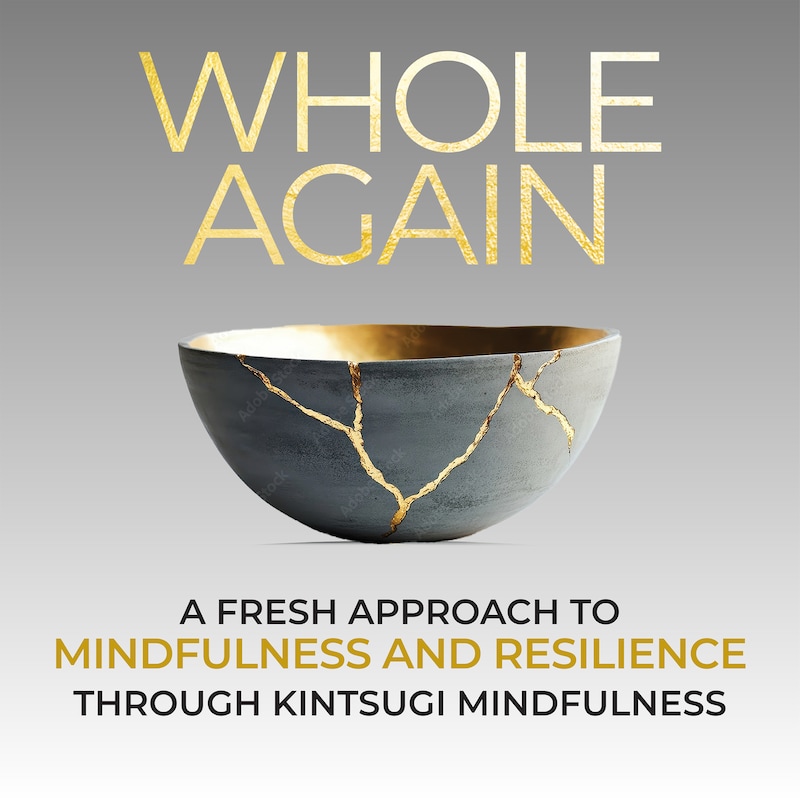
The Whole Again Podcast: Mindfulness and Resilience through Kinstugi Wisdom airs every Monday, Wednesday and Friday with Pause Breathe Reflect Microdose Meditations, Growth Mindset and Mindfulness Tips, Transformation our scars into healing and resilience, and a new series from May to August called A Perfectly Imperfect Union.
------
What if the emotional weight you’re carrying isn’t something you need to “let go” of—but something you first need to understand?
Many of us move through life carrying unresolved emotions—frustration, anger, pain—without ever being taught how to process them. Instead, we suppress, ignore, or numb them, only to feel weighed down over time. This episode introduces a powerful metaphor—the “backpack of rocks”—to help you recognize, accept, and begin to lighten that emotional load in a more compassionate and realistic way.
- Learn a healthier first step to emotional healing that goes beyond the cliché of “just let it go”
- Discover how unprocessed emotions silently weigh you down—and how to start releasing them
- Gain a practical mindset to become more intentional about what emotional “rocks” you continue to carry
Press play now to learn how to lighten your emotional load and move forward with more clarity, ease, and self-compassion.
You can now download my Pause Breathe Reflect App with Microdose EQ for FREE on Apple’s App Store or Google Play. Discover how to spend less time on your phone and more time on things that bring you joy. Also, find the support you need to navigate today’s uncertainty with more calm and grace.
Receive a FREE copy of my book: “My Last Bad Day Shift.”
We can also connect on LinkedIn.
Subscribe to be sure you don’t miss any of the micro-meditations, wellness tips, and guidance that I publish every Monday, Wednesday, and Friday at 7:11 am.
Transcripts
Hey there, it's Michael. Welcome to Whole again, the show that's here in support as you create a meaningful life. This year I celebrate the 25th anniversary of my last bad day, which sparked all of this. It's also known as my near dust cycling accident. And every Friday I'm sharing. Things I've learned along the way.
In the realm of growth and development, you might see these as growth mindset tips or simple advice, or maybe something to add to your Tollhouse cookie recipe. Now, since you didn't ask for any of these, some may land and be spot on for you and others may be just a bit outside. In either case, the intent of all these is to help us look within so we can show up better for those around us, so we can create that positive ripple effect.
I'm always talking about, and this week we're up to Taylor Swift's favorite tip number 13. It's all about. The backpack, let me share more. When I was growing up, I had no clue how to process and deal with my emotions, and when they came out, they came out pretty big. I don't blame my mom and dad. They were doing the best they could, but they didn't really know how to help me.
Although they did film me through many outbursts just to show me how I was showing up. I'll share more about that in a future episode. But I don't blame my mom and dad and I don't blame my teachers. We know more today about emotional regulation than we did back then, but often when we look back on the past, we look through today's lens and that just isn't fair.
I also don't blame my coaches telling some jock not to cry because only girls cry. Well, that was something that was quite normal back then. I'm afraid that it's still very normal in some circles today. So all my authority figures back then, my parents, my teachers, my coaches, they really didn't know how to help.
Except when my emotions came out and I got really upset, or this was quite common, I was really angry. I had quite the temper. All they did was to tell me to stop. Don't do that, Michael. Stop doing that. Calm down. And of course we know this, that when you tell anyone to calm down, rarely do they. Actually calm down.
So what I did is I picked up those rocks, those emotions, and just shoved them in my quote unquote backpack. I told myself, even as a kid, I would deal with this later, but I still didn't know how. At first, I thought, well, I can handle a few rocks in my backpack. It didn't feel all that heavy. As I got older, as I went through my teenage years, which is ripe for rock pickup and putting those things in our backpack, the backpack started to get a bit heavier.
But when it did, when it felt really heavy, I was like, I got this. I'm strong. I'm resilient. Although I don't think I used the word resilient back then. And over time the weight just became, well, it felt normal when I became an adult and the backpack really got heavy. I would just try to numb the sensation away.
I'd throw back maybe another beer, another glass of wine, and back then I could emotionally eat with the best of them, and it helped, at least in the short term. It wasn't a long term solution. Fast forward to my big accident. Well, that SUV blew me apart. It also blew all the contents, all those rocks in my backpack wide open.
There I was on the asphalt in New Mexico trying to fight to stay alive in my backpack and all its shit. Was all around me. So as the good people who came to that scene put me in the helicopter to fly me off to the University of New Mexico at Albuquerque, what they also did was they picked up all my rocks and my backpack, and that came with me to the hospital into the ICU.
It became part of my rehab. Yes, I had so many injuries, physical injuries to deal with, but I also had to deal with all the stuff I was putting or I had put into my backpack. I'm not sure if you're a fan of the movie Frozen. You know the one with Elsa and Olaf? How cute is he? He is adorable. Well. There's the big song in Frozen.
Let It Go. I am not going to sing it for you. That is my bonus gift to you today. No singing. And so this whole concept though of letting things go is quite common on the internet. People put things on Instagram or LinkedIn or wherever you happen to be scrolling all with the message of like, Hey, if you have.
They don't use this term, but if you have rocks in your backpack, let it go. And that is actually easier said than done. Sometimes it's hard to let things go. Yes, there are some rocks or past beliefs that would be helpful if we could let them go, but before we get there, we can simply let things be. To acknowledge and accept that, hey, we have rocks in our backpack that have been built up over the years.
Sometimes when we resist all the things that we carry, it actually makes that weight feel even heavier. So one of the best first steps, and this is a first step I took while I was in the hospital. I worked on getting to acceptance and simply letting the rocks be that gave me space so I could be thoughtful about, I guess, my rock inventory and which ones really needed to be removed, and some rocks.
I, I still keep around. They're comforting in a way, or they feel like they might protect me in a way. So the goal isn't to empty the backpack completely, but it is to be more mindful, more thoughtful about what rocks we carry around with us. Because some rocks can be good, they can be good memories. Those rocks are much lighter.
You're gonna let it go or empty your backpack completely, or take that first step and just let things be. The real truth is that carrying around a heavy backpack and not acknowledging it and trying to numb the pain away or the weight away isn't helping any of us show up in the way we really can. It doesn't help us live a meaningful life.
So tip 13 is all around emptying the backpack, or as I mentioned, that first step, whatever happens to be in your backpack at first, let it be. Except that wherever you happen to be in your life, you've had experiences where. You have picked up a few rocks or pebbles or maybe even a big stone. First up, let it be.
Create some space and then you can decide which ones truly need to be removed so you can ease the weight you carry as you continue to move forward into the person you're becoming and on your pathway to creating a meaningful life. It's a lot easier if our backpacks aren't so heavy.
As always, thanks for being here, and thank you for listening. If this tip resonated with you and you think one of your friends might like it as well, I hope you'll share it with them. I also hope you'll join me in co-creating a new series I'm running called A Perfectly Imperfect Union. It's about reflections from real folks like you and me.
As America turns 250 years old in episode 3 53 shares more about the series, so I hope you'll check it out as well as Monday's episode. Each Monday I share a microdose meditation with you so you can start the week off on the right foot. Until then. Let's celebrate our scars as golden symbols of strength and resilience, and don't forget to have fun.
Storm in the castle,
and if you wish to learn more about creating beautiful ripples and how to prevent a bad moment from turning into a bad day, please visit my website, Michael O'Brien schiff.com. And sign up for my newsletter called The Ripple Effect, and join us each Monday, Wednesday, and Friday here at Whole Again, and discover how you can heal, grow, and become more resilient and celebrate our scars as golden symbols of strength and resilience.
Until then, remember, you can always come back to your breath. You've got this. And. We've got you.