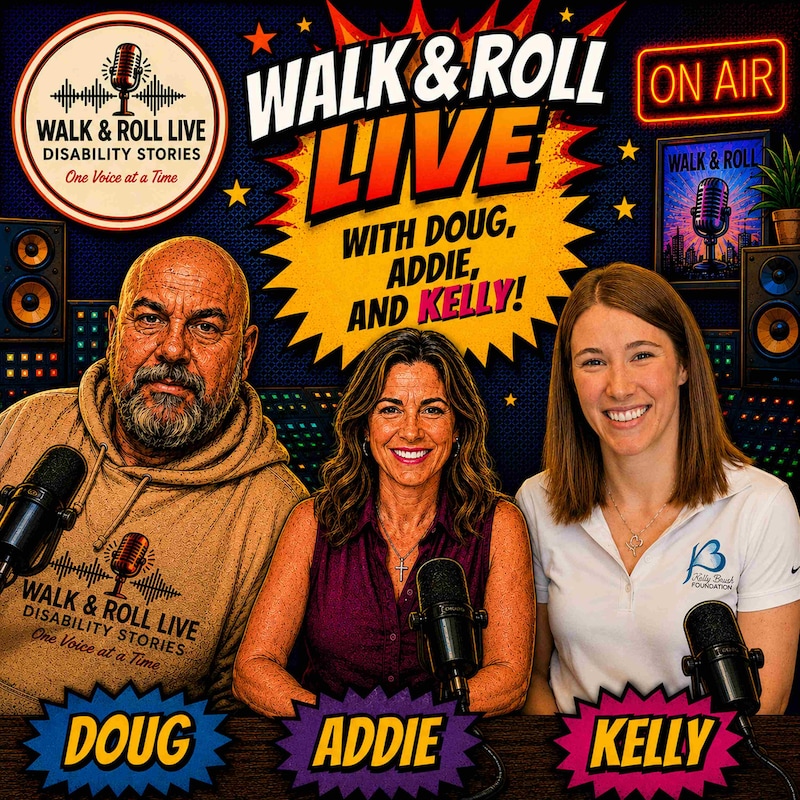
Shownotes
Kelly Brush, a distinguished downhill skier who sustained a spinal cord injury, has transformed her personal adversity into a powerful movement through the Kelly Brush Foundation. This organization is dedicated to empowering individuals with disabilities by providing them with access to adaptive sports and fostering a sense of community among those facing similar challenges. In our conversation, we delve into Kelly's journey from a promising athlete to an advocate for safety and inclusivity in sports, emphasizing the importance of peer support and shared experiences in navigating life after injury. We explore the initiatives undertaken by the foundation to improve safety in ski racing and promote adaptive sports, highlighting the profound impact these efforts have on individuals and communities alike. Join us as we reflect on the resilience of the human spirit and the transformative power of sport in enhancing the lives of those with disabilities.
Takeaways:
- Kelly Brush began her journey as a downhill skier, but a catastrophic spinal cord injury at 19 drastically altered her life trajectory.
- Following her injury, Kelly founded the Kelly Brush Foundation to empower individuals with disabilities through adaptive sports and community engagement.
- The Foundation not only focuses on adaptive sports but also emphasizes safety in skiing, aiming to prevent injuries like Kelly's from occurring in the future.
- Kelly's personal story illustrates the importance of resilience, support from community, and the role of adaptive sports in fostering a fulfilling life after disability.
- The Kelly Brush Foundation has provided over 2000 grants for adaptive sports equipment, helping individuals access activities that promote independence and well-being.
- Looking forward, the Foundation aims to double the impact of its grants and expand its community initiatives to ensure inclusivity in all areas of society.
Links referenced in this episode:
Companies mentioned in this episode:
- Kelly Brush Foundation
- Casa Colina
- AGUIAR Professional Training
Transcripts
The following is a productions original series.
Speaker B:Hello and welcome to Walk and Roll Live.
Speaker B:I am Doug Vincent, joined by Addie Rich.
Speaker B:Our podcast is dedicated to amplifying the voices of the disability community.
Speaker B:I am a polio survivor and Addie has cerebral palsy.
Speaker C:Still on.
Speaker B:What week is this?
Speaker B:No, I mean, how many weeks?
Speaker C:52 Weeks in a year.
Speaker C:And I'm 47.
Speaker C:That's a lot.
Speaker C:I can't math.
Speaker B:It's a lot.
Speaker B:That's right.
Speaker B:All right, well, how was your week?
Speaker B:How was your week?
Speaker B:Fourth of July happened while we were gone.
Speaker C:So it happened.
Speaker C:Yes, it did.
Speaker C:It was fun.
Speaker C:I am a kid at heart and I got some bubbles and I blew up a little kiddie pool and I had popsicles.
Speaker C:And the neighbors around the corner, we can do fireworks here.
Speaker B:Okay.
Speaker C:And so, I mean, while it's fun, from like Thursday night till last night till about one in the morning, people are doing fireworks.
Speaker C:So it's fun, but it's not fun.
Speaker C:But, you know, on 4th of July it was fine and I was squealing like a little kid when I looked out my front window and saw that the neighbors were blowing up ginormous fireworks.
Speaker C:So got my walker, ran down the street, stood in the cul de sac, and watched like 30 minutes of fireworks.
Speaker B:Nice.
Speaker B:Nice.
Speaker B:So I have some questions.
Speaker C:Okay.
Speaker B:They're legal.
Speaker B:Well, in certain cities here they're legal, but they're like what they call safe.
Speaker B:Insane.
Speaker C:Yes.
Speaker B:You know, so they'll.
Speaker B:They'll do a little, you know, you do sparklers and they'll have something that just does a little shower of sparks there on the street.
Speaker C:Okay.
Speaker B:But in Georgia, it sounds like they've got the ones that go up into the air and.
Speaker B:Right.
Speaker C:Yes.
Speaker C:They have like the giant mortars where you're like, oh, God, like they blew one.
Speaker C:And I was like, wow.
Speaker C:I probably should have backed up even further because.
Speaker B:So that's what my neighbors do.
Speaker C:Yeah.
Speaker B:And here, Fourth of July, at least in my neighborhood, is about a six week affair.
Speaker C:Oh, God.
Speaker B:Yeah.
Speaker B:They start about two weeks before and generally it's about four weeks after.
Speaker B:So I'll keep you updated here in the next few weeks to see how it goes.
Speaker B:But I went to some friend's house.
Speaker B:I talked about them.
Speaker B:Last week I went to the wife's birthday party when we did the purple easel thing.
Speaker B:Well, they had us all over for Fourth of July.
Speaker B:So we just hung out.
Speaker B:The weather was great and, you know, did the traditional thing, dogs and the burgers and all that.
Speaker B:And pretty much I Kind of went home about the time the sun was going down.
Speaker B:And so I get home and yeah, my whole neighborhood, they're just going crazy.
Speaker B:So I go to the next door neighbor, just plant there, and they were all sitting out on their lawn chairs.
Speaker B:The new neighbors across the street, they got some easy ups.
Speaker B:They look like they had a big party.
Speaker C:Oh, wow.
Speaker A:Okay.
Speaker B:But then the neighbor a little bit farther up the street.
Speaker B:Yeah, they.
Speaker B:They got, they got all the stuff that you would see at a professional show.
Speaker B:It's.
Speaker B:I mean, I took videos of it.
Speaker B:It's amazing.
Speaker B:And then the house across the street that backs up on the next house on the next street, somebody over there is doing them and they're, you know, they're.
Speaker B:They're like a bubby.
Speaker B:I have these two tall, like at least 50ft palm trees.
Speaker C:Yeah.
Speaker B:And all that stuff's coming down into the palm trees.
Speaker C:Yeah.
Speaker B:And those things will go up in a flash, you know, So I was looking up there, waiting to see.
Speaker C:Yeah, yeah, that's me.
Speaker C:You know, I'm nervous Nelly about a lot of stuff.
Speaker C:And I mean, my ex husband and I, we used to do it, but we always like put three hoses together.
Speaker C:So we had a hose.
Speaker C:Right.
Speaker C:So we're not going to endanger any neighbor's house by, you know, blowing off some.
Speaker C:When we go into the center of the cul de sac, there's kind, kind of an open area with no trees, but we were always prepared.
Speaker C:And when they were doing it the other night, I was like, does anybody have like a bucket or what is your plan?
Speaker C:Like, I, I couldn't do it without a plan, but I was curious as to what their plan was.
Speaker B:Was.
Speaker B:Yeah, well, at one point, because, you know, I got home probably 9, 30ish, something like that.
Speaker B:So.
Speaker C:Okay.
Speaker B:I'm sure they didn't wait till it was totally dark to go.
Speaker B:So they've been going for probably close to an hour already.
Speaker C:Yeah.
Speaker B:And then I sat out there for a good hour and it was just constant.
Speaker B:And.
Speaker B:And then at some point, the neighbors up the street, I don't know for sure, I don't, I don't know them, but I think all their stuff, remaining stuff got lit on fire by an errant park or something.
Speaker B:Oh.
Speaker B:Because the fireworks were going off for.
Speaker B:I mean, it's felt so long.
Speaker B:At least 10 minutes, maybe more.
Speaker B:And some of them were going sideways.
Speaker B:I noticed.
Speaker C:Ah, yes.
Speaker C:The telltale level snap.
Speaker C:That didn't go as we had planned.
Speaker C:Right.
Speaker B:Yeah.
Speaker B:And I'm thinking, okay, is this their Big finale or did it just get away from it?
Speaker B:The longer it went, I'm kind of leaning more towards it got away because they hadn't been doing it.
Speaker C:It was a fear finale of is this house gonna be blown up too?
Speaker C:It's funny that you're talking about it because literally I have some guy friends, you know, that this is like their heyday that they can do this.
Speaker C:Like, I was like, please keep all your appendages, please.
Speaker C:Like, you know, I was teasing them because I was like, you don't have health insurance for that and you probably don't have good medical insurance to blow your hands off.
Speaker C:So while you enjoy it, please do it responsibly.
Speaker B:And they always don't go straight up.
Speaker B:You know, there was one that, that went under a car.
Speaker C:Oh, no.
Speaker B:Somebody's crawling under there trying to get it out.
Speaker B:I'm like, let's see if he gets this out before.
Speaker A:Good Lord.
Speaker B:Yeah.
Speaker B:Oh.
Speaker B:But everything ended safely.
Speaker B:Soundly.
Speaker B:I just had to clean all the rubbish off the yard.
Speaker B:All the stuff that falls down.
Speaker C:Right, exactly.
Speaker C:But had a good time police.
Speaker C:That happens.
Speaker C:Yes, we're happy with that.
Speaker B:So happy belated birthday to usa.
Speaker B:Yes, yes, yes.
Speaker B:And thank you.
Speaker B:Going out to the the tweeties, Doug and yes, Iwa and Dr. Young, for all of us, educating us on the.
Speaker B:The cochlear ear implant for infants.
Speaker B:They've been around a while but now they've developed it for infants.
Speaker B:So that's great.
Speaker B:If you haven't heard that last week's episode.
Speaker B:Good stuff.
Speaker B:Don't forget to, like, subscribe and share.
Speaker B:You know, if you like what we do here, please kind of join our.
Speaker B:Our little community here.
Speaker B:Join our tribe, see if we can grow it.
Speaker B:Yeah, yeah, yeah, yeah.
Speaker A:Cool.
Speaker B:I appreciate that.
Speaker B:Now today we're going to talk with Kelly Brush Foundation.
Speaker B:We got put on to them by our good friends over at Casa Clena, Lisa Hilborn.
Speaker B:So thank them and we will talk to Kelly herself right after this.
Speaker A:From AGAR Professional training at AGYAR Professional training, we know that your greatest asset is your team.
Speaker A:Investing in their development, knowledge and happiness is essential for your business's success and growth.
Speaker A:To achieve new heights, it's important to hire intelligent, talented individuals and empower them to excel in their areas of strength and passion.
Speaker A:AGYAR is committed to transforming your employees into happier, more productive and fulfilled individuals.
Speaker A:When your team thrives, your business prospers.
Speaker A:Wise leaders understand that providing team members with opportunities to shine in their strengths unlocks untapped potential.
Speaker A:Elevate your Team with AGYAR Professional Training and witness the growth of your business.
Speaker B:From the AGYAR Professional Training Studios.
Speaker B:You're listening to Walk and Roll Live disability stories.
Speaker C:Oh,.
Speaker B:I got my keys in my hand and my shoes by the door Took a little longer today that's all it was before you lean in with that soft face like I made a glass But I'm just trying to get there and not be asked I don't need a speech I don't need a crown I've been doing this without slowing.
Speaker A:Down.
Speaker B:Don't call it brave don't make.
Speaker C:It a scene I'm just living my.
Speaker B:Day like anybody means don't call it.
Speaker A:Pray when I take my time.
Speaker C:I'm.
Speaker A:Not a lesson for you.
Speaker B:I'm just mine.
Speaker B:Welcome back to Walk and Roll Live.
Speaker B:I am Doug Addy's along with us, and we have our special guest, this Kelly Brush from the Kelly Brush Foundation.
Speaker B:How are you?
Speaker A:I'm great.
Speaker A:Thank you so much for having me on.
Speaker B:So before we get into the long conversation, what's a brief introduction of Kelly Brush?
Speaker A:Yeah, well, the very brief story is that I had a spinal cord injury when I was 19 years old.
Speaker A:That was 20 years ago.
Speaker A:I started the Kelly Brush foundation right after my accident to help people with spinal cord injuries get out and be active.
Speaker A:And we do that all over the country now.
Speaker B:Very nice.
Speaker B:Congratulations.
Speaker B:Must be very rewarding, right?
Speaker A:It is.
Speaker A:It's great to do, and it's pretty wild.
Speaker A:I just had my 20th anniversary, and, you know, so 20 years of KBF has been really fun to look back on and pretty amazing to see the number of lives that we've touched and the difference we've been able to make in the world.
Speaker A:So it's pretty cool.
Speaker C:That's awesome.
Speaker B:So, you know, going back to your childhood, you were a skier, right?
Speaker A:Yeah, that's right.
Speaker A:So I grew up skiing.
Speaker A:I grew up in Vermont.
Speaker A:And that was, you know, what I love to do.
Speaker A:That was my family loved to do.
Speaker A:My mom was a ski racer.
Speaker A: She was in the: Speaker A:My dad coached Division 1 college for 10 years.
Speaker A:So it was just sort of like a family sport.
Speaker A:And I love to do it.
Speaker A:I love to ski.
Speaker A:I raced in, you know, just locally when I was a young kid.
Speaker A:And then in high school, I was racing, you know, nationally and internationally and in a couple of US Championships.
Speaker A:And, you know, I was doing pretty well.
Speaker A:And then I went to college and was lucky enough to ski Division 1 in college also, which was great, and definitely a goal of mine and something I was really excited about.
Speaker B:So I imagine everybody skis if you're in Vermont, right?
Speaker A:You know, not everybody skis, but a lot of people ski.
Speaker A:And usually what I tell people if they are moving to Vermont is you got to have an outdoor activity that you enjoy in the winter.
Speaker A:So that way you're excited for the snow and everything.
Speaker C:Yeah, right.
Speaker C:That's what I was going to ask you, like, as a California kid, I grew up basically just north of where Doug is now, living in Atlanta.
Speaker C:So I have more like the summer heats and things.
Speaker C:But what's great about Vermont?
Speaker C:I mean, I hear that it's beautiful.
Speaker C:I am a leaf lover, so of course that's what we hear about.
Speaker C:But if you had to sell Vermont to other people, what was.
Speaker C:What was great about growing up there or living there?
Speaker A:Oh, my gosh.
Speaker A:Vermont is so wonderful for so many reasons for me, and I think for many people who live here, it's the ability to get outside in a really beautiful place.
Speaker A:So we have Lake Champlain here, which is a really big lake that is beautiful in the summer.
Speaker A:So it's really nice.
Speaker A:People get out boating and in the water all the time in the summer.
Speaker A:The mountains are right here.
Speaker A:So we're mountain biking and we're skiing and we're hiking all the time, like right out our back door.
Speaker A:So it's access to that that I think makes it for me and for a lot of people.
Speaker A:And, you know, that's what I grew up with, and that's what I love doing.
Speaker A:You know, I grew up, like, catching frogs in my parents pond, you know, behind their house.
Speaker A:You know, that was the kind of kid I was, and that was the things I love to do.
Speaker B:So at what point did you realize that you had something kind of special at skiing?
Speaker A:You know, it was really when I was getting into high school that I had to make a choice on whether I was going to.
Speaker A:Whether I was going to pursue skiing and see how far I could take it, or I was going to keep it kind of casual.
Speaker A:And that decision was whether I went to a school, a high school that specialized in ski racing.
Speaker A:I went to.
Speaker A:I ended up going to Green Mountain Valley School.
Speaker A:It's called the Ski Academy, where everybody is focused on ski racing.
Speaker A:And you also.
Speaker A:It's a prep school also.
Speaker A:Um, so I had to sort of choose whether I was going to do.
Speaker A:Do that or.
Speaker A:Or not go that route.
Speaker C:And.
Speaker A:And when I went that route, I really sort of doubled down on skiing.
Speaker A:And then through high school, I was Able to have some pretty good success and.
Speaker A:And be, you know, do pretty well and realize that.
Speaker A:That, you know, the ability to ski Division one was probably.
Speaker A:I probably was going to be able to do that, which is what happens next.
Speaker B:Do they come scouting you?
Speaker A:Yeah, the ski community is pretty small, so we sort of, you know, for somebody who is potentially going to be good enough to be able to ski Division one, they will.
Speaker A:You know, I would look around and then talk to a bunch of the coaches.
Speaker A:Coaches would recruit high school students also to have them come there.
Speaker A:And then, you know, as I met with different coaches, I got a sense of the different programs and sort of decided where I wanted to go and where I would fit best and all that.
Speaker B:I don't think we have those kinds of high schools in California.
Speaker C:No.
Speaker C:I was like, so how many schools have skiing?
Speaker C:Like, how many colleges?
Speaker C:I would say.
Speaker A:That's a good question.
Speaker A:I don't have a total number of Division 1 schools.
Speaker A:So Division 1 for skiing is different than for other sports, which obviously makes sense.
Speaker A:Like, LSU is not going to have a ski program.
Speaker A:Right.
Speaker A:So is different.
Speaker A:There's a.
Speaker A:The.
Speaker A:There's a couple different regions.
Speaker A:The Northeast has a big region with a lot of schools that are Division 1.
Speaker A:There's also Division 3 ski racing, and then there's club ski racing.
Speaker A:And so there are a lot of different options.
Speaker A:But probably, gosh, I don't know.
Speaker A:Are there like, 15 schools probably in the Northeast that have Division 1 programs?
Speaker A:And then out west, probably something similar.
Speaker A:And by out west, I mean all over.
Speaker A:Right.
Speaker A:Like the Rockies and everywhere.
Speaker C:Anywhere that holds snow long enough for you guys to practice and get skills and.
Speaker C:Like.
Speaker A:Exactly.
Speaker A:Right, yeah, yeah.
Speaker C:Because, I mean, from there, after college and things like that, I mean, the next thing is like, the Olympics, correct?
Speaker C:Because we don't have, like, football and basketball bowl and those kind of things that you watch, you know what I mean?
Speaker C:Professional teams.
Speaker C:I would think the Olympics is the next echelon, Right?
Speaker A:Yeah.
Speaker A:So.
Speaker A:So you can either race in college.
Speaker A:Um, some people, either before college or after college, will race at the World cup level, which is what the.
Speaker A:Like, you know, every winter there's a World cup season for races.
Speaker A:That's the highest level of racing.
Speaker A:And then there's one sort of level below that, which is the Continental Cups, which are called the Norams, and then Europa Cups, which are the biggest races just below the World cup, but probably above step above college racing.
Speaker C:So.
Speaker C:Interesting.
Speaker B:So did you get to travel a lot, see a lot of the world?
Speaker A:I did.
Speaker A:I Was really lucky.
Speaker A:That way I was able to travel through high school.
Speaker A:I traveled to Europe to race and to train.
Speaker A:Ski racing is huge in Europe in a way that it's not here.
Speaker A:You know, the ski racers in Europe are the biggest sports stars, the same way the basketball ball and football players are here.
Speaker A:Um, so, you know, that was really fun to get the experience of racing in Europe.
Speaker A:And I also got to go down to South America to train in the summers, which was really cool experience.
Speaker A:So, yeah, ski racing provided me a lot of opportunity, and I was really fortunate to be able to have that.
Speaker B:And it was a scholarship provider as well.
Speaker A:Yeah, so it was, you know, with the different schools that.
Speaker A:So I went to Middlebury College in Vermont.
Speaker A:That is a school that's based.
Speaker A:That all scholarships are based on financial need.
Speaker A:So you're not actually allowed to do sports scholarships, which is different than other Division 1 sports.
Speaker A:Obviously, that wasn't the same case for some of the other schools that we raced against, like University of Vermont, University of Denver, Dartmouth College.
Speaker A:Those all can do sports scholarships.
Speaker A:So that was a little bit of an interesting one for how it all worked and what kind of scholarships people got.
Speaker C:Yeah, that is really interesting.
Speaker C:Right, because it's certainly.
Speaker C:You can.
Speaker C:Not to say you can stack your team, but kind of.
Speaker C:If you're scouting, if you're scouting based on sporting and not need, I think it's.
Speaker C:It's a different pool.
Speaker A:It is definitely different.
Speaker A:And so there are some powerhouse schools that.
Speaker A:That, yeah, get a lot of people because of that ability, which makes total sense.
Speaker A:And also there's some schools, like, Middlebury always has a really good program because it's known to be really good, and it's a really good school.
Speaker A:And so there's a lot of.
Speaker A:There's a lot of opportunity that way.
Speaker B:So they're trying to create parity.
Speaker A:Yeah.
Speaker A:Yeah.
Speaker C:Really cool.
Speaker B: So in: Speaker B:Can you kind of walk us through that?
Speaker A:Yeah, for sure.
Speaker A:So, yeah, I was.
Speaker A:It was halfway through the season.
Speaker A:I was a sophomore in college.
Speaker A:I had been skiing really well.
Speaker A:Um, I had skied the previous weekend.
Speaker A:We have races each weekend in college.
Speaker A:And the previous weekend, I'd had the best race, one of the best races of my career.
Speaker A:And so I was super excited about where I was.
Speaker A:And it was a GS race, giant slalom.
Speaker A:And I was, um, about halfway down the course, I sort of came over a knoll, and I somehow got spun around backwards.
Speaker A:Um, when I got spun around backwards, I felt like I was going down backwards.
Speaker A:Thinking I was going to hit the next gate.
Speaker A:Um, and that's really my last memory.
Speaker A:Um, and what ended up happening was my skis sort of hooked up and threw me off the trail and I hit a lift tower, um, that wasn't protected by any fencing or anything like that.
Speaker A:And I broke my back and caused a spinal cord injury.
Speaker B:Yeah.
Speaker C:Yikes.
Speaker C:Wow.
Speaker C:So is it.
Speaker C:Is it.
Speaker C:It doesn't sound common the way you said that, though, that a lift tower would not have, like, things around it.
Speaker B:Something.
Speaker C:Yeah, yeah.
Speaker C:To protect you.
Speaker C:Is that.
Speaker C:Was that a weird thing that it was that way?
Speaker A:So, unfortunately, at the time, it's.
Speaker A:It was not uncommon.
Speaker A:Safety was not something that was prioritized in ski racing at the time.
Speaker A:It was kind of an afterthought.
Speaker A:Often.
Speaker A:Now I'm not sure everybody would say that then, but looking back on it definitely was the case.
Speaker A:Um, and so when we started the Kelly Brush foundation, one of the things we actually focus on is safety and ski racing.
Speaker A:So it's a much smaller.
Speaker C:What's that Makes a lot of sense.
Speaker A:Yes, totally.
Speaker A:It's a much smaller part of what we do than the work that we do in the adaptive sports world.
Speaker A:But it made a huge.
Speaker A:You know, it was really important to me to know that we were making sure an accident like mine never happened again.
Speaker A:And there should have been safety net on the trail where I.
Speaker A:Where I went, and there wasn't.
Speaker A:And we've made a huge, huge difference and really changed the culture of safety in ski racing in the country over the last 20 years.
Speaker A:It's been pretty amazing.
Speaker A:Obviously, always more work to be done, but still been great work.
Speaker B:And you see that evolution in so many sports.
Speaker B:You know, the NFL's come a long way.
Speaker B:Auto racing, you know, has come a long way.
Speaker B:So they.
Speaker B:It's unfortunate that people have to suffer the accidents or.
Speaker B:Or worse to, you know, to finally get some things to move forward.
Speaker B:But, you know, it sounds like you were a.
Speaker B:Instrumental part of that.
Speaker A:Yeah, it's been.
Speaker A:Yeah.
Speaker A:I mean, it.
Speaker A:100%.
Speaker A:It's always like, you never want an accident like that to.
Speaker A:To be the cause of change.
Speaker A:And yet that ends up being the thing that.
Speaker A:That often is the catalyst for that.
Speaker A:And the fact that I'm here and can be a voice for it, I think has been.
Speaker A:And especially when I go and talk to people, you know, people can push back on safety and why do we need it?
Speaker A:And I think things are okay.
Speaker A:And then I sit there and I'm in my wheelchair and I say, they're not.
Speaker A:And it's really hard for them to argue with me.
Speaker A:You're like.
Speaker B:You can use few words, but yeah, the visual is impactful.
Speaker A:Yeah.
Speaker C:So this was during a race.
Speaker C:So how does that happen?
Speaker C:I mean, obviously people see it happen to you and people jump into action, but damage is kind of done.
Speaker C:So what happens next?
Speaker C:You are taken off the mountain, I would assume, or where you are racing and taken to a hospital and.
Speaker A:Yeah, yep, exactly.
Speaker A:So there's, you know, ski patrol comes.
Speaker A:They obviously stopped the race because I was right on the side of the trail to make, you know, to make sure nobody else came down and hit me.
Speaker C:Right, exactly.
Speaker C:So exacerbate this.
Speaker A:Yeah, exactly.
Speaker A:So they stopped the race for a long time.
Speaker A:While they were getting me all settled, the ski patrol came.
Speaker A:They brought me down in a sled and then put me in an ambulance and sent me to a local hospital, which I was really lucky.
Speaker A:I got really great care.
Speaker A:I had surgery that day, so I got brought to the hospital.
Speaker A:And later that day, I had about 10 hours of surgery to stabilize my spine because there was two vertebrae that were totally shattered.
Speaker A:And I also had a bunch of other injuries.
Speaker A:I had four broken ribs.
Speaker A:I had a collapsed lung.
Speaker A:You know, I had scrapes all over my face that I need some stitches for.
Speaker A:So I was pretty beat up.
Speaker A:And, you know, I was.
Speaker A:I was needing a lot of help after that.
Speaker C:Right, you were in a world of hurt and you needed some assistance.
Speaker A:Yeah.
Speaker C:Did they put you in a medically induced coma or how does that work?
Speaker C:Or your body just was like, okay, I'm checking out for a while?
Speaker A:Yeah.
Speaker A:No, they didn't put me into a coma.
Speaker A:And I woke up after surgery and I was just awake.
Speaker A:I was on a lot of pain meds, which was helpful, but no, it was just then time.
Speaker A:And I was in the ICU for about five days, and then in the hospital for another two weeks or so before being moved to rehab.
Speaker A:And a lot of it was just time and pain management at the beginning, for sure.
Speaker A:And figuring out, you know, it wasn't even.
Speaker A:It wasn't even figuring out, you know, what life looked like.
Speaker A:It was just those things really, one.
Speaker C:Moment at a time.
Speaker B:Right.
Speaker B:And from doing this.
Speaker B:This podcast, we've.
Speaker B:We've learned from.
Speaker B:Tell or hearing the stories from person to person that the care can be so different.
Speaker B:You know, we've had people, they come out of the hospital after their surgery.
Speaker B:You know, the.
Speaker B:Physically, they're healing, but they don't get any other rehab or occupational therapy to Learn how to transfer if they're going to be in a chair, and all those things that they need to know about, you know, bowel issues, all of that.
Speaker B:And so where did you kind of fall on that spectrum?
Speaker A:Yeah.
Speaker A:So I was incredibly lucky after I got hurt because.
Speaker A:For a couple different reasons.
Speaker A:One was that because I was injured when I was racing for my college.
Speaker A:It was.
Speaker A:I was racing in an NCAA event, which meant I had insurance that actually covered things through ncaa.
Speaker C:Amazing.
Speaker A:And.
Speaker A:Right.
Speaker A:I mean, just, like, really lucky that that was the case and really grateful that I've been able to have that.
Speaker A:So because of that, they covered a lot, and they covered me getting out to Craig Hospital, which is a rehab hospital in Denver, which is one of the best rehab hospitals in the country.
Speaker A:Yeah.
Speaker A:I also had a ton of support around me, so my family was really supportive.
Speaker A:But I had a ton of friends all over the country that were, like, ready to help.
Speaker A:And the ski community is really small, so it was like, they all kind of reached out and they're like, how can we help?
Speaker A:And so there was a lot of, like, figuring out which rehab was going to be the best.
Speaker A:That's how we ended up finding Craig Hospital.
Speaker A:There were people who.
Speaker A:I didn't know anybody with a spinal cord injury, but there were people who reached out who, like, you know, a friend of a friend who had a spinal cord injury, who knew about rehabs and different things like that, that really just set me on a good trajectory.
Speaker A:So I got to go.
Speaker A:So, like I said, I was in the ICU for about five days, I think two and a half weeks or so in that first hospital.
Speaker A: And Remember, this is: Speaker A:People doctor shorter stints now.
Speaker A:So in a lot of ways, I was really lucky that I was able to have all that time.
Speaker A:Um, and then I did about two and a half months in at Craig Hospital, where I got just incredible care.
Speaker A:And I learned, you know, how to do wheelies and had wheelchair skills class.
Speaker A:I learned how to, like, you know, go up and down stairs in my wheelchair.
Speaker A:I learned how to, you know, all of the bowel bladder management.
Speaker A:I learned how to manage, like, check my skin all the time.
Speaker A:That was drilled into you, you know,.
Speaker B:Just like, you got the master class.
Speaker A:Totally, totally.
Speaker A:It's just like.
Speaker A:It was so.
Speaker A:It was such a great experience.
Speaker A:I mean, obviously, it wasn't that much fun.
Speaker B:Yeah.
Speaker C:There's a difference, though.
Speaker C:That was a great preparatory experience.
Speaker C:It was called for a new life.
Speaker A:Yes.
Speaker B:Well, yeah, go ahead.
Speaker B:Go Ahead.
Speaker A:Well, I.
Speaker A:It's just, you know, I. I realize how lucky I was when I hear about other people's experience.
Speaker A:Experience it.
Speaker A:And there was a lot that went into that and why I was that lucky.
Speaker A:But.
Speaker A:But I do definitely feel grateful for that.
Speaker A:And no, I mean, other people have the same experience.
Speaker A:It's not like I'm, you know, a unicorn in that.
Speaker A:But there's a lot of people who don't.
Speaker B:And it's much more common these days.
Speaker B:You know, some of the stories that we hear where people didn't get great care.
Speaker B:Yeah.
Speaker B:Has been longer ago, but still, there's sometimes even when it's more recent.
Speaker B:But, you know, so you got the top level of a physical care and you had great support.
Speaker B:So I imagine that kind of informs the emotional part of it.
Speaker B:But how did that go?
Speaker A:Yeah, that was.
Speaker A:I mean, that was another thing, right.
Speaker A:Is like, you know, you hear so often there are people, you know, who have nobody who visits them in the hospital ever.
Speaker A:And, you know, just the mental toll that that takes.
Speaker A:And all of a sudden my life is totally changed, and I don't even know who to call for help.
Speaker A:You know, that was like the opposite experience that I had.
Speaker A:I was in college.
Speaker A:I had my teammates who were all, you know, who.
Speaker A:A ton of my teammates and their family, you know, stayed through my whole surgery.
Speaker A:And they were at the hospital at 2 in the morning still, you know, the night that I had my accident, like, that kind of support was just incredible.
Speaker A:They came out and visited me in when I was in rehab from Vermont a couple of times.
Speaker A:So I had friends come and visit.
Speaker A:Like, I just had people around me.
Speaker A:My family was incredibly supportive.
Speaker A:My parents were there and my sister.
Speaker A:My boyfriend at the time, he was around and was my rock through the whole thing, too.
Speaker A:I just had so much support.
Speaker A:So that really helped.
Speaker A:I also think that in a lot of ways, I was sort of built to have something happen and then find a way to move forward.
Speaker A:And I think that that was true for my whole life.
Speaker A:That sort of set me up for success in sports.
Speaker A:When I, you know, had a bad run, I could, you know, around and come back, you know, with something better.
Speaker A:And so in a lot of ways, I was set up really well for this because I was just sort of like, all right, well, what next?
Speaker A:Like, what are we gonna do?
Speaker A:It's just like, I just gotta figure out how to do the things to be able to live the life I want to live.
Speaker A:And what I really wanted to do was get back and be A college student again.
Speaker A:Right.
Speaker A:And then beyond that, I really wanted to go skiing again.
Speaker A:And then, you know, beyond that, I wanted to get a job just like I'd always planned after college, you know, it was just sort of like I wanted to live my life, and I just was ready to figure out how to do that.
Speaker A:And so I was able to move forward pretty well with this injury, with all of those other things, too.
Speaker A:Right.
Speaker A:The support with the good rehab, all that kind of stuff.
Speaker B:So, yeah.
Speaker C:Resilience, though, I believe, is like a.
Speaker C:It's a character trait, and it appears in many ways, but I feel like I'm the universal woo woo girl.
Speaker C:So I feel like the universe kind of knows your path.
Speaker C:And it's like, all right, we're gonna give her a big stuff sprinkler resilience.
Speaker C:And so when we do an an then for her, she's not gonna crumple.
Speaker C:She's gonna.
Speaker C:It's gonna take a second.
Speaker C:And then, you know, you're gonna walk around and shake it off for a second or roll around and shake it off and be like, that's.
Speaker C:And then.
Speaker C:And then, like, you say you're like, okay, this is not my forever.
Speaker C:Like, what now?
Speaker A:Yep.
Speaker A:Yeah, I totally agree.
Speaker A:And I. I'm.
Speaker A:I'm.
Speaker A:I'm on board with your woo stuff.
Speaker A:I think that this was all right.
Speaker A:Who knows?
Speaker A:I don't know if this was.
Speaker A:If this was, you know, my path always or whatever, but I do think that there, you know, we're.
Speaker A:We're put here for some reasons, and I think this is.
Speaker B:So you made the, I guess, decision to start a foundation.
Speaker B:It sounds like, fairly quick.
Speaker B:So was.
Speaker B:Was that part of that, too?
Speaker A:Yeah.
Speaker A:Yeah.
Speaker A:I mean, so I talked about the support that I had, which was huge, and there was so much of that that I was like, you know, how can we harness what happened or how can we turn what happened to me into something positive and harness this support that we're getting from so many people?
Speaker A:And so it was like, well, let's start a foundation.
Speaker A:And two things became clear really quickly.
Speaker A:And it's actually one of the things that's cool about having my 20th anniversary is that I get to reflect back on some of this stuff.
Speaker A:And the things that we're doing today were the things we dreamt up, you know, in my hospital room.
Speaker C:I know.
Speaker C:Isn't that fun when that happens?
Speaker A:You're like, it's totally cool.
Speaker C:The parade vision versus the, you know, the myopic vision.
Speaker C:So now you're more in the Parade vision of what's already gone by and been like, holy, holy cow, look at this.
Speaker A:Yeah, totally.
Speaker A:Yeah.
Speaker A:So it was really, you know, I talked a little bit about the safety and ski racing and it was that, that was very clear very early because, you know, we knew we didn't want an accident like mine to happen again.
Speaker A:And also we also wanted to take care of this community that I've now joined.
Speaker A:And for me, getting into adaptive sports was a huge part.
Speaker A:Gosh.
Speaker A:I talked about the support I had and sort of my personality, but like a massive part of me feeling okay after my injury was getting into sports.
Speaker C:Right.
Speaker A:And realizing I could be active when that was the case, that changed everything for me.
Speaker A:And getting on a hand cycle for the first time, I was able to do that when I was in rehab was so amazing.
Speaker A:And just like, I just started to feel like myself again.
Speaker A:And.
Speaker C:Yeah.
Speaker A:And I.
Speaker A:But I also saw a lot of barriers to getting into adaptive sports and that a lot of people don't know about them and can't learn about them and there's financial barriers and all sorts of barriers.
Speaker A:And so we wanted to make sure that that didn't hinder anybody getting into adaptive sports.
Speaker A:And we wanted to make sure that everybody with a spinal cord injury had the opportunity to become active.
Speaker A:And that was the other mission of the Kelly Brush Foundation.
Speaker A:So we had these two really clear goals, was really to improve safety in ski racing and to support people with disabilities to get into adaptive sports.
Speaker B:And does all that start with peer support?
Speaker A:There's definitely.
Speaker A:Peer support is part of it for sure.
Speaker A:I mean, that what we have found is that community is an incredibly important part of somebody's support.
Speaker A:And for the spinal cord injury community in particular, we are so unique and we deal with so many, you know, sort of unique issues that being able to talk to somebody else who's in a similar situation is so incredible and so life changing.
Speaker B:That's been our mantra here.
Speaker B:Kelly, on this show, I think we talk about it every week, basically is find your community.
Speaker B:If you haven't yet, it's going to help.
Speaker A:Totally.
Speaker C:Yeah.
Speaker C:I mean, people, people struggle because it's like if you say that out loud, it might happen to me.
Speaker C:Like, you know what I mean?
Speaker C:Like, when you're in community that doesn't understand, it's like it becomes like a hex that you're going to put on them.
Speaker C:If you talk about.
Speaker B:Took me a long time to be an organ donor.
Speaker C:Yeah, exactly.
Speaker C:And so like, when you do have friends, like whether you're in the rehab hospital, and you all have just stumbled into this new waiting room that you never knew you were going to be in.
Speaker C:You know, somebody who can be like, dude, I cannot regulate my temperature, or I have bathroom issues.
Speaker C:Like, that's not a common topic that.
Speaker C:Let's all talk about it and giggle over it because.
Speaker C:Laugh so you don't cry, right?
Speaker A:Oh, 100.
Speaker A:Yeah.
Speaker A:The amount of times that we've had conversations around bowel problems and things is, like, high.
Speaker A:And it's great because we have to talk about it and.
Speaker A:And other people have to know.
Speaker A:They're like, oh, yeah, I've had that same thing happened to me, and, boy, that sucked.
Speaker A:But also, here's what I did about it, and here's the things that I do to, like, help that and all of that.
Speaker A:And even, you know, I'm 20 years in, and I was just with a group of women a couple months ago and learned, like, three new things and, you know, started writing them down on my phone to be like, oh, I gotta, you know, ask my doctor about that new medication that they're talking about.
Speaker A:You know, it's just, like.
Speaker A:It's just so helpful.
Speaker A:And being a community is like, we always talk about, like, raising kids is, you know, with.
Speaker A:It takes a village.
Speaker A:But I think living life takes a village.
Speaker A:And especially for somebody with a spinal cord injury, that's huge.
Speaker B:You know, I'm almost 70 years in, and I still.
Speaker B:I'm not too proud to learn something from somebody who's been doing it for five years.
Speaker B:You know, whatever it takes, I'll take it.
Speaker C:Well, and I. Doug, we've talked about this.
Speaker C:I think, too, with the invention of, like, social media and Facebook and, like, like, community becoming a wider sense of things.
Speaker C:Right?
Speaker C:Like, if you literally, if we did not have this, if we could not talk to you on, like, a podcast, Kelly, or whatever that's going to hear this and learn something.
Speaker C:If your only exposure is your rehab hospital and those of you that are newly injured, that is the pool of resources and information you have.
Speaker C:And so now we live in a different world in which your pool is wider, you know?
Speaker B:Yeah.
Speaker A:I mean, totally.
Speaker A:And one of.
Speaker A:And.
Speaker A:And what we've kind of learned at KBF is that sports is a really good way to bring people together.
Speaker A:So sports and recreation and, like, there's so often.
Speaker A:I mean, I'm sure you guys have come across this, but so often people are pretty hesitant to get involved in whatever it is.
Speaker A:Right.
Speaker A:It's like they don't want to go, you know, the number of people who are just, like, sitting at home is just so sad, right?
Speaker A:They're worried about going out.
Speaker A:They're worried about a bladder issue or whatever it is, right?
Speaker A:They don't want.
Speaker A:Want to go.
Speaker A:They don't want to be seen as somebody with, like, whatever the issue is, right?
Speaker A:But saying like, hey, come try biking or come try basketball or whatever it is, sometimes it's sort of like an easier entry into then meeting other people.
Speaker A:And we do these activities and we bring people together because of sports.
Speaker A:But what we find is that the impact is so much greater and that it is this shared experience.
Speaker A:It is the camaraderie that you start to join.
Speaker A:It's the things like building confidence.
Speaker A:You know, like, you thought, no way I can do that.
Speaker A:And then, you know, you see somebody else do it, and you think, like, oh, well, I guess maybe I can.
Speaker A:I mean, literally just two hours ago, I was with somebody who had a spinal cord injury.
Speaker A:Not that long ago, we're going.
Speaker A:We were.
Speaker A:You know, we met somewhere.
Speaker A:Then we were going outside to get something out of my car, and I just went through and opened the door, and the person he was with goes, hey, you got to learn how to open the door like that.
Speaker A:And it was like.
Speaker A:It was just like being around me.
Speaker A:All of a sudden, he saw like, oh, that's how you can do that.
Speaker C:Yeah.
Speaker C:Click.
Speaker C:It's a little brain click.
Speaker B:Yeah.
Speaker C:Like, hey, let's put the spotlight on you while you do it a different way and make you feel so ostracized, because everybody's watching and waiting to see how you're gonna do that.
Speaker C:Right?
Speaker C:So when you find community, it's just.
Speaker C:Y' all do it.
Speaker C:And then you're like, oh, that's cool.
Speaker C:I normally get my pants stuck on the door when I try to open it.
Speaker A:Yes.
Speaker C:Now you have to.
Speaker A:Well, right?
Speaker C:And it.
Speaker A:Or it's like.
Speaker C:And.
Speaker A:And as another example, I was just with somebody with.
Speaker A:Who also use a wheelchair a couple days ago, and she was talking to me about how she puts her chair in the car with one wheel.
Speaker A:Because we have this certain chair that's really light.
Speaker A:We each have it, and I just tried it.
Speaker A:And so today I started putting my chair in my car with one wheel on instead of having to take them both off.
Speaker A:And I was like, that's cool.
Speaker B:That'll change your life thing.
Speaker A:Yeah, that's right.
Speaker A:But it's just these things that.
Speaker A:That you start to learn, and you start to build confidence.
Speaker A:You start to build this community around you.
Speaker A:You Start to see.
Speaker A:Also, I have two kids.
Speaker A:I had two kids since I had my accident.
Speaker A:People learn about that and they don't think it's possible, right?
Speaker A:And then the number of people who've reached out to me, mostly women who are talking about pregnancy and all of that, but anybody who wants to be a parent is a huge number.
Speaker A:And.
Speaker A:And being able to have that community of how we do those things is really huge.
Speaker A:So sports, we find, is a really good entryway and sort of an easy way to get people into this community.
Speaker A:And then you start to build so much more beyond that, with confidence, with community, with all that.
Speaker B:I don't know if you have a magic wand or anything or if you figured this out, but you mentioned it a little bit ago about people that are sitting at home and don't get out.
Speaker B:And, you know, very quickly after we started doing this, I realized that we're talking to the people that have made it, you know, that have made that transition, and they're.
Speaker B:They're living life again.
Speaker B:And then it started to dawn on me that there are people we don't know about because they.
Speaker B:They don't get out and they're isolated and.
Speaker B:And don't have any social interaction.
Speaker B:But how do you find them, you know, and.
Speaker B:Or how do they find you?
Speaker B:It's.
Speaker B:It's.
Speaker B:That's a difficult dilemma that I've come up across.
Speaker A:That is.
Speaker A:That is a really difficult problem that we have thought a lot about and we've tried lots of different things.
Speaker A:And there's, you know, of course, it's incredibly nuanced.
Speaker A:One of the things that we.
Speaker A:One of the things that we came up with, this is a little bit answering your question, and I'll circle back around, but we have something that's called the Adaptive Rec Hub, which is an online platform that is all the information that you need to know about sports all in one place.
Speaker A:So it's.
Speaker A:What are adaptive sports, what they look like, videos of people doing them, the equipment you need, different considerations for different injuries, things like how to transfer, how to actually do things.
Speaker A:So sort of like tips and tricks, and then also a map that shows you where you can do them.
Speaker A:So it has all the adaptive sports programs all over the country on there.
Speaker A:It has people so people can put themselves on there, so you can, like, you get injured, you can go on there and look like.
Speaker A:Who else is in my area who also, you know, has a disability and who's interested in similar things that I'm interested in?
Speaker A:Because you sort of make a Profile.
Speaker C:I'm like, okay, getting off the podcast and going over there right now.
Speaker A:Go check it out.
Speaker A:Totally Adaptive Rec Hub.
Speaker C:So how did you, Kelly, how did you go, though, from your, like, foundation idea to something like this to where you're like, I'm gonna make Adaptive Rec Hub.
Speaker C:Right?
Speaker C:Because there are those of us that are like, entrepreneurial squirrels who can't, like, make a line and stick to it.
Speaker C:How do you kind of.
Speaker C:How do you design your program?
Speaker C:Because.
Speaker B:Well, let's.
Speaker B:Let's put a pin in that question and let her circle back to finding people who are isolated.
Speaker A:Yeah, yeah, sorry.
Speaker A:Well, it actually, it's actually, it's actually I can answer both of those questions in this.
Speaker A:So this platform is super cool and it has this map that has all these programs.
Speaker A:It also has an event calendar that we are pulling all the events for what is going on around the country and then can specialize so people can get emails based on where they live to tell them what's going on around where they are.
Speaker A:The whole reason we came up with this was because so often people leave rehab and then get lost to their homes and don't ever find sports and then don't ever find community, and they don't think they can work, and so they just stay home.
Speaker A:And so the whole point of this was to overcome that issue.
Speaker A:And what we've found is that the best time to introduce this resource is right at the end of rehab.
Speaker A:So it's right before they're about to go home.
Speaker A:Because early in rehab, you're still dealing with all the stuff that you are trying to figure out how to live in any way.
Speaker A:But as you're going home, this is a really good resource to see what's available at home and what events are around.
Speaker A:And that's why we came up with it, because we wanted to catch those people early on after their injury and give them something to learn and to see.
Speaker A:And maybe people won't go to it right away, but it might be a year later and then they remember about this resource that they're able to see what's in their community and who's around and what sports look like.
Speaker A:And obviously that's going to depend be so dependent on the person.
Speaker A:Right?
Speaker A:Some people are going to be active, they're ready for it right away after their injury, and some people are going to take a lot longer.
Speaker A:And some people don't think they're going to be active at all.
Speaker A:And then they realize they do want to be in some ways, and it's different, but this is the way.
Speaker A:This is hopefully the way that we can reach people sooner.
Speaker A:And we've integrated into.
Speaker A:Oh, my gosh, I'm going to get the number wrong.
Speaker A:My team is going to kill me.
Speaker A:But I think like over 30 hospitals at this point, rehab hospitals with adaptive rec hub, that the REC therapists and PTs and OTs are using this as a discharge tool to get people resources.
Speaker B:Well, I know we found you through Casa Kalina and Linda, or, sorry, Lisa Hilbourne, who told us about.
Speaker B:You got to connect with Kelly.
Speaker B:So I'm glad we did.
Speaker A:Yeah, yeah, very much.
Speaker A:I know.
Speaker A:Yeah.
Speaker A:They're a great partner of ours.
Speaker B:You know, one other thing is that I.
Speaker B:And I don't know if it puts people off or not, but I think sometimes when we talk about adaptive sports, we highlight the people that are, you know, excelling and maybe even getting into national and international competitions.
Speaker B:It's.
Speaker B:That's not necessarily the goal.
Speaker B:If you just want to get out and take a bike ride with your grandkids, you know, it can just be recreational as well.
Speaker A:Absolutely.
Speaker A:Yeah.
Speaker A:So we talk about that a lot at kbf, that we are helping anybody who wants to be active in any way.
Speaker A:And being active can mean very different things, right?
Speaker A:It is.
Speaker A:Yes, we will help and we will support the people who want to go to the Paralympics.
Speaker A:And we've supported many people who have participated in the Paralympics, both winter and summer, which is awesome.
Speaker A:We support the people who want to go do like a mountain biking trek across the western US and we support the people who want to go biking around the neighborhood with their kids or who want to go play tennis with their partner or who want to play basketball again and play with a team.
Speaker A:There are so many different, different ways to have an outlet that moving our bodies can be really positive.
Speaker A:And at kvf, there's.
Speaker A:We support everybody.
Speaker A:We support everybody who wants to do that in any way.
Speaker A:And I think that's been something that's been really meaningful to me and really important and something that we've really stayed true to.
Speaker B:Yeah.
Speaker B:And do you have scholarships?
Speaker A:Yes, absolutely.
Speaker A:Yeah.
Speaker A:So our biggest program that we do is a grant program.
Speaker A:So we do lots of different things.
Speaker A:I talked about the Adaptive Rec Hub, which is this online platform.
Speaker A:I talked a little bit.
Speaker A:Well, I talked a little bit about our camps where we bring people together.
Speaker A:I didn't really say all that much about them, but where we, you know, we have these camps, we have about eight of them that we do around the country where we.
Speaker A:Where we bring anywhere from 10, 10 to 20 people together to learn about and to do a certain type of adaptive sport.
Speaker A:And they can be really powerful.
Speaker A:And people, you know, this is really that community building place and they're just really fun also, which is great.
Speaker A:But probably our biggest program or.
Speaker A:Well, definitely our biggest program is our grants program and this is to help people purchase adaptive sports equipment.
Speaker A:Because we know that so many people just want to do the same thing that anybody else wants to do, which is get out and be active on their own.
Speaker A:You don't want to have to go to a program, you don't have to borrow something.
Speaker A:You want to be able to go for a bike ride, you want to be able to go for a hike, you want to go skiing, you want to go play tennis just like anybody else does.
Speaker A: And so we have given over: Speaker A:And this helps offset the cost of that really expensive equipment, which is great.
Speaker A:And then the other thing you asked about, scholarships.
Speaker A:We do scholarships for first time sports experiences.
Speaker A:So for anybody who really wants to try whatever sport it is and they have a local program that they want to go to, but it's going to be.
Speaker A:The cost is out of their reach, they can apply for a scholarship and we'll help to cover that.
Speaker A:For people who live in the middle of nowhere and need to travel eight hours to get to an adaptive program, we can help to cover some of the travel expenses for that and help them get to a program to try to try a sport for the first time.
Speaker A:So we're really trying to.
Speaker A:The goal really at KBF is to help people at all avenues access adaptive sports.
Speaker A:And so we're doing, our programs are all based around that and how we can help people access in the best way possible.
Speaker B:Wow.
Speaker B:That's all I've got to say.
Speaker B:We've.
Speaker B:We've got the Kelly Brush foundation up on our.
Speaker B:We have a little resource page.
Speaker B:Sounds like I'll just put your page up there and, and that'll take care of because I try to keep up on all the latest resources and events, you know, and, and of course we talk a lot about what's right around us, but I'd love for it to be more, you know, widespread across the country and I invite people all the time.
Speaker B:So we branched out a little bit.
Speaker B:You know, that's part of the reason we like to talk to folks like you that are on the other side of the country and sounds like you are accomplishing so much, because the most of the organizations that we help give a voice here are kind of take care of their regional area, but it's nice to see that there's a national organization.
Speaker A:Yeah, I mean, that's been something that has been.
Speaker A:That's been really great for us.
Speaker A:One of the things that I love doing is that we are not an adaptive sports program.
Speaker A:We do these camps, but for almost all of them, we partner with a local adaptive sports program.
Speaker A:And that's great.
Speaker A:And we're able to bring together different resources, different programs to all support this adaptive community.
Speaker A:And it's really nice to be able to be that sort of bridge for this community and to work with those programs and get more people active locally and be able to do that in lots of different places around the country and to be able to support people with our grants all over.
Speaker A:And there's.
Speaker A:Yes, there's lots of different resources in different places, but you're right, it's specific to this state or this sport.
Speaker C:Yeah, exactly.
Speaker C:But to centralize it is.
Speaker B:Yeah.
Speaker B:You know, we live in a fairly populated area, so.
Speaker B:Yeah, you get into some of those rural areas, and I'm sure it's not quite as.
Speaker B:I mean, like, right now it's.
Speaker B:I was saying earlier, we.
Speaker B:There's two and three a weekend a lot of times.
Speaker B:And you know, what's happening now here, Kelly, which is really encouraging, is there's some.
Speaker B:And I'll highlight them because they're doing a great job all the way around.
Speaker B:As a city rec department at Burbank, you know, they open their gym to several adaptive sports every weekend.
Speaker B:You know, so people are playing rugby and bocce ball and, you know, all different things.
Speaker B:Every weekend is not just a specific one weekend of the year.
Speaker B:So, you know, they're just being a little bit more like.
Speaker B:Like you say, you know, we want to do what everybody does all the time.
Speaker A:Yeah, so.
Speaker A:Yeah, exactly.
Speaker A:We want to be.
Speaker A:And that.
Speaker A:And that's.
Speaker A:Yeah, we're.
Speaker A:I mean, one thing I didn't.
Speaker A:Haven't really talked about, but one of the other areas we're working is this idea of sort of transforming spaces and making recreation spaces accessible to everybody all the time.
Speaker A:And the whole idea is that people with disabilities, just like you said.
Speaker A:Right.
Speaker A:We don't want to be sort of, like, told we can do it certain times in certain places, but not other times and not other places.
Speaker A:We want to be able to be integrated into the recreation community just like anybody else is.
Speaker A:And that goes for people with disabilities.
Speaker A:But that also Goes for their friends, for their family, for their community.
Speaker A:And, you know, I've got two girls who I go skiing with and they want to go skiing where I'm going, but also where their friends are going.
Speaker A:And if we had to go two different places, that really doesn't lend itself well to integrating in the community and making this for sure.
Speaker C:So not making you feel othered.
Speaker B:There's a gal I follow online and she takes kind of a hard line with this, but she is married, has a family, and she said they don't go anywhere where mom can't go.
Speaker B:And she gets a lot of pushback on her, on her channel for that.
Speaker B:And, you know, she comes on and very forcefully and.
Speaker B:And persuasively will give her.
Speaker B:Her side of it, you know, so.
Speaker A:Yeah.
Speaker A:Yep.
Speaker A:And we just are.
Speaker A:We try to do our best to work with local areas, local programs, local, you know, whatever it is, trails areas, rec departments, parks, all of that, to see the reason why.
Speaker A:And for the most part, the reason why is not the problem.
Speaker A:Right.
Speaker A:It's like people want to help and want to.
Speaker A:Help with inclusivity, but they also need to understand, figure out how, and they don't know how to do that.
Speaker B:Yeah.
Speaker B:You need to have the resources.
Speaker B:Yeah.
Speaker B:But if there's.
Speaker B:If there's thought put into it when you're building a park or something, then the cost is going to be much less.
Speaker B:Right.
Speaker B:Because you're putting it up front.
Speaker B:Yeah.
Speaker B:And that's the thing I like about Burbank.
Speaker B:You know, they have an inclusive park for the kids.
Speaker B:You know, it doesn't have sand or whatever they put in there.
Speaker B:It's got a.
Speaker B:The rubberized bottom and then it's got, you know, swings and everything else that they can access.
Speaker B:So.
Speaker B:Yeah, so they.
Speaker B:They put their money where their mouth is.
Speaker B:That's for sure.
Speaker A:That's great.
Speaker C:It sounds like this is so much bigger than the Kelly at rehab once thought this might be.
Speaker C:I mean, when you were Kelly at rehab, what was your thought?
Speaker C:Like, if I can just do this in my little Vermont area.
Speaker C:And then now it blossomed.
Speaker C:This.
Speaker C:How did it.
Speaker C:How did it grow?
Speaker B:Yeah, too.
Speaker A:Yeah, you're totally right.
Speaker A:I mean, you know, I always pictured as being national, so.
Speaker A:So that was.
Speaker A:That was one thing.
Speaker A:And I think, you know, part of that was that I lived in Vermont, but I was doing rehab in Denver, you know, so already I was like, well, of course we're gonna support people here and there.
Speaker A:And.
Speaker A:And ski racing was all across the country.
Speaker A:And I knew I wanted to, you know, effect change there.
Speaker A:But yeah, I mean, in my wildest dreams, 20 years from now, would I be doing this full time with a staff of 12 and you know, working with hundreds of programs and thousands of people?
Speaker A:Like, no, that would not have been, you know, what I would have thought.
Speaker A:And I think at the time I just wanted to make a difference and I knew we had a platform to be able to do that and I didn't know where it was gonna go.
Speaker A:And I also was a 19 year old kid with a lot of other dreams in my life too.
Speaker A:You know, like I wanted to finish college, I wanted to figure out what my career was going to be.
Speaker A:I didn't think that I would be running a nonprofit and I didn't.
Speaker A:I went to grad school to be a nurse practitioner and I worked for 10 years as a nurse practitioner, which I loved.
Speaker A:And then a couple years ago, I ended up leaving that job just because my life was too insane between KBF and my family and then working in that job, it was like too nutty.
Speaker A:So I had to give.
Speaker A:I used to joke that I had three full time jobs.
Speaker A:So I.
Speaker A:But you know, like when I, when I was originally thinking about this, I had a lot of those hopes and dreams also.
Speaker A:And so many of those came to fruition.
Speaker A:I wanted to have a family, you know, and I have two awesome girls who, you know, I get to go do fun things with.
Speaker A:And knowing that that's sort of where my life, my, my.
Speaker A:So personally, where my life went is so incredible.
Speaker A:And I've said this a few times, but like, you know, had I known that 20 years ago and had I been able to have this vision of like where your life is going to be in 20 years, it all would have felt a lot less scary in that moment.
Speaker B:Yeah, right.
Speaker A:But also, you know, dreaming of where the foundation would go, I just, I don't, I don't think I ever thought it would be this big, but I also don't think I ever thought that it couldn't be.
Speaker C:Right, you optimist from the get go and like obviously like competing in sports and the visions you had for yourself, they were always wide.
Speaker C:It wasn't like, well, if I can finish high school and then figure out what I want to do.
Speaker A:That's right.
Speaker A:That's right.
Speaker A:Yeah.
Speaker A:No, it was that definitely, that definitely is who I am.
Speaker A:I'm an optimist and I dream big and I've been able to, you know, figure out how to make that happen in a lot of ways.
Speaker A:And I've been very fortunate to have a lot of support around me to do that, and I definitely wouldn't have been able to do it without that.
Speaker A:But that's been.
Speaker A:You know, I've been lucky that I have that sort of general outlook, because I do think that that's been helpful for me and been lucky that I had a lot of support around me.
Speaker A:And it's just been a lot of fun, you know, like, this is.
Speaker A:I love doing it, and it's great to.
Speaker A:It's great to meet people.
Speaker A:It's great to go do sports.
Speaker A:It's great to go help other people get into sports, and it's great to talk to people about why we're doing this and why they should care about it.
Speaker B:Yeah, I agree.
Speaker B:It's absolutely fun.
Speaker B:You know, I grew up and there wasn't any of this stuff.
Speaker B:You know, my brother and I, we both had polio when we were kids.
Speaker B:And, you know, we get to that age 8, 7 or 10, 12, and all of our friends are riding bikes and.
Speaker B:And we, like, just sit and talk and think about, there's got to be some way that we could do a bike that would have hand, you know, cranked, you know?
Speaker C:Yeah.
Speaker B:Gotta be something, you know, finally, you know, after I was almost too old to even do that, you know, they came out with that, and to see where it's going now is incredible.
Speaker B:And I never was really part of the community either, and just not.
Speaker B:Not because I was staying away from them, Wasn't really aware of it, you know, and so once I've been involved for the last 20 years or so, yeah, it's.
Speaker B:I. I love it.
Speaker B:I love it.
Speaker B:Just getting together with people, the things you talked about with, you know, people talk about things that nobody else talks about or you can't talk about with other folks.
Speaker B:But you get into these communities and it's.
Speaker B:It's amazing how many.
Speaker B:Just little things.
Speaker B:You think nobody ever has an issue with that, and somebody brings it up and you're like, the light bulb's going off, like, yeah, me too.
Speaker B:Yeah.
Speaker B:So as we kind of wind down here, a few things.
Speaker B:You know, how can our audience get involved with the foundation or.
Speaker B:Or, you know, a group locally here, if they want to do that and, you know, how can they support?
Speaker B:By volunteering or participating or funding or.
Speaker B:How would we do that?
Speaker A:Yeah, totally.
Speaker A:So a few different ways to get involved.
Speaker A:I mean, obviously, right.
Speaker A:All of this takes money, and we do fundraising all the time.
Speaker A:If you ever wanted to make a donation to the Kelly Brush foundation.
Speaker A:Whether it's $5 or $5,000, we would love that.
Speaker A:Kellybrushfoundation.org and there's a donate button at the top, so of course you can always donate that way.
Speaker A:And we'd be so grateful for your support.
Speaker A:Other ways to get involved One of the things we do that's really fun is we have a bike ride.
Speaker A:It's called the Kelly Brush Ride.
Speaker A:This was the first, our very first fundraiser that ever happened when I was six months after my injury.
Speaker A:It was my ski team teammates wanted to raise money to buy me a mono ski so I could get back on the hill with them again.
Speaker A:And so they all decided to ride 100 miles the first weekend back at school school to raise money for me.
Speaker A:And every year since then, we've been raising money for the Kelly Brush Foundation.
Speaker A:And so this is our biggest fundraiser each year.
Speaker A:We have it in September in Vermont.
Speaker A:We also have a ride in Bay Area in California in October.
Speaker A:It's October 24th this year.
Speaker A:And then we also do a ride in Park City in July.
Speaker A:So all of those are great ways to get involved.
Speaker A:And there's different ride types.
Speaker A:Some of them are road, some of them are gravel, some are mountain bikes.
Speaker A:So you can check those all out on our website, calibresfoundation.org those are really fun to get involved in if you have a spinal cord injury.
Speaker A:We have awesome camps.
Speaker A:I talked about those.
Speaker A:And coming to one of those would be really cool and getting involved that way.
Speaker A:So you can check that out again on our website, on our social media, Instagram or Facebook.
Speaker A:The other thing is going to Adaptive Rec Hub.
Speaker A:This is adaptive rec adaptiverechub.org so REC is rec.
Speaker A:You can also link to it through calibreschfoundation.org but that's a great way to find out what's around your area.
Speaker A:So go there, see what other adaptive programs are there.
Speaker A:You can look at the events calendar and sign up for our emails and then you'll get emails about what events are happening in your area.
Speaker A:And these are all going to be local, local adaptive programs, local things going on.
Speaker A:So there's lots of different ways to get involved that way.
Speaker A:You can do that whether you have whatever kind of disability you have.
Speaker A:You can also do that if you're either a family member, a supporter, or somebody who just wants to support.
Speaker A:So you can sign up and be part of Adaptive Rec Hub and get this information and get emails to get involved in the community if you want to help.
Speaker A:If you want to Volunteer.
Speaker A:That's a great way to get involved.
Speaker A:You can go on our website and there's different opportunities at times to volunteer as well.
Speaker A:So checking those out around our events that we host, the rides and some other things too.
Speaker A:So I think those are all a lot of good ways.
Speaker A:And we would love for anybody to come be involved because this is what we do.
Speaker A:We'd love to build community.
Speaker B:I like kellybrushfoundation.org yep.org all right, and that's on our website, on our resource page if you can't find it.
Speaker B:Otherwise, you can find it there.
Speaker B:I've got two last questions and I'll turn over to Addie.
Speaker B:She probably has a follow up as well.
Speaker B:But just what's new?
Speaker B:What's on the horizon?
Speaker B:What are you thinking about now for the foundation?
Speaker B:And are you still skiing?
Speaker A:Yeah.
Speaker A:So I'll answer the second one first.
Speaker A:Am I still skiing?
Speaker A:Yes, absolutely.
Speaker A:I love to ski.
Speaker A:Um, I learned the first winter after I got hurt, I knew I wanted to get back into skiing right away.
Speaker A:Um, and I love to ski now.
Speaker A:It's.
Speaker A:I do it all winter as much as I can.
Speaker A:Uh, my, my kids, who are 7 and 10, both ski race also.
Speaker A:Um, they both were racing this winter, which was really fun to be part of.
Speaker A:And yes, it's awesome.
Speaker A:I love to do that.
Speaker A:So I ski as much as I can.
Speaker A:What's new and what's coming up with the Kelly Brush Foundation?
Speaker A:So, I mean, I can answer this in a lot of different ways.
Speaker A:Right now we're celebrating our 20th year, which is really amazing, but it's also been an opportunity to look ahead to what we want to do for the next 20 years.
Speaker A:And the things that we really want to do is we want to empower more people with our grants.
Speaker A:Our grants are so impactful, and we want to double down and do that even more and make sure that every person with a physical disability in the next 20 years has access to at least one piece of adaptive sports equipment.
Speaker A:We also want to make sure that we're continuing to build community and empower people with disabilities by using the adaptive rec hub, by increasing our camps to bring people together, to make sure they have the resources to live the best life that they want to live.
Speaker A:And then the last thing is we want to continue to transform spaces.
Speaker A:So I talked about this a little bit ago, but getting people into activity, allowing access so that every person with a disability is completely intertwined with all of society and adaptive sports is accessible to everybody, is a huge priority for us.
Speaker A:So that's sort of our big vision, short term vision.
Speaker A:You know, I'm excited for some of our events coming up this year.
Speaker A:We're.
Speaker A:I'm going to New York tomorrow for an event I'm really excited for the Kelly Brush rides coming up that I just talked about because those are always really fun.
Speaker A:And some of the other camps and things that we're doing in the next year.
Speaker B:Nice destinations, too.
Speaker B:What's that for those rides?
Speaker B:Nice destinations.
Speaker B:Those are, you know, someplace you'd plan to go on a vacation anyway.
Speaker B:Then you could throw the ride in.
Speaker B:Oh, man.
Speaker B:Beautiful.
Speaker A:Totally, absolutely, yes.
Speaker A:Come make a.
Speaker A:Come make a vacation out of it.
Speaker C:I know.
Speaker C:I was like, hello, Vermont, except ever.
Speaker A:Yeah, it's beautiful.
Speaker A:It's so nice.
Speaker C:I don't ride, but I might have to come sit and clap.
Speaker A:You know, there's a lot of volunteer jobs at those rides, so.
Speaker A:Absolutely.
Speaker C:Have a chair.
Speaker C:We'll come sit.
Speaker A:That's right.
Speaker A:That's right.
Speaker C:And cheer.
Speaker C:That's amazing.
Speaker C:Super exciting.
Speaker C:So I'm going to ask the last question because we've really kind of talked about building a community and like, how having people feel seen and all those things.
Speaker C:So if you're a newly injured person and you're feeling kind of lost and don't know what to do, what's a piece of advice that Kelly, now at this end of her life, who's kind of gone through many, you know, iterations of evolution and has many yet to come, what would.
Speaker C:What would that.
Speaker C:What would you say to them?
Speaker A:My biggest piece of advice is get involved in some kind of community.
Speaker A:Have.
Speaker A:Sorry.
Speaker A:With somebody else.
Speaker A:If we're talking about spinal cord injuries, get involved with somebody else who has a spinal cord injury and do something within the community that's part of that for us.
Speaker A:We think sports is a great way to do this.
Speaker A:If sports isn't your thing, try something else.
Speaker A:There's all sorts of different ways to get involved, but finding that community is going to be the biggest factor in helping you start to see what else is possible, helping you start to learn things that you didn't think you could do, giving you resources to so many different things in your life, and hopefully set you on a path and a trajectory to get to the life that you want to be living.
Speaker A:Wow.
Speaker B:I got the hairs on the back of my neck are standing up.
Speaker B:Thank you.
Speaker B:Thank you for carving out some time, Kelly.
Speaker B:I know you got a busy schedule and appreciate all the information.
Speaker B:Lisa was not wrong.
Speaker B:She said you have to get in touch with Kelly.
Speaker B:So good I'm glad we got a chance to get together.
Speaker A:Well, I'm so glad that we did.
Speaker A:Thank you so much for this conversation.
Speaker A:I really appreciate it and great to share this info and talk to you all.
Speaker A:I think it's these conversations are really fun, so I appreciate it.
Speaker A:Each week on Walk and Roll Live, we share honest and open stories of people living with a disability.
Speaker C:Yeah, you know, I mentioned earlier that,.
Speaker B:You know, I was bouncing back and forth between Kaiser and Casa Kalina.
Speaker B:You know, obviously.
Speaker B:Well, I won't say obviously, but what had happened was I got spun around.
Speaker A:And as I mentioned, I broke my.
Speaker B:Back and severed my spinal cord.
Speaker C:I didn't know that my legs weren't.
Speaker B:Working other than the fact that the car next to me that hit me was on fire.
Speaker B:I knew that I had 21 gallons of gas in my tank.
Speaker A:Join us weekly for another powerful episode, Walk and Roll Live.
Speaker A:Wherever you get your podcasts.
Speaker A:Life Limitless.
Speaker C:Subscribe now from the AGYAR Professional Training Studios.
Speaker C:Your list to Walk and Roll disability stories.
Speaker C:I loved this conversation.
Speaker C:Kelly is awesome.
Speaker C:I think Kelly and I would have been friends.
Speaker C:And the way that Kelly tells her story, even though we tell a small blip of what happened, like, I could see it in my head.
Speaker C:Yeah, you are already want to, like, stop.
Speaker C:Like, you want to go stand in front of the pylon because you know what's going to happen.
Speaker C:But the way that she was so resilient, I was like, well, it is what it is.
Speaker C:We're moving on.
Speaker C:I have big dreams for things.
Speaker C:Was really inspiring to see that, like, the foundation that we now know it as, which is giant.
Speaker C:And if you go to the resource page, you can find out a lot more stuff about them.
Speaker C:You can find out what things they offer and things they can connect you to.
Speaker C:But thinking that it started as.
Speaker C:As a dream in a hospital room of like, okay, where are we going from?
Speaker C:This is.
Speaker C:Is amazing.
Speaker B:I bet you if we talk to any of Kelly's family or friends, this is no shock to them whatsoever, because we were talking about this before we came on, that she's the kind of person that would be the kind of person you'd want to know and be around.
Speaker B:And I bet you she had these qualities that makes it no surprise that she would start this and it would be such a success as it is.
Speaker A:Yeah.
Speaker C:And I mean, even if you've listened to the interview and you're not just catching the end by accident, like, the fact that she became an NP and, like, helped people and has lived a Very full life.
Speaker C:It was just like, okay, well this is now a fact of my life, but it is not my life.
Speaker C:And I love spending time and energy with people like that.
Speaker B:Yeah, absolutely.
Speaker B:So go check them out there on our resource page.
Speaker B:And like she talked about there are grants.
Speaker B:And I know that's a conversation we have a lot in the circles that I travel with and they have them for different regions of the entire country.
Speaker B:So yeah, go check that out and see if there's something that, that you need that might be available to you there.
Speaker B:And speaking of which, I think I told you a couple of weeks ago went to a kind of a presentation for accessible camping over at REI with.
Speaker B:And we're going to have him on here in the next month or so to tell us more about that.
Speaker B:But I've got all those resources and he kind of inspired me to have like a outdoor and camping section in our resource page.
Speaker B:Yeah.
Speaker B:And thank you for all your help and your contributions.
Speaker B:And there's got to be a good 10 or 12 there, but I'm sure we could put 50 in there, you know, with all this stuff across the country.
Speaker B:So if you have any, any organization that you go out and do accessible camping with, please share it with us and we'll get it up there so other people can enjoyed that as well.
Speaker B:And who's next week?
Speaker B:Oh, we've got kind of a two fur in a way.
Speaker B:We've got Rudy Garcia with us who you might recognize that name if you're in around Southern California.
Speaker B:He used to be a part of Possibilities here at Loma Linda and now he's in San Diego.
Speaker B:He's a big part of caf.
Speaker B:He came on to tell us about, you know, his story and cafe.
Speaker B:So any, any teases you got for that?
Speaker B:What did you enjoy about that?
Speaker C:Oh, it's just a fun.
Speaker C:It was.
Speaker C:I never, there's never a time that I sit down and I'm like, well, that was tough to get through.
Speaker C:But, but I mean I really do enjoy like just the world has opened.
Speaker C:Being in this seat has opened my eyes to how much wider the world is for those that seek it.
Speaker C:Because I've always felt like I've had a wide world.
Speaker C:World, but I've had a wide world by adapting myself to a normal quote unquote society.
Speaker C:Right.
Speaker C:Just like sliding in there now.
Speaker C:I love hearing all these stories and we like, wait, we can, we could go be wheelchair buddies.
Speaker C:We can go camping.
Speaker C:We can do.
Speaker C:You know, I just have shied away from, from sitting more permanently and I am getting less and less afraid to sit on a more permanent basis because of the people we get to interview.
Speaker B:Yeah, absolutely.
Speaker B:And, you know, you just want to be a full person and that's what you've done, you know, like, correct.
Speaker B:Like any.
Speaker B:Anybody can do if they put their heart to it in their.
Speaker B:Their mind, so.
Speaker C:Yeah, exactly.
Speaker C:But I love that my mind, each time we sit with someone new, is expanded a little bit more and more and more.
Speaker B:Yeah.
Speaker C:We hope that the podcast does for.
Speaker C:For everybody else.
Speaker C:Right.
Speaker B:Me too.
Speaker B:Yeah.
Speaker B:And it's likewise.
Speaker B:It just.
Speaker B:I didn't see it coming, you know, being.
Speaker B:Being somebody with a disability for all my life, you kind of think you're an expert to some degree.
Speaker B:You understand, you get it, all those things.
Speaker B:But yes, with every interview, I mean, we're at 190 interviews now, and I have not gotten tired of it one bit.
Speaker B:I, I love now going back and listening to them because my mind is going 100 different places while we're putting this together as, you know, as the engineer, making sure levels are right and all that stuff.
Speaker C:Right.
Speaker B:So even though I, you know, I try to listen intently so I can ask good questions, all that, but when I'm just relaxed and listening to the show, I'm like, we talked about that.
Speaker B:You know that.
Speaker C:Yeah, I talk about that a lot.
Speaker A:Where it'd be like, where did I hear that?
Speaker C:That it was like, oh, yeah, it was during the interview.
Speaker C:But like it's almost an existential, out of body experience while we're doing this.
Speaker B:Because profound nuggets of wisdom that just come out of it.
Speaker B:Wow.
Speaker B:I'm taking that and going to use that in my life.
Speaker C:Right.
Speaker B:All righty.
Speaker B:So, yeah, that's who's coming up next.
Speaker B:So thank you for listening and continuing to listen and continuing to tell your friends and family and all that good stuff.
Speaker B:I'm Doug Vincent along with my partner Addie Rich from the Agar Professional Training Studio.
Speaker B:This has been Walk and Roll Live Disability stories.
Speaker B:Life Limitless Walk and roll.
Speaker C:Life, Life.
Speaker A:The best walk in life in the.




