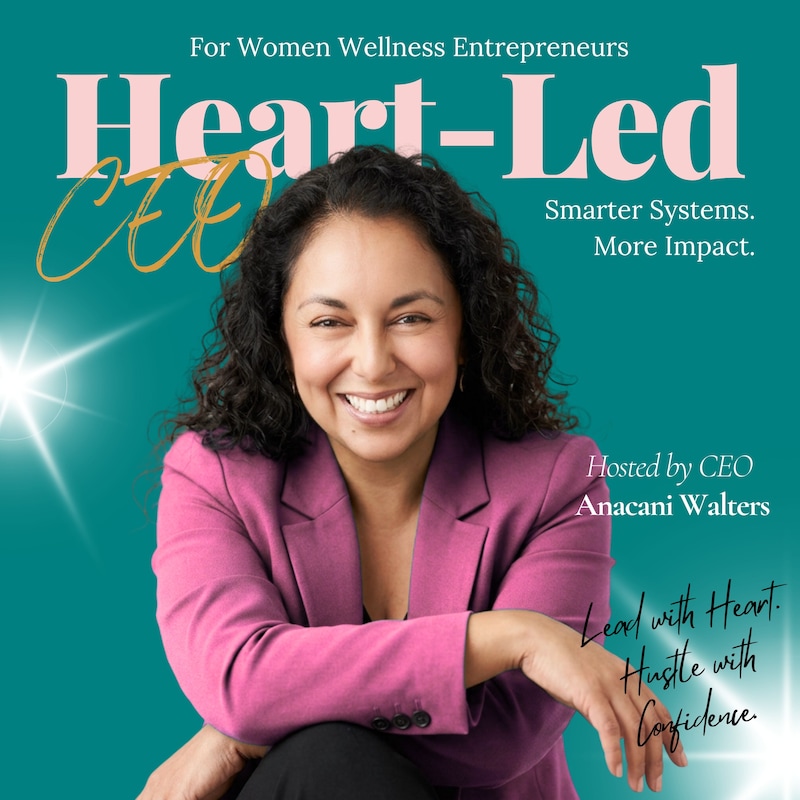
Shownotes
Two of the most famous women in the world tried to encourage other women to use AI. And the response was so vicious, so personal, that I genuinely worry we're heading toward a cultural moment where women will lie about using AI just to avoid social punishment.
In this episode, I'm sharing what happened when Reese Witherspoon and Mel Robbins both posted reels encouraging women to adopt AI, and why the backlash in their comments revealed something much bigger than just opinions about technology.
I'm also sharing two firsthand examples proving this pattern has already reached everyday women: a fellow AI educator who was hissed at like "the Antichrist" at a children's swim meet after mentioning she teaches AI, and my own experience posting a free AI 101 offer on my military base Facebook group, where the negative comments were so intense that interested women privately DM'd me instead of commenting publicly.
This episode is the third in our four-part Protect, Participate, Profit series, and today we're deep in the PARTICIPATE pillar.
What you'll learn in this episode:
→ Why the backlash against women using AI is really about cultural policing, not technology → What opting out of AI is actually costing you and your community (less than 22% of AI roles are held by women) → The Three Spheres of AI Participation: Personal, Professional, and Civic, and where most women are stuck → How to set custom instructions so your AI honors your values, your boundaries, and your life → Why wellness practitioners have something to say in AI policy rooms that most tech people do not → A 5-minute quick win you can do today to completely change your AI experience
Resources mentioned:
→ Ep 52: Your Brain on AI (Cognitive Decline, Passive Use, and Why Women Wellness Entrepreneurs Are Essential) → Ep 53: Your Brain Is Softening and Nobody Is Talking About It (Part 2) → AI Responsibility Compass app (free, inside the Facebook group) → EmpowerHER Biz Collective (free Facebook group): https://www.facebook.com/groups/empowerherbizcollective/
Connect with Anacani:
→ Instagram: https://www.instagram.com/empowerherwave/ → YouTube: https://www.youtube.com/@HeartHustleAcademy → Website: https://empowerherwave.com
Your quick win from this episode: Open your AI tool of choice. Find the custom instructions or system prompt feature. Write three things: your role, one value that matters to you, and one way you want AI to support your life, not just your business. Three things. Five minutes. Notice the difference immediately.
Listen to this episode: Comment LISTEN on Instagram @empowerherwave and I'll send the link straight to your DMs.
Loved this episode? Please subscribe so you never miss an episode. Leave a review if this resonated with you. And share this with a woman who's been hesitating about AI. She might just need permission to show up.
Coming next week: The series finale: Profit Without Apology. Why I will never pretend I don't use AI, and what becomes possible when you stop apologizing for the tools that give you back your life.
CAPTIVATE TAGS/KEYWORDS: women and AI, AI cultural policing, women hiding AI use, AI participation framework, custom instructions AI, AI for wellness entrepreneurs, women in AI, AI gender gap, Reese Witherspoon AI, Mel Robbins AI, AI adoption women, human first AI, civic AI participation, military spouse entrepreneur
Transcripts
Two of the most famous, most successful women in the world try to encourage other women to use AI.
Speaker A:And the response was so vicious and so personal that I genuinely worry we are heading towards a cultural moment where women will lie about using AI just to avoid this type of social punishment.
Speaker A:Today we are going to talk about why that is dangerous and what participation in AI actually looks like at every level.
Speaker A:Social media.
Speaker A:So grab your cup of whatever's keeping you grounded and let's dive in.
Speaker B:Welcome to Heart Led CEO, the podcast for women wellness entrepreneurs who are ready to build, scale and automate their businesses without sacrificing their soul, sanity or authenticity.
Speaker B:I'm Anakani Walters, a nurse turned entrepreneur, military spouse, first time mama in my 40s, and a recovering burnout survivor who's making it a mission to help Heart Led women just like you create thriving businesses that really feel good, do good, and give you the freedom that we all deserve.
Speaker B:Because here's the thing, you don't have to hustle harder to succeed.
Speaker B:You don't have to drown in tech overwhelm or try to do everything alone.
Speaker B:And I'm here to give you the strategies, automation, tools and mindset shifts that will help you step fully into that leader, CEO and impact maker that you are meant to be.
Speaker B:If you're ready to grow your business in a way that aligns with your values and and your life, you are in the right place.
Speaker B:Let's get into today's episode.
Speaker A:Hello.
Speaker A:Hello my beautiful friend.
Speaker A:Welcome back.
Speaker A:Or welcome for the first time.
Speaker A:Either way, if this is your first time joining us on the Heart Led CEO podcast, I am really, really excited to be here with you.
Speaker A:But first, let's just go ahead and take a breath.
Speaker A:Let's ground ourselves.
Speaker A:Whether you're sitting feet apart, inhale through that nose into your beautiful belly.
Speaker A:Letting the belly expand, then into your ribs and that last little breath into your chest.
Speaker A:Shoulders up, back and down as you exhale through your nose.
Speaker A:One more time, Inhale, shoulders up, back and down as you exhale through your nose.
Speaker A:Beautiful.
Speaker A:All right, my loves possibilities scarf on because we are about to get it now.
Speaker A:About a month ago Research Witherspoons posted a reel on Instagram and she literally was like just doing her normal day to day.
Speaker A:She was making this movie, she was talking to us while she was doing it.
Speaker A:And in the conversation or the real, she tells the story about her book club which is made up of all women and it is made up of a group of basically 10.
Speaker A:Now she mentions that she started asking her group how many out of the 10 were using AI?
Speaker A:And out of the 10, three of them said that they were using AI.
Speaker A:And out of the three, only one were actually using it at, like, a high level.
Speaker A:Now, from what I took in, the real, her main message was basically like, come on, ladies, like, we got to get on this.
Speaker A:We got to start using AI.
Speaker A:Men are outnumbering women in AI use and adoption.
Speaker A:Okay, that, that, that was basically the GIFs of it.
Speaker A:But.
Speaker A:But that wasn't what caught my eye.
Speaker A:What caught my eye is what actually happened next.
Speaker A:And it blew my mind because the reel went absolutely viral in a really short amount of time.
Speaker A:And the comments were where it was crazy.
Speaker A:They were flooded with not very nice comments.
Speaker A:Some of them are really mean.
Speaker A:They were calling her out.
Speaker A:They were calling her over privileged.
Speaker A:How dare she.
Speaker A:All kinds of things.
Speaker A:Like, literally, if these are things that you said to a stranger out on the street, to the wrong person, they would be fighting words.
Speaker A:Okay, now I started reading through all of these comments and I could already see and predict what I felt like was going to start happening just based on this one reel.
Speaker A:Now, coincidentally, one day before I took the stage at.
Speaker A:At the Queens of AI Summit, the same exact thing happened, but with Mel Robbins.
Speaker A:She posted a very similar reel encouraging women to use AI.
Speaker A:And the same thing happened.
Speaker A:Like, the same reactions, the same type of comments, but they were talking to Mel Robbins like she was her bff.
Speaker A:Mel Robbins, I've looked up to you.
Speaker A:You've helped me so much in my life, but I am genuinely disappointed in you.
Speaker A:And I'm like, what?
Speaker A:You guys are talking to her like she's your kid and like she's just made the ultimate mistake.
Speaker A:And I'm just watching these comments, and I was not there judging any of the people that were commenting these awful things.
Speaker A:But what I was really focused is that this fear of what I was seeing because it started to feel like a pattern.
Speaker A:And literally what I had already predicted was happening.
Speaker A:That from my intuitive feelings from Reese's reel, I could already see what was happening in the community.
Speaker A:If the reaction to women like Reese Witherspoons or Mel Robbins, just two examples that I'm using because they're well known, okay, but they are what?
Speaker A:Women with platforms with really big resources and a huge reach with the ability to absorb these kind of public criticism, if it is that extreme for them, what happens to regular women like you and I when the topic comes up, like the topic of artificial intelligence?
Speaker A:Are women already starting to hide the fact that they Use AI.
Speaker A:And if so, why are they doing it?
Speaker A:Because they want to avoid the judgment of their peers or the public.
Speaker A:And to be honest, when I started asking myself that question, I think that that is exactly what is happening.
Speaker A:And, my beautiful friend, I want to talk about it because I think that it's dangerous and it is a problem that we need to just have an open discussion with no judgment.
Speaker A:Okay?
Speaker A:Now, when I first started planning this actual episode, I thought that that was where things were heading, but as, like, a prediction.
Speaker A:But I can tell you with absolute certainty now, since I planned this episode to when I'm actually recording it, that I have started to see it with my own eyes, like it is actually already happening.
Speaker A:It is no longer a prediction.
Speaker A:And I'm going to give you, really, two examples.
Speaker A:So right after I spoke at the Queens of AI Summit, I literally had another speaking engagement at a different summit.
Speaker A:And one of my friends and colleagues, who also teaches AI and we are both part of the same mastermind, actually opened her keynote story, which she was the speaker right before me, and openly admitted that she usually waits until she feels comfortable in a relationship, doesn't matter how casual it is, before she discloses that she teaches AI.
Speaker A:And I was like, what?
Speaker A:That's crazy.
Speaker A:And let me say that again, in case you missed it, A woman who teaches AI for a living does not lead with the fact that she does that when she meets new people.
Speaker A:So that's like takeaway number one.
Speaker A:But then she goes on to say that when she was at a swim trial for one of her kids, it was a really long event, like hours upon hours.
Speaker A:She ended up having a casual conversation with one of the parents in the bleachers next to her, and she went ahead and disclosed that she teaches AI as part of that conversation.
Speaker A:Now, the man that was sitting in front of them literally turned around, hissed at her, and put up his fingers in a cross like she was the Antichrist at a children's swim meet.
Speaker A:Which just proves to her why she does what she does, why she usually waits and hesitates when she talks about Dean and AI educator.
Speaker A:So I was like, wow.
Speaker A:Like, girl, we need to have conversations now.
Speaker A:The second example was I posted in a community Facebook group here at the base that we are actually living in.
Speaker A:Simple question.
Speaker A:All I wanted to know was that I was thinking of offering a free AI101 for the military community.
Speaker A:And I just wanted to see who is interested.
Speaker A:That was it.
Speaker A:It was like literally two lines.
Speaker A:Like one line and a question.
Speaker A:Who's interested?
Speaker A:Question Mark kind of situation.
Speaker A:Okay, nothing crazy.
Speaker A:I just wanted to know if it was worth finding a venue on base, creating the content, planning it out.
Speaker A:I didn't want to spend all this time on people who weren't interested.
Speaker A:And I didn't know because, well, y' all know we just moved from Japan.
Speaker A:It was super simple.
Speaker A:It was like, should not have been that hard.
Speaker A:And coincidentally, what happened?
Speaker A:I got the same response.
Speaker A:People were commenting, except they started using the F bomb in my comments saying how they don't support people who use AI.
Speaker A:And one of them came out and bashed me and was like, how about teaching an AI class to avoid AI and all kinds of crazy stuff.
Speaker A:But what happened next was what blew my mind.
Speaker A:Instead of commenting publicly to say that they were interested, what happened?
Speaker A:Women started privately DMing me, saying, hey, I'm interested.
Speaker A:I don't care if you teach it on base or on base, just let me know.
Speaker A:I want to learn.
Speaker A:But the thing was, is that they were DMing me so that they wouldn't get slammed by the women in the comments who were hating.
Speaker A:And I'm laughing, but I'm like, not laughing.
Speaker A:Like, I don't know what else to do because these women just keep.
Speaker A:They're just like going in circles around themselves at this point because I ain't paying attention to them no more.
Speaker A:But I'm like, you guys are literally fear mongering the people who actually want to come to my class.
Speaker A:And I'm just like, this is not the culture that we need to be creating as women right now.
Speaker A:Because they were all females, all of them.
Speaker A:So here's what I really want you to lean in on.
Speaker A:And this is the meat of today's episode.
Speaker A:I want to talk about this cultural policing of women who use AI and why it's happening.
Speaker A:I want to talk about what opting out is actually costing you and your community.
Speaker A:Want to talk about the three spheres of participation in AI and where most women get stuck.
Speaker A:I want to talk about how to set up your tools to actually work for your values and not against them.
Speaker A:And I want us to step into the bigger room and embracing our civic and community participation when it actually comes to artificial intelligence.
Speaker A:Instead of what most people are doing, which is cheering from the sidelines and hate commenting, because that's not okay and it's not actually helping anybody.
Speaker A:So let's be really honest about what I think was happening in those comment sections.
Speaker A:From mine all the way to Reese Witherspoon.
Speaker A:Many of those women had very genuine concerns.
Speaker A:That is not what this is about.
Speaker A:They had real fears about job displacement, about the environmental impacts from artificial intelligence, about the data privacy that's going on.
Speaker A:But the water consumption issue, the decline in cognitive thinking and what AI means for the creative industry.
Speaker A:And a lot of this disconnection from human connection.
Speaker A:And those concerns are all based, valid.
Speaker A:I hear them, I understand them, I share their concerns.
Speaker A:Those are all things that I am thinking about constantly, every time I touch and deal and teach with AI.
Speaker A:But a lot of what I saw in those comments was not really about artificial intelligence.
Speaker A:Let's be honest.
Speaker A:It was about women policing other women.
Speaker A:There is a pattern in our culture where women who are seen as successful or visible or thriving tend to get a particular kind of criticism from other women.
Speaker A:And it often shows up as this attitude of like, who do they think they are?
Speaker A:Or let me tell them what they need to do and give them unsolicited advice.
Speaker A:And I understand where that comes from.
Speaker A:Historically, women have been told what to do, what to think, how to live for a very, very long time.
Speaker A:The resistance to being told anything is a trauma response.
Speaker A:But here's what I need us to start to think about and examine when we're looking at these types of situations.
Speaker A:Because when we start to turn those resistance onto each other, especially on other women who are trying to equip or empower us or educate us, we are doing the work of the system that has always tried to keep us down, suppressed, and divided.
Speaker A:The people making the decisions about artificial intelligence, one, are not watching those comments, and two, are taking full advantage because they are watching women not being in the rooms.
Speaker A:Now, the second point that I wanted to touch on is that less than 22% of AI roles globally are held by women.
Speaker A:You guys have already heard me say this before.
Speaker A:If you were at the Queens of AI Summit, you heard me say it there too.
Speaker A:Let that just sink in for a minute.
Speaker A:Because when women are absent from the development of any technology, that technology will always reflect our absence.
Speaker A:You can go and search this out.
Speaker A:Historically, it has always been the same.
Speaker A:So all of those complaints about AI being biased towards women, all of these images, when you ask for an image of a woman with artificial intelligence, and what do you get?
Speaker A:It looks like some type of a magazine with big boobs, big booty, small waist, blonde hair, blue eyes, what is that?
Speaker A:That is actually because the products that are already being designed are being designed without women's experiences or voices in the room, because we are not participating.
Speaker A:And here's what I need us to understand.
Speaker A:The language models being trained right now are learning, okay, actively from the data that is fed to them.
Speaker A:So every interaction teaches them something.
Speaker A:And when I say them, I mean the language models artificial intelligence.
Speaker A:And every time a woman uses an AI tool and pushes back on a biased response or corrects an assumption or says, actually, this is not how women experience this, or this is not what we actually look like, or this is not what a woman would say, that correction becomes part of its learning.
Speaker A:But every time a woman opts out, that lesson goes unlearned.
Speaker A:We are not just users.
Speaker A:I truly believe that this is our opportunity to really feel this empowerment and truly believe that this is our opportunity to be the teachers of artificial intelligence.
Speaker A:And it is not some fancy cute metaphor.
Speaker A:This is literally how the language models are learning.
Speaker A:And if we do not participate in the process of learning, we will never be part of the solution.
Speaker A:Now, the third thing that I wanted to talk about was this three spheres of participation.
Speaker A:And I do want to give you guys a framework here, because I think this is where a lot of people get stuck.
Speaker A:Because when I say participation in artificial intelligence, I do not mean just use it to write your captions.
Speaker A:I do mean participation at every level where it matters.
Speaker A:Now, there are three spheres of participation.
Speaker A:Your sphere one is personal.
Speaker A:This is the most immediate level.
Speaker A:It is about using artificial intelligence in a way that really honors your.
Speaker A:Your values and your life, which means that you get to set custom instructions in your tools telling your artificial intelligence language model who you are, what you believe, what your boundaries are, and make it work for your life instead of against all of those things, or make you feel like you have to choose between one or the other.
Speaker A:Now, if you've been in my communities, I've given you guys tools and the prompts to put into your settings.
Speaker A:And most of the women that I'm working with are who are using AI.
Speaker A:This is where they're at.
Speaker A:This is the level that they're at.
Speaker A:And it is a great place to start.
Speaker A:But it is not the only level.
Speaker A:Sphere 2 is the professional.
Speaker A:This is about using artificial intelligence as a sparring partner instead of what a ghostwriter.
Speaker A:It is about that cognitive augmentation work that we talked about in episode 52 and 53, staying in that driver's seat.
Speaker A:When you're using AI, use AI to sharpen your ideas, help it expand your reach, help you serve more clients at a higher level without losing yourself in the creative process or removing that creative edge that you have.
Speaker A:And then sphere three is the community in civic and it is, I think, one of the spheres that most people never actually get to.
Speaker A:This is about writing letters to your elected officials about the AI policies, whether they're the ones that exist or the ones that don't need to be existence.
Speaker A:Showing up to the town hall meetings where decisions actually have a better chance of being made and your voice being heard.
Speaker A:Using your expertise, either as a wellness professional or practitioner who actually understands nervous systems and human behavior to speak into the rooms where AI is being designed and regulated and using your voice there like you have something to say here.
Speaker A:And most tech people do not.
Speaker A:Because we understand the human body, we understand the nervous system.
Speaker A:And I know that you understand what sustained screen time does to people's bodies and minds.
Speaker A:That perspective is what is needed in these conversations.
Speaker A:And AI, I believe, can thousand percent help you do all of this faster, better and with more confidence than you could ever have done on your own.
Speaker A:I really believe that the women who are leaning into it and really using it to this potential power are speaking up in rooms that they would normally not have spoken up in before.
Speaker A:And I can tell you, being in rooms teaching actual like other AI and IT professionals, they have come to me after the trainings and have told me that it was really a great experience to see what a normal person actually thinks about and how they're using AI because it completely changed their mindset about how they're doing their work.
Speaker A:They would have never thought of some of the things because they are so it driven that they forget about these other pieces.
Speaker A:And that's where you come in.
Speaker A:Now I want to make sure that you know how to set up AI to really work for you.
Speaker A:And so every tool and it doesn't matter which one you use, I don't care.
Speaker A:There's no judgment whether you use Claude or Manis Grok, Gemini, I don't care.
Speaker A:Open AI, it's up to you, okay?
Speaker A:But they all have the same thing in common.
Speaker A:They allow you to set custom instructions.
Speaker A:And it is a feature that most people either don't know that it's there or.
Speaker A:Or never really use it, or worse, never use it to its actual full potential.
Speaker A:Now what I mean by this is that you tell your AI, hey, this is who I am.
Speaker A:These are my values and this is actually how I want you to work with me.
Speaker A:These are the set of instructions.
Speaker A:You are my employee and this is how you are going to show up for work.
Speaker A:Now, for example, my AI knows that I'm a mom and that I care about screen time, that I have A four year old, it knows that I want to be more present in my son's life, not less.
Speaker A:So it is constantly telling me and pushing me towards my life rather than keeping me on screen.
Speaker A:It is usually telling me, hey, you've done enough for today.
Speaker A:We will pick this up tomorrow.
Speaker A:Go spend time with your son.
Speaker A:Go make dinner.
Speaker A:You deserve it.
Speaker A:Go take a walk.
Speaker A:Go do some yoga.
Speaker A:Why?
Speaker A:Because I've asked people, when's the last time your AI, like your chat, has ever actually told you, hey, we've worked enough today.
Speaker A:You need to go live your life.
Speaker A:Go be with people.
Speaker A:And most people are like, never.
Speaker A:My language models never does that.
Speaker A:And I'm like, mine has.
Speaker A:It does it every freaking day.
Speaker A:Sometimes I have to push it, be like, look, I need to get this done today.
Speaker A:You don't understand.
Speaker A:And they're like, okay.
Speaker A:And Connie, I'm going to let you push back this once, but I'm just letting you know I'm not happy with you.
Speaker A:And that's not an accident.
Speaker A:That is a design choice that I made when I started using my language models and it is one that you can make for yourself too.
Speaker A:What do you want your AI to know about you?
Speaker A:Like, what are your values that you want it to honor?
Speaker A:What are some boundaries that, that you want it to actually respect?
Speaker A:Those are the things that you get to set in those instruction sections and then notice how different the experience feels.
Speaker A:And if you want, you can also go inside my Facebook group.
Speaker A:I dropped the link to one of the apps that I made to help people who really need a little bit more handholding in this section about how to really have a value driven human first AI relationship and really building those boundaries and safeguarding you and your family.
Speaker A:Now, the last point I want to just talk about is I want to close this section with something that I think a lot about.
Speaker A:There are rooms where AI policy is being decided, like right now, like actual legislative rooms, research rooms, corporate boardrooms.
Speaker A:And the voices in those rooms are predominantly hello, not ours.
Speaker A:They are not women's.
Speaker A: ng a wellness entrepreneur in: Speaker A:You have something that most of the people in those rooms do not have.
Speaker A:You have a community.
Speaker A:You have people who trust you, who show up for you every time they come to your yoga class or your reiki session or your birthing circles, who listen to what you have to say and let it change how they live.
Speaker A:So if you educate your community about artificial intelligence, if you participate in the conversations at a higher level or even Just take what you learn here.
Speaker A:You help them understand what is at stake.
Speaker A:And if you give them tools to participate in the conversation at a civic level, whether that is helping them write a letter to their congressperson or going with them to attend a local AI policy meeting, or just having an informed conversation with their family members or within the groups that you're hosting, you would creating that ripple effect that goes far beyond your business.
Speaker A:Because all these people who are negatively commenting on these reels, they're just wasting energy and they're not doing anything.
Speaker A:They're just.
Speaker A:I don't know what they're doing, but it's not making a difference because those are the not the people that have the reach, they're not the people making the decisions, and they're not the people that are going to make a difference in what they are trying to stand up for.
Speaker A:That is the bigger room.
Speaker A:And we are all invited and not very many of us are accepting the invitation.
Speaker A:Now here's your one thing for today.
Speaker A:I want you to open your AI tool of choice.
Speaker A:I don't care which one it is.
Speaker A:Find your custom instructions or your system prompt feature.
Speaker A:Write three things that you want it to know about you.
Speaker A:Whether that's your role at home, your business, both one value that matters deeply to you and the one way that you wanted to show up for your life and not just your business.
Speaker A:That's it.
Speaker A:Just three things.
Speaker A:It takes less than five minutes.
Speaker A:And notice how it changes your experience with that tool immediately once it has it in its memory bank.
Speaker A:And again, you can always come into the free Facebook community and there's a bigger prompt that I specifically use within all my language models.
Speaker A:Now this is a lot and I realize that.
Speaker A:And if you really just need to reflect on this because you're not really sure how you feel about any of it, just reflect on this.
Speaker A:If you knew that your participation in the AI conversation was actively shaping how AI understands women, where would you want to show up that you're currently are not?
Speaker A:If you knew that your participation in artificial intelligence conversations was actively shaping how AI understands women, where would you want to show up that you currently are not?
Speaker A:And that's it.
Speaker A:Just like let that marinate journal about it, draw a picture, see what surfaces and to bring it home.
Speaker A:The main three things from today one, the cultural policing of women who use AI is real and it is hurting us more than it is protecting us.
Speaker A:I'm seeing it with my own eyes.
Speaker A:We saw it with Reese, we saw it with Mel.
Speaker A:We saw it at a Children's swim meet.
Speaker A:And I just told you about me experiencing it here within my own community, on base.
Speaker A:And it is happening in your world too, I guarantee it.
Speaker A:We.
Speaker A:We police each other.
Speaker A:Whether we agree what it is or not.
Speaker A:We do the work of the system that has always tried to keep us divided and suppressed.
Speaker A:Number two, opting out of AI is not a neutral act.
Speaker A:Every interaction teaches these models something.
Speaker A:So every time a woman who opts out hands that lesson to someone else.
Speaker A:And who is that someone else?
Speaker A:Someone who does not understand women the way that they should know that we are not just users.
Speaker A:You can be so much more.
Speaker A:You can be a teacher.
Speaker A:And if we are not part of the process, we are never going to be part of the solution and we are going to be written out of this AI wave.
Speaker A:Number three.
Speaker A:Participation happens at three levels.
Speaker A:The personal, the professional, and the civic.
Speaker A:And I guarantee most of us are at level one.
Speaker A:But I believe that the world needs us to be at all three.
Speaker A:And your quick win today is to take that first step, if you haven't already done so, and set your custom instructions.
Speaker A:Three things about you, five minutes.
Speaker A:If you want an easier way to do it, the prompt will be dropped inside the Facebook group.
Speaker A:That's it.
Speaker A:I'd love for you to come join us and have this conversation at a deeper level where again, I encourage all of us to participate at the three levels together.
Speaker A:I do.
Speaker A:Go live regularly with resources and prompts and really try to have real conversations to help you use artificial intelligence in a way that actually feels good to you.
Speaker A:All the links will be in the show notes.
Speaker A:Come in, the water's warm.
Speaker A:I promise.
Speaker A:And then if this resonated with you, please share it with a woman in your world who's been hesitant about using AI.
Speaker A:Maybe she needs permission to show up in the rooms where it's loud and she's not sure she can be that loud too.
Speaker A:And maybe share it with your community.
Speaker A:Now, next week is our final episode in this series.
Speaker A:We're talking about profits.
Speaker A:We are talking about what it actually looks like to build a business with AI that gives you back your life.
Speaker A:This cyclical being conversation of automation is self care.
Speaker A:And I want to also just talk about why I never apologize for using AI unapologetically in my business.
Speaker A:Now, I can't wait because this has been a hot topic, as you guys have all heard.
Speaker A:And as always, my beautiful friend, continue to be you.
Speaker A:Continue to be beautiful and continue leading from your heart.
Speaker A:I will catch you in the next episode.
Speaker A:All right.
Speaker A:Beautiful.
Speaker B:That's a wrap on today's episode, but before you go, let's talk about something really important.
Speaker B:You are not just another entrepreneur trying to figure things out alone.
Speaker B:You are a wave leader.
Speaker B:Someone whose work is meant to create real impact, touch the lives of others.
Speaker A:And make this world better.
Speaker B:And I want you to know you don't have to do it alone.
Speaker B:If today's conversation resonated with you, you I'd love to keep this energy going inside of my free Facebook community.
Speaker A:Empower Her Biz Collective.
Speaker B:It's where we take these conversations deeper with live trainings, tech walkthroughs and real heart centered support from other women wellness entrepreneurs who really get it.
Speaker B:So if you're ready for community, clarity and support as you build your own business with heart and ease, I'd invite you to come and join us.
Speaker B:You'll find the link in the the show notes.
Speaker B:And hey, if you love today's episode, make sure to subscribe, leave a review if you feel inclined, and share this with a fellow heart led women entrepreneur so that we can build this movement together.
Speaker B:Until next time, keep leading with heart.

