Shownotes
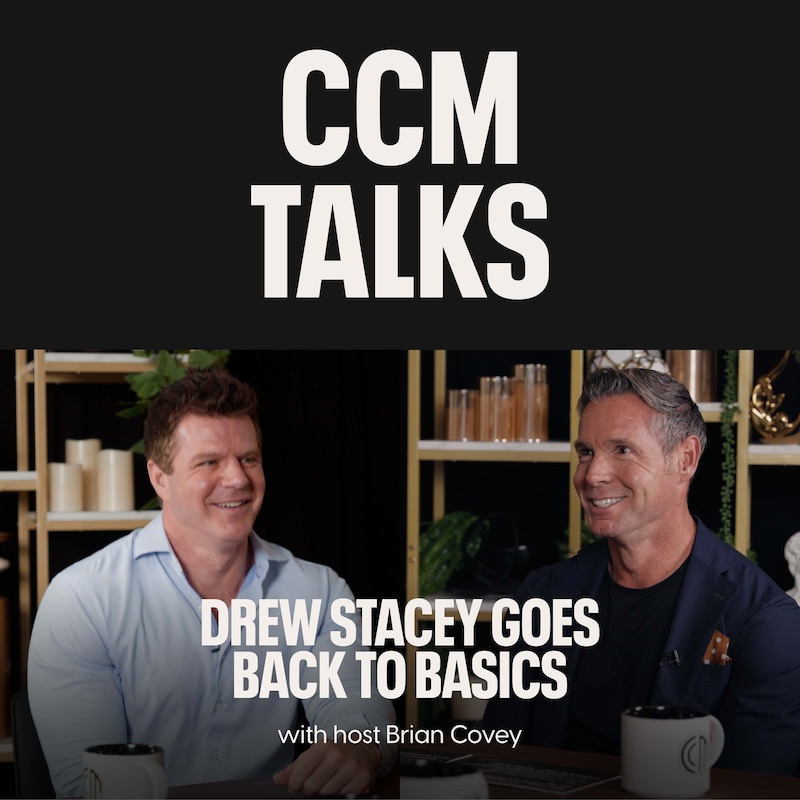
When the market got tough, Drew Stacey kept showing up. Nothing fancy — just consistency. In our latest episode of CCM Talks, he breaks down the little things that keep him moving forward and how you can get ready for a new market.
Transcripts
Welcome to another episode of CCM Talks. I am Brian Covey, and today we are joined by Senior Vice President Drew Stacey in Cincinnati, Ohio. I cannot wait to dig into Drew's career, joining CrossCountry at the same time I did. We're going to jump right into this, so welcome to the show.
Drew: Thank you.
Brian:Well, we joined around the same time, so I'm sure you were setting all these records in Ohio. You've got large production and all that kind of stuff. Let's go back a little bit as to why did you join?
Drew:I came here because I definitely needed a different model and a different set up, and CCM definitely offered that. And, had a couple sit downs with, Ron, and it definitely let me know I was leaving a lot on the table, and, there was a lot more opportunities to come here, Non-QM, ability for us to hold our own mortgages. Things like that are, it’s just, it’s just huge things that, you know, I feel like you need those to compete in today's marketplace.
Brian: Yeah. So, before we went live, we were talking about that in there.
Drew: Correct.
Brian:I love this. You've said this big question. How do you get more business in the door? So curious. You're doing a lot of production. Like how do you …
Drew:I think you have to diversify. So I'm, I'm one of the old school guys. I don't pay for leads. I don't, you know, I don't have big MSAs. I don't have any MSA, none, period. So, what I do is, obviously realtors, but also financial planners, divorce attorneys, attorneys in general. Because you got to remember, when your attorney tells you to do something, you're not going to shop it. But, you know, as always, don't like to be shop with realtors, but generally your financial planner the same way. So I do a lot of meetings with financial planners, and I'll come in there, there'll be, you know, a group of them, maybe it'll be 10-11, maybe they'll leave to go to other firms, just like real estate agents do.
So I probably have, obviously realtors are the larger piece of the pie, but probably a good 20-30% are financial planners. And when a refi peak comes, financial planners that doubles that piece of that pie. They’re sending me deals all the time.
Brian:Yeah, and it's coming. What's changed over those years for you around how clients are choosing their lender or how those referrals are sent?
Drew:I’ll be honest with you, nothing. I think what's really changed is I made it through this tough three year period, and a lot of my competition hasn't. So I think just being able to stay alive as the market is now, I would probably say in the last six weeks starting to creep back to maybe better. I've noticed a lot more of a pick-up than I expected just because I'm one of the last, you know, big producing survivors. A lot of the, a lot of its big producer made, but a lot of the, you know, other guys that were getting the, you know, nickel and diamond, your deals here and there, they're not there anymore.
Brian:Yeah, we've seen it. How have you survived? I think people look at that and go, how have you grown your production, maintained it when so many have left the industry and have dropped production?
Drew:Honestly, it is going back to the basics. Old school, every single day. Wake up. Do it. Do it again. If it didn't work well, it has worked in the past. Consistency. Even when it's hard, you know, I mean, right now, you know, I can tell people when I'm ranked in the state and all that kind of stuff, it doesn't matter. People are still going to tell me, no, I'm so not going to get a deal here and there. You don't take it personally. Move on. Do it again.
Brian: It's the no’s that most people, it's like you're one no away from the next one being a yes.
Drew: Correct.
Brian:What advice would you give to somebody that's looking at that in their listen, okay, okay, Drew, that's great. You're getting all these no's like, like what is it really like out there when you're getting the no’s, and how do you keep yourself focused on going back and put yourself back in the game after you've been rejected or told no?
Drew:I think if you stay consistent, you'll be fine. It'd be like, I'd be like, you know, trying to do anything once or twice and it's not working out, you know, because if it did, it be easy. If going to the gym was easy and you could go one time and you'd have the exact results you want, that every single person would look that way. Obviously, it's a grind over time.
And even when you go in and, and you've been, you know, working out for years and years and you have a bad workout, at least in your brain, you think it's a bad workout. Well, you've put enough time in, just like with a diet, if you have one cheeseburger and you sustain on a day, it's not going to affect anything. But you can't expect to have a bad diet and then eat one piece of broccoli and it's going to, you know, you've got to, you've got to put in enough consistency that that stuff's not going to matter, and that the no’s will eventually become yes. If you have enough yes’s that a no doesn't affect you.
Brian: I can tell that that working out thing is big. So I want to ask a question on that because for me that's been a big thing. But for you is fitness side and staying strong there give you the energy?
Drew:Well I can tell you I noticed two things. Everyone that is good in this industry was either a fitness freak or they drank all the time. So I decided that the drinking part was not for me. I couldn't stay as consistent. So I went ahead and, and got really into, into fitness and I think it just, maybe it's stress reliever. I don't know, it just became part of my, you know, day routine, diet, everything. Do I think it gives me energy to do this? Probably. Probably. But it just I don't know, it's just kind of a part of my day.
Brian:Yeah. Let's talk about keeping the energy strong. So I know we both share this value like our family matters. You’re running, you know, obviously a lot of production, a lot of hours. How do you eat?
Drew:I will, I will be really honest because I don't think a lot of people give an honest answer to this. No, I'm not the world's best father because it takes a ton of time to be a good dad. I don't have that time. So as far as being there all the time, no, I would not consider myself in that category.
But what my kids will do is they're going to come out of school with no debt and hopefully have a fantastic life. And know one day when they're grinding like, I cannot believe my dad did all this stuff to make sure that we had a great life one day, because being successful at something like this and the hours that it takes, you don't have to work 80 hours a week, but thinking you're going to work 38 and hang your head up, that's fine if you want to be a solid producer.
But if you really want to hit the upper echelon, it's going to take some grind. And unfortunately, the sacrifice is going to come from, you know, time they have you and things I love to do. Family, gym, I like cars. Sometimes those take a serious backseat. And unfortunately, you know, I don't think work life balance is something that, you know, tons of successful people have.
Brian:Yeah. Let's talk about, you've been through a lot of markets and we're heading into a different market, I think in 2026. What are you doing differently to prepare for that and to get ready?
Drew:I have basically up the speed of everything. So I'm big on doing like 14, 15-day closings. What I think that does is it keeps my staff ready to roll, ready to get things going quickly. But I've also let them know how quickly they need to start being able to get things that we have to do on a daily, pre-approvals, you know, locks, whatever, because when things are going to be two x and three x, they need to be used to how fast things need to work. So I'm kind of almost, you know, making them run win sprints, if you will, right now, even though we don't really need to do so. They're prepared for when the onslaught comes, which after a over three year of a down market or, you know, whatever you want to call it, a more stagnant market. I think we're, we're about to.
Brian:Yeah. Great. Let's talk about this because I think people look at the amount of production you do. The consistency I think is big. What are you doing to market yourself and are you doing anything unique there with my creativity in your marketing or to stay in front of your database, even?
Drew:Nothing creative. But what I do is, you know, I'm very big on I'm the guy that picks the phone up, when I can. Obviously, it's most of the clients I will talk to and get the deals done. I mean, when I say most, I mean, I can give you percentages, probably 95. So a lot of times they like to know that when they call, I'll pick up, you know, I'm not super talkative on the phone, meaning I'm not going to have a giant conversation, but they know with me what you're going to get is that result.
And I think that actually helps me market better than any other piece out there. And I can show it with my numbers. Yeah, people know that when you call Drew, he's going to find a way to get it done. He's going to get or he's going to tell you like, no, it doesn't make sense to refi for, you know, an eighth of a rater. Hey, drew, what do you think about this deal I got over here? Hey, no, actually, that's a great deal. If you're already two weeks in the process, keep that deal. So they appreciate, I think the, the, the upfront honesty that they get for me. And I think that that resonates really well because I get a ton of referrals from past clients, Realtors will refer me to other realtors.
Obviously I try to stay in front of them. You know, I'll do meetings. I'd like to do one on one stuff because I feel like when you start to becoming a big producer, the only kind of kink in your armor is people are going to say he's too busy for you or she's too busy for you. You know, so I think the only way to combat that is a one on one, not a giant meeting all the time. And it does take a lot. I mean, you're doing it 2 or 3 times a week, but it's important to make that agent or that financial planner or whomever sent you the business to make them feel like you care about them personally and about their business.
Brian:I love it. Last question if an LO was listening to this, they're not producing the level you are yet, but they want to get there and they've listened to all this stuff, what would be a piece of advice you would give them to help them get ready for this market and start to produce at that higher level?
Drew:I think it goes back to what you said. How do you deal with the no’s. Don't take this business personally. Period. If you don't get a deal, you can't take it personally. You can't, and I know people say, well, I have my personal time into it. Yeah, but you don't. This is business time, not personal time. By not taking things personally, you turn yourself into kind of the mindset of a top producer, because the top producer doesn't take things personally, so they're going to move on to the next one.
Or if you, you learn how to lose a deal with grace. You know what, Tommy? I really appreciate the time. Man stinks. I didn't get the deal. But I'll tell you what. I'm going to keep you in my database. What rates did you get? You got five, nine, nine. Okay, I'm going to put that in there because when rates get lower, I'm going to at least give you a call, try for the next opportunity. A lot of times they like somebody that's willing to kind of, you know, lose with grace. But at the same time, like, you know what? That's great. Yeah. If you want to call me in the future, because nine times out of ten you're calling them because the other person is not you. They're not a top producer. And you might get that, you know, refi, you know, five and a quarter with no fees or whatever you're going to do. So I try to lose and win all at once.
Brian: You might lose the one transaction there, but then you can win the relationship.
Drew: Correct.
Brian:I love it, I love it. Well guys, it's been another amazing episode of CCM Talks. Drew shared not only mindset but some things in here I think you'll want to go back and listen to. And if you're interested in learning more about what it be like working at CCM, with Drew or with someone else in our company across the country, make sure you reach out to us.
