Shownotes
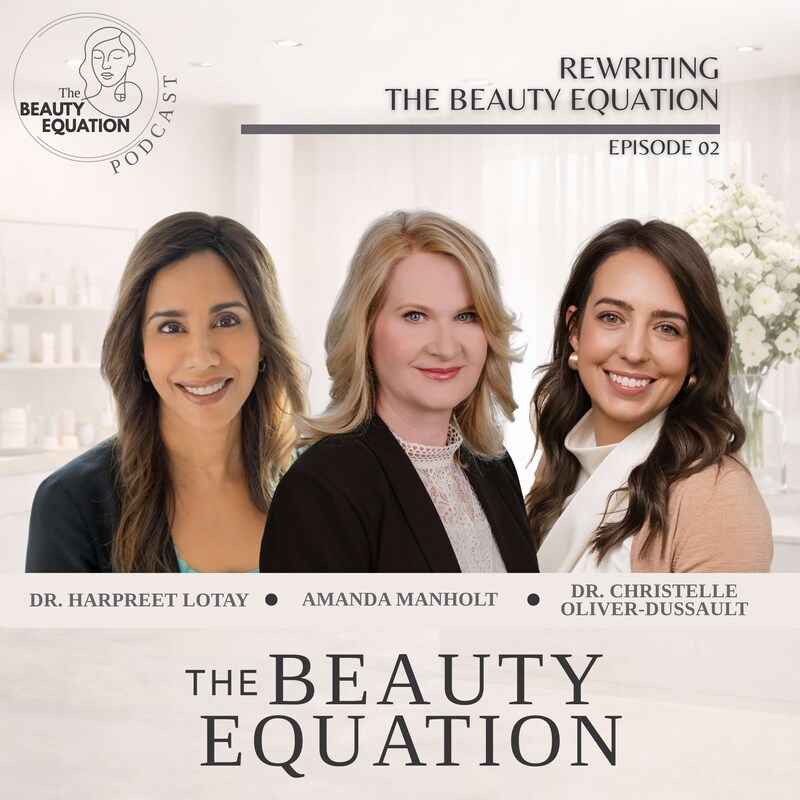
In this episode of The Beauty Equation Podcast, hosts Dr. Christelle Oliver-Dussault, Dr. Harpreet Lotay, and Amanda Manholt share their personal journeys in the world of aesthetics—shaped by backgrounds in art, medicine, and psychology. They reflect on how these perspectives come together to inform their approach, from understanding beauty standards to supporting confidence and self-image. The discussion highlights the responsibility practitioners hold in guiding patients, the evolving nature of the aesthetics industry, and the importance of empowering individuals to make choices that align with their own definition of beauty.
About the Hosts:
Dr. Harpreet Lotay is a family physician specializing in aesthetic medicine. She is the founder of Sona MD in Kamloops, BC, and serves as Chief Medical Officer at Bios Wellness Clinics. Known for her artistic approach and comprehensive non-surgical treatments, Dr. Lotay combines medical expertise with an eye for natural results. She is also an educator, a national trainer and holds academic appointments where she shares her knowledge in clinical dermatology and aesthetics. You can get in touch with her on Instagram @hlotaymd
Dr. Christelle Oliver-Dussault is a family physician specializing in aesthetic medicine, women’s health, and psycho-education. She brings a holistic, whole-person perspective to her clinical work, blending science with a deep understanding of the mind-body connection.
She is also the founder of Reclaim The Pink Within, a movement that empowers women to rediscover themselves during life’s most transformative stages. In addition, she is passionate about medical education and mentors the next generation of family physicians through her work with the department of Family Medicine at the University of British Columbia.
You can connect with her on Instagram @drchristellemd
Amanda Manholt is a clinic manager, patient consultant, and co-host of The Beauty Equation Podcast. With over 30 years of experience in beauty, aesthetics, and leadership, she has guided patients and teams alike toward confidence, growth, and empowerment. Known for her ability to connect with people and simplify the often-overwhelming world of aesthetics, Amanda brings a warm, practical, and relatable perspective to every conversation. You can find her on Instagram @crowsfeetandconfidence.
Websites
https://www.getyourpinkbackproject.com/
Disclaimer: The Beauty Equation is for informational purposes only and not medical advice. This podcast does not create a doctor–patient relationship. Always consult a qualified healthcare provider before making medical or aesthetic decisions. Information may change as the field evolves.
Thanks for listening!
Thanks so much for listening to our podcast! If you enjoyed this episode and think that others could benefit from listening, please share it using the social media buttons on this page.
Do you have some feedback or questions about this episode? Leave a comment in the section below!
Subscribe to the podcast
If you would like to get automatic updates of new podcast episodes, you can subscribe to the podcast on Apple Podcasts or on your favourite podcast app.
Leave us an Apple Podcasts review
Ratings and reviews from our listeners are extremely valuable to us and greatly appreciated. They help our podcast rank higher on Apple Podcasts, which exposes our show to more awesome listeners like you. If you have a minute, please leave an honest review.
Transcripts
It really does combine and marry my love of
Speaker:art along with the technical aspects. Because when I was in medical
Speaker:school, I was. I was awarded the gold medal in surgery. So for
Speaker:those technical things, the culture of surgery didn't really fit me,
Speaker:but aesthetic medicine is perfect. So I've been very, very
Speaker:lucky. And I love empowering people like you both
Speaker:do. And to Amanda's points about, you know, how
Speaker:you look impacting, how you might succeed in the world,
Speaker:I did see that. And one of the things that really motivates me
Speaker:is to help even the playing field. So people might not have
Speaker:the genetics, they may not have the looks, but they're. They're
Speaker:extremely valuable to society and they have a lot to offer. They might be
Speaker:very intelligent, very witty, and if they find that their
Speaker:appearance is holding them back, you know, we're here to even
Speaker:that playing field for them. And I love that aspect of aesthetic
Speaker:medicine. Welcome back to the Beauty Equation. I'm Christelle.
Speaker:I'm Harpreet. And I'm Amanda. And last time we
Speaker:spoke about the reason why we all came together to talk
Speaker:about the beauty industry, this famous beauty
Speaker:equation. Today we're going to dig a little bit deeper and talk
Speaker:about our backgrounds and how we all came to know each other. So,
Speaker:Amanda, I might start with you today. Okay.
Speaker:I guess we were going to talk about sort of like how we got to
Speaker:this point. Right. I started my journey in
Speaker:aesthetics very, very young. Basically right out of high school, I
Speaker:went and did aesthetics training, and from there
Speaker:I moved into more of a retail space
Speaker:and retail management. And then about seven or eight years ago,
Speaker:I made the switch into medical aesthetics.
Speaker:So it's been a very long time and
Speaker:very many hats, but I'm pretty excited to be where I'm at now
Speaker:and how, of course, I met both of you as I
Speaker:came and worked for Dr. Elote. And then, of course, you joined us as well.
Speaker:So, yeah, I'm going to tell on you a little bit. Amanda, I remember you
Speaker:telling me a story that when you were, I don't know,
Speaker:I'm going to say seven or eight, you used to take cosmetic products
Speaker:and shampoo and sit, stand in your bathroom
Speaker:and tell everybody the.
Speaker:Extol the virtues. Extol the virtues of any product
Speaker:like this. Yes, I know, it's hilarious.
Speaker:The writing was on the wall. I have
Speaker:a dear friend, and we've literally been friends since we were 7, and she just
Speaker:thinks it's absolutely hysterical that, you know, this is where I ended up
Speaker:because, yeah, we'd stand on the side of the bathtub and sell whatever
Speaker:products. You know, this is before we had our phones in the bathroom. Yeah.
Speaker:It was a different time. Yeah. You aren't making
Speaker:TikToks. Yeah, no, no. Thank God. That wasn't around when
Speaker:we were younger. Right. Much harder space to be in now.
Speaker:Yeah. What was it about? Just beauty and aesthetics in
Speaker:general, do you think that attracted you to the field?
Speaker:I think there's just something about how
Speaker:impacts the way you feel and the way you show up in the world
Speaker:and you know, I would love to say that
Speaker:appearance and it didn't matter, but it does.
Speaker:Yeah. You know, when, when we look better, we feel better and you
Speaker:know, and it does really. And I think that's just always fascinated me.
Speaker:Plus I was born with white eyebrows so I
Speaker:needed to know how to fix that.
Speaker:And then you mentioned that, you know, obviously you worked in cosmetics for a long
Speaker:time but eventually you made the switch into more the medical aesthetics
Speaker:realm. What spawned that switch?
Speaker:I think I, I just needed more, you know, I always
Speaker:loved the training and you know, the learning aspect
Speaker:but I just felt like it was just more surface level information and it
Speaker:really. I loved the idea that I could go
Speaker:deeper, learn more to help more people. Yeah.
Speaker:And for those who haven't been to the clinic and don't know you, what do
Speaker:you tend to do on a day to day basis? I know you wear lots
Speaker:of hats, but if someone was to come in, what
Speaker:would they expect? Well, often I'm the
Speaker:sort of first point of contact after you of course speak
Speaker:with our lovely reception. But I'm there to
Speaker:help people sort of understand what it
Speaker:is they're seeing and give them some perspective as to
Speaker:what options that they have available to them and really help to educate
Speaker:them in terms of treatments and products and so that you know,
Speaker:they can make an informed decision. So you sort of see me
Speaker:first. I get to know you, get to listen, understand, and then of course I
Speaker:can pass them on to providers like yourselves. Yeah.
Speaker:Thanks for sharing, Hartreet. You have quite an
Speaker:impressive resume. I'm not going to go into the details, but you
Speaker:did open the fantastic clinic where we all met.
Speaker:And I'm so glad we connected when I first met to Kamloops because I have
Speaker:grown so much thanks to the two of you actually from both a medical and
Speaker:a business point of view. Tell us a little bit about your journey. Maybe
Speaker:a bit before the aesthetics and how I suppose beauty and art
Speaker:intertwined itself into your life. Yeah, you know, quite
Speaker:serendipitously I have lived in various
Speaker:places. So I was born in Africa. I
Speaker:moved to the UK and then Canada, and I've lived in the US
Speaker:and, you know, it's interesting how
Speaker:beauty standards do differ and how they sort of
Speaker:diverse sort of beauty standards shape identity.
Speaker:And I was also always a visual person. I love the visual
Speaker:arts. I was fascinated by Leonardo da Vinci when I was like,
Speaker:child, like, you know, this. Every man that knew science
Speaker:and art and, you know, had, you know,
Speaker:sort of experienced the world very holistically, and I
Speaker:really admired that. And, you know, his focus on science
Speaker:and anatomy sort of drew me towards medicine.
Speaker:And I. I did family practice
Speaker:and practiced a full spectrum of family practice and
Speaker:have really enjoyed my ability to connect
Speaker:with people at various stages in their. Their life. You know,
Speaker:I've delivered babies, I've flown up north and done
Speaker:some rural clinics, and I've practiced sports medicine down in the
Speaker:States. But I've always had a love for visual
Speaker:arts. And aesthetic medicine really found me. I didn't go
Speaker:looking for it. I liked to paint.
Speaker:And my husband was. Was in a
Speaker:preceptor in an internship with an oculoplastic surgeon
Speaker:who had an interest in the fine arts as well, and he liked to
Speaker:sketch. And one day they were chatting, and my husband shared
Speaker:one of my paintings with. With this gentleman, and
Speaker:he said, you know, I really, really like that painting. I know your
Speaker:wife's a family physician, but if she gives me that
Speaker:painting, I will let her do a fellowship with me for six months
Speaker:in this new thing coming up called aesthetic medicine. And
Speaker:that's where it all started. And it's been an amazing journey.
Speaker:I've loved it, and it really does combine
Speaker:and marry my love of art along with the
Speaker:technical aspects. Because when I was in medical school, I was,
Speaker:you know, I was awarded the gold medal in surgery. So for those technical
Speaker:things, the culture of surgery didn't really fit me, but
Speaker:aesthetic medicine is perfect. So I've been very, very
Speaker:lucky. And I love empowering people like you
Speaker:both do. And to Amanda's
Speaker:points about, you know, how you look,
Speaker:impacting, how you might succeed in the world,
Speaker:that really. I did see that. And one of the things that
Speaker:really motivates me is to help even the playing field.
Speaker:So people might not have the genetics, they may not have the looks, but
Speaker:they're extremely valuable to society and they have a lot to offer.
Speaker:They might be very intelligent, very witty, and if
Speaker:they find that their appearance is holding them back,
Speaker:you know, we're here to even that playing field for them. And
Speaker:I love that aspect of esthetic medicine. I always think
Speaker:about that. What was that book, that 4050
Speaker:shades or whatever was that, like, book that was
Speaker:50 shades of gray? Are we talking 50 shades of gray now?
Speaker:Totally. We are taking a turn. But think
Speaker:about it. Okay. Like, so the guy in the book
Speaker:is, like, this handsome,
Speaker:gorgeous, powerful millionaire.
Speaker:If he was, like, unattractive and,
Speaker:like, lived in a rundown shack, it would have been a horror story.
Speaker:Just saying. True, right? Yeah. Yeah. And that's why
Speaker:I'm like, you know, like it or not, that's just kind of the reality that
Speaker:we live in in our culture.
Speaker:Yeah. Appearances matter and they change perspective and how we. How we approach
Speaker:in our scene in the world. Yeah. What about. And what about you, Crystal?
Speaker:Yeah, I think I've had an interesting path into
Speaker:medicine. To me, aesthetics is where medicine and art meet.
Speaker:And I've had this creative side that's always been there
Speaker:but was repressed for a long time as I
Speaker:focused on more the science side of things. I
Speaker:grew up, you know, dancing in my living room, and I was
Speaker:involved in gymnastics. I went to circus camp when I was 12 and decided
Speaker:I was going to join the circus. At that point, my parents
Speaker:steered me in the right direction and were like, you should probably
Speaker:keep studying. And then
Speaker:I knew I wanted to do medicine, but it's postgraduate
Speaker:in North America, so there's other parts of the world, like Australia, Ireland, UK, or
Speaker:Europe, where you can go straight out of high school. So when I was looking
Speaker:to decide what I studied before I do medicine, physiology kind of came
Speaker:naturally, just because it's. I was fascinated by, like, how does the body work?
Speaker:And my roommates at the time were all doing arts degrees, and one of them
Speaker:was doing anthropology. And I had a few spare classes to take,
Speaker:and I fell into the field of anthropology and
Speaker:loved it. And I never really realized
Speaker:how useful it would be down the line
Speaker:where now that ability to understand different
Speaker:cultures and different mindsets comes into play.
Speaker:And believe it or not, like, Calvinist is quite multicultural, and we get
Speaker:people from all over the world, and it's very helpful to be able
Speaker:to understand different perspectives. And
Speaker:then in med school, I didn't. I never really knew what I
Speaker:wanted to. I remember when I started medicine, I was like, well, I really like
Speaker:dermatology and I really like women's health, and I like a bit of emergency medicine.
Speaker:But medicine tries to box you in, you know, And I
Speaker:think a lot of careers do that to make you go down One route.
Speaker:And because I liked so many different fields. And
Speaker:really the draw to medicine was connecting with
Speaker:humans and speaking to them, understanding them and helping them.
Speaker:That's why I ended up doing family medicine and
Speaker:loved it and still practice it. I still have some roles
Speaker:in that field and teach residents in the
Speaker:field of family medicine. But I wanted
Speaker:something else, something more. And I
Speaker:happened to have an opportunity, kind of like you, Dr. Lotte, to
Speaker:spend some time in someone who did a bit more, who was a GP by
Speaker:training, but did medical dermatology and aesthetics. And
Speaker:I really loved the artistry of it and how playful it can be
Speaker:as well, too. You just. You have the ability to create something
Speaker:with someone and guide them in the process. And it's a
Speaker:really rapidly evolving field, really in its
Speaker:infancy. I mean, Dr. Lutte, you were there as it was emerging
Speaker:and it's a really exciting space to be in. And
Speaker:it's funny how things come full circle and all these different
Speaker:interests that I had in my 20s that I didn't really understand
Speaker:why I was doing them or why it mattered,
Speaker:and now they have all had their place and getting to
Speaker:me, to where I am today. Life is interesting
Speaker:that way. It is. It really is. Yeah. It's a
Speaker:journey. Right. I think the other aspect. And, you
Speaker:know, Harpreet, we had talked about this, you know, I. The way I
Speaker:envision sort of the ideal aesthetic provider, I think of like
Speaker:a triangle. And, you know, in one aspect, they have to have
Speaker:the knowledge of anatomy and physiology, and in the other corner,
Speaker:equally as important, they have to have that artistic ability to really
Speaker:assess a face and understand what would make it more attractive.
Speaker:Right. And the other corner is really the psychology piece, which I.
Speaker:It just fascinates me to no end. And it's really.
Speaker:It isn't just about giving people giant lips or freezing their
Speaker:foreheads so that they aren't moving. And it's. It's
Speaker:a shame that it gets such a big. Honestly, it gets such a bum rap
Speaker:because you know that every one person that you see
Speaker:walking around that looks odd because their anatomy isn't,
Speaker:you know, correct anymore. You know, there could be a hundred behind
Speaker:her where you don't know that they've done anything. Yeah,
Speaker:Yeah. I initially felt guilt when I was interested in this field
Speaker:because of the mentality around
Speaker:it and how it's seen and felt. The need
Speaker:to justify why I enjoyed this aspect of
Speaker:medicine. I don't feel like. Yeah, that's. That, that's. That's
Speaker:interesting. And, And I, I don't think I
Speaker:ever felt that need because the thing
Speaker:that motivated me so much was the psychology
Speaker:and the. The aspect of improving people's quality
Speaker:of life. And then I. It is a very technical field, if you.
Speaker:If you really want to do it. Well, yeah. So I
Speaker:never felt that. But I certainly got attitude from
Speaker:other providers, which is very interesting. So other
Speaker:family practice physicians or other
Speaker:academics. And I've practiced in an academic setting, too, because I taught
Speaker:family practice at the University of Texas in San Antonio.
Speaker:So it's interesting to see people's reaction
Speaker:to you when you decide to use
Speaker:your resources in this field. They almost
Speaker:feel like it's a waste or you're meant you were made to feel that way.
Speaker:Or they often make comments
Speaker:that. That suggest that this is not
Speaker:a worthwhile endeavor, let's put it that way. Yeah. And I think that's what
Speaker:came in for me. It wasn't the general public. It was more, you know, you're
Speaker:often surrounded by your professional social circle. Yes.
Speaker:And because the drive is always, you know, I find my happy, safe
Speaker:spaces in that consult room, whether it's general practice or medical aesthetics,
Speaker:as having. It's such a privilege to be in that
Speaker:space and be trusted absolutely in front of
Speaker:you. And I think that's what drives all of us. To me, it's no different
Speaker:whether it is family medicine or medical aesthetics. I approach it with the
Speaker:same mindset, the same openness, and the same kind of
Speaker:mind, body, social context approach. And I think to
Speaker:your point, around all of our skills coming together,
Speaker:culminating in this, I feel if
Speaker:you're a very, very good family physician and you're
Speaker:technically, you can use your hands, well, you can be a very, very
Speaker:good aesthetic physician because the
Speaker:starting point of every patient's journey is
Speaker:being able to express and be understood. Right.
Speaker:And in family practice, the communication
Speaker:aspect is stressed in our training, as it
Speaker:was in mine, in terms of how do you
Speaker:connect with a patient well enough for them to be able to divulge
Speaker:their closest fears and their closest aspirations?
Speaker:And that's really what we do in aesthetics. And then the.
Speaker:The technical part is
Speaker:also important. But I feel that
Speaker:family practice docs, they can certainly do this and do this very
Speaker:well. Yeah. Yeah. And I think it's
Speaker:also important. Listening is so critical when you're in the
Speaker:consult with a patient, and oftentimes I find they don't
Speaker:actually have the words. Yeah. To try and so,
Speaker:you know, you're kind of reading between those lines and kind of.
Speaker:There's a lot of investigating in that first initial meeting, which I
Speaker:love because I just really like to sort of try and understand people and,
Speaker:you know, what's going to make them feel
Speaker:confident again and feel like they belong in their own skin once
Speaker:again. And yeah, often they can't put it into words. I mean, we've had
Speaker:cases where, you know, we had a lovely patient come
Speaker:in and it was back when we were all wearing masks and you know, those
Speaker:times and. And she came in
Speaker:and was having a consult time or she was booked in for a lip touch
Speaker:up, but we've never seen her before. So I got to
Speaker:chat with her at first and when she took her mask off, I remember thinking,
Speaker:oh, I don't. Where are we going to put it, like
Speaker:you? And it turned out that she had been
Speaker:getting filler in her lips again and
Speaker:again and again and again. And no one had
Speaker:ever really sort of sat down with her. And we did
Speaker:photos. We looked at them together. And when she looked at her photos, I
Speaker:remember breathing a sigh of relief because she said I look weird.
Speaker:And I was like, oh, thank God I don't have to tell her because. But
Speaker:where I was going with all this. And, you know, we ended up dissolving and
Speaker:it was great in the end helping her out, but I think
Speaker:that what got her into that trouble was that she wasn't able
Speaker:to clearly express what she wanted. And
Speaker:unfortunately, whoever she was seeing
Speaker:didn't really pick up on her cues and it was easy just to
Speaker:keep treating her. So I don't know where I'm going with this story,
Speaker:but really, I think that's, it's. I think you're touching on the
Speaker:responsibility that we hold, not only in
Speaker:understanding them, but also it's very
Speaker:easy to develop a dysmorphia because you
Speaker:get used to how you look every day. And if you're changing that
Speaker:gradually over time, you may not realize that
Speaker:your appearance and your anatomy has become distorted. And
Speaker:we will often try to. Show.
Speaker:Patients that in a very delicate way. And
Speaker:sometimes, yeah, we will refuse treatments.
Speaker:I think it just goes to show again that vulnerability
Speaker:piece. Right. And how important it is with. With what
Speaker:both of you do. And that you can really
Speaker:be that guide for those patients. Right.
Speaker:And not lead them down the wrong
Speaker:path. Exactly. So now that you have all
Speaker:heard a little bit about us, what
Speaker:is one thing that you would say you love the most about aesthetics?
Speaker:Before we finish up it in. Oh, I have to pick one thing.
Speaker:Yeah, well, if I had to pick one thing,
Speaker:it's really when I hand the patient a mirror, and they
Speaker:say, there I am.
Speaker:That's the best. Yeah, that's pretty
Speaker:cool. That's pretty cool. I. I think for me, it's, It's.
Speaker:It's similar, but it's giving people agency.
Speaker:Yeah. You know, giving. Giving them some tools and a little
Speaker:bit of power back. And I, I really despise the word
Speaker:anti aging. I really do, because as you've mentioned before,
Speaker:you know, it's not something all of us unfortunately
Speaker:get to experience. But yeah, I. I just like people to have
Speaker:a little control and a little agency over this, this whole process.
Speaker:How about you, Christelle? It's usually
Speaker:at the follow up, when I see them walking with more confidence.
Speaker:Yeah. That is just. Yeah, that's priceless
Speaker:to me. Yeah, it's. It's a pretty good feeling. Yeah. Anytime we can
Speaker:help. So our next episode, I'm excited to film that one.
Speaker:We're gonna start digging around into aging and beauty and, you know,
Speaker:what actually matters, what's worth doing and. And what's just
Speaker:noise. Like I said, there's so much out there.
Speaker:We're drowning in information. We really are. So if you liked this
Speaker:episode, please like and subscribe and, you know, share it with a friend
Speaker:who you vibe with. Our vibe.
Speaker:If there's any questions that people have. We have numerous
Speaker:topics. Trust us, we. We've already
Speaker:got a list of things that we want to talk about, but really, I think
Speaker:what's important is what people that listen to us want to
Speaker:know. Yeah. So there's everything. Ever a question that you've had that you're almost too
Speaker:scared to ask in person, this is the space to do it. We
Speaker:will make them anonymous and go through them and look forward
Speaker:to getting those in the inbox. See you in the next episode. Take care,
Speaker:everyone. Bye for now.


