Shownotes
Each week, Pastor Bob does a deep dive into WHAT DID JESUS SAY - about a certain topic..
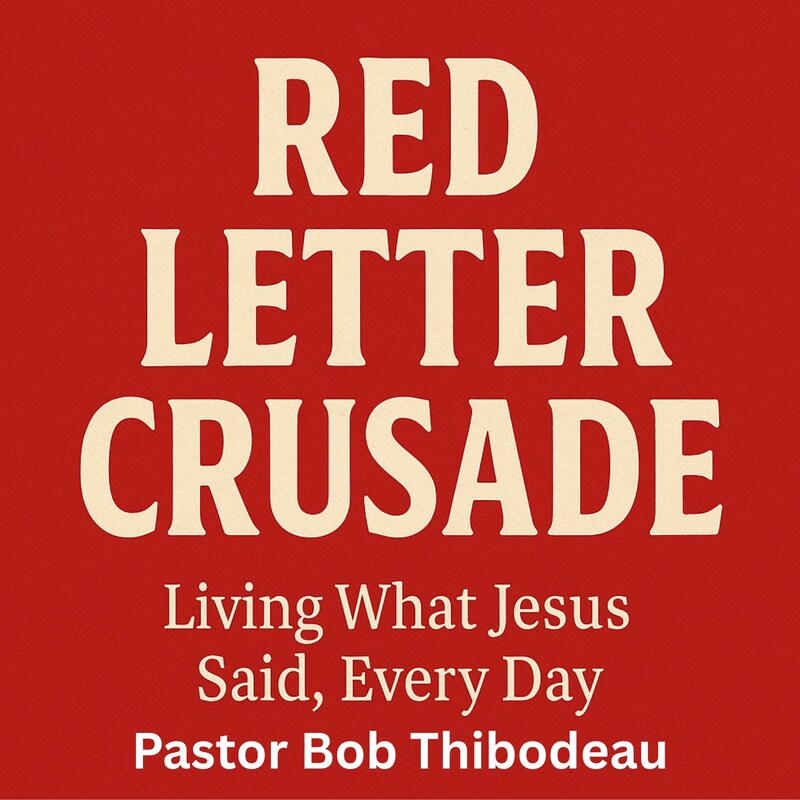
In this episode of The Red-Letter Crusade, Pastor Bob Thibodeau shares a powerful message that focuses on ONE THING..."What Did Jesus Say about... ?” He reminds us that Jesus’ words aren’t just history—they’re alive, filled with life and power to change us today.
Pastor Bob challenges us to go beyond just hearing Scripture and to let it take root in our hearts so our lives reflect Jesus. With his down-to-earth style and a touch of humor, he shows why feeding on God’s Word is just as essential as daily bread. This message will encourage you to make the Word a priority and live it out every day.
Takeaways:
- I remind you money itself isn't evil; we learned stewardship, not worship, matters far more.
- We talked about faithfulness in small things—Jesus taught consistency beats flashy wealth every single time.
- I warned that fear and worry are mammon's favorite tools; we must choose trust over panic and impulse.
- We unpacked the rich fool parable: accumulation without surrender leads to spiritual bankruptcy, not long-term security.
- I pointed out giving shouldn't be performance or manipulation; generosity becomes true worship when motives are humble.
- We emphasized practical spiritual disciplines—budgeting, contentment, and planning are faithful acts, not boring legalism.
- I joked a little: don't let social media highlight reels decide your worth; comparison ruins stewardship and peace.
- We encourage using digital platforms to carry Jesus' red-letter words—technology is a tool, not a throne to worship.
CONTACT INFORMATION:
Website: https://JesusSaid.tv
Hey Affiliate Marketers! If you would like to share the Words of Jesus and earn additional income - visit this link for more information: https://wdjsbookproject.com/ffp
Transcripts
Welcome to Freedom Through Faith and the Red Letter Crusade, where the words of Jesus take center stage.
Speaker A:Join us as we bring healing, unity and clarity to your walk with God by focusing on one thing.
Speaker A:What did Jesus say?
Speaker A:Now let's join Pastor Robert Thibodeau for the Red Letter Crusade.
Speaker A:Because when it comes to understanding the entire Bible, his words matter.
Speaker B:Hello, everyone, everywhere.
Speaker B:Pastor Bob Thibodeau here.
Speaker B:Welcome to the Red Letter Crusade and Freedom Through Faith Ministries.
Speaker B:It is such a blessing to be with you again today as we're going to go just continue our study into what did Jesus have to say?
Speaker B:And we've been talking about money.
Speaker B:Last time we did basically part one of this message.
Speaker B:Today we're going to just jump right into part two.
Speaker B:But first, let's go to the Lord with a word of prayer.
Speaker B:Heavenly Father, in the name of Jesus, we thank you for your blessings upon us.
Speaker B:We thank you for the technology you have made available.
Speaker B:We thank you, Lord, for taking care of our every need.
Speaker B:Father, in the name of Jesus, we thank you that your words matter at all times in all situations.
Speaker B:Lord.
Speaker B:Thank you, Lord Jesus, for your blessings upon us.
Speaker B:Have your way with this message.
Speaker B:Lead, guide and direct as you see fit.
Speaker B:And to you we give all honor, glory and praise for all that you accomplish in Jesus name.
Speaker B:Amen.
Speaker B:Praise the Lord.
Speaker B:Looks like I'm cut off a little bit.
Speaker B:Let me try and adjust that.
Speaker B:Let's go to the Lord with our confession of faith, commonly referred to as the Lord's Prayer.
Speaker B:And just repeat these words out loud after me, loud enough for your own two ears to hear what you're saying.
Speaker B:Because faith comes by hearing, hearing by the word of God.
Speaker B:Amen.
Speaker B:Our Father, who art in heaven, hallowed be thy name.
Speaker B:Thy kingdom come, thine will be done in this earth just as it is in heaven.
Speaker B:Give us this day our daily bread and forgive us of all our sins as we forgive those who sin against us.
Speaker B:And lead us not into temptation, but deliver us at all times from all evil.
Speaker B:For thine is the kingdom, the power and the glory forever in Jesus name.
Speaker B:Amen.
Speaker B:Praise the Lord.
Speaker B:Hallelujah.
Speaker B:Have your Bibles.
Speaker B:Turn with me to Luke chapter 16, Luke, chapter 16.
Speaker B:And we'll just jump right into today's Bible study.
Speaker B:Praise the Lord.
Speaker B:Stuff organized a little better here.
Speaker B:Praise you, Jesus.
Speaker B:All right, now, last time we began talking about one of the most personal and honestly, one of the most misunderstood subjects Jesus ever addressed, and that's about money.
Speaker B:And we established something right from the very beginning that money in itself is not evil.
Speaker B:Okay?
Speaker B:Money is necessary in this life.
Speaker B:Money is necessary in ministry.
Speaker B:Money is necessary for spreading the gospel around the world.
Speaker B:So the mission has not changed.
Speaker B:It's only the way we do outreach that's changed.
Speaker B:We talked about how Jesus never taught the Blabbit and Grabbet prosperity manipulation.
Speaker B:He never turned the gospel into a spiritual slot machine where desperate people were emotionally pressured into making offerings with promises really Jesus never made.
Speaker B:And at the same time, we also talked about the danger of religious systems that preach humility, preach it outwardly, while elevating their own appearance and status and their own prestige internally.
Speaker B:Jesus confronted that spirit in the Pharisees, because outward religion, without any inward obedience, always becomes dangerous.
Speaker B:Amen.
Speaker B:Then we looked at the rich young ruler, and we saw how Jesus exposed the real issue wasn't the money itself, but what's on the throne of the heart.
Speaker B:And there's a difference between having money or money having you.
Speaker B:And finally, we talked about mammon.
Speaker B:Jesus said, you cannot serve God and mammon.
Speaker B:It's impossible.
Speaker B:Not, should, not, cannot.
Speaker B:Because eventually only one master is going to win and become dominant.
Speaker B:Amen.
Speaker B:And honestly, this message matters now more than ever because modern believers are under enormous pressure, financially, emotionally, culturally, spiritually.
Speaker B:I mean, there's fear, debt, comparison to others, your image, your social pressure, consumerism, and economic uncertainty.
Speaker B:They're all pulling on people constantly.
Speaker B:They see it everywhere they turn.
Speaker B:That's why we have to return to the actual words of Jesus.
Speaker B:What did Jesus say is not just a slogan or a marketing tactic.
Speaker B:It is the only thing that really matters when confronting problems that you face on a daily basis.
Speaker B:We're not talking about trends, we're not talking about hype, not celebrity religion, just simply the red letters of Jesus.
Speaker B:Amen.
Speaker B:Because if Jesus said it, that settles it.
Speaker B:Why?
Speaker B:Well, because his words matter.
Speaker B:Amen.
Speaker B:Praise God.
Speaker B:And today, we're gonna go deeper into what Jesus taught about stewardship and fear and faithfulness and generosity and how believers are supposed to handle money without allowing money to handle them.
Speaker B:Amen.
Speaker B:Praise God.
Speaker B:Now, have you turned in your bibles to Luke 16 yet?
Speaker B:Look down at verse 10.
Speaker B:He that's faithful in that which is least is faithful also in much.
Speaker B:And he that is unjust in least is unjust also in much.
Speaker B:Now, one of the biggest financial lies people believe is this or some semblance of it.
Speaker B:If I just had more money, everything would be okay.
Speaker B:But see, Jesus taught here the exact opposite.
Speaker B:Jesus taught that the issue is usually not the amount first, the issue comes down to faithfulness.
Speaker B:How do you handle what you already have?
Speaker B:That's strong because it cuts all.
Speaker B:It cuts straight through excuses quickly, doesn't it?
Speaker B:Most people think abundance automatically creates wisdom.
Speaker B:Jesus said faithfulness creates trustworthiness.
Speaker B:And if a person's careless with little more, money usually magnifies the problems that exist instead of solving them.
Speaker B:And that's why people can get pay raises and still stay broke.
Speaker B:Businesses can grow and still collapse.
Speaker B:Athletes can sign multi million dollar contracts and still go bankrupt.
Speaker B:Because money itself does not create your character.
Speaker B:Money just amplifies what's already there.
Speaker B:And Jesus addressed that directly.
Speaker B:He said, he that's faithful in little.
Speaker B:Notice, Jesus did not say he that is flashy in little or he that, that that looks successful with little.
Speaker B:No, he said faithful.
Speaker B:Faithfulness equals consistency.
Speaker B:Faithfulness equals stewardship.
Speaker B:Faithfulness equals discipline with your finances.
Speaker B:Faithfulness equals obedience when nobody else is applauding you.
Speaker B:And honestly, this is where modern culture fights against the teachings of Jesus constantly.
Speaker B:Because our culture today trains people to chase appearances instead of stewardship.
Speaker B:You know, people want quick success, instant wealth, viral fame, you know, luxury lifestyles and financial shortcuts.
Speaker B:But Jesus teaches what he kept on teaching.
Speaker B:Responsibility, stewardship, patience, faithfulness.
Speaker B:Amen.
Speaker B:Are you with me?
Speaker B:And can I say something plainly?
Speaker B:Today, some believers are praying for increase while ignoring stewardship.
Speaker B:They want God to multiply.
Speaker B:What basically they refuse to manage.
Speaker B:That's a hard truth.
Speaker B:That's one I had to learn too.
Speaker B:But it's true.
Speaker B:Because stewardship is spiritual.
Speaker B:Budgeting is spiritual discipline and is spiritual.
Speaker B:Contentment is spiritual.
Speaker B:Generosity is spiritual.
Speaker B:Jesus never separated practical obedience from spiritual maturity.
Speaker B:Never.
Speaker B:He never did that.
Speaker B:And honestly, some people today are not struggling financially because they lack opportunity.
Speaker B:Some are struggling because nobody ever taught them about stewardship.
Speaker B:You know, nobody ever taught them how to manage money that wasn't taught in schools or how to avoid emotional spending.
Speaker B:Society today is the opposite of that.
Speaker B:How to resist comparison, comparing yourself to others, how to save disciplined savings and how to plan for your future, how to stay disciplined in your plan.
Speaker B:Culture certainly is not helping today because every, every single advertisement you see says buy more and pay later.
Speaker B:Every influencer online says upgrade your life right now.
Speaker B:And suddenly people are financing appearances they cannot just afford to maintain just in an effort to impress people they don't even know.
Speaker B:Folks, that is not kingdom living.
Speaker B:That's called financial bondage.
Speaker B:Like I said, I know, I've experienced it.
Speaker B:And we shared about that in the last video.
Speaker B:Amen.
Speaker B:I mean, Jesus never taught people to build their identity through their Possessions.
Speaker B:No, he taught obedience.
Speaker B:Now that does not mean believers should never enjoy their life.
Speaker B:There is nothing wrong with vacations and hobbies, enjoying your blessings responsibly.
Speaker B:Nothing wrong with that at all.
Speaker B:But there is a huge difference between enjoying resources and being enslaved by those resources.
Speaker B:Amen.
Speaker B:That's why stewardship matters.
Speaker B:And honestly, this applies to ministries too.
Speaker B:In fact, it should apply more to ministries because ministries must steward their resources wisely.
Speaker B:Churches must, must steward their offerings responsibly.
Speaker B:Leaders must steward influence humbly.
Speaker B:Because money, money given for kingdom work should actually be advancing the kingdom.
Speaker B:Not to build their celebrity empires, not to finance image driven Christianity.
Speaker B:Hear me carefully now.
Speaker B:This is not an attack on every large church or every well known preacher.
Speaker B:I'm not doing that.
Speaker B:Okay?
Speaker B:God has used many, many ministries to help millions of people.
Speaker B:And I'm thankful for every soul genuinely reached for Christ.
Speaker B:But modern Christianity is learning something important right now.
Speaker B:Production alone cannot replace discipleship.
Speaker B:Growth alone cannot replace spiritual depth.
Speaker B:Polished presentations alone cannot replace spiritual truth.
Speaker B:And in recent years, many believers have begun to step away from the attraction driven Christianity because they're hungry for something deeper and more real in their lives.
Speaker B:Not more spectacle, not more hype, not more celebrity branding around Christianity.
Speaker B:Not.
Speaker B:People today want substance.
Speaker B:They want the truth.
Speaker B:They want authenticity.
Speaker B:They want the actual teachings of Jesus.
Speaker B:They want the meat and potatoes, not just the ice cream sundae.
Speaker B:Amen.
Speaker B:Praise God.
Speaker B:And honestly, if you, if you study the facts, it was the COVID pandemic that exposed much of this.
Speaker B:Because when buildings were shut down and churches were forced to close and productions disappeared, many people then realized they had been consuming religious experiences without developing deep spiritual roots.
Speaker B:And now people are searching again.
Speaker B:Not necessarily leaving faith altogether, but searching for something deeper than just performance.
Speaker B:Religion, folks, that's one reason why I believe Jesuss said TV matters so much right now.
Speaker B:That's our new project.
Speaker B:The purpose isn't to provide entertainment.
Speaker B:The purpose is not celebrity Christianity.
Speaker B:The purpose is helping point people back to the red letter words Jesus spoke using modern technology, while there's still time to reach people today.
Speaker B:So the mission has never changed.
Speaker B:Only the way of outreach did.
Speaker B:And resources surrendered to God can become powerful tools for eternal impact.
Speaker B:Folks, that's why stewardship matters so much, so deeply.
Speaker B:Because eventually every single dollar becomes connected to some type of decision.
Speaker B:Will this serve the kingdom or serve the flesh?
Speaker B:That's the question.
Speaker B:And Jesus taught that faithful stewardship begins in the little things, the little habits, the little disciplines, the little decisions, little acts of obedience.
Speaker B:Because little things become Big things over time.
Speaker B:The parable of the seed, right?
Speaker B:I mean, honestly, some.
Speaker B:Some of the most spiritually mature people I've ever met, they weren't wealthy at all.
Speaker B:They were just faithful people.
Speaker B:Faithful with what they had, Faithful in their giving out of what they had, faithful in serving with what they had, faithful in obedience, doing what the Lord wanted them to do.
Speaker B:That is what Jesus honors.
Speaker B:Not hype, not appearances, just faithfulness.
Speaker B:Praise God.
Speaker B:And I think one of the greatest mistakes modern Christianity has made is making people think the blessing only looks like having abundance.
Speaker B:Not at all.
Speaker B:Sometimes.
Speaker B:Sometimes the blessing looks like stability.
Speaker B:Sometimes the blessing looks like peace.
Speaker B:Sometimes the blessing looks like contentment.
Speaker B:Sometimes the blessing looks like discipline, finally is replacing the chaos.
Speaker B:That's a blessing too, praise God.
Speaker B:Because when your financial life stops being ruled by panic and lack and fear and impulse and comparison to others, something changes inside your heart.
Speaker B:Peace starts showing up.
Speaker B:Not because you suddenly become rich, but because Jesus is finally becoming Lord over the tool called money.
Speaker B:And folks, that's what stewardship is actually about.
Speaker B:Not just protecting your money, but protecting your heart from letting money become the master again.
Speaker B:Amen.
Speaker B:Praise God.
Speaker B:Hallelujah.
Speaker B:Now turn over to Matthew, chapter 6, verses 25 to 33.
Speaker B:You can read the whole thing yourself.
Speaker B:But Jesus basically says, take no thought for your life.
Speaker B:Don't worry about it.
Speaker B:Because after Jesus dealt with stewardship and faithfulness, he immediately turned and started talking about worry.
Speaker B:Folks, that's not accidental, because money and fear are deeply connected in the human heart.
Speaker B:People worry about their bills.
Speaker B:I do.
Speaker B:People worry about their jobs.
Speaker B:People worry about inflation, about their retirement, about what happens if emergencies pop up or how am I going to buy groceries?
Speaker B:How do we pay off these bills?
Speaker B:All the debt and uncertainty, Deep, deep uncertainty about what the future holds.
Speaker B:And honestly, modern culture practically runs on financial anxiety.
Speaker B:Amen.
Speaker B:I mean, people are being stressed constantly.
Speaker B:Some are drowning in debt.
Speaker B:Some are only one emergency away from financial collapse.
Speaker B:Others are exhausted just trying to maintain their appearances.
Speaker B:And right in the middle of all that pressure, Jesus says, don't worry about it.
Speaker B:Take no thought.
Speaker B:Don't worry about it.
Speaker B:That's what it means.
Speaker B:Take no thought.
Speaker B:Take it says, don't worry about those things.
Speaker B:Now, let's balance this properly, because Jesus was not teaching irresponsibility here.
Speaker B:In fact, he is teaching the exact opposite.
Speaker B:Jesus was not saying, ignore your bills.
Speaker B:He didn't say that.
Speaker B:Stop planning for your future.
Speaker B:He didn't say that.
Speaker B:Just quit your job and rely on me.
Speaker B:He didn't say that or pretend that Reality doesn't exist and just stay with me.
Speaker B:He didn't say that.
Speaker B:Because planning is wisdom, budgeting is wisdom, Stewardship is wisdom.
Speaker B:Likewise, panic is the problem.
Speaker B:Fear of the future is the problem.
Speaker B:Because fear.
Speaker B:Fear becomes dangerous when it starts making your decisions instead of your faith.
Speaker B:And honestly, fear is one of the primary ways Mammon gains influence over people.
Speaker B:Because fear whispers, you'll never have enough.
Speaker B:Fear says, you better protect yourself first.
Speaker B:Fear says, you cannot trust God with this.
Speaker B:And before long, people begin making emotional decisions instead of obedient decisions.
Speaker B:And that's why Jesus addressed worry straight on directly, because worry reveals trust issues.
Speaker B:And that's one reason the enemy keeps believers financially exhausted.
Speaker B:If he can keep people trapped in survival mode constantly, they rarely slow down long enough to pursue spiritual maturity deeply.
Speaker B:I know.
Speaker B:I've experienced it.
Speaker B:Why?
Speaker B:Because they become consumed by the pressure, the stress, the.
Speaker B:The panic and fear.
Speaker B:But Jesus said, you heavenly Father knows you need all these things, folks.
Speaker B:That's powerful.
Speaker B:God already knows what you need.
Speaker B:Jesus acknowledged the need.
Speaker B:He didn't deny the reality.
Speaker B:I mean, food's real, housing's real, bills are real, life expenses are real.
Speaker B:But Jesus was teaching believers, don't let those things become masters over your heart.
Speaker B:Because eventually, fear becomes bondage.
Speaker B:And honestly, folks, many people today are carrying financial anxiety.
Speaker B:Jesus never intended for them to carry.
Speaker B:Never because problems are imaginary, but because they're trying to carry tomorrow, before tomorrow even gets here, it becomes exhausting.
Speaker B:And can I say something carefully here?
Speaker B:Some people are not actually living.
Speaker B:They are constantly panicking.
Speaker B:They're always afraid that something's gonna break, something will fail, something will collapse, or somebody else is getting ahead of them.
Speaker B:Folks, that's not peace.
Speaker B:Jesus never taught his followers to live dominated by fear.
Speaker B:Now, again, balance matters, okay?
Speaker B:Faith does not mean being reckless.
Speaker B:Faith does not mean irresponsibility.
Speaker B:Faith does mean trusting God while walking in obedience.
Speaker B:That's why Jesus said, seek ye first.
Speaker B:With what?
Speaker B:The kingdom of God.
Speaker B:Seek him first.
Speaker B:Not money first, not image first, not status first, not fear first.
Speaker B:Kingdom first.
Speaker B:And honestly, that's where many believers lose their peace financially.
Speaker B:They're trying to build security outside the order Jesus established.
Speaker B:They seek their own comfort first.
Speaker B:They seek their own possessions first.
Speaker B:They seek approval first appearance first.
Speaker B:Or even worse, financial status first.
Speaker B:Then they wonder why.
Speaker B:Why their anxiety keeps increasing.
Speaker B:Because, folks, anything built outside the order of Jesus eventually becomes unstable, right?
Speaker B:And modern social media, that culture has intensified this dramatically.
Speaker B:I just think about it.
Speaker B:People spend hours consuming everybody else's highlight reel online, right?
Speaker B:Somebody else's house, somebody else's vacation, somebody else's success, somebody else's lifestyle.
Speaker B:They wish.
Speaker B:Oh, I wish I could be like that.
Speaker B:Right, folks, that comparison is a poisoning contentment.
Speaker B:That's dangerous spiritually.
Speaker B:It really is, because comparison creates dissatisfaction of where you are now.
Speaker B:Dissatisfaction creates impulsiveness, and impulsiveness creates poor stewardship.
Speaker B:And poor stewardship creates more fear.
Speaker B:And it becomes a cycle over and over and over, and they just go deeper and deeper and deeper into debt.
Speaker B:And Jesus knew exactly how destructive that cycle was going to become.
Speaker B:That's why he kept bringing people back to just trusting him.
Speaker B:Not passive laziness, Trust.
Speaker B:Honestly, one of the greatest financial breakthroughs many believers will ever experience will not come from suddenly making more money.
Speaker B:No, it will come from finally learning contentment where you're at.
Speaker B:Discipline, peace, stewardship, and just trusting in God.
Speaker B:Because peace, that's wealth too.
Speaker B:Not fake peace.
Speaker B:Real peace Shalom.
Speaker B:Nothing missing, nothing broken.
Speaker B:Right?
Speaker B:That kind comes from knowing God in is my provider, not mammon God.
Speaker B:Amen, folks.
Speaker B:When you get to that point, it changes everything.
Speaker B:Because once fear stops sitting on the throne of your heart, wisdom starts becoming clear.
Speaker B:People make better decisions.
Speaker B:People stop chasing appearances.
Speaker B:They stop trying to impress strangers that they don't even know.
Speaker B:And instead they.
Speaker B:They start asking, Lord, what does obedience to you look like here in this situation?
Speaker B:When you get to that point, that's where freedom, true freedom begins.
Speaker B:And honestly, that's another reason studying the actual words of Jesus matters so much today.
Speaker B:Too many believers have absorbed financial thinking from the culture instead of Christ.
Speaker B:Matter of fact, that's why resources like this matter.
Speaker B:What did Jesus say?
Speaker B:Seven messages from the Master.
Speaker B:That's why it matters so deeply.
Speaker B:These are just the red letter words of Jesus organized into topics.
Speaker B:There's no commentary or external opinions because believers need to hear Jesus clearly again.
Speaker B:Not hype, not fear, not manipulation, just the words of Jesus.
Speaker B:Matter of fact, that's why platforms like Jesus said TV existence to help carry the red letter teachings of Jesus farther through modern technology while there's still time to reach people who are hungry for the truth all over this world.
Speaker B:So the missionary outreach, that did not change.
Speaker B:It's only the way we actually reach them with the message that has changed.
Speaker B:Amen.
Speaker B:Jesus is still calling believers today to live differently from the fearful systems of the world built around them.
Speaker B:Not panic driven, not greed driven, not image driven, just kingdom driven.
Speaker B:Praise God.
Speaker B:Because if Jesus said it, that settles it.
Speaker B:Amen.
Speaker B:Praise the Lord.
Speaker B:Look at Luke chapter 12.
Speaker B:Go over there.
Speaker B:Luke chapter 12.
Speaker B:Verses 16 to 21.
Speaker B:Probably don't have time to read them all, but says he spoke a parable to them.
Speaker B:Now, after Jesus dealt with fear and worry, he immediately turned and told the story about a rich man whose entire life was consumed with accumulation.
Speaker B:And honestly, this parable may be one of the clearest warnings Jesus ever gave about materialism.
Speaker B:Notice first, Jesus did not, did not condemn the man for being productive.
Speaker B:Huh?
Speaker B:No, read it.
Speaker B:He never said anything about him being wealthy.
Speaker B:That was evil.
Speaker B:Nothing about it.
Speaker B:The ground brought forth plentifully, his business increased, the harvest expanded.
Speaker B:Right?
Speaker B:Read it.
Speaker B:Am I right?
Speaker B:Nothing in the story suggests Jesus was teaching that it was the wealth that was sinful.
Speaker B:No, the problem was what happened inside the man's heart after prosperity arrived.
Speaker B:Just read it.
Speaker B:Look at it.
Speaker B:Because the moment the increase came, the man immediately started talking only to himself.
Speaker B:Read it.
Speaker B:What shall I do?
Speaker B:I know, I know.
Speaker B:I will pull down my barns.
Speaker B:I will build greater barns.
Speaker B:I will bestow all my fruits and all my goods, not to others, but for himself.
Speaker B:Am I right?
Speaker B:Is that what you read?
Speaker B:That's what I read.
Speaker B:Did you notice something was missing?
Speaker B:No prayer, no surrender, no stewardship, no concern for others.
Speaker B:Not even giving thanks to God for the increase.
Speaker A:None.
Speaker B:Everything became centered around me and my.
Speaker B:My barns, my goods, my plans, my future.
Speaker B:And honestly, that's one of the quickest signs that money is beginning to corrupt the heart.
Speaker B:When things turn inward, folks, that should be a warning sign right there.
Speaker B:Amen.
Speaker B:The conversation becomes completely self centered now.
Speaker B:Again, balance matters, because Jesus was not condemning wise planning.
Speaker B:Not at all.
Speaker B:The Bible supports preparation and stewardship and saving and responsible management.
Speaker B:So the issue wasn't the planning.
Speaker B:The issue was ownership without surrender.
Speaker B:The rich fool believed abundance had made him secure.
Speaker B:And that's the danger today too, because Mammon always promises safety.
Speaker B:Apart from your dependence on God, Mammon whispers, if you just get enough stored up, then you'll finally have peace.
Speaker B:But Jesus exposed the devil's lie.
Speaker B:Because true peace never comes from accumulation alone.
Speaker B:And honestly, we see this mentality everywhere we look today.
Speaker B:I mean, people are chasing bigger houses, bigger platforms, bigger influence, bigger images, bigger lifestyles.
Speaker B:And yet anxiety keeps increasing.
Speaker B:Why?
Speaker B:Because money was never designed to carry the weight of human security.
Speaker B:Only God can carry that kind of weight properly.
Speaker B:And that's why Jesus called this man, what a fool.
Speaker B:Because the man prepared for his retirement, but he never prepared for his eternity.
Speaker B:He planned for a bigger barn so it'll outlast them, not a surrendered soul.
Speaker B:And Jesus said, you fool, tonight your soul will be required of you.
Speaker B:You.
Speaker B:In other words, you prepared for everything except the one thing you cannot avoid.
Speaker B:And folks, I don't know about you, but when I read that, that's sobering.
Speaker B:Honestly, modern culture works overtime trying to keep people distracted from eternity.
Speaker B:To not think about eternity, only worry about the here and now.
Speaker B:And think about this.
Speaker B:People spend more time researching their investments.
Speaker B:Researching investments rather than studying scripture, huh?
Speaker B:More time building their online image than building their true character.
Speaker B:And Jesus cuts directly through all of it, doesn't he?
Speaker B:Because eventually every person reaches a moment where earthly possessions stop mattering at all.
Speaker B:At that moment, your titles won't matter, your status in society won't matter.
Speaker B:Your accumulated possessions will not matter.
Speaker B:Only Christ and your relationship with him will be all that matters at that point in time.
Speaker B:That's why Jesus said, a man's life does not consist in the abundance of the things which he possesses.
Speaker B:Folks, that verse is almost completely opposite from modern culture.
Speaker B:Culture says your possessions define your value.
Speaker B:Jesus said, your possessions cannot define your soul.
Speaker B:And honestly, many believers are exhausted because they're trying to maintain lifestyles God never called them to maintain.
Speaker B:People are financing their appearances.
Speaker B:People are financing their comparison to others, financing their insecurity.
Speaker B:Jesus called that bondage.
Speaker B:Think about it.
Speaker B:Some ministries have drifted into the same danger area because sometimes churches become more focused on expansion, their branding, their image, their celebrity status and their public visibility instead of actually relying on teaching people what Jesus actually said.
Speaker B:Hear me carefully again, okay?
Speaker B:There's nothing wrong with church growth.
Speaker B:There's nothing wrong with using technology, media, buildings, outreach tools, as long as you're using them effectively.
Speaker B:Jesus said TV itself uses technology intentionally.
Speaker B:But there's a difference between using tools to spread Jesus words and using Jesus to build your own personal empire.
Speaker B:Oh, that's good, Lord.
Speaker B:Hallelujah.
Speaker B:That's.
Speaker B:That was good.
Speaker B:That was all.
Speaker B:You hear what the Holy Spirit just said?
Speaker B:Let me try and remember to say that again.
Speaker B:There is a difference between using tools to spread Jesus words and using Jesus to build your own personal empire.
Speaker B:Man, that hits home, doesn't it?
Speaker B:It should, because that's where discernment comes into the picture.
Speaker B:Discernment matters, folks.
Speaker B:The rich fool never asked, lord, thank you for this increase.
Speaker B:What would you have me do with it?
Speaker B:No, he never sought that answer.
Speaker B:Everything became self centered on him.
Speaker B:And that spirit still exists today.
Speaker B:People say, my money, my increase, my accomplishments, my plans, without ever surrendering those things back to God.
Speaker B:And folks, stewardship changes completely once believers realize nothing truly belongs to Me anyway, it God that gave the increase.
Speaker B:We're to be managers, not owners, managers.
Speaker B:Everything we have in this life time, resources, influence, opportunities, platforms, all of it, all of it belongs to God.
Speaker B:Amen.
Speaker B:Not us.
Speaker B:That changes how people live now.
Speaker B:Money becomes a tool for kingdom impact instead of just personal comfort.
Speaker B:Now.
Speaker B:Generosity becomes easier.
Speaker B:Now comparison loses its power.
Speaker B:Now fear starts breaking off of you.
Speaker B:Honestly, I believe one reason God blesses some people financially is because he knows resources flowing through surrendered hands can help advance the gospel farther.
Speaker B:And actually that's why this matters.
Speaker B:The mission never changed, only the way we do.
Speaker B:The outreach has changed.
Speaker B:I mean folks, you heard me talk about this before.
Speaker B:Technology now allows the teachings of Jesus to travel globally in seconds.
Speaker B:Right now through streaming and podcasts and books and broadcasts and media outreach.
Speaker B:That's why platforms like Jesus said TV exist to help carry the red letter words of Christ farther while there's still time to receive them.
Speaker B:Because believers desperately, desperately need to hear Jesus clearly again.
Speaker B:Not prosperity hype, not fear based religion, not celebrity culture.
Speaker B:The words of Jesus.
Speaker B:Because when believers start returning to the red letters, priorities begin changing, hearts begin changing, stewardship beginning begins changing.
Speaker B:Peace begins growing in you again.
Speaker B:And honestly, that's what Jesus was after in this parable all along.
Speaker B:Not just exposing the greed, exposing misplaced trust.
Speaker B:Because the rich fool trusted in accumulation more than surrender.
Speaker B:Amen.
Speaker B:Don't shut me down.
Speaker B:Praise God.
Speaker B:Jesus showed us cleanly no amount of earthly security can replace our dependence on God.
Speaker B:None.
Speaker B:That's why stewardship without lordship will always.
Speaker B:Hear me now, will always become idolatry.
Speaker B:Oh, amen.
Speaker B:Praise God.
Speaker B:Let's see, go to Matthew chapter six.
Speaker B:Matthew, chapter six, verse one.
Speaker B:Take heed that you don't do your alms before men.
Speaker B:You're giving before men.
Speaker B:One of the most misunderstood areas of money in the modern church is giving.
Speaker B:Because on one side you have manipulation, on the other side you have selfishness.
Speaker B:Somewhere in the middle there sits what Jesus actually taught.
Speaker B:Jesus taught generosity, but he never taught performance giving.
Speaker B:There's a difference and that matters.
Speaker B:Jesus never said give so people can see you are spiritual.
Speaker B:He never said that.
Speaker B:He never taught that ever.
Speaker B:He never taught emotional manipulation.
Speaker B:He never taught guilt offerings.
Speaker B:He certainly never taught ministries to pressure hurting people with promises God never made.
Speaker B:Jesus said in situations like that, take heed.
Speaker B:In other words, be careful.
Speaker B:Why?
Speaker B:Because even giving can become corrupted by pride and appearance and ego and public recognition.
Speaker B:That's why Jesus said, do not do your alms or your giving before men to be seen by them.
Speaker B:Now Think about how opposite that is from modern culture, right?
Speaker B:Today, everything is public, everything is branding, everything becomes performance, doesn't it?
Speaker B:And Jesus warned, be careful.
Speaker B:Your giving does not become a theater.
Speaker B:Because God looks at motives lot differently than people do.
Speaker B:People look at the amounts.
Speaker B:Jesus only looks at the heart.
Speaker B:That's why two people can give identical offerings.
Speaker B:And heaven sees them completely differently.
Speaker B:I mean, think about it.
Speaker B:1.
Speaker B:One gives out of obedience, another out of recognition.
Speaker B:Jesus said, you, Father, who sees in secret, huh?
Speaker B:Folks, that matters.
Speaker B:Because Christianity was never supposed to become a spiritual performance for you.
Speaker B:Honestly, this is where both prosperity culture and celebrity driven Christianity sometimes, I'm saying sometimes, can drift into danger.
Speaker B:Not every ministry, not every preacher, not every large church either, but systems built primarily around image or personality and constant growth, all of those eventually create enormous pressure to keep people entertained instead of disciplined.
Speaker B:Many, many believers today are beginning to recognize that people are hungry again for something real.
Speaker B:Not just polished productions, not just motivational speeches with scripture drizzled on top.
Speaker B:Not just emotional experiences that lack any depth to them at all.
Speaker B:They want truth.
Speaker B:They want discipleship, they want authenticity.
Speaker B:They want the actual teachings of Jesus so their lives will be better.
Speaker B:And honestly, this cultural shift is one reason I believe ministries centered around the words of Christ matter so much right now.
Speaker B:Because after.
Speaker B:After years of hype and noise and controversy and celebrity culture and endless religious branding, people are beginning to ask, what does it all mean?
Speaker B:What did Jesus have to say about all this going on?
Speaker B:Well, right there, that's a healthy question.
Speaker B:Praise God.
Speaker B:And it's one that I've decided matters more than anything else.
Speaker B:Amen.
Speaker B:Because when you study the red letters carefully, you start noticing something powerful.
Speaker B:Jesus always, always dealt with the heart first.
Speaker B:Not image, not performance, not appearances, but the heart.
Speaker B:I mean, think about this.
Speaker B:Jesus walked among the crowds, everyone yelling his name, trying to touch him, calling out to him.
Speaker B:One day, one blind man stands up, says, son of David, have mercy on me.
Speaker B:What happens?
Speaker B:Jesus stops right in his tracks.
Speaker B:He turns, says, bring him that one right there.
Speaker B:Bring him to me here.
Speaker B:What happens?
Speaker B:The man's healed right there, thousands of people calling his name.
Speaker B:Jesus heard the voice of one.
Speaker B:Because of all the people in the crowd, Jesus heard one voice speak in faith.
Speaker B:Amen.
Speaker B:Praise God.
Speaker B:Everywhere Jesus went, he taught the unadulterated word of God, Period.
Speaker B:Amen.
Speaker B:Jesus talked about motives and greed and hypocrisy and fear and surrender and humility and stewardship and obedience and trust.
Speaker B:Trust.
Speaker B:Over and over and over and over and over again, Jesus kept Pulling people away from the outward religious groups and those appearances and bringing them back to inward transformation.
Speaker B:Honestly, I think that's one reason many believers are stepping away from shallow Christianity today.
Speaker B:Have you noticed, just asking.
Speaker B:Have you noticed that most churches are empty today?
Speaker B:Many of those popular megachurches that had packed 10, 20,000 people are.
Speaker B:They got a lot of empty seats now, don't they?
Speaker B:Before, they were packed to the rafters with overflow rooms and doing multiple services every Sunday.
Speaker B:Now if you go there, they have entire sections roped off and kept empty.
Speaker B:But the cameras, they want to seem like it's packed, so they just focus on the crowd that's packed in the middle.
Speaker B:But if you were to zoom out, it wouldn't seem so impressive anymore.
Speaker B:Because these churches do not hate Jesus, okay?
Speaker B:Not at all.
Speaker B:So why are they empty now?
Speaker B:Not because they hate Jesus, but because the people are starving for depth, not fluff.
Speaker B:They're tired of the performance, religion, the shallow messages, the celebrity culture, and the emotional manipulation.
Speaker B:You know, prior to the pandemic, the crowds were full.
Speaker B:And being part of a large crowd mentality of enthusiasm like that just manifests itself even more.
Speaker B:These people applaud.
Speaker B:Everyone's applauding.
Speaker B:These musicians are.
Speaker B:They act excited.
Speaker B:Everybody gets excited.
Speaker B:But when the pandemic hit and those churches could not host the crowds, but they did, still did.
Speaker B:The video streams, right?
Speaker B:So people could still tune in, and people would.
Speaker B:They'd log in and watch from home.
Speaker B:But without that contagious excitement of being part of a large crowd, they actually listened to what was being taught.
Speaker B:They actually listened.
Speaker B:And what a lot of people discovered more often than not were not Bible teachings, but motivational messages dressed up with scripture.
Speaker B:They heard empty messages that just fell flat when the crowd excitement wasn't there to keep everybody energized.
Speaker B:And the preachers who had fed off of the crowd excitement with their little witty statements, they tried to act like the crowd was still there, and their euphemisms just fell flat and were not effective.
Speaker B:And these people began to realize they had not really been studying the Word of God at all.
Speaker B:Then they realized they need substance.
Speaker B:They want relationship.
Speaker B:They want truth.
Speaker B:They want the Word, not the motivational speaker.
Speaker B:They want Jesus.
Speaker B:Amen.
Speaker B:Praise God.
Speaker B:That's why after the pandemic, many, many, many of those churches and ministries lost more than half the crowd.
Speaker B:Some 80% left.
Speaker B:That's why discernment matters so much right now, folks.
Speaker B:Not cynicism, discernment.
Speaker B:Don't get me wrong again now, because not every ministry Asking for support is corrupt.
Speaker B:Not every conversation about stewardship is driven by greed either.
Speaker B:Some ministries are sincerely trying to spread the gospel faithfully while navigating the realities of modern outreach.
Speaker B:So balance matters here.
Speaker B:And honestly, I think many believers would experience far more peace financially if they stopped trying to impress people and simply focused on obeying Jesus faithfully.
Speaker B:Faithfully.
Speaker B:Amen.
Speaker B:Because that removes enormous pressure.
Speaker B:Because now life is no longer about competing or performing or appearing successful or projecting a certain image.
Speaker B:Now life becomes, Lord, can I honor you with what you've entrusted to me?
Speaker B:Folks, that's stewardship.
Speaker B:And stewardship changes everything.
Speaker B:Everything.
Speaker B:Because now money is no longer your master, it becomes your servant.
Speaker B:Now giving is no longer manipulation, it becomes a way of worship.
Speaker B:Now resources are no longer about building ego.
Speaker B:They become tools for kingdom impact.
Speaker B:Amen.
Speaker B:And honestly, I believe that's one reason God entrusts greater responsibility to some people.
Speaker B:Over time, he sees hearts willing to use the resources for eternal purposes instead of selfish ambition alone.
Speaker B:That's why faithful stewardship makes matters so deeply.
Speaker B:Because every dollar eventually connects to a deeper question.
Speaker B:Will this glorify me or glorify God?
Speaker B:And, folks, that question reaches far, far beyond finances.
Speaker B:It reaches into motives and priorities, identity and lordship itself.
Speaker B:Because eventually everybody, everybody serves something.
Speaker B:Jesus is still calling believers today to live differently than the systems of the world around them.
Speaker B:Not greed driven, not fear driven, not image driven, but kingdom driven.
Speaker B:Because if Jesus said it, that settles it.
Speaker B:Amen.
Speaker B:Praise the Lord.
Speaker B:Oh, this has been good today.
Speaker B:Maybe the Holy Spirit has been dealing with you about more than just money.
Speaker B:Maybe he's been dealing you, dealing with you about fear and worry and greed and comparison and pride, impulsiveness, or misplaced priorities.
Speaker B:Because this message has never really been about dollars.
Speaker B:It's always been about lordship.
Speaker B:Who sits on the throne of your heart?
Speaker B:Who controls your decisions?
Speaker B:Who do you trust when pressure rises, remember Jesus said, you cannot serve God and mammon.
Speaker B:If Jesus said it, that settles it.
Speaker B:So today, if you need to surrender your heart, your priorities, your finances, your fears, your goals, your stewardship back to Jesus, do it right now.
Speaker B:Stop letting culture disciple you.
Speaker B:Stop letting fear direct you.
Speaker B:Stop letting comparison exhaust you.
Speaker B:Bring it all back under the lordship of Christ.
Speaker B:In fact, I'd like to pray with you right now.
Speaker B:If what was said today resonated with your heart, just pray a simple prayer with me right now.
Speaker B:Amen.
Speaker B:Just bow your head.
Speaker B:Pray with me, Jesus.
Speaker B:Thank you for your words.
Speaker B:Thank you for being able to study your words.
Speaker B:Thank you for books like what Did Jesus say and platforms like Jesus said tat tv.
Speaker B:Lord, forgive me.
Speaker B:Wherever and whenever I have failed you, come into my heart.
Speaker B:Forgive me of all my sins, all of them, and be Lord of my life.
Speaker B:I pray this in Jesus name.
Speaker B:Amen.
Speaker B:Praise the Lord.
Speaker B:If you prayed that prayer, email me@Brother BobTFM.org because I want to celebrate with you.
Speaker B:Amen.
Speaker B:Now, before we close, let me encourage you to stay connected with us.
Speaker B:Over at JesusSaid TV, we are committed to help bringing believers back to the red letter teachings of Jesus through streaming media and podcasts and interviews.
Speaker B:Biblical teachings centered on his actual words.
Speaker B:So the mission never changed.
Speaker B:Only the way of outreach has.
Speaker B:And can I say something else that the church must recognize quickly?
Speaker B:People live.
Speaker B:They live online right now.
Speaker B:They learn online.
Speaker B:They search for answers online.
Speaker B:Sadly, many people are being discipled more by algorithms today than by actual scripture.
Speaker B:And that should concern every single believer.
Speaker B:Amen.
Speaker B:Because if darkness is willing to use every available platform aggressively, why would the church retreat from the very tools capable of reaching millions of souls so easily?
Speaker B:Jesus went where people were.
Speaker B:He taught in homes.
Speaker B:He taught beside the boats.
Speaker B:He taught out in the streets.
Speaker B:He taught in marketplaces.
Speaker B:Today, people are gathering online digitally by the billions, not millions, billions.
Speaker B:Amen.
Speaker B:That means the modern mission field includes streaming broadcasting, podcasts, social media, video platforms and online communication systems.
Speaker B:Amen.
Speaker B:And honestly, that's one reason Jesuss said TV matters so much today.
Speaker B:We're not trying to build another celebrity platform.
Speaker B:The goal is to carry the red letter words of Jesus into the digital spaces where people are right now, all where they're already spending their time.
Speaker B:Because the world does not need more noise.
Speaker B:The world needs more truth.
Speaker B:Amen.
Speaker B:And maybe God's calling more believers today than we realize.
Speaker B:He's calling them to become digital fishers of men.
Speaker B:We're talking about pastors and teachers and authors and podcasters and broadcasters and entrepreneurs and everyday believers willing to use modern tools to point people back to Christ.
Speaker B:Amen.
Speaker B:Because every single platform surrendered to Jesus becomes a potential net for a bigger harvest.
Speaker B:And folks, I believe with all my heart the church cannot afford to surrender the largest communication system in human history to darkness while remaining silent about the words of Jesus Christ.
Speaker B:Now, if you want to study deeper into the teachings we've been sharing here in this series, go over to RedLetterCrusade.com RedLetterCrusade.com that's our new website.
Speaker B:You can learn more about our project, our ministry, about this great book.
Speaker B:What did Jesus say?
Speaker B:Seven messages from the Master in fact, if you want to receive a digital copy of this book along with the audiobook version as well, go to redlettercruusade.com all the information is on that page how you can get it.
Speaker B:Amen.
Speaker B:Praise God.
Speaker B:Oh, this is good.
Speaker B:We truly believe, folks, the body of Christ must return to the words of Jesus in this generation.
Speaker B:Not the next one, this one.
Speaker B:The generation that's on earth right now.
Speaker B:Amen.
Speaker B:There may not be another generation.
Speaker B:Think about that.
Speaker B:Everything's pointing to the end times right now.
Speaker B:Praise God.
Speaker B:We need everyone to reach at least one.
Speaker B:And you can start by pointing them to JesusSaid TV.
Speaker B:Praise God.
Speaker B:Oh man, we're all out of time.
Speaker B:I want you to remember this.
Speaker B:In a world full of noise, opinions and confusion, only one voice still speaks with power, love and and eternal truth.
Speaker B:And that's his words.
Speaker B:Jesus words.
Speaker B:His words matter.
Speaker B:Amen.
Speaker B:Not just yesterday, not just Sunday, but every day and every decision.
Speaker B:So just don't hear the red letters.
Speaker B:Hear them, speak them, live them and share them.
Speaker B:And remember, Jesus said it.
Speaker B:That settles it.
Speaker B:Because his words matter.
Speaker A:Thank you for joining us for this session of the Red Letter Crusade.
Speaker A:Remember, in a world full of noise, only one voice still speaks with eternal truth.
Speaker A:That's the voice of Jesus through the red letter words in the Bible.
Speaker A:Please hit that like and subscribe button and share this episode with others until next time.
Speaker A:Remember, in a world where clarity is needed now more than ever, his words matter.
