Shownotes
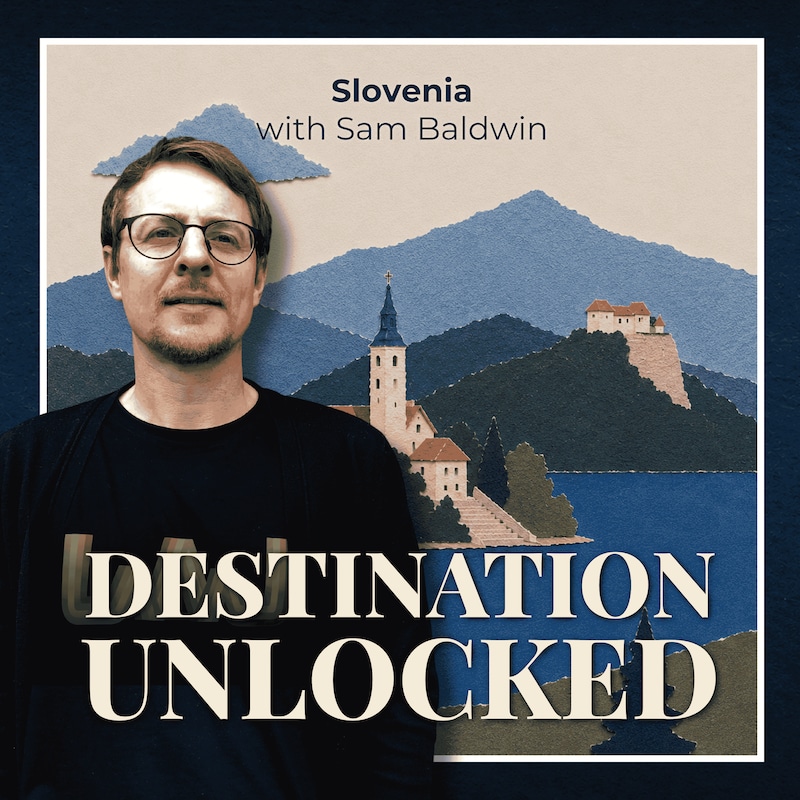
Travel writer, Sam Baldwin, shares his love for Slovenia. Hot off the heels of heartbreak, Sam threw himself into a dream of renovating a mountain hut, where the snow would fall thick in the winter. In moving to Slovenia he found a country and culture that he intrinsically connected with and wrote the travel memoir Doormice & Moonshine: Falling for Slovenia to capture his admiration of this lesser-visited country.
For more, visit: https://www.destinationunlocked.com/episode/slovenia
Transcripts
This is Destination Unlocked with me.
Speaker B:Daniel Eckert just now ready to depart.
Speaker A:Welcome back to Destination Unlocked.
Speaker A:Today we're going to a country which.
Speaker C:Has intrigued me for a little while.
Speaker A:And it's very close to the top of my list of the places that I've not yet visited, but simply must.
Speaker C:It's a place called Slovenia.
Speaker A:It's a place that is tiny and so many people miss it on the map because they don't actually know where to look anyway and they're not sure what to find there, apart from maybe a lake that sounds like it might be bleeding.
Speaker A:Well, there's a lot more than that and we've got the right person to introduce it to us.
Speaker A:A man who went over there and absolutely fell in love with the place.
Speaker A:So much so that he wrote a book about it, Dormice and Falling for Slovenia.
Speaker C:Today we're talking to the author and that's Sam Baldwin.
Speaker C:Enjoy.
Speaker C:So, Sam, where are you unlocking for us today?
Speaker B:Hi, Daniel.
Speaker B:I am unlocking the surprising and stunning country of Slovenia.
Speaker C:I think it is surprising because it's sort of hidden.
Speaker C:It's hidden in plain sight.
Speaker C:But you might look at Italy, you might look further south at Croatia, and you miss this little pocket in the middle which is an incredibly beautiful country.
Speaker B:It's actually the first country that I've been to that I did not want to write about.
Speaker B:I've worked in various forms as a travel writer in the past and I thought Selena was so attractive that I didn't want more people to come to it.
Speaker B:I wanted to try and preserve it as it was.
Speaker B:It's really somewhere quite different to most of the places that I've been to, I think.
Speaker B:And you're right to call it hidden gems, perhaps a little bit cliched now because it's been called a hidden gem for 20 odd years, but it's still somewhere which a lot of people probably don't know an awful lot about.
Speaker C:I think it can keep the gem part.
Speaker C:But yes, hidden gem is such a cliche and as soon as somebody says it, it's no longer appropriate.
Speaker C:Anyway, let's start with the top highlights.
Speaker C:You like to call them the pretty pinups, I think.
Speaker C:And then we'll get into some of the stuff that really you only get to know if you spend a bit more time there and really get to the heart of the place.
Speaker C:But.
Speaker C:But if somebody's doing a first time trip to Slovenia, what must they see?
Speaker B:Well, if you've seen just one picture of Slovenia, it was almost certainly Lake Bled.
Speaker B:It's often described as a fairy tale sea.
Speaker B:It's one of the things that Slovenia does very well in that it combines incredible natural scenery, just the right amount of human addition.
Speaker B:And Bled's a great example of this.
Speaker B:So it's a very pretty lake, a little island in the middle, but on that island is a church.
Speaker B:There's also a cliff with a little castle on top of it.
Speaker B:It's just this perfect combination.
Speaker B:So Bled will always come up as one of the must see destinations of Slovenia.
Speaker B:There's a caveat to that in that it has become quite popular, so you might want to pick your time.
Speaker B:You know, if you do go midsummer, the traffic can be quite bad now, so you might want to go a little bit more on the shoulder season.
Speaker B:But it is a very pretty place, I can't deny that, despite its growing popularity.
Speaker C:So nature is the big poster child of the country.
Speaker C:The capital, Ljubljana, is small, but is there enough to do that?
Speaker B:I think Slovenia suits people who are into active and outdoor holidays the most.
Speaker B:Ljubljana is, in my opinion, the best city in the world.
Speaker B:I lived there for five years and I reluctantly moved.
Speaker B:But yes, there is plenty to do in Leblanc.
Speaker B:It is small.
Speaker B:If you're a real culture vulture, nightlife person, there may be other cities that you want to go to first, but I think if you're just going for a long weekend, Leblanc has plenty to see and do both culturally.
Speaker B:There's some really good museums and galleries, and also it's a great place to base yourself to see the rest of the country.
Speaker C:So what makes the city the best city in the world?
Speaker B:For me, I'm someone who does like the great outdoors.
Speaker B:And Ljublana is a very green city, lots of parks dotted all around.
Speaker B:And it's also very easy to get out of it because it is small and go and enjoy the charms of the rest of the country.
Speaker B:You know, all of these mountains and the coast and the vineyards and the caves, it's that combination.
Speaker B:It's big enough that there are enough bars and cafes and restaurants to discover, but small enough that it's easy to navigate.
Speaker B:You can do it on foot, or perhaps even better on one of the city bikes, which you find all around the city.
Speaker B:I think it's a great place to live and work if you're someone who's not in need of a really, really giant city.
Speaker C:You mentioned about museums and galleries as well.
Speaker C:What sort of things are there to go and explore and are they free to visit or you'd pay per entry?
Speaker B:Most of them are free.
Speaker B:It's a capital city.
Speaker B:So you get things like the Museum of Modern Art.
Speaker B:There is the Ethnographic museum as well, where you can go and learn a bit more about cultural history of Slovenia, folk art, that sort of thing.
Speaker B:If you want something a bit different, there's an excellent museum called the Museum of Military History, or it's the park of Military History.
Speaker B:It's a place called Piuka and that's got an incredible collection of tanks and helicopters and weaponry from the sort of former Yugoslav times.
Speaker B:And it's a really, really good museum.
Speaker B:It's very big as well.
Speaker B:You can easily spend the whole day there's.
Speaker C:Given that you mentioned ethnography and military, I think this is probably a good point to sort of set the score straight and undo a bit of confusion for people.
Speaker C:Because Slovenia is one of those countries where people who aren't from there, aren't from the region, have rewritten its history in a very strange way.
Speaker C:In that the history that a lot of people think is the true story of Slovenia is absolute fiction.
Speaker C:It was never part of the ussr.
Speaker C:What was Yugoslavia?
Speaker B:You're right, there's a huge amount of ignorance, and I too was guilty of that.
Speaker B:Before I started coming to Slovenia, Slovenia was part of Yugoslavia, which was a collection of countries which included Serbia and Bosnia and Macedonia and some others.
Speaker B: ke away from that alliance in: Speaker B:It was something called the Ten Day War.
Speaker B:And compared to the rest of the chaos that was unleashed in the Balkans, Slovenia escaped almost unscathed.
Speaker B:But this is the first time that Slovenia has been its own country.
Speaker B:So even prior to that, Slovenia had never been an independent nation.
Speaker B:It was always part of other empires, you know, the Austro Hungarian Empire.
Speaker B: oung country, certainly since: Speaker C:So culturally, do you feel like you're more in northern Italy, Austria, or do you feel like you're more in Croatia and going over east?
Speaker B:I describe Slovenia as being at this perfect and very interesting crossroads, both geographically, because as you say, it borders up against Austria and Italy, but then to the south, Croatia and then Hungary, but also culturally, because you've got actually what feels like a very Western European country.
Speaker B:Before I came to Slovenia, I had this misconception that it was going to be some tower block, communist sort of looking country and war torn.
Speaker B:And this was completely inaccurate.
Speaker B:It functions very much like any other country in Western Europe.
Speaker B:In fact, in many areas, much Better.
Speaker B:Very, very low crime rates, far lower than the uk, far lower than the usa.
Speaker B:It's a very equal country.
Speaker B:There's not such a big gap between rich and poor.
Speaker B:And this makes it a very safe place.
Speaker B:But it's got that little bit of bulk and spice just sprinkled over the top.
Speaker B:So it still has this laid back feel to it.
Speaker B:It's not as serious as, say, Germany or Austria.
Speaker B:It has got that Mediterranean, Adriatic kind of flavor as well.
Speaker B:And that's, to me, what makes it such a unique country.
Speaker B:It is this kind of crossroads, culturally, geographically, which make it such a wonderful place.
Speaker C:I had no idea where Slovenia was until I went to Trieste in the north of Italy.
Speaker C:And from there, because it's just around the corner of the top of Italy, you could actually hop across the border.
Speaker C:And I was like, oh, my gosh, this is where Slovenia is.
Speaker C:It's Central Europe.
Speaker B:It's very much central.
Speaker B:And I think it's a strange connotation.
Speaker B:If you say something is in Eastern Europe, that can also come with a kind of almost a political connotation.
Speaker B:Yugoslavia was actually independent of both the east and West.
Speaker B:It tried to form its own club.
Speaker B:It didn't want to side with either.
Speaker B:It actively opposed a lot of the USSR policies, which actually got Tito, who was the leader of Yugoslavia, into a lot of trouble.
Speaker B:But he was a much loved leader generally.
Speaker B:That's something else that's interesting that I discovered after living here is that I came here with my Western misconceptions, that the period that it was Yugoslavia, which was a sort of communist socialist time, was a terrible period.
Speaker B:But when you speak to the people who lived through that, most of them speak with a lot of love and positive nostalgia for that time.
Speaker C:Things are always rose tinted spectacles, I suppose.
Speaker C:But also things are never as bad as the drama makes it out.
Speaker B:Yeah, well, if you speak to people that it was very different from living in Poland or Bulgaria or Czechoslovakia or the countries which are really under the heel of the ussr.
Speaker B:Yugoslavia was much more socialist.
Speaker B:It was much more open.
Speaker B:You could travel freely.
Speaker B:You had visitors come to have their holidays there.
Speaker B:It was not this hard line communism which we might have seen in the news back in the 80s and 90s looking at holidays.
Speaker C:They've also got a pretty good domestic holiday scene in that they've got Piran on the coast.
Speaker B:Yes, Sardinia has just a little sliver of coastline.
Speaker B:It's a very short piece, but it's very important to Sardinians because it means they do have access to the Adriatic Sea.
Speaker B:Piran looks a little bit like other towns in Italy or even in Croatia.
Speaker B:It's a little kind of port town, or let's say more a harbour.
Speaker B:It's certainly worth a visit, I think.
Speaker B:If you want to see a bit of civilian seaside, then check out Pirat.
Speaker B:I'd also recommend this place called Isola, which is another town, a little smaller than Pirat, but it's also very nice.
Speaker B:Not very far.
Speaker B:If you go at the height of summer.
Speaker B:Pirat is very busy, so try, if you can, to visit shoulder seasons.
Speaker B:It's a little bit over an hour from the bladder.
Speaker C:And what would you count as shoulder seasons for Slovenia?
Speaker B:The classic kind of spring and autumn.
Speaker B:It can stay pretty pleasant in Slovenia, especially on the coastal bit, right up until October or something.
Speaker B:If you're lucky, it can be really quite nice.
Speaker B:Obviously the temperatures come down, but it can still be quite sunny.
Speaker C:Slightly cooler and fresher is ideal for being outside because you're going to get active, you're going to go hiking around a gorgeous lake or through some forest.
Speaker C:You don't want it to be baking.
Speaker C:Baking hot.
Speaker C:And they get very good summers, don't they?
Speaker C:Very hot summers, yes.
Speaker B:Yeah.
Speaker B:So even to be in the 30s, sometimes mid to high 30s, but generally pretty pleasant and especially if you go and cool on footnote.
Speaker B:Lake.
Speaker B:We mentioned Bled at the start, but I mentioned a couple of others that you might want to check out.
Speaker B:Probably my favorite one is called Bochin.
Speaker B:It's in the Triglau National Park.
Speaker B:It's just a little bit further, sort of western Bled.
Speaker B:It's only another 20 minutes or half an hour or so, but it's a longer lake and I would say more dramatic in many ways.
Speaker B:Bled is very pretty.
Speaker B:Bohen is more of a dramatic.
Speaker B:They've got these very steep mountains that just shoot right up from the shore.
Speaker B:It's crystal clear water.
Speaker B:It's a cooler lake than Bled, although it's warm enough for swimming in the summer.
Speaker B:That's my favorite lake.
Speaker B:There's also one called the Lake Jasna, which is near a mountain town called Kvanskagorna.
Speaker B:So that's a little bit further northwest.
Speaker B:This is a very, very picturesque lake.
Speaker B:It's smaller, much smaller than Bled, but it's very clear water and it's edged by these big mountains in the background.
Speaker B:I would recommend you spend a half day or a day when it comes.
Speaker C:To spending time on the lakes.
Speaker C:What sort of facilities are there in terms of renting a kayak or a paddle board?
Speaker C:Or do people just jump in and go swimming.
Speaker B:So let's take Bled and Bohem, which are the two most well known.
Speaker B:At both those lakes you can hire stand up paddleboards or kayaks.
Speaker B:In Bled you can also take what's called a pletna, which is a traditional boat which is rowed by a single oarsman.
Speaker B:He has just like one oar, a little bit like the gogglers in Venice, that kind of style of rowing.
Speaker B:But the boat is a different shape.
Speaker B:It's quite a kind of touristy thing to do, but doesn't mean it's not a nice thing to do.
Speaker B:But yeah, both of those legs.
Speaker B:You can hire equipment.
Speaker C:And what's the currency?
Speaker B:It's on the euro.
Speaker C:Oh, easy peasy.
Speaker B:Yeah.
Speaker B:I mean Cellinia again, like it's really is very much.
Speaker B:It's part of the eu, it's on the euro, it's in Schengen, it's very easy to travel to and around Selenia.
Speaker C:And so it shares a currency with Europe.
Speaker C:It also shares a good amount of food culture with Europe, I suppose.
Speaker C:Given that it's got such a shared history with its neighbors over centuries.
Speaker C:What stands out for you?
Speaker B:Food that you will see very often in Slovenia, almost ubiquitously, but it's not necessarily of silly in origin are things like Wiener schnitzel.
Speaker B:This is very popular.
Speaker B:It was an influence from the Austro Hungarian empire and you can see that influencing the food.
Speaker B:Another very, very common food is goulash, which is normally thought of as being Hungarian.
Speaker B:Again you see that everywhere.
Speaker B:Lots of different types of meat that can be in that.
Speaker B:So you might get beef, but you also might get wild boar or chamois or deer, venison, something like that.
Speaker B:Things which are more specifically.
Speaker B:So the.
Speaker B:Which I like.
Speaker B:One of my favorites is something called yotta.
Speaker B:It's a kind of stew, I'd say a thick soup or stew.
Speaker B:It's got a big component of sauerkraut, beans and sometimes it also has chopped up meat in there.
Speaker B:It's a hearty kind of mountain food.
Speaker B:It's filling, it's warm.
Speaker B:I think pretty healthy.
Speaker B:Another one that I'll mention now because it's caused a lot of trouble is a sausage called klansga globasa.
Speaker B:This is sausage which Austria and Croatia have also both tried to claim and they've tried to use the same name.
Speaker B:And this has caused all sorts of diplomatic spats and such.
Speaker B:In the end, I think Slovenia was victorious there.
Speaker B:And I think they have like a certificate of origin or something.
Speaker B:You could only call it Claz de cabaza.
Speaker B:If it comes from this region of Slovenia, it's a thick, meaty pork sausage.
Speaker B:You find this in most of the restaurants or what's called costelnes, which are like local inns.
Speaker B:It's a very popular dish.
Speaker C:Wow.
Speaker C:Okay.
Speaker C:The other thing that I have heard about and I would love to do this, there's a big homegrown honey scene and also quite a bit of foraging, given the there's so much forest around.
Speaker B:Yeah, let's start with the honey.
Speaker B:Slovenia is an absolute bee mad country.
Speaker B:One of the things that struck me when I first arrived that I started seeing in gardens, on hillsides, in parks, these little wooden constructions about the size of a shed, but with different colored panels on the front.
Speaker B:And I didn't know what they were and I had to ask a Slovenian and they said, oh, they're beehives.
Speaker B:Now, they don't look like the beehives that we might more used to in the uk.
Speaker B:They're more like actual little sheds.
Speaker B:But you see them everywhere and they're very pretty.
Speaker B:Sometimes they even have folk art on each panel.
Speaker B:There's actually a sort of folk tradition where almost like 16th century cartoons, where little stories and parables would be told with these folk paintings on the front of these beehives.
Speaker B:Beekeeping is extremely popular.
Speaker B:There's a lot of honey here and a lot of other beekeeping products available.
Speaker B:If you like honey, it's a good country to come to.
Speaker B:You can do all sorts of tours.
Speaker B:You can even stay in one of these bee houses.
Speaker B:Sometimes they're built in a way that the front of it is where the hives are, but then behind that there's an entrance where the beekeeper can access the hive from behind.
Speaker B:And some of them even have sort of livid quarters and a table and chairs in the back of it as well.
Speaker C:I want to come back to more honey stuff in a moment, but why don't we talk foraging quickly first?
Speaker C:Have you ever been out foraging in the forest?
Speaker B:Yes, I have.
Speaker B:Mainly for mushrooms and some sort of berries.
Speaker B:Where my hat is in the hinterlands of Slovenia.
Speaker B:It's a kind of a mushroom area.
Speaker B:So as long as you know what you're looking for, you can find things like chanterelles or ceps.
Speaker B:A good place for foraging is a place called Poc Yuka, which is a big forested plateau.
Speaker B:It's actually quite close to Lake Bled.
Speaker B:It's about half an hour sort of up into the mountains.
Speaker B:This is a very well known place for mushroom foraging.
Speaker C:So you mentioned your hut and honey and bees.
Speaker C:This gets us into how did you fall in love with Slovenia?
Speaker C:What's your story?
Speaker B:I first visited Slovenia almost 20 years ago when I came with my brother to fulfill a dream that we both had that one day we might own a little cabin somewhere up high where the snow fell deep.
Speaker B:We both worked for a winter season in Canada and we really fell in love with the mountain lifestyle.
Speaker B:And we had this dream and it was just a pipe dream for years.
Speaker B:We didn't really think it was possible.
Speaker B:But we started to dig into it a bit more and within our very, very small price range, we started looking further east into Bulgaria and Serbia and Ukraine, Albania.
Speaker B:We eventually stumbled upon Slovenia.
Speaker B:We came to visit for one week and we were just blown away.
Speaker B:It was love at first sight.
Speaker B:Even landing in the airport.
Speaker B:I remember in the bladder, the airport is surrounded by these beautiful spiked mountains.
Speaker B:And from that minute it was just pure love.
Speaker B:And then when we saw this little hut that we found on the Internet, we wound up this little forested mountain, this bumpy track, and came out this little clearing and there was this stone and wood hut.
Speaker B:And it was pretty ramshackle, it was going to need a lot of work.
Speaker B:But we ignored all that and we ended up buying it together.
Speaker B:And over the years I came back every year, several times.
Speaker B:I pretty much use all of my vacation at work to renovate the hut over a period of 10 years.
Speaker B:And eventually when the planets aligned, I moved to Slovenia because I just fallen more and more in love with the country.
Speaker C:So you moved into this remote hut?
Speaker B:I did for a period of time.
Speaker B:I was actually a heartbroken hermit at the time.
Speaker B:I had a big breakup.
Speaker B:It seemed like the perfect time to move.
Speaker B:I'd left my job, I'd left the uk, had no relationship, and I came to Salvina and I moved into that hut.
Speaker B:I lived up there as a heartbroken hermit for some time.
Speaker B:I realized after a few months that I wanted to stay in Slovenia, but I also wanted to get a job.
Speaker B:I wanted to learn the language, or at least try to.
Speaker B:And I knew that that was going to be quite difficult up in this hut because it is quite isolated.
Speaker B:So then I moved to Ljubljana where I proceeded to get a job and to enroll in Slovenia classes.
Speaker B:But I visited the hut every week pretty much.
Speaker C:It does sound like that environment.
Speaker C:Being out in the hut in the middle of nowhere is very restorative emotionally.
Speaker C:It's a space which actually fuels well being.
Speaker B:Yeah, it did in many ways.
Speaker B:It slows you down, it makes you realize what you need and what you don't need.
Speaker B:Interestingly, one of the things I realized that I did need was more social contact.
Speaker B:I realized spending weeks and weeks alone and having very little conversation with people was not going to be great for me long term.
Speaker B:So it made me realize that, made me value that much more.
Speaker B:I spent days and days just wandering the forest trails, just getting to know the area, also getting to know my neighbors.
Speaker B:I had some farmer neighbors, and it was a time where I started to learn more about their way of life.
Speaker B:I used to help them out with things so I could learn more about schnapps making and pig slaughtering and all sorts of things like that.
Speaker B:I found it fascinating to learn about a way of life which is, I think, I would say, almost completely disappeared in the uk.
Speaker B:My neighbour seems to be living this life that we might have been living 100 years ago, and I loved it.
Speaker C:I really, deeply feel like that is a human pace of life.
Speaker C:And I think it's something that we've forgotten in the uk.
Speaker C:I think in the States, they've also forgotten this way of life.
Speaker C:And everything is so hectic.
Speaker C:Even the farming side of life here is hectic.
Speaker C:And yet you don't have to go all that far to reconnect with a pace of life that is.
Speaker C:Is so much better suited to humans.
Speaker B:I think Slovenia is very good at having that balance.
Speaker B:People in Slovenia seem to be more in tune with nature.
Speaker B:Slovenia is also a technologically advanced country.
Speaker B:It's not in the sticks, but I just feel the people seem to value nature and homegrown food and things like that a little bit more than perhaps we do now in the uk.
Speaker B:Things are changing.
Speaker B:If you're living in the bladder, it's got all the amenities of any big city, but certainly if you go a little bit further out the city, you will find a slower pace of life, which is connecting better to nature and the rhythm of the seasons.
Speaker C:So connecting with nature, but also you've said connecting with your neighbors and other locals.
Speaker C:And being a writer, of course, that meant you were collecting up stories that you just had to share and you found a couple of different outlets for sharing them.
Speaker C:We're gonna get into your book in a moment, but you, you also did a blog.
Speaker B:I was with many people when they've got a new project or they want to write about something.
Speaker B:I started writing a blog about my experiences in Slovenia.
Speaker B:I'd actually spent two years working in rural Japan many years prior to that, and that was my first blog.
Speaker B:I started writing about life in rural Japan.
Speaker B:And I think it's a good way to one to practice your wordsmithing because making it public forces to hone it a little bit and pick the best stories improves the quality and it also allows you to build a portfolio of sorts.
Speaker B:So I wrote about various aspects of life for my blog and then the.
Speaker C: Book came out in: Speaker C:Dormice and moonshine Falling for Slovenia.
Speaker C:I can already in this conversation get why you fell for Slovenia, but why did you pull out dormice and moonshine as the two things that sum it up for you?
Speaker A:What?
Speaker C:Why those two?
Speaker B:Well, let's start with dormice.
Speaker B:So one of the things that I had read about Slovenia was that it still practiced the ancient tradition of dormice trapping.
Speaker B:And I thought, that sounds quite interesting.
Speaker B:I want to go and find out more about this.
Speaker B:So I started inquiring to my selenium friends, hey, I heard Selenians eat dormice and trap door mice.
Speaker B:And most of them were saying, sam, what are you talking about?
Speaker B:We don't do that at all.
Speaker B:Like, why would we bother to eat a mouse?
Speaker B:That's ridiculous.
Speaker B:But I persevered and I eventually did discover that it does go on, but only in a few places in Slovenia.
Speaker B:It's more in the south.
Speaker B:But I managed to track down a real life dormice hunter trapper, and I met with him and he explained what it was all about.
Speaker B:And it's quite an interesting backstory, I think.
Speaker B:So if we go back several centuries to a time where you had wealthy landowners, they did not permit the poor peasants to hunt any larger game animals.
Speaker B:So they wouldn't allow them to hunt the deer or the wild boar or the chamois.
Speaker B:The only animal that the peasants were permitted to hunt were these little dormice.
Speaker B:Now, dormice, for those who maybe don't know what it looks like, they are a little bit like a gray squirrel.
Speaker B:They're about the same size, they have a sort of bushy tail.
Speaker B:And they can be very, very prevalent in beech forests, for example, of selenia.
Speaker B:And so the peasants would trap these doormites, and you can catch them in their dozens on any one night if you set up lots of little traps in the trees and then they would eat the meat, they would use the fur to make hats, sometimes coats, although you do need quite a few to do that because they're very small and you can even render them down and use the oil for like an ointment and other purposes.
Speaker B:And it still goes on.
Speaker B:It's more about the coming Together and coming to the forest.
Speaker B:That's what the hunter told me.
Speaker B:He said it's not so much just about hunting the dormice, but it brings people together for the whole night.
Speaker B:You spend it in the forest.
Speaker B:You sit around the campfire, and over that night, you'll frequently check the traps and then maybe empty the trap if you've caught one and rebate it.
Speaker B:But he told me it's more of a tradition where, you know, the fathers bring their sons and their daughters and you're passing on oral stories and everything.
Speaker B:It's more of a whole event, not just about dormice.
Speaker B:So that was why I called it dormice moonshine was because I came to realize in Slovenia that schnapps is to Slovenians as tea is to British people.
Speaker B:I was quite shocked when my farmer neighbors, at 7:30am brought a tray full of shot glasses full of schnapps and presented them to a bunch of builders that had just turned up who were just getting starting work, and they were about to pick up angle grinders and all these sort of power tools, and they were getting served schnapps at like 7am this is quite common, especially in rural Slovenia, that it's seen as a drink which is offered to your guests, offered to people that come and work at your house.
Speaker B:So I found that quite fascinating.
Speaker B:And it's legal to distill schnapps in Slovenia.
Speaker B:So there's lots of people, lots of farmers and people who are making their own schnapps.
Speaker B:So that was the kind of moonshine element.
Speaker B:And I got to experience that myself.
Speaker B:I was part of the process just to really understand it and see it with my own eyes.
Speaker C:Wowee.
Speaker C:I'm still intrigued as to what a dormouse tastes like, but I'm also nervous about how many people go blind from this homemade schnapps.
Speaker B:Well, that was a.
Speaker B:It was a worry of mine, the blindness.
Speaker B:But I'm not aware of any people going blind from schnapps because they're quite experts in making it.
Speaker B:And when I was making it with my farmer friend, he'd been doing it for years, and he.
Speaker B:I remember when the first drops of distillate came out of the still.
Speaker B:You know, after several hours, you're.
Speaker B:You're putting firewood into this old still, and it takes several hours to get it to temperature, and then it starts to come off and condense.
Speaker B:And the first few liters, he said, we don't drink this.
Speaker B:This is for, he said, external use only.
Speaker B:Which I think meant that was probably the stuff that would make you go blind if you drank it.
Speaker B:But he knew there was some subtle difference in their viscosity or something, which he knew now's the time this stuff is okay.
Speaker C:Well, they do say that you gain this instinct that you can't always explain why.
Speaker C:You know, you just.
Speaker C:You just know.
Speaker C:It's in your blood, it's in your culture, that you've grown up with it forever.
Speaker C:I don't think I would trust myself.
Speaker C:I think I would definitely wait for him to tell me yes.
Speaker B:Yeah.
Speaker B:I mean, you can buy commercially, you can buy snaps in every supermarket in Slovenia, in every bar, and it's a very, very popular drink.
Speaker B:But almost every local knows an uncle or a grandfather or a father or a auntie who makes their own.
Speaker B:And so almost every local will have an unmarked bottle of clear liquids in some cupboard in their house, which they swear it cures all diseases and all ailments.
Speaker B:Something you should definitely try when in Slovenia.
Speaker C:What would you say is the biggest life lesson that you learned from interacting so closely with locals and embracing their culture in Slovenia?
Speaker B:I think it's the appreciation for the natural world.
Speaker B:Slovenia lives it very well in their policies, how they treat tourism and things.
Speaker B:They're really trying to preserve the beauty of their country and not overdevelop it.
Speaker B:We see overtourism in so many other places in the world, and even in Slovenia itself, as I said, you know, Lake Bled is pretty busy now in the summer, but I would say overall, they've got the balance quite right.
Speaker B:They're doing a good job on that.
Speaker C:And tell me about getting the book out.
Speaker C:It's a beautiful travel memoir, but it's not just travel, really.
Speaker C:It does get to the essence of a culture, of a people, and of a way of life.
Speaker C:Did you come up with that idea from the get go, or did it sort of develop as you worked on it?
Speaker B:When I moved to Slovenia, I was so hungry for more information about Slovenia, but what I found was there was almost nothing written about contemporary Slovenian life.
Speaker B:There's lots of books about Yugoslavia and about the war and history, but there was almost nothing about, well, what's Slovenia like now?
Speaker B:What's it like to live here?
Speaker B:What are the people like?
Speaker B:What are the cultures and customs?
Speaker B:So that's the book that I set out to write.
Speaker B:There is some traveling involved because I do travel around the country as I live there, but I wanted to go deeper than that.
Speaker B:It was.
Speaker B:It's about living and working in Slovenia.
Speaker B:It's about what makes Slovenians Slovene.
Speaker B:It's about their cultural quirks, their language, all these things which you can't really get just from visiting a country in a couple of weeks.
Speaker B:You need to go under the skin to really see these things.
Speaker B:So that's the book that I set out to write.
Speaker B:I felt that I wanted to contribute something to the knowledge of what is an incredible country, I would say an unsung country.
Speaker B:That's why I wrote Dormice and Moonshine for people who love Slovenia, they can find out more about it.
Speaker C:And Slovenians love the book too, because they translated it and it's been republished in Slovenia by their main publisher, hasn't it?
Speaker B:It has, yeah.
Speaker B:As an aside, Slovenia is a real book loving nation.
Speaker B:I don't think I've ever seen so many bookshops per square meter.
Speaker B:And also books are very, very expensive in Slovenia as well.
Speaker B:I was quite shocked.
Speaker B:The most expensive book I think I've ever bought was a book about Tito, who was the leader of Yugoslavia.
Speaker B:And I think I paid like 50 something euros for it.
Speaker B:But that's quite standard.
Speaker B:It's in Slovenia.
Speaker B:They've got a very strong book industry.
Speaker B:And yes, Liz, the Galiga publisher, they translated the book and released it at the end of last year.
Speaker C:Wow.
Speaker C:If you want to read it in English, Dormice and Moonshine Falling for Slovenia is available from Amazon, so you can very easily get it online and maybe in some bookshops in the UK as well.
Speaker B:Bookshops can order it, some of them stock it.
Speaker B:But yeah, any Amazon in the world will deliver it to you as well.
Speaker C:Easy peasy.
Speaker C:There are two things which really surprised me when I was looking into Slovenia ahead of our chat, and it was the caves and the vineyards in the south, because I had no idea they had a wine industry.
Speaker C:Why don't we do caves first?
Speaker B:Okay.
Speaker B:If you come to Slovenia, that's just say for a week.
Speaker B:One of the things I would recommend is you do visit one of the cave systems.
Speaker B:There are hundreds of code systems, but the two biggest ones are Postogna and Shon.
Speaker B:But a visit to either of those is a stunning and very worthwhile experience.
Speaker B:Every time a visitor comes to see me in Slovenia, I've taken them to one of those caves.
Speaker B:So I've probably been to those caves 10 or 15 times.
Speaker B:They are extremely impressive.
Speaker B:They are huge underground caverns.
Speaker B:It looks like something out of Lord of the Rings, like the mines of Moria.
Speaker B:There's all sorts of incredible formations of stalactites and stalagmites, you know, these big blemanges and jellyfish looking things and spaghetti is dangling from cavern roofs.
Speaker B:Bostonia, which is the bigger of the two I mentioned, you can even get a little train.
Speaker B:There's a train which takes you kind of deeper into the system.
Speaker B:Little narrow gauge train.
Speaker B:You do a guided tour there.
Speaker B:These are well worth a visit.
Speaker B:They are touristy because they are.
Speaker B:I think Bostonia is Selena's biggest tourist attraction.
Speaker B:But I would say it's worth it.
Speaker B:They are really quite spectacular.
Speaker C:And then above ground, the vineyards, they do some really good white wine.
Speaker B:They do.
Speaker B:And red, actually.
Speaker B:Slovenia is not particularly well known, I would say, on the global scene for its wine, but it does have a very strong internal wine industry.
Speaker B:Only a small amount is exported, mainly because they don't produce as much as, say, France or Italy or Australia.
Speaker B:They do export some, but it's more for internal consumption.
Speaker B:But they produce some really, really excellent wines.
Speaker B:And if you're interested in tasting some, the two places that I'd recommend are a region called Goriska Berda in the west of Slovenia.
Speaker B:It's right up against Italy.
Speaker B:It's a beautiful area.
Speaker B:It's often called the Tuscany of Slovenia.
Speaker B:There's kind of terraced vineyards and little hills with little churches at the top.
Speaker B:A very, very picturesque region.
Speaker B:And there's lots and lots of vineyards where you can go and taste wines.
Speaker B:You can go and have a tour, you can buy a crate.
Speaker B:The other area which is worth having a look at is called Bela Kleina, that borders Croatia, so that's more in the southeast.
Speaker B:And again, there's lots of well known vineyards you can tour.
Speaker B:A little fun fact for you, Daniel.
Speaker B:Slovenia has the world's oldest grapevine.
Speaker B:In a city called Maribor, which is the second largest city in Slovenia, there is a vine which I think is over 300 years old now and it still produces grapes and they still make a small amount of wine from that every year.
Speaker B:Now you can't buy it because it's very, very special wine because it's such a small volume and they reserve it as a gift for foreign precedents and dignitaries and that sort of thing.
Speaker B:But you can also visit, there's a museum visit, and learn a bit more about the wine culture of Slovenia.
Speaker B:It's got a very long history of making wine.
Speaker B:And the other thing that Slovenia is rising in is something called orange wine.
Speaker B:I don't know if you've heard of that.
Speaker B:It's a more traditional practice which seems to now coming back into vogue.
Speaker B:The wine is literally an orange colour and it's all about the amount of skin contact that the grape skin has with the wine during the process.
Speaker B:Now, I'm not an expert on it, but I have tried it and it produces some very different, interesting flavours.
Speaker B:Some of them are quite funky.
Speaker B:If you want something completely different to red or white, try some orange.
Speaker C:Whenever somebody describes something as interesting, orange.
Speaker B:Wine's not to everyone's taste because they are quite different flavours.
Speaker B:But I would say give it a go.
Speaker C:I'm always one for trying something that you can't get anywhere else.
Speaker C:And I often caveat that by saying the reason you can't get it anywhere else is because nowhere else wants it.
Speaker C:But it's still worth trying.
Speaker B:You can get orange wine elsewhere.
Speaker B:It's not just the video you're making yet, but I think Slovenia is becoming perhaps a hotspot for it.
Speaker B:It's certainly championing it because it's this older technique which seems to have been rediscovered and they now want to sort of bring it back.
Speaker C:I do get that feel about Slovenia being this sort of marriage of tradition and modernity, which I really like.
Speaker C:That is a mishmash that I think is a great combination.
Speaker C:We've talked about so many different places around the country.
Speaker C:Not just Ljubljana is the capital city, but actually all over the country.
Speaker C:It's not a huge country, but how would you best get between things?
Speaker B:Lvnia does have public transport, it has trains, it has batteries.
Speaker B:But my advice would be to rent a car because it will enable you to get out into the real small, nitty, gritty little villages and things, which, in my opinion often offer the most interesting experiences.
Speaker C:Another logistical question, do people tip in Slovenia, like in restaurants or to tour guides?
Speaker C:Or do you just pay what you're asked and then that's that?
Speaker B:Generally it's more of a rounding up culture.
Speaker B:You know, if you.
Speaker B:If you buy a couple of coffees and it comes to €9 and 10 cents, you give them a 10.
Speaker B:In restaurants, a tip will certainly be appreciated.
Speaker B:I'd say it's common to tip.
Speaker B:It's not like America where you don't tip 25%.
Speaker B:They say, what tip was it?
Speaker B:Bad service?
Speaker B:If it was me personally, I would normally tip or at least round up.
Speaker C:And when you say rounding up, that makes me think that people are using cash a lot more than card.
Speaker C:Is that the case?
Speaker B:Not so much now, actually.
Speaker B:Slovenia is actually extremely card friendly, which I can't say for Austria, which is its next door neighbour.
Speaker B:Where I actually live now.
Speaker B:Slovenia, almost everywhere will take cards.
Speaker B:I mean, there are some remote huts in the mountains which don't.
Speaker B:So it's definitely worth carrying some cash with you.
Speaker B:But I think pretty much any restaurant in the cities and the towns will take cards.
Speaker C:The wrap up roundup Quick Fire Finish.
Speaker B:Is now ready for boarding.
Speaker C:What would you say is the top thing to see or do in Slovenia?
Speaker B:I would say go to the Triglau national park because Slovenia is famous for its natural beauty and that's probably the pinnacle of its natural beauty.
Speaker B:Although saying that, I honestly think almost anywhere you go in the country is extremely pretty.
Speaker B:Different types of beauty, but Trigau national park is a must see.
Speaker C:What would you say is a tourist trap to avoid?
Speaker B:Bled in mid summer.
Speaker C:Favorite time of year to visit then.
Speaker B:Because I live there, I saw all seasons and I'm also a fan of the snow.
Speaker B:So if you're not into winter sports, I would say late spring or early autumn because you're still going to get pleasant weather but with fewer people.
Speaker C:What would you say is a top book or film about Slovenia?
Speaker B:Excluding my own.
Speaker B:If you're looking for inspiration on traveling the country, there's a book called the Slovenia and it's almost like a coffee table book.
Speaker B:It's full of nice glossy pictures.
Speaker B:It's like one picture and then one description of the place.
Speaker B:It gives you a good overview of the whole country and all the different traditions and locations in one thing.
Speaker B:So if you're looking for something quite visual, that's a good book to get some inspiration from.
Speaker C:What for you is the top food or drink to try in Slovenia?
Speaker B:Well, I already mentioned Jota and Kranska Klobassa fighting sausage.
Speaker B:I'm also going to mention something called burek.
Speaker B:Now, burek is not Slovenian per se.
Speaker B:And if you say if a Slovenian asks you what's your favorite Slovenian food and you say burek, they'll probably be offended because burek, I think originated further down in the Balkans and Bosnia, even like Greece, you get it.
Speaker B:But burek is something which you find in every single supermarket, in every single bakery in Slovenia.
Speaker B:So it's a very, very popular food.
Speaker B:It's basically a filo pastry which has different fillings.
Speaker B:You get meat, you get cottage cheese, you can get spinach, you can also get fruit fillings.
Speaker B:And it's kind of dense and heavy and delicious.
Speaker B:And if you have it straight out of the oven, it's kind of crispy on top.
Speaker B:You see it everywhere.
Speaker B:It's definitely something you should try.
Speaker B:On the drink front, we mentioned wine, so I would recommend any Slovenian wine.
Speaker B:Slovenia also leaned in very heavily to the craft beer scene.
Speaker B:And there is a huge number of craft beer breweries in Slovenia.
Speaker B:I don't know how they all survive.
Speaker B:It's a surprisingly large number.
Speaker B:One place is a bar called Bodjet Bar, which is in Ljublja.
Speaker B:It's run by three young Slovenian guys.
Speaker B:They really know their stuff.
Speaker B:It's a sort of cellar bar.
Speaker B:You step down into it.
Speaker B:Big refrigerator full of great beers from Slovenia and beyond.
Speaker B:One of my favorite Slovenian breweries is called Tectonic.
Speaker B:They have a brewery which you can visit in Ljublana.
Speaker B:It's very close to a city centre and there's also a tap room attached to that.
Speaker B:So if you want to go and try a Slovenian beer right where it's made, check out Tectonic.
Speaker B:For those who want a soft drink, I'm going to mention a drink called Kokta, which provided great amusement for me and my brother when we first arrived in Slovenia.
Speaker B:It's been deemed as Yugoslavian Coke, or it was once deemed as that.
Speaker B:It looks like Coca Cola.
Speaker B:It's that same sort of dark brown, black color, but it does not taste like it.
Speaker B:There's no caffeine.
Speaker B:It's more of a herbal drink, maybe a bit more like dandelion burdock or something like that, but it's a very sort of utopharan Slovenian drink.
Speaker C:And final question.
Speaker C:What would you say is the best authentic souvenir to take home from a trip to Slovenia?
Speaker B:That's a very good question and one that I've had to ask myself many times when I go back home to the UK and I bring things back.
Speaker B:The things that have gone down the best with my friends back home is actually little bottles of homemade schnapps.
Speaker B:They love the fact that it's homemade.
Speaker B:Now, that might be a bit difficult for a visitor to country to come by, but certainly the schnapps is something interesting.
Speaker B:I've also brought back some of those craft beers from Slovenia I always bring back, and that also tends to go down pretty well.
Speaker B:And the third thing that I'd recommend is pumpkin seed oil.
Speaker B:I'd never heard of this before I came to Slovenia.
Speaker B:It's this beautifully coloured, thick, glossy green oil that is made from just pure pumpkin, pumpkin seeds.
Speaker B:It goes wonderfully on salads and also other kind of savory foods.
Speaker B:Slovenes also sometimes have it with vanilla ice cream.
Speaker B:It's an unusual combination, but as we said before, give it a go.
Speaker B:And I also think this is a good gift because it's something that I just haven't seen in the UK Sam.
Speaker C:Baldwin, who's the author of Dormice and Moonshine Falling for Slovenia, thank you so much for unlocking the country for us.
Speaker B:Thanks, Daniel.
Speaker A:Thanks very much again to Sam Baldwin for joining us to talk about Slovenia, the country he fell in love with.
Speaker A:And if you'd like to pick up a copy of his book Dormicen Moonshine, then you can very easily get that on Amazon wherever you are.
Speaker A:And if you do like to pick things up and support your local bookshops, then you'll be able to order it through them as well.
Speaker A:Thank you once again for tuning into Destination Unlocked.
Speaker A:I hope you're already following the podcast.
Speaker C:Wherever you're listening, but if you're not,.
Speaker A:Just double check and click to follow today so that you'll easily find us again the next time you want to go armchair traveling somewhere.
Speaker A:Lovely.
Speaker C:I'll see you then.
Speaker C:Bye bye.




