Shownotes
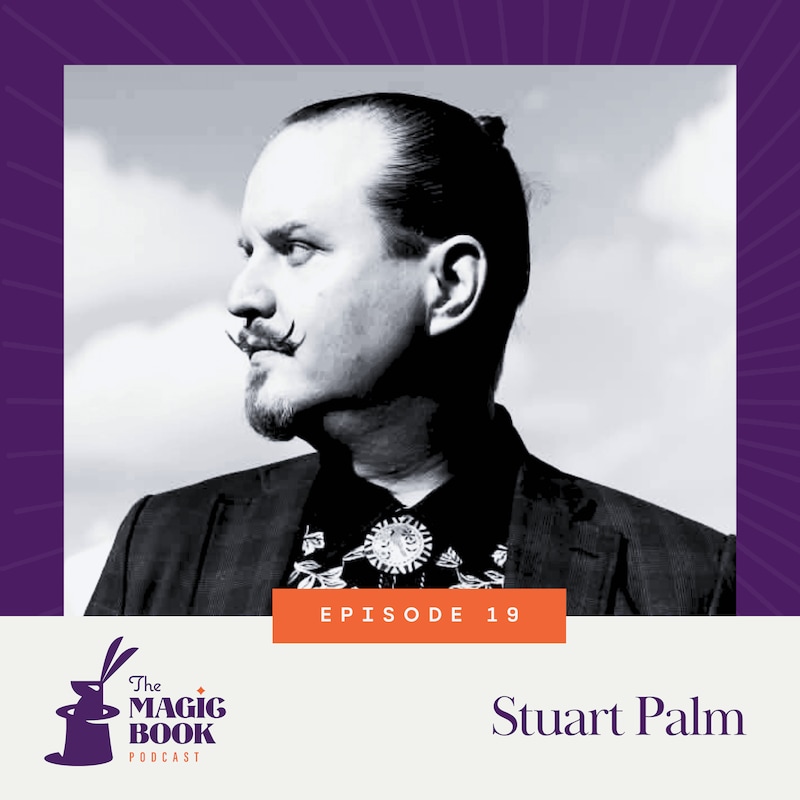
Hong Kong-based psychic entertainer Stuart Palm shares his journey from bartending in post-9/11 New York to becoming one of Asia's premier performers. Discover how a brain condition requiring surgery became his mentalist origin story, and why he believes psychic entertainment is "mentalism with more soul." Stuart discusses his comprehensive new book "Psychic Entertainment," the mentors who shaped him at Monday Night Magic, and why there are no shortcuts to creating truly miraculous experiences.
Transcripts
Coming up in this episode of The Magic Book Podcast...
Stuart Palm [:I believe that the performer of psychic entertainment is creating a situation where miracles happen. The experience of the audience should include a feeling of “Wow, I just saw a miracle” in that mindset that should be wondrous and amazing.
Adrian Tennant [:You're listening to The Magic Book Podcast, conversations about classic and contemporary books that teach, illuminate, and celebrate the art of magic. I'm your host, Adrian Tennant, a lifetime student of magic and mentalism, occasional performer, and longtime book collector. Thanks for joining me. Today my guest is Stuart Palm, an internationally recognized psychic entertainer and author based in Hong Kong. Stewart's journey began in his native Florida and took him to New York City before he relocated to Hong Kong 15 years ago, where he's now established himself as one of Asia's premier psychic entertainers. Stewart's path into mentalism was shaped in part by a health crisis. Rather than viewing this as a limitation, he transformed it into an opportunity to develop a distinctive approach to psychic entertainment that emphasizes authenticity and psychological impact. As an author, Stewart recently published “Psychic Entertainment,” a comprehensive guide to his unique approach to creating and performing powerful psychic effects.
Adrian Tennant [:The book also includes contributions from notable writers and performers, including Alain Nu, Neal Scryer, Peter Turner, and Richard Webster.
Adrian Tennant [:Stuart, welcome to The Magic Book Podcast.
Stuart Palm [:Thank you for having me. Good to be here.
Adrian Tennant [:Well, let's start at the beginning. Growing up in Florida, can you tell us about your first exposure to magic and mentalism? What initially sparked your interest?
Stuart Palm [:Well, it's hard to answer because I have multiple answers to that question, but there's actually a family story that my grandmother, I think at some family gathering when I was between one and two years old, they would give me pennies and I would make them disappear because I had an uncle who would make coins disappear. And they didn't know where they were until my grandmother changed my diaper and found it full of pennies. That is a family story. Of course, I don't remember that one, but I think I've always been interested in things that are mysterious and how they work. And it's a mixture of fascination with the mystery of life and also what's the mechanics of reality. So when I look at where does mentalism and psychic entertainment come from? For me, probably being under 10 years old and playing the Ouija board with the neighborhood kids. And then every summer we would spend in Tennessee, which is where my parents live now. So I grew up between Florida and Tennessee.
Stuart Palm [:And in Tennessee, there's a town called Gatlinburg. That's where my parents live where it's kind of like a carnival inside the Smoky Mountains. So you get nature and the beauty of that and the mystery of the forest and then haunted houses and, you know, Ripley’s Believe It Or Not, and things like that. And that's where I first went to a magic shop. So it's a culmination of those kinds of things and also religion coming in and a mixture of all things mysterious. I've always been fascinated by all of it. So that doesn't answer your question, but hopefully it does as well.
Adrian Tennant [:Fast forward a few years, and after attending art college, you moved to New York City. What was that experience like? And how did performing in Manhattan shape your development as an entertainer?
Stuart Palm [:Well, I mean, I kind of became an entertainer in Manhattan because before that I was a painter. And the bridge between fine art and performance, I had studied a bit of performance. There were times when I took theater classes and things. And magical stuff was more of something I would just occasionally show that I knew how to do. And it was only a handful of effects that I regularly do. Before I started performing, I also read tarot cards. So there was tarot cards sort of were a thing that I would share more earlier than magical stuff. But it all kind of just happened on its own.
Stuart Palm [:I moved to New York in 2001. I moved just a number of months before 9/11. And the first job that I had was building trade show booths and helping a company that designed and built trade show booths. And then all the trade shows disappeared after September 11, and I didn't have any work. I had already started renting this painting studio, so I needed to pay for that in my apartment. Took work as a bartender. And I just started showing different effects from the bar. And that became a draw for people to come and see me.
Stuart Palm [:It kind of developed organically from there. And eventually people asked me, “Oh, could you come do this at our party?” And it just happened. And I had to fulfill that because it was fun. I started to go and find places and people to study with, to learn more and get better at this craziness.
Adrian Tennant [:Were there particular performers or venues in New York that really influenced your approach to psychic entertainment?
Stuart Palm [:Yeah, lots. What's great about New York is that there is a community of mystery entertainers on different levels. And if you get dialed into that, you'll meet everybody, because everybody comes through New York at some point. First I found magic shops because I hadn't, you know, I had to sort of organically find these places. I didn't know what Tannen's was. I was not a member of a magic club. Today, it seems like there's these communities of people who all kind of know each other, and they're like, “Yeah, sure, I've been studying magic since I was nine,” you know, and they – when they started –, they, like, knew everybody, and they somehow learned there's a different path. It seems I didn't know anything.
Stuart Palm [:I had one magic book and some stuff I've learned from a library book and an old encyclopedia-type thing that was, you know, just random stuff. And then I went to Tannen's because I met a magician who recommended it. And I went because I was looking to learn how to bend a wine glass was like my focal point. I want to learn that because somebody told me a story about it. I think I wrote about this in the book. And when I went there, they sold me “Mind, Myth and Magic,” which is jumping into the deep end. And I got the DVD of “Paramiracles” from Ted Lesley. And, you know, from there I learned about the bent wine glass and how to bend wine glasses, things like that.
Stuart Palm [:And getting better at things. I found Monday Night Magic, which is a weekly magic show. And at that time, they were in a big theater. It's kind of evolved to different theaters over the years, but it's still going on. I started working with them and worked with them for many years because I would regularly see whoever was on the bill every week and then hang out with them. So I met a lot of people and found people that influenced me and, you know, became mentors later. Jon Stetson was sort of one of the big early ones. We still talk quite often, and he's…
Stuart Palm [:He's all through my book as well.
Adrian Tennant [:In your book, you describe needing to undergo brain surgery. Stuart, can you tell us about your condition and how it influenced the direction of your performing journey?
Stuart Palm [:Well, I mean, if you're going to be a mentalist, I can't think of a better origin story than having a brain condition. I guess I manifested it. I have a hereditary brain condition called cavernous angiomas. What this is is that my brain develops little malformations in my brain that they sometimes will call tumors, which confuses everybody and makes them scared, because basically they are tumors and they can bleed, and if they bleed, you can have seizures. So I have a strange brain. And so whenever I have visions of things, I can say it's supernatural or maybe it's just my strange brain. I didn't know I had any of this until I had a grand mal seizure in my sleep. That dislocated both my shoulders.
Stuart Palm [:And it was through going to the hospital where at the first hospital they didn't believe that I hadn't taken drugs. Eventually they gave me the scans and discovered that I had this. And I had to have one removed so that I would no longer have any seizures because it started to. Once it has bled, it would cause lots of seizures. And so that was intense. And I have four metal plates in my head. And interestingly, before I had this, we didn't know that it was the thing that most of my family. But we now know that both my sisters and my mother and probably my grandmother, my kids have it too.
Stuart Palm [:My daughter's had the same surgery I had. I tell you that taking your kid to go through brain surgery is much harder than doing it yourself.
Adrian Tennant [:Right.
Stuart Palm [:But it's treatable and they're learning more all the time. But it's brain issues are new or science like they're old in the sense that Egyptians had brain surgery, ancient Egyptians had brain surgery, but we didn't until the ‘90s the scanning capabilities that we have today. And that's getting better and better all the time. I mean, I put it into my show and talk about it a lot because people don't understand it. And even the doctors, you know, whenever it was, it was whenever I was in a doctor's office and said, “Well, you know, what do we know about why do these form? How do only some people get them and other people don't? Is there a gene or something?” And the lady said, “Oh no, this is not a hereditary issue.” I said, “Well, it must be because my sister has them and my other sister, we think probably has them and mother has some of the same things happen. So she probably has them.” And I had pieced this together and she went, “Oh, I'd like to study your family.”
Stuart Palm [:I, in my own experience, from my twenties to now. So when my daughter had a seizure and we went to the hospital, “This is probably going to be a cavernous angioma.” And they went, “Why do you know that?” And then when the doctors talked to me and said, “Oh, well, this can be hereditary,” I was like, “Well, good. I'm glad that in the last for many years science has learned that it is a hereditary thing that you can have this condition.” And I might have cued them into it. I don't know for sure. But they didn't. They didn't seem to know that back when I was 26.
Stuart Palm [:So yeah.
Adrian Tennant [:At what point did you realize that psychic entertainment would be your path forward?
Stuart Palm [:In terms of magical performance, mentalism-based things have always been the parts that I loved. And I love how much more of a real connection it is than other versions of things. Maybe always. It's hard to say. I've always been a person interested in multiple things, but I know that even as a kid, you know, the Color Vision Box or the thing where you put the dice in the little looks like a film canister and then tell them the number. Those are always the ones that got the strongest reactions. You know, adults would say, “Wait!” You'd see in their face that they'd be like, “What? What? How could he do that?” And you know, if you make a do any coin magic, people's response is like, “Oh, you're very fast.” And “Oh, you know, I didn't see it.”
Stuart Palm [:But if you read their mind, they're like “What?”
Stuart Palm [:“What?” It goes somewhere else. It creates a different experience. And so that has always been an interesting. And I like dark and spooky things. So that's another part of it, I guess.
Adrian Tennant [:About fifteen years ago, you made a major move to Hong Kong. What prompted that decision?
Stuart Palm [:Met a girl, my now wife – I met in New York. She hired me for a birthday party. I tell people it's a good case of post hypnotic suggestion. But her family's here. We dated for about a year in New York and then her family wanted her to come work for their family. And I tried it out and not knowing really anything, I had to come over. And I spent a month first and in that month realized that the community of performers is quite small. People here are very, at least in that time, good at helping others who might want to come, you know, do events.
Stuart Palm [:And I pretty quickly got a gig doing one of the big banks events. And so I was like, “Wow! Okay, this is doable.” And I've stayed here ever since. Love. Love will be the guide.
Adrian Tennant [:If you're enjoying this episode of The Magic Book Podcast, please consider leaving a rating on Spotify or a review on Apple Podcasts. You can also follow The Magic Book Podcast page on Facebook. Thanks.
Adrian Tennant [:Stuart, let's talk about your book, “Psychic Entertainment,” which of course was published earlier this year. What made you decide that now was the time to write this comprehensive guide?
Stuart Palm [:I have no idea! So whenever I'm working on a routine and I have an idea, I have two ways of keeping notebooks. I have multiple physical notebooks. I always buy these little … buy these little notebooks that they have in the stationery store or like students who have, they need a notebook for just a class to make notes and kind of stuff because they're small and like to fill them quickly and then get a new one. And then I can label them different ways. So anyway, I have this process, and so I'm got a lot of these things, and then whenever I'm developing a routine, I take the notes from those and I then type them out. And so over time, I just started to accumulate a lot of this stuff.
Stuart Palm [:And so I knew I had enough for a small book. And at the beginning, actually, the impetus was to do something with astrology because I had a lot of work based in astrology, and I wanted to share my notes on Day For Date. And so that was part of like, “Oh, yeah, this should be in with the astrology stuff.” And then that just kind of grew, and I just realized I had more and more stuff, and it became a very large book. I also realized while there are lots of books called “mentalism,” there was no book called “Psychic Entertainment.” My Instagram handle is @PsychicEntertainer. I was like, “Well, if you're going to write a book and you can say ‘I perform psychic entertainment, actually, I wrote the book on it.’ That's the way to go.”
Stuart Palm [:And so I was like, “If I don't do it, somebody else is going to. Might as well do it.” So I had a, you know, I had fun. It was sort of the transition out of COVID where I started doing this.
Adrian Tennant [:I've characterized your book as similar to T.A. Waters’ “Mind, Myth and Magic,” but for the 21st Century and more approachable. Do you think that's a fair comparison?
Stuart Palm [:Well, it's. I'm. That's. I'm honored. You know, I love “Mind, Myth and Magic.” I understand your ‘approachable’ comment because I remember the first time reading that and not even understanding the names of things in the table of contents … being very confused because it's an obscure way of writing, and I like to be conversational or, I don't know, I guess that I wrote everything in the first person makes it that way. But, yeah, I'm ... Thank you. I want it to be a book that it could be a starter book. It's not a starter book.
Stuart Palm [:I was very deep into things, but, you know, I didn't want to say, you know, “Use your favorite mnemonic device.” I want to give you my notes on using mnemonics. And I didn't want to say, “Oh, just do this.” I want to go a little bit deep and explain so that somebody who's jumping into psychic entertainment from a magic background can get into it. I wanted it to be approachable, so I'm glad that that's the way you experienced it.
Adrian Tennant [:Stuart, what's the difference between a psychic entertainer and a mentalist?
Stuart Palm [:Some people would tell you there isn't any. And I get that. But the big difference to me is that when you are considering yourself a psychic entertainer, you're working on psychic entertainment. You're not in a performing place where it's a psychological effect or a body language reading. You're getting into a deeper connection. And the presentation comes from a place where there's a sort of a soul to the experience. And that opened the doors to things that not everybody is comfortable with in the magic community especially. But I'm okay with those things.
Stuart Palm [:The mystery and the deeper magic of it is what it's about. I think psychic entertainment is mentalism with more soul. The way I think of it anyway. It's not the mind, it's the heart.
Adrian Tennant [:Can you walk us through the overall structure of the book?
Stuart Palm [:Yeah. In the beginning of it I'm defining what psychic entertainment is. And then I, then I go through a long period of my own story. How I got started, what the path is towards performing and what I do now. Then I describe all the places where you will find psychic entertainment can be performed or the different venues and situations where it works. Well, I go into astrology and mnemonics. I describe the master system or the Peg System that I originally learned from Harry Lorraine's books.
Stuart Palm [:And my notes on that. I get into readings. There's a whole section on readings, numerology. Then it breaks into segments that feature routines from different performers that worked with and whose work I love, like Alain Nu and Peter Turner. And within that it's sort of broken into a section on sort of what I call intimate mentalism, which would be more like your close-up work and then stage work and then things that cross over between the two. There's a big section on using a pendulum. I wrote a book on that. And that's kind of within there.
Stuart Palm [:And then within that there are essays on performing and how to make things more impactful and deeper and yeah.
Adrian Tennant [:Well, in its over 600 pages, “Psychic Entertainment” obviously includes many practical routines and effects. So I'm curious, Stuart, how did you select which material to include or maybe which material to exclude?
Stuart Palm [:Part of that, well, there's a lot that's not in there of what I perform. I actually at one point thought of this as volume one and I might eventually do a “Psychic Entertainment 2”. But I think what it is is that I wanted to include the developed work that I knew was solid and practical. And I wanted to include things that you can throw into any mentalism routine to strengthen it, such as using people's astrology and being able to make links with readings and things like that within any construct of any show. I didn't want to deviate too much from that. And what I realized is, like, if I was to go into my blindfold stuff that almost becomes its own book. There's, you know, there's a lot there!
Adrian Tennant [:Well, as you've alluded to, there are ethical considerations in psychic entertainment between claiming genuine powers versus presenting entertainment. How do you address this in the book?
Stuart Palm [:Do I? I think it's up to each performer to find the line for themselves. And I think probably the best way is to leave it open, not make a claim, and let your audience decide. For me, if I'm giving a reading, which I do, and I'm okay to be called “psychic,” you know, because I'll do tarot readings for events, I'll do readings for events privately, and I don't have an issue with that. But when I'm doing that, there's no trickery. This is me sitting down with a person, legitimately scrying and usually using oracle or tarot cards and giving a reading. And that is what it is. And separately, when I'm performing a mentalism show or a psychic entertainment show, it is within the construct of a theatrical experience, and the audience is allowed to make with it whatever they will.
Stuart Palm [:I think the magic world and the magician's guilt worries about it too much. People are going to believe what they believe, and that's their issue. I'm not going to try to change it, but also, you know, I don't want to. They're going to go wherever they're going to go anyway, is my experience.
Adrian Tennant [:In the book, you've actually included a neat memory aid, actually, as part of the jacket design. What prompted you to add that?
Stuart Palm [:Whenever I'm reading a book that has something where I'm learning it that I know I'm going to have to go back to, what I will do is take a picture of it, my phone, and then I have that to reflect on. And it was that. That I just do that myself that I realized, “Oh, I could just put that in the book.” And then when I was designing the dust cover, I was like, “Oh, it could go in the dust cover.” You have those flaps anyway, where you … normally people write little testimonials or introductions or stuff. And I actually use it myself.
Stuart Palm [:So, you know, if I. If I need to quickly reflect on the year codes for doing Day For Date, that's inside the dust jacket. If I need to quickly remind myself what Peter Turner's Life Equation formula is, it's in the dust jacket. If I need to remind myself about signs, it's in the dust jacket. So we need those review tools. Was trying to make it easy, and hopefully, you know, it's helpful for people.
Adrian Tennant [:Well, you mentioned that you started writing “Psychic Entertainment” during the COVID-19 pandemic. What was your writing process like?.
Stuart Palm [:Whenever I drop one of my kids off at a bus or something, I then would go to a cafe and sit and write. And then I would read the things that I'd written and ask myself, you know, “If I didn't know any of this, is this gonna make sense?” You know, piece by piece, I would just write a bunch of stuff. And then I slowly started to put those things back together into, like, “Where would this go? Should this be in the book? Does this work?” And there actually was one point where I thought I had too much. I was trying to single things out of the book. Maybe. “Maybe there's just too many things in here.” And then I kind of was like, “Well, no, they're all useful.”
Stuart Palm [:So, like, there's multiple versions of a Q and A idea, different Q and A ideas that I worked on in the book. And at one point I was going to try to make it just one. And then I was like, “Well, actually, these all work, and they're all different ways of looking at it. And so that's probably helpful to somebody.” I left them in. I let things be organic. So it happened as it happened is kind of how it happened.
Adrian Tennant [:Well, in addition to your own effects, “Psychic Entertainment” includes contributions from Neal Scryer, Peter Turner, and Richard Webster, who also wrote the Foreword. So I'm curious, Stuart, did you reach out to them individually and what did you hope their contributions would add to the book?.
Stuart Palm [:Correct. Richard is a good friend. The tone and thinking behind this book is very influenced by his work. And anybody who doesn't know Richard Webster, there's almost 200 books you could go and study from him. And so he's one of the first ones. And I told him. I think I told all of them, “Actually, if you have things that you'd like to contribute, I'd love to have your work in the book. We're going from an astrology perspective.”
Stuart Palm [:That was where I started, was, “Do you have things that relate to astrology?” And so with Webster's piece and with Alain Nu's piece, I think those are very based on astrology. Brandon Bell's piece, we connected on a love for billet work. The other big influence in the book is Bob Cassidy and I studied with Bob before he died. We would speak every week. So there's a lot of his influence in the construct of the various Fourth Dimensional Telepathy-based pieces. And Name and Place is mentioned a few different times with a few variations of Name and Place. I'm very happy that Anson Chen decided to let me put that in there because that grew out of his take on Name and Place, grew out of us damning for many years, starting in Shanghai where he used to have a theater.
Stuart Palm [:We would hang out after shows. For some of them, it was like I really wanted to. With Anson's piece. “Ooh, I really would love to be able to put that in there.” And for others it was like, “Anything you've got that relates to this, let me see it.” And then I chose the one that fit.
Adrian Tennant [:Excellent, Stuart. Since “Psychic Entertainment” was published earlier this year, what has the initial response been like from the community?
Stuart Palm [:It's been great. I'm very critical of myself. I'm always worried people are going to hate things. So it's been lovely. People have been very gracious and responses from people I deeply respect, been very positive, very happy.
Adrian Tennant [:Have you received any feedback from readers about particular effects in the book?
Stuart Palm [:Yeah, and they're, they're all different. There's a guy, amazing performer in Germany who recently was telling me how much he loved the stuff on giving readings. Another performer really loved the Q and A stuff. Other performers loved the things on mnemonics. And Brandon Bell, who helped edit the book, his favorite piece is My Notes on the Center Tear. And that's not just the Center Tear itself. It's the notes after the method that he's talking about a way of doing it that qualifies why you'd be tearing up a piece of paper.
Stuart Palm [:So I've been very “Oh, that's cool. I'm glad they liked that.” And sometimes it's things that I forget about. Like someone messaged me just the other day on a piece that's in there and I, I kind of forgotten that it was in there. And I was like, “Oh, yeah, that is in there. Great. I'm glad that, you know, you find that useful.”
Adrian Tennant [:Just a reminder that you can be notified when new episodes of this podcast are published by subscribing to the email alerts. You'll find all the details on the podcast website at themagicbookpodcast.com, which is where you can also find transcripts plus accompanying blog posts with summaries, timestamps, and links to resources mentioned in each episode.
Adrian Tennant [:Stuart, what are some of the common challenges you see performers facing when trying to develop as psychic entertainers?
Stuart Palm [:They want to take shortcuts. People want an electronic thing that does it for them. I mean, I use some in my shows where it works, and I know that it heightens the experience, but my goal usually is if I can do it for real, let's do that. If I can have somebody place an object somewhere in the world and then hold their hand and find it, I want to be able to really do that. I don't want it to be a technological secret, and I do do that. But it took a long time to learn to do that. If I can make a person be unable to say their name, I don't want it to be pseudo-hypnosis. I want it to be the real thing.
Stuart Palm [:So I learned to do that. What I see a lot of people doing is going, “No, no, no, no. I want the quick way. What's the way to do it easy?” And it's not worth it to do it easy because it looks fake. It doesn't come across as deep as the real experience. And also it's not as fun. But I think that if you're going to do psychic entertainment, you've got to be into really learning and studying and going into the deep waters of mystery.
Stuart Palm [:You know, learn the mnemonics. If you're a card worker person and you don't … haven’t memorized a deck of cards, well, you should go do that. You're opening up a whole world of amazing things you can do. If you've never learned to do memorization tricks, you know, just a list of 10 things showing people that they could do that. That's amazing. People don't realize that they have this power. And, you know, everybody thinks they have a bad memory.
Stuart Palm [:I literally do because of my brain issues. But I. I make them all see that my memory is better than anybody else's, but it's all because I have a method to do it. You know, commit the time. I studied with Jeff Sheridan, who's known as a manipulator. He's one of the best split fan production guys in the world because he used to come into a magic shop I worked in, in New York, and he'd hang out and he came often and hung out because he liked us.
Stuart Palm [:And he told my buddy and I, and I was into mentalism then, but my buddy was learning the manipulation stuff. He said, “You shouldn't even try performing this for 15 years.” Now, that's a little bit off the deep end. But now being in the world of performance, of this stuff more than 15 years, I see what he means. Because some of it doesn't quite click till you've been doing it that long. So give it the time and you have to be passionate about it. That's what I see people missing. They want to get there fast and you can’t.
Adrian Tennant [:Stuart, you maintain a really active online presence. I'm curious, how has social media and online platforms changed the way that mentalists and psychic entertainers can learn and share knowledge?
Stuart Palm [:Yeah, I'm still trying to figure that out myself. You know, the world of social media is a crazy place. There are two places I'm most active. I guess one of those is Instagram, and that's the self-promotion. Letting my clients and people who are fans of my work know that I'm still out there doing it. You have to remind them that you exist. So they go, “Oh, yeah, that guy, let's get him for the birthday party, let's get him for the company event, let's get him for the thing.” So that's a grind.
Stuart Palm [:It's its own job. And it's hard, man. It's hard to balance the need to keep up with it. And also, you know, other things. Like I used to have a podcast like you have, and you know how much this stuff takes. And I stopped at one point just because it takes a long time to do it and you got to do it regularly or people aren't going to listen. And then the building up, the momentum, they're all like that. All the social media things are like that too.
Stuart Palm [:But I'm still trying to figure it out too. But for the community, there's a couple groups on Facebook that I'm involved in. One of them is called Psychic Entertainment Discussion, I think. And then the Mentalism Secrets group. And the thing that I find useful is to go, when you find a group that you can communicate and share in, first of all, that they're going to honor that security and not over sharing things and keeping it. You know, do they have a way to discriminate who's a member of the group? It's not going to just be open to anybody. That's important. And then are they actually helpful and loving to each other? And that's the hard one because there's a lot of groups that just bicker and moan and even I know I can get volatile when, you know, the Internet is a place where sometimes the worst of you comes out.
Stuart Palm [:That's what I look for is, you know, where is it a supportive place. And you know, they exist. So that's where I give my time.
Adrian Tennant [:Looking at the current state of psychic entertainment and mentalism, what trends are you seeing at the moment?
Stuart Palm [:While I am aware of and do participate and learn what's going on with high-tech versions of things, I am much more comfortable playing with pieces of paper. And I could be approached in a cafe, and say I want to do our program for people on the spot, I can probably find everything I need do that. And so I developed from that mindset. And there is a world of people who work with things written on paper. You know, whatever it is you're interested in in psychic entertainment, there's a group of people in that also passionate about that. There actually there is. And I don't know …
Stuart Palm [:See, this is the thing. I don't know if the trend I see is because that's a greater trend or if the trend I see is because that's the stuff I'm into. It was hard to tell sometimes because there 15 years ago were not as many people it seemed, who were into giving readings. I was deeply into that from the beginning. And you know, remember being very inspired by Paul Voodini. He's great. At that time there weren't that many other people it seemed who were into that.
Stuart Palm [:And now that's a big thing like “How do I give better readings” or “How can I involve a readings into this?” will be a thing. I mean, that's great because that's the kind of thing that the book covers as well. And that's thing that I'm interested in. But then again, I don't know if is that a really a greater trend or is that my perception? So I think it is. It's one of them. And that's one that I think is a good one that everybody who's doing psychic entertainment should have a bearing and understanding of.
Adrian Tennant [:Now, for your fellow performers who might have physical challenges or limitations, whether neurological injury related or otherwise, what would you say to them about finding their path or weaving their personal stories into their mentalism?
Stuart Palm [:Yes, I would say do that. So yeah, of course your personal story is going to be. People like to hear stories and they like to know you. And the thing that makes the show good is you. Not the trick, not the effect, not the routine. It's that you connect as a real person. And so putting the real you into the show is important. At least it is for me.
Stuart Palm [:And so whatever your disability, limitation, struggle is, there's something there that's going to inspire. There's something there that's going to connect. I had a teacher in a poetry class in university. I would say college, but it doesn't mean the same thing to everybody. When I was in in school, I had a poetry teacher who said “The more personal you are, the more universal it will communicate.” And I have followed that since and found it's always true. When I'm sharing the most true personal part of a thing, it seems to harmonize with more people.
Adrian Tennant [:Well, this is The Magic Book Podcast. So I have to ask, what is your most cherished magic or mentalism book – and why?
Stuart Palm [:This is the hardest question. Man, I love books. I think it's a family affliction. We're all book collectors and there were many books that I thought of when you first told me you were going to ask me this question. And so there are many books that I want to name. And so I don't have a most cherished book. I have a multitude of books that I'd say you should read this and you should study that and all of these. This is great too.
Stuart Palm [:So, like, you know, Bob Cassidy's “Artful Mentalism 2” [“The Artful Mentalism of Bob Cassidy, Volume 2”] with the fundamentals in it is a must- read to me. And “Paramiracles” from Ted Lesley, you should read that. And “Notes From A Fellow Traveller” from Derren Brown. It's a fantastic book. A recent one – Carter's recent book is fantastic [“In The Spotlight” by Christopher Carter]. So there's just a bunch, but let me point out one which is Ormond McGill's “How To Produce Miracles.” Fantastic book.
Stuart Palm [:And I point this one out in particular because it comes from a similar place to my mindset at writing psychic entertainment, as I believe that the performer of psychic entertainment is creating a situation where miracles happen. The experience of the audience should include a feeling of wow, I just saw a miracle in that mindset that should be wondrous and amazing. And Armand, coming from a background that knows both magic and hypnosis, he understands that all his books are great. But this one is extra special because of what it contains because of the kinds of things it goes into more of a sort of bizarre mindset. There's hypnosis stuff, there's psychological mind reading in it. There's just a lot of great material in this book. The problem with this book is it is very hard to find. I don't even Have a physical copy.
Stuart Palm [:And if you find a physical copy, it is extremely expensive. So two things, because this is magic book people. If anybody has one, let me know because I would love a copy of it. But I have a digital copy which was all I could find whenever I was looking for. It is great material, Fantastic book.
Adrian Tennant [:Stuart, if listeners would like to learn more about your work or book you for a performance, where can they find you?
Stuart Palm [:That is easy. You go to the Internet to stuartpalm.com S-T-U-A-R-T-P-A-L-M and that will link you to most things. And then if you're on Instagram, I am @psychicentertainer.
Adrian Tennant [:And where can people find and purchase your book, “Psychic Entertainment”?
Stuart Palm [:There are two easy places to get my book. One is at my website. Just go to the website. On the first page you'll see a picture of the book. Click on that and follow the prompts and read everything. You'll have to answer a question about a photograph of a mentalist who's mentioned in this podcast. So you should be able to figure that out.
Stuart Palm [:If you don't message me, I'm available. If you don't get it from me, you can get it at stevensmagic and they are fantastic. Shout out to Mark Stevens. He's a fantastic guy, a great company and yeah, so one of those two places and we'll get it to you as soon as we can.
Adrian Tennant [:And I want to say thank you to Mark Stevens for bringing us together for this interview.
Stuart Palm [:Yeah, he's fantastic.
Adrian Tennant [:Stuart, are there any upcoming projects or new books you're working on that you can tell us about?
Stuart Palm [:Yes, I am in the beginning stages of developing a device which I'll put it this way, it's an updated thing for being able to have somebody name something and then show that you had predicted it beforehand. There's other ways to use this as well, but it's a way to make it more easy to do this. And that's all I'll say. I use it regularly, but it's one that I made, you know, myself. And I'm constantly tweaking to make sure it's the best version I can before we have produced. So it's a whiles off. There will be more book stuff. I'm actually writing something right now.
Stuart Palm [:I'm about to put a blast out on an email kind of to thank everybody who's bought the book so far. But I'm actually writing up a thing right now that's just a note on performing a book test and it's just my notes on using some of the available materials that are out there and delivering a book test that I'm going to give away on my website for free as a ‘thank you’ – and also to get people to go to the website and look at the other things that are there in case they don't have the book yet. And also to take a look at my Oracle cards, which, if you haven't seen those, they're also on the website. I over COVID developed a deck of Oracle cards that have special abilities will also be mentioned. If you get past that photograph of that famous mentalist on my website. Those are things to look forward to in the future and I'll probably have other stuff I'm always tinkering.
Adrian Tennant [:Excellent. Stuart, Thank you so much for being my guest on the Magic Book Podcast.
Stuart Palm [:Thank you so much for having me, Adrian. This has been good.
Adrian Tennant [:You've been listening to The Magic Book Podcast. In this episode we explored Stuart Palm's journey from Florida to New York to Hong Kong and learned how he transformed a personal challenge into a unique approach to psychic entertainment. We discovered the philosophy behind Stuart's new book, “Psychic Entertainment,” and the wisdom it contains, both from Stuart's own experiences and some of mentalism's greatest practitioners. I hope you enjoyed this conversation. You'll find the transcript accompanying this episode on the website at TheMagicBookPodcast.com, plus a blog post with a summary, timestamps, and links to resources we mentioned. If you have a question or would like to suggest a topic or a guest for a future episode, please contact me: [email protected]. Thanks for listening to The Magic Book Podcast.
Adrian Tennant [:I've been your host, Adrian Tennant. Until next time, goodbye.
