Shownotes
We've had two conversations about AI on this podcast: whether it could write your values, and whether it could write your strategy. This one is more personal than that.
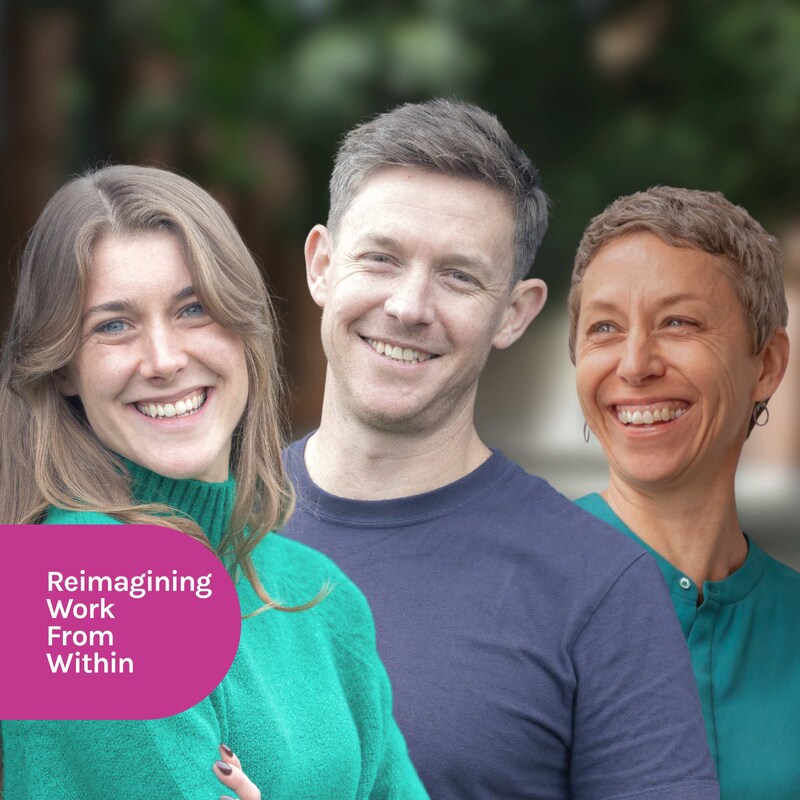
In this episode, Emily, Laurie, and Bev Attfield (joining the AI conversation for the first time) explore a question that's become impossible to avoid: what does the arrival of AI actually mean for the way we work, and for a company like Within?
The conversation centres on Within's evolving belief that the evolution of work is superhuman. That AI, used well, might finally liberate us from doing robotic work so we can focus on the things that are irreducibly human. Empathy. Relationships. Creativity. The discomfort of making something that actually matters.
It wouldn't be an honest conversation without the hard parts too. What does it mean for the people inside organizations who aren't ready? What do we lose when we make creativity too frictionless? These are questions we're genuinely sitting with, not ones we've figured out. If you're a leader navigating this right now, we think you'll find yourself in this conversation.
Highlights
- Why Within sees AI as an existential question, and an exciting one
- What machines can't do: love, dream, discern, and hold accountability
- Why the journey to an outcome still matters more than the output itself
- What's coming next: Within is writing an AI manifesto, and you're invited along
Transcripts
Hello everyone and welcome back to Reimagining Work From Within.
2
:I am Emily Shelton and I'm
here in conversation with
3
:Laurie Bennett and Bev Atfield.
4
:Today we are here to talk about ai.
5
:We have had two conversations
about AI previously, in relation
6
:to purpose and strategy.
7
:Can AI write your values and
can AI write your strategy?
8
:Today is more personal than that.
9
:It's about how we work now.
10
:So we've been evolving
within, Vision on ai.
11
:We've been talking about what
we believe the future of AI will
12
:look like, and we believe that the
evolution of work is superhuman.
13
:That's what we want to get into today,
and it's our first time inviting Bev
14
:Atfield in on this conversation with us.
15
:So, hi Bev.
16
:Hi Laurie.
17
:Are you guys ready to chat about ai?
18
:Bev Attfield: Hi Emily.
19
:Hey, Laurie.
20
:Good to be here.
21
:Fun to be on the other side
of the mic for a change.
22
:And yeah, excited to dig into
this juicy topic of the day, which
23
:is, I guess, the topic of the
day for most people right now.
24
:Laurie Bennett: Yeah.
25
:I'm excited to get back into this.
26
:It's changed so much since our last
couple of conversations and great to
27
:have Bev's perspective in here too.
28
:Emily Shelton: Absolutely.
29
:Well, I, I wanna kind of us
right into the conversation.
30
:I think that, We we have two different
perspectives to share here today.
31
:what we're kind of seeing internally
and what we're seeing externally.
32
:Bev Attfield: So I'm gonna kind of
bounce this back and forth between
33
:those two different perspectives and
let's see what we learned together.
34
:Laurie, where does within find
itself right now in relation to ai?
35
:How has the conversation
shifted over the last year?
36
:Laurie Bennett: Well, I think it's
shifted from it being this interesting
37
:thing to explore that's kind of
new and fun and not that scary.
38
:Mostly exciting into something
that's really become all consuming
39
:of, Workplace conversations
around culture and the future.
40
:I think it's impossible.
41
:It feels impossible now to
talk about what's happening
42
:with the evolution of work.
43
:Somehow factoring ai, some of the deeper
thinking that we've been doing over this
44
:time has been what does the arrival of AI
into this space mean for a company like
45
:within, we've gone from seeing it as a.
46
:Quirk to deal with in our work
to, possibly, and this sounds
47
:terribly dramatic as an opening
statement in the podcast, but an
48
:existential threat to what we do.
49
:Why would people need.
50
:Human within people to come in and
help them with aspects of their
51
:culture, articulation and development,
and the tools that we need to
52
:understand how things are going
inside a culture, the ability to
53
:build strategy when AI can seemingly
do so much of that work without us.
54
:And so the thinking that we've
been doing is kind of, well,
55
:what's within this role in a.
56
:Future that has AI in it, and how do
we continue to make that something that
57
:inspires us and that gives us a mandate
to be doing great work in service
58
:of more human work out in the world.
59
:Emily Shelton: Yeah, that's great.
60
:So would you say that we're no longer
asking whether AI will work for us,
61
:but how it will be working for us?
62
:Is that a shift that you've seen the tone?
63
:Laurie Bennett: Yeah.
64
:I think we're resigned to the, to
the fact that it's gonna be here and
65
:it's gonna make a really big splash.
66
:And so I think, yeah, it's less about
whether or not it's going to be a part
67
:of our future in a meaningful way, but
how do we make it a part of our future
68
:in a way that's really meaningful to us?
69
:the big questions that sit out there
right now around AI replacing people in.
70
:The workplace AI taking on the kinds
of things that people do at work.
71
:the big question of, well, what do people
do at work and what is work left behind?
72
:And I think we're finding ourselves now
having some really interesting thoughts
73
:from Withins perspective around how can
we use this amazingly powerful tool not to
74
:replace people, but actually to make work
more human than it's ever been before.
75
:Emily Shelton: And what about you, Bev?
76
:What are you seeing out
in the world of work?
77
:What are organizations and
employees grappling with right now?
78
:Bev Attfield: Yeah.
79
:I, I think it's, I mean, we're in
this interesting moment in time where
80
:as we're having these thoughts and,
we're considering what this means
81
:for us as a business and a group of
folks who are passionate about work
82
:and how to leverage that for people.
83
:We are in the context of a, of the wider
world, and there is this significant
84
:shift that is happening for society.
85
:I'm reading a book right now by.
86
:A person who is interested in the
economics of this shift that we're making.
87
:his name is Iad Mustique.
88
:And the, the book is The Last Economy, A
Guide to the Age of Intelligent Economics.
89
:And I'll just read the quote because
this really made me sit up last night as
90
:I was thinking about this conversation.
91
:And he says that we are the generation
that will live through the discontinuity,
92
:the last humans to remember when
human thought had economic value.
93
:And we are the first to discover.
94
:What comes after.
95
:And that gave me chills, but also
gave me like goosebumps of like
96
:excitement around the opportunity
that this could offer to us.
97
:And I think it's right now, as a
business you can take a glass half
98
:full or you can take a glass half
empty approach to this, right?
99
:And I think that there is very much
in the conversation right now around
100
:this new technology potentially
leading to the destruction of.
101
:The human race.
102
:That's the very far end of, like,
Laurie, you were talking about
103
:being alarmist or dramatic, but that
that could be one outcome, right?
104
:There is another one other outcome
of many that could be that we create
105
:this technology and we adapt and we
use it to be more prosperous than
106
:we've ever been before as a species.
107
:Right.
108
:And I think for me, as I think about what
Withins position on this is, because,
109
:I mean, we can't control or change the.
110
:Process and the, the course that AI
is going to take, but we are able
111
:to listen to our clients and take a
position on what this could mean for
112
:people in the workplace and maybe
for once and for all we can actually.
113
:Find a way to let humans do the things
that they are really great at, right?
114
:Creating, innovating, planning,
thinking, dreaming, right?
115
:Those are all the things.
116
:However, there are some realities
that are going to get in our way.
117
:I think there's a few things that I'm
seeing out there in the world right now,
118
:There's a lot of optimism about what
AI is gonna do and how it's gonna
119
:make us more efficient, and how
yes, it's probably going to lead to
120
:some jobs being displaced and doing
things that humans used to do, right?
121
:Yes, that is reality.
122
:But I think that there is also this
friction where we are not ready
123
:to actually capitalize on what
this could mean for us as humans.
124
:So there's a lag between the appetite
for change and the ability to actually
125
:structurally make the change in business.
126
:And a, a big part of that is this, there's
this tension from the C-suite and from
127
:stakeholders to wanna jump on this AI
bandwagon and get the productivity gains.
128
:But then we've got the folks who
are advocating for the people, the
129
:workers, the, the doers of the things,
or the makers of the widgets in these
130
:businesses that aren't there yet.
131
:And so there's this real tension
between the HR function and generally
132
:speaking, the C-suite function.
133
:And what I think is
fascinating about that is that.
134
:This is not a technology problem to solve.
135
:This is a human problem to solve.
136
:And I think we have to be aware, and
I know that we already are thinking
137
:about this for our own clients and
for ourselves around how are we
138
:gonna bring people along with us?
139
:People who are fearful, anxious,
don't have a great appetite for
140
:change in the global talent trends
report from Mercer for this year.
141
:we just had a conversation with
Kate Bravery, who is one of the
142
:lead authors of that report.
143
:only 44% of employees
are thriving right now.
144
:Right?
145
:So that's the lowest number in
that report in 10 years, right?
146
:So when you've got this base of
people who are already struggling
147
:and you've now got this pressure to
perform and adapt because of this
148
:existential crisis that we're feeling,
that is a recipe for disaster, right?
149
:You can't bring disenfranchised
people along with you.
150
:So I think there's a real human
challenge, and I think it's going
151
:to rely on the leaders to now step
in and lead in a different way.
152
:And I mean, that's a drum we've
been beating for 10 years, isn't it?
153
:Around human-centered leadership.
154
:So I think there's a big swirl.
155
:Like there's a lot in there that
I just kind of threw into this
156
:conversation, but I think it all
comes down to me to one thing.
157
:Again, it's a human problem.
158
:It's not a technology.
159
:Emily Shelton: Absolutely.
160
:There's so much to dig into.
161
:I love that quote.
162
:And the ending of that quote was
what stuck with me, which is that
163
:we have the opportunity to kind of
shape how this evolution moves forward
164
:if, if we get to decide what it
looks like on the other side of it.
165
:So that.
166
:To me feels pretty empowering.
167
:I wanna focus in on the vision that we've
been talking about internally, which is
168
:that the evolution of work is superhuman.
169
:So I wanna get a little bit more
into the risks and realities, but
170
:before that, I, I wanna dig into
the evolution of work is superhuman.
171
:So I'd love to actually
understand where that came from.
172
:Laurie, could you give us a little bit
of insight into our thinking there?
173
:Laurie Bennett: Yeah.
174
:The evolution of work is.
175
:Super human.
176
:I think as we've been thinking about
not just ai, but what the future of
177
:work looks like, what's always been
important to within is that work
178
:is a place of meaning and purpose,
and that the way to get to that for
179
:the last 10, 15 years has been two.
180
:Tap into the humanity that
people get to experience at work.
181
:The real things that make people
connect to each other and connect
182
:to the impact that their work has.
183
:And so much of the time that's been about.
184
:Starting to move away from the, the
structures and the systems that were
185
:developed through the Industrial
Revolution in the name of efficiency
186
:and production productivity, where
workplaces became these very structured
187
:environments very high on control.
188
:That our, that you work, the way that you
show up, the way that you dress, the way
189
:that you, that you're managed like almost.
190
:A machine, ironically, we kind of
invented machines to help people
191
:at work, and then we had people
behave like machines alongside them.
192
:one of the things that seems to be
really exciting about AI and the, the
193
:associated kind of machine learning
and capabilities that that brings
194
:is, well, maybe now for the first
time in a really long time, people.
195
:Don't have to be machines.
196
:Machines can be the machines and people
can be the people, and that there's
197
:something really powerful about that
idea that when we think about the
198
:future of work and how do we make
it human AI can feel like the single
199
:biggest threat to that, that it's
going to come in and replace and reduce
200
:the value of humans in a workplace.
201
:But there's another side to that picture,
which is maybe AI's been exactly the thing
202
:we need in order to finally liberate us
from having to behave like robots at work.
203
:And that if AI can take the
work that has felt robotic and
204
:mechanical, that can bring knowledge.
205
:Yes.
206
:And insight.
207
:This amazing ability to
process information and data.
208
:What does that do to enable people
and empower them in ways that they've
209
:never, we've never had access to before?
210
:years of education and training
and learning can be at our
211
:fingertips now, seconds away.
212
:And so that can be a
really terrifying idea.
213
:Or it can be one I think which, if
we can leverage and channel that in
214
:the right ways, could actually help
us make the work that we do as people
215
:at work more human than ever before.
216
:And that's really exciting and I.
217
:Considering the evolution of work as
being this super human place where we get
218
:to be super human, we get to concentrate
on the aspects of being a human that are
219
:most powerful, our capacities for empathy
and imagination, and connection and love.
220
:All these qualities that sit there,
that we know are the foundation of what
221
:makes work meaningful and underpin.
222
:Ways of leading that make for
way more human workplaces.
223
:That kind of stuff we get to really
focus in on knowing that the other pieces
224
:and aspects of work that we do can be
boosted by this incredible technology
225
:that can help us step into that space.
226
:So for us, I think it's a, it's an
ambition and it's a bit of call to,
227
:to say, what can we do with this
technology to make sure that it becomes.
228
:Enhances the human experience
of work rather than removes it.
229
:And it, it's a huge challenge that
I know we don't have the answers
230
:to yet, but that's the way of
looking at it that I think makes
231
:sense for us as within to hold.
232
:And I think it's the thing that a lot
of leaders out there are struggling with
233
:right now, which is some way, as Bev
said just now, the way to balance the
234
:incredible opportunity for efficiency
and productivity that it brings.
235
:With the high potential for, to having
a real toll on the human experience
236
:of work, and how do we hold those
two things together while we take
237
:that dark force and we bring it
over to the light side and use it.
238
:For good.
239
:Bev Attfield: Yeah.
240
:I'm gonna hop on that real
quick with a bit of a hot take.
241
:I, I think you, you're right, Laurie.
242
:I think that there is lots of room to
feel optimistic, but I, I think that
243
:we are also at the mercy of a handful
of actors here who are determining
244
:the course of human history, right?
245
:So we've got just a handful of
really powerful people who are
246
:leading the way with AI development.
247
:To get us to artificial general
intelligence, and I've been quite
248
:skeptical around their motivations
and like, what does that mean
249
:for the rest of us, right?
250
:Like we are downstream
from their decisions.
251
:But there's a glimmer of hope because I
was listening to an interview with the
252
:co-founder of Anthropic, Daniela Am who.
253
:Has had some quite vocal opinions about
what AI should do and what humans should
254
:do, and I'm gonna read another quote
because I think that this is like really
255
:something for us to hold onto as a glimmer
of hope in the course of the future here.
256
:And she said, in a world where AI is
very smart and capable of doing many
257
:things, the things that make us human
will become much more important, not less.
258
:And I really felt like that aligned with
where within is feels we need to go.
259
:I mean, that is about the future
of work or the evolution of
260
:work being superhuman, right?
261
:It is about doubling down on the
things that humans are able to
262
:do that we should not delegate or
automate and allow machines to do.
263
:Right?
264
:And why wouldn't we want a future where
we could get the both best of both, right?
265
:Not the best of one at
the expense of another.
266
:So I think we, what I'm holding
right now is a bit of like
267
:helplessness because we are all just.
268
:In this, simulation is what some people
are calling it, depending on your
269
:philosophical view, but nonetheless,
like this is the reality, right?
270
:Like there are other people that are
making really important decisions
271
:right now, and I think that's why
it's really important for all of us
272
:to have an opinion and a voice around.
273
:What do we want this to look like for
us and what could it be rather than just
274
:having this decision thrust upon us and
have to deal with the fallout of it.
275
:Emily Shelton: Yeah.
276
:Really, really powerful and kind of
led me, leads me to my next question,
277
:Bev, which is that we have this vision
of where we see or what we see AI
278
:could be the potential of AI is that.
279
:Vision something that you're
seeing in other leaders.
280
:We've talked about the select
five that are making some
281
:big choices, but maybe, in.
282
:The other group of leaders that
you're seeing day to day, do you think
283
:that they have similar ambitions?
284
:Bev Attfield: Look, I, I think
we're still grappling with what
285
:this actually means for us, like in
the day to day, and I don't think
286
:anyone actually has the answer.
287
:I, I know that a number of our clients
are, are really forward thinkers and they
288
:are trying to solve this problem for their
own business and adapt as they need to.
289
:But I think the reality is
it's, it's a moment in time
290
:where I don't think anybody.
291
:Really knows.
292
:I mean, I suppose you could say
that about any big change in the
293
:course of history, but I just feel
like the velocity of this change is
294
:what's curious and different for us.
295
:And I think leaders who can say, I
actually don't have the answer and I'm
296
:just going to bring curiosity to this,
and have a conversation with people around
297
:what they're feeling right now, that's the
most important thing you can do, right?
298
:Because.
299
:I just don't think that there is anybody
out there who actually knows what this is
300
:truly gonna mean for us as we go forward.
301
:Laurie, what do you think?
302
:Laurie Bennett: Yeah, I, I do think
that that's, that's true and I think
303
:that that is true as well, as you say
of so many aspects of what's going on.
304
:AI's one thing right now in a
tumultuous world, and I think when
305
:you don't know what's happening
in the future, you gotta try to.
306
:Shape and create it in some way.
307
:And whilst there's a few people who have a
lot of power around this, I think there's
308
:a lot of people who have some power around
this, especially within organizations
309
:and within, and leaders in organizations.
310
:And to, to be able to, to make this
something which adds something meaningful
311
:to the human experience of work.
312
:And I think we've said that for
a long time around, and it's
313
:why we as within, why we work.
314
:Business is that they're, they're
these amazing containers of society
315
:and the leaders within businesses
have a real capacity to shape the
316
:experience of a large number of people.
317
:And this is no different.
318
:The tool is the tool and the way
that we use it becomes the really
319
:important thing in the wrong hands.
320
:It'll become something that's
could be really destructive.
321
:Culture and beyond that to society
when used with the right intentions and
322
:in a way that is designed to support
more people rather than fewer, I
323
:think it can be an incredibly powerful
thing, and I think there are so many
324
:opportunities for leaders even now,
even in the dis, even in the confusion
325
:of what all this is going to mean.
326
:To turn back to their own purpose
and their own set of values and ask
327
:themselves, how does this new thing
help us live into those things more?
328
:And as we think about integrating
it and bringing it into our worlds,
329
:how do those aspects of what have
always been true and important for
330
:us continue to shape and guide how we
step into an unknown space around this?
331
:And so I think the culture of
an organization has so much.
332
:To shape what AI looks like
inside that organization.
333
:And AI has so much potential to
enhance stuff for us if we use it
334
:and we approach it in that way.
335
:Emily Shelton: Yeah.
336
:Thank you.
337
:Oh, go ahead Bev.
338
:What were you gonna
339
:Bev Attfield: Yeah, I
was gonna jump in there.
340
:I, I was just thinking, Laurie, as
you were talking, that before AI even
341
:arrived, humans have done a pretty
good job of destroying culture, right?
342
:With toxic leadership.
343
:With practices and ways of being that
have not served the wellbeing and the
344
:creativity and the joy of humans, right?
345
:I mean, historically, over the
years, like employee engagement
346
:has been very low, right?
347
:It's very hard to engage
people, and that was before ai.
348
:So I think, hey, like, let's
see what AI can do for us.
349
:Maybe we'll be able to move
that needle a couple of points.
350
:Laurie Bennett: And it's, I think
it's, like anything new that comes
351
:in like this, it's it doesn't
necessarily change everything, but
352
:it changes the volume of everything.
353
:So if you've been doing something, if
you've been leading an inhuman culture.
354
:AI will accelerate that process for you.
355
:If you've been leading a really
human culture, AI has the possible
356
:to possibility to accelerate
or amplify that for you, so the
357
:human is still sitting there.
358
:Holding the controls for this.
359
:And I think, one of the challenges
in these moments is not to throw out
360
:everything because the system has changed
or the paradigm has shifted and imagine
361
:that it needs something completely
different, when in fact, so much of the
362
:things that have been developed inside
of cultures up until now will be the
363
:very things that we need to draw on to
be able to navigate this disruption too.
364
:Emily Shelton: Well, I, I think
that we've done a pretty good job.
365
:Chatting about the risks and
the opportunities here for ai.
366
:Something I, I wanted to just touch
on, we, we've talked a lot about like
367
:societally what could be at risk with, ai.
368
:I think that there's also,
potential loss in creative
369
:processes with individuals as well.
370
:I think that if, we find people
relying too heavily on AI
371
:to create something that we.
372
:Miss the moments of discomfort
that are required for making
373
:something, if that makes sense.
374
:I think that AI is really great
at streamlining, and I think
375
:that streamlining isn't always
needed in creative environments.
376
:Right?
377
:So I, I don't know.
378
:I just think that that's something
also to consider that humans we.
379
:Confront struggle when we're creating
or, collaborating with individuals.
380
:But that struggle is what helps
us get to the other side and
381
:make something meaningful.
382
:And while AI has the ability
to make our lives easier,
383
:maybe there's risk in that too.
384
:So, just something that
I've been chewing on lately.
385
:Is it better to make or
to make with intention?
386
:Right.
387
:And AI does not have the
ability to discern like we do.
388
:So now I'm just on my
389
:Bev Attfield: soapbox.
390
:That's,
391
:Emily Shelton: but
392
:Bev Attfield: that's an interesting
perspective and I, I would say.dot
393
:yet.
394
:Right.
395
:I think for us to imagine that we
will not get to a place where the
396
:artificial intelligence can think
and create like us, I think that's,
397
:we, we need to be careful with that.
398
:Yeah.
399
:I think the other force that we're
gonna have to reckon with is the
400
:market tension of commoditizing
something like creativity, right?
401
:In that quote at the beginning that I, I
shared around, what is the value of human
402
:thought when it's cents on the dollar for
creating a new logo or spending $500 with
403
:the graphic artist, the market isn't going
to be able to support the graphic artist.
404
:For very long.
405
:So I think we're gonna have to
reckon with some realities that
406
:there are market forces at play.
407
:Yes.
408
:I mean, we don't wanna lose what the
essence is of being human, being able
409
:to have creative thought, but how do
you combat the market force of that?
410
:Right?
411
:How do you protect that?
412
:Especially if it's your profession, right?
413
:If it's your intellectual pursuit
to be an artist and to go into
414
:the forest and paint, well
that's a different conversation
415
:as someone's profession, right?
416
:So
417
:Emily Shelton: yeah,
418
:Bev Attfield: absolutely.
419
:I think that, I think there
are more conversations to come.
420
:Is is where I definitely,
I think I'll leave that.
421
:Laurie Bennett: I have such a juicy one.
422
:I love this.
423
:I feel like this is the debate that's
out there right now, back Emily, to
424
:some of those previous conversations
we had around can AI create the
425
:values or write your strategy?
426
:And the executive summary of
those being, it can give you
427
:a really convincing outcome.
428
:Emily Shelton: Mm-hmm.
429
:Laurie Bennett: But the journey
to it has lost all its meaning.
430
:Space and there's something really
important about those journeys
431
:and how things happen, not just
the outcome that we arrive at.
432
:Yeah.
433
:And so I, I think that's gonna
be the kind of stuff that we
434
:wrestle with and wrangle with.
435
:these are the things which have
been deeply human processes in the
436
:past around creativity, around that.
437
:You mentioned there the ability
to discern and have wisdom.
438
:And there's something in that which is,
yeah, AI's gonna get really convincing
439
:in those spaces and ultimately can't
be in the same space as a actual
440
:human connection in that world.
441
:AI can not love you.
442
:It can sound like it does.
443
:It can tell you that
it does, but it can't.
444
:And can it have empathy in the
way that a human has empathy?
445
:I don't believe so.
446
:Can it dream about a future state in a way
that a human can do that that's driven by
447
:an emotion rather than a, an algorithm?
448
:it can give you a billion possible
future states, but it can't tell
449
:you which one makes your insides.
450
:Just, I think there's gonna be some
things in that kind of space that become
451
:really important, and I don't think it
necessarily will remove the value of them.
452
:It might increase the value of
those particular things, the
453
:things that are still inaccessible.
454
:A world where seemingly
everything becomes accessible.
455
:And the thing that I've been really
encouraged by, and I don't, I think this
456
:is probably mostly from creative agencies
and people out there in the world, is the
457
:concept of slop, which seems to be in a
word that's arriving into the AI universe
458
:of like, it's fine, but it's slop.
459
:it'll do the job, but it's not.
460
:It doesn't have the magic somehow.
461
:And I think the, our, the, the value
of not slop will still hold something.
462
:And I think the human experience of
creating together the feeling, empathy of
463
:dreaming together, that's the stuff that
I want to, to see become the things that
464
:we do, we get to do the most of, because
that's where our value really lies.
465
:That's where the source of joy
and meaning in our work sits.
466
:And.
467
:If AI can tee us up to do those
things with even more energy and
468
:insight and focus, then bring it on.
469
:Bev Attfield: Yeah.
470
:Yes.
471
:I think what you're hitting on there
for me, Laurie, is that like it's
472
:relationships at the heart of it, right?
473
:And I have some real questions around.
474
:Is, can a machine be a proxy for
the relationships that we can build?
475
:Right.
476
:And is if we bring this down to our
context, and maybe there's some listeners
477
:here who are also in consulting or
B2B situations where they're having
478
:the same existential crisis, it's
the relationships that are the.
479
:Foundation of how we run
our businesses, right?
480
:And our clients don't come
to us simply for outputs.
481
:They come to us for transformation.
482
:And that transformation happens because
we can build trust, we can listen in
483
:the room, we can co-create something.
484
:Whether it behind a Zoom screen
or in person in a joyful workshop.
485
:Right.
486
:And I think it's the, the, the
connection and the community and the
487
:touchpoint that we offer and that
we can build because we have that
488
:capacity as these organic beings.
489
:That is, I think that's where we are
most certainly doubling down on, right.
490
:When we say that the evolution
of work is super human.
491
:It's more human than
it's ever been, right?
492
:Because we have the capacity
to do the things that.
493
:Machines cannot.
494
:Right.
495
:And I mean, future will tell us.
496
:Right?
497
:We'll see how that unfolds.
498
:but I think for now, like as I'm
thinking about it, it's the relationships
499
:that are what we offer and that's
where we get joy in our work.
500
:Right.
501
:It's not, just.
502
:Using a tool for the sake of using a tool.
503
:Right?
504
:We, yes, we will rest on the tool
to help us do the things that
505
:we want to do, most certainly.
506
:But it comes down to the connection
and the human, the humanness of it all.
507
:Laurie Bennett: Yeah.
508
:It feels, I, I think it's in danger,
isn't it, of sounding like work becomes
509
:this whimsical place where we dream
and have empathy for each other.
510
:But I think.
511
:It does also touch on some really
critical aspects of decisions and
512
:accountability and things as well.
513
:I don't think that AI is going to be well
positioned to make decisions on behalf of
514
:people, yet it can inform them and provide
insight, but ultimately, somebody's.
515
:Holding the accountability for that,
that can't be devolved to a machine.
516
:And it's really difficult to imagine
that sort of capability inside
517
:a business being replaced by ai.
518
:And so, and I think that's the, the danger
of AI coming into organizations in the
519
:wrong ways is imagining that it is a
replacement for creativity or empathy and
520
:relationship or decision making that we
can devolve those kinds of things to it.
521
:Coach that you speak to, or the mentor
that you work with is a bot, not a person.
522
:That the creative process becomes
feeding a prompt and having
523
:something appear magically, seconds
later that decisions become.
524
:Quantitative assessment of logic by a bot.
525
:Like I think we get into some really
dangerous territory around what happens
526
:inside organizations if we replace
the wrong stuff as we go forward.
527
:Yeah.
528
:Emily Shelton: Yeah, I agree.
529
:Well, I, I wanna be aware of our time.
530
:We, this was gonna be a short, snappy
conversation, but it's impossible for
531
:us not to dig in on these juicy topics.
532
:So I, I do wanna speak to you a little
bit about what we're doing at, at within.
533
:We're working on something currently,
a way of articulating what we believe
534
:about AI and how we use it at within.
535
:So we'll be bringing updates to you
about that over the coming months.
536
:I, this definitely feels like a
continued conversation, right?
537
:I think that this is not the end.
538
:This is, not the beginning either.
539
:We've started it a couple of years
ago, so I, I would love to continue
540
:this conversation with you over
the, the next year and see how this
541
:continues to evolve and develop.
542
:I would like to ask you one more
thing before we go, which is if
543
:we were to take this conversation.
544
:If we were to reopen this conversation
in a month or two months, what, where
545
:do you think we should go next with it?
546
:What feels like a natural place
for us to dig into or to look
547
:at as we are in this journey?
548
:Bev Attfield: A lot can
change in two months.
549
:Emily Shelton: It's true.
550
:Bev Attfield: I think we'll have
to recalibrate in two months
551
:about where, what has actually
changed since this conversation.
552
:Laurie Bennett: Bev will have, well,
Bev will be a bot in two months, and so.
553
:That will change everything.
554
:Bev Attfield: Yes.
555
:Yes.
556
:The upload will be complete.
557
:Laurie Bennett: I really love
these tensions that we've
558
:started to, to talk about.
559
:I think there's a, there's some really
interesting and important things to
560
:tease apart in conversations about
creativity and decision making and
561
:empathy and coaching and well, really,
how, how do you start to, to use this?
562
:Power of discernment that we're
saying is so fundamentally human.
563
:How can we start practicing that now to
understand really practically what are
564
:the things that AI can really support us
with and help us with and what aren't?
565
:And how do we tell the
difference between those two?
566
:And start to make sure that the kind of
systems that we're building out inside
567
:our cultures and inside our businesses.
568
:Respect that boundary.
569
:Bev Attfield: Yeah, I, I think, there's
so many rabbit holes we can go down
570
:as we continue this conversation
and I'm, I love this format.
571
:This is, and I hope that others
will join us and, be part of
572
:the conversation like that.
573
:That would be great.
574
:We'd love to hear from our audience around
things that you would like to hear us
575
:riff around and bring you our thoughts on.
576
:But I think I'll, I'd like
us to keep focused on this.
577
:Notion that this is a human
problem, not a technology problem.
578
:And I think that there's much
to solve, and there's much to be
579
:hopeful about, but I think we have
to have zesty hard challenging
580
:conversations around it, right?
581
:Because we still have the
ability to shape our future.
582
:And, let's lean into that, the
humanness, as we go forward from here.
583
:Controlling what we can within
our own business and the people
584
:that we impact through our work.
585
:Emily Shelton: Awesome.
586
:Amazing.
587
:Well, I think, yeah, I'm, I'm
excited to continue to dig into
588
:it with you and excited to see
or witness this, this evolution.
589
:It does feel like we are in a very
interesting spot as human people.
590
:Getting to experience this alongside
of the evolution of technology.
591
:So thank you both for your time.
592
:Thank you both for sharing your
thoughts, and we will see you next
593
:time on our next AI pod conversation.
594
:So stay tuned listeners.
595
:Thanks.
596
:Reimagining Work from Within is available
wherever you listen to podcasts.
