Shownotes
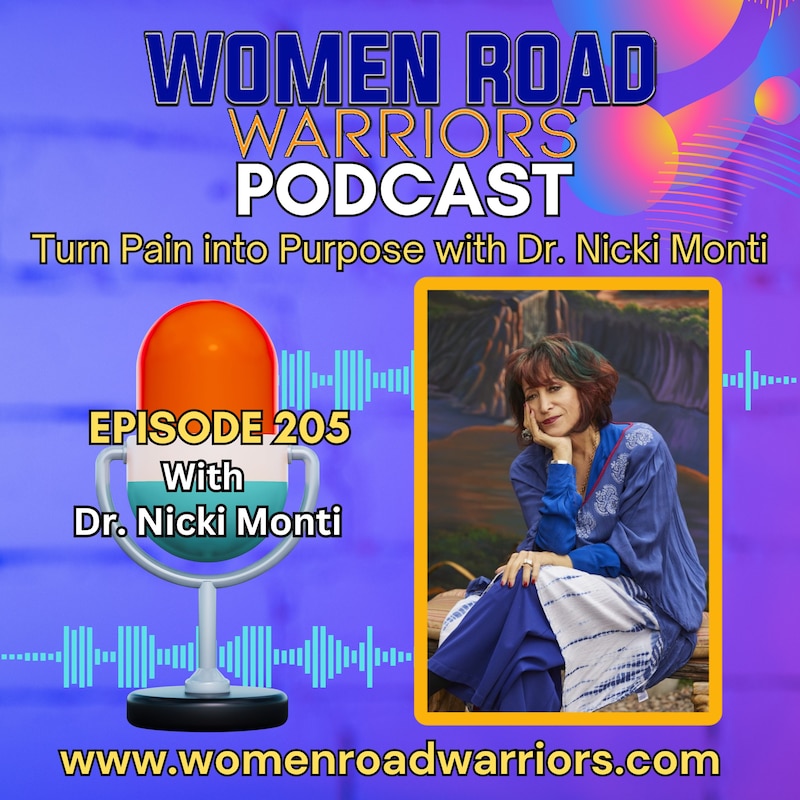
Dr. Nicki Monti is a Hollywood therapist who is the author of the self-help book Find It, Fix It or Let It Go. You may recognize her from "Keeping Up with the Kardashians,’ ‘Millionaire Matchmaker,’ and other shows, but her backstory is even more compelling than her on-camera work. She lays it all bare in her memoir The Divine Traumedy of Nicki Joy: A True Grime Tale — a raw, fearless, and often hilarious ride through trauma, addiction, toxic love, Hollywood chaos, healing, and ultimately, redemption. Dr. Nicki says when you live on the corner of desperation and naïveté, all kinds of crap can happen, and her book shows listeners how not to stay there. She doesn’t gloss over the grime, and she teaches how honesty, humor, and deep self-work can lead to real transformation. Dr. Nicki says take the work seriously and yourself lightly. Join Shelley Johnson and Kathy Tuccaro as they explore Dr. Nicki’s life and gain helpful titbits to empower your life on this episode of Women Road Warriors.
https://womenroadwarriors.com/
https://womenspowernetwork.net
#Pain #Purpose #Memoir #Trauma #Healing #Women #DrNickiMonti #Hollywood #Kardashians #MillionaireMatchmaker #ShelleyMJohnson #ShelleyJohnson #KathyTuccaro #WomenRoadWarriors
Transcripts
This is Women Road warriors with Shelly Johnson and Kathy Tucaro.
Speaker A:From the corporate office to the cab of a truck, they're here to inspire and empower women in all professions.
Speaker A:So gear down, sit back and enjoy.
Speaker A:Welcome.
Speaker A:We're an award winning show dedicated to empowering women in every profession through inspiring stories and expert insights.
Speaker A:No topics off limits.
Speaker A:On our show, we power women on the road to success with expert and celebrity interviews and information you need.
Speaker A:I'm Shelley.
Speaker A:And I'm Kathy.
Speaker A:Life can be messy, raw and downright painful.
Speaker A:But sometimes out of that pain comes a story so gripping you can't put it down.
Speaker A:Our guest today, Dr. Nikki Monte, knows that better than anyone.
Speaker A:She calls her memoir the Divine Trauma of Nikki Joy.
Speaker A:A true grime tale, and it's exactly that.
Speaker A:A brutally honest, sometimes shocking, sometimes hilarious journey through childhood trauma, addiction, toxic love, hard won sobriety, and ultimately redemption.
Speaker A:It's about surviving trauma but not being defined by it.
Speaker A:Dr. Nikki keeps readers on the edge of their seats with her candor and her quick wit and snarky humor.
Speaker A:Dr. Nicky is a Hollywood therapist who you may have seen on Keeping up with the Kardashians, Millionaire Matchmaker, and other shows.
Speaker A:She's a true powerhouse who's been through it all from 11 years in boarding schools and a mother who dismissed her at birth to abusive relationships and the self sabotage of never feeling enough.
Speaker A:Dr. Nikki's story reads like a roller coaster you can't look away from.
Speaker A:She doesn't sugarcoat.
Speaker A:She tells the truth, the grime as well as the grace, and shows us how humor, resilience and the courage to be vulnerable can turn trauma into what she calls trauma.
Speaker A:Traumaty.
Speaker A:This is a story of survival and self discovery and the power of Soul Deep love.
Speaker A:Dr. Nikki, we're so honored to have you on the show and can't wait to dive into the story of your life.
Speaker A:Oh my goodness.
Speaker B:Oh my goodness.
Speaker B:Shelly and I sound good when you read about me.
Speaker A:You're amazing.
Speaker B:Well, thank you.
Speaker B:Well, thank you.
Speaker B:I had a soft launch last night in la, where I live and got to do some listening to the audiobook and reading with a couple of actors, a couple scenes from the book and gee, it was so much fun and just watching the audience's mouth drop open and a lot of them know me, they go, oh, I will recognize your stories.
Speaker B:Right?
Speaker B:Because I teach through my stories.
Speaker B:I'm a storyteller, teacher, and so I lead by example, I try to lead by example and I teach those stories.
Speaker B:So it was a natural fit for Me to do that kind of a memoir.
Speaker B:But it was interesting to see they looked a little surprised.
Speaker B:I have to say, it's an amazing story you tell.
Speaker A:I love your snarky, clever humor.
Speaker A:I love the way you couch everything.
Speaker A:And there's so much that readers can take away.
Speaker A:Your life started off actually in the worst possible way way with your mom being super unhappy.
Speaker A:You weren't a boy.
Speaker A:She said your father promised her a boy.
Speaker A:Wow, I didn't know that that sort of thing could happen.
Speaker B:Yeah, no kidding.
Speaker B:How do you do that exactly?
Speaker A:You know, that sort of rejection had to just totally mess up your self worth and feeling not enough.
Speaker A:And no child should ever have to question a mother's unconditional love.
Speaker A:That really caused a whirlwind.
Speaker A:There's so much to unpack here.
Speaker A:Could you give us some Cliff notes of your life and how you got to where you are now?
Speaker A:I mean, it's just amazing.
Speaker B:Yeah, well, how I got to where I am now to answer the last question first, is I worked the hell out of my story.
Speaker B:I mean, I worked literally the hell out of my story.
Speaker B:I, you know, I have been looking at myself in depthful ways.
Speaker B:I used to say about my now deceased husband that you, you meet in the book, I, I used to say, you know, I went to the mountain, I prayed, I beat pillows, I meditated, I screamed, I, I did all the things and he changed.
Speaker B:We sat in a chair and changed.
Speaker B:And what I discovered was that really all the work is from inside out.
Speaker B:And we keep thinking that the world should make us feel better and really we need to make us feel better.
Speaker B:And then the world feels better about us or comes towards us.
Speaker B:We're always being reflected.
Speaker B:We live in a house of mirrors.
Speaker B:So that's kind of a long answer to the question, but yes, my mother, when I looked back, and this is only upon retrospect, I like to say I argued with my mother for my lifetime in delis across the country.
Speaker B:But she really, really was a pioneer woman in her day.
Speaker B:I mean, she was an entrepreneur.
Speaker B:She had her own business her whole life.
Speaker B:My grandmother, her mother had her own business.
Speaker B:And the men that were with them kind of followed along and were the helpmates, but not the leaders.
Speaker B:And so that was what I inherited.
Speaker B:And that was a very masculine at the time perspective.
Speaker B:Right.
Speaker B:You weren't able to do that back in the day unless you were really just ramming it down everybody's throat, so to speak.
Speaker B:I don't care what you looked like or what you acted like.
Speaker B:Inside, you were like, I'm getting.
Speaker B:And my mother never took no for an answer.
Speaker B:She was in sales, and she never took no for answer.
Speaker B:So, you know, she was a wonderful sort of role model in that.
Speaker B:But she was also.
Speaker B:Didn't want to be a woman herself.
Speaker B:She really did want to be a boy.
Speaker B:And so she didn't really want.
Speaker B:I mean, she wanted a boy because she wanted to be a boy.
Speaker B:And in looking back, I, you know, and she was an alcoholic, and that was, you know, not helpful.
Speaker B:So it was natural for me to feel discarded going, you know, you start in boarding school when you're seven.
Speaker B:There's no way to say they want me around right now.
Speaker B:By the time I was seven, there was no they.
Speaker B:My father had already left when I was four.
Speaker B:And of course, that's in the book.
Speaker B:And as I say in the book, I. I remember standing on the back.
Speaker B:I don't.
Speaker B:I remember I'm.
Speaker B:I'm missing a lot of pieces, actually.
Speaker B:I have a lot of emotional blackouts.
Speaker B:Let me just say that emotional blackouts are.
Speaker B:Are.
Speaker B:Are a function of something called dissociation, where your body is there, but you're not.
Speaker B:And a lot of people from drum drama or trauma or whatever we want to call it or challenge just leave.
Speaker B:We can't physically leave.
Speaker B:They're in charge of our feeding and our, you know, housing and stuff, but we emotionally leave, and therefore we forget big chunks of things.
Speaker B:And I think many, many people had these emotional blackouts throughout their life.
Speaker B:But there are certain things I remember vividly.
Speaker B:And I remember my father leaving off the back stairs and kneeling down with me and saying, I'm coming back.
Speaker B:And I was 4 at the time, and I knew he was lying to me.
Speaker B:Oh, you knew it right then that he would never be back.
Speaker B:And he wasn't.
Speaker B:He wasn't ever back.
Speaker B:He showed up when I was 13 for a hot minute.
Speaker B:I found him in my 20s, and I found him in my 40s.
Speaker B:And each time was just as disappointing.
Speaker B:And each time he left, he disappeared again.
Speaker B:It was the last time I actually said, I'm done.
Speaker B:But so that was, you know, one side of the story.
Speaker B:And then the other side of the story is my mother.
Speaker B:And so my mother was, you know, very difficult.
Speaker B:She was very difficult.
Speaker B:She was creative and funny and a pioneer in a lot of ways.
Speaker B:But she.
Speaker B:She was the oldest of three and a very tough mother.
Speaker B:She had a tough mother herself.
Speaker B:There's not a lot I can remember about what my mother actually sat to teach me, you know, how to tie my shoes or brush my teeth or any of those things.
Speaker B:I don't remember her ever.
Speaker B:One day I realized she.
Speaker B:My mother never taught me to brush my teeth.
Speaker B:She took me to the dentist.
Speaker B:You know, she would outsource my care, basically, and.
Speaker B:But she didn't do that.
Speaker B:But as I look back on every story I tell, and believe me, there are tons of stories I left out because you can't do them all.
Speaker B:But when I look back, I am grateful for every single moment of my life.
Speaker B:And that sounds like a pie in the sky kind of thing, but I'm grateful because I learned from it.
Speaker B:If I hadn't learned from it, then, you know, three marriages, three marriages in deep wouldn't have been meaningful.
Speaker B:And all those terrible decisions I made would have been awful.
Speaker B:But I learned from it.
Speaker B:And I slowly but surely worked on myself.
Speaker B:I worked on, you know, I was grateful for many, many, many, many times.
Speaker B:And I was a little, you know, I was kind of naive.
Speaker B:You know, there's one line I have in there that I particularly like.
Speaker B:You know, when you live on the corner of desperation and naivete, all kinds of crap things can happen, you know, and I really did.
Speaker A:I can identify.
Speaker B:Yeah, yeah, yeah.
Speaker B:And looking good but not feeling good.
Speaker B:Nobody would have known that.
Speaker B:I was always wrestling with loneliness.
Speaker B:I didn't care if I was surrounded by people or not.
Speaker B:I was always wrestling with loneliness.
Speaker B:But I have.
Speaker B:I am so grateful.
Speaker B:And one of the rules of thumb, I think that gets us through whatever we're facing.
Speaker B:And, you know, it's never what happens to us that matters.
Speaker B:It's how we respond to what happens to us.
Speaker B:So the rule is take the work, and I say the work of change, the work of growing yourself up, the work of learning to speak up and.
Speaker B:And love yourself or whatever your work is.
Speaker B:Take the work seriously and yourself lightly.
Speaker A:I like that.
Speaker A:Yeah.
Speaker A:Yeah.
Speaker B:Because, you know, most people take themselves very seriously.
Speaker A:Oh, yes.
Speaker A:We could be so hard on ourselves as women.
Speaker A:No doubt about that.
Speaker A:Stay tuned for more of women road warriors coming up.
Speaker A:Industry movement Trucking moves America forward is telling the story of the industry.
Speaker A:Our safety champions, the women of trucking, independent contractors, the next generation generation of truckers and more.
Speaker A:Help us promote the best of our industry.
Speaker A:Share your story and what you love about trucking.
Speaker A:Share images of a moment you're proud of and join us on social media.
Speaker A:Learn [email protected] welcome back to women road warriors with Shelly Johnson and Kathy Tucaro.
Speaker A:If you're enjoying this informative episode of Women Road Warriors I wanted to mention Kathy and I explore all kinds of topics that will power you on the road to success.
Speaker A:We feature a lot of expert interviews, plus we feature celebrities and women who've been trailblazers.
Speaker A:Please check out our [email protected] and click on our Episodes page.
Speaker A:We're also available wherever you listen to podcasts on all the major podcast channels like Spotify, Apple, YouTube, Amazon, Music, Audible, you name it.
Speaker A:Check us out and bookmark our podcast.
Speaker A:Also, don't forget to follow us on social media.
Speaker A:We're on Twitter, Facebook, Instagram, Pinterest, LinkedIn, YouTube and other sites and tell others about us.
Speaker A:We want to help as many women as possible.
Speaker A:If you're just joining us, you're going to want to lean into this one.
Speaker A:Our guest, Dr. Nicky Monti, has lived a life that most people wouldn't believe if it weren't written down.
Speaker A:She chronicles it all in her memoir, the Divine Tramedy of Nikki Joy.
Speaker A:A true grime tale.
Speaker A:A raw, fearless and surprisingly funny journey through childhood trauma, addiction, toxic love, Hollywood healing, and finally redemption.
Speaker A:You may recognize Dr. Nikki from keeping up with the Kardashians and Millionaire Matchmaker, but her real superpower is turning pain into purpose.
Speaker A:She doesn't flinch from the grime and she shows us how honesty, humor and self work can lead to deep transformation.
Speaker A:She says when you live on the corner of desperation and naivete, all kinds of crap can happen.
Speaker A:Her book's insight teaches us how to avoid that.
Speaker A:Dr. Nicki Women are so hard on themselves and especially if they don't like stuff they've done in the past.
Speaker A:I saw that you were quoted as saying we can't change history, but we can change our relationship to history.
Speaker A:All healing involves a change of perspective.
Speaker A:So many times we're stuck in the past, it stops us from going forward.
Speaker A:We're hard on ourselves and it's so easy to blame ourselves.
Speaker A:And what you went through with your parents, your absent dad and your mother that really didn't want you, at least not as a girl, that really the kind of emotional disruption and mental disruption, and I know that's not the proper term.
Speaker A:You didn't know who you you were.
Speaker B:That's true.
Speaker B:I didn't know who I was.
Speaker B:I don't know that anybody really growing up knows quite I mean there are a few people who are just, you know, like Mozart, pick up a fiddle and do the whole thing, get out early.
Speaker B:But I, I think most people are in a discovery process.
Speaker B:And once we understand that the journey is the point, not the destiny, you know, the journey is the point.
Speaker B:And it's.
Speaker B:I think it's exciting to.
Speaker B:Oh, you know, here I am in my dotage, so to speak, about 2,000 years old, and I am having a whole new chapter.
Speaker B:A whole new chapter.
Speaker B:And it's a thrilling thing.
Speaker B:But, yes, there's this thing that I've come to call.
Speaker B:I haven't heard it in other places, but it may be.
Speaker B:Because really, there's nothing new to say, it's just the way we say it.
Speaker B:But this thing called I call emotional dysmorphia.
Speaker B:We all know about body dysmorphia, right?
Speaker B:You see yourself, you're skinny as a rail and you think you're fat.
Speaker B:This is the anorexic problem, right?
Speaker B:I've never been anorexic, but I understand body dysmorphia.
Speaker B:I also understand emotional dysmorphia, where we don't see who we really are.
Speaker B:We don't see our power, we don't see our grace, we don't see our capacities.
Speaker B:We don't think we're worth loving or whatever our personal list is.
Speaker B:And that's an idea, not a truth.
Speaker B:But when we look at ourselves in the mirror or inside ourselves, you know, in the death of the depth of night, we think, oh, I'm just not worth it.
Speaker B:I'm just not worth it.
Speaker B:Clearly, I can see that.
Speaker B:Look at my life.
Speaker B:Oh, yeah, I've got a lot of people fooled.
Speaker B:But you know the truth, Nikki, you know the truth.
Speaker B:And, you know, I think that's very common, very common self doubt, self contempt.
Speaker B:I think with social media, I don't want to rag on it because we all depend on it, but with social media, it's gotten worse and worse.
Speaker A:Oh, it really has.
Speaker A:It's.
Speaker A:It's disruptive people, teenagers.
Speaker A:I mean, let's face it, when you're a teenager, that's a terrible time.
Speaker A:You don't know who the heck you are.
Speaker A:Your body's doing all kinds of weird things, especially when you're a woman becoming a woman and you're seeing all these beautiful people and you're thinking, I'm so ugly, and why are they so happy?
Speaker A:And I'm not.
Speaker A:I mean, it really.
Speaker A:It is not good.
Speaker A:No.
Speaker B:Yeah.
Speaker A:No.
Speaker B:Yeah.
Speaker B:No.
Speaker B:And.
Speaker B:And it's.
Speaker B:You know, we call compare and despair.
Speaker B:Right?
Speaker B:And why she's 17 and she's making a million dollars.
Speaker B:How.
Speaker B:How can I get some of that, you know?
Speaker B:Well, I'm not Good enough for that.
Speaker B:But of course, a Facebook life isn't a real life and real life doesn't look that way.
Speaker B:We can't just put sudden filters on our life and on our face.
Speaker B:It's just not so.
Speaker B:So I don't know.
Speaker B:This book was truly a labor of love.
Speaker B:In fact, I love this title so very much.
Speaker B:And it was an evolution to come to that title.
Speaker B:And you know, when you look on the COVID you see all the cracks in the face on the one side of the face.
Speaker B:And you know, if when I'm facing out, it's on the left side.
Speaker B:And you know that the left side is called the feminine side.
Speaker B:When we're right brained, we're operating mostly through our intuition and our.
Speaker B:Our emotional resources and all of the wonderful layered things that the feminine is.
Speaker B:You know, it's the.
Speaker B:The root of the feminine is anima, which means.
Speaker B:Which is also the root of animation.
Speaker B:So the feminine is considered the animating principle.
Speaker B:Yay.
Speaker B:Right?
Speaker B:The thing that invigorates us and just is the life force.
Speaker B:And so that that crack that you see on the COVID of the book is my heartbreaking all along the way.
Speaker B:And.
Speaker B:And I.
Speaker B:And I akin it to the Japanese art of kintsugi, which, you know, some people have never heard of, but that's where.
Speaker B:But you.
Speaker B:When I describe it, you'll know exactly what I'm saying.
Speaker B:Where they have this bowl.
Speaker B:It's just a bowl.
Speaker B:It's a serviceable mole and it breaks and it has all these pieces.
Speaker B:And so they take the bowl and they start putting it back together again, lining the cracks with veins of gold.
Speaker B:And when it's finished, it's more precious and more valuable than it ever was before.
Speaker B:And that's how I feel.
Speaker B:That's what I feel healing is.
Speaker B:And that's what I feel I've done.
Speaker B:I really feel like I'm in an entirely new story now.
Speaker B:And I look back and as I say with grace and gratitude, all of the terrible tales that mostly I chose.
Speaker B:So we get this story of ourself as children, right?
Speaker B:I'm not worth loving.
Speaker B:I'm not enough.
Speaker B:Throw me away.
Speaker B:That's okay.
Speaker B:And then we begin to play out our idea as if it's the truth.
Speaker B:So we unremember ourselves.
Speaker B:We're basically forgetting is actually not the opposite of remembering.
Speaker B:Dismembering is the opposite of remembering.
Speaker B:So change, real change is about remembering.
Speaker B:Putting ourself back together again, but now with veins of gold and remembering our true heart self before all the Nonsense started.
Speaker B:So the veins of gold.
Speaker A:Is that wisdom?
Speaker A:Yeah.
Speaker B:Yes, Wisdom, gratitude, you know, love.
Speaker B:Where love can be.
Speaker B:You know, it took a long time to get over being so mad at my mother that I couldn't remember the love.
Speaker B:I wanted her to love me, but, you know, she just kept doing new stuff and she was so crazy.
Speaker B:She was so crazy.
Speaker B:And then by the end, she was in full dimension.
Speaker B:But then, you know, there comes a point when no matter what I believe and I was taught and I believe you have to step up for the mother and the father, but especially for the mother as a woman, because she's been your role model for good or for bad.
Speaker B:We learned three ways from our family.
Speaker B:By example.
Speaker B:By example.
Speaker B:By example.
Speaker A:That's true.
Speaker B:So I had to step up for my mother.
Speaker B:I got to step up for my mother.
Speaker B:And it was a challenge because she was hard even to give things to.
Speaker B:Not because she didn't want them, but because she was just rude about it.
Speaker A:So you kind of had a love hate relationship there.
Speaker B:I did.
Speaker B:I did.
Speaker A:Part of healing is also part of.
Speaker B:Doing exactly what you just said you did.
Speaker A:Recovery is a process that takes a lifetime to do.
Speaker A:And to be able to step up like you did towards your mother, even though there's lots of bad, that speaks volumes on your healing.
Speaker B:Volumes.
Speaker B:Most people just don't, you know, they cannot.
Speaker A:They don't know how to get the.
Speaker A:The tools or how to find it within themselves to forgive and move on and respect the whole situation.
Speaker B:There is a redemption piece with my mother.
Speaker B:It's very brief, but so beautiful it cannot help but bring tears to your eyes.
Speaker B:When I was reading it in the audiobook, there were many times reading the book where I had to push through the tears to get the sentence out so you can hear it, you know, as I do the book.
Speaker B:But I had a. I had a beautiful soul to soul moment.
Speaker B:And that was everything.
Speaker B:Because, you know, all the stuff that we dislike about people, there's two parts to this.
Speaker B:One is it's actually us disliking parts of ourselves, you know, because everything lives inside of us.
Speaker B:That's another story.
Speaker B:But it's also the personality material.
Speaker B:You know, when I work with people, sometimes I think, oh, this person can never be my friend.
Speaker B:You know, if I ever were to do that.
Speaker B:And then I fall in love with them because I fall in love with their souls.
Speaker B:The soul is the.
Speaker B:Is the redemption piece.
Speaker B:That's the prairie coming.
Speaker B:That's the organic us.
Speaker A:Stay tuned for more of women Roadblock warriors coming up.
Speaker A:Industry movement.
Speaker A:Trucking Moves America Forward is telling the story of the industry.
Speaker A:Our safety champions, the women of trucking, independent contractors, the next generation of truckers and more.
Speaker A:Help us promote the best of our industry.
Speaker A:Share your story and what you love about trucking.
Speaker A:Share images of a moment you're proud of and join us on social media.
Speaker A:Learn [email protected] welcome back to Women Road warriors with Shelly Johnson and Kathy Tucaro.
Speaker A:Our guest, Dr. Nicky Monti, is a Hollywood therapist you may recognize from Keeping up with the Kardashians, Millionaire Matchmaker and other shows.
Speaker A:But her backstory is even more compelling than her on camera work.
Speaker A:She lays it all bare in her memoir, the Divine Traumady of Nikki Joy.
Speaker A:A true grime tale.
Speaker A:A raw, fearless and often hilarious ride through childhood trauma, addiction, toxic love, Hollywood chaos, healing and ultimately redemption.
Speaker A:Dr. Nikki says when you live on the corner of desperation and naivete, all kinds of crap can happen and her book shows you how to not stay there.
Speaker A:She doesn't gloss over the grime and she teaches how honesty, humor and deep self work can lead to real transformation.
Speaker A:She says, take the work seriously and yourself lightly.
Speaker A:She helps listeners combat emotional dysmorphia where we don't see who we truly are and we don't see our own power.
Speaker A:Dr. Nicki, you've provided so much insight and even you talk about redemption a lot at a soul level, which is what you had with your, your final love.
Speaker B:That's right.
Speaker B:I had with my final love.
Speaker B:That's the, you know, that's the, the secret sauce is the ending which is, you know, my happy, my happy story, my final chapter literally in the book.
Speaker A:With Conrad you were with.
Speaker B:Well, Conrad was not the love of my life.
Speaker B:I'm now in the love of my life relationship.
Speaker B:It was the longest relationship and probably will end up that way too because, you know, I don't, I don't know that I have 33 and a half years left, but that would be quite surprising.
Speaker B:But everything with Conrad, all of his love, you know, I, I had my foot out the door the whole 30 something years, but he never did.
Speaker B:He loved me with everything he had and it was his first time having that.
Speaker B:He had been married too before, but it was his first time he used to say to me, I know I love you more than you love me and that's okay.
Speaker B:And that was, and I was the center of his life.
Speaker B:Which is both great and awful.
Speaker B:Yes.
Speaker B:If you're wondering.
Speaker B:But so I just wish I was the center of my partner's life.
Speaker B:It's got problems to it, but I think a lot about destiny.
Speaker B:One of my first stories that I ever wrote was like I was, I don't know, nine years old or something.
Speaker B:It was about destiny, where everybody came to a town called destiny to find their destiny.
Speaker B:It was a little on the head, but still.
Speaker B:And, but so I've always had a lot of.
Speaker B:And there's a lot of conversation in the book about destiny and what it is and what it means, which everybody gets to decide.
Speaker B:But I said, oh, Conrad, I'm so excited.
Speaker B:I was.
Speaker B:I realized.
Speaker B:I realized I was born to serve.
Speaker B:And he said, yeah, I don't think that's a secret.
Speaker B:Is that new news?
Speaker B:I'd been therapist for a bunch of years at that point.
Speaker B:But he said.
Speaker B:I said, but, you know, I'm stand back feeling in my body in a whole new way.
Speaker B:I was born to serve.
Speaker B:I said, yeah, yeah.
Speaker B:Well, yeah.
Speaker B:I said, what's your destiny?
Speaker B:He said, you and I. I was absolutely simultaneously thrilled and appalled.
Speaker B:That is a lot of pressure.
Speaker A:Yeah.
Speaker B:And.
Speaker B:But it was a very.
Speaker B:It healed that.
Speaker B:Being ignored or discarded or feeling like an interruption in my mother's life.
Speaker B:He healed that peace or I healed that peace through allowing him to love me that much.
Speaker A:That might have been hard because of maybe the lack of trust you had because you were taught not to trust robots.
Speaker B:I was.
Speaker B:Turns out though, trust is never about other people.
Speaker B:It's always about trusting ourself to withstand other people's ideas about us, to jump over the hurdle of disappointment, to love ourself or like ourself or take care of ourself.
Speaker B:No matter what comes towards us, we have to trust us.
Speaker B:We really don't have to trust other people.
Speaker B:But if we trust ourselves, then we can be vulnerable and trust other people.
Speaker A:Do you think that's why sometimes people get into addiction because they don't trust themselves?
Speaker A:It's a way of running away.
Speaker B:Certainly why I did.
Speaker B:You know, I've been sober for, well, I don't know.
Speaker B: I got sober in: Speaker B:Math is not my strong suit.
Speaker B:I'd have to 40 something years, 45 years or whatever it is.
Speaker B:Gosh, I was stoned for so long and.
Speaker B:And I thought it was, you know, pretty cool.
Speaker A:And.
Speaker B:And besides, you know, I was just.
Speaker B:I was smoking on that pod, just, you know, not including the other drugs.
Speaker B:But anyway, I was smoking on that pot on a daily basis all day long because I had to come down to your level, you know, otherwise, you know, you, you, I'm just be too much for you.
Speaker B:You know, it was so arrogant just to look back at all the arrogance I walked through.
Speaker B:It was amazing.
Speaker B:On standing.
Speaker A:Yes.
Speaker A:It's kind of amazing how people rationalize their behavior.
Speaker A:You talk about addiction and denial and denial is the glass door we don't see until we bang into it.
Speaker B:Right?
Speaker B:Yeah.
Speaker B:True, true, true too.
Speaker B:Yeah.
Speaker B:Because we deny our denial.
Speaker B:You know, we deny our denial a lot.
Speaker B:I mean, 15 people can tell you whatever they tell you, and if you're not ready to hear it, you ain't gonna hear it.
Speaker B:Nope.
Speaker A:Your book covers so much of this and it really is, it's an eye opener for people.
Speaker A:They can live vicariously through your life and maybe walk away with some real good information maybe on how to improve their own or get to know themselves.
Speaker A:I mean, all of this is very relatable.
Speaker A:People may not have walked in your shoes, but they can relate.
Speaker B:Right.
Speaker B:Because we're not connected by our stories, though we like to tell ourselves we are.
Speaker B:We're connected by our feelings.
Speaker B:So, you know, having self loathing or might somebody might more modify that and say self doubt or self being a strong self critic or whatever words we use.
Speaker B:But that's not unfamiliar to most at some stage of life and, and having losses and having heartbreak.
Speaker B:Oh, for the love of God.
Speaker B:I mean, we have so much heartbreak in our life, just naturally, it's hard.
Speaker B:Being human is hard, you know, it just really is.
Speaker B:And then remembering, oh, and in the world now, remembering our own humanity is no walk in the park.
Speaker A:Yeah.
Speaker A:That seems to be something that is disappearing, especially with the fact that we're on electronic devices.
Speaker A:We're not relating face to face.
Speaker A:And if we forget our humanity, that's not a good thing.
Speaker A:I don't see it going in the proper direction at all.
Speaker B:Right, right.
Speaker A:Stay tuned for more of women road warriors coming up.
Speaker A:Dean Michael, the tax doctor here.
Speaker B:I have one question for you.
Speaker B:Do you want to stop worrying about the irs?
Speaker A:If the answer is yes, then look no further.
Speaker B:I've been around for years.
Speaker A:I've helped countless people across the country and my success rate speaks for itself.
Speaker B:So now you know where to find.
Speaker A:Good, honest help with your tax problems.
Speaker A:What are you waiting for?
Speaker A:If you owe more than $10,000 to.
Speaker B:The IRS or haven't filed in years.
Speaker A: -: Speaker B:And get your life back.
Speaker A:Industry movement, Trucking moves America forward is telling the story of the industry.
Speaker A:Our safety champions, the women of trucking, independent contractors, the next generation of truckers and more help us promote the best of our industry.
Speaker A:Share your story and what you love about trucking.
Speaker A:Share images of a moment you're proud of and join us on social media.
Speaker A:Learn [email protected] welcome welcome back to Women Road warriors with Shelly Johnson and Kathy Tucaro.
Speaker A:Industry movement, Trucking Moves America Forward is telling the story of the industry.
Speaker A:Our safety champions, the women of trucking, independent contractors, the next generation of truckers and more help us promote the best of our industry.
Speaker A:Share your story and what you love about trucking, share images of a moment you're proud of and join us on social media.
Speaker A:Learn [email protected] welcome back to Women Road warriors with Shelly Johnson and Kathy Tucaro.
Speaker A:Our guest, Dr. Nicky Monti, is a Hollywood therapist you may know from Keeping up with the Kardashians and Millionaire Matchmaker.
Speaker A:But her real story goes far deeper than anything on tv.
Speaker A:In her memoir, the Divine Tragedy of Nikki Joy, she takes readers through trauma, addiction, toxic love and redemption.
Speaker A:With honesty, grit and humor.
Speaker A:She teaches how to stop living on the corner of desperation and naivete and start seeing yourself and your true power.
Speaker A:Dr. Nicky Monty has walked through the fire herself and she tells it all in her memoir.
Speaker A:It's raw, it's hilarious and it shows you can turn pain into purpose without losing your sense of humor.
Speaker A:She says the work's serious, but you don't have to be.
Speaker A:Dr. Nikki, your book gives readers a great deal of insight into relationships that are fundamental to our survival and our identities, which are often captured in ancient and mythological writings.
Speaker A:I mean, we read it everywhere.
Speaker B:Well, you know, at the beginning of the book, in the introduction of the book, I talk about what I discovered about year half, I think into writing.
Speaker B:It took me four years off and on.
Speaker B:I had other things, fish to fry.
Speaker B:I fell, you know, things happen.
Speaker B:But the what was so interesting to me one day I woke up and went, oh my God.
Speaker B:This is the Eros psyche story.
Speaker B:So Eros is the, the God of love.
Speaker B:And he's, you know, sometimes called Cupid and you know, he's love.
Speaker B:He has no, he has no kind of feelings about it.
Speaker B:He's just shooting his love arrows willy nilly or wherever his mother Aphrodite tells him to shoot them.
Speaker B:Anyway, he pierces his.
Speaker B:His mother is jealous of Psyche who, which represents soul, she's soul.
Speaker B:And she has this inner Radiance.
Speaker B:And everybody is just so drawn to her and all of this.
Speaker B:And they find her Radiance.
Speaker B:Her inside out radiance so beautiful.
Speaker B:They think of her as the beautiful woman in the land.
Speaker B:And so Aphrodite does not like that because she's all about sexual and physical beauty.
Speaker B:So she tells her son, who is Eros to slash Cuban, to have Psyche fall in love with the ugliest man in the world.
Speaker B:Unfortunately, while he was shooting his arrow, he accidentally pierced his own skin with one of the arrows when he saw her.
Speaker B:And he fell in love with Psyche.
Speaker B:So Psyche, which again is soul and love become partners.
Speaker B:But he can't let mom know.
Speaker B:So he takes her off to this remote mountaintop where she has all her needs met.
Speaker B:But she has no connection with anybody.
Speaker B:And they only make love in the dark at night.
Speaker B:So.
Speaker B:Because he says, you must never look at my face.
Speaker B:And so anyway, eventually she decides he's a monster because she can never see him.
Speaker B:And she gets prompted by a visit from her sisters who convince her that this guy gotta be a monster.
Speaker B:So she decides to kill him.
Speaker B:So she goes to kill him one night and she tips in there and she's got her.
Speaker B:Whatever she's going to use to kill him with.
Speaker B:And she's got a candle.
Speaker B:So this big old castle.
Speaker B:And the candle accidentally shines light upon his face.
Speaker B:And she sees there the most beautiful man she's ever seen.
Speaker B:Doesn't know he's a God.
Speaker B:But anyway, most beautiful person she's ever seen.
Speaker B:And she is just so in love suddenly, so in love.
Speaker B:He's not a monster.
Speaker B:He's beautiful.
Speaker B:He's a beautiful creature.
Speaker B:But meanwhile, love wakes up.
Speaker B:Cupid Eros wakes up and says, you've betrayed your vow to me to never see my face.
Speaker B:And he leaves her.
Speaker B:And then she spends this long, long time with obstacles and all sorts of things trying to get him back.
Speaker B:So the, you know it all, you know, we're down the end.
Speaker B:But the story is about how love without soul is empty and soul without love is blind.
Speaker B:And so she's, you know, trying to go around and trying to find out how to fix it all.
Speaker B:And she eventually does.
Speaker B:But it's.
Speaker B:There's a lot of, you know, in all the old myths, there's always at least three main obstacles.
Speaker B:You've got to.
Speaker A:And.
Speaker B:And then you.
Speaker B:You get to have your cake.
Speaker B:Can eat it too by the end usually.
Speaker B:But that is this thing.
Speaker B:And when we talk about robots, I just keep thinking they don't have a Soul.
Speaker B:They don't have a soul.
Speaker B:They don't have a soul.
Speaker A:No, they don't.
Speaker B:No.
Speaker A:That's where we're headed, unfortunately, with AI.
Speaker A:So we need to watch it, because.
Speaker B:I asked ChatGPT something one time, and I said, can you feel this or this or that?
Speaker B:And Chat said, I have no soul.
Speaker A:Unless it's programmed to think it does.
Speaker B:Yeah, this is the scary part.
Speaker A:Yeah.
Speaker A:It's created by human beings, and depending on their motivation, if they have nefarious intent, it could be scary.
Speaker A:So, I mean, that's why we need to keep an eye on that robot.
Speaker B:Nefarious intent.
Speaker B:Shelly, do you think people in this world have nefarious intent?
Speaker B:How could you think such a thing?
Speaker A: Oh, Hindsight is always: Speaker B:Right, right.
Speaker B:I do love in the book where these, you know, some of the stories and, you know, we don't have to name what they are, but some of the stories, there were situations which had been societally remedied when I wrote the book, that part of the book.
Speaker B:And now those problems are back again.
Speaker B:And I think it's especially for women, you know, because women, we are.
Speaker B:We're getting a lot of trampling right now, and as we used to.
Speaker B:So I love this program.
Speaker B:I love the idea of, you know, fighting back, which is what I kind of see this to be about in general.
Speaker A:Well, empowering women so that they know their real strengths.
Speaker A:I'm not sure that we all do.
Speaker B:And I'm sure we all do.
Speaker A:And certainly having someone with the knowledge you have, not only academically, but certainly life.
Speaker A:You have had so many things that have occurred in your life, and you are showing how you can have a metamorphosis much like a butterfly.
Speaker B:Yes.
Speaker B:I was saying one day about that.
Speaker B:I was teaching.
Speaker B:You know, I do a lot of groups, so I looked up the metamorphosis of a butterfly.
Speaker B:That is a gnarly process.
Speaker B:They.
Speaker A:They start out as a caterpillar.
Speaker B:Yeah.
Speaker B:But that's.
Speaker B:But they're surrounded by disgusting ick.
Speaker B:Probably like the, you know, the stuff we come out of the womb and.
Speaker B:But anyway, it's just.
Speaker B:They have to really fight their way out.
Speaker B:Yeah, it's very interesting.
Speaker B:And when are they going to come out as a moth or a butterfly?
Speaker A:That's true.
Speaker B:Well, you.
Speaker A:You fought your way from the very beginning, and you had some gnarly situations.
Speaker A:I mean, in the twists and turns.
Speaker A:That's what makes this book so very interesting.
Speaker A:You were wanting to be an actress, and you ended up in Californ with Talia Shire, the lady that played Rocky's wife and had been on the Godfather.
Speaker B:Yeah.
Speaker B:Lovely person.
Speaker B:She is, yes.
Speaker A:And then you.
Speaker A:All of the different roles you played, one we wouldn't think that you'd be doing.
Speaker A:But, I mean, all the different people you met, you know, I mean, seriously, you're so distinguished, and you have been able to experience so many different things.
Speaker A:And you bring all of that to your therapy and the amount of knowledge you have, it is a metamorphosis.
Speaker A:Would you say it's from your childhood?
Speaker A:It was a survival mechanism that allowed.
Speaker B:You to do all that again?
Speaker B:I think it doesn't.
Speaker B:It's not what happens to us.
Speaker B:It's how we approach what happens, you know, how we see it.
Speaker B:And I think that part of it is my nature.
Speaker B:My mother was very courageous.
Speaker B:My grandmother was very courageous.
Speaker B:I don't know that they were the best people because, you know, my mother's moral compass was a little too faulty, but.
Speaker B:And my grandmother was as well, I believe.
Speaker B:But I have their grit and I have their courage, and that is a beautiful thing.
Speaker B:I meet many people with no courage and no natural courage.
Speaker B:They have to work it, you know, they're so afraid of speaking up or trying new things or painting outside the lines and all.
Speaker B:All of that coloring outside the lines.
Speaker B:And that's just very natural to me.
Speaker B:And maybe part of that is not having stability, you know, not having, you know, not having a home, really, and, you know, an apartment in New York.
Speaker B:I visited once in a while, but basically I was all of it as a child, when I did see my mother, which was all summer, or then my stepfather and mother, who was also an alcoholic.
Speaker B:But when I saw them, it was always in some new city I knew nothing about.
Speaker B:And they went off to work every day, and there I was.
Speaker B:It was summer, so they'd usually try to get a place with a pool.
Speaker B:So there I'd be.
Speaker B:And, you know, in those days, you didn't.
Speaker B:You weren't watched as closely, you know, So I was just.
Speaker B:I was just there making it.
Speaker B:Making.
Speaker B:Making myself.
Speaker B:I don't know, making myself.
Speaker B:Okay.
Speaker B:But all of that was a great training for me, it turns out.
Speaker B:I mean, I was.
Speaker B:I was natur.
Speaker B:Certain.
Speaker B:I was just naturally certain things and noisy.
Speaker B:Always noisy, always loquacious.
Speaker B:And I.
Speaker B:Some people are very introverted, and I was always an extrovert.
Speaker B:As I've gotten older, I've become more of a. I have more introversion coming up.
Speaker B:That is, I need.
Speaker B:I like my time by myself as well, to regroup.
Speaker B:From inside out.
Speaker B:But no, I appreciate that.
Speaker B:So I have a question for you, Shelley.
Speaker B:I know you haven't had the book that long to look at it, but you certainly are coming up with some wonderful.
Speaker B:You must be a very fast reader.
Speaker B:But was there anything that brought tears to your eyes?
Speaker A:I think the whole concept, honestly, of your mother not wanting you brought tears to my eyes initially.
Speaker A:I mean, it really kind of set the tone.
Speaker A:I really could.
Speaker A:There was a lot of empathy that I felt.
Speaker A:To me, I think it's so important for mothers to be our unconditional love.
Speaker A:They carry us, we're in their womb, and if they don't love us, I mean, I was really identifying with you and I could see the direction you were going.
Speaker A:You were in search of, maybe always in search of your mother's love.
Speaker B:That is exactly right.
Speaker B:And my father's so, you know, married like a double.
Speaker B:But yes, I was always in search of her love.
Speaker B:And so I did a lot of things to get any version of that I could get or I thought I would get.
Speaker B:And you know, as I say in the book, I did a lot of things because I just wanted to be remembered.
Speaker A:And.
Speaker B:It'S interesting to look back on the whole thing as if, you know, sometimes I look at it and go, what?
Speaker B:Oh, that was me.
Speaker B:That was so interesting.
Speaker B:But one of the things, a couple of things that happened along the way with people who have pre read the book and, and whatever, is I'll get a text every once in a while if somebody, my social media person texted me and she said, I just.
Speaker B:She has four children under six, God bless her.
Speaker B:And she said, I just got to the part where you were four when your dad left in that scene.
Speaker B:And one of my children is 4 and I went in and had to hug him twice.
Speaker B:Those things just really move me when I hear that kind of thing.
Speaker B:That's my hope for the book, that it touches people and it doesn't scare them off from calling me to speak on the stage or whatever it is they're going to do.
Speaker B:People will come up and report what I've said to them about things about them.
Speaker B:And it's just so moving to see how people will decide that change is possible.
Speaker B:They don't have to live in fear, they don't have to live loneliness.
Speaker B:They don't have to live in despair.
Speaker B:They just don't.
Speaker B:And so I'm excited just to spread that message.
Speaker A:And you are.
Speaker A:This book definitely has those takeaways and.
Speaker A:And it's interesting to see how You've evolved as that butterfly to be a therapist in Hollywood and to meet all of these really neat people.
Speaker A:I mean, people can live vicariously through you and see how did you evolve?
Speaker A:And wow, maybe I could do something similar.
Speaker A:Maybe not in.
Speaker B:That's exactly my hope.
Speaker B:Yeah, Shelly, that's exactly my hope.
Speaker B:And because it's a show, don't tell, I think that it's easier to get their own message from it.
Speaker B:I've written other.
Speaker B:I've written self help, a couple self help books and this is by far the best thing I've ever done.
Speaker A:And you have a website where people can go, where can people find the book?
Speaker B:Well, if you go to www Stuck no More, which is my brand, stuck no more, stuck no more.com forward/books, you'll go to my author's page and all the little do hongles that you can hit and order stuck through.
Speaker B:And it goes to, you know, it goes to Amazon.
Speaker B:It's on Amazon, Barnes and Noble.
Speaker B:It's in ebook, it's in Kindle.
Speaker B:Are those the same?
Speaker B:I'm not sure.
Speaker B:It's in paperback, it's in hardcover and it's in audible so people can listen.
Speaker A:While they're driving down the road.
Speaker A:That's a very good thing.
Speaker A:And I also see you have livewise tv, that's a stress buster course.
Speaker A:You have.
Speaker B:Yeah, livewise.
Speaker B:Livewise.
Speaker B:Well, I was doing something through a fellow at one point that had a TV station and so we were advertising through there.
Speaker B:But livewise Academy is my online academy and it has just some wonderful courses in it.
Speaker B:But I created that stress buster course as a quick way to.
Speaker B:Because, you know, stress is the pandemic of our age.
Speaker B:Of course, you know, there was this little covet thing, but now really stress is it.
Speaker B:Everybody's got that.
Speaker B:I mean, you never say to somebody, oh, I'm so stressed out today.
Speaker B:And they go, really?
Speaker B:I don't know what you mean.
Speaker B:I have no stress.
Speaker A:Right.
Speaker B:Everybody goes.
Speaker B:I know.
Speaker B:So yeah, so.
Speaker B:So the academy is alive and well and it's, it's a full meal deal.
Speaker B:It is got, got videos and audios and it's got podcasts and it's got exercises and it's got some therapy with live people recorded but, you know, real people woven in there and it's, it's all the things.
Speaker B:So we've got that and then there's a whole bunch of other courses on it.
Speaker B:So there's seven courses and they're based in my second book, Our Love Matters.
Speaker B:So it's Find it, fix it, or let it go.
Speaker B:So it's for people who want to love themselves, people who want to love others.
Speaker B:They've had a little trouble partnering people who want to get rid of people that they've been hanging on to.
Speaker B:And it's time to let go.
Speaker B:And they can't seem to do that.
Speaker A:Toxic laws.
Speaker A:Yes.
Speaker B:Toxic love and then that.
Speaker B:Yeah, toxic.
Speaker B:Toxic.
Speaker B:Toxic love is what I call the gorilla flu of relationship.
Speaker B:And then there's.
Speaker B:There is a whole course on heartbreak and there's a course on communication, how to learn to communicate well, which, you know, people don't do.
Speaker A:Do you work with people online and can people have private sessions?
Speaker B:Yes, they can sign up for.
Speaker B:For a.
Speaker B:Again, if you go on my.
Speaker B:If you go on my website, stucknomer.com or drnikki stucknomore.com which is spelled N I C K I.
Speaker B:But stucknomore.com is probably the easiest.
Speaker B:There's a way to make an appointment on there or talk to my assistant who will make the appointment with you and set you right up.
Speaker B:And, gosh, I do a lot of zooms now all over the place, which is handy because I also work with a lot of actors or people who are on sets.
Speaker B:And so when they travel to do their films or whatever, get to keep the work going.
Speaker A:That's important.
Speaker A:This has been fabulous.
Speaker A:Dr. Nikki, I would love to talk.
Speaker B:To you some more.
Speaker A:I think we both would love to pick your brain about different topics, so, I mean, maybe we could have you back.
Speaker A:I mean, this is.
Speaker A:Obviously we're talking about your memoir, the Divine Trauma of Nikki, A True Grind Tale.
Speaker A:Highly recommend people buy that and check out your website as well.
Speaker A:This has been really fun talking to you.
Speaker B:I'd love to have another.
Speaker B:Another go with this with you.
Speaker B:It's so great.
Speaker A:I thoroughly.
Speaker A:I know Kathy's here.
Speaker A:We've thoroughly enjoyed talking to you.
Speaker B:Oh, my gosh, yes.
Speaker B:Our stories are so similar.
Speaker B:Thank you, Dr. Enoch.
Speaker B:I want to encourage people to do.
Speaker B:If they get the book and read the book or hear the book or whatever they do with the book if.
Speaker B:And if people have TikTok, which a lot of people don't have, but there's a subset of TikTok called Book Talk.
Speaker B:I cannot go on there and talk about my own book, but people can go on and talk about my book.
Speaker B:And that is a.
Speaker B:That's sort of a ground grassroots way to spread the word, too.
Speaker B:Okay, thank you.
Speaker A:Yes, thank you, Dr. Nikki.
Speaker A:This has been a pleasure and an honor having you on the show.
Speaker B:Thank you so much, Shelley, and great to meet you, Kathy.
Speaker B:Thank you so much for your generosity and your good energy.
Speaker B:I hate to say that.
Speaker B:So awesome we get canceled for saying good energy.
Speaker B:But anyway, thank you.
Speaker B:Thank you so much.
Speaker B:Bye Bye.
Speaker A:I highly recommend people pick up the book the Divine Traumady of Nikki, a true grime tale written by Dr. Nicky Monti.
Speaker A:It's a raw, fearless, and surprisingly funny journey.
Speaker A:And it's got tidbits and takeaways that can really make a difference in your life.
Speaker A:As I said before, Dr. Nikki's real superpower is turning pain into purpose.
Speaker A:You might learn how to do that yourself.
Speaker A:Check it [email protected] or Amazon and other booksellers.
Speaker A:I highly recommend people pick up the book the Divine Tramedy of Nicky, a true grime tale written by Dr. Nicky Monti.




