Shownotes
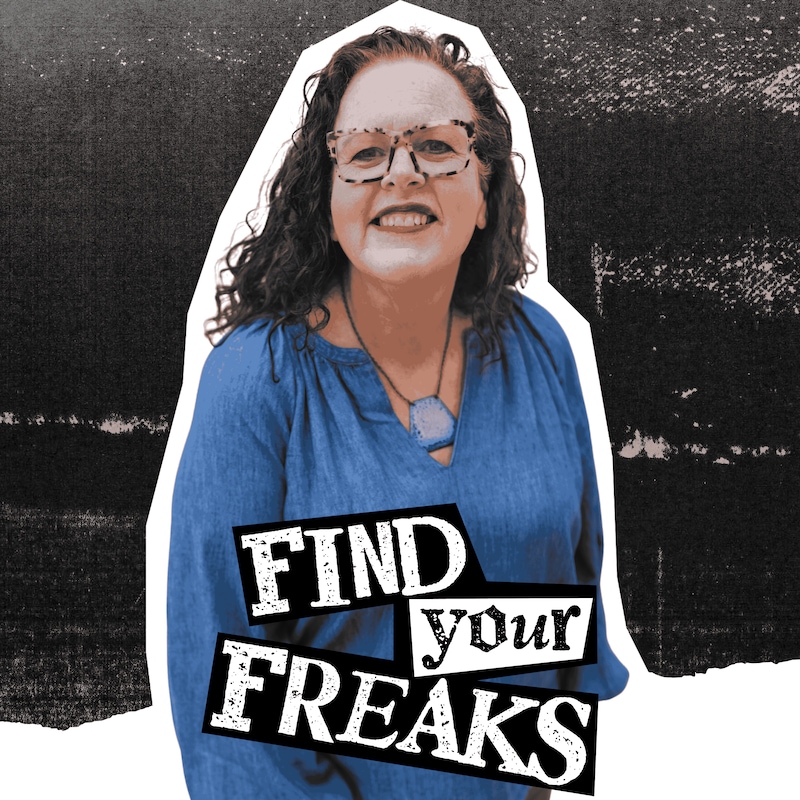
What if your clutter isn’t a housekeeping problem — but a heartbreak problem? In this honest conversation, bestselling author, speaker and creator Kathi Lipp joins Tonya Kubo to unpack the emotional weight of “too much stuff” and the radical act of building a community where shame isn’t welcome, but you are.
Together, they trace the roots of Clutter Free Academy — a Facebook group that grew from a six-week Bible study into a sanctuary for thousands of people who thought they were too messy to belong anywhere. What emerged is one of the kindest corners of the internet, built not on judgment but on compassion, humor, and relentless kindness.
Episode Highlights
- [03:28] Who Kathi’s “freaks” really are — and why clutter makes us feel less than
- [06:50] From books to Bible study to community: how Clutter Free began
- [09:48] The biggest misunderstanding about “cluttery people”
- [13:09] Fear, guilt, and shame — and how they keep us stuck
- [20:35] Do cluttery people isolate themselves, or is it survival?
- [27:54] How the Clutter Free Facebook group was born (and why it never closed)
- [32:51] The power of kindness as the first step to transformation
- [36:59] Freak Flags Fly: Kathi on humor, chickens, and McDonald’s Diet Coke
Leading with Kindness and Compassion
Clutter Isn’t About Stuff
Kathi reminds us that clutter is rarely just about misplaced belongings. It’s about the emotions attached to them: fear of needing something someday, guilt over who gave it to us, and shame over money spent. When we treat clutter like a moral failing, we only dig people deeper into isolation.
The Kindness Cure
Unlike programs that shame or overwhelm, Clutter Free Academy is built on what Kathi calls “assaulting people with kindness.” It’s a space where compassion disarms self-criticism, and where belonging becomes the first step toward transformation.
Community as Survival
Many people who struggle with clutter avoid in-person church groups or workshops focused on home organization because signing up feels like outing themselves. Online community created a safer alternative. The Clutter Free Academy Facebook Group is a place where anonymity lowers the barrier to entry, and kindness keeps people coming back.
Built for Cluttery People, by Cluttery People
Kathi and Tonya both know clutter intimately, and that shared vulnerability has been Clutter Free Academy’s foundation for trust. In this conversation, we see how naming our mess — literal and emotional — creates space for grace, and how building communities on acceptance instead of performance can turn shame into solidarity.
Meet Our Guest
Kathi Lipp is a bestselling author, speaker, podcaster, and the heart behind Clutter Free Academy. Her books (including Sabbath Soup and The Accidental Homesteader) and communities have helped thousands ditch overwhelm and make room for what matters. Whether wrangling chickens or gathering writers at her Red House, Kathi leads with humor, grace, and the kind of real talk that makes you feel like maybe, just maybe, you’re not alone after all.
Meet Our Host
Tonya Kubo is a community strategist, marketing consultant, and rebel with a cause: helping people find the place where they truly belong. For nearly two decades, she’s built online spaces that feel less like comment sections and more like chosen family. She’s the fixer you call when your Facebook group has gone straight-up Lord of the Flies and the bouncer at the door of internet nonsense. As the host of Find Your Freaks, Tonya brings together unconventional thinkers and bridge-builders who know “normal” was never the point. Her favorite spaces? The ones where the freak flags fly high.
Key Quotes
- “Clutter isn’t a housekeeping problem. It’s fear, guilt, and shame stacked in a pile.” — Kathi Lipp
- “Kindness is the first step to transformation.” — Kathi Lipp
- “You don’t have to earn acceptance by cleaning up. Move the laundry aside and sit down anyway.” — Tonya Kubo
Links and Mentions
- Clutter Free Academy Facebook Group
- The Clutter Free Academy Podcast
- Clutter Free by Kathi Lipp
- Clutter Free Home by Kathi Lipp
Support the Show
If Find Your Freaks matters to you, help us keep it ad-free by buying us a coffee (or two!). Every dollar goes to production so more weirdos can find their people.
You can purchase Find Your Freaks merchandise online through Abilities and Attitudes.
Let’s Stay Freaky
What’s Next
Next week, I’m going even deeper on the subject of clutter. I’m unpacking the roots of shame, imperfection, and radical acceptance. We’ll explore why clutter is never just about “too much stuff,” and what it teaches us about building compassionate communities.
Transcripts
[Kathi Lipp] (0:00 - 0:11)
60% of women say that clutter is a significant problem in their life. And so most people feel this way.
[Tonya Kubo] (0:12 - 0:22)
You deserve peace in your home. You deserve to have an open space to put your coffee mug down. You deserve to eat at your kitchen table, right?
[Kathi Lipp] (0:22 - 0:41)
Even if your family doesn't want to eat there, you deserve it. And so those are the emotions, because we think, oh, I just can't make a decision. No, but your brain is pinging in 75 different directions.
I feel fearful. I feel guilty. I feel shameful.
And that's what is keeping us buried in clutter.
[Kathi Lipp] (1:09 - 1:28)
Today's guest is someone who needs no introduction in my world. And probably in yours, if you've ever googled how to get clutter out of your house without losing your mind….Kathi Lipp.
Oh my gosh, Kathi, I cannot believe that you are on my show after letting me be on your show for so stinking long.
[Kathi Lipp] (1:28 - 1:36)
You’ve been on my show a hundred times. I don't know that that's an exaggeration. I think it's probably been a hundred times.
We'll have to count it up someday.
[Tonya Kubo] (1:36 - 1:41)
We will. And I think the only person probably who's been on your show more than me is Roger, right?
[Kathi Lipp] (1:41 - 1:59)
Um, potentially Erin McPherson, because she was my original co-host and still one of my favorite human beings. But when you've been doing a podcast for 11 years to be in the top three, that's a lot of shows.
[Tonya Kubo] (2:00 - 2:16)
That is a lot of shows that is a lot of shows and over 2.5 million downloads. My two point five, I knew it was over two. I did.
It's over two point five. Yeah. It's over two point five.
Not that I pay attention to stats or anything like that. We're not competitive.
[Kathi Lipp] (2:17 - 2:19)
That makes me so happy. I can't even stand it really.
[Tonya Kubo] (2:21 - 3:21)
So for the listeners who don't know though, so Kathi here is a best-selling author. She is, uh, as evidenced by two point five million downloads, a beloved podcaster and the creator of clutter free academy, which is a podcast. It is an entire speaking platform, workshop series.
There are courses and a Facebook community that has become a lifeline to thousands of people who thought they were the only ones living with too much stuff and too much shame. But what makes Kathi really freak worthy is this. She hasn't just built a place where you talk about clutter.
She has built a sanctuary for people who have felt like they didn't belong anywhere else. And I can say this is fact because this is what she did for me. So we are going to get started.
I'm going to talk a little bit in a moment about how I got to know you, Kathi. But before we go there, you need to tell me your freaks. Why do you love them?
[Kathi Lipp] (3:21 - 3:25)
Who are they? First of all, I need to correct you because you've already said wrong things.
[Tonya Kubo] (3:25 - 3:27)
Okay, correct me, friend.
[Kathi Lipp] (3:28 - 5:54)
We built maybe I was the inception of this, you know, with the book clutter free. So some of that came before you, but for the past eight years, we've built this together. Okay.
So now I'll tell you who my freaks are. My freaks are other people who have felt less than because of the state of their house, particularly the clutter of their house. And you know what has really illuminated this for me recently?
I am a monthly guest on a national radio show. It's called the Dr. Nurse Mama Show. And this is like one of the most accomplished human beings you'll ever meet.
She's a doctor. She's a lecturer. She's a nurse.
You know, nurse practitioner, mother of four. Her husband is literally a rocket scientist. Not that his accomplishments or her accomplishments, but let's just talk about the caliber of human beings she is.
And she also feels less than because of her clutter. Everybody else gets this. Why don't I?
And it's like, well, no, not everybody else gets this. 60% of women say that clutter is a significant problem in their life. And so most people feel this way.
And we are all running around before people come over stashing and dashing. And we try to look good to the outside world, but on the inside, we know we're terrible. We know we're failing.
We know we are the worst. And it's just not true. If you're a cluttery person, you're probably creative.
And when I say creative, that triggers people. They're like, I can't draw. I'm like, neither can I.
I can't even draw a stick figure. I think I said that. I was like, I think I said that to you once.
Would you call me creative? Are you a creative problem solver? Are you resourceful?
Are you responsible? Do you figure out answers to problems that other people wouldn't figure out? That's creativity.
And you're kind. Now, I also say cluttery people are the meanest people in the world, but they're only mean to themselves. That's the only person they're mean to.
And so we have all these strikes against us that don't need to be strikes. And part of it is changing the thinking about ourselves, but also part of it is changing our habits.
[Tonya Kubo] (5:55 - 6:15)
Oh, my gosh. That's so good. So thank you for packaging all that up.
And I just need to give a shout out to Dr. Nurse Mama, because her people, every time you're on the show, we get probably 50 to 100 of her listeners that join the Clutter Free Academy Facebook group. And they are the most delightful women.
[Kathi Lipp] (6:16 - 6:16)
The best.
[Tonya Kubo] (6:17 - 6:50)
They are so delightful. And so, Kathi, I can speak to your community and what you have done for people who struggle with clutter for the last eight years. But as you pointed out, there was a time before I was in your ecosystem.
I came on board shortly after the launch of your book, Clutter Free. I was hoping that where we could start today is having you just explain how you got to there. Give us a little bit of that until you met me sort of stage, and then we can talk about what I've seen in your community.
[Kathi Lipp] (6:50 - 8:32)
Yeah. So I had published, I think, five or six books before Clutter Free. And I had one book that did really, really well.
It was a book about marriage, which I don't talk about anymore. Not because I have a bad marriage. It's because I have an easy marriage, and people don't like that.
So here we are. And it's okay. You know, I don't want weight loss advice from somebody who has never struggled with weight loss.
So I get it. So they allowed me to write this book about clutter. And as you know, my dad was a hoarder.
My mom really worked hard to stem the tide, but it was overwhelming. And so I saw myself going in that same direction and thought, okay, this is not the life I want to live. And at that point, I was remarried to Roger, the easy one.
And we had 13, 14, 15, and 17-year-old in the house. And we lived in 1,400 square feet. Yeah, it was insane.
So clutter wasn't a problem. It was a need for survival. And so I learned some things about myself, some things that were hard to face but true.
And I wrote this book. And I started to go and speak at these different events. And you had me come and speak to your church in Merced and did a fabulous job, by the way.
First of all, such a great event coordinator. Second of all, I'll never forget. My book has a purple couch on the front.
And there were purple couch cookies at this event. I will never forget it for the rest of my life. I love those pictures so much.
[Tonya Kubo] (8:35 - 8:45)
That's a credit to Nikki and Casey Gallagher. They made all those cookies themselves. And I think Casey even did a painting class for the women who wanted to help.
[Kathi Lipp] (8:45 - 9:24)
It was amazing. A level beyond. See, and this is such a great example of cluttery people.
Because we can work 10 hours on, and I'm not saying she's cluttery, but it's just such a great example. It's easy to put in 10 hours making those cookies. Or it's not easy, but it's fun.
It's doable. You probably spent 40 to 60 hours putting together that event. And at the same time, we're at home struggling with clutter.
Like the most amazing, creative, generous people in the world. But we suffer because it's hard. It's just hard.
[Tonya Kubo] (9:26 - 9:47)
Yeah, it is. It's so difficult. And like you said, right?
They're the meanest people in the world only to themselves. I mean, I hear that. I feel that.
I see that every day in your communities. So before we get to kind of present time, I'm hoping you can share a little bit about what you think most people misunderstand about cluttery folks.
-:Oh, that they're lazy. Number one. They are not lazy.
I really reject the word lazy. I find that very few people are actually lazy. Especially if you're joining a group to declutter.
My guess is you're not lazy. We love to point fingers at people, right? And say you shouldn't have that because you're not working hard enough.
And I really believe that most of us are not lazy. We are completely overwhelmed. We're neurodivergent.
We don't know where to start. We have these tapes running in our head. Why even start if you can't finish?
Your house is never going to look the way it should. You're a terrible person. Those are the tapes we have running in our head.
And lazy, I don't see it in our community. I just don't see it. I see defeat it.
That's what I see.
[Tonya Kubo] (:Defeated. And also, to your point, when I fought back with you, when you called me creative one time years ago, right? Your response to me was, but do you ever have so many ideas you don't know which one to take action on?
And I was like, yes. And you were like, that's creative, right? Non-creative people have like one, two ideas in their head most.
Right. But creative people have all these ideas, right? And so it's hard to move forward.
And then the other part that we see a lot, I know, is chronic illness, whether it's physical illness, mental illness. We see a lot of that. And so I love where you started with the whole, what do people most often misunderstand about clary people?
Because first of all, I see that all the time, right? That laziness thing. Everybody thinks it's a housekeeping problem.
I feel it, right? Because people, I hear people say it like all the time, social even, because people who meet us now don't know what our past is or what my past is. But when I first read Claire Free, right?
Kicking and screaming practically, because I had a six month old time, right? Six month old and a five year old. And the last thing I felt like I needed was to feel worse than I already did about my house.
And I also felt like the house was in such a state. I used to say, I was afraid that I'd lose the baby in the laundry pile. That it was exactly what I needed.
And what spoke to me in that book, every other book, magazine, article, program I had been in up until then gave probably the same basic three core messages, right? Just do it, right? They were always written from the perspective of somebody who like intuitively understood the ebb and flow of stuff in their home.
Intuitively understood organization. So they never met me where I was. But the other part that I think across the board was the ones that were written for married women, more about keeping a household because your husband works so hard.
He deserves to come home to a clean house. The least you can do is make the home a sanctuary when he walks in after a long, hard day. And we've always been a two-income household.
So I'd read these things. I'm like, but I work hard.
[Kathi Lipp] (:And Tonya, I love your generation got this way sooner than I got the memo. I always thought that my husband going to work. That was the ultimate thing.
That was the hardest thing that anybody could do because I grew up in conservative Christian circles. And that was I'm just going to say at the propaganda we were fed. And here's the thing.
In an equal marriage, which is what Roger and I have, we both work really hard. And when one of us is tired, we get to rest. And so I think you figured this out much sooner than I did, that my husband goes to work eight hours a day.
And that's a different kind of energy that's being put out there that because I feel it too. When I was working, that was a different kind of, well, I still work, but it's a different thing. I'm thinking about specifically those times when I was raising kids and I was doing the hustle of going back and forth to picking them up from school.
And I was working and I was keeping a house. It's a different kind of energy. And the whole, well, he takes care of the outside.
I take care of the inside. Oh, you mean he mows the lawn once a week? You mean he goes and gets an oil change?
Okay. But when you're doing dishes, sometimes three times a day, it's not equal. And I was part of this propaganda machine at one point.
Let him put his feet up, bring him a cauldron. Yeah. So I love to do those things for Roger because I love him.
But this idea that Roger is working twice as hard as me, I reject that deeply. Because we're all working hard. Everybody is working hard.
[Tonya Kubo] (:And in all fairness, I feel like Brian is a lot like Roger, right? We do not have the same marriage as a lot of women. And I think we can speak from a place of privilege that a lot of women can't and we own that.
But when I read clutter free initially, what struck me, there are a few things that struck me. One was the message, it's not a housekeeping problem. It's an overall problem.
There was that the fact that it wasn't about the stuff, it was about the core emotions of fear, guilt, and shame, which I want you to address in a moment. But the third was it never, never once was it my kids deserve, my husband deserves. It was always you deserve.
You deserve peace in your home. You deserve to have an open space to put your coffee mug down. You deserve to eat at your kitchen table.
Right? Even if your family doesn't eat there, you deserve it. And it was the first time I had ever encountered anything about housekeeping clutter organization that told me I deserved better than how I was living right there.
[Kathi Lipp] (:That makes me so happy that that's the message that came through. I need to remember that because, you know, I wrote that so long. Well, we haven't recorded.
Yes. Yes.
[Tonya Kubo] (:Right. Well, and that's the other thing is, right, is you wrote this in 2014. And I, you know, I appreciate the fact that you talked about coming from conservative evangelical circles, because that was before the “church too” movement.
That was before the what we what is now called ex-vangelical movement. I mean, you were really kind of before your time. I don't know if anybody noticed it, but you told me.
[Kathi Lipp] (:Oh, the mean people noticed it.
[Tonya Kubo] (:Right. Because there's a lot of people.
[Kathi Lipp] (:But no, I appreciate you saying that. Sorry, please go ahead. Keep telling me how ahead of my time I am.
[Tonya Kubo] (:Well, because the thing is, that is part of how I felt seen in the pages of that book long before I ever met you. It was that book, right. And how I felt that led me to invite you to speak to church, because I was like, wow, if she can make me feel this way, how is she going to make the women in my mom's group feel?
How is she going to make the mentor moms feel right? Like I hear all these women talk about the state of their homes as if they're the worst wife in the world, the worst mom in the world and that makes me so happy. And so that I mean, and I just want to say, that's the power of a book.
We think books don't do anything nowadays, but they really do. And I want to go back to that core message of the book, which is the fear. Now, this many years later, how do you see those three emotions still being valid in the space of clitering people?
And how do they keep them stuck?
[Kathi Lipp] (:Well, I just spoke, I guess it was almost two weeks ago at a big church. And I put up the emotions of clutter. And so the first slide is fear.
And then how does fear manifest itself? The next slide is I might need it someday. There's an oo from the audience and everybody's writing it down.
So it feels exactly the same. I'm going to keep that because I might need it someday. And I still battle with this myself.
I don't want to be wasteful. We might need it someday. I think a lot of cluttery people are extreme thinkers.
What if I lose my job tomorrow and I can't pay my bills and I have no food to eat? So I'm going to keep the can of spam. Now, if you like spam and I happen to enjoy spam, I hadn't had it for 15 years and we just had some Korean food and we had some spam with it.
And it was a nice little treat. But you can't keep things like that if you don't know if you actually like them. Because there's always going to be a different way to find food than to have to eat something that you absolutely hate.
So we now have a can of spam in our cupboard and it's just in case and that's fine. Or maybe someday we'll come up with a recipe with it. But just in case thinking keeps us holding on to those pillows that we wouldn't let a guest use.
It keeps us holding on to the earrings that hurt our ears. But what if I can never buy earrings again? Or what if I have the perfect outfit for this?
I could put them on just as we're arriving and take them. You know, these are the extreme ways that we're thinking. So that fear guilt is but so and so gave it to me.
So like my mom gave this to me or my child made this in kindergarten. So there's that emotional attachment that says, if I get rid of this, it's showing that person. I don't love them anymore.
Or it's showing me that I didn't care about them as deeply as I thought. And then shame is this. I spent money on this.
And many of us as the granddaughters, great granddaughters, grandsons and great grandsons of depression era people. If you spent money on something, you need to keep that till you die. Because I really, really so.
No, it's true. It's totally true. And so those are the emotions because we think, oh, I just can't make a decision.
No, but your brain is pinging in 75 different directions. I feel fearful. I feel guilty.
I feel shameful. And that's what is keeping us buried in clutter.
[Tonya Kubo] (:It is true. Now, I'm wondering because part of why the purple couch has become iconic for the clutter free brand is you tell a story and you tell it on stage. You tell it in lots of different circles about serving coffee on the front porch because the couch wasn't available.
And almost everybody who has ever entered our space of clutter free has a story about the couch not being available. They identify so deeply with that. I'm curious from your perspective, do you think cluttery people learn to isolate themselves or do you think it's something that they have to do for survival?
[Kathi Lipp] (:Oh, I think it's both. I really do. And it's great now that we have so many third spaces that you can go to Starbucks.
You can go to the library. You can go to a park. That wasn't really the reality for maybe our moms and grandmothers growing up.
And so that house, you wouldn't think to say, hey, let's meet at the park necessarily. So they would have to keep a portion of their house clean and then the back bedrooms and things like that. I'll never forget I had somebody from a mom's group come over and she goes, I want to see the rest of your house.
And I'm like, are you kidding? I about killed myself to just get this living room done. She wasn't just insistent.
She was forceful. And then she went and told everybody in my mom's group what a mess it was. And yeah, okay, I'm never having anybody over again.
I was heartbroken. I was heartbroken. Because here's the thing about cluttery people.
We know the outsides of our house do not match our insides. But you can only judge so often on the outside. So I think we force ourselves into isolation because we don't want to be hurt again because people we've trusted have betrayed our trust.
And we just know it's safer. We just know it's safer. And so we make our lives small because as much as I want a big beautiful life, what I really want is to protect myself.
[Tonya Kubo] (:Yeah. And there's nothing more personal than how you live day to day.
[Kathi Lipp] (:It's so true. And even if you're coming from a place of clutter, it's easy to judge somebody else's clutter. Because my clutter is mine, right?
And your clutter is a mess. Like, why would you keep that? Here's the thing.
I don't live in a lot of clutter, but the area in my house that gets the most clutter is right where I'm sitting. Yeah, my camera is very strategically placed right now. And so I look at my desk and it's like, well, most of this isn't clutter.
And then I start to look at it. I'm like, okay, yeah. Yeah, yeah, yeah.
It's just decisions that have not been made. And so most of the decisions are, okay, throw it away. But it's very easy to be very judgy about somebody else's clutter.
People say, oh, you can't come to my house because you're the clutter free lady. I'm like, actually, I'm the safest person ever because I may be surprised when I first come in. But then within half a second, I'm like, oh, I get it.
I get it. You're overwhelmed. I get it.
[Tonya Kubo] (:Well, and it's funny is because I get the same thing. And my response is always like, you know, my mom was a hoarder, right? Right.
Like there is nothing you are living in that I haven't actually gone to bed in and woken up in every day for over a decade.
[Kathi Lipp] (:Exactly. We are compassionate. If nothing else.
[Tonya Kubo] (:Oh my gosh. Yeah, we are. Yeah.
And I think that's the other thing I love. And you said this shortly after we met because I do want to talk a bit about the Facebook group that came to be because I think that is just an extension of your perspective, but also the desperate need that you saw and that you invited me to fill with you. But that idea of other people's stuff being like more trashy than ours, right?
Like you're talking about your desk. And I don't know. Do you have emotional support beverages?
Because I have emotional support beverages, right? I have like these two that I'm drinking from right now. I have a backup glass of water.
And then I have like yesterday afternoons tea that actually only has two inches of tea. And I'm not going to drink it, but I have these hopes that maybe I'll get thirsty and I can drink it until Brian comes in and just says, Tanya, I'm doing this.
[Kathi Lipp] (:So Roger calls himself my busser. And so I have left things on a support dresser to be bussed. But also Tanya, I'm the freak who has the mini fridge up here in my office that has an array of beverages.
It's the dream. I'm living the dream. If only I had my nugget ice maker up here too, then I would never leave my room.
[Tonya Kubo] (:You know, I know some people like their ultimate fantasy right is the TV in the bedroom and like a current, right? And for me, I'm like, oh, Kathi has a mini fridge. How do I work out of any fridge?
You know, keep in mind, I have a one story home, two bedrooms. Okay. I don't need a mini fridge in my life, but it just sounds so good.
[Kathi Lipp] (:Don't you? You know, they have those little mini fridges for storing makeup that all the teenagers have. I bet somebody's gotten rid of one of those at a thrift store.
I'm just saying it could go right on your desk.
[Tonya Kubo] (:It could. It could. I didn't even know people put their makeup in a fridge.
[Kathi Lipp] (:It's very big in teenage land, like all their skincare because all these 13 year olds have seven step skincare routines, which by the way, I endorse. Go for it. You know what?
If you can buy the stuff cheaply enough, go for it. Sorry. Tangent.
That's another thing. Cluttery. It's okay.
Cluttery brain.
[Tonya Kubo] (:Yeah. Tangents. Everything connects in our heads.
I get it. So I would love to know sort of from your perspective, how the clutter free group came to be, because I know like my mindset and where I always go back to, right, is it was a pop up group. It was just supposed to be for the online level study.
And when you came to me to talk about that, of course, I was like, yes, because I was fresh off of the experience of having you come to speak about clutter to my church. And it was the second time you came to speak at our church. The first time we sold out in moments, it was the place where everybody wanted to be.
And the second time I was in the church foyer selling tickets and you would have thought I was holding drug deals, because people would like look over their shoulders, kind of act like they were going to the next kiosk, and then sort of quickly come over to ours and practically whisper to buy their tickets. And then after you spoke, everybody wanted the Bible study, right? And they're like, Tanya, will you host it?
I was like, sure. I had a big sign up sheet. The church ordered 25 copies.
Not one person went to the office to pick up their copy.
[Kathi Lipp] (:So weird. But it's so our people, right?
[Tonya Kubo] (:And what it came down to is when I talked to folks, they wanted it so badly, Kathi, but they couldn't bring themselves to walk into the church office and out themselves as having a clear problem. They didn't want the church secretary to know.
[Kathi Lipp] (:Yeah. They wanted the transformation, but they couldn't be seen with the ticket.
[Tonya Kubo] (:Right. They didn't want to go into the church the day of the clutter workshop and have everybody know what their house looked like. And we tried a BOGO deal on the tickets.
Oh yeah, that didn't work either, because they were like, I can't tell somebody that their house is a mess.
[Kathi Lipp] (:So what we have to do in situations like that is make it a universal problem. And I know that's really tough, but to be able to say, everybody is dealing with this. And then I just interviewed somebody yesterday for our internship and she said, oh yeah, I don't have a clutter problem.
And in my brain, I say, most people who don't have a clutter problem have a clutter problem. They're just more organized about it. And maybe she really doesn't have a clutter problem.
But when all of your clothes are hung up, nobody would say you have a clutter problem until you look in the closet and you say, okay, but you haven't worn 70% of this in over a year. So that's a clutter problem. So for our reluctant freaks, we have to be able to position it seven different ways so they can see themselves in.
It's not trying to over diagnose. That's not what I'm trying to do. I'm trying to say the principles that is helping the person who hasn't used their kitchen table in a year because there's always stuff on it can help the person who has that wardrobe that goes on and on and on.
But they only wear the same three outfits because they're overwhelmed by their choices. The same cure is for both of them.
[Tonya Kubo] (:Yeah, it's so true. And so when you had asked me to build the Facebook group that would support the online Bible study, you know, I think we initially started, we said it was going to be 10 to 12 weeks because it was a six week study and we wanted some time to ramp up. And then we were thinking we'd have some time to like ramp down for people.
What point did you realize it needed to be permanent?
[Kathi Lipp] (:Am I the one who came up with that? I don't know. I think you did.
You have a much better memory for these things. So let me interview you, Tanya.
[Tonya Kubo] (:I remember it.
[Kathi Lipp] (:When do you remember that we needed to take it from a, you know, encapsulated Bible study to an ongoing group? Tanya, give us your perspective.
[Tonya Kubo] (:Well, so here's what I remember. I remember when we started me asking what the goal was, right? Because like I built communities strategically for years before that.
And, you know, and I think it was you and Roger who I had the conversation with. It was like, well, you know, a hundred people would be amazing because you guys knew how many copies of the study had been sold and yet not a lot of completion. And so you're like, I think like if we got a hundred people in there, that would be awesome.
And we hit 500, I think a third of the way through. And halfway through, people kept posting like, this isn't going to close at the end of the study, right? Like, this is going to keep going, right?
And because we weren't, we were only committed for a certain amount of time. You didn't know what it took to run a Facebook group like that because you had gone and done speaking engagements. And then, you know, they would send it for your newsletter.
They would email you afterward, but it was a different experience. And so about halfway through, I would say maybe week four of the study. I said, well, you know, I really want this to continue.
What do you think? And you were just like, well, that depends. Do you have capacity to continue?
Because I don't think I can do this. And, you know, and I said, yes, but we had, I mean, we had a thousand people in the first six months.
[Kathi Lipp] (:It's wild.
[Tonya Kubo] (:And the goal was just a hundred. And what I saw happen, and this is, so I'm going to ask you, but I want you to have time to think like what you feel like the group does for its members that they can't find anywhere else. I will say that when it started, people would come in.
And I remember people's biggest fear was that somebody they knew would be in the group. So one of the things that I used to say, and I still say it to this day, I was like, welcome to the group where you think you're the only person who has this problem. And now you realize you have 16,000 friends just like you.
[Kathi Lipp] (:So I would say what the group does is we assault you with kindness. Because I grew up in the 90s with a program that was very militaristic and that used words like lazy and had sent me, I'm not exaggerating 30 emails a day to say, go do this, go do this.
[Tonya Kubo] (:Yes, I know because I was in the same group.
[Kathi Lipp] (:And I realized it worked for some people. But it didn't work for me. So I needed a place where I could confess my deepest, darkest clutter sins.
And I knew I was going to be met with love. And so what that has meant, it's an extra burden on the leadership team, i.e. Tanya, to say we don't let naturally decluttery people in. We don't let anybody in with an agenda who says, I'm going to teach you how to be decluttered.
And so you have some questions set up so that those people are not part of it. There are other groups where you can go do that. There are tons of other groups.
Our group is we are kind. The kindness is the first step to transformation. To say, I'm not a terrible person.
I'm not broken. And once I can start to believe that about myself and say, but I do have a problem that is inhibiting parts of my life. So this is a safe place to talk about it, to discuss it.
But we're never going to shame you. And people and we don't have to shame anybody. They are so self shaming.
So we don't have to do that. So we come in and we start to de-program people. From what their parents told them, from what society tells them, from what social media tells them.
And I just love it because the most controversial things I've said recently on my page, which is open to everybody, is one I don't sort my laundry. It's deeper than that, guys. But yeah, I know people lose their mind.
They're angry at me for not sorting my laundry. And that I had COVID and people are just they're terrible. They're terrible.
And there is none of that in our group. It's such a refreshing place to be.
[Tonya Kubo] (:Yeah, and you know what? Here's what I will say because you do such a great job of giving me so much credit. But the only reason I have been able to create that container is because you have given me the freedom and the time to get to know members on a deep enough level that I can speak to what they need.
Because not all of them, it's like I'm not who I was 10 years ago. So I'm not always fresh in the mind of the beginner, but they are so good about communicating what they need because they have never felt so loved. I mean, because you're right, they come in and they will tell you all the reasons they're the worst person on the planet.
They're the worst daughter, the worst mother, yada, yada, yada. And we always start with, okay, well, let's give ourselves a little bit of grace. Sounds like you're really hard on yourself and they'll always be like, yeah, yeah, I am.
People say I'm a perfectionist. And I'm always like, and how's that working?
[Kathi Lipp] (:By the way, we do that to ourselves. Like, there's nothing you could say to hurt me because I've already hurt myself so deeply. And it's heartbreaking.
[Tonya Kubo] (:And I do think it is a protective mechanism, isn't it? Oh my gosh. Thank you for connecting those dots.
So I am going to put everything because like I could talk to you. Well, we have to have you back on the show.
[Kathi Lipp] (:Let's just say that right now.
[Tonya Kubo] (:And because we could talk about fear, guilt, and shame separately for an hour each and how it relates to cluttery people. But just for the benefit of those listening, you can find the Facebook group at Kathi.link slash CFA. So that's Kathi K-A-T-H-I dot link slash CFA.
You can go to Kathi Lippp, two P's in Lipp.com, and click on podcast and you can binge on years, 11 years of episodes. So if you so choose. A lot of people, because the episodes are on the short side, a lot of people use those as an inborn timer for their own decluttering mechanisms, which I love.
But now, Kathi, before I let you go, I have a rapid fire segment that we call Freak Flags Fly.
[Kathi Lipp] (:Are you ready? Yes, please.
[Tonya Kubo] (:Okay, it's five questions, no wrong answers, just whatever comes to mind.
[Kathi Lipp] (:I'll do my best.
[Tonya Kubo] (:So finish this sentence. You're my kind of freak if.
[Kathi Lipp] (:What a great question. You're my kind of freak if you want to get past the surface and talk about real things with a little bit of a dark sense of humor. Yeah, okay.
[Tonya Kubo] (:I want to be that kind of freak.
[Kathi Lipp] (:Yeah, you are that kind of freak.
[Tonya Kubo] (:What is something you love that your friends just don't get?
[Kathi Lipp] (:It depends on the set of friends. My kids can't believe we have chickens. Not for dinner, but as livestock.
McDonald's French fries. I'm sorry, they're the best French fries. I don't know.
I don't know why people like in and out French fries. They're cardboard and I don't care what the process is. And boy, I'm getting really vulnerable here.
And McDonald's Diet Coke. It is the superior Diet Coke and I'll fight anybody who says something differently.
[Tonya Kubo] (:You know, you're not the first person to tell me that, actually. I'm not a cola fan at all, but I've heard that before.
[Kathi Lipp] (:There's a crispiness to it.
[Tonya Kubo] (:Okay.
[Kathi Lipp] (:And you know what? I don't go to fast food very often, but man, I love those things very, very much.
[Tonya Kubo] (:Okay, so here's the question that usually sucks people. I'm curious how you'll answer it. What community would you infiltrate just to understand it better?
[Kathi Lipp] (:Okay, I'm going to put aside the highly controversial one. Tech Bros. I think, you know, with everything with AI, which fascinates me, by the way, my favorite podcast outside of what I normally listen to is Hard Fork.
I love it so much. But that culture fascinates me because they seem so progressive, but also so misogynistic. And so how does that work out in the day-to-day?
I find that fascinating.
[Tonya Kubo] (:Yeah, that's a good one. Nobody's answered that before. Okay, so what tool, ritual, or practice helps you stay connected to your people?
[Kathi Lipp] (:Tool, ritual, or practice. I would say it's the podcast that's my deepest way of connecting. And then one of my struggles, I've never been diagnosed with ADHD, but I've got to be adjacent.
And so routine is really hard for me. But when I can get in the routine of really thinking about how to serve my cluttery people, that's the mindset I have to be in. It can't be, oh, I need to post something today.
Or, oh, I need to go ask an in-depth question. When I can really get in the place of how can I serve people today, that's my best connection. And I'm also going to say AI is really helping me not to write what I'm doing on social media, but helping me farm what I've already said to be used on social media.
That's been very, very helpful.
[Tonya Kubo] (:Okay.
[Kathi Lipp] (:And it's just chat GPT. It's nothing fancy.
[Tonya Kubo] (:So last question, who is someone doing freakishly good work who deserves a bigger stage?
[Kathi Lipp] (:Oh, that's such a great question. I would say Dr. Vicky. Dr. Vicky is somebody, that's her name everywhere online. And she's come to our retreats writing at the Red House. And she does deep work on insomnia and sleep. She's a lifestyle doctor, lifestyle medicine.
And I really feel like what she has to say is so life changing for people about how to get a better night's sleep, which is so underrated in our society. So I'd say Dr. Vicky.
[Tonya Kubo] (:All right. All right. I will definitely look her up and put that in our show notes.
Okay, Kathi, it's hard to believe the time goes so quickly. Yeah, I just want to say thank you though. Thank you for your courage.
Thank you for opening up your perspective on cluttery people and sort of what made you decide that this was a community worth developing. And to everybody listening, I just want to say that if you've ever felt like clutter disqualified you from community or that your mess prevents you from belonging. I hope that you'll find us over in Clutter Free Academy because it's a really awesome place to be.
But aside from that, I hope that what Kathi has shared today helps you to realize that you don't have to earn anything. You don't have to earn acceptance by cleaning up. It's one of those things that you discover when somebody finally sees you and says, you know what, hey, just come sit here anyway, move the laundry aside.
That's it for this episode of Find Your Freaks. To help more weirdos find their way here, subscribe, rate, and leave a review. And if you're craving connection, join the Freight Show at findyourfreaks.com.
What makes you weird makes you wonderful. Normal was never the point.
